Podcast
Blunt Business
Hosted by Cannabis Radio · EN
Dispensing Cannabis business knowledge beyond a million square feet of cultivation space. Blunt Business navigates the challenges and opportunities of one of the most profitable industries on earth. Join us each episode to hear our weekly round tables and interviews with industry professionals.
39episodes
Episodes
Newest firstAll episodes
Future of Cannabusiness: Brand Strategy and Industry Consolidation
6d ago00:32:33Tap to summarizeJoe Bayern with MM Brands outlines a strategic roadmap for professionalizing the cannabis industry, emphasizing that sustainable growth requires moving beyond fragmented operations. Key strategies include adopting a portfolio-based management model to share operational and manufacturing costs, implementing minimalist, needs-based branding to simplify the consumer experience, and navigating regulatory hurdles through omnichannel agility. Furthermore, Bayern advocates for a "one plant" regulatory framework and anticipates continued industry consolidation, noting that businesses must modernize their supply chains to drive the quality, consistency, and therapeutic reliability essential for long-term mainstream adoption.Advertising Inquiries: https://redcircle.com/brandsPrivacy & Opt-Out: https://redcircle.com/privacy
Transcribe →
The Ongoing Federal Rescheduling and Operational Hurdles in Cannabis
2w ago00:25:22Tap to summarizeBlunt Business welcomes Joe Bayern, the CEO of MM Brands to discuss how the cannabis industry is approaching a potential turning point as DOJ and DEA hearings conclude this July, with anticipation high for a move to Schedule 3 classification. This reclassification could eliminate 280E tax constraints, driving better profitability, while FDA validation of therapeutic benefits promises to reduce stigma and build consumer trust. Despite this momentum, the sector faces significant headwinds, specifically a critical shortage of experienced middle management and the ongoing difficulty of maintaining quality control and compliance amidst fragmented, state-specific regulations.Advertising Inquiries: https://redcircle.com/brandsPrivacy & Opt-Out: https://redcircle.com/privacy
Transcribe →
Banking, Compliance, and the DOJ Hearing for Cannabis Rescheduling
3w ago00:29:09Tap to summarizeOnce again we welcome back Nick Richards, Partner and co-chair of the cannabis law practice group at Greenspoon Marder about how the cannabis and hemp industries currently face a complex landscape defined by existential regulatory threats and critical federal proceedings. Financial institutions are increasingly wary, with potential hemp reclassification jeopardizing banking access and subjecting businesses to high-risk compliance hurdles.Meanwhile, industry experts are closely monitoring the upcoming DOJ administrative hearings, which represent a pivotal, though non-binding, opportunity to challenge Schedule I status for cannabis. Despite concerns over limited transparency and the exclusion of key industry advocacy groups, the strategy remains to leverage scientific evidence over political rhetoric to push for federal rescheduling.Advertising Inquiries: https://redcircle.com/brandsPrivacy & Opt-Out: https://redcircle.com/privacy
Transcribe →
Courts, Cannabis, and Compliance: WNBA Policy Shifts vs. Impending Hemp Regulations
4w ago00:36:48Tap to summarizeThe sports industry is witnessing a landmark normalization of cannabis, highlighted by the WNBA’s recent collective bargaining agreement which removed cannabis from its prohibited substances list in favor of supportive substance abuse treatment programs. While this signals a new era for athlete endorsements and professional branding, the broader cannabis and hemp sector faces a precarious future. Blunt Business speaks with Nick Richards, Partner and co-chair of the cannabis law practice group at Greenspoon Marder.Businesses are currently bracing for a November 12th federal deadline that could redefine “illegal hemp,” potentially outlawing 95% of current CBD products and creating significant financial and regulatory hurdles, including the looming threat of Section 280E tax penalties.Advertising Inquiries: https://redcircle.com/brandsPrivacy & Opt-Out: https://redcircle.com/privacy
Transcribe →DOJ Rescheduling Preview | Virginia Amending Adult Use | Illinois Introduces Hemp Ban?
Jun 2400:20:58Tap to summarizeWe report on a wave of highly targeted legislative, legal, and medical updates aimed at curbing market disorder and protecting public health.In the United States, Virginia has advanced a budget deal to its governor establishing a definitive July 2027 timeline for adult-use dispensary sales, while Illinois has enacted precise safety guardrails by banning intoxicating hemp sales to minors and enforcing strict child-proof packaging. This regulatory tightening faces immediate constitutional hurdles in the courts, where Ninth Circuit judges are currently deadlocked over whether sweeping state bans on cannabis billboard advertisements violate free speech.Meanwhile, international markets are facing severe enforcement crises; Thailand’s Ministry of Public Health has rolled out an aggressive penalty framework targeting rule-breaking dispensaries with immediate license suspensions, and Canada’s regulated sector is suffering such severe economic pressure from a deeply entrenched illicit market that a major national cannabis organization was forced to suspend its operations.Underpinning these legislative shifts is an escalating medical concern highlighted by The Epoch Times, which details how high-potency THC stores itself long-term in bodily fat and organs, continuously triggering low-grade, system-wide immune inflammation even after active consumption stops.Advertising Inquiries: https://redcircle.com/brandsPrivacy & Opt-Out: https://redcircle.com/privacy
Transcribe →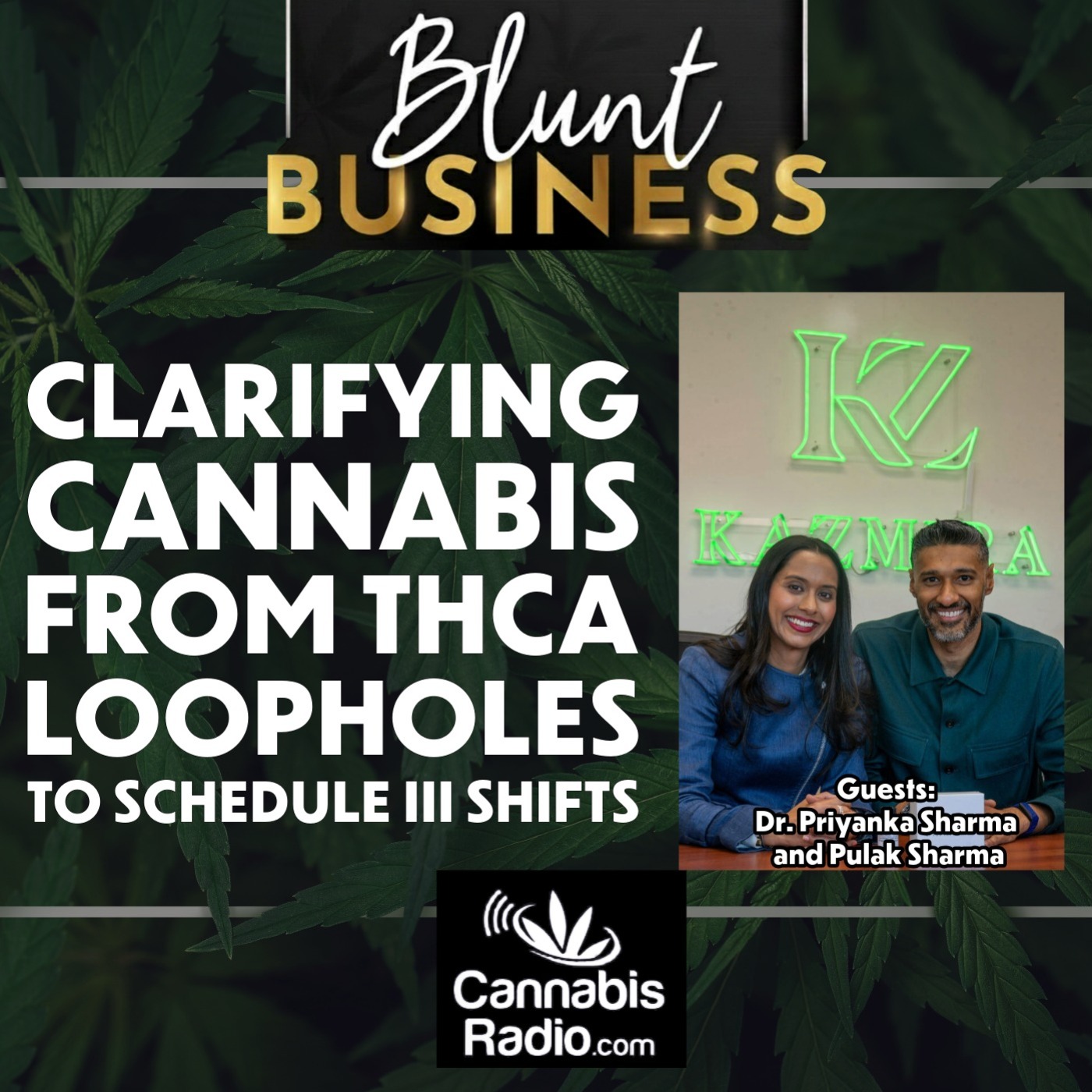
Clarifying Cannabis From THCA Loopholes to Schedule III Shifts
Jun 1700:40:52Tap to summarizeDr. Priyanka Sharma, co-CEO of Kazmira Therapeutics and fellow co-CEO Pulak Sharma, cut through the confusion surrounding the rapidly evolving cannabis and hemp sectors. She clarifies the critical distinction between THCA—the non-intoxicating precursor that converts to THC upon heating—and delta-9 THC, noting that current marketing often masks the potential intoxicating effects of heated THCA products. Dr. Sharma also unpacks the implications of the Schedule III reclassification, explaining why it creates a distinct "two-lane system" for medical cannabis versus industrial hemp rather than a blanket regulatory change.Advertising Inquiries: https://redcircle.com/brandsPrivacy & Opt-Out: https://redcircle.com/privacy
Transcribe →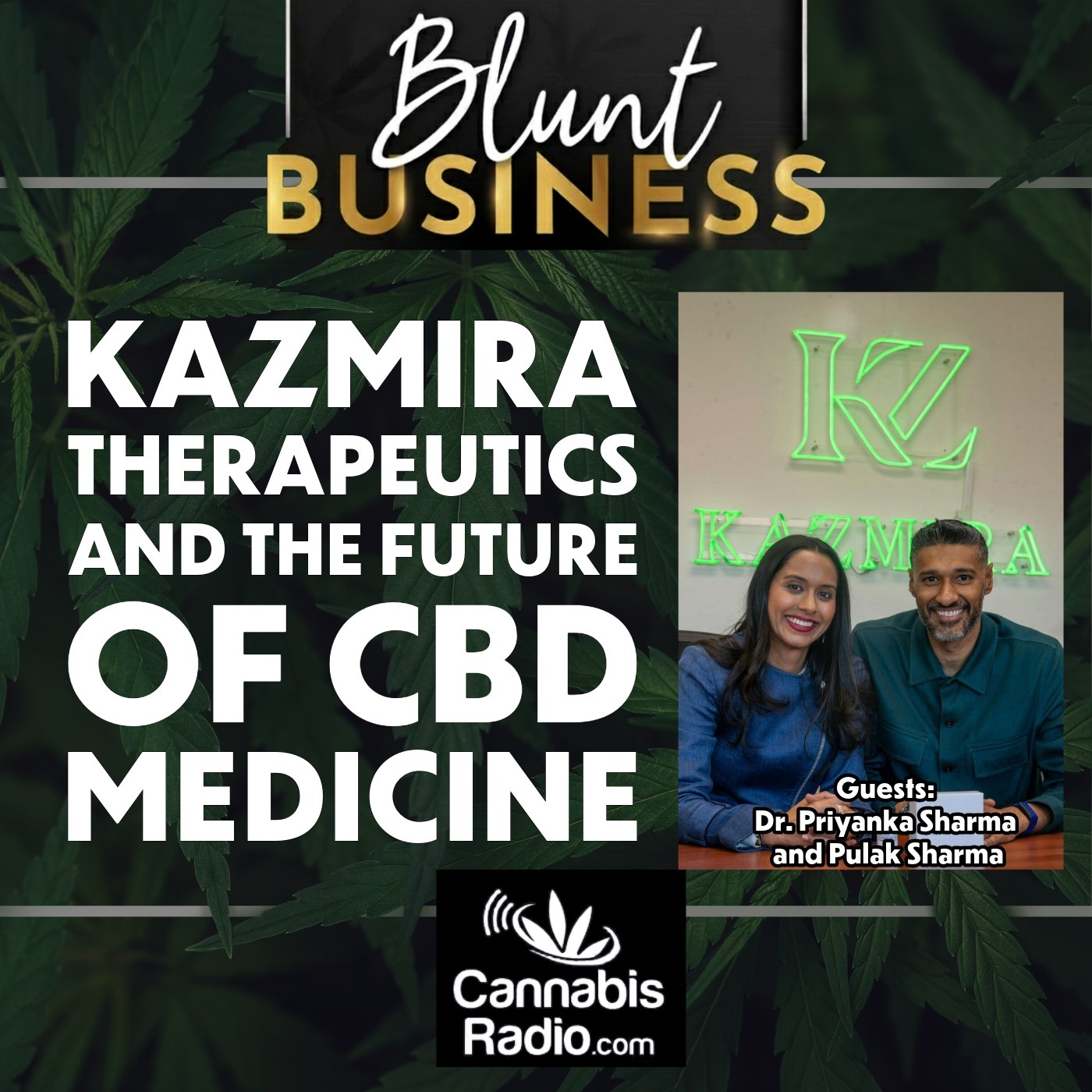
Kazmira Therapeutics and the Future of CBD Medicine
Jun 1000:28:24Tap to summarizeKazmira Therapeutics is revolutionizing the CBD landscape by transitioning cannabinoids from over-the-counter health supplements to precision, pharmacist-compounded "real medicine". Led by co-founders Dr. Priyanka Sharma and Pulak Sharma, the company leverages proprietary precision-chemistry—rooted in her background as a chemical engineer—to ensure zero-THC, high-purity formulations. This clinical approach is increasingly relevant against the backdrop of significant regulatory changes, including the Schedule III reclassification of medical cannabis and recent federal legislation that further defines industrial hemp and hemp-derived cannabinoid products. These regulatory developments, which establish clearer standards such as a 0.4mg total THC limit, are dismantling the market's reliance on the confusing 0.3% dry-weight loophole and creating a "two-lane system" that prioritizes clinically supported, regulated products over speculative supplements.Advertising Inquiries: https://redcircle.com/brandsPrivacy & Opt-Out: https://redcircle.com/privacy
Transcribe →
The Hemp Lifeline: States Open Cannabis Gateways as Federal Lawsuit Targets MSOs
Jun 300:23:23Tap to summarizeAs a massive federal hammer prepares to fall on the hemp industry, progressive states are throwing operators a regulatory lifeline—just as the legal cannabis market faces its own "Big Tobacco" reckoning.A newly filed federal class-action lawsuit targets major Chicago-based operators like Cresco Labs and Green Thumb Industries, accusing them of "Big Tobacco"-style deceptive marketing that downplays the psychotropic risks of high-THC products. Yet, against this turbulent backdrop, Midwestern lawmakers are aggressively reshaping the market. Facing a looming November 2026 federal ban on potent hemp products, Minnesota has enacted a landmark omnibus bill that allows hemp business owners to dual-license and pivot directly into the regulated cannabis market. Similarly, Illinois lawmakers are advancing a massive industry overhaul (HB 5784) designed to ease financial burdens on smaller social equity operators while building parallel transitional pathways for hemp companies. By allowing these industries to consolidate, states are creating a vital legal gateway for hemp businesses to survive under the umbrella of the regulated cannabis market before federal workarounds vanish entirely.Advertising Inquiries: https://redcircle.com/brandsPrivacy & Opt-Out: https://redcircle.com/privacy
Transcribe →
Federal Rescheduling and the BUILD Act: Capitol Hill’s Shift on Cannabis Reform
May 2700:24:45Tap to summarizeBlunt Business zeroes in on major developments unfolding on the congressional front. It highlights how impending federal rescheduling could significantly alter medical cannabis policies within the Veterans Administration, potentially expanding access for military veterans by allowing VA doctors to discuss and document use, as well as refer patients to state-approved programs. Additionally, we break down the bipartisan BUILD Act (Building Unrivaled Infrastructure and Long-Term Development Act), a piece of transportation legislation moving toward a House floor vote. The bill directives mandate federal agencies to invest $110 million to research poly-substance impairment and establish standardized, evidence-based driving limits, addressing the long-standing scientific flaws and regional inconsistencies currently plaguing roadside testing.Advertising Inquiries: https://redcircle.com/brandsPrivacy & Opt-Out: https://redcircle.com/privacy
Transcribe →
Georgia Expands Medical Access and D.C. Beats Cannabis Lawsuit
May 2000:18:51Tap to summarizeThis week on Blunt Business, we’re diving into two massive legal shifts reshaping cannabis markets on opposite sides of the country. First, we break down Georgia’s major policy overhaul as Governor Brian Kemp signs the "Putting Georgia's Patients First Act."From expanding the list of qualifying conditions to include lupus, to lifting strict "end-stage" limitations and allowing adult vaping and edibles, the Peach State is dramatically widening medical access.Then, we pivot to Washington, D.C., where a high-stakes federal lawsuit challenging the District's cannabis licensing and enforcement system was suddenly dropped. We’ll analyze why the Alliance for Recreational Cannabis Entities voluntarily dismissed their case, how a recent federal appeals court ruling regarding the Dormant Commerce Clause triggered the move, and what this unresolved constitutional battle means for local market protections across the United States.Advertising Inquiries: https://redcircle.com/brandsPrivacy & Opt-Out: https://redcircle.com/privacy
Transcribe →