← Boiling Point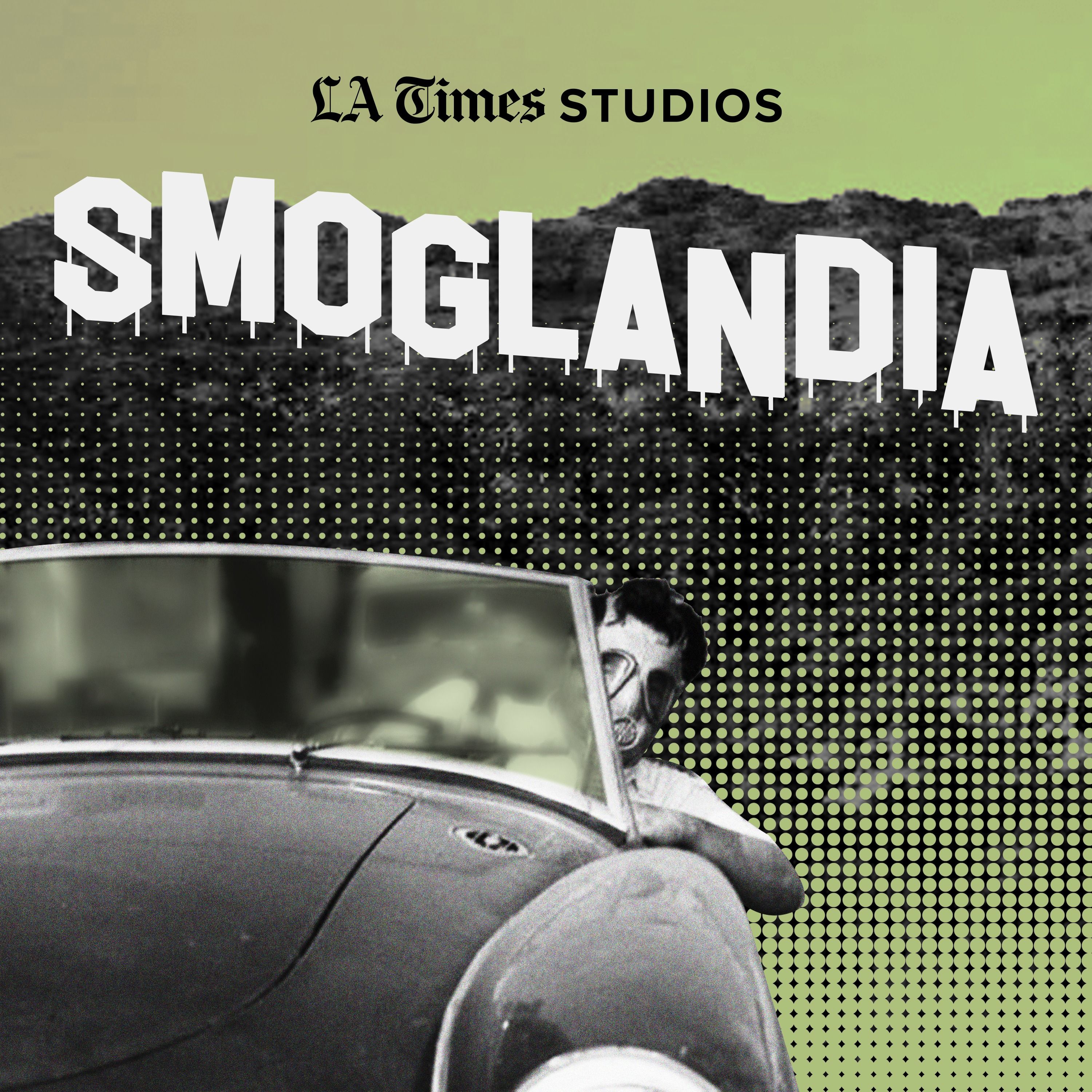
Boiling Point
Smoglandia Pt 6: FUTURE ELECTRIC, FUTURE TROUBLE
00:45:13
Decades ago, some unhappy Angeleno wondered why cars couldn’t just run on nice, clean … water? Not for want of trying – cleaner power has created lots of engine experiments, most dramatically Caltech versus MIT in the great electric car race of 1968, a story you’ll hear from the winner. Not all is fresh air and plug-ins: smog has been especially devastating on communities of color, and the Trump administration may pull the plug on that have let California clear its own air.
Loading summary
Transcript132 lines
- [00:01]
Emily Dreyfus
This is an la times studios podcast.
- [00:09]
Earl Ofari Hutchinson
One of the things from the first 10 years I always remember that struck me coming from Chicago was looking at the mountains during the summertime and oftentimes I couldn't see them in that period. Late 60s 70s Louisiana was small, big bound. The smog months were. You could mail this one in May, June, but especially August and September and into October. And then I realized after October, the first rains. Wait a minute, we got some mountains here.
- [00:45]
Pat Morrison
That's Earl Ofari Hutchinson. These days he's president of the Los Angeles Urban Policy Roundtable, an author and a political analyst. As a teenager he moved to LA and ran track at Dorsey High School in the Baldwin Hills neighborhood. He lives there now, near the immense Inglewood oil field, smack in the middle of la. His memory about that magic trick of the San Gabriel Mountains suddenly appearing once the smog blew away. We heard versions of that from just about everyone we talked to for this podcast. And really it's a story you'd hear from anyone who lived here before the 2000s. Many people of color didn't just see the smog. Sometimes they worked and lived right in it among the industries that polluted their air.
- [01:30]
Earl Ofari Hutchinson
One in particular, one area that I am that really at that point in time, and I'm thinking about it now, that came back, it's no longer there, it's the post office there now. Goodyear Goodyear in South Central LA. The Goodyear Tire Manufacturing plant during the 60s and 70s that was a major employer of African Americans in Los Angeles. Obviously the whole process within that plant, many processes, you had chemical exposure and you had the plant. And then there were other plants around there too, ancillary plants that also had chemical exposure in which African Americans worked at in, in significant numbers. And then you had the residential part, the area, the neighborhood, so you had a double whammy. You had employees and you had residents.
- [02:23]
Pat Morrison
In many communities, neighborhoods and polluting businesses exist cheek by jowl at this moment in our air pollution history. The massive ports of Los Angeles and Long beach are the single biggest source of air pollution in the LA region.
- [02:41]
And like South Los Angeles, those neighborhoods are also home to mostly communities of color, like the one where Hutchinson grew up. We know this not only from anecdote and experience like Hutchinson's, but from studies like Jennifer Ofodile's. She has a PhD in atmospheric chemistry and is co lead author of a recent study at UC Berkeley.
- [03:01]
Jennifer Ofodile
Coming to grad school, coming to Berkeley, I was really interested in exploring air quality and conducting these investigations through an Equity lens. Like I really wanted to know, you know what, like what was in the air we were breathing, who was breathing worse air, what are the disparities and how different communities impacted. And so having those two things together was a great opportunity to like use LA to achieve those goals. Because LA is a perfect case study. It's a large, diverse region and with the history of like air pollution issues and environmental justice concerns, I just couldn't pass it by. At the time.
- [03:36]
Pat Morrison
LA grew these neighborhoods with a chicken or egg quandary. Dirty industry set up operation where land was cheaper, which was also often the only parts of town that people of color could live. That cycle has deep consequences to this day.
- [03:52]
Jennifer Ofodile
You know, these communities, these low income communities of color, they're in locations in LA where they had to be there. Like they had restrictive covenants in the 1930s. They were redlined and they were kind of segregated from like more desirable, like coast neighborhoods and relegated to inland, inland areas. And so because of this, there were so many decisions back then that were discriminatory, like the sighting of these pollution sources, the sighting of certain, like freeways and highways just destroying neighborhoods to put these polluters in there. And so because of that you look at redline maps and the same issues has continued to compound. And that's how we have the issues that we have today.
- [04:32]
Pat Morrison
The Berkeley team went looking for obnoxious volatile organic compounds like benzene. It's what you smell when you spill gasoline. Researchers flew instruments aboard a small plane about 1,000ft above us Louisiana to Long beach toward Riverside, measuring pollution that doesn't just come from cars which move all over the place, but from industries, buildings that don't move at all. They compared their measurements with census tract data, which is just loaded with income and race and ethnicity information, and took a look at where the emissions were coming from and who they were reaching.
- [05:05]
Jennifer Ofodile
And so we found that when you separate census tracts into low and high income and then you look at the demographic information, so in this case low income Hispanic and Asian residents, we found that they were impacted by much higher emissions of these hazardous air pollutants, so ranging from 60 to over 100% on average. And this was in comparison to high income white areas. And what this means is that these populations are living in close proximity to pollution sources which if you again think about the historical context, it's not too surprising because these sources are being were placed in these communities.
- [05:44]
Pat Morrison
Across LA's smog soiled history, the plight of minority communities had been pretty much ignored. Their own protests began to be heard in the 1980s. But Hutchinson has some ideas for making them even more effective.
- [05:58]
Earl Ofari Hutchinson
I think the way to come at it is this. If you just talk about the environment, that's not going to get it with a lot of people that mean anything to them. However, if you personalize it and say you breathe in poison air, it can shorten your life and it can make you cough, it can make you wheeze, it can make you, when you're trying to walk five steps, choking, you know, that might get their attention. So you got to personalize it, getting their attention.
- [06:24]
Pat Morrison
That's key to Jane Fonda's mission, that the political is personal. So lives and health are political, too. In 2024, the activist and actor joined former Governor Arnold Schwarzenegger on a soccer field near that Inglewood oil field. They were campaigning and winning as it turned out, to keep new oil wells far from schools and homes and hospitals. For Fonda, cleaning up polluted air is one element of slowing down climate change. And she thinks changing political leadership can make it happen.
- [06:56]
Jane Fonda
We have to use democracy to fight fascism. And the way to use democracy is to get brave people elected to office. And they can't be moderate. It's too late for moderate. They have to be people who will say, no, I'm not going to do that. I'm not going to compromise with Joe Manchin or do this or that. I'm going to say no with you don't need fossil fuels. No more drilling, no more fracking, no more mining.
- [07:24]
Pat Morrison
It's what she said and practiced and sworn by for years. Get it together, all together to make things change.
- [07:32]
Jane Fonda
After protesting and marching and getting arrested and all of that, what I've realized together with a group of colleagues, is protest is important. Non cooperation is critical. Right now, we have to build our non cooperation muscle.
- [07:50]
Pat Morrison
I'm Pat Morrison, and you've crossed the border into Smoglandia. Pollution, pollution. Wear a gas mask and a veil.
- [08:01]
They're drinking the water and breathing.
- [08:14]
Jesse Alejandro Cattral
During one of the most severe windstorms Southern California experienced in more than a decade, the Palisades and Eaton fires ignited, leaving heartbreaking losses in our communities. Now, as we build back, we're building stronger, cleaner and more resilient in communities most vulnerable to dangerous weather conditions and wildfires, Southern California Edison is placing power lines underground, hardening the electric system by installing wires with protective coating and adding advanced technology to help keep communities safe. So when Southern California faces the next storm, the next most severe event, we'll be ready. Learn more@sce.com disasterrecovery and if you were impacted by the Eaton fire, you may qualify for direct compensation through Southern California Edison's Wildfire Recovery Compensation Program. File your claim directly with no legal fees, no litigation, and receive payment in months, not years. To file and learn more, visit sce.com directclaims I'm Jesse Alejandro Cattral.
- [09:14]
Emily Dreyfus
And I'm Emily Dreyfus, and this is Pacific Standard Time.
- [09:19]
Robert Garcia
We have stories from all over the state of California, all the big battles that are happening here, Prop 50, housing, affordability, tech and immigration.
- [09:26]
Emily Dreyfus
And we're really excited to bring you the stories about how California's dealing with what it means to be alive in 2025.
- [09:34]
Robert Garcia
Subscribe to Pacific Standard Time, a new weekly show from the San Francisco Standard.
- [09:38]
Emily Dreyfus
We'll have new episodes every Wednesday starting November 19th. Wherever you get your podcasts.
- [09:47]
Wally Rappel
You'Ve seen those bumper stickers that say start seeing motorcycles. What happened to you? You started seeing more and more motorcycles, right? Well, in my neighborhood near Highland Park, Silver Lake, Echo park, the same thing happened to me with stickers in the back windows of old Mercedes diesels.
- [10:02]
Pat Morrison
That's John Raby, for years the host and producer of the LA's radio show Off Ramp. Back nearly 20 years ago, he was talking about a glorious but brief experiment running his buttercup yellow diesel Mercedes sedan on leftover vegetable oil salvaged from a Mexican restaurant.
- [10:19]
Wally Rappel
I could reduce my dependency on foreign oil, cut my emissions and stop spending any money on fuel. So I bought an old Mercedes diesel converted by Lovecraft Biofuels, founded by Brian Friedman.
- [10:32]
Pat Morrison
There are a lot of reasons it didn't work for long, but there are a lot of reasons for having a go at fuels other than gasoline.
- [10:40]
Wally Rappel
Tell me where we are now.
- [10:41]
Leslie Kendall
We're on the third floor of the Petersen Automotive Museum where we talk about, you know, different concepts like utility and distinction and what makes cars special, what makes cars run, the artistry behind the outward appearance of the automobile and its sculptural quality.
- [10:58]
Pat Morrison
There are a lot of wild and unusual way out there mobiles at the Petersen Automotive Museum in Los Angeles. And Leslie Kendall, the chief curator at the museum, is showing them to producer Jonathan Shiflett.
- [11:11]
Leslie Kendall
The oldest car we have in the museum is a circa 1900 Smith. It's a two cylinder buggy like car built by a company that survives today and makes pumps. This was a gasoline car, gasoline powered and at the turn of the 20th century, that's gasoline, steam and electric and believe it or not, compressed air were kind of vying for supremacy. Compressed air Was ruled out almost immediately. But there was a time when electric cars outsold their gasoline counterparts. Electric cars are smooth, they're quiet. You don't have to bend over and crank them to get them smooth. They don't emit odors, and you can get right into them. Push a button, flip a switch, and you're off.
- [11:59]
Pat Morrison
Most of the experimentation was a lot less about what they ran on than how they looked. Were they expensive? Were they big and showy? Were they muscular? And did they make a lot of noise, especially accelerating from a dead stop. So everyone would turn to, look at you and think, whoa, get a load of Mr. Big Shot.
- [12:18]
Electric cars didn't give that thrill. And that, too, made its own point.
- [12:22]
Leslie Kendall
You know, driving an electric car, especially in the 70s and 80s, you were expressing yourself. You were telling the world, look, I get it, you know, there are gasoline cars out there. But I'm not going to fall for that. I'm going to keep going. I'm going to drive my electric car, even if it goes 35 miles an hour maximum. I just won't take it on the freeway. I have to charge it after 50 or 60 miles. And I want to tell the public that there are people out there that wants to proclaim to people that there is a different, better way to get around, and electric cars are it. We just have to give them time.
- [12:59]
Pat Morrison
Far and away, the most successful alternate energy cars are electric and hybrid powered. Their numbers are surprisingly hard to nail down. But in the first half of 2025, almost 4 in 10 new vehicle registrations were for hybrid and EV variants. And of course, Californians own more than a third of all the EVs and hybrids in the whole country. Gasoline was the obvious fuel for the earliest cars, but not the exclusive one. In 1950, as Angelenos were desperate for smog solutions, a man riding from the town of Beaumont assured air pollution chiefs that cars certainly could run on water. Though exactly how, he couldn't say. In the mid-1950s, Ford was dreaming up a concept car, the Nucleon, powered by nuclear fuel. Ford's enthusiasm ran right away with it. Powering a car off a tiny nugget of uranium would also mean adding tons of lead shielding more than a mobster's limousine, all to protect drivers, passengers, and anyone coming within a football field of the thing. Even our good doctor Ari Hagensmidt imagined in the 1950s that clean gasoline, if not completely alternative fuels, was possible, even imminent.
- [14:16]
Wally Rappel
Fortunately, of course, we have possibilities of control.
- [14:21]
Pat Morrison
For example, the work in the automobile industry.
- [14:24]
Wally Rappel
They are working on exhaust devices, catalytic devices, and also direct flame afterburners.
- [14:35]
Pat Morrison
We may make some assumptions there. Those gadgets are still not in a final stage. And maybe we start putting them on the car in 1962, and maybe in.
- [14:49]
Wally Rappel
1965 they are all equipped.
- [14:53]
Pat Morrison
Never underestimate human ingenuity. After all, if humans could make liquor out of potatoes and wheat and that obnoxious durian fruit, the same could go for alternative fuels, biofuels, like cooking oil for rabies, Mercedes, maybe even coconut oil. So your car exhaust smells like a tropical island breeze.
- [15:19]
In 1968, the year Detroit launched its swaggering line of muscle car, there were a couple of electric cars that did make a lot of noise, not from the engines, but from the hullabaloo surrounding their great race across the country. Caltech versus MIT. A 10 year old VW bus versus a nearly new Chevy Corvair. That's the car Ralph Nader said was unsafe at any speed. Each car used aftermarket electrical power with a lot more on the line than bragging rights. But to make sense of the great 1968 race, we have to go back a bit further than that, to the basics of a college sophomore looking for something to hang his life's work on and to meet girls.
- [16:02]
Wally Rappel
People have asked about how the electric car fit in with dating girls, and that was a challenge because there were no girls for a good distance away from Caltech. You had to go out to the Claremont Colleges, and that was really pushing the issue of range.
- [16:20]
Pat Morrison
This is Wally Rappel, a longtime developer of electric vehicles and ultimately one of Caltech's most accomplished dropouts.
- [16:27]
Wally Rappel
I took a couple of girls out, and I remember this is kind of off topic a little bit, but it's interesting. I remember after the car was running and I took a girl out to movies, and I was thinking about the distance, getting her where she wanted to get to, getting back to her dorm or whatever. And she could tell I was anxious about something. You know, I was looking, watching the voltmeter, and from her point, she was probably thinking, you know, it was between the two of us. And.
- [16:58]
The anxiety I had was based on, you know, the number of watt hours that were left in the battery.
- [17:05]
Pat Morrison
Well, this is a variant on the old story that men would tell their dates. I'm sorry, honey, we've run out of gas.
- [17:10]
Earl Ofari Hutchinson
Yeah, yeah.
- [17:12]
Wally Rappel
This was a new twist to that.
- [17:14]
Pat Morrison
So there was the challenge of making a practical electric car. That was one thing, maybe even a little abstract. But Rappel grew up in Hollywood, and in Hollywood Smog. And as a Caltech sophomore, and almost by happenstance, he showed up at a lecture by the man himself, Dr. Ari Hagensmid.
- [17:32]
Wally Rappel
Dr. Hagenschmidt was giving a talk over at the student center, and I went, and it was fairly technical. He got into some of the chemistry of smog. And as a physics person, I was not fully attuned to that. I understood some of it, but not all of it. And what I did understand, though, is a statement. When he kind of summed things up. He said, automobiles are responsible for approximately 80% of the Los Angeles smog. And that was, at the time, of course, a very controversial statement. And it raised a lot of eyebrows. But it got me to thinking, okay, if that's the case, then we need to do something with the automobile first.
- [18:15]
Pat Morrison
He did what any good student would do. He consulted one of his professors.
- [18:19]
Wally Rappel
So the next step was to make electric cars that would actually work. And there's a problem there, because the battery, it takes three. It's took at the time, 300 pounds of batteries to store as much energy as one pound of gasoline. That was part of the reason why electric cars died in the early 1900s is because of the limitations of batteries. That probably was the main reason.
- [18:47]
The question was, could you make better batteries?
- [18:52]
I talked to some faculty. I talked to Fred Anson, who is an electrochemist here, and Dr. Anson said to me, he said, wally, the lead acid battery was invented in 1859, and it's not gotten much better since then. And we don't have anything that's more economic than the lead acid battery. So even until late times, the assumption was there that the lead acid battery was the only thing we had to work with. On the other hand, from a physics point of view, I saw that there was tremendous room for improvement orders of magnitude. I couldn't get people in physics interested, and I couldn't get people in chemistry interested. And so the question came, what can I do to get interest in working on batteries? I know there's this theoretical possibility of making good batteries. I don't know how to do it, but maybe others will figure this out, and maybe a team effort. So that's where I got the idea of the VW bus.
- [19:56]
Pat Morrison
Like many college students, Rappel got a summer job. Unlike many college students. Of the thousand dollars he earned, he spent 700 of it on a secondhand VW bus, and the rest buying up.
- [20:08]
Wally Rappel
An array of electrical components, converting an electric vehicle. I figured I'd be able to drive it, you know, maybe 50, 60, 70 miles on a charge. And that would at least people would see something that they could rally around and get interested in.
- [20:26]
Pat Morrison
That summer job was just the start of his labors. He tinkered and tweaked to make it run, to make it run better and to promote it. He drove it to campus and back. He charged it up on Caltex juice, and of course he drove it on dates. But it just didn't end anyone's interest as he'd hoped. Now this needed something big, something splashy, something with a rooting interest.
- [20:49]
Wally Rappel
One of the things I was thinking about is, is there some way we could have a competition which would put everything together. The need for highway charging, the issues of range, the issues of longevity. And I thought, you know what would really be great is a cross country electric car race with mit. But how am I going to get MIT interested? I don't know anyone at mit.
- [21:14]
Pat Morrison
Caltech didn't have a marketing major, but Rappel could have created it. He talked the very skeptical dean of his engineering school into getting in touch with Gordon Brown, the engineering dean at mit.
- [21:26]
Wally Rappel
I heard later on what happened. Dean Brown got this letter, and he either had the letter or was talking about the letter where some students were present. And Dean Brown said, you know, this is really a stupid idea that came from Caltech. And the students were intrigued. If the dean thinks this is stupid, how cool this would be for us to do this. So they formed a group and they got even a faculty advisor, Dr. Richard Thornton. They got funding, some financial support. They got a vehicle donated from General Motors, and they got $20,000 worth of nickel cadmium batteries donated from Galton Industries.
- [22:07]
Pat Morrison
And as they say in Magic Axe, ta da. There was Now a date, August 26, 1968. And there were rules.
- [22:15]
Wally Rappel
The rules were that we would drive and charge continuously, no stopping off or anything. It was get from point A to point B as fast as you can using pre designated recharge points. If you towed the vehicle, you would be penalized five minutes for each mile that you towed. If you couldn't get to a recharge point and you used an emergency generator that was towed by a follow car, each time you used said generator, you would be penalized one half hour.
- [22:45]
Pat Morrison
You were really strict.
- [22:46]
Wally Rappel
Well, those were the rules and we both agreed to them. And so I used the generator. We had a diesel generator that was towed by a Chevy Bel Air, and MIT elected to tow the vehicle if they couldn't get to a recharge point.
- [23:02]
Pat Morrison
Now, first of all, what were point A and point B.
- [23:05]
Wally Rappel
Point A was a line that was driven on a street that no longer exists here at Caltech. It was called Creasy street. And that was our starting line and that was MIT's finish line.
- [23:15]
Pat Morrison
And point B.
- [23:16]
Wally Rappel
And point B was a line on Massachusetts Avenue right in front of MIT where a line was painted. And that was their starting line and our finish line.
- [23:28]
Pat Morrison
If he thought the hard part was done, think again. Now he had to build the damn thing. Something that could be driven from California to the New York island and up to Boston. And he also had to find other electric car fans and persuade them to create from scratch a network of charging stations all along the route. Each team then went its own way, technologically speaking. MIT came up with a so called.
- [23:54]
Wally Rappel
Brushless DC motor and they had problems with the electronics, with the inverters. They were blowing up transistors left and right.
- [24:02]
Pat Morrison
The Caltech engine didn't get much luckier. Rappel tried to make a speed control, didn't work. MIT tried to make an inverter. Didn't work. It was back and forth tech failures to be overcome right up to the starting line.
- [24:16]
Wally Rappel
And it was partly because the technology just wasn't there. We didn't have the components that we really needed. We were trying to do what was almost impossible at the time.
- [24:28]
Pat Morrison
But each team added a special ingredient. Bravado.
- [24:32]
Wally Rappel
Before the race got started, there was a little bit of teasing. We did mit. When they spoke to us, they said they looked forward meeting us at the California border.
- [24:43]
Pat Morrison
That is trolling.
- [24:45]
Wally Rappel
Yeah, yeah. And there were a few comments that I made that were similar. So there was that spirit of rivalry.
- [24:58]
Pat Morrison
I'm journalist Henry Bonsou. I'm working with Foreign Policy to bring you the Threshold, a new podcast about the fight to end infectious disease. How close are we? Where can the financing come from? And what's at stake if we fall short? The Threshold is a seven part series made possible in part through funding from the Gates foundation, available on all the major platforms.
- [25:30]
August 26, 1968. The race starts. In the beginning, the odds seemed to be in Caltech's favor.
- [25:37]
Wally Rappel
The race started for MIT in a horrible sense. They did not get to their first recharge point before they had battery problems. They had to pull over, their battery overheated. They had tremendous problems. And at first we were listening to this on the AM radio. Our first reaction was, oh, this is wonderful. You know, we're in great shape. And then we realized MIT may have to drop out of the race and the race will be over. Essentially. So we started kind of rooting for mit, but not too much.
- [26:08]
And so on the third day of the race or the second day of the race, I forget which, MIT started applying ice to their batteries, and keeping the batteries cooler allowed them to charge fast. And it made all the difference in the world. And we started to realize we're losing this race unless we do the same thing.
- [26:29]
Pat Morrison
Like any race, the lead shifts again and again, this time shifting away from Caltech.
- [26:35]
Wally Rappel
When we were driving from Flagstaff, Arizona, to the next point was Seligman, Arizona, There was a map error, and we didn't have enough charge, so we had to charge a second time. So we had picked up an hour's worth of penalties by using the generator twice on that lap. And we were well behind schedule. And so we thought when we got finally to Seligman, well, maybe we'll start doing better now. But there was worse news. We started charging, and after about 10 minutes, the power went off. And it went off not only for the electric car, but for a whole area where there was a gas station and there was a little, like a mini mall. People. Yeah. Coming out, what's going on? And they saw an electric car, and they realized we were the culprit, and so they were not happy with that.
- [27:27]
Pat Morrison
You caused the blackout?
- [27:28]
Wally Rappel
We caused it, yeah. And it was a primary fuse. So the utility worker was there. They were able to replace that. And so after about 15 minutes, we had power on. And so I knew what had happened, that we overloaded a circuit, so I charged at a lower rate. Then the power went off again, so that all added to our time. So we were way behind.
- [27:53]
Pat Morrison
This was all an experiment, remember? But to a bunch of young men from competing schools on opposite sides of the country, it sure felt a lot more than science was at stake.
- [28:03]
Wally Rappel
I was driving, and there was a little downgrade. I didn't want to waste energy stepping on the brakes, so I thought, well, I'll downshift to see second and use the regenerative braking and recapture a little bit of that kinetic and potential energy. I calculated in my head that the motor RPM would get up to about 4,000, which was the rating for the motor. And I figured we should be able to do that. So I downshifted. The regenerative braking was working fine for about two seconds.
- [28:35]
And then the motor blew up.
- [28:38]
Pat Morrison
This meant a new motor. A new motor meant a lot of new machining, a lot of time, a whole lot of things that Caltech's team did not have.
- [28:47]
Wally Rappel
There's a picture of the group of us, as I'm explaining to them, there's no way the race will continue for us. But on the follow car team was Dick Rubenstein. And he had a different point of view. He said, wally, he said, I know the rules of the race. And he said, the rules will allow us to push the car across the country. He said, we can do that. But he said, I have a better idea. We're going to fix the car and drive it across the country. And I said, dick, there's so much it's going to be. He said, but let's get across the country. It doesn't matter if MIT wins. Let's get across the country.
- [29:26]
Pat Morrison
Remember, this was long before cell phones. If you wanted to make a phone call, you had to find a phone or a phone booth, put coins in the slot, hope someone on the other end picks up. But he found a new motor and had it shipped. He found a local machine shop in the middle of the country that could do the job. And while the Caltech guys waited, they drilled. They rehearsed with an imaginary motor, taking it apart, putting it back together, installing it. By the time the new motor reached them, it took them only 15 minutes, 15 to put it in that VW bus.
- [30:01]
Wally Rappel
So we were out of the race for a total of 23 hours and 30 minutes. And had it been 24 hours and 30 minutes, we would have lost the race.
- [30:14]
Pat Morrison
Well, MIT crossed its finish line in California while Caltech still had 1,000 more miles to drive. But this is where the rules come in.
- [30:24]
Wally Rappel
Something happened before they crossed the finish line that was kind of embarrassing. Their charger failed, and they replaced diodes and thyristors, and they couldn't get it to work. So they towed to the next recharge point. But they left the car in first gear. And so the motor was being spun up at a speed far beyond 4,000 rpm. And it was a motor similar to the one I had. So their motor blew up just like mine had blown up. But they didn't have a clutch in their vehicle. So when their motor blew up, the jammed motor caused the transmission to fail. So they realized that they had no way of fixing the vehicle. They would have to tow the rest of the way.
- [31:07]
Pat Morrison
MIT had to tow their car the 100 miles they had left in the race. But they were close enough that even with the penalties for towing, it still looked like they would win. The Caltech team pushed. They drove fast. They charged at a higher rate than perhaps they should have. But even so, when we Got to.
- [31:26]
Wally Rappel
Mit, the calculation was done, and we realized we had lost the race. We had lost the race by about two and a half hours. Now, the calculation involved accounting for the time difference. There's a three hour time difference.
- [31:44]
Pat Morrison
This is like Jules Verne, around the.
- [31:45]
Wally Rappel
World in 80 days. Exactly. It's the same ending, except with a little bit more complexity to it. There's this three hour time difference, but they had an equation that required that they use the. You're going. One car is going one way and the other car is going the other way. So there was really a six hour delta that needed to be used in their equation and they had three hours. So that mistake was found by Machine Design magazine while we were sleeping in the men's dorm at mit. There was a press conference set up for later that evening. And during the press conference, I was told that we had won. And it was news to me.
- [32:25]
Pat Morrison
Come on.
- [32:27]
Caltech had done it. It won.
- [32:30]
Wally Rappel
I was glad just for the fact that we'd been able to drive across country. It was the first time an electric car had gone across country. That was recorded.
- [32:41]
Pat Morrison
The year 1968 was a year of revolutions in culture and counterculture, in protests and political violence. It was also in this hit and miss competition, a revolutionary year for automobile technology. It was modest, it was incremental, but it was there. And then, like one of the race teams stuck in the middle of nowhere. That's where for the longest time, the technology seemed to go nowhere. Now the technology has leaped ahead, but there's also somewhere worse than nowhere that we could find ourselves. And that's backwards. That's where politics may be taking us. Backwards, into the smog again. If you don't see it now or never saw it at its worst, you may have a hard time believing it was ever the monster that it was. You better believe it, if only because it may be coming back. When Ari Hagensmit made that presentation in 1959, he'd already calculated that out of the 30 pounds or so of air that an ordinary Angeleno breathed in and out every day, a few ounces of it was brown sludge, distilled essence of smog. Improved as we are, about 1,500 Southern Californians each year die from air pollution. And more than a million and a half breathe unhealthy air. That's per carb the California Air Resources Board. And year after year, the LA region still flunks the federal clean air standards. Where we score especially badly is in what's called fine particles, the stuff that can burrow into your lungs and do real damage. Soot and diesel and the dust that tires shed as they roll along the road. The Air Quality Management District has had to add wildfire smoke now to its air quality alerts. And this will blow your mind. Even foodie LA messes up our air. A new national oceanic and Atmospheric Administration study finds the volatile organic compounds being spewed by the cooking from LA's fabulous new restaurant scene are about as much to blame for the man made ozone in the lake basin, like a quarter of it as our vehicles. A quarter.
- [34:54]
And there's this nugget. Each year, one full day of smog here has come all the way across the Pacific from China from the huge factories making stuff to export. This is a fine little moment of irony. Remember the big Kaiser steel mill in Fontana whose pollution killed off farms and crops? Well, about 30 years ago, some of that mill equipment was sold and dismantled and shipped to northern China where it was reassembled and may be making some of the pollution that drifts back to us in Southern California. So, smog report still not really good, but better. More than 20 years have passed since the region had a first stage smog alert. Almost 40 years since a stage two alert. And someone born 50 years ago would never have experienced a third stage smog alert. This in some, in spite of millions more people here and millions more cars. How did it come about? Carrots and sticks, laws and regulations, emission rules not just for cars, but for factories and metal plants. Bans and buyback programs for stinky gas lawnmowers. And now a statewide ban on gas powered leaf blowers. This is one hard habit to break. Even though electric blowers can be had for as little as $80, you're definitely right in thinking that in almost any neighborhood you can still hear and smell the illegal ones blasting away. And for years the federal government, Republican and Democratic, has trusted California to work on its own air pollution problems and given California the right to set more stringent rules than other states, along with waivers on meeting federal clean air standards as long as California could prove how it was trying to call it states rights against smog. California Democratic Senator Adam Schiff came a bit later to living in smog, but not to the smog wars.
- [36:49]
Adam Schiff
Since California and LA have had this problem for a long time, California has been on the forefront of taking it on. We have passed clean air rules, we've been given special waivers by the federal government. Because of the unique challenges that we face in California and a lot of other states have followed California's example. And this is what really irritates the Trump administration, and that is we pass rules for California because we want to protect the health of Californians. Other states look at what we do. They know that we're using sound science and a smart approach, and they adopt it. And this has been what has irritated the Trump administration that we have so many followers.
- [37:31]
Pat Morrison
California's plans for cleaner air are hard, but hopeful. All new car sales being electric, are carbon free by 2035. New zero emission sales goals for commercial trucks. Stricter rules for heavy duty diesel engines. They're not just about smog, but greenhouse gases and climate change. And with the president, who calls climate change a con job and a scam, the medium to long shot got a lot longer. Trump resolutions have yanked away California waivers and mandates, like Lucy yanking away Charlie Brown's football, ending the decades of California making particular pollution rules that worked well enough for 10 other states to follow, well enough that those other states have also joined California in suing the feds over this, what Governor Gavin Newsom calls Trump's campaign to, quote, make America smoggy again.
- [38:24]
Robert Garcia
It's crazy to say, no, you're too clean, you're too sustainable. We want you actually to be more dirty. We want you to have less clean air like the rest of the country. It's pretty wild.
- [38:40]
Pat Morrison
Robert Garcia spent eight years as mayor of Long beach before being elected to Congress as a Democrat. And his district includes the ports of Long beach and Los Angeles.
- [38:49]
Robert Garcia
The single largest polluter in and around the ports are actually cargo ships. And are the ships coming in and out of the port, which are completely unregulated in many cases because they're not American ships in many cases. Right. You're getting foreign ships coming in.
- [39:06]
Pat Morrison
Even in the face of the Trump headwinds, Garcia is pressing ahead, along with California Democratic Senator Alex Padilla, to stop the polluting by ships arriving at these two harbors, even foreign ships.
- [39:17]
Robert Garcia
Every effort oftentimes has folks saying, well, this is going to actually damage the port or this is actually going to hurt trade. And the reality is that none of that's happened. The ports have grown, we've become cleaner. The economy at the ports has grown stronger over time, and it will be the case when we clean these ships.
- [39:37]
Pat Morrison
With this administration in the boxing ring with California, whens are now ifs. I asked Senator Schiff how bad these rollbacks could get.
- [39:46]
Adam Schiff
Well, some in industry just want a free license to pollute. So a lot of these major polluters and oil companies, they would like to See just unbridled ability to pollute and they don't want California to be able to insist on cleaner air rules. So oil big industry is behind the money behind this. In terms of the administration, they're most responsive to that industry. But also there's a certain element of owning the libs, opposing environmental things just to oppose environmental things. I think this is part of what's behind, for example, the attacks on wind power and solar power which are going to drive up everybody's utility bills. Is this attack on renewable energy? Because I think 90% of new energy coming online into to the grid is coming from renewable sources. You cut off those new sources of energy in the face of even greater demand, such as with all these AI data centers and people's utility bills are going to go through the roof.
- [40:48]
Pat Morrison
Worst case scenario, do you see the air turning back into what it was when you came here almost 50 years ago?
- [40:56]
Adam Schiff
I sure as hell hope not. The reality is from state budget resources are limited and polluters are going to pollute more now and there are going to be more cancers and there are going to be more birth defects and there is going to be more asthma. People living near freeways are going to be sicker. People traveling the freeways are going to be sicker. People living near power plants are going to be sicker. And we'll have Donald Trump to thank for it.
- [41:24]
Pat Morrison
Even if you weren't alive, then you'd have heard about it. Rodney King's plea on the third day of the Los Angeles riots in 1992 about can we all get along? And the kids and older people. But you may not remember what he said next. He said this. I mean, we've got enough smog in Los Angeles, let alone to deal with setting these fires and things. Smog is built into LA's DNA. Astronaut Sally Ride aboard the space shuttle Challenger reported seeing the smog blotting her Los Angeles Hometown in 1983. It pairs up with the city's name. Like burgers and fries, lock and key, peanut butter and jelly, it's woven through pop culture. Godzilla does battle with a smog monster in the movies. Tim Buckley's album cover for his 1972 vinyl Greetings from LA showed the city frosted in smog. Three years later, the Miracles recorded Smokey Robinson's song for them. Made Me the only romantic song themed to smog, with lyrics like I wish it would rain and take the smog away so that we can have a bright sunny day. The sky is gray when the smog fills the air hiding the light that shines through your hair. Swoon, a 1962 Italian movie about a businessman stuck in LA by plane delays, drives moviegoers through the vast, smoggy city, while the hero also has a fling with another smog. Bound Italian online sellers advertise sweatshirts and hoodies in a color called smog. Sometime in the late 1960s, Brian Wilson, the creative genius of the Beach Boys, recorded a brief, insightful riff about smog. He said, this. This poison that we breathe has such an effect on overall body and mind. It's a slight subliminal problem for most people. It bothers them, but they really don't know what's bothering them. I opened up my bathroom window today and I almost choked to death. I say, let's get air clean again. As Brian Wilson said, we get used to seeing it, and then we see it mostly through the eyes of newcomers and outsiders. The World cup comes to LA in 2026, and for the third time in 2028, the Summer Olympics are back. Athletes and fans might be surprised by what they don't see. Smog was front of mind in the summer of 1984, when Olympic athletes from the world over were anxious about LA Smog. A marathoner named Julie Brown said smog could feel like someone was standing on your chest. And marathoner Pete Pfitzinger was concerned that smog, not ability, could decide who won marathon medals for the sake of the horses, not the riders. Equestrian events were moved 100 miles out of LA into San Diego county, and the British equestrian team said it would be bringing horse oxygen masks just in case. But things went off pretty smoothly to this day. Angeleners, who were old enough to drive during the 1984 games remember the miracle of the freeways. Cars disappeared from the roads as thousands of locals hightailed it out of town. And driving was once again briefly a pleasure.
- [44:36]
So this story of Smaug is just about wrapped up. But not the story. As I've been saying since episode one, this is one fight we may have to fight all over again.
- [44:48]
Let's go back to the San Fernando Valley, to Serafine Seagal's magically bottomless supply of fascinating objects and treasures. And I asked her, does she still have that gas mask? The one she was tooling around town in 40 years ago behind the wheel of her Triumph convertible? Because who knows? She may have need of it again.
- [45:10]
I wonder where it is now. I was looking over here, wasn't I?
- [45:16]
Let's see.
- [45:18]
There's your goggles. Is my bag in your way? No. Okay. No.
- [45:23]
Emily Dreyfus
Let's see.
- [45:25]
Pat Morrison
Nope.
- [45:28]
Jane Fonda
Well, I just rearranged some stuff, so I don't.
- [45:30]
Pat Morrison
Yeah, I know what that's like. You put everything in order and then you can't find anything. Yeah. For years it's been living here.
- [45:36]
Jennifer Ofodile
And then this.
- [45:37]
Pat Morrison
You know, the Alaska went out. Now it's in there. In there somewhere. Yeah, but it's still there if you need it. She couldn't lay her hands on it right then and there, but a few hours later, she emailed Eureka. She had found it.
- [46:03]
Smoglandia is hosted by me, Pat Morrison. Our senior producers are Mary Knoff and Jonathan Shiflet of Studio Phoning. Our editors are Hugo Martin, Shelby Grad and Steve Clow. Our director of library services is Carrie Schneider. Additional sound design and engineering by Hannis Brown. Our podcast Marketing manager is Bryn Jura, and our Product Marketing director is Becca Dorman. Special thanks to LA Times Studio President, Anna Mogzanian, President and Chief Operating Officer of the Los Angeles Times, Chris Argentiri, and Executive Editor of the Los Angeles Times, Terry Tang. Smoglandia is exactly executive produced by Darius Derek Shawn.
- [46:57]
Pollution. Pollution. Wear a gas mask and a veil.
- [47:04]
Wally Rappel
They're drinking the water. And bring.
- [47:15]
Emily Dreyfus
Who's abducting 100,000 children in China each year? And how was a cult where paedophilia, murder and torture were commonplace allowed to operate in Chile for nearly four decades? At True Crime Reports, a new video podcast from Al Jazeera, we'll investigate these stories from the global south and beyond. True crimes that often haven't reached the headlines in the West. I'm Halimah Yuddin. In each episode, we'll take you to a different country. You'll hear from experts and first hand accounts from those right at the heart of these stories. True Crime Reports. Find us under Al Jazeera's YouTube channel podcast tab and wherever you get your podcasts.