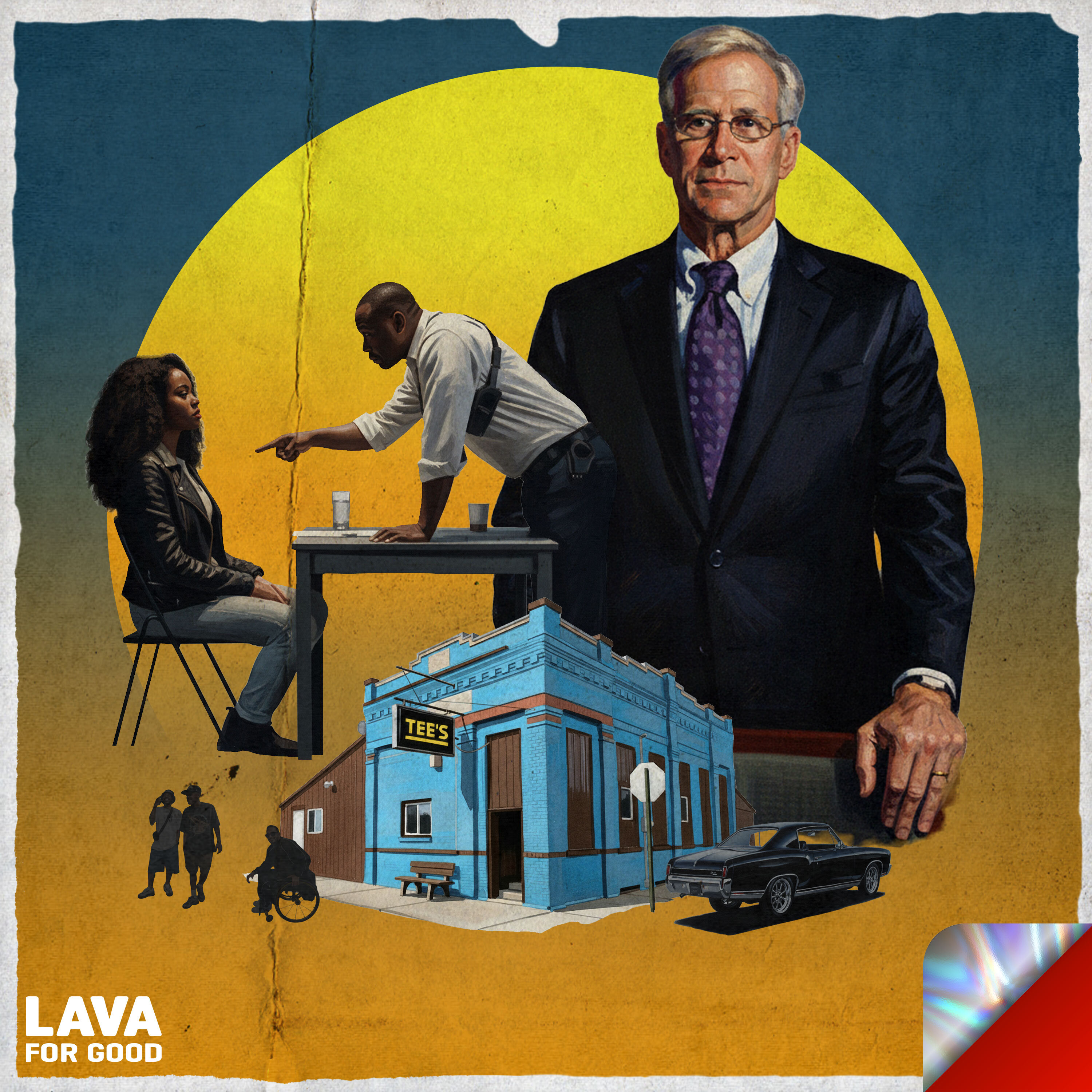
Loading summary
Transcript197 lines
- [00:01]
Beth Shelburne
Hey, this is U.S. olympic gold medalist Tara Davis Woodhull. And I'm U.S. paralympic gold medalist Hunter Woodhull. As athletes, our lives are about having a clear path and a team that.
- [00:10]
Mara McNamara
You can absolutely trust. So when it came to getting the best mortgage, we chose PennyMac. PennyMac is proud to be the official mortgage provider of Team USA and you learn more at pennymac.com PennyMac Loan Services, LLC equal housing lender NMLS ID35953 licensed by the Department of Financial Protection and Innovation under the California Residential Mortgage Lending Act.
- [00:29]
Beth Shelburne
Conditions and restrictions may apply. Do you want to find a stress.
- [00:31]
Mara McNamara
Free way to buy your next car? Start at CarMax and shop your way.
- [00:36]
Beth Shelburne
If you want to browse with confidence.
- [00:38]
Mara McNamara
Get pre qualified online with no impact.
- [00:40]
Beth Shelburne
On your credit score and shop cars within your budget. From luxury cars to family rides, CarMax.
- [00:46]
Mara McNamara
Has options for almost every price range.
- [00:49]
Beth Shelburne
Including more than 25,000 cars priced under $25,000. So hey, want to get started? Just head to CarMax.com for details and get pre qualified today. Want to drive CarMax?
- [01:03]
Mara McNamara
There's a fire inside you you can't ignore.
- [01:06]
Beth Shelburne
Stand still.
- [01:07]
Mara McNamara
Not a chance. You're a lifelong learner who's come this far. Now we are here to help you keep going further Capella University. What can't you do? Visit Capella Edu to learn more. Last time on Ear Witness.
- [01:31]
Beth Shelburne
I believe I got a phone call from someone in the room saying they heard gunshots. Boom. Small caliber gun. It wasn't a big caliber. Boom. About the second time I said it and went, that was a gun. When you got a deputy sheriff killed over here, it's high profile and people are expecting things out here. Tavares Johnson, I remember he was pushing a Dricus Ford in the wheelchair.
- [02:00]
Mara McNamara
They came together.
- [02:02]
Beth Shelburne
I had saw Tavares pushing a Drakers in the club. Me and one of my girlfriends, her name is Latonya. Me and her and two. Two guys were supposed to hook up that night. One is 21. They call him Dre. He's in a wheelchair. Not only do you want somebody in custody, the captain is telling the lieutenant we need to get this done. The sheriff is telling the captain we need to get this done. I didn't get it secondhand. I was there. You were there. I was there when it went down.
- [02:38]
Mara McNamara
So what she saying?
- [02:39]
Beth Shelburne
She was there and I was there. That's a lie. That's a lie. That's a shame.
- [02:56]
Mara McNamara
When police come looking for Ardragas Ford, his mom calls Richard Jaffe who had helped them in the past.
- [03:04]
Beth Shelburne
Ardragas was in a wheelchair, as you know, and his mother brought him over to the lion's den, to the sheriff's department.
- [03:15]
Mara McNamara
Jaffe's a trial lawyer, and he looks like one, but not in a slick way. He's slender, in a rumpled suit, with gray hair and glasses. The day Ardragas went to the sheriff's office for questioning, Jaffee is just beginning a trial in a different case. But before he goes to court that day, he gets a phone call from the sheriff's office.
- [03:39]
Beth Shelburne
I was called by Deputy Blanton, and he said, I heard that you were representing Rodriguez Ford. And I went, yes, I was just contacted by the family, but I don't know anything about the case. And he said, well, look, he's just a witness. I mean, he just knows stuff. And I knew Deputy Blanton, and I believed if he had information involving a police shooting, I wanted to help. And our Dragis did, too. And against my best judgment, I allowed our Dragis to be interviewed by him and several other Jefferson county detectives.
- [04:24]
Mara McNamara
So Ardragas is questioned alone while his attorney, Jaffe, heads to the courthouse.
- [04:32]
Beth Shelburne
Perhaps around 4:30 or 5, when we broke, I found out that Ardragas was still there. So he'd been there all day, like maybe nine hours. And I was extremely distraught, so I hurried over there. It was just across the street. And when I got into the very large room, it was buzzing with detectives and police officers, and you could feel the tension. It was. It was enormous amount of tension there.
- [05:04]
Mara McNamara
In the crowd of police officers and detectives, Jaffe notices Jefferson County's district attorney, a man named David Barber. He's in charge of all state prosecutions in Alabama's largest jurisdiction and is working with police in the Deputy Hardy murder investigation. When Jaffe sees Barber, he walks over.
- [05:27]
Beth Shelburne
To him, and I said, what's going on with our Dragis? And David said, well, we know he was there, and he's not telling us the truth, so we're going to charge him. He can either be a witness or a defendant. I said, well, what are you saying? And he said, just that. Witness or defendant, it's his choice.
- [05:49]
Mara McNamara
The choice detectives are giving Ardragas, either he gives them information about Hardy's murder, or he'll be charged with a crime.
- [06:01]
Beth Shelburne
If I had any idea that they thought he was there, I nor any lawyer would allow their client, in any case, especially where a death penalty case, to be interviewed by law enforcement, they just wouldn't allow it. Frankly, I felt a Little inept and a little foolish as well as a little deceived. And I said, well, what can I do to help? And he said, well, go in there and get him to tell the truth. And I said, well, then you're going to have to give him immunity.
- [06:33]
Mara McNamara
According to Jaffe, David Barber offers Ardragas immunity from prosecution in exchange for naming Taforest as the shooter. Jaffe says Barber handwrites the immunity agreement on a piece of paper and gives it to him.
- [06:49]
Beth Shelburne
David's word was good with me. And I walked into a little office with where our Dragis was in his wheelchair sitting there, didn't look happy, certainly wasn't happy with me at all. And I said, what's going on? And he said they were screaming at me and they made me tell the story over and over and over again and even tell it backwards. And I said, well, this is an immunity agreement, maybe we should talk about it. And he reads it and he said, so they want me to lie. He said, Look, Mr. Jaffe, I wasn't there and I've got a dozen or more alibi witnesses that will testify to that. I know nothing about it. Zero. I said, okay, well they think that you're not a shooter, but you were there. And they think Tafares is the shooter. And he looked at me and he said, listen, I'm not going to lie for anybody. Tavares and I are close, but we're not that close. He's not family. I would happy to give Tafares up in a heartbeat, except it would be a lie. And I'm not going to lie. That never happens, even on a theft case, even on a possession of marijuana case, even on a hubcap case. Everybody flips sadly enough to save themselves.
- [08:14]
Mara McNamara
Yeah.
- [08:15]
Beth Shelburne
He said, no way. Not gonna lie. I said, all right, well they're gonna take you to jail, they're gonna wheel you to jail and they're gonna charge you with capital murder, which is a death penalty offense. And he goes, I wasn't there. Tell him to take me to jail.
- [08:38]
Mara McNamara
The next day, the Jefferson County Sheriff's office announces formal charges in the murder of Deputy Bill Hardy.
- [08:46]
Beth Shelburne
Charged with capital murder of a law enforcement officer are 22 year old Torforest Johnson, 21 year old Ardragas Ford, 23 year old Oman Berry and 21 year old Quintess Wilson. They are held without bond.
- [09:02]
Mara McNamara
All four people charged with capital murder are are young black men. Based on the changing stories of Yolanda Chambers, detectives believe at least six people were in the parking lot behind the hotel when Hardy was shot. Yolanda and Latonya, Taforest and Ardragas. And the two other people Yolanda identified in photos, Omar Berry and Quintess Wilson. The headline in the Birmingham News reads, police Confident they Got Right Men in Deputy Slaying. Sounds like an open and shut investigation. But pull back the curtain. Or in this case, open up the investigative file. And the inner workings tell a different story. Do you hear my madness? Laughter hides my fears. Sorrows deps are endless.
- [10:35]
Beth Shelburne
In this valley of tears.
- [10:43]
Mara McNamara
I want to see a.
- [10:47]
Beth Shelburne
Revelation.
- [10:52]
Mara McNamara
I want to know who you are.
- [10:58]
Beth Shelburne
I'm reaching out.
- [11:02]
Mara McNamara
In desperation to.
- [11:06]
Beth Shelburne
The one who's holding the stars to the one who's holding the star.
- [11:24]
Mara McNamara
I'm Beth Shelburn. This is Ear Witness. Chapter four. Witness or defendant? The tactic the State uses with Rodriguez telling him he can either be a witness or a defendant. Detective Tony Richardson repeats it over and over during Deputy Hardy's murder investigation.
- [11:48]
Beth Shelburne
You are in a position now to be one of two things. Okay? Okay. You can either be a witness or you can be a defendant. You know, you can either be a witness or you can be a defendant. You can only be either a witness or you can be a defendant. Okay? It's your choice. You make it. You tell me what you want to do.
- [12:08]
Mara McNamara
One of the people Tony Richardson uses this tactic on is Yolanda Chambers friend, latonya Henderson, who was in the car with Taforest, Ardragas and Yolanda the night Deputy Hardy was killed.
- [12:22]
Beth Shelburne
Latonya, I am working a homicide. Okay? And in working this homicide, people have choices. It's choice whether you want to be a witness or you want to be a defendant.
- [12:33]
Mara McNamara
Latonya is 16 years old. She's in high school and lives with her mother and brother. And as she's questioned about the night of the murder, she's alone in the room with detectives. No lawyer, no parent present.
- [12:49]
Beth Shelburne
I'm not saying anything to entice you to say something. You tell me what's the truth and tell me. You tell me that's the truth and I'm gonna take it like that. But I do want you to know that some people are gonna be witnesses. Some are gonna be defendants. Defendants going to jail. Okay.
- [13:06]
Mara McNamara
After giving latonya this choice, Detective Richardson asks her where she was that night.
- [13:13]
Beth Shelburne
Were you at near or around that hotel when this officer was shot? No, sir. Okay. And you've never been there before? No, I haven't.
- [13:22]
Mara McNamara
Never.
- [13:23]
Beth Shelburne
And you have no independent knowledge of what happened to this officer? No, I haven't.
- [13:29]
Mara McNamara
Despite being told she's a suspect in a murderer, latonya does not change her story. But she also doesn't seem to understand the rules of the game detectives are playing. She asks Detective Richardson to explain.
- [13:44]
Beth Shelburne
Ask you a question. Defendant is. Defendant is someone that's charged with the crime? Well, no. No, I don't want me to defend it? No. All right, so you want to be a witness.
- [13:56]
Mara McNamara
Latonya has to ask what it means to be a defendant, then says she doesn't want to be charged with the crime. At one point, Richardson stops the tape like he's done in Yolanda's interviews, and restarts it after a five minute break.
- [14:13]
Beth Shelburne
Do you know what a Crown Sterling is? No, I don't. Would you know it if you saw it? No, I have never seen it. I have never been there. Were you in any hotel parking lot that night where shots were fired? No. Okay, this. Sergeant Tony Richardson, Jefferson County Sheriff's Office. The time is 3:50pm this is gonna conclude this interview.
- [14:35]
Mara McNamara
In a lot of the interviews that you did in this case, you and Sergeant Salter presented a choice. You can be a witness or you can be a defendant. Tell me about presenting that to somebody that you're interviewing. That seems like a lot of pressure to put on someone.
- [14:54]
Beth Shelburne
Well, at certain times, you have to put pressure on somebody. That's just a. That's just a strategy. That's just an investigative tool. That's. That's nothing. So I look at you and I say, look, you can either be a witness or you can be a defendant. It's up to you. And that's the truth.
- [15:12]
Mara McNamara
What if the person is neither a witness nor a defendant in the case, though?
- [15:17]
Beth Shelburne
Well, sometimes you say that trying to determine if they're a witness or a defendant, you know, particularly if you don't know. And if they continue to maintain, I know nothing, at some point I'm gonna say, okay, I got you.
- [15:33]
Mara McNamara
But for latonya, there was never an okay, I got you from investigators. Even though she explains she doesn't know anything about the crime, detectives follow through with their threat and make her a defendant. One month after Tony Richardson questions latonya, the state charges her with hindering prosecution. In Alabama, that's a felony at 16 years old. Police take Latonya Henderson to adult jail, where she stays for five months.
- [16:16]
Beth Shelburne
You know, Latonya Henderson, I mean, even if she had been there, you know, even if Yolanda's story was true, what's she a defendant on? You know, what has she done?
- [16:30]
Mara McNamara
This is Derek Drennan, a lawyer who worked with Richard Jaffe in representing Ardregas Ford.
- [16:36]
Beth Shelburne
And I don't know, I think they charged her with hindering prosecution, maybe because basically she wasn't telling the lies that Yolanda was telling.
- [16:51]
Mara McNamara
A few years later, Latonya says that she was hysterical when they took her to jail, desperate to get detectives to believe her. She says that she suffered from stress and lost too much weight. I really wanted to talk to latonya to hear how this experience shaped her. And we tried for months to track her down, knocking on doors, calling possible numbers, combing social media, but we never could connect. I was able to talk to her uncle, Herman Henderson, a pastor in Birmingham. He told me Latonya and Yolanda had been friends since they were babies. But this case ended their friendship. And Latonya was scarred by the entire experience. Her trust in other people eroded. Yolanda Chambers and Latonya Henderson made different choices when faced with threats from police. There's a damned if you do, damned if you don't dynamic and how they were each impacted. Yolanda became a witness for detectives, avoiding jail time during Hardy's murder investigation, but entered a pattern of exploitation that that may have led to her murder. Latonya became a defendant for telling the truth. She didn't have any information to give, and detectives sent her to jail. Both Yolanda and Latonya ended up traumatized and hurt. And as I think through how detectives treated these witnesses and the suspects of Hardy's murder, I keep coming back to this one thing that Tony Richardson said.
- [18:47]
Beth Shelburne
The best thing that a person probably can do for themselves that's suspected of a crime is do not talk to the police. Period.
- [18:56]
Mara McNamara
Now, that's really interesting coming from a retired detective, but that's the truth.
- [19:14]
Beth Shelburne
Why have I asked my H Vac.
- [19:15]
Mara McNamara
Guy I found on angie.com to change my grandpa's trachea tube? Because I was so amazed by how quickly he replaced our air ducts, I knew I could trust him to change Pop Pop's tube while I was on vacation.
- [19:26]
Beth Shelburne
Make it quick, young man. Aw.
- [19:30]
Mara McNamara
See? Pop up trusts you.
- [19:32]
Beth Shelburne
Uh, I think we should call a doctor. Connecting homeowners with skilled pros for over 30 years. Angie, the one you trust to find the ones you trust. Find pros for all your home projects@angie.com.
- [19:44]
Mara McNamara
Breaking news, everybody. Not everything is terrible. I repeat, not everything is terrible. The ripple effect with Jenna Kim Jones is proof that the Internet, it hasn't ruined humanity entirely. BYU Our currency is service and mentoring. Our currency is relationships.
- [20:00]
Beth Shelburne
Our Currency is people. That's the kind of experiences that we want to create.
- [20:04]
Mara McNamara
We did not invent tailgates.
- [20:05]
Beth Shelburne
We don't have a corner on the market of good. That's really the framework for what Cougs Care became.
- [20:12]
Mara McNamara
It's like magic, you guys. So put down your doom scroller and.
- [20:15]
Beth Shelburne
Pick up your faith in humanity and.
- [20:17]
Mara McNamara
Join me, Jenna, for the Ripple Effect. It's a reminder that you can start a ripple that changes everything. You really can. The response we got was huge. The camaraderie we got was huge. We had a national endorsement from Andy Reid and Patrick Mahomes about our specific service project. Listen to the Ripple Effect with Jenna Kim Jones on the iHeartRadio app, Apple Podcasts, or wherever you get your podcasts.
- [20:44]
Beth Shelburne
Ugh.
- [20:45]
Mara McNamara
Could this vintage store be any cuter? Right? And the best part? They accept Discover. Accept Discovery in a little place like this? I don't think so, Jennifer. Oh, yeah, huh? Discover is accepted where I like to shop. Come on, baby, get with the times.
- [21:00]
Beth Shelburne
Right.
- [21:01]
Mara McNamara
So we shouldn't get the parachute pants.
- [21:03]
Beth Shelburne
These are making a comeback, I think. Discover is accepted at 99% of places that take credit cards nationwide. Based on the February 2025 Nielsen report.
- [21:25]
Mara McNamara
Detectives are moving ahead with the theory of the crime that Yolanda Chambers gives them in her interrogations, even though the theory isn't supported by what hotel witnesses saw and heard the night of the murder. So what were detectives missing? What evidence was available? And was there anything else they should have looked at but didn't because they decided to stick with Yolanda as their key witness? Let's back up to the moment Hardy was shot. We know officers began their investigation by talking to hotel guests, actual confirmed witnesses who were staying at the Crown Sterling Suites. Several people heard the shots and looked out their window right after it happened. Like Marshall Kelly Cummings, the Keebler cookie guy.
- [22:18]
Beth Shelburne
Following is an interview with Mr. Marshall Kelly Cummings. Mr. Cummings is employed by Keebler.
- [22:26]
Mara McNamara
This interview was recorded about two and a half hours after Hardy was shot. Cummings says he saw someone get into a car and drive away from the hotel right after he heard the shots fired.
- [22:39]
Beth Shelburne
Where I immediately, as soon as the second shot rung out, I pulled the curtain back and looked out. And that's when I saw the car down below me. I saw a person.
- [22:52]
Mara McNamara
Cummings says he saw the person close the driver's side door.
- [22:57]
Beth Shelburne
When I looked up, they're closing. Which door? The driver's side.
- [23:01]
Mara McNamara
He saw a copper colored or light brown car with a vinyl top. Slowly back out of the parking spot and drive away with the headlights off.
- [23:12]
Beth Shelburne
But you think it was dark copper or light brown? Yes, sir.
- [23:17]
Mara McNamara
And there was another witness in a different hotel room who also looked out his window after he heard the shots.
- [23:25]
Beth Shelburne
I heard a shot, I jumped up. I just cleared the door and stuck my head out.
- [23:31]
Mara McNamara
The night of the murder, Leon Colvin was staying in room 611 with his wife Annie. The two of them were in bed. He was watching TV and she was reading the newspaper. They heard the first shot and Leon told Annie he thought it was a car backfiring.
- [23:49]
Beth Shelburne
You heard a shot, Bang. Tell me, how long after is it? Bang bang. Okay, so just a second or so, yeah.
- [24:01]
Mara McNamara
After the second shot, Colvin went to the window to see what was going on.
- [24:06]
Beth Shelburne
Seen the car down by the back of the motel. He walked up the side, came around the front of the car, got in the car.
- [24:15]
Mara McNamara
Colvin's description of the car and what the car did as it left the parking lot matches the details given by Marshall Cummings.
- [24:25]
Beth Shelburne
What color was that car? I told him it was a dark color, gold or brown with a kind of maroon looking top with a sunroof in it.
- [24:35]
Mara McNamara
Both Cummings and Colvin say the car was a four door brown, gold or copper sedan with a maroon top. That's so specific. They both say it was the only car leaving the parking lot right after shots were fired. What these witnesses saw doesn't match the theory of the murder. Detectives go with, what kind of car.
- [25:02]
Beth Shelburne
Was y' all in? Monte Carlo.
- [25:05]
Mara McNamara
Ardragas describes his car to detectives the day he's arrested. He was driving a two door black 1971 Monte Carlo.
- [25:16]
Beth Shelburne
What color? Black.
- [25:18]
Mara McNamara
And he had installed Flowmaster mufflers. So it made a loud rumbling sound.
- [25:24]
Beth Shelburne
I got like Flowmasters on my car. You got these floor masters, loud mufflers on the car. Okay.
- [25:31]
Mara McNamara
People could hear Ardregas car coming from blocks away. Taforest tells detectives that when they picked up Latonya, they actually waited for her in an alley, but because they didn't want to wake up the entire house. But Colvin and Cummings say that the light brown or copper colored car quietly drove out of the parking lot. And there's an even bigger discrepancy.
- [25:59]
Beth Shelburne
My door don't open. Oh, driver's door don't open.
- [26:03]
Mara McNamara
The driver's side door on our very loud black Monte Carlo was broken. It did not open. Ardregas and Taforest tell this to detectives.
- [26:18]
Beth Shelburne
Door won't open. That door, the driver door won't open at all.
- [26:23]
Mara McNamara
Investigators impounded Ardregas car and confirmed the driver's side door didn't open. Detective Tony Richardson would later testify to this. But both Colvin and Cummings say that someone got in the driver's side of the car and quietly drove away.
- [26:43]
Beth Shelburne
When I seen him, he walked from the passenger side around the front of the car to the driver's side, and he got in.
- [26:52]
Mara McNamara
There were other guests at the hotel who spotted cars leaving the area around this time, but their descriptions were all different. The only consistent descriptions of the getaway car came from Cummings and Colvin, two people who went to their hotel room windows after hearing shots and looked down into the parking lot. The investigative file shows that police tried to find the car seen by Colvin and Cummings, but. But Tony Richardson would eventually tell a grand jury the search was a wild goose chase and that the car didn't exist. And there's something even more significant about this other hotel witness, Leon Colvin. He gives police a basic description of the man he saw. 5 foot 10, medium build, who got into the car and drove away.
- [27:56]
Beth Shelburne
He had a black and white striped shirt and it looked like he had kind of baby khakis or something.
- [28:06]
Mara McNamara
Colvin describes the man as wearing a black and white shirt and khaki or cream pants. This is the only physical description given of a potential suspect. But detectives decide that Colvin isn't a witness, he's a defendant. As I dig deeper, I learn that Detective Tony Richardson and Leon Colvin are cousins. And in the first week of the investigation, Richardson decides that Colvin is hiding something.
- [28:39]
Beth Shelburne
We have talked with several people, people we have talked to have, have indicated that you do know more.
- [28:47]
Mara McNamara
Colvin gives detectives multiple statements about what he heard and saw. And Tony Richardson interrogates him for hours about his movements inside the hotel the night of the murder, insisting that Colvin was involved.
- [29:03]
Beth Shelburne
If you tell us one thing and it's not accurate, and we know that you know no different, then you can be charged with the crime. Okay, just so you know.
- [29:15]
Mara McNamara
Tony Richardson shows Yolanda Chambers four photos of possible suspects. Yolanda picks out the photo of Leon Colvin and says he was involved in the alleged drug deal behind the hotel when Hardy was killed.
- [29:32]
Beth Shelburne
Said you were standing right there when the man was shot. I wouldn't.
- [29:36]
Mara McNamara
Leon Colvin is charged with hindering prosecution and taken to jail.
- [29:45]
Beth Shelburne
I ain't did none of this him. I ain't did this here. I ain't did this here.
- [29:56]
Mara McNamara
Police press ahead with our Dragis and Taforest as two of their main suspects. Even Though there is no record of any hotel witness describing a loud two door black Monte Carlo leaving the scene or a man in a wheelchair, There's another clue in the file that jumps out at me. A police report from a day after the murder states that a hotel worker named Jerry McDaniel told detectives that he saw Deputy Hardy arguing with the group of young black men who had been running around inside the hotel, especially the sixth floor. There's even a description of one of these young men. Six feet tall, slim, wearing a dark baggy basketball jersey with the number 33 on it. When I first read this, I was like, whoa. What? This information seems super relevant. Hardy was arguing with a group of people just hours before he was murdered. Jerry McDaniel would later testify in court that he saw Hardy having this loud argument with the group of young men around 10pm and that he saw Hardy again before he left for the night around 11:30. McDaniel said Hardy was standing at the back door of the hotel, propping it open with his foot. He also spotted the same group of young men outside in the back parking lot as he left work to go home. He said that after the confrontation, Hardy seemed mad, saying, I ain't never seen him like that before. But detectives never identified the young men and later say their interview with Jerry McDaniel never led to any more evidence. I want to pursue this. If Jerry McDaniel is still around, maybe he can give us some new information about those last hours of Hardy's life. Something about the young men he saw arguing with Hardy. Some new nugget to breathe life into this case.
- [32:18]
Beth Shelburne
How are you?
- [32:20]
Mara McNamara
I'm looking for Mr. Jerry McDaniel. Is that you? Thank you so much. Jerry McDaniel is retired in his 70s, and lives in a small green shake shingle bungalow, the same house he's lived in his entire adult life. We talk on his porch and he remembers Hardy's murder. Conversation with anybody?
- [32:45]
Beth Shelburne
Yeah, because I'm moving around so I see everything I become to the Asian and stuff, you know, it been a lot of stuff going on that hotel.
- [32:53]
Mara McNamara
Though McDaniel also remembers seeing Hardy argue with the group of young men inside the hotel. I mean, did it seem like Deputy Hardy knew those people?
- [33:04]
Beth Shelburne
I don't know. He might have known him. Cause he something he wanted. Something they had or something they didn't give him. Something. I don't know what it was.
- [33:16]
Mara McNamara
And about an hour and a half later, when he ended his shift and left the building, he passed by Hardy, who was standing at the hotel's back door. Do you remember, like exactly what you saw?
- [33:29]
Beth Shelburne
Yeah, he was standing at the back door back there to the right. And it was a car out there when I left, you know, right there, right there at the back by where the dogs would be at.
- [33:41]
Mara McNamara
But that's pretty much all he remembers. Had police aggressively pursued this lead, they might have gotten somewhere. But now, decades later, McDaniel can no longer recall any other specific details. Details about the car or anything else from that night. Whatever he saw, whoever those young men were, that potential big lead has faded. Likely impossible to recover. After reading through hundreds of pages of reports, there's a question that still sticks with me. Why did Deputy Hardy leave the hotel atrium where he was drinking coffee and smoking a cigarette, to go out the back door to the parking lot without his radio?
- [34:53]
Beth Shelburne
And then usually every hour on the hour or so or every hour and a half, he would do a drive around the premises to check out the perimeter of the hotel.
- [35:05]
Mara McNamara
According to Barry Rushakoff, the hotel desk clerk, Hardy's routine was to walk around inside the hotel when he was making his rounds. But when he checked around the outside of the hotel, he. He usually drove around the property in his car right after the crime. The sheriff tells reporters that Deputy Hardy may have been investigating something suspicious, maybe a drug deal. But if Hardy went outside to check something behind the hotel, why would he leave his two way radio on the table inside? Barry talked to detectives just five hours after the murder. He told them about how weird this detail seemed to him.
- [35:52]
Beth Shelburne
Tell me what you thought was unusual about him not having the walkie talking. Officer Hardy. If he got up, he always put the radio in his back pocket. And if he was smoking, he never would leave a cigarette really. He would always walk around with it. For him to have left both the radio and the cigarette just was extremely unlike him. Completely unlike him.
- [36:14]
Mara McNamara
Hardy had over two decades of experience as a law enforcement officer. Leaving his radio behind seems out of character. And he also left his cigarette burning. Is it possible that he was expecting to go outside quickly, maybe to meet someone, and that's why he left them behind? Is it possible that Hardy knew his killer? I tried to look into this. There is a file containing records of the calls that police received during from the special tip line set up for the case. And I found eight different tips urging detectives to look into Hardy's personal life. These tips suggest that someone Hardy knew might be connected to his murder. I asked Detective Tony Richardson about this. Is there anything that you recall y' all investigating as far as that goes.
- [37:15]
Beth Shelburne
I don't recall that or recall us investigating anything. I'll say right now that I wouldn't have. I mean, I'm investigating a police officer that's dead. He's been shot and killed. It don't matter what, you know he did. If somebody walked up to him and.
- [37:34]
Mara McNamara
Shot him like that, my producer, Mara, presses him like the first thing to me, if I hear that somebody is killing, I would look at their life for a motive instead of assuming that it was random.
- [37:46]
Beth Shelburne
Is that not where you would start? You know, I can explain it like this. When Hardy was shot, he was in uniform working a part time security job, still a sheriff's deputy now doing his job, and he was shot and killed. Okay? If he had been at home in his pajamas, shot and killed in bed, we would have looked at him. Because that's what you do.
- [38:39]
Mara McNamara
Because Deputy Hardy was a police officer and was killed in uniform, not in his own bed wearing pajamas. Detective Richardson says he wouldn't have looked into people that knew Hardy. Instead, Richardson repeats the theory that Hardy walked up on a drug deal that he wasn't supposed to see and that's why he was killed. An insider that I talked to, a retired bailiff who worked in Jefferson county when Deputy Hardy was murdered, told me that this theory about a police officer interrupting a drug deal, it's like a default explanation when detectives don't have any idea what happened. The sheriff first mentioned this scenario hours after the murder, and the media ran with it. The only eventual evidence to support this theory, the always changing statements from Yolanda Chambers. Why have we asked our contractor we found on Angie.com to be our kids legal guardian? Because he took such good care when redoing our basement that we knew we could trust him to care for our kids, all eight of them, should something happen to us. Are you my dad now?
- [40:11]
Beth Shelburne
No, sorry. I do basements. Connecting homeowners with skills. Pros for over 30 years, Angie, the one you trust to find the ones you trust. Find pros for all your home projects@angie.com Breaking news, everybody.
- [40:25]
Mara McNamara
Not everything is terrible. I repeat, not everything is terrible. The ripple effect with Jenna Kim Jones is proof that the Internet, it hasn't ruined humanity entirely. BYU Our currency is service and mentoring. Our currency is relationships.
- [40:40]
Beth Shelburne
Our currency is people. But that's the kind of experiences that we want to create. We did not invent tailgates.
- [40:45]
Mara McNamara
We don't have a corner on the market of good.
- [40:47]
Beth Shelburne
That's really the framework for what Cougs Care became.
- [40:52]
Mara McNamara
It's like magic, you guys. So put down your doom scroller and.
- [40:55]
Beth Shelburne
Pick up your faith in humanity and.
- [40:57]
Mara McNamara
Join me, Jenna, for the Ripple Effect. It's a reminder that you can start a ripple that changes everything. You really can. The response we got was huge.
- [41:06]
Beth Shelburne
The camaraderie was. We got was huge.
- [41:08]
Mara McNamara
We had a national endorsement from Andy Reid and Patrick Mahomes about our specific service project. Listen to the Ripple Effect with Jenna Kim Jones on the iHeartRadio app, Apple Podcasts, or wherever you get your podcasts. Oh, could this vintage store be any cuter? Right? And the best part, they accept Discover. Accept Discover in a little place like this? I don't think so, Jennifer. Oh, yeah.
- [41:35]
Beth Shelburne
Huh?
- [41:35]
Mara McNamara
Discover is accepted where I like to shop. Come on, baby. Get with the times.
- [41:40]
Beth Shelburne
Right?
- [41:41]
Mara McNamara
So we shouldn't get the parachute pants.
- [41:43]
Beth Shelburne
These are making a comeback, I think. Discover is accepted at 99% of places that take credit cards nationwide. Based on the February 2025 Nielsen report.
- [42:04]
Mara McNamara
Detectives not only missed potential promising leads, they also ignored facts that could have ruled out to Forrest Johnson and our Dragis Ford as suspects. Some of the people who were with Taforest and Hardregis at T's place remember learning about their arrests from the media coverage the week after the murder.
- [42:27]
Beth Shelburne
When I read it in the paper, I saw Tafora's name and I was like, well, how did he do it? We was at Tease, you know, that.
- [42:33]
Mara McNamara
Night, Kenyara Pickett was at teas at the same time Deputy Hardy was killed. She was out celebrating with her sister Deidre, who had just recovered from surgery. And Taforest gave her name to police.
- [42:48]
Beth Shelburne
It's a female. They call her Ken. Ken? Ken, yeah. Man's name? Yes.
- [42:53]
Mara McNamara
Ke he told them to find a girl named Ken that he was hanging out with AT Ts, but they never called or knocked on her door.
- [43:02]
Beth Shelburne
I never went to the police or anything because I was underage at the time. Yeah.
- [43:08]
Mara McNamara
I mean, how old were you?
- [43:09]
Beth Shelburne
I think I was 20. It was 95. 20. I turned 20 in April. Yeah.
- [43:14]
Mara McNamara
So did they not check IDs the at the club, or did y' all have fake IDs?
- [43:17]
Beth Shelburne
They had a fake ID.
- [43:19]
Mara McNamara
So that made you not want to go to police because you didn't want to? You weren't supposed to be there.
- [43:23]
Beth Shelburne
Yeah, I didn't want to go to jail.
- [43:25]
Mara McNamara
Kenyarra was scared that she would end up in jail if she went to police.
- [43:31]
Beth Shelburne
I saw on the news that Tafara Johnson had been picked up for that murder of Officer Hardy. I Said, wait a minute. There's no way.
- [43:40]
Mara McNamara
I said, I saw Tafara. Stanley Chandler is another person who saw Taforest and Ardregas at T's place at the time Deputy Hardy was murdered. Stanley is a U.S. marine, and he was also hesitant to get involved.
- [43:56]
Beth Shelburne
You know, you 25, just cannot walk in. No down to county jail, say, hey, I saw that guy at the club that night at that time, you know, so. But no one never contacted me. So I felt like. Like if fires needed me, that someone would reach out. I had no knowledge of what to do.
- [44:14]
Mara McNamara
Ardragas and Taforest told police about multiple people they were with at teas. The bartender who remade a weak drink, the guy who sold Taforest a hot dog outside the club, and the girls they chatted with in the parking lot. Taforest also gave Tony Richardson the names and phone numbers of friends, friends he remembered seeing inside the club.
- [44:39]
Beth Shelburne
One female name is Quesi.
- [44:42]
Mara McNamara
Quesy, including Quesi and Mama Cat.
- [44:46]
Beth Shelburne
Okay, go ahead. One female name is Mama Cat. Her number is 785 Forrest. Trying to write this. Okay, 75. Tafaris couldn't give us any names other than nicknames or maybe a first name. There was no way that we could find a witness. But we sat and we waited, hoping that, you know, who don't know that Tafarus is in jail for this crime. Maybe they'll come forward. Not a single one. Nobody came forward to say, hey, you got the wrong guy. He was. He was at the club.
- [45:25]
Mara McNamara
Not a single person came forward. Forward to say to Forest was at T's place the night of the murder. After Tony Richardson tells me this, I look through the investigative file to double check.
- [45:39]
Beth Shelburne
This is Sergeant Tony Richardson, Jefferson County Sheriff's Office. I am on the phone with Barbetta. And that's spelled B A R B E T T A Hunt, also known as Mama Cat. Do you. Do you remember where Tafarus Johnson was on the night of July 18th or the morning of July 19th? Yes, I do. Okay, can you tell me where?
- [46:03]
Mara McNamara
Right there. In the folder of recorded police interviews, I find that Detective Richardson did talk with an alibi witness he called Mama Cat about a month after the murder.
- [46:16]
Beth Shelburne
Well, I saw him at T's place. You saw. I'm at T's place. Yes. I was with my friend Velonique Sanders. Vellanique Sanders? Yes, sir. Okay. All right. I am on the phone with Velonique Sanders. Velonique is also known as Queasy, and her home phone number is 788 on.
- [46:34]
Mara McNamara
The same day, Detective Richardson talked to Vellonique, also known as Quesi. She told him she saw Taforest and Ardregas inside tees between 11pm and 1:30am okay.
- [46:49]
Beth Shelburne
All right. Is it any particular reason that you remember the time that they got there and the time that they left? Yes, the time that they got there. My friend Barbelda Hunt, her beeper had went off, and I remember her telling me what time it was. Okay, what about the time they left? The time they left, my beeper went out. Okay. My sister was paging me to tell me to come home. That's why I remember the time. Okay. All right.
- [47:17]
Mara McNamara
Now, I interviewed Tony Richardson 27 years after this investigation. I guess it's possible that he just doesn't remember speaking with Mama Cat and Queecy. So after I found these phone calls, I went back to ask him about it. There were alibi witnesses on the record that told y' all I saw them at T's place. Now, whatever went into not believing them is not in any files that we've been able to access.
- [47:51]
Beth Shelburne
Well, since I don't know who this witness was, I can't remember them. I can't remember what they said. I can't really tell you if I believe them or not. Probably not. Probably not.
- [48:08]
Mara McNamara
But cops have a lot of discretion as far as that goes. Right. In believing alibi witnesses are not believing alibi witnesses.
- [48:17]
Beth Shelburne
Well, you have. I mean, you can believe or disbelieve anybody, but if someone tells you something that either you need to check out your check further or tells you something that could possibly have happened, you have an obligation to either prove or disprove that. You have that obligation.
- [48:41]
Mara McNamara
But speaking with Mama Cat and Quesi, hearing them corroborate Taforest and Ardragas alibi, it wasn't enough for detectives to question their own theory of the crime. The pressure to put someone on trial for killing Deputy Hardy isn't letting up. But 15 months after the crime, the judge dismisses capital murder charges against two of their main suspects, Omar Berry and Quintess Wilson. Yolanda Chambers changes her story to say they weren't involved in the murder. They also have alibis, and police believe them. So detectives, let them go. DeForest and Ardregas are now the only two suspects charged with Deputy Hardy's murder. But Wright is detective Zero in on our Dragis. And to Forrest, they run into a big problem. Two weeks after she says Omar Berry and Quintess Wilson have nothing to do with the crime, Yolanda Chambers pivots and says under oath that she's made up the entire story about the murder. She recants all of her testimony now, saying to Forest and Ardragas also had nothing to do with the murder.
- [50:19]
Beth Shelburne
Evidence wise, we didn't have virtually. Well, we had virtually no evidence. We had the word of a 15 year old who told lies. A lot of lies. I've lied, I've lied, I've lied. We had this table empty. Well, nothing on it. And we were still trying to try that case. And we were like, man, what we gonna do? How are we gonna win this?
- [50:49]
Mara McNamara
But investigators have someone else, someone they hadn't initially believed. Someone who will become the state's new star witness against Taforest Johnson.
- [51:03]
Beth Shelburne
Bolly Nelson. Walk in that door and stand up on this table and say what she said. We got a full table now. We got all the evidence we need.
- [51:14]
Mara McNamara
That's next time. Ear Witness is a production of Lava for Good podcasts in association with Signal Company Number one. Executive producers are Jason Flom, Jeff Kempler, Kevin Wardes and me, Beth Shelburne. The investigative reporting for this series was done by me and Mara McNamara. Producers are Mara McNamara, Hannah Biel and Jackie Pauley. Kara Kornhaber is our senior producer. Britt Spangler is our sound designer. Additional story editing from Marie Sutton. Fact check help from Katherine Newhan and special thanks to Taforest Johnson's legal defense team. You can follow the show on Instagram, TikTok, Facebook and Twitteravorgood. To see behind the scenes content from our investigation, visit lavaforgood.com earwitness.
- [52:27]
Beth Shelburne
It never happens at a good time. The pipe bursts at midnight. The heater quits on the coldest night. Suddenly you're overwhelmed. That's when HomeServ is here. For $4.99 a month, you're never alone. Just call their 24. 7 hotline and a local pro is on the way. Trusted by millions, HomeServe delivers peace of mind when you need it most. For plans Starting at just $4.99 a month, go to homeserve.com that's homeserve.com not available everywhere. Most plans range between $4.99 to $11.99 a month. Your first year terms apply on covered repairs.
- [52:57]
Mara McNamara
I'm here with Spinquest where you can.
- [52:59]
Beth Shelburne
Play and win from the comfort of your own home with hundreds of slot games and all of the table games.
- [53:05]
Mara McNamara
You love with real cash prizes. Right now, thirty dollar coin packs are.
- [53:10]
Beth Shelburne
On sale for $10. For new users, it's all@spinquest.com that's square P I N Q U-E-S-T.com SpinQuest is a free to play social casino void where prohibited. Visit spinquest.com for more details. It's football season and now you can.
- [53:29]
Mara McNamara
Get anything you need for game day delivered with UberEats.
- [53:32]
Beth Shelburne
Well, almost.
- [53:33]
Mara McNamara
Almost anything.
- [53:34]
Beth Shelburne
You can't get a running back, but baby back ribs? Yes. UberEats official on demand food delivery partner of the NFL.