Loading summary
Transcript146 lines
- [00:01]
A
Hey, this is U.S. olympic gold medalist Tara Davis Woodhull. And I'm U.S. paralympic gold medalist Hunter Woodhull.
- [00:06]
B
As athletes, our lives are about having.
- [00:08]
A
A clear path and a team that you can absolutely trust.
- [00:11]
B
So when it came to getting the best mortgage, we chose PennyMac. PennyMac is proud to be the official mortgage provider of Team USA and you learn more at pennymac.com PennyMac Loan Services.
- [00:22]
A
LLC equal housing lender NMLS ID35953 licensed by the Department of Financial Protection and Innovation under the California Residential Mortgage Lending Act. Conditions and restrictions may apply. Do you want to find a stress free way to buy your next car? Start at CarMax and shop your way. If you want to browse with confidence, get pre qualified online with no impact on your credit score and shop cars within your budget. From luxury cars to family rides, CarMax has options for almost every price range, including more than 25,000 cars priced under $25,000. So, hey, want to get started? Just head to CarMax.com for details and get pre qualified today. Want to drive CarMax?
- [01:03]
B
There's a fire inside you you can't ignore. Stand still. Not a chance. You're a lifelong learner who's come this far. Now we are here to help you keep going further Capella University. What can't you do? Visit capella. Edu to learn more. Last time on Ear Witness.
- [01:34]
A
Molly Ellison. Walk in that door and stand up on this table and say what she said. We got a full table now. We got all the evidence we need. Ms. Ellison, would you tell us about the information that you have for us? He asked my daughter to use her three way to call for his homeboy. And he named the fellow's name as Tavares Johnson.
- [01:59]
B
We had a weak case.
- [02:00]
C
It's based on the testimony of one witness.
- [02:03]
A
The only evidence supposedly they had against it was this ear witness who had never heard him speak before, who had no idea who he was. This case is all about alternative worlds that are in conflict with each other and in conflict with truth and in conflict with what our justice system stands for. We forget sometimes that there was a third person on that phone who totally discredits what this lady says she heard. You know what I mean? And now how close? How much closer can you get than that?
- [02:40]
B
Why did the jury believe this woman who eavesdropped on the call over you, who actually had the call on the call?
- [02:48]
A
I don't understand.
- [02:49]
B
I never understood it.
- [02:51]
A
You know, the victim's family deserve to know what happened to their loved Ones, but they. They get no, no justice, no peace out of a wrongful conviction, you know, and this is simply a case of just anybody will do.
- [03:19]
B
Do you remember the first time you met him?
- [03:22]
A
I do.
- [03:24]
B
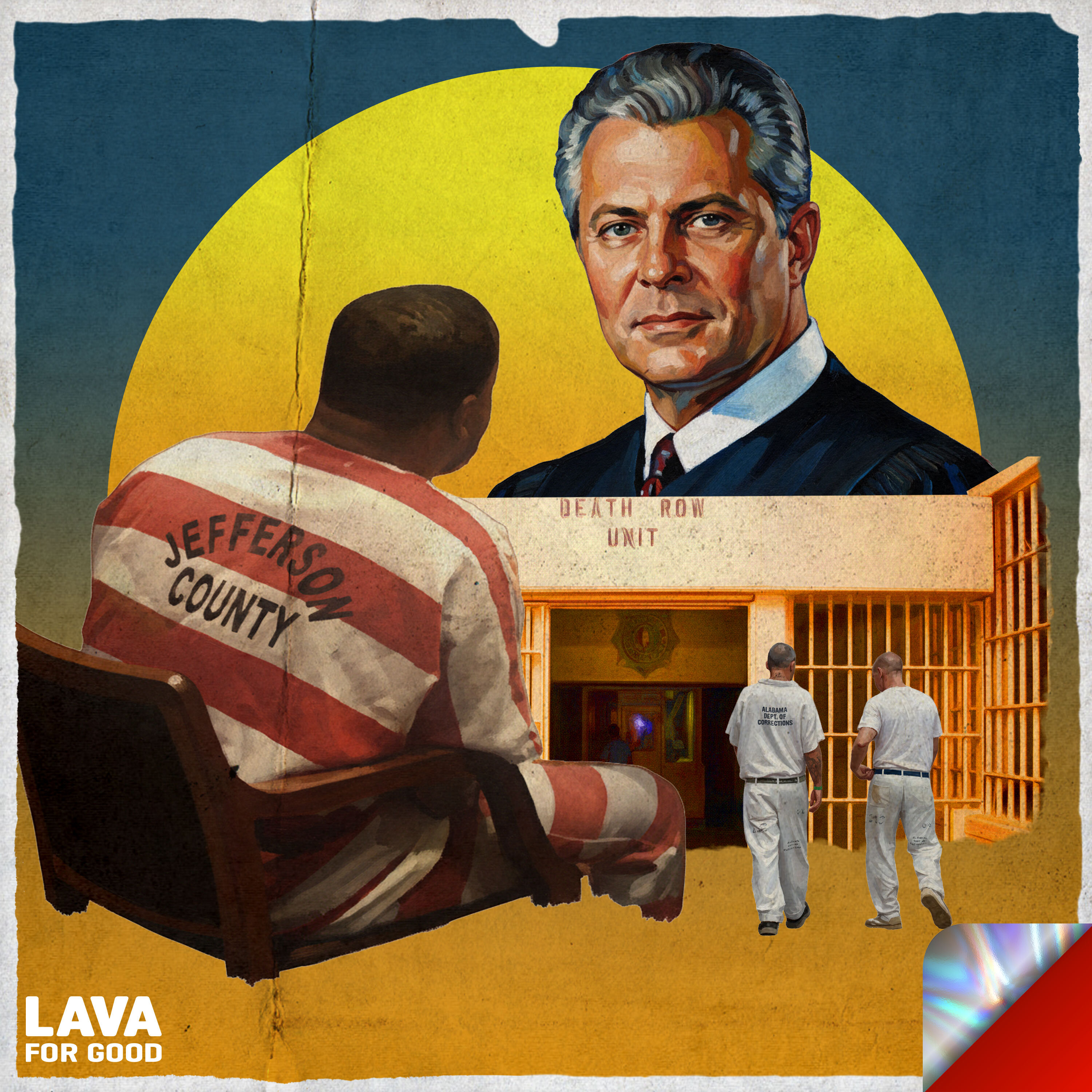
Ty Alper was just starting out his legal career at the Southern center for Human Rights when he met Taforest Johnson. Taforest was one of the first people on death row that Ty had been assigned to represent. In January of 2003, Ty gets into one of the old Volvos that the Southern center had in their parking lot in Atlanta and drives four hours south to Holman Prison in Atmore, Alabama.
- [03:53]
A
The first time I met him was down at Holman. I was by myself, and I was going to go down and make sure that he was okay with us representing him and to sort of tell him where his case was.
- [04:10]
B
Ty is 29 years old, and here's what he knows. Taforest Johnson is just eight months older than he is, and he's been on death row for over four years for a crime he says he did not commit. When Ty finally gets inside the prison, he's taken to a room called the visiting yard. But it isn't a yard at all. It looks like a middle school cafeteria surrounded by plexiglass. Outside the plexiglass, correctional officers and men in prison uniforms, white slacks, white shirt with Alabama Department of Corrections stamped on the back, are walking by. Inside, there's no ac, and the sad attempt of cooling the room is left to metal fans that hang in the corners. Taforest sits at a table in a plastic chair across from Ty. Ty tries to talk quietly so he doesn't disturb other lawyers working with their clients on the yard, but loud enough to be heard over the roar of the fans.
- [05:24]
A
And I remember saying to him, you know, Mr. Johnson, I want you to know we're at the very early stages of your appeals. There's many rounds of appeals to go. We're going to file a petition in the US Supreme Court. Then we're going to go back into state court. If we lose there, we're going to go back into federal court. And all of this could take many years. And he just started crying. And I assumed that he was upset because I knew that he had claimed that he was claiming he was innocent. And I assumed that he was upset that this was going to take so long. And I asked him what was wrong, and he said that he was so happy because he had just assumed that they could come any minute and take him to be executed. And it was just the thing that struck me the most. Because not only had he been screwed over in pretty much every possible way you can be, but nobody was telling him anything about what was going on in his case.
- [06:22]
B
But DeForest's days without a lawyer to fight for him are over. It's now up to Ty and the team of lawyers at the Southern center to do what no one has done before. Thoroughly investigate to Forrest's conviction. A conviction that hinged on the word and credibility of a single witness, Violet Ellison. Do you hear my manners Laughter hides my fears. Sorrows deps are endless in this valley.
- [07:35]
A
Of tears.
- [07:39]
B
I want to see a revelation I want to know who you are I'm reaching out in desperation to.
- [08:02]
C
The who's holding the star.
- [08:10]
A
To the.
- [08:11]
B
One who's holding the star. I'm Beth Shelburne. This is Ear Witness. Chapter six. Misfiled. After Ty leaves Holman prison, he and the rest of Taforus new legal team go through the case. They need to understand how their new client ended up on death row. They hear about Taforis alibi, that he was at T's place when Deputy Hardy was shot. They learn about Yolanda Chambers changing stories. They read how the state presented conflicting theories at different trials. Now it's clear to the legal team Taforest Johnson did not kill Deputy Hardy. The state's case completely revolved around Violet Ellison's testimony.
- [09:12]
A
So we knew that that was a potentially fruitful area to investigate because she was the state's whole case.
- [09:19]
B
They need to figure out whether they can challenge Violet Ellison's testimony. If they can show that it wasn't reliable, they can argue that Tiforest deserves a new trial. So they need to know why did Violet Ellison come forward in the first place? Prosecutor Jeff Wallace told two juries that Violet was a credible witness. Someone who overheard Taforest Johnson admit to the crime. And she came forward because it was the right thing to do. But there were other reasons Violet Ellison might have come forward.
- [09:58]
A
We knew the reward was offered because it was all over the papers. But we didn't know who got it or if Violet Ellison got it.
- [10:06]
B
The reward was not a secret. It was mentioned in press releases and reported on TV news.
- [10:15]
A
So the next step was. Okay, well, were there questions about her credibility that the jury never heard? And an obvious one was, well, was she paid for her testimony?
- [10:32]
B
If Violet Ellison knew about the reward money before trial, or even if she had qualified for the reward, the jury should have been told this when they heard her testimony. The legal issues here get complicated fast. But it's important to understand that the prosecution must turn over anything that would be helpful to the defense. It can be a lead on another suspect or some forensic report that casts doubt on a piece of evidence or information that calls the credibility of a state's witness into question. This is called Brady information after a famous US Supreme Court case called Brady v. Maryland. And if a court finds out later that prosecutors failed to turn over Brady information, that's a constitutional violation and the court will order a new trial. So if prosecutors knew that Violet Ellison came forward looking for the reward, they should have told to forest trial lawyers about it. And then they could have brought it up at trial. They could have told the jury, when you go back and deliberate about Violet Ellison's testimony, remember there's a reward being offered and she wants that reward. Are you sure? Money isn't part of the equation here. But the jury never heard anything about the reward.
- [12:14]
C
She was very credible.
- [12:17]
B
Monique Hicks was on the jury in Taforest's second trial and she voted to convict Taforest based on Violet Ellison's testimony.
- [12:27]
C
She just seemed very truthful, like she had nothing to gain by coming forward. She had heard this information and she felt like, I have to share it this. She was a very credible witness compared to some of the others that took the stand. Like we believed her. Obviously we believed her because we convicted him and it was on her testimony.
- [12:47]
B
Overturning a conviction is damn near impossible. Our system prioritizes finality in part because a jury's verdict is considered a community statement and given great weight. So for Tafores to get a new trial, his lawyers needed to prove two things. That Violet Ellison came forward with her story in the hopes of getting the reward and that police and prosecutors were aware of this true motivation. There's one big problem. If Violet Ellison had been paid, documentation of the payment should have been into Forrest's case file. But there wasn't anything there. Still, Ty and the other attorneys had a hunch that Violet Ellison got the money. The legal team tried calling everywhere they could. The sheriff's office, the governor's office, the records division. What should have been just a simple phone call turned into a multi week endeavor. Finally, someone at the governor's office said they might have something and would send over a fax.
- [14:03]
A
I do remember us all hovering around the fax machine waiting to see what it was. Because it was the first time that anyone had acknowledged that there might be something that was helpful.
- [14:12]
B
The fax machine spits out a piece of paper signed by Judge Alfred Bayhackel, the man who presided over to Forrest's trials and sentenced him to death. The paper authorized Violet ellison to receive $5,000 in reward money in exchange for her testimony that led to the conviction of Taforest Johnson.
- [14:36]
A
That was when we knew, okay, she did know about this reward. She was motivated by the reward when she testified and the judge knew about it. In an order that was not included in the court files.
- [14:52]
B
For Taforest's legal team, this was a huge first step. The language in the court order said that Violet Ellison came forward pursuant to the public offer of a reward. And again, this authorization document was signed by the judge. It's an official court document. It should have been into Forrest's court file right there where everyone could see it, but it wasn't. Instead, T. Forest's legal team had to go on a bureaucratic goose chase to find it. Was someone trying to hide something? What other documents were missing from the public file? So a young investigator working with Taforis legal team named Jason Marks went right to the source. He walked up to Violet Ellison's house holding judge Bayhackle's court order that authorized her payment in one hand and knocked on her front door with the other.
- [15:57]
A
When I showed up at her house, she said something about the phone calls. And I said, oh, I'm not here to talk to you about the phone calls. I'm here to talk about the reward that you got. And that's when she said, I didn't get a reward reward. I was like, oh, well, that's funny. I was like, I have some paperwork here that says you got a reward. And so basically, yeah, so basically confronted her with the documents. She said, oh, yeah, I did get a reward. Got $5,000.
- [16:22]
B
After initially denying it, Violet Ellison told Jason the State paid her $5,000 for testifying against to Forest Johnson.
- [16:33]
A
We knew when we got the judge's order that he had authorized the payment. And then she told us that she got paid. So we knew it all. When you take a step back, he's on death row. Because the jury believed a woman who they didn't know was being paid for her testimony. And that should cause real concerns and questions about the validity of the conviction.
- [16:56]
B
Taforest's legal team files a Brady claim against the state that argues the jury in Taforist trial should have heard about the reward. Violet Ellison knew about the reward when she came forward and that the state suppressed the information on purpose. The state denies everything. They deny any Brady violation, and they deny all of the allegations into Forrest's petition, including that Violet Ellison was motivated by the reward and that she was paid $5,000. But Taforest's legal team has evidence to the contrary. The court order that was faxed to them and Violet Ellison herself. After the state submits a written denial of all of the charges brought by Taforest's legal team, the case heads to court. But Alabama courts won't hear the case. They say the reward doesn't qualify as Brady. So the appeal takes years to make its way through the courts. When Taforest and Ty first met, Taforest's five kids were all under the age of 10. And as the Brady claim crawls through the legal system, 17 years go by. Taforus oldest daughter has graduated college and his four other kids are having kids of their own. Finally, Taforis legal team gets the case in front of the United States Supreme Court. The justices tell the Alabama courts that they're wrong for not reviewing Taforis Brady claim. The State of Alabama must hear the evidence about the reward. Ahead of the hearing, Judge Teresa Pulliam gives the state very clear orders.
- [19:05]
A
You have to turn over everything, everything that you have that concerns a reward payment, you have to turn it over to Mr. Johnson's lawyers.
- [19:14]
B
So the state gives Taforest's legal team what they say are all of the documents about Taforest's case. An attorney representing the state tells Judge Pulliam the files contained nothing about anyone applying for a reward or being granted a reward.
- [19:34]
A
I think it was eight or nine banker's boxes of documents. And we went through every single page looking for any mention of a reward payment to Violet Elson, and there was nothing in there.
- [19:46]
B
But then Taforest's legal team gets a tip from an insider. The woman who served as office manager at the Jefferson County District Attorney's office when Taforest was on trial.
- [19:58]
A
So she told us that if we were only looking in the case file, we weren't looking everywhere, that the documentation might be because they also had a reward file that they kept separate from the case files. That would include paperwork and documentation of witnesses who had sought rewards and or been paid rewards.
- [20:19]
B
Reward information in the DA's office, according to this source, was kept in a separate confidential file away from prosecutors involved in trials like Jeff Wallace. This meant he couldn't turn it over to Taforus lawyers who, because he didn't know about it, to. To forest attorneys. This meant the information about the reward was kept from them, intentionally suppressed. The judge orders the DA's office to turn over this separate confidential file.
- [20:56]
A
We got an email that said, we found these documents. They had been misfiled. And here they are.
- [21:05]
B
Here they are. After 17 years, the state finally turned over every document Tafores lawyers had asked for. The hidden treasure trove. An application for the reward that's signed by Violet Ellison. A copy of the actual check for $5,000 made out to Violet Ellison. An email exchange between District Attorney David Barber and the governor's office about how to pay the re reward, and a letter from DA Barber asking the governor to pay Violet Ellison the money, saying that she came forward pursuant to the offer of a reward. If this hidden information about the reward kept away from Taforis long lawyers for 17 years doesn't count as prosecutorial misconduct as a Brady violation. What does? But according to the state, all of these documents were simply misfiled. When I hear misfiled, I imagine someone accidentally putting a document into the wrong folder or maybe a paper falling behind a cabinet. But that's not what happened. It sounds like they had it organized in a file they kept explicitly for rewards. A file that no one seemed to know about except the office manager and the DA himself, David Barber, who headed the prosecutor's office. How is this acceptable?
- [23:14]
A
Hello?
- [23:14]
B
Yes, I was calling for David Barber.
- [23:17]
C
Speaking.
- [23:18]
B
Mr. Barber, my name is Beth Shelburne. I called David Barber, who's now retired after serving as Jefferson County's top prosecutor for 24 years. He was DA when Taforest was tried for capital murder and personally involved in the reward issue. He wrote the letter asking the governor to pay Violet Ellison. The defense team for Mr. Johnson didn't have any records about the reward until 2019. The Attorney General's office produced the records and said they had been misfiled.
- [23:53]
A
Okay.
- [23:54]
B
Does that sound strange to you, or do you have any idea how that could have happened?
- [24:01]
A
The AG's office, if they said it.
- [24:03]
C
Got misfiled, and I guess it got misfiled.
- [24:05]
A
Human error, I guess. I don't.
- [24:06]
C
I don't know.
- [24:08]
A
I don't second guess people.
- [24:10]
C
I mean, things happen.
- [24:12]
A
You have people working in agencies, DA's offices, AG's offices, Governor's offices. Things get misfiled. And I mean, it's.
- [24:22]
C
It happens.
- [24:24]
B
It happens. Actually, it did happen at least one other time on Barber's watch. In 2004, a man named Montez Spradley was sentenced to death for murder based on the testimony of one witness, just like to Forest Johnson. Eventually, Spradley's lawyers discovered the star witness was paid $10,000 for her testimony. But police and prosecutors never disclosed the reward payment because the reward documents were kept in the same separate file as Violet Ellison's reward payment. The judge in that case also didn't disclose information about the reward. The judge was Gloria Bayhackle, the sister of Alfred Bayhackel, the judge in Tafora's trial.
- [25:23]
A
Hello?
- [25:25]
B
Hey, my name is Beth Shelburne. I was wondering if Mr. Alfred Bayhackle is here. My producer Mara and I went to Judge Alfred Bayhackle's house hoping to talk to him about these off the record payment authorizations. But he told us that he wasn't interested in commenting on any specific cases or his time as a judge. It's about a murder case and several of the trials.
- [25:55]
A
I can't compliment that. I can't talk about that.
- [26:01]
B
Montes Spradley was able to prove his innocence and was released from prison in 2015. Taforest and his attorneys hope for the same outcome.
- [26:28]
A
Why have I asked my electrician I found on Angie.com to bury my pet hamster Nibbles in our yard for me? Because I was so moved by how carefully he buried my electrical wires, I knew I could trust him to bury.
- [26:39]
B
My sweet Nibbles after his untimely end.
- [26:41]
A
Huh, Nibbles gone too soon. May he scurry in peace. Hey, sorry about your pet, but I just wire stuff. Nibbles would have loved you like a brother. Connecting homeowners with skilled pros for over 30 years, Angie. The one you trust to find the ones you trust. Find pros for all your home projects@angie.com Breaking news everybody.
- [27:00]
C
Not everything is terrible.
- [27:01]
B
I repeat, not everything is terrible.
- [27:05]
C
The ripple effect with Jenna Kim Jones.
- [27:07]
B
Is proof that the Internet it hasn't ruined humanity entirely.
- [27:10]
A
Clean the world. We have almost 10,000 hotels that operate our soap and plastic recycling program and we have created and distributed 90 million free bars of soap to children, families, mothers in 127 countries across the globe.
- [27:27]
C
It's like magic you guys. So put down your doom scroller and pick up your faith in humanity and join me, Jenna, for the ripple effect. It's a reminder that you can start a ripple that changes everything.
- [27:38]
B
You really can.
- [27:40]
A
Best stat of all is that the death rate to children under the age of five dying to hygiene related illnesses has decreased by more than 60% since the day we started.
- [27:51]
C
Listen to the ripple effect with Jenna Kim Jones on the iHeartRadio app, Apple.
- [27:55]
B
Podcasts or wherever you get your podcasts. Thy ticket lady Jennifer of Coolidge. Well Many thanks, good sir. Here is my Discover card. They accept Discover at Renaissance fairs? Yeah, they do here. Discover is accepted at the places I love to shop. Get it with the times. With the times. You're playing the loot.
- [28:20]
C
Yeah.
- [28:20]
B
And it sounds pretty good, right?
- [28:22]
A
Discover is accepted at 99% of places that take credit cards nationwide. Based on the February 2025 Nielsen report.
- [28:47]
B
I first heard about Taforis Johnson's case in 2019, when the Brady hearing was scheduled. I was assigned to cover the hearing for wbrc, the news station where I used to work. This hearing would determine whether Violet Ellison's secret reward payment amounted to prosecutorial misconduct. I didn't know much about Tafora's case back then, only that he was on death row for a crime that he said he didn't commit and was convicted on the testimony of an ear witness who was paid off the record. In preparation for the hearing, I met with Taforus, cousin Antonio Green and other family members at their uncle's house. They all said Taforest was optimistic about the hearing.
- [29:37]
A
And he tells me, he says all the time, well, you know. Cause I know I didn't do this, so one day it'll all come out.
- [29:43]
B
So he's hopeful.
- [29:44]
A
He's very hopeful.
- [29:47]
B
On the day of the hearing, I only took a pen and notebook into Judge Pulliam's courtroom because she doesn't allow recording. I sat next to to Forest's mother Donna, in a middle row and I spotted Taforest sitting at the defense table with his attorneys. This was the first and only time I've ever seen to Forest Johnson in person. He was wearing an orange and white striped jail jumpsuit and was in handcuffs and leg irons. At one point, he turned and smiled at his family, and I heard his mom next to me say softly, hey, baby. The courtroom was packed and much of the crowd was to Forrest's family and friends. But I also saw Jefferson County's newly elected district attorney seated in the first row, Danny Carr. He's the first black man to be elected top prosecutor in Jefferson County. A month before this hearing, a group of faith leaders who knew about Tafora's case published an open letter to Carr asking him to push for a new trial. But at this point, Carr had not commented publicly on the case. The hearing starts at 9am Tafor's attorneys present all of the documents that took the state 17 years to turn over. They argue that the documents show the state suppressed evidence, that Violet Ellison initially contacted police in pursuit of the reward money and Then the state hid that she was eventually paid $5,000. Just after 10:00am the state calls only one witness to testify, Violet Ellison. She's 77 years old and walks to the stand using a cane. She has short white hair and is dressed in a white blazer and black pants. After she's sworn in, Violet Ellison says that she knew the victim and followed the details about the murder and investigation by watching the news and reading the newspaper. But despite all that, and despite the fact that information about the reward was all over the news, she is vehement that she didn't know about the reward. She testifies that the first time she heard about the reward was after Taforest was sentenced to death in July of 2001, three years after he was convicted. She says that's when someone from the DA's office contacted her and asked her to come in and sign papers for the reward money. At the end of this five hour hearing, Judge Pulliams says she's not going to make a decision that day. She'll consider all of the evidence and then issue her ruling to Forrest's mother. Donna. Sarah, sitting next to me, bursts into tears. After the hearing, I was going over my notes and noticed a big discrepancy between the state's story and Violet Ellison's testimony about what triggered the reward three years after T.O. forest was convicted. In opening statements, the state lawyer said that Violet Ellison asked the DA's office about the reward. But on the stand, Violet said it was the other way around, that they contacted her. This might seem like a minor detail, but knowing what triggered the reward payment is key in determining whether or not this is a Brady violation. Who called who first? How did this payment come about? So I emailed the Attorney General's office for some clarity and they directly contradicted Violet Ellison's testimony. Again, writing three years after the trial, Ellison requested the cash reward that had been offered by the governor. And since then, Alabama's Attorney General completely reversed the State's narrative. The AG's office now claims that the prosecutor asked for the reward to be paid unbeknownst to Violet Ellison. But former D A David Barber told me he wouldn't do that, that rewards were triggered by law enforcement or a witness themselves applying for a reward. And prosecutor Jeff Wallace said he he had nothing to do with rewards. Everyone I asked gave a different answer, pointing the finger in a different direction. Nobody wanted to own up to triggering the payment. The state continuously changing its story on this important detail isn't just sloppy, it's incredibly Suspicious. It takes nine months for Judge Pulliam to issue her decision. She writes that she found Violet Ellison to be confident, describing her as well dressed and well spoken, and that her articulate testimony outweighed the evidence presented by Taforest Johnson's attorneys. Pulliam says the documents don't prove that Violet Ellison knew about the money when she testified and don't amount to misconduct by the state. She doesn't address the fact that it took the state 17 years to admit they had paid Violet Ellison.
- [36:02]
A
Really, what she was doing was validating the credibility of Violet Ellison, saying, I didn't know that there was even a reward offered in the case, which is impossible to believe, and then validating her testimony that three years after the trial, not having known that there was even a reward offered in the case, the DA's office, out of the blue, called her up one day and said, hey, remember that case you testified in? We have $5,000 of the state's money that we'd like to give you for that. Do you want to come down to get it? And she said, sure, and came down and got it. Which is also impossible to believe.
- [36:45]
B
Taforest's legal team appeals the decision. And In April of 2021, I attend oral arguments in front of the State Court of Criminal Appeal. I notice all five judges on the court are white. In fact, everyone in the courtroom is white. The disconnect is striking. DeForest Johnson isn't here. All these white people are discussing the fate of a black man who was locked away on death row, Completely absent from this process. This dynamic isn't unique to this hearing. Black people make up 27% of Alabama's overall population, but 54% of the state prison population. There are no black appellate judges, and only three of the 42 elected DAs in Alabama are black. This lack of representation means it's almost always white people making policy and punishment decisions that impact a disproportionate poor and black population. Taforis hearing in the Court of Criminal appeals lasts just 49 minutes. It's another denial.
- [38:30]
C
Why have I asked my h vac.
- [38:31]
B
Guy I found on angie.com to change.
- [38:33]
C
My grandpa's trachea tube?
- [38:35]
B
Because I was so amazed by how.
- [38:37]
C
Quickly he replaced our air ducts, I.
- [38:38]
B
Knew I could trust him to change.
- [38:40]
C
Pop Pops tube while I was on vacation.
- [38:42]
A
Make it quick, young man. Aw, see?
- [38:46]
B
Pop up trusts you.
- [38:48]
A
I think we should call a doctor. Connecting homeowners with skilled Pros for over 30 years, Angie, the one you trust to find the ones you Trust find pros for all your home projects@angie.com Breaking news everybody.
- [39:01]
C
Not everything is terrible.
- [39:02]
B
I repeat, not everything is terrible.
- [39:06]
C
The Ripple Effect with Jenna Kim Jones.
- [39:08]
B
Is proof that the Internet it hasn't ruined humanity entirely.
- [39:11]
A
Clean the world. We have almost 10,000 hotels that operate our soap and plastic recycling program and we have created and distributed 90 million free bars of soap to children, families, mothers in 127 countries across the globe.
- [39:28]
C
It's like magic, you guys. So put down your doom scroller and pick up your faith in humanity and join me, Jenna, for the ripple effect. It's a reminder that you can start a ripple that changes everything.
- [39:39]
B
You really can.
- [39:41]
A
Best stat of all is that the death rate to children under the age of five dying to hygiene related illnesses has decreased by more than 60% since the day we started.
- [39:52]
C
Listen to the Ripple Effect with Jenna Kim Jones on the iHeartRadio app, Apple.
- [39:56]
B
Podcasts or wherever you get your podcasts. Thy ticket lady Jennifer of Coolidge. Well, many thanks good sir. Here is my Discover card. They accept Discover at Renaissance fairs?
- [40:10]
A
Yeah, they do here.
- [40:12]
B
Discover is accepted at the places I love to shop. Get it with the Times. With the Times. You're playing the loot. Yeah, and it sounds pretty good, right?
- [40:23]
A
Discover is accepted at 99% of places that take credit cards nationwide. Based on the February 2025 Nielsen report.
- [40:50]
C
At the end of the trial, once the verdict was read and everything was done, the jury was finished with their job. And I remember the judge saying that Tafares would be sentenced at another date.
- [41:04]
B
Monique Hicks again, who served on the jury in Taforist's second trial. Monique wanted to talk with me after she saw a news story about Violet Ellison and the reward payment. So I made the hour long drive to her house to speak to her in person. Monique was 27 years old when she voted for Taforest's guilt and a death sentence. As soon as that was over, security quickly ushered the jury out the back door of the courthouse to the parking deck. She never found out if the judge agreed that Taforest should be put to death or spend life in prison.
- [41:45]
C
I never heard anything. Didn't see it in the news. May have just missed it that night. Night the Internet wasn't a thing. I couldn't look it up, Google it. So I honestly never knew ultimately what happened to Mr. Johnson.
- [41:59]
B
Twenty years later, Monique gets a book recommendation from a friend. The Sun Does Shine, a memoir by Anthony Ray Hinton, a black man from Birmingham who was sent to death row in 1985. Despite a solid alibi and no eyewitnesses tying him to the murder, he was exonerated 30 years later.
- [42:23]
C
And so I was reading the book, and as I'm reading the book, I'm like, oh, wow. This was set in Birmingham in the 80s. I was like, I was on a jury in the nineties in Jefferson county in Birmingham. That's interesting. By the time I got to the end of the book, I remember I looked at my husband and I said, oh, my goodness, I think we convicted an innocent man. Because I was like, there's no way 10 years later that the injustices and the corruption that were going on in the system had cleaned themselves up. About two weeks later, I'm sitting on my sofa and I open up my local news app to just read the headlines. Tafarus Johnson has been claiming innocence for over 20 years on death row. Something to that effect. And I opened up the article and started reading and I just started sobbing like, uncontrollable, because I was like, oh, my goodness, we did convict an innocent man and he's been on death row all these years. And I didn't know.
- [43:26]
B
Wasn't until 2019, more than two decades after she voted to convict Taforest Johnson, that Monique learned that the state's key witness, Violet Ellison, was paid in secret for her testimony.
- [43:43]
C
You know, the star witness was paid and the defense didn't know it. The jurors didn't know it. So, yeah, I was shocked. And then I was like, well, how shocked were Taforis and his family when we accused him of being guilty? So I just can't imagine what that was like to them. Another blow.
- [44:05]
B
At the time of the trial, Monique found Violet Ellison to be composed and confident. Do you think that your impression of her would have been different had you known she was being paid $5,000?
- [44:21]
C
I definitely believe we would have, as a jury, talked about that. Like, how credible is this testimony? She's being paid for it. Yes, I do think that would have. There would have been conversations about it, and I do believe it would have changed out, could have changed the outcome. I really felt like the jury was used in this big game of injustice. We were just like, here's some theories. We're just going to keep those, throwing them out until we can get a group of people together to believe it. And I just feel like we were being used in this game. They needed a conviction. It was a high profile case. You know, it was a sheriff's deputy. Somebody needed to pay for it. And to me, it Just seems like we're just going to throw these things out, gather people together until we get some that believe it. And unfortunately I was in the group that believed it.
- [45:16]
B
Monique is one of three jurors that I've interviewed. All three regret voting to convict to Forest Johnson. None of them could quite put their finger on why they were convinced of his guilt beyond a reasonable doubt. Other than believing Violet Ellison. Once they learned she was paid for her testimony, it was like deforest suddenly became real to them. The weight of their decision was crushing. But besides speaking out about their regret, there's nothing they can do. They can't take back their votes. They have to live with their decision.
- [46:01]
C
I felt a lot of grief, shame, guilt for having been a part of this. I'm pretty even kill person. I'm not a crier. You know how some people cry about anything? That's not my go to. I'm not a big crier. But anytime this subject comes up, it is like grief deep in my soul and I just get very emotional.
- [46:34]
A
Sam.
- [47:00]
B
I felt like I needed to talk to the person at the center of the case. Outside of courtrooms and legalese. I wanted to hear from Violet Ellison. She has a small brick house on a busy street in Birmingham. When I go there, the main front door is open. And as I walk closer, I can see Violet Ellison sitting inside wearing a robe. She stands up and turns to face me. Hey, are you Ms. Violet Ellison? Ms. Ellison, my name is Beth. I'm a journalist and I was hoping to talk to you about the Deputy Hardy murder that you were a witness in. Eventually she steps out onto the porch where we continue the conversation.
- [47:52]
A
And I feel like I'm just being ridiculed for telling the truth.
- [47:59]
C
And I don't like that.
- [48:01]
B
Well, I just wanted to ask you about the issue of the rewards is that's what. I talked to Violet Ellison for 20 minutes and she tells me no less than a dozen times that she did not know about the reward when she came from to talk to police and that she did not know about it when she testified against Taforest at two trials. Do you think about the fact that he's on death row though? I mean, I know you said you don't really just support the death penalty.
- [48:32]
A
Yeah, well, I did at first. You know, it troubled my spirit. And as time went by, you try to forget the bad things that you know, happen.
- [48:47]
B
But it's a little surreal for me to be face to face with Violet Ellison, this woman who's the linchpin of the entire case against Taforest. As we say goodbye, she delivers the most ironic thank you I've ever received. Telling me she appreciates being me talking to her directly instead of relying on someone else's characterization of what she said.
- [49:18]
C
You know, nobody has come to me.
- [49:21]
A
Like you to see how I feel about it. They just reporting on what somebody say hearsay.
- [49:30]
B
And I don't like that.
- [49:32]
A
Because you're learning you're never get the truth like that. Yeah.
- [49:46]
B
There is a man on death row because the jurors believed Violet Ellison. Now we know what the jury didn't know at trial. That she was paid for her testimony and that the state state hid this information. They told the jury that Violet Ellison was credible and believable and they still say that. But they weren't truthful about the reward. So why should we believe how they characterized their key witness.
- [50:22]
A
I hate to say it, I know that's my grandma, but that's a true scam out of there. Any way she can get a dollar? I'm telling you, she ain't that type that's just going to help somebody just to help them. It got to have money. All it got. It got to have money involved.
- [50:37]
C
Wow.
- [50:38]
B
That's next time. Ear Witness is a production of Lava for Good podcasts in association with Signal Company Number 1 1. Executive Producers are Jason Flom, Jeff Kempler, Kevin Wardes and me, Beth Shelburne. The investigative reporting for this series was done by me and Mara McNamara. Producers are Mara McNamara, Hannah Beal and Jackie Pauley. Kara Kornhaber is our senior producer. Britt Spangler is our sound designer. Additional story editing from Marie Sutton. Fact check, help from Catherine Newhan and special thanks to Taforest Johnson's legal defense team. You can follow the show on Instagram, TikTok, Facebook and Twitteravorgood. To see behind the scenes content from our investigation, visit lavaforgood.com earwitness.
- [51:43]
A
Foreign. It never happens at a good time. The pipe bursts at midnight. The heater quits on the coldest night. Suddenly you're overwhelmed. That's when home service here for 4.99amonth. You're never alone. Just call their 24. 7 hotline. And a local pro is on the way. Trusted by millions, Homeserve delivers peace of mind when you need it most. For plans Starting at just $4.99 a month, go to homeserve.com that's homeserve.com not available everywhere. Most plans range between $4.99 to $11.99 a month your first year terms apply on covered repairs. Forget everything you had planned for this weekend because you are sitting on your couch and winning from the comfort of your own home. I'm here with spinquest, where you can play hundreds of slot games, all the table games you love, and you could even win real cash prizes. New users $30 coin packs are on sale for 10@Spinquest.com SpinQuest is a free to play social casino void where prohibited. Visit spinquest.com for more details. It's football season and now you can get anything you need for game day delivered with Uber Eats. Well, almost.
- [53:03]
B
Almost anything.
- [53:05]
A
You can't get a running back, but baby back ribs. Yes, Uber Eats official on demand food delivery partner of the NFL.