Loading summary
Transcript60 lines
- [00:00]
Public Podcast Announcer
Support for the show comes from Public, the investing platform for those who take it seriously. On Public you can build a multi asset portfolio of stocks, bonds, options, crypto and now generated assets which allow you to turn any idea into an investable index with AI. It all starts with your prompt. From renewable energy companies with high free cash flow to semiconductor suppliers growing revenue over 20% year over year, you can literally type any prompt and put the AI to work. It screens thousands of stocks, builds a one of a kind index and lets you back test it against the S&P 500. Then you can invest in a few clicks. Generated assets are like ETFs with infinite possibilities, completely customizable and based on your thesis, not someone else's. Go to public.com podcast and earn an uncapped 1% bonus when you transfer your portfolio. That's public.com podcast paid for by Public Investing Brokerage Services by Open to the Public Investing Inc. Member FINRA and SIPC Advisory services by Public Advisors, llc. SEC Registered Advisor Generated Assets is an interactive analysis tool. Output is for informational purposes only and is not an investment recommendation or advice. Complete Disclosures available at public.comDisclosures Taco Bell's
- [01:02]
Inner Balance Advertiser
new jalapeno citrus Salsa adds a tangy twist to the Cantina Chicken menu. A sweet and spicy, bright citrusy burst of flavor made with real red jalapenos and guajillo chilies. Try it with a rolled quesadilla and
- [01:14]
Paul Solotarov
you will absolutely be well. I don't want to give it away.
- [01:18]
Inner Balance Advertiser
You need to try it for yourself. New Jalapeno Citrus Salsa the sauce with main character energy. Get it with anything on the Cantina Chicken menu for a limited time only at Taco Bell at participating locations while supplies last. If you're feeling off fatigue, mood changes, skin shifts, yet your labs say everything's normal. You're not alone. Meet Oestra from Inner Balance, the first all in one prescription strength bioidentical hormone cream that's natural and effective and only takes one drop 10 seconds a day. Oester replaces five to six products women typically use to treat symptoms and is third party tested to ensure the highest quality. Visit innerbalance.com today to start feeling like yourself again.
- [02:00]
Podcast Host / Interviewer
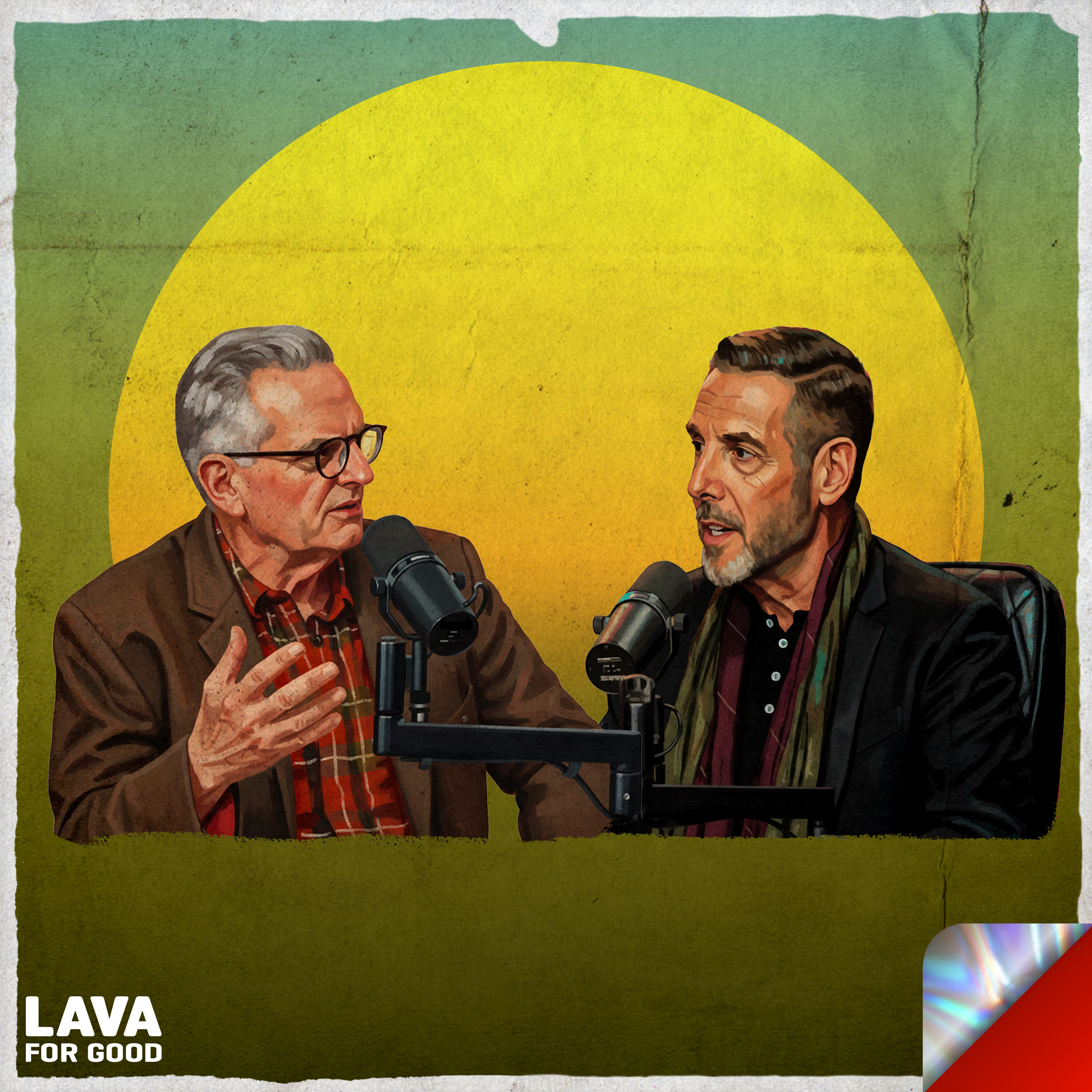
That's innerbalance.com I'm here with Paul Solotarov, the writer and host of bone Valley Season 5 the Devil's Quarry, as well as Liz Garber Paul, the Rolling Stone editor who published Paul's feature story the Devil youl Know in Rolling Stone. The new season bone Valley Season 5 the Devil's Quarry will begin on June 10, and it's also an official selection for the 2026 Tribeca Festival. Welcome, guys. Really n to see you guys here.
- [02:29]
Paul Solotarov
Delighted to be here.
- [02:30]
Podcast Host / Interviewer
You guys ready to talk some Bone Valley podcasting?
- [02:33]
Paul Solotarov
Absolutely.
- [02:34]
Podcast Host / Interviewer
All right, good. Paul, let's just start with your journalism background because, you know, I've been following you for many years, and I was just so thrilled to see that the guy who's broken all these big stories is now doing something with Bone Valley. So can we just talk about your background a little bit and, you know, what you were doing when you stumbled onto this case.
- [02:51]
Paul Solotarov
So I took a series of left turns from graduate writing programs into a job at the village voice in 1987. 88. Wound up writing my first ever story about homeless children on the docks of the west side highway, which inadvertently became this enormous cluster of a story because it outed an organization called Covenant House, which through the front doors was bringing an organization, all of these broken, abandoned, kick out children of the crack pandemic in New York City and then selling some of them out the back door to corporate donors. That story launched me on a trajectory to eventually Rolling Stone, where I have now been for 34 years. And my remit at Rolling Stone has always been the pursuit of justice for those who otherwise had no shot at it, whether it was homeless kids, whether it was brain broken NFL veterans who had been utterly screwed out of a pension, or even any kind of clinical acknowledgment of what was this enormous pandemic of chronic traumatic encephalopathy. That was my story. And over the years, I have gone after the kinds of stories that yielded the most horrific, unspeakable acts of official misconduct on the parts of crooked cops, big city cops, on the parts of corrupt prosecutors, on the parts of in the bad judges. The larger rubric for my career has been America's War on drugs, which very early on in my career, I realized was nothing more than the war on the poor. And so I have essentially kind of appointed myself to the public advocate for the poor who had been caught in the most horrific domestic policy decision of the American century, which is this headlong attempt to arrest our way out of the drug pandemic and create a massive incarceration state that left us five years ago with a quarter of the world's imprisoned population.
- [05:49]
Podcast Host / Interviewer
Paul, where do you think this came from? I mean, looking back decades of doing this kind of work, was there something that affected you as a child or some kind of, you know, awakening to these issues where do they come from?
- [05:59]
Paul Solotarov
I was a bit of a red diaper baby. My father was a famous literary editor, my mother a translator of Tolstoy and Chekhov. None of that was interesting to me. What was interesting was they dragged me to D.C. for the march on Washington, to the rallies in Central park in the 60s. I wound up going to the School of Music and Art, which in those days was in Harlem, directly across the street from ccny, which was a seating ground of the sds, ultimately the Weather Underground. So I was very much subscribed into radical politics as a child. But I was raised to be a novelist and trained to be a novelist. And so what I brought inadvertently to journalism was a storyteller's use of language, of narrative structure, and of that intense, tense fascination with otherness, with the price, the daily price of getting out of bed for people without the kinds of advantages, privileges, associations I'd come to take for granted. And if there was one sort of clincher for it, in my hopeless attempt to become a novelist and then later a playwright, I wound up for two years at the NYU School of Social Work, where my placement was in the South Bronx, allegedly ministering clinically to the orphan children of the Happylands disco fire in 1987. And for two years I sat in an office with no skills, with really no supervision, attempting to console children whose parents had been obliterated in a basement fire in an unlicensed club in the Bronx. And what that indenture, that two year indenture did was give me my subject. So when I started the village voice In 1988, I was three blocks on West Broadway from the west side docks. And every day I would take my lunch to eat on these abandoned docks, which were rotting piers that had become a stroll for the 8, 9 and 10 year old kick out children of the s. The crack SROs on West 42nd Street. And I saw these children selling their bodies for $5 crack rocks. That became my first story. But it also became my grail to get them the. The assistance, the. The robust response from a city administration that didn't give a about them. I always tell people, when asked how I find my stories, I just follow my outrage.
- [09:15]
Podcast Host / Interviewer
Can you just talk about having, you know, decades of cracking these really important stories that aren't just stories for our reading, but they actually go on to improve things and call attention to issues that you care about. Can you just talk about where you were or how you stumbled into this case that you wrote about for Rolling Stone? But now bone Valley Season 5, I
- [09:35]
Paul Solotarov
work very closely with the Innocence Project. They have been boon partners on several of my big sort of exoneration stories. And they began telling me about what was happening in Massachusetts, about this bubbling up scandal in these state crime labs. So in Massachusetts there was this 10, 15 year long open scandal wherein the state police crime labs in high rotation for seized narcotics by police departments west and east in Massachusetts were submitting these seizures to be sampled, tested and certified as narcotics in order to corroborate these indictments of low level dealers, primarily possession use sales. Well, what I discovered in the course of that investigation is that these two labs in western Massachusetts, one in Boston, were populated by chemists who were shooting, snorting, smoking, huffing and otherwise consuming the very substances they were hired to test. These bench chemists had wrongly helped convict, we believe, 50, 60,000 low level offenders. Another of these deep, very complicated digs helped to exonerate 41,000 of these low level offenders and to get them compensated for their years wrongfully spent in prison. Once that story was done, I get together with Nina Morrison and Peter Neufeld who were running Innocence Project in New York. I said, what's next? And they said, ever want to look at small town police corruption, prosecutorial misconduct? Have any interest in that? And I said, boy, do I ever. And so that was the launch point to drive up to the town of Carmel in Putnam County, 50 miles from Rolling Stone's office on Fifth Avenue, Midtown Manhattan, and meet with two young men who had been framed, who had been arrested, framed, convicted and sent away in their teens to the most medieval prisons in New York State for life without parole for the rape and murder of a girl they had never met. The first of these wrongfully accused teens who had spent 20 years, his entire young adulthood in Attica, Dannemora, Auburn Western, teaching himself how to read. He was a 9th grade dropout when he went away, teaching himself the law at Shawangung Prison library and compiling the most extraordinary legal brief investigating the actual killer of the decedent, Josette Wright. And so when I showed up in Carmel, I didn't show up in Carmel. My first toe into this story was sitting in the penthouse apartment at Trump Tower in New Rochelle of Anthony Depot, who had been out of prison for five years after exonerating himself in a 2016 trial, who had then filed a federal civil rights suit for wrongful arrest conviction, imprisonment against Putnam county in the State of New York, won judgments, I'm sorry, won settlements to the tune of $15 million, and bought himself a very garish apartment In Trump Tower. Remember he was 17 when arrested, 19 went sent away for life without parole. His emotional and developmental timeline were stopped abruptly as a teen. And so what did he buy himself with this 15 million? He bought himself 150 replica championship wrestling belts, framed them and mounted them on the walls of his apartment. He had a $9,000 flat screen TV which he told me only worked in 8K, which was a problem because we only had 4K at the time. And what made it really poignant and what Anthony had intensely in common with the other exonerees I've either helped free or who got themselves free and then I told their stories was having been entrapped in an 8 by 9 enclosure. His entire adult life he was living in this three bedroom apartment, 1500 square foot apartment with spectacular views in every window. He wouldn't leave the bedroom. He would pace his bedroom and never leave. And I said, Anthony, how do you eat? How do you get vitamin D? He said, I go down at night when I think the cops are out are gone. So he was so terrified, he bought himself this gorgeous AMG Mercedes SUV that he was terrified to drive for fear that he'd be stopped.
- [15:49]
Podcast Host / Interviewer
Yeah.
- [15:51]
Paul Solotarov
So what happens in these cases of men who have been wrongfully accused, tried, convicted, is even after establishing absolute innocence, they are always in the dark tunnel, too afraid to rejoin the society that snatched them out of their childhoods.
- [16:20]
Public Podcast Announcer
Support for the show comes from Public, the investing platform for those who take it seriously. On public, you can build a multi asset portfolio of stocks, bonds, crypto and now generated assets which allow you to turn any idea into an investable index. With AI, it all starts with your prompt. From renewable energy companies with high free cash flow to semiconductor suppliers growing revenue over 20% year over year, you can literally type any prompt and put the AI to work. It screens thousands of stocks, builds a one of a kind index and lets you back test it against the S&P 500. Then you can invest in a few clicks. Generated assets are like ETFs with infinite possibilities, completely customizable and based on your thesis, not someone else's. Go to public.com podcast and earn an uncapped 1% bonus when you transfer your portfolio. That's public.com podcast paid for by Public Investing Brokerage Services by Open to the Public Investing Inc. Member FINRA and SIPC Advisory services by Public Advisors llc. SEC Registered Advisor Generated Assets is an interactive analysis tool. Output is for informational purposes only and is not an investment recommendation or advice. Complete disclosures available@public.com Disclosures
- [17:22]
Kal Penn
hey everyone, it's Kal Penn. I'm the host of Irsay The Audible and iHeart Audiobook Club. This week on the podcast, I am sitting down with Ray Porter, the narrator of Andy Weir's audiobook project, Hail Mary massive sci fi adventure about survival and science and what happens when you wake up alone, very far from Earth.
- [17:45]
Ray Porter
I really had to make make a decision because I caught myself getting that frog in my throat and starting to get teary as I'm narrating some of these sections and it's like, okay, yo, yo, yo, is this indulgent? And I really thought about it. I was like, no. At this point, it would kind of be betraying the trust the author and the listener have in telling this story if I don't go through it. But there's places in this book that that deeply, emotionally affected me and I left it on the mic. That's great because it served the story. People will say like, oh my God, I cried at the end. It's like, yeah, dude, me too.
- [18:18]
Kal Penn
Listen to Irsay the Audible and iHeart audiobook club on the iHeartradio app or wherever you get your podcasts.
- [18:26]
Inner Balance Advertiser
If you're feeling off fatigue, mood changes, skin shifts, yet your labs say everything's normal. You're not alone. Meet Oestra from Inner Balance, the first all in one prescription strength bioidentical hormone cream that's natural and effective and only takes one drop, 10 seconds a day. Oestra replaces five to six products women typically use to treat symptoms and is third party tested to ensure the highest quality. Visit innerbalance.com today to start feeling like yourself again.
- [18:56]
Paul Solotarov
That's innerbalance.com and so I spent nine months reporting that story. And the corruption, the incompetence, the sadism of the Putnam County Sheriff's Office was, if anything, undersold. To me, it was the most lawless law enforcement agency I have ever had the honor of delving into. And it had a history of criminal misconduct dating back decades. What do you do if you were a police department or a constellation of police departments that has domestics as its variant of violent crime, that has nickel and dime possession as its underworld? You go and you create crime. And one of the ways that these police departments did that was by using a confidential informant who turns out to be the central figure of the devil, you know, a man in his 30s to sell give away drugs to children to 13, 14, 15 year olds of both genders and then subject them to or tip the cops off. They would get arrested you know, they'd all go off to smoke a joint in the woods or to hang out in an abandoned shack by the rail yard to drink Boone's Farm. The sheriffs or the cops would swarm. The girls in order to get out of the back seat of that cruiser, would have to blow the deputy. The boys would have to agree to be snitches and sell a nickel of weed to their school friends. That's how you build stats if you are a corrupt sheriff. In a small town, town of 25,000, it was hard to find a young woman who had not been sexually violated or threatened with it or whose best friend had not had to do something she didn't want to do to get out of the back of that cruiser. And that, for me, was the palette I worked with. Those were the earth colors I painted that story with. Within that subculture, these extremely vulnerable children who, let's remember, this was pre helicopter parenting. This was, you know, pre, you know, children just say no. The town of Carmel, much of that side of Putnam county offers fuck off for children after school. If you don't play Little League, if you don't play girls soccer, there is nowhere for you to go. And they had to go somewhere to continue to, you know, kind of create their own adventure. And they go into the woods or they go to a rave up on a hill, and the police would swarm. So you had this culture where this precocious kind of sexuality was what passed for entertainment, what passed for after school activities. And a lot of it was born out of boredom, but also a lot of it was born out of parental neglect. I remember feeling this acutely very early on in my reporting trips to Carmel. I had the distinct feeling I was being followed because I was such an obvious ringer and because I was asking the wrong questions.
- [23:12]
Liz Garber
There can be, especially with the smaller communities right outside of New York, there can be a resentment to the New York media coming in and reshaping these foundational narratives. And they didn't particularly. They felt very protective over their town and didn't love an outsider coming in and ripping it all up.
- [23:37]
Podcast Host / Interviewer
Liz, I'm going to ask you to go back a few years.
- [23:39]
Liz Garber
Sure.
- [23:40]
Podcast Host / Interviewer
What was it like when this story, which later became his story for Rolling Stone, the devil you know. What was your first, you know, introduction to this story and what was your reaction at the time?
- [23:50]
Liz Garber
So I believe the first introduction was you had filed the story to Sean woods, our editor in chief, and he had gone through it. And I. I've only been at rolling stone for 16 years. But I had a history of working with Paul. I had fact checked him when I was in the fact checking department. It transcribed for him early in my career. And I had also just finished around 2021. I had recently finished a story that I wrote myself about police corruption in Philadelphia about a guy named Jimmy Dennis, who had been picked off the street, 20 year old kid in the mid-1980s and had been on death row for 25 years before he won his own exoneration, or not exactly exoneration, but he won his freedom. So Sean felt like I was in a good place to pick up Paul's story and run with it. And I'm always impressed by Paul's drafts when they come in. He has such a natural talent as a storyteller. So my work as an editor on this story was not so much trying to frame the narrative or why would the reader care about this? Let's get into that. It was really more, let's get into the nitty gritty. How do we know what we know? How can we safely make the statements we're going to say? It's almost just high level fact checking at that point. And I was very fortunate to be working with an incredible fact checker, John Bernstein, on this story. And so we just kind of, we read the story. We're so impressed by the way that Paul had just really brought this slice of, you know, bedroom community, 1980s, to life. And so, yeah, our first job was digging in, reading through all of the reporting that he'd been doing over nine months and really trying to kind of parse what was legend and what was fact. And I think especially in a case like this where you have, where it's historical in one sense, but also recent history, you know, memory is a tricky thing. People are trying to tell their story to the best of their ability and remember where they were at that time. And having to kind of sort through legal documents, both contemporary, contemporaneous and, you know, within the last few years. And then all of the incredible interviews that Paul had done with people who were remembering this time, you know, it was just, it was immersing myself into this very troubled community, corruption that brought them to that point.
- [26:37]
Podcast Host / Interviewer
Yeah, and obviously it's, it can be a very dark story at times. You're dealing with the murder and torture of these young girls. What was it like within Rolling Stone? Were they supportive of these efforts? And were they, did they encourage Paul to just keep digging or to just maybe focus on some of the corruption and less about the actual Crimes. How does that work?
- [26:55]
Liz Garber
No, I mean, I think for a story like this, you know, the corruption, it's about how do you. How do you get a reader to pay attention to. To, you know, the vegetables of the story, Right. Which is the police corruption, which can get somewhat tedious as a reader. And what's so incredible about this story is the very real characters who come out of it. And so we were. I mean, we're on the culture side of Rolling Stone. We don't shy away from the dark stories at all. We also don't want them to be exploitative. And so how do you tell these stories without making it tabloidy? Right. How do you bring this town to life without making it one dimensional? And that was. We just leaned right into that. I think one of the things that was most surprising to me as the outsider kind of coming into this story was how committed so many people in that community were to the version of events from, you know, the 1990s. Right. The prosecutor's version of events, that Anthony and Andy were guilty. And how hard it was, even when confronted with, you know, legal papers and verdicts and Anthony's release from prison, how hard it was for a lot of the folks from that community to let go of the narrative that they had been sold. And I wasn't really prepared for that as much because, you know, working with places like the Innocence Project, following these stories, you kind of assume that, you know, everyone wants. Everyone does want justice, but what that justice looks like can be very different to different people. I hope have come to appreciate, especially with, you know, with Andy's eventual release like that there is a lot of truth to the story that Paul wrote. And hopefully they'll listen to this podcast and get even more depth into the reporting that he's done and realize that it's not someone coming in and trying to change the story. It's someone coming in and trying to tell the real story.
- [29:15]
Podcast Host / Interviewer
Paul, I'm just really curious from you, from a storyteller's perspective, somebody who's done print for decades, what was it like pivoting to podcasts in this audio format? Could you talk about some of the things that you found different and really satisfying or unsatisfying?
- [29:29]
Paul Solotarov
Well, I'd always thought of my voice as one of my very few advantages in life, my speaking voice. And then I began listening to playbacks of myself doing narration. And I called Kevin Waterson a panic and said, can we hire someone to do the narration? I really don't want to be the reason that no one listens to season five of Bone Valley. I will tell you it is an acquired skill. It is a lot of failure and a lot of humiliation listening to yourself in playback. The main challenge I had is while I write by the inch, not by the yard. I also am a very self conscious and self scourging stylist of my sentences and they were too pretty.
- [30:40]
Podcast Host / Interviewer
I think your voice is fantastic.
- [30:42]
Paul Solotarov
Thank you.
- [30:42]
Podcast Host / Interviewer
You know really, you just, it's, it just fits the actual show and you feel like a natural character within the show. And so I thought I know how how it was for me. I couldn't stand listen to my voice and I even thought the same thing. Do you want to get another narrator? But you, you fit that you're the person who did the work. You, you belong in the story.
- [30:58]
Paul Solotarov
But I finally figured out no. The most powerful voice in these episodes is always the victims, is always the lawyers, is always the exonerated Anthony Di
- [31:16]
Public Podcast Announcer
Pippo Support for the show comes from Public, the investing platform for those who take it seriously. On Public you can build a multi asset portfolio of stocks, bonds, options, crypto and now generated assets which allow you to turn any idea into an investable index. With AI. It all starts with your prompt. From renewable energy companies with high free cash flow to semiconductor suppliers growing revenue over 20% year over year. You can literally type any prompt and put the AI to work. It screens thousands of stocks, builds a one of a kind index and lets you back test it against the S&P 500. Then you can invest in a few clicks. Generated assets are like ETFs with infinite possibilities, completely customizable and based on your thesis, not someone else's. Go to public.com podcast and earn an uncapped 1% bonus when you transfer your portfolio. That's Public Podcast paid for by Public Investing Brokerage Services by Open to the Public Investing Inc. Member FINRA and SIPC Advisory Services by Public Advisors llc. SEC Registered Advisor. Generated Assets is an interactive analysis tool. Output is for informational purposes only and is not an investment recommendation or advice. Complete disclosures available@public.com Disclosures
- [32:19]
Kal Penn
hey everyone, it's Kal Penn. I'm the host of Irsay The Audible and iHeart Audiobook Club. This week on the podcast I am sitting down with Ray Porter, the narrator of Andy Weir's audiobook project Hail Mary Massive sci fi adventure about survival and science and what happens when you wake up alone, very far from Earth.
- [32:43]
Ray Porter
I really had to make a decision because I caught myself getting that frog in my throat and starting to get teary as I'm narrating some of these sections, and it's like, okay, yo, yo, yo. Is this indulgent? And I really thought about it. I was like, no. At this point, it would kind of be betraying the trust the author and the listener have in telling this story if I don't go through it. But there's places in this book that deeply, emotionally affected me. And I left it on the mic. That's great because it served the story. People will say like, oh my God, I cried at the end. It's like, yeah, dude, me too.
- [33:15]
Kal Penn
Listen to Irsay the Audible and I Heart Audiobook Club audio on the iHeartRadio app or wherever you get your podcasts.
- [33:23]
Inner Balance Advertiser
If you're feeling off fatigue, mood changes, skin shifts, yet your labs say everything's normal, you're not alone. Meet Oestra from Inner Balance, the first all in one prescription strength bioidentical hormone cream that's natural and effective and only takes one drop, 10 seconds a day. Oester replaces five to six products women typically use to treat symptoms and is third party tested to ensure the highest quality. Visit innerbalance.com today to start feeling like yourself again.
- [33:53]
Paul Solotarov
That's innerbalance.com their stories are vastly more interested, interesting than my sentences. And it is time to let go of the wheel and let the people whose story this belongs to write the narrative through their own recollections, their own traumatic renderings of what happened to them.
- [34:24]
Podcast Host / Interviewer
I think the other thing I noticed when in the whole writing process was when you approach it like a print story, you insert quotes because you're not hearing them, but when you're doing a podcast, that voice becomes much larger. And you're right, it's the people who've experienced trauma, pain that really resonate in the story. And you know, I, for me, I think it was just listening to Leo Scofield talk about his case and the pain that he felt. Just constantly being defeated in courts and having to learn that I'm going to die in prison if something's not corrected. That's more powerful than anything you could write anyway. Just hearing that voice crack and the emotion, and I think that's what really drew me. And I've definitely been hearing it in season five. You definitely have these powerful stories and interviews with people along the way that just, yeah, just get out of the way of it, which you do really well.
- [35:16]
Paul Solotarov
You're 18 years old, you're Anthony Depipo, and yes, you're a large young man who thinks he's A backyard wrestler at 6, 5 and 240. What you don't understand is that when you get to Dannemora, the backyard wrestlers up there bench 450, squat 520 and eat white boys like you for as an amuse bouche. And both of these young and by the way, Andy, on a good day is five, seven and a buck forty. And they entered the, as I say, the most draconian prisons in New York State. And they went into these places with what is called a jacket. You go into max prison, you are wearing a jacket of your conviction. They wore the worst possible jacket you can wear. Child, rapist, murderer. And they were going to have to save their own lives from the day they walked in. They were going to have to fight their own fights. They were going to have to convince at least a few of the key shot callers on their cell blocks. I didn't do this. I got railroaded.
- [36:47]
Podcast Host / Interviewer
Paul, when I go out and speak about the cases of Leo Schofield and Jeremy Scott, I often get asked, you're dealing with these really dark subjects, really about the worst of humanity sometimes. What do you do for your own self care? And I know for a fact that this story stayed with you and haunted you for a long time and, and you maybe felt you were kind of done with it. Can you just talk about the process of coming back into it and creating bone Valley Season 5?
- [37:13]
Paul Solotarov
So I do these stories one after another after another. And I'm always writing about suffering that's almost unimaginable to me, or would be unimaginable, except I've seen it over and over and over again. And so while I've learned to compartmentalize and to build a layer of callus around my heart and my soul, this story and only this story, pierced it. And it pierced it not because of my interactions with the devil, who is the titular character in the series. Those were upsetting, but I know those guys. It was the half dozen survivors of this monster who had told these stories, first to the cops, then to a judge, then in courtroom juried settings, and who had never been believed, had never been supported, had never been able to feel safe again for the rest of their adult lives. And I had a nervous breakdown, first and only of my career. When I finished reporting this, I was not institutionalized, but my wife was very close to getting me admitted somewhere. And what did it to me, it was living with the stories of this half dozen living witnesses and their untreated horror, fear, trauma.
- [39:17]
Liz Garber
What was so striking about the story was just the brutality and the way that this string of girls who had been victimized by this same man had just gone under the radar. And hearing the way that they were able to describe their experiences in such kind of stark terms was. Was very affecting. It's not. It's very hard sometimes to get. To get victims of sexual traumatic abuse to. To speak. And even just reading their accounts, not listening to them, just reading their accounts was difficult. I had to kind of force myself to do it because reading those. Those accounts was. Was giving me kind of visceral reactions because we're talking about teenage girls and sometimes preteenage girls who are raped and abused with the knowledge of the adults around them sometimes, and not given any kind of resources or ability to get out of those situations.
- [40:39]
Paul Solotarov
And so when various and sundry approached me to do the podcast version, I said, absolutely not. I mean, Jason approached me five years ago to do this. I would not go near it because I was very, very fragile for a minute. And then something happened. A year ago this spring, I got a call from not one, but two of this monster's victims who told me, paul, he's getting out, Paul. He has a release date. I am terrified. Is there someone you can call? Is there someone you can. Who. You can take me to, who will believe me? This monster will be released without an administrative tale from a neighboring state. No probation, no parole. A man who has lived since a child in the woods in a tent off the grid, will return to the tree line where he will be sight unseen until a time of his choosing and a victim of his selection. And at that point, I had enough distance between me and the secondhand trauma of those nine months in Carmel. And I enlisted with Lava for good to get final justice for those young women and for the generations they bore who also carry that almost umbilical feed of rage. I will do everything in my power, short of shooting him myself, to make sure he never disappears into a wooded area and pops out again as a school bus of children goes by. I cannot tell the listeners of this series strongly enough. We need you and your outrage. What we are up against is the most staggering corruption, the most staggering stonewall, and only the furor created by the passion of our listeners will help finally get to a place of truth, justice, and healing for the girls of Putnam County.
- [43:38]
Podcast Host / Interviewer
Well, Paul, Liz, I can't thank you enough for being here and talking about the Devil's Quarry. I just think this is just a fascinating podcast that's going grip people from week to week. I think the story is just enhanced by the work that you've put in and the audio is, is phenomenal. I think you're going to see a difference. I think, you know, at Bone Valley, we like to think we want stories to make a difference in the outcome, not just entertain people, but actually go on to help increase justice and, and, and healing and, and all of those things. And I, I think you've gone a long way towards getting us there with this story. So thank you again. We're looking forward bone Valley Season 5,
- [44:15]
Paul Solotarov
the Devil's Quarry thank you so much, Gilder.
- [44:18]
Kal Penn
Of course.
- [44:19]
Podcast Host / Interviewer
Thank you.
- [44:24]
Kal Penn
Hey, everyone, it's Kalpen. I'm inviting you to join the best sounding book club you've ever heard with my podcast, Hearsay, The Audible and iHeart Audiobook Club. Every episode, I nerd out with amazing guests and dive into the best new audiobooks available on Audible. It's the book club for your ears. Listen to Earsay, the Audible and iHeart audiobook club on the iHeartradio app or wherever you get your podcasts.
- [44:52]
Inner Balance Advertiser
If you're feeling off fatigue, mood changes, skin shifts, yet your labs say everything's normal. You're not alone. Meet Oestra from Inner Balance, the first all in one prescription strength bioidentical hormone cream that's natural and effective and only takes one drop, 10 seconds a day. Oestra replaces five to six products women typically use to treat symptoms and is third party tested to ensure the highest quality. Visit innerbalance.com today to start feeling like yourself again. That's innerbalance.com Paramount plus is now the
- [45:26]
Public Podcast Announcer
home of all your BET favorites.
- [45:28]
Paul Solotarov
What? Yes.
- [45:29]
Public Podcast Announcer
With all new episodes of Tyler Perry's Divorce.
- [45:31]
Paul Solotarov
Sisters you've always liked, a little drama,
- [45:33]
Public Podcast Announcer
plus a whole new world of movies like Gladiator, original series like the Shy. Just make sure we protect each other. And live sports like ufc.
- [45:45]
Paul Solotarov
Welcome to the history books.
- [45:47]
Public Podcast Announcer
New home, same family. Your BET favorites are now on Paramount plus. Subscribe now.