Loading summary
Transcript25 lines
- [00:00]
Gilbert King
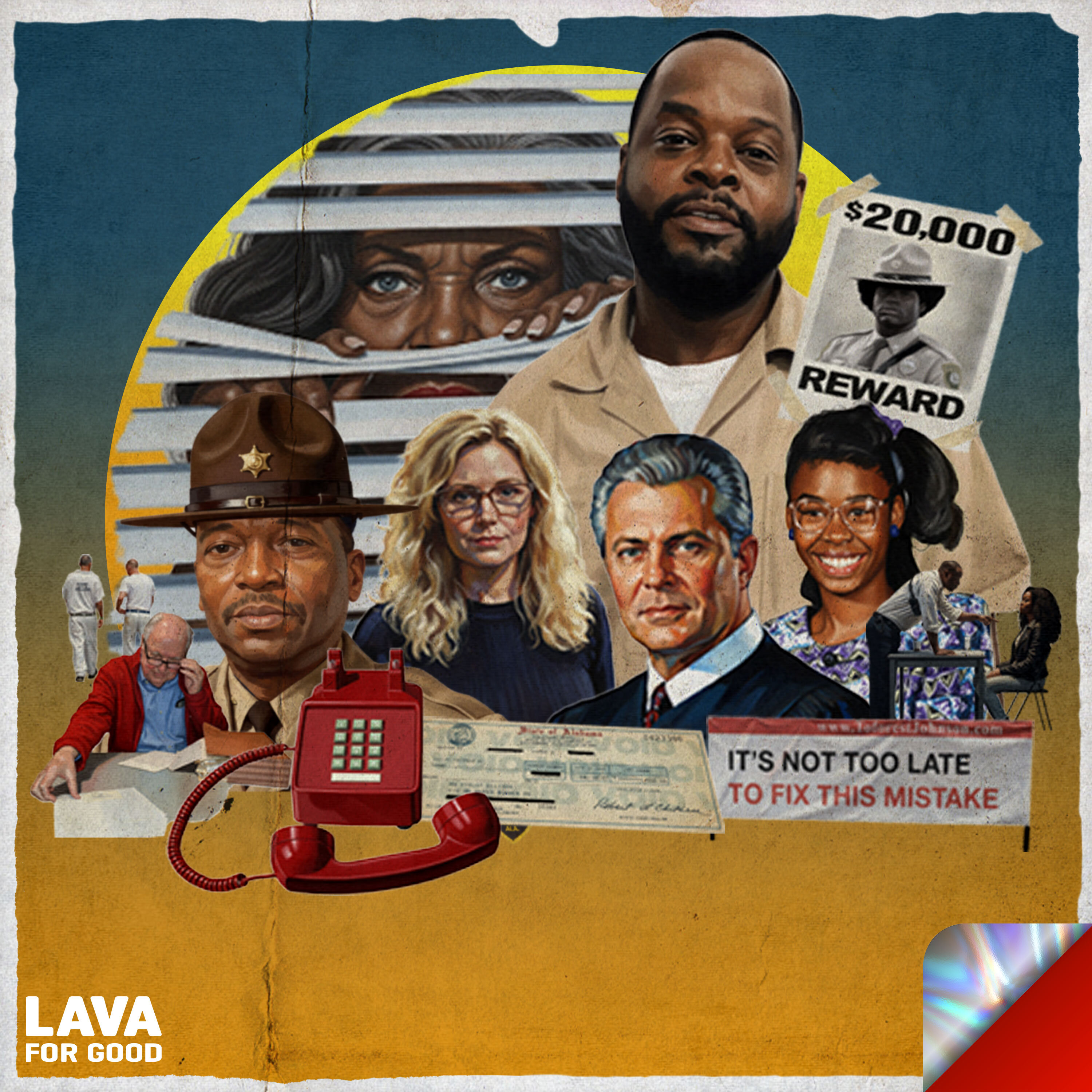
Hi, everyone. This is Gilbert King. Today we're introducing you to the podcast Ear Witness and the Alabama wrongful conviction case of Tafarus Johnson. As many Bone Valley listeners know, after the attention season one brought to Leo Schofield's case, Leo was finally released from prison after spending 36 years behind bars for a murder he did not commit. And as fans of season three, Graves county know, the attention Maggie Freeling brought to Quincy Cross's case has led key witnesses to recant their testimony, resulting in new evidentiary hearings that could grant him a new trial and potentially free him after decades of incarceration. There's something unique happening across these Bone Valley series. Storytelling with Hart grounded in rigorous investigation is making a real difference. Where the courts have often fallen short, we're seeing meaningful developments and it underscores the urgency of revisiting official narratives in in cases we believe resulted in wrongful convictions. This has been essential to the work of Jason Flom and the entire team at Lava For Good. That's why we wanted you to hear the story of Tafarus Johnson, who has been on Alabama's death row for more than 25 years. Beginning January 28th, we'll be releasing all episodes right here in the Bone Valley feed as bone Valley Season 4 Ear Witness, available as a binge on Lava for Good, plus on Apple Podcasts. Then on February 4, all episodes will be released as a binge in the free Bone Valley feed.
- [01:48]
Barry
911. Yes, ma', am, this is Barry from CR. I have what appears to be a Jefferson county police officer shot in the back of our building. He is not moving. It is one of us. They have got one down. And I said it looked bad and it looks bad.
- [02:06]
Beth Shelburne
In 1995, Detective Tony Richardson was trying to figure out who killed a fellow officer. Deputy Bill Hardy had It been my.
- [02:17]
Barry
Decision the day we caught the people that did it. Let's put them on death throat.
- [02:24]
Beth Shelburne
Without solid evidence, the case comes down to who is believed and who is ignored.
- [02:31]
Barry
Evidence wise, we had virtually no evidence. We had the word of a 15 year old who told lies. A lot of lies. So what she's saying she was there and I was there. That's a lie. That's a shame.
- [02:49]
Beth Shelburne
When the deputy was shot at the hotel Taforest Johnson was four miles away. But now he's on death row.
- [02:57]
Gilbert King
This case is all about alternative worlds that are in conflict with each other and in conflict with truth and in conflict with what our justice system stands for.
- [03:11]
Barry
We had a weak case based on the testimony of one Witness. The only evidence supposedly they had against him was this Ear witness who had never heard him speak before, who had no idea who he was.
- [03:24]
Unknown Female Speaker (possibly a podcast host or guest)
And I just started sobbing like uncontrollable because I was like, oh, my goodness, we did convict an innocent man and he's been on death row all these years and I didn't know it.
- [03:37]
Beth Shelburne
I'm Beth Shelburne from Lava for Good Podcasts. This is Ear Witness.
- [03:44]
Barry
The best thing that a person probably can do for themselves that's suspected of a crime is do not talk to the police.
- [03:52]
Joel or Matt from How To Money
Period.
- [03:53]
Beth Shelburne
Now, that's really interesting coming from a retired detective, but that's the truth. Listen to Ear Witness on the iHeartRadio app, Apple Podcasts, or wherever you get your podcasts. And to hear episodes with no ads, subscribe to Lava for Good plus on Apple Podcasts.
- [04:33]
Joel or Matt from How To Money
Hey, it's Joel and Matt from how to Money. If your new Year's resolution is to finally get your finances in shape, we've got your back prices, they're still high, and the economy is all over the place. But 2026 is the year for you to get intentional and make real progress. That's right, yeah. Each week we break down what's happening with your money, the most important issues to focus on, and the small moves that make a big difference. Kick off the year with confidence. Listen to How To Money on the iHeartRadio app, Apple Podcasts, or wherever you get your podcasts.
- [05:03]
Unknown Female Speaker (possibly a podcast host or guest)
What if mind control is real?
- [05:05]
Joseph Scott Morgan
If you could control the behavior of anybody around you, what kind of life would you have?
- [05:08]
Unknown Female Speaker (possibly a podcast host or guest)
Can you hypnotically persuade someone to buy a car?
- [05:12]
Barry
When you look at your car, you're gonna become overwhelmed with such good feelings.
- [05:16]
Unknown Female Speaker (possibly a podcast host or guest)
Can you hypnotize someone into sleeping with you?
- [05:19]
Gilbert King
I gave her some suggestions to be sexually aroused.
- [05:22]
Unknown Female Speaker (possibly a podcast host or guest)
Can you get someone to join your cult?
- [05:24]
Beth Shelburne
NLP was used on me to access my subconscious mind.
- [05:28]
Unknown Female Speaker (possibly a podcast host or guest)
A new podcast, exploring nlp, AKA Neuro linguistic Programming. Is it a self help miracle, A shady hypnosis scam? Or both? Listen to Mind Games on the iHeartRadio app, Apple Podcasts, or wherever you get your podcasts.
- [05:44]
Joseph Scott Morgan
If you're seeking to try to understand the forensic science behind these cases that we hear about in the news, Body bags is where you need to turn. There's no fluff. We do a deep dive into the forensics. Listen to Body Bags with Joseph Scott Morgan on America's number one podcast network, iHeart. Open your free iHeart app and search Body Bags with Joseph Scott Morgan and start listening.