
Podcast
Born & Kepler
Hosted by Andreas Deptolla · EN
Born & Kepler is named after the mathematician and scientists Max Born and Johannes Kepler. This bilingual podcast, offered in both German and English, dives into the expansive world of Artificial Intelligence (AI), exploring its foundations, evolving technology trends, academic search, and its impact on businesses and society.
Born & Kepler will feature a diverse lineup of experts from academia, venture capital, private equity, journalism, entrepreneurship, CTOs, and policymakers. Each guest offers unique insights into how AI is reshaping their sectors and what we might expect in the future.
Our goal is to provide a deep understanding of the core principles and breakthroughs in AI, enabling you to stay updated with the latest advancements in AI technologies and how they are transforming industries. During our episodes, we will explore how AI is influencing business strategies, optimizing operations, and driving innovation. We will also explore the ethical, social, and regulatory aspects of AI in everyday life.
22episodes
Episodes
Newest firstAll episodes

#20 Building Success in Southeast Asia: A Chat with Jeffrey Paine (ENG)
Oct 2200:49:54Tap to summarizeIn this episode, Jeffrey Paine, co-founder of Golden Gate Ventures, reveals the secrets behind investing in Southeast Asia's thriving startup scene. Learn how he navigated the challenges of early-stage investments, the role of AI in shaping future ventures, and his candid thoughts on the "copycat" culture in tech. Tune in for a deep dive into the strategies that led to the creation of multiple unicorns.
Transcribe →
#11 AI-supported Decision-making (GER)
Apr 16, 202500:51:48Tap to summarizeIn diesem Gespräch diskutieren Andreas Deptolla und Benedikt über die digitale Transformation in der Medienbranche, die Herausforderungen und Learnings in der akademischen Forschung sowie die Rolle von KI-Systemen in Unternehmen. Benedikt teilt seine Erfahrungen aus seiner akademischen Laufbahn und gibt Einblicke in aktuelle Trends und Entwicklungen in der Medienlandschaft, einschließlich des Einflusses von Influencern und neuen Plattformen. In dieser Diskussion wird die Nutzung von Künstlicher Intelligenz (KI) im Alltag, insbesondere im Bildungsbereich, erörtert. Der Gesprächspartner, Benedikt, teilt seine Erfahrungen mit KI-Tools wie ChatGPT und DeepL und diskutiert deren Anwendung in der Lehre. Es wird auch die Rolle von KI in der Ausbildung von Studierenden und deren Vorbereitung auf die Arbeitswelt thematisiert. Zudem wird die Notwendigkeit betont, grundlegende Fähigkeiten zu erlernen, bevor man KI-Tools effektiv nutzen kann. Abschließend wird die Bedeutung von Datenmanagement und Governance in Unternehmen hervorgehoben, um KI verantwortungsvoll einzusetzen. In diesem Gespräch werden verschiedene Aspekte der Mensch-KI-Interaktion beleuchtet, insbesondere die Herausforderungen und Chancen des Predictive Policings, die unterschiedlichen Kooperationsformen zwischen Mensch und KI sowie die rechtlichen und moralischen Überlegungen, die beim Einsatz von KI berücksichtigt werden müssen. Zudem wird die Akzeptanz von KI in verschiedenen Anwendungsbereichen diskutiert und es werden Empfehlungen für Investitionen in KI-Startups gegeben.
Transcribe →
#10 AI and Education (GER)
Apr 9, 202501:10:02Tap to summarizeIn diesem Gespräch wird der akademische Werdegang von Roman beleuchtet, der von Informatik über Wirtschaftsinformatik bis hin zu seiner aktuellen Professur in Bern führt. Es werden die Unterschiede zwischen dem deutschen und dem schweizerischen Hochschulsystem diskutiert, insbesondere in Bezug auf die Eigenverantwortung der Studierenden und die Betreuungsverhältnisse. Zudem wird die Rolle von AI im Lernprozess und die Bedeutung von Peer-Feedback hervorgehoben, sowie die Herausforderungen, die Studierende bei der Zielsetzung und Motivation im Lernprozess haben. In dieser Diskussion wird die Bedeutung von Peer-Feedback im Bildungsbereich hervorgehoben, insbesondere in kreativen Arbeiten. Es wird erörtert, wie Künstliche Intelligenz den Feedback-Prozess unterstützen kann, um personalisierte Lernwege zu schaffen. Zudem wird die Verbindung zwischen Feedback und Motivation im Lernprozess thematisiert, insbesondere in Bezug auf hohe Abbrecherquoten bei Online-Kursen. Innovative Ansätze wie das Reflect-Startup werden vorgestellt, das sich auf nachhaltiges Lernen konzentriert. In dieser Episode diskutieren Roman und Andreas die Bedeutung der inneren Entwicklungsziele und deren Verbindung zur Reflexion in der Bildung. Sie beleuchten, wie KI eingesetzt werden kann, um die Reflexionsfähigkeit von Studierenden zu verbessern und welche Rolle Plattformen wie Reflect dabei spielen. Zudem wird das Konzept des Prompt Engineering vorgestellt, das für die Interaktion mit KI-Systemen entscheidend ist. Abschließend wird die Zielgruppe von Reflect sowie zukünftige Anwendungen in der Arbeitswelt thematisiert.
Transcribe →
#9 Interdisciplinary Approaches on AI (ENG)
Apr 2, 202501:09:24Tap to summarizeIn this conversation, Andreas Deptolla and Gregory Wheeler discuss various aspects of academia, particularly focusing on the differences between the US and Germany in terms of culture, upward mobility, and educational practices. They explore the career paths of students, the funding of private universities, innovative teaching methods, and the role of AI in education. The conversation also touches on the future of coding and the implications of AI technologies, particularly in relation to companies like NVIDIA. In this conversation, Gregory Wheeler discusses the competitive landscape of AI, the opportunities for startups, and the economic implications for Germany. He emphasizes the importance of venture capital, the role of AI in various industries, and the need for government support to foster innovation. Wheeler also shares insights from his experience with Exloan, a digital lending platform, and highlights the intersection of academia and industry in advancing AI technologies. He concludes with recommendations for staying informed in the rapidly evolving AI landscape.
Transcribe →
#8 Education, Technology and Image-Analysis (GER)
Mar 26, 202500:53:34Tap to summarizeIn this conversation, Andreas Deptolla and Benjamin Risse discuss the attractiveness of Münster as a location for students, Risse's academic journey, his research focus on image analysis and AI, as well as the challenges associated with insect recognition. They also highlight the role of hardware in AI research, collaborations between universities and companies, and the importance of intellectual property in research projects. Additionally, the differences between working with large companies and start-ups are explored.This discussion covers various topics related to computer science, AI, and the challenges students face. Success stories from the Münsterland region are presented, the role of computer science in society is examined, and the future of programming in the context of AI is discussed. There is also advice for students and an analysis of the current hype cycles in AI technology.In this episode, Benjamin Risse and Andreas Deptolla discuss the challenges and opportunities that digitalization and artificial intelligence bring to medicine and education. Risse reflects on the empathy for people who are skeptical about technology and emphasizes how AI can revolutionize medical diagnostics. The role of AI in education is also addressed, particularly how it can function as a tutor and what changes are necessary in the education system to motivate and support students. Finally, the conversation touches on the future of AI and interesting guests for future episodes.
Transcribe →
#7 Perspectives on AI-Research (ENG)
Mar 19, 202501:13:38Tap to summarizeIn this episode of Born and Kepler, host Andreas Deptolla speaks with Prof. Evgeny Kaganer from IESE Business School about the evolving role of AI in business, leadership, and education. They explore how AI is reshaping industries, the challenges of digital transformation, and the skills leaders need to navigate an uncertain future.Prof. Kaganer shares insights from his research on AI’s impact on jobs, the changing responsibilities of CEOs, and the role of executive education in preparing leaders for the AI-driven world. They also discuss the rise of autonomous agents, the future of decision-making, and what businesses must do to stay competitive in the age of AI.A thought-provoking conversation on the opportunities and challenges AI presents—don’t miss it!
Transcribe →
#6 AI, Automation and the Future of Knowledge Work (ENG)
Mar 12, 202501:06:02Tap to summarizeHow is AI reshaping professional services, from law and accounting to business strategy? In this episode, we explore the intersection of technology and work, diving into the challenges of AI adoption, the evolving roles of junior professionals, and the impact of automation on knowledge production. We discuss the human side of digital transformation—why technology alone isn’t enough, the importance of collaboration between technologists and business leaders, and how organizations can successfully integrate AI into their workflows.Join us for a thought-provoking discussion on the opportunities and challenges AI presents in today’s workplace—and what the future of work might look like in an increasingly automated world.
Transcribe →
#5 Future Strategies: AI, Networks and Education in Transition (ENG)
Mar 5, 202500:51:28Tap to summarizeIn this episode, Andreas Deptolla speaks with Prof. Dr. Nils Stieglitz, President of the Frankfurt School of Finance & Management, about the future of work, innovation, and the impact of AI on education. They explore how businesses can stay competitive, the lessons learned from past disruptions, and why a mindset of adaptability is crucial. The conversation also touches on the balance between regulation and innovation and how to prepare for an ever-changing future. Tune in!
Transcribe →
#4 Marketing in the Digital Age! (GER)
Feb 26, 202500:56:36Tap to summarizeEnglish:In this episode, Professor Florian Stahl from the University of Mannheim shares his insights on the profound impact of AI on business models, marketing, and education. We discuss how American and European markets approach innovation differently, the future of peer-based learning, and why even traditional sectors must adapt rapidly. Plus, we explore why investing in raw materials like copper could be a smart long-term bet in an AI-driven world.German:In dieser Episode spricht Professor Florian Stahl von der Universität Mannheim über den tiefgreifenden Einfluss von KI auf Geschäftsmodelle, Marketing und Bildung. Wir diskutieren die Unterschiede zwischen den Innovationsansätzen in den USA und Europa, die Zukunft des Peer-Learnings und warum selbst traditionelle Branchen sich schnell anpassen müssen. Außerdem erklärt Florian Stahl, warum Investitionen in Rohstoffe wie Kupfer eine kluge langfristige Entscheidung in einer KI-getriebenen Welt sein könnten.
Transcribe →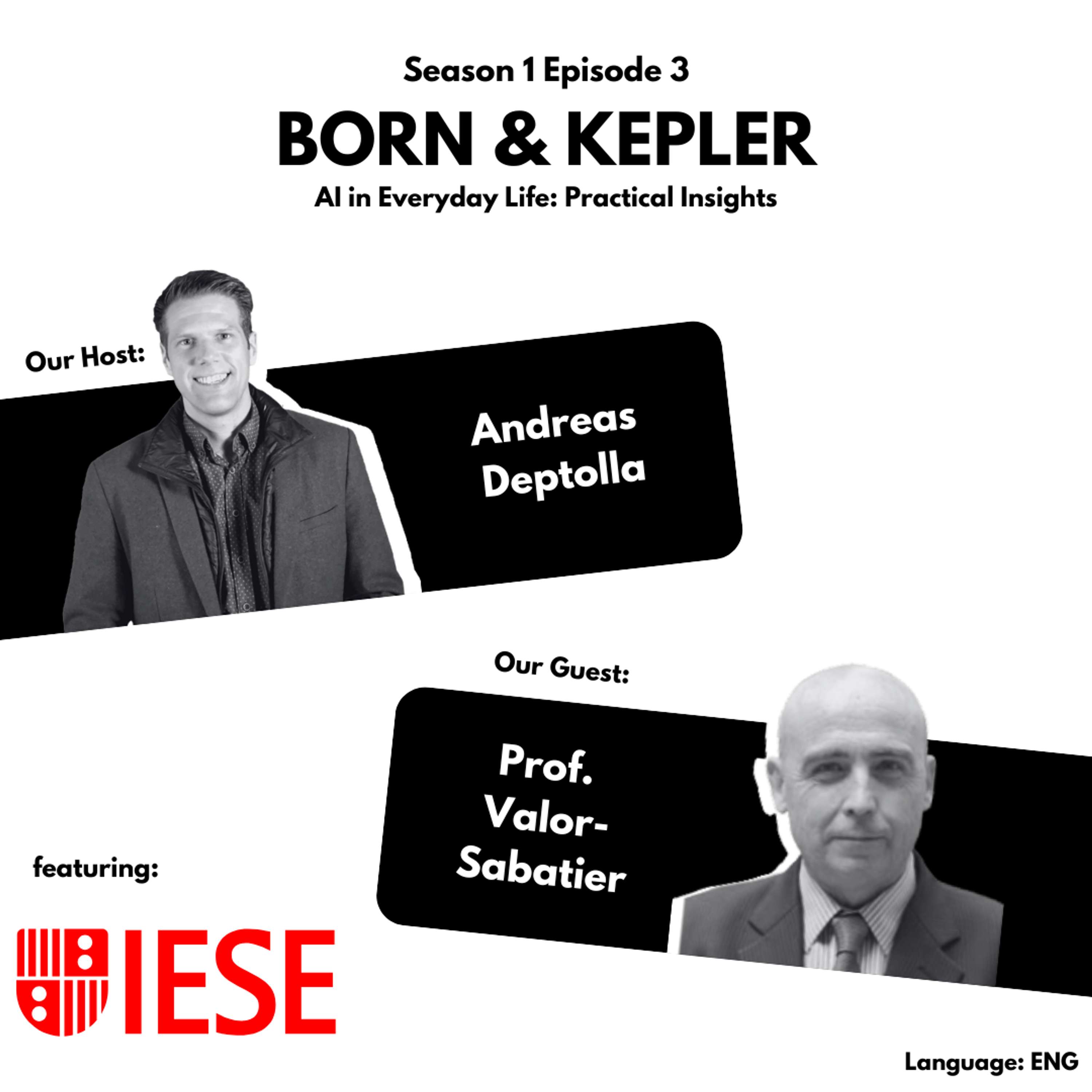
#3 AI in Everyday Life: Practical Insights (ENG)
Feb 19, 202500:40:54Tap to summarizeIn this episode, Prof. Valor-Sabatier from IESE shares his expertise on the real-world applications and challenges of AI. From medical diagnostics to self-driving cars and social media, the conversation explores how AI is transforming our daily lives. The discussion also dives into the ethical dilemmas and future risks posed by AI, including fake news and algorithmic bias.
Transcribe →