← Brains On! Science podcast for kids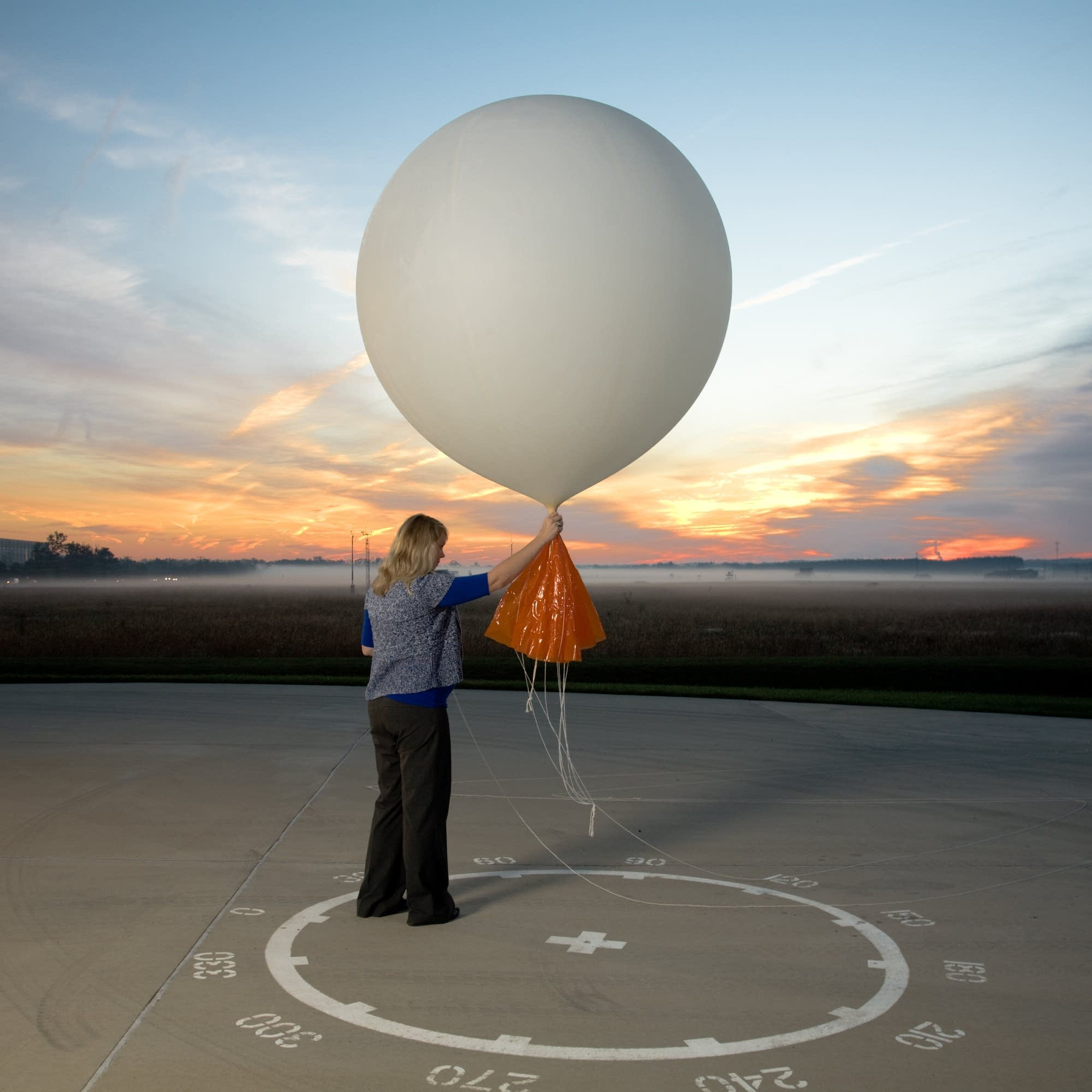
Loading summary
Transcript206 lines
- [00:01]
Molly Bloom
Hi, this is Molly with something important to ask you. Like, very important. Like, so important. Imagine everything I'm saying is in all caps with giant font and underlined in glitter. The Brain Zon universe is public media, and public media is threatened like never before. To keep doing what we do, we need your help. We need you. That part's double, underlined in glitter. Your donation can make sure Brainson smashboom best and more stick around through all of this uncertainty. But we need you to give now. Like, right now. Please go to brainson.org donate we have an amazing community of listeners, and we love answering your questions, hearing your mystery sounds, and admiring your incredible drawings. And the cool thing is, this audience is big.
- [00:55]
Nico Gonzalez Whistler
Big.
- [00:55]
Molly Bloom
If every family that listens donated just $10, we'd be all set. But we truly mean it when we say any amount is helpful. $5. $25. Maybe you like prime numbers and want to give $31 or $83? Just head to brainson.org donate that's brainson.org donate and when you give, picture me saying thank you so much in rainbow font surrounded by heart emojis with extra glitter. Thank you.
- [01:33]
Pedro
You're listening to Brains on, where we're serious about being curious. Brains on is supported in part by a grant from the National Science Foundation.
- [01:47]
Molly Bloom
Honk.
- [01:47]
Gary
Honk. I call this meeting to order. Fellow geese, it has been honked to my attention that when we migrate every year in our big gaggles.
- [01:56]
Molly Bloom
It's a flock. Gary.
- [01:58]
Gary
Excuse me? Honk.
- [02:00]
Molly Bloom
It's a gaggle of geese. When we're on the ground, when we're.
- [02:04]
Gale
In the sky, it's a flock.
- [02:06]
Gary
Any.
- [02:06]
Molly Bloom
Honk.
- [02:07]
Gary
Where was I? When we migrate every year in our flocks, the Doppler radars that humans have set up to help them predict the weather. Well, our big geese group shows up on their radars. Yes, I know. It's quite thrilling. I propose that this year we do something really special for the radar. Give those humans a good show. Let's fly in a special formation that will really read on the radar. Give them something to honk about.
- [02:38]
Molly Bloom
Hmm. How about we fly in the shape of a donut? Humans love donuts.
- [02:44]
Gary
That's true, Gavin. They certainly do.
- [02:47]
Molly Bloom
Maybe the shape of a phone. They love staring at those things.
- [02:51]
Gary
Another valid suggestion, Gale.
- [02:53]
Molly Bloom
Ooh, wait, I've got it.
- [02:55]
Gary
A V. Why a V?
- [02:57]
Molly Bloom
To show the humans that geese are valuable. Visionary. Victorious.
- [03:09]
Gary
Very good, Valiant. Honk. A flying V it is.
- [03:22]
Molly Bloom
You're listening to brains on from 8pm studios. I'm your host, Molly Bloom. And my co host today is Pedro from San Diego, California. Hi Pedro.
- [03:31]
Pedro
Hi, Molly.
- [03:32]
Molly Bloom
Brains on is a non profit public radio program, which means we rely on support from our listeners to keep the show going.
- [03:39]
Pedro
There's lots of ways you can support the show.
- [03:42]
Molly Bloom
You can donate, become a smarty, pass subscriber, buy our merch, or come see us live. Head to brainson.org fans to help support us.
- [03:50]
Pedro
Thank you.
- [03:52]
Molly Bloom
I am super excited to be co hosting with you today, Pedro.
- [03:56]
Pedro
Me too.
- [03:57]
Molly Bloom
And today we're answering this excellent question sent to us by Max from Sharpsburg, Georgia.
- [04:03]
Pedro
He wrote, how do weather stations predict the weather? Molly, is that sound coming from your phone?
- [04:10]
Molly Bloom
Oh, oops. Yep, that's my wafformations app.
- [04:14]
Pedro
Your what app?
- [04:15]
Molly Bloom
Weather Affirmations. It sends me weather updates combined with affirmations. You know, positive statements that help you feel good. Here, listen. Let the snow flurries dance and the westward winds howl. You are a cozy fortress of warmth and cheer. No gust or flake can rattle your spirit. Snow flurries. Aw, man. I'm definitely not wearing enough sweaters today.
- [04:40]
Pedro
How many sweaters are you wearing?
- [04:42]
Molly Bloom
4. And a sweater vest on top to pull my look together. Anyway, my wa Affirmations weather app says it should warm up by the end of the week. So, Pedro, I'm wondering, do you keep track of what the weather's gonna be like?
- [04:56]
Pedro
No. I used to have an apple watch on me and I used to check, but not anymore.
- [05:00]
Molly Bloom
Do your parents use a weather app?
- [05:02]
Pedro
Yeah.
- [05:02]
Molly Bloom
Yeah. Do they tell you like, oh, Pedro, please put on a rain jacket or please wear a sweater or anything like that?
- [05:08]
Pedro
They always make me wear a jacket.
- [05:10]
Molly Bloom
Okay, so they're checking the weather for you. It sounds like, what is your favorite kind of weather?
- [05:15]
Pedro
Probably the type of weather that doesn't make me have to go to school.
- [05:19]
Molly Bloom
So do you have a least favorite kind of weather?
- [05:21]
Pedro
Sometimes I don't like going up to the snow in the mountains because sometimes it gets inside my boots and sometimes and I wets my socks and it's so cold that I have to take it off.
- [05:31]
Molly Bloom
Oh, yes. Okay, so you're not a snow fan. So near San Diego, are there mountains you go to?
- [05:36]
Pedro
Yeah.
- [05:37]
Molly Bloom
Cool. And so up there you can actually feel like wintry snowy weather.
- [05:41]
Pedro
Yeah.
- [05:41]
Molly Bloom
Well, that's fun. So you get like the nice sunny weather of San Diego and then you can go to winter if you want. No matter how you or your parents get their weather info, if you live in the United States, that information originally came from something called the National Weather Service. Right.
- [05:58]
Pedro
If you watch the weather forecast on.
- [06:00]
Molly Bloom
The local news, read it online, check a weather app, ask Siri or Alexa or any other robot helper, or get.
- [06:07]
Pedro
A warning that a tornado is on the way.
- [06:09]
Molly Bloom
All that information originally comes from the National Weather Service. Without the National Weather Service, the forecasts as we know them would not exist.
- [06:19]
Pedro
And if you live somewhere outside the US Your country probably has its own version of this.
- [06:25]
Molly Bloom
The National Weather Service is the only official weather forecaster in the United States.
- [06:30]
Pedro
And they provide more than a million forecasts every year for cities all over the country.
- [06:35]
Molly Bloom
These forecasts are based on data that the National Weather Service collects at weather stations. Weather stations are buildings with special equipment for watching weather patterns and trying to figure out what will happen next.
- [06:47]
Pedro
There are 122 weather stations spread out all over the US and even in other parts of the world.
- [06:54]
Molly Bloom
When we're not at Brainson headquarters, the Brains on team is also spread out all around the country. So a few of us visited our own local weather stations to learn more about how they make their predictions. Our pal Nico Gonzalez Whistler visited a weather station in Mount Holly, New Jersey, and they're here to tell us about it. Hi, Nico.
- [07:13]
Nico Gonzalez Whistler
Hi, Molly. Hi, Pedro.
- [07:15]
Pedro
So what was the weather station like?
- [07:17]
Nico Gonzalez Whistler
Well, the station I visited keeps track of parts of New Jersey, Delaware, and Pennsylvania. I talked with some meteorologists. That's another word for someone who studies the weather. Hi, are you Sarah?
- [07:29]
Molly Bloom
I am.
- [07:29]
Nico Gonzalez Whistler
I'm Nico.
- [07:30]
Pedro
Hi, Nico from Brazon.
- [07:31]
Nico Gonzalez Whistler
How's it going?
- [07:32]
Pedro
Good.
- [07:33]
Nico Gonzalez Whistler
Nice to meet you.
- [07:33]
Sarah Johnson
I could just have you sign in. Your name and date is good enough.
- [07:37]
Nico Gonzalez Whistler
The meteorologists at this station work around the clock to create forecasts and put out weather alerts. A lot of this is done using satellite and radar.
- [07:47]
Molly Bloom
Oh, yeah, I've heard of those. Weather satellites are up in space, high above the Earth's surface. And these satellites have special equ on them to measure temperature, cloud cover, and lots of other things in our atmosphere. And some have cameras pointed at the Earth that can take pictures every 30 seconds.
- [08:04]
Pedro
It's a good thing Earth isn't camera shy.
- [08:07]
Nico Gonzalez Whistler
Right. People also use radar to study and predict the weather. These are on the ground. There are radar stations all across the US they're usually made up of a tall tower with a big white globe looking thing on top of it. Look, here's a picture of one of them.
- [08:24]
Molly Bloom
To me, they kind of look like giant ping pong balls.
- [08:28]
Nico Gonzalez Whistler
Ooh, they do look like that. These radar stations work by sending out radio waves.
- [08:35]
Molly Bloom
Radio waves are a Type of invisible energy that carries a lot of really cool information. If you have an old fashioned radio at home or in your car that uses radio waves to make sound.
- [08:47]
Nico Gonzalez Whistler
Exactly. In the case of radar, the radio waves bump into stuff in the air, like rain, snow, or hail, and then bounce back to the radar station.
- [08:57]
Pedro
Oh, it sounds like how bats use echolocation.
- [09:00]
Molly Bloom
Yeah. Echolocation is when bats make a high pitched noise and it bounces off stuff around them. They can sense when that sound comes back to them and turn that information into a picture of the world.
- [09:11]
Nico Gonzalez Whistler
Bats use their echolocation to detect things like trees or tasty bugs. And meteorologists use the radar information to tell where the storm is and what direction it's moving in. The radar tower that they use in Mount Holly sends information to a screen back in the weather station. When there are storms in the area, the screen will show big, almost cloud shaped objects moving around.
- [09:33]
Pedro
Oh, yeah, like the weather reports on TV.
- [09:37]
Nico Gonzalez Whistler
Right. @ the weather station, there were a bunch of screens so that the meteorologists could look at different radar and satellite reports from all over the area.
- [09:45]
Sarah Johnson
You see that there's like a very sharp edge here?
- [09:48]
Nico Gonzalez Whistler
Yes.
- [09:49]
Sarah Johnson
That's the cold front that we're expecting later this week.
- [09:52]
Molly Bloom
Okay, so you've got satellites in space and radar towers on the ground. Is that the only difference? Why do they use both?
- [10:00]
Nico Gonzalez Whistler
Well, they both give you really important information. When I looked at the radar image on the screen, I could only see parts of two states. New Jersey and Pennsylvania. But the satellite in the sky showed those two states plus New York, Delaware, Maryland, Virgin Carolina. It's like a bird's eye view if the bird was in space. One of the meteorologists at the weather station, Sarah Johnson, explained how it works.
- [10:27]
Sarah Johnson
So when we're looking at satellite, we're generally only looking at the tops of the clouds, Whereas radar, we can be scanning at the bottom of the cloud, in the middle of the cloud, or even up at the top of the cloud. If you think about it this way, Satellite is like taking a picture at the top of a cake and just looking at the top of the cake, Whereas Ra is actually taking a slice of the cake and being able to see exactly how many layers of cake it is.
- [10:55]
Pedro
Mm, cake.
- [10:57]
Nico Gonzalez Whistler
Because satellites show a larger area, they're helpful for monitoring storms that are approaching from farther away. Then when the storms get closer, they can use the radar to get more information about what exactly the storm is doing.
- [11:10]
Molly Bloom
Wow, that is cool. Thank you for telling us about your trip, Nico.
- [11:14]
Nico Gonzalez Whistler
My pleasure. I gotta go start Working on my super secret hot cocoa recipe. I hear it's supposed to snow this afternoon.
- [11:21]
Molly Bloom
Mmm, cocoa.
- [11:23]
Pedro
Bye, Nico.
- [11:24]
Nico Gonzalez Whistler
Bye. You too.
- [11:28]
Pedro
Boring.
- [11:29]
Molly Bloom
Fun. Another way weather stations track weather is with balloons, and I got to go out and see one. We'll hear more about that in a bit, but first, it's time for the.
- [11:42]
Gale
Mystery cell.
- [11:46]
Molly Bloom
You ready for the mystery sound, Pedro?
- [11:48]
Pedro
Yeah.
- [11:49]
Molly Bloom
Okay, here it is. What do you think?
- [12:01]
Pedro
I think it's like one of those notebooks, like when you put a pencil in it and you just, like, start going down. Like the circle things or you just do it with your finger.
- [12:10]
Molly Bloom
Mmm. Okay, that's a really good guess. Should we hear it again and see if any other thoughts pop up?
- [12:15]
Pedro
Yeah.
- [12:15]
Molly Bloom
Okay, here we go.
- [12:26]
Pedro
I think it's one of those doorknobs on the bottom of the door that starts, like, doing that sound, like when you move it around.
- [12:32]
Molly Bloom
Yeah, like stopper that's on a spring and it can make that, like, springy sound. Yeah, that is a really good guess. I'm gonna guess that it's someone dropping tic tacs on the floor. Oh, that's what it sounds like to me. We're gonna find out and get another chance to guess after the credits.
- [12:52]
Pedro
So stick around.
- [12:56]
Molly Bloom
Have you ever wondered what it would be like to float around in space? Well, you're in luck. We're making an episode about astronauts, and we want to know what food do you think would be hardest for astronauts to. To eat in space? Flying? Peas, A bowl of cereal and milk. There's so many possibilities, Pedro. What do you think it would probably.
- [13:16]
Pedro
Be hard eating a cookie.
- [13:18]
Molly Bloom
Yeah, why do you think it would be hard?
- [13:19]
Pedro
Probably because when you're, like, chewing it in your mouth, it, like, floats around and it could hit the roof of your tongue and it'd be hard to putting it on the teeth to chew it.
- [13:30]
Molly Bloom
Mmm, good point. Also, be really hard to dunk it in milk. Well, listeners, we wanna know what food you think would be hard to eat in space and why. Record your answer and send it to us@brainson.org contact. While you're there, send us your mystery sounds, drawings, and questions.
- [13:46]
Pedro
Like this one. How do mood ring work?
- [13:48]
Molly Bloom
Find answers to questions like this on the Moment of Podcast A short dose of facts and fun every weekday. Find Moment of um and more@brainson.org and keep listening. Brains on Universe is a family of podcasts for kids and their adults. Since you're a fan of Brains on, you'll love the other show shows in our universe. Come on, let's Explore. It's alien exercise hour. Hi yah hoo ha. While I stretch my snoodles and bounce on my trampolini, I'll listen to a new podcast. I'm going to try smashboom Best, the best debate podcast ever. Tell us why Alice in Wonderland has such grand command. Drop the beat. Ladies and gentlemen, esteemed judge of smashboom Best, I'd like to start with a few rhymes. Ah, yo. Catch me in the rabbit hole. Dazzled by a magic show by the Z. Come back here. Podcast must listen to smashboom Best. Now listen to Smash Boom. Best. Wherever you get your podcasts. Ba ba ba ba ba ba ba ba ba ba. Brains On.
- [15:25]
Pedro
You're listening to Brains On. I'm Pedro.
- [15:28]
Molly Bloom
And I'm Molly. Today we're talking all about weather stations and the equipment they use to predict the weather. We just heard all about radar and satellites.
- [15:38]
Pedro
Both are super important for tracking and understanding storms.
- [15:43]
Molly Bloom
Satellites get a big bird's eye view of storms, and radar can tell us more about what's going on inside a storm. Another way weather stations track the weather is with balloons. My brainzon buddy, Rachel Breeze, and I drove about 30 minutes from my house to Chanhassen, Minnesota, to see one. Is everything sounding good? Yeah.
- [16:06]
Brennan Dettman
Okay. Yeah, yeah. Let me know if I need to.
- [16:09]
Molly Bloom
Brennan Dettman is a meteorologist at the Chanhassen weather station. The office where he works has lots of computer monitors with maps and charts and graphs and video from live traffic cameras.
- [16:20]
Pedro
But you weren't there for the screens.
- [16:21]
Molly Bloom
Molly, you are correct. We were there for the weather balloon.
- [16:25]
Pedro
Is it like a balloon animal, but instead of an elephant, it's a lightning bolt?
- [16:30]
Molly Bloom
That would be amazing. But no, it's just a really big balloon, like the ones you would blow up for a birthday party. But these balloons aren't colorful. They're usually white. And they aren't for decoration. They're important tools for weather stations. The Chanhassen weather station launches two balloons into the sky every day. One at 6am and one at 6pm here's our meteorologist friend, Brennan again.
- [16:52]
Brennan Dettman
So there are two main components to a weather balloon. So you have the first thing, which is the instrument that is measuring the data, which is called a radiosonde.
- [17:03]
Molly Bloom
The radiosonde is a small white foam box about as big as the palm of my hand.
- [17:09]
Pedro
So what's it for?
- [17:11]
Molly Bloom
Good question. The radiosonde is really important. It has sensors on it for measuring different things way up in the air, like temperature, humidity, and then there's a.
- [17:20]
Brennan Dettman
Pressure sensor in there, as well as a GPS tracker to allow us to determine wind speed and wind direction based on where the radiosonde is located.
- [17:31]
Molly Bloom
And the way meteorologists get this radiosonde box up into the sky is delightfully low tech. They take a long piece of string, tie one end around the box and the other end to a balloon. Brennan took us to the garage, where they fill the weather balloon with hydrogen gas. Hydrogen gas floats just like the helium you put in party balloons.
- [17:51]
Brennan Dettman
So the whole process will take about, once I start filling up, about 10 minutes.
- [17:57]
Molly Bloom
It takes 10 minutes to fill up because it's a really big balloon, bigger than an adult. But besides its giant size, it's really like any other latex balloon. While it's filling up, Brennan attaches a little orange parachute to the radiosonde box and then ties the radiosonde to the balloon with string. And now it's launch time.
- [18:19]
Brennan Dettman
So I got away from the shelter there just to make sure it doesn't try to fly into the building and potentially pop or damage the instrument. And ready to go. All right. Three, two, one.
- [18:36]
Molly Bloom
The balloon zips up into the sky with the radiosonde attached. We can watch it for a ways, but soon enough, it's so small, we can barely see it.
- [18:46]
Pedro
Whoa. How high does it go?
- [18:48]
Molly Bloom
Really high. About 100,000ft above the ground. That's three times higher than most big passenger planes. And as it goes up in the atmosphere, there's less pressure on the balloon, so it expands and gets even bigger. About as wide as a school bus.
- [19:06]
Pedro
That's a really big balloon.
- [19:08]
Molly Bloom
I know, it's wild. The balloon eventually expands so much that it pops. Then the radiosonde drifts back down to earth with the help of its orange parachute. And along the way, it's collecting data that would be really hard to get otherwise and sending it to the weather station.
- [19:25]
Brennan Dettman
Weather balloons provide that critical data throughout the entire atmosphere. And all that data is then put into weather models to help improve forecasting. So it all kind of goes hand in hand, which is pretty cool.
- [19:38]
Molly Bloom
The radiosondes can land over 90 miles away from where they're first launched. The weather service doesn't worry about collecting them again because they're usually only used once. But since the GPS data from these is public, there are some people who like to check, chase them down when they land. Kind of like a game listeners. If you want to see what the weather balloon looks like and watch the launch, we posted a video on our Instagram. We're at Brainson now. From the Air to the ocean.
- [20:07]
Pedro
Because it turns out, you can learn about the weather from the water, too.
- [20:11]
Molly Bloom
Our pal Sandin Totten visited a weather station on the coast of California. He went there to learn about weather buoys.
- [20:19]
Pedro
A buoy is something that floats in.
- [20:20]
Molly Bloom
Water, and the National Weather Service uses them to track the waves.
- [20:26]
Pedro
Oh, that must be sand in.
- [20:27]
Molly Bloom
Oops. No. It's another weather update. Incoming from my wafformations app. The ice may coat the roads, but as always, you glide through with grace. No slip or slide can unsteady your stride.
- [20:41]
Pedro
Ugh.
- [20:42]
Molly Bloom
Icy roads. Well, at least I've got Vanilla Ice's greatest hit song. Cassette. Da da da da da da da da da da da da da da da da da da da da da.
- [20:54]
Pedro
Molly, the weather buoys.
- [20:56]
Molly Bloom
Oh, sorry, Right. I'm really into revisiting my youth through cassettes I find at secondhand stores right now. Anyway, let's hear what Sandon learned on his visit to that weather station.
- [21:06]
Ryan Cattell
Hey, Sandin here. I'm in Oxnard, California, at the National Weather Service Weather Forecast Office, and I'm.
- [21:13]
Gale
Here with Ryan Cattell. I am a meteorologist here. I get to study not just hydro meteors, which are like a fancy word for rain, but all sorts of weather and try to predict it and let everybody know about it.
- [21:25]
Ryan Cattell
And the weather today, it's beautiful. We're standing outside. It's sunny, a little breezy, but we're in this really interesting place behind your office. I would say it kind of looks like a garden, but instead of, like, trees and plants, there's mostly these old weather machines. So there's, like, poles with things spinning on them. It kind of feels like we're in a robot graveyard. What is this place?
- [21:46]
Gale
Oh, man, I haven't heard it put that way, but you're kind of right. Yeah. They're all retired weather equipment. So we have things from what's called an anemometer, which is used to measure the wind speed and direction and even some gauges that will collect rainfall and tell us how much rain is falling. But we also have weather buoys which are displayed out here. They bob up and down. There's a cool instrument inside of it, a sensor inside of it that's very similar to things on phones and Nintendo switches that can detect the way that you're tilting the controller. Similar type of instrument called an accelerometer, that can actually detect when the buoy bobs up and down to tell how big the waves are.
- [22:21]
Ryan Cattell
How would you describe these two round buoys in front of Us, they're in.
- [22:24]
Gale
Desperate need of a paint job. I'll describe it that way. There's paint peeling. They haven't really seen service for probably over 10 years. The ones that are out in the water actually look nicer. They're painted and well lit. And it really does help us to make better forecasts to predict how big these waves are. Because if you're on a boat, you don't want big waves because it's easy to get seasick. But it also can be really dangerous. So if we know how big the waves are, we can alert people. And these buoys are really big tools for that.
- [22:50]
Ryan Cattell
They kind of look like, I would say, like really big Christmas ornaments. Or maybe like that one's red on the bottom and white on the top. It kind of reminds me of a pokeball. Do you play Pokemon at all or do you know about Pokemon?
- [23:01]
Gale
I have three kids and they are all into Pokemon for sure. Yeah. That is for the paint and color. It's a good description with the white on the top and the red on the bottom.
- [23:09]
Ryan Cattell
They're big. They kind of look like those giant exercise balls sometimes people use to sit on or to do sit ups on.
- [23:16]
Gale
Yeah, that's a great example. One of those big exercise balls. And then it has a light on the top because they're out in the. In the waters where boaters are. So that boaters can see it, especially at night, because otherwise it'd be really easy to run over. And that's not good for anybody. They are anchored by a very heavy, long chain.
- [23:32]
Ryan Cattell
Oh, yeah, that is a beefy chain. It looks like something you chain up like a monster with.
- [23:35]
Gale
Maybe it does. It definitely has that look.
- [23:39]
Molly Bloom
Got some weight to it.
- [23:43]
Ryan Cattell
These seem like they're pretty simple tools from what you're describing to me.
- [23:46]
Molly Bloom
They.
- [23:47]
Ryan Cattell
They float in the water. They kind of have a little device inside them that measure how much they're tilting and how much they're going up and down. They have a light so that people see them. But where does that data go and how do they get it to you?
- [23:58]
Gale
So on top of these buoys are a radio antenna. And that signal, the data gets transmitted through a radio frequency to receivers on the coast. They'll get that data, they'll process it, and then they'll send it out to the world, including to our office. There's usually maybe a 10 minute delay, but it all happens pretty fast.
- [24:15]
Ryan Cattell
What's powering all that inside the buoy?
- [24:18]
Gale
These particular ones actually have a really big battery. Some of them might have a solar panel, but they do have really large batteries and they do have to get replaced regularly.
- [24:26]
Ryan Cattell
Well, Ryan, this was so cool. Thank you so much for showing us all this.
- [24:28]
Gale
So glad you can come out.
- [24:29]
Ryan Cattell
And thank you for your service. Retired Buoys.
- [24:36]
Molly Bloom
There are all different ways that people track, measure and predict the weather.
- [24:40]
Pedro
Like radars, satellites, balloons and buoys.
- [24:43]
Molly Bloom
And all of this different weather data is constantly being fed into giant supercomputers. Just like Superman is like 10,000 times stronger than us regular people, supercomputers are like 10,000 times stronger than the computers we have at home or school. These computers take the data and make predictions about what the weather will do.
- [25:04]
Pedro
The more data they have, the better the prediction will be.
- [25:08]
Molly Bloom
That's why the Weather Service uses so many different tools so that the computer can get the best possible picture of what's going on at sea, on land and in the air.
- [25:19]
Pedro
And because the National Weather Service is a public service, everybody can use these.
- [25:25]
Molly Bloom
Predictions, like for example, to make a Weather Daily Affirmations app. Not even this weekend's sun can outshine your brightness and warmth. A sunny day. Woohoo. Time to plan a picnic. The National Weather Service operates more than 100 separate weather stations.
- [25:49]
Pedro
These stations make more than a million weather forecasts a year across the country.
- [25:53]
Molly Bloom
They make these forecasts using equipment like radar, satellites, weather balloons and weather buoys.
- [25:59]
Pedro
And they process it all by using the strongest computers in the world.
- [26:04]
Molly Bloom
That's it for this episode of Brains On. This episode was written by Nico Gonzalez Whistler, Sandon Totten and me, Molly Bloom. It was edited by Shaila Farzon. We had engineering help from Eric Romani and Deborah Reeves with sound design by Rachel Breese and fact checking by Rebecca Rand. Original theme music by Mark Sanchez.
- [26:24]
Pedro
We had production help from the rest of Brains On Universe team, Rosie Dupont.
- [26:29]
Molly Bloom
Anna Goldfield, Ruby Guthrie, Lauren Humpert, Joshua Ray, Mark Sanchez, Charlotte Traver, Anna Weigel and Aron Woldesilassi. Beth Perlman is our executive producer and the executives in charge of APM Studios are Chandra Kavati and Joanne Griffith. Special thanks to Vinicius Crucero, Fabiano Marx and Daniel Doctore.
- [26:49]
Pedro
Brains on is a non public radio program.
- [26:53]
Molly Bloom
There are lots of ways to support the show. Subscribe to Brains on Universe on YouTube where you can watch animated versions of some of your favorite episodes or head to brainson.org while you're there.
- [27:04]
Pedro
You can send us mystery sounds, drawings and questions.
- [27:07]
Molly Bloom
Okay, Pedro, are you ready to hear the mystery sound again?
- [27:10]
Pedro
Yeah.
- [27:10]
Molly Bloom
All right, here it is. What do you Think.
- [27:24]
Pedro
Now that I think of it, I think it's probably just coins dropping on the floor. Like if I accidentally drop a coin while playing, like, heads or tails.
- [27:34]
Molly Bloom
Hmm. I like it. I like it. I know you like to play heads and tails a lot. That's one of your favorite things, right?
- [27:39]
Pedro
Yeah.
- [27:40]
Molly Bloom
I think that's a great guess. Should we hear the answer?
- [27:42]
Pedro
Yeah. My name is Kabil, and I'm from sfo, California. That was the sound of marbles dropping on the floor.
- [27:51]
Molly Bloom
Oh, marbles dropping on the floor.
- [27:55]
Pedro
Ah.
- [27:55]
Molly Bloom
You were not that far off. You thought something was dropping on the floor.
- [27:58]
Pedro
Yeah.
- [27:59]
Molly Bloom
You just thought it was coins. I think we're giving ourselves partial credit for that for sure.
- [28:03]
Pedro
Yeah.
- [28:13]
Molly Bloom
Now it's time for the brains honor roll. These are the incredible kids who keep the show going with their questions, ideas, mystery sounds, drawings, and high fives. Anthony from Seven Oaks, United Kingdom. Noelle from Menlo Park, California. Olivia from Grand Rapids, Michigan. Sophie from White Plains, New York. Ben from Redwood City, California. Sybil from Thornton, Colorado. Luna from Waltham, Massachusetts. Timmy from Boise, Idaho. Aiden from Yorktown Heights, New York. Caroline from Brooklyn, New York. Ida from Providence, Rhode Island. Silas from Alberta. Eli from Sailorsburg, Pennsylvania. Oliver from Rochester Hills, Michigan. Fiona from Chicago. Faye from West Vancouver. Adeline from Minneapolis. Beau from Falls Village, Connecticut. Nessa and Emmy from Menlo Park, California. Sophie from Markham, Ontario. Mabel from Fallbrook, California. Charlie from Blairst, Jersey. Charlotte from New York City. Aiden and Bowden from Auckland, New Zealand. Abilene and Amelia from Wauwatosa, Wisconsin. Ella, Marie from Prospect Heights, Illinois. Ezra from Edmonton Heidi from Newcastle, England. Phoebe from Middleboro, Keelan and Colin from Murrieta, California. Moon from San Diego. Phoebe from Minneapolis. Marcus from Port Orchard, Washington. Emmett from Pittsburgh. Steven from Grosse Pointe, Michigan. Arthur from Alameda, California. Jordan from New Jersey. Matthias from Delta, British Columbia. Everett, Normandy and Holland for from Wasilla, Alaska. Obasi from Gladstone, Oregon. Jack from Maple Ridge, British Columbia. Angela from Fishers, Indiana. Nola and Coco from Mendocino, California. Suryansh from Antibes, France. Ivy and Kai from Bath, Maine. Holden from Toronto. Ethan and Daniel from Vancouver. James from Omaha, Jude from Panhandle, Florida. Emmy from Chaney, Pennsylvania. Jonathan from Severna Park, Maryland. Thomas from St. Charles, Illinois. Kelsey from San Francisco. Evie and Tori from Langley, British Columbia. Vera from Philadelphia and Sylvie from Memphis, Tennessee. We'll be back next week with an episode all about what it's like to be an astronaut.
- [29:59]
Pedro
Thanks for listening.