
Podcast
Brand Enabled: The Human Stories Behind Branding
Hosted by Gabriel Cohen and Holly Osborne · EN
Welcome to the Brand Enabled podcast—a reinvigorated series built exclusively for brand leaders seeking to unlock the secrets of authentic brand enablement.
With every episode, we’re diving deeper than ever before into the art and science of brand enablement to uncover the hidden triggers behind successful brand strategies – transforming even the most challenging brand conundrums into actionable insights.
Joining Gabriel Cohen, https://www.monigle.com/brand-enabled-podcast/?utm_medium=podcast&utm_source=streaming (Monigle)’s Chief Marketing Officer, on this transformative journey is our co-host, Holly Osborne. Holly’s candid storytelling and real-world experience set the stage for insightful and human conversations that bring a rare blend of agency savviness and client-side grit to the table. Together, Gabe and Holly create a dynamic space that allows every listener to hear the real stories behind the messy art of managing brand in complex organizations.
We’re committed to sharing the honest stories experienced through the challenges and triumphs of brand leadership. Expect candid stories and valuable lessons. We’re narrowing our focus to the specific challenges faced by corporate brand professionals at organizations such as FedEx, Intel, HP, NetApp, and more. From evolving internal brand architecture to translating technical expertise into a compelling narrative, our episodes are a masterclass in brand enablement delivered through engaging and relatable conversations.
Learn how brand leaders balance between strategic rigor and creative freedom, understand the importance of radical patience, and hear moments of genuine vulnerability where brand leaders share where they’ve stumbled and the ingredients that sparked breakthrough moments.
Don’t miss out on these insightful conversations – subscribe to Brand Enabled and get ready to experience a podcast that not only informs, but inspires you to rethink, reimagine, and ultimately re-energize your brand strategy. Send us your questions, suggest guests, and become part of the dialogue by contacting us at gabriel@brandenabled.co & holly@brandenabled.co. Together, we'll uncover the secrets to building resilient, impactful brands in today's fast-paced world.
10episodes
Episodes
Newest firstAll episodes
The industrial evolution of brand: Inside Schneider Electric’s shift
Dec 1600:45:30Tap to summarizeWhat happens when a 190-year-old industrial company starts calling itself an energy technology company?Join Gabe and Holly as they explore how Schneider Electric is repositioning from a behind-the-walls manufacturer to a global energy tech leader, and what that means for brand, communications, and marketing leaders.Chief Brand and Communications Officer Monique Elliott helps unpack how an engineering-led, rules-based organization built an integrated brand and communications function, created a dedicated brand storytelling capability, and turned customer “impact makers” into the heroes of its narrative. She shares what it really took to sell storytelling into a technical culture, why brand and comms were brought under one roof, and how that shift unlocked new value internally and externally.You’ll hear practical insights on:Moving a heritage “industrial” brand into a technology-led positioning without losing credibilityStructuring brand and communications as an internal consulting function to the businessBuilding a brand storytelling team (and how they hired for the right skills)Using customer stories and thought leadership to move beyond product marketingBalancing governance and guidelines with creativity in large, rules-driven organizationsLeveraging AI to synthesize analyst and market signals so brand can respond fasterFor anyone leading brand in complex B2B organizations - especially legacy or engineering-driven companies - this conversation offers a clear look at how to modernize your brand without discarding what made it strong.
Transcribe →
Segment to superstar: How SiriusXM grows passionate audiences
Nov 1101:13:03Tap to summarizeCan a brand built on car radios win in a streaming world?JulieAnne Evanina, Former SVP of Brand, Creative and Media at SiriusXM Radio, joins hosts Gabriel Cohen and Holly Osborne to unpack how the company moved from free trials to true fandom. You’ll hear how segmentation and product strategy shaped a brand evolution, why “personal connection” beats pure algorithms, and what it takes to rally a large organization around measurable brand outcomes.What you’ll learn:How to build a segmentation model that guides real decisions, not just a slideWays to protect your core audience while investing in growth segmentsThe role of human curation and hosts in driving consideration and retentionTurning creators and niche passions into sticky loyalty (yes, including heavy metal)Running a brand evolution tied to product updates, not vanity designSelecting and measuring leading indicators that predict revenue impactUsing distinctive brand assets (sonic cues, mascots) to boost recognitionPractical tactics to activate employees as advocates and co-creatorsListen for concrete examples, simple frameworks, and metrics you can steal for your next brand, content, or growth initiative.
Transcribe →
Brand building from the ground up: Utilities, B2B, and the power of starting fresh
Oct 2100:51:39Tap to summarizeWhen customers barely notice your brand, how do you earn trust and drive action without a big budget?David Pendery shares how a comms-first mindset helped a utility make the “invisible” feel tangible, why he measured success through program participation instead of revenue, and how masterbranding simplified a complex B2B portfolio at CSG. You’ll hear practical ways to co-create positioning with analysts, build credibility in new markets, and scale a team from 8 to 60 without losing curiosity or humility.What you’ll learnStory-first tactics to grow affinity when you can’t outspend competitorsHow to pick metrics when revenue isn’t the right KPIA simple framework for masterbrand naming that reduces buyer confusionLow-cost research loops using analyst feedback to de-risk positioningPractical steps for the first 60–90 days leading a new functionLeadership habits that sustain momentum: trust, transparency, humility
Transcribe →
Data, emotion, and design: Walmart’s private brand playbook
Oct 700:43:44Tap to summarizeCan private labels be brands people actively seek out? Walmart SVP Courtney Carlson explains how data, emotion, and design come together to build preference, not just parity.What you’ll learnA practical framework for measuring what matters across digital funnels, SEO, reviews, and store performance When to trust common sense and human stories alongside analytics How a “branded house” approach turns private label into a reason to choose Walmart Using influencer immersion and product page excellence to drive conversion Culture as a brand tool: simple rituals, curiosity, and clear expectations that scale leadership Portfolio choices that balance core, trend, and price architecture without chasing national-brand equivalents
Transcribe →
Product marketing realities: From brown boxes to brand recognition
Jul 15, 202500:29:09Tap to summarizeWhat happens when you need to rebrand thousands of physical products across global markets? For companies like Logitech and ResMed, changing a logo isn't just about updating a website - it's about retooling manufacturing lines, redesigning packaging for millions of units, and navigating complex regulatory requirements.Join brand leaders Paige Lutter from Logitech and John Barger from ResMed as they share their experiences leading brand strategy for physical product companies. Learn how Logitech solved their global naming challenges with the "Logi" mark, how ResMed approaches branding medical devices, and why both companies treat AI as a utility rather than a branded feature.Key insights include:Managing brand architecture across hardware, software, and digital touchpointsStrategies for implementing brand changes across global product linesThe critical role of executive support in brand transformationBuilding authentic customer connections through physical brand touchpointsBalancing innovation with brand consistency in regulated industriesWhether you're working with physical products or digital experiences, this conversation offers valuable lessons on brand strategy, change management, and the power of patience in building lasting brand value.
Transcribe →
Beyond the swoosh: Leading with purpose at Nike and beyond
Jun 3, 202500:59:34Tap to summarizeWhat happens when companies chase metrics instead of meaning? Former Nike marketing leader Lisel Welden shares powerful insights from her decade-long journey shaping iconic brands like Nike, Lyft, and Stitch Fix.Drawing from her experience leading Nike's first unified Black History Month campaign across all business units, Welden reveals how authentic leadership and cross-functional collaboration can drive both business results and social impact. She breaks down why Nike's recent shift toward becoming a "tech company" created unexpected challenges, and shares practical wisdom on balancing data with human insight.Key takeaways:Understanding what truly drives your businessThe difference between being data-supported versus data-driven, and why blindly following metrics can lead organizations astrayHow to build diverse, high-performing teams by matching people's natural strengths to their rolesCreating success for others as the foundation for meaningful cross-functional collaborationWhether you're a marketing leader looking to drive brand growth or a manager aiming to build stronger teams, this conversation offers practical frameworks for leading with purpose while delivering results.Love the show? Subscribe, rate, review, and share! https://www.monigle.com/
Transcribe →
Engineering Intel's brand from the “Core” up
May 6, 202501:01:45Tap to summarizeHow does a tech company turn a simple sound into one of the world's most recognizable audio marks - second only to a baby crying? Former Intel Global Brand Director Merlin Kister reveals the strategic thinking behind Intel's most iconic brand elements during his nearly two-decade tenure.From simplifying product naming with the Core i3/i5/i7 system to creating Intel Gamer Days - an experiential event that expanded globally - Kister shares practical insights on aligning brand decisions with business objectives. He unpacks how Intel maintained its brand leadership even as competitors emerged, through initiatives like the Intel Inside program and strategic partnerships with PC manufacturers.Key topics covered:How Intel simplified its product architecture to help consumers make better purchasing decisionsThe business strategy behind the famous Intel sonic brand and Intel Inside programCreating meaningful brand experiences through partnerships with the Olympics, NFL and gaming communityBuilding trust with technical audiences while maintaining broad consumer appealBalancing short-term sales goals with long-term brand equityKister provides a masterclass in connecting brand initiatives to revenue and profitability while never losing sight of the end user experience.Love the show? Subscribe, rate, review, and share! https://www.monigle.com/
Transcribe →
The brand you’ve never heard of: How Minerva Project is disrupting education
Apr 15, 202501:13:54Tap to summarizeWhat if you could completely reinvent higher education from the ground up? While most universities still follow a centuries-old model of lectures and tests, Minerva Project has created a radical new approach to learning that's challenging the status quo of higher education.Ayo Seligman, VP of Strategy and Design at Minerva Project, shares how this innovative organization built both a university and a technology platform that's transforming how students learn. From removing tenure track positions to creating a global rotation across seven cities, Minerva threw out the traditional playbook to focus on skills-based learning and practical application.Learn how Minerva positioned itself as a luxury education brand while disrupting entrenched Ivy League institutions, why their approach to learning through "deliberate spaced practice" could revolutionize corporate training, and how they designed their brand identity to reflect perfect imperfection. For brand leaders interested in driving transformation and innovation, Minerva's story offers valuable insights on building a challenger brand in a traditional industry.Key topics:How Minerva rebuilt education using first principles thinkingCreating a global learning experience across seven world citiesPositioning an education startup against 200-year-old institutionsUsing learning science to transform how organizations train and develop talentBuilding a brand that appeals to unconventional thinkersThe intersection of technology, education, and brand strategyLove the show? Subscribe, rate, review, and share! https://www.monigle.com/
Transcribe →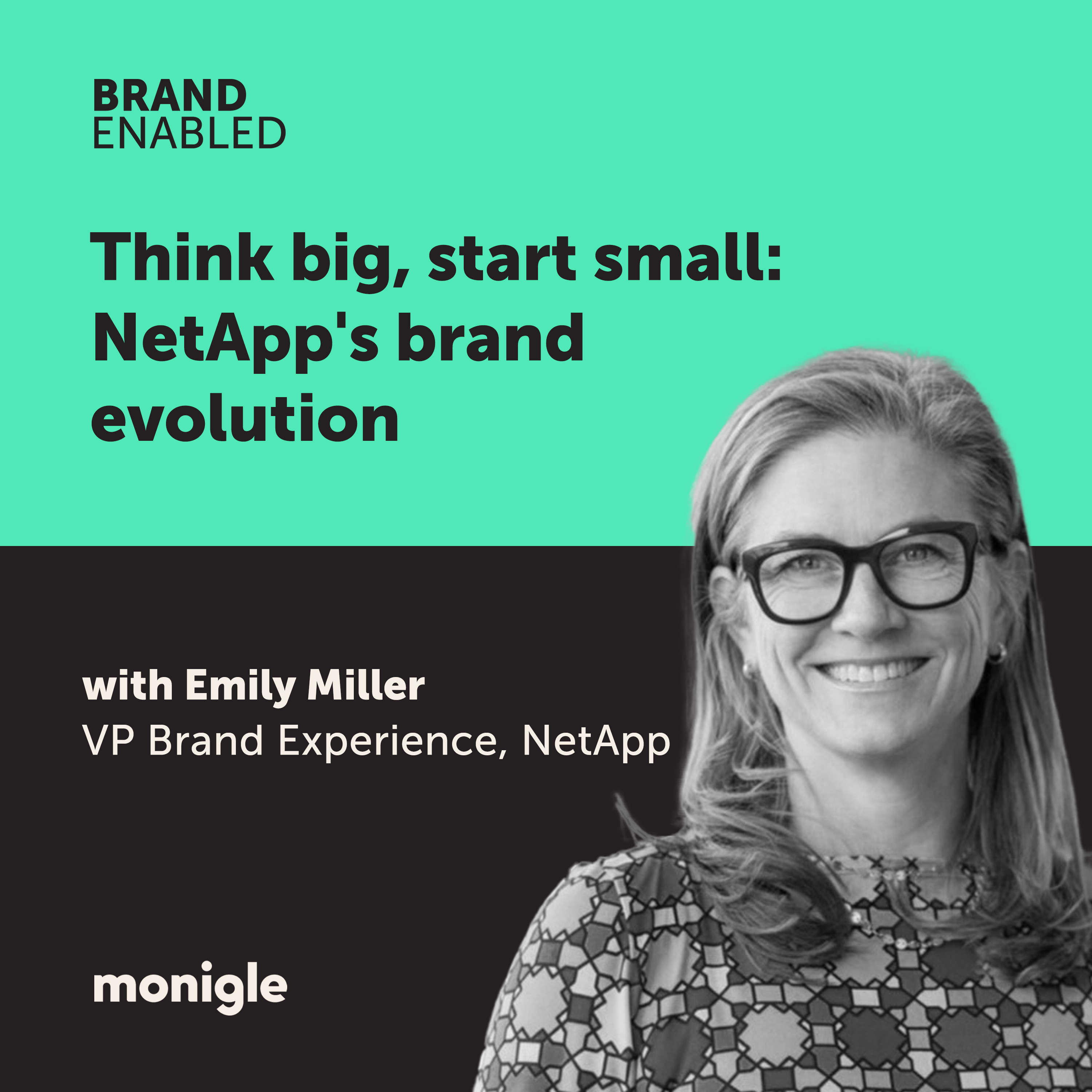
Think big, start small: NetApp's brand evolution
Apr 1, 202500:55:30Tap to summarizeHow do you build brand credibility in an engineering-driven company where logos on napkins seem more important than strategic narrative? After 15 years at NetApp, Emily Miller has mastered the delicate balance between education and execution in the B2B tech space. From transitioning from agency consultant to in-house brand leader, Emily shares practical approaches to portfolio narrative development, securing executive buy-in, and surviving multiple CMO changes while maintaining brand consistency. Learn why starting with product stories before tackling corporate narrative creates stronger foundations, and discover how Emily's "think big, start small, move fast" philosophy transformed NetApp's approach to brand building. Whether you're struggling with the "brand police" reputation or trying to convince engineers of the value of emotional storytelling, Emily's high school analogies and football metaphors offer practical frameworks for brand professionals at any level.Love the show? Subscribe, rate, review, and share! https://www.monigle.com/
Transcribe →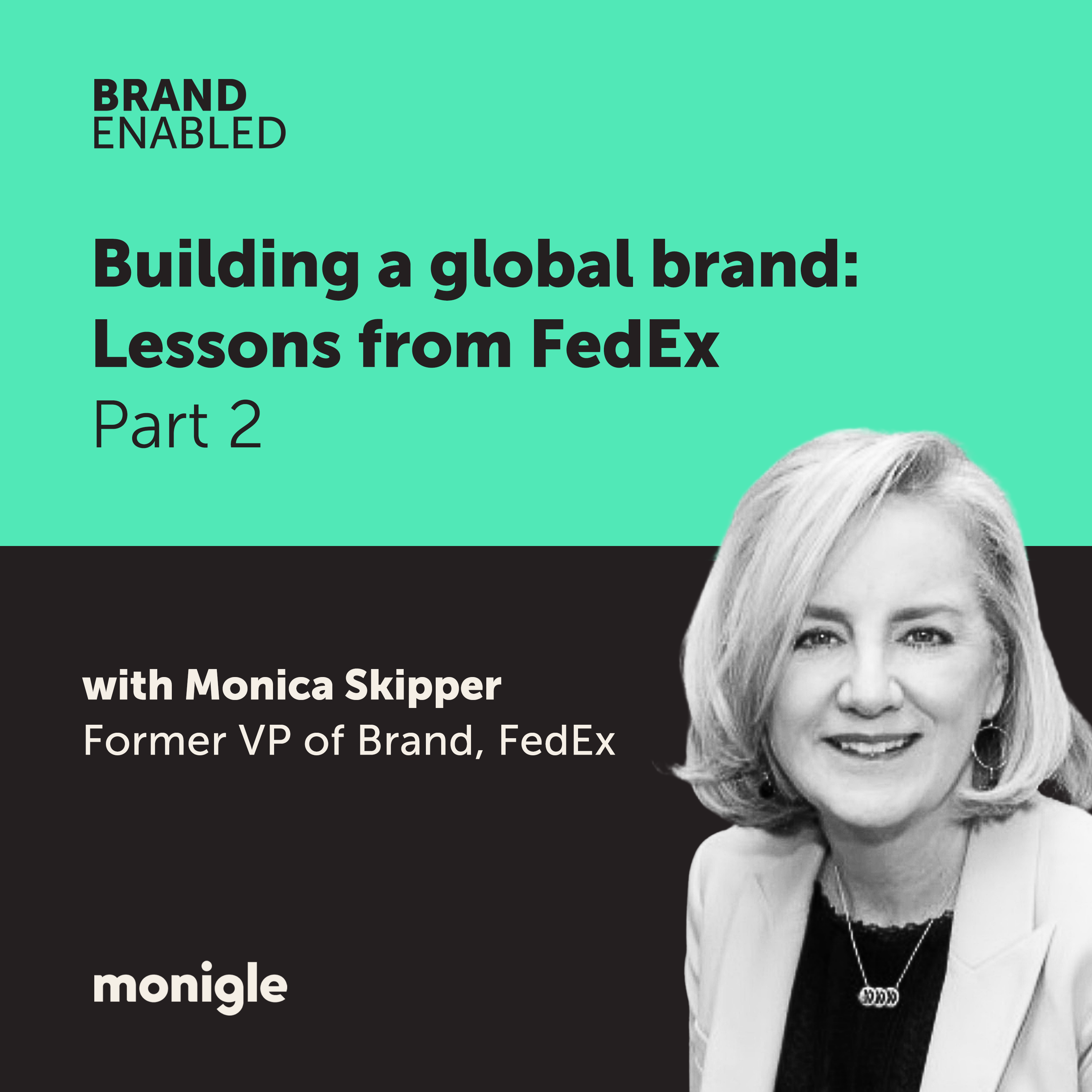
Building a global brand: Lessons from FedEx with Monica Skipper - Part 2
Mar 11, 202500:43:20Tap to summarizeIn this second part of our conversation with Monica Skipper, former VP of Brand at FedEx, we delve deeper into the intricacies of global brand management. Monica shares more of her invaluable insights, including:The evolution of FedEx's brand architecture and the challenges of integrating acquisitionsStrategies for brand enablement and moving away from the "brand police" mentalityThe critical role of data in shaping brand strategies and decision-makingBalancing global brand consistency with local market needs across 220 countriesThe importance of leadership support in driving major brand initiativesMonica also offers her perspective on the value of having both client-side and agency experience in brand management. She provides practical advice for navigating complex organizational structures and building influential relationships across departments.This episode offers a rare, behind-the-scenes look at brand management within a Fortune 500 company, providing valuable lessons for brand professionals at all levels.Love the show? Subscribe, rate, review, and share! https://www.monigle.com/
Transcribe →