← Breaking Beauty Podcast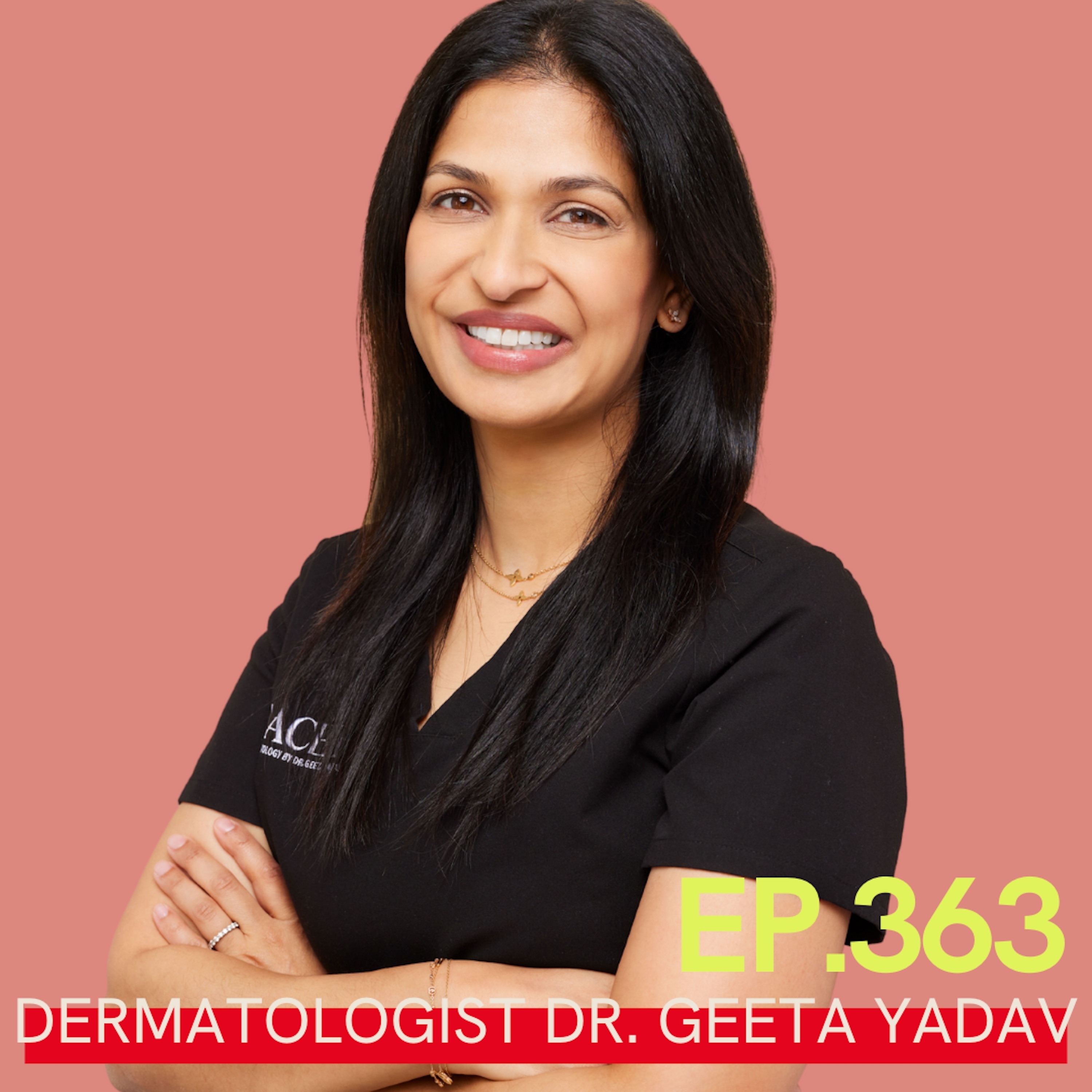
Breaking Beauty Podcast
A Derm Explains: The Science-Backed Ingredients That Will Help You Achieve Healthy-Looking Skin For Life, What’s Overhyped and Do Those Tiktok Skincare Hacks Actually Do Anything?
00:36:17
Loading summary
Transcript136 lines
- [00:01]
Jill Dunn
This new year, I want to spend more time with my family, get healthier and make sure my finances are in order. That includes finally securing life insurance. My friend recommended Select Quote They've helped more than 2 million people find coverage in the last 40 years. In 15 minutes, a licensed insurance agent found me a $500,000 policy for only $16 a month and my husband got a $500,000 policy for ONLY $18 a month. Plus we qualified for same day life insurance, no medical exam required, and we recovered by the time we hung up with Select Quote a health concern, be.
- [00:33]
Carlene Higgins
It high blood pressure, diabetes, even heart.
- [00:35]
Jill Dunn
Disease, their experienced agents can find you.
- [00:38]
Carlene Higgins
The right life insurance policy at the lowest price.
- [00:40]
Jill Dunn
Make life insurance the first resolution you check off your list this year.
- [00:44]
Dr. Gita Yadav
Go to selectquote.com for your free quote. That's selectquote.com selectquote.com details on example right@selectquote.com the following podcast is a Dear Media.
- [00:55]
Carlene Higgins
Production welcome to Breaking Beauty the podcast all about the breakthrough people, products and moments in beauty.
- [01:06]
Jill Dunn
We're your hosts Jill Dunn and Carlene Higgins.
- [01:13]
Carlene Higgins
Hello and welcome to Breaking Beauty Podcast, the show all about the breakthrough people, products and moments in beauty hosted by yours truly, Carlene Higgins and my best pod mate, Jill Done. Hello Jill.
- [01:24]
Jill Dunn
Hey there Carlene. And of course we're two longtime magazine beauty editors turned beauty podcasters here each and every Wednesday and sometimes like we are today on a Friday in your.
- [01:34]
Carlene Higgins
Feed and today's episode is brought to you in partnership with our friends at Aveeno. Today we're welcoming dermatologist Dr. Gita Yadav who is also a spokesperson for the brand and she's going to be chatting with us all about the science backed ingredients that will help you achieve peak healthy looking skin. Plus the buzzy ingredients that are really a no no.
- [01:56]
Jill Dunn
And I love that Dr. Gita Yadav. She's so relatable. She's a cool dermatologist. If if that's not overstating it too much, I just really love her content online. I've been following her for a while and she's also the founder of Facet Dermatology in Toronto. She's a board certified dermatologist and Dr. Yadav is an expert in both medical and cosmetic dermatology.
- [02:19]
Carlene Higgins
Yes, she has a large and growing medical practice that specializes in atopic dermatitis, psoriasis and skin cancer as well. So she's just a wealth of knowledge. So what is healthy skin like? What qualities are we aiming for here? How does the skin work? What? What is its primary function? How does ph come into play? What about your microbiome? This is something we've been studying for 10 years now. Like what's, what's the upshot for us at home? How about cell function? So these are all topics we're going to be covering with Dr. Yadav today.
- [02:53]
Jill Dunn
And stay tuned to the end for a rapid fire where we're asking her about these things that keep bubbling up on TikTok, like what is beef tallow and should we be putting it on our face? And once again, a very special thank you to our friends at Aveeno for sponsoring this episode. I am loving the new Aveeno Daily moisturizing cream. It's kind of their classic, but a new spin on it. This one is in a tub and it's almost like a jelly texture and I was kind of instantly hooked on it because you can feel that it has this like really long lasting hydration. Clinically proven to hydrate for 48 hours.
- [03:29]
Carlene Higgins
So do you use it on your face, your body?
- [03:32]
Jill Dunn
You can use it on both. Right after the shower, my hand is in this tub and I am slathering like I am really into the tub. Because a tub, it's saying don't, don't use sparingly. It's saying use generously. Like, yeah, if this tub could talk, it would say slather it. Go right ahead, you know.
- [03:49]
Carlene Higgins
Well, we just talked about in a recent episode as well how jumbos are trending. It's either going to be really mini or really jumbo. But no, Avino's been a classic in our house, of course, to treat like dry, itchy, rough skin. Especially with my kids when they were little, it's just something that, you know is not going to make the situation worse. Like the oatmeal is calming, but it's going to be fragrance free, paraben free, phthalate free, dye free, alcohol free. Like all of the things that you're looking to avoid when you're treating like toddler skin. But then even as a grownup, it's non greasy, it's non comedogenic. It's like you can use it on your face and it's not going to CL your pores.
- [04:28]
Jill Dunn
Yeah, all of the things ticking, all of the boxes. So we are really thrilled to be partnering with them and I think that everyone is going to love our conversation just ahead with Dr. Yadav. And of course, everything that we mentioned we're going to link to over on our website, which is breaking beauty podcast.com. and while you're there. Don't forget to sign up for our newsletter. We're dropping our monthly favorites coming up just next week, so stay tuned for that where maybe there'll be some Black Friday deals. Who knows?
- [04:57]
Carlene Higgins
Who knows? So here she is, Dr. Geeta Yadav. Hi, everyone. I'm Peyton Sartin, host of the Note to Self podcast. Note to Self is a space to embrace your unique qualities, get grounded, and ultimately have honest conversation. No topic is off limits. I began doing social media seven years ago, and since then, I've started a clothing line. And this podcast, Note to Self, is a place where people from every stage of life can come for advice, new perspectives, and to feel a little less alone. Whether I'm recording by myself or bringing along a friend, we will explore topics ranging from relationships and mental wellness to social media and entrepreneurship. Tune in to Note to Self every week for the sisterly advice you didn't know you needed and raw conversations you've always wanted. Hello and welcome to breaking beauty podcast. Dr. Yadiv. We often hear that the skin is the body's largest organ. So what is its primary function before we get into how to make it as healthy as possible?
- [06:21]
Dr. Gita Yadav
First off, thank you so much for having me. I'm thrilled to be here and to be talking about skin, my favorite subject. So the skin's main job is really to protect us. You know, it protects everything. Our nerves, our muscles, our internal organs. And it does that in a bunch of different ways. It creates a physical barrier to the outside, and it keeps all the things inside, but it also actually helps regulate those two environments. So it stops our body temperature from becoming too irregular. It can help maintain a fluid balance within our bodies, and it also even manages our electrolytes. So, for example, when you sweat, you know, you're excreting salt a little bit out of your skin and managing those fluid levels. So it's a really metabolically active organ. And it's also obviously super important from a sensory perspective. It allows us to really keep in touch with our environment.
- [07:11]
Carlene Higgins
Mm.
- [07:12]
Jill Dunn
Why does everybody forget that they have skin below their neck? I feel like that.
- [07:20]
Dr. Gita Yadav
I know. Even the neck itself is so ignored.
- [07:25]
Carlene Higgins
It's so true.
- [07:26]
Jill Dunn
All those things that you talked about, it doesn't just do that on her face, everyone. It does it from the neck down as well. But I digress. I digress. And of course, you mentioned the barrier function there. And what is the barrier function protecting against exactly?
- [07:41]
Dr. Gita Yadav
Well, there are, I think, many of the irritants that people are more familiar with, like harsh chemicals. Or the environment pollution. But there's also also a bunch of irritants that we can't see or always appreciate but we can feel. And so it's really a barrier towards our external environment which especially, you know, in this day and age, it has become a lot more harsh than it used to be. Ultraviolet radiation, pollution, our exposure to free radicals, a risk of free radical formation. Like it is our skin that that kind of keeps us safe from all of that.
- [08:15]
Carlene Higgins
I'm curious what the key components are of healthy looking skin. Because you know, there's so many different topics when it comes to ph microbiome, like is there a way you can sort of sum up what these, like a few of these factors that we're always trying to, you know, keep in balance or improve.
- [08:32]
Dr. Gita Yadav
So when we talk about healthy looking skin, we're mostly talking about a healthy skin barrier. And I think our understanding of the importance of skin barrier is really expanding. So diseases where we might think that you might not associate with an unhealthy skin barrier, we're seeing that actually skin barrier is really important. And examples of that include acne. So there's a lot of patients who used to think, okay, I've got acne, I need to wash my face excessively and it's too oily. But actually that's breaking down the skin barrier and making that skin more susceptible to acne. So a healthy looking, healthy looking skin really is about a healthy looking skin barrier and a strong skin barrier. And those different components include the microbiome, the lipid layer as well as the acid mantle. And when all these three parts are balanced, the skin barrier is pretty strong. So then it'll look clear and even and radiant, which is I think what many us are trying to achieve, especially with that skin above the neck, as you mentioned earlier. Yeah, but there are definitely ingredients that can help fortify that skin barrier. And those include things like ceramides and squalene, fatty acid rich plant butters like chia and hydrating oats. But there are other factors that you know are related to healthy looking skin. And I think we can see how those factors impact the skin as we age. For example, UV damage. If you're not protecting your skin, your skin barrier as you age, then ultimately that free radical damage adds up and it can cause premature signs of aging as well as skin cancer. So that's also a really critical aspect of what healthy looking skin could be optimally.
- [10:07]
Carlene Higgins
I'm curious what your best advice is for maintaining ph balance in the skin, what to look for and just how, how important it really is.
- [10:18]
Dr. Gita Yadav
So the skin's PH is slightly acidic. You know, it's a pH of about 5. And that acid mantle that I mentioned earlier, well that's kind of what's respons for the skin's PH level. And it does serve an important function. Like it can help kid kill bad bacteria while supporting good bacteria. But there are definitely other aspects than just the PH that you have to think about when talking about a healthy skin barrier. And so there are some products like toner for example, that a lot of people don't necessarily use in their skin care anymore. That skin toner makes me think of something like my mom's generation used to use a lot in their skincare routine. But really the function of a toner today is more about restoring that PH balance in the skin. I think in yesteryear, you know, it used to be just like pure alcohol and I think it was sort of more of an astringent to kind of strip everything off the skin. But nowadays I think the function of a toner is really about, about that restoring the PH balance. And most cleansers are fairly alkaline. So that toner is designed to help rebalance to a more aesthetic state. But I don't think PH by itself is something we need to totally obsess over. You know, our skin can tolerate a bit of disruption because we do have that acid mantle, we have that natural ability to return it to its, its normal pH. But certainly if you overuse certain products that are highly acidic, like vitamin C serum, some of them can be pretty potent and can be pretty irritating or any other aha or retinoids or other strong ingredients. They can leave your skin vulnerable and unprotected, you know, from ultraviolet radiation or free radical exposure. So then you get more, a more of an imbalance in your skin's PH and therefore more irritation.
- [11:58]
Jill Dunn
Gotcha. I also want to talk about microbiome because I feel like this is definitely a buzzword in the last little bit, like certainly in the last decade and what have we learned about its role in healthy looking skin?
- [12:10]
Dr. Gita Yadav
So I love the topic of microbiome and I think it got really big in the derm community about 10 years ago. That's where there was a lot of buzz about microbiome and we'd see more and more products formulated with prebiotics or probiotics. Now there's a bunch of complexity around this because the kind of disruption you have in your microbiome is really dependent on any underlying skin conditions. So, for example, eczema might be really different than seborrheic dermatitis like that. Microbiome imbalance would be different. So how you support the microbiome to its homeostatic kind of state, it just depends on what you're, what you're trying to achieve. And I think the other thing is with probiotics, that's kind of a bit gimmicky because they need to really be alive to improve the skin health, and that's kind of hard to do. So really, the formulations are now trending more towards prebiotics, which is sort of food for the good bacteria on your skin, and using formulas infused with these kinds of prebiotic ingredients, like oat, because that'll help support your microbiome so that it can function at its best. There's definitely a lot more we need to learn about it, and there is certainly connection between the gut microbiome and the skin. And we've seen that increasingly in patients with eczema, and that's been, that's been shown in a lot of microbiologic studies. But, you know, right now, this is sort of the best science that we have, is really using prebiotics to sort of support the skin as best as we can and continuing to do research in this field.
- [13:43]
Carlene Higgins
What are the hallmarks of a compromised skin barrier? What should we look out for?
- [13:48]
Dr. Gita Yadav
Oh, sad skin. Oh, I get so sad when I see people itching or scratching or when I see redness, flakiness, dryness. When your skin barrier is damaged, it will tell you, you know, it's more susceptible to dryness, redness, inflammation, irritation. It's more prone to breakouts like what I talked about acne earlier. It'll. It'll feel rough or dull or flaky dry. It might even be painful. And I think that many of your listeners may have experienced that, let's say if they've accidentally over exfoliated or, you know, sometimes if you're even washing your face or using makeup wipes. I personally get irritated very easily with, with makeup wipes, and I find that I can only use micellar water. And that's just again, my skin, my skin has that limited tolerability for more harsh cleansers. And so, you know, I think a damage barrier needs to be babied a little bit in order to help it recover. And I think, I think you. You'll feel it as much as see it, you know, for, for those who are wondering what, what that means.
- [14:52]
Carlene Higgins
Yeah, been there. Yeah.
- [14:55]
Jill Dunn
I think typically we do know Right. And certainly as it can happen at any age though. Am I right?
- [15:02]
Dr. Gita Yadav
Absolutely. And I think that's actually some of the pushback around really young people using sort of extensive skincare routines that are maybe not necessary for that very gentle, delicate skin of adolescents and youth. Those harsher ingredients are not necessary for that, for that skin. You know, unless there is a specific thing you're treating, unless you've discussed it with a dermatologist. But, but for the most part, without an underlying skin disease, it's hard to make the case for why that's necessary. And I think there's always a risk then that you know, you're damaging the skin barrier and the skin is then unprotected in those young patients.
- [15:42]
Jill Dunn
And I know that you work a lot with more melanated skin tones. And is there anything unique in this group, maybe a Fitzpatrick 5 or 64 that we should keep in mind for healthy looking skin?
- [15:53]
Dr. Gita Yadav
First of all, it's definitely a myth that deeper complexions don't need to wear sunscreen. If you have more richly pigmented skin, you're certainly at higher risk of hyperpigmentation. It's true that there is an inherent protection against skin cancer with more pigmented skin, but that's not necessarily 100% protection. So it's partial. And then the second is that other diseases of, of sun exposure can then manifest like hyperpigmentation, which can be devastating for, for some folks. And I think the other piece of it is that regardless of skin tone, the effects of ultraviolet radiation go beyond just skin cancer risk, but there's also premature aging and, and pigmentation can really make the skin appear older. And, and also I think lastly, patients with darker complexions are at higher risk of sensitive skin and of diseases of the skin barrier like eczema. And so those populations are, you know, might have particularly higher needs for skin barrier repair and protection.
- [16:58]
Carlene Higgins
So which ingredients would you say are the most scientifically proven to help people achieve or maintain healthy looking skin?
- [17:06]
Dr. Gita Yadav
There are definitely a couple of hero ingredients out there that I think are safe for all skin types and all skin colors. And one of those is oat extracts. So binding oat extracts in a moisturizer, including prebiotic oat and colloidal oatmeal, can be really helpful to repair and protect the skin barrier. Oats have been used in dermatology for eons. They have got this like anti inflammatory, antioxidant and hydrating property that helps repair the skin's barrier. A lot of patients are definitely wary about skincare products that they don't recognize and that they worry might be irritating their skin. You know, I keep a safe product list in my practice, and when patients ask me, like, what can I use? And I've got to keep things on that list that I know have lowest risk of. Of causing irritation and the highest benefit in terms of hydration and barrier protection for those patients. And certainly the Aveena products, they help moisturize, they help strengthen dry skin, they can prevent dryness while also relieving some minor skin irritation. And I. I think I'd be remiss if I didn't mention that Aveeno is a brand that's also committed to advancing skin health equity and eczema awareness and that education gap that we have in skin of color. And so that's been some exciting work that I've been able to do with them, giving me that additional confidence that using those products or recommending those products to my patients can be. Will satisfy all of their needs. And for all of my patients, and that's really important for me.
- [18:32]
Jill Dunn
I love that I gotta give a shout out to this big tub of joy here. Everyone who can't. Who's listening but can't see. It's the Aveeno Daily Moisturizing Cream in a giant tub. I am. I cracked it open, like, probably as soon as the cold weather hit. And I have had this in my bathroom ever since. I'm obsessed. It's like, more of a jelly texture than their other cream, I find.
- [18:56]
Dr. Gita Yadav
Yeah. Yes. And I. Right. Yeah, it is. And it's got this shea butter in it, and that's used by communities all around the world because it's super powerful in terms of its nourishing properties. It's got these high concentrations of fatty acids, and it helps protect dry skin, you know, from environmental stressors. It can, you know, leaves the skin sort of that smooth, soft, silky, but without being sticky.
- [19:16]
Jill Dunn
Yeah.
- [19:16]
Dr. Gita Yadav
Quality.
- [19:17]
Carlene Higgins
Yeah, yeah. Now, are there any ingredients, like sneaky ingredients that you've seen that are trending that you think could actually compromise our skin barrier and our skin health that people should be aware of?
- [19:30]
Dr. Gita Yadav
So it definitely depends on your skin type. So, you know, certainly some skin types are really not going to tolerate certain ingredients, and sometimes you won't know why other it's irritating. But there are a few ingredients that I recommend that most people steer clear of when they're shopping for moisturizer, and one of those is coconut oil. I was raised using coconut oil. It's very South Asian to lean into the coconut oil, but it is actually Highly comedogenic, so it can clog pores. And it is often seen as this kind of miracle ingredient from everything like cooking to lubrication. But if you're prone to skin congestion, it should be avoided. And I would also add it can also aggravate seborrheic dermatitis or dandruff on the face and in the scalp, because that condition is caused by a yeast that lives on all of us. It's part of your microbiome, as we talked about that earlier. And the oil is really like food for the yeast. And so it becomes this vicious cycle where people think their skin is dry, so they keep applying the coconut oil, but really what they're doing is aggravating, feeding the yeast and aggravating their skin in the process. And so I'm a big. Yeah, I'm not, I'm not a fan. I mean, that's, that's sort of one of those myths that I always like to bust wherever I can. But I. I also recommend avoiding fragrance and skin care products for the most part, if you can. I think fragrance can be a really, like, luxurious little moment. So of course I have skincare products with fragrance in them. But if you have sensitive skin or if you're sensitive to, to smells, then there are studies show that, you know, women are more likely to have a negative skin reaction to fragrance products. So steer clear whether you're female or male, especially if you have sensitive skin, because it doesn't really add anything to the effect of the skin care product itself.
- [21:11]
Jill Dunn
Right.
- [21:11]
Dr. Gita Yadav
It's just like, bonus.
- [21:12]
Carlene Higgins
Yeah.
- [21:13]
Dr. Gita Yadav
And I think the last would be, is that fragrance is really a tough term because it's like, hard to know what that means. So there are certain preservatives that also act as fragrance. And so it's really hard to kind of tease that out.
- [21:25]
Carlene Higgins
Okay, so as much as we'd love to slap on a moisturizer and go, some of us, you know, maybe of a certain age, we are using, looking for other ingredients as well that might be helping with signs of aging, like wrinkles, dark spots. So what ingredients would you recommend for somebody, you know, who's struggling with a compromised skin barrier, but also wants to address these issues at the same time? What's your advice there?
- [21:50]
Dr. Gita Yadav
So the common ingredient that I think comes to mind is retinol, that with an OL at the end. And that is the over the counter vitamin A derivative that a lot of people can find, but that itself can be very irritating. And so if you've got a compromised skin barrier, but you want all the same results, then you could look at Bakuchiol instead. So Bakuchiol is a plant derivative retinol alternative that's long been used in Ayurvedic medicine. And in a study in the British Journal of Dermatology, it's shown that Bakuchiol can actually provide anti aging results that are pretty comparable to what was delivered by a retinol, but without the same irritation associated with vitamin A derivatives. And that's one of the biggest sort of downsides to using other vitamin A derivatives. Another plant based retinol alternative is cranberry extract. And so this can help firm and smooth the skin as well as strengthen the skin barrier. And it can also leave it feeling a lot more hydrated, more even in texture, and certainly would be one of those ingredients that I would recommend for folks who are looking for more glowing skin, which maybe that's, maybe that's all of us.
- [22:53]
Jill Dunn
Yeah. Okay.
- [22:54]
Carlene Higgins
Those are good options because a lot of people do fall off the retinol train, so it's good to know.
- [23:00]
Dr. Gita Yadav
Yeah, it's hard to maintain it. And cranberry extract is rich in antioxidants and peptides, so it can also help strengthen the skin barrier. And it is clinically proven to improve the look of fine lines and wrinkles without causing that redness or dryness or sensitivity that I think a lot of folks associate with retinol use. And it is one of the key ingredients in Aveeno Common Restore, the age renewal line that Aveeno has put out. So they've got an eye gel and a serum that are, you know, there to visibly improve the look of dark circles, puffiness, fine lines and wrinkles. And they all have that kind of lightweight, fragrance free texture that's safe on, on sensitive skin. And you know, I think what we'd expect from the Aveeno line because of the population that they serve.
- [23:41]
Carlene Higgins
Right.
- [23:41]
Jill Dunn
I love that common restore line. We've had so many derms recommended. It's been our hall of fame. Actually. It's one of the only drugstore moisturizers in our hall of fame that we put together a couple of years ago. And it's, it's really good. And I love that they're kind of bringing like a serum and more of like a full routine to something like that. And what about someone for, who has more oily or acne prone skin? This is my plight in life. What is the go to skincare ingredient that you'd recommend to sort of maintain the healthy looking skin and why that.
- [24:14]
Dr. Gita Yadav
Is always Sort of the holy grail, right, is to find an ingredient that can work in two different populations. And we do often think about retinol as anti aging and we think about bakuchiol and a lot of the data around it for anti aging. But there's really good evidence that bakuchiol can be pretty effective on blemishes and post inflammatory pigmentation as well. So I like that ingredient. Also for oily skin, I think it's safe as long as that formulation base is lightweight like we just described, so that it is not oil based and therefore can. Sometimes it's the vehicle that can cause problems and not just the active ingredient. But in this case you'll get both that will work to repair the barrier and not be irritating. The other ingredient that's certainly worth giving some, some love to is niacinamide. You know, it's gotten a lot of attention lately. It's sort of a, a real favorite friend, probably for very good reason because. So this is a vitamin B that offers a lot of the same benefits as a retinol or as bakuchiol, including improved bright hydration, you know, brighter, more even toned skin and reduced inflammation. But it also can enhance exfoliation and it's generally well tolerated. So a lot of folks can use it where they may not be able to use retinol formulation.
- [25:24]
Carlene Higgins
I do wonder if you have advice about how to go out about exfoliating if you have, you know, acne prone skin or just exfoliating in general, when you do want to keep that healthy skin barrier, the acid mantle, all of.
- [25:40]
Dr. Gita Yadav
That exfoliation itself can be important for all skin types to support a bit of cellular turnover, especially if you've got like acne prone skin because that buildup of dead skin cells can congest the pores and lead to breakouts. But if you're looking for sort of milder exfoliation, you can consider seeking out not just formulas with lower concentrations of active ingredients, but specific active ingredients. For example, lactic acid, you know, it's a larger molecule, so it doesn't penetrate into the skin as much as glycolic acid. So it's less likely to cause irritation.
- [26:11]
Carlene Higgins
Right? Yeah. I love lactic acid for my own skin, so that makes sense.
- [26:17]
Jill Dunn
What about some other ingredients that maybe we haven't talked about yet?
- [26:20]
Dr. Gita Yadav
I do think if I were stuck on an island and I could only bring, you know, a handful of skincare ingredients, you know, sunscreen would be at the top of my list, but, but vitamin C would be a short second and A close second, I should say. I love recommending the use of an antioxidant serum, particularly with vitamin C. It can protect the skin from free radical damage and it also promotes collagen production and can prevent hyperpigmentation. It can also help boost the efficacy of a sunscreen. Like, you won't see that on the label of a sunscreen. You can't give it an SPF sort of quantification. But, you know, studies where you have sunscreen alone and sunscreen plus a vitamin C and you compare a skin on the same person, you can actually see that the redness takes longer to appear in ultraviolet light exposed skin when you have the vitamin C on board. So there is definitely a synergistic effect with a vitamin C and your sunscreen. So it's an ideal ingredient, but again, if you can tolerate it. So it isn't uncommon to be sensitized by vitamin C. The most effective form is ascorbic acid, especially in high concentrations like close to 20%. But this can also be pretty acidic, so not everybody can, can tolerate that. So there are other forms of vitamin C that can still provide the skin with quite a bit of benefit, but with much less sensitivity. Like, nobody's going to be able to spell this, but I love chemical names. So tetrahexyl decal, ascorbate or ascorbyl glucoside. I know it's like half my education was learning how to pronounce words properly. But, you know, you can also get plant extracts like feverfew, which have some antioxidant properties. But generally speaking, an antioxidant is really where I would lean in heavily in terms of the, the next, you know.
- [28:03]
Jill Dunn
Important daily, daily protection.
- [28:06]
Carlene Higgins
Let's talk about spf. We know every derm is always going to recommend an SPF for healthy skin. I have to ask for somebody with rosacea. Is mineral sunscreen better? What, what is going to give you that healthier barrier?
- [28:20]
Dr. Gita Yadav
So I definitely don't have favorites, kind of like my children. You know, I love all sunscreens, but I do say that it's important to look for a sunscreen that can also contain ingredients that are going to support your skin barriers. So like ceramides or humectants. And we know that sunscreen is critical for protecting our skin from damage and potential cancer. But not everyone can tolerate the chemical sunscreen. So again, for me, your listeners may not be able to, you know, they can't see me necessarily, but so my skin is brown and so it's harder for me to Find a sunscreen that's going to blend really nicely into my skin color. So I don't always get that. And chemical sunscreens are definitely a little bit easier at doing that. They don't have as much of a risk of white cast. So I like chemical sunscreens because they can blend, but they can cause irritation and breakouts in some folks. And that's why I typically recommend mineral sunscreens for people who've got sensitive skin. And there are certain formulations that will blend well into deeper skin tones, but certainly not all. And in that case, a hybrid formula would be ideal. Again, you don't always find that. So it really depends. I mean, the best sunscreen is the one that patients are actually going to use. People are going to use. I like zinc oxide. It's a great mineral SPF ingredient because it can provide excellent sun protection and it's got anti inflammatory properties. So that, that's sort of a nice option. And then the other tip that I always leave with my patients is that there was a study done in Australia where the only intervention was asking patients to put a sunscreen by their toothbrush. And they found that sunscreen use increased by, you know, I can't remember the exact number. It was like 30 or 40%. So they didn't even educate people. They just said, put it there. And so that's sort of the number one thing that I like to tell my patients. Obviously you have to have one that you tolerate and maybe even hopefully that you like.
- [30:08]
Carlene Higgins
Yeah, yeah.
- [30:10]
Dr. Gita Yadav
But just having it handy is, is really.
- [30:13]
Carlene Higgins
I'm going to try that trick. I wonder what other items I could put besides vitamins.
- [30:17]
Jill Dunn
Toothbrush.
- [30:18]
Carlene Higgins
Yeah, maybe vitamins. I'm thinking, yeah, what you need is.
- [30:22]
Jill Dunn
A giant Stanley cup. Like you need to gas for that for the holidays. Get a good water bottle, get your vitamins there, get your toothbrush and your sunscreen.
- [30:31]
Carlene Higgins
Yeah.
- [30:32]
Jill Dunn
You'll be glowing for 20, 25.
- [30:34]
Carlene Higgins
That's right.
- [30:35]
Jill Dunn
That's right.
- [30:36]
Dr. Gita Yadav
I love that. That's. That's the next study that has to be done.
- [30:41]
Carlene Higgins
So we're gonna do a rapid fire do or don't ingredient edition. So I'm gonna kick it off. How about beef tallow? We've seen this on TikTok as an ingredient. What are they recommending it for? And is it a do or don't?
- [30:56]
Dr. Gita Yadav
Don't. Definitely don't. That doesn't even. I don't have to blink for that one. There are so many ingredients out there that are clinically effective rather than, you know, which I think is kind of like trendy and effective.
- [31:07]
Carlene Higgins
Is this like beef broth where it's like that gelatinous? People are recommending to put it on the face. Okay.
- [31:13]
Dr. Gita Yadav
It's beef fat essentially.
- [31:15]
Carlene Higgins
Okay. Wow. This must have come from, I don't know what somebody's grand great great great great grandmother.
- [31:22]
Jill Dunn
I think I'd say somebody's looking for views on tick tock. Anyway, toothpaste. On acne, a do or a don't don't.
- [31:31]
Dr. Gita Yadav
It's more likely to irritate your, your skin. I ever. I get the toothpaste question. Toothpaste question.
- [31:38]
Carlene Higgins
Yeah. And the baking soda. You get the baking soda all the time.
- [31:41]
Dr. Gita Yadav
Yeah. Baking soda. There's a bit more evidence on baking soda, believe it or not, but it's marginal.
- [31:46]
Carlene Higgins
Yeah.
- [31:47]
Dr. Gita Yadav
You know, only if you really have to.
- [31:50]
Carlene Higgins
Right. If you were on a deserted island and didn't. Didn't have a shopper's drug mart around.
- [31:55]
Dr. Gita Yadav
That's right. But you do have baking soda, right?
- [31:57]
Carlene Higgins
Exactly.
- [31:59]
Jill Dunn
What about black charcoal? A do or a don't?
- [32:02]
Dr. Gita Yadav
Black charcoal, yeah. It's good at absorbing oil, but generally it's a don't. There so are so many other ingredients. I recommend using it formulated into products rather than in its pure form. It can be also like super messy to use.
- [32:15]
Jill Dunn
Yeah.
- [32:16]
Carlene Higgins
What about black cumin seed oil?
- [32:19]
Dr. Gita Yadav
Oh, okay. That's a do. Cumin seed. That's like my people, you know, my.
- [32:24]
Carlene Higgins
I know a lot of people who are taking it, like the oil drinking it, you know.
- [32:29]
Dr. Gita Yadav
Yeah. It's hard to know whether the oral ingestion has the same effect as topical, but it can have anti inflammatory and antibacterial properties. So it can help soothe and clarify the skin.
- [32:39]
Carlene Higgins
Okay, so, so how would you use that then in real life?
- [32:44]
Dr. Gita Yadav
You can apply it on the skin. You can also see formulations with it.
- [32:48]
Carlene Higgins
Okay. Okay.
- [32:49]
Jill Dunn
What about benzoyl peroxide?
- [32:51]
Carlene Higgins
Where are we at these days?
- [32:53]
Dr. Gita Yadav
Yeah, no, we're okay with it. Like, we really are okay with it.
- [32:56]
Carlene Higgins
Yeah, yeah.
- [32:57]
Dr. Gita Yadav
And it should have never been anything but, you know, the, the data that came back by Valisure was really debunked heavily in all circles that the conditions under which they tested the safety of benzoyl peroxide was. They're not real life, real world conditions. You'd never store your Benzoyl peroxide at 70 plus degrees Celsius. So right. This case, I like it for spot treatment, especially ones that are, you know, lesions that are more painful or swollen. And it's also a really helpful prescription option. It's in a lot of formulations that are, are prescribed and especially if you've got more severe acne.
- [33:30]
Jill Dunn
So benzoyl peroxide. My acne marks like it. My pillowcases hate it.
- [33:35]
Dr. Gita Yadav
Oh, I know. That is the downside. It is a bummer of an ingredient when it comes to keeping your fabrics intact. Like it's a real.
- [33:42]
Jill Dunn
Yeah, yeah.
- [33:44]
Dr. Gita Yadav
I like it as a wash then. Because then it's more likely to ruin just your towel.
- [33:50]
Carlene Higgins
Right. You have the one dedicated towel.
- [33:53]
Jill Dunn
Yeah, good point.
- [33:54]
Dr. Gita Yadav
Exactly.
- [33:55]
Carlene Higgins
What about petroleum jelly?
- [33:57]
Dr. Gita Yadav
Yes, it's a do. I mean, I love petroleum jelly for a lot of things including dry lips, dry feet, cuticles, and of course plugging, which I'm sure you ladies have chatted about. Yes. On your program before.
- [34:09]
Carlene Higgins
Yes, we have.
- [34:10]
Jill Dunn
We're on to like 4.4.4.0 at this point.
- [34:14]
Dr. Gita Yadav
Yeah, I know, it's, I mean it's great. My, my aunties used to do that a lot. Like that's a real also cultural throwback for me. You know, smearing your face with Vaseline before you go to bed.
- [34:25]
Jill Dunn
Yeah. Amazing. And the final ingredient, do or don't. Lemon or citrus juice.
- [34:33]
Dr. Gita Yadav
That's a big don't for me. And part of the reason is because particularly lime juice has actives that can be activated by the sun and you can get a blistering skin reaction from it. Not lemon, but lime. And I think again, because you can't necessarily be certain of the evenness of the application, I would say just use a chemical peel instead. And there are so many at home chemical peels that are formulated nicely that I would prefer that, I would prefer that rather than, you know, causing a contact dermatitis.
- [35:05]
Carlene Higgins
Yeah.
- [35:06]
Dr. Gita Yadav
From lemon juice.
- [35:06]
Carlene Higgins
Safety first, kids.
- [35:08]
Dr. Gita Yadav
Yeah, exactly.
- [35:10]
Jill Dunn
All right, well, there you have it everyone. Thank you so much to Dr. Yadav for all of this incredible information and we're going to link to her profile in our show notes. And once again, a very special thank you to our friends at Aveeno for partnering with us on this episode. Today, Aveeno provides high quality, science backed solutions for diverse skin needs. Plus, Aveeno is available at an affordable price point and at most major retailers, providing a variety of skincare solutions that are more accessible to Canadians that you can shop Aveeno in store and learn more online@Aveeno Cat.
- [35:48]
Carlene Higgins
Thanks for coming, Dr. Yadav.
- [35:50]
Dr. Gita Yadav
Thank you for having me.
- [35:54]
Carlene Higgins
Thanks for listening. You can find details on every product mentioned in today's episode along with our exclusive promo codes on our blog@breakingbeautypodcast.com while you're there.
- [36:04]
Jill Dunn
Be sure to sign up for our newsletter. Every episode will be delivered directly to your inbox so you won't miss a.
- [36:09]
Carlene Higgins
Single thing and get social with us. Let us know what you think of the episode. You can follow us on Instagram at Breaking Beauty Podcast and did you know.
- [36:17]
Jill Dunn
We also have a private Facebook group? Just search Breaking Beauty Podcast chat room.
- [36:22]
Carlene Higgins
You can even leave us a voicemail at any time with questions or feedback at 1-844-227-0302.
- [36:29]
Jill Dunn
And don't forget to subscribe to us wherever you get your podcast fix. Spotify, Stitcher, Google Podcasts, and Apple Podcasts where you can show us some love by writing a a review.
- [36:40]
Carlene Higgins
See you next Wednesday.
- [36:58]
Dr. Gita Yadav
Please note that this episode may contain paid endorsements and advertisements for products and services. Individuals on the show may have a direct or indirect financial interest in products or services referred to in this episode.