← Breaking Beauty Podcast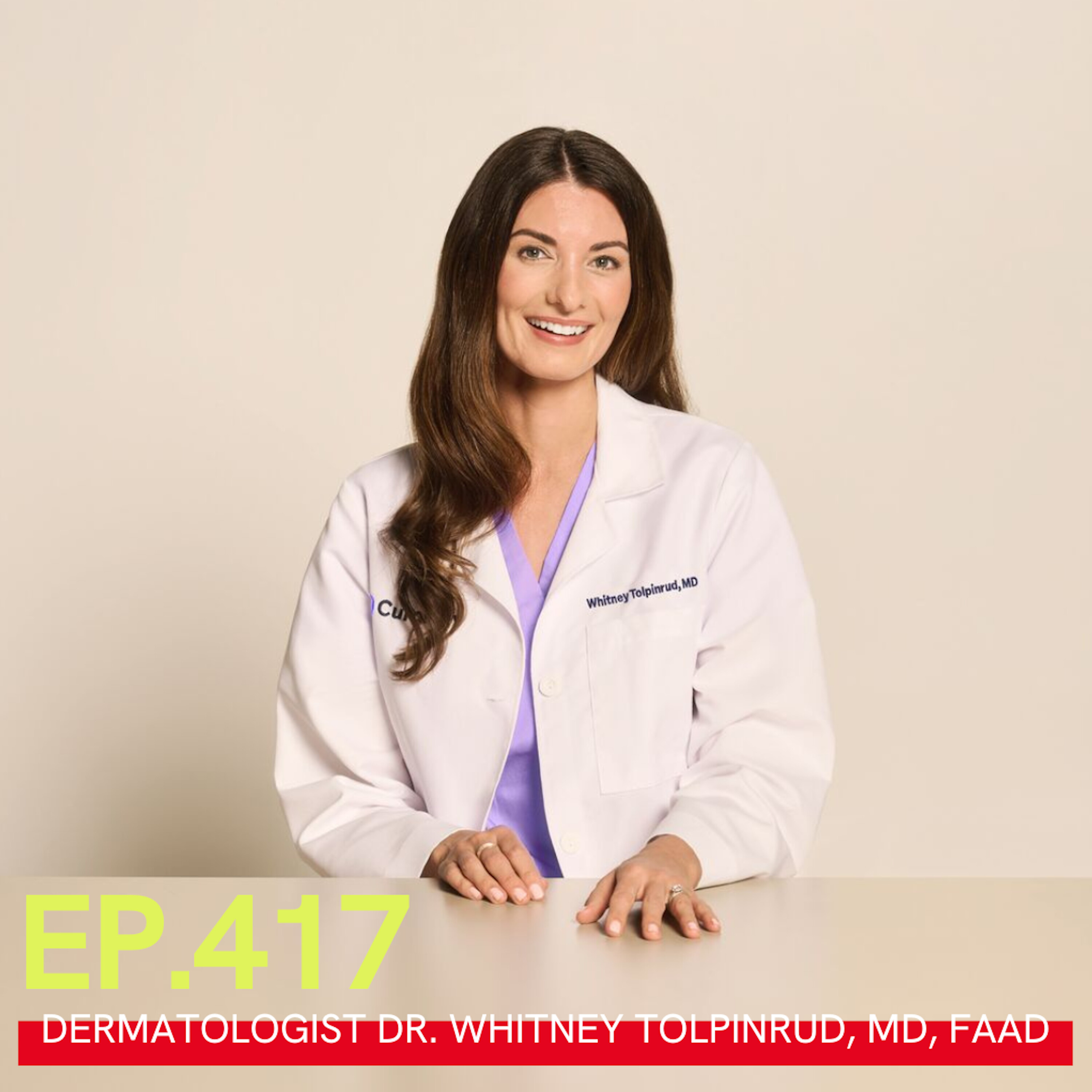
Breaking Beauty Podcast
Are You Treating Your Pores the Right Way? From Blackheads to Sebaceous Filaments, Extractions and More: We Ask a Derm to Decode
00:41:42
Loading summary
Transcript100 lines
- [00:01]
A
The following podcast is a Dear Media production. Welcome to Breaking Beauty the podcast, all about the breakthrough people, products and moments in beauty. We're your hosts, Jill Dunn and Carlene Higgins.
- [00:22]
B
Hello. Hello, Breaking Beauty Pod Fam. I'm one of your co hosts, Jill Dunn, and I'm here alongside my pod wife for life, Carlene Higgins. Hey, Jill.
- [00:30]
A
And happy Friday, everyone. We're two longtime magazine beauty editors turned beauty podcasters, sharing the breakthrough people, products and moments in beauty every single week. And in some cases, we're doubling the fun with two episodes like we are today.
- [00:46]
B
So this Friday, we're sharing a juicy skincare episode on a topic that I know I personally, Carlene, can't get enough of. Even all these years later of being a beauty editor, I still have questions. And we are actually myth busting everything we thought we knew about pores. And Carlene, by the way, did you know that we have about 20,000 pores on our face alone?
- [01:09]
A
I did not know that, but I, I sometimes I feel like I can count them because that's how perceptible they are when I look in the mirror. So I would say, yes, I probably have 20,000. And this very special uninterrupted bonus episode is brought to you in partnership with our friends at Curology, who are the pioneers of personalized prescription skin care. They've treated over 5.5 million across the.
- [01:34]
B
US and we are welcoming board certified dermatologist and medical director at Curology, Dr. Whitney Tolpenrud.
- [01:42]
A
Yes, Dr. Tolpenreud earned her medical degree from Yale and completed her dermatology residency at Columbia University. And you might recognize her as an expert voice in the pages of Vogue, Glamour and Allure.
- [01:56]
B
And in today's episode, we're going to tap Dr. Tolpenrud's expertise on everything to do with pores and getting your skin texture on point. This is something near and dear to my heart, like I've said. So we're going to ask her about things like what causes our pores to clog in the first place. Can you actually shrink them? We're going to cover the best ingredients to incorporate in your routine for getting a glass like smooth skin effect. Plus, we're going to ask her about the ingredients to avoid.
- [02:25]
A
And I've always wanted to know as a sensitive skin person, how aggressive is too aggressive when it comes to pore extractions in the spa or at home. And we're going to do a fun myth versus fact rapid fire all about treating pores. Toward the end of today's, episode.
- [02:41]
B
Plus, we get an introduction to Curology's new Day prime rx. It's the first ever prescription acne treatment. And primer sounds perfect for an oily skin type like mine because not only can it be worn with no makeup for sort of that blurred skin look, but it can also be used as a smooth base to hold makeup in place for up to 12 hours. Plus, it helps clear skin with three personalized active ingredients.
- [03:06]
A
Yes, I have so many questions because in an independent instrumental study with 30 volunteers using the Day Primerx primer base, it was shown to immediately reduce shine and improve the appearance of pores, skin texture and skin redness, which is what I have. So I'm wondering, are the key ingredients personalized based on whether you're trying to treat acne or dark spots or rosacea? How does that work? This is a whole new direction for prescription products to have an instant cosmetic effect. So I'm really excited, excited to get into all of this today.
- [03:40]
B
And I feel like you guys are going to want to try this too, which is why we're so excited. We have a very special promo code with Curology. You get to try Day Prime RX for free when you subscribe, paying just 5.45 shipping and handling. Stay tuned to the end where we're going to reveal exactly how you're going to do that.
- [04:00]
A
Sign us up. Well, welcome to the show. Dr. Whitney Tolpenrud.
- [04:07]
C
SA.
- [04:13]
A
We'Re gonna start right at the very beginning. A question I've had in my mind plenty of times. What is the purpose of the pores on our skin?
- [04:22]
C
Well, first of all, thank you for having me and Curology. We're so excited to be here. So pores are, I know, can be so challenging for people when you can see them on your face, but they're actually, they're there for a reason. So pores are tiny openings for hair follicles and sebaceous glands in the skin and they help to release oil and sweat. And this ultimately helps to protect the skin, hydrate the skin and allow for temperature control. As we release sweat onto the skin, it actually cools our body down. So that's the purpose of the pores on our body.
- [04:57]
B
And we often hear about opening or closing of pores. You know, for example, people are really into steaming or people are dunking their faces in ice cold buckets of water. Also seen on TikTok. So is that accurate? Are you opening? Are you closing? Give us the real story.
- [05:15]
C
Yeah, I mean, sometimes we can see the illusion of opening or closing, right? You can see the appearance of pores might be larger or smaller, but actually they don't open and close. So what is responsible for movement in our body? It's the muscles, right? Where the muscles are responsible for creating motion in our bodies. And we don't have any muscular areas around the pores. They are contracting or opening. There are muscles moving the hair up and down when we get chills, but not around the pores, opening or closing them. That's a myth. They do not open and close. However, heat can sort of break up that debris inside the pores. And kind of allow for the kind of gunk or the discoloration that you're seeing, the darker appearance of the pores to sort of loosen and come out. So you can have the appearance of seeing, not seeing the dark discoloration for the pores. And then the cold can actually reduce swelling and redness and inflammation, which can, again, give the illusion that your pores might look a little smaller, but the size actually don't change.
- [06:20]
B
I used to think pores was something I could. Like I was only going to be concerned about when I was younger. But then you start to notice them sort of sagging, for lack of a better word. So, like, how. How does that. How do pores change as we age?
- [06:34]
C
Certainly. And if we all think about our grandparents, we at least my grandparents. My grandparents had very large pores, Especially around their eyes and around their nose. So over time, what happens is our collagen and elastin start to break down. And the collagen creates this sort of scaffolding under the skin to help support those pores. And elastin does the same thing over time with just natural aging. Living on the planet with time and being exposed to sunlight and pollutants, Our collagen and our elastin start to fade. That structure or scaffolding that's holding up the poison pores starts to sag down a little bit. And then those pores, it's kind of like a deflated balloon, if you will. Those pores kind of start to sag a little bit. And have the appearance of being larger. So over time, certainly that. That can happen where those pores become more noticeable and they're not as sturdy.
- [07:31]
A
I feel like pre puberty, you don't really see pores, like on a baby or a young child. And then it's like puberty happens. And all of a sudden, you know, you start seeing blackheads on your kids or whatever. So how does this pore clogging happen?
- [07:48]
C
Sure. Well, you're right. You don't really see those pores aren't so noticeable on babies and younger kids, but in kind of that prepubescent area, our time during our lives, what happens is we start to release more hormones as we're starting to become closer to puberty. And what can happen when the hormones are actually released from the brain as well as on top of the kidneys and the adrenal glands. And what happens is those hormones can lead to more oil in the skin, so more sebum. And then what can happen is the skin starts to get a little bit stickier. So the skin cells, as they're naturally cycling through in the normal cycle, skin cycle, we're constantly swapping skin. They can get kind of stuck together a little bit more. And then that stickiness kind of creates the environment where you're seeing more oil and more skin cells, dead skin cells that tend to clog in those pores. And also I mentioned pollution before. So pollution is also on our skin. You know, we're outside around cars in the cities where all of that pollution also sits on top of our skin and can create this microenvironment where you're. You're seeing those, the dark discoloration of those pores. So, yeah, not age. It tends to be kind of more of the hormonal changes that we, we experience. And the skin gets a little bit stickier stuck together in those pores.
- [09:16]
B
And what are the biggest culprits?
- [09:18]
C
So there's different contributory factors for each person, which I know is not a satisfying answer. Right. But it's so true. Everyone's skin is different. And so, you know, genes. There are certainly patients that are more prone, I should say people, to me, the patients. But there are people who are certainly more prone to getting blackheads. Everyone has different contributory factors. But I would say the things that you're putting on your skin, the dirt and pollution you're exposed to, you know, certainly people who are have homes next to the freeway, for example, are going to have more exposure to the exhaust. And those who play baseball and are in the dirt are going to have more exposure to dirt and those who wear a lot of makeup. So it really depends on lifestyle and factors associated with that.
- [10:00]
B
And Dr. Tolpenreu, can you maybe explain the difference between a blackhead, a whitehead and a sebaceous filament? Because I think like, sometimes you're just like, what is going on? You can get them at different stages of your Life, different parts of your face. And that's always kind of fascinating to me how like a clogged pore can kind of manifest on the skin.
- [10:19]
C
Yeah, that's so interesting. So sebaceous filaments really were not a big topic of discussion when I was, was a resident many years ago. This has been more of a recent phenomenon that people have been discussing. And I think there was, when I looked a few years ago, there was only one article about sebaceous filaments in the medical literature. So it's really something that is under studied and discussed. But the thought is a filament is sort of a tube like structure inside each pore. So I mentioned before that you release the sebum and the sweat through the pore. And so what's happening, that little tube like structure is helping to create a conduit to push that fluid up to the surface of the skin. And so sebaceous filaments are thought to be sort of a remnant, a remnant of the inside of that little tube structure that kind of pushes up so it can look like a blackhead. But in, in, in my experience, in looking at so many noses and, and so many photos of noses, they tend to be just a little bit more pointier. You, it looks like a little structure kind of coming out of the nose, whereas a blackhead is a little bit more underneath the skin. And so there's a little subtle difference, but they certainly can look very similar. And a blackhead is a, it's technically called an open comedone. So essentially it's, it's a clogged pore that's open to oxygen and it's oxidized. So that's what creates the darker discoloration. Whereas a whitehead is a closed comedone. And so actually there is skin over the comedone. And so it is not open to the air. It's closed. And so you're not, you're not seeing that black discoloration or dark discoloration from the oxidative oxidation from the oxygen. It's, it's white because it's all that sebum and cellular debris that's, that's kind of coming up, that's trapped under the skin.
- [12:18]
B
Do you like looking at that stuff underneath the microscope?
- [12:25]
C
The best is when you do a skin scraping. You look under the microscope and you see a little critter moving around. You're like, so fun. I'm so great. Yeah, it's, it's a lot of fun. I love that piece. It's a very visual field.
- [12:37]
A
What is the life cycle of a clogged pore? Like, if you don't wash your face for a day or two, are you going to start to see clogged pores? Or when you go see a facialist and they kind of do the whole, you know, steaming extractions and everything, is it a natural life process that by the time you wake up the next morning, your pores are going to be clogged again, or is that actually doing something worthwhile in your opinion?
- [13:07]
C
Yeah, that's. That's a great question. So I like talking about this. It. The, the skin cycles are. The skin cells are constantly cycling, so it's going to take more than one or two days for them to the pores to build up. I would say, you know, skipping a wash once or twice a week is not going to clog your pores. You know, after a week or two, it's going to start to kind of fill up during the natural cycle. I going to the esthetician and getting extractions, I think can be really helpful, helpful for a lot of people. And you mentioned the steam and the heat that helps to unclog that, the dirt and the oil, which can help with the extractions. Now, I would say, like all physicians and medical providers, like not all estheticians are made equally too. So you want to go to someone who's a little bit more gentle and who's not going to be pushing really hard. You don't want a lot of tugging and pulling on the skin either because that can lead to again, more collagen breakage over time. If you're constantly tugging on that skin. So you want it to be really gentle, sometimes you can do more damage by having kind of those more intense extractions. So I would say everything gentle. And it's really helpful to remove the visual appearance of the pores because what you're really noticing is the dark discoloration, the oxidized gunk, if you will, inside the pores. So if you can remove that, then your skin is going to look like your pores are not there anymore, even though you know they are there. They're doing an important job, but you can get rid of the appearance. So I do think it's a great idea. But I would also continue with that consistent face washing to remove, to remove that, that, that gunk.
- [14:43]
A
Okay, and what about like just bacteria? Because that's what, you know, we know that leads to, to acne. So how does, how does what's in your pores sort of how does the bacteria get there for some people? Or what else could be in your. What's the oddest thing living in our pores, too?
- [15:03]
C
Yeah. Well, first of all, answer the second question, because I love talking about little critters, the demodex mites. These are little tiny mites that are normal skin inhabitants. We all have them, which is so interesting. And for those brave souls on the podcast listening, you should Google demodex mites in the pores, see what they are. They're really common, especially around the eyelashes. And then also they live in the pores. So we have a lot of them on our nose. But what's so interesting, again, they're normal skin inhabitants. We have them normally. They don't cause, you know, big problems typically, but they have been associated with rosacea. So not everybody who has Demodex might again, most all of us do develops rosacea. So it's not this, like, pure cause and effect. But we do know that there is an association between demodexin and rosacea, which is really, really interesting and fun fact. Ivermectin. You can treat rosacea with ivermectin that topically or orally. And we have some topical ivermectin formulas for our rosacea patients too. But that helps to kill those demodex mites to keep that, the concentration of those really low. So that's kind of a fun Halloween spooky experiment. Fun thing to think about.
- [16:15]
A
Yeah. And how does it lead to. How do these pores lead to acne for people who suffer from acne?
- [16:22]
C
Yeah, so. So the, the clogged pore is actually a comedone, is the precursor to acne. And so what happens is you get that. The, you get the clogged pore, you get a little bit more sebum, the oil, the. The pores get sticky, the cells get sticky, they clump together, and then you start to have a little bit more of the inflammation, so you have more inflammatory markers. It starts to get redder, that area starts to get larger. More bacteria from the skin gets in there, the bacterium acne, acne starts to get in there, and then you see more pus. So pus is essentially inflammation. It's the white blood cells that are into that area. More inflammation. And then hormones can start to also lead to more sebum and oil and then lead to more inflammation and more bacteria. So the oil is sort of a fertilizer for the bacterias. The bacteria like to be in that area where there's a lot of oil. So it just Becomes this kind of. It's hard to know what came first, the chicken or the egg. You know, it's actually a really complicated disease, acne vulgaris, and we don't know exactly what causes it.
- [17:29]
A
And some people get fungus in their pores too, right?
- [17:32]
C
Yes. Oh, this is another really fun one to chat about. And I love to do the spray things. And you can stain it in the office and look under the microscope to see if you see the. The. It's called pityrosporum the. The yeast or the fungus that lives on the skin. So it lives on all of us, actually. It's a normal skin inhabitant and it's not contagious. And this is a little. This is such an interesting little microbe because it causes or it's associated with a different condition. So dandruff on our scalp with the itchiness and the flaky and the, the redness is associated with the pityosporum, the yeast on our bodies, and then the same thing. So seborrheic dermatitis on the face, where you can get a little bit of dry, dry skin. It's kind of extra yellowish skin and then some inflammation, some redness in the nasolabial folds and around the nose, in the eyebrows too, in the ears that's also associated with this, this yeast. And then there is an acne. It's called an acne mimicker. It looks like acne where you'll see on the forehead, especially studded little tiny 1-2-millimeter bumps on the forehead because it can kind of come around the hairline. And what's, what's a good trigger to anyone who might have this condition is that it tends to be itchy, whereas acne is not itchy. So that's a good clue that you're dealing with this acne mimicker called Pityrosporum folliculitis. And then you can also see it on the chest and the back, too. It likes sweaty areas. And so when you work out after a heavy workout, sometimes you'll notice you'll get a few bumps and you're like, oh, how did that happen? It's oftentimes the yeast that's kind of causing a little bit of an inflammatory reaction. And a good trick for your listeners, sometimes just a zinc soap can be really helpful in treating this. And we have amazing formulas at curology with zinc added in them and some of the zinc. If we think that maybe, we're not sure this acne, maybe also you have a little bit of a yeast component, then we can add the zinc into your primary formula to help keep that yeast level low. So it's a really amazing ingredient and one that we love at curology.
- [19:41]
A
Okay, so do you have like a body wash that it could be added to for the body or it's mainly for face?
- [19:47]
C
We have formulas leave on formulas for the face with zinc. So custom formulas. And then we have prescription face cleansers as well as body cleansers. So we are got you covered from head to toe with a thank. Yeah.
- [20:02]
B
So what are some of the prescription ingredients that you would be looking at while you're assessing somebody who has pores that are clogged and just preventing those, the, the breakouts, basically.
- [20:15]
C
So regarding specific ingredients, in general, prescription treatments are more effective than over the counter or cosmetic ingredients. Sometimes people like to start off and I would recommend this using over the counter ingredients like salicylic acid or benzoyl peroxide to start because those can do a great job treating acne, especially if it's mild to moderate. But if you've tried those things and it's not, not really working, then I think the next step would be prescription. So topical retinoids. Tretinoin is a gold standard for, for treating acne. And the nice thing is, as I mentioned before, a lot of these ingredients are multitasking. They do a lot of things. And tretinoin helps to cycle the skin a little bit faster and unclog those pores. But they also, the tretinoin helps with anti aging concerns and dark spots at the same time. So you're really targeting so many things at once. It's helping to generate more collagen, create a smooth appearance to the skin, and then also tackle acne. So topical retinoids, especially tretinoin, can be really helpful. Azeloic acid helps with rosacea, but it also helps with acne. It's a gentle exfoliant, can help with that redness that can appear from inflammation. Again, we talked about the salicylic acid and the benzoyl peroxide. Spironolactone is another medication. We have the ability to compound with that topically. But what that is, it's basically it's actually for high blood pressure in general. It's called the diuretic, but it blocks the androgens in the body, the male hormones. So it does a really nice job of helping with more of that hormonal distribution of acne. So topical spiro is another great one. I love the zinc just to keep, you know, that that fungal load down because those can cause the little bumps that look similar to acne. So there's a lot of, you know, there's a lot of different ways to, to treat acne. And everyone's different. You know, everybody's skin is different. And so personalizing the treatment is going to be really important for each individual. And it's, it's important to look at the ingredient and look at your skin concern and make sure that those two things align. So not just the skin concern, but what is your actual, what does your exam show? What is your skin showing? I can't tell you how many times patients have come and said, I'm really concerned about my dark spots. I just want to treat those. And then I'll look at the skin and say, okay, I do see those dark spots, but guess what, you've got acne that's causing those dark spots. And so we need to treat the acne first and foremost to control the dark spots forming. So you want to make sure the physical exam aligns with what you want to do in terms of treatment and then you choose the active ingredient to hit all of those things. And honestly, that's where curology comes in. It's. We've got our in house team of licensed dermatology providers who are clinicians. Licensed clinicians to examine your skin, look at your concerns, look at your medical history and select all those ingredients, put them into one bottle, customize it, not only the ingredients, but the percentage of actives to help bring you efficacious treatment, like minimizing the side effect profile and then maximizing the treatment. So that's really our goal.
- [23:24]
A
Okay.
- [23:25]
B
I never knew that you could do the spiral. Say it again.
- [23:28]
C
Spironolactone.
- [23:29]
B
Yeah.
- [23:30]
C
Yeah.
- [23:30]
B
I did not actually know that you could do that topically.
- [23:33]
C
Yeah, you can. That's, that's the amazing ability. With our compounding pharmacy, we can custom compound these prescriptions for our patients. And our formulas are not readily available out of traditional brick and mortar. So we can really customize things for people.
- [23:50]
B
Can I ask you something about when you start to on a new routine, let's say, and it is maybe a prescription formula, people get so excited and then sometimes you will see purging. Like I don't understand if like purging is legitimate or is it a myth or is it like perceived by the user? Is it supposed to happen? Like, I think that this is something that a lot of people struggle with and I see it all the time on like Reddit and stuff. They're like oh, I'm so excited to get this a go. And then all of a sudden my skin was worse, you know, before. If. If they keep going with it, you know.
- [24:25]
C
Right. Purging, it can be really challenging for people. So, yes, it is a thing. We, we see it not in a high percentage of our patients, but it does happen. Basically what's happening is anytime you start an acne treatment that is helping to bring that acne up and out and gently exfoliate and get rid of those little microcomodones we were talking about, you run the risk of having the purging phase. What's happening essentially is that acne is coming to the top of the skin. It's on its way out. It actually can be seen as a good thing to push through that phase because you're actually helping to kind of clear out the acne that is down below. So ways I think people are, if I take a step back, I think many people are really afraid of tretinoin and retinoids in general because of purging, because of those side effect profiles. And it really is unfortunate because it's in general temporary. You can get through it and it's manageable. But one of the amazing things about curology, our founder, David Lorcher, he designed our products initially to try to minimize that purging phase and minimize the irritation and retinization that happens. So we start, we have formulas I mentioned we can custom compound. Right. So we have formulas that have very, very low levels of tretinoin, so your skin can get used to it to help minimize that side effect profile. Then every couple of months, we can do micro jumps where you're kind of slowly going up on that tretinoin to help minimize the purging, minimize the retinization, the redness and the irritation that can happen. So that's been really beneficial for our patients, certainly. But don't be afraid of it because you'll really do yourself a disservice for the long run if you're. You're so afraid.
- [26:16]
B
Well, I do appreciate that, that you have like the communication then with the curology team. To be like, this isn't, you know, it's a journey, you're going on together kind of thing. Yeah.
- [26:26]
A
Like at the continuity of care, you can continue to evolve. You know your routine and it's like one and exactly. You're off on your own.
- [26:35]
C
You know, what's so amazing about our platform is our patients have the ability to contact our medical providers at any time. So 24, 7 they can ask any question. So if you are starting to struggle, you are not sure what's happening or you developed a spot, what do I do about it? We are there to hold our patients hands and really partner with them to make sure they are getting the best results that they can. And we can change a formula at the drop of a hat. It's really white glove service. I view it as white glove service for our patients. It's an amazing platform and that's why I joined, to be honest, it's why I left my practice. I just have been so impressed with the high quality of care and then the access to our patients. What being able to give that high quality care in places where there may not be a local dermatologist to, to, to be seen. So it's been really amazing.
- [27:25]
A
And I want to talk to you about the new Curology Day Prime Rx because this is very new. It's the first ever prescription treatment and blurring primer in one that you can use for acne. So tell us from your perspective, what's the major point of difference with what else is out there?
- [27:44]
C
Yes, this is so fun to talk about. Daytime Rx is our first ever prescription acne treatment plus a primer in one. And I really view this as the overlap between medical dermatology and beauty. I mean, I know we've got the space of injectables and all that, but this is really medical treatment combined with that beauty piece. So we're, we've been working on this for a couple of years now. It's been quite a feat. You can imagine the difficulties of compounding a prescription product that's actually a primer at the same time. But we've worked with so many cosmetic chemists to be able to get this to, to, to fruition. So what's so amazing about it is, well, first of all, I love multitasking products, immediately decreases that shine and that redness and then also gives that 12 hours of makeup support or makeup fold. And then at the same time you're covering and priming and then you're also treating acne and other skin concerns at the same time with prescription actives. And so it is, you don't have to choose between covering up and then also treating at the same time. And I have found that so many of my patients come into my practice and they have thick layers of makeup on to try to hide it, hide their acne. I have them wash their face so I can get a good look at their skin. And now you can sort of do you get it? Multitasking at its finest. You can treat that acne and then cover it up at the same time. So it's been really, really exciting to be able to launch this product.
- [29:15]
A
Yeah, it's so cool because I feel like we've been talking about the skinification of makeup for so long and the other way around. And I feel like this is just a new level, unlocked, where you're getting that blurring cosmetic effect, but you're actually treating at the same time. Like, if I was interested in this product, you know, what would I do and how would it be customized to me versus, like, Jill might be dealing with acne, I'm dealing with rosacea. Would we be using the same Day Primerx?
- [29:47]
C
The line was designed for acne, but we have non acne formulations as well. So if you have concerns such as rosacea, as we were chatting about earlier, or dark spots, or you just kind of want that glowy dewy look, then. Then we. We have ways to formulate the. The Day Prime RX for those concerns. And certainly we would not be including the acne centric ingredients for. For you. So, yes, it's. It's customizable for many different concerns.
- [30:17]
A
Yeah. So mine might be like 20% azelaic acid, for example, which is prescription strength, right?
- [30:25]
C
Yes. So prescription is 15 to 20, but hours go up to 15%, we have found, because we also include other ingredients into the formulas where we want to be careful not to overly exfoliate or cause irritation.
- [30:39]
A
And then for acne, I mean, I know it can be different depending on your acne, but what types of ingredients might you put in there that we wouldn't be getting at our beauty aisle?
- [30:50]
C
So clindamycin is one that's a gold standard for acne. That is, again, only prescription. So we have the clindamycin. We also have azelaic acid for our patients, and that does a really nice job of helping with that redness. And it's a gentle exfoliant. And if you keep in mind that this product is for the morning, it's not for the evening. So we don't put any topical retinoids or tretinoin in these products because you want to use a retinoid in the evening. We also help supplement the only the prescription products with salicylic acid. Now we go a little bit. We can customize that for our patients. And we add zinc to our products, some of them too, as well. Again, we talked about the pityrosporum, so that's Been a really nice add. Niacinamide. I know that one is available cosmetically, but we also like to include niacinamide into our, into this product. It's an, it's an antioxidant, and so it can do a really nice job of helping to kind of protect the skin from oxidative damage in the morning. So, yeah, those are the big. Those are the big ones that we, we. Dex. Panthenol is another one to help with that hydration.
- [31:55]
B
So you're probably thinking something different, but it looks like something that would go in your makeup bag.
- [31:59]
A
Yeah.
- [32:00]
C
Because we still want our bottles to look pretty. Right. I mentioned I've had a really nice. I still want it to look good, but we want what's inside to also do a great job. So, yes, it is in a really nice, pretty bottle.
- [32:12]
A
Now, some people might be wondering how to fit this into their routine. Let's say that pores are my biggest concern. What would be the perfect poor care routine? Let's say finishing with the primer. What would I use at night? And like, what should I avoid?
- [32:28]
C
If you are looking to add the day primer to the, to your routine, then always in the morning, you want to cleanse to get all that gunk off, get the, the sweat of the evening and the oil off of the skin. So cleansing and then you can moisturize right after. So cleansing. Moisturizing if you need it. Some people don't need it. They have extra oily skin, but you want to moisturize afterwards. Then day prime and then sunscreen would go on after that. And then finally, if you're going to do it makeup, and I would say you don't need to wear makeup when you're using the day prime. So day prime, the amazing thing, it's a morning treatment, Right. And it does give. I don't, I don't wear makeup anymore. I don't need it because I've been using retinoids for so long and, you know, have a solid 20 years, a solid skincare routine. But I do use day prime and I just put it on without anything else. I've just had my sunscreen on top of that. And so it just helps to kind of blur this a little bit of a fresh filter. Look like you're taking a filtered selfie or something. So keep it simple. I mean, let, let your skin care do the hard work for you, but keep your routine more simple and look at those ingredients and match, match the ingredients with. What you're trying to target is the way to do. But don't overdo it. You don't want to exfoliate every day. You don't want to put on really high levels of glycolic acid and tretinoin every day when you haven't been doing that. You want to ease into things so you don't kind of over exfoliate and cause more irritation to the skin. And then keep your routine simple so you're, you can stick with it. Consistency is super important. Just a little bit every day. Well, it's like brushing your teeth. Right. Or investing a little bit every day will, will do wonders over the long term.
- [34:10]
B
Mm. And what's a good complimentary nighttime routine again? If you're keeping it very simple?
- [34:18]
C
Yeah. So for me, I, you know, I've been using tretinoin for 20 years. I'm on our, we go above 0.1%. We have the ability at our curology to have formulas that go higher than what's available available at a traditional brick and mortar. So I'm on a higher tretinoin that I would recommend a retinoid. So cleansing. You want to cleanse first in the evening. A gentle cleanser is just fine. Doesn't have to be anything fancy. And then put on a pea sized amount of a retinoid, assuming that there are no contraindications. Again, our retinoids have other ingredients in them depending on what, what the goal is of each patient. And then a good moisturizer in general. I recommend a thicker moisturizer at night. If you can imagine. The skin also has circadian rhythms just like our bodies, our brain, when we're sleeping. Our skin is doing a good job of repairing itself. It's metabolically active and so supporting the skin. You can use gentle exfoliants as well in the evening. And then a good moisturizer will help support that skin barrier as it's trying to heal itself from the day's activities. So I find that's been a really nice, simple routine for people.
- [35:24]
A
If somebody wants to complement their routine and go to an in office treatment to treat their pores, what would be the most effective one in your opinion? If pores are your top concern? The visible look of pores.
- [35:40]
C
Chemical peels can be helpful for people to help break up the, the extra gunk, the helping to exfoliate that skin and do a little bit of a deeper job that can typically be done at home. So that, that can be really helpful for patients. Some of the lasers do a really nice job of stimulating collagen as well to Help give that scaffolding support over time. So those can be really helpful. Sometimes the, the fractionated lasers too, where they shoot little columns of heat into the skin, can help break up those pores and also generate more collagen. So, so those can be really helpful for people. But what I would say is make sure that you are going to someone. You know, I'm a dermatologist, so make sure you're going to someone with a lot of expertise and who's certified to do these treatments because you. There are side effects that come with in person treatments. And so you want to make sure that you are fully aware of those and are well counseled on the risks and benefits.
- [36:41]
A
Yeah.
- [36:41]
B
Obviously I'm not a dermatologist, but I will say from personal experience, I think microneedling is really good to just sort of make your overall skin texture look more uniform. For sure.
- [36:52]
C
Yeah. No, I agree. Micro needling is another one that, that can be really helpful. It's, that's where you're taking sort of needles and making bigger columns of sort of. It's kind of structured injury to the skin and then the skin will heal itself a little more collagen. So that can definitely be more helpful too.
- [37:09]
A
Okay, well, thank you for that. Let's get into our rapid fire myth or fact. Are pore strips safe or do they damage pores?
- [37:19]
C
Oh, they can be safe if they're gentle and you're not overdoing it. So just be really careful with them. You don't want to tug too much on the skin and cause irritation.
- [37:28]
B
Okay. Myth or fact? What about pimple patches? They're everywhere these days. Are these good for your pores or bad for your pores? What's your professional opinion?
- [37:39]
C
I love them. They do a great job of absorbing that extra of oil and pus. So yes, I would say they're. They're great.
- [37:47]
A
Okay, and what about at home devices like pore vacuums? Are these safe for pores?
- [37:55]
C
Well, those can be associated with bruising or irritation. So I would be really cautious with, with those types of at home treatment.
- [38:03]
A
Okay, how about clay masks? Are they a go to for unclogging pores? Pores?
- [38:11]
C
I think that can be helpful for absorbing oil and debris temporarily. So I would say that's okay. Don't overdo it. But they can, they can be drying.
- [38:20]
B
Myth or fact. Oil cleansers are able to go deeper into the pores and unclog them versus a traditional foaming or cleansing gel.
- [38:29]
C
Yeah. So theoretically, oil and oil connect together better than oil and water. Right. And so yes, I think oil cleansers can do a nice job of getting into those pores because oil attracts oil and so it can be helpful for for people. But what I would recommend is also following with a gentle cleanser after that.
- [38:50]
B
Okay.
- [38:51]
A
Okay. Myth or fact? Is salicylic acid the gold standard in removing gunk from pores?
- [38:58]
C
I would say yes. I love salicylic acid. It does such a great job of breaking up the, the dunk in the, in the nose.
- [39:07]
A
Okay.
- [39:08]
B
And myth or fact, increased sun exposure can permanently enlarge your pores.
- [39:15]
C
That is a fact. So chronic UV damage kind of breaks down the the collagen and makes or appear larger.
- [39:24]
A
All right, well, you heard it here. Thank you so much, Dr. Tolpenrud.
- [39:29]
B
And a friendly reminder to our Breaking Beauty fam, We won't keep you waiting any longer. We have an exc exclusive Breaking Beauty offer with Curology. To claim this offer, go to curology.com beauty to take curology Skin Quiz and in just a few minutes, you'll share your current skin concerns and a few photos with a curology dermatology provider who will create a personalized treatment plan tailored to your unique skin goals. And this will include Day Prime RX if it's right for your unique skin.
- [40:02]
A
Go to curology.com beauty to get your first bottle of Day Prime RX for free. When you subscribe, all you need to DO is pay $5.45 for shipping and handling restrictions apply. See website for full details and important safety information.
- [40:18]
B
We'll link to all of those details in our show notes and on our website. Thank you so much, Dr. Tolbenrud, for joining us today.
- [40:26]
C
Thank you.
- [40:27]
A
Thanks for listening. You can find details on every product mentioned in today's episode, along with our exclusive promo codes on our blog@breakingbeautypodcast.com While.
- [40:37]
B
You'Re there, be sure to sign up for our newsletter. Every episode will be delivered directly to your inbox so you won't miss a.
- [40:43]
A
Single thing and get social with us. Let us know what you think of the episode. You can follow us on Instagram at Breaking Beauty Podcast.
- [40:50]
B
And did you know we also have a private Facebook group group? Just search Breaking Beauty Podcast chat room.
- [40:55]
A
You can even leave us a voicemail at any time with questions or feedback at 1-844-227-0302.
- [41:03]
B
And don't forget to subscribe to us wherever you get your podcast fix. Spotify, Stitcher, Google Podcasts and Apple Podcasts where you can show us some love by writing a review.
- [41:13]
A
See you. Please note that this episode may contain paid endorsements and advertisements for products and services. Individuals on the show may have a direct or indirect financial interest in products or services referred to in this episode.