← Breaking Beauty Podcast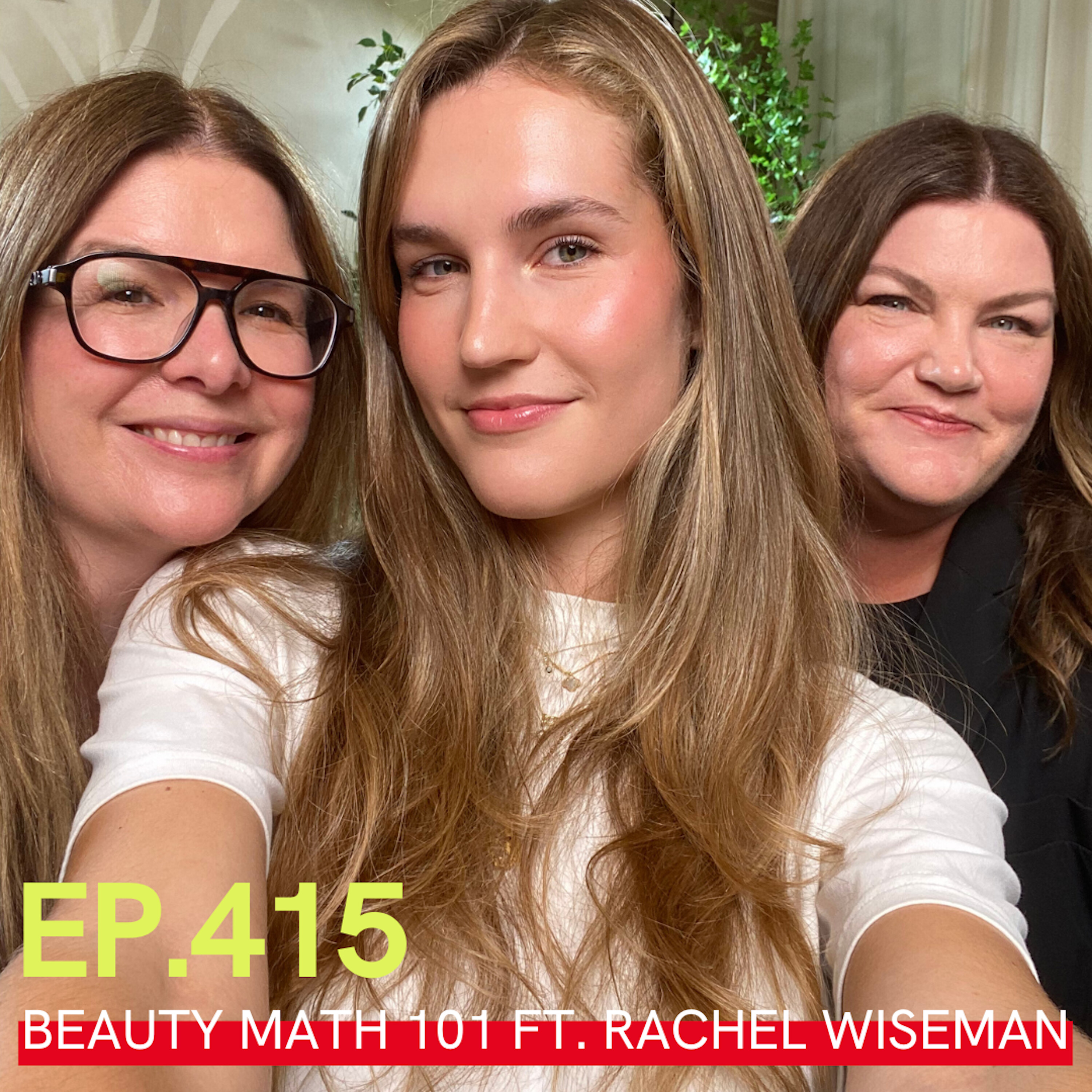
Breaking Beauty Podcast
Beauty Math 101: Shop Smarter, Not Harder – How-to Get Real Value from Your Beauty Buys 🎯💄With Investment Banker Turned Beauty Creator Rachel Wiseman
01:00:59
Loading summary
Transcript396 lines
- [00:01]
A
The following podcast is a Dear media production. Welcome to Breaking Beauty the podcast, all about the breakthrough people, products and moments in beauty. We're your hosts, Jill Dunn and Carlene Higgins.
- [00:22]
B
Welcome back to another episode of Breaking Beauty Podcast. I'm your co host, Jill Dunn, and I'm here alongside Carlene Higgins, like I am every single Wednesday. How are you, Carlene?
- [00:32]
A
I'm great, thank you. And we're two former magazine beauty editors turned beauty podcasters who are here for you chatting about the breakthrough people, products and moments in beauty every single Wednesday.
- [00:43]
B
Hell, yeah. And we've had such a banner fall lineup of expert guests. We've had Bobby Brown on the show. If you guys haven't listened to that one yet, please do check it out. We also had Lisa Eldridge. We published a whole extended cut of that episode over on our YouTube channel, which people are loving. So everybody go check that out. And Carlene, you were a guest as well, because I interviewed you. We had an exclusive here at Breaking Beauty. I interviewed you about your skin care range that you've spent the last 18 months developing. It's called Cassatt Beauty. Everybody needs to go back and listen to that episode if you haven't had a chance to yet. And I believe maybe today orders are officially shipping. So congrats to you.
- [01:27]
A
Well, thank you so much, Jill. The debut product is La Pomade. It is a retinoid skin ointment. I hope that everybody tries it. Loves it. Check it out@cassatt beauty.com. i really appreciate the plug as well, Jill.
- [01:41]
B
I have to say, she's a founder now. She is a founder now.
- [01:44]
A
We need to remember that wearing so many chapeaus. And if this is your first time tuning in, welcome to the show. We have a back catalog of over 400 episodes where we talk about so many different aspects of the beauty industry, whether it's with celebrities like Haley Bieber, Victoria Beckham, or pros like jen Atkin and Dr. Shereen Idris. And over the years, one of our most popular episodes, I'm proud to say, is where it's you and I, Jill, flexing our editorial muscle, reviewing products and just cutting through the clutter to let everybody know what's hashtag damn good.
- [02:23]
B
Yeah. And I love to be able to sort of contextualize the industry given that we've seen it all and swatched it all in our careers. And I think that's why people are going to love, maybe even be obsessed with our episode this week because we are reporting on what products are legitimately worth your money. And why?
- [02:44]
A
Yes. Our special guest is Rachel Wiseman. Rachel is a New York City based former investment banker turned tech startup founder, blending her expertise in finance with her passion for beauty.
- [02:57]
B
She's also a fellow Canadian. And guys, she's so impressive because she's so young. Like, I think she's only 23, but she is wise. Hence, you know, a little hat tip to her last name there. Yeah, but she's very wise. And Rachel caught my eye on social media with her what she calls beauty math series because she creates content that helps her audience view shopping for beauty as an investment, which I think is really smart. And she's a beauty lover, a beauty consumer, but she's also an analyst, so she's educating people on making informed purchases. And by the way, Carlene, this episode is coming out just in time because the Sephora savings event starts on October 31st and goes to November 10th. So we're here to help you shop smarter, not harder.
- [03:42]
A
Yes, definitely. And of course, holiday shopping season is upon us as well. I've already started, you'll be shocked to know. Jill, good for you. Thank you. So just ahead, we're diving into whether my method of grocery shopping applies to makeup shopping as well. We're also talking about refill products and whether they're actually passing on the savings to the consumer and why some brands are participating in a trend called shrinkflation.
- [04:12]
B
Yeah, and I think there's just, I personally have noticed when I'm shopping for beauty, like things that were, you know, a really rock solid price point for years and years and boom, all of a sudden they're $10 more. And it's just like, why is that happening? And I don't think I'm alone. I see a lot of content about this because people are literally getting their receipts out and comparing. Wait, I just refilled this. You know, my favorite foundation last year, it was $15 less. So it's really part of the ether and beauty right now in the conversation. Plus, we're talking about tariffs, how those are affecting the bottom line and whether or not a brand can ever be too transparent with its pricing. And a friendly reminder that we also have a YouTube channel. Please subscribe at Breaking Beauty Podcast and this whole conversation is going to be published on our YouTube channel as well. So check it out.
- [05:01]
A
Yes, we talk about in today's episode will be listed over on our website @breaking beauty podcast.com under episode recaps. Welcome to the show. Rachel Wisman.
- [05:22]
C
SA.
- [05:26]
B
Today.
- [05:26]
A
Today's episode is brought to you in part by Medicate. Let's talk about collagen in our skin. Why not? I just turned 50 and my skin has started to sag. That's due to the loss of collagen production in my skin and the collagen that I have is kind of breaking down. So what's great for that? Proteins. This is a proven ingredient that has been in skin care for a long time. We see it around a lot. But which ones have the good stuff in it? I think that medicate is such a great go to brand. It's a clinically proven British skincare brand. If you haven't heard of it. It's known for age defying results. It was created by two scientist brothers 15 years ago. They were on this mission to simplify people's skincare routines. And all Medicaid products undergo rigorous clinical testing. They have amazing before and after results. Everything is dermatologist recommended. Made in their in house lab located just outside of London, follow strict EU guidelines. All of that integrity is there. So when I heard about Medicaid's new Advanced Pro collagen plus peptide cream, I knew I had to try it. It's an anti wrinkle moisturizer, clinically proven to visibly improve skin firmness, elasticity and reduce the appearance of deep set wrinkles. It gives a great instant kind of plumping feeling to your skin and over time it's going to help with that collagen production for from the proteins. There's no irritation whatsoever. That's the best part if you have sensitive skin like mine. So visit Medicaid US. That's me, D I K and the number 8US to discover more, use code breaking20 to save 20% off your order. That's Medicaid US to discover more and use code breaking20 to save 20 percent off your order. And now back to the show. Hi guys, I'm Emma.
- [07:27]
C
I'm Julie.
- [07:28]
B
And I'm Isabel. And we're the minds behind comments by celebs. You may be familiar with our Instagram account, but what you may not know.
- [07:34]
A
Is that we also host a podcast.
- [07:36]
B
Where three times a week we talk all things pop culture, Bravo and Kardashians. If you've ever felt alone in your niche, interests or desire to be informed on all things celebrity, just know we are your girls. So make sure to check out comments by celebs on Apple, Spotify or wherever.
- [07:50]
A
You get your podcasts.
- [07:58]
B
Welcome to Breaking Beauty podcast, Rachel.
- [08:00]
C
Thank you.
- [08:01]
B
So excited that you're joining us in studio today and we've been fans of your Content since your early beauty videos when you were still a student.
- [08:08]
C
Yes.
- [08:09]
B
A finance student, I guess.
- [08:10]
A
Yes.
- [08:11]
B
At Queen's University.
- [08:12]
A
Three Canadians in love.
- [08:14]
B
Yeah. Is sitting down in New York City. And so after you graduated from Queens, you worked in the world of investment banking.
- [08:21]
C
Yes.
- [08:21]
B
Yeah. And tell us about that.
- [08:24]
C
It was crazy, but it was an awesome experience. I feel like people expecting me to come out of it hating it, which a lot of people do. But I feel like I was very lucky that I went to a group and a firm that I found like lifelong friends. It kind of felt like an extension of college. You were.
- [08:40]
A
Yeah.
- [08:40]
C
Instead of studying until 2am, you were working until 2am but like they're some of my best friends and I learned so, so much. And I truly wouldn't be able to do what I'm doing now, or at least in the capacity that I'm doing it now, without having that experience.
- [08:55]
B
You've recently left the world of investment banking and your bio says that you're now now a tech startup founder and an entrepreneur and a beauty creator, obviously. So catch us up.
- [09:06]
C
Yeah, you guys are catching at the perfect time because literally everything in my life has changed in the last couple months with investment banking. It's very typical that you go and you do the two year analyst program. And so my program finished at the end of June of this year and it's very common for people to go do private equity and things of that sort. And I was going to go do that, but a lot of things changed on their end and my end and I kind of had this idea brewing, so to speak with a friend in the background and it just felt like the right time to make the jump. We're building here in New York City and for what the platform is, I can't really speak about it yet, but it makes sense to be in New York and it also makes sense to, to be in New York from a creator perspective. So I'd say I'm now doing both of those. 50 50. And it's also nice to be back on the east coast as well.
- [09:51]
B
Yeah. And go to Pilates in the middle of the day if you want to.
- [09:54]
C
Yeah, that flexibility is really, really nice. I went to a 4pm yoga class in San Francisco the other day and I was like, I can't remember the.
- [10:02]
B
Last time I did this.
- [10:03]
A
So you're cooking up something in tech and you can't say more right now. Is this like a next year type of launch you're thinking or.
- [10:11]
C
Yeah, I would say towards the end of the Year or next year.
- [10:15]
A
Okay, we'll look out announcements on your.
- [10:17]
C
Yeah.
- [10:18]
A
On your feed.
- [10:19]
C
Yeah, I'm excited right now. We're kind of just in the building phase and then we'll go into testing with different users, probably raise money eventually, which is a whole other crazy journey, but it's very exciting.
- [10:28]
B
Well, so you'll be on the other side of the table from what you were used to, right?
- [10:32]
C
Yeah. Which is why what I said before, I wouldn't really be able to do what I'm doing now in the same capacity because I learned so much about, you know, what investors look for, what they care about, how to talk to them.
- [10:42]
B
You have the cheat sheet, girl. Share everything.
- [10:45]
A
I'm keeping your number.
- [10:47]
B
Hell yeah. Hell yeah.
- [10:49]
A
So we got to know you through your Beauty Math series, which is fantastic and not the same. Not to be confused with Girl Math, everybody. It's, you know, it's not about justifying your purchases with, you know, this was on sale, so I saved money. Yeah, it's really more about beauty math, which we're going to get into today. So how did that kick off?
- [11:10]
C
Yeah, I. People have asked me and I keep trying to think back to what sparked it, but I feel like with a lot of creatives, sometimes you just get an idea. I just had this idea because prior to Beauty Math, I had been doing sort of value, you know, best value, worst value, what's worth it, what's not. I was sort of doing tongue in cheek girl math. And I was, if you look at older videos, prior to the official launch of Beauty Math in like a formal way, I was doing price comparisons on per mil per ounce in my normal product reviews. And I kind of just wanted to encapsulated into a framework for people. That's really where beauty Math came from. And also like the finance side of me, I was like, it would be really fun if I make these spreadsheets for people to have so they have all the data when they're shopping.
- [11:55]
B
Fun and spreadsheets, what you and my would get along.
- [12:00]
A
Wow. Okay.
- [12:02]
C
But it really, I just thought there wasn't a framework for beauty purchases, which is again very banker finance of me, but that's really what beauty Math was, was giving people a framework, a benchmark. It's not, you know, a right or a wrong or a black or white, but just something to help you navigate the noise of the beauty industry. Because I think that beauty, I mean, it's a, it's a silly maybe parallel to think about like finance and beauty in terms of like Financial literacy or like beauty, math literacy. But people spend so much money on beauty and at the same time there's so much noise and hype cycles and you know, marketing gimmicks that happen with beauty. So you have this industry with a lot of money and a lot of noise and to me there wasn't a really any way to navigate it. So that was quantify.
- [12:49]
B
Yeah, yeah. Your purchases. And you're so right. It just about everything is about newness. You know, we're editors from magazine days and it's like we wouldn't have dared especially back then to cover something in the magazine that wasn't brand new that month. Like we've changed since we had the podcast. But the entire industry is about innovation, you know, and the churn cycle is even more so than it ever has been.
- [13:13]
A
Yeah, yeah. But I love this idea. I'm all about shopping designer for less and finding deal. I'm all about the sample sales and sign it and all of this.
- [13:21]
C
Yeah.
- [13:22]
A
So this really speaks to me and I think people are going to be in for a treat today. But first I wanted to ask you, do you think about the lipstick index and is that still a thing? Is there a 2025 version?
- [13:33]
C
Yeah. And for, for people that aren't familiar with the lipstick index, it's kind of just this idea that in times of economic downturns or recessions, you lean on the little luxury versus you know, buying the house or the car. You buy the $50 lipstick. I think the concept is still true in 2025, but it certainly wouldn't be a lipstick. If it's a lip product, it would probably be a lip oil or a lip balm. But I think the skincare category is really what is driving the beauty industry right now. I think I was looking into it and I think skin care now represents 40, 42% of the beauty category. It's growing like 5, 6%. And you have other things coming up too, like fragrance that's growing in the double digits and even stick type formulas are becoming really popular. So those multi use. But the common thread to me is really whether it's straight up skincare or a serum or a stick formula, it's leaning on that like skin care hybrid, you know, like serum, good for your skin while still being makeup is kind of the common thread. So I don't know, maybe the skincare index or the serum index. But I think people are leaning on beauty products that still feel like self care and they're doing something good for their skin. So it's sort of like a two in one versus just, you know, red lipstick or something.
- [14:47]
A
Yeah, I agree completely. Yeah.
- [14:50]
B
And your beauty math series, basically it teaches your followers how to break down the value of any product. And the first video of the series, you say, and I quote, I've never met a single person who's able to go into Sephora and leave feeling like they didn't just get robbed. Except for me. So how do you shop to not feel like you're getting robbed, as it were? What's your secret?
- [15:13]
C
I mean, for me, the strategy is just, what am I going to finish? And so if it's something that, you know, my everyday shampoo or conditioner, I'll go for the jumble size. But if it's something that I want to try or I'm not sure if I'm going to like it, I might go for The Mini, which 99% of the time, the minis are a worse value in terms of price per mil or per gram. But for me, if you're spending 20 on a mini that you're actually going to finish versus 30 on the full size that you get through, you know the amount that the mini was, you're still better off buying that Mini versus the full size. So there's not a right or a wrong. But you have to ask yourself, what do I actually use? What am I going to finish? And what is worth it in that sense?
- [15:53]
A
So you buy the jumbo when you're rebuying. You buy many when you're trying.
- [15:57]
C
Yeah, right, Exactly.
- [15:59]
A
Okay, I want to ask you if you grocery shop like I do. And the reason is because my friend didn't know this and she's the most frugal person ever. Like, she's one of those. She's one of those people who goes around to like three grocery stores to buy what's on sale, which I could not. I do not have time. But I was with her. I think we were in Costco or something. And I was like, you know that when you're comparing the prices on the actual tag that's on the shelf, it will tell you the price per ounce or the price per mil. There's like a little tiny thing under the price to the left where it'll say like, Price per unit, 1.19 Price per unit or whatever it is. So you don't have to be sitting there doing grocery math in your head to figure out what's cheaper. Because this one has 12 rolls of toilet paper and this one has eight. Yeah, you can just look at that, she's like, oh my God. I didn't, I didn't even know that was there. And I was like, girl, what have you been doing?
- [16:56]
C
I love that it's there.
- [16:58]
A
I love that it's there. So I shop like that all the time. I don't even barely look at the overall price. I'm just like, what is the cheapest? Yeah, I wish they had this in, in beauty stores.
- [17:08]
C
I was just gonna say it would be so helpful. It would probably eliminate my purpose, which is fine.
- [17:13]
B
But that's the whole point. Yeah, it's about. No, I'm joking.
- [17:17]
C
But yeah, that's like, that's the whole point is that it's, it's so difficult. And that's really why I made that spreadsheet. Because you, to your point, that doesn't exist in Sephora. So you can at least pull that up and then you don't have to do it.
- [17:27]
A
So that's basically what you do. Now can people access the spreadsheet?
- [17:31]
C
Yeah, yeah, they're, they're on my link tree. So when I post the episode, I've been doing them in categories. I'll do like skin tint or foundation or. Yeah, anything like that. I'll send people the link to the spreadsheet. But they live in my link tree. So you can just go on. The link is in my bio and it's, they're all there by category. You can just click them open.
- [17:49]
A
So which products are you covering? Do you just like go into like the Sephora and like catalog every single item or what? Yes.
- [17:57]
C
Yeah. So right now the spreadsheets are just Sephora and Ulta, some more high end things. And for brands that I know that are in that high end category but don't retail at Sephora or Ulta, I'll add them in. It's impossible to be all encapsulating because I'm only one human. And so that's why I haven't ventured into a drugstore yet either. That is a plan of mine. But I also wanted to keep those separate because doing an average or median across the entire spectrum of beauty I didn't think was as helpful or as true because if you're shopping, you're usually like shopping at Sephora or Ulta. Those are comparable. Whereas if you're going into Walgreens or cvs, it's a different, completely different price point. And so, you know, comparing a covergirl, I don't know, lip gloss with something from Givenchy is not really.
- [18:43]
A
Yeah.
- [18:44]
C
The best comparison. So right now it's just. Yeah.
- [18:47]
B
And you take it one step further. And like, basically, once you analyze everything, then you do, like, the median price. Like, this is what it looks like.
- [18:53]
C
So if you go to our link.
- [18:55]
B
Tree right now, it's like you can click on a category of a product. Mascara setting, spray, concealer.
- [18:59]
C
Okay.
- [19:00]
B
What have you.
- [19:01]
A
And then clearly, I haven't done my research.
- [19:03]
B
I'm being busted.
- [19:04]
A
I'm being outed.
- [19:05]
B
No, no. And then you just. And then it's like. It's crazy how many SKUs you have.
- [19:09]
A
Yeah. So you just do this in your spare time or.
- [19:13]
C
Yeah, I just. I just. I just go on Sephora and Ulta and just go through all the way. And it takes like a couple hours per one, which is why, you know, I haven't gone through all the categories yet. But that's also why when I send it to people, I'm like, let me know if you have any. So obviously prone to human error somewhat. If I missed the one or two.
- [19:31]
A
I can't believe it's free. I need.
- [19:33]
B
No, babe, you need to make these all affiliate links. Are you on Shop My?
- [19:36]
C
Yeah. Yeah. Okay. I am on Shop My.
- [19:38]
B
These are not affiliate. You need to make them all affiliate.
- [19:41]
C
I know I could. I just. I don't know.
- [19:45]
B
But, like, honestly, I. I literally would do that for you.
- [19:48]
A
I know.
- [19:48]
C
I don't care.
- [19:50]
A
Information. But I suppose even if you put it behind some kind of paywall, like a substack, people would just screen grab and. Right.
- [19:58]
C
Yeah.
- [19:58]
A
Is that. Have you.
- [20:00]
C
The shoppable links is probably. Yeah.
- [20:03]
B
She's already linking directly to the product.
- [20:05]
A
Yeah.
- [20:06]
B
So you need to make money.
- [20:08]
A
Even this list is invaluable. Like, yeah. Charging for this list, but I suppose people could share it with it.
- [20:14]
C
Yeah. And I don't think I would want to pay wallet. Like, that's kind of the whole point is to bring transparency to it. But I do think that if somebody buy something off of it, that would be nice. Yeah.
- [20:25]
B
Well, you have a little bit of.
- [20:26]
A
Heat on now if you want to continue just being kind Canadian. You could put this on substack.
- [20:33]
C
Yeah.
- [20:34]
A
And not have it be paid. But people can support you. Independent journalism.
- [20:42]
C
Right.
- [20:42]
A
I feel like people would support you because. Yeah. That helps to pay for your time to keep it updated.
- [20:47]
C
Yeah.
- [20:48]
A
And so. Right. And so there will be people who will be like, you know what? I'm gonna give her five bucks a month to keep this going.
- [20:55]
C
Yeah. Well, there we go. My strategy session.
- [21:06]
A
Today's episode is brought to you in part by Quince. Best news ever to all of our Canadian listeners. Because Quince is now available in Canada. I'm so excited to tell you everything. If you don't know about Qu. Quince is basically my go to for quality essentials that feel cozy, look refined, but won't blow your budget. I just purchased a blue like a beautiful midnight blue suede carryall from Quince and I'm so happy with it. It fits my laptop. It has all kinds of side pockets to fit my keys and my cell phone and my dooda what sits. They also have fifty dollar Mongolian cashmere premium denim that fits really well. Luxe outerwear that you're going to wear year after year. And what's great about these pieces is that they look really designer but they do cost just a fraction of the price and you can't tell just by looking at it at all. But it's not fast fashion. Quince actually partners directly with top tier ethical factories and cuts out the middleman. That's how they deliver these luxury quality pieces at about half the price of similar brands. So it's really easy to like upgrade your wardrobe every season. Just keep it looking smart and stylish and effortless. That's kind of the vibe of the whole brand. So find your fall staples at quint. Go to quint.com breaking beauty for free shipping on your order and 365 day returns. Now available in Canada. That's Q-U I N C E.com breaking beauty to get free shipping and 365 day returns. Quint.com breaking beauty today's episode is brought to you in part by Canopy. We talk a lot about ingredients around here at Breaking Beauty Podcast, but there is one simple, almost free hack that you can do in your room while you're getting your beauty sleep to help with your skin at night. And it's using a humidifier. In fact, skincare experts and dermatologists have long touted the benefits of increased indoor humidity for healthy and glowing skin. In fact, I remember I used to work at a furniture store when I was a teenager and we used to have a humidifier near our pine beds because otherwise they would crack and dry out. So that's how powerful humidifiers can be. And one not so fun fact is that having dry air in your environment can begin wreaking havoc on the skin in as little as 30 minutes. Canopies features are different. They're the cleanest and easiest humidifier out there. Visible mist from traditional humidifiers. It's unhealthy Due to particles and bacteria being carried by the water into the air canopies. Mist free hydration is invisible clean moisture. Moisture the best kind for your skin and health. And canopy humidifier has an antimicrobial filter that catches irritating materials and other nasty stuff from the water before it's evaporated into your environment. And you never have to worry about mold with canopy. Canopy utilizes a unique technology that keeps the humidifier running until there's no water left inside the unit. No water left inside. That's what means no mold. The easiest part, canopy goes right into your dishwasher. And canopy humidifier also has a built in aroma diffuser that uses a simple, healthy process of evaporation to fill your room with scented moisture. If you want to try it for yourself, go to get Canopy Co to save 25 on your canopy humidifier purchased today with Canopy's filter subscription. And look for other canopy products such as the canopy bath and shower filter. Even better, use Code Beauty at checkout to save an additional 10% off your canopy purchase. Your skin will thank you. You've said before you've used this phrase that there's an anchor price and that can be the best place to start when you're number crunching and making decisions. What does that mean?
- [25:13]
C
So the anchor price is from the PDF, it's basically just the median price per unit of measurement. So price per milliliter, price per gram of, you know, all the products that I'm putting in a spreadsheet from Sephora and Ulta and I chose median over mean just because mathematically it'll be less skewed. If you have something that is like a hundred dollars per mil, it'll pull up. The mean versus the median is just like the actual middle number. So I felt like that was a better measurement of, you know, what is kind of the going rate for something. And that's really what the anchor price is. If you think about it as the going rate in terms of the price per unit of measurement for a certain product. I feel like that was kind of technical if you think about, I don't know, we're in Manhattan, like price per square foot of your apartment or something, and you go look at an apartment in Chelsea and it's more expensive than the average or like going rate per square foot. You're going to expect that apartment to have luxury finishes, a doorman, a pool. You know, these things that are contributing to a higher price per square foot. And if it's not, you probably wouldn't rent the apartment unless you didn't know.
- [26:12]
A
Right.
- [26:13]
C
And so that's kind of the anchor price is that, you know that this is sort of the going rate for a lipstick or a lip gloss. And then if it's more than that, it kind of allows you to have a frame of reference to ask yourself, why is it more? And is it giving me enough value to justify it being more? Not to say that you shouldn't buy it. Like, you know, there's always a reason to buy a luxury apartment if, like, those extra things are important to you. Totally. It's the same kind of parallel in beauty. It just gives you a starting point to then think about, do I want to pay more or less and why do I not?
- [26:44]
A
So the anchor price is the median price in that category?
- [26:47]
C
Yes. Yeah.
- [26:48]
A
Okay, great. Okay. We're, we're learning the lingo.
- [26:51]
B
We're gonna be, you know, holidays already on the shelf for a lot of retailers. So we're holiday shopping, you know, with already. And many people will be looking for deals around this time of year, whether it's for themselves or for someone they're giving a guest.
- [27:06]
C
Yeah. Oh, my gosh. Yeah.
- [27:07]
B
And I know in the past that you have flagged me price gouging from certain big retailers. For instance, what they will do is they will inflate a price, say an items like $20. Normally they'll maybe sneakily put it up to 25, and then for the sale they'll make it $19.50. So it's still, it's on sale, but it's not actually a deal is where I'm going with this. So are they allowed to do this?
- [27:33]
C
It's interesting because it's kind of a gray area.
- [27:36]
B
Okay.
- [27:37]
C
Technically, retailers, you know, set their prices and I don't know the intricacies of, you know, with their brands or how that relationship exactly works, but technically they, they can. Yeah. What the FTC looks for is called, I think, false price referencing. So if the, you know, base price is $20 of something and then, I don't know, maybe the hour later it goes on sale from 25 to 20 or from, you know, 30 to 25, you're not referencing the genuine original price. But I feel like what we see happen in beauty a lot is, you know, before the Sephora sale, things will go up 1, 2, 3 dollars. And I feel like brands somewhat time their annual price increases, like with, you know, pre Sephora sales events. And that's, it's kind of in a gray area where they're technically moving up the price and they have every right to do that. And so then the sale is referencing that price that has been, like, genuinely moved up, so it's fine.
- [28:41]
A
Oh, interesting. So you're saying that they're. They're gonna do a price increase.
- [28:47]
C
Yeah.
- [28:47]
A
Anyway.
- [28:48]
C
Yeah.
- [28:48]
A
But they have timed it to a sale and maybe that's to buffer so that people don't get pissed. They're like, I'm gonna save some money.
- [28:58]
C
Yeah. I've seen that happen in the past.
- [29:00]
A
Like, but then after the sale, it. That price is going to be higher.
- [29:04]
C
Yeah, yeah, it's not. So it's not a false price reference in that sense. That's what illegal is illegal. If it's like something that's going on sale and then it would go, I don't know, back down to 20 or something after the sale.
- [29:14]
A
Right? Yeah.
- [29:15]
C
So, like, price increase in and of itself is. Right. Oh, obviously an illegal thing.
- [29:18]
B
I feel like that's more happening now in the last couple of years.
- [29:21]
C
Yeah.
- [29:22]
B
But I do think them putting the price up and then putting it back down to the original price that was happening.
- [29:29]
A
Is this what they call sneakflation or is sneakflation another thing?
- [29:33]
C
There's. I love all the terms. I feel like economics and finance just makes acronyms for things. That's what I always told my friends when I was in banking. I was like, it's not hard. There's just acronyms and once you learn them, it's easy. But there's sneakflation and then there's shrinkflation. Related, but a little different. Sneakflation is when the product itself kind of changes and the price point doesn't change. So in beauty, it would be like a formula change. And then shrinkflation is specifically about, like, the product size decreasing and price either doesn't decrease or, you know, stays the same or it maybe increases. But I feel like we don't really see sneak deflation in beauty that much because there's such an obvious difference. When a formula changes. For example, like, you know, the Givenchy priest, May Libre.
- [30:24]
A
Right.
- [30:25]
C
Reformulation. They would not have gone away with that. Yeah. Or the powder, like, it was an uproar and they take the Talco, it's an entirely different product.
- [30:32]
A
But I think it does happen in skincare.
- [30:34]
B
Oh, it does, yeah.
- [30:35]
A
Yes, I see. I've definitely seen, like, little asterisks on websites where it's like, these ingredients may.
- [30:43]
C
Change the amount of times, I think.
- [30:46]
A
And also they're just like. As we discover new things or like, availability of ingredients or whatever. But that is a kind of a.
- [30:54]
B
They're putting a disclaimer now where it's.
- [30:56]
A
Like, they could at any time swap out this for that because it is cheaper.
- [31:02]
C
And it's so hard as a consumer to track that. I. I agree. I've. I've seen it in skincare versus, like, not color cosmetics, because I think the formula of a color cosmetic is. It's a little bit more obvious when something like that changes. I mean, I'm not like, a product development expert, but especially with, like, amount of actives in certain skincare, because I feel like you can somewhat keep the essence and the feel of it while, like, kind of manipulating it. Yeah. But it's. I mean, I've. I'm trying to think of the serum that it happened to, but. But it felt the same. And then I was trying to, like, look into it, but it's really hard to access, like, that detail of information. So it just kind of sucks for.
- [31:41]
A
Yeah. I mean, there could be whole reformulations that even are announced as reformulations, but they're kind of coded as being for this new and improved. But in fact, it could be due to price.
- [31:53]
C
Yeah.
- [31:54]
B
Or like a certain retailer is making everybody be vegan all of a sudden or what have you. It could be a lot of different reasons, but it could be for cost reasons.
- [32:01]
C
Sure. Yeah.
- [32:02]
B
I think. Think primarily. Yeah. If you're looking at a bottom line. Absolutely. And, yeah, Rachel, frankly, how you came on my radar was back in March of 2023 when you were the first person to call out Milk Makeup's shrinkflation. So, guys, this was when Milk Makeup had their blush sticks that used to be like, the size of a deodorant for a lack of a better descriptor. And then so they were one full ounce, and then they went down to 0.21 ounces.
- [32:29]
C
So there were a fifth.
- [32:29]
B
Fifth of the size of the original. And they charged the same. I think.
- [32:33]
C
I think it was the same.
- [32:34]
B
Yeah.
- [32:34]
C
Or maybe. No, I think it was actually the exact same. Right.
- [32:37]
B
Yeah. So my question for you. Are you still on the Milk pr? I'm joking, but I honestly was, like, shocked with how they just slid that in.
- [32:47]
C
I know. I was, too. I actually did go to their office after that. So there's no bad blood. Yeah. But it. It was fascinating to me because the jumbo before was just an insane amount of product.
- [33:01]
A
Yeah.
- [33:02]
C
Nobody was ever getting through.
- [33:03]
A
It was too much.
- [33:04]
C
It was obviously like, there's tons of people online being like, my jumbo stick from 2015, 10 years later, because I could never rot before. And so, like, the expiry date. And that's kind of the way that I explained it. And I feel like the reason why they probably kick me off the PR list and they're fine with me is because that was. I was like, what is the point of you having access to an ounce of product if you're not going to use it? If you're getting the same amount of usable product.
- [33:30]
A
Yeah.
- [33:31]
C
Does it really matter? And then that's sort of a mental framework of you just wanting to feel like you have more, but at the end of the day, it's the same amount of utility. Yeah. So I was kind of like, when you think about it in terms of how much use you can actually get out of it, it's not changing. There's just a shock factor of. This thing is tiny.
- [33:50]
A
Yeah.
- [33:50]
C
And this thing is massive.
- [33:52]
B
Yeah. And also, like, your. I think your headline was like, these contour sticks got five times smaller and no cheaper.
- [33:57]
C
Yeah.
- [33:58]
B
So I have. Yeah. I think that's problematic where, you know, you're charging the same and just hoping nobody notices.
- [34:04]
C
Yeah. I do.
- [34:05]
B
You know what I mean?
- [34:06]
C
Price point was interesting to me. Like, now it's so long ago that people are just used to it, and I have a feeling that that's probably what they expected would happen. I, like, if I were them, and from a business standpoint, I'm sure they could have decreased the prices a little bit.
- [34:21]
B
Yeah.
- [34:21]
C
That was probably a choice that they made to just kind of keep it moving. Keep it moving. Yeah, exactly.
- [34:26]
A
Yeah.
- [34:26]
C
But at the end of the day, like, it's still a great product. It's still. I haven't even. On the small one that I've had for, you know, the last year, I'm still not even through it. So there is the argument that, yes, you're paying the amount. The same amount for the same amount of utility, but if they were producing the one ounce at that price for so long, like.
- [34:44]
A
Yeah.
- [34:44]
C
And making certain margins, I can't imagine that they were just bleeding money on the 1 ounce.
- [34:49]
A
So it's a fair call out.
- [34:50]
C
Yeah.
- [34:51]
A
Now, I actually am a really big fan of the little milk makeup sticks. The concepts I love. I love the cool shapes. I also love the holographic stick. I don't know if you've tried it.
- [35:02]
C
Oh, yeah.
- [35:03]
A
It's pretty much the same thing, but it's a clear tube and it. It's absolutely a dupe for Chanel Balm Essential.
- [35:10]
C
Yeah.
- [35:11]
A
And it's much less Expensive. It's the closest dupe that I have noticed.
- [35:15]
C
Yeah.
- [35:16]
A
And. And again, a lot less expensive. However, I was on Tick Tock, good old Tick Tock, the Tick Tocks the other day, and I noticed. I don't know if you saw this, but there was a creator who had the Chanel Balm Essential Multi Use Glow stick is officially what it's called, by the way. It's, it's, it's like 50 bucks in the U.S. yeah. 65 in Canada.
- [35:37]
C
Yeah, it's really.
- [35:38]
A
And she had pushed it all the way to the top, the. The stick. And it looked like what was at the top was actually about the same size as the milk makeup because the milk's in that little teeny tiny tube and so that's what you're getting. She chopped it off, though. She took the sticker off the bottom and took like a pencil or something. She pushed it up and what was in the hidden black tube was like, like 3 inches more of product.
- [36:05]
C
Oh, yeah.
- [36:06]
A
When it was originally pushed up, it was like 2 inches. So it was actually more product than what was what, you know, normally you would think you have.
- [36:15]
C
Yeah.
- [36:15]
A
And it's interesting because, you know, I think for a long time makeup artists have used like lipstick brushes and stuff. Knowing that you can continue to use.
- [36:25]
C
Yeah.
- [36:25]
A
But I don't think we would imagine that much product.
- [36:28]
C
Yeah, I think I know what video you're talking about.
- [36:31]
A
Yeah, it's kind of.
- [36:33]
C
At least, I think maybe a couple people did videos like that eventually. But I think one of my friends, Tara, or Tara did a video and it was shocking to me. I had never seen that before because again, I'm not, you know, like a product developer. You would never. You just don't know what you don't know in that sense. And I was shocked.
- [36:51]
A
Well, it was interesting because there were people jumping into the comments and I think some people clearly were in the industry and said, yes, they have to do that because if they didn't have that kind of balance of weight, it would just fly off. Like, you kind of need that stability. And when you think about it and you think about the milk makeup, it is very tiny. There's no bottom. It's this twist up. But it also is problematic. Like you take the cap off, your finger inevitably goes into it, you know, so if you want this other type of more like a lipstick, then you're going to have some of that quote unquote waste. Yeah.
- [37:38]
B
Nutrafol is one of our show partners this week, so you've probably seen a million ads for hair growth products and thought sure, like that actually works. Well I thought that too until we found out about Nutrafol. Because Nutrafol is a physician formulated, clinically tested and dermatologists recommended product. And I can say that so many hairstylists have also recommended Nutrafol on our show as well. And Nutrafol is the number one dermatologist recommended hair growth supplement brand trusted by over one and a half million people. And you can feel great about what you're putting into your body since Nutrafol hair growth supplements are backed by peer reviewed studies and NSF content certified which is the gold standard in third party certification for supplements. So that makes me feel great about taking it as well. And I notice when I am on my nutriful routine I take the women's formula. I definitely notice that my ponytail feels thicker, just less shedding overall. And so it's giving you the appearance of visibly healthier, thicker looking hair. And so you too can see thicker, stronger, faster growing hair with less shedding in just three to six months with Nutrafol for a limited time, Nutrafol is offering our listeners $10 off your first month subscription and free shipping. When you go to nutriful.com and enter the promo code breaking find out why Nutrafol is the best selling hair growth supplement brand@nutrafol.com spelled n u t r a f o l.com and promo code breaking. That's nutraful.com promo code breaking. We'll link to this offer in our show notes and on our website. Now back to the show.
- [39:21]
A
Are there a few brands that you just know are always thinking about value?
- [39:25]
C
Yeah, I think there are some in both areas of I feel like beauty all around in terms of skincare and makeup. For makeup, what comes to mind for me I think Tower 28 has always been great. They are, they're a really accessible price point. Like they're. I think it's their one liner. The I think that's what they call their lip liner specifically is great value. One of my favorite favorite products. Also the formulas are good. Like you're not getting a bad quality. You're getting just as good quality as you know, other things on the market. So I love them.
- [39:56]
A
Multi use liner, you can use it on eyes.
- [39:58]
C
Exactly. Which is great. And then like that's a hard thing to call quantify but you also have more utility in that sense of the product which is awesome. I also love say beauty. I think they do a really good job as well. They're A little bit more expensive but again they have a lot of multi use products. Like I love the, the Glowy. I always forget the name. They're like Glowy.
- [40:19]
A
Yeah, yeah.
- [40:20]
C
Crazy long name.
- [40:21]
A
Yes.
- [40:21]
C
But I love that it doubles as a highlighter for me because I'm not a huge like glitter highlighter person. I like a more natural glow. And then on the skincare side I love the Inkey list. I think it's really good value. I really like their cleansing balm. Right now I think even more drugstore brands like Cerave kind of the classics are kind of tried and true for a reason. But you know I also on this in the same vein, I love a brand like Caudaly so I'm willing to splurge where I feel like it's worth it. And I mean Caudal is expensive but Caudaly is one where like you can get around it. If you ever go to Europe.
- [40:55]
B
Yeah.
- [40:55]
C
It's better over there.
- [40:56]
B
They have the French pharmacy brand.
- [40:58]
C
Yes.
- [40:58]
B
In, in France and you can save 40. Oh yeah.
- [41:02]
C
So.
- [41:02]
A
Oh, didn't know that.
- [41:03]
C
Yeah.
- [41:04]
A
It's interesting.
- [41:05]
B
It's on the shelf beside like a little Roche Posay. Yeah.
- [41:07]
A
I just didn't realize it was priced cost that much less there.
- [41:11]
B
And I definitely want to touch on the ordinary because they've always been transparent about their no frills pricing. And like I remember when they came on the scene with the nine dollar serum and it blew everything apart.
- [41:21]
C
Right.
- [41:22]
B
And earlier this year in March they had their store in. No in Manhattan where they were selling a carton of eggs a dozen for $3 and like 27 cents or something to point out like how inflation is just getting out of hand.
- [41:37]
C
Yeah.
- [41:37]
B
Which were normally as much as like $8 and 7, 817 a dozen. And they were selling it for 337. Excuse me. So some people called it a marketing stunt. But I mean I think that their, their point was well made, you know and they're kind of about standing for keeping things no frills, keeping things affordable for people.
- [41:55]
A
Although I do remember last year because I reposted this or I, I said something about it. They posted on Instagram and said we will be raising our prices by this amount due to tariffs or what have you.
- [42:07]
C
Yeah.
- [42:08]
A
And I was like honestly respect. I think that. Yeah, they are, they have positioned themselves as being a value brand. They're so cost focused that they always do have these prices. Like yeah, 337. You know it's very.
- [42:20]
B
Right.
- [42:20]
A
Like specific. Specific. So they're not Even rounding up. But I appreciate the fact that they were transparent about it instead of just sliding it in like, oh, people aren't going to notice that everything's 30 more now. Yeah. And, you know, I think that transparency is so.
- [42:37]
B
Yeah. And they even do, like, in November, they do not do any Black Friday deals. They have a whole month where it's like a certain percentage off. So, yeah, I think they really, like, stand behind that value proposition and have.
- [42:49]
A
And. And I know that ELF issued a statement in August saying that they were going to raise their prices by $1 across the board. And again, I think when they. When they're dealing with such small margins, it's like. Like at some point something's gonna shift. And yeah, you know, I think that's to be expected. But kudos for declaring it, I think.
- [43:12]
B
Yeah. And they said 75 of the ELF products are still $10 or less.
- [43:17]
A
Yeah.
- [43:17]
B
So. Which is incredible. And the comments are like, yo. But you still had money to buy road. They can't win. They can't win.
- [43:25]
C
Unfortunately, those pools of capital are entirely separate.
- [43:28]
A
Yeah.
- [43:29]
C
Buying Road is. Yes, yes. It's where we need your expertise.
- [43:33]
B
You need to weigh in on those. Those little spicy comments sections.
- [43:36]
C
Well, I couldn't before, but.
- [43:37]
B
No, no, I can. Yeah, totally.
- [43:40]
A
It's interesting to see how cosmetic brands are dealing with the tariffs. Like, I know that a lot of Canadian beauty brands have had to shift, like, warehouse products in the US So that they can more easily ship directly from here. And I know that Renee Rouleau, she's an esthetician who's been on our show, and I love her skin care products. And I'm on her mailing list and she had sent out a mailer to all of the their customers saying that they were actually going to discontinue seven of their SKUs that are the least popular. They're going to focus on the ones that they know just do the most sales.
- [44:22]
C
Yeah.
- [44:23]
A
And so with that, I think it's because insider baseball a little bit. But if you're like, there are price breaks depending on how many units you're manufacturing.
- [44:34]
C
Yes. Yeah.
- [44:34]
A
So you can have those margins if you're at this certain level. So I think it's like if they're not doing enough sales, they're just point blank, like, eliminating these seven SKUs. So they were kind of like, get them while they're hot.
- [44:46]
C
Yeah.
- [44:47]
A
But it also helps to them to be able to stand firm on their pricing and not have to raise prices.
- [44:53]
C
Yeah.
- [44:54]
A
Which. Yeah. So it's you know, it's interesting again, the transparency and the. And to try to help the consumers out.
- [45:01]
C
Yeah. And I think that's a smart tactic because rather than raising the price of people's favorites, you let them know, hey, we're taking away these ones that maybe you don't love, but that's so that we can still deliver the same value at the same price on the things you do.
- [45:16]
A
Exactly.
- [45:17]
C
That's fair. Because the reality is that this is something that businesses have to deal with. And so I kind of to play devil's advocate for the brands, like when they try to do something and then they get backlash for it, I'm kind of like they have to do something because there's this huge looming issue.
- [45:34]
A
Exactly.
- [45:35]
C
Okay. If they don't do anything, maybe you're happy. They'll go bankrupt. So like they have to respond in some way. The question is, what is the best way to do that?
- [45:43]
A
Exactly.
- [45:43]
C
And I think things like that are great. Or you know, even if they're raising prices, being transparent about it, but also educating people. I think like you give people a context and then they're not going to be jumping for joy about it, but at least there's an understanding of, of where they're coming from.
- [46:00]
A
So. And they still, I would say across the board, beauty. We have not seen a price increase that's parallel to like what we've seen in groceries.
- [46:10]
C
Yeah. Or even fashion.
- [46:11]
A
Yeah.
- [46:12]
C
I saw someone talking about a cos sweater, a cashmere sweater that I think it was a really cute video. Honestly. She's like, I buy myself one every year. Oh my gosh.
- [46:20]
B
I was in the same video.
- [46:22]
C
She said it went to like, I think from 200 to 400. So I think the beauty community, which is great, is, is very passionate and very outspoken. And so when you're getting even, maybe a five dollar price increase, people are freaking out about it. Whereas Kos is doubling their prices. And there was one video, if that was a beauty brand, it would have just been like taken over the entire beauty side of TikTok for days. Yeah.
- [46:49]
A
What do you make of the whole refill revolution that we've had in the past, you know, five years? And so many brands, especially in skin care, moved to these refills and, you know, like the Dyson has for their hair products. So many of them have it. My beef is that I feel like the savings is like eight dollars on a hundred dollar product. And I'm kind of like, is that really all that the original packaging is worth? I mean, I think we all know by now that what's inside costs about $8 to produce.
- [47:24]
C
Yeah.
- [47:25]
A
So are you really passing that savings on to the customer? It's like they're really leaning on the customers and this ethical moral that this is going to be more recyclable and less waste. And it's just like. But are you really meeting us halfway? And I'm curious what I know you don't work in the industry in terms of manufacturing and like to see really how much this is saving in terms of waste. But from a cost benefit analysis.
- [47:53]
C
Yeah.
- [47:53]
A
What as, what do you, what's your take?
- [47:56]
C
Like, I completely agree. I kind of think that the refill for majority of the brands is kind of BS and they're to your point, preying on people's ethical like wanting to be better for the environment, etc. But yeah, the reality is that for them to fully end, to end produce the full product and then to only give you an 8% discount to buy what's inside, you know, the packaging cost more than 8% of the product. So it's like you're technically paying more for the refill than the full size product. And that.
- [48:30]
A
Yeah, this is like our. I wonder and people who are in the industry can jump in. Are there brands who are like making bank from their refills because their margins are like that much higher?
- [48:43]
C
I mean that's a great question. And there probably are because all they have to do is just produce the inside and it doesn't have to be in a cute packaging because you know, that's not what they're selling it to you for. I think if I try to think of an example of where I actually do buy the refills. The only one where I bought the refills has been with Caudalie. And because I think I found again, I really only purchased Caudalie in the eu so it's a different calculus on buying it. But I think their cream, like my mom loves this cream. Their premier crew, the purple.
- [49:16]
A
Yeah.
- [49:16]
C
And I think their refills are 20% cheaper than the full product. And so I feel like that's kind of where I will lean towards making the decision. If it's like a 20% discount, more is better obviously. But that's where I'll kind of be like, okay, you know, I'll buy the refill. And Caudalie's packaging is beautiful and it's very luxe and so I also kind of feel bad throwing it away. I'm like, I might as well go get the Refill, and then I can keep this, like, nice glass packaging.
- [49:46]
B
Yeah.
- [49:47]
C
So to me, that is worth it if I'm, A, getting a discount that feels good enough, and then, B, the packaging is something that is durable. Because also, if you're refilling the product, you could hypothetically keep that same packaging for five years. And so if it's not really sturdy, I'd be like, okay, I'll just go buy the new one. Because if the pump is broken or whatever. So if the packaging is durable enough and nice enough that I feel like it will withstand the test of time, and then I'm also getting a discount. That's where I'll purchase it. But really, aside from Caudalie, I can't think of a brand that I've consistently purchased a refill for intentionally.
- [50:21]
A
I wish we were seeing more of, like, the olden days. I forget which French French fragrance brand it was, but, like, you could go to the counter and get a refill on your angel.
- [50:31]
B
They still do that.
- [50:32]
A
I thought it was Terry. Yeah, they do.
- [50:33]
B
Yeah.
- [50:34]
A
Yeah. It's like, you know, where you can actually bring your bottle.
- [50:38]
C
You know, perfume is one. Yeah.
- [50:40]
A
It's like, yeah, just pour it in for me, you know, and there's got to be ways that they can keep it, you know, from turning just, like, you know, keeping it out of light and all of keeping the air out. But, yeah, I wish we were seeing more of that.
- [50:55]
C
Yeah. You know, fragrance is one where those packages are stunning. And if they could offer a meaningful discount on the, like, 200 perfume. Yeah, they're so expensive. If it was. Yeah, you know, 150, 200 perfume and the refill was 100 bucks, I would.
- [51:10]
A
Totally go, well, and you. And you can, like, you could even go higher with the bottle if it was something you were meant to keep for a decade.
- [51:17]
C
Yeah, right.
- [51:18]
B
You know, like the Lisa Eldridge, which I'm shut up about. But the refillable lipstick there to buy the original with the. The refillable case and the lipstick, $60. The lipstick refill is 30, so it is half. See? Okay, that makes sense.
- [51:33]
A
Yeah, actual.
- [51:34]
C
Yeah, actual.
- [51:36]
A
Like, this is what we want to see. Okay.
- [51:38]
C
Yeah, exactly.
- [51:40]
B
By the way. So it's probably cheaper in pounds.
- [51:42]
A
This is what it should be. I think. If you're gonna. Right.
- [51:45]
B
If you're gonna do. If you're gonna go there.
- [51:47]
A
Love it. Like Louis Vuitton $165 lipstick. That better be refillable. Have my name on it. It better be leather. Like, look like a LB tr. You Know, are they refillable? They probably are.
- [52:02]
C
I think they are. But if you look at the. It doesn't look like, like revolutionary.
- [52:07]
B
No, it's not.
- [52:08]
C
Like, I think Givenchy has those beautiful cases where you can get them in. Yeah. Or. Sorry. Yes. Yes.
- [52:15]
B
Yeah.
- [52:16]
C
So something like that. If that was 160, and then the refill of the lipstick was even 40 or 50, but you have this beautiful, like, case that you can engrave or something like that. The Louis Vuitton ones. Maybe the bullet pops out. I think it probably does, but it just looks like a silver lipstick.
- [52:31]
B
Yeah.
- [52:32]
C
And frankly, like, it's Pat McGrath.
- [52:34]
B
Yeah, that's right.
- [52:35]
C
I love her.
- [52:36]
B
Yeah.
- [52:36]
C
And she's incredible. But if, like, buy a Pat McGrath lipstick.
- [52:41]
B
Do you think that this is just stunning?
- [52:42]
A
It is refillable. The Louis Vuitton is refillable.
- [52:46]
B
Okay, great.
- [52:47]
A
Now what? How much is the refill? Is what I want to know. Let's look this up right now.
- [52:53]
B
So, yeah, everything's sold out. Do you think that. That this is just stunt marketing or they're actually, like, did, like.
- [53:02]
A
Okay, the lipstick refill is 69 guys, which is a fraction of the 160.
- [53:08]
B
They're not doing a good job about talking about that. Talking about that.
- [53:11]
C
That's true. Yeah.
- [53:12]
A
But it's still expensive.
- [53:14]
B
Oh, yeah.
- [53:14]
A
See, look at how we've skewed or we've skewed our perspective. We're like, that's a deal. Start the car.
- [53:20]
C
Yeah.
- [53:21]
A
$69 for the refill.
- [53:23]
C
Yeah. It's crazy.
- [53:24]
A
But that's still expensive.
- [53:25]
C
That's more than. I think, like, Tom ford lipsticks are 60 Hermes or 80.
- [53:32]
A
Yeah.
- [53:32]
C
Which is crazy. When I saw that, it was, like, Hermes lipstick.
- [53:35]
B
Yeah.
- [53:35]
C
Being half the price of yours is why.
- [53:39]
A
Yes. Yeah.
- [53:40]
B
It is crazy. And Dior seems like a steal now. I was.
- [53:42]
C
Yeah.
- [53:44]
A
Chanel actually came out with a refillable lipstick that was. I think it was $150.
- [53:50]
B
Oh, the. Yeah, the. The one in the silver case.
- [53:52]
A
So I think that's who Louis Vuitton was sort of inspired by.
- [53:57]
C
Yeah.
- [53:58]
A
The LaRouge. It's. The refill is $90.
- [54:03]
C
Oh, my gosh.
- [54:04]
A
So you're still looking at a massive price.
- [54:07]
C
Yeah, yeah.
- [54:08]
A
How much is the original?
- [54:09]
B
I think the original is, like, 150. Yeah, yeah, yeah. But they obviously do their market research. Market research. They know that people. There's a market out there for this, or they wouldn't create it.
- [54:19]
A
Well, if you're paying to. If you're paying $10,000 for a bag what is is it's $195 for Chanel LaRouche.
- [54:27]
B
Canadian.
- [54:28]
A
Canadian. And the refill, what did we say it was?
- [54:32]
B
No. 90. 90, 90.
- [54:34]
A
It's actually even more.
- [54:35]
B
That does come with a little white leather case than Louis Vuitton.
- [54:38]
C
Yeah.
- [54:38]
A
Is it leather or is it pleather?
- [54:40]
C
I don't know.
- [54:41]
A
Anyways, so Louis Vuitton was like, hey, look, we're coming in under Chanel.
- [54:45]
C
Yeah.
- [54:46]
A
Because that's probably how they price their bags. Right? They're probably like, like this. We're this much less than.
- [54:51]
C
That's true.
- [54:52]
A
Chanel. So this is what we're gonna do with this lipstick.
- [54:55]
C
Yeah.
- [54:56]
A
Anyway, we digress. Guys, our last question for you. The holidays are coming. Are you a fan of Advent calendars or is there another hot tip that you want to leave the people with?
- [55:07]
C
Yeah. So I hate Advent calendars. Like, I, I, they're, they're fun. And I mean, for content. They're super fun. And, but, like, I literally think that. And this is, like, not truthful in any way in the sense of, I have no idea if it's true, but it feels like they just put their leftover minis in the Advent calendar. So it's not only random, but it's things that you don't really want. It's just, it's like a random collection of these things that, like, you just, you open the Advent calendar and I put it all in my bed, and I was like, I will maybe use one or two of these.
- [55:42]
A
Right.
- [55:42]
C
The only Advent calendar that I've actually used everything from was La Mer. And that's because it was La Mer.
- [55:48]
A
Yeah.
- [55:48]
C
And like, they're giving travel size of their moisturizer, and they don't have any, like, products really, in my opinion, that would be bad in that sense. They also didn't make candles. A lot of them throw candles in there. Where these beauty brands all of a sudden have candles.
- [56:01]
A
Right. Or some of them put dice in there or matches or I don't know what it was.
- [56:07]
C
Just random.
- [56:08]
B
Tilbury1 is usually pretty good, though.
- [56:10]
C
Yes.
- [56:11]
B
That one is like, all minis of, like, legit things.
- [56:14]
A
That's true.
- [56:15]
C
I think the one that I'm indexed on was the Dior one was crazy, especially for the price. They had, like, five candles in there. But it's always kind of been like that. And so you get it. Knowing that it's not going to be like, the most useful thing for your.
- [56:28]
B
Mom, for a good holiday friend. If you are frugal, we know you're logging this in your fun spreadsheet.
- [56:35]
C
I'm a big like value gift set. I think the advent calendars aren't really the greatest gift. They're more fun. Like if you know somebody's gonna love the process of that, I think it can be a good gift. But if I'm wanting to give somebody like a really good value item, I love the gift and value sets. And you can find some really good deals.
- [56:55]
B
Yeah.
- [56:56]
C
But the trick with it is like making sure that it's something that you're gonna use again. Because if you have, you know, the full size cleanser of something and then they gave you this travel size serum, we're technically together, it's good value. But you know you're never going to use the serum, then don't do that. But if you're getting, you know, the full size and the travel size of one of your favorite products for the same price as the full size, that's great because then now you have something to travel with. And I think one of my favorite ones last year was makeup Forever. Did their, their like artist pencils and.
- [57:26]
A
They had like six the minis. Yeah, we talked about that in the holiday.
- [57:30]
C
It was great value. And so that's something that is awesome because also those pencils, I don't think I've ever gone all the way down and why they last forever. So I don't even mind having the mini because again, it's like I'm getting the same utility probably as the full size.
- [57:44]
A
I love that you're kind of like cost per wear, like the way that we are with clothing. It's all about utility. Yeah, yeah, yeah.
- [57:51]
C
And that's kind of the way that I quantify it in beauty because it's a little bit different from fashion where, you know, one wear is one wear and that's standard for everyone. Like, like I put on my shirt, I walk out the door. That is one wear of the product. Whereas if you know, you like a ton of blush, I don't like as much blush. I could get less wear out of it. So you have to know what your like personal usage is.
- [58:13]
B
Right. And any final tips or tricks. Is there anything that you just by principle will not buy because you think it's such a waste of money in beauty?
- [58:22]
C
That is a great question. I honestly think that for me, fancy sunscreen is a no. I love the beauty of Joseph. I think it's really well priced and I think you can get. What's that retailer called?
- [58:38]
A
The yes.
- [58:40]
C
Oh, you can get all the access to like K beauty brands that you need and they're extremely well priced and so if there's like a 60$50 fancy like SPF serum, I never really go for that. Even if it's infused in your skin tint or your foundation or whatever, I think you should always just use a good proper SPF no matter what. And so that's kind of one thing where I can't be strayed to buy the 50 $60 one because the value is so effective and they're so good.
- [59:07]
B
And the caudalie one you can buy in the French pharmacy is really good.
- [59:11]
C
Yeah, yeah I bought their stick. It was crazy. The little stick was like €8 there whereas things like $30 over here.
- [59:18]
B
Yeah, well we know what you like. You probably bring an empty carry on when you go to Europe.
- [59:25]
A
I do the girl math is. Math is you need a trip to Paris so that you can save all the money on the cosmetics. That's girl math. Thank you so much for joining us today and enlightening us with all of your insights and your strategies for shopping. We love it.
- [59:42]
C
Thank you so much for having me.
- [59:45]
A
Thanks for listening. You can find details on every product mentioned in today's episode, along with our exclusive promo codes on our blog at Breaking Beauty Podcast.
- [59:54]
B
While you're there, be sure to sign up for our newsletter. Every episode will be delivered directly to your inbox so you won't miss a.
- [60:00]
A
Single thing and get social with us. Let us know what you think of the episode. You can follow us on Instagram at Breaking Beauty Podcast and did you know.
- [60:08]
B
We also have a private Facebook group? Just search Breaking Beauty Podcast chat room.
- [60:12]
A
You can even leave us a voicemail at any time with questions or feedback at 1-844-2270-0302.
- [60:20]
B
And don't forget to subscribe to us wherever you get your podcast fix. Spotify, Stitcher, Google Podcasts and Apple Podcasts where you can show us some love by writing a review.
- [60:30]
A
See you next Wednesday. Please note that this episode may contain paid endorsements and advertisements for products and services. Individuals on the show may have a direct or indirect financial interest in products or services referred to in this episode.