← Breaking Beauty Podcast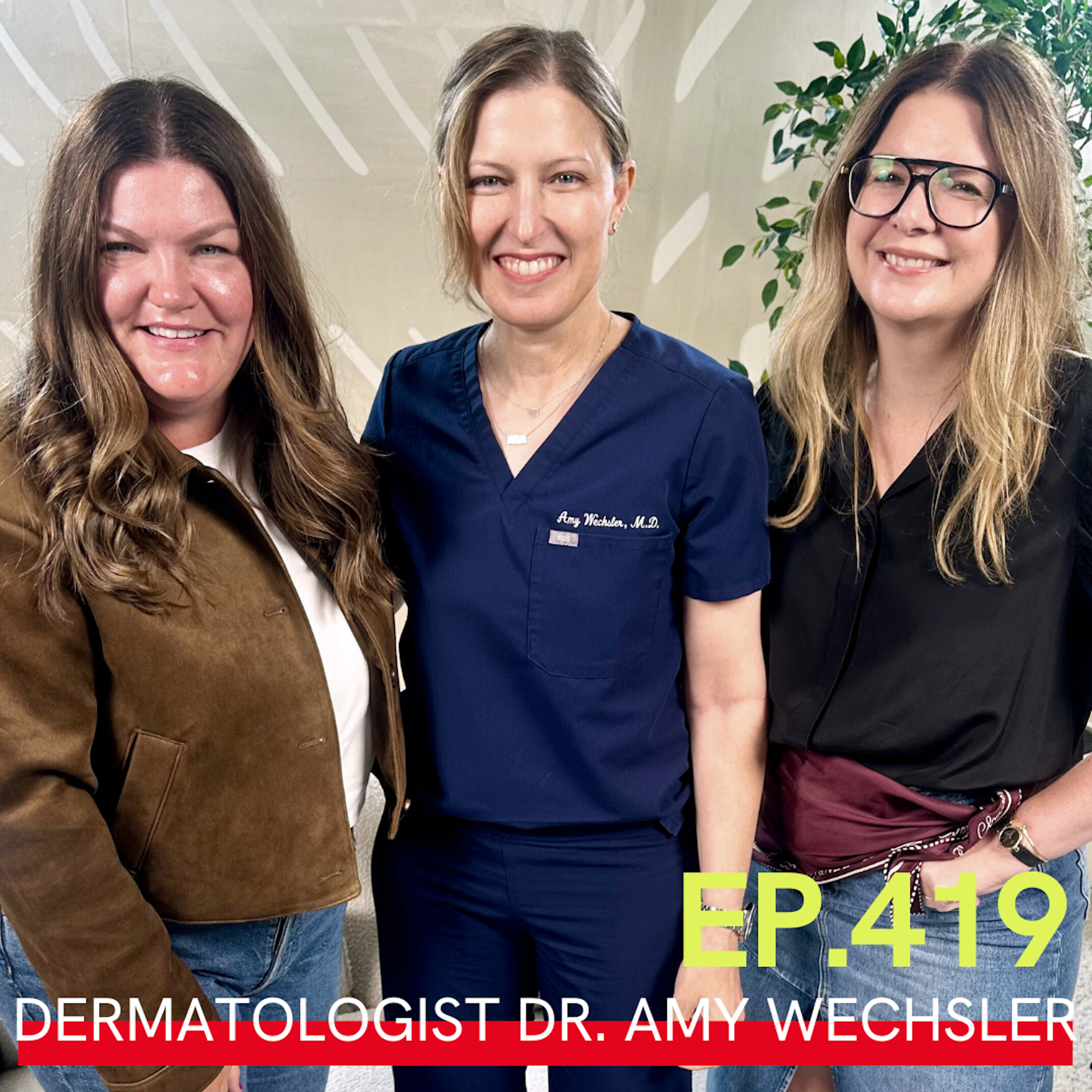
Breaking Beauty Podcast
Does Stress *Actually* Age Your Skin? Is Cortisol Face Real? Dermatologist, and Psychiatrist Dr. Amy Wechsler Reveals All. Plus! A Walk-in Clinic for Acne Treatments
00:49:48
Loading summary
Transcript257 lines
- [00:01]
A
The following podcast is a Dear media production. Welcome to Breaking Beauty, the podcast all about the breakthrough people, products and moments in beauty. We're your hosts, Jill Dunn and Carlene Higgins. Hello and welcome back to Breaking Beauty Podcast, the podcast all about the breakthrough people, products and moments in beauty. I'm Carlene Higgins and I'm here with my sister in spirit journey, Jill Dunn.
- [00:32]
B
Hey, Carlene. And we're back in your feeds on another Wednesday, you know, just two beauty editors serving new beauty tricks, you know, 400 episodes later. And we are really excited about today's guest because she's been on our wish list for years. And that's Dr. Amy Wexler.
- [00:51]
A
Yes. Dr. Wexler is one of the only physicians in the US who's board certified in both dermatology and psychiatry, which means she doesn't just treat your skin, she understands what's going on underneath it as well.
- [01:04]
B
I mean, she is just so impressive. We learn also later in our chat with Dr. Wexler that she also went back to business school and I think she got her MBA as well.
- [01:13]
A
That makes her a triple threat.
- [01:15]
B
Like leave some for the rest of us, Dr. Wexler. But you know, if you're a fellow beauty nerd like us, you might remember Dr. Wexler's groundbreaking 2008 book, the Mind Beauty Connection. She was really an OG in this conversation about how stress impacts your skin. You know, if you're stressed, you can wear it on your face. I know that's true for me. And this was really long before anyone was talking about things like cortisol phase. And Dr. Wexler was already helping patients reverse the signs of stress aging. And she has this whole protocol and I think it's very fascinating.
- [01:50]
C
Yes.
- [01:50]
A
And fast forward to now and Dr. Wexler is back in the headlines with her brand new venture, Spotless. It's the first ever one walk in acne clinic in New York City, staffed by acne only experts, is designed for speed, simplicity and zero shame. It's a totally new model of care that might just be the urgent care moment for breakouts.
- [02:14]
B
And just ahead, we're going to be asking Dr. Wexler, is cortisol face real? And how do we know if stress actually shows up on our skin? She's also going to talk about if you can break that stress skin cycle with products alone or do you need to lay down on a therapy couch? She's going to give it all to us straight.
- [02:33]
A
We're also going to find out which acne myths on tik Tok make her want to scream into the comments. She's also giving us the scoop on the surprising acne ingredients she thinks deserve more. Love what she'd change about her 2008 book if she were writing it in 2025 and the one skincare product she personally cannot live without. So grab your matcha latte and maybe a weighted blanket and let's get into it. Here she is, Dr. Amy Wexler.
- [03:17]
D
Hi, I'm Sif Hider, the founder of Foray. I'm a wellness entrepreneur and digital creator, and this is my show, the Dream Bigger podcast. Listen, I love dreaming big, but you know what I love more? Actually having the resources to make those big dreams happen. And hey, dreams can sometimes be private jets, but other times they can look a little something like having the best skin of your damn life or starting a successful business or delving into spirituality. So on this podcast, I chat with experts and thought leaders from different fields about their tips and tricks on doing exactly that. Remember to subscribe. We drop new episodes every Tuesday. So see you then.
- [04:02]
A
Welcome to breaking beauty podcast. Dr. Wexler, we have been wanting to have you on the show for ages. Jill and I are longtime beauty editors. We used to work in fashion magazines, and you were just being interviewed all the time for. You know, you're such an expert on, like, stress in your skin. I think feel like you were constantly being tapped. So we're excited to have you today. My first question is that last year we started seeing this idea of cortisol face popping up on TikTok, and we were like, you know, we should really talk about stress in your skin. And that's when your name came up. So tell us if that's just a rebranding of something you've been talking about since 2008, or is it like something new happening?
- [04:47]
C
Well, first of all, thanks for having me. Been looking forward to this. Yeah. So cortisol face is not a real thing. Cortisol is a real thing. And cortisol is the molecule that the brain makes when we're stressed. It's the fight or flight response molecule. So it's only supposed to be secreted for a few seconds, maybe a minute, to get us out of danger. And then it's supposed to go back down. But in modern times, with all the stress, it just stays up. And it does a lot of bad things. One of them is it breaks down collagen, so it causes wrinkles. It also makes the skin barrier kind of leaky and sensitive. It also causes the cells not to turn over. So. Well, it also causes inflammation. Things like acne, cortisol face that's being talked about is that sort of puffy moon face.
- [05:32]
A
Yeah.
- [05:33]
C
That happens when people have. Either are taking steroids, cortisone for a long time, or they have a disease that makes cortisol or cortisone. But that's not what happens when we're stressed out. What happens when we're stressed out is that you might have a new wrinkle appear. You know, that wasn't there a couple of weeks ago. Yeah. And your skin might look gray or sallow, or you might break out, or your eczema might flare up. But the cortisol face on TikTok I don't think is a real thing.
- [06:04]
A
Okay, you heard it here. Everybody.
- [06:07]
B
Everybody that's watching on YouTube first time ever. I'm not wearing any makeup for this interview, and that's because I just went for a facial. It was not with Dr. Wexler, but next time time it will be. So if you see the zit on my chin, just don't look. Don't look. Okay, so Dr. Wexler, many people are just treating their skin sort of as surface level, like a whack a mole when a zit comes up or whatnot. What is a subtle but powerful way that our emotional health shows up on our skin?
- [06:33]
C
One of the ways is breaking out.
- [06:35]
B
Yeah.
- [06:35]
C
With acne. So I always say when we're stressed, things we are vulnerable to can come out. So if you've never had acne in your Life and you're 30 and you're stressed out, it's gonna be rare for you to break out in a pimple. But if you're prone to eczema, that's gonna flare up or sensitive skin, or your eyes get irritated, whatever it is for you, or your stomach hurts, you know, so acne is, I think, one of the most common ones. And it can be subtle. It can just be one pimple, and you're like, I literally never break out. Or it could be a really big breakout.
- [07:05]
B
Right. But how does that happen? Is it the hormones are just spiking? Like, what is it exactly? That's. Or why eczema come flaring up?
- [07:15]
C
So it's back to the cortisol thing. So cortisol is highest during the day, it's lowest at night, and it peaks and stays up when we're stressed. And then it causes all sorts of inflammation. So inflammation is like that horrible thing that causes so many diseases, from heart attacks and strokes to Acne and cortisol being flared causes inflammation in the skin. And acne is a disease of inflammation, so that's why you break out. Eczema is a disease of inflammation, as is psoriasis, for example. Those things.
- [07:44]
A
Okay, and how do you untangle what is caused by, let's say, just like basic hormones, like perimenopause or puberty versus stress versus environment? Like, there's so many factors, but you've actually written a book about this, so how do you.
- [08:01]
C
How do you know at. One of the first studies to prove that stress cause acne was done on college campuses around exam time. Remember, there was one study from University of Michigan and they hired grad students to count pimples. It was like one or three jobs. And pimple counts tripled to quadrupled during exam periods. So they literally were like counting pimples on hundreds and hundreds of undergrads. I'm like, okay, there actually is something to this.
- [08:27]
B
Right?
- [08:27]
A
Okay.
- [08:28]
B
So fascinating.
- [08:29]
A
It's good to know, because I remember a long time ago, Joel and I talked about this. I was like, I don't believe stress is a factor for skin. How come I'm being proven wrong? I guess just because I. Again, it's sort of what I've been asking you about. It's something that just seems so subjective and unquantifiable. So I was like, I just don't know that you can put that connection together definitively, especially when there are so many different factors like diet and again, environment, hormones, genetics that are at play at the same time.
- [09:03]
C
I agree with you. And I think acne, for example, is caused by a combination of genetics, hormones, and stress. That's what I always say. It's often those three. But during periods of extreme stress is like a good way to look at it. Like during or during exam periods. And there's been other studies during other stressful periods that really count them and quantify them for sure.
- [09:22]
B
Interesting.
- [09:23]
A
And so you didn't list diet there. Do you think stress is more impactful than diet?
- [09:28]
C
Much more.
- [09:28]
A
Really?
- [09:29]
C
I actually think the diet thing is from stress. So at. And diet is so concrete, meaning, like, you can see and you know what you eat. So someone will come and be like, I think, you know, eating chocolate or fried foods.
- [09:43]
A
Dairy is the same.
- [09:44]
C
Or dairy. Right. And then when you really talk to people and find out, like, well, when are you eating those foods? It's during stressful times. But it's human nature to link things that you can see versus what you can't. You can't see the stress. You can see the food. So it's what I call like true, true and unrelated. Like I ate that fried chicken and. Or Big Mac and.
- [10:07]
B
Because I was stressed about my exam.
- [10:09]
C
Exactly. But stress that drove me to want to eat that and the stress that caused the acne.
- [10:14]
B
Right.
- [10:14]
A
And what about reversing the effects of. I'm not going to say cortisol face, because now you've debunked that. But let's say that you do have a lot of acne or I have rosacea that seems to be related to stress. Is it always about removing that stress? Or is there anything that people can do in terms of professional treatments or skin care that's going to help with stressed out skin? Because you definitely see a lot that are marketed toward stressed skin.
- [10:43]
C
That's. That's true. One of the things that really helps. So first of all, there's some stress we can't avoid. Right. And a little bit of stress is sort of motivating in life. And then if there's a big stressor happening, there's a death in the family, God forbid, or someone's really sick, like, you have to get through that. So the things I think that help, number one, maintaining a routine, like routines in general lower our stress level. So what are the small things we can do to lower stress when we're going through periods of big stress? Right. A skincare routine doesn't have to take very long. You know that. Right. It could take three to five minutes, one to two times a day. And having a routine makes people feel a little bit more in control of their day when like everything else seems out of control. And on the flip side of that, when we're really stressed, people like stop taking care of their skin. They say they forget to wash their makeup off. They don't wash their face. They also stop exercising. They don't sleep as well. So there are things to do to help. But also during periods of stress, people's skin gets temporarily sensitive. So I talk about sensitive skin a lot. Some people are born with it, like me, like, can barely use any fragrance on our skin and stuff. And others can use anything. But during periods of stress, they become temporarily sensitive because the skin's barrier doesn't work as well when we're stressed. And it's leaky, so it lets molecules in a little bit more than usual. So someone will come and be like, literally have used this for 10 years, it hasn't changed. And now, like, it's bothering me what's going on so they're stress. So then go to like fragrance free sensitive skin products. I don't believe in a lot of the products out there that say they like, will lower your stress level.
- [12:14]
A
There's calming ingredients and I get that. And I take that more like metaphorically. It's going to calm your, you know, rosacea or kama flare up. But I don't think about that as calming my stress. But there is recently. I mean there's many, many examples. But I literally just had something in my inbox about a new line that's specifically for stressed out skin. And they were boasting adaptogenics and mushrooms. Reishi, snow mushroom, shiitake, ashwagandha, that kind of stuff. So are there ingredients that really can help with stressed skin?
- [12:50]
C
I think there are some antioxidant ingredients that really can help with stressed skin. But a lot of it is using fewer ingredients when your skin is stressed out. Less fragrance, fewer ingredients. So when I've been working with Chanel and their skincare line for can't believe this is my 15th year, it's crazy. And we created solution 10 together from scratch. 10 ingredients, only 10 ingredients, fragrance free. And there's silver needle white tea in there, which is a really potent antioxidant. Like it's actually stable at room air and it definitely calms the skin down. And we prove that, you know, with really great studies. So there are some ingredients. Yes, but a lot of these claims, like whenever I see a claim that a product is calming, I'll look up the ingredient and I'll really look for the science and I often don't find it.
- [13:35]
B
Right. Like we're always told, like chamomile is one that's very calming. Right. What would be some others that you would suggest looking for on the label?
- [13:45]
C
I like few ingredients. Fragrance free is number one for me.
- [13:50]
B
It's more about what's not in it.
- [13:51]
C
Then a lot of it is about what's not in it. But I think tea is really good. So it doesn't have to be silver needle white tea can be green tea.
- [13:59]
A
Yeah.
- [14:00]
C
Yeah. I think also if a product has 50 ingredients and green tea is the 49th and you know, it's at such a low concentration, so you want that calming ingredient to be pretty high up on the ingredient list.
- [14:11]
B
Now what do you make of. I think there's been an explosion of like face tools for at home, like led. Do you think that that is helpful for stressed skin or not?
- [14:23]
C
I don't think they're directly helpful, but I think if it lowers someone's stress level.
- [14:28]
B
Yeah.
- [14:28]
C
Then it can be indirectly helpful. So did you ever have a light bright as a kid? Do you remember that?
- [14:33]
A
Yes.
- [14:33]
C
Right. Those are like little LED lights. Beautiful to look at. So fun. But would they do anything to your skin directly?
- [14:40]
B
No.
- [14:41]
C
So I don't really think that they help directly. But if they get someone to take care of themselves for 10 to 15 minutes, be off of their phone, they're not taking care of anyone else. So like indirectly, things that don't harm someone, don't break the bank and relax them. I won't take it away if they've already bought it, but I don't suggest that they buy it.
- [14:59]
B
Right. Okay.
- [15:05]
C
Save me.
- [15:09]
A
Today's episode is brought to you in part by Quint. Okay, let's not forget Quince is now available in Canada. For all of my friends, listen up. You might not know that Quint is so affordable for the quality that you get. Everybody needs to invest in their holiday pieces right now. They have Mongolian cashmere sweaters starting at $50. Little great silk button up tops and skirts that add that like shiny texture to perfect your outfit. And they even have outerwear is top of my list. Italian wool coats that look like they are designer in terms of the cut and the quality. And Quint is not a fast fashion brand. That's what I really appreciate as well. They work directly with ethical top tier factories, skipping the middleman and offering prices that are at least 50% off less than similar brands. And I know my next investment is going to be in Quint turtlenecks. They have a variety to choose from. Like they have bodysuit versions of a turtleneck that are made out of cashmere and cotton. I think those are super amazing for layering. They have really affordable ribbed turtlenecks starting at $35. I mean it's just so perfect for wearing under a little leather jacket or a button down shirt. I'm so excited for this time of year. So step into the holiday season with layers made to feel good, look polished and last from Quint. Perfect for gifting or keeping for yourself. Go to quint.com breaking beauty for free shipping on your order and 365 day returns. How about that? Now available in Canada too. That's Q-I N C E.com Breaking Beauty to get free shipping and 365 day returns. Quint.com Breaking Beauty pausing to shout out canopy.
- [17:06]
B
They're one of our show partners this week so come winter time I'm extra focused on my skin barrier. Health, especially living in a dry downtown condo, let me tell you. And skincare experts and dermatologists have long touted the benefits of increased indoor humidity for healthy, glowing skin. And a not so fun fact is that having dry air in your environment can begin wreaking havoc on the skin in as little as 3:30 minutes. That's why I was excited to discover the canopy humidifier, because first of all, it's very cute, sits on my bedside table, and it's become part of my nighttime routine. And the canopy humidifiers clean moisture combats dryness, sensitivity, dullness, and the humidifier really promotes a healthy skin barrier. And I even noticed that the skincare products that I do put on, they're just not evaporating. There's actually staying on my skin and doing what they're meant to do. And Canopy's features and design make it one of the cleanest and easiest humidifiers out there. Visible mist from traditional humidifiers is often unhealthy due to particles and bacteria being carried by the water into the air. And Canopy's mist free hydration is invisible. It's clean moisture, the best kind for your skin and your health. And canopy humidifier has an antimicrobial filter that catches irritating minerals and other nasty stuff from the water before it is evaporated into your environment. And you'll also never have to worry about molds because Canopy utilizes a unique technology that keeps the humidifier running until there's no water left inside the unit. No water left means no mold. And the easiest part. And this is really what spoke to me, canopy goes right into the dishwasher, so easy to maintain it. And the canopy humidifier also has a built in aroma diffuser that uses simple, healthy process of evaporation to fill your room with scented moisture, if that's what you prefer. So if you want to check it out for yourself, we have a special offer. Go to GetCanopy Co to save 25 on your canopy humidifier purchase today with Canopy's filter subscription. And look for other Canopy products such as the Canopy bath and shower filter. Even better, use Code Beauty at checkout to save an additional 10 off your canopy purchase. We'll link to the software in our show notes and on our website. Your skin will thank you. Now back to the show.
- [19:34]
A
So you had introduced in your book a nine day plan to reverse stress. Aging is how you described it. Do you still stand by that or would you change that protocol at all for today? What that would look like?
- [19:49]
C
I stand by that because that's really essentially A week's vacation, mimicking, like two weekends bookending a week. And when people come back from vacation, forget that they might be tan. I'm hoping not. They always get comments that they look great. Did they do something? Wow. Did you have a facial? Did you have some Botox? No, I actually lowered my stress level for nine days or eight days or whatever it was. And so I still stand by that length of time. But I do think if you don't have a whole week, there's still ways to. Well, there's ways to incorporate into your daily life regardless. But I do. I think that. That nine days was a good framework.
- [20:25]
B
Stress and aging, specifically. Yes. What. What does that look like from a cellular level?
- [20:32]
C
So cortisol breaks down collagen.
- [20:35]
B
The collagen, Right.
- [20:36]
C
Yeah. So people will literally come in and say, Dr. Amy, I am telling you this wrinkle or this was not here last month.
- [20:44]
A
Right.
- [20:45]
C
And I'll say, oh, my gosh. Like, what is going on? You always listen to people. People know themselves. And so the good news is, though, if you can. If the stressor stops, you can reverse that. You grow more collagen. We grow collagen in our sleep all the time. The older we get, the slower we grow it, unfortunately. And there's things to do to boost that. But.
- [21:04]
B
Yeah.
- [21:05]
A
And do you have anything like now, again, 20 years later that you would emphasize more to help people in this scenario if they don't have maybe a week to take off or somewhere to go?
- [21:18]
C
Definitely, yeah. And in the book, there were all these tips about ways to lower your stress level. One is just getting fresh air. Another is seeing a friend in person. I think today I talk more in a redo of the book about.
- [21:30]
B
Yeah, you need a 2.0.
- [21:32]
C
I would love to.
- [21:33]
B
Yes, you do.
- [21:33]
C
Thank you. About devices, because I think too often now we're just texting with our friends. Maybe we're FaceTiming and kind of seeing them. But there are some studies to show that seeing a friend in person really lowers cortisol levels, lowers blood pressure, lowers heart rate. So making that extra effort to actually see someone in person, I believe that really helps, I think.
- [21:54]
B
Yeah. Just walking. And also, what about bedtime routines and reducing stress? So you do get quality sleep?
- [22:01]
C
Oh, definitely. So I refer to as sleep hygiene, especially.
- [22:05]
B
What do you do?
- [22:06]
C
So I try to get seven and a half to eight hours of sleep a night.
- [22:10]
B
Okay.
- [22:11]
C
That's what the data shows we need. Everyone always groans when I say that. And kids need more. I never watch stressful tv. Or read anything stressful before bed because it definitely impacts my sleep. So I've missed out on a lot of TV shows that I think are probably really good, but they're just too stressful. I've tried an episode, and I can't. So for me, I like watching sports, so I'll watch baseball. Or I put on Sports center last night. It was a little bit of tennis. You know, whatever's kind of on. And even if it's a game I'm really excited about, it never stresses me out. Or I read, I think read. And I like to read novels, but it can be anything you like to read that really helps. So no news, no stressful TV before bed. Like, at least an hour before bed.
- [22:55]
B
Blue light impacts. Like, we always hear that, but I don't know if it's ever been quantified. What do you think?
- [23:01]
C
I haven't noticed that it has for myself. On my laptop, I have one of those apps that turns the light down and a little bit different. I think I just. I feel my eyes relaxing when I look at it later at night, and I definitely turn my phone brightness down, but I don't have a blue screen. I tried that years ago, and it didn't seem to help. Right.
- [23:22]
B
Okay.
- [23:22]
C
I don't know if it helps you, but, yeah.
- [23:24]
A
I was reading in Marie Claire online there was a recent article about this healing touch approach, and they're saying that it helps, like, just by touching the face. It can help to improve skin conditions that are triggered by stress, like eczema and eczema, however you want to pronounce it here, that this touch stimulates our nerves and helps to release oxytocin and dopamine. Do you believe in this? Is there something we should consider in the way of touch?
- [23:58]
C
Human touch is so important.
- [23:59]
A
Right?
- [24:00]
C
And so people often ask me, like, what I think about Asian skincare routines that are 15 to 20 steps and what's going on there versus ours, which are fewer. And I think I'm not gonna spend that much time on my skincare routine. But the act of massaging a product into your face definitely will lower stress levels. It improves circulation to the skin. But just human touch is so important, right? We know that for so many things, which is also why, like, it's so important for me to see patients in person. And the actual laying on of the hands, me touching someone on the shoulder just helps to make them feel heard and seen or just sitting with somebody and being in person. But I think touch is really important. Is it curing Your eczema? Probably not. But is it lowering your stress level? I'm sure.
- [24:46]
A
Do patients who take antidepressants have better skin?
- [24:51]
C
Many of my patients are on antidepressants. Better skin in what way?
- [24:56]
A
Well, if stress and if stress is a big factor for your skin, interesting. Antidepressants. And it's an ssri, like, what is that helping your skin? Have you?
- [25:06]
C
I don't know.
- [25:08]
A
Right.
- [25:08]
C
But I do think being less depressed is definitely good for your skin. So if taking the SSRI helps lower your depression and anxiety, like, for sure, that's got to be good for you. And also, you're probably sleeping better and that's good for your skin. So it's all connected. But there was a study, the study years ago on Botox here in the Glabella, decreasing depression.
- [25:30]
B
So this is the elevens lines, everybody between the forehead.
- [25:33]
C
And when people are depressed, they're often furrowing their brow. And lots of studies show that if you can't make a certain facial expression, you can't feel the emotion associated with it as strongly. So if you're smiling and laughing, very hard to feel sad.
- [25:47]
A
Right.
- [25:48]
C
And if you can't furrow your brow, it's been proven you can't feel as irritable or sad or depressed. Now, I said to everyone, like, don't go stop your antidepressants. But it's an adjunct. And patients will often come in and say, I started to feel a little bit down before I noticed that my lines came back. And then I knew I needed to make an appointment.
- [26:07]
B
Yeah, I remember reading that. It's fascinating.
- [26:10]
A
So everybody bookmark this episode and play it for their husbands, because you now have a budget for facials and Botox. So that's amazing.
- [26:19]
C
Yeah.
- [26:20]
A
Okay, so we want to talk about the big news of the hour. So you recently opened first of its kind acne clinic in New York's Upper east side called Spotless. Tell us what this is all about.
- [26:32]
C
Okay, thanks for asking me. I can't wait to talk about it. So my daughter Zoe and I have a startup called Spotless, and we conceived of it while I was in business school. I graduated last year.
- [26:44]
A
Congrats.
- [26:45]
C
Thank you. And it's an acne clinic. It's an Spotless is an acne care company. So we're opening acne clinics for walk ins and appointments, and we're also creating products, and we'll be selling curated products in the front of the spot, called the Spot Shop. And all of the products are non comedogenic. So we'll be totally safe with. For anyone with acne and fragrance free. Wow.
- [27:09]
A
Okay, this is big news.
- [27:10]
C
Thank you.
- [27:11]
A
So you're launching a clinic, but also your own skincare line.
- [27:14]
C
Yes.
- [27:14]
A
Oh, wow.
- [27:15]
C
The skincare is going to come later. We've got our first product which is a. Which is a spot treatment in research and development right now.
- [27:20]
A
Okay, so you have to tell us about. This is like completely new. Is it a walk in clinic? Is it a by appointment only? How's this going to work?
- [27:30]
C
So it's both walk in and by appointment.
- [27:32]
A
Okay.
- [27:32]
C
Staffed by nurse practitioners. I've written the curriculum. Everyone's training with me. I'm the chief medical officer and CEO. And what I. One of the main reasons I went to business school is because Zoe and I, we'd had a podcast in the beginning of the Pandemic. It was our passion project. Project. And the most fun thing about it was working together. Zoe was home doing college on the couch because of COVID And I always had these kind of nebulous entrepreneurial ideas. But I thought unless I actually go to business school, I'd never taken a business class before and learned how to really do it on my own. I wouldn't actually try. So I always like to say, like, I couldn't convince Zoe or Jaden and my son to go to med school. So I went to business school. And in the middle of school, we conceived of spotless. So my business, which is a boutique practice on the Upper east side, is not scalable. It really requires me.
- [28:25]
B
Yeah.
- [28:25]
C
But one of. One of the most important things I do is take care of acne because of all the psychological overlay.
- [28:32]
B
Yes.
- [28:33]
C
Depression, anxiety, effects on self esteem and confidence. And I've got drawers full of handwritten thank you notes over the years from patients whose skin I've cleared up because might sound a little cheesy, but it really does change people's lives for sure. Feeling better about yourself and being confident makes people take healthy risks. They audition for a role, they interview for a new job, they go out on a date, they try out for a team. Whatever is, they stand up taller in the world. It just really doesn't. I remember how I felt when I had horrible acne as a teenager and how I felt when I cleared up. And so I thought, okay, I think I can scale the acne piece of the business. And I thought of it together and so that's what we're doing. So we're all acne all the time. One of our taglines is breakout pop by and we're going to be ground floor walk in clinics. It's going to look very cool and inviting, but also exude expertise. And we're training our nurse practitioners very rigorously. We're all about hospitality and patient care. Because I want to recreate what I've created in my office, which is that from the moment someone walks in the door of my office to the moment they leave, they're well cared for. And we understand that people walk in off the street like stressed out.
- [29:54]
A
Right.
- [29:55]
C
Whether it's New York or any city. And maybe going to the dermatologist isn't the most stressful doctor to go to. For some people it is. But our job is to lower their stress levels and make them feel heard and cared for. And so that's what spotless is going.
- [30:08]
B
To do, to just have a destination that's just for that. I feel like is so smart.
- [30:11]
A
It's like a blow dry bar for acne.
- [30:13]
C
Exactly. And we're going to be open nights and weekends and also some early mornings because there's so many barriers to entry for people to go to a dermatologist.
- [30:21]
A
Absolutely. And everybody has acne emergencies.
- [30:25]
C
Yes. So you can come in and get a pimple, on the next day it'll be gone.
- [30:28]
B
Yeah, I need it for this. Exactly. I was gonna say you should have brought your quarter cortisol or cord, what is it called? Cortisone shot. Yeah. Next time, if you want to come.
- [30:39]
C
To the office tomorrow.
- [30:40]
A
Okay.
- [30:41]
C
Just text me.
- [30:42]
B
Oh, no, I'll be performing surgery on this tonight, don't worry.
- [30:45]
A
Surgery.
- [30:46]
C
I can see you in the morning.
- [30:48]
A
I have to tell you. So we are Canadian. I remember that a dermatologist walk in clinic opened in Toronto. Not specifically for acne, just a dermatologist walk in clinic. And at first it was great. It was awesome. It just became inundated because we have such a backlog with dermatologists, it takes months and months to get in. So it's just a place. I can't even use it anymore. Like if my son has a rash and it's something not just aesthetic, I can't even go there.
- [31:21]
C
Is there just one location of that place?
- [31:23]
A
Yeah. So I wonder if this helps to solve a problem with how your system works with dermatologists or. Tell us about that.
- [31:32]
C
Sure. So we all. We don't have that many dermatologists either. We're different. We don't have socialized medicine here. But there aren't that many dermatologists trained in the US every year. And so it's really Hard to see one. There's often a really long wait. If you go through insurance, you know, it could wait six months if you're paying privately. It's expensive and you could still wait a while. And then dermatologists, probably the same in Canada, are mostly open nine to five.
- [31:58]
A
That's right.
- [31:59]
C
And that's when everyone's working in school, at rehearsal, at practice. And so that's another barrier to going.
- [32:05]
A
Right.
- [32:05]
C
We want to make it really easy, really efficient.
- [32:08]
B
Yeah.
- [32:09]
C
And so. And we need to have multiple locations.
- [32:10]
A
I was just gonna say. So is it. Will it be kind of like a studs or something like that where it's like there will be multiple locations. Okay.
- [32:17]
C
I love this.
- [32:18]
B
That's great.
- [32:19]
C
One upper east side, 75th and Lex. Second one will be downtown.
- [32:23]
A
Okay.
- [32:23]
C
And then we'll go by the end of the year. Do you think the second one will be early next year? Okay.
- [32:29]
B
Yeah.
- [32:29]
A
Okay.
- [32:29]
B
Very cool. And in terms of like professional treatments that you would get on site, what are you, what are you. What's on the menu?
- [32:36]
C
So we have a few treatments on the menu. Pimple shots. Yeah. Which is dilute steroid Right into the pimple and then the next day it's so much better. Often just gone. So that's great. Acne extractions, which are good for blackheads and whiteheads, so someone isn't doing it at home. And acne chemical peels with 20% salicylic acid. There's no downtime with that, but it just cleans out the sticky cells that clog the pores.
- [32:59]
B
Right.
- [32:59]
C
And then I think like very important consultations and prescriptions. So we'll be prescribing topical medications and oral medications and then we'll be doing follow ups. Right, right.
- [33:09]
A
And so you'll have that instant care if somebody has an acne emergency, but over time that's when you'll have the take home skin care as well.
- [33:18]
C
Yes.
- [33:18]
A
Sort of as an adjunct to get them on a routine.
- [33:22]
C
Exactly. And right away we'll be selling products from a bunch of companies that we love and we've chosen and curated, you know, one or two from each of these companies. Everything safe for someone with acne, everything fragrance free. So for everyone. We want boys and girls and men and women to be coming.
- [33:37]
A
Okay, now I need to know which brands you have. Dr. Wexler has curated for the spotless clinic.
- [33:46]
C
So there are a bunch of brands and it's specific products within each brand.
- [33:50]
A
Okay.
- [33:50]
C
So for example, there's a cherry pick.
- [33:52]
A
We are professional cherry pickers. So go on.
- [33:55]
C
So there's a, you know, few products from Clinique, from Laroche, Posay, from Sophie Pavit.
- [34:00]
A
I was just going to say Sophie.
- [34:01]
B
Is it the Mandela?
- [34:03]
C
I can't tell you.
- [34:04]
B
Well, that one's in our hall of fame and I use it a lot.
- [34:07]
C
The mineral sunscreen from Supergoop. Like there's. But. And also because I'm a psychiatrist and we're fusing the psychology into spotless and empathy and caring about all that stuff. There are these stress balls that are actually stress cubes from a company called Neato. And so we'll be selling those because kids and young adults really seem to like them. And squeezing something instead of picking at your cuticles or popping your pimples seems to be helpful.
- [34:33]
A
So we're also going to need pimple patches.
- [34:36]
C
We may or may not carry pimple patches. I like some pimple patches because I think the one thing they do is they can stop someone from touching or picking, but they're not actually curing the acne.
- [34:47]
A
Right, Right.
- [34:48]
B
I'd like to know your opinion on Accutane, where we're at with it now all these years later that it's been in the market. Are you using it as regularly. When do you prescribe it? Talk to me.
- [35:00]
C
I use Accutane frequently. I was lucky enough to to learn from Dr. Alan Shalita who was one of the three doctors who did all the original studies on Accutane and topical Retin a in the 1970s. And he was the chairman of my department. And people come from all over the world to see Dr. S. He was really psychologically minded. By the time people got to see him, he could be their 20th dermatologist and they'd be depressed and anxious. And he was looking to train a psychiatrist in dermatology. So we, we found each other and that was amazing. And so I had the most incredible education around Accutane. It's an unbelievable medicine and it's a form of vitamin A and it gets such a bad rap and there's so many myths about it. So there's one study a couple years ago that 55% of the information on YouTube about Accutane was incorrect. Something recently 75% of the information on TikTok about Accutane is incorrect because they're non medical content creators.
- [35:54]
A
Is there a myth you want to clear up here and now about Accutane?
- [35:58]
C
Yes. So one of the myths is that Accutane causes depression and it's still in the consent forms in the US I don't know about in Canada or if there is a consent form. But big studies have disproven that myth that Accutane causes depression. And there was a great study out of England a couple years ago, studied hundreds, maybe thousands of teenagers. And there were three groups. Teenagers with acne on Accutane, teenagers with acne not on Accutane, and teenagers without acne. The ones with the highest level of depression were the ones with acne not on Accutane. The ones with the lowest were actually the teens with acne on Accutane. And the ones in the middle were the kids without any acne on nothing. And so the ones on Accutane, they're just so hopeful they're getting better. And during Accutane treatment, what we see is what was always seen anecdotally, depression scores go down and self esteem scores go up. Now, the time of life when someone's on Accutane is also a time of life when depression is very common. So again, it's one of those true, true unrelated situations and people, it's just human nature to link things together. But that's just one study. There's some from Canada, from Europe, from the US really good placebo controlled studies and big cohort studies to show that Accutane doesn't cause depression.
- [37:19]
A
Right.
- [37:19]
B
And it's still, and I feel like the way in which derms are using it has. They've innovated on that front too, like with microdosing and things like that. Is that something you do?
- [37:29]
C
I do. I love using low doses of it. I even have some patients on it once or twice a week.
- [37:33]
B
Oh, really Interesting. Okay. For like a longer period of time.
- [37:38]
C
Okay, exactly. But it's a really great medicine. And if you take a full course of it, which depends, it's different for each person, depends on the person's weight. It's about an 80% chance of curing that person for life of acne. And that's amazing.
- [37:52]
B
That's life changing.
- [37:53]
C
It really is.
- [38:02]
A
Today's episode is brought to you in part by neutral. So when I started out on my perimenopause journey, one of the first symptoms I noticed was thinning right in the front of my hairline. It freaked me out so badly. And I had heard so many experts on our show recommend neutrophil, I knew that was the one for me to try. Neutrophil is the number one dermatologist recommended hair growth supplement brand trusted by over one and a half million people. And you can feel great about what you're putting into your your body. Since neutral hair growth supplements are backed by peer reviewed studies and NSF Content Certified, that's the gold standard in third party certification for supplements and what otherwise to me is just like the wild wild west. So I really appreciate that they have that backing and they have different formulas depending on where you are in your hair thinning journey. So I take the one that's called Women's Balance. For hormone balance they also have a women's vegan formula, postpartum and men's formula and I've noticed less shedding over the past couple of years that I have been using it. You can see thicker, stronger, faster growing hair with less shedding in just three to six months with Neutral. And for a limited time, Neutral is offering our listeners $10 off your first month subscription and free shipping. When you go to nutrafol.com and enter the promo code breaking Find out why Nutrafol is the best selling hair growth supplement brand@nutrafol.com spelled n u t r a f o l.com promo code breaking that's nutrafol.com promo code breaking pausing to.
- [39:38]
B
Shout out Tia health they are one of our show partners this week. So when I heard about TIA I just thought this concept, it makes a lot of sense. And TIA is the modern healthcare company for women. TIA is available to our friends in the US and TIA has clinics in Los Angeles, San Francisco, New York City, Scottsdale and Gilbert, Arizona. And TIA is available virtually all across Arizona, California, New York, New Jersey, Massachusetts and Connecticut. And TIA takes a whole body approach to women's health, offering comprehensive, high quality care that brings everything you need under one roof. It's really like a one stop shop. So think primary care, gynecology, sexual health, mental health all in one place. And TIA providers are trained specifically in women's health and are here to listen to your needs, crafting a personalized plan to give you the long term solutions you deserve. And I have a friend based in LA who uses TF and so far she's so happy with the service that they provide and I really appreciate that. Tia, they're not about quick fixes. They're providing support for your overall health and well being. And get this, you can get an appointment in days and not months. And the best part, there's no membership fee required and TIA takes most PPO insurance plans so you can use your insurance to pay for your care. So if you're ready to experience a truly supportive and holistic approach to your health, you can book an appointment Today at our exclusive URL, which is bit ly a s k T I a d Beauty. That's bit ly ask Beauty. We'll link to this URL in our show notes and on our website. Now back to the show.
- [41:31]
A
You mentioned some of your favorite brands for acne that you'll be carrying at Spotless.
- [41:35]
C
Yes.
- [41:36]
A
What are some popular products that people still use to treat their acne that you are not a fan of and that you will not be carrying at Spotless?
- [41:46]
C
I'm not a fan. A big fan of benzoyl peroxide for the face, for example. Benzoyl peroxide is really drying and irritating and can even cause allergies and redness and it doesn't really help that much. Yeah, so. So we're not carrying benzoyl peroxide. We're not prescribing benzoyl peroxide. Benzoyl peroxide as a body wash for acne, where you leave it on for a few minutes in the shower and wash it off can be helpful and non irritating because body skin is just thicker and less sensitive. Okay. But not for the face, so no harsh acids. And you'd asked before about our skincare line, which will be called Dr. Amy Wexler.
- [42:22]
B
And when is that potentially going to come out?
- [42:25]
C
Early next year.
- [42:26]
B
Okay.
- [42:26]
C
Okay. Our whole goal is to create non irritating products for acne. And the line is that we'll also have an extension. We'll do a moisturizer, toner, face wash, body wash, sunscreen, all of those. But everything safe for people with acne. People with acne are so scared still to use moisturizer because they're worried that the moisturizer is going to clog their pores. Some can, but the right ones, the non comedogenic ones won't. And so a lot of what we'll be doing at Spotless is educating. And I'll be making TikTok videos to try to dispel the myths and just get the word out.
- [43:05]
A
Right.
- [43:06]
C
You walk around and see people still with faces full of acne, but most people aren't walking around with severely crooked teeth anymore. Right. They're getting braces or they're getting invisalign, like acne is treatable. And so our whole goal at Spotless is to reach as many people as possible.
- [43:22]
A
There's no shortage of myths, as you mentioned on TikTok, even down some Reddit wormholes. What's one of those myths that makes you just want to jump into the comments?
- [43:37]
C
Oh, there's so many. Well, fun One chocolate causes acne. It does not. Poor chocolate gets a bad rap. And I think dark chocolate's good for you because of all the antioxidants.
- [43:47]
A
I feel like there's a lot of, a lot of homemade treatments that are going around.
- [43:53]
C
Tallow and. Yeah, and just more than just toothpaste. People used to put toothpaste on their pimples.
- [43:58]
A
Just stuff you can find at home. And it. And it's like some of these drugstore products are pretty inexpensive. Like, I don't know why you need to use a. Something that costs the same amount of money out of the pantry. And what is the difference? What is, why is it better? I don't really. I don't understand.
- [44:15]
C
I know. I just, I guess it's just all these, you know, non medical content creators and what's to call them, but people who really don't know what they're talking about. But now they have an audience.
- [44:23]
A
Right, right, right, right.
- [44:25]
B
Yeah. And the more like extreme your home remedy is, the more views it's going to get.
- [44:28]
A
Right, that's true.
- [44:29]
C
Exactly. And there are some home remedies that can be really soothing for your face. So for example, like whole milk or whole milk yogurt, the fats in the whole milk are really anti inflammatory. So if someone has eczema, I will tell them sometimes to do a whole milk compress. And I'll be like, I know this is gonna sound really weird, but because I used it when I was a kid and it really works. And so if you really want a DIY home mask, get some whole milk yogurt and some honey, mix them together, heat it up a little bit in the microwave, stir it together, and that's really soothing. Honey is antibacterial and soothing and the fats in the yogurt are also soothing. But so many other things. The beef tallow thing is really bad.
- [45:09]
B
Yeah.
- [45:09]
A
And that one just keeps going and going.
- [45:11]
B
Now, we talked a lot about teens and acne. What about adult acne? Are you expecting to see a lot of those types of patients as a. But I'm sure that comes through your door every day.
- [45:21]
C
It does.
- [45:21]
B
Women in their 40s or whatnot.
- [45:23]
C
Definitely. So I have a whole group of patients, often women 35 to 55, who are breaking out and have wrinkles and they feel too old for their pimples and too young for their wrinkles. Good news is like a topical retinoid often can treat both, but there's things to do for both. And sometimes there's a hormonal component to the acne. And then there's a medicine like spironolactone, for example, to treat that acne. And yes, we'll be doing that at Spotlight this.
- [45:46]
A
For anyone listening, please open a perimenopause clinic as well. We will take one of those in every city. Absolutely.
- [45:56]
B
Can I ask something that I keep seeing on TikTok about the PSA to not pop a pinch pimple in the triangle of death.
- [46:04]
C
Oh, God.
- [46:06]
A
What's that? Explain. I mean, explainer.
- [46:08]
C
Total bs, really? Okay.
- [46:10]
B
Okay, so tell.
- [46:11]
C
Years ago, there was a TV show that will be unnamed that I. Oh, I know. Went on a couple times that called me one day and said, hey, Dr. Amy, we want you to come back on to talk about the triangle of death on the face. And I was like, what are you guys talking about? They're like, you know that if you, like, pop a pimple by your nose, the bacteria will go to your brain and kill you.
- [46:28]
B
Yeah.
- [46:28]
C
I said, that's total bs. That is not science. No, I am not coming out to talk about that. So. And I just. It just popped up in my feed.
- [46:36]
B
Yes.
- [46:36]
C
Last week.
- [46:37]
B
It's back.
- [46:38]
C
Everything comes back. Vitamin C is back. Triangle of depth. Yeah.
- [46:41]
B
Yes.
- [46:42]
C
It's just meant to scare people. That is not a real thing.
- [46:44]
B
Okay.
- [46:45]
C
No.
- [46:45]
B
Even though you shouldn't pop pimples, that is because you can make the pimple worse.
- [46:50]
C
Even if you. If you pop that pimple, you've pushed so hard you've created inflammation right next door, you'll get a pimple next to it. People don't stop if a pimple is poppable. My trip, my home trick, is to take Q tips instead of your fingers because people do not stop. And there's a thing about, like, wrapping your fingers in a tissue somehow that that's safer. No, because fingernails are sharp and hard, and no one stops until they get something, which is often blood. But a lot of pimples are not poppable.
- [47:19]
B
Right?
- [47:19]
C
A cyst is not poppable. A pustule that's white and looks like it's ready to be popped. Okay. After you wash your face or take a shower, you can take two Q tips and apply gentle, even pressure. And a Q tip will break if you push too hard. It's soft, it's round. If it doesn't work, put them aside and, like, realize that it's not palpable.
- [47:38]
B
Yeah. I heard that there was gonna be an acne vaccine in the works. Have you heard of this?
- [47:44]
C
I read that article also.
- [47:45]
B
Okay.
- [47:47]
C
It's so early on Basic science.
- [47:50]
B
You think it is? Yeah. Okay.
- [47:53]
C
But it's an interesting concept.
- [47:55]
B
Well, thank you so much Dr. Wexler. I think we've covered it all.
- [47:58]
A
I think so.
- [47:59]
B
In our hour long consult.
- [48:00]
C
Amazing. Thank you for having me.
- [48:02]
A
Thank you so much. It was was great to meet you. And I believe your daughter's here today.
- [48:07]
C
Zoe's here.
- [48:08]
A
Yes, Zoe, you can. You don't have a mic over there, but really excited for you guys for what you're building and. We can't wait to see your clinic pop up. And we will pop in. And all the puns. Thanks so much.
- [48:27]
B
Yes, pop by. Exactly. Thank you Dr. Wexler. Thank you so much for having me. Thank you.
- [48:31]
C
Go.
- [48:34]
A
Thanks for listening. You can find details on every product mentioned in today's episode along with our exclusive promo codes on our blog @breaking beauty podcast.com.
- [48:43]
B
While you're there, be sure to sign up for our newsletter. Every episode will be delivered directly to your inbox so you won't miss a.
- [48:49]
A
Single thing and get social with us. Let us know what you think of the episode. You can follow us on Instagram. Breaking Beauty Podcast and did you know.
- [48:57]
B
We also have a private Facebook group? Just search Breaking Beauty Podcast chat room.
- [49:02]
A
You can even leave us a voicemail at any time with questions or feedback at 1-844-227-0302.
- [49:09]
B
And don't forget to subscribe to us wherever you get your podcast fix. Spotify, Stitcher, Google Podcasts and Apple Podcasts where you can show us some love by writing a review.
- [49:20]
A
See you next Wednesday. Please note that this episode may contain paid endorsements and advertisements for products and services. Individuals on the show may have a direct or indirect financial interest in products or services referred to in this episode.