← Breaking Beauty Podcast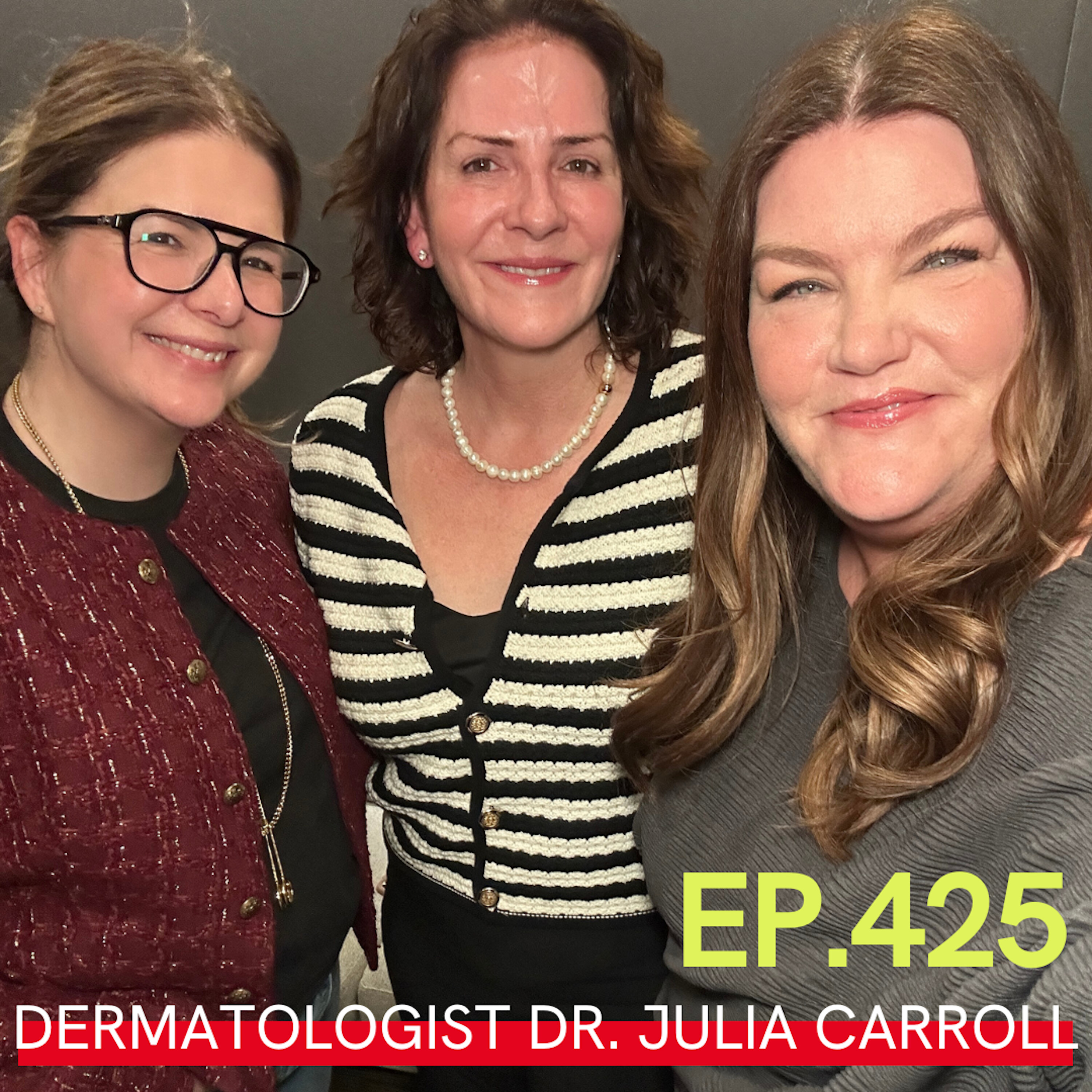
Breaking Beauty Podcast
Stop Sabotaging Your Skin! The Dermatologist-Approved Healthy Skin Habits You Need to Start Now
00:44:55
Loading summary
Transcript219 lines
- [00:01]
A
The following podcast is a dear media production.
- [00:08]
B
Welcome to Breaking Beauty the podcast.
- [00:11]
A
All about the breakthrough people, products and moments in beauty.
- [00:14]
B
We're your hosts Jill Dunn and Carlene Higgins. Welcome back to Breaking Beauty Podcast. I'm one of your co hosts, Jill Dunn, and I'm here with my trusty sidekick and friend Carlene Higgins.
- [00:29]
A
Hey Jill. And we are two beauty editors turn beauty podcasters chatting each and every Wednesday about the breakthrough people, products and moments in beauty. And this is our last episode of the year 2025 was a big one. We had so many incredible guests and we're so grateful for our listeners who have been on this journey with us for eight whole years now.
- [00:49]
B
Pinchus truly, we're going into year number nine. You're like officially my longest relationship, Carlene.
- [00:54]
C
And if and if you have some.
- [00:56]
B
Spare time during the holidays, feel free to go back and listen to our archives. They' all free. We have more than 400 episodes. Many of them are now on YouTube as well. So please subscribe to us on YouTube. And now we're looking ahead to the new year. I know that some people might be committing to new habits or just locking in with their goals, whether that be for work, love, financial or even their hashtag skin goals.
- [01:18]
A
Yes, no better time, honestly. Which is why the topic this week is the best and worst habits for healthy skin, according to a dermatologist brought to you in part by the lovely folks at Neutrogena. And our guest is none other than than my very own personal dermatologist and friend of the podcast, Dr. Julia Carroll.
- [01:39]
B
Hello.
- [01:40]
C
I'm so glad to be here to be the last of the season. I feel very honored and this is.
- [01:45]
B
Long overdue and I got to shout out Dr. Carol's credentials, everybody, because Dr. Carol is a board certified dermatologist and her expertise has been featured not only on our podcast, but People magazine, elle Canada and GQ, to name a few. And Dr. Carol is a fellow of the Royal College of Physicians.
- [02:01]
A
I mean, she's an active member of the Canadian Dermatology association, the Toronto Dermatology Society, American Society of Dermatologic Surgeons. I mean, the list goes on. And of course I pay a lot of dues. I thought, I meant this is why I can't, I can't get in with you that often because you're sitting on all these boards. But I have to shout out your clinic where I go, which is compass Dermatology in Toronto. You guys have been so great with all my laser treatments and, and yeah, we're thrilled to have you here with us today.
- [02:30]
C
I'm really excited to be here.
- [02:31]
B
Yes. And all of that. And Dr. Carol consults with Neutrogena, where she acts as the national chair of the Mole Mobile Everyone, which helps people screen across the country. And it really is all about underscoring the need for melanoma and skin cancer prevention and the importance of early detection.
- [02:49]
A
So just ahead, we're asking Dr. Carol how to get the best skin care habits on lock for the new year. Everything to do with barrier protection, adjusting your sunscreen routine for winter. And there's so many skincare trends out there. But honestly, I think we can all agree that all we really want is healthy skin, you know, the best skin that we can have. So as a dermatologist, what is your core philosophy on achieving and maintaining truly healthy skin?
- [03:18]
C
My core philosophy would be starting with, you do want to keep it simple. I think the days of the ten step crazy routines are over and people just aren't interested in spending that money, spending the time, and it's just really confusing. So I, I, I believe in keeping it simple. I also believe in multiple different modalities to keep your skin looking great. So just like you would go to the dentist, get your teeth cleaned, you want to do some laser, you know, if it's your cup of tea, you maybe wanna do a little skin rejuvenation with injectables, and then it's really important what you're doing at home as well.
- [03:58]
A
Yeah, I agree with you. I think of it as a kind of like a funnel at this point. I don't know if this is the right analogy, but it's like the things that I do every single day, and then I have, and then, like, less times out of the year, I come in and I have a dermatology treatment. And then like twice in my lifetime, I go for it with plastic surgery. You know, it's just like, it's, it's that funnel, and that way, you know, we're hitting it from all ends.
- [04:25]
B
Yeah. And we're officially in winter now. So what are the daily habits you recommend to all of your patients? And conversely, what are some bad habits that may be actively kind of undoing all of the work that we're doing toward our healthy skin goals?
- [04:38]
C
So we really want to start early on working on moisturizing the skin and keeping that skin barrier intact? Because, as you know, as soon as something is broken, it's much harder to fix it. And, you know, just like, if you, if you have, you know, surgery, for example, you Want to get ahead of the pain, so you want to start looking after the pain management before you, you have pain. And it's the same thing with skin in terms of things that are bad habits for people in the winter. One of the worst things that Canadians do is they love to jump in super hot showers, which strips their skin of all the moisture. And then I think it's just also like the constant changing where people are trying this new thing, that new thing that's a bad habit that I see know across the board all season long.
- [05:20]
A
Yeah.
- [05:21]
B
Can you talk a little bit about winter air specifically? And like, does it actually have lower humidity? Is that a truth from a dermatology?
- [05:29]
C
It is true. So the way that I try to explain it to people is that as the temperature goes down, particularly in our climate in Canada, the, the humidity level does go down. So think of it like the air is just seeking humidity wherever it can get it. And so for example, your clothes may get staticky because. Because it will pull humidity out because it's trying to balance itself. What are we? We are essentially a giant bag of water. And so this, you know, it will try to pull the humidity out of, of a human body as well. And so that's why you see your skin getting itchy and getting dry. And again that leads to that barrier damage breaking down. And so it's a cycle because you've damaged the barrier and now it's not retaining water as well. And then more water comes out, the barrier is more damaged, it gets more injured and leaky and can't keep the water inside the skin.
- [06:25]
A
Yeah, I feel like the whole, you know, since. And we've been interviewing you since our magazine days, honestly. And now everybody talks about skin barrier. Where before it was all about moisturizing, then it was hydrating, now it's skin barrier. And now I feel like the three terms are just, you know, used almost interchangeably. So maybe you could just tell us like, what is the difference between those three terms? And, and how do we know what to look for in a label? Like, does it depend on your skin.
- [06:56]
C
Type or what if your moisturization levels are down, then that can impact your skin barrier. But there's more to the skin barrier. There's bacteria, there's pollution, sun damage, all those things. So we talk about it like a brick wall and we've got the skin cells and in between it we have all natural moisturizer. It's called nmf. We have ceramides. All these things are at play and they're the Glue that keeps those bricks together. When the brick wall gets damaged, then your natural moisturize, moisturization leaks out. You can repair that with moisturization that you can apply in the form of different products. So it could be, you know, humectants, which draw moisture in. It can be occlusives, which seal it in. Uh, ceramides are definitely one that we talk about a lot in moisturization. Hyaluronic acid is a huge one. It is actually like a huge drink of water for your skin. It's a great and product. It layers in nice with all your products. So if you're having a day where you're a little bit dry, so you're not moisturized enough or you're worried about your skin barrier, adding in a little extra hyaluronic acid is always a good idea.
- [08:06]
B
Yeah, yeah. When we're talking about healthy skin today, what does that quantifiably mean to a. To a physician like yourself?
- [08:14]
C
When I'm looking for healthy skin, I guess first of all, I'm looking to see are there any skin diseases on the skin? So particularly, say we're looking at the face. I'm looking for acne, I'm looking for sun damage. I'm looking for skin cancers, rosacea, eczema. Those are the things I'm looking for. Now, if those aren't present, then I'm looking at the texture of their skin. Does it have that bounce? Does it have that glow? Is there extra pigment? Are there broken blood vessels? Really? When you look at someone and you think that they have really healthy looking skin, you're making that judgment in probably two seconds or less. You would see it from across the room. You see it when you first meet somebody, and it really comes down to skin luminosity. And so skin that is free of distractions, skin that is smooth, skin that is plump, well hydrated. And if you look at children, they have light that bounces off their skin. And as we get older, we start to accumulate all these things. The light doesn't bounce off the same. So that's where healthy skin, some lasers, they come in to improve that makeup will also do the same thing because it's bouncing light off. So it really is all about light reflection.
- [09:24]
A
Yeah, yeah.
- [09:24]
B
The.
- [09:25]
A
The evenness is what I'm always aspiring to. But everybody's got their own thing. Yeah.
- [09:31]
C
Sometimes it's how the skin feels. Some people really want smooth. They hate all the little bumps and things that we get over time. So whether it's seborrheic, keratosis, or sebaceous hyperplasia, which are enlarged oil glands or it's an old acne scar or.
- [09:44]
A
Yeah, yeah.
- [09:45]
C
Pigment melasma.
- [09:47]
A
Yeah, it's that. It's that. Ooey. Dewey. Even skin. So what's a good habit for soothing sensitive skin? Coming into the colder months? Because, you know, when your skin starts to look red or flaky, it's not so cute.
- [10:00]
C
Not so cute. I think when you are getting into the colder months, it's almost an unhabit, is to actually pare back your skincare routine. If you're someone that tends to have sensitive skin. So you want to pare back retinoids that you're using and acids, you may still want to include those in your routine, but not in the same frequency that you were using them before. Again, the hot showers, as much as they're tempting, are really not going to be helpful. And you still want to keep your skin protected with. With sunscreen. I love niacinamides for skin that is inflamed and irritated. They're always useful. And again, hyaluronic acid is just a good go to because it's, it's very, you know, it attracts moisture to your skin. It's very safe for all skin types. So it's a good go to that you can add in and out of your routine as needed.
- [10:53]
B
My question is always like, if I end up overdoing it with exfoliating, it's been known to happen. I'll get all flaky. Okay. Then it's like, then I have flakes on my face and all I want.
- [11:04]
C
To do is kill it off.
- [11:05]
B
Yeah. Like, I want to go to town.
- [11:07]
C
Right.
- [11:09]
B
Derms would say, what?
- [11:10]
C
Well, I think you want to let some of the inflammation settle down. You don't want to go right back to, for example, a retinoid.
- [11:17]
B
Yes.
- [11:18]
C
But some of the lighter acids and alpha hydroxy acid or a lactic acid.
- [11:23]
B
Okay.
- [11:24]
C
Lactic acid is a nice ingredient because it's also hydrating.
- [11:28]
B
Okay.
- [11:29]
C
And so it's more superficial. So think of it like a fine pair of scissors that you're just going to use that is going along your face and just releasing those flakes that are about to go. So that might take you to the next level to just get them to come off a little bit quicker.
- [11:46]
B
Yeah, that's.
- [11:47]
C
I know it's very hard to resist. I find the same. If I get a laser done that, all I want to do is then, like, get rid of it. But you, you sort of have to let Your skin go through the process.
- [11:55]
B
Yeah. Because then guess what's the next step? You put foundation on. Then you have. Then you look flaky, foundation on your face, and you look like you're like, I'm not going outside today. Like, I can't be in public. So that's good to know. Like, lactic acid is Derma approved?
- [12:08]
C
Is Derma to do that?
- [12:10]
B
Okay.
- [12:10]
A
Okay, got it.
- [12:11]
B
And I think for speaking for myself as someone with sensitive skin, a little hack that I've incorporated as a habit is if I am using something really strong like a retinol or Adapalene, I will put an occlusive, like, around my nostrils, around my mouth, all around, all around your eyes. And it helps insanely with it not traveling and not making you more irritated.
- [12:34]
C
Right. Because those are the areas that tend to be really difficult.
- [12:37]
B
It is game changing, let me tell you.
- [12:39]
C
And as women get older, too, I find that they are. They get a lot of redness around the corners of the lips.
- [12:45]
B
It's embarrassing because then you feel like the joker when you're out. Out and about.
- [12:51]
C
Right. And part of that is because, so the, you know, the acid has collected in that area, and then a lot of people get a little bit of volume loss there. So it collects there. And then you're sleeping at night, and if you're a side sleeper and maybe you're a little bit of a drooler, then you've got the saliva going in there with all the bacteria from your mouth, and it just becomes this vicious cycle. So. So I love that with using an occlusive in those areas.
- [13:12]
B
Yeah. Especially like in the winter if you're like blowing your nose a lot. Like, I find all around the nose, around the mouth, around the eyes, it's helped a lot.
- [13:19]
C
Yeah, that's a really good sense because.
- [13:20]
B
Then you don't need to actually give up what you like to use.
- [13:24]
A
And what do you do for people? Like, my son has eczema. Eczema. Depending on where you live, you might pronounce it differently or what level of derm training.
- [13:34]
C
Say it's eczema when you start, then we start to call it dermatitis, and then at the end is eczema.
- [13:40]
B
Okay.
- [13:41]
C
A really nerdy derm joke.
- [13:44]
B
Okay, so should we.
- [13:46]
A
Should we move to eczema?
- [13:49]
C
Yes, you are granted eczema status.
- [13:51]
A
We have graduated.
- [13:52]
B
I love it.
- [13:53]
A
Okay, well, my son has that. And I notice, you know, he never wants to be bothered to do anything about his hands until they are cracked and bleeding.
- [14:03]
C
Right.
- [14:04]
A
And so getting in front of it is a challenge. What do you do when you get to that point?
- [14:08]
C
Point when. When the horse is out of the barn?
- [14:10]
A
Yeah.
- [14:11]
C
I mean, then I think you need to call your dermatologist because that's when we need prescription medications. And people are sometimes a little bit nervous about using prescription products. They go down the rabbit hole on the Internet or on Tik Tok. Steroids are a mainstay that we use. There's actually a lot of new prescription products that are out now that are non steroids that, you know, I've just gotten into my hands in the recent past year and they are game changers. And so those have been very helpful. But still, steroids are the main ingredient that we use for eczema.
- [14:47]
B
Like tried and true, right? Yeah.
- [14:49]
C
And tested and long term use. And one of the things that I will explain to patients is that when, when you have a flare up, you want to use your prescription product, you want to use it regularly, you want to want to use it as directed and for the amount of time until your skin is cleared. So as we go back to think about that dilap dilapidated brick wall, often what happens is as soon as it starts to get a bit better and your son probably just doesn't want to use the creams and the products, he's like, oh, it's not itchy anymore. It's not bugging me. I'm going to stop. But the problem is that eczema, if you think of it like a little monster, is just below the surface. You haven't really gotten rid of it. And so as soon as you let your guard down, it pops back out. What you really want is to have that barrier repaired all the way through and then it's strong again and it can resist the outside world. You'll end up using less product if you're consistent and use it as directed instead of using just a little bit here and a little bit there and then you never really get rid of it. And you're. Overall, if you looked at a year, you're going to use more than if you just used it and used it as directed.
- [15:50]
B
Yeah.
- [15:50]
A
Okay.
- [15:56]
B
Save me.
- [16:05]
A
Today's episode is brought to you in part by Quince. Okay, I have kind of an embarrassing confession to make. My dog ate my neighbor's cashmere beanie and I felt really bad about it, but like, a new one would have been so expensive. So I found the perfect solution. Of course, it's quints. It always comes back to Quince. They carry a Mongolian cashmere ribbed beanie. It's unisex. It comes in two sizes. It's $40 Canadian, $34.90 US like start the car. So it's butter soft, pure Grade A Mongolian cashmere. But it's such an inexpensive price. And that's what I love about Quint. It's the best place to stock up on good quality staples when you're paying a fraction of what you would pay elsewhere. And what's great about that is it's not fast fashion either. By working directly with trusted factories that maintain high standards for both craftsmanship and ethical practices, and by cutting out the middleman and markups, that's how Quince is able to pass those savings on straight to us. So I really appreciate that. There's so much more in the way of staples that you can get there, too, like denim that goes with everything. Silk tops and skirts for the holidays, cashmere scarves, down jackets, wool coats. Like all the good stuff, it's just, it's the best thing that came to Canada recently, I have to say, in the way of retailers. I'm so excited about it. So find gifts so good you'll want to keep them with quince. Go to quince.com breaking beauty for free shipping on your order and 365 day returns. Now available in Canada, too. That's Q-U-I-N-C-E.com breaking beauty to get free shipping and 365 day returns and quint.com breaking beauty.
- [17:58]
D
Hey everyone, it's Maddie here, host of the Bad Broadcast. If you're looking for some good, clean positivity, I'm not your girl. Because over at the Bad Broadcast, we dive deep into all the things we love to hate. Bad dates, bad bosses, bad roommates, all while finding the humor in it. We also chat pop culture, relationships, food, and all things nostalgia. Think of it like a sleepover with your best friends where you get to vent, laugh, cry, and watch your favorite chick flick. You can listen to the Bad Broadcast every Monday wherever you get your podcasts, or you can now watch the full episodes on YouTube. Remember to be safe, be kind, be hot, and I'll see you on Monday.
- [18:45]
B
A little off topic, but I keep seeing it. So I'm going to ask you about it, but is there any truth to like, some people are talking about how they're getting eczema on their face and it's, they're thinking maybe it's from gel manicures touching their skin. Is that, is there any truth to that? Have you seen this?
- [19:00]
C
So that is something that we've known for a long time. I learned that in my training. Not just gel manicures, but nail polish in general. And I think a lot more people get regular manicures than they used to, you know, years ago. You know, my 15 year old daughter, I can't even tell you, like her babysitting budget goes all towards her babysitting money goes all towards manicures. So the interesting part is it's not all the time, but it's when it's when you first apply the nail polish or you first get the gel manicure before it has totally cured, there's fumes that are still coming off of it.
- [19:33]
B
Okay.
- [19:33]
C
So your hands are much more sturdy. Thicker skin. The second thickest skin on your body is on your hands next to your feet. Where's the thinnest skin on your eyelids. And so the fumes may not bother your hands, but you're scratching your eye, you're maybe putting on your eye products and those fumes for about 24 hours are still coming off and they can absolutely cause a flare if you had underlying eczema. Or people may actually have an allergy. But it's often hard to pick up because I'll say to them, you know, how often does it happen? Like track it with your manicures. And I probably diagnose one or two people a year with that allergy.
- [20:07]
B
Yeah. Wow. Something that I'm always curious about in the, I'd say it's a more wintertime habit for myself is applying lip balm like constantly. Is that a good skin habit or a bad skin habit? And why? Because I think we've all heard that old wives tale that like you can like the more you put on, the.
- [20:27]
C
More you need to put on, you get addicted.
- [20:29]
B
Yeah. For lack of a better word.
- [20:31]
C
So I think it depends on what's in the lip balm and also your own body and other habits. So I'll explain it. So if you have a lip balm that has a lot of mint things that are tingly, those medicated lip balms, they feel good at first, especially if you have lips that are dry, maybe a bit itchy. The minty sensation redirects your brain from itchiness and so it will feel good in the short term. It's the same thing. Like if you get a bug bite and you put on some of those afterbite and things, they'll take the their sting a bit and that takes your brain away from the itch to the sting. So they all run along the same nerves, those sensations. So things that are minty and tingly will make it feel better, but they're actually irritating to the lips. If you think to some of the lip products we use that you put on and they are a little bit stingy and then you get larger lips, it's because they're inflamed.
- [21:25]
A
Right.
- [21:26]
C
So you want to stay away from those medicated, stingy or, sorry, minty, tingly lip balms. The other thing is, if they're flavored, flavors themselves can be irritating or even be an allergen for the lips. But if they are flavored and then you're constantly licking your lips, then that can cause what's called lip lickers dermatitis. And again, it's that saliva that's irritating and it's around the lips. So if you are a lick lipper three times.
- [21:56]
B
Yeah.
- [21:56]
C
If you're a lip licker and using your lip balm is making you lick your lips more often.
- [22:03]
A
Yeah.
- [22:03]
C
Then that's not a good choice for you. I just like a really simple, like a petrol base lip balm. Yeah, there's lots out there. I think that's the best. So I think that in itself is not a bad habit, but I think it's what it depends if there's extra ingredients and then what those bombs make you do.
- [22:22]
B
Right, right. Okay.
- [22:24]
A
And what about the skin area around the eyes? You mentioned it's more delicate in that area. So what habits would you personally do as a derm on the daily to keep your eye area at its peak healthiest?
- [22:37]
C
So I want to protect it from the sun. So I'm using sunscreen that I use, you know, around the eye area. Sunglasses, I feel are also really important. I'm always on the hunt for sunglasses that have a wide arm on them to cover that area. It's. It's not very on trend right now. They're hard to find.
- [22:56]
A
Yeah.
- [22:57]
C
So I have a few that in my like tickle trunk that I, that I keep. And then I also love an eye cream. So a lot of people think eye creams are, you know, just another way to buy more product. But I do think it's important to have products that are specifically made for the eye because the eye area is different and it's obviously close to the eye. So you want something that's ophthalmologist tested that is lower in allergens, that's tested, you know, by dermatologists as well. Neutrogena has a collagen bank reviving Eye gel cream. It's lovely because it's a gel, so it's also cooling. So when you put it on, it has that sensation of de puffing, reducing the tension around the eye. So that's a good one. And it's a nice size. I like traveling with that.
- [23:47]
A
I like a gel formula during the day under makeup because I find if it's too oily, then my makeup is.
- [23:54]
C
Just going to sell everywhere.
- [23:55]
A
So that's a good one for daytime.
- [23:57]
C
And, you know, sometimes if you put products on that aren't going to stick to the area, then they can run into the eye and irritate the eye. So a gel product is nice because it's light, it has more water in it than a traditional cream. And so it's going to soak in a little bit nicer. Okay.
- [24:13]
B
Love it. And why is it a non negotiable to wear broad spectrum sunscreen year round? I feel like you probably have to tell people this every single day. Why? It's important. So let's share with the class. Okay.
- [24:29]
C
So because exposure to ultraviolet A and ultraviolet B rays can cause cancer.
- [24:36]
B
Yeah.
- [24:36]
C
I mean, that's really what it comes down to.
- [24:38]
B
Yes.
- [24:38]
C
And if you, if there's enough light out that you can see your hand in front of you, then you are getting exposed to those rays. So there's the immediate where you can get sunburns from them. Now, in the winter, we don't see that obviously as much skiers may see it. People that are out snowshoeing, out walking, can still get sunburns. But I think that's the danger in the wintertime is that you, you are not getting as much of the uvb, which is the burning rays. So you're not getting the signal, but you're still getting the A. And those are the ones that go deeper into the skin. They disrupt the collagen, they disrupt the cells. And when they disrupt the DNA in those cells, then later on down the line, those cells can start behaving badly and they can turn into skin cancers.
- [25:21]
B
Right.
- [25:21]
C
Not to mention they're breaking down your collagen. It's the number one thing, aging. All you have to do is look at, you know, the outside of your arm and the inside of your arm and the difference in texture and pigment, the rigor of the skin, to know what the sun has done over a lifetime of exposure.
- [25:40]
A
Yeah, yeah.
- [25:40]
B
A little hack is I always think of UVA as like aging. Those are the aging rays. Not only are they dangerous, but they also are the ones Responsible for that DNA scramble that's breaking everything burning. Yeah.
- [25:51]
A
And I think that's the thing that somebody can tell themselves is like, well, I'm not getting a burn, so I'm fine.
- [25:57]
C
Right.
- [25:58]
A
So clearly I'm fine. What do I need sunscreen for? But it's the, the aging rays are still there and they're still doing their thing.
- [26:05]
C
And the A rays go through windows. So it's also, if you're driving in the car, if you're sitting by a window, especially people that are still working from home, there's a lot of window exposure that maybe they were in an office building before where they weren't by a window. But people probably have set up their desks by windows just to get a little bit of that.
- [26:22]
A
That's my work spot. And I can sometimes feel my face getting a bit of a sunburn through the window because that's how close I am to it. So, yeah, I'm always wearing my sunscreen every day.
- [26:35]
B
I just had to break this news to my sister in law who I just saw because she just turned 60 and she was talking about how her left side of her face is drooping more. And I said, oh yeah. And she was like. She's like, oh, well, yeah, because I sleep on my left side. I was like, no, it's actually not. It's because you're, you live in Calgary passenger. You're, you're always driving. And the sun there is quite intense in the winter because there's a lot of snow.
- [27:01]
C
Typically reflective.
- [27:02]
B
Reflective. She was, it blew her mind. She didn't believe me. Then I showed her the infamous photo of the truck driver. She almost fell off the couch. She's like, you're kidding me. I'm like, yeah, that's why they say. And like that is when it catches up to you, right. When you like all of a sudden you're like, wait, why do I look like this is almost lopsided?
- [27:20]
C
Right?
- [27:20]
A
Yeah.
- [27:21]
B
And it's a marked difference, you know, for herself when she's looking in the mirror and I'm like, yeah, that's, that is sun damage.
- [27:27]
C
And there's. I actually see it in, in women, much older women who maybe traditionally years ago were passengers more than they were drivers. And they'll have the damage on the right side of the face or people that grew up in different countries.
- [27:40]
A
Yeah.
- [27:41]
C
And so if I see that marked damage, I'll say, where did you grow up?
- [27:44]
B
Oh, interesting. Or did you say, are you a passenger princess?
- [27:50]
A
Now we need to know the secret to Layering SPF in our winter skincare routine like a dermatologist. So what's your method for applying it properly under makeup?
- [28:00]
C
So I, first of all, we're going to talk about how much sunscreen we want to use because one of the things is if you're. I actually use my sunscreen as my moisturizer. I don't usually add a moisturizer at the same time just because of the skin type that I have. So I'm very picky about the, the products that I use because I need them to do that double duty. So it's more that habit stacking. So we're going to use two finger lengths and if you're going to add in your neck, you're going to add a third finger. I like products that obviously I want them to have broad spectrum. I want them to. So that covers UVA and uvb. I want something that's hydrating. So I do like the Neutrogena Invisible Daily Defense Face Serum Sunscreen. It's an SPF 50 Plus. So it's important that you don't just say oh, my sunscreen or my moisturizer has an SPF 15 in it because first of all, you're probably not putting on as much of that moisturizer as you would if you were using it like a sunscreen. And so therefore, if it's only a 15, you're getting way less. So go for the 50. And for me, this product is amazing if I want to use it under makeup because it slides on like a primer and it's not greasy, doesn't clog my skin. And then you can layer up makeup over top of it or it also pairs well with a moisturizer if you want that little extra kick of hydration or I should say moisturization.
- [29:19]
A
I feel like 50 is the new 30 in many ways. But when it comes to sunscreen is kind of. Because dermatologists used to always say back in our magazine days it was like, make sure it's a minimum of 30.
- [29:31]
C
But I mean dermatologists, I think if you looked in what they have in their bags, they're using 50s. Yeah, I think 30 is sort of what we say because people will often balk out of 50. But the reality is if you're putting on a 30, you're probably only getting a 7 or 8 because people aren't reapplying it. Yeah, they're not putting on enough. So you have to think about that two finger rule and you have to think about when you're when you're doing, when you're applying sunscreen on your face that you're putting it on like a sunscreen and not like a moisturizer because it's different.
- [30:03]
A
How's it different?
- [30:04]
C
So if I gave you a moisturizer and I said put this on, you're just going to put it on until you feel like your skin is properly moisturized.
- [30:10]
B
Right.
- [30:10]
C
But sunscreen is dosed.
- [30:12]
A
Yeah. Right.
- [30:13]
C
So in order to get that number, it was tested in the, in the lab, assuming that you were going to put on a certain amount per centimeter squared. And so that's what they're assuming. So that's why we talk about the two fingers.
- [30:26]
A
Yeah.
- [30:27]
B
I also think like a recent advancement is just adding the plus after the number and something a product like this. Are you able to speak to why it is SPF 50 plus?
- [30:39]
C
So if you think back, you know, maybe 10 years ago, yeah, we had SPF 60, we had SPF 80, SPF 100. And the reason why those numbers were higher was usually because, so that the number on the sunscreen, the SPF number relates only to uvb. In other countries they have different systems. So you can look at the bottle and it will have a, like a star system for UVA and a number for uvb. But we don't have that in Canada and, or in the US and so we've adopted instead to say it's uva, UVB or broad spectrum. But what happens is as. Because traditional sunscreens way back in the day only were uvb. And then we started to realize that UVA was that secret silent ager killer cancer causer. And so, so when we started to get more broad spectrum, when you added more protection for the uva, it just accidentally or at the same time it increased the UVB number. So you'll see an, an SPF 80 because it has really good UVA coverage. They weren't necessarily trying to get an 80, but that's where that number came from. And then Health Canada at some point said, no, you can only say it's 50 or 50 plus, but we don't know what that number is.
- [31:55]
B
I see. Okay, so I've never heard that explained.
- [31:58]
A
Yeah, so they've kind of eliminated the.
- [32:00]
C
They'Ve eliminated like because the numbers were starting to get crazy. But it wasn't actually a marketing ploy. It was just because the UVA protection was getting better. Yeah, but it was confusing to consumers, I think. And I think it did, like there was a potential to start having SPF a thousand I mean, I don't even know if that's chemically possible. Yeah, but so they said 50 is good enough. So you, if you, if it's more, you can put a plus on it. But we don't know how much more it is.
- [32:27]
A
So that's why we don't see spf.
- [32:29]
C
You'll see in other countries like if you go to the U.S. i think you can still get an SPF 100, 110. I know nutrient makes some of those products. I sailed forever. So I'd always just grab the highest number I get.
- [32:40]
B
Yeah. Sa grateful that Neutral is one of our longtime show partners so the holidays can get busy and overwhelming quickly. And thoughtful gifts that encourage slowing down and prioritizing self care always stand out. And with Nutrafol you can give the gift of stronger and faster growing hair. An ideal gift for anyone who deserves a boost of confidence and science backed support heading into the new year. And Neutral, it's been recommended so many times on our show. Neutrophil is actually the number one dermatologist recommended hair growth supplement brand trusted by over one and a half million people. And you can see thicker, stronger, faster growing hair with less shedding in just three to six months. And this holiday season, Neutral is the perfect gift for anyone on your list. Maybe your mom or aunt going through menopause. They have a formula to suit that stage of life. A friend who just had a baby and is experiencing postpartum hair shedding. Neutrfol has you covered there. Maybe your husband or your father who size on his baseball cap to cover up. They have a formula for men or yourself or anyone looking to support their overall hair health. Nutrafol is a great idea. So give the gift of confidence this holiday season with Nutrafol. Whether you're treating yourself or someone on your list visibly healthier, Thicker hair is the gift that keeps on giving. And right now Nutriful is offering our listeners $10 off your first month subscription plus free shipping. When you go to neutrophil.com and use promo code BREAK, that's nutrafol.com promo code BREAKING for $10 off. We'll link to this offer in our show notes and on our website. Now back to the show.
- [34:39]
A
I'm lazy slash busy so I like a daily moisturizer with spf. I'd probably be more inclined to go with the neutrogena collagen peptide SPF 30 moisturizer. Is that something that I always go back and forth with people about? This is a daily moisturizer with spf. Good enough if I just do the two finger rule with that.
- [35:01]
C
Absolutely.
- [35:02]
A
Okay.
- [35:02]
C
Because you've got. Then you've dosed that drug. The sunscreen is a drug. You've dosed it appropriately.
- [35:07]
A
Yeah, right, exactly.
- [35:08]
C
And so for me, it doesn't matter. It's. It's the SPF number that's most important and that, you know that you're putting it on like a sunscreen.
- [35:15]
A
Yeah.
- [35:16]
C
I mean, that one is great because it has peptides in it, has antioxidants in it. So talk about some stacking. It's got everything that you need all in one go.
- [35:23]
A
You know, I. I read that it has micro peptide technology, which is interesting because I was listening to a podcast about peptides and how they can be so different between different brands. And there's tons of different peptides as well. But they were kind of saying, like, it's the molecule size that actually matters more than the peptide itself. So that caught my eye when it said micro peptide. That's a.
- [35:50]
C
So it's. Yeah, they've designed it so that it can penetrate into the skin.
- [35:53]
A
Yeah. So it. Okay, that's because there's all these ingredients.
- [35:56]
C
People throw in products, but they're just sitting on the surface and you probably wash them off.
- [36:01]
B
Right.
- [36:01]
C
And they don't do anything.
- [36:02]
A
Yeah.
- [36:03]
B
And I just saw a video today on TikTok, it was a derm, and he was saying that the way people apply SPF often leads them to missing spots on their face. So he said most people start in, like in the center of their face and move out toward the hairline. He's like, often actually what you need to do is like, really be judicious. He's like, they start in the center and they blend it out.
- [36:24]
C
Right.
- [36:25]
B
And he's like. Then you get this halo effect around. That's why you end up with all this sun damage, because people aren't. They're getting the remnants, basically.
- [36:32]
C
So we see a lot of sun damage, you know, in front of the ear, at the top of the forehead, the nose. But that's probably just because it's the one that sticks out the nose. It's interesting because I actually, in the fall, I did a segment, it hasn't aired yet, but it's with cbc, Marketplace place. And we went to a beach and we had a UV camera with us and we asked people if they put on sunscreen that day. And then we. We screen them to see. We use the camera to see if we could still see the sunscreen because it shows up as dark. And then for people that didn't, or even for those people, we asked them to apply it without looking, and then we had them go in the camera. And you're totally right. Where they, you know, the places they often miss were all around the edges because they just blended it out. But also their upper lips. A lot of people weren't applying it on their upper lip. And that's an area that, again, we see a lot of cancers, pre cancerous spots, and we see a lot of sun damage and aging.
- [37:27]
B
Yeah.
- [37:28]
C
I think other places that people don't often have enough sunscreen is on the neck. And we will see that in people that get sun damage on the sides of their neck and not in the center. And they think it's a rash, but it's actually something called poikiloderma of savat. And so you have this ready brown color on the side, and then this beautiful, you know, undamaged skin. Because your chin acts like a sombrero and it protects it. Depending on how big your chin is, the other area would be. So you get ready for the day, you put on your sunscreen, you put it on your neck, then you go out, you put your hair in a ponytail. Oh, where didn't you put the sunscreen?
- [38:01]
A
On the back of your neck and your ears? Yeah, yeah, yeah.
- [38:06]
B
What do you do?
- [38:07]
C
So I tend to do dots. So I'll do forehead, nose, chin, cheeks, and then I'll blend it out. Now I. I'm still blending it out, but because I. I'm not blending it out on my hands. One little dot and pushing it out.
- [38:21]
A
Right.
- [38:21]
B
You're kind of like distributing it. Yeah. And then. Yeah.
- [38:26]
C
So my five areas and. Oh, that's another little tip. Just talking about the neck. Totally on a side. When you use your neck cream, I really think people should be putting it not just on the front of their neck, but also on the back. Because if you're trying to improve your skin quality or maintain your skin quality, don't you want good collagen and firmness on the back of your neck?
- [38:45]
B
Yeah, good point.
- [38:46]
A
Yeah.
- [38:46]
B
Just to say, want to be able to wear your hair and look well.
- [38:49]
C
Just because if you tighten the back, it's going to help the front. Right, that's true.
- [38:54]
A
Well, this is interesting. Yeah. Because I went to this press event and I was talking to. It was about. It was like a woman who was steeped in Korean beauty culture, and she was saying that they are wherever, like, she goes, they really believe that the scalp is so important for, like, Massaging and everything because it's pulling your face up like it's part of the aging routine.
- [39:17]
C
Is your scalp, I mean, your scalp is an extension of your forehead, the same muscle.
- [39:23]
A
Yeah.
- [39:23]
C
And you know, if you put your hair in a really tight ponytail, you know, on one of those days when you need a little extra lift, it can help. I know that some of the procedures that we do in the office people are recommending now that they be done into the scalp. And we also do some injectables in the scalp to create little lifting points.
- [39:41]
A
Oh yeah, that makes sense.
- [39:42]
B
What are some smart, simple skin habits we can incorporate going into the new year to check our own skin for moles? Like, you know, like people do feel it on the first for breast cancer awareness. Like, what can we do for the equivalent for moles?
- [39:56]
C
One of the reasons that I'm associated with Mole Mobile is I'm the national chair for the molemobile. But that's as an extension of my role as a board member of Melanoma Canada. And one of the services that Melanoma Canada provides is you can sit, you can sign up on their website for, for an. A monthly reminder on the full moon to check your moles.
- [40:15]
B
Okay.
- [40:15]
C
And that's a great service. And it is just again, it's like building these habits and things that we do, they don't take a lot of time, but it's just trying to get yourself to remember. There's also lots of apps out there that you can use as well that will ping you. You can even take pictures and check. But we know from the research that most melanomas are actually found by the patient or a patient's family members. So people like getting annual skin checks, but most of the time it is found by you noticing something on your skin. It's usually what we call the ugly duckling, the thing that jumps out and looks like none of your other moles. Those are the ones that you need to get checked. And if you're checking yourself monthly, it's sort of like getting to know the stars in the sky. Your moles are like a constellation. And you will actually very quickly get to know your moles and the patterns that you have on your body and you'll say, that one's new. I don't remember having that one. Right.
- [41:06]
A
Any other skin habits that we can do for free that will improve the skin barrier?
- [41:11]
C
I really love humidifiers. I don't know if that counts as for free. Yeah, I know. My mother used to. My mother in law used to say that she, when she goes into a hotel, when she used to travel a lot, she was actually broadcasting too. And she would say that she'd fill up the bathtub with water. Now maybe that's probably not environmentally friendly anymore, but I think now that people are working from home, I suggest they put a humidifier in their home office. We've always recommended to do that in the bedroom, but I think that can go a long way because the heating in the winter is really hard on the skin. And no matter what kind of heater, you know, heating system you have that has a humidifier on it, it's never enough.
- [41:47]
B
Yeah, I have one in my bedroom and I'm obsessed with it.
- [41:49]
A
Yeah.
- [41:50]
B
Like the little one.
- [41:51]
A
Yeah.
- [41:51]
C
And there's little travel ones you can buy.
- [41:54]
A
Okay. On TikTok they off, we often see experts saying things they would never do. As a dermatologist, what's the one skin habit you personally would never do for the sake of your skin health?
- [42:05]
C
I would never use a tanning bed. Never, ever, ever, ever, ever. It is smoking for your skin. Yeah, it is a hundred percent damage. I still can't believe that they exist in the world and that, you know, young teen or not young teens, but teenagers, anyone can access them. They're, sometimes they're in gyms, they're, you know, it's not part of a wellness plan. It's not protecting your skin. It's so damaging to the skin.
- [42:32]
A
Yeah, totally.
- [42:34]
B
I agree. So our final question for you, Dr. Carol, what's the number one good skin habit that you want our audience to take away today and take into 20, 26 and beyond?
- [42:44]
C
So I want them using sunscreen every day. I want you to put it by your toothbrush. It's as important. So you brush your teeth every day, probably more than that. You get into a car, you put on a seatbelt, if you're going to ride a bike, you put on a helmet. That's where sunscreen fits in. And then I think focus on hydration.
- [43:01]
B
And take your makeup off before bed.
- [43:03]
C
Yes, yes, that's also a good one.
- [43:06]
A
Yeah.
- [43:07]
B
Well, thank you so much for joining us today, Dr. Carol, and thanks to our friends at Neutrogena for partnering with us. And of course, Neutrogena is dedicated to creating effective and science backed skin care solutions for healthy, radiant skin. And it is a dermatologist recommended brand that's trusted around the world.
- [43:24]
A
You can explore Neutrogena products designed to support healthy radiant skin in every season. Find Neutrogena at major retailers like Walmart. Shoppers, Drug mart and Amazon CA. Or if you're in the US, visit neutrogena.com for more.
- [43:37]
B
See you next week everyone.
- [43:41]
A
Thanks for listening. You can find details on every product mentioned in today's episode, along with our exclusive promo codes on our blog @breaking beauty podcast.com While you're there, be sure.
- [43:51]
B
To sign up for our newsletter. Every episode will be delivered directly to your inbox so you won't miss a.
- [43:57]
A
Single thing and get social with us. Let us know what you think of the episode. You can follow us on Instagram at Breaking Beauty Podcast.
- [44:04]
B
And did you know we also have a private Facebook group? Just search Breaking Beauty Podcast chat room.
- [44:09]
A
You can even leave us a voicemail at any time with questions or feedback at 1-844-2227-0302.
- [44:16]
B
And don't forget to subscribe to us wherever you get your podcast fix. Spotify, Stitcher, Google Podcasts and Apple Podcasts where you can show us some love by writing a review.
- [44:27]
D
See you next.
- [44:40]
A
You are a terrible.
- [44:45]
C
Please note that this episode may contain.
- [44:47]
A
Paid endorsements and advertisements for products and services. Individuals on the show may have a direct or indirect financial interest in products or services referred to in this episode.