← Breaking Beauty Podcast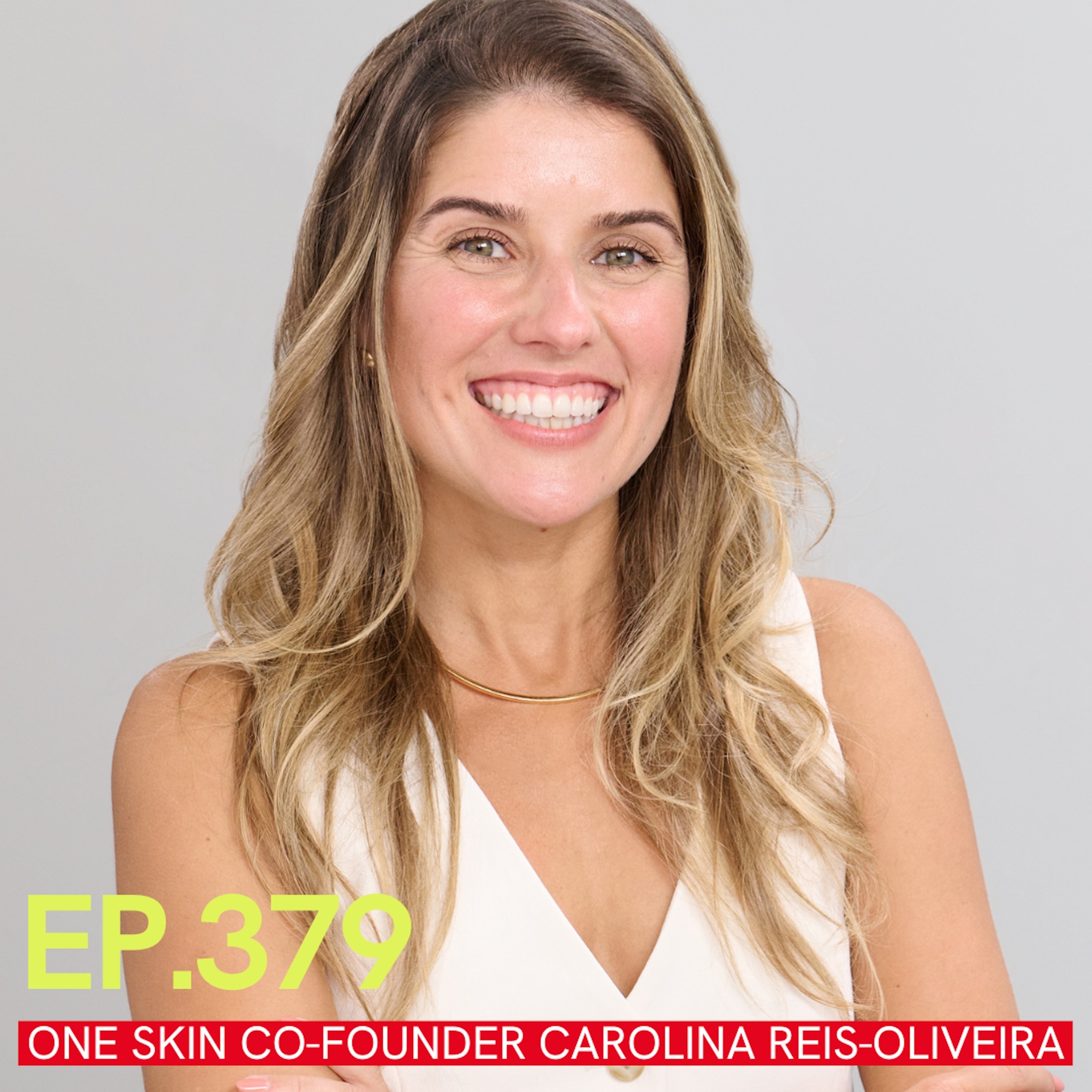
Breaking Beauty Podcast
What is “Longevity Skincare?” OneSkin Co-Founder Carolina Reis Oliveira on How-to Extend the Life of Your Skin, Peptides Vs. Retinol and The “Healthspan” Habits She Practices Herself
00:44:10
Loading summary
Transcript96 lines
- [00:01]
Unknown
The following podcast is a Dear media.
- [00:03]
Carolina Reyes Oliveira
Production.
- [00:08]
Jill Dunn
Welcome to Breaking Beauty the podcast.
- [00:11]
Carlene Higgins
All about the breakthrough people, products and moments in beauty.
- [00:14]
Jill Dunn
We're your hosts, Jill Dunn and Carlene Higgins.
- [00:22]
Carlene Higgins
Hello and welcome back to Breaking Beauty Podcast, the podcast all about the breakthrough people, products and moments in beauty. I'm your co host Carlene Higgins and I'm here with my work wife for life, Jill Dunn.
- [00:33]
Jill Dunn
Hey Carlene. And can I just say happy early Women's Day. You know it's coming up this weekend. Yes. I love how many amazing women that we talk to on this podcast. It's always an inspiration. And this week we are so pleased to be chatting all about this future is now skincare brand called One Skin. You might have seen it all over your Instagram feed. That's where I first discovered it. And this brand is actually created by four female scientists. And I'm pleased to let you know that this uninterrupted conversation is brought to you in partnership with One Skin.
- [01:07]
Carlene Higgins
Our guest today is Carolina Reyes Oliveira, Ph.D. and One Skin co founder and CEO. Carolina has earned degrees in stem cell biology and tissue engineering with a doctorate in immunology. In 2016, she co founded One Skin where she and her team spearhead research and development creating molecules that target cel aging, including their pioneering innovation, the OSO1 peptide.
- [01:35]
Jill Dunn
Yes, we're going to be learning all about the groundbreaking technology as we explore the topic of longevity. I can't get enough of this topic and that's really just all about delaying the onset of age related inflammation and diseases by targeting aging itself. And we're going to be discussing how you can foster longevity in the skin.
- [01:55]
Carlene Higgins
And we're also going to be chatting about how we can expand our health span through the smartest longevity habits that Carolina practices herself. And as always, you can find everything we discuss @breaking beauty podcast.com and if.
- [02:08]
Jill Dunn
You want to learn more and try One Skin for yourself, you can visit One Skin Co Beauty and use code BEAUTY at checkout for 15 off your first purchase. Welcome to Breaking Beauty Podcast. Carolina. So just days after this episode goes to air, it will be International Women's Day. I mean I'm still on the team of making 365 days a year International Women's Day, but we'll take this day. Okay, so prior to founding One Skin, you co founded a Brazilian biotech startup that produced human cells from stem cells. And this is, I feel like the kind of technology that makes waves and that people are kind of, you know, looking to invest in. We see big players like L'Oreal do this. So what can you tell us about that background and how it's helped inform what you're doing now?
- [03:06]
Carolina Reyes Oliveira
So we are all researching stem cell biology, tissue engineering, and one of the applications of this research is basically to grow human tissues in the lab so you can test new products or new drugs and evaluate both light toxicity and safety. And it's a very advanced technology that unfortunately, we didn't find a lot of demand in Brazil from the market, but we did find more traction from the cosmetic industry. And as you well pointed like, L'Oreal has been doing this for maybe over 20, 30 years, but very few companies have this knowledge of like, growing skins and using this skin, you know, in vitro or synthetic skins, whatever you want to call, to test their products. And we saw that the more cosmetic companies want to use this model because obviously you should not test in animals. And it is the best way to predict how a product will perform in humans. And clinical studies, human studies are always more expensive. So if you're able to validate this in the lab and get some insights if your products on the right kind of direction in terms of the benefits, so what do you expect? That's like a huge help before any, any, you know, cosmetic company. So that's how we did. We end up, like, focusing more on the cosmetic industry. And that's when we got the opportunity to come to the US in 2016. And here in San Francisco, we found this accelerator that basically help, like scientists to become entrepreneurs. So they coach, like scientists how to start a company and build, like, a sustainable business.
- [04:59]
Carlene Higgins
Wow.
- [04:59]
Carolina Reyes Oliveira
So that's. Yeah. So that's why I came to the US in 20. And then Alessandra, my other co founder, joined me later. The other two stayed in Brazil. But that's how we could keep this dream alive of like, trans, you know, translating the science and finding the right resources to carry forward and. Yeah, and that's how we actually started the One Skin. So One Skin came as an evolution of this first company, Right. Based on this, where we saw like a market opportunity and we could utilize our expertise to address that market need.
- [05:39]
Carlene Higgins
Yeah.
- [05:40]
Jill Dunn
I remember being at a L'Oreal event and seeing the grown skin as it.
- [05:45]
Carlene Higgins
Were in the petri dish. Yeah, I was there with you, Jill. We had our lab coats on.
- [05:50]
Jill Dunn
I know. Yes, that was here. But it looks very real.
- [05:54]
Carolina Reyes Oliveira
Yeah. And if you come to One Skin Lab, you can also see that.
- [05:59]
Jill Dunn
Yeah, cool.
- [06:00]
Carolina Reyes Oliveira
Yeah, it's.
- [06:01]
Carlene Higgins
It's amazing. It's amazing. That was a real epiphany for me seeing that because I think for so long not to get too much into L'Oreal, but so many people just assume that they were testing on animals because there's such a large conglomerate company. But in fact they had, you know, the similar reach research to what you were doing and they just bought it out. They were like, they just brought it in house, you know, so they've been doing that for a very long time. So that, but that's amazing. This, I love this idea of like innovation and entrepreneurship among, among scientists. It actually helps to kind of democratize so other people have access as well. And, and it's interesting what you were saying about the, the incubator that you know, you can definitely see this rise in science backed skin care and you know, who knows what could be next. One of the things when I was doing research on one skin that really stood out to me. Of course I was reading the entire website. You have an extensive blog by the way on longevity. But it says our journey began with a simple question. Are any of the so called anti aging products on the market actually effective? To our surprise, most didn't promote real rejuvenation. And evaluating them in the lab, we discovered some were even harmful at the cellular level. So tell us what that means more specifically, which ingredients would you personally never apply?
- [07:28]
Carolina Reyes Oliveira
Yeah, so that was very interesting. In the beginning of our journey we came up with this hypothesis. Okay, everyone is interested in anti aging. Are the products out there actually rejuvenating the skin? And one of the things that we could do to measure this rejuvenation effect is to measure what we call the skin's biological age. What we, we say like okay, how functional this skin is, how healthy is the skin more so than the chronological age of the skin. We all have our own biological age that's different from our chronological age and is largely influenced by our lifestyles and habits. So what we could do, we grow a skin in the lab. We can measure, hey, by reading the DNA of the skin, we can say this skin is like 40 years old. And then we can test any product and we can measure if a given product would reduce the age to 37 or maybe would accelerate the age of the skin. So we started testing products and very fast what we found, as you said, that the most product could not reduce the age of the skin. Some of them could make your skin, you know, a little thicker in terms of the epidermal barrier. But they were the age of the skin, they were not actually reducing the age. And some of Them were accelerating the age. And what, and what we saw is that these ones that were accelerating the age, like we could see from a histology analysis basically like a tissue transversal kind of section of the skin that the cells started like basically to degenerate. We saw a lot of inflammation happening and, and the, and the epidermal or the skin barrier that should be thicker was getting thinner. So visually, and I can show you both the histologist, it's very clear what is like a beautiful healthy skin and what is skin that's you know, being affected by the toxicity of some ingredients. It's hard for me to name like specific ingredients.
- [09:38]
Carlene Higgins
I was going to say name them.
- [09:39]
Carolina Reyes Oliveira
Yeah, name them.
- [09:40]
Carlene Higgins
We need to know.
- [09:42]
Carolina Reyes Oliveira
Yeah, I mean there are some products of some brands that we, we tested consistently and they produce this kind of toxic effect. And some are like the best selling anti aging but like the old school brands.
- [09:57]
Carlene Higgins
Okay, well you don't have to name the brands but are there certain ingredients that you would never apply because you actually think that it's more doing more harm than good?
- [10:09]
Carolina Reyes Oliveira
Yeah. So in the end it's, it's a combination of like the ingredients, the concentrations and so for example there are certain preservatives that are like not as I would say safer for the skin. That you know, obviously we know fragrances, some essential oils. For me again, evaluating specific ingredients, it's, it's a little hard. What we usually do is see partner with other companies that do this job of like really evaluating the concentration of certain ingredients and basically claiming or if the product is safe or not safe. Like we work with other companies like the skin safe products that basically evaluate the concentration of heavy metals, things like that that can actually, you know, causes some toxicity. And we were also approved by the Eczema National Eczema foundation. And there are other EWG is one that you can look more on than ingredient level. It's not, none of them are perfect. Some, you know, obviously some people criticize and but I think for us a lot of times we see a correlation of some of those products that are claimed not safer from those institutions. And when we test in the lab we see that the skin is actually being affected by the toxicity. And even you know, Sephora has like the clean ingredients list. Like this is already a good, I would say guidance. So I know that's hard for the consumer. We can you know, validate this in the lab. But I would use those sources as a guidance. I would say that in the end it's all you know, that Those makes the poison.
- [12:02]
Jill Dunn
So it sounds like it's more about the recipe of how the ingredients are put together or the formula is put together versus one bad guy ingredient.
- [12:11]
Carolina Reyes Oliveira
Exactly. And that's when things get really tricky. And I can give you an example. When we are developing a formula, we have our hero ingredient, that's our peptide that we're going to talk about. But then we start adding new ingredients and we, we add like 1, 2, and we testing these things. And a lot of times, like, those two don't combine necessarily well with like our peptide. So to find synergy, it's really hard. A lot of times when you add more active ingredients, they are basically like neutralizing itself. And if you add too many actives, you can kind of over cause some overreaction on your skin. So that's, to me, when it gets really tricky for formulators out there that have, don't have like these models to validate if all of those actors that actives that are, they are adding is actually bringing more benefits or if eventually they are, you know, just potentially causing harm because it's too many of them. And I think we have seen this in the market with like, schemes that are, you know, everyone is getting more sensitive because the people are overloading their skin with too many products. And, and then people end up like, yeah, not having like a healthy barrier. Yeah.
- [13:37]
Carlene Higgins
Okay, let's talk about a rising buzzword. Senescence. Now, the first time I heard this word was at a Chanel event in Paris. It was about a year ago. And that's when I learned that all, you know, a lot of skin care scientists, prestigious universities, are currently studying senescence. And that's something we're starting to hear more about in the lexicon of skin care. So in layperson's terms, can you explain what senescence means?
- [14:07]
Carolina Reyes Oliveira
Yes. So senescence come from like the word senil that means old. So a senescence cells means like an old cell. And usually a cell has like mainly 3 fates. Like this cell will divide and usually divides like around 50 times. And eventually when it reaches like this what we call like a limit in terms of divisions because the cells is, it's already very damaged. The cells should die and that or our body should basically reabsorb this cell because it's not function anymore, or some of the cells entering this senescent state that they can escape this death, you know, pathway, and they can linger around and, and, and when they become senescent based, basically what happened is that they are not functioning functional anymore. So in the Skin, for example, they are not producing collagen. They are not proliferated. They don't divide anymore. And on the flip side, what also happens is that they start secreting inflammation. And the inflammation that's coming from this, you know, we also call them zombie cells because they are in this state, like half dead, half life alive. This inflammation that they secrete induce the cells around to become senescent as well, to age faster. So in the end, we like to compare this senescent cell with like a rotten apple in a bunch. You know, that senescent cells is spoiling the good cells around, and that's. That is what accelerates aging and, and causes, like, the signs of aging, the tissue dysfunction. And in the skin, the more senescent cells that we have, the more fine lines, wrinkles, sagging, and, you know, pigmentation issues we have. Okay, so what was the hypothesis? If we can reduce the load of these old cells in the skin, then we can make room for the healthy cells that are there to proliferate, produce more collagen, restore your barrier. And that's a targeted way to address aging because we are only affecting the bad cells. We are not disrupting the good cells. And, and, and that's a different approach than retinol and other acids work, because retinol basically works by inducing cell renewal. So basically, you know, remove the upper layers of your skin. The good and the bad cells are being renewed, but the, the senescent cells are still there in the dermal layer, meaning that this is still driving aging underneath. So it can promote, like, a better skin appearance in the short term, because you're basically growing a fresher, newer skin. But it's not addressing the, the cause, what's. Continue to spread the inflammation inside the skin.
- [17:14]
Jill Dunn
So it's like killing the zombie cells. So.
- [17:17]
Carlene Higgins
Yeah, it's almost like a detox, right?
- [17:20]
Carolina Reyes Oliveira
Yeah, exactly. And, and our body is able to do this when we are young and even, like, process, like autophagy. No, fasting is a good way that you can induce your body to recycle your old cells, your old proteins. But if you can help your own skin with, like, you know, additional help to do this recycling process, that's like the best way that you maintain your skin healthy, younger, functional.
- [17:49]
Carlene Higgins
Right.
- [17:50]
Jill Dunn
Amazing.
- [17:51]
Carlene Higgins
I've learned something, Carolina.
- [17:54]
Jill Dunn
You studied more than 900 peptides over five years to develop your key ingredient. So can you explain how a peptide can have this effect? And what makes the peptide that you use so special in the field of. In the pool of 900?
- [18:11]
Carolina Reyes Oliveira
Yeah. Interesting enough about these zombie cells. They don't only accumulate in our skin, they accumulate in our whole body and, and for example, they accumulate in our joints and they are associated with like osteoarthritis. So what we saw in, you know, in the longevity field back in 2016 when we started One Skin, is that several companies were trying to decrease the amount of these aging cells, zombie cells in different tissues, to prevent or address aging related diseases. And we thought, okay, why no one is trying to use this approach, reduce these zombie cells in the skin to prevent the skin aging. That's when we decided to restore research new peptides that would have this impact, specifically reducing the load of these aging cells in our skin. So we tested this nine hundreds and basically we applied, you know, 900 peptides and, and this took us like four years. It's a very extensive, you know, research process in contact with these, you know, old cells, senescent cells. And we measured which peptide could have the greatest effect in reducing the amount of those aging cells. And OS1 was the one that outperformed all of them. So OS1 basically reduces around 40% of the load of these aging cells in the skin. Up to 40%. It varies. And what it does internally is again allows the healthy ones to replicate. It induces collagen production to a similar level than retinol does, but it does not induce any inflammation. It actually reduces inflammation. So we measure a lot of like inflammatory markers, for example, IL6, IL8, IL1, and we see that these levels are reduced. And we also measure like aging genes. And we also see that this aging genes are being downregulated. So it's a very interesting result to show that, okay, by having fewer old cells, we are now like downregulating aging down, regulating inflammation. And we are upregulating collagen, hyaluronic acid. And again, naturally you're going to have like a better looking skin. But just because we are addressing the main cause of this aging process, and the last piece that I'll share in terms of like, we measure the age reduction and we could see that we reduced age in 2.5 years by treating the skin with this peptide. And this was in a lab study, so was over five days. It's obviously a very controlled condition, but it is the first time that a molecule is measured to be able to reduce the age of the skin. And even retinol was not yet validated, at least from this standpoint. Analysis of like measuring the molecular age to be able to reduce the age of the Skin, which is very exciting. I think it shows that, yes, aging is malleable and if you know where you can intervene, you can actually achieve that biologically younger skin.
- [21:44]
Carlene Higgins
Yeah.
- [21:45]
Jill Dunn
So the, the skin that you were testing on, are you able to engineer it in such a way that you, it starts out at 45 years old and then at the end you're like, oh, it's 43 or like.
- [21:56]
Carolina Reyes Oliveira
Yeah. So for this experiment we used actually biopsies from older individuals. So these ones that we used were actually like 75 years old and after or 71 actually this is published in our peer reviewed journal, it's available on our website. So the 71 year old scan after the treatment was like 68.5. So we could measure this, use an algorithm that we also published and basically quantifies this molecular age. Save me.
- [22:38]
Jill Dunn
How do I balance my hormones?
- [22:40]
Carolina Reyes Oliveira
I'm always tired in the morning. I'm worried that I can't get pregnant.
- [22:43]
Unknown
Do you ever wish someone could just tell you what to do to get your health to the next level? You know, whisper some magical and trustworthy support in your ear and never make you feel shame for not having all the answers? Well, that's my job. Hi, I'm Dr. Sarah Zoll. My new podcast, Treated, is going to help you take your health into your own hands. Each week you will leave with the tools that you need to heal your mind, body and soul. Join me, Dr. Sarah, every Wednesday. Untreated.
- [23:31]
Carlene Higgins
Now, peptides have been around for a long time. We've heard of this ingredient, skincare, I mean, since I was a baby beauty editor. But it has become more buzzy of late. So as a consumer, other than just buying one skin, like whether it's a legit formula or not, you know.
- [23:50]
Carolina Reyes Oliveira
Yeah, I would say, I mean there is a ton of peptides out there. And for those, I, I imagine most of your audience knows, but like for those who don't, doesn't know peptide, it's this small chain of amino acids. So it's the building blocks of a protein. And the way that can, they can work in products like cosmetics, they can function as a messenger, so they can get inside the cell or the skin and they can activate the cell to behave in a certain way. In our case, for example, our peptide induces like DNA repair pathways and other pathways that are going to reduce inflammation and so forth. So I think the difference is compared to our peptide and others out there, I think for a lot of the peptides out there, you need to understand first, are they going to penetrate the skin, depending on the size of this peptide, that they may not even get into the skin. Second, is the peptide stable? Can the peptide, you know, be active after long periods? You know, inside the product on the shelf, you know, different temperatures, different ph stones. And the only way that I think you can know that is saying, like, okay, is there any research available? Can you ask, like, the brands, even if they don't have publish on their website, because most don't maybe, you know, email them and ask, hey, do you have any data showing the efficacy of this peptide? And most of them, I would say, will you share the information from their suppliers? But when you add the peptide inside the formula, again, you needed to test it again because you needed to see if in that specific formula, if the peptide is going to continue to be active after a certain period of time. So I'm. I don't know if I'm helping, but I think the best way is to go to the website and try, hopefully try to see some data, some research, and if they don't have, you know, try to ask, email them directly.
- [25:56]
Jill Dunn
Well, before we move on, I need to ask you about the Bodi topical supplement, which has been served to me in an Instagram ad. And the person who is. It's like a before and after, and it's one of those things where it slides over and currently. And I think you saw it as well, Carlene.
- [26:11]
Carlene Higgins
Yeah, yeah, I hit the DMs. I sent it to Jill, and I was like, is this real life? Because on the one side, it's so creepy and wrinkly.
- [26:20]
Jill Dunn
Like, it looks like my mom's arm.
- [26:22]
Carlene Higgins
No offense to anyone, but it does look like the woman's arm is, you know, probably like 80 or something like that. Like, very creepy. And then the thing slides and it's.
- [26:30]
Jill Dunn
Like, yeah, you know, and then it.
- [26:32]
Carlene Higgins
Slides over and it looks like my arm. And I'm like, excuse me? And I said. I was like, is this real?
- [26:40]
Carolina Reyes Oliveira
I know. And we can share because she posted so this. She's a mom of an influencer. And basically this influencer was doing a review of their products of I think was 2024. And they both were sharing, like, kind of organically, like, why. Which products that are, you know, it's working for you. And her mom basically, you know, shared this before and after, and. And she's like 65. And I was also very shocked, like, with the difference. And we have seen with the body, similar results in terms of, like, helping crepey skin. And it's basically. And it's also after five months of treatment. So it's not nothing something that you, you can overnight. It's not overnight.
- [27:28]
Carlene Higgins
Right, right.
- [27:28]
Carolina Reyes Oliveira
But, but the are obsessed and many people that are going through this menopause phase that your skin start to get like more thin and creepy again. It contains the peptide, it has a lot of ceramides and it has other ingredients that can help with like the skin thickness, the epidermal layer. We have many a lot of data showing that improve the thickness of the epiderms and improve the barrier of the skin. And it's a beautiful lotion because again absorbs really well. It's very hydrating and it's not greasy at all.
- [28:07]
Carlene Higgins
So yeah, I saw that picture and I was like, I'm putting it on my face.
- [28:11]
Carolina Reyes Oliveira
Yes.
- [28:11]
Carlene Higgins
That's. I mean I'll put it all over my body, but I'm also putting it on my face. What's next from the brand? What, what's around the corner?
- [28:21]
Carolina Reyes Oliveira
Can you tell us? So we, I mean there's so many exciting things coming up this year. We have like three exciting launch. Unfortunately I cannot them yet. But I, yeah, we have been, we have been doing so much research. There is a new category that we are really excited to, to bring to our community. Yeah, I. It's coming, it's coming.
- [28:47]
Carlene Higgins
Keep us on your mailing list.
- [28:48]
Carolina Reyes Oliveira
Yes.
- [28:49]
Carlene Higgins
We need to talk to you a little bit about some of your brand positioning and how you've, you know, identified yourselves which is as longevity scientists. And we know that this is just a huge term in terms of where we're going in not just skin care, but healthcare and, and tech and all kinds of things. So given that you've, you've studied this and this is the whole idea to be clear about the quest for extending a person's health span. You've studied immunity, you're into the concept of longevity. What do you think legitimately could be just around the corner for us as a human race?
- [29:28]
Carolina Reyes Oliveira
I study stem cell biology and one of the areas that I really think that's exciting right now it's like PRPs or plated rich plasma that you can, if you have like a healthy, you know, organism. And so you PRP basically means that you draw your blood, you spin it down and the plasma that's rich like in growth factors, you can inject in a certain area that you the to promote healing. So for example, I have some knee kind of injury and then I can, I did already like PRP injections in my knees and that helps like speed up like the healing process. And you could do the same with stem cells. The stem, stem cells you, it's not as simple as just drawing your blood.
- [30:17]
Jill Dunn
So.
- [30:17]
Carolina Reyes Oliveira
And in the US is, is still not very accepted in clinics. So some people go to, you know, go out of the country to do those treatments. But we know that stem cells have this, you know, power of secreting a lot of like anti inflammatory and regenerative, you know, factors. So I think this is very fascinating that we can already start to using this today. And I don't think many people know about that. Right. How many people you know around the earth, you know yourself that has trouble like with like a movement. Right. Like they, they cannot. And, and these are things that we should be able to avoid if we start like preventing those injuries early on. Other technologies that I think it's, it's interesting is about either cancer detection that early on or like the full body MRI similarly.
- [31:18]
Carlene Higgins
Agree.
- [31:19]
Carolina Reyes Oliveira
Yeah. So these are things that are more on the preventative side that okay, some of them are still expensive but all of them are getting more accessible in terms of you know, being available to, to regular customers. I think understanding your biological markers in a deeper way. You know there are many companies that are evaluating this today. So you draw your blood and you assess like a hundred biomarkers and you can get a reading sites. So I think this is the near term benefits that we are already seeing from the longevity kind of research. Yeah, I think long term we will see things that are more, that have a higher, you know, intervention in our bodies. But then you need this safety to be, you know, what takes a little bit of time.
- [32:16]
Carlene Higgins
Yeah. Now have you been watching the Netflix documentary Don't Die the Man who Wants to Live Forever?
- [32:23]
Carolina Reyes Oliveira
I have not watched it yet but, but I'm very familiar with Brian Johnson and obviously he's a well known figure in this longevity.
- [32:33]
Carlene Higgins
Yeah. I was curious what you thought about it. I, I've, I'm about halfway through and he's spending about 2 million a year, you know, tracking his every waking minute of how he can optimize his health span to, in this attempt to live longer or live forever. So what do you think? Like what do you by the time the next century rolls around, how long do you think we're going to be able to live for?
- [32:57]
Carolina Reyes Oliveira
Yeah, and that's honestly one of the areas that I personally don't think too much about because as, as a scientist in, in the longevity space, our goal is to live as, you know, healthy as long as possible. So you could live until 80, 90, 100 or 120. As long as you are compressing the time that you are sick or debilitated, I think naturally as you extend the healthy span, that's the time that you're healthy, eventually you'll be extending lifespan. I personally don't really, you know, think much about like how long I want to live. As long as like I'm healthy, I'm like fine. And that's my, my main goal. You know, going back to Brian Jones. I think what he's doing is interesting from, from my standpoint that okay, he wants to measure, he wants to test every single approach that's out there and eventually he wants to share like what worked for him and, and basically share the knowledge. And obviously now he's coming up with products and you know, there is not only, but I think in many ways he's doing, I'd say some kind of service in, in doing this himself in terms of like testing and learning and a lot of the information is out there, you know, available for people. Obviously most humans will not go through the journey that he is going through in terms of how rigorous is his, you know, life and, and lifestyle. But I, I think, you know, some of the takeaways or the, of the learnings are applicable to the regular consumer, the regular person out there. And I think it's, it's helpful. I think it's, it's, it's good information that can help us in, in some ways to, to, to learn more. Like what interventions could already, you know, be implemented by, by a regular person. And even him, he started like really rigorous and now he's basically, you know, getting more flexible because that's not sustainable. Right? No one can live that life like forever. So I think obviously is a way that he got it to attract a lot of media attention and etc. Honestly, I see in terms of like positive whatever learnings he can share that eventually can be helpful for other people. I, I think that that talent, I.
- [35:31]
Carlene Higgins
Think longevity, it's this next era of wellness. And you know, what we've seen in wellness though is that there's as many hoaxes as there are science backed ideas. And as we enter longevity and we start talking about things like stem cell PRP and monetizing and there are some ideas that like aging is a disease I've often seen at these longevity conferences which I don't know if I personally agree with. So is there a topic around longevity that you think might be more myth than, than fact based or that could be a Watch out for our listeners.
- [36:09]
Carolina Reyes Oliveira
Yeah, I would say that in general, obviously, you know, longevity is becoming a hot trend and a lot of people can take advantage of that. And as a longevity scientist, the main question that we have or the way that we distinguish longevity from wellness, it is, it needs to be evidence based, it needs to be really data backed. So I think anyone that's claiming to be doing something that it's improving longevity, you needed to have a way to prove that, ideally with like a clinical studies, but at least like obviously in vitro studies as well. I think the question of aging being considered a disease, I think it's more to have FDA potentially allowing you to have trials for aging. So for example, if I want to get my product FDA approved, there is no way because the skin aging is not a condition. Right. So. And I don't know if it should be, honestly, I know that this would bring a lot of implications. But we have all the data and the ability to get this be approved by fda. If aging was skin aging was a condition that we want to show that we can treat. I don't know if it's the best path for the, for, for the consumer and society. I don't think we needed to consider aging as a disease. I think aging is still this beautiful process and what we want to treat is the health decay that's associated with aging. Right. And unfortunately right now they are both connected. When even we talk about aging at a cellular level, like a cell that's aging, it's becoming not functional anymore. So it would require a really, I would say, you know, a big discussion in terms of like the cultural understand of aging and if there is a better term. But you know, overall I think my main message is it's about like make sure that if, if there is a longevity treatment being like advertised, ask for the, the data behind the evidence behind it to make sure that it's worth investing.
- [38:32]
Carlene Higgins
Got it. Our last question for you. What healthspan practices beyond skincare do you live by as your personal longevity routine?
- [38:41]
Carolina Reyes Oliveira
Yeah, I'm excited to be part of this, you know, world that I'm so passionate about because I get to see some of these new things and I, I, you know, I try myself. I, I think I would definitely start with the basics which we know that the ones that the most impact our health, which are basically free right now, is kind of sleep, exercise, a diet that is, you know, more anti inflammatory, you know, feel or no processed food as much as possible, controlling stress. You know, that's a one challenging one for Me running a company, I've done other things that are a little more biohacker style, like using a glucose monitor to really understand which foods can impact my glucose. And, and that these are those small things that in the end can lead to insulin resistance, but we have no idea because they are so small on a daily basis. And if you understand this, you, you, you can adjust your diet. You know, I, I bet you are familiar with the glucose revolution and there are so many like, interesting hacks there that can already help you. I'm also about like, you know, measuring again my biomarkers and you know, and I haven't done the, the full body MRI yet, but I want to do that. But for me, as much as possible, I try to measure things and then try to see, even with sleep, for example, like which kind of supplement I love, like my wolf and I have an eight sleep and like which kind of supplements or practices can help, you know, me to improve my rem, my deep sleep. Yeah, I, I would say stick with, like, if you stick with the basics like exercise and, and diet and, and I think on exercise, you know, there's this, we needed to be stressing our body a little bit. So make sure that you do not necessarily the heat, you don't need to go all the way to the kind of high intensive interval training, but you need that you push your body like a few times a week in, in inducing what's gonna promote like the, the mitochondria like renew. And your huberman talks a lot about this for those who are interested. But those are, you know, quick things that you can do on your routine. That helps. And I try to keep them on my, my, you know, my, my daily basis. And, and I think the last one is meditation that really helps me to be grounded and, and, and make sure that I don't, I'm not overreacting. When kind of, you know, a challenge situation comes up, it's always about the basics.
- [41:40]
Jill Dunn
You can do all these tests, you can go for the mri, it doesn't actually matter. They're going to tell you exercise, sleep, don't drink, eat as a few processed foods as possible. Get your body moving. But the truth is people are like boring. Don't want to hear it. What is the supplement?
- [42:00]
Carlene Higgins
I want to know the supplement they want.
- [42:02]
Carolina Reyes Oliveira
They want the silver.
- [42:05]
Jill Dunn
Magic bullet, right? And it's like, that's very North America.
- [42:10]
Carlene Higgins
Yeah, right.
- [42:11]
Jill Dunn
But it's not necessarily, it's like, like that ounce of prevention is, you know, worth the pound of cure for sure. So we really appreciate your time today, Carolina. It's such a fascinating topic and conversation and just a friendly reminder for our audience. You can visit One Skin.co Beauty and use code BEAUTY at checkout for 15 off your first purchase. That's O N E S K I N.co Beauty and use code Beauty at checkout for 15 OFF your first purchase. And we'll also try to link to that before and after picture that we were talking about.
- [42:46]
Carlene Higgins
Yeah, we'll put it on our website.
- [42:48]
Jill Dunn
Yes. Thank you so much.
- [42:49]
Carlene Higgins
Thank you Carolina.
- [42:51]
Carolina Reyes Oliveira
Thank you Jill and Caroline. This was a wonderful conversation.
- [42:56]
Carlene Higgins
Thanks for listening. You can find details on every product mentioned in today's episode, along with our exclusive promo codes on our blog@breakingbeautypodcast.com While.
- [43:05]
Jill Dunn
You'Re there, be sure to sign up for our newsletter. Every episode will be delivered directly to your inbox so you won't miss a.
- [43:11]
Carlene Higgins
Single thing and get social with us. Let us know what you think of the episode. You can follow us on Instagram at Breaking Beauty Podcast and did you know.
- [43:19]
Jill Dunn
We also have a private Facebook group? Just search Breaking Beauty Podcast chat room.
- [43:24]
Carlene Higgins
You can even leave us a voicemail at any time with questions or feedback at 1-844-227-0302.
- [43:31]
Jill Dunn
And don't forget to subscribe to us wherever you get your podcast fix. Spotify, Stitcher, Google Podcasts and Apple Podcasts where you can show us some love by writing a review.
- [43:41]
Carlene Higgins
See you next Wednesday.
- [44:00]
Jill Dunn
Please note that this episode may contain paid endorsements and advertisements for products and services. Individuals on the show may have a direct or indirect financial interest in products or services referred to in this episode.