
Podcast
Breaking News To Trading Moves
Hosted by Shirish Agarwal · EN
Breaking News to Trading Moves delivers fast, actionable trading ideas straight from the headlines. Each episode cuts through the noise of daily news and translates it into clear short- and long-term trade setups you can actually use. Whether it’s earnings surprises, policy shifts, or market-moving events, you’ll get sharp insights on which stocks, sectors, and themes to watch.
Perfect for traders who want to stay ahead of the market without wasting time, this podcast gives you the edge to turn breaking news into smart trading moves.
150episodes
Episodes
Newest firstAll episodes

Berkshire Hathaway and the American Housing Revaluation
Jun 100:13:20Tap to summarizeBerkshire Hathaway agreeing to buy Taylor Morrison Home Corp for $6.8 billion in cash, valuing the deal at about $8.5 billion including debt. Berkshire is paying $72.50 per share, around a 24% premium to Taylor Morrison’s previous close. This matters because Berkshire is putting capital into US housing while rates and affordability remain concerns.WinnersBerkshire and Taylor Morrison deal namesTaylor Morrison is the clearest winner because the buyout price gives shareholders a strong cash premium. Berkshire may also benefit if it can build a larger housing platform across homebuilding, manufactured homes, building products and real estate services. The reason this group may see impact is that Berkshire has the patience and cash to invest through a multi-year housing cycle.Names: $TMHC (Taylor Morrison), $BRK.B (Berkshire Hathaway), $BRK.A (Berkshire Hathaway)Large public homebuildersLarge builders could see positive sentiment because Berkshire’s move may make investors revalue scale, land control and balance sheet strength. Lennar, NVR, D.R. Horton and PulteGroup are not being acquired, but they operate in the same broad industry. The reason this group may see impact is that a major buyer is putting a valuation marker on homebuilding.Names: $LEN (Lennar), $NVR (NVR), $DHI (D.R. Horton), $PHM (PulteGroup)Housing supply chain and home improvementA housing deal can also influence suppliers. Builders need lumber, insulation, roofing, fixtures, paint and repair products. Home Depot and Lowe’s may be watched because housing turnover and new construction can support renovation spending. The reason this group may see impact is that every new home creates follow-on demand across materials and retail.Names: $BLDR (Builders FirstSource), $OC (Owens Corning), $HD (Home Depot), $LOW (Lowe’s)LosersRival builders facing a stronger competitorThe same deal that improves sector sentiment could also create competitive pressure. If Taylor Morrison becomes part of a Berkshire-backed housing platform, rivals may face a competitor with deeper capital, a longer time horizon and more flexibility on land, incentives and growth. The reason this group may see impact is competition for buyers, land, labour and margins.Names: $DHI (D.R. Horton), $PHM (PulteGroup), $TOL (Toll Brothers), $KBH (KB Home)Rental housing stocks if investors rotate toward buildersRental housing names could be affected if investors rotate money from rental REITs into homebuilders and supply-chain stocks. The reason this group may see impact is relative positioning. Rental stocks often benefit when affordability is weak, but builders can benefit if investors start looking ahead to a better housing cycle.Names: $INVH (Invitation Homes), $AMH (American Homes 4 Rent), $EQR (Equity Residential), $AVB (AvalonBay Communities)Smaller or more rate-sensitive housing namesSmaller housing companies may have to prove they can compete in a market where scale is becoming more important. If capital, land access and buyer incentives matter more, smaller names could face investor scrutiny.Names: $MTH (Meritage Homes), $MHO (M/I Homes), $SKY (Champion Homes), $BZH (Beazer Homes)#StockMarket #Trading #Investing #DayTrading #SwingTrading #HousingStocks #Homebuilders #BerkshireHathaway #TaylorMorrison #RealEstateStocks #MortgageStocks #ConstructionStocks #StocksToWatch #MarketNews
Transcribe →
Patience is overrated in stock trading if you are waiting for perfect setups.
May 3000:19:22Tap to summarizeWelcome to Breaking News to Trading Moves. In this episode, we explore why waiting for the perfect stock trading setup can become one of the most expensive habits in the market. Patience can protect traders from low-quality entries, but when it turns into hesitation and fear of execution, it becomes a serious weakness.The core idea is simple: markets do not give x-ray clarity. A broken bone can be diagnosed with a clear scan. A chart cannot. In trading, the picture is always slightly unclear, the data is incomplete, and uncertainty is always present. That is why many traders can see a valid setup, understand the risk, know the plan, and still freeze when it is time to act.Why Traders FreezeThe amygdala can treat financial decisions like physical danger. Cortisol rises, the analytical part of the brain becomes weaker, and the trader is pushed towards doing nothing. That is why a trader may keep waiting for one more confirmation, one cleaner candle, or one perfect condition that never appears.Patience helps you avoid random trades. Perfectionism can become a way to avoid responsibility. If you keep waiting for a flawless setup, you may not be disciplined. You may simply be protecting yourself from being wrong.The Cost of WaitingSitting in cash or refusing to take valid trades can feel safe because no active decision is being made. But the market does not reward endless delay. Missed compounding and missed opportunities can make inaction expensive.The trader who keeps waiting for the perfect market environment may perform worse than the person who takes imperfect action with a defined plan.Perfect Setups Do Not ExistMarkets are messy. A trade can meet the rules and still feel uncomfortable. There may be a suspicious wick, a conflicting indicator, an unclear higher time frame, or a news headline creating doubt.Aggressive entries may offer better risk-to-reward but lower win rates. Conservative entries may provide more confirmation but worse prices. Every entry style has a trade-off. There is no version of trading where doubt disappears completely.Systems, Psychology And ExecutionMechanical rules can help, but they do not remove the human problem entirely. Automated traders can interfere with their own systems through manual overrides and fear of live conditions.That is why this episode focuses on a probability-based mindset. A single trade is not a verdict on your intelligence. It is one event in a larger series. Professional execution comes from accepting that you do not need certainty. You need a repeatable edge, defined risk, and discipline.Key LessonsPatience is useful when it keeps you away from bad trades, but dangerous when it becomes an excuse for never acting.Waiting for perfect setups often leads to missed trades, over-analysis and emotional paralysis.Your brain may treat market risk like physical danger, causing hesitation even when the setup is valid.A trading plan must define entry, exit, risk and emotional neutrality before the trade begins.The goal is not to eliminate uncertainty. The goal is to act intelligently despite uncertainty.#StockMarket #Trading #Investing #DayTrading #SwingTrading #TradingPsychology
Transcribe →
Replimune gets another FDA shot: what it means for biotech traders
May 3000:15:02Tap to summarizeReplimune’s RP1 is being developed in combination with Bristol Myers Squibb’s Opdivo for advanced melanoma. The FDA had previously declined to approve the therapy, mainly due to concerns around the evidence package, including reliance on a single-arm study without a control group.Now, Replimune says the FDA has agreed to treat the resubmission as an urgent matter and prioritise the review once received.For traders, the key point is simple: when a biotech company gets a second or third chance with the FDA, the stock can reprice quickly because the market is no longer valuing only the failure scenario.But this also brings risk. Biotech stocks often move on regulatory language, trial design, analyst interpretation and FDA timing. A positive pathway can create momentum, but it does not guarantee approval.WinnersDirect oncology catalyst winnersReplimune is the most direct winner because RP1 is its key asset and the FDA resubmission path gives investors a fresh regulatory catalyst. The sharp move in $REPL shows that traders are already repricing the probability of approval.Names: $REPL (Replimune), $BMY (Bristol Myers Squibb)Melanoma and cancer immunotherapy namesThis FDA development may improve sentiment around companies working on difficult-to-treat cancers, especially those using newer approaches such as personalised cancer vaccines, cell therapy or immune-based treatments.Names: $MRNA (Moderna), $IOVA (Iovance Biotherapeutics)Small-cap biotech and FDA catalyst stocksWhen the FDA appears willing to reopen a path for a previously rejected therapy, it can lift risk appetite across small and mid-cap biotech. These stocks often trade less on current earnings and more on future approvals, trial data and regulatory outcomes.Names: $SRPT (Sarepta Therapeutics), $VKTX (Viking Therapeutics)LosersCompeting melanoma treatment franchisesThis group is complicated because $BMY can appear on both sides. It may benefit from RP1’s combination with Opdivo, but broader melanoma competition can also pressure existing treatment franchises if new combinations shift market share over time.Names: $MRK (Merck), $BMY (Bristol Myers Squibb)Biotech short sellers and bearish FDA-risk tradesThese are ETFs, not individual companies, but they are USA-listed and often used by traders to express a view on biotech risk appetite. If Replimune’s news encourages investors to chase beaten-down FDA catalyst names, bearish positioning in biotech could come under pressure.Names: $XBI (SPDR S&P Biotech ETF), $IBB (iShares Biotechnology ETF)Cash-burning biotech names without clear FDA pathsWhen a company like $REPL gets a renewed FDA pathway, capital may rotate toward biotech names with clearer near-term catalysts. That can leave weaker cash-burning names behind, especially if they do not have obvious regulatory events, strong balance sheets or near-term data readouts.Names: $BLUE (bluebird bio), $FATE (Fate Therapeutics)#StockMarket #Trading #Investing #DayTrading #SwingTrading #BiotechStocks #HealthcareStocks #FDAApproval #FDA #Oncology #CancerTreatment #Melanoma #Replimune #REPL #BMY #MRNA #IOVA #SmallCapStocks #CatalystTrading #PharmaStocks
Transcribe →
The problem is not fear in stock trading, it is fear at the wrong time.
May 2900:19:02Tap to summarizeMost retail traders believe they lose money because they lack knowledge, don't understand technical analysis, or fail to follow the latest market news. The truth is much deeper. The biggest challenge in trading is not fear itself—it is experiencing fear at the wrong time.In this powerful discussion, we explore one of the most important debates in trading: Is long-term success driven by psychology and emotional mastery, or by understanding market structure, probabilities, and liquidity?Markets are not simply numbers moving on a screen. They are a reflection of human behavior. Every candle, every breakout, every stop hunt, and every trend is influenced by fear, greed, hope, confidence, and uncertainty. Traders who fail often react emotionally, while successful traders learn to combine discipline with a proven edge.Key LessonsSuccessful trading is not about predicting the future. It is about managing risk, understanding probabilities, and consistently executing a strategy with an edge.Many traders search for a perfect indicator, a secret strategy, or a magical formula that guarantees profits. However, markets do not reward certainty. They reward preparation, adaptability, and disciplined execution.One of the most common mistakes traders make is allowing emotions to override their rules. Fear causes traders to close profitable trades too early. Hope causes them to hold losing trades too long. Greed encourages overtrading. Impatience leads to poor entries and unnecessary risk.Professional traders understand that no single trade matters. What matters is the outcome of a large sample of trades executed according to a proven process.What You'll Learn✔ How market psychology influences price movement✔ Why liquidity is essential to understanding market behavior✔ How institutions interact with retail traders✔ The importance of probabilities over opinions✔ Why emotional control is a competitive advantage✔ How risk management protects trading capital✔ The dangers of chasing market moves✔ Why consistency beats excitement✔ How to build confidence through process✔ The mindset required for long-term trading successFinal ThoughtThe problem is not fear in stock trading.The problem is fear at the wrong time.Fear should help you manage risk, not prevent you from taking high-quality opportunities. The traders who succeed are not fearless. They simply understand when fear is useful and when it becomes destructive.The market is where psychology and mathematics meet. Structure provides the opportunity. Probability provides the edge. Discipline provides the execution.Master your emotions. Respect the probabilities. Follow your process.Because in the end, successful trading is not about eliminating fear—it is about learning how to act correctly despite it.#StockTrading #TradingPsychology #DayTrading #SwingTrading #Investing #StockMarket #RiskManagement #MarketStructure #Liquidity #OrderFlow #PriceAction #TechnicalAnalysis
Transcribe →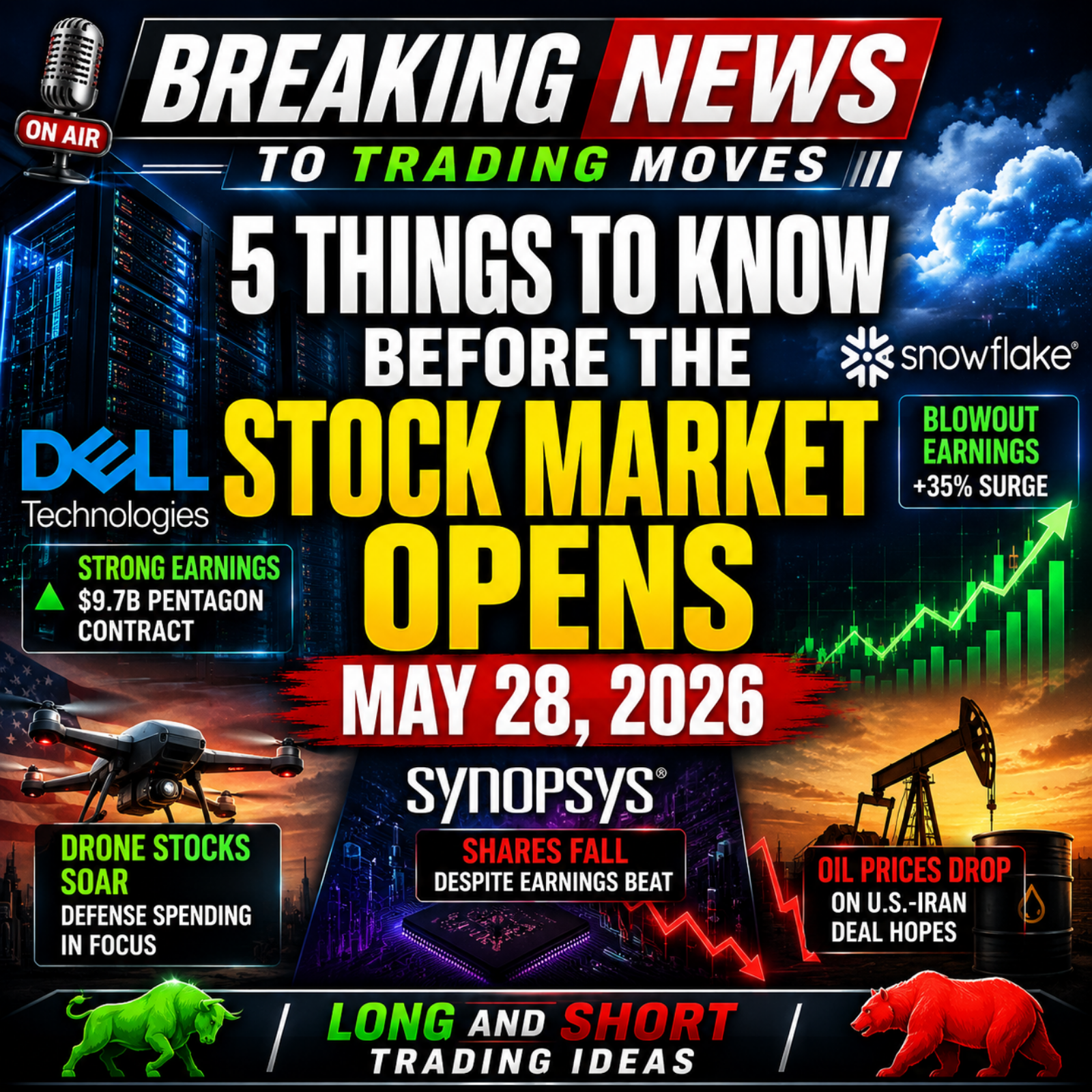
The Blueprint of Intelligence and Defense Infrastructure
May 2900:15:45Tap to summarizeToday's market conversation is being driven by a collection of major corporate headlines that reinforce several of the most important themes in the market right now: artificial intelligence infrastructure spending, enterprise cloud adoption, government technology contracts, defense modernization and the challenge of meeting extremely high investor expectations.WinnersAI Infrastructure and Data Centre EquipmentDell delivered strong earnings results and secured a significant government contract, reinforcing confidence in demand for AI servers, enterprise computing infrastructure and large-scale data centre investments. As businesses, government agencies and cloud providers continue investing billions into artificial intelligence capabilities, companies supplying the hardware required to power those systems may experience stronger demand.Names: $DELL (Dell Technologies), $SMCI (Super Micro Computer), $NVDA (NVIDIA)Cloud Software and Enterprise Data PlatformsSnowflake reported strong earnings and guidance, suggesting enterprise customers continue prioritising investments in cloud-based data storage, analytics and AI applications. The rapid expansion of artificial intelligence requires companies to manage increasingly large datasets, creating demand for cloud infrastructure and database technologies.Names: $SNOW (Snowflake), $AMZN (Amazon), $MDB (MongoDB)Defense Technology and Autonomous SystemsInvestors remain focused on drones, autonomous systems and next-generation military technologies. Growing defence budgets and increased interest in unmanned systems have supported sentiment across the sector.Names: $AVAV (AeroVironment), $LHX (L3Harris Technologies), $NOC (Northrop Grumman)LosersElectronic Design Automation SoftwareSynopsys delivered earnings that exceeded expectations, yet the stock declined sharply. The reaction highlights how difficult it can be for highly valued technology companies to satisfy investors once expectations become elevated.Investors appear concerned about future growth rates and the integration of the company's acquisition activities.Names: $SNPS (Synopsys), $CDNS (Cadence Design Systems)Traditional Enterprise Hardware ProvidersCapital continues flowing toward companies with direct exposure to artificial intelligence. Traditional hardware providers without significant AI growth stories may struggle to attract the same level of investor enthusiasm.Names: $HPE (Hewlett Packard Enterprise), $XRX (Xerox)Energy Producers Sensitive to Oil Price WeaknessReports suggesting reduced geopolitical tensions contributed to lower oil prices.While lower energy costs can benefit many industries, large oil producers often face revenue pressure when crude prices decline.Names: $XOM (Exxon Mobil), $CVX (Chevron)Key Trading TakeawayThe biggest message from today's headlines is that investors continue rewarding companies with clear exposure to artificial intelligence infrastructure, cloud computing, advanced software and defence technology. Dell and Snowflake reinforced that theme through strong results and positive business momentum.At the same time, Synopsys demonstrated that strong earnings do not automatically lead to stock gains when expectations are already extremely high. Traders should pay close attention not only to earnings beats but also to guidance, valuation and future growth assumptions.For now, AI infrastructure, cloud software and defence technology remain among the strongest themes in the market, while traditional hardware providers and energy companies face a more challenging environment for attracting investor capital.#StockMarket #Trading #Investing #DayTrading #SwingTrading #AIStocks #ArtificialIntelligence #NVIDIA #Dell #Snowflake #CloudComputing #DefenseStocks
Transcribe →
Stock trading risk management is killing your profits
May 2300:23:32Tap to summarizeWelcome back to Breaking News to Trading Moves, the podcast where we break down the hidden mechanics behind trading, investing, portfolio management and market psychology. In this episode, we dive deep into one of the most controversial debates in modern finance: can excessive risk management actually destroy your profitability?The discussion starts with a powerful comparison between the 2008 financial crisis and modern risk parity portfolios. While many traditional equity-heavy portfolios collapsed during the crisis, mathematically structured risk parity systems survived with far smaller drawdowns because they focused entirely on balancing risk exposure across different asset classes instead of trying to predict market direction. That immediately raises a massive question for traders and investors alike.Is long-term success really about protecting capital at all costs? Or is true profitability driven by having a genuine statistical edge with positive expectancy?This episode explores both sides of that argument in detail.Key Topics CoveredWhy Traditional Risk Models FailThe episode explains how traditional portfolio theory treats all volatility equally, even positive upside volatility. That means explosive gains are mathematically treated as “risk,” which many traders view as fundamentally flawed.The discussion then moves into:Postmodern Portfolio Theory (PMPT)Target semi-deviationDownside volatility measurementConditional Drawdown at Risk (CDAR)Risk parity strategiesSortino Ratio vs Sharpe RatioThe Real Problem With Over-Managing RiskOne of the strongest arguments in the debate is that traders who become obsessed with minimising drawdowns often destroy their upside potential.The podcast explores examples such as:Traders with 80% win rates still losing moneyWhy risk-to-reward matters more than win rateThe danger of “picking up pennies in front of a steamroller”Why trend-following funds can survive despite low win percentagesHow strict stop losses can choke winning tradesA major takeaway is that profitability comes from expectancy, not emotional comfort.Positive Expectancy vs Capital PreservationThe discussion becomes highly technical when exploring whether:Risk management is the actual edgeOr whether risk management only keeps traders alive long enough for a true edge to workThe debate looks at:Forex market expectancy examplesLondon/New York session overlapsInstitutional liquidity advantagesA-tier trade setupsStatistical confluenceTrend following systemsMacro regime changesWhy Correlation Risk Can Destroy PortfoliosOne fascinating section explores how risk parity portfolios can collapse when historical correlations suddenly break.Examples discussed include:The 2013 taper tantrumThe 2020 pandemic liquidity crashBond and equity correlation failuresLeverage amplificationDynamic deleveragingTail risk eventsEmotional Discipline Remains The Ultimate RequirementDespite disagreeing on almost everything else, both sides of the debate strongly agree on one thing: emotion destroys trading systems.#StockMarket #Trading #Investing #DayTrading #SwingTrading #RiskManagement #PortfolioManagement #TradingPsychology #ForexTrading #RiskParity #PMPT #QuantTrading #AlgorithmicTrading #InvestingStrategy #FinancialMarkets
Transcribe →
The Ross Signal: Off-Price Resilience and the Retail Rotation
May 2300:18:49Tap to summarizeIn this episode of Breaking News to Trading Moves, we look at Ross Stores and why one strong earnings report may matter far beyond one company. Ross delivered stronger-than-expected sales, comparable sales and earnings, and the market reaction pointed to a clear theme: value retail is still working.Consumers are still spending, but they are choosing price, value and bargain-hunting formats more carefully. That creates possible winners in off-price and value retail, while putting pressure on full-price apparel, department stores and weaker discretionary names.WinnersOff-price retail leadersRoss strength supports the idea that off-price retail continues to gain share. These companies benefit when shoppers want branded goods at lower prices, and their flexible buying model can turn excess inventory from other retailers into fresh store traffic.Names: $ROST (Ross Stores), $TJX (TJX Companies), $BURL (Burlington Stores)Big value retailersThese companies are not direct Ross competitors, but they benefit from the same consumer mindset. When shoppers become more price sensitive, scale, membership value and everyday low pricing become advantages.Names: $WMT (Walmart), $COST (Costco), $BJ (BJ’s Wholesale Club)Retail traffic and payment beneficiariesStronger store traffic can support retail landlords and payment networks. If shoppers keep visiting discount and value stores, landlords may benefit from healthier footfall, while Visa and Mastercard may benefit from resilient transaction activity.Names: $SPG (Simon Property Group), $KIM (Kimco Realty), $V (Visa), $MA (Mastercard)LosersDepartment storesDepartment stores may face pressure if shoppers choose off-price stores for apparel, footwear and home goods. Ross strength can raise concern that traditional retailers are losing share in categories where consumers compare prices more aggressively.Names: $M (Macy’s), $KSS (Kohl’s), $JWN (Nordstrom)Full-price apparel retailersFull-price apparel names can struggle when consumers expect discounts. Ross does not compete with every fashion brand directly, but it pressures the wider pricing environment and may force more promotions across apparel.Names: $GPS (Gap), $AEO (American Eagle Outfitters), $URBN (Urban Outfitters)Retailers exposed to cautious spendingRoss results may look positive for the consumer, but they also show that spending is selective. Target has meaningful discretionary exposure, while Dollar General and Dollar Tree are more exposed to pressure on lower-income households.Names: $TGT (Target), $DG (Dollar General), $DLTR (Dollar Tree)Trading takeawayThis is not just a Ross Stores story. It is a retail rotation story. The market may reward retailers that drive traffic with value while protecting profit margins. Off-price names look attractive because they sit between bargain hunting and discretionary demand that has not disappeared.The bullish read is that $ROST, $TJX and $BURL may keep benefiting as consumers trade down but continue spending on apparel and home goods. The cautious read is that department stores and full-price apparel companies may face tougher competition if off-price retailers keep gaining share.For traders, the question is whether Ross is a one-company earnings beat or a broader sector signal. If the market treats it as a signal, watch off-price retail, value retail, department stores and apparel stocks closely.#StockMarket #Trading #Investing #DayTrading #SwingTrading #RetailStocks #RossStores #ROST #TJX #BURL #Walmart #Costco #Target #Earnings #ConsumerStocks #DiscountRetail
Transcribe →
Long term investing is overrated for ordinary people
May 2200:21:48Tap to summarizeIn this episode of Breaking News to Trading Moves, we debate one of the most uncomfortable questions in modern markets: is long-term passive investing still the safest route for ordinary people, or has buy and hold become overrated in an era of expensive valuations, mega-cap concentration and retirement risk?The discussion starts with a blunt idea: if the Shiller PE ratio is above 40, investors are paying a very high price for every dollar of long-term earnings. That does not mean the market must crash tomorrow, but it raises a serious question for anyone putting money into index funds every month without thinking about valuation, timing or withdrawals.The case for passive investingOne side argues that ordinary investors need passive investing because human behaviour is the biggest threat to wealth creation. Losses hurt more than gains feel good. Recency bias pushes people to buy when markets are euphoric and sell when prices fall. Even when investors know they should stay calm, fear and greed often take over.From this view, automated buy and hold investing removes the weakest link: the investor’s own emotions. Instead of trying to predict every market turn, you keep investing, endure volatility and let the broader economy work.The case against blind buy and holdThe opposing view is that passive investing has a structural flaw. Most index funds are market-cap weighted, which means more money flows into the companies whose share prices have already risen the most. In simple terms, the index can become exposed to the most expensive parts of the market at the wrong time.This matters when a handful of mega-cap technology names dominate the index. Companies such as $AAPL, $MSFT and $NVDA may be excellent businesses, but that does not mean any price is safe.Key points from the debateValuation matters Long-term investing can work, but price matters. Paying too much for even a great business can reduce future returns.Behaviour matters Many active investors fail because they panic, chase momentum or abandon their strategy at the worst possible time.Sequence of returns risk matters For retirees, the timing of returns can be more important than the average return. A lost decade early in retirement can permanently damage a portfolio if withdrawals force investors to sell shares at depressed prices.Market structure matters Passive flows can reward the biggest companies simply because they are already big. This may increase concentration and reduce genuine price discovery.Private markets are not a perfect escape Private credit, venture capital and private equity may look attractive, but they often carry less transparency, less liquidity and hidden leverage.Who may benefit?Momentum traders and mega-cap tech holders can benefit when passive flows keep pushing capital into the same dominant names. Active valuation investors may benefit if they avoid overpaying and protect capital during drawdowns.Who may lose?Ordinary investors who blindly buy expensive markets without understanding valuation, concentration or withdrawal risk may face poor outcomes if the next decade delivers weak returns. Retirees are vulnerable because they may not have enough time to wait for recovery.Final thoughtThis debate is not saying long-term investing is useless. It is asking whether ordinary people should treat it as automatic truth. Buy and hold can be powerful, but it is not magic. The real question is whether you trust the market autopilot through every storm, or whether you need valuation discipline, risk management and a margin of safety.#StockMarket #Trading #Investing #DayTrading #SwingTrading #LongTermInvesting #PassiveInvesting #IndexFunds #SP500 #RiskManagement #TradingPsychology
Transcribe →
The Spotify AI Pivot: Streaming as a Platform Trade
May 2200:18:34Tap to summarizeSpotify’s deal with Universal Music is more than a music story. Streaming may be moving from passive listening into AI-powered creation, remixes, audiobooks, podcasts and live-event discovery.Premium users will be able to create AI covers and remixes using selected Universal-owned music. Spotify highlighted Audiobooks+ tiers and Reserved for early concert ticket access.The trading question is whether this turns $SPOT into a higher-margin platform, or starts a spending race across streaming, rights and AI media.WinnersStreaming platforms with data and distributionSpotify is the direct winner because these tools may give users more reasons to stay inside its ecosystem. AI remixes, personalised audio, audiobooks and creator memberships could support engagement, subscriptions and premium add-ons.Alphabet is a read-through because YouTube dominates music discovery, creator video, podcasts, advertising and recommendation-based content. Platforms with huge audiences, user data and recommendation engines can turn AI content into more discovery, time spent and monetisation.Names: $SPOT (Spotify), $GOOGL (Alphabet)Music rights owners and catalogue businessesWarner Music and Sony could benefit if Spotify’s Universal deal becomes a model for licensed AI music. Major rights owners may charge for official covers, remixes and fan-created content.If AI platforms need consent, licensing and royalty structures, catalogues could become more valuable. Rights owners may gain revenue from AI remixes and fan engagement.Names: $WMG (Warner Music Group), $SONY (Sony)Live entertainment and ticketingSpotify’s Reserved feature links listening behaviour with early concert access. That could make Spotify more important in the journey from music discovery to ticket purchase.If platforms identify high-intent fans and push them toward presales, live-event companies may see stronger demand, targeting and engagement.Names: $LYV (Live Nation), $MSGS (Madison Square Garden Sports)LosersRival music platforms forced to respondApple Music and Amazon Music are strong competitors, but Spotify’s AI push may force them to react. The risk is that streaming becomes less about catalogue size and more about personalisation, creation, audiobooks, podcasts and fan access.If Spotify makes streaming more interactive, rivals may need to spend more on licensing, product development and exclusive features.Names: $AAPL (Apple), $AMZN (Amazon)Traditional audio and media companiesSpotify’s move into audiobooks, podcast memberships and personalised audio could pressure companies competing for listening time. Audacy is exposed to radio-style ad demand. New York Times also competes in podcasts and premium media.Listening time is limited. If Spotify captures more hours across music, podcasts, audiobooks and AI content, other audio names may face pressure on subscribers, ad budgets and engagement.Names: $AUD (Audacy), $NYT (New York Times)Legacy entertainment groups without the same daily-use platformEntertainment is becoming more about technology and personalisation. These companies own valuable content, but may not control the same daily audio habit that Spotify does.Markets may reward platforms that turn content into interactive products. Legacy media may need heavier investment to keep up.Names: $WBD (Warner Bros. Discovery), $PARA (Paramount Skydance)#StockMarket #Trading #Investing #DayTrading #SwingTrading #Spotify #AIStocks #Streaming
Transcribe →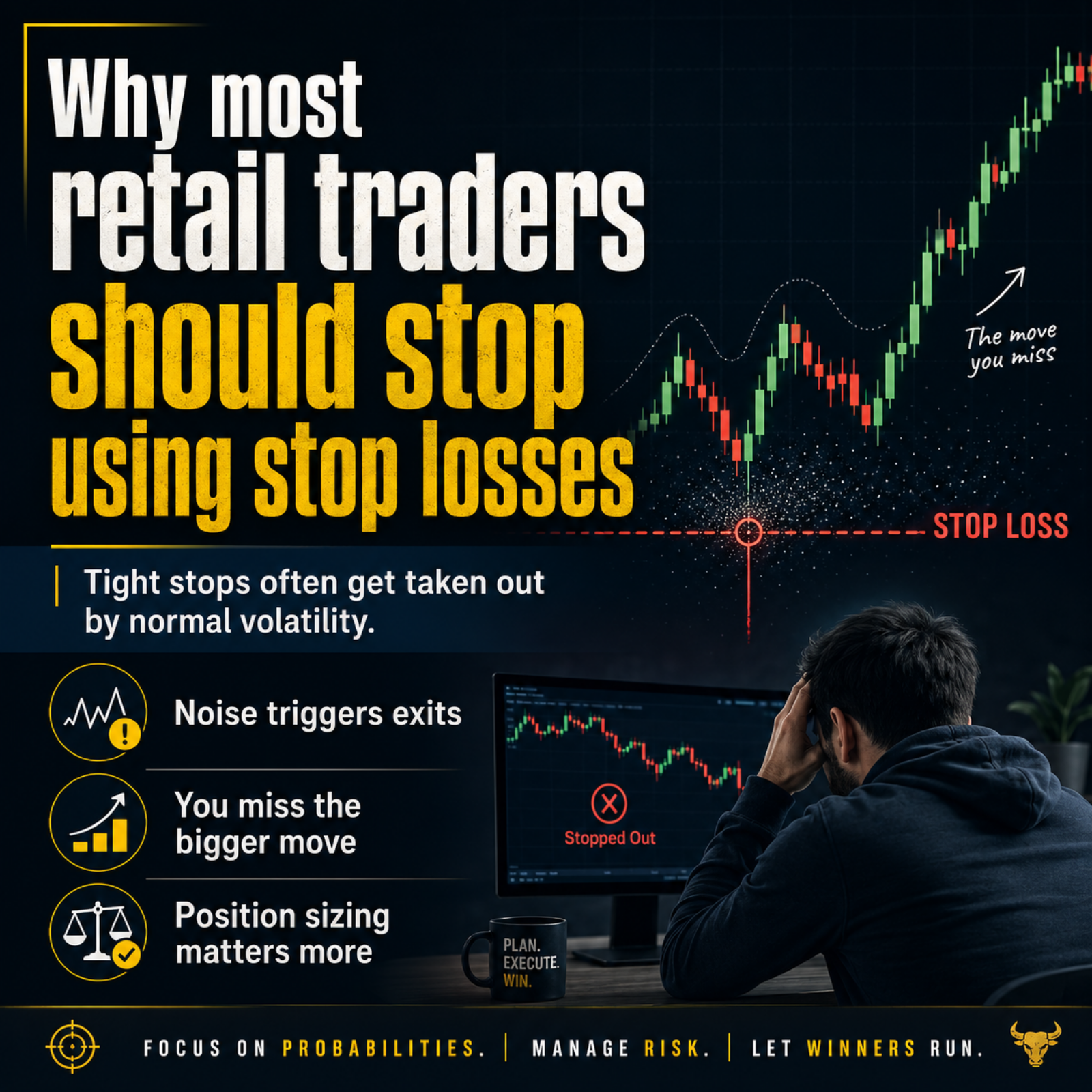
Why most retail traders should stop using stop losses
May 2100:22:08Tap to summarizeIn this episode of Breaking News to Trading Moves, we explore one of the most uncomfortable debates in trading: are stop losses really protecting retail traders, or are they quietly becoming the reason many traders get shaken out before the real move begins?The discussion starts with the 2010 Flash Crash, when markets fell violently in minutes and many stop loss orders turned into market sell orders during thin liquidity. What was meant to act as protection became part of the selling pressure. That moment raises a bigger question: should hard stop losses be treated as risk control, or as visible liquidity that larger players can exploit?The Case Against Hard Stop LossesOne side argues that stop losses can expose retail traders. When stops are placed around obvious support levels, round numbers or recent swing lows, they often sit in predictable clusters. Larger traders, market makers and algorithms do not need to target one small trader. They only need to identify where the crowd has placed its exits.When price is pushed into those zones, stop losses can trigger together, creating forced selling. Institutions may absorb that liquidity before price rebounds. The retail trader is left stopped out near the low, watching the market move without them.Key Risks DiscussedStop Losses Can Become Visible LiquidityA hard stop order shows where a trader is willing to exit. In an adversarial market, that information can become useful to bigger participants.Tight Stops Can Be Triggered By Normal NoiseMany traders use stops that are too close to entry. If a stock naturally moves £1 or £2 in a day, placing a stop just below the entry can mean being removed by ordinary volatility rather than a real breakdown.Cascades Can Make Sell-Offs WorseWhen many stop orders trigger at once, they can convert into market sell orders and consume available bids. This can accelerate downside moves.Traders Can Miss The Bigger MoveStrong trends rarely move in a straight line. They often begin with volatility and sharp reversals. Tight stop losses may remove traders before the trade thesis has enough time to play out.The Case For Stop LossesThe opposing side argues that stop losses still matter because human discipline often fails under pressure. A trader may plan to exit manually, but when price reaches that point, fear, hope and ego can take over.Instead of exiting, the trader may bargain with the market, wait for a bounce, widen the mental stop, and turn a small planned loss into a major drawdown. A physical stop loss can act as an emotionless circuit breaker when the trader is least able to think clearly.Alternative Risk Management IdeasThe episode also explores alternatives to traditional stop losses. These include using smaller position sizes, so that even a large move against one trade cannot damage the account. It also discusses options protection, such as protective puts and collars, which can define downside risk without forcing a sale during a volatility spike.Main TakeawayThis episode is not about ignoring risk. It asks whether the most common retail risk tool is being used in the wrong way. A stop loss placed lazily can become a weakness. A stop placed with volatility, position size and market structure in mind can be more useful.#StockMarket #Trading #Investing #DayTrading #SwingTrading #StopLoss #RiskManagement #TradingPsychology #RetailTraders #MarketStructure #Liquidity #PositionSizing #TradingStrategy #Volatility
Transcribe →