← Bred To Lead | With Dr. Jake Tayler Jacobs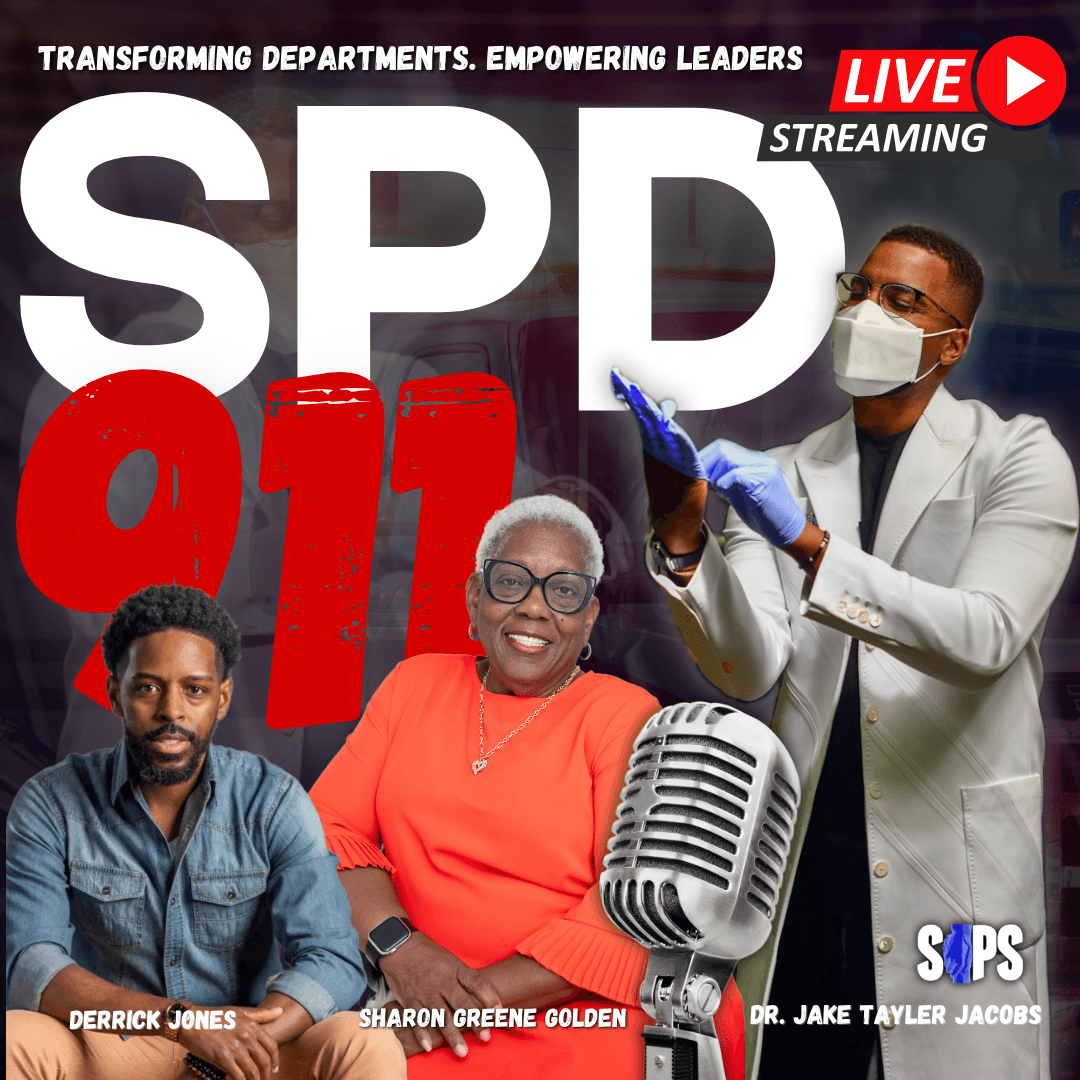
Bred To Lead | With Dr. Jake Tayler Jacobs
SPD911 EP 2 Part 2 The Future of SPD: Automation, AI & The Evolution of Sterile Processing (Part 2) Feat Sharon Greene-Golden and Derrick Jones
00:50:00
Loading summary
Transcript88 lines
- [00:01]
Dr. Jake
But.
- [00:04]
Derek
The problem, right. The concern with that is you really don't have the opportunity to develop a strategic plan to fix whatever challenges you're having in that moment by just throwing a body in there. You don't begin to develop. I mean there's no time. You're just resolving in the moment or you're responding to something in a moment. And the biggest thing you need to do is, oh, that's just the crowd sound. But I think also it's just in order for this to happen or to help, we got to provide just clear cut evidence of how understaffing, whether it's under resources, if it's staff, if it's equipment, supplies, the lack of a cart washer. I mean we got to really in the end correlate that to how it impacts the hospital operation and patient safety. That is the only way we're going to be able to help them understand how staffing is important to achieve the ultimate outcome. And that's quality care in the operating room. You can't get your scope if I got to pull the scope technician to work in Deakin Town because we got 8,000 trays and we need and 20 of them are turnarounds. So it's really about just providing that evidence to the leadership team and our executives to understand what the outcomes would look like if we just don't consider the full complexity of the operation.
- [01:46]
Dr. Jake
And now sgd, back to you, Back to you, sgg.
- [01:49]
Sharon Green Golden
You have to talk about, talk to them in a language they understand. Sentinel events, lawsuits. Let's talk about it. When you give me somebody that isn't qualified, just so I have an FTE and I do not have the opportunity to train or to make sure this person can do one job. You put the whole hospital on the road because if we have a high infection rate and now in states you can read the infection rate of every hospital and patients read how many infections you got, they're not coming to your hospital. So the bottom line is that you have got to give me people who once they're there, I can continuously educate, motivate and stimulate them to do the right thing, to know the importance. The biggest problem in SPD is that people, people do not always understand the importance of the job they are doing. Every day I say it over and over again, what we do matters every day. You don't have a down day every day. You got to be sure that that tray is done correctly every day. So to my C suite, I can't always go to the C suite, but I can get infection control down to SPD and say, let me show you. And I mean, you can't always just talk. Have it written, have the standards to back it up. This is what it says we're supposed to do. We're not doing these two steps right here because I don't have nobody. Did you realize that we're not soaking instruments for five minutes because every time we turn around, they just tell us, just give it to them. Did you realize we're not following best practice standards? Infection control don't call after the patient got infection. Ask me what had happened. I'm telling you before it happens, we're going to have a sentinel event because we're not doing it right. You know, people are scared to call the 8, the 911 number at the hospital where you report your hospital because they want to keep their job. So you're putting people in the position of having to look at their integrity and make a decision. Do I report us or do I just do what they say? You know, I know a place where they were washing eye instruments with no cleaning agent. Now, y'all know that's just wrong, but that's what they did. And I had a person that told me, she says, they're paying me good money, but I can't stay here because what we're doing is wrong and they. They won't hear it. So, you know, the bottom line is that you're asking, what do we do to push back? As a manager, I can only push so far, but I can work with the people who can push harder by making them know this is where I stand. And right now, to anyone that's out there in general, infection control should be your best partner. Your best partner. I told somebody this is just off the line. But I told a doctor when I was diagnosed with cancer, I said, I prefer quality over quantity. If I'm going to be sitting with my head in the toilet, that's not quality living. So I'd rather live less and have quality than live long with my head in the toilet. So what we want in SPD is we want quality because the patient deserves quality over quantity. So if you cannot give me quality people, then we've got to work on that. Don't just give me anybody, because anybody's gonna sink that ship. And that is what's happening at a lot of hospitals. The ship is sinking and they're like, we got people, but you don't have quality. And as a manager, I can't be the manager. The worker be the. The. The. The answer, the Fire. I mean, I'm putting out fires all day long. I'm running around. I'll never get to take my fireman hat off because I'm putting fires out all day long. And it's just not. It's not. I'm not able to keep up with it. And so what happens is that you lose sometimes a good manager because I finally say, I'm done. Yeah, I can't stay here no longer.
- [06:20]
Dr. Jake
Yeah.
- [06:20]
Sharon Green Golden
And so, because I cannot stay here to motivate people with, with an administration that will not listen to be better. They only listen to put out the fire. And once the fire is out and infection rate go down a little bit, they start saying, thank you, Jesus, we're doing better. We're not doing better. We just didn't infect anybody as a hospital for this month.
- [06:45]
Dr. Jake
Yeah.
- [06:45]
Sharon Green Golden
And so that's where I'm at.
- [06:48]
Dr. Jake
And I think that on my last. On our, on our last podcast on Bread to Lead that dropped yesterday, I talked about the importance of third party transparency, which is why I truly believe, like the educators, your quality assurance texts, and maybe even infection control, if it was from a third party. Now you, you no longer have them feeling like, if I tell the truth, I'm going to lose my job. Now you have people coming in. It's like, no, this person's not up to standard. This person's not up to standard. And these are your supervisors. Those are the conversation that needs to be had. And for the hospitals that's looking to create real change. That's why they hire us, because they know when we coming in, we're coming in to tell the truth.
- [07:34]
Sharon Green Golden
That's the odd thing. They won't listen to me tell them the truth, but they'll pay a consultant thousands of dollars to come and tell them what I've been saying years. And then they want to. They want to try to get rid of folks and fix things all at one time. When we could have fixed this in incremental steps had they just listened. Because I told you we need a washer. You want to pay somebody thousands of dollars to come in and say you need a washer. You need to have 10 people. All you have is two. There's no way you're going to do this with two people. But Ms. Golden's been sitting here saying, I need more people, quality people. And they won't listen.
- [08:19]
Dr. Jake
And this, and this goes too. Yeah.
- [08:21]
Sharon Green Golden
Until there's a sentinel event. Get a sentinel event. Everybody stop listening.
- [08:26]
Dr. Jake
Yep. And one of the things that I know that SCG you talk now more than ever. And Derek also, too, is we, we, we, you know, we talk about, especially to our leaders that are in the field, you got to build a paper trail of evidence and back it with Amy. If Amy's our bible, I build a. I build a paper trail of evidence and I back it with Amy standards to say, hey, because I just can't go to senior leadership and say, I need more people. We need more technology. We need more this. Because every department inside the healthcare system is saying the same thing. So you have to be able to back it. And one thing I love that SGD did in one of our conversations with one of our clients, she said, listen, I hear you want us to do more. But Amy standards say that we can only do four at this. Per this. And they were trying to. She said, I hear what you're saying, but I want, for the record to show that we're telling you that Amy standards suggest that we can only do for. In this period, you cannot do this. So you can't cross productivity. You can't make this person go over here. They have to stay here and inspect this specific instrument. I won't say the instrument.
- [09:43]
Sharon Green Golden
Right.
- [09:43]
Dr. Jake
Because this is what is the standard. It made them uncomfortable.
- [09:48]
Sharon Green Golden
Yeah.
- [09:48]
Dr. Jake
And it put a lot of pressure on me and his executive team to figure it through. But in truth, we have to stand on the truth of standards. That's the only way that we can be able to grow it. Let's continue. Let's keep going. So this is good. So I do have another scenario. Now, y'all know that some of our service lines is in temporary staffing. We talk about the difference of plugging the hole versus bridging the gap. Temp staffing plugs the hole. Get in there, you plug the hole, you have the bleeding, you're hemorrhaging, things are great. But there's a difference between plugging the hole and having people in your department that can bridge the gap, which means find the infection in the department, cure it, nurture the department back to health, and then. And then have it in a better state than we have it. And so I do want to address this because I do like to talk about the difference in quality versus quantity. So it's the temp worker dilemma. And I know I'm going to step on some people's shoes and toes, but we're in the same game, too, so it's okay, baby. You could be mad at us, but just pray about it. Here's the situation. Many hospitals rely on temporary SPD techs to fill staffing gaps. But these temps often lack. We talked about this earlier. Proper training, don't follow protocol or make costly mistakes that lead to surgical delays that cost money, everybody or safety risk. Full time techs then have to fix these errors leading to frustration and added stress. This is from somebody in our group. The question was how can SPD leaders ensure quality and accountability when using temporary staffing solutions without overloading their permanent team? Now if you've already answered it, just answer it again. I just want the person who asked the question to have their question answered directly.
- [11:43]
Sharon Green Golden
First of all, bringing in temporary people, as you vet them and get ready to bring them to your team, you need to be sure that that temporary team member number one has clarity. They know what is expected of them from the beginning. I expect you to work decontam. When I ask you, I expect you to be able to put trays together. I expect you to be able to run the steam sterilizer, the low temperature sterilizer, pick cases, take cases to the R. You have to be specific. This is my expectation of you as a temporary worker. Now I expect you to be able to put together L and D trays, neuro trays, robotic trays, hard trays. They raised their hand and said wait a minute, I haven't done nothing but an L and D trade. Well now you know that they're not going to meet your expectations before you bring them in to stand next to your permanent person. The next thing you have to have is communication with that person on an ongoing basis. This is going to be the expectation. I'm going to be checking on you all the time. I need for you to do your job correctly at all times for the team and for our patients. This is back to my expectation. We're going to collaborate about things. Do you really know what you're supposed to do in decon? Because some techs have not really worked in decon. They traveling but they tell you all I did was put trades together. Well no. Here I'm going to need you to be a multi skilled, multi specialty technician. Meaning we do all the jobs, we rotate all the jobs. So you're not coming into my institution telling me what you will and won't do. I'm telling you what is expected or maybe I cannot take you on. And then you have to be sure with your temporary staffing that you explain to them the consequences for their actions if they don't meet your expectations. It all boils down to accountability and you cannot hold your permanent staff accountable if, if you will not set the rules. And my word is the rules of engagement in place for the temporary staff that you bringing in and paying quality money to work. That's my opinion, Derek.
- [14:01]
Derek
DJ all right, all right. So I'm a represent for the agency staffing on this one because number one, thorough onboarding of agency staffing is needed and pretty much all of the locations or hospitals I've worked in, often because we are looking for agency to come in and fix and do an immediate fix, whatever the area it is that we need them in. They are always often skipped by just getting a tour of the department, understand the case volumes, understanding expectations. Sometimes they're just often thrown into the fire and expected to work miracles. But when they make that one mistake, we're holding them accountable and they didn't have a fair onboarding. Number two, balancing the workload. The agency staff isn't brought in to fix everything. They're coming in to support the department in the areas that they're challenged in. So as our leaders, our supervisors, our lead techs, we cannot take advantage of just because we have an agency technician. We're just going to stick them in the unfavorable areas. The Deacons have work on or work on all of the loaners. So without that onboarding, without that training and then not balancing the workload, you're going to get defects, you're going to get issues and errors with trades, and then finally treating that agency technician as part of the team. So what is 13 weeks we need for this? 13 weeks? We need you to be a part of assisting us in getting the trays reprocessed, providing great quality to our patients. We need to focus on making them feel a part of the team and not isolated as hey, this is just an agency worker. Just put them in that area. They'll be gone soon. So those are just a few Ms. Greengolden already mentioned. Clear communication and you know, all of those other areas. Here she comes.
- [16:14]
Dr. Jake
What you got, sgg? What you got?
- [16:15]
Derek
Come on with it.
- [16:17]
Sharon Green Golden
Hold up. Let me just clarify something. When I bring you in as a traveler, you supposed to come in knowing what to do in sterile processing. I'm not here to train you. I'm sorry, Derek, I disagree. I'm not here to train you at time on how to work in SPD. I'm paying you $40 an hour. You should know how to clean the faucet. Okay, I don't have time to teach you. I'm working with the permanent staff teaching. And I brought you in because you could come in in this temporary moment and go to Deacon Tam and clean. Not me go with you now. I'm just saying I understand that. That. That, you know, you may not know everything, but you said on your resume you was an SPD Traveler. You've been five hospitals. You know what you're doing. I expect you to stand up to your resume.
- [17:20]
Derek
I need a buzzer.
- [17:21]
Sharon Green Golden
So for travelers to say they came in and expected me to work in decon, well, then you need to come up and say, well, I'm a traveler who has never worked decon. I can only assemble. Now we're on. Remember, clarity. Know what's expected. Derek. Know what's expected? Clarity.
- [17:41]
Derek
No, we know. We gonna argue on this one.
- [17:45]
Sharon Green Golden
Listen, this thing about being family, I'm all about us being family. And I believe that we should be a team and we should be family. But I should be able to put you. This is just my wish list for traveling tech. I don't want you if you can't work every area of spd I don't want you because I am already bleeding. And the reason I got a traveling tech was to help us keep up. And so if the only job you can do is pick case cards, I don't need you. I needed somebody in decontam. I needed somebody assembling trades. All you can do is pick cases. I don't need you.
- [18:28]
Dr. Jake
All right, all right, listen.
- [18:30]
Sharon Green Golden
If you're going to be a traveling tech, I'm just saying. This is my opinion. Traveling tech, if you're going to put on the hat and say, I'm all that and a bag of chips. Be sure you're all that and a bag of chips and stand up to your resume. No, I don't think it's fair to put you in decontam every day. But in my hospital, we rotated. Be willing to be in the rotation. That's how you become part of the team, by be willing to be in the rotation and not being a prima donna and saying, I can only assemble.
- [19:01]
Dr. Jake
All right, D.J. what you got.
- [19:03]
Derek
But I'll say I agree. I was just say that. Don't throw me in Decontam with 800 case cards and trays and then everybody walk out and go to break. That's what's happening.
- [19:16]
Sharon Green Golden
That's true.
- [19:17]
Derek
That's not acceptable on any day that's going on break. Right.
- [19:20]
Dr. Jake
There we go.
- [19:21]
Derek
There's a level of mistreatment with Travelers in most places, and the expectation is for your permanent staff to do minimum work or they reduce even in the event that you brought the Travelers in to support and help dig you out of troubled situations. But there's this level of thought that, hey, we're just going to throw him in Decontam for 13 weeks, and he work on all the trades that no one likes to do.
- [19:50]
Dr. Jake
And we get a break, and we.
- [19:52]
Derek
Go on the break, we go on a lunch.
- [19:54]
Sharon Green Golden
That's wrong. That's wrong. That's why you. That's why you heard me say the word communication. You have to bring everybody together, the whole team, and say, hey, Dr. Jake has joined the team. He's now in the rotation. So now we got another person in the rotation.
- [20:12]
Dr. Jake
There you go.
- [20:13]
Sharon Green Golden
It's not relieving you from that.
- [20:14]
Derek
I agree.
- [20:15]
Sharon Green Golden
If I relieve you, I'm going to relieve you from your job.
- [20:19]
Dr. Jake
That's right.
- [20:19]
Sharon Green Golden
If you need that much relief, you're.
- [20:21]
Dr. Jake
Going to have to go.
- [20:22]
Sharon Green Golden
So the bottom line is Dr. Jake's in the rotation. We only had three people. Now we got four.
- [20:28]
Dr. Jake
And that was the point that I was actually going to make. I think that both of you are making two solid points that can both be true. One, Derek is talking about onboarding as such, as the same way that you will onboard an employee should be the same way that you onboard somebody into your rotation. Hey, this is our culture. This is our standard. Like you said, sgg. This is our expectation. And then you tell the team, hey, this person. Like in baseball, if you got somebody who's a button specialist, they can bunt their butt off. They may come in and just come off and just. Just bunt, and then they go back into the dugout, or they may just be a pinch runner. Their job, they're the fastest one. You got a slugger, they got on first base, but he's slow, so you gonna get that pinch runner on that first base and let him go. So I think that both are right. Derek, you're absolutely right. We have seen instances where staff will say, you're getting paid 30, $40 an hour, so I'm only getting paid 18. So you should be able to do double the work. Figure it out. And so you have travelers that are there that get burnt out. And so this is the thing that it comes about, playing a part of the team. If I'm coming on as a traveler, I need to know I'm a part of this existing team. I'm not a hero. I'm not a contractor. I'm not somebody. Once you. You decide to take that account or that contract, yes, technically you may be a contractor, but inside of that department, you are part of that team and being able to still Understand back to SGG's point, if you're going to travel, you of anybody should know regulation standards and all of the recommended and required standards that it takes to be able to ensure patient safety. Which means it doesn't matter if you're coming in for 13 weeks or 26 weeks or not. I should get the best of you now, not the rest of you because you rested, you, you coming in and then wow. And I saw that. I saw Regina made a great point. And then as a manager and as a leader, we have to be proactive on the account. If I have calvary that is there to help us. We don't sit on our laurels. You build the culture of your organization. So when that contractor leaves, if they leave, you are able to build the development of that, that staff or that team the entire way. And that's a lot of the things that we do inside of SIPs within, within hospitals. We may bring in our transition temp staff, our SIP seals, to be able to plug the gap, but we're still working and developing your current core team so that we can actually bridge the gap. So when we leave, you don't feel that effect. And all too often we do feel that when travelers come in that are good, I'm not talking about the low performers. I'm talking about the ones that are good. They do get burnt out. They do get treated like crap. They do get treated like mud on the side of the road that stinks really bad. They do. But then on the other side, that person coming in, if you this why I tell people, if you want to get paid that much, leave your family and travel across the United States, you leave your comfort zone. If you want to get paid $50 an hour, $50 an hour, you have to leave. You can't, you can't just be like, hey, I'm comfortable where I am. You have to go to Washington, you gotta go to Boston, you gotta go to Texas, you gotta go to Florida. You got to go to the places that typically are though in some of the. Well, we. I wouldn't say worst conditions sgg, but need the most help because people, your facilities like yours, may not have needed travelers because you had a proactive manager that was measuring and managing what God gave her to oversee. And I'm going to end with that in a second. I'm going to end with some shine eye. Now go ahead.
- [24:13]
Sharon Green Golden
Hold up, hold up. I also believe that travelers have to understand a hero is a sandwich. Don't Come in with that hero mentality. I came to save the day. You can't save the day up in here. I already know we a mess. So you came in. You came in to help us to do better. And I want you to know that as a manager who has had some travelers, if I got a good traveler, I spent my time making them part the team, make them happy. Because at the end of the day, I was trying to lure them off the traveling track to become permanent.
- [24:51]
Dr. Jake
That's right.
- [24:51]
Sharon Green Golden
Because when I see good potential and good people and I see a gym, I was trying to tell them, listen, you need to stop traveling. Let me see what I can do. You need to come and stay here with me.
- [25:05]
Dr. Jake
Come on home, baby. Come on. I don't love you like me.
- [25:09]
Sharon Green Golden
Listen, the bottom line is I was trying to ring them in to keep them if they were good. But I also told them, and I can't get past that word clarity, what my expectations were. And I didn't expect them to be no hero because if we had had heroes, we would offer hero across our chest. So you can't be in hero. Don't come in and tell me you can put 45 trades together in eight hours. That's not what I brought you here for.
- [25:32]
Dr. Jake
That's right. And I think, and I think to move on, we have one more, one more point. I told y'all this one will be a little bit longer just simply because we want to make up for a last. Missing last week. I do want to say this and I do want to add this. And Donnie and Karen Cherry Brown said it right, y'all. If we want the industry, our profession, our space, this is the business of. SPD is a multibillion dollar industry and it's growing by 5% every year over the next 10 years. That is projected. So what does this mean? If we all just work together to add value together in the departments to together.
- [26:19]
Sharon Green Golden
Yes.
- [26:19]
Dr. Jake
Then we can together be able to this in. In sync. Get senior leadership and executives to say, you know what, we got to, we need to pay more. But when you have. Because we have had leadership level travelers coming to accounts with us and wanting to make themselves look good where they will burn us, the company as well as their supporting cast just so they can stabilize their own position and take care of themselves. And yes, in the interim, it may have paid you right, but you just destroyed any of the executive's thought process on any SPDs or travelers or technicians or talented people. And now they have a sour stain in their mouth because you did wrong. And so this is what I want to say. You looked up for yourself. So this is what I want to say for anybody in spd. I don't care if you're a tech one or you're an executive director. Can we just, can we just get along like, like, like the world is already hard outside the hospital streets, but while we're inundated in there, can we just focus on the patients? Can we just focus on the patients? You're getting paid to do your job. You said yes to your hourly rate or your contract. And if you said yes to it, it had to be good enough for you to say yes. So don't have an attitude at the very same thing you said yes to, because that's important. Now I got to get to a fear. I got to bring up a fear. Hold on, let me bring up my sound. Hold on. Here we go. So here's a scary fear. Technology. AI, automation. Ooh. Someone said, here's the situation. Dr. Jake. With advancements in AI driven tracking systems, robotics and sterilization in automation replacing manual tasks, many SPD professionals worry about job security. Some hospitals are prioritizing automation investments over hiring and training people, leading to uncertainty about the future. The question is, how can SPD professionals adapt and stay relevant in a healthcare system that is increasingly relying on automation and AI for sterile processing?
- [28:52]
Sharon Green Golden
Automation.
- [28:52]
Dr. Jake
Here's the question.
- [28:53]
Sharon Green Golden
Automation is as good as automation. You will always need the human factor, period. When the machines stop working, you're going to need me to manually clean the instruments. So automation is needed and it has helped us to do a better job. But to say that you're going to bring in a washer and get rid of an FTE doesn't even make good sense because when the washers down, you have nothing. So automation, we need, it helps us to do our job better.
- [29:25]
Dr. Jake
Better. That's right.
- [29:27]
Sharon Green Golden
It helps us to be better. And so we need automation. I need a borescope to check the cannulated instruments to be sure they're clean. I need washer decontaminators. I need a cart washer to keep me off my knees. Washing and cleaning carts. So by the time I stand up, I can't put a tray together. But to think that automation is going to get rid of the basic processes of sterile processing, that's living in the clouds, that's not going to happen. So what we have to do is stay aware. Managers, directors, stay on top of what automation is up and coming. Study, know what's there, be willing to adapt to change as needed, be willing to advocate they got the machine that can count the instruments and put them in the basket. See if your hospital will spend that 3, $300,000 to buy that machine. Because at the end of the day, part of our problem in SPD is that we want some automation. We want some updated equipment. They don't want to pay the money it costs to get it for us. And we could do a better job if we had better machinery. But you will never be able to get rid of the human factor that has to check an instrument, even though it was in a washer, decontaminated and it came out still dirty. So understand, you have to know what's out there, what's up and coming, and be willing to speak to it, to your administration. As they say, I heard there's this machine you need to be ready to jump on and say, yeah, it's out there, but let me tell you, the good and the bad.
- [31:07]
Dr. Jake
That's right. That's good. Now SGG, now that's how you answer the question. Go ahead, D.J.
- [31:13]
Derek
So what we'll have to realize and what most people have to realize is AI is just another area of technology. But we've been evolving throughout our entire existence. We went from hand washing with no automated washers to an automated washer. And that's mechanical, that's equipment. We went from not using a borescope to using one to identify things. So and we, we went from other forms. We went from writing and checking off instruments on a sheet of paper to utilizing a tracking system. That's evolving. So AI is just another technology that we can use to make our processes more efficient, make our jobs more accurate and safer, so that we can provide the best quality product. And then, and we have to teach our technicians and people to be willing to adjust, to get the additional training, to go back to school, to learn the AI technology, to take courses on AI technology and evolve with the processes, the job and the equipment that we're taking on. So it's really about just making people comfortable with just the different changes that are coming. Nothing is happening overnight, so we are given time to adjust. But as leaders, we have to also empower our teams to be able to take these additional courses, get the training, bring vendors in to help us learn this technology so that we can evolve with the technology and show our value to our hospital executives as to we can work with the equipment as well, if that makes sense.
- [33:01]
Sharon Green Golden
And understand, AI makes mistakes too. T o o you can't just rely on AI, so you have to know what's going on so that you know when a mistake has been made. So there is value in us still being there. Never underestimate the value of me being there with the automation and with the AI.
- [33:24]
Dr. Jake
And I think that this goes to understanding the business of healthcare, the business of SPD and what you invite or what you keep out will either grow your organization and increase your pay ability or not. I'll give you this example. The cities that want to keep the old relic look because they want to keep taxes down, they don't want new housing, they don't want apartment complex. Like you have a council or you know, a group of voters that are trying to keep a city older. Yeah, just, just for the nostalgia of what it used to be. But it does cost an economic dollars of growing a city. Meaning yes, you do get more taxes, but how much inequity does your house grow? Yes, we have new businesses coming in that causes a little bit more traffic, but now we have more dollars circulating in our city, which means now the city can tax more, which means now the education system can get better. And I say that in that form in the same way of any industry, not just spd. When you push away innovation, you actually push away elevation in your paycheck. Oh, hello somebody. I am talking to somebody today because here's the deal. As automation and AI continues to reshape sterile processing, SPD professionals must evolve beyond manual task and it because it positions them to be as strategic tech savvy leaders. It's just so instead of fearing automation, the key is to leverage it to enhance skills, improve efficiency and increase value into your healthcare system. If I'm pushing away innovation, I'm pushing away, I'm telling executives, oh, this is caveman work. We don't need all of that to be great. You should be saying we need it.
- [35:20]
Sharon Green Golden
I need it.
- [35:21]
Dr. Jake
Oh, we need it. Oh, we need it. We need it. Yeah, we, we need everything. Why? Because just like you said, sgg, as things break, you go from being just a technician working on instruments to the technician working on the mechanics of the, of the, of the machinery. You go to just from, from repairing instruments. Now you're repairing the machinery and all the other techniques, technology advances that have, that came into the department now you have more jobs that can be provided a newer look into what SPD looks like. So yes, we should absolutely be welcoming this stuff in. But can I tell you something? Technology and AI is only as good as the manual processes predating the technology. AI.
- [36:05]
Sharon Green Golden
Yes. Yes.
- [36:05]
Dr. Jake
So if we don't get cleaner in the way that we're running our departments and turn them from cost centers to profit centers. We won't be able to actually see what change looks like. And we'll always be behind. And this is why it's important for everyone to be to be inundated in learning the business of spd. We got the task. So you got different levels, right? You have the entry, your technician level. You're mastering doing the job, you're doing the task, you're doing the task yourself. Then you have the team lead supervisor level. You're managing people doing the task. So you're managing the task, getting done through people. Then you have your managers level. Now you're managing how to manage people. You're not worried about the task because your team lead and your supervisors are worried about the task. So the higher you elevate within your organization, the more it changes what you should be developing, getting, experiencing and focusing on. If you are a manager still worried about simple tasks, that lets you know that maybe the development within your organization isn't as strong as you think that it is. Because as a manager, you should be people managing, not task managing. Your supervisors and your team leads are task managers and then your technicians are the ones doing the task. And then when you go to director, now you're worried about the department, you go to periopath, now you worry about multiple departments. And so if you want for the senior leadership to respect you, you have to speak to them in the language that they speak in every day. They don't speak in your language of spd. They speak in the language of healthcare business. What? Like you said, sgg. What are our lawsuits? Where are you want a budget? Do you know how we allocate our budget? Do you know when the budgets are freed up every year? You're asking me in November every year for a budget, not knowing that most hospitals free their budget in February. So, so, so these are the things that we have to get better. And this is what we help managers and leaders do that come to SIPs. We work with the leaders, we work with your directors, we work with your managers, we help them write their sbars, we help them build business plans, we coast them up on the business of healthcare. So when they're giving what they need and they're working with SIPs, we can get the yeses a lot easier and a lot faster because we're teaching the leaders that have never been taught business economics of healthcare or business in general. But we're putting these people in these leadership positions and the healthcare system in the hospital is not putting extra dollars into the development of these leaders that you have running multi million dollar departments. How can you put somebody overrunning a multi million dollar department that can't even keep a budget in their own house?
- [39:00]
Sharon Green Golden
That part is true. That part is true. And we have to understand that together as we learn and as we grow. Together we're better.
- [39:12]
Dr. Jake
That's right.
- [39:13]
Sharon Green Golden
Together we're better.
- [39:14]
Dr. Jake
That's right.
- [39:15]
Sharon Green Golden
And you have to. You know, back in the day when all we had was sinks and water and cleaner, that was hard. Once we got a wash and sterilizer, it got a little better. Once we got washed the decontaminators, we were singing hallelujah.
- [39:31]
Dr. Jake
That's right. That's right.
- [39:32]
Sharon Green Golden
You want, you want to have the advancements because that's right. We don't want to work harder. We want to work smarter.
- [39:39]
Dr. Jake
That's right.
- [39:39]
Sharon Green Golden
We want to understand that together we're better. And you know that there's a saying from a Japanese wisdom writer. He said Santori, he says, individually we're one drop. Together we become the ocean.
- [39:54]
Dr. Jake
Well, say that again. You better say that again.
- [39:56]
Sharon Green Golden
Let me write that down visually.
- [39:57]
Dr. Jake
Okay. Individually. Hold on, hold on. Individually, we are one drop.
- [40:02]
Sharon Green Golden
Together we become an ocean.
- [40:06]
Dr. Jake
Together we become an ocean. Now, when I say this on my next keynote, I'm letting y'all know right.
- [40:12]
Sharon Green Golden
Now, I got Santori.
- [40:14]
Dr. Jake
I'm gonna say sgg because I got it from sgg. I got my Santoria's sgg. Now you can tell them Santori. I'm gonna say based on Virginia Wise Council, SGG said individually we're one drop, but together we are in ocean. And this brings me to the last portion of the show. Speaking of ocean, can you guys look at the camera? I'm gonna start with DJ before we finish this episode, and we're gonna finish every episode like this, I want you to pour your heart out to that technician. For you, dj, I want you to pour your heart out to that technician that feels like they have no help, they have no support. They just want to be the best that they can. What will you say to them to make them stay in it a little longer? And why is it worth it? Just put the camera on him, Iggy.
- [41:11]
Derek
I will say to that technician, I'm a walking living testimony of what this profession can do for you and the life changing experience it can provide for you and your life. Learning the basics of, number one, care in the healthcare setting, number two, how to reprocess and treat equipment that serves and helps patients, and the importance of being mission driven. Into impacting someone's life can ultimately impact you. And you can take those same attributes and skills and principles you learn and apply it to other areas. Whether you want to grow and become a surg tech or a nurse or a doctor or start a business in a whole different industry, what you learn being committed to the sterile processing department and this career profession and working through the tough and difficult times to achieve greatness and provide great quality work for patients will carry on down the line and. And benefit you in other areas. So stick to it. Don't give up. Become one with your team. Be willing to pivot and learn new things like AI technology and other areas within the department, and just be willing to adjust and grow and be patient with changes because it will get better.
- [42:40]
Dr. Jake
All right? And sgg, for that person, that's like, man, I'm going to the conferences. I'm doing what you're saying, sgg. I'm learning the regulations, I'm. I'm learning the standards. But I keep. I feel like I'm fighting. What. Why should I keep fighting? Why should I just not leave the industry? Well, why. Why should I stick to it and keep pushing against this resistance?
- [43:05]
Sharon Green Golden
I say be true to yourself first. Is this your profession? Is this what you love? Is this what you like? If this is what you love and you like and you understand that you do patient care every day and that that patient comes into that hospital depending on you as the manager of that department to be sure that everything is done correctly as best as possible, then you stay and you fight. Because this is what you love. You have to know your assignment and your purpose. And if you know your assignment and you understand your purpose and this is what you want to do, you'll fight for it. But if you find that if you're coming in and you just weary and you just. You get sick, as you get to the driveway of the hospital, you start getting a headache, then you have to reevaluate and say, am I here for the right reason? I mean, this is just true facts. I have fought in this profession for years, and I fought because I loved. At the end of the day, I loved what I did. I loved the people that I worked with who were trying to do it right. I loved my assignment. My assignment was to make sure that the product that we process, that we produced got to our customer and help them on their road to recovery. I understood the assignment. What we do matters every day, and I preached that to my team every day. What you do matters. You are important. Know that you're important. If nobody else tells you, be, be happy about the job you did. At the end of the day, do your best every day. Keep learning because knowledge is power and what you. And as you learn and as you grow, you know, as you grow, you know and you become the best person that you can be in that profession. The best lawyers, the best doctors, the best of anything have all had valleys, hills and mountains. They made a decision to keep climbing. That's a decision only you can make. Don't let anybody bring you down. Don't let anybody tear you down. Be secure in who you are and understand that as you listen to your heart about your profession, you will be better and things will get better. And when you find you can't fight the fight anymore at that, that particular institution, it took me years to learn this, Know your worth and understand you are good enough to get a job somewhere else in your profession and work towards that means.
- [46:07]
Dr. Jake
And if you're great, great at what you do, you can always come back to SIPs. And then I want to give a message to the business professional bloomers or the people that fell in love late with this industry. When you come into this industry speaking loud about change because you, you, you, you, you felt the passion of people that have really made change in this industry, don't be discouraged by naysayers that are mad that you're here. When I first came into this industry, there were so many subject matter experts that were upset because I was talking loud. And who is Dr. Jake? Who is this guy? And what I will tell you is that when you know that you're here for a great cause and you know that you can help bring change, everybody, no matter your race, your religion, your belief, no matter what industry you're in, you need allies that know the language, that know the land, that know the communication barriers that is stopping from change being had. It doesn't take away from people that have done amazing things for 30, 20, 30 years, like Karen Cherry Brown, like Sharon Green Golden. But it does add value when you can actually speak the language that the senior and executive leadership can respect and honor. So for those of you that are coming in like me, and you're falling in love with healthcare, you're falling in love with sterile processing, you're falling in love with being a part of an industry that literally directly impacts lives. Don't let the naysayers detract you from being a change agent that you can be to move an industry forward. Because at the end of the day, it's not about One person creating change. Because we're all holding each other's hands and standing on somebody's shoulders that came before us. It's about us working together and staying inundated in what we believe is right. Because guess what? Somebody, your mama, your daddy, your granny, or even yourself, you're going to be under the knife one day. You're going to be in a hospital for something that we support one day. And you're going to want and want to know that there are advocates and warriors that have advocated and, and, and and pushed for a healthier space for us to not only have a surgery, but recover well. And so for those of you that are watching SPD911 right now, whether you Derek's message resonated with you, whether Sharon Green Golden's message resonated with you, whether what we're doing at SIPs Healthcare resonates with you, or what I just said resonated with you, Please join our SIPs executive community. Our executive edge community. You can go to SPD911.com and join our community. We want the people that are going to be radical about change, not. Not checkbox makers, not people that are just trying to fill their resume. We want to build a networking community of people that are truly inundated to grow and develop and become everything that we dream to become. We want people that says, hey, I love what I do so much. I want my daughter and my son to be in the same industry. They that's when we know that we'd be able to create the change that can be made. And that's the vision of our founder, Karen Cherry Brown, and the baton that our CEO Donnie Payne is running with at to this day and at this moment. So go to SPD911.com to join our community. It is free. It costs you nothing. If you want to listen to this playback, it'll be on our Bread to Lead podcast. You can go to breadtolead.com or go to Apple Bread to lead our podcast. Our network, SPD911, is under Bread 2 Lead. This episode will be broken down into two parts because it was long, but we wanted to make up for last week when we missed it. We love showing up for you every day. Join the community. Ask your questions so that we can answer it, or if we don't have the answer, we'll get somebody on that does. We love you and there's absolutely nothing you can do about it. And whether anybody says it or not, you are a hero, too.
- [49:59]
Sharon Green Golden
Peace.