← Broadway Breakdown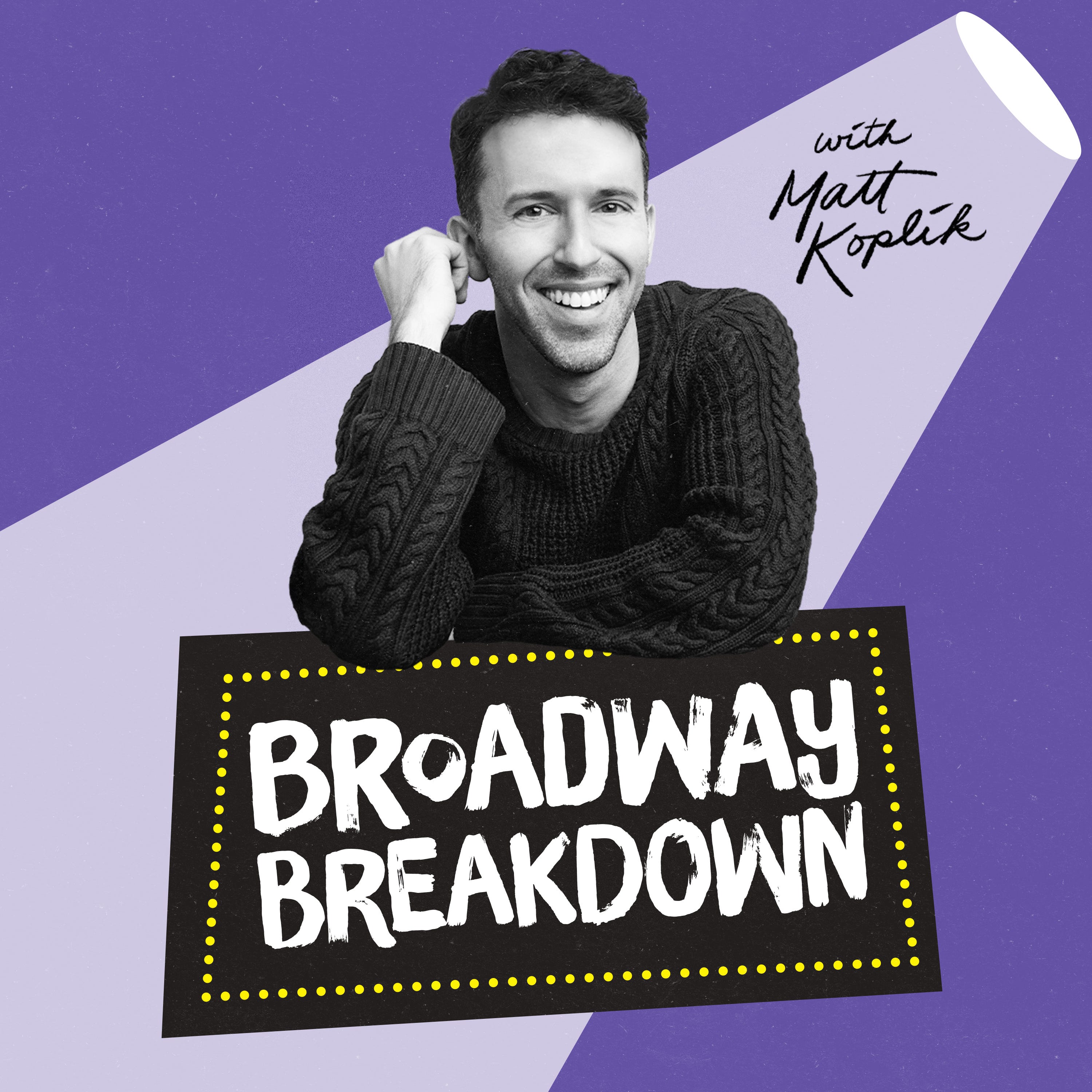
Loading summary
Transcript1 lines
- [00:20]
A
Hello all you theater lovers both out and proud and on the DL. And welcome back to Broadway Breakdown, a podcast discussing the history of und legacy of American theater's most exclusive address, Broadway. I am your host, Matt Koplik, the least famous and most opinionated of all the Broadway podcast hosts, and we are back in form today. We're doing a review episode now. A review of what, you might ask. Well, that's a great question. The truth is that as we have done the relaunch and we're been doing the new season of Broadway Breakdown, it's been difficult scheduling separate reviews of singular shows on the podcast, and it would be easier if the season wasn't spread in the way that it was. While it's been a relatively light fall, when the shows have opened, they tend to have opened kind of close together, so it's difficult to spread them all out. So we're doing just a catch up episode today of a few shows both Broadway and off Broadway. We will be doing Punch, Bo, Waiting for Godot, the Seat of Our Pants, Art, Little Bear Ridge Road, and Batboy at City Center. Now, Punch, I'm aware, has closed at this point, and when this episode comes out, Batboy will also have closed at City Center. But does it even really matter? I want to cover as much of the season so far as we possibly can. There's also, you know, been a lot of news going on with Broadway, the potential strikes which we've so far avoided. And so I can't really comment on that because it's all sort of behind us now. Comments made by certain former glindas, plural Glindas, that maybe haven't rubbed people the right way. All worth talking about. That's not really what this episode is going to be. Maybe we'll do sort of like a Broadway news roundup at the end of this calendar year and talk about all of that. So this is going to be reviews for today and I haven't done a solo review in a while, so bear with me. This might be a little bit of gibberish, but I do have notes and I'm trying to kind of structure it all out so we'll see how it all goes. If there's anything that I don't cover in these reviews, by all means you can join our Discord channel and put in questions there. Or if you want to speak to me directly on substack, you can. There will also be written reviews of most of these shows on the substack so you can get a more clear and tangible opinion on these on these pieces from me to kind of relate to or springboard off of for conversation with other people should you want it. So that's my little shameless plug for the substack and the discord. Speaking of plugs, this episode is coming out the day before Broadway Breakdown, a cabaret now at Green Room 42. So that'll be Friday, November 14th at 7. If you haven't bought your tickets yet, there will be a link for tickets in the description box. There is an option for live stream tickets if you can't be there in person. The live stream will be available for a full week after the concert is up. And if you can't do either of those things, we will be sharing some content from the live episode at some point. Either we will put the full audio on the podcast. We might release a few videos on the substack or on Instagram tbd. We'll see how it all goes Friday. Because the truth is that it's a bit of an experiment. We're throwing a lot of spaghetti at the wall since it's our first live musical episode outside of, you know, doing the two live panels at BroadwayCon. So we're kind of just, we're experimenting, we're seeing what sticks and if any of it is good, we will share it. If we get enough reviews on Apple or Spotify maybe, or just ratings in general. We can maybe give an incentive to you guys if you want to hear some of it and you can't make it to the live stream or live just live show in person. But enough of that. You guys are tired of hearing me plug and preamble. Why don't we just get to the fucking thick of it, shall we? Let's get to some of these reviews. Let us start with At Manhattan Theatre Club, which yes, did close two weeks ago, but it is always worth discussing since we weren't really able to discuss it before. This is written by James Graham, the author of Ink, which was also at Manhattan theatre club in 2019. He also wrote Dear England, which won the Olivier for Best Play at the Olivier Awards, premiered at the National Theater there. If you want to hear more about my opinions on Dear Englund in depth, you can listen to my recap. London trip episode with my mom back in May. We saw it. It was the last play that we saw. Punch premiered at the Nottingham Playhouse before transferring to the Young Vic and then premiering at Manhattan Theater Club. And it is based on the true story and subsequent memoir of Jacob Dunn, the memoir called Right From Wrong. So the plot of the story is ultimately that Jacob Dunn, in his youth, had punched a man he did not know named James Hodgkinson in 2011 after a football match in Nottingham. And the punch resulted in James Hodgkinson falling to the ground, hitting his head, ultimately resulting in brain damage and then Hodgkinson having to be taken off of life support and dying. Dunn had fled the scene originally, but he was eventually tracked down and he was tried for manslaughter. He was convicted and jailed for it. He spent some time in prison before being released and sort of rehabilitating himself as a human being and consulting with therapists and life coaches and religious leaders before eventually connecting to James Hodgkinson's parents, themselves, Joan and David. And through a great deal of empathy and healing, coming together and spreading awareness across England of toxic masculinity and the dangers of violence and the nonsensical elements of violence and what it can lead to and how we need to move beyond it. So it's a really beautiful true story about redemption and empathy and the need to heal after trauma and senseless devastation and loss. Because that's sort of the thing about Hodgkinson's death was that he was struck down young with so much promise. He was training to be an emt, and it was, you know, by all accounts, a very lovely human being. And it wasn't that Dunn intended to kill Hodgkinson. His punch wasn't even an act of anger, it was an act of non thinking. And how it resulted led to a house of cards falling of just a whole Persona that he had had for himself. Dunn, as we learn, had not the greatest childhood, not the greatest influences around him through his formative years. And all of that kind of falling in on him to lead to this terrible moment that allowed him to kind of build himself back up again. Graham, as a playwright, I have found, tends to find a lot of inspiration from real life events. Ink and Dear England are both true stories. He writes in a theatrical manner. And with Dear England and with Ink, he had Rupert Gould as his director. And so Gould is a very theatrical, imaginative director. He has a lot of ideas in his head, has a lot of imagery that he wants to present on stage. And Punch, in a lot of ways, is no different. It is very. I'm going to call it cinematic, not because it plays and succeeds like a movie, but because the way that Graham writes, he writes plays like screenplays. There will be scenes that could be no longer than 30 seconds before moving on to the next scene. And scenes will sort of bleed in and out of each other. Punch plays around with timelines. It's also very big on narration. Jacob Dunn, as played by. By Will Harrison, is the narrator of the piece while also playing himself. And Act 1 relies a great deal on his narration as he. The timeline sort of crisscross in Act 1 between Jacob Dunn leading up to the moment that he punches James Hodgkinson and the fallout from that. Hodgkinson's hospitalization, his death, the trial. That's crossing with Dunn's childhood being raised by, I believe, his. His single mother and. And his trouble in school and getting into gangs and violence and theft and all of that sort of, you know, weaves in and out. And it's hard to often make sense of the timeline while you're watching it. It also is rather distancing. It is. Again, it's. It's. It's very energetic, it's very fluid, and it makes a great deal of use of the space. The director, whose name is escaping me, let me look it up in the playbill for one quick moment. The director, Adam Penford, uses a great deal of use of the scenic design by Anna Fleishel, which kind of looks like a concrete jungle gym. Slash, like skate park is the best way I would sort of describe it. It's abstract in the sense that a million scenes take place on this set that obviously aren't a hospital or a courtroom or a jail or a therapy session or a bedroom. It is always this unit. Seth. The unit set itself is not super abstract. It's not like you can't get a sense of place. It definitely looks like this concrete jungle gym, this skate park. But as I said, with the way that Graham writes and the way that he chooses to sort of timeline this story in Act 1, and with Penford staging, it's a lot happening and not a lot to hold on to. And it's difficult to care. It's difficult to make sense of, and it's difficult to kind of get your bearings during the whole first act. It's not that it's necessarily bad. You just sort of feel a great deal at a distance. And to be honest, that is sort of how I've always felt about Graham with Ink and with Dear Englund, you know, Ink I found to be a more compelling piece just because it was about. There was an arc to Ink that, while not as hopeful as Punch or Dear England, it's literally about the descent of a journalist with strong intentions who gets Corrupted by Rupert Murdoch and sensationalism and fame and money and power. But that descent is very captivating. And with Johnny Lee Miller and Brody Carville, those two central performances really kind of hooked you in Dear England is a really phenomenal story with a great deal of production value and a great deal of tension, but it's also rather stretched out. And there's a lot of stuff that, as an American, I didn't necessarily know firsthand. And so I wasn't. I didn't have an ease and a comfort with the material or the story. I was coming at such a disadvantage that the play really needed to work extra hard to bring me in. And it didn't really do that. Not that that's necessarily its job. It was playing for British audiences, but that's just sort of where I'm always at with Graham, is that I always just sort of feel like I admire his creativity. And I really applaud the stories he chooses to write about. He finds very compelling real life stories to write about. I just never feel that it all adds up to a really captivating whole. Captivating hole. I will always be seven years old, you guys. That said, the second act of Punch fares better. It's still not great. It kind of ends abruptly, and a lot of it, rather than being two timelines weaving in and out, it kind of purely goes through one timeline for the rest of Act 2. But it is still kind of choppy, episodic, and you don't feel a lot of tissue connecting between scenes. They really do sort of feel like snapshots moving forward of Dunn's life. The best thing in the show, the best scene, is when Will Harrison as Jacob, he's out of prison and he's been working with a counselor and he's been, you know, now he's employed and he has a girlfriend who's a nurse, and he's starting to get his life on track. Meanwhile, he's been corresponding with James Hodgkinson's mother, Joan, as played by Victoria Clark. His father, David, is played by Sam Robards. And Joan and David decide they want to meet Jacob. And so the three of them meet with Jacob's counselor. And it's a lot of built up emotion and anticipation. And the counselor's kind of going between both parties before the meeting actually happens to sort of prepare them. She's telling Jacob, you know, make sure you let them speak. And they're dealing with a lot. And she tells Joan and David, jacob, there may be times where he won't look at you. He'll look at the ceiling or he'll look at his hands. He is listening to you. Don't mistake that for him tuning you out. He's absolutely listening. He just has trouble making eye contact in general, but especially with this, I imagine he's going to have a lot of difficulty looking at you. So just know that he's listening and move forward. And for what's probably a 15 minute scene, could even be 20, it's hard to tell. The entire audience held their breath and was really invested in this moment. And it's the only moment of the play that really felt genuinely human where everything kind of just stopped. And. And we sat with these four characters, really these three characters, but technically four. And it is Victoria Clarke having written down questions, Sam Robards having questions, and calmly asking Jacob what happened and what went through his head and where he's at now and what he plans to do with his life. Does he plan to go to school and get a degree, blah, blah, blah. And you watch these three people really kind of come together. They are connected through this pain. Because when something like this happens, you want to hoist blame onto someone, someone to really throw all of your emotions at. And Jacob, in a lot of ways, is the rightful person to do that. He's the one that threw the punch that ultimately led to their son James's death. But Jacob did not intend to kill James. He didn't even act in a violent way that would have logically led to that kind of conclusion. I mean, how many people do we know who've thrown a punch and we don't think twice about it leading to a death? That wasn't what was going through his head. And the fact that it happened and that it's because of what he did is something that he will always have to live with. And they know that. And so there is. It's sort of. The blame eventually goes away and Victoria Clarke is pretty much able to forgive. Sam Robards really isn't. But we learned that his inability to forgive doesn't mean that he hates Jacob or that he's unwilling to have Jacob in his life. It's this very wonderful, messy, human way and how there's no correct way to grieve, there's no correct way to have empathy and understanding. These two parents who went through a terrible tragedy, through a crazy circumstance, figure out how to heal and move forward. Not necessarily move on, but move forward, because that kind of pain will stay with you always. And Jacob in the same way. And the three of them, Victoria Clarke, Sam Robards and Will Harrison do a beautiful job in that scene. It really was incredibly memorable and is one of my highlights of the season. That said, it is within a play that I ultimately felt very cold by. And so that is something to consider when we talk about Punch moving forward as we discuss it's Tony chances. So what kind of Tony chances does Punch have? Well, it's closed. That's always very difficult for shows at the Tonys. Plays have an easier time of getting recognized once they've closed than musicals do. But still, if there's a lot happening in the spring, it's easy to get wrapped up in all of that. A lot of stuff depends on how some plays this season are considered eligible. We've got Bug and Marjorie prime, both of which have had major New York productions and movie versions, but have yet to have a Broadway production. And I would imagine both are going to be considered revivals. There's a world in which Marjorie prime could be considered original or never forget the great what the fuckery of Eureka Day last year with Manhattan Theatre Club when that was considered a revival. Anything can happen. So I'm going to pretend that Bug and Marjorie prime are going to be considered revivals. And so with that said, our other original plays this season are Little Bear Ridge Road, which we'll talk about Liberation, Call me Izzy Punch. So that's four plus all out comedy about ambition, which I'm pretty sure is going to be Tony eligible. But one second on that. Every Brilliant Thing, Giant, Dog Day Afternoon, Becky Shaw. So right now we've got eight, possibly nine original plays and then possibly even 10 if Marjorie prime is considered original. Which would mean that we would get five nominees for original play. And so that would probably be Giant, Every Brilliant Thing, Little Bear Ridge Road, Liberation, and then there's room for a fifth. Could be Marjorie prime, could be Punch. I don't think that Punch is completely out of the running just yet. I don't necessarily think it's a great nominee for best play. We've had worse. But I mean, if Dog Day Afternoon ends up being really fantastic, that could probably be a fifth slot. So I think Punch is sort of on the bubble to depending on Bug and Marjorie Prime's eligibility and how good Dog Day Afternoon is. So I would say right now, because there's a lot of things up in the air for the spring, Punch is probably on a few people's shortlist and by February we can see it drop a place or two. And then I would say by mid April we'll probably be out of the running for play. Other possibilities. Will Harrison for lead actor. I, I could see it happening. I think the lead actor right now is going to be a little crowded. We'll talk about that a little bit more in a second. But there's a world in which that could happen. Victoria Clark and featured actress in a play could also happen. Again, that's also rather crowded. Otherwise I would say maybe lighting or sound. This could be a play that gets two or three semi noticeable nominations or none at all. I'm gonna bet the under right now just because it's still early and I don't want to put chips on something that's going to have been closed for six months by the time nominations come out. So that's punch. Moving on to the musical. The musical premiered earlier this year at out of the Box theatrical. It was pretty critically acclaimed and had a very well sold run. It has now since moved in a return engagement to St. Luke's Theatre on 46th Street. I had heard a lot of good buzz about the show. I didn't get a chance to see it when it was further downtown. So I made a point to see it this time. I went with friend of the pod, Prescott Seymour, otherwise known as Sutton Lee Seymour. And wouldn't you know it, on the night that we went, we ended up sitting right next to other friend of the pod, Robbie Roselle. And we all had heard really lovely things about it. We sort of both, we all went in open minded, but at arm's length because the. That's sort of how you always kind of want to be with shows. You don't want negative or positive buzz to really affect how you feel. You want to go in with a clean slate. Because if people go in and say it's terrible and you go into that in your head, you can really turn your brain off to things that might actually be quite good or work for you just because you'd heard bad things. Or you might think more highly of something because you went in expecting the worst and when it's like two steps above the worst, you go, oh, that was a pleasant surprise. And same thing with really super hyped stuff. When you've been told something, the Holy Grail and you go in and you're like, well, it's like a step or two below that something. Being a B plus, A minus is still really lovely. But when you've been told that it's an A plus plus, it can seem like a letdown. And especially with queer stories. The queer community is very odd about queer stories. In film, theater and tv. And I've talked about this a little bit in past episodes. I know I talked about it with Love, Valor, compassion. I might have talked about it with BO and the not with Bo, with Fat Ham and the Inheritance. There was a time when, because there were so few openly gay stories in media, any film or any play that broke through to the mainstream, the queer community came out in droves and madly supported it just because it was sort of like, yay, one of our pieces that embraces us and loves us, or at least so we think in this moment in time has gotten through to the other side. And we want to show our love for it, our support for it, and also our dollars for it. Because on Broadway, in Hollywood, you can win awards for it all you want. If it don't make money, it's not going to be considered desirable for a lot of producers to keep doing it. As more stories have been produced and as more people in the queer community have felt comfortable coming out, coming out younger, coming out more openly. And you see, you know, Instagram posts of people just talking about every inch of their lives. Like, I, there are certain videos that I get recommended that I've started having to request not, not because of sex negativity, but just because I don't need some 25 year old who travels the country like telling me about all the places he has anonymous bareback sex in, in America. I'm like, this is not, this is not for me. This is not for me. But I find that now a lot of queer audiences get very particular about the stories that they see. If it's not exactly how their life is, and this is not everyone, but a lot of people, if it's not exactly how their life is, then there's a problem with that story. That story is not realistic to them, which I take a lot of umbrage with. I think proper empathy comes from being able to just feel something from a story that's not yours. And just because someone's gay experience is different from your gay experience doesn't mean it's any less. It doesn't have any less merit to it. And so all I knew about Beau was that it was gay and that Matt Rodin was starring in it and that was it. I found out that Douglas Lyons was the creator of it. He wrote the book, he wrote the music, he wrote the lyrics. The only other thing of Douglas Lyons that I had seen was chicken and biscuits at Circle in the Square, which I did not really care for. It was definitely in the vein of a Tyler Perry play movie. And Tyler Perry is a creative who I do not enjoy. I respect his work ethic. He writes all the time, he produces all the time, and he gives a lot of opportunities to a lot of actors. He's very. He's been very good to the black community in terms of job opportunities and money and exposure, but his stuff isn't considered terribly good. In fact, he gets a lot of backlash in the black community for how he portrays them, particularly women. He gets a lot of flack from women. But. So this is to say, I always found that Lyons play Chicken and Biscuits was sort of trying to be a sister play to that, and that just did not work for me. I did not see his play at MCC with Carrie Young. I think it was called, like, table 37 or something. I didn't see that, but I had heard good things. But so I went into Bow and was like, okay, I've only seen one thing of Douglas Lyons, but we'll see what this is. I saw that Josh Rhodes had directed and choreographed it. I really, really loved Matt Rodin in all the worlds of stage. And so I was excited and I found out that a friend of mine from college was in it, so that was cool. Beau tells the story of a singer songwriter named Ace who has come back to Tennessee, where he's from, right after the funeral of his mother, to do a concert of his new album. And he decides he's going to talk about the origins of each song on his album because they are from his life, particularly a section of his life from about 12 to 18, when he went through a major transformation of his identity and became aware of his estranged grandfather Beau, who went on to become one of his close friends. Friends. And Bo is now dead. And so it's all about that. It's very sort of Hendwig and the angry inch of this Is My Life and let me connect with the songs that I've written. And it's all. It's like pretty diegetic music, I would say, but similar to Hedwig, it's getting acted out in front of us. But unlike Hedwig, there is a full cast that is acting all the other parts. And that is sort of where we kind of blur the lines between memory and reality. And the set is done like this, you know, Southern bar where there's twinkle lights and Christmas lights and. And tables everywhere and. And unvarnished wood and a dartboard I'm pretty sure I saw. And. And all this other stuff. It's. It's a Very environmentally designed and staged piece. And the actors come out all around you, people sit next to you, they stand on tables as they do scenes in front of you. Without giving too much away about the plot, ultimately you find out that Ace is raised by a single mother. He starts to get a bully at school who goes on to sort of be a romantic person in his life. As they both get older, they move from middle school to high school. There becomes a second bullying element to Ace's story. Some self harm. His mother finds a boyfriend who's very sweet to him who Ace does not approve of. Ace discovers that his grandfather is still alive and starts spending time with him, much to his mother's disapproval. We learn a bit more about why Beau and Ace's mother are estranged. And Beau gives Ace the gift and love of music, gives him a guitar, helps him learn to play guitar and how to write songs. Because Beau also is a songwriter and played guitar. Spent his whole. Spent his whole life on the road with bands. That's part of the reason why Beau's mother is closed off from him. But there's other reasons as well. So I will say that I have a few friends who had seen Beau downtown and seen it a few times and were like, oh my God, it's my new obsession. I love it. I cry every time. I did not cry. But that doesn't have to be the barometer for whether a show or not is successful, especially a gay show. I feel like every time there's a gay story, it's like, oh my God, how many times did you cry? I'm like, not at all. Still liked it though. I really liked Beau. I will say, I think first and foremost I thought the music was really fantastic. It was catchy, it was exciting, it had a great deal of energy to it. It was also had a lot of variety to it. It was mostly in the country style, but it still was able to find facets of that genre. Other positives, I will say Matt Rodin, I genuinely think is incredibly special and a star. I think he has charisma coming out of every pore of his body. He is a really strong, natural actor. He's got a fantastic voice. He plays guitar and on top of that, he got his start as a personality for broadway.com doing the red carpet and interviewing people and being on talk shows with Paul what's his face from broadway.com and now he has a substack where he writes articles. So he really is just kind of coming for all of my gigs while also being a phenomenal Performer. Performer. So. And his name is Matt. So I think I'm just going to close up shop and stop everything I'm doing because Matt Rodin's doing all of it and probably better. So, you know, game recognized game here. But it is really wonderful to see him on stage. I. I think I am a convert and. And will try to see anything he's a part of when I'm in the area. Like, if he's doing something in Chicago and I'm here, I'm not flying out to Chicago. I'm not that. But anything he's doing in New York or if he's in something that I happen to be in town for, I will go see because I think he's really great and I look forward to whatever projects he has coming up that can showcase him even more to a larger audience, because I think that if he's coming for my gig in the writing and Broadway personality department, he's absolutely coming for the gig of a lot of other consistently working actors on Broadway who. I think Matt Rodin is eating their breakfast, lunch and dinner. I just. With the voice he has, his acting capabilities, his charm, his stage presence, his musical abilities with instruments, it's just like, what are we waiting for? Let's give this guy an even bigger platform. So that's something about Matt. I mean, I think the whole cast does a really strong job. Jeb Brown from Dead Outlaw plays the grandfather, Beau, and he's really dropped in and natural and moving and everyone does a really nice job. There's a little bit of a push from the cast and from Joshua Rhodes to go a little overly comical sometimes, which I appreciate that Lyons allows for comedy and joy a great deal in the play because in a lot of queer stories, when it's about finding yourself and coming to a crossroads of doubt and harm, it can get a little maudlin for the sake of trauma porn. And I don't find that with Beau. Not everything that was going for the jugular worked for me, but that was more. A lot. A lot of points it's trying to hit, I felt weren't given enough time for me to get emotionally there with the show, but that's my own thing, and I'm sure others would feel that way as well. But that's not necessarily me saying rewrite it, but I. I found that Ace's relationship to Beau, which is pretty central to the story because Jeb and Matt have very good chemistry. And there are certain things that they connect on, like music. You do get a vibe of intimacy and care. There wasn't enough time spent between the two of them for me, where we really delved into more deep territory where they really kind of found a hardship in their French, in their relationship. You know, there needs. There needed to be a bump in the road that really kind of tested for a second, which never really happened. You know, Ace is kind of a shit for a lot of the show in his childhood. He's really awful to his mom, he's really awful to his mom's boyfriend, and he gets pretty terrible to his female best friend for a little bit. But that's, of course, sort of in the all is lost moment. And I really wanted to sort of see how he can ebb and flow, how he can learn from the times where he's bad and grows. But it's sort of like he's kind of one thing for what appears to be many years of his life until a major turning point happens with Beau. Not with Beau, but because of Beau. That forces Ace to kind of look back on the last six years of his life and. And grow from that, which is admirable. But it's hard to sort of sit with the main character, even one who's played as charmingly as Matt rodin for like 80 minutes, and just sort of really kind of hate how he is with a lot of people. And if it wasn't Matt playing it, I think I would really dislike it. But Matt finds a way to make it still watchable, even if I'm like, ace kind of sucks here, Ace sucks a lot here. But that's sort of me with. With issues of sort of. Because I appreciate that Lyons goes for joy and comedy a lot. So that way the idea is that you go for the comedy, so that way the audience is at ease and then you sneak in with emotion, which this show does do. But I found that some of the emotional beats weren't as earned for me as they could have been. Now, obviously, that's subjective. There were a few people sitting at tables who were super affected. There was a woman who was crying her eyes out, and we were sitting sort of on the sidelines. So while we were in it, we weren't like, in it in it. And some shows sort of need that immediate intimacy to get you to that place. But that was sort of one of my only real critiques of it. I think Rhodes has staged the whole thing very well. It's got a great deal of fluidity, a great deal of speed, energy. He really makes use of the space. It was a really lovely time Just because I didn't cry and because I have a couple of notes, I still recommend it pretty highly, mostly just because there's a lot of stuff on Broadway, as. We'll get to more of them in a second, that I don't really recommend, that I don't think is terribly interesting or special. And I'm not sure if I think that BO is an interesting musical. I think it's interestingly done. But I think it's a worthwhile musical, and I think that it has a lot of merit to it. And even if it doesn't necessarily overwhelm you in the way that Fun Home overwhelms me or Caroline or Change Overwhelmed Me, it's still strong enough that it is worth seeing. And it's like 95 minutes. So please, like, just. It's shorter than most movies these days. Just give it a chance. All right, that's Beau. Anything else I had to say about bo? What else in my notes? That's kind of. Yeah, that's it. All right, so next up, we're going to do Waiting for Gajo. And yes, it is pronounced Godo. That's. This was a big thing in the mid 2000s when I saw the Roundabout production starring Nathan Lane and Bill Irwin. That was the first Broadway production that I can recall where they made it a point to say it's actually pronounced Godot. Because until then, Americans had called it Waiting for Godot. And there was a whole thing about, like, oh, is that because Samuel Beckett, the playwright, has Godot being this metaphor for God? Is it, you know, we're all waiting for the Messiah, and what if the Messiah never comes? And apparently this was something that had been plaguing Becket ever since it had premiered, because Beckett wrote. Is an Irish. Was an Irish playwright, and he wrote Godot in French, and. And Gadot is a real surname in France. He had heard it at a bar, I think, somewhere. It was, like, in passing, or he read it somewhere and he thought that was a great name. So he made it Mr. Godot that the two main characters are waiting for. And as the play was getting done in other countries and Godot was being said, a lot of people were like, oh, so God? And he was like, if it was about God, I would just call him God. We're Waiting for God. And so he always kind of resented that. But as he got older and the play became more of a classic, I think he just sort of allowed people to say what they wanted to say. But for a while, he was really annoyed by that rainey Frigado is a major staple of the theater of the Absurd, premiered on Broadway in the 1950s with Bert Lahr. And it's about two men. Vladimir Dee Dee, played by Alex Winter, here, and Estragon, AKA Gogo, played by Keanu Reeves. And they are waiting for a man named Mr. Gadot. He seems to be very powerful and important man, and we don't know why they're waiting for him. We don't know how they know is clear that they've actually never met him. They don't know what he looks like, but they are waiting for him nonetheless. And he was supposed to show up the day before, but he didn't. And at the end of Act 1, a young boy comes up who works for Gadot and tells them that Godot will not be coming today, but he will surely be coming the next day. And Dee Dee, AKA Alex Winter, asks the boy, what does he look like? Is he a nice man? Does he treat you well? What do you know about him? What can you tell us about him? And the boy is very vague, but just walks off anyway. And then Act 2 happens, and of course, by the end of Act 2, Gadot still doesn't show up, and a boy shows up who looks like the exact same boy from Act 1, but claims to be a different boy, having never met Didi or Ghogo, and tells them Godot will surely be coming the next day. And in between those two moments where the boy shows up, Dee Dee and Ghogo spend a lot of time talking about themselves, about life, pebbles in their shoes, carrots that they have picked, you know, the state of the world. And they also meet a man named Pozzo, and Pozzo's slave, Lucky. Lucky, when we first meet him, is tied and bound and is meant to sort of be a bit of. I don't know if this word is allowed to be said anymore, but it's all I can think of. It's just. I know it from Pulp Fiction, but like a gimp, like, he's meant to sort of be lame in some way. And you can choose what sort of lameness that is. In this production. It's played by Michael Patrick Thornton, who is a wheelchair user. The last time I saw it, it was John Glover, who is not a wheelchair user, but he's definitely meant to sort of be an enslaved person. Pozzo, in this production, is played by Brandon J. Dearden. And we meet them and Pozzo sort of talks about his, you know, situation, but in vague manners. And then Lucky goes on this rambling monologue that ultimately leads to nothing and a little bit of a song and dance and then they are off and then they come back for Act 2 and Pazzo and Lucky is fully mute. But they have no memory of meeting Dee Dee or Gogo, and in fact, Gogo has very little memory of meeting them. Only Dee Dee remembers, as I said, theater of the Absurd. And this is also meant to be an existential comedy. This is a show that has had a lot of clowns in these roles. Bert Lahr, if you don't know the name, you would know him as the Cowardly lion in the Judy Garland wizard of Oz. That was the original Gogo as played by Keanu Reeves in this production. So that's the kind of vaudevillian buffoonery we're talking about here. The roles have also been played by Robin Williams and Steve Martin, Ian McKellen and Patrick Stewart. So even though this play has a great deal of, like I say, austereness to it, like it's very well regarded, it's considered a classic, it's one of the important plays, it also is meant to have a great deal of fun about it. It has never been one of my plays. I understand its importance, I understand its intelligence. I've never cared about it. And maybe it's because with the Bill Irwin Nathan Lane production in this production, I've yet to see a truly great one. This one, as directed by Jamie Lloyd, is not as terrible as I expected it to be. I am not a Keanu Reeves fan. I am not a Bill and Ted's excellent adventure person. So the fact that Winter and Reeves are on stage together means nothing to me, while it means a lot to other people, which is why it's making bank at the box office. But considering that I hate Keanu Reeves as an actor, despite the fact that so many movie podcasts I listen to try to gaslight me into thinking that he is actually good and has given nothing but lovely performances. Despite all of this. And and Jamie Lloyd sometimes feeling like a one trick pony with his ASMR sound design and his monochromatic color palette and design aesthetic with mostly blacks, whites and grays and sort of muddy browns and sort of sleek and sparse scenery, this production wasn't as painful to sit through as I expected. I didn't like it. I did not thoroughly enjoy myself, but I wasn't counting the seconds either. I found that Alex Winter is deep. Didi brought a certain sense of sad resolution. Dee Dee has a moment of crisis when he realizes that everything is sort of in a Groundhog Day loop and unclear if it's actually living the same day again, or if it's every day just feels the same, or if he's never met these people and he's the one who's mad, or if everyone else is mad. Unclear, but he kind of resolves himself to the fact that nothing seems like it's going to change. And while he could just leave and stop waiting for Gatot, he is not going to. And Ghogo is at least there with him. And even though Gogo provides no answers, he does offer some comfort. And so that there was a bit of pathos from Winter's performance that I appreciated. I will also say, well, I do not enjoy Reeves as an actor. And when people say, oh, he's never given a bad performance, I go watch Something's gotta give. Watch Bram Stoker's Dracula. God damn it, that's a terrible performance. I even watched him in his sort of like career launching turn in My Own Private Idaho with my friend Danny. We both had never seen it before. And speaking of queer narratives that mean a lot to some people, that was a very major queer movie for a lot of folks in the early to mid-90s. We had never seen it before and we watched it and we're like, this movie is very weird and I don't really feel much from it. River Phoenix is beautiful and a wonderful actor, but I. And Keanu Reeves looks stunning in it, but I did not find him to be a good actor in it. And he's genuinely terrible in Dracula. He's fine and Dangerous Liaisons, but I consider that more a good use of him than him genuinely being good. But he and Alex Winter, Keanu Reeves and Alex Winter, because of their own history, they have a chemistry with each other and a comfort with each other. Where Didi and Gogo's friendship made sense to me, I understood these were two people with a history, even if they were so mismatched in every other way, which is something that I think a lot of productions have probably struggled with. Of these characters who on paper have nothing really in common, they're diametrically opposed, which is how the scenes are able to keep going, because it's two people always kind of sparring, but makes you wonder, why are they together? Why are they friends? Other than the fact that the playwright has set as such, and I did find that this deity and Gogo were friends, neither one of them really were standouts for me. As I said, Winter has a pathos that I think sort of anchors the production. The best performance for me was Brandon J. Dearden as Pozzo, who had one foot in sort of the elevated and animated intellectual element of Beckett's play, while also having a modern aura about him that I could grasp onto and a naturalism that I could understand. I didn't always understand every line that Beckett had written for him, but I always understood where his character was coming from, mentally or emotionally. And he also had a, for lack of a better term, big dick energy about him, where he was just able to own the space in a way that Palazzo kind of has to, because Palzo is meant to be a boss of some sort of. And with diriden, he gave that vibe in a way that didn't feel put upon, but just genuine ease. It's that piece of acting advice that you're always told of when you're playing a king. Don't play a king. Just be at home and everyone else will treat you like a king. That's how we know you're the king. And that's sort of what I got from Dirden as Pozzo. Michael Patrick Thornton didn't really make much of an impression for me as Lucky. Part of it is that I found that Lloyd's interpretation of that character and his big moment in the sun just felt very muted. I remember in 09 when it was John Glover, his exasperation and his desperation to be understood, despite the gibberish he was saying, made him, you know, the way. The same way that Winter is in this production. Glover, in the 09 production was sort of this port in a storm of humanity that you wanted to rescue in this wasteland of nonsense. And in this production, Thornton's Lucky is part of the nonsense. And it's perfectly valid. It just doesn't make the character stand out as much as it did in the 091. As I said, this is not really my play. I've never been fully invested in it. This production didn't really make me any more invested, though it did surprise me how much I did not want to shoot myself while watching it, considering I expected to. Normally, the set for Godot is this deserted wasteland. It's a barren, dusty stage with a rock and usually a barren tree. And then in Act 2, there are some leaves on the tree to show the passage of some time. So we, the audience, know at the very least that it's not the same day. It is a different day, or it's the same day in an alternate universe. Who knows? This production feels like it kind of takes place in the trunk of the tree. It's this long tunnel that looks a bit like a kaleidoscope, but the only colors are black, white and gray. As I said, monochromatic. And there's sort of a moon rising effect that creates a wonderful silhouette for Reeve, Reeves and Winter and the young boy that we had. I don't remember which one it was because it's alternated by two boys. But the young boy we had, you know, was able to sort of hold his own opposite Winter and have this sort of creepy, almost weapons like impression of the young boy. There's. And classic Jamie Lloyd style. There's a moment where Reeves drops his pants in Act 2 and we see him in his underwear. But granted that is in the script. It is when Dee Dee and Gogo are like, well, maybe we should just end it all. And they decide they're gonna hang themselves from the tree that's nearby. But the string on Gogo's pants is not long enough that they can do so. So they just sort of decide to stick around and see if Godot will show up the next day. Tony wore chances for this. I think that revival is possible again, depending on how Bug and Marjorie prime go. It's not the worst revival ever. It's a genuinely financial hit. I think that if. If Bug and Marjorie prime are considered revivals, then we have proof. Bug, Marjorie Prime, Fallen Angels, this art. I feel like there's another one that I'm missing. Oh, Oedipus. Unclear if Oedipus is considered a revival or not. I would imagine it's considered a revival. So I would probably say we're looking at Bug proof Oedipus and then, yeah, probably this for revival. Not that I think it's an exceptional revival, but unless Fallen Angels is really great, you know, who. Who knows? I don't see Alex Winter or Keanu Reeves getting in for actor. As I said, I think that's a rather crowded category. If one does get in, it will be Winter for sure. But I don't think either one will get it. I think Dearden has a solid chance of getting in for featured actor. That's also kind of crowded. But he, for me, is the standout of the production. Otherwise, I think lighting, sound and set design could very much be Locke's for this. The set, while very sparse, is very effective and very beautiful looking and lit very well. And as is always the case with the Jamie Lloyd production, the sound design is impeccable. Again, ASMR level sound design. So that's where we are with Tony, chances for Waiting for Godot. And those are my thoughts on Waiting for Godot. Let us take a quick break and I will get back to Seat of Our Pants Art, Little Bear, Ridge Road and Batboy. So let's take that break. Really, I beg to differ with you. How do you mean? You're the top. Yeah. You're an arrow collar. You're the top. You're a Coolidge dollar. You're the nimble tread of the feet of Fred Astag. And we're back. Next up, we got ourselves the Seat of Our Pants at the Public Theater. It is the musical adaptation of the Skin of Our Teeth as adapted by Ethan Lipton. I knew nothing about Ethan Lipton as a writer going into this. All I knew is that Lee Silverman was the director. I like Silverman as a director. I really loved Violet. I thought Suffs, while maybe not the most extravagant production, worked relatively well for what it was trying to do. I am not the biggest Skin of Our Teeth person. I knew of it and I saw the production at Lincoln Center Theatre a few years back, which I was impressed by the scale of, but wasn't necessarily into the play itself. I knew some of the cast that was going in. Ally Bonino, Michaela Diamond, Ruthie Ann, Miles Schuler, Hensley. No big fans of all of them. Andy Gardel, Lucian, Damon Dano. But I was interested to see what, what came of this. For those of you who don't know, the Skin of Our Teeth is following the Andropus family that both lives in present day as well as the dawn of time. Act one follows the Andropuses as well as their maid Sabina in their living room, which looks like a 1940s living room, but also we're in the middle of the Ice Age. There are woolly mammoths outside as well as dinosaurs. And Mr. Antrobus has just finished inventing the wheel and is working on the Alphabet. Their son Henry, whose original name is Cain, we find out because they. And they had another son, Abel, who has died. You see the. The connection here. The family again. They live both in prehistoric times as well as modern day. And it. And the play kind of keeps going in and out of that theme. Act 2 takes place at Atlantic City, which looks again like the 1930s, 1940s, but also takes place at the time of Noah's Ark and ends with the giant flash flood with animals being saved two by two. And then the third act sort of takes place in the here and now of post war semi apocalypse. And their maid Sabina is Also constantly breaking the fourth wall. And we are watching this play unfold as it's also being a play because you have the character of Sabina as well as the actress who is playing Sabina. And she will stop the play and say, I don't understand a word of this dialogue. What is the playwright trying to say? Then she'll stop a scene and go, oh, I see what's happening here. Or she'll try to change dialogue because she doesn't like how the playwright has written her in this moment. Actors will break character because they'll say, you know, oh, in this stage fight, you really were trying to fight me here. No, fuck you. And things like that. And Thorin Wilder, who wrote Skin of Our Teeth, has always been fucking with the fourth wall. He does it with Our Town, he does it with the Matchmaker. He does it with Skin of Our Teeth. And Skin of Our Teeth has a lot to say and has a lot of ideas. And it feels like Wilder put them all in a pot, but instead of broth, he mixed it with acid, like the acid that you drop, and said, let's see what happens. And there's a lot of fascinating stuff about it, but it's not. I find it to be a mess of a play that is interesting. I don't find it compelling, but I find it interesting. And so I was interested. So I was interested to see how the musical version worked. And the short answer is, not very well. I found the musical to be just as much of a mess as the play, if actually not even more so, because it doesn't really investigate anything further of the play. It. It, you know, trims off some dialogue in favor of inserting some music, some numbers. The biggest change it makes the material is Andy Grodeluchin sort of plays the character of Ethan Lipton slash Wilder. He is an announcer who then will insert himself into scenes where the actors realize all of a sudden that he is the writer. And they will be blaming him in the middle of the Atlantic City sequence for the play making no sense. Or for their character saying or doing something that they don't agree with. It's very much into the woods. The characters turning on the narrator and as I said, kind of leaning even, even further into the fourth wall of it all. And, yeah, I mean, it's just. So I'll start with just sort of the basic stuff here. The show is being done at the Newman Theater, which is a proscenium theater. It's where Hamilton was, and Fun Home. And the original chorus line, Caroline, or Change. And they've done it not even in the round, but there's a term for it where you're doing stadium seating on two sides of the stage. And I don't remember what it is, but that's how they have it here. The stage is in the middle of the space, and you have like eight rows of audience on one side and then 15 rows on the other side. That's the. Where the normal auditorium is. And that's where I sat. And the show mostly plays to the main auditorium. They try to kind of play to both sides. They don't really do it. I would say 30% of the time they play to the smaller side of the audience, but that's not really enough. Also because it's the public and it's not, you know, I don't know if they have outside money for this production, but they don't really have a design that allows for fluid scene changes. And there's a major scene change happen between Act 2 and Act 3 that takes a lot of time. And you get very resentful. Just sort of watching the stagehands having to make it happen. Not of the stagehands themselves. They are working real hard and trying to make it happen as fast as possible. But the way that the theater is designed and the scenery is. It's a losing battle for them. They have split up the show, so that way. Act one, the Ice Age section, is the first full act. Act two is act two and three, Atlantic City and post war together. So act one is about 45 to 50 minutes. Act two is like an hour and 40 minutes long, which is interminable. That's. It's really unfair to do that, granted. One wonders if they had moved Atlantic city to part one, maybe act one would be an hour and 40 and act two would be 45. Who's to say? It's just. It's. It's a losing battle no matter what. There's some interesting music here. As I said, I wasn't super aware of Ethan Lipton as a writer. I think he has some clever lyrics in there. He's good at actually intricate and precise rhyming. The first act has the best music and the most Lachiusa music. I got a lot of hello Again vibes. And if you don't know hello Again, that's various decades. So Lachius is playing with a lot of different genres. And I was mostly getting scenes 2, 3, and 4 from hello Again in the first act of Seed of Our Pants. And that's the act that I Like the music the most. After that, it kind of just gets more and more diminishing. Returns poor Damon Downo as Henry has a song in Act 2 during the Atlantic City sequence that was. It's just so oddly written and comes at such a place where nobody wants it that the applause for it started about three seconds after it had finished. There was like a three second pause and then people started to applaud. But it was like maybe half the audience and half heartedly. And it's not his fault. He's doing his best. I don't. He didn't sound particularly good on this song. But it's because the song is like meant to be this screechy rock song. And if you listen to Damon on either Oklahoma. Or the New York Theatre Workshop production of Hadestown, you know how beautiful his voice is and how fluid he can go from head voice to chest voice. It's just such an odd, odd song. And Henry Kane is a very angry character, you know, and he's resentful of his father and of the world and of the archetypes that society has put on people and these rules that make no sense to him. And so this song is meant to sort of channel all of that anger, but it just reads like faux rock angry boy music that doesn't sound good on him. That is so poorly placed that it's just. If the audience is like resentful that it's even there. And at that point the audience is starting to resent that. They've. Sorry, they've started to regret that they've stayed for Act 2. You can just sort of feel the tension in the audience of like, oh, God, is it gonna be more of this the entire time? I can't say that Silverman and her team have. Have created anything exciting with the space in terms of stage pictures, in terms of musical movement, in terms of just tone and having the actors play off of each other. It is a very talented cast. Schuler Hensley as Mr. Antrobus doesn't have a really exciting role, but he does his best with it. Ruthie Ann Miles has a lot of pathos as Mrs. Antrobus. She has a lot of pretty solid moments in Act 1, Act 2, less so. Act 3. She's a bit more emotionally engaged. I would argue the best person in the show is Michaela diamond, who I'm fully on board with now as an actress of her generation. Not that I wasn't before, but my introduction to Michaela diamond was in the Cher show, where I really. I just hated that show from top to bottom. And so I didn't like anybody in it. And I could recognize her talent, but I wasn't ready to say, oh, she's someone to watch, because it's hard to tell when you're watching someone who's talented in the show that you're not liking. Then I see her in Parade, which I thought she was really beautiful in, and it was more sort of like a major step up rather than a Star is born moment. Because I still had some notes with her performance in Parade, but they were mostly small ones that I thought could have been fixed. But overall I was like, for someone so young, she has a great deal of pull. She's got a beautiful voice, she's a strong actress. And she's only going to get better from here. Let's see where she goes. And then in Here We Are, she played a character, you know, Rachel Bay Jones's queer sister, who's basically a wet blanket the entire time. But she had some humor in there. Again, she sounded amazing and I liked the creative risk she was taking with it. And with Seat of Our Pants as Sabina, who's always been sort of the best role of the show, I found that Mikayla diamond, considering that I thought that the material was weak, she once again sounded fantastic. But she had a maturity in her performance that I hadn't actually seen in Parade and was able to differentiate between Sabina, the actress who is playing Sabina, and the earnest intelligence of the piece. Because the piece is often not Seat of Our Pants, but Skin of Our Teeth is often so smart for to. For its own good that it's up its own ass. It really just like it is a snake eating its own tail of ideas and metaphors and imagery. And that works for some people. It doesn't work for me. And you're talking to somebody who at 14 was like, put Caroline or Change into my veins. And I know so many people who are just like, though that show is so fucking odd. So that's how I am about. About Skin of Our Teeth. And so I was never really going to overall love Seat of Our Pants, but I was interested to see if they were able to make more emotional sense of it and. And create. Have some sort of emotional payoff to this show that I never found that the stage play ever did. And I just. I didn't find that to be the case. As I said, I found it to be incredibly messy, incredibly long, sloppy, and with a finale that is just the finale of Seat of Our Pants. It's. I Think it's called We're a Disaster and which is. Already you're setting yourself up for failure with a title like that. Yeah, we're a disaster. But it becomes sort of like the world is awful. We're all awful. But we're all, you know, we. We can always get better and things can always get better. There is always progress to be found. There's always good news to be found. And it becomes this sort of like square dance jamboree for the whole cast where there's. Remember when I was talking about pirates, the panzda musical and how the final song of like we're all from different places and it all just gave me the vibe of Cartman in South park in the Ginger Kids episode where he's trying not to get killed. So he starts to sing solo and gets everyone to join with him. And it's hand in hand, we can live together Ginger or not, it's all the same. Black or white, brown or red we shouldn't kill each other Cause it's lame. That was this song for me from Seat of Our Pants where it's like, we're all disasters but we can get through it together. Yeah. And it was just oof, oof. It was such theater kid energy in a way that was like, art can change the world and our art will change your world forever. And it just didn't. What can I say? It did not. That is Seat of Our Pants. Moving on to art. Art. Art by Yasmina Reza. This won Best Play at the Tony Awards in 1998. It was originally done with Alan Alda, Victor Garber, Alfred Molina, as directed by Matthew Warchis. This production stars Bobby Cannavale, James Corden and Neil Patrick Harris and is directed by Scott Ellis. The story of it is three friends. Sergey, played by Neil Patrick Harris, has just bought a painting from a very famous artist that cost him about $300,000. I believe in the original production it's like 40,000. In the late 90s was $40,000. Ho ho, inflation. And the big thing about it is that this painting is just white paint on a white canvas. It is literally. It looks like a blank page right before George Seurat starts to do. And Sergey is all into this painting. It's layers, the details of it, the brushstrokes and what it says and what it means and the investment that it is from this very famous artist. His friend Mark, played by Cannavale, thinks this is incredibly laughable and pretentious and wants so hard to have everyone understand that this is ridiculous. And then their third friend, Yvonne, played by Corden, is just sort of the middleman who wants everyone to get along and like him. And he sort of flip flops back and forth. He's kind of a double agent on both sides. Plus he's about to get married and he's dealing with all this chaos with his fiance and the wedding invitation. So he's dealing with his own stuff. I remember when this play was on Broadway the first time. It was very much a New Yorker hit. It ran for a full year and a half, made back its money, it went on tour. There was a whole lot of advertisements going around about each new casting because like, I think Judd Hirsch was in it for a while. George Wendt was in it. George Seagal. Or was it George Segal? George Segal was in it. Seagal, that's Steven Seagal, George Segal. And I mean, this one is no different. It's three very well known performers with their own fan bases. So as you can see with the grosses for this show, it obviously is doing very well. I knew I wasn't going to be able to get a press seat for this. I'm still kind of too small potatoes for a show like this to just do fully give me press seats. You can always tell when producers are going to be stingy about that. That said, I did get press seats for Oedipus, which is great. And I'm on a sort of standby list for Queen of Versailles, so we'll see what happens there. And so I went to the box office like an hour before the show and I said, hey, do you have anything available for the matinee today? And they did. They had a $70 seat available for me in the mezzanine. The woman next to me asked me right before the show began. She's like, out of curiosity, what did you pay? And I told her and it turns out I paid a third of what she paid. So just so you know, guys, it's possible to get tickets that are not 210 bucks. And this show is not worth 210 bucks. This play, Yasmina Reza, I feel like, has lost her clout in New York theater because with Art and God of Carnage, she had two critically acclaimed box office hits that won the Tony Award that pretty soon after they closed, their esteem started to fall. And this play is no different. Reza really likes to write these living room almost Noel Coward esque comedies. These comedies and manners about upper middle class people with, you know, higher end education devolving into childlike animalistic tendencies, showing that we're all the same underneath and that all of the intelligentsia and $10,000 words that we provide are just masks for what we really are hiding, which is just like guttural garbage, which is, you know, not a terrible thing to look into. But she creates characters that don't really exist. They are paper dolls that can sort of stand in place for an idea, and they can say a lot of really interesting things that actually aren't all that profound. They're just wrapped up in a verbosity. I don't know if that's the right word I want to say, but, like, with a verbose intelligence that makes you think that what they're saying is more profound than it actually is. It helps that she with Art has a translation by Christopher Hampton, who, if you ever have read Les Liaisons Dangerous or watched Dangerous Liaisons, know that he has a way with words. But it is such a. The dialogue is always meant to sort of be ostentatious to the point of comedy, but it's actually ostentatiously verbose to the point of just, like, beyond pretension. And I can't grab onto it. There are times when I chuckled, no times when I ever actually laughed, because the stakes are also never high and they never lead to anything. It's just sort of a train going at 40mph with very few bumps, and it's not speeding towards anything. Highlights. Unfortunately, James Corden is the best thing about this. Yvonne is the best role in it. He has a monologue that gets a great deal of applause in the second half, all about drama, with wedding invitations and his fiance and his mother and stepmother and her stepmother. And it gets a great deal of applause. And people have spoken about this in my research to sort of look back on how art was perceived in 1998. This is the part that Alfred Molina played and was Tony nominated for. And Ben Bramley, in his review, mentions that Molina stops the show with this monologue. So while Corden handles it with aplomb. It's not as if Corden is so fantastic that what he does is the reason why it stops the show. It's a monologue that is meant to do that. Now, granted, Corden does do it well, but in a lot of ways, you could argue that he's riding the train well to this destination point. I would actually argue that he's driving the train well to its destination point. The train has already been built very well, but he does drive it himself. And Yvonne is probably the most interesting character of the three because he flip flops so much. He is sort of the outsider of the three. And he's the least antagonistic, but he also is the most bear poking of the three. Like he doesn't drive the conflict, but he does kind of keep the flame going. Of the other two, you know, Neil Patrick Harris probably fits into the world of art the best. He gives off upper middle class, Upper west side, or in this case Paris, you know, pretension. But he just doesn't have any angle on his character or any energy into the piece. It all sort of feels been there, done that. Bobby Cannavale is giving a take on his character of Mark and he does give it a great deal of enthusiasm, but he is ultimately miscast. He does not fit the world of this play. He is very Scorsese, Goodfellas, and this is Woody Allen, Hannah and Her Sisters, which are two great movies, but very different worlds. Both New York different worlds. I can't say that Scott Ellis brings anything to this piece. It's not even creatively comedic direction he hones in his three actors. None of them go off the rails, which, that alone is very impressive, but it doesn't make it a must see. This is not must see theater. It's perfectly fine. It's also perfectly skippable. The design is kind of ugly. It's a. It's a mostly blue set that has no really taste level to it. It's not chic in any way. And I feel like with something like art you kind of want to build this chic world that then allows for the ridiculous and that just isn't what happens here. It's also a very cool and cold looking production. As I said, the play is sort of a commentary on pretension, but it's really. It's trying to be a commentary. It's really more just an exercise in it. It also wants to have a sort of discussion on friendship because these are three men who are so diametrically opposed to each other in every way. And sort of asking the question, why are we friends? What do we have in common other than the fact that we spent years with each other? And is this the moment where we split? Are we all changing in a way that we are so unrecognizable from each other? Do we all actually dislike each other? And this is a good question. It's not explored enough. It's explored for about five to ten minutes in the third section of the play, which culminates in Neil Patrick Harris choosing friendship over the art and giving Bobby cannavale a pen to destroy the canvas, which he then does. He draws all over it. And you go, oh, maybe that's the end. But no, then there's a moment where they then all wash off the ink and we get the painting as it was again, and each of them gets a monologue and one more scene and then we close out and it just feels like it never ends. You know those plays where you think, oh, I can feel this concluding now, and then there's another scene and you go, okay, so now we're concluding. No, no, there's another scene. And each time that happens, more air gets let out of the balloon. And even if it's something you're enjoying, you start to get resentful of the fact that it just won't come to a close. Because then you're like, what else is there to say? You said the thing. Can't you just wrap it up now? Ironically, with this podcast, that's sort of how it always is, right? Sometimes people are like, God damn it, just get onto the point. And. And I feel like I've gotten better about that. But art is an example of that where you're like, can you just get to it? Can you just get to the conclusion? Get to the moment that you want to say, why are we still doing another scene and another monologue and another scene and another monologue? Like, figure out where your piece is heading and get there. And that just isn't the case here. And I just think it's honestly because Yasmina Reza is not a great playwright. And I don't think Ellis has been able to shape it in the way that Worces probably did the first time. And Worces also directed God of Carnage to a lot of acclaim. So I just think that also Reza was very lucky that English and American audiences had Matthew Warches to carry over her work to us, because Wurches is actually a pretty phenomenal director. A very brilliant comedic director, a very creative stager, and a very multi level thinker. I mean, his work on Matilda and Ground Dog Day is so complex, but so magical. His work on Boeing Boeing seems so simple, but it's really farcical and hilarious. Oh, my God, Boeing. Boeing was so good. I highly recommend if you are able to go to the library to watch it. It's so good. But yeah, that's really all I can say about art. It's not terrible. It's also incredibly missable. Could it be nominated for best revival? Maybe? I think that art is probably less boring than waiting for Godot. But Waiting for Godot is also more interesting and takes more creative risks than art. Like, art is sort of a gentleman's 5.5 the entire time, whereas Godot, you know, will spike up to like a 6.5 and then go down to a 4 out of 10. But the 4 out of 10 is also for me because of the play itself. And so I. I give an edge to Gato just for, like, the. The spikes that go higher. But I don't know, it's. There's no rhyme or reason to this. I change my tune on. On Comparison's sake every given day between stuff. Sometimes I'm like, I'd rather go for something that's a gentleman 6 out of 10 the entire time than something that has a 9 out of 10 for 10 minutes and then it's a 3 out of 10 for the rest of the show. There's no consistency here, but revival could happen. I would all. But that also depends on Bug and Marjorie Prime. I think James Corden has a solid chance at featured actor. I mean, he's a cock of a human, but he is very good in this. And I think all three actors are going to be eligible for featured actor like they were in the 90s. So with them, and then Dearden for Gadot and then Sam Robarts for Punch, we'll see what happens with Danny Burstein and Marjorie Prime. We'll see what happens with Proof and Every Brilliant Thing and Dog Day Afternoon. But I mean, this is a. This is a category where Corden could get in. We'll see. He is a good stage actor. That's it on Art. Next up, Little Bear Ridge Road, which is the Broadway debut of playwright Samuel D. Hunter, best known probably at this point for the Whale, the only work of his that I'm aware of or, sorry, that I know of in any kind of intimate way. I know he's written a lot of other things, but I did not get to see the Whale when it was at Playwrights with Schuller Hensley. I saw the movie with Brendan Fraser, which, as I understand it, is faithful, but just isn't able to capture what made it work on stage, partly because Aronofsky, it seems, was. Was the wrong director for it. I did not care for the Whale all that much, but otherwise I did not know Samuel D. Hunter. All I knew about Little Bear Ridge Road was that it transferred Steppenwolf. It was directed by Joe Mantello, and it starred Laurie Metcalf and Micah Stock. And that fee word of Mouth from Chicago was fantastic. And early previews were also pretty fantastic. Oh, this is a brilliant, beautifully written play. Dynamic, phenomenal acting. Must see, must see. So I go in with, you know, high hopes, but again, open mind and at arm's length. The basic premise is that Micah Stock plays Ethan, who during COVID has to come back from Seattle to his hometown to sell his father's house, who has recently died. He and his father had a bad relationship. His father father was a meth head. And Ethan is staying with his aunt Sarah, played by Laurie Metcalfe, while he sells the house. And selling the house ends up taking a little bit of time. He ends up staying with Sarah a little bit longer because he didn't get as much money from the sale as he wanted. And then Sarah ends up getting sick and he starts to stay with her longer to help her as well as just their codependent relationship that is sort of hard to define because neither one of them is very lovey dovey or ever willing to admit that they need help, but they do like being there for each other as well as his own fear of just getting back out into the world and doing what he wants to do. Ethan was an aspiring writer, but life found a way of knocking him down too many pegs and he just never got back up. And he was working in a bookstore, which is nice, but he resented it. And then he sort of got into a relationship with a very successful lawyer who turned him into his sort of kept boy in the house and got him hooked on drugs. And a lot of things haven't gone Ethan's way. And he has a lot of baggage. He has baggage from his father who, you know, was constantly high in front of him and. And he has resentment towards Aunt Sarah for not helping him when he was a kid and just has a lot of anger at the world. But you watch the two of them come together, these two very bitter, isolated souls find their own way to sort of connect with each other. But then you also watch how Ethan has trouble connecting with others. He meets a boy named James who's in grad school and comes from, you know, not an overly wealthy family, but a well off family of a family that's comfortable and money is not a problem. And James wants to take Ethan with him to Chicago where he will be part of a fellowship and help Ethan kind of get out of his aunt's house and start to make a new chapter of his life. And that's sort of where we'll leave that. This all sounds a little more dramatic than the play Itself actually is. The play is an exercise in slice of life. No scene itself is overly dynamic. It's facets of a feeling of loneliness, of arrested development, of isolation and of pain. And the more I talk about it, the more I appreciate it in the theater. I was not overwhelmed by it. What was overwhelming was seeing Laurie Metcalf on stage again, who is once again just fucking phenomenal. She, that woman knows how to be dropped in and grounded while also hitting the back row of the theater. And so, by the way, is the actor who plays James, John Dreya, also just really organic actor who's able to hit the back wall of the Booth Theater and just be very impressive and charming and really kind of get into your skin as someone who you can recognize in your own life and really like, while also feeling angst every time he puts his own foot in his mouth. With Ethan, the actor that I didn't care for, honestly was Micah Stock, who I have seen Micah in the front page. I was an apprentice with him at Williamstown and I've seen him in film and tv. He had a recurring role on this show on Netflix that was about like Bondage or something. I can't remember the name of it, but he was really good in it. I think that he's figured out how to channel his talents for film and tv. I haven't really been able to feel that same way with stage. Not to the same degree as Juliana Margulies, not that bad. But he as Ethan makes a lot of choices that sort of confounded me. He has a voice and a mannerism that just feels odd. And you could argue that this is a way to kind of portray how Ethan is an outsider and he can't fit into anything. He's always a square peg with round holes and. And he refuses to temper his energy or the oddness of himself to other people. And it's why he keeps shooting himself in the foot towards any kind of happiness or equilibrium in his life. And that is a great on paper theory. When watching it, I don't get that. All I get is odd. And that is sort of how it is with theater and film. You can analyze to the extreme, but ultimately when you're in the moment watching it, you feel what you feel. It's a chemical reaction. And the chemical reaction I got from Stock's performance was just one that was very off putting and strange. I did not understand what he was going for. Especially in a production where Metcalf and Dreya are so much more natural while being able to reach Me from my seat in the mezzanine. Stock is able to reach into himself and find a raw emotional side that can show the pain that Ithan has and the baggage that he refuses to let go of, that he just wants constantly to bring up. Because the pain is always there, the wounds are always there, and nothing anyone can say or do will heal it. He has to heal it himself. And he has been given a bad deck constantly. But he also refuses to accept help or accept empathy, or accept sympathy or any kind of care or love, and finds ways to turn that olive branch into a knife and twist it into the person who offered it to him. And that makes for a very fascinating character that I just don't enjoy. The translator of, which is ultimately the actor playing Ethan Mantello. Again, a wonderful director who has a very slight hand. It doesn't. He doesn't really overly show signs of ostentatious directing. It's a very cool looking production. You get winter and nature and distance. Again, you get isolation in this production a great deal. You get the sense that houses are very far away from each other, that town is very far away. And that comes from lighting, that comes from the set design, that comes from the just pacing of the show. This was something that I enjoyed, that I admired, that I liked. It did not hit me in the way that I expected. And after seeing it and then some people kind of coming out and going, eh, it was okay, or people hating it. And then other people being like, oh, my God. Between this and Liberation, the season we're having for plays, and I haven't seen Liberation yet, but I can't say that Little Bear Ridge Road hit me in the way that Hills of California hit me. It did not surprise me in the way that English and John Proctor as the villain surprised. It did not creep into me in the way that Stereophonic or Mary Jane did. It's a nice play. It's a fine play. And Metcalfe as Sarah is a really phenomenal performance. And I like the idea of characters who have so much pain and so much they want to say and do need help, but have such a pride and a bristliness that they won't outwardly accept it. And so when you see small moments of gratitude that that in other contexts would seem basic or small, you understand the magnitude of that because you spent enough time with these characters to see what that love language actually is. And I appreciated that as a writer. I also say Hunter never goes in this play for overly sentimental. He doesn't go for an easy out or an easy win. There are times when maybe he has the subtext said a little too openly and astutely, more in the first half than the second half. The second half is where you're allowed to do that. You've earned it there. But sometimes it's done in the first half of the play where I'm like, oh, okay, we can. We can put that aside for now. I will also say it's a funnier play than you would expect it to be, which I appreciate. I think that similar, as we were saying with Beau, you want to kind of disarm an audience with humor, so that way they can get on your side, they can relax a bit into it, and they're more willing to pay attention when the spiky emotions come into play. There's a great moment where John Dreya, as James, spends the night at Sarah's house, you know, sleeping over with Ethan, but Sarah doesn't know yet. And she's vacuuming in her living room and on the phone with a friend of hers. And when she sees James, she freaks the fuck out. And then. And gets her friend on the phone completely terrified, only for her to realize in five seconds who James actually is and not explaining anything to her friend on the phone and just hanging up. And it's. It is very well done. It's very funny. It's. And it's. Again, it's. What makes even funnier is we have spent enough time with Sarah to know that she would do something like this. And it's. It's a very perfectly compact moment in Little Bear Ridge Road. If the fact that this show did not overall overwhelm me, I have been able to talk more about it since in a way that makes more sense to me. I would even be willing to go back and see it again. And I know this is being produced by Scott Rudin, who's a notorious asshole and I'm sure has not actually turned over a new leaf. He's just gotten better at being able to hide it from people. I do not think that this play in this production is so astounding that I'm like, by all means, Scott Rudin do all the things he used to do, as long as you give us shit like this again. But I appreciate him doing shit like this and not doing art or, good night and good luck. He's putting time and money into playwrights that should be getting larger platforms and actors like Laurie Metcalfe, who should be on Broadway all the fucking time. So I do appreciate that from him. Tony chances for Little Bear Ridge Road. I know. Well, I'm sort of mixed positive on the play. It has had really great reviews. It is a piece that has resonated with a lot of people. I'm a little more of a How I learned to Drive Mary Jane August Osage county person. And this maybe probably falls more into the Mary Jane side of things with the sadness of how I learned to drive. But for me, it's just not as potent as they are. But I do think play is probably a lock at this point. I think Laurie Metcalf as actress is a lock. I think they've got a very good chance at director and lighting design. I would love to see John Draya get in there. Featured actor again. It's a little cramped as is actor. I don't know if I think think Micah Stock will get in. From everything I've heard about Oedipus and every brilliant thing, I think Mark Strong and Daniel Radcliffe are very strong contenders. John Lithgow and Giant is apparently an undeniable performance. He just won the Olivier for it. Namir Smallwood for Bug. That role is a monstrous role. And if he nails it, as I think he just might, since Tracy Letts is directing that, that's a major contender. And then Jon Bernthal for Dog Day Afternoon or even Don Cheadle for Proof or even Cedric the Entertainer for Revive for Joe Turner's Come and Gone. Like I Stock has a chance for sure, but it's a pretty dense category. So I can't write Felice, but I'm gonna put money on right now for play, actress and director right now. Everything else is a little more up in the air. We will see what happens when we get to the rest of the season. Final show to talk about is Mr. Batboy Bam at City Center. Now, y' all remember I played Bat Boy at where. Take a sip. Stagedoor Manor. Batboy is based off of the. I believe it's the National Enquirer or it's like one of those fake tabloid newspapers with a headline that said, you know, batboy found in Virginia Cave. And the writers of Bat Boy saw this headline and were like, oh, I think that's a musical. Lawrence o', Keefe, who wrote, wrote the score. O' Keeffe is best known now for Heathers and Legally Blonde. But Batboy was really his introduction to the main musical theater world. And then, of course, there's Keith Farley and Brian Fleming. The show premiered off Broadway in 2001 and has a cult following. And 911 was blamed for it not really running longer, but I think a lot of things led to Batboy not running for super long. It was at a time when Off Broadway was starting to go on the downturn. It also is just an incredibly weird musical and it just doesn't vibe with a lot of people having done it. I can tell you in 2008 it was very weird even then. I love it. And when you get a production that works, it can be a fuck fun time. But it is a weird show in this production. So in this version of the story, Batboy is discovered in a cave in Virginia town. He is taken to the local vet, played by Chris Sieber, who is. I think it's Dr. Parker. Yeah, Dr. Parker and his wife Meredith, played by Kerry Butler and their daughter Shelley, played by what's her face, Gabby Karuba, originally played by Carrie Butler in the original Off Broadway production. They take a liking to Bat Boy and Meredith and Shelley teach him how to speak and how to read. And they name him Edgar. And he eventually takes on a British accent for reasons, and he turns out to actually be a bit of a genius, but he still does have the bat side of him. And he's got a bloodlust which Dr. Parker provides for him by killing animals and giving Edgar the blood for sustenance. While this is happening, this is the updated version of the show, by the way, because since 2001, the writers have made a lot of edits to the show. They've replaced songs and they've also just fully replaced the B plot line. Where originally this was a town that was herding cattle, but the cows were all dying and they didn't know why, and they thought there might be a curse, so they were bringing a pastor. Then they thought Edgar was the reason that all the cows were dying, but it turns out no. It's just that they were trying to raise cows on the side of a mountain. So of course the cows are dying. In this version, the town is switching from coal to cattle as their source of trade, their. Their main resources for income. And when we see them, there's one cow who's about to give birth to twins. And that's going to become the. The new start for the town. So there's no plague, there's no whatever. And they do have a reverend who they're coming and the top of act two to bless the cow and all this other stuff. And that's the B plot line. And of course, nobody is happy about Edgar. They are all framed of the bat boy. Edgar had attacked one of the kids in the town when they found him in the cave. Ruthie and. And Dr. Parker, because he's quite off his rocker. And he has this paranoid feeling that Meredith loves Edgar more than he does, which is true because meredith doesn't love Dr. Parker anymore. He channels all of his rage onto Edgar and instead of killing him, he kills Ruthie and blames Edgar for her death. And then he kills Ruthie's brother Rick, who Shelley used to have a crush on, played by Andrew Durand, and blames it on Edgar. And it all culminates in this mad scene at the end where the villagers all come together wanting to kill Edgar. But then the truth comes out of who Edgar's real parents are and how he came to be. And there's a lot of death. And then that's sort of how the show ends. It is a campy, campy time and really works the best when it's done in an intimate theater probably off Broadway with a rinky dink set, a small cast where everybody's doubling as parts. Part of the joy of the original production is like it was a cast of like 10, maybe 11, and like six or seven of the actors all played like five different roles. So at one point you're. It's a male presenting actor playing the reverend, but then they put on a wig and they, they play the mother of Rick and Ruthie. There's a scene in Act 2 where Shelley and Edgar, who have fallen in love and are running away into the forest, meet the God Pan and they get involved in this giant orgy with animals. Again, it's Bad Boy. It's insane in this production at City center, obviously, City center is like a 2300 seat theater with a very large stage. So no matter what, they kind of had to go bigger. They can't do an off Broadway version of Bat Boy on the City center stage. It is still a rinky dink set, which adds to the low key rough charm of the show. And Alex Timbers is the right director for something like this that is so B movie pulp, but still needs to have a little bit of spectacle to it to reach the back row of a 2,300 seat venue like City Center. So the cast has been expanded so there's not really any doubling of roles which takes away from the, like, let's put on a show, threadbare charm of the show, but does, you know, still have a lot of juice to it. And it's an expanded orchestration. I'll start with the positives. This is a very well cast production of Batboy, everyone is well suited for their roles. If not everybody pops, it's not their fault. It's due to rewrites. The MVP's far and away are Taylor Trench as Bat Boy and Carrie Butler as Meredith. Carrie Butler has this tone locked in. She's had. She did the show 24 years ago. She's done shows like Bat Boy with, you know, Xanadu and Rock of Ages and Disaster. She knows how to do wanking camp. She knows how to play it straight. So that way it's very real for the character. It's just that the character is ridiculous and the situation, the circumstances are ridiculous. Meredith is a very conservative woman who. Who applies basically like Nancy Reagan mentality to raising a bat boy and says just things like to Shelly at the beginning of the show when Shelly's talking about wanting to see Rick, saying he'll think about you less if he talks to you more. And then when Shelly says, well, Mom, Rick, Rick already knows I like him, turns on a diamond, goes, don't talk like a Shelly. It's so funny and stupid. I love it. And Carrie Butler just knows how to do that. And also sounds and looks phenomenal. Just like not a day has gone by for Carrie Butler. She is still 21. She's 90. She's 21. And three bedroom house has never sounded so good. And also got entrance applause on the night that I saw it, because I saw it on their first Sunday night performance where like half of Broadway was there because no one had a night show. So, like, Jonathan Groff is there and Jack Wolfe from Hadestown was there. And I feel like I saw some other people. I saw Jason Gotay, I saw Friend of the Pod, Josh Daniel and Friend of the Pod, Grey Henson. There's a lot, a lot of theater people. And so it was a very raucous crowd overall. But, yeah, Carrie sounded phenomenal. She got the comedy just right. Taylor was able to have the pathos of Edgar while also getting a lot of the humor. His physical transformation as Edgar from first, like the very animalistic Bat Boy and creature vibes of Bat Boy into the more refined and indoor sweet boy of Edgar. Just really beautiful transformation. Sounded great. That boy is a of a role to. To sing. And I believe I read that Lawrence o' Keefe admitted to lowering a couple of keys, which sounds about right. There were a couple of songs I was hearing in real time are like, this sounds a bit lower than when I was 18. But also, it's hard to tell sometimes because sometimes, like, when it's just like a step down. It's hard to fully tell, but whatever it was, they might be the original keys, I don't know. But Taylor really handled it quite well because, as I said, it's a bitch of a role to sing. Chris Seaver as Dr. Parker, he. He has a very sort of calm presence in general. So even when things are crazy, he's always. He always plays it like he's the sanest one in the room, which I think is a fun take for Parker, because Parker goes off his rocker and it's always fun to see someone get so insane, but to them, it makes logical sense. There's a nice humor to that. And I thought that Sebra did a good job with that. I thought Gabby Kruba did a good job with Shelley. Everyone did a good job. The problem is that some of the changes I don't think work. There are lyric changes that are not better or worse than the original. They're sort of lateral changes. And those are the ones that actually kind of always hate the most. Because I'm like, it doesn't make it any better or worse. Just keep it as it was. Why would you do that now? You're just hurting my brain. Act one definitely has had the most changes. There's a bit more time invested into the beginnings of Shelley and Edgar's romance, which I do appreciate. Not that you need to buy it immediately. You don't need a lot of work to buy it because of the kind of show that Bat Boy is. It's sort of like when a character says, I'm this now. You kind of just go with it because that's Bat Boy. But I do appreciate that they gave a little more time to that relationship to let that grow and let us enjoy it. There's a couple of new songs in Act 1, none of which that I hate. I just don't think that they've replaced anything in a way that made them better. Like Deer in the Headlights he is here Fly with me as opposed to Dance With Me, Darling. None of them are. Are great. Deer in the Headlights, I actually think is a worse change because Rick had a song in Act 1, I think it was called. It's like Get It On Tonight or something like that. Let me see what it was actually called, because it was a great showcase for the actor playing Rick. And it would have been really great to see Andrew Durand let loose with it. And he doesn't get a chance to do that anymore. Not ugly Boy, what's it. God, what's it originally called this Is Gonna Kill Me. It's, ah, okay, here we go. What you want to do? That's what it's called with Rick and Shelley. And it's originally where Rick and Shelly are going to get it on. They're. They're making out and they're being just dumb Midwestern teens. And then Rick's dangerous side flips on and Meredith kicks him out, and Shelley kind of sees Rick in a new light, and she turns her attentions to Batboy. Edgar and Duran would have killed it, and it pisses me off that he didn't get that chance. Deer in the Headlights is not a showcase for him. And it's longer and just not as exciting. Act one in general is just longer. The whole show has gotten longer, which is, I think, a detriment, because Batboy needs to be lean and mean and right and tight. It is so silly. It is so campy. You don't get to do that and take your sweet time with it. You have to kind of keep the momentum going. And while some of these changes have definitely more developed character arcs and storylines, it also just drags out the story so much. Act two is a little more closely to what the original was. The biggest change is the song Inside youe Heart has now been changed to Mine All Mine, which I would say, quality wise, is a lateral move. Inside youe Heart is not the greatest song, but it was perfectly fine. But it sounded like the rest of the score. And this is where Shelley and Batboy come together and profess their love with each other. Mind All Mine just sort of sounds like a Pask and Paul song, which is not necessarily a dig, but it just doesn't sound like the rest of the score. It's like when Sondheim wrote new songs for the London production of Follies. And just Country House doesn't sound like In Buddy's Eyes and Ah, but Underneath doesn't sound like Lucy and Jesse or Losing My Mind. You can tell that it's been 15 years in between Sondheim's writing of those songs. And I feel the same way about a lot of the new songs for Bat Boy. You're like, oh. You can tell that there's been times between the two. But overall, this is a really strong production. Again, really well cast. And while I can't say that the venue allows the show to really soar in the way that it needs to, considering that this wasn't going to be done in any other venue, they make the most of it and they make it work. For the space that it's in. I've heard rumblings that they've got some money invested to get the show to Broadway in the spring. I don't love that decision. I wish they were going to someplace like New World Stages. If they go to Broadway, I think they need to hold out for the right theater. See if a show like maybe 6 is packing up in the new year and maybe they could get the Brooks Atkinson, see if how long Two strangers carrying a cake across New York Glass and try to get the Longacre. Both of which I think are still slightly too big for a show like Bat Boy. But if they're doing this production with this expanded cast, they might be able to fill out those theaters better. I mean, not just like the theater itself. I just mean fill up the space because they're able to kind of carry this production across the footlights in City Center. So if they can do that in that barn, they can do it in a theater that's less than half the size pretty easily. The only other issue is that this show has had trouble selling out City Center. Yes, it is 2,300 seats, but it's like 15, 16 performances for a show that has a lot of good theater names for a show that has a a strong devoted cult following. So I'm not sure what makes them think they can sell three months of a Broadway run if they can't fully sell out two weeks of a City center run. But it's not my money and it's always good to have more shows in the mix. Toss up the theater season. So I won't say Tony chances for this one until it's officially announced for Broadway, if it's ever officially announced for Broadway. But we shall see. I do have it on good authority that they are trying and that they have money in line to do it. So we shall see. That's it on Batboy. If I didn't cover anything that you wanted to hear, please let me know. I will answer on Substack or Discord. Either way, if you guys like the podcast, make sure to give us a nice 5 star rating or review. We always appreciate it. If you haven't gotten your tickets yet for Broadway Breakdown at Cabaret now, the link is here in the description box. Again, if you can't make it in person, you can get a live stream ticket that will be available for you for a full week after the show is over. It's going to be a really fun time. Me, Natalie Walker, Josh, Daniel. There's a giant Sondheim mashup That is absolutely insane. I'm talking bat boy insane and you would be a fool to miss it. Yeah. Make sure to join us on discord or substack 5 star rating review Join us next week. I believe the next episode is going to be the first part of our two part deep dive on Great Comet with Friend of the Pod and Friend of Broadway Breakdown at Cabaret now Natalie Walker. So get ready for that everybody. There will be a second catch up review episode in few weeks. We will be covering Oedipus, we'll be covering Prince Phagot, hopefully Queen of Versailles and two Strangers Carry a Cake, possibly Chess. We shall see. It'll also include the Baker's Wife which we just saw yesterday. And yeah, that's it for now. I think we're gonna close out with Ms. Carrie Butler. So yeah, I think. I think that's all I have to say. I'm about to run out the door cuz I have to go see Prince Faggot now. So take it away Carrie. See you guys next week. Bye Sa.