← Broadway Breakdown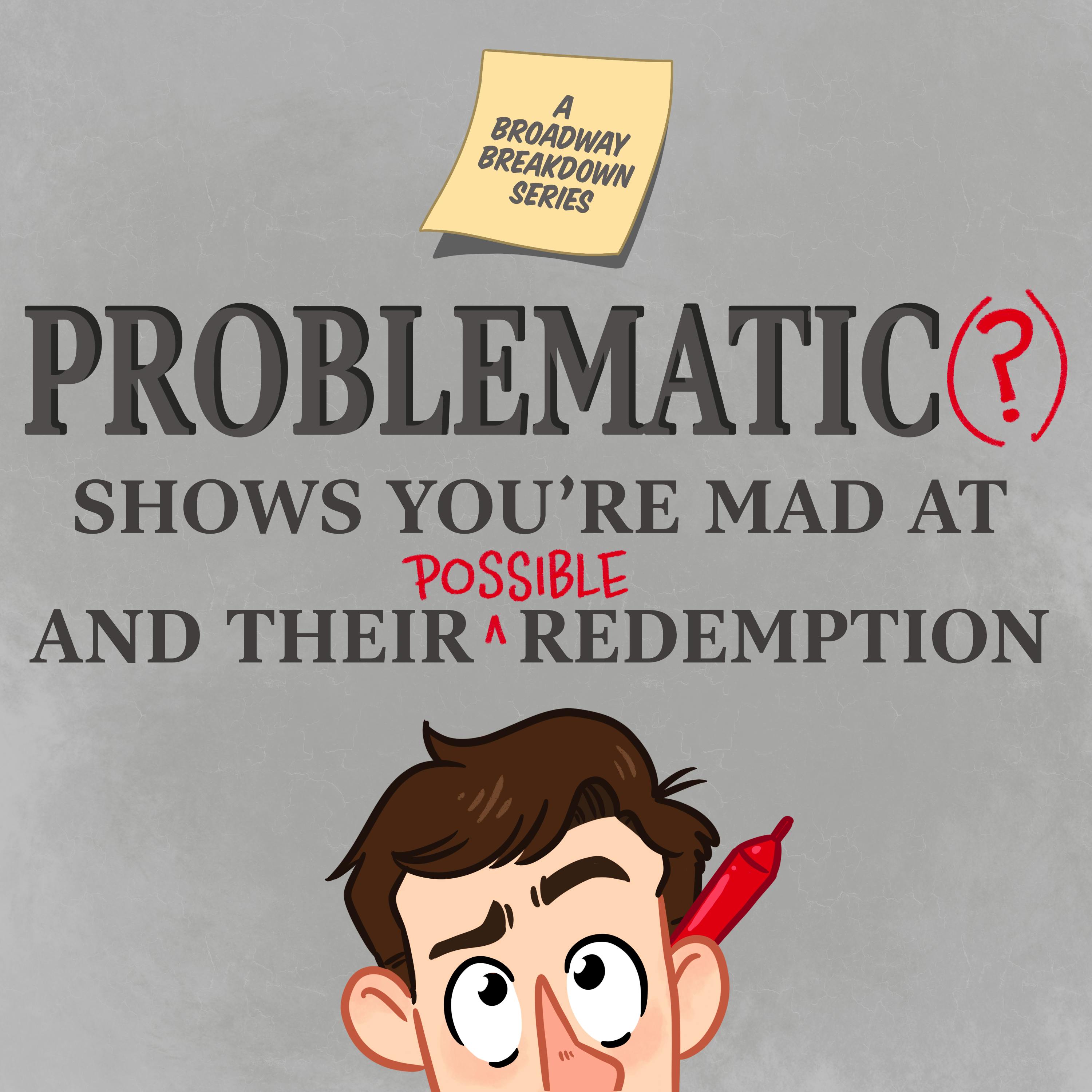
Broadway Breakdown
THE KING AND I w/ Corey Lubowich
01:27:14
A brief discussion on the Rodgers and Hammerstein classic
Loading summary
Transcript287 lines
- [00:26]
A
Hello all you theater lovers both out and proud and on the DL. And welcome back to Broadway Breakdown of Pop podcast, discussing the history and legacy of American theater's most exclusive address, Broadway. This series is called problematic question mark. Shows you're mad at and their possible redemption. I am your host, Matt Koblick, the least famous and most opinionated of all the Broadway podcast hosts. And with me today is a theatrical, creative artiste. You might know him best for his work with Team Starkid, but after today, you're going to know him for being an opinionated bitch like me. Please welcome to the pod, Corey Lubowitch. Hello, Corey.
- [01:06]
B
Hey.
- [01:08]
A
Welcome to your first episode of Broadway Breakdown.
- [01:12]
B
Thank you so much. So happy to be here.
- [01:14]
A
So happy to have you. Corey, what show are we talking about today?
- [01:19]
B
We are talking about the King and I.
- [01:22]
A
The King and I. Okay, I. Sorry. I heard of it. I could have sworn we were talking about Jagged Little Pill. Fuck. Okay, yeah, now we're talking about the King and I. I have heard of it. I have heard of it. How did this show come into your life?
- [01:35]
B
On vhs, of course.
- [01:38]
A
Do with the OG Movie.
- [01:40]
B
Oh, yeah. Oh, yeah. I feel like there. It was like, one of those that. We had a coup. We had, like, lots of VHS tapes, but, like, it got a lot of play. It was also, like, not one of the, like, big, like, blister, like, Disney ones. It was one that was just like a cardboard sleeve, because I distinctly remember that one. And like wizard of Oz, because also wizard of Oz had like a, like, a little flap thing with, like, photos on it. But. But yeah, I think my. Trying to think it's probably. My grandparents, like, had it on VHS and, like, probably showed it to, like, me. Me and my brothers first. Like. But yeah, so I. I grew up watching the VHS a bunch. Yeah.
- [02:24]
A
I was around when the 96 Broadway revival with Donna Murphy happened. Although I didn't see it, I remember all the posters. I had friends who had seen it, and I would look through their souvenir programs and think how pretty it looked. Because we'll talk about it. It's one of the things I've been asked to discuss with this show is the chances for opulence whenever you do a production of the King and I. And exactly what that means and how you go about it. For sure. Yeah.
- [02:51]
B
Is that the one that the poster is sort of like an elephant? Like.
- [02:54]
A
Yeah.
- [02:57]
B
That poster was, like, in up. As, like, one of the posters in the theater classroom of my high school. And I truly was, like, staring at one day I was, like, looking, and I was like, wait a second, because that one is. That was choreographed by Lars Lubovitch.
- [03:15]
A
Yeah. Everything but the Small House of Uncle Thomas. He choreographed.
- [03:18]
B
Yeah. Who is my cousin.
- [03:20]
A
Oh, no way.
- [03:22]
B
Yeah. He changed the spelling of his last name just because I think, like, Russian dancer. Those Russian names were in when he was coming up.
- [03:34]
A
I mean, I truly thought he was a Russian immigrant because of his name. I've never heard a single interview of his, and I only know him from the three theater shows he's done, so I was like, oh, he's from the ballet world.
- [03:47]
B
He's very Russian.
- [03:47]
A
Yeah, Well, I.
- [03:50]
B
My understanding of, like, Lubowitz, I mean, it's. It's. I think it comes from. Again, this is what I've been told by, like, you know, from my. My grandparents, that it was. It was obvious it's the name of a town. Like, it's. And the. Like, the. The labavichers, like, same thing, same town, but that. I think it's, like, on the border. So depending on when you look at the borders, like, it was. It could be Russian or, like, Polish. Like, it's sort of in that realm.
- [04:19]
A
Okay. Yeah. The poster for that revival, it's very eye catching, although I personally think it has nothing really to do with the show. I just know that revival, the, like, the. The. The proscenium was flanked by two elephants, and so that was like their big calling card was, it's all about elephants. And I had seen the movie many times, which will also talk about briefly, but I hadn't seen it live on stage until the Lincoln center production, and that's the only one I've seen live to this day. I saw it twice. I saw it when it opened with Kelly, and then I saw it a year later when Marin Maisie took over. Full disclosure, I liked Marin a touch more. Marin was a little ballsier. And I, like my leading ladies, have balls, especially someone like Anna, who's, like, a bit of a stinker. And Kelly was very British, very refined, sang it very beautifully. She did a lovely job. And then Marin came on, and she was like, I'm not taking anyone's. I'm like, that's right, Queen. So that was my life. Have you seen it live before or just the film?
- [05:16]
B
I saw the. That revival with Kelly. I believe that's the only other time I've seen it.
- [05:22]
A
Okay, well, so for the uncultured Fox, and because Corey's time is limited today, everybody, this is actually going to be the shortest episode of Broadway Breakdown. In maybe two years. So just letting y' all know, I'm so sorry.
- [05:33]
B
I didn't know how long the breakdown was.
- [05:36]
A
It just means I'm not allowed to go on non related tangents. It has to all just be about King and I. But Corey, for the uncultured fucks out there, which is what I call my listeners, what is the King and I about? What's the plot?
- [05:49]
B
The plot? There's this, this British lady named Anna. She comes to Siam to like, she gets hired. She comes with her son. She gets hired to teach English to like the, the children of, of the King. And you know, classic fish out of water, but also like a little white savior. Fish out of water. And she like teaches. Teaches the kids English and she like forms this relationship with the King because he like, wants to be taken seriously on a global level, which is why he's like brought her in to like teach his family, like, you know, whatever the sort of British ways. But they both learn from each other.
- [06:37]
A
Yeah, I guess that is. That is a pretty solid account. I. So I remember enjoying the movie, always finding it a bit on the long side. And then I saw the revival and also really enjoyed it again, finding it a touch on the long side. But I was like, I feel like this is more complex than people give it credit for. And then when I was reviewing it again for this podcast, I still like this. Full disclosure, I do think this is objectively a well made musical and I will discuss some issues that have now come up with me with it as well as I'm sure, issues you have and the reason why we're talking about it today, because it has been discussed as a problematic musical for some and not for others. And we are here to definitively decide, Corey, which is true. Because as you know, these things are absolutely kind of.
- [07:28]
B
There's a correct answer.
- [07:29]
A
There's always a correct answer. But I. I remember finding the final scene on my review for this. Not problematic, but. And also I want to disclose to you as we record this what problematic means, because the way people use the word for shows like this is not technically accurate, but.
- [07:52]
B
Yeah. What do we mean by it?
- [07:53]
A
Well, so I think I've already said this on the prom episode, which will be before this one, but I was talking to friend of the pod, Patrick Pacheco, and he was like, well, problematic technically means like a problem musical. A musical that doesn't really work, that can't be fixed.
- [08:08]
B
Oh, like.
- [08:09]
A
And I was like, yeah, that's. That's absolutely how it should be used so, like, a show like Candide or Merrily can't ever totally work, no matter how much closer you get to fixing it. And that's totally true. But now it's used for shows that people take umbrage with, have issues with, usually on a moral level. And as I've said with Allie, and it's very. And I want to underlined it as we continue to talk about this musical, the majority of writers for Broadway shows that people have moral objections to, the majority of those writers are on the liberal side of the political scale. So I want to make sure people understand that, especially someone like Oscar Hammerstein. And I want to put the historical connotations of the show in a minute. He was not someone who was like, you know, who's the best white people, you know, who should stay in the home? Women. That wasn't. That wasn't his view. But he was, you know, a white hetero male in a certain period of time. So while he was extraordinarily liberal. Liberal for his time, we have. Many of us have progressed in a certain way that look at that as a little more rigid, but that's. That's where we go with problematic. Um, the final scene, as I was saying, I was rereading it and watching the scene, I was like, this part is a little white savory. And I wonder if a different director might have been able to tweak the viewpoint of it, because I do feel the majority of the show is sort of a butting of the heads of two very intelligent people who are both very stubborn and have their own prejudice in the world. Because it's interesting to watch Anna in this piece and notice how, like, while she is literally hired to bring Western culture to Siam because the king is aware that they have to progress and expand, which is a real thing that actually did happen with the king. She does let her prejudice get the better of her many times. And just because something is not like how she's known it, she immediately assumes that it's archaic. And it takes sometimes a baller like Lady Tian to be like, I'm not dumb, bitch. Like, yeah, she's like, you think that I'm archaic? Like how? Like, what's the polite, royal way to say, go fuck yourself? And that's what I love about Lady Tiang as a character. But no, the final scene, it gets a little like, anna, we'll be lost without you. Please stay while our father dies. And I'm like, part of you as a director wants to direct it so that the little letter that the kids write to Anna at the end is the King's, like, own little manipulation of, like, I'm going to have them say all the things you want to hear them say, so you'll stay. But I don't know if that's how Hammerstein intended it. I think he was just trying to get the audience to go, aww.
- [10:50]
B
Yeah.
- [10:51]
A
Unclear. So, first of all, Corey, what is something about this musical that you admire and then something you would like to address an umbrage with?
- [11:02]
B
I. I do think the score is gorgeous. Like, I. I think that is, like, you know, it's. It just like, inject that right into my veins. Like the. The big sort of classic orchestra swell, I think. I think that just like always, like, does hold up. I mean, it's like that Rodgers and Hammerstein thing where you go, yeah, you can hate the shows, but, like, there's still some good tunes, like, and all. And also, like, we just don't get very many of those sort of types of scores anymore anyway, like, on Broadway, because it's all like, pop rock type stuff.
- [11:45]
A
What Corey just said, though, with, like, the subtlest of, like, shoulder shrugs of.
- [11:49]
B
Like, pop rock, which again, love, but, like, different.
- [11:54]
A
Yeah.
- [11:55]
B
And so I think that that's what I. I definitely felt that when I saw the. Was it 2015 revival, like, just you hear like, that full orchestra and it just like, washes over you. And like, I'm literally getting like, goosebumps talking about that. So, yeah, it's like, cheesy to say, like, oh, the music. But like, really, it just like, cuts, at least for me, like, straight to the core of that. And truly, like. Yeah, like, you can't discount that.
- [12:32]
A
I think that's absolutely fair. Music is a very chemical reaction. It's like kind of you. You can always dissect it later. I mean, yeah, I feel like no one in the moment is ever dissecting music in an intellectual way. It's after it's over and you're like, repeated listening to it. You're like, oh, there are layers here. There are things to look into.
- [12:51]
B
Yeah. And that's like the, like, that's in general the magic trick with musicals where you go, it's. It's like a biological shortcut to feeling an emotion where if it's good, you just sort of bypass the brain. Then you go straight into the body. You feel it. And then hopefully the lyrics support that and you can dig into that, intellectualize that later. But it's emotion first and it's a shortcut. There that even the most compelling scene, like a dialogue scene, can't get you there that intensely or that quickly.
- [13:28]
A
Absolutely. I think it's. Lindsay Ellis said in a YouTube video, she said, musicals are something that your heart always understands, even if your head doesn't always understand it. And I think that's. I mean, that's exactly what you're saying. And it's. It's absolutely true. I mean, the best musicals and the ones that remain evergreen are the ones where it can tap into that emotion while still maintaining a sense of intellectual property. I don't know. I'm not. I can't think of the right word, but you know what I mean, where it's like, you don't have to shut your brain completely off in order for the emotions take over, which is something that I've had issues with with the last couple of years of musicals, is I've seen a lot where, like, the structure is poor, or, like, there's no logic whatsoever, the characters make no sense, and. Or, like, the lyrics don't support the music or whatever, and people go, well, can't you just enjoy it? I'm like, I can't turn my. My brain completely off.
- [14:21]
B
Like, yeah, like. I mean, that's like, in sort of marketing terms. I hear people talk, like, in the marketing world, where you go as consumers, like, in terms of, like, decision making. Like, at the end of the day, all decisions we make as humans are emotional ones. And then we back them up with, like, logic and, like, facts and reasoning. Like, it's like we're emotional beings first, and then we sort of back into the rest of it. We go, yeah, yeah, logic, the rest of it, to justify that. And I feel like that's how it is where you go, if done correctly, the music is a shortcut there. And then the surrounding, the structure, the lyrics, the book, all of that has to support it so that it's not just like a cheap high that wears off, like, real fast.
- [15:04]
A
Yeah.
- [15:06]
B
And you can go back and sort of it all makes sense, but if it doesn't, it, like, falls apart very quickly.
- [15:12]
A
Yeah. What's a musical for you where you get that sort of emotional catharsis but still feel intellectually stimulated.
- [15:23]
B
And suddenly. I can't think of a single musical.
- [15:27]
A
It's Annie.
- [15:27]
B
What's a musical?
- [15:29]
A
Annie does it, doesn't it?
- [15:30]
B
I don't think I've ever seen Annie in full.
- [15:34]
A
That's.
- [15:36]
B
And that's how I also feel about Annie.
- [15:38]
A
Yeah. Well, they made a really lovely TV movie. That's 90 minutes and that's perfect for that show. I mean, the thing is, like. And it's luckily, in King and I, it's not the entire show, but there's enough of it in there that I'm just like, get rid of him. I know it's part of the plot, but children, child actors very rarely do I find them successful. And when there's a bad one, it's.
- [16:04]
B
Like a. I know the.
- [16:06]
A
The.
- [16:07]
B
That's. The problem is with child actors is, like, the best possible one is going to be fine, but, like, mediocre to, like, bad are gonna ruin your day.
- [16:18]
A
Absolutely. Especially on stage, where there's nowhere to hide and. And anything can fuck it up.
- [16:26]
B
And it's. And it's mostly like I. The kids who are like. They're trying so hard. And that's the problem.
- [16:31]
A
Yeah.
- [16:32]
B
They're like. Like, I go, you're working so hard. And it's, like, making me nervous.
- [16:38]
A
Yeah. I mean, there's. There's a reason why the children of the King. In King and I, the ones that land the most are the ones who don't say any lines, but just have.
- [16:47]
B
Their entities have, like, a physical gag. Like.
- [16:49]
A
Yeah. The march of the Siamese children. Like, the ones that have their physical gags but don't actually have lines are the ones that the audience are super.
- [16:55]
B
Into and they can project whatever they want onto them. And. Yeah.
- [16:59]
A
Because we don't. We don't have to actually hear them talk because once a child actor speaks, like, all. All form of natural cuteness goes away, and we're reminded that we're seeing a presentation. And. But I think that's also kind of true of theater in general. Like, you want. You're always. We all are in a silent agreement that we're watching a facade, but we want to buy it as much as possible. And anything that ruins that agreement, I'm like, you've. It's. It's a. It's a promise that's been broken, and, like, well, now you can't take it back. And now I don't trust you anymore.
- [17:31]
B
Yeah. Oh, I thought of a musical.
- [17:34]
A
Yes.
- [17:35]
B
Name this. It feels very Billy on the Street. Like, name a woman falsettos.
- [17:43]
A
Okay.
- [17:44]
B
I love falsettos. I like Act 2 better than Act 1 is a little weird. Act 1 is a little weird. But I think there's, like, for me, that nice balance of, you know, you got a hummable tune here and there. But there's also, like. There's, like, storytelling, there's character, there's, like, there Are those, like, sort of musical, emotional things? But then, like, the rest of it backs it up and feels like there's. There's stuff to, like, dig into there that's.
- [18:16]
A
I mean, it's a good answer. A lot of people love falsettos. I have more of an appreciation for it myself, but I like listening to Act 1 and watching Act 2. Does that make sense?
- [18:26]
B
Yes, absolutely.
- [18:27]
A
Yeah. Because I think there's so many great songs in Act One, but Act Two is where the story really compels me. Act One, I'm always, like, at arm's length, story wise.
- [18:34]
B
Yeah. And this was. I mean, I was no longer in high school, but I like, my high school. Did it just falsetto land just like Act 2. And so that was my first introduction to it. And it's like a little gem of a full story. It was, like, delightful, like, lovely. I cried. And then I saw, like, the. The falsettos. Like, with the first act, I was like, huh. There's some stuff in act one where we go, that's. That's weird.
- [19:03]
A
Yeah, well, it's so. It's funny because it's like, you. You. I feel like you do need that backstory of Act One in order to give greater context for Act Two. But at the same time, like, act two is its own little musical at the same as well. And there's enough context clues in Act 2 that if you never seen Act 1, you know, you can pick up on it mostly. But we're not talking about falsettos.
- [19:22]
B
Anyway, sorry, sorry.
- [19:23]
A
But thank you for answering my question. What is a major element, though, of the King and I that really negatively sticks with you?
- [19:34]
B
It's tough because it's sort of in the, like, contemporary sense of when we talk about things being, like, problematic and, like, you know, story framing and, like, agency. It's sort of, like the concept of the whole thing because, like, when you dig into it, like you said, like, there actually is a surprising amount of nuance in terms of, oh, it's not fully a white savior, because she actually learns, oh, she assumed they're these sort of savages and actually has to be like, no, they're not. There's stuff to learn from them. But, yeah, it's just the framing in general of the exotic Orientalism of it all and the. The way the accents are sort of, like, written and, like, it's just, like, inherent in the. In the story. And I think there's also, like, an amount of, like, growing up where you go, this is. This was all true. Like, this Is like, based on a true story. And I go now with, like, more context. You go, yeah, based.
- [20:41]
A
Yeah. I think the best way. I think the best way to describe the King and I is historical fiction. It's more historical than fiction. But it's also more fiction than historical.
- [20:52]
B
Absolutely.
- [20:53]
A
Yeah. Like, it's not Abraham Lincoln vampire killer, but it's also not Seabiscuit.
- [20:59]
B
Sure. It's because also, like, all history is fiction.
- [21:02]
A
But. Yeah, well, it's all based off of whoever's telling it. And yeah, there's always a narrative that we're told for years and years and years. And then more information comes along or someone else has a different take. It's why Wicked's been running for forever. Because they're like, you thought you knew wizard of Oz. How about a different angle?
- [21:18]
B
It's a great marketing hook, honestly.
- [21:20]
A
It truly is. I was just listening to a recent Lost culturistas because sometimes I like to dabble with the gays. And they were talking about how, like, groundbreaking Wicked was because everyone was like, you can't have two female leads in a show. I'm like, that's. There were shows with two female leads before. Like, that wasn't Wicked's hook was that. It's. It was the two girls. The hook was wizard of Oz. But I digress.
- [21:43]
B
That unknown property.
- [21:44]
A
Say what?
- [21:45]
B
That unknown property.
- [21:46]
A
Yeah, yeah, I know. That unknown property. It's. So I think it's important actually to give a little context for the listeners who maybe only know King and I on its own. Because you actually brought up two points that people wrote in that they wanted us to discuss. Because I don't know if you know this, Corey. I know you've got a huge social media following. I have a dedicated one, a fraction of yours, but it's dedicated. And I re. And I posted to Insta and I said, hey, guys, we're going to be talking about this show. What are some things you'd like us to discuss? Things you love, things you have issues with. One person did have wanted us to talk about the Orientalism of King and I, the exoticism of the Orient, which is something that is prominent in many shows. And it's ironic because that's something that Hammerstein wanted to go against with the show. And the question is, how well did he succeed? And then the question is, you know, how. How much could he have succeeded for his time? And then where did we pick up from there? The dialect was something you also mentioned. Somebody else also said something that Hammerstein was really big on in his scripts. And you can see it in Oklahoma and Carousel as well. And I think even in a little bit of South Pacific, he didn't really trust actors to read the words and then do the dialect on their own. He was like, let me give you examples phonetically. And listen, that is great for some people. Some people can't do do dialect any other way. But it is something that can be tricky for others. And I think it is something we've kind of moved on from. Now that we have other ways to do accent work with scripts, that's an easy remedy. That's okay. Someone, let's go through the scripts and just write out the words. Don't do that. Phonetics, that's an easy fix. But a quick history, everyone of just sort of how we got this musical. Rodgers and Hammerstein by this point had done Oklahoma, Carousel, Allegro and South Pacific in succession. And Allegro is sort of like the one belly flop that they had. And even that was like a nine month run where everyone was like, you got a little over ambitious but good on you. You know, like Oklahoma changed the game. Carousel, like, this might actually be better, but it's also a lot darker and weirder. And so it's not going to run for 10 years in South Pacific. They're like, you found the happy middle ground. You found the dark weirdness of Carousel with the like mainstream happiness of Oklahoma and you got yourself a nice phenomenon. And so with King and I, they were in a similar position as they were post Oklahoma, where everyone was like, what's next? What's next? You've done three major home runs and one sort of fumble. And they were not really good at kind of coming up with ideas for musicals themselves. Every time Hammerstein had an original idea that he, you know, did on his own, it didn't work out like Allegro, Me and Juliet. I think he also came up with the idea of adapting Steinbeck's Cannery, whatever Cannery Row for Pipe Dream. But when people came to him with material to adapt, that's usually when they created their best work.
- [24:33]
B
That's something that, like, infuriates me in general when everyone's like, ugh, like whenever, like I. I get it, like a movie adaptation, like, comes to like, oh, Broadway. And everyone's like, I was like, oh my God. They're like, no, like original ideas anymore. I go, I'm sorry. There have never been original, like, ideas, like everything. They just was a books before. Like, just because it's an adaptation does not inherently mean good or bad.
- [24:58]
A
Oh, no.
- [24:59]
B
Like, and that always drives me up the wall.
- [25:02]
A
Absolutely. Same. I've always said, listen, a great musical can come from anywhere, be it in a quote unquote, original idea or an adaptation of something. The difference between Robertson, Hammerstein and, you know, movie adaptations now is, you know, it's about extending the financial success. Exactly. Got to make it as close to the ip, Denver.
- [25:23]
B
But like, I, I mean, I, I do think there's lots of, like, artists working on those who, like, have the best intentions, like, in terms of that. And like. And you know, and it's still like a commercial thing. It's obviously like the mouse, but you go like Lion King. You go there. That is like, I feel like the ultimate example of like, both, like, commercial success and taking the IP and like expanding it, but also changing it in, in different ways.
- [25:46]
A
Yeah. And was a true collaboration because if you look into it, Julie Taymor had some truly bonkers ideas that the House of Mouse was like, you can't do that, but we'll let you do all this other stuff. So that was very much a back and forth. But no, you're absolutely right. There's again, if you go in with truly, how to make something into something new in the medium, it can be something fantastic.
- [26:09]
B
And when you, as someone who has made new musicals, where you go, when it isn't something, when it is totally original, it's really hard because you are both trying to figure out who are these characters, how do they behave? What is the world? Who are these characters? Also, what plot wise is happening? And then also, okay, now how does that come to life through music? When does that sing? When does that happen? And so literally every piece is moving. There's no solid foundation. And so it's hard to know sometimes what to fix when something isn't working and when it's just like, it makes sense to a lot easier in other ways where you go, oh, the story, like the plot and the characters have sort of been figured out already. And like, maybe we're going to change them and adapt them, but, like, it's still a Herculean feat to like, figure out how to musicalize it anyway. And so it's like a little. At least you're not trying to hit a moving target. So I go, yeah, it makes sense that, like, what if the story's there? Like, yeah, yeah.
- [27:09]
A
But the other thing is they always kind of had to take some convincing. Like Carousel, they didn't want to do Lillian because they were like, I don't understand Eastern Europe. And then they moved it to New England. And they're like, oh, I get it now.
- [27:21]
B
Now, I get it now.
- [27:22]
A
Yeah, and they did. So this one came about because Gertrude Lawrence, who was a really big musical theater star of the 20s and 30s and had like one last major success with lady in the dark in 1940, she was looking for like one more big hit, sort of a minor comeback. Yeah, exactly. Well, she didn't know she was dying, but yeah, she was more, more detrimental than dying. She was a 51 year in entertainment and she was like.
- [27:49]
B
So she was basically dead. Like, basically.
- [27:51]
A
Yeah, she died and then she died again. But so she, her, I think her agent, no, her lawyer presented her the Anna and the King novel, which was then turned into a movie and presented that to Rogers and Hammerstein. I think they first went to Noel Coward and then Cole Porter and both were like, absolutely not. And then Rogers and Hammerstein had read. They. I think they had read the real Anna Lee Owens memoir because that's sort of how this all came about. Is Anna Lee Owens in real life did go to Siam to teach the children and the wives of the king and, you know, was there for close to 10 years. And things happen, some things which are true in the musical and her memoir, some things which aren't. She publishes her first memoir about her time there. It's a huge international sensation. She publishes a second one, also a sensation. People in Siam, now known as Thailand, come forward and like, some of the things she said true. And Anna's like, your word against mine. And because basically, you know, she over exaggerated her con, how close she was to the king and exactly how much she had in the court. But you know, she. The general concept was still true and some things still happened. But her memoir then got novelized, so like, got even more fictionalized. And then it got turned into a movie which got even more sensationalized. And so Rogers and Hammerstein decided they wanted. They. They've watched a screening of the movie which has Rex Harrison as the king. So, you know, that's right this time. And they like the movie. They're like, okay, I think I see a musical structure here. And they immediately go, we have to accept the fact that we're not making a documentary of what actually happened. Like, we, like, we only have a year to write this and we could either pour all of our research into what actually happened between Anna and the king, or we could pour all of our research into Siam at this time and like, do as much of the cultural research. And so they, they decided we don't care about Anna anymore. Like, we're following the movie and we're going to put all of our research into like the actual culture which I think is of the two. I'm like, I would rather you do that. You know, make up your own story and try to put as much realism of the world as possible so they're not like, ah, you know, we made up this random tradition and everyone in Thailand, that's never a thing. Because the, the thing about the show that's made it problematic, quote unquote to a lot of people of Thailand isn't actually any of the cultural elements of the show, but rather how the king is presented. Because the, the King as I am in real life. The, the King Mongkut I think is his name. Sorry for that. Up. I think that's right. M O n G K U T. Why am I saying this to you? You, you didn't read any of this.
- [30:34]
B
I was like, I go, I am, I can't help you with.
- [30:39]
A
I'm not asking you to because you would know. Oh no, it is. I'm quite M o n g K u t. He was a very spiritual man. He was a monk for half of his life before he ascended to the throne because his brother died and because of his history as a monk, it gave him more awareness of the world around him. And he was the one who was like, there's a world outside of Sam. We have to let it in and learn and grow and expand. He was not really a dictator nor was he always hot headed.
- [31:08]
B
Like.
- [31:09]
A
Yeah. And like putting his faith in science to the extent where he was like, all other religions are bogus because science comes first. Which is like a major trait of his in the, in the musical.
- [31:17]
B
Yeah.
- [31:17]
A
He's also a lot older in real life and died when Anna was on like a little trip with her son around the world. Yeah. So just these things. So they, they stay with the movie and they spend a year writing it and they, you know, do a wide casting call for the roles of the wives and the children and the king. They originally wanted Alfred Drake, who had starred in Oklahoma for them and had just done Kiss Me Kate on Broadway, to be the King. He wanted $5,000 a week, which is like $50,000 today. And they're like, go fuck yourself. So they, I think it was Mary Martin suggested that they hire Yul Brenner, who had just been in a musical with her a few years prior called Lute Song. And again, guys, this is 1951. Mary Martin had just started in a musical where she played a Chinese woman. This is where Broadway was at. It's. It's just always important to know these things because you only can progress so far based on, you know, what's around you and what you know is around you. It's always hard to know where the future goes. So Hammerstein, like, looked around. He's like, I don't think. He's like, I think we can do a little better than Lute Song. So, you know, Yul Brenner is not of Thai descent. He was Mongolian, but, like 1/10, which is, you know, not. Not really the best representation. He was mostly Russian, but it was enough for people in 1951. And the show, when it opened, was sort of considered a minor disappointment because everyone was sort of expecting another groundbreaking South Pacific Carousel, Oklahoma. And they're like, they pretty much have stuck to what they know, and it works. But we're like. We were really waiting for, like, another major breakthrough. But I don't think people really recognized the breakthrough that they did have until many years later, which is the dynamic between the King and Anna, which we'll get to in a second. But what ended up making the musical become an enduring classic, because it was very successful. It swept the Tonys. It ran for three and a half years. The movie version was a huge phenomenon, more so than the movie versions of Oklahoma, South Pacific or Carousel. And because of that and because of the success of Yulbrenner in the role, the show was constantly revived in New York. It's been done all over the world except for Thailand.
- [33:36]
B
And what's the timing of, like, the movie versus Broadway?
- [33:40]
A
So Broadway opened in March of 51, I believe, maybe 52. And then the movie version came out in the spring of 56. So it was a. Yeah, movie versions had a relatively quick turnover. They tried to wait till the show was closed because I think Oklahoma. Might have been the exception because that just ran for ever. But, yeah, 56. And then after that, it was just revived all the time and went on to sort of become the most well liked of all the Robertson Hammerstein musicals because even though Sound of Music was an even bigger phenomenon as a movie, it was never revived in New York city until the 90s. And everyone always kind of felt like that was treacly and not really Rodgers and Hammerstein because they just wrote the score. But starting, I would probably say, in the late 80s, early 90s, became this sort of started the conversation of this reckoning that brought us here today, which is, you know, it has become this classic, enduring classic. And then other people going, but wait a second. I think there are things we need to actually discuss here, and we will try to discuss as many of those things as possible. You were talking about sort of the whole just framing of the show, of the idea of this. Of this woman coming into this foreign country. And there are obviously hints of white saviorism. One person wrote in to say, king and I in Sound of Music were basically the same show. And I was like, is it because it's about a woman who meets children? Because otherwise it really isn't. They're not.
- [35:05]
B
Yeah, but it is. Yeah. About a woman who meets children. Very different women.
- [35:11]
A
I mean, you could say the same thing of many shows. What happens? Oh, a woman meets some children.
- [35:16]
B
Yeah.
- [35:19]
A
You know, one woman was married and had babies. She. She had done some fucking in her past. One woman was famously a nun before she met her children.
- [35:30]
B
Yeah, I. Yeah, I don't know that I. Yeah, I think that feels pretty, like, surface level.
- [35:35]
A
It is pretty surface level. I think also the idea of, like, an austere father figure who melts because of the woman. But that's not. But that's not really true in King and I. And again, this is what I was saying before, and I want to talk about now. What I. The thing I really love about this show that I do think was pretty groundbreaking for its time and is rare now is the dynamic between Anna and the King. Because it's not really romantic, not in the way that we think of romance.
- [36:04]
B
It's like it becomes intimate but not romantic. There's a closeness there.
- [36:09]
A
Yeah. It's almost like when Harry Met Sally right before they actually have sex. Like, it's.
- [36:16]
B
It just, like, builds and builds and like.
- [36:18]
A
Yeah, because ultimately, the thing that they. That they have for each other is a respect of each other's intelligence and. And their courageousness and. And they are kind of, in a lot of ways the same person, because they both are stubborn. They both are clouded by their own prejudice. And I would argue that the King is far more aware of this than Anna is. Because when he's left own soliloquy, which is a puzzlement, he questions his own thinking, his own logical and moral thinking. And he has that line about, you know, if there's one thing I know, you know, people often start questioning things that they concluded long ago. He goes, so what is true? And I'm like, good on you. Because when Anna's left alone, she's talking about her dead husband, and she's talking about how much, you know, you pissed her off. She's not questioning the world at large, which I just. I think that's a fascinating insight. I don't know. Talk to me about the dynamic. What, like, when you.
- [37:21]
B
I, like, I. I think you're right. It is. I mean, the setup, it is very that, like, at least the rom com of, like, enemies to lovers sort of like, set up of like, there's. There's. They butt head so hard because they're actually so alike. And I agree, it, like, it basically follows that in terms of, like, how they fall into each other without the, like, explicit. I do think, like, they're not as a kid, but, like, as an adult. There's a little bit of like, are they gonna. Are they gonna fuck? Like, and like, if it. I feel like if it were written today, like, they probably would. I don't know. Like.
- [37:59]
A
Yeah, I think a writer today would actually have them at least kiss, because that's sort of what's implied could happen at the end of Shall We Dance? Is that they might kiss and if, you know, they weren't really interrupted by Tuptam being captured. Yeah. What a whore going off with a man she loves. The Someone also wrote in that they felt that of all the things in the show, the Tupped in plot line is, in their opinion, what has aged the worst. And as I was rereading it and then looking up the history of sort of how the Tuptum character came to be, I'm like, I'm not sure I agree with that. I actually think the Tuptam plot line is pretty good. And especially when you look into what it was in the book. In the book, Tup Tim was a wife who had an affair with a priest and basically, like, had a baby hidden away. And when it was discovered, she was burned at the stake. And Hammerstein was like, okay, so I'm not doing that.
- [38:52]
B
Yeah.
- [38:53]
A
He's like. He's like, obviously, we have to have some stakes here. We'll keep the romance. Because he's like, we do need a romance here. And Gertrude Lawrence was again, almost dead at 51 and famously had a very limited vocal range. So, like, we need some sweeping ballads here, and we can't give them to Gertrude because she can't fucking sing them. So they're like, let's give them to Tuptam. She's like, but we gotta give her a romantic foil. So it's Lunta, who's the man who brings her over from Burma. In the musical. Tuptam is a gift from the king of Burma. But Hammerstein's like, I don't want to kill her. He's like, I don't think that's fair. He. And so, you know, there's a moment after Shelby dance, and she and Lunta are going to run away. They get captured. Lunta ends up being the one who's dying offstage. Because this is the Rodgers Hammerstein musical. There's always got to be somebody who dies at the end. Yeah, yeah. Usually it's a man. The men.
- [39:49]
B
Good.
- [39:50]
A
Exactly. We need fewer men in this world, and they tend to be the hotter men. You know, Oklahoma. You can cast Judd however you want, but sometimes they cast a Judd who fucks and he dies. Billy's the one who dies in Carousel. Cable's the one who dies in South Pacific. And King and I, it's Lunta and then the King. And again, we usually cast a king who fucks. So, like, it's always these virile men where it's like, no, don't die before you fuck me. That's the real tragedy. But Hammerstein. Oh, sorry.
- [40:24]
B
Oh, no, I was just. In terms of that. In terms of that dynamic of. Also, I think so much of this show, it sort of rides on that where you go, yeah, there's an element of inherent. A lens of, oh, isn't it barbaric? She's being given as a gift. She can't be with the one she loves. And I think that plays into where you go. This feels problematic. Even though an arranged relationship or someone having to marry or be with someone they don't want to is a trope in every possible narrative and every possible situation. But again, based on history of particularly American and British Orientalism, where you go. It's just another thing of, like, yeah, it's.
- [41:20]
A
So with the top 10 plot line, I think what helps that from. From having the opportunity to be less cringe. It can absolutely be cringe.
- [41:28]
B
And I. And I don't think it's, like, explicitly like, oh, this is. Yeah, well, I have a p. Problem.
- [41:34]
A
Yeah, well, it's one of those things where there's a lot of gray area that you can really explore if you choose to do so. The. The thing with Rodgers and Hammerstein and a lot of golden age musicals is they fall victim to really surface level presentations. And the movie versions of all of their musicals actually really did a lot of harm to their legacy over the years, because these movies of their musicals were mostly made in the 50s, where there was a hays code, where acting on film was rather kind of cheesy and so, as you know, we eventually go into Easy Rider and the Graduate and then One Flew over the Cuckoo cess and more sort of bold, natural kind of films. People would start looking back on the 50s, Robertson Hammerstein movie musicals going, oh, Jesus Christ. It's like, no, no, no. Like, if you actually read the script and you put in people who acted like people, there's something to play here. And what I really. One of the things I really do appreciate about the last revival with Ruthie and Miles as Lady Tiang was that, you know, Bar Chair recognized that that role is sort of the. The importance of Lady Tiang as the head wife is that she adds the complication and keeps the musical from ever fully saying out loud, look at this barbaric situation. Because she is okay with it, and she is as smart as anyone else in that room, and she chooses all of her words very carefully. I also want to say the musical is very. If there's something that Hammerstein really does underline, it's the fact that there is a language barrier in this show, he emphasizes it very early that whenever Anna is speaking to people in Siam, they are speaking English back to her. And she is always caught by surprise by anyone who does. First of all, it's always hard to learn another language. So to learn a language in general requires intelligence. To have a understanding and of the complexity and nuance of someone's conversation in another language is extra intelligent. And to have a sense of humor in someone else's language is also incredibly intelligent.
- [43:43]
B
Yeah.
- [43:43]
A
When I was watching the end of Act One last night, and my mom walked into the room and she was saying, like, oh, king. And I like. And I said, no, no, wait, hold on. I'm like, here's a really great joke that Hammerstein has in here that shows that, you know, how much respect he actually has for the intelligence of the king. When Anna comes into the king's study and he also has it in the stage directions, he makes it a point to be like, there are books everywhere. He's like, this guy reads in many different languages. I was like, yeah, no, he's a smart fucking cookie. He's reading the Bible after they've had, like, a really big row, and she's going to leave, and then she ends up coming back, but he's reading the Bible and he's basically going on about, like, this Moses. It's kind of a dumb, dumb. And I was like, what are you talking about? He's like. He's like, how can you think that the world's Created in seven days. And she's like, oh, well, your majesty, the Bible's not written by men based in science. It's men based in faith. He goes, yeah, okay, whatever. And they have their whole thing, and they have to. And they. And they find out that the British are coming in because another reason why he wants Anna there to teach is he's very aware that the west is coming in to Siam, and the only way he can keep them from sort of invading and taking over is if he shows them that he's on their level, which he is. And he's informed that the British are coming, and they are going to do a massive presentation and incorporate a lot of western culture to appease them. And he says, we have a week. And Anna goes, a week? He goes, whole world was created in seven days, wasn't it? And I'm like, yeah. Like. And I. And I showed my mom that clip. She goes, oh, that's funny. I'm like, yeah, because he's fucking smart. And he's so smart, he can crack a joke in another person's language with their own religious culture. I think that's. That's one of those nuances that keeps the show from fully going. Like, yikes. It has its yikes moments. And then you have someone like Lady Tiang, who. When Anna learns of Tuptum's situation, she's a present. She's a slave. And Tiang is like, yeah, what of it? And she's like, say that. She's like, say that again to my face. And she, like, tells Anna, you know, this girl has a great situation in all of our eyes. She. Not only that, like, she's. I understand that she loves another man, but she's being incredibly stupid about it. Like, it's almost as if Lady Tiang is, like, the first thing. She's like, you're disrespecting the king by. By having. By having another love. She's like, but you know what? You can't totally control your heart. I know, girl. That's why I sing something wonderful. However, it's like, you can be less sloppy about it. Like, you are being a mess. And I think that Hammerstein, the optimist and romantic that he was, wanted to inject that romanticism in Tupten and Lunta, but also the realist in him was like, they can't get away with how they've been acting for two years and not get caught at some point. That's just the reality. So he has that. But Tuptam not only speaks English, and we learn this early. And he underlines it. She reads in English as well. And she makes it a point to ask Ms. Anna for a book that she's interested in. This is one part where I am like, Hammerstein, you're underlining the whole slavery bit a little too much here. She's like, I hear of this book, Uncle Tom's Cabin. I hear it's, you know, about slavery. Maybe slip in my way. It's as if, you know, falsettos is happening. And it's. It was maybe it's like in trousers still. So it's before Marvin has left Trena for Wizard. And he's like asking Mendel, he goes, I've heard about this book, the Velvet Rage.
- [47:08]
B
Yeah.
- [47:09]
A
Maybe gab that for me and maybe I'll come up with some interesting theories. It's. It's very like, bold and light. But I. But again, audiences were both more willing to embrace nuance, but also simpler themselves. So that's the tricky thing with Hammerstein books is like, there's all this stuff he wants to incorporate, but then like, the commercial side of him is like, how much can an audience actually accept here?
- [47:35]
B
Yeah. Like, before you, like, break that, how much can you, like, overload it?
- [47:40]
A
Yeah.
- [47:40]
B
Like in, in science. Like in like junior high, when you, like, have a penny and you're like learning about surface tension, you're dropping, like. Did you do this, like, drop like drops of water and you see it like bubble over and how many. How much water you can like, get to stay on a penny before it just like overflows?
- [47:56]
A
Yeah. Oh, absolutely. No, it's, it's, it's definitely. It's definitely that. Because theater is also a bit of a science. That's why we do workshops and out of town tryouts and labs. Like, you have to kind of find the right balance. Oh, before I forget, Corey, we gotta take a break. You're the top. Yeah. You're an Arrow caller.
- [48:17]
B
You're the top.
- [48:19]
A
You're a Coolidge dollar. And we're back. Something else that also I realized and when I was reading about this musical, this was, you know, the early 50s and segregation was still neck high in America. And they were. It was this article I was reading that was saying, like, there was a bit of a shock at the end of Act 2 with shall we Dance? When the king and Anna not only dance together, but dance in such an intimate way. And this is a show that also toured the provinces. This went all across the country. And it was a very bold sort of like, fuck you to a lot of the segregated states of like. And what, like, what are you so afraid of? Look at this. Look how joyful this is. Look how sexy this is. This should be happening everywhere. And I never really thought of that until. Until recently. I think that's a more subtle fuck you than you know. When Hammerstein writes you've got to be taught in South Pacific. But it is a bit of a fuck you.
- [49:24]
B
Yeah. Though I mean like this sort of perception of like Asian America. Like in relation to specifically like it's the model minority thing where you go. Yeah, yeah, but they're like not. It's not like fully like a mixed race thing because like they're okay.
- [49:41]
A
Yeah, well they're. They're okay until they're not like every other has. There's always an othering to every othering. Yes. I've. I've been saying this for a while now in terms of Broadway anyway. It's like Broadway's been like we're. We're trying to be more diverse like you're. And tell more diverse stories. I'm like diversity means more than just white people and black people. There are other ethnicities. And there's also. I'm like, there's also age, sexuality, gender, body type. Like it's. I've been like screaming this for years. I'm like, it's not a first of all. It's not a checklist. And there is more than two ethnicities.
- [50:11]
B
Yep, yep, yep.
- [50:12]
A
No, I absolutely hear you.
- [50:15]
B
But. But yeah, like that is an interesting framing though of like.
- [50:18]
A
Oh, right.
- [50:18]
B
Like in terms of the context of like when. When that is like touring.
- [50:24]
A
Yeah, but. And I think, but I think that had to have been on Hammerstein's mind again because he gives tucked him Uncle Tom's Cabin to read like the first major anti slavery.
- [50:36]
B
Like very pointed. Yeah.
- [50:39]
A
You know, he's very pointed. Like just in case everyone's unaware of how I feel.
- [50:43]
B
That just like reminds me. Oh, but we still have that where you go. Yeah. Like when Oklahoma. That Fox like has been. Was touring like.
- [50:51]
A
Yeah.
- [50:51]
B
Like the past like year in places where they were like sending out like warning emails to like ticket holders.
- [50:57]
A
Yeah, it's because it's so one of the things about this musical that I think is beautiful and also what has kind of hindered it now is that if Broadway had done its job 70 years ago, we would have had more stories like this and beyond this after the King and I. And we could look at it as part of a rich tapestry of diverse stories with you know, more than just white characters.
- [51:29]
B
And we'd be like, not just like, okay, you've got King and I and Miss Saigon, the Asian shows. End of.
- [51:35]
A
Exactly, exactly. And M. Butterfly in between for those of you who do plays. Yeah, no, if it wasn't just that, I think if there was one of, you know, a hundred or hundreds of the last 70 years on Broadway, we. There would be a little less scrutiny on it. But because of. And it's the same. I've talked about this before. It's the same thing with west side Story. Arthur Lawrence said, when we wrote west side Story, we expected Broadway to pick up the torch and continue doing what we were doing with diverse stories. Like, we, we expected.
- [52:07]
B
This is like the starting point. Like, exactly.
- [52:09]
A
Because if you look at Oscar Hammerstein's theater credits, he really did try to have as many diverse stories as possible. He had all these performance opportunities for non white actors. You have King and I and South Pacific and Flower Drum Song. He did Showboat. He also did the all black production of Carmen, which became Carmen Jones. Like, he really wanted as many opportunities for non white performers as possible and did his best for what he knew for the 20s, 30s, 40s and 50s as a. Again, as a white hetero man. And they were, most of them were major successes. And he was like, oh, surely when I die of cancer in 1960, other people will continue onwards. They won't. Like, it's. He's like, it's me right now. He's like, but I've made enough successes. Other people will do it. And then he died. And everyone's like, so we're good for 30 years.
- [52:58]
B
Yeah, we got him. It's like what you're saying with like the casting to you go as if, like, diversity is like a checklist of like, okay, we did it. We, like, we cast the perfect show. It's like proportionally diverse or whatever. And you go, no, it's like, not that. And it's also not that. Like, also that. Like, there aren't shows or stories that, like, where you go, okay, maybe there shouldn't be. There shouldn't be all white people. Like, yeah, it's not like succession where you go, I wish, I wish there was like, black character. Like, more black characters. You go, that's a. It's a different show. That's a different story. And the fact that there isn't like a central, you know, non white character is fine. It'd be different. It'd be a different show if the family was black.
- [53:41]
A
Yeah, absolutely fine.
- [53:42]
B
And it's not that, like, that shouldn't exist. It's just. There needs to be more there always.
- [53:47]
A
Yeah, that's always my answer. Just more and more and more. More all the time. More all the time.
- [53:50]
B
And then. Then none of them. It's like. And it's back to the model minority thing. Then this. The one thing doesn't have to be the perfect thing. The, like, the one that is the perfect representation.
- [54:02]
A
Yeah, there's. Because there is no perfect representation. There's no character in any show that represents everyone. That's sort of the point, isn't. It's like, we're all just so different with different experiences. And, I mean, for. When I announced I was covering this show, I had actor and writer friends in the theater who are Asian, you know, half of whom are like, I love that show. I will defend it. Another half. They're like, I have a lot of issues with it. One person wrote and they were like, I'm Ty. Like, I have a lot of complicated feelings about it. Probably very similar. Like, I love the score problem with the book. And that's always been kind of the thing that's traveled along with Rodgers and Hammerstein. And then every now and then, a revival comes along where we're like, oh, the book is better than I remembered. And then we're like, great. So that means we can continue doing the show and have it be the representation for 50 years.
- [54:47]
B
It's like, yeah, no, that's not.
- [54:49]
A
That's not what it is.
- [54:50]
B
I think when I, like, saw the Rev, I, like, went into that, like, revival going, like, okay, let's see. Like, ready to cringe. And afterwards, I was like, oh. Like, it wasn't. It held up better than I thought. And, like, not that it, like, is fully good, but I think, like we said, there's, like, all these elements that, like, again, in different hands, like, are in. In context, like, all together, are sort of, like, problematic. But to the. To the show's credit that it does treat the characters as, like, people. Like, it tries to. Like, which sounds so silly to say, but, like, in a lot of musicals, people just get flattened into, like, nothing.
- [55:33]
A
Yeah. No.
- [55:34]
B
And that's, like, why it's, like, the top 10 thing. You go, oh, or like, Lady Tiang, where you go. They've, like, been created as people with, like, actual, like, feelings, wants, personalities, like, desires. And that's what keeps it from becoming the stereotype.
- [55:50]
A
Absolutely. Again, I want to emphasize. I can't emphasize hard enough how eloquent Lady Tiang is in another person's language. Like how she's able to not only translate herself but pick like the exact right amount of words. Because as someone who over talks and is always picking the wrong words, Lady Tang's like, I know exactly what I want to say. I'm going to take a beat and I'm going to give you a fucking amazing sentence. That is an intelligence and a depth that many characters in musical theater today don't have. And what Hammerstein really was trying to do. And again, anyone can argue how well he succeeded. He looked at how Asian characters were portrayed on Broadway at that moment and it was mostly satire or big flashy reviews. And he was like, I want human beings. And he and Richard Rogers were like, again, we're not making a documentary. So what it is is that we're taking our research of this region and we are. He's like honestly distorting it a bit for Western audiences so they are not put off by it. We want to bring them in. And again hoping that eventually, if this won't be such a foreign concept to audiences, that 30 years down the line we can really have more documentary style. Musicals didn't end up happening. But I digress. Someone also wanted to talk about the character of Anna. We've talked about Anna a bit like just these leading ladies of the, of the golden age that had gumption because you have some that are more kind of ingenuity and then you have some like Anna who are. Let me put it this way. The role of Anna Leon Owens in the King and I is sort of awards magnet for anyone who plays it. It has won three different actresses Tony Awards. Two others have been nominated Olivier nominations for actresses across the pond. Deborah Kerr nominated for the Oscar in the movie. She's a rich role. She is the central part. She has some good songs. She doesn't have any showstoppers, you know, like she doesn't have. She doesn't have a rainbow high. She doesn't have a dead girl walking. Like she doesn't have a. Just have a Mr. Or a Mr. Snow if we're going back to the 50s. Like, her songs are more pattery again because Gertrude Lawrence was like, I'm dying of cancer and I'm 50 with a limited lung capacity.
- [57:53]
B
Sure, sure, yeah, but.
- [57:54]
A
But you know, she's. We meet her, she's a widow. She's lived a life already by the time the show happens. Which means that she has intelligence but her own prejudice of the world and what she knows. And we watch her growth throughout the show and the dynamic between her and the King because it's not just pure romantic, but very intellectually stimulating. She's got great scenes with him and great scenes of Lady Tiang where she's challenged. But there's no moment where Hammerstein writes for anyone of, like, you don't understand. This is the way of the world. And this. And by the way, this is also the message of the show because I had a warm up episode of this podcast that I. It'll be out by now with Rob Schneider. Not MAGA comedian Rob Schneider, but 54 Rob Schneider, where we were like, we've kind of regressed a bit as both audiences and writers of musical theater right now, where we're kind of going more simplistic again of like the 20s and 30s of, as you said, flattening out these characters where they're no longer humans, but rather mouthpieces for political messaging, which is. I'm not opposed to the politics. I'm opposed to the lack of drama and humanity.
- [59:03]
B
To me, it. Yeah, I agree. And it strikes me as like, also, and it's a little bit like what you're saying of, like, the old. The movies, like, when they came out and they're like, stylized in that way because of, like, the hays code and like, also the way that, like, the accents are, like, literally written down. I feel like there is this, like, not actual, but imagined. What musical theater style, musical comedy style is that is just implanted in our brains. That is not actually based on the actual material of these golden musicals, which, whether good or bad, are interesting and complicated and there's texture to them. But that's the thing that's in the back of our heads.
- [59:51]
A
And.
- [59:52]
B
And I feel like the, like, YouTube, like, I feel like I've seen this happen on YouTube where, like, vloggers, you, like, start, like when they first start versus, like, where they are now. It becomes a very quick feedback loop where it just, like, exaggerates. Like, it becomes a caricature and, like, not intentionally. And I feel like that's what we're doing with the idea of, like, what a musical is. We're, like, remembering this thing that never was, and it just, like, feeding back and that's what's, like, flattening it out as if, like, musical theater is a style versus, like, a medium.
- [60:26]
A
Yeah. I think that's a perfect way to describe it. People view musical theater as a style and not. And not a medium. That's perfect. I love that. That's the T shirt. Yeah. Because, I mean, every. When people say, oh, I Don't like musicals. I'm like, there's a musical out there for you. There's a musical out there for.
- [60:42]
B
Do you not like films? All films.
- [60:45]
A
That's. That's Anna Kendrick and Pitch Perfect. I don't like movies. And Skylar as like, you don't like any movies. You're different from other girls. Yeah. One. I made a promise to Margaret hall that I would just quickly shout out the song Western People Funny. Which had. It's a very complicated history with the show because the very. The title alone makes people uncomfortable not knowing who's singing it or what it's actually about.
- [61:08]
B
Yeah.
- [61:09]
A
I think people hear, like you said, people, you know, remember something and exaggerate it. They hear the title and they remember as this being this very cringy song of, like, characters in the palace, you know, being just, oh, so confused by the west and. And Western audiences watching and being like, oh, how silly they are for not knowing how amazing and modern we are. And it's actually. Once again, we're talking about big dick energy. Lady Tiang. It's opening of Act 2, when we are establishing that they have to welcome the British to prove that the king is not, quote, a barbarian. And in order to do so, they're like, well, we're going to give them the culture that they know. And Lady Tiang sings the song Western People Funny, where she's like, why are we doing this? Like, we're. We're wearing outfits. Like, we're wearing giant skirts. Like, Ms. Anna is that make no sense? Yeah, like, that's what they make a lot of jokes about, the way Anna dresses. Because, like, when the women first meet her, she's like, they're one of, like.
- [62:05]
B
Are you shaped like that? Yeah.
- [62:07]
A
Like, they want to look under your skirt because they think they're shaped like that. And Anna has to explain it's symbolic, you know, for a woman's virtue. And then. And then the king says at one point, he's like, are British men that much like animals that they just attack you if you wear skirts smaller than that? And she's like, oh, it's a symbol. It's a symbol because. But again, it's them challenging each other. It's like, your customs can be dumb, too. Like, why are you wearing a hockey field around your waist?
- [62:30]
B
Yeah.
- [62:31]
A
But they do it anyway to make the British feel comfortable. And the song is that. That's the point. Point of it. The. I think my issue with the song in general is, like, it's a little more. There are songs in this score for me that are kind of like music hall y. And I think that is because of the influence of Gertrude Lawrence in the show. And I think if she wasn't Anna originally and they had and they were being a little more adventurous musically, I think Western people funny would be a little less like comedic foil.
- [62:56]
B
And it's like very, like, broad. Like.
- [62:58]
A
Yeah, this again, I think the sentiment is on point and it's on the side of Lady Tiang. It's not on the side of. Of Western audiences. But the music definitely can betray that for people whose memories are exaggerated. Like we were saying where it is a weird conundrum for me. A puzzlement, if you will. The ballet of the Small House of Uncle Thomas we have to discuss at least for 90 seconds.
- [63:25]
B
Yes, I.
- [63:28]
A
So in context of the show, do you remember, Corey, how it comes about why we have this ballet?
- [63:37]
B
Aren't they performing? Isn't it for the like the visiting like.
- [63:41]
A
Yes.
- [63:42]
B
Nobles. Yeah.
- [63:43]
A
Yes. Anna says, oh, Tuptum can create a play to perform for everyone. And Tuptam. Well, better believe I've just read Uncle Tom's Cabin. Yeah. I've got some things to say. So, yeah, I just love. Because also, by the way, it's like a full year and a half between when Tuptim gets the book and when they do the play. So, like, this book has not left her hand. Like, she's reading it every day. Like the guy who shot Reagan was reading Catch her in the Rye. She's just walking around the palace.
- [64:13]
B
She's been workshopping this play. Like, she's been doing readings like Barry.
- [64:17]
A
Manilow and Harmony's Got Nothing on Tuptum and Small House of Uncle Thomas. She's like, I'm going to take years to get this right. But I was talking to someone about it. Where it's. You have it is American writers and designers and choreographers doing their version of an Eastern style, which is in turn an Eastern woman's interpretation of a Western work. It is a weird house of mirrors. And because it is so all those three spider mans pointing at each other meme, as well as the fact that I do think there's like, as with musical theater, a chemical part of it that's just, like, thrilling in spite of itself. It keeps it from ever. In my opinion, it keeps them from ever dying in the history of musical theater while also being on paper. A bonkers idea. Yeah.
- [65:11]
B
A bad idea. Like what?
- [65:13]
A
Yeah. I feel like when I tell people, if people don't know King and I, I'm like, okay, so there comes a moment in Act 2. It's a 15 minute ballet, and it's. It's one of the concubines of the palace doing her interpretation of Uncle Tom's Cabin in the style of Asian theater. But it's how Jerome Robbins interprets Asian theater. And it's like, going up. No, I'm sorry. Death to all of them. And I'm like, I know, I know, I know, I know.
- [65:40]
B
And yet.
- [65:41]
A
And yet. Well, because, like, it's not. Again, that's where Hammerstein and Roger's like, we can't do a documentary because if we. If we do what we think is purely realistic, first of all, we're not going to get it totally right. It is going to age.
- [65:52]
B
Yeah.
- [65:53]
A
It has to kind of live in this Baz Luhrmann hellscape that is the glory of musical theater, where it's like, it just makes sense when you watch it. Don't worry about it too much.
- [66:03]
B
Don't think too much. Yeah, yeah. Like, let it wash over you. The. Oh, yeah, go.
- [66:10]
A
I would say, like, every time I. And I wish that the movie version of it is on YouTube because first of all, everyone does the drone Robbins staging, because I think that's the other thing about it is, like, if when someone else tries to do it with their own staging, whether they try to go more realistic or more abstract, it fully dies. Like, it's this weirdly well put together, delicate house of cards that only works with the style that it is. But in the movie, it's both the style and it's the way that Rita Moreno as Tuptam does the narration, because you can hear the earnestness with which she presents it. That again, I think it's like when you watch a preschool put on a play and they're so. They. They're so proud of it. And you're like, I'm not gonna talk about how you were staring at your feet the whole time, because I'm so proud of how much you're proud of it. And of course, like, Tuptums is. Is like the super bowl version of that. But. But it is that, like, where she's so. The way that Rina Rayna says Linus is so earnest. Like, I'm more paying attention to the emotion from her voice than I am to the convolutedness of the construction of the piece. Does that make sense?
- [67:17]
B
Yeah, totally.
- [67:19]
A
And just as construction explanation.
- [67:21]
B
Yeah, probably. But it is like, also. It is, like, not subtle and blunt, but it is, like, also like a Theatrically, like, time mold tradition of, like, play within a play to Elim. Illuminate, like, the themes or characters, like, whatever.
- [67:35]
A
Yeah.
- [67:36]
B
You know, it's very, you know, Hamlet or whatever. So.
- [67:40]
A
It.
- [67:41]
B
It is tried and true.
- [67:44]
A
Yeah. And there's the moment where she breaks the fourth wall. Because when Simon of Legree dies and she was like, I have something to say. I'm happy he's dead. She goes, I think anyone who owns slaves should die. And she's. It's her moment of almost imploring the king to, like, let her go. And then she has to stop because she remembers who she is and what her reality is. And she. And, like, for a moment, she thought, like, the power of art will transform the situation.
- [68:08]
B
Yeah, it's.
- [68:09]
A
It's that thing where, like, everyone hopes that they create that one thing that changes the world and all the politics and it. That's not actually reality.
- [68:16]
B
And it's. And it's. And again, it, like, underlines. You go, oh, it's like a. It's a. It's a beautiful dance moment. It's like a spectacle thing, but, like, it's character driven. Like, it's not just like a. It's not just like a detour. You go, oh, it actually, it. It is like, not quite. It's like the end. Towards the end of her arc, like her story.
- [68:34]
A
Yeah. Because we never see. After she gets captured and almost whipped into oblivion. She doesn't. Because that is sort of the major clashing point is she gets captured after. Shall we dance? And Anna sees the part of the king that he has been. I don't. That he has been in conflict with the entire time, which is the. The legacy of being a king, the customs of his kingdom and his pride of being betrayed. And ultimately he doesn't do it, which should be a moment of progress. And is. Is maturation an actual word or did I just make that up?
- [69:17]
B
No, it is. Yeah. No, it is.
- [69:21]
A
Okay. Fantastic.
- [69:22]
B
I'm not 100% how you pronounce it. Like, maturation. Maturation.
- [69:26]
A
Maturation.
- [69:27]
B
I don't know. It's one of those. I've, like, I've read that word. Have I said it out loud? Not a chance.
- [69:32]
A
I feel like I'm saying real words. Like Kristen Wiig says them in SNL Sketches, where I'm like, the word is real. My pronunciation is not. But rather than that, it actually crumbles him and leads to his eventual death. I always remember thinking like, his demise was very quick and in. On stage, it is. But you. There's like, there's one line where it's a blink and you miss it. Where you realize, like, oh, actually seven months have gone by between. Between that scene and the final scene, which also happens at the beginning of the show. Like, between I whistle a happy tune and the march of the Siamese children slash my lord and master, like, three months have passed, and you're like, oh, okay. Like, that is. It's not a problem I have with the show so much as I'm like, oh, okay. Then, like, we were living in this one day for two hours, and then we blink and flash forward nine months, and then we live in this other week for two hours, and then blink and you miss it. Sure. Yeah. It's wibbly wobbly.
- [70:26]
B
Don't think about it. Yeah, yeah, yeah.
- [70:27]
A
Don't think about wibbly wobbly Tommy Wimey stuff. But when Tuptim is let go and we find out that Lunta has died in the attempt to escape, that's the end of Tuptam story. And I think that's sort of because there is nothing left to her story now. She tried, she failed, and now this is. This will be her life.
- [70:45]
B
Yeah. This is. Yeah, yeah.
- [70:48]
A
The king dies, and in his place is his son, who will progress Siam even further than his father did. But still, Tuptim is tubtim, and that's her life. There will be no more bowing. We've learned that. And there will be more acceptance of science, but, like, Tuptim has still tubtim.
- [71:03]
B
Yeah, yeah. Slight tangent, but not. Did you see Soft Power?
- [71:14]
A
No. When we decided that you were going to discuss this, you had asked me this before, and I said no. And I regret it to this day because I love Tesori and I love David Henry Huang. Talk to me about it.
- [71:25]
B
I saw it when it was here in LA when they. Like, when they first did it and have not stopped thinking about it since. I had no idea what was happening going in because, like, the tagline was, like, it was something like a musical within a play or some sort of thing that, like, technically makes sense, but was unhelpful.
- [71:50]
A
You just described the podcast.
- [71:52]
B
Yeah. So, like, went in not knowing what it was, and, like, it was. It's, like, took some real big swings and, like, it not perfect. It's, like, messy and like. But. And I know people who saw it and hated it. The setup is. It starts off like a play. There's no music. The pit was covered, and it was just like a David Henry Huang play. The framing is there's A character that is David Henry Huang, I think it's called DW or something, who's meeting with a Chinese media company who wants to get into TV shows and the film stuff. Because, sure, China's like a big economic power now, but, like the U.S. like, our biggest export is culture. Like, everyone in the world has seen Friends, basically. And so they're like, we want more of that, like, soft power, not just like military. We want, like, cultural influence. So, like, we want to make these shows. And the executive, like this, like, Chinese executive butts heads with the date of it. Henry Huang character who is Chinese American versus, like, Chinese and like, the. The cultural differences there. And they're like, why would you portray this, like, character like this? Like, he's not honorable. He should be like, why would he, like, make this mistake or do this with. And just showing those sort of like, that impasse. And then they go to a fundraiser. It was like, very weirder matter, like, at the lake, like the theater center in downtown LA where I was currently seeing the show. They're like, we're going to a fundraiser for Hillary Clinton. This is pre 2016 election. It's a fundraiser where it's a production of the King and I. And then. And they like, literally discuss of like, oh, yeah, like, how they feel about it, whatever. And then so, like, I think this is like a good half an hour, like 20 some minutes. Like, it's a play. It's just a play. It's happening. And then there's a moment where, like, the David Henry Hwang character is like, narrating and he, like, is talking and he gets. He's like, walking home and he gets, like, attacked and, like, his, like, neck slashed and he starts, like, bleeding out, which is like, based on something that actually happened to, like, just randomly to David Henry Huang. And. And then he hallucinates a musical. And then the rest of the show is like, he hallucinates this musical that is a full inversion of the King and I, where the. The. The Chinese executive played by Conrad Rick Amora, he, like, arrives in this, like, unusual country, like, full of, like, and. And the entire ensemble is like, Asian American performers. Everyone's in, like, really terrible, shady, like, blond wigs and doing, like, terrible Western, like, accents. And I think he, like, steps off the plane and gets mugged, like, and so it's him, like, trying to like, again, it's a reverse, like, King and I and he. And he meets and befriends Hillary Clinton.
- [74:55]
A
And has to teach her the ways of the world because she's Exactly. She's Hillary Clinton.
- [75:01]
B
And so like, it truly is like just a full like King I inversion, but in a way that like sort of they talk about it and Jeanine Tesori's talked about how, yeah, there's a complicated feeling with that. David Henry Huang has this complicated feeling with the show too. But there's also something about the music and the relationships that does sort of cut to its core. And it doesn't try to figure that out, but it definitely digs into that. And one of my favorite parts actually though is the top of Act 2 and they just do like a. They did an in one gag where came back for act two and they had a series of director's chairs in front of the stage and a moderator came out and a bunch of scholars came out and they're like, thank you so much for coming to see the hundred year anniversary of this production of Soft Power, the ultimate example of the Chinese musical theater form. And it's this great bullshit bit about our self importance of American musical theater. And the one guy being like, actually there were musicals in America before the Chinese were doing it. And then all the experts being like, oh, but they were very primitive. They hadn't figured it out yet. But yeah, it was a weird, wild, messy show, but had big ideas, didn't resolve them, and was a little cheesy in earnest at the end where everyone sort of drops character and sings a heartfelt song at the end, which like, okay, sure, why not? But yeah, it was super interesting again. And I went with a friend of mine who's Japanese American and we're both half. So that's the whole half Asian. So that's a whole other weird thing. But where you go, yeah, you don't see this many Asian actors together unless it's the King and I or Miss Saigon like on stage. And it was an interesting different version of that. So we were very taken by it and I appreciated the big swings, but still getting that Jeanine Tesori score injected straight into my veins.
- [77:18]
A
Yeah, well, first of all, Janine Tesori Dom taught me any day Daddy. But also that's. That did not land with Corey. Guys. Corey looked at me.
- [77:27]
B
No, no.
- [77:28]
A
He's like, I can't relate.
- [77:30]
B
No, no, no, that, that, that was like a. Yeah, yeah, that's facts continue.
- [77:34]
A
And I'm not a submissive bottom, just Janine Tossori can. Dom taught me any day she wants. But it's sort of. It's. Again, it's the matter of just, just any story trying anything Any way. And you know, David Henry Wong is such a talented, intelligent man and Janine can literally write any music in the world. It's. I don't know how she does.
- [77:57]
B
Anyone.
- [77:58]
A
Yeah, it's. It's. Anyway, she can literally do anything. If you're like, people will say, oh, hum. Ability, whatever. Like, she could never write a Rodgers and Hammerstein score. And I'd be like, give her, give it to her. She'll do it. She can, she can absolutely do it. But first of all, Conrad Rickamura connection to King and I with all that, by the way.
- [78:16]
B
Yep.
- [78:17]
A
Yeah. But I don't know, I. I love that and I would love to see more of that. And you know, what's so fascinating with this musical is for all the issues that it has and all of the, you know, assets that it has, it keeps enduring and keeps, you know, being out there. Two more things I want to say about legacy and then we have to wrap things up. But one, did you know that there was an animated version of this show?
- [78:43]
B
What?
- [78:44]
A
No.
- [78:44]
B
Like the musical?
- [78:45]
A
Yep. I think it's 80 minutes, 75 minutes.
- [78:50]
B
When was this made?
- [78:51]
A
99. So quick.
- [78:53]
B
Oh, that is later than I thought.
- [78:55]
A
Oh, oh. And so, and especially if you want to know exactly when people argue about like, just how respectful is the text of the Asian characters and it's like, watch the 80 minute animated version and there'll be no question of actually how respectful the text is at least attempting to be. Because then you have the 80 minute animated version which is just like super racist, super garbage. I can't go on for too long because I will go down a rabbit hole. We do have limited time, but Friend of the Pod, John Riley's podcast, Life Is But a Song. We do have an episode discussing this movie. Long story short, in when Rogers and Hammerstein had a major resurgence in the 90s with the carousel that and then the King and I. That fact, and then the Oklahoma. That fact. Hollywood kind of came calling or like, oh, maybe it's time we do some remakes of those 50s versions. Because, you know, these shows, fuck. And they go, well, let's start maybe I think Warner Brothers, like, let's start with our animated department. And they were going to do a whole series of animated Rogers and Hammerstein musicals. I think Carousel was going to be next, which is bonkers to me.
- [79:59]
B
Oh boy.
- [80:00]
A
I know, but they did this King and I and so much has changed. First of all, the King lives at the end of the.
- [80:08]
B
I just looked up this poster and it did unlock a Part of my brain that I like. I don't think I've seen this, but I do recognize this poster.
- [80:15]
A
Yeah, the poster is real. The Louis, Anna's son, who we haven't talked about once on this episode. And I am thankful for that because Lou is a boner killer if ever there was one. And in the animated version, it's worse because he's also the worst.
- [80:31]
B
He's like a whiny brat and he's like, I know.
- [80:34]
A
Well, so is the king's older son, but at least he has an arc. And he grows and he mans up at the end, whereas Louis just there.
- [80:40]
B
Louie's like, I hate this. I want to go home. These people suck.
- [80:44]
A
Louis arc is. He's a brat and then he becomes wallpaper. He, like, recognizes his place and just becomes silent in Act 2. The move animated movie is worse because he's got a pet monkey named Moonshi and they get into shenanigans. Oh, I know. Tuptim is still, like, kind of a married slave. Lady Tiang has no lines, which is a major fault of the movie, but she doesn't have Lunta. Instead, they age up the king's son and make him like this dashing prince who falls in love with Tuptim. She doesn't know he's the prince at first. She has a pet elephant named Tusker because he is missing one of his tusks. Yes, it's. Oh, and I whistle a happy tune.
- [81:24]
B
Sorry, I'm sure this is a podcast. I'm shaking my head just slowly now and then.
- [81:28]
A
The king's right hand man in the musical. I forget his name, but he's just, you know, he's just sort of a rigid right hand man in the musical and helps sort of carry out all the king's wishes. He's not. There are no actual villains in King and I like the villain is the complications of humanity and prejudice. Like, that is. That is the villain. There's no one person who's like, I will scheme. I will scheme. But in the animated version, they make the his sort of second in command. A An evil sorcerer with a buffoonish accomplice similar to. I forget his name, but it's super racist.
- [82:07]
B
Like Anastasia coded. Like.
- [82:11]
A
He'S got buck teeth and his. And he's angry that Anna's gonna come in and bring in Western culture because he wants to be the king. And so he's going to make Anna think that the king is a barbarian, all crazy. So first he's going to try to scare her off in the opening sequence when she's on the boat coming into Siam. Now, what happens in the musical is Louis like, I'm afraid because we're in a new country, my dad's dead. I'm like, yes, Louis, but must you be such a wet blanket? And Anna goes, maybe stop being such a wet blanket and whistle happy tune. Like, stiff upper lip. Cute. Whatever. In the animated movie, Corey, I shit you not. They're on the boat. The source, evil sorcerer, conjures a sea dragon from the ocean to attack the boat. And it's a sea. It's. First of all, it's also a sea dragon made of magic. So, like, it's kind of still translucent. And Anna looks it in the. In the face, sings whenever I feel.
- [83:04]
B
No, no, no, no, no, no, no, no, no.
- [83:06]
A
And she, Louis and the whole crew of the boat whistle together to defeat the sea beast.
- [83:12]
B
You are describing, like, one of when SNL did those, like, animated sketches. Like, like, that's. This is what you're describing. Like, this is.
- [83:20]
A
No, you're welcome. It was on Amazon prime for free. It's not available anymore. Someone might have put it on YouTube. It's a great drinking game because it's 80 minutes and it's bonkers. It's just. It's just terrible. Anyway. But yes, there's that. And then there was one other thing I was gonna say about the legacy. I forget. Anyway, that doesn't matter. Oh, just. You're saying earlier about the design. People talk about the exoticism of the show. I think part of that does come from how it's designed. Because if you go for opulence, because the whole thing does take place in a palace, you could be accused of ex. Being fetishizing the region. It's sort of a win, win, lose, lose. Damned if you do. Damn if you don't. That's all I'm gonna say. Corey, I'm so sorry that we have to wrap things up now, but we do. This has been a delight, though. I want you to know it's been a delight. And I want you to come back for a three hour episode.
- [84:13]
B
Okay, thank you. Sorry. I. I will. I will block it out in my calendar next time.
- [84:17]
A
Yes, now that he knows.
- [84:19]
B
Now, now, now I know. Now I know.
- [84:20]
A
Okay, first thing, where can people find you if you want them to find you?
- [84:25]
B
I was like, don't find me. Corey Lubo on things. C O R E Y L U B O.
- [84:31]
A
There you are. Yeah, yeah, I'm on Instagram at Matt Koplik. Usual spelling if you like the podcast, give us a nice 5 star rating or little review. Join us next week for God knows what. I have no clue because I record all this out of order and I'm figuring out exactly how I want to release it all. But it should be fun either way. Corey. In post I will add a little music to play us out, but I always like to have it be a big Broadway diva. Is there a Broadway diva you would like to have play us out today?
- [84:59]
B
Broadway diva? I'm. I'm a bad game. Not like a diva. Gay.
- [85:09]
A
Like, doesn't have to be like diva diva. Just anybody. Any Broadway lady.
- [85:12]
B
Any Broadway lady. Name a woman. Like, who do I like?
- [85:24]
A
Or who do you hate? Or you're just indifferent.
- [85:26]
B
Who do I hate? Oh, that's literally.
- [85:29]
A
Pick a woman, Corey. Corey hates women.
- [85:36]
B
The. I mean, I'm gonna go with a boring answer, but for like a. A petty reason.
- [85:41]
A
Yes.
- [85:44]
B
Sutton Foster. Because I'm mad when I work on Elsie Fest and when she did Elsie Fest, she did like a weird, like quiet set. Like she didn't like fucking wail or like anything. It was like a weird sort of like bluesy country. Not like country. It was like. It's just like a weird set. And I was like, this is not what I want you here for. What are you doing?
- [86:04]
A
Clearly you didn't see Violet because she was quiet in that and she broke my heart. But I hear you anytime. She does.
- [86:09]
B
But like in a con. But he was like an outdoor concert.
- [86:12]
A
No, I feel you. When she did Anything Goes. I had a friend debate if they should see her and they texted me, they said, should I go see Sutton Foster? And anything goes. I said, it's Sutton foster tapping the 1920s. You always go see that you.
- [86:23]
B
Yeah, yeah. Like let her blow the roof off the joint.
- [86:27]
A
Yeah, that's her. Bread and butter. Millie. Drowsy chaperone. Anything goes. 20s tap dancing, belting. That's Sutton Foster. Okay, we're doing Sutton Foster, then we're going to do Sudden Foster singing something wonderful, which I'm sure doesn't exist, but I'll make it happen. Thank you so much, everybody. Thank you, Corey. And that's it. We'll see you next week. Sorry for the rushed ending, but it is what it is. Take it away, Sutton. Bye. Not for the life of me. A life that's gotta be more than a one night town where the light is always red Gotta be more than a. In an old ghost town where the ghost ain't even dead Clap your hands, Dilda. Because don't you know that where I am ain't where I was?