← BroadwayRadio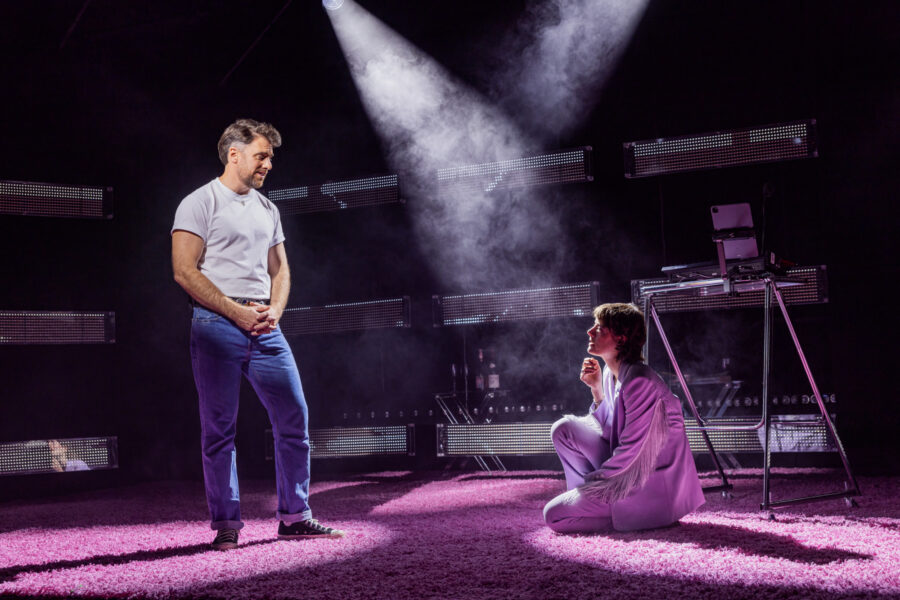
BroadwayRadio
Special Episode: McCracken and Leary on the science and catharsis in ‘Heartbreak Hotel’
00:26:00
Loading summary
Transcript71 lines
- [00:07]
A
Welcome to a special interview episode of Broadway Radio. My name is Matt Tamminini. On today's episode, I'm in conversation with Karen McCracken and Simon Leary, the stars of the new Off Broadway play Heartbreak Hotel. McCracken wrote the show and stars as a woman living through the ups and downs of a particularly difficult breakup. In the show, Leary plays a multitude of different men in the main character's life as we see her navigate a minefield of emotions, both internal and external, on her path to healing. McCracken and Leary are both from New Zealand, and the show has played all over the world, including in New Zealand, in Australia, in London at the Edinburgh Fringe Festival, and is now playing at the Doctor 2 Theater in New York City through April 19. The show's unique structure highlights the messiness of a traumatic breakup while also explaining to the audience what is happening to them on a physical, scientific level as they go through such a breakup. Peppered with laughs, music and catharsis, the show is a unique look at a universally painful experience. Of course, I will have information in the show notes on where you can purchase tickets to see the final two weeks of Heartbreak Hotel off Broadway at the Dr. 2. Alright, with all of that out of the way, here is my conversation with Karen McCracken and Simon Leary. Karen, I wanna start with you as both one of the actors and the writer of the show. This feels like a very personal story. So without getting too much into the weeds of those origins, I did wonder like, though, did it start by saying, I wanna tell a very specific story or I wanna start by analyzing and explaining heartbreak? Because both of those aspects are there in the script.
- [01:56]
B
Yeah, I would say somewhere in the middle of those two things, I think I am prone to some extent to heartbreak. And I had had an experience where I was still very caught up about the end of a relationship a long time after it had ended. And I am an analytical thinker. And so I was like, there has to be a way for this to my two passions. To Jo Coin. Yeah. And I also was struck by the kind of absence of. In the media, there's a lot. There's so much noise about heartbreak in culture, but something that felt like very authentic and true and funny, but also not devastating or not unbelievable. So, yeah, they were the two drivers. I would say. Yeah.
- [02:54]
A
When you were putting this together, was there a fact about heartbreak or grieving that you learned whether you included it in the script or not, that was surprising to you. And then, Simon, as you were kind of going through this process as an actor. Is there something that you're like, oh, that's weird. But it also makes sense to you as a human with lived experience.
- [03:18]
B
I would say that for me, I was sick so much when I was like, after various breakups, but I get. I get so many colds and flus and learning in the science of that, that is. That's part of your body's response often because it's going into fight or flight. So it's reserving all your energy for inflammatory responses and shutting down your ability to fight viruses. For me, that was quite instructive, really, of like, wow, your body is really kind of taking the steering wheel when you're heartbroken. In some ways I found reassuring and bewildering.
- [03:58]
C
And yeah, as an actor slash human, I suppose. I mean, I was definitely relating it to. And finding it extremely interesting around the Science of Heartbreak, which Karen includes a lot in this show. But I think upon certainly first reading, the thing that I responded most to was the scenes that she was actively portraying what was going on. Heartbreak wise. I thought I just really related a lot to. I had been both of these characters in parts of the argument before. And so, yeah, that was the confronting thing for me. Going like, oh, oh, other people are like me. And feeling kind of my relationship related to on the page was. Was the big draw card for me.
- [05:02]
A
Well, you mentioned that, like, other people are like me. And what I found so interesting about the show is that it's. Obviously, it's a very specific story about one specific character, but there are universal truths that even if we don't all respond to heartbreak the same way, there are commonalities through all of that. And what I kind of enjoyed about this so much is that you've got that analytical, scientific side that we talked about. But there's also this, the inclusion of music throughout and the talk of. Of poetry and the. In Friends. There's both that kind of clinical, detached, scientific side, but also the kind of the messy, confusing, complicated human side as well. Do you find that at different parts in either of your lives or as actors in this show, that one rings more heavy in certain situations and one is a little bit more important at other times?
- [05:55]
B
I mean, I would say in terms of the lived experience of heartbreak, the messy. The kind of messy, chaotic side of it feels more, possibly more true? I think the analytical only becomes possible. The analytical in terms of the science, but also the analytical in terms of what happened here, what happened to this relationship or what happened in this breakup is only possible with some distance. So I would say when you're, like, really going through it, the mess resonates with me. I would say. What do you think?
- [06:31]
C
Yeah, yeah, same. And I think as well, I probably. When I'm in the midst of something like that as well, I'm kind of. I'm kind of resistant to. To hearing, like, oh, it's okay. This. This thing's just going on in your body right now. Like, there is something that. That dealt and just. And feel a bit special and, you know, sit in the crying and go, like, no, this thing meant the world to me, or it means the world to me. And so, yeah, I quite like the analytical and the hindsight aspect. But, yeah, I think what this play does so well as well is. Captures that chaotic human element where so much just depends on the two or sometimes more people that are going through the thing. Yeah.
- [07:24]
A
Well, you have so much music influence throughout this entire show from your experiences. Why is music so important to be a part of telling the story as it is? And how does it play into the emotions that these characters, especially Karen, your character, kind of goes throughout on the journey of Heartbreak Hotel.
- [07:46]
B
I mean, I just think it's so clear that music's done the best job of navigating heartbreak in culture, better than any other form, I would say. And. And I was really looking for it. And. And I just think you. It's just such a perfect short form encapsulation of what it feels like. And. And because music is so emotional inherently, I sort of knew from the very beginning that it was going to be in the show. I just. Yeah, just such a profoundly good job with, I don't know, like, capturing this. This feeling that. Like what you were saying, Simon, like, this thing that feels so unique to you, but is, of course, in fact, a universal phenomenon. I just think that music really does that. And we also wanted to. To include some of those classic ballads because that is what the culture is. And when we. You know, there's a real nod, I think, in the show to the kind of kitschy response to heartbreak often. And music is definitely a part of
- [08:55]
A
that as well, whether it's in the show or not. Do you, either of you, both of you, have a favorite breakup song?
- [09:04]
B
Yeah, I mean, I certainly do. Bonnie Wright, I can't make you love me.
- [09:09]
A
Right.
- [09:10]
B
I think it's. And with a little shout out to Bon Iver's cover that they. They did of that. And just in the nick of time in the same song. No one's done it better, I think, except. Yeah, well, I mean, maybe you have one.
- [09:25]
C
No, I mean, I just think about songs that I happen to be listening to during breakups and so like Binging John Bellion's album, which is a bit niche. I mean, I was. Yeah. Around the Adele times as well, which I think she does an incredible job. Like all of her songs are so harrowing about love and breakups.
- [09:46]
B
There was a funny moment when we were opening the show here where we were looking through the pre show playlist and we had, we had just been using for the house music, we'd just been using the playlist that a bunch of us had put together when we were making the show. But there's all these random songs that our director Eleanor would be like, what is this random bluegrass song in here? And I'd be like, oh, that's actually just my song I was listening to when I was heartbroken. So I do think that that's the other thing. Like your experiences can really infect. For better and for worse.
- [10:17]
C
It takes you to the time. Yeah, yeah. Occasionally if I've got Spotify on shuffle or something like that, I'm at the gym, I just go like, no, skip. I can't emotionally go there right now.
- [10:29]
A
You're weeping over your deadlift or something like that. Yeah, I totally get that. What you, you mentioned is you were getting ready to do the run here in New York. You have done this show all over Melbourne, London, Edinburgh, New Zealand. Have you found that audiences react differently to different things in different places or different emotions are more vocal in all of these different places? Obviously. Especially now that you've been in here a few weeks in New York.
- [10:57]
B
Yeah, I mean, yeah. I think the overall arc, the people's arc through the show is similar across the board and they're sort of. We're getting very similar responses at the end of the show. We have noticed though that during the show the laughs are different and we have done a lot of thinking about this and we think it's because in New Zealand, where we're from, and Australia and the uk, which are, I think, culturally more similar perhaps than in the us People are quite resistant to going deep into emotion and so they're finding laughs late in the piece. Like they're. We're having a huge argument on stage and they're like, hahaha. Finding something to laugh at.
- [11:40]
C
Yeah, yeah. Maybe a bit more mean with their laughter as well.
- [11:44]
B
Yeah, yeah, yeah, yes. Yeah. But here it's like people are, people are laughing, but they're also like ready to go into the sorrow. Like, immediately.
- [11:55]
C
Yeah.
- [11:56]
B
So they're in. They're locked in. You can see it. And they're like, well, why would I. I'm not gonna laugh at this. This is a serious thing. Heartbreak, you know, which has been quite lovely. It took us a few nights to get, like, used to the difference. Yeah, yeah, that's lovely.
- [12:12]
C
Yeah, it was great. Yeah, yeah. That's such. Such generous audiences here. And I. And so I think, of course, we're in New York City. They're so practiced at watching the theater, so there's just like this shortcut. You just don't have to worry about, like, you know, doing. Doing any. Like, here's the kind of mode the show will take. That is. And. And yeah, it's a joy to perform too. Yeah.
- [12:40]
A
Because it's not a traditional, straightforward narrative piece. You've got the ins and out. The time is kind of all over the place in terms of the chronology. But it feels like it sounds like audiences kind of just are ready to go with whatever twists and turns you throw at them then.
- [12:57]
B
Yeah, totally, totally. Yeah. I would say, actually, when we were first doing the show, I thought that we were going to get more responses from people being like, the chronology is confusing. But we've never ever had that response. I think partly it's because people are intuit that heartbreak is, like, nonlinear. And so they're like, oh, yeah, you're all over the map. That makes sense to me as you've
- [13:21]
A
been doing the show, whether in New York or around the places. But you said New York audiences seem to be a little bit more open to the emotional stakes early on. Have you had people after the show stop and say you've talked about kind of like the different stages of a breakup and heartbreak? Have you had people come up and say, you know what? I'm in this moment? Because you say at the beginning, you can sense where they are by looking at them. But have they come up and shared, this is where I'm at. This is how I'm relating to what I saw on stage?
- [13:47]
B
Oh, yeah. Oh, yeah, totally. I mean, we have that a lot and we get a lot of messages. Like, we have like our Accompany Instagram account. And that is like, people go there and they're like, hey, I'm X months out. This really helped me. This is where I'm at. Like, and I love it. I personally love it because it's such. It can be such a lonely experience, heartbreak. And that's part of, like, the. That the mandate of the show really is to be like, it doesn't have to be a lonely experience. So, yeah. Oh, people are talking about their divorces. We know a lot about people's like, yeah, I went and went to my favorite restaurant. And that's growth for me. People are definitely confiding here. And I will say, basically everywhere else have been as well.
- [14:38]
C
Yeah, definitely. Yeah.
- [14:40]
A
Now, I did notice in the script, and obviously, correct me if I'm wrong, I think the only named character in the script is the best friend, Simon.
- [14:50]
B
Yes.
- [14:50]
A
I'm guessing that's not a coincidence.
- [14:53]
B
Not. You're the only person who's ever, like, picked that up. And why did I do that?
- [14:59]
A
I think you just.
- [15:01]
C
I remember once in a. It must have been when we were rehearsing you, when you turned to me and you were like, I just, for whatever reason, just really wanted to call you Simon in that moment. And then I think from the next day, he was just Simon in the script.
- [15:16]
B
Yeah. I think, you know, look, Simon and I are very, very close friends in real life, and Simon is really the person that you kind of want to have around when if you're heartbroken. And I just. I liked that. You know, I liked the kind of anonymity in the script. But then there was something that was. Felt very reassuring about having one person who's like, totally in your corner being named. And I guess it's just kind of for us because we. I don't say your name in the play. Right. It's just for the reader experience. You're having a very specific experience because you're just reading it and so you're seeing it on the page. So I guess that was just for. Just for me and you.
- [16:01]
C
Yeah, Well, I think, yeah, there was a few times where you would say, Simon.
- [16:05]
B
Yeah.
- [16:05]
C
But then it kind of dropped away. So now the lucky reader. So.
- [16:10]
B
Yes.
- [16:10]
C
So if your listeners ever want to get a hold of the script.
- [16:14]
A
Yeah, yeah, I love it.
- [16:15]
C
How.
- [16:15]
A
How important is that, though, to have somebody not only who can be by your side during a breakup, but also then during the creation of a play about breakup. How important is it to have somebody to bounce these things off of? Because that's what we see with Simon. Like their ideas. They're throwing things out about how to move forward. You know, are those the same kind of relationships or are they different, or do they require different traits from those people?
- [16:42]
B
Yeah, that's such an interesting question. I think that probably. Okay, new hypothesis forming. I think if someone is good to work with on a theater show, they will be good to have around you as a friend in the midst of a breakup. And I would say that for our whole company. I mean, Eleanor, who directed the show and is also a very close friend and is an amazing theater maker. Similarly, I think both of you are quite gentle but assertive in your opinions, which is helpful. Which is helpful in making theater and also helpful if you're kind of falling apart after a breakup. So I would say that the traits are actually quite similar.
- [17:34]
C
Yeah. I think I wouldn't have got through my breakups without good theater people by myself.
- [17:40]
B
Sides.
- [17:40]
C
Yeah.
- [17:40]
B
Yeah.
- [17:41]
C
People are good at. Yeah. Being analytical and removed, but extremely empathetic as well. Other people that make theater.
- [17:50]
B
Yeah.
- [17:51]
A
Well, talking about that empathy for each other, I think you probably also have to have some for the audience as the. Well, as you as well. When you are making this show, either writing it or then perfecting it along the process, is there a line between being cathartic and too real and too painful? Do you have to kind of say, like, are we getting too real to the point where maybe the bigger message that we're trying to say might get overshadowed by the tears and sobbing that the audience might be induced into?
- [18:24]
B
Yeah, that's an interesting question. I. I think that. That. I think that that line does exist, and I don't think we're near it in the show. Yeah. But I think that that's something that makers really, really have to think about. And I think I see this in other forms all the time where it's like, is this helpful or is this kind of, like, torturous? Like, where are we sitting in this spectrum? It's. But I mean, our show, that was a massive thing for me when. When I was writing was like, I really want this ultimately to be, like, a soothing experience that people leave and they're like, I feel better, ultimately. And I think we. I think we do that. I think that people sometimes cry, and it also depends where they're at with their, like, own experiences of heartbreak. But I think people generally, we take good care of people in the show, and we want. You know, it's like the therapeutic dips and dives, like, the therapists in their sessions. Like, you go deep, you go deep, you go deep, but then you have to bring them out before the session ends. Like, we're sort of following that structure in the show as well.
- [19:49]
A
Yeah. I love that I won't take too much more of your time, but I know in the show there's this joke kind of maybe not even really a jo. A mention at the end where you're like, maybe you thought this was gonna be a musical. If someone comes in and maybe does think it's gonna be a musical or thinks it's gonna be, you know, just kind of a straight, silly comedy about a breakup or maybe even thinks it has something to do with Elvis, I don't know. What do you want them to take away from the experience having seen Heartbreak of tell you said you wanna leave them in a positive place, but what's the more, I guess, what's the vibe you want them walking out of the theater with?
- [20:30]
B
Yeah, I mean, I guess. Well, first of all, that does happen literally every night. People arrive thinking it's an Elvis musical. And so. And I can see it. I can see them realize, and they're like, oh, my God, this woman is now speaking to me directly. If, look, if someone's come to. To be like, I want to see a great show about Elvis, I hope that they leave and they think, I didn't see a great show about Elvis, but I saw a great show, and I like theater, and I saw a theater piece that is really good and that I enjoyed. Even if they're not looking for any of the. Any resonance with the content of heartbreak, I do think that people will leave being like, that was a good theatrical experience because that goes to the core of what we're really trying to do. We make theater because we love theater. We love seeing theater. And so more than the kind of moral story or I want people to leave with catharsis or thinking about their heartbreak differently, which of course I do, I want people to have a good experience at the theater.
- [21:36]
C
Yeah, I think we can't. We don't have many of those opportunities nowadays to stumble upon things either. So. You know, it used to be the way you'd. You'd put on TV and you had to watch whatever was on Netflix or whatever. So there's something really cool about going and expecting something wildly different and then going, oh, I wasn't expecting this, but here I am. And, yeah, I hope that the content of the play and the delivery of it welcomes people in enough to give them just an excellent experience.
- [22:12]
B
And we did actually have a few nights ago, a woman in her 70s left the show at the end. She watched the show.
- [22:20]
A
Not in the middle, not in the
- [22:21]
B
middle, not in the middle, not in the middle. And she said to our producer on the way out, I thought this was going to be an Elvis musical. And I had the best time. I had no idea what this was, and it was fantastic. And I Love hearing that. I just love hearing that. Yeah, yeah.
- [22:39]
A
Well, you are in New York City. You said you love theater and love surprises. Are you. Obviously you've got a busy schedule with all the shows, but are you getting to experience any other theater in New York City while you're in town? Whether it was during the rehearsal process or anything else?
- [22:56]
B
Yes, we're doing our damn best to see shows in and around our shows.
- [23:02]
C
Yeah.
- [23:03]
B
I haven't been as successful as you. Actually, you have been better.
- [23:07]
C
One of my ones, I've seen Jellicle Ball, which is great camp nonsense which taught me more about Cats the musical than I think the OGs did. Sexual misconduct of the middle classes, which. Which I great. Like, if you. Yeah. If you like a booty two hander, get amongst that.
- [23:29]
A
That was great. Very different type of two hander than yours. Yeah.
- [23:32]
C
Yes. Yeah, yeah, yeah. But yeah, a nice Australasian performer in the lead though, Hugh Jackman and oh, Burnout Paradise I just saw as well, which is another Australian group and that they're incredible. Yeah, yeah. If you want to see funny, clever actors working incredibly hard, that's such a delightful show.
- [23:57]
B
Yeah, yeah, it is. Yes.
- [24:00]
A
Well, I'll leave you on this question. You have a few more weeks left in the run in New York City when you leave New York, and I don't know what the plans are for the future of this show. What are you hoping that this show reminds people about either heartache or about theater, about humanity, about Bonnie Raitt? I don't know. What, what is the mark that you are hoping that this show leaves? Not necessarily on the. On the audiences, but just on, you know, your lives and experiences of everybody who's been a part of it.
- [24:36]
B
Mm, good question. I think that I hope that people come away with a sense of. Heartbreak is a part of life in the same way that joy is a part of life and in the same way that fatigue is a part of life and that people come away with maybe a small sense of gratitude around having had this huge experience that reminds you that you're alive. And increasingly when we do the show, I think about that and think, wow, this was such a profound part of my. Part of my life that really taught me so much about who I am and what it is to be in the world. So that's quite a lofty. A lofty one to land on, but that is how I feel. Yeah.
- [25:29]
A
Well, thank you both so much for taking the time to chat about it. I hope the rest of your time in New York is fantastic and Congratulations on all the success.
- [25:38]
B
Thank you so much.