← Bubba On the Lake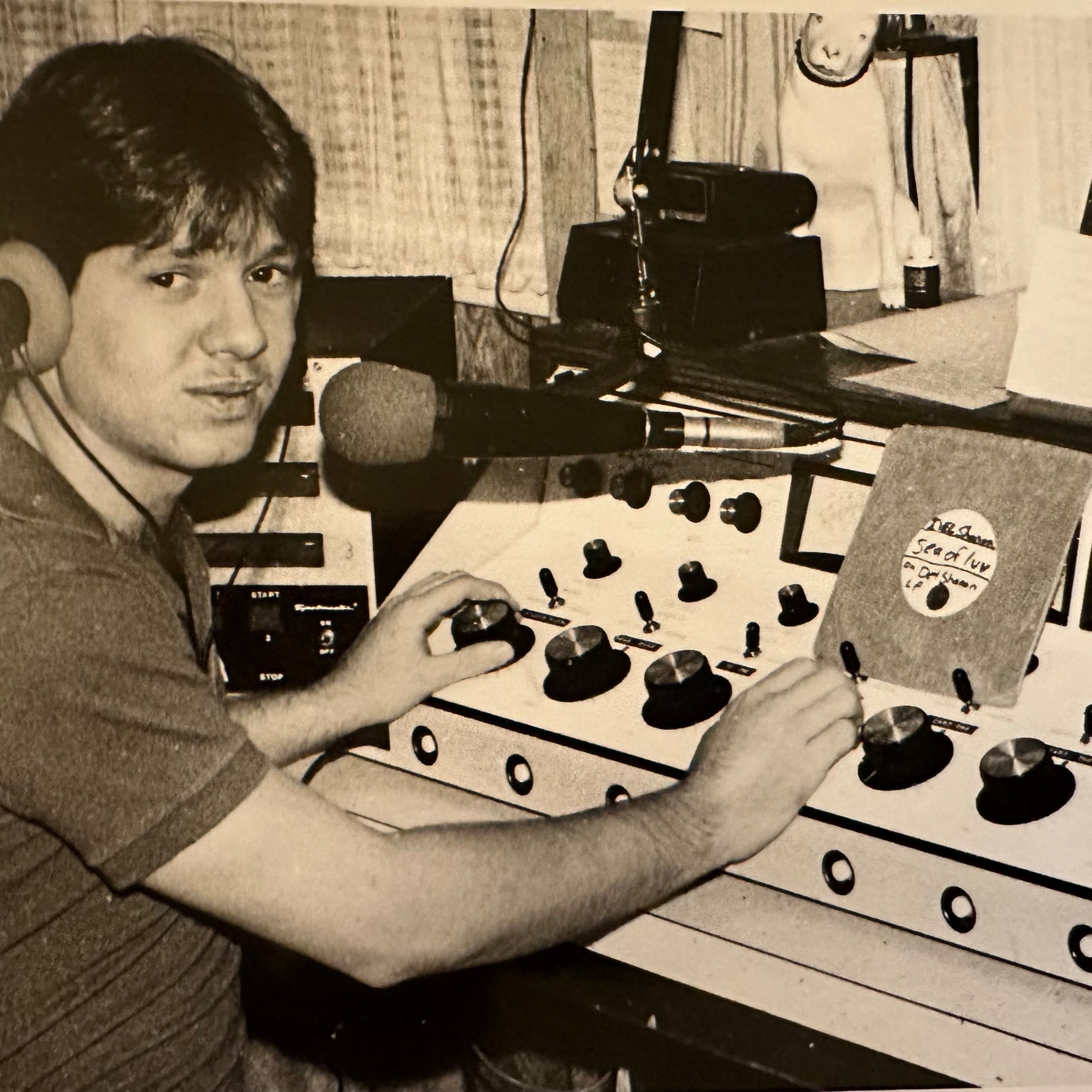
Bubba On the Lake
#31 WLJS 92J,.... 50 years in the making!
01:04:32
Bubba visits with former 92J alumni and fellow classmates as 92 J gets ready to celebrate its 50th birthday on Monday Sept 29, 2025.
Loading summary
Transcript155 lines
- [00:00]
A
This podcast is brought to you in part by Coke, Buffalo Wild Wings, Southern Immediate Care, Guaranteed Labels, Central State Bank, Sunrise docks, bankers Bounty, Dr. Thomas Dudney and the Green Monster Fishing Light. Now back to Bubba on the LA.
- [00:32]
B
Bubba on the Lake speaks through the air Voices rippling waters the world stops to stare News and the scores text spins on his wheel national renown the truth he reveals from the mellow yellow studio he sends the sound echoes through the nation where legends are found the lake holds the power ripples don't Bubba on the airwaves riding waves that won't.
- [01:09]
A
Die well hello again everybody and welcome to Bubba on the Lake. It is our podcast production of yours truly, Bill Bubba Bussy, your semi retired, mostly washed up host, formerly of the Rick and Bubba show and now glad to be with you here on Bubba on the Lake and the Tailgate Tailgate Show. Let's not forget that we're broadcasting from the Melayella Studio and Our website is bubbaonthelake.com Our message line is 308 Big Lake. 308 Big Lake. You can leave a message. It may or may not make it to air. Well, we have a very special show today as we're going to dive into memory lane. Now this will be somewhat of a specialized show and it may not be for everybody, but hopefully it will be entertaining and interesting enough that you can stay with it. We're going to reflect on how I got started in this business and not as much about me, but the place. The college radio station at Jacksonville State University, W L J s better known as 92J, where I got to start. And I'm going to tell you about that. I've told the story before, but I'm going to tell it again and I'm also going to talk to some people who were very important in getting that going and why the timing is now. This coming Monday, September 29th, 2025 will be the 50 year anniversary of that station going on the air and it literally has helped hundreds of students who went into media in various forms or fashion. I know several that went to cnn. I knew many that went into the radio business. I knew several that were in the morning show business in Birmingham. At one time you could not flip around on a Birmingham radio station in the morning and not hear a 92J graduate. So we want to dive into that a little bit today and I want to tell you about that. It started with me when a friend of mine, Greg Warren, who has since passed away, we were CB radio friends in about 10th grade. He told me, and he was a few years ahead of me, that he was working at the. At the new college radio station. It had just gone on the air not too long ago and he invited me to come up and see the place. Well, I came up and man, when I saw all those meters flashing and those lights flashing and all those records on the wall and I don't know, it just. Something hit me and I never got it out of my system. And Greg let me stay and watch him do his shift. And then I got. So when he was doing a shift, I would go up. I was still in high school, couldn't get on the air there because I wasn't in college yet. And I would help him pull his albums or put his albums up, you know, kind of be that right hand man, you know, while he was doing his shift. And I got to know some of the people there. And then because of where our high school was, we were actually on the campus of Jacksonville State. We were able to take college classes while we were still in high school. Now don't. I about drove my counselor crazy because I did trade school and I also did college classes and. And I remember her telling me, we've never had anybody do that before. And I said, well, I've never been through here. It's probably not the best thing to say, but, you know, when you're young like that, you're full of energy and other things. Now, I won't quote that saying today, but when I started taking college classes there, then I qualified to get on the air. So to do that though, you had to prove that you could do it. So you had to do what was called an air check. You had to go in the production room, you had to SEG records, you had to talk. And an air check was basically the parts of you talking with the beginning and the ends of the songs, but not the songs in between. So if you had an air check, you usually did it on a cassette recorder or reel to reel. You would hand it in, they would listen to it and they'd say, okay, well you're clear to be on the air when we can schedule you. Well, at the time there were 20, 25 kids there. And I mean, it was a long list and a waiting list to even get on, get online, get on air. I mean. So I remember during a Christmas break when everybody went home, I got a call from the station manager, it was Alan, Alan Rhodes at the time, and he said, do you want to do a shift? We have one open from 2 till 6am on Saturday night, I said, absolutely, I'll be there. I mean, I didn't think twice about it. So my first shift on 92J was from 2am till 6am on Sunday morning. And I did that for a while. And then at times the Sunday morning host would not show up and I would have to stay on and do a double shift. It was a little bit different because it had Christian music, contemporary music on Sunday morning, which I didn't know anything about. Okay, just didn't know anything about it. So that part was very difficult. But the two to six part was fun because we played top 40 music. We, you know, we. We treated that radio station like it was a commercial station. We had a format, we had rotation of different song groups. We followed the charts. We had a clock with dots on it, and we basically had to pick songs out of that colored dots. Some of them were hot. They were like the top 10 songs. Some of them were recurrent, which was the next group. Some of them were gold. They were, you know, considered classic. Some of them were new and upcoming. So we had to follow all that and do all that. And, you know, it just, it hit me. I loved it. I ended up getting to do some better shifts, some nighttime shifts, like 6 to 10. Got a job at WPID in Piedmont. And I remember during my senior year in high school, I was going to WPID in Piedmont. I would work from noon till sign off, which was about five or six o' clock because they had to sign off at night. And then my shift started at 92J. So I would get back, I would slide into the campus, into Bibb Graves Hall. I would run in there, I would get there around 6, 6:30, and I would be on till 10 or midnight, just depending on how the shifts were stacked in at that time. And I thought it was the greatest thing on earth. I really did. And at one point, the program director, who was Troy Hayes at the time, pulled me off the air and said that I sounded too Southern, that I needed to lose the accent. And it hurt my feelings terribly at the time. But it was a great blessing because it taught me to. I wanted to stay around the radio station. I wanted to be in that environment, that culture, that community, which I enjoyed. And man, there was a cast of characters there now, I mean to tell you, there was some characters, but it forced me to learn programming, it forced me to learn promotions, it forced me to learn engineering, which I had a little bit of a talent for the electrical side of it. Anyway. I was a ham radio Operator. And Major Turner that was in charge of it was also an engineer. And he kind of took me under his wing. And there'd only been one or two other ones that ever had any interest in the engineering part of it. But me and Major Turner got very close and he brought me along and I became an assistant engineer for him and was on the work study program and ended up being there when we moved the station to south hall. And I worked with the contractors there that were building the TV studio. So I was there for a while, on and off during my entire college career, which we used to joke on the show that it was 10 years, a decade of learning. It actually was 12, but no one would believe that. So we just rounded it to 10 and made a joke out of it. But on and off. And I did. I quit several times because I had jobs. I took jobs in radio and TV. I worked at Channel 40 when it was in Anniston WHMA. I did engineering jobs. Ended up going back. I mean, I got into ownership management. I ended up selling TV for a while and landed back in Gadsden as the engineer for big wax and Q104. And that's how I actually ended up on the air with Rick. And the Rick and Bubba show was born. And then we know how that went. That was 31 years in the making. So it all goes back to the college radio station. If the people had not had that in place and I'd not had that burning desire to do that once I saw that operation, and I don't know how to explain it, you just, you see something and you know it's right for you. Kind of like love at first sight, I guess. But we had a wonderful time there. It wasn't all, you know, good news. And like I said, there was some disappointing days. But it overall was a great experience and it led to over 40 years in the broadcasting business for me and without that station, I never would have got that chance. I never would have got that chance to get on the air and then to get some other paying jobs from that. And it has been a wonderful career for me. Sadly, that industry has changed a lot. I don't know that it's necessarily for the best, but. But there's still opportunities out there for people who want to get out there and make some noise. Even in podcasting we have now, people ask me all the time, how do I get started in radio? And I said, well, you need to find somebody will let you on the air. Maybe a non commercial, maybe a college station, maybe AM somewhere. Just get on the air, start doing your thing and developing your. Your on air personality. And like I say, I never had the voice for it. There were so many guys that had these great voices, but I was not one of them. So I just had to kind of rely on personality and talking about things I knew about. And that seemed to work out for me. So it was a great experience, though. 92J turning 50 years old September 29th. We're going to try to be on site that day. Got several things going on. Had a big reunion this past weekend with the home football game. I was not able to attend that I understand we had over 100 people there who had come through that radio station and so many of them went on to so many jobs. And I am so thankful for Major Turner. We actually named a road after him at one point, giving me that opportunity and taking me under his wing and just letting me be a part of this wonderful, wonderful thing we call 92J. We'll be right back. I'm going to talk to some other people involved and the guy who started it all. We'll be right back. You're listening to Bubba on the Lake.
- [13:04]
B
It's Bubba on the Lake. Bubba on the Lake. All right. All right. It's a beautiful day for football here at the stadium, and we're just about ready for kickoff. Score 00. And suddenly I'm in the mood for a Coke Zero Sugar. Real Coke, taste zero sugar. Now that's a winning combo. Yeah. Crisp, refreshing, that hits the spot. When it comes to great taste, Coke Zero Sugar is always on the scoreboard. Coke Zero sugar. Real Coke, Taste zero sugar.
- [13:39]
C
Attention business owners, print buyers and production managers. Guaranteed Labels is here to help you focus less on your printing labels, decals and more on growing your business. Guaranteed Labels wants to be your reliable printer. Quality on time shipments and stock programs set us apart. If you're needing to focus less on your printing and more on your business, Trust guaranteed labels 205-640-4552 or guaranteedlabels.com guaranteed labels still sticking since 1988.
- [14:09]
B
At Central State bank, we believe community banking is more than just transactions. It's about relationships. For over 100 years, you've been helping neighbors grow. Businesses thrive and dreams become reality. Because when you bank local, you invest in your community. Central State Bank. Large enough to serve you, small enough to know you. Visit us today or learn more@centralstatebank.com Member FDIC.
- [15:01]
A
Well, we cannot start the story of wljs92j without the guy who actually started the station. I have got to know him over the years. Mike Sandiford. And, Mike, welcome to Bubba on the Lake.
- [15:17]
D
Well, thank you so much, Bubba. It's good to be with you here and share some good memories.
- [15:21]
A
Mike, tell us how the campus station 92J got started. Because you were on the very tip of the spear.
- [15:29]
D
Oh, yeah, it's fun memories. I've reviewed it with several other folks here a lot recently. I started Jacksonville State in 1970 and went up there and studying hard and doing this and that. But the one thing that our great university didn't have was a radio station. And I could look at Auburn University, Alabama, Troy, there were others, Sanford down in Birmingham, they all had FM radio stations. Well, I'm a radio guy from way back, years ago. It felt good to lay out in the front yard on a blanket at night and listen to any AM station you could get halfway across the country or whatever on your, quote, transistor radio. But I met with the Student Government association and got to sharing my ideas with them. And before I knew it, they appointed me as the SGA business manager.
- [16:28]
A
And if you bring up a problem, they'll assign you a job, won't they?
- [16:33]
D
So. So sure enough, I ended up with the title of SGA Business manager. And they liked the idea. Let's see what you could do to put a station on the air. So I had that in my hip pocket while I'm working on the BS degree, the first degree I got now. And so I started going around to some of the local stations in the Anniston Piedmont area asking for, how do you get this going? And was guided by several of those stations. Contact the fcc, do this, do that, apply for a construction permit. And so after some phone calls back then, it was long distance, maybe with the dial phone, no fancy phone like we've got today. And ended up getting the paperwork to complete a application for a FM radio station there at Jacksonville State. So I worked through that several times, submitted it several times. It kept coming back with errors on the application.
- [17:38]
A
I started to say that's not an easy process because they have lawyers in Washington that fill out that paperwork.
- [17:46]
D
Yeah. And so my frustration led to something that my parents have said. You cannot ever drive to Atlanta, Georgia. But they had an FCC office in Atlanta at the time. And so I left Jacksonville in my own little car, drove all the way to Hyde, Atlanta, and found the FCC office. I went in and hand submitted it a few minutes later, Honestly, a gentleman came out. Are you Mr. Sandifer? I said, yes, sir. If you'll come in here, let's sit down and discuss this nice man, I don't remember his name or anything, walked me through the mistakes that were on the application, and he said, we'll be sending something back to you decision or whatever here in a few weeks. About two weeks later in snail mail in my mailbox there in my mobile home. Anyway, that part doesn't exist anymore. We got a beautiful stadium there right now. But anyway, I got an approved construction permit from the FCC to build an FM radio station at Jacksonville State University.
- [18:58]
A
Wow.
- [19:00]
D
And so the first thing I did was. I'm pretty sure it's the first thing I literally ran jog back then. I could move better than I can now to the president's office there in a big race hall, which we now call, I think, Ayres Hall.
- [19:17]
A
Angel, isn't it? Angel?
- [19:19]
D
Angel, yeah, it may be Angel. Yes, sir. I'm trying to learn the new ones.
- [19:23]
A
It's a new world out there, Mike. I know it is.
- [19:26]
D
Yeah. So. And. But I went in and his assistant said, well, you just can't walk into Dr. Sohn's office. You have to have an appointment. I busted right into his office and waving that piece of paper, he finally settled down and said, well, what does this mean? I said, well, Dr. Stone, we've got nine months to build a radio station on this campus and put it on the air. Now. I stretched that a little bit. I think we had 12 months. But anyway.
- [19:52]
A
Right, you're trying to get a moving. I got you.
- [19:55]
D
Yeah, yeah.
- [19:56]
A
It's still that way today a little bit. Yeah.
- [19:59]
D
It sunk in. And he said, okay, so what can we do? And so, well, I told him the studios would be here in. What do we call that? Angel hall, or Bib Graves.
- [20:11]
A
Yeah, Bib Graves at the time. Yeah.
- [20:14]
D
Yeah. So what we ended up doing is met with someone and they gave us a room on the bottom level of Big Graves Hall. Now, that happened over the next several days. So then I think the name of the gentleman over the maintenance department. Jim McArthur.
- [20:32]
A
Yes.
- [20:33]
D
So the mate I knew.
- [20:34]
A
Miss.
- [20:34]
D
Yeah.
- [20:35]
A
Yeah.
- [20:35]
D
Okay. He came in. So what do you want here? Well, we need a studio here, production studio here, some offices. Squeeze in all we can into this little area. So sure enough, they started putting walls and things up over the next few weeks, and we were, quote, under construction during all of this time. At some point, the FCC said now that you need to submit three call letters to us and let us decide what your call letters will be for the New radio station. So at some point during all of this construction going on and all, we sit around in my mobile home one night and doing that, we come up with, like, three different selections. The one that we all preferred best were the current call letters that we have, wljs and simply stated that stood for we love Jacksonville State or We love Jack State.
- [21:33]
A
That was great.
- [21:34]
D
And so we used it for. Yes. So it's like the FCC assigned that. This is where it really gets kind of squirrely. But I learned to beg early. I literally. I literally started going to area radio stations. We're building a radio station, Radio station at Jacksonville State. Do you all have anything that you would like to do, donate? And so. So I just started going here, going there. I might walk out of there with a microphone. I may walk out of there with nothing. I may walk out of there with stuff. I didn't really understand what it was, but I'm taking it back to the station and it got kind of cool. One thing that's kind of funny when you're talking about this, met with the owner of a radio station in Arabic and he said, well, we just put up a new tower and took down the old tower. Let me show you this. This is a beacon that goes on top of a tower. Did you say you all have a tower? And I said, yes, sir. I'm talking to McCord Communications in Anniston, and they have agreed to put the tower. Build the tower and put it on top of the library. And that was a. A whole story in itself. But, yeah, there was a lot of the lady, then Dr. Milligan over the library. The library is brand new. She really didn't want a tower sitting on top of her brand new library.
- [23:05]
A
Yeah, most people don't want you messing with her stuff in general, you know, I think that's a blanket statement.
- [23:11]
D
Oh, yeah, Very blanket. So I ended up driving back with a. They're about 3ft tall, the old beacons, the ones that they had before we got into strobe lights and stuff today. Anyway, so we had this beacon. I sat it down in the living room of the trailer that night. I had it plugged up to the wall. When I did some fancy wire and sad thing would glow, go down, glow go down. And everyone's coming up the trailer. Everything okay? What are y' all doing? Come on, dad. We're having a party. And so two 600 watt bulbs were all staring at. Anyway, we ended up letting McCord know that I had gotten some sidelights donated and the beacon. Yeah, we Got them over there. When McCord was putting the 45 foot tower up, they had the equipment to lift it up, anchor it to the tower and we got all that done. So that was some of what we were doing.
- [24:08]
A
Mike, was Major Turner there then?
- [24:11]
D
Major Turner was there running the television studio. Primarily just it now. Then at some point during this construction, I got a telephone call and Dr. Stone wanted to meet with me. And I was formally introduced to Mr. Turner. And he said, now this is going to fall under Mr. Turner's authority, or you know, him watching it as y' all are getting us to go. So I got to know him and sit down and know him. I went over to his house. I can still tell you where it is there in Jacksonville. Several times we would talk and I would go to him and ask for advice and questions. And we just kept on building it. And then he and I got the station literally built. We did have an engineer initially. I understand that he was from Birmingham, his name was Larry Hughes. And so I got to do something that you can't imagine would happen today. It got time. We finally had a completed tower on top of the library. After other officials from Jack Hopper, Dr. Theorem, Montgomery, others got involved, we started getting minimal funding. And I'll say Jack Hopper had a lot to do with it. He applied for some small grant, but. But we were able to buy the 3 bay FM antenna that we put on the tower. We were able to buy a 10 watt transmitter and some of the other things that we desperately needed. But Larry and I got up there one day and climbed the tower, amounted all three bays of that antenna to that tower. If you could imagine doing that today, look at all the OSHA rules and everything else.
- [25:58]
A
On top of a 12 story building on campus. Yeah, okay.
- [26:03]
D
On campus. And I don't think we had a safety belt on either. We're just holding on. If you let go, you're going to follow. Yes.
- [26:10]
A
Yeah, we did all things back then.
- [26:13]
D
Yeah, it was fun. But the excitement, just the adrenaline and then, oh, I would take time out and study. Okay, I got a test tomorrow. I got to go in there. I go in there and ace a test and get back to the radio and all and just kept doing that. I was also working two other jobs while I was doing this too. I was a deputy sheriff and I was also a school bus driver.
- [26:37]
A
Anyway, it was kind of busy time. You just had a few things going on. We're talking to Mike Sandiford, who was the founder of the college radio station at Jacksonville State Wljs Mike, tell us a little bit. And we're gonna have to kind of wrap up here about the first day. Tell us about getting on there.
- [26:56]
D
Okay, getting on the air. We started testing stuff and had equipment working a short something about 2:31 morning, the first time we ever got the transmitter and everything turned on and everything working. I'm in the studio talking on a corded phone to our engineer up at the transmitter. And when I put on my headsets, I could hear us on the air. And I forgot that we were live on the air. So just so everyone will know, I fessed up to so many people. The first words ever transmitted at 2:30 in the morning was damn, it works. So anyway, a few days and we started out initially on the cable channel three, where you would look on your brand new cable for TV and all, but Channel 3 was music and you could look at the list of stations. We were their audio for the first two or three weeks while we were waiting to get a permit to begin operations, an operational permit, I forget exactly what it's called.
- [27:56]
A
You had to do a certain thing, certain amount of testing. And then the FCC gave you the final go ahead.
- [28:02]
D
They finally gave us the go ahead and we waited until Monday, September 29th. I wanted to do it on a Monday. And we were going to sign it on the air at 12 noon. So we alerted everybody on campus, all of the dignitaries, Dr. Stone, everybody. And what was kind of odd, as we're getting near sign on time at 12 noon, the studio just kept filling up and filling up with people to the point. And even in an article that's in our gym for the right now, the current gym, summer of 2025, you'll see a picture. Just look at the picture of Dr. Stone at the board. But look at all the picture. Looking through the studio windows to look in. There was no room for the students except for me in the studio to run everything and do everything. So at 12 noon I officially signed the radio station on the air. Did the legal sign on that all stations did back then and still do today. And then we introduced Dr. Stone. He had to make his presentation and talk for several minutes. And then we gave away certificates of appreciation to so many people there. A lot of this is in that first hour's recording that we do have. And you've got access to it too.
- [29:21]
A
But.
- [29:21]
D
But we did that. And then Bob Waldrop was our program director, the first program director. So Bob and me and others sat around again my trailer at night for a few nights. What song do we want to play that they might be playing a gazillion years from now, maybe on an oldies station, as they used to call it, let's say a classic rock station. We picked out to play Led Zeppelin, Stairway to Heaven. So we did that, had it lined up. And then after everyone's through doing everything, I made my presentations officially. You know, this is WLJS fm, Jacksonville State University. And then we played Led Zeppelin's song. The interesting thing, Led Zeppelin's Stairway to heaven is seven and a half, eight minutes long. And Dr. Song was like, how long is this song? I want to get back behind the radio. The microphone. He wanted to be on the air, but we played it. Our second song was Stevie Nicks and Lindsey's Buckingham Frozen Love. And we were just having a good time. So what we started doing, people started figuring out we had a radio station. We had a whopping 10 watt signal, ERP of about 13 and a half watts. We got a solid 8 to 10 miles out from the campus. But we started seeing the telephone sitting in the studio with lights on it back then light up. And people would, could you play this song? Could you play that one? The only music we really had is what each of us brought in and sat down and played on the turntables during our shift. And we might pick up and take our albums or records out. So someone. Well, I heard it played two days ago. That's when someone else was on the air. Everyone would bring their own music, but I did the first couple of hours. Dave Driscoll did the second hours and all. Dave did a lot. He had experience with the station up in Huntsville, Alabama, and he was doing a lot of our PSAs and talking about this fraternity, this sorority. Here's what's coming up. So we were working in our little announcements about activities, things going on on campus. And then later that afternoon, as they wound up that evening, Walt Moreland, and his air name was Walt Moore Music Moreland. And he came on the air and took us all the way until midnight, which we signed the station off at midnight. And that gave us time because we only had one studio. We had to figure out, do we do production things at night. And then for the longest time, the first month or two, we would sign on at like 6 or so in the morning, sign off at 10. And so from 10am till noon, we were doing production in the studio. Then we sign it back on at noon and take it until midnight. So that's kind of. It was just fun. People were, like, getting excited. We've Got a radio station now and in the 70s from memory. You might can help me out with this, Bubba. It seems like FM wasn't really coming to life until in the 60s and it was still growing like crazy in the 70s. But there we were, like other big universities. We had a radio station I was so proud of.
- [32:40]
A
And Mike, it has grown several times since then. And thank goodness it went to 24 hours or I never would have got on the air over Christmas break, like from two to six. So. But Mike, we appreciate everything you did. I tell you, you were. You were a real turning plow there to get all that done and. And it lives on today. Mentioned real quick. And we got to wrap up here. Monday will be the 50th anniversary of that. Are they going to replay that first hour and what all is planned?
- [33:12]
D
We're still working on that. We want to see how many old voices are there, you know, alumni. So we will play a portion of the first hour broadcast. It could be the first 30 minutes, 20 minutes. It may be all of the 45 or 50 minutes that we have then. I want to hear from a lot of stories from alumni of WLJS over the past 50 years. Another thing that we're still working on. Anyone who's listening, I would appreciate it if they take a look at 50 years. 50k for 50 years. We are trying to raise a little bit of money to upgrade the equipment in the studio, the transmitter facilities. So we need to do a few things. Some of the equipment, when I walk in there, it might be pieces of it, whether it's working or not, that I installed 50 years ago. So it's like if they can help us with this little bit of fundraising. And I just want to get a lot of stories on the air. I want to hear a lot of voices and let's just reminisce. There's been a lot of great people come through the station and go on to have broadcasting careers. Mother, there you are.
- [34:19]
A
Listen.
- [34:19]
D
There's a hanging others.
- [34:21]
A
If it hadn't been for that station, I don't know what I'd have done the last 40 years, I'll be honest with you.
- [34:26]
D
Yeah. So there's a lot of good memories. We'd love to have you there, of course. And I just want to kind of kick back and listen. I'm still a radio geek today. I enjoy listening to radio stations. I play a little bit with one of the stations here in Guntersville, just a little bit, maybe with an occasional commercial, something like that. But at 73, I'm so proud of the station and where it's gone. Been a lot of changes. As you know, our transmission facility, Anton and all, is on one of the tallest mountains in Alabama over on Chimney Peak. We've got a pretty good signal Even with our ERP of about 610 watts.
- [35:08]
A
And two translators now, one in Oxford, Gadsden, so. And online, you know, you're not just limited anymore. You can hear it online. Mike. Lord Will and Creeks don't rise. I will be there Monday. And it's also my daughter's birthday, so it's easy to remember. Happy birthday. And yeah, so it's funny that radio station, my daughter has the same birthday. So we'll be there and hopefully we can be part of the festivities. And Mike, thank you for taking time to tell that story and visit with us here on Bubba on the Lake. And I hope you'll be back again sometime.
- [35:43]
D
Okay, we'll do. We'll do it again. Thank you Bubba so much, everyone. Take care and thanks for and join wljs92j.
- [35:51]
A
That's Mike Sandiford, who was the original founder. And the the anniversary again is coming up on the 29th. So that will be this coming Monday from this podcast original date. So if you're around, you might want to check that out. Maybe some fun things going on. I'm going to be there. I'll try to stir up some trouble if possible, as always and we're looking forward to it and we will be right back.
- [36:19]
B
You're listening to Bubba, Bubba on the Lake.
- [36:23]
D
When you need urgent care, Southern Immediate Care is here for you. Illness doesn't follow a 9 to 5 schedule, so we offer support seven days a week at convenient locations throughout Birmingham and Northeast Alabama. Dedicated to serving all ages, from children to adults, Southern Immediate Care offers occupancy medicine services, including dot physicals and testing. At Southern Immediate Care, your health is our top priority. Visit southern immediatecare.com or call 205-409-2794.
- [36:53]
C
Another staff meeting, another push for cross selling. Another awkward silence. Then Banker Bounty happened. The first referral platform made just for banks. One app that empowers every employee, not just your top producers, to bring in business. No more spreadsheets, no more silos. Just clarity, culture and actual growth in real time. Banker Bounty fixes more than your referral program. It fixes your momentum. Go to bankerbounty.com, watch the video, book your free demo. Banker Bounty create, manage and track referrals in real time.
- [37:24]
A
Dr. Thomas Dudney has been my family's dentist for over 20 years. And about that same time, 20 years ago, he gave me a new smile with veneers. And let me tell you, it was one of the best decisions I have ever made. I had no idea how people interacted with you so differently, personally and professionally. If you had a nice smile and you could smile at them, Right now is a great time to check with Dr. Dudney about the possibilities of upgrading your smile. 205-663-6545 or visit thomasdudney.com Foreign folks, we're back with another alumni from 92J. We were classmates and we also work together at 92J at different times. Roger Allen. Roger, how are you, brother man?
- [38:28]
E
I'm great. How are you?
- [38:29]
A
I'm doing good. I'm doing good. Roger, tell everybody kind of how 92J put your career on a trajectory. I mean, you, you, like myself, have been in broadcasting most of your adult life. But how, how big a role did 92J play in you getting to that?
- [38:47]
E
Well, 92J actually was the reason I got into radio. I was 15 years old, and Allen Rhodes, for some strange reason, thought that I had what it took and brought me as a high school student to Jacksonville in the summer of 1981. And matter of fact, my first day at 92J was June 9th at 2pm when I started my broadcast career officially at 92J. I ran the board for Allen. I ran the board for anybody and everybody for about a week that would let me run the board at 92J. And I did everything I needed to do, even went with Alan to a radio station he was working at in Talladega. Wnuz.
- [39:26]
A
Yeah.
- [39:26]
E
And from there, the rest is actually radio history. And again, I did everything I could. Two years later, I got my first programming job in 1983 at WFPA in Fort Payne. Thanks to 92J.
- [39:40]
A
Roger, tell everybody kind of what are you doing right now? Let's, let's start now and then we'll work our way back.
- [39:47]
E
All right, now I actually do afternoon drive for WCKA in Jacksonville. I do weathers for WTWX and Guntersville. I have a Saturday night and Sunday morning classic country show on Sam Myers classic country.com, which also is on some other radio stations in Phoenix, Dallas. I'm down in the Troy, Alabama area and Clinton, Alabama area with those shows as well. And I do voice work pretty much nationwide around the country. And if there's anything else I'm doing, I've drawn a blank. But I Have a full day schedule every day. Also do some work on the oldies side for the FOX Oldies.com in Dallas, Texas. I mean, I'm literally everywhere, Roger.
- [40:33]
A
And you do all that now from your studio in.
- [40:37]
E
Well, I'm just outside of Fort Payne.
- [40:39]
A
Isn't that in that wild how technology's changed? We, we, you know, we talk about the radio business a lot, but the technology. Back when we had to edit on a reel to reel and have a razor blade and cut little diagonal cuts and then tape it up to the point and click world we're in today, is it not amazing how far we've come in our lifetime?
- [41:01]
E
Oh, it's amazing because. And you know what's really amazing? I've been doing this since 2008, so I've been doing this from home a few years. And let me tell you a quick story. I programmed at one time four different formats in Scottsboro, Alabama, for live and good. I was his PD from 92 to 2008. Never had a bad ratings book, anything. I just happened to be a budget cut. One day my wife had this wild idea that I should start my own studio and do voice work out of the house. And at the same time, there was a lady who was passing away of cancer, and she gave us $10,000 as a thank you for everything my wife had done for her. And we took that $10,000 and started out building our studio here in 2008. And since then, we've added up to it and done little things here and there to kind of improve everything that we do. So I literally can be on the air anywhere and everywhere in the world. And it's amazing. I never dreamed, you know, even 10 years ago that I would be this busy.
- [42:05]
A
You know, Roger, I kind of. I kind of divide 92J history into two categories. Bib Graves and Self Hall. That's the two physical locations it's been at. So you.
- [42:17]
E
I have two 92J histories.
- [42:19]
A
Yeah. You, like myself, have been there long enough that you were part of both of those histories. And you, you know, you. You are a unique individual. You had unique talents, and you never made.
- [42:35]
E
That's what they tell me.
- [42:36]
A
You never made an issue of it, but you are visually impaired. And I do remember one day at Self hall, which had a glass studio that I came. Yeah, I came walking through there, and this is when I was working in engineering under Major Turner. A crowd had gathered around the glass, and I thought, what have they done now? And I look and you're in there running the board, doing Your shift. And someone had put a cat on the board up above you sitting on the ledge. Do you remember that?
- [43:12]
E
I forgot about that. And I completely forget about that.
- [43:16]
A
As you were doing the board and moving around, the cat, which it was just a kitten, was sitting there just watching you. And every now and then it would. It would stick its paw out to try to catch you. And when it didn't, you know, everybody. I mean, it was. I don't know who played that joke. They were awful for doing it.
- [43:35]
E
But that's okay. I got my share of jokes in too.
- [43:38]
A
Yeah, you did. You did.
- [43:39]
D
You.
- [43:40]
A
You didn't. You didn't. You didn't lack for any of them. But when you finally. I think I went in there to try to put an end to this and we started talking. And about that time you grabbed that cat and you. You yelled at me, bubba. Or it was Bill at the time you said, bill, there's a dog on the board. And you know, that kind of went down into the history also the radio station. But you were always a good sport. And you. You like, say you saw both sides. You saw the. The old studio and the new studio. Who. Who were some of the.
- [44:13]
E
I was the last person.
- [44:16]
A
Go, Go ahead, go ahead. Who are some of the managers you worked under? Do you remember?
- [44:20]
E
I worked with Alan Rhodes. I worked Rich Daniel. I worked with Jack Steele. I worked with Scott Mintz and several people.
- [44:31]
A
Oh, yeah. Well, David. See, in the mix there, David Carnes.
- [44:35]
E
Was kind of a sort of temporary. I didn't do a lot during the Carnes years. I was there when Sheila was there.
- [44:41]
A
Right. What is Sheila's last name? I'm drawing a grisid. I think Gris. You're correct. Sheila is the one that hired me to be the promotions person. So.
- [44:52]
E
But you're saying two histories. I was the last person on the air in Bib Graves for 92J.
- [44:57]
A
Yeah. Oh, I remember. I remember. We.
- [45:00]
E
I was the second person at Self Hall.
- [45:03]
A
We. We turned everything off and we had to. We pretty much had built a new studio at Bibb Graves. I mean, it's at cell phone. Okay. So we didn't have to carry a lot of the equipment, but there was one piece we did have to carry and that was the STL transmitter. The studio to transmitter link. Well, it was a microwave.
- [45:22]
E
Had to move the tower and the little satellite thing on top of the tower.
- [45:27]
A
Rename it the antenna. And it was on a tower that was up above Bibb Graves. And Bibb Graves is a pretty tall building. It Was like three stories high. And we had a tower itself, Hall. But we didn't have anybody to go get the antenna, so I told Major Turner I'd go get it. And I climbed towers back in those days and put up towers. And we. We were trying to beat a thunderstorm that was coming up because we wanted to get it up that afternoon to get it back on that night because we were off the air to. And all this time. And I climbed that tower to get that antenna and let it down with a rope. And a thunderstorm hit. And Roger, I was soaked. It was pouring rain. I mean, I look like I had jumped in a lake. When I got to the bottom tower and people were coming to the window watching me climb that tower in that driving rainstorm. And I thought, lord, just get me on the ground and I won't do anything foolish like this ever again.
- [46:25]
E
We were all standing below going, you know, come on, come. You know, no lightning hits today. Let's, you know. Interesting story about that. We moved the music library, which was all vinyl and the jocks. Cars. We took the cars and lined them up according to what letter of the Alphabet that you had to move in the music library.
- [46:48]
A
That's funny. That is so funny. Well, we. We were trying desperately to get back on the air and we had a couple of snafus and a couple of things didn't work, and you had to, you know, you had to have control circuits and control of the transmitter, and one of those wasn't working right. But we eventually got back on the air in the new home. And like I said, I think you were second on the air, right?
- [47:09]
E
I was behind Rich. Daniel.
- [47:11]
A
Yeah, I remember Rich. I remember being there when he was there and several others. And like, say I work very close.
- [47:20]
E
You know what the very first song was played for the new building at 92J.
- [47:24]
A
No. What? I don't remember Stairway to Heaven again. Again, like it was the first time.
- [47:32]
E
Like it was the first time.
- [47:33]
A
Well, that is something. You know, I was probably sweating it, trying to get everything on the air and hanging off antenna somewhere. So I didn't get to witness that. But I was. I was running around there, that's for sure.
- [47:46]
E
I didn't know you could have that many moves in you back then.
- [47:49]
A
Well, I was much quicker, Roger. Much quicker, much lighter. And you know, that. That hasn't worked out well for me. For me now, but. Well, Roger, listen, I appreciate your. Your part of the history of that and taking time to talk to us and man, I know, like, for you it meant a lot to me and my career and able to, to have a job for many, many years in an industry I love. So, you know, they say, well, again, if you love your job, you never work a day in your life.
- [48:19]
E
And so far I have not worked today because again, I enjoy doing what I do and everything about it. And I thank you guys like you for, you know, just different things you've helped me with over the years and a lot of great people that's kind of sort of made some, some dreams come true. And again, you know, there wouldn't be a me on the radio today if it wouldn't been for 92 J W L JS Jacksonville.
- [48:44]
A
Roger, same here and thank you and I appreciate all you do and continued success with everything you got going on.
- [48:51]
E
Hey man, thanks and I would love to come back again.
- [48:54]
A
Well, we'll have you, Roger. We're always looking for fun guests here on Bubba on the Lake. That's Roger Allen, formerly of 92J, who also is still very, very busy in the broadcast world and former classmate and former broadcaster at our college radio station. Roger, thank you for being with us.
- [49:12]
E
Hey man, have a great one.
- [49:15]
F
Where's Bubba?
- [49:17]
B
I'll tell you where. He's on the lake.
- [49:20]
C
Illuminate your night fishing adventures with the ultimate in submersible fishing light technology. The green monster fishing light attracts bait, fish and game fish in all water environments. Turn any dock into a vibrant feeding frenzy. Compact, tough and energy efficient, the green monster fishing light will provide endless hours of family entertainment and enhanced nighttime visibility for safe docking. No dock. No problem with our 24 inch portable green monster fishing line. Start landing trophy fish tonight. Visit thegreenmonsterfishinglight.com just got that new boat.
- [49:51]
B
Let Sunrise Docks protect your investment with swift shield boat covers, Neptune boat lifts and easy ports for your personal watercraft. Plus they have composite decking that stays cool. Designed with your feet in mind, Sunrise Docks is always first in quality, first in service and first in customer satisfaction. Right off Highway 63, your Lake Martin headquarters. With two barges in, the most experienced boat lift crew on the lake. Sunrise Docks is your lake life expert. Call 256-392-5200.
- [50:21]
G
You know one thing I love about Buffalo wild wings, you can get wings with any of their 26 sauces and dry rubs for takeout and delivery. That's like bringing an entire B dubs home with you, which you can't do. I tried. I've knocked down so many walls only to then be told to halt construction because I'M not zoned to be a sports bar. Kind of just looks like a big pergola or something. Because of the lack of walls, at least these 26 sauces and dry rubs are available to go. Buffalo Wild Wings, let's go, sports bar.
- [51:04]
A
We're back with yet Another alumnist of 92J, who went on to big and great things. Steve Malcolm. Steve, how are you?
- [51:13]
F
Hey, Bubba. I'm doing great. Thanks for having me on. Bubba on the lake.
- [51:17]
A
Steve. Tell me, everybody, a little bit about what you're doing right now. Let's start now, and then we'll go back to how you got there.
- [51:25]
F
Oh, you talking about with me being in the parking lot right now or what?
- [51:28]
A
I. No, your radio. Your radio gig.
- [51:33]
F
Well, Bubba, I started at 92J back in the 1800s, way back at the beginning. Of course, everybody knows we refer to 92J as the radio station at Jacksonville State University. And I worked in radio for a while. Then I got a real job and retired several years ago. And some friends of mine bought a radio station and they moved it to Fort Payne. So they said, hey, Steve, would you like to be back in radio? And. And I mean, you know, you just want to say, does a cat have a climbing gear? Of course I want to be back in radio. So for three years now, I have been the afternoon drive person on 117 the Torch, based kind of in Scottsboro, Fort Payne, the Northeast Alabama corner of the state.
- [52:17]
A
And you're also an affiliate for the Tailgate Tailgate show, one of our other podcasts that airs on your station on Saturday morning. And we certainly appreciate you guys doing that. Steve, when you were at 92J, who was the station manager then, because you were there a little bit ahead of me.
- [52:35]
F
That's because I'm a little bit older than you, Bubba. So David Driscoll had just completed. I mean, like, he graduated in the spring, and I went through the radio broadcasting class, and then I started that summer. So David had just left. John Selman was the new station director at the time.
- [52:57]
A
Yeah, you were. You were just a few folks ahead of me. I started when Alan Rhodes was there the first time and then bounced in and out several times and. And kind of finished up with Sheila Grissett up at Bib Graves at the time, and then over at south hall doing engineering later on. I wasn't on the air. But, Steve, you talk a little bit about what that did. How did. How did you get started at 92J? How did you ever end up over there? And then Obviously, it led to some career moves for you.
- [53:29]
F
Well, I have to go back. Even before 92J. I was born and raised in Fort Payne, lived in several other cities. But so the local AM radio station, while I was in high school, a friend of mine in high school worked there. So I got to go there, you know, run the board. That's when you had records and you had, you know, you couldn't leave the room for more than three and a half minutes because that record would go out. So I learned a little bit there. Then, you know, going to Jack State, the radio station there, and I'm going, this is student run. I'd like to do something. So I took the, you know, started with a radio communications class and then went all the way to get a minor in communications technology. Because they didn't have the major at that point. They were starting that the next year. Mom and dad said, no, you spent enough time in college. And so then while I was at 92J, went to work at Q104 in Gadsden. You followed my footsteps again.
- [54:26]
A
Well, I remember listening to you on 92J and at Q104.
- [54:33]
F
And it is honestly amazing, even though the area that my current radio stations cover being Jackson county and DeKalb County, Alabama. There was a lady that called me one day and she said, you just remind me so much of Q104 when it was in Gadsden. And I had to tell her, I said, I used to work there. And then she called me back again later. She said, I knew it. I knew it. I do remember you. You worked on the weekends. So, you know. But it just kind of led on to be a lot of fun. Over the years, I had worked at 1029 in Gadsden, then came back and worked a little bit at WFPA in Fort Payne to help out the owner there who was kind of getting older. And so we would. We would kind of took over Fridays, the Friday morning show there, and have it just having a blast. At that time, I was retired, so I was already getting back in the groove. But it's always so much fun. And the listeners is what really makes it a lot of fun. And I was in a restaurant one day when I first started back, and the people I was talking to, my, you know, people I was having lunch with, and somebody to the right of me just said, you're on the radio, aren't you? And I'm going, oh, boy, here we start. I have to watch what I say. I have to watch what I say or Somebody will know who I am, but it's always a lot of fun. And the friendships of radio people is just amazing. And, of course, my best friend worked at Q104 with me, and so, I mean, his children are my God children. And we still see each other probably once a month, at least.
- [56:15]
A
Who is that?
- [56:17]
F
That would be Steve Casey.
- [56:19]
A
Okay. Yeah, he was quite a production whiz.
- [56:23]
F
He. He was. And he still can do some stuff. If we could only get him to put his studio together at his house.
- [56:29]
A
He's probably had enough of it, hadn't he?
- [56:32]
F
I think so. I think so. But he still enjoys it, doing things. And he's done several things for me. Just some. Some little production bits that we did at Roger Allen's house and. And, you know, just. We just all have fun, you know.
- [56:48]
A
Steve, I. I'm very proud to be part of the 92J legacy. I had a very small part in it, wore a lot of hats while I was there. But I'm also very proud to be part of the Q104 family that so many people came through. There's so many characters and so many things were done. And it was such a great radio station for so many years. Of course, it had ups and downs, and, you know, hopefully we were on one of the upticks. But I grew up listening to that, and it, too, influenced me, what I wanted to do, and people like Steve Casey. So I'm. I'm glad to know he's still around and doing good. And Steve, I was definitely still around. It was so good to have you and Roger Allen come sit with us for the ball game. I'm glad y' all stayed for the game Saturday. You went to the reunion? I couldn't make it. Had a little medical issue. Couldn't get there, got to the game. But tell us about the reunion. We had a reception there, and I heard there was, like, over 100 people.
- [57:48]
F
Yes, Bill, I mean, it was. And I said this from the beginning, from the planning, we needed more than 90 minutes. And so I think they did add some time. We were not rushed out, but the. I'm going to say the majority of the people there, and I will say at least 100, were from the. Say, the first 10 years of the radio station, you know, because obviously those that put it on the air, you know, they are going to. They're not going to miss it.
- [58:15]
A
Right, right. And we're getting old, and we know if we don't go now, we may never get to one.
- [58:20]
F
Exactly. And so it was Great. The university definitely treated us like royalty. You know, the spread of food, which I don't even think we even touched 10% of it. I mean, it's kind of like, oh, my gosh, the cake was awesome. But everybody just wanted to see each other, you know, spend some time in the control room where they had spent time on the air at 92J. It was really great. And so we also try to emphasize that the alumni are available and we want to help future people that want to be in radio.
- [59:00]
A
Steve, it's. It's a changing industry, no doubt about it. But, you know, the. I think the core of what you do, it may be more now in podcasting, but, you know, to me, I always have a love affair with radio, always will. And I always feel like it's a better world if Steve Malcolm is on the air somewhere. So you. You hang in there. Okay?
- [59:26]
D
Okay.
- [59:26]
F
I'm. When. When I get this podcast, I'm going to record that part and then play it to my boss.
- [59:32]
A
You do. You tell him he can call me and I'll. I'll tell him directly. Steve, thanks for taking time. I know. I know you're visiting your sister today, and you. You've got a busy schedule and you took time out to talk to us, but I appreciate it, and it was really good to see y' all this weekend. Hope to see you again soon. Soon.
- [59:49]
F
Well, Bubba, thanks again for, you know, being able to spend time with you and Betty and Hunter Saturday at the ball game. And of course, when Jack State wins, it's always. That's. That's an additional. Plus the food, just the time and getting to meet Eli Gold and just all those things that we got to do just makes. Makes it so much fun. And. And of course, yes, 117the torch is one of the tailgate. Tailgate affiliates. We broadcast it at 7am on Saturday morning, so that way people can hear it as they're leaving town to either go Tuscaloosa, Auburn, or wherever they're going, or Jack State. And we're proud. You know, we're proud to do that. And I will give one quick. One quick plug, Bubba. I am on the air afternoons three to six on 117the torch. We're on tune in also. You go to 117the torch.com. see, I have to do this, Bubba. Yeah. Oh, yeah.
- [60:41]
A
Plug, plug, plug away. I hear you. Huh?
- [60:44]
F
Shameless.
- [60:44]
A
Plug.
- [60:45]
F
Whatever. You know, and so. And of course, we are still live. Our radio is live. And so that means if you call that, you know, the Request line. I'll answer. Or if I mess up on the air, I just did seconds earlier. You know when you hear it. So I don't know, radio is just still fun. That's a. That's what I'm just going to say.
- [61:07]
A
It has to be. It has to be, Steve. Thanks and we will be in touch.
- [61:11]
F
Okay, thank you. Tell Betty I said hello now.
- [61:14]
A
Will do.
- [61:15]
B
You're listening to Bubba on the Lake.
- [61:17]
F
Hit me bad.
- [61:21]
B
A production of Intergalactic Pants and Tees.
- [61:24]
D
All rights reserved.
- [61:26]
B
All right. All right. It's a beautiful day for football here at the stadium and we're just about ready for kickoff. Score, 00. And suddenly I'm in the mood for a Coke Zero Sugar. Real Coke, taste zero sugar. Now that's a winning combo. Yeah. Crisp, refreshing, that hits the spot. When it comes to great taste, Coke Zero sugar's always on the scoreboard. Coke zero sugar. Real Coke, taste zero sugar. Looking for your dream home at Lake Martin? Trust Adam Yeager at Lake Martin Realty. Adam's honest, hardworking and puts you the client first every time. With his local expertise and dedication, he'll guide you to the perfect property hassle free. Whether buying or selling, Adam's got your back. Let Adam Yeager go to work for you. Call Adam Yeager at Lake Martin Realty today. 205-914-0830. Your dream home awaits. Lake Martin Realty is a licensed real estate brokerage. Terms and conditions apply.
- [62:37]
A
Thank you all for being with us and thank you for walking down memory lane with me back to my college radio station days when the fire got lit to get into broadcasting and talking to some of the guys who I work with and admired. I could actually just do hours and hours of this. There's so many good friends I didn't get on. We may have to do a part two to this and we hope you've enjoyed it. Some great people, some interesting stories as always here from the Melayella studio. And of course, remember our website Bubon the Lake.com our comment line 308 Big Lake. We want you to subscribe, turn on notifications, don't want you to miss anything from the show. And of course follow us on social media. And remember we've got that other program to the tailgate. Tailgate show. Subscribe to that and we have a great guest picker this week, a few former Alabama quarterback and we'll tell you more about that on that program. For now, thank you for being part of Bubba on the Lake. Take care. God loves you. So do we talk to you next time we sail into port? This podcast is brought to you in part by Coke Buffalo Wild Wings, Southern Immediate Care Guaranteed Labels, Central State Bank, Sunrise docks, banker's bounty, Dr. Thomas Dudney and the Green Monster Fishing Light. Hey, it's Bubba. Hey, Bubba. Bubba on the lake Bubba on the lake Yay's got it going on Gotta come and check this Talking people, talking places From Bubba's perspective, this is Bubba, Bubba, Bubba, Bubba on the lake ain't.