
Podcast
Build Big Ideas
Hosted by Jason Toth & Scott Snelling · EN
We Study Infrastructure
www.buildbigideas.com
10episodes
Episodes
Newest firstAll episodes
How to Build a Pontoon Bridge During the Iraq War - Ep16
May 8, 202200:57:32Tap to summarizeJason talks about his experience leading the construction of a 350-meter-long pontoon bridge across the Tigris River in Iraq near Tikrit during the Iraq war. For photos and a full description of the project, please see https://www.buildbigideas.com/post/how-to-build-a-pontoon-bridge-during-the-iraq-war-ep16 In late September 2003, while in support of Operation Iraqi Freedom, the 555th Combat Engineer Group (TF ABLE) received the mission to construct a bypass around the damaged Tikrit fixed bridge crossing the Tigris River. This bypass would enable the 4th Infantry Division’s maneuver units east-west mobility across the Tigris River. The crux of the bypass was the actual crossing of the Tigris. The solution was constructing a 350m bridge, the largest Mabey & Johnson float bridge ever built – capable of trafficking MLC 110 military vehicles. During the 3 weeks of planning and 2.5 months of construction, the 14th Engineer Battalion met with a variety of challenges that forced them to exhibit engineering problem solving skills, developing innovative solutions to complex problems.
Transcribe →Strategy for Infrastructure Businesses, 7 Powers by Hamilton Helmer, Ep. 15
May 30, 202100:48:30Tap to summarizeStrategy for infrastructure businesses is the focus of this episode of the Build Big Ideas podcast. Specifically, we begin by summarizing Hamilton Helmer's concepts from the book "7 Powers: The Foundations of Business Strategy." We then apply the concepts to various infrastructure businesses. Good businesses have power that their competitors can't access; bad businesses don't. The 7 powers are: scale, counter-positioning, switching costs, branding, cornered resource, and process power. Note that operational excellence is necessary, but not sufficient, to benefit from a power. Full show notes are available at buildbigideas.com Definitions The quotes below are from "7 Powers" by Hamilton Helmer. "Strategy: The route to Power in significant markets." "Power: the potential to realize persistent differential return is the key to value creation. Power requires both a benefit and a barrier. (See 7 Powers below)" "Benefit: something that materially increases cash flow by allowing prices to be raised on customers or costs (of inputs or the processing thereof) reduced." "Barrier: conditions such that all the value to the firm of the Benefit is not arbitraged out by competitors." "The Value Axiom: [Business] Strategy has one and only one objective: maximizing potential fundamental business value." "Fundamental Equation of Strategy: Value = market size now x growth x market share x differential margins." "Surplus Leader Margin: the profit margin that a Power holder will achieve if pricing is such that a competing firm with no Power has zero profits." 7 Powers (See image attached below) *Operational Excellence is not a power. It is necessary, but not sufficient. Table stakes. Scale: "per-unit-cost declines as production volume increases." Network: "value to the customer increases as the installed base increases." Counter-Positioning: "A newcomer adopts a new, superior business model which the incumbent does not mimic due to anticipated damage to their existing business." Switching Costs: "Value loss expected by a customer to switch to a new supplier." Branding: "Durable attribution of higher value to an objectively identical offering that arises from historical information about the seller." (Trust) Cornered Resource: "Preferential access at attractive terms to a coveted asset that can independently enhance value." (Five tests: Idiosyncratic, non-arbitraged [bought at a discount], transferable, ongoing, sufficient) Process Power: "Embedded company organization and activity which enable lower costs and/or superior product, and which can be matched only by an extended commitment." Dynamics "Not only is invention the gateway to Power but also the possibility of Power (and the associated durable success) fuels invention." ---------- “When [a client] comes to you and says, ‘I want you to make this for us. We’re going to own it. We’ll pay you a 10% above cost spread but you have no ownership. No...’ That’s a [bad*] model. That’s making widgets. Not a great wealth builder.” -John Malone *saltier language has been substituted Engineering consulting is worse than the above model, because the fee is capped. Also, the margin (spread) is usually less than 9%.
Transcribe →Roundabouts, Episode 14
Apr 18, 202100:29:02Tap to summarizeThe big idea for this podcast is to discuss roundabouts, including their history, myths, pros, and cons. For full show notes see: www.buildbigideas.com (Coming soon. Not yet posted.)
Transcribe →Offshore Wind with Bruce, Episode 13
Apr 14, 202100:42:24Tap to summarizeThe big idea this week is to discuss offshore wind power development with Bruce Carlisle. Bruce is the Managing Director of Offshore Wind at the Massachusetts Clean Energy Center (MassCEC). MassCEC is a quasi-governmental organization. Bruce's role takes a multi-faceted approach to encourage offshore wind development, including overseeing the operations of the New Bedford Marine Commerce Terminal, the nation’s first port facility designed to support the construction, assembly, and deployment of offshore wind projects. Full show notes are available at: https://www.buildbigideas.com/post/off-shore-wind-with-bruce-carlisle-of-the-massachusetts-clean-energy-center-ep-13 Mass CEC is a state economic development agency dedicated to accelerating the growth of the clean energy sector across the Commonwealth to spur job creation, deliver statewide environmental benefits and to secure long-term economic growth for the people of Massachusetts. MassCEC works to increase the adoption of clean energy while driving down costs and delivering financial, environmental, and economic development benefits to energy users and utility customers across the state. Outline and Notes of the Podcast Discussion Introduction to the MassCEC mission and work. Overview of Offshore wind development opportunities in the Northeast USA. Planning and siting of off-shore wind farms– How is off-shore wind different than on shore wind? Why is the NE prime for wind energy? Ports and infrastructure – New Bedford Marine Commerce Terminal why is it needed? How is it different than other Marine Commerce Terminals? Marine Studies and environmental Characterization – How are marine wildlife impacts being studied? Viewshed impacts? Research and Development Center – Where are the primary locations of R&D in wind turbines? Why is it needed? What is involved in Blade testing, inspection, and O&M? – GE Haliade-X Blade (107m long) highlight Final thoughts on the future of off-shore wind, what’s next…for Mass CEC? For US Off-shore wind? Threads to pull for future episodes What sort of technical challenges do offshore constructors face? What are some human stories associated with offshore wind development?
Transcribe →It's Time to Build by Marc Andreesen, Ep. 12
Apr 6, 202100:42:24Tap to summarizeThe big idea this week is to discuss an essay by the renown venture capitalist Marc Andreesen, entitled "It's Time to Build." For full show notes, see: www.buildbigideas.com/post/it-s-time-to-build-by-marc-andreesen-ep-12 Some key quotes from the essay are found below: “Every Western institution was unprepared for the coronavirus pandemic, despite many prior warnings. ... Part of the problem is clearly foresight, a failure of imagination. But the other part of the problem …. is a failure of action, and specifically our widespread inability to *build*.” "Is the problem: Money? Capitalism? Technical competence? No. The problem is desire. We need to *want* these things. The problem is inertia. We need to want these things more than we want to prevent these things. The problem is regulatory capture. We need to want new companies to build these things, even if incumbents don’t like it, even if only to force the incumbents to build these things. And the problem is will.” “In fact, I think building is how we reboot the American dream. ... We need to break the rapidly escalating price curves for housing, education, and healthcare, to make sure that every American can realize the dream, and the only way to do that is to build.” “I expect this essay to be the target of criticism. Here’s a modest proposal to my critics. Instead of attacking my ideas of what to build, conceive your own! What do you think we should build? There’s an excellent chance I’ll agree with you. ... There is only one way to honor their legacy and to create the future we want for our own children and grandchildren, and that’s to build.” I enjoyed Mr. Andreesen's essay. It is a powerful call to action. As an engineer and founder of the "Build Big Ideas" podcast, it shouldn't be surprising that I like the idea of building stuff. You probably agree, if you have read (or listened) this far. So what should we build? I brainstormed some ideas, and below is what I came up with. - Better maintenance of our existing infrastructure - Zero-emission energy generation: renewables and nuclear - Smart grid / electric vehicle charging infrastructure - Parks: Big Dig, Boston; Alaska Way Viaduct, Seattle; and the High Line, NYC are examples of turning ugly, outdated structures into new, beautiful, high-value urban parks Once we have agreed on what to build, how should we pay for it? How should we pay for it? - Public vs. Private - Moat vs. consumer surplus - Taxes vs. State-Owned-Enterprises Is there a way to do a modern version of the Works Progress Administration to build needed infrastructure? What do you think we should build? How should we pay for it? We would love to hear your ideas. [Note - we recorded this episode in before now-President Biden recently announced an Infrastructure bill. At this time, it is unknown how that bill may evolve into a future infrastructure funding law.] Threads to pull for future episodes What can we learn from studying the original Works Progress Administration? Questions, Comments, and Suggestions Hosts: Scott Snelling, P.E. and Jason Toth, P.E., PMP To provide comments, please contact the hosts on Twitter at @snellingscott and @jasontoth_pe or on LinkedIn at scottsnellingpe and jason-a-toth. To ask a question to be played on the show, please leave a voice message at anchor.fm/buildbigideas/message. If you enjoy the podcast, please leave a review on Apple iTunes to help new listeners find us.
Transcribe →
Gary Klein of WJE: FIU Bridge Collapse and Exceptions to the NTSB Findings, Ep. 11
Jan 9, 202100:41:01Tap to summarizeThe big idea for this episode is to discuss the FIU Bridge Collapse with Gary Klein of Wiss, Janney, Elstner Associates (WJE). Mr. Klein takes exception to the NTSB/FHWA findings. This episode is technical, detailed, and assumes the listener has a general knowledge of the FIU bridge and collapse investigation. For a more general introduction to the FIU Bridge, please see Collapse of the FIU Pedestrian Bridge, Episode 1. Much of this conversation follows along with a presentation that Mr. Klein delivered to the AASHTO Committee on Construction 2020 annual meeting. For full show notes, see Build Big Ideas - Gary Klein of WJE: FIU Bridge Collapse and Exceptions to the NTSB Findings, Ep. 11. Outline and Notes of the Podcast Discussion Brief intro to Gary Klein career and qualifications - National Academy of Engineering member - WJE has a massive structural laboratory, not just computers and pencils - Expert witness experience: Hyatt Regency, Boston Central Artery, and more WJE exceptions to NTSB/FHWA findings - What is the role and incentives for an expert witness? - Obviously, you are committed to facts. Do you strive for impartiality? - Are NTSB, FHWA, and AASHTO aware of the WJE exceptions? Have they provided specific responses? Redundancy: internal, structural, load path - Was the designer responsible for checking the construction sequences? Interface shear transfer testing - Why not conservatively design the connection with enough shear reinforcement steel instead of relying on cohesion at a cold joint? - Is any structure ever constructed perfectly to spec? - Was the cold joint always intended during design, or added later during construction? Load factors and safety factors under dead load during construction - Was the AASHTO code really relevant to a concrete truss member? Lessons learned: EOR onsite, joint inspection, traffic closures for safety References Wiss, Janney, Elstner Associates (WJE) materials: Presentation Slides Party Submission Report National Transportation Safety Board (NTSB) materials: Video Summary (5 min) Final Report (154 pages) Threads to pull for future episodes What are the human stories that preceded the collapse? What thoughts do other knowledgeable people have about the collapse?
Transcribe →
Jim Goodman and Renewable Energy, Ep. 010
Jan 4, 202100:40:19Tap to summarizeThe big idea of this episode is to learn about Jim Goodman's experiences in the renewable energy industry. From developing and constructing wind farms to starting-up an electrical vehicle charging stations company, Jim shares his unique, real-world stories from the field. For full show notes see buildbigideas.com Outline of the Discussion: - Wind Farm development, knocking on famer's doors in Illinois and negotiating with John Malone in Colorado. - Wind Farm construction in Vermont: logistics, site access, and supply chain. - Cyclicality and tax subsidies in renewable energy industry - Jim's role as Adjunct Professor at University of Minnesota - Duluth business school teaching a Strategic Management class. Applying differentiation vs. low-cost strategies to the renewable energy industry. - Starting-up ZEF Energy electric vehicle charging
Transcribe →Can you turn off Niagara Falls? Podcast Ep. 009
Dec 14, 202000:30:17Tap to summarizeIs there a switch somewhere that can turn the water off at Niagara Falls? The answer to this question is an interesting interweaving of the natural and built environments, International politics, and managing all the different interests (industrial, commercial, and recreational) surrounding Niagara Falls. For full show notes, see www.buildbigideas.com/post/can-you-turn-off-niagara-falls-ep-009 Outline of the conversation First, all 5 great lakes are naturally hydrologically connected…in theory a drop of water in far western Lake superior could find it’s way to the Atlantic ocean flowing across superior through the straits of Mackinac…depending on currents circulating in Lake Michigan then running the long dimension of lakes Huron, Lake Erie, Lake Ontario…then out the St. Lawrence River completing a journey of over 2000 miles. This connection is important not only from hydrologic cycle but also modern day for navigation of vessels recreation and commercial industries. For water to flow by gravity there has to be a gradient…View the profile of the Great Lakes clearly see gravity moves water. Previously there were rapids on the St. Mary’s river, now the location of the Soo lock and dam managing a 23.5ft drop. The only other major gradient is Niagara falls a 326ft drop overall. This massive gradient is thanks to the impacts of water erosion on varying geology inherent in the Niagara Escarpment. Very early on settlers in the area realized the potential energy of that change in elevation. Late 1750s Daniel Joncaire built a small canal and diversion a water wheel inserted in Niagara river to power a saw mill. The first hydro electric power plant was built in 1853. The construction of hydraulic tunnels and canals, two power stations in Niagara Falls; combined with innovations in electricity (alternating current) and transmission (power lines and transformers) allowed this to come together for large scale use. Proximity to the falls created a lot of ancillary benefits to Buffalo with advancements in longer range electrical power transmission and alternating current. Buffalo benefited due to its proximity becoming the first major city in the US with larger scale street lighting. In 1961, when the Niagara Falls hydroelectric project went online, it was the largest hydropower facility in the Western world. The challenge then be came balancing the commercial/industrial interests with natural beauty of the site. Of note Niagara Falls actually consists of three separate falls, Horse Shoe, Bridal Vail, and American Falls. Lots of water that crosses the international boundary between Canada and the US. In 1909 the US and Canada established the Boundary Waters Treaty. It governs all boundary waters activities. The International Joint Commission was formed with members from the US and Canada to manage the treaty. In 1950 the international treaty between the US and Canada was revised seeking to strike a better balance between the built and natural aspects of the falls. An additional governing body, International Niagara Committee, was formed to manage the unique nature of the Falls as a boundary water. Threads to pull on future episodes How do vessels navigate the Great Lakes and what role does this navigation infrastructure plan in the US and Canadian economies?
Transcribe →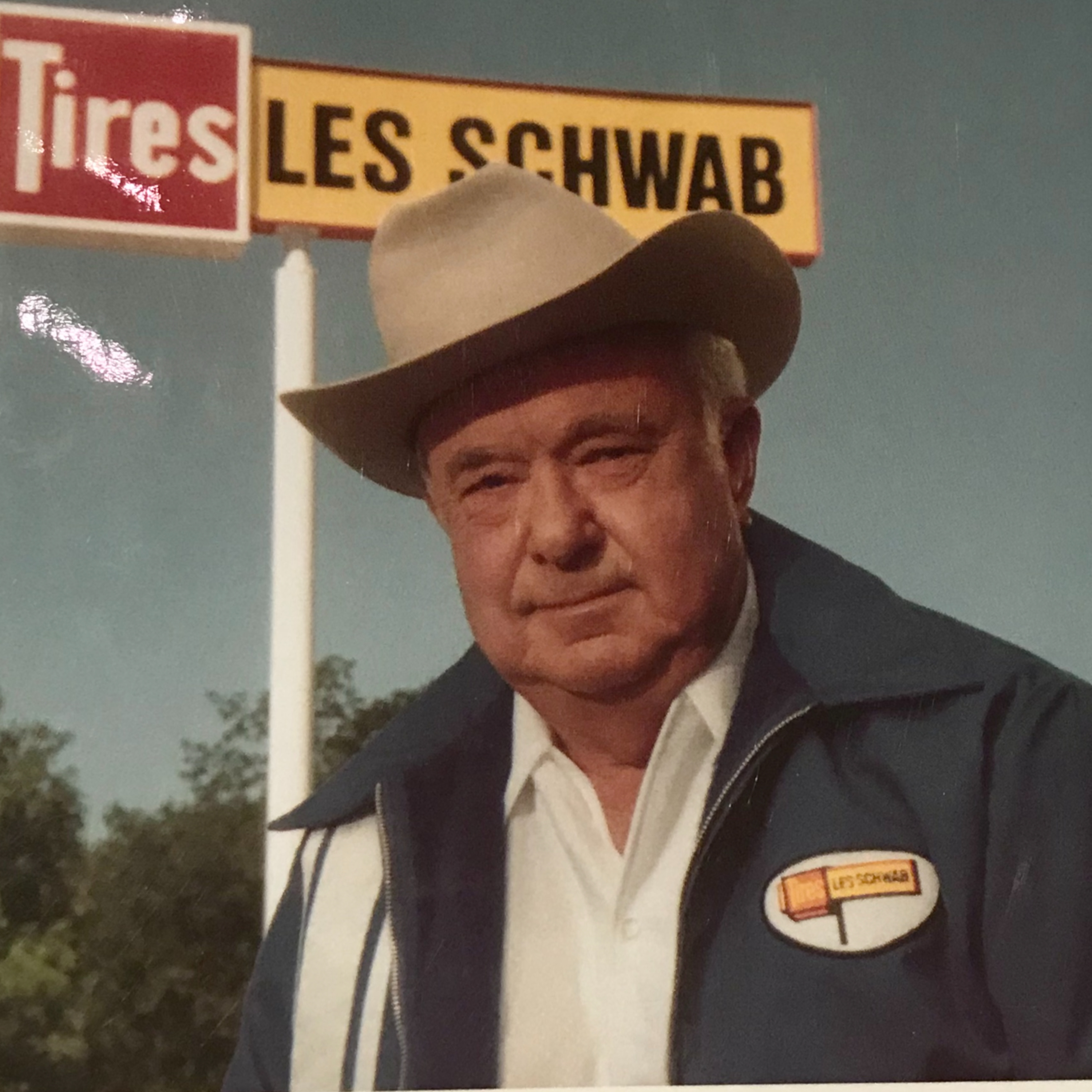
Incentives in Organizations as Exemplified by Tires Les Schwab, Ep. 008
Dec 3, 202000:27:45Tap to summarizeIncentives drive the behavior of people and the performance of organizations. Tires Les Schwab is a study in win-win business relationships. See https://www.buildbigideas.com/post/incentives-in-organizations-as-exemplified-by-tires-les-schwab for full show notes. Quotes by Charlie Munger: - “Show me the incentives and I will show you the outcome.” - “Never, ever, think about something else when you should be thinking about the power of incentives.” Charlie Munger points to the book "Les Schwab Pride in Performance: Keep in Going" as indicative of the philosophy that he and Warren Buffett use to incentivize the managers of Berkshire Hathaway subsidiary companies.
Transcribe →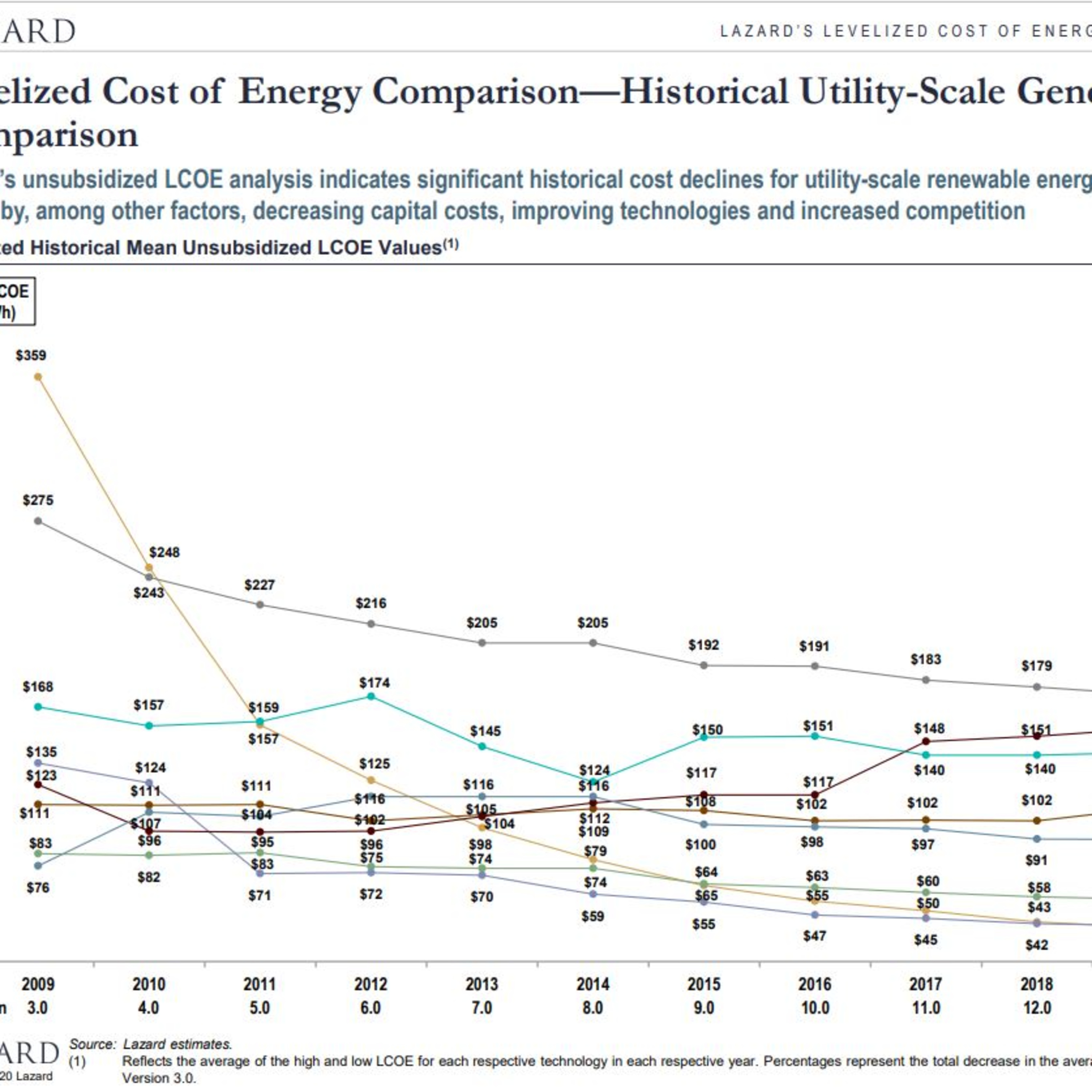
Cost of Energy, Solar is King, Podcast Ep. 007
Nov 4, 202000:10:07Tap to summarizeFor full show notes, see www.buildbigideas.com/post/cost-of-energy-solar-is-king-podcast-ep-007 The cost of generating solar electricity has dropped by an order of magnitude over the last decade. Solar is now least expensive option for generating electricity, beating out natural gas, coal, wind, and nuclear on an unsubsidized basis. This is a world-changing fact that is very optimistic for the future development of human civilization around the world. The biggest remaining challenge is that energy storage still costs almost an order of magnitude more than solar electricity generation. "Solar becomes the new king of electricity," according to the "World Energy Outlook 2020" report published by the International Energy Agency. The report goes on to say, "With sharp cost reductions over the past decade, solar photovoltaic (PV) is consistently cheaper than new coal or gasfired power plants in most countries, and solar projects now offer some of the lowest cost electricity ever seen." The average cost of utility-scale Solar PV has dropped from 359 $/MWh in 2009 to 37 $/MWh in 2020, according to the report "Lazard's Levelized Cost of Energy Analysis - Version 14.0." This is an order-of-magnitude drop in cost in just one decade. Interestingly, solar energy requires energy storage and the cost of storage remains very high. The cost of wholesale energy storage averages approximately 200 $/MWh, according to "Lazard's Levelized Cost of Storage Analysis - Version 6.0." This is almost an order-of-magnitude more expensive than the cost of solar PV generation.
Transcribe →