← Building One with Tomer Cohen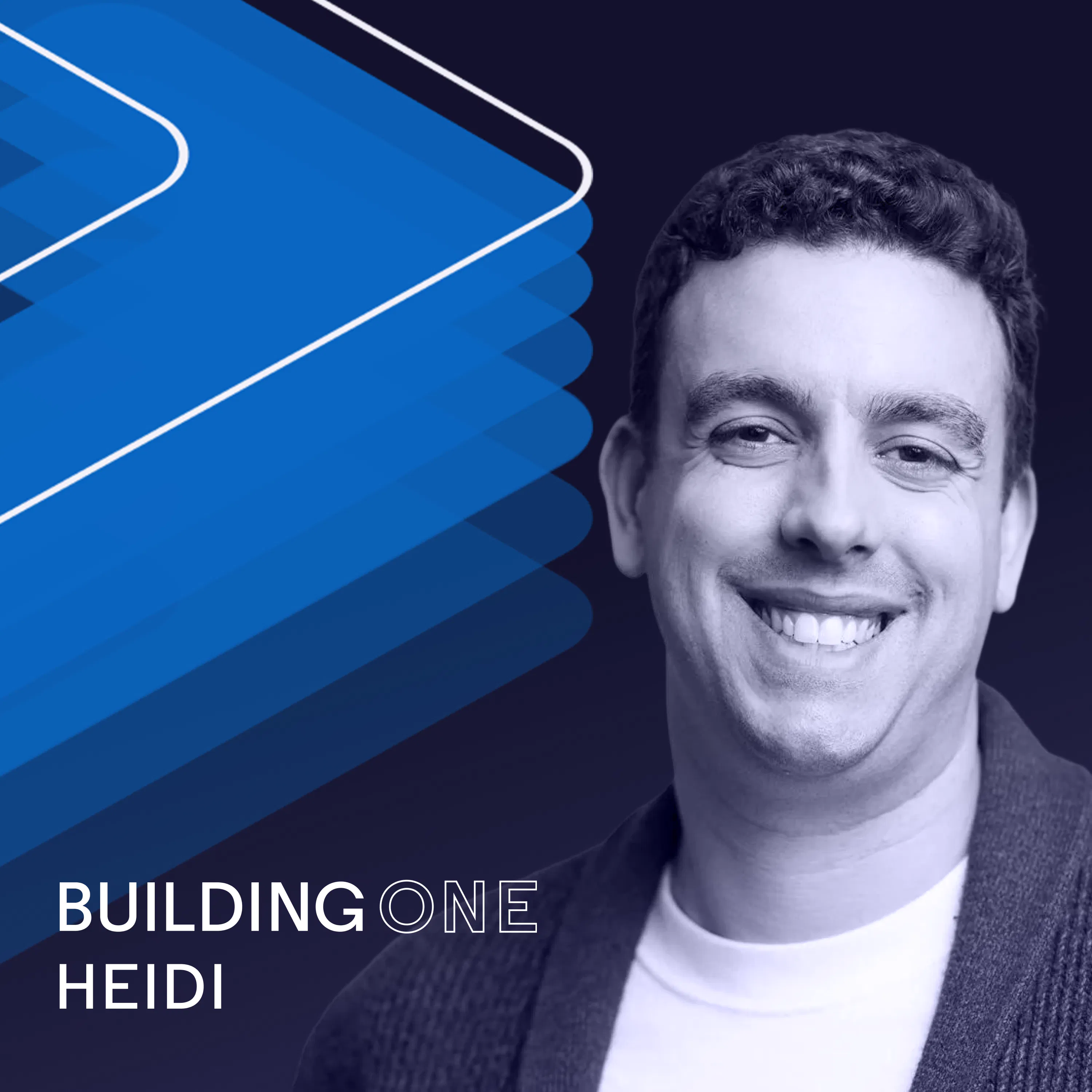
Building One with Tomer Cohen
Building Heidi With Thomas Kelly: AI As A Care Partner, A Surgeon's Lessons For Building, And The Future Of Healthcare
00:29:31
Loading summary
Transcript54 lines
- [00:00]
A
I'm wondering if your expertise as a surgeon help with your craft as a builder.
- [00:06]
B
There's this term they say which is called economy of movement. So it's basically like no wasted movements. Surgeons are amazing. They're like being precise, like they're putting the thread where they want to and then it's just, yeah, it's like perfect. So I definitely, I don't know, I don't know if I knight to that standard, but I have come to value how things and intention move from one action to the next.
- [00:36]
A
What happens when a vascular surgeon realizes instead of treating patients, he's really drowning in paperwork? My guest today decided that was no longer acceptable. Dr. Thomas Kelly is the co founder and CEO of Heidi Health, one of the fastest growing health tech companies in the world. Heidi started by listening to real patients visits, then drafting the clinical notes from it. And now it's expanding into the taking care of the vast but invisible work around care, the follow ups, the calls, the scheduling. Before Heidi, Tom lived the trade offs firsthand. He felt the cognitive overload of being a doctor, the endless tasks and the feeling that some of the most highly trained people in the world do spreading their days on drudgery low value work. In this conversation we go deep on the craft of building AI for one of the most complex, regulated and human centric domains there is, healthcare. We talked about what doubling capacity in healthcare really means, why personalization in healthcare has to be nearly perfect, what it actually means to build AI that doctors trust, and how Heidi is rewriting the go to market playbook in healthcare. Winning clinicians one by one with a consumer centric product and then letting that adoption pull that into the system. Everybody talks about AI's potential, but this conversation is about what it actually takes to deliver it in the real world. Let's get into it. Thank you for joining me.
- [02:13]
B
Thanks Tomer. Yeah, lovely to see you again and yeah, excited.
- [02:16]
A
So we just talked about Heidi Health being the top startup on LinkedIn's list in Australia, but also across the world. But before we go to Heidi Health, I want to talk about you for a bit. So you started your career as a vascular surgeon well before you kind of started Heidi Health. What drew you into medicine in the first place?
- [02:37]
B
Yeah, I think through for me it was the experiences I had with my primary care doctor or my GP as we call it at home. So yeah, growing up he was the most eminent, knowledgeable, warm, kind person that I'd ever met. So it always felt like the best use of my talents I guess would be to do that for others, it's like, no matter, because especially when you're little, when you feel sick, you just feel the worst. You don't know what's going on. Your parents are worried, so that freaks you out even more. I think the common thread I've realized now is I've always been interested in problem solving and building really useful things for people or providing services. So there was some common thread that just pushed me into medicine. Yeah. But it started with my gp.
- [03:21]
A
I kind of want to. If you can take me back to that moment when you realize, wow, I'm spending my life's work doing paperwork, not medicine. And then did you try first to do shortcuts and templates and other things before you're like, okay, I have to solve this?
- [03:39]
B
I'd say in medicine, the thing I was realizing was that it was more structured and protocolized than maybe I realized going into it. Like, I knew what the diagnosis was or I'd done the surgery. Like, the person had to recover for seven days, but trying to get them home was maybe days of administrative work, of calling people, chasing results, submitting things for billing or funding for their accommodation or you name it. And it always felt crazy to me that the doctors were the one doing it. It's like the pointiest end of the spear, the one that the most trained, doing very low cognitive effort, very frustrating kind of work. So, yeah, I think those two interests combined. I think I was a bit early in retrospect, but in 20, 20 and 21, with transformers, some of those chat technologies were becoming really powerful. And I was convincing myself. I think every doctor is going to use an AI in their practice. This is certainly going to happen. And why not me? I can build it. So, yeah, that's how it started.
- [04:38]
A
The normal thing would have been to just continue and do your residency and build your specialty. But you felt, and you were giving yourself some time, you're like, I'm going to do this for a year and see if it works out.
- [04:50]
B
So I was in the Alfred, which is one of the nicest hospitals in Australia, really, Like, it's the best trauma center. I'd had the pinnacle experience of what healthcare could be for me, my dream state. Ten years later, I'd work there and it was still just wasn't satisfying. The way all of my colleagues worked was quite frustrating. But I definitely did the bargaining. There's a lot of sunk cost. I got family members, my wife to answer to. So in my head I was like, well, I'm still a doctor. Worst Case, it's not the end of the world. I'll just come back and be a junior and work my way up again. That's fine. But in my heart I felt like it was not the best use of my talents. I didn't know at the time, but maybe this good product instinct because I didn't do comp sci and I wasn't in Silicon Valley. Like I wasn't like entrepreneur brained. Like I didn't know about vc. I wasn't obsessed with starting a startup. I just wanted to build something useful for doctors with AI.
- [05:49]
A
Specifically, I'm wondering if your expertise as a surgeon help with your craft as a builder, as a product builder or do you see any parallels looking back, you can connect.
- [06:02]
B
So my favorite surgeons were always the plastic surgeons and there's this term they say which is called economy of movement. So it's basically like no wasted movements. Like your hands are in a certain position and when you go to grab a suture, they do it the same way every time. Surgeons are amazing. Will put it through with the exact right amount of tension and pressure. They'll already be grabbing it on the other side as soon as the tip goes through because they know exactly where it's going to end up. So they're not just digging around and hoping that it appears they're being precise. They're putting the thread where they want to and then it's perfect. So I definitely, definitely, I don't know, I don't know if I quite to that standard, but I have come to value when there is an elegance or a connection in how things and intention move from one action to the next. And then the other part of surgery which definitely influences me is I guess how action oriented surgeons are. If something's bleeding or there's something you didn't expect, or you accidentally poke a hole in something that you didn't mean to. You have to be decisive and fast and the way to figure out what to do is to act quickly. That's definitely something that I bring to Heidi for sure.
- [07:19]
A
For folks listening across the globe, how would you describe Heidi?
- [07:25]
B
Yeah, so Heidi's an AI care partner for clinicians. The reason we say care partner is there's actually quite a lot of things that Heidi can do now on behalf of clinicians. So sort of like an extension of them. So we have ascribe, which is the feature that has gone most viral to date. So that's where we listen into a visit, we transcrib, describe it and we generate clinical notes and documents and a Patient summary. We also are starting to do things like calls. So following up with patients with outbound calls or also helping them schedule in with the practice and yeah, very exciting. I'd say we were surprised the degree to which the adoption sort of took off in the last few years. I think it makes sense. It gives so much time back to clinicians. Sometimes they save an hour to two hours a day. We're global, so we started in Australia. We now have, I'd say like market leading presence in Canada Anz and the uk and then in the us a small but growing business across both mid market but enterprise as well with some large, large named accounts.
- [08:31]
A
Yeah. Is this just the area you were most passionate about because you've seen the pain day in, day out kind of thing?
- [08:36]
B
I think overwhelmingly clinicians still want to be doctors. They want to do the fun bit, which is figuring out what's going on and gathering the history and delivering the plan and doing the surgery. These are the best parts of the job. The dream for me was to be that gp. So my GP didn't have a medical record. He had cue cards that he would write notes on only sometimes if it was particularly interesting. So my lifetime was four cue cards. And the thing is, I get that maybe that's not as good as it could be, but actually for him that was enough for him to be really competent and, and his experience was just write a note, okay, onto the next patient, I'm done. He never left a visit with debt or work that he had to go do. And so I think that's kind of the unifying vision. But I do think these models are quite jagged. They're incredibly intelligent and I'm 100% sure a doctor with them is better than without. But also they don't quite replace the ability of the human doctor to take risk and to feel and touch the patient just yet.
- [09:42]
A
You started well before GPT4 or GPT 2.5 came out, so you're kind of ahead of this new wave of AI. So I could see two reactions. When you kind of know GPT4 is coming, one reaction is, oh shit, this is materially changing our strategy, or what we thought would be really hard is easy. And now we're building something very different. Well, I could also see, this is amazing. This accelerates our roadmap and now we can focus on the stuff you always wanted to focus on because we don't have to deal with this. Was this any of those or neither.
- [10:20]
B
Of those at first it was definitely the, oh shit, this is so scary because all of our technical advantage is gone. But then it became exciting because we could focus on being more of a product centric company. So what had changed for us was that we had built the business around the idea that we had this precious commodity technology that no one else could build, or that it was like a very small group. But then actually by middle of 2023, everyone was trying, was doing the same thing. And so by end of 2023, we actually pivoted the whole business. We changed to going product led. We still learned, used all our learnings. I think that's why we kind of came from behind and sort of won in all the rest of world markets because we knew from our data that clinicians really wanted to personalize to a very high degree. So they would be like very impressed by the initial trick of generating the note. Like the magic of seeing that happen. But then very quickly that would decay into, oh, it's annoying that I have to edit more than 5% of this note. And so personalizing to a really high degree was super, super critical. So that lent itself really naturally to a product LED model where you have a free tier, that magic moment, that word of mouth driver is free, accessible, no pain, no credit card needed. You just use it as many times as you like. And then anyone that's going to become a real user, actually activate and consistently use the product will almost always want to create all their own templates. And so that was the paid feature and yeah, so it was like a go to market innovation. And then we went for it and it worked.
- [11:57]
A
What is it for you that is really differentiator. Yeah, you can use off the shelf, it wouldn't work. Or what others are trying to solve is this. But for us, the focus is. This is our focus. Is it the reliability? Is it the fact that I know those are my notes as a physician and not some generic notes? Is it about the accuracy, the nuances of how I write? All of the above?
- [12:19]
B
I'd say overwhelmingly quality within Heidi's set of features. So that means you can create any template, you can set up your own voices, high degree of personalization. And Heidi should be writing within 1% of what you would write reliably, consistently, along with all the other engineering about how do you handle offline, low Internet, different languages.
- [12:41]
A
How did that idea come to life to go directly to doctors? And how does it work in practice? Is this like the slack example of penetrating a large enterprise company?
- [12:55]
B
Yeah, so I think it started again. This is maybe the surgeon in me. So I guess it came from that instinct of that the doctors are going to use something that's going to benefit their patients and benefit them. We always built with compliance. That was one advantage of maybe starting too early. So even when we made the pivot, we had GDPR certification and we'd done all this different regional setup. So although maybe they didn't have central approval, once they shared that they were using Heidi, they would be surprised. We would kind of surprise them with how compliant we actually are. And then we would share our pen testing and all our different SLAs and ISO and everything else. But generally, I'd say in markets where there's a lot of individual autonomy on the clinicians or departments, the motion definitely works better.
- [13:50]
A
So a doctor doesn't need a blessing from the IT department before they bring Heidi to help warm up.
- [13:56]
B
Not always. Yeah. I think it kind of depends on the setting. So I would say in large US Health systems, it works the least well. So that's where they're. Because you might have like 10,000 clinicians employed by one entity. Entity. And so the fact that a few clinicians really like Heidi, their ability to enact influence on a CIO is so far detached. There's some delta of if you build a product for the doctors, then you end up with what Heidi is. If you build it for the CIOs, you end up with just a different thing that is not. It's more compliant, but it's less useful.
- [14:33]
A
Do you see hospital admins starting to use Heidi and having access and tracking records? Do you see a place where patients would have access to Heidi as well? Or they will always be kind of on the auxiliary of the value and the doctors are the center. Yeah.
- [14:49]
B
I think it's like we have to win the hearts and minds of the doctors. That's always going to be, I think, anchoring. If we ever alienate them or do something, then we kind of lose the whole thing. However, I would say a lot of our doctors want us to have amazing experiences for their patients. One of the most interesting ones we've been asked for recently is, can I create a clone of myself in an AI chat? So what they mean is they explain how certain procedures go 20 times a day over and over and over again. And so what they want is, can you just learn from my sessions how I explain something and then just share it with my patients?
- [15:27]
A
And the answer is yes, right?
- [15:29]
B
Yes, exactly. Yeah, we can do that.
- [15:31]
A
I don't know if this was kind of more of a small study or broad But I saw from Heidi, 51% reduction in documentation time, almost 40% improvements in note quality, 60% decrease in after hours administration time. Just a lot of amazing stats. And are those the metrics you look at when you think about doubling the capacity of healthcare overall?
- [15:56]
B
So the reason capacity makes sense is it's more than just time. It's basically how much healthcare is there that we can actually give. So if Heidi can phone a patient schedule, call when a prescription is meant to end, gather the history about the medicine, have access to the fact sheet, ask any adverse effects and relevant questions, draft the prescription such that the clinician just ticks a button, we've actually increased capacity. We did the job of what the clinician would have done in the case that they had to pick up the phone and spend 15 minutes of that time. So that's 15 minutes of capacity we've given back. It's kind of like in physics where you have work. It's like power and time. You want how much care has been given over what period of time. If we do more care and more time giving it, that's great, that's what I want us to do. So it incentivizes everything. If we make doctors decisions better in the moment, then we raise the quality of their care. So that's increasing capacity. If we give them more time back, that's also increasing capacity.
- [16:59]
A
I'm trying to have a formal line in my head, going back to math background. So you want successful outcomes going up, like negative outcomes going down, divided by.
- [17:11]
B
Time of care, the amount of care you can give out. There's only like a couple of ways you can change it. You can either reduce the quality, right? So you can do less and you can think less hard and spend less time with your patients, or you can increase the quality, but then you have less time for every single patient. So it's kind of like the, I don't know, the graph breaks down at some point. But yeah, it's basically like how much care time, like CET or like care seconds or whatever can a system deal with.
- [17:45]
A
I think I heard you talk about sometimes the best doctors are the ones that perceivably when they, you know, the perceived best doctors are the ones who remember how your kids names are like, you know, names of your kids or. But it doesn't always, you know, doesn't have to match with how good of a doctor they are in treating you. So is this one of those intangibles that you think about in Heidi or you're like, no, no, I'M like pure outcomes and treatment.
- [18:11]
B
Yeah, no, I think it's really important. There's good evidence that bedside manner does matter for outcomes but.
- [18:18]
A
For outcomes.
- [18:19]
B
Yeah, because. Because it's related to how much, how much patients are willing to divulge and how much they actually will one engage with healthcare at all. And then also I think it usually signals a clinician that is maybe at a higher level of cognition generally not always, but it's like because they can balance both, they clearly know what's going on so that they can actually extend themselves into how that person's feeling and going. So I think it's both. You don't want to dehumanize the experience.
- [18:49]
A
When I was meeting you in Melbourne, it was really amazing to see all the ecosystem and part. It felt to me that there was a real advantage being away from valley because you weren't caught up in what's shining new object and trying to kind of make yourself to the next panel or speaking engagement. You can really focus on that deep, deep problem. Do you see it as an advantage and what do you see as a disadvantage being in a way far away from the valley?
- [19:18]
B
Yeah. So the advantages are definitely that you're a big fish in a small pond at least when you're successful. So that means you get to recruit just amazing people. We get people joining from Canva, from Lassian, also a lot of the local offshoots, whether it's Notion or Figma or other companies. So I think that's really great. I also think we have a unique product led talent DNA in Australia because a lot of companies haven't been able to raise capital in the way that you could in other countries. So you can't, you just can't afford a B2B model generally because you can't raise the quantum of capital that you would need to actually launch B2B model around the world. There's been a couple of successful companies but it's pretty tough. So I think there are definitely advantages. I also think our experience, obviously we've worked in a global market. Young Australian grads have a really good attitude. They work very hard. They often like view going to America and like seeing the world as a really exciting thing. So it's very, it's kind of like a good place to go global from. I think maybe the only disadvantage is that Australia's an economy is relatively small. So if you have a big, big business in Australia and you go talk to an investor in the UK or in the us they're just going to go into your P and L and set Australia to zero in the future. Like they just don't care, they just don't think it's going to matter. And to be honest, they're kind of right. You do have to think about how you succeed in many markets, not just in Australia. It's never going to be big enough to get to a venture outcome that's exciting.
- [21:02]
A
So now future of healthcare. So if you kind of push that like 10, 15 years, what are you envisioning?
- [21:11]
B
So what I imagine is that if I walk into a hospital, it's basically only clinical staff. For the largest part of it, it's going to be nurses, doctors of course, supporting teams, porters, others that are doing all sorts of great work. But the administrative requirement to run that hospital has come down a lot and the amount of engagement that patient gets on average from that health system or wherever their insurance is accepted or whatever is massively increased and basically unlimited. You probably have an MD that is responsible for you, but then you probably as a patient can engage with HEIDI or some sort of system. And for most non acute issues, I think AI will probably get most of the way there figuring out what's going on, reading your medical history, looking up the evidence, drafting an amazing plan for that clinician to approve. The reason I think it will happen is because it's just safer. Heidi can check in on with you every day, can connect to your aura ring or your remote physiological sensing, can detect when the diagnosis is probably wrong or it's not going to plan, escalate in a way that as a human I just can't. I can't simultaneously manage 10,000 people and check in on them every 10 minutes. But Heidi could. So I really think that kind of on the edge, remote patient monitoring, low risk primary care will become largely AI driven, still under the supervision of an md. I think the companies will become medical devices and we should take liability for how these systems behave when we're doing that. Like we shouldn't just offload it to the doctor. It's not fair. It'll mean that for most of the things that you go to see a doctor for, you can get great advice at almost no cost. It will be great. Then when you go to see a doctor, you've already risen above a certain degree of risk. Heidi's probably already taking a history, thought about the case, you need to see someone in person. The doctor does what they always do. They'll read the HEIDI summary, they'll look up the evidence, they'll see what Heidi's Thinking and why they've sent them in. The human doctor will do what they do, will smudge over the jagged edges of these intelligences where they're quite bad. I do think the human side of it will become slightly more procedural oriented, so more examination oriented, more procedures, blood draws, things like that generally and probably more mid level providers, PAs and others that start to operate with these AIs to do maybe slightly more advanced care. And then Heidi's behind the scenes doing everything from the revenue cycle to negotiating with the insurers AI about how they should be paid for a certain thing. It's like you just got this AI wrapping the experience, but there's still the human doctors there, still the nurses, still all the teams that exist. They're just better utilized at what, what they uniquely are best at.
- [24:03]
A
I would have to quickly transition into a rapid fire and this, you know, just kind of off the bat. But what comes first in mind to you? What's one thing people get completely wrong about building healthcare products?
- [24:20]
B
The best product wins.
- [24:22]
A
Great, great answer. What's. If you could solve one product problem at Heidi right now by snapping your fingers, it doesn't have to be unique to Heidi, but just a product you know you would like to have tomorrow. What would that be?
- [24:39]
B
An amazing permissions and billing system. So if we launch a new product, we just like turn on a couple of things and all the billing solved. So we've got to build heaps of platform stuff at Heidi.
- [24:48]
A
This is specifically billing for healthcare is extremely hard.
- [24:51]
B
No, it's like our stripe billing platform or different user roles like fine grained access. Very, very enterprise. Like we'd want to be enterprise ready. That's the case.
- [25:04]
A
But what's a product that you did not think would be successful, actually surprised you? Or the opposite? If I was successful but was not.
- [25:12]
B
Okay, controversial Grok, I was surprised. I thought it was incredibly late to the party. I didn't expect them to build anything good. And it's slowly becoming my preferred consumer AI. I just find it's, it's hard to explain why. It's just like the best at knowing when to think, how long to spend, when to look up sources.
- [25:33]
A
Awesome. What's a favorite non software, non digital product you love?
- [25:39]
B
I have this titanium pen that's like milled from a single piece of titanium. That's like a fidget toy slash pen. It's like my favorite thing ever. I love it.
- [25:49]
A
That's awesome. And then for folks listening, as young builders aspiring to build in healthcare, what do you think they should Learn, Yeah.
- [25:59]
B
Definitely not required to be a doctor. I'd actually discourage it. I'd say it's a little bit of a waste if you don't ever think you're going to do clinical practice. Not a good use of your time. I'd say just design partners. You just have to spend time in the environment, find a doctor that's willing to have you follow them around and then whatever you're building, just be very clear who is paying for it and who's getting the value. Because in healthcare that's where a lot of companies go to die. The idea is sound, but the actual economics of how they acquire users, who's the ultimate payer makes it very tricky. It's the only place where you can build something useful that will just die because no one can pay for it or it's not monetizable.
- [26:44]
A
Super interesting, Tom. This was super insightful. It's the second time we met. I feel like I've learned even more this time and I've built a pretty big base the last time we talked. So thank you so much for the time. I very much enjoyed learning about the future of healthcare through Tom's eyes. If you're building AI for high stakes work, these takeaways are important to keep in mind. First, your product's origin story matters because it grounds your mission. Tom didn't start with a startup dream. He started with a childhood doctor he described as the most eminent, knowledgeable, warm, kind person he ever met. Heidi is trying to get doctors back to that type of care, not replace it. Second, according to Tom, healthcare's real problem isn't getting the diagnosis right, it's the throughput, it's a capacity problem. And the reason is clear. Doctors were spending most of their time on low cognitive effort work. They were not doing patient care, they were doing paperwork care. Heidi was designed by with great clarity. It's about creating time back for doctors and everything else will take care of itself. Third, Heidi started before the ChatGPT revolution, but the release of it didn't kill the product, it actually clarified the game for them. When ChatGPT first came out, Thomas first reaction was oh shit, all of our technical advantage is gone. And the move was a full pivot from we are actually building models of the company that we are building a product centric user centric company that are treating Doctors and patients together. 4. Personalization is the primary mode for Heidi. It's almost like measured like a clinical SLA. Tom's bar is very extreme. Heidi should write within 1% of what you would write as a doctor reliably and consistently. Anything more than 5% at it becomes friction in the system. 5. The future of AI in healthcare is direct care. Imagine walking into a hospital when most of what you see is clinical staff, doctors, nurses, team delivering care because the admin work is gone. It's not about AI eliminating human care, it's about AI amplifying human care. I'm Tomer Cohen. Thank you for watching Building One.
- [29:04]
B
You've been watching Building One. Our show is hosted by Tomer Cohen. Building One is produced and edited by Mason Cohn and the team at Coastal Production Works. This episode was mixed by Tim Boland at LinkedIn. Our team includes Rachel Karp, Sarah Storm, Dave Pond and Alicia Mann, with support from Alex Kuznetsova and Mujeeb Mehrdad. Until next time, keep building.