Podcast
Building The Billion Dollar Business
Hosted by Ray Sclafani · EN
Hosted by Financial Advisor Coach, Ray Sclafani, "Building The Billion Dollar Business" is the ultimate podcast for financial advisors seeking to elevate their practice. Each episode features deep dives into actionable advice and exclusive interviews with top professionals in the financial services industry. Tune in to unlock your potential and build a successful, enduring financial advisory practice.
43episodes
Episodes
Newest firstAll episodes
A Five Step Framework for Advisor Capacity
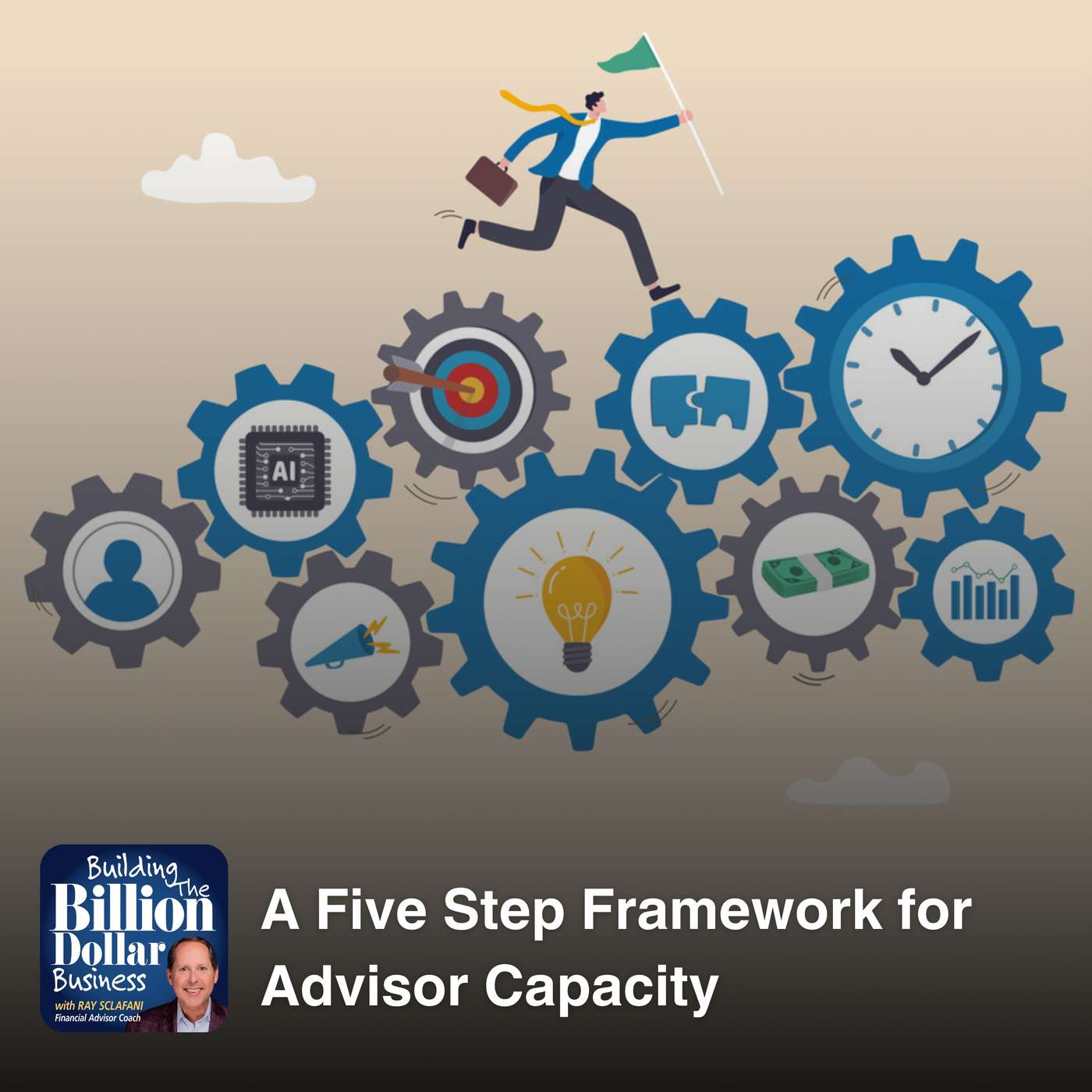
1w ago00:09:38Tap to summarizeYour best advisors are stretched thin, and it is tempting to blame the calendar. In this episode, Ray Sclafani makes the case that capacity is a leadership decision, not an operations problem, and shows advisory firm leaders how unresolved choices about clients, roles, and delegation quietly push the heaviest load onto the people the firm can least afford to burn out.Ray connects this to Michael Kitces' 2025 research on associate advisor delegation, which found that smart delegation can meaningfully speed up the return on a new hire while protecting senior advisors from unnecessary client work. He then walks through a five step framework for segmenting clients, defining service models, clarifying roles, measuring capacity objectively, and hiring ahead of the breaking point.Firm leaders will walk away with a concrete way to diagnose where capacity is leaking in their business and a practical plan for protecting their top talent while growing enterprise value.WHAT YOU'LL LEARN IN THIS EPISODEWhy overloaded top performers usually signal a leadership gap rather than a staffing shortage.Four questions to diagnose team structure, capacity measurement, proactive hiring, and review cadence.How Michael Kitces' 2025 research on associate advisor delegation ties directly to firm capacity.How to design roles and service models so lower value work moves off the senior advisor's plate.Why a quarterly capacity review is the practical tool for hiring ahead of the breaking point.THE FIVE STEP CAPACITY FRAMEWORKDefine your client segments.Define the service model for each segment.Define the roles around the service model.Measure capacity objectively.Hire ahead of the breaking point.REFLECTION QUESTIONS FOR YOUR LEADERSHIP TEAMWhere is your firm relying on heroic effort rather than a better structure?Which client segments require distinct service models, roles, and staffing assumptions?What work should your senior advisors stop doing in the next 90 days?What capacity signals would tell you it's time to hire before performance starts to slip?How will you implement a system so that every 90 days you're evaluating the opportunity to infuse AI into your workforce?RESOURCES MENTIONEDKitces Report: What Actually Contributes To Advisor WellbeingClientWise Executive Coaching and Team DevelopmentBuilding the Billion Dollar Business is hosted by Ray Sclafani, founder and CEO of ClientWise, the financial services industry's leading executive coaching and team development firm for elite advisors and wealth management teams.Find Ray and the ClientWise Team on the ClientWise website or LinkedIn | Twitter | Instagram | Facebook | YouTube
Transcribe →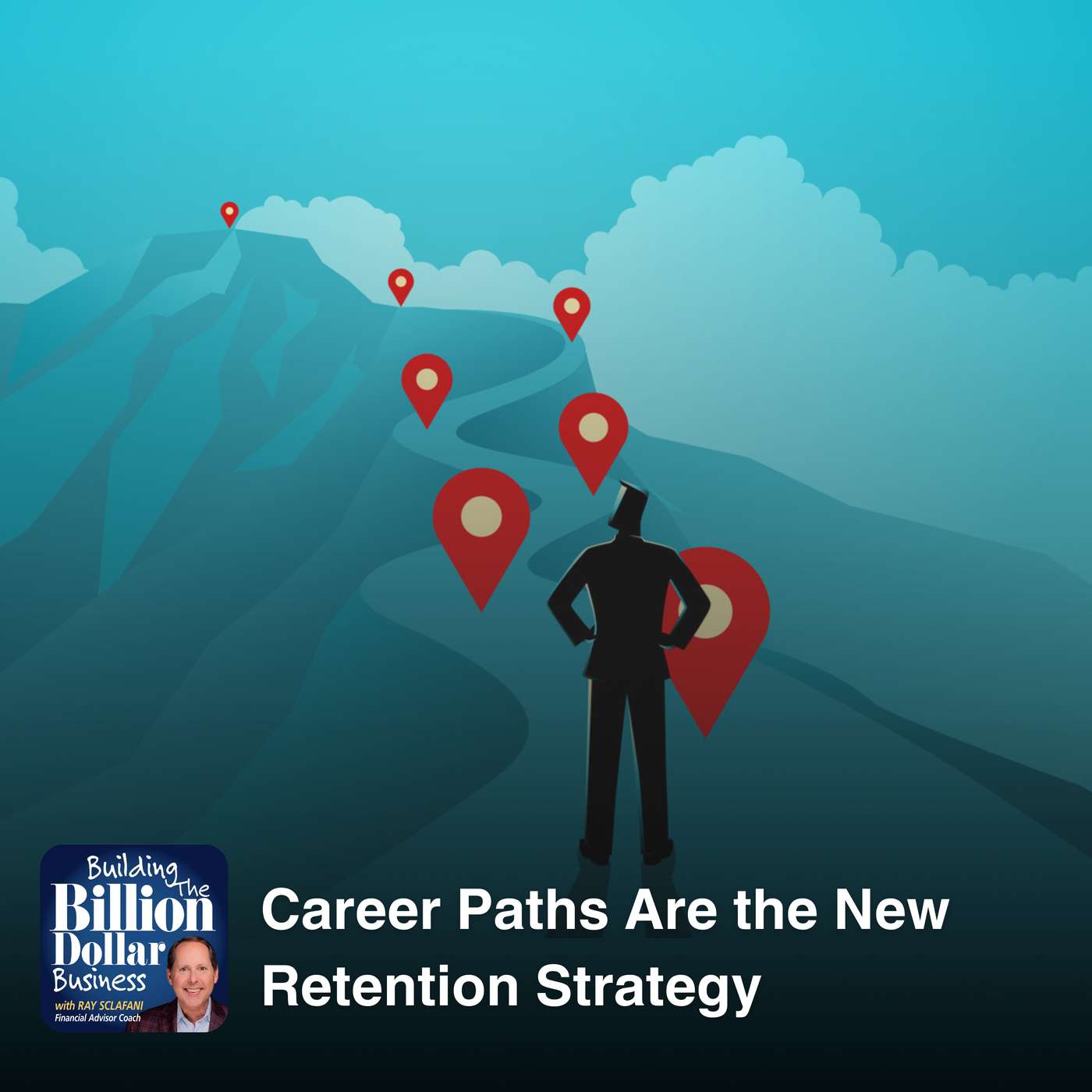
Career Paths Are the New Retention Strategy
2w ago00:10:47Tap to summarizeThe next generation of financial advisors and leaders are not asking for a job, they're asking for a future. Ray Sclafani explores why career pathing has evolved from a nice-to-have benefit into the most critical retention lever advisory firms have. Drawing on Deloitte's 2025 research showing only 6% of Gen Z and Millennials prioritize reaching a leadership position, Ray unpacks what ambition actually looks like today: growth, meaning, money, well-being, and a thoughtful pace of development.For advisory firm owners and leaders, the implications are direct. A firm with no clear development path doesn't stand still, it falls behind. This episode provides a five-part framework for building career pathways that work. Ray then shares a practical starting point: a single career conversation in the next 60 to 90 days that changes how your people feel about their future with your firm.The firms that provide honest visibility of a future worth building will retain more top talent, develop better leaders, and build more durable businesses.WHAT YOU'LL LEARN IN THIS EPISODEWhy the next generation defines ambition differently and what that means for retention strategyHow to define roles with clarity and purpose so every position has a visible pathwayThe single biggest mistake firms make when building career paths and how to avoid itWhy addressing AI's role impact directly is now a core part of career developmentHow to eliminate ambiguity around partnership so people stop guessing what it meansTHE FIVE-PART CAREER PATHING FRAMEWORKDefine the Roles. Establish clear purpose, expectations, and required skills for each position. Map progression pathways for advisors (from client service associate to enterprise leader), operations (specialist to enterprise operator), and leadership (people manager to executive leader).Define the Progression. Specify what it takes to move from one role to the next: technical skills, client relationship management, leadership capabilities, business development expectations, decision rights, and cultural behaviors. Specificity builds trust.Connect to Actual Development. Attach real development objectives to each progression step. Identify specific competencies that need improvement, not vague hopes. The manager's job is connecting today's work to tomorrow's opportunity.Address AI's Impact. Clarify which skills become more valuable (empathy, judgment, planning, decision making, communication, relationship leadership) and commit to training people to use AI responsibly. Don't let people wonder alone.Make Ownership Expectations Clear. Define passages to partnership, distinguish between producing and nonproducing partners, clarify income versus equity partnership, and spell out what business development, client retention, leadership, and enterprise thinking mean for ownership.REFLECTION QUESTIONS FOR YOUR LEADERSHIP TEAMCan every high potential employee at your firm see a future worth working toward?Where are career paths clearly defined, and where are they implied but not yet documented?Which roles will AI reshape first? And how are you preparing your team for that shift?Who needs a development conversation before they start taking calls from another firm?RESOURCES MENTIONEDDeloitte 2025 Gen Z and Millennial SurveySchwab 2025 Career Pathing ResearchCFP Board Career Pathway ResourcesClientWise Business Builders Academy™ClientWise Executive Coaching and Team DevelopmentBuilding the Billion Dollar Business is hosted by Ray Sclafani, founder and CEO of ClientWise, the financial services industry's leading executive coaching and team development firm for elite advisors and wealth management teams.Find Ray and the ClientWise Team on the ClientWise website or LinkedIn | Twitter | Instagram | Facebook | YouTubeBuilding The Billion Dollar Business
Transcribe →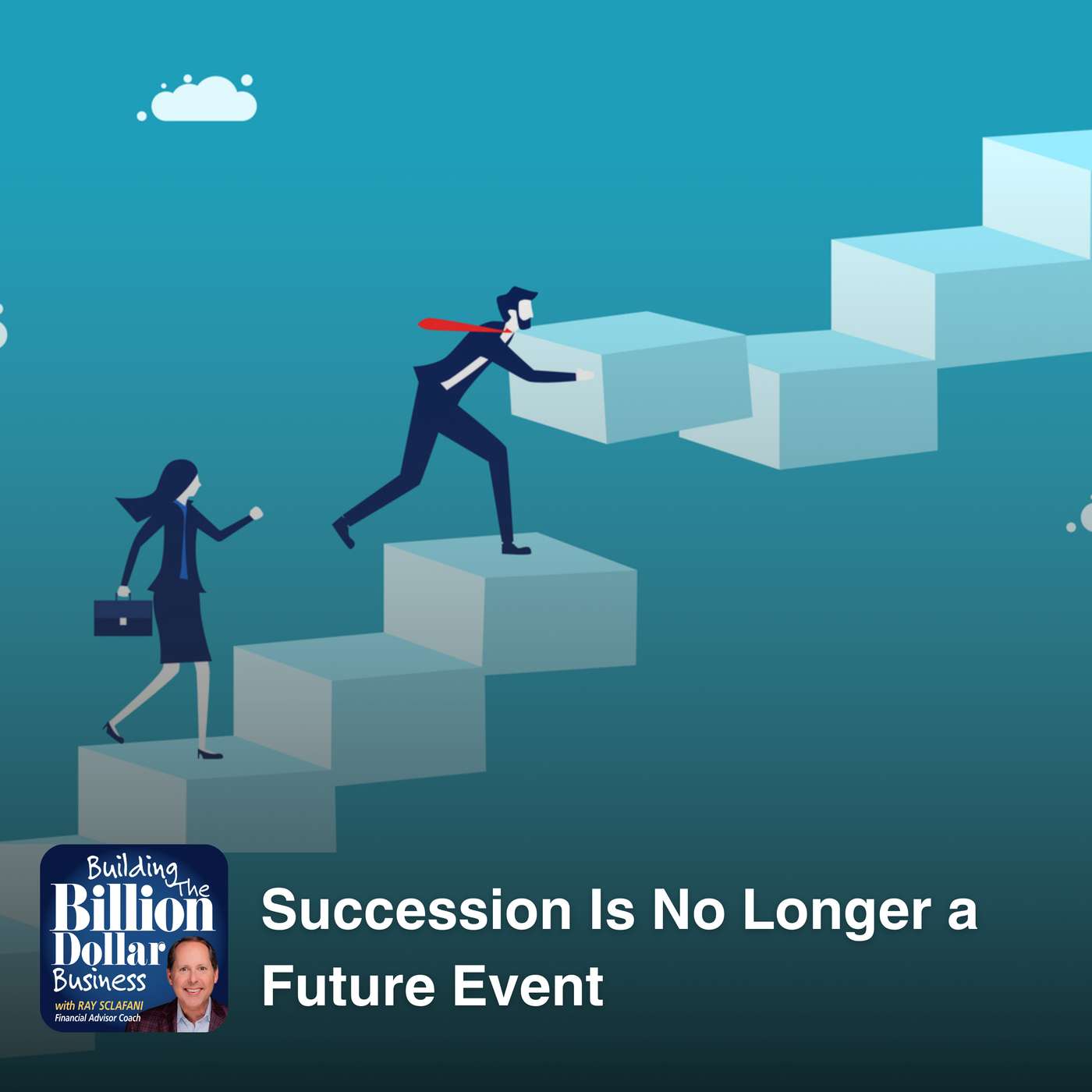
Succession Is No Longer a Future Event
3w ago00:10:02Tap to summarizeToo many advisory firms treat succession as an event triggered by retirement, but Ray Sclafani reveals why succession must be an everyday leadership discipline. In this episode, Ray shares a practical four-part framework for building bench strength, designing intentional transfer experiences, and creating a written succession plan that reduces avoidable risk. For advisory firm owners and leaders, succession readiness directly impacts enterprise value, client retention, and your ability to scale beyond your own capacity.The data is clear: 105,000 advisors plan to retire over the next decade, representing 37.4% of industry headcount and 41.4% of total assets. Yet many firms haven't developed the next generation needed to carry client relationships and leadership. Real succession is a series of transfers of trust built over five to seven years, not a transaction completed in months. When you implement systematic succession planning, your firm reduces avoidable risk, protects client continuity, and creates visible opportunities for emerging leaders.What you'll take away: a simple, immediately applicable framework you can stress test against your own firm's situation this week. Whether you're early in succession planning or well prepared, this episode gives you the discipline to move forward with clarity and intention.WHAT YOU'LL LEARN IN THIS EPISODEWhy succession must be treated as a daily leadership discipline, not an event triggered by retirementThe four-part framework for building a succession plan that protects client relationships and firm cultureHow to identify the roles in your firm that carry the most client trust and who depends on themHow to design "second chair" transfer experiences that let next generation advisors build capability before they inherit client relationshipsWhy reviewing bench strength every 90 days reduces avoidable risk and protects against unexpected departuresTHE FOUR-PART SUCCESSION FRAMEWORKIdentify the Roles in Your Firm That Carry the Most Client Trust - Start with trust, not titles. Who holds important relationships? Who makes decisions clients rely on? In many firms, this is concentrated with a few people, creating risk and limiting growth.Name the Successor for Each Trust Bearing Role - For each key role, identify the likely successor, backup successor, and the specific readiness gap (technical skill, executive presence, business judgment, or communication maturity).Build Transfer Experiences Before They're Needed - Use "second chair" meetings, client events, and leadership responsibilities to let next generation advisors build capability. They can lead planning discussions, present plans, and engage clients while the founder remains present and supportive.Review Bench Strength Every 90 Days - A succession plan sitting in a file is not a plan. Quarterly leadership reviews should address successors, readiness gaps, client exposure, and development priorities for unexpected departures, illness, burnout, acquisitions, and growth.REFLECTION QUESTIONS FOR YOUR LEADERSHIP TEAMWho inside your firm is learning how to carry client trust before they're asked to inherit it?Which client relationships remain too dependent on one or a couple of people in your firm?What experiences must your next generation leaders have over the next 12 months?Where does your succession plan exist in writing, and where does it still live only in someone's head?Building the Billion Dollar Business is hosted by Ray Sclafani, founder and CEO of ClientWise, the financial services industry's leading executive coaching and team development firm for elite advisors and wealth management teams.Find Ray and the ClientWise Team on the ClientWise website or LinkedIn | Twitter | Instagram | Facebook | YouTubeBuilding The Billion Dollar Business
Transcribe →
What Does High Performance Actually Mean?
Jul 700:11:44Tap to summarizeEvery leadership team has an unstated definition of high performance, and here's the problem: those definitions often don't align. One leader may reward independence while another rewards collaboration. One may value speed while another values precision. One may define leadership as bringing in business while another defines it as developing others. Ray Sclafani walks you through a practical framework for defining high performance in your firm, using three clear tiers applied to every critical role. As advisory firms scale, performance expectations must evolve. Individual excellence alone built successful practices for years, but enterprise value requires a different definition: advisors who lead teams, develop others, drive organic growth, and help clients experience the firm as a team rather than a single person. Without this shift, you stay dependent on heroic individual effort instead of building a durable, transferable business.In this episode, Ray provides role-specific examples and coaching skills that your leadership team can use immediately. You'll learn what high performance looks like for lead advisors, associate advisors, managers, and operations leaders. You'll also discover why generic performance language rarely changes behavior, and what happens when your firm says it values leadership but only measures production.WHAT YOU'LL LEARN IN THIS EPISODE1. Why every team has an unstated definition of high performance and why misalignment across leadership creates real consequences2. The three-tier framework for defining high performance in any role: meeting expectations, exceeding expectations, and far exceeding expectations3. Specific examples of what each tier looks like for lead advisors, associate advisors, managers, and operations leaders4. How to identify gaps between what your firm says it values and what it actually measures or rewards5. Why clear, specific performance expectations are a coaching tool that drives behavior change better than generic feedbackTHE THREE-TIER DEFINITION OF HIGH PERFORMANCEUse this framework to define high performance for each critical role in your firm:1. Meeting Expectations: Reliable execution of the role as designed. The person does the job dependably, clients are served, commitments are met, the team can count on them, and there is consistency. This is not minor. A firm needs people who consistently meet expectations.2. Exceeding Expectations: Contributions beyond reliable execution. The person creates leverage, improves outcomes, makes the team better, solves problems before they escalate, helps others succeed. They don't simply complete their work; they improve how the work gets done.3. Far Exceeding Expectations: Enterprise-level contribution. The person expands firm capacity, develops others, strengthens client continuity, improves systems, raises the standard, creates value beyond their role, and makes the business more transferable by reducing dependence on one person's heroic effort.REFLECTION QUESTIONS FOR YOUR LEADERSHIP TEAM1. What must high performance mean for your firm over the next 12 to 18 months given where the business is headed?2. Can you clearly define what meeting, exceeding, and far exceeding expectations looks like in your most important roles?3. Where are current role expectations misaligned with team goals, firm goals, or your enterprise value?4. How would performance, coaching, and development improve if every employee could clearly articulate the next level of their role?Building the Billion Dollar Business is hosted by Ray Sclafani, founder and CEO of ClientWise, the financial services industry's leading executive coaching and team development firm for elite advisors and wealth management teams.Find Ray and the ClientWise Team on the ClientWise website or LinkedIn | Twitter | Instagram | Facebook | YouTubeBuilding The Billion Dollar Business
Transcribe →
Built to Endure This Fourth of July
Jul 300:01:19Tap to summarizeOn the Fourth of July, Ray Sclafani draws a parallel between America's founders and the obligation every firm leader carries. The men and women who built this country did not fight for independence to benefit their own generation. They built institutions designed to endure. And that same principle applies to every owner, partner, advisor, and team member building a financial advisory firm today. This is a short holiday reflection on stewardship, legacy, and what it means to leave something stronger than you found it.
Transcribe →
Why Talent Calibration Matters More Than Ever
Jun 3000:11:37Tap to summarizeTalent is the most important variable in the future of wealth management, and most advisory firms are managing it on instinct rather than discipline. In this episode, Ray Sclafani introduces talent calibration as an executive imperative for financial advisory firm leaders. Drawing on research from McKinsey, Gartner, SHRM, and Deloitte, he presents a four-step framework for conducting stronger calibration conversations, and draws a sharp distinction between talent calibration and succession planning. For firm leaders building toward scale, this episode offers a practical framework for turning good intentions about people into the execution discipline that drives enterprise value.WHAT YOU'LL LEARN IN THIS EPISODEWhy talent calibration is an executive imperative, not a management taskThe critical difference between talent calibration and succession planningWhy most talent reviews fail to drive development, and what to do insteadHow to separate performance, potential, and readiness to make stronger people decisionsHow to determine the right frequency for calibration conversations at your firmTHE FOUR-STEP TALENT CALIBRATION FRAMEWORKStart with the future work of the firm before discussing individual namesDefine the roles that carry the most execution risk as the firm growsEvaluate talent using evidence, not impressionsTranslate calibration into decisions, owners, and actionREFLECTION QUESTIONS FOR YOUR LEADERSHIP TEAMWhat future work will require stronger talent, sharper leadership, and greater capacity over the next 12 to 18 months?Where are we relying on talent assumptions rather than talent evidence?Which roles pose the greatest execution risk if performance, readiness, or capacity is unclear?Which talent decision, development action, or role clarification would most improve execution right now?RESOURCES MENTIONEDSHRM 2026 Talent Trends ResearchGartner talent review and leadership bench researchMcKinsey performance management researchDeloitte 2026 Global Human Capital Trends ReportClientWise Executive Coaching and Team DevelopmentBuilding the Billion Dollar Business is hosted by Ray Sclafani, founder and CEO of ClientWise, the financial services industry's leading executive coaching and team development firm for elite advisors and wealth management teams.Find Ray and the ClientWise Team on the ClientWise website or LinkedIn | Twitter | Instagram | Facebook | YouTubeBuilding The Billion Dollar Business
Transcribe →
The Five Conversations You Must Have to Build a Truly Collaborative Partnership
Jun 2300:14:22Tap to summarizeNext generation partners don't leave because of one bad meeting. They leave when they realize they have responsibility without authority, ownership without influence, and a seat at the table without a real voice shaping the firm's future. In this episode, Ray Sclafani shares a real client situation where a next gen partner, with 17 years at the firm and central to continuity and succession, was asking for an exit because he had never truly been included in the decisions that shaped the firm he was expected to lead. Ray also introduces a five-category framework that advisory firm partners can use to structure crucial conversations at every meeting cadence: monthly, quarterly, and annually.WHAT YOU'LL LEARN IN THIS EPISODEWhy good intentions are not governance, and why the absence of a communication structure is one of the most common and costly mistakes in advisory firm partnerships.How the 2025 Thomson Reuters Law Firm Culture Report reveals a gap between what firms say they value and what they actually reward and why that lesson applies directly to your advisory firm.How to structure monthly, quarterly, and annual partner meetings around these five categories so that alignment is built over time rather than assumed.The three things every partner meeting should produce in writing: what was decided, who owns the next steps, and what needs to be communicated to the team.Why over-reliance on a single next generation leader is not a continuity plan and what it takes to build a partnership capable of running the firm into the future without any single founder or rainmaker.THE FIVE PARTNER CONVERSATIONS EVERY FIRM NEEDS TO HAVEGrowth Strategy and Market PositionClient Experience and Advice DeliveryTalent and Leadership and CapacityFinancial Discipline and Capital AlignmentGovernance and Ownership and Partner Health.REFLECTION QUESTIONS FOR YOUR LEADERSHIP TEAMWho is central to your firm's future but still does not have a real voice in the conversations that shape it?Which of the five partner conversation categories needs the most honest discussion in your firm this quarter?What would change if your partner meetings shifted from updates to alignment, ownership, and future enterprise value?Are you mistaking loyalty for alignment, title for inclusion, or silence for agreement anywhere in your partnership right now?RESOURCES MENTIONED2025 Thomson Reuters Law Firm Culture ReportMatt Barthel, Barron's next generation advisor researchClientWise Executive Coaching and Team DevelopmentBuilding the Billion Dollar Business is hosted by Ray Sclafani, founder and CEO of ClientWise, the financial services industry's leading executive coaching and team development firm for elite advisors and wealth management teams.Find Ray and the ClientWise Team on the ClientWise website or LinkedIn | Twitter | Instagram | Facebook | YouTubeBuilding The Billion Dollar Business
Transcribe →
The Firm That Develops Leaders Will Win
Jun 1600:08:19Tap to summarizePromoting a high-producing advisor into a leadership role without teaching them how to lead isn't development, it's a risk transfer. Ray Sclafani has seen this pattern play out across hundreds of advisory firms: the best advisor gets promoted, the firm assumes leadership will follow, and within months the culture quietly starts to fracture. In this episode, Ray makes the case that leadership development is not a soft-skills initiative as it is an operational and economic imperative that directly shapes growth, retention, client experience, and enterprise value.What You Will Learn in This EpisodeWhy promoting high performers without leadership training is one of the most common and costly mistakes in wealth managementThe five direct questions every leadership team should ask to diagnose their management infrastructureHow to define what "meeting," "exceeding," and "far exceeding" expectations looks like for every leadership role in your firmHow to build a leadership scorecard that makes accountability observable, coachable, and measurableWhy leadership depth, not any single rainmaker or founder, is what allows a firm to grow without breakingKey Insight from This Episode"Promoting a high-producing advisor into a manager or leadership role without teaching that person how to lead is not development. That is a risk transfer."Leadership is not a reward for strong performance. It is a distinct skill set that requires training, structure, and ongoing accountability. The firms that invest in building that infrastructure now will have the bench depth, the culture, and the continuity to compete at the highest level — and to scale without depending on any one person.The Five Questions to Diagnose Your Leadership InfrastructureAsk your leadership team right now:Performance Reviews: Do you conduct performance reviews more than once a year?One-on-Ones: Do managers hold one-on-one meetings with their direct reports at least monthly?Feedback: Do employees receive regular, real-time feedback — not just at review time?Defined Standards: Have you defined what meeting, exceeding, and far exceeding expectations looks like for every role in your firm?Manager Accountability: Are managers held accountable for engagement, retention, and the development of the people they lead?If the honest answer to most of those is "no" or "not consistently," you have a leadership development gap and that gap has a direct cost.The Four-Step Framework for Building LeadersStep 1 — Define the Leadership Role Vague expectations produce vague performance. When a person is promoted to manager, their scope must be explicit and written down: What do they own? Which decisions are theirs to make? Which require alignment? Which belong elsewhere? Clarity here is not bureaucratic, because it is the foundation of effective leadership.Step 2 — Define What Strong Performance Looks Like For every leadership role, articulate three levels:Meeting expectations — Holds regular one-on-ones, provides timely feedback, follows through on commitments, keeps the team alignedExceeding expectations — Develops talent ahead of need, strengthens team capacity, reduces confusion, helps others make better decisionsFar exceeding expectations — Develops leaders who develop other leaders, builds scalable systems, improves retention, reduces the firm's dependence on any single personOnce the levels are defined, performance conversations, calibration, comp decisions, and development plans all improve. People stop guessing.Step 3 — Build a Feedback Cadence Annual reviews are too slow. By the time the review occurs, everyone already knows what should have been said months earlier. Managers should hold regular one-on-ones, provide feedback in real time, and ask the questions that matter: What is working? What is unclear? What needs to change? What support is required? What are you learning? Where do you want to grow? Feedback should not be dramatic. It should be normal.Step 4 — Hold Leaders Accountable for the People They Lead A manager should be evaluated not only on their personal performance or technical competence, but on the engagement, retention, development, and performance of their team. If a leader is personally successful but leaves behind confusion, burnout, or turnover, that is not strong leadership. Create a leadership scorecard for every manager in your firm. Include five measures: communication rhythm, feedback quality, talent development, accountability, and team health. Review it quarterly. Coach to it. Compensate it.Coaching Questions for ReflectionWhich leaders in your firm, including you, have been promoted based on production or contribution, but never trained to lead?Where have you clearly defined performance expectations, and where are people still guessing?Which leadership behaviors should be measured because they directly shape culture and retention at your firm?What would change if managers were held accountable for the growth of the people they lead?Why This Matters for Enterprise ValueManagers shape the firm's lived experience. Not the values poster in the break room. Not the retreat agenda. Not the title structure. Managers decide how feedback is delivered, whether accountability is real, whether talent is developed or ignored, whether high performers are challenged, whether underperformance is tolerated, whether meetings are useful, and whether people feel stretched, supported, and included.SHRM research shows that only 44% of managers globally have received formal management training. More than 90% of HR executives say people managers are critically important to organizational success — and job satisfaction nearly doubles among workers with highly effective managers.For advisory firms, this isn't abstract. Leadership development affects growth and retention, client experience, and ultimately the enterprise value of what you are building.The firms that develop leaders will win — because they will not rely on any single founder, rainmaker, or heroic operator. They will build bench depth. And that bench depth is what allows a firm to grow without breaking.Resources & References MentionedSHRM — Global Management Training ResearchKorn Ferry — Workforce 2025 Research ReportBuilding the Billion Dollar Business is hosted by Ray Sclafani, founder and CEO of ClientWise, the financial services industry's leading executive coaching and team development firm for elite advisors and wealth management teams.Find Ray and the ClientWise Team on the ClientWise website or LinkedIn | Twitter | Instagram | Facebook | YouTubeBuilding The Billion Dollar Business
Transcribe →
Talent Strategy Is Your Growth Strategy
Jun 900:08:10Tap to summarizeFor years, financial advisory firms treated talent as an HR function. Ray Sclafani is seeing a dramatic shift: the firms winning the wealth management industry race are treating talent strategy as enterprise value. In this episode, Ray reveals why your talent system directly affects growth, succession readiness, advisor retention, and client continuity and why waiting to address talent gaps is a strategic mistake that could cost your firm millions.What You Will Learn in This EpisodeWhy talent strategy has shifted from HR administration to enterprise value and what this means for your growth trajectoryThe 10 connected areas of talent architecture that drive firm value (investment, hiring, career pathing, bench strength, compensation, culture, and AI readiness)How to run a 5-question talent strategy audit that reveals hidden constraints to growth and client continuityWhy your talent system is the real ceiling on organic growth, not your marketing or business developmentThe critical difference between treating talent as a cost center versus treating it as capacity to growThe practical one-hour leadership exercise that connects growth goals to talent gapsKey Insight from This Episode"A firm cannot outgrow its talent system. Growth exposes every weakness in your talent strategy. The question isn't 'What are the best growth strategies?' The better question is: 'What kind of firm are you building and what talent system will it require?'"Talent development isn't an event you schedule when there's time. It's the strategic infrastructure that determines whether your firm can scale, retain high performers, and maintain client continuity through advisor transitions.The Talent Strategy Audit FrameworkAsk your leadership team these five questions:Growth Impact: Where does talent directly affect growth? (advisor capacity, business development capability, client service, planning depth, next-gen advisor development)Continuity Risk: Where does talent affect client continuity? (Which client relationships depend on one person? Which roles lack a successor or second chair?)Leadership Depth: Where does talent affect leadership capability? (Are managers trained to lead, coach, delegate, and hold people accountable? Most are not.)Retention Risk: Where does talent affect your ability to keep high performers? (Can they see a clear, compelling, financially rewarding future at your firm?)AI Readiness: Where does talent affect your firm's ability to evolve with AI? (Which jobs will change? Which skills matter more? Who needs training now?)The 10 Connected Areas of Talent ArchitectureThe firms winning are building talent systems across these dimensions:Talent investment and hiring strategyCareer pathing and progressionBench strength and succession planningTeam structure and rolesCompensation alignmentCulture and valuesAdvisor development and trainingLeadership developmentDelegation and accountability systemsAI capability and skill evolutionCoaching Questions for ReflectionWhich part of your talent strategy most directly affects enterprise value over the next three years? (Growth capacity? Succession readiness? Client continuity? Advisor retention?)Where is your firm still treating talent as an administrative function rather than a strategic imperative? What are the costs of this gap?What talent weakness, if left unaddressed, could slow your organic growth or damage client continuity?What would need to change for your leadership team to invest in talent development with the same seriousness you apply to investment management, technology, and valuations?Practical: Set aside one hour this week with your leadership team. On the left side of a page, list your growth goals. On the right side, outline your current talent system. Does the right side support the left side? If not, name the three biggest gaps and assign owners.Resources & References MentionedMcKinsey — Wealth Management Industry Talent ResearchSuruli Research — Advisor Retirement & Headcount AnalysisBuilding the Billion Dollar Business is hosted by Ray Sclafani, founder and CEO of ClientWise, the financial services industry's leading executive coaching and team development firm for elite advisors and wealth management teams.Find Ray and the ClientWise Team on the ClientWise website or LinkedIn | Twitter | Instagram | Facebook | YouTube
Transcribe →
The 168 Hour Leadership Reframe
Jun 200:10:56Tap to summarizeOne hundred and sixty-eight. Financial advisor coach Ray Sclafani has been hearing the same thing from high performers across the industry: I am overwhelmed, I feel overcommitted, I have too much to do and not enough time. In this episode of Building the Billion Dollar Business, Ray offers the leadership reframe that changes everything about how the best leaders think about those 168 hours. The question is not how do you manage your time. The question is what should no longer require it.What you will learn in this episodeWhy time blocking is not a productivity hack but a way of telling the truth about what actually matters to you as a leaderThe critical difference between responsiveness and effectivenessWhy the real multiplier is not another app, another list, or another early morning, it is developing others who can develop othersWhat real delegation looks like versus task dumpingHow themed days, energy blocks, meeting clusters, decision blocks, and delegation blocks change the quality of leadership over timeThe five dimensions of the 168 hour self-assessment: focus, preparation, recovery, delegation, and team multiplicationKey insight from this episodeThe question is not how do I manage my time. The better question is what should no longer require my time. That is the leadership reframe. Time blocking is not about filling every square on the calendar. It is about protecting time for the work only you should do while creating room for others to grow into the work they should be doing. Because the future of your business cannot be built on your personal endurance alone.The 168 hour self-assessmentFocus: are you spending enough time on your highest contribution?Preparation: are you creating the conditions for better work or reacting all day?Recovery: are you protecting your energy or borrowing from tomorrow?Delegation: are you handing off meaningful work or simply assigning tasks?Team multiplication: are you developing others who can develop others?Resources and references mentionedDavid Allen — Getting Things Done: The GTD MethodDan Sullivan and Strategic Coach — the entrepreneurial time system: free days, focus days, and buffer daysFrancesco Cirillo — the Pomodoro techniqueSession app — focus timer for named, bounded work blocksCoaching questions for reflectionIf your calendar became a visible expression of your highest priorities, what would need to change or shift first?What work are you still holding on to that could become a development opportunity for someone else on your team?One year from now, what would be different in your business and life if you invested your time more intentionally for each of the next 52 weeks?Building the Billion Dollar Business is hosted by Ray Sclafani, founder and CEO of ClientWise, the financial services industry's leading executive coaching and team development firm for elite advisors and wealth management teams.Find Ray and the ClientWise Team on the ClientWise website or LinkedIn | Twitter | Instagram | Facebook | YouTube
Transcribe →