← Bulwark Takes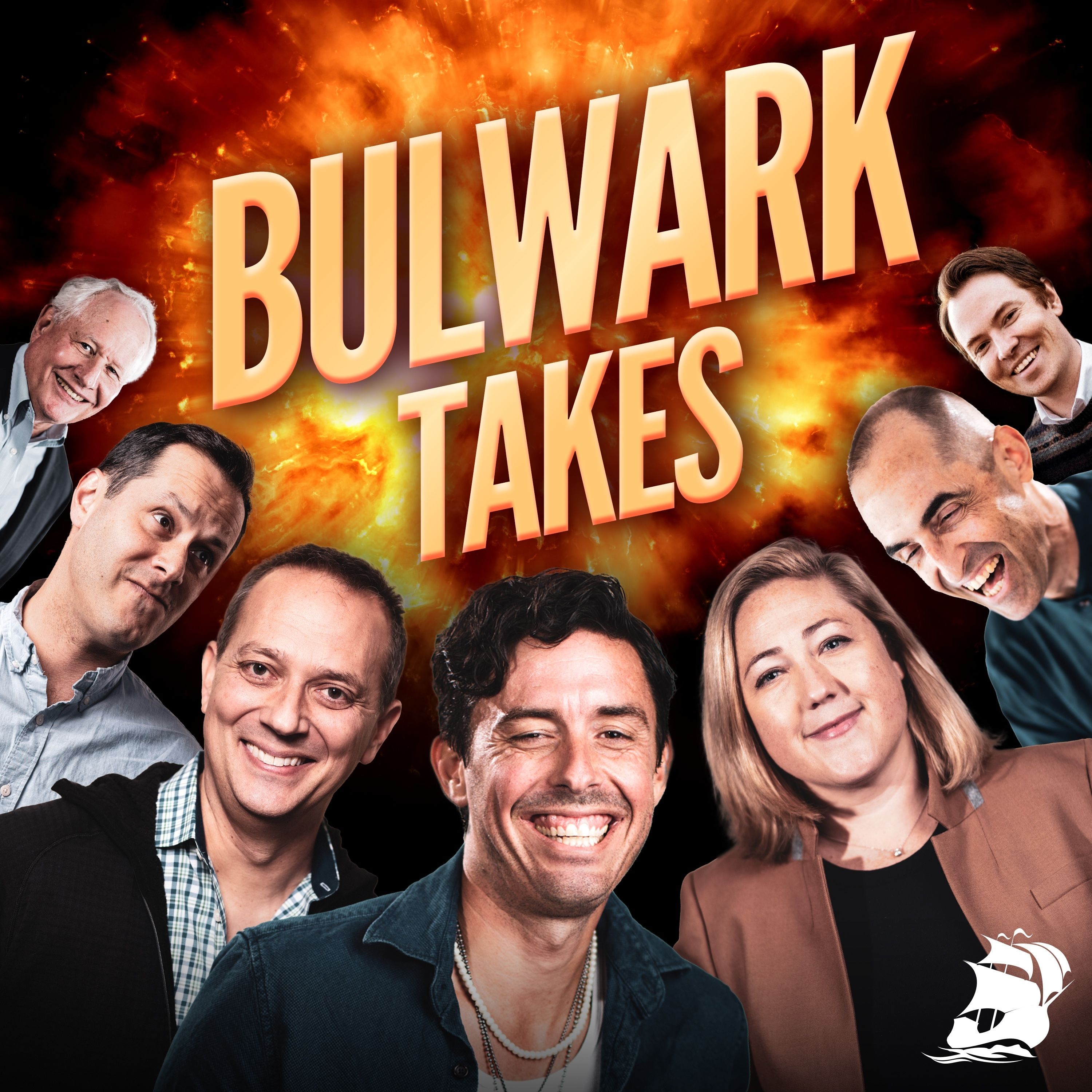
Loading summary
Transcript48 lines
- [00:00]
Amica Insurance Representative
At Ameca Insurance, we know it's more than just a car or a house. It's the four wheels that get you where you're going and the four walls that welcome you home. When you combine auto and home insurance with Amica, we'll help protect it all. And the more you cover, the more you can save Amica. Empathy is our best policy.
- [00:30]
Ryan Seacrest
Ryan Seacrest here. When you have a busy schedule, it's important to maximize your downtime. One of the best ways to do that is by going to chumbacasino.com Chumba Casino has all your favorite social casino games like spin slots, bingo and solitaire that you can play for free for a chance to redeem some serious prizes. So hop on to chumbacasino.com now and live the Chumba Life. Sponsored by Chumba Casino.
- [00:54]
Tim Miller
No purchase necessary. VGW Group Void where prohibited by law 21 plus terms and conditions apply. Hey everybody, it's Tim Miller from the Bulwark here with managing editor Sam Stein. We got something just across the wire here over on Capitol Hill and it includes possibly like one of the worst, most damaging quotes I've seen from a senator in a while.
- [01:14]
Sam Stein
Second worst.
- [01:15]
Tim Miller
Yeah, one of the worst and most damaging quotes I've seen from a member of Congress in a while. It comes from Senator Mitch McConnell and it's related to the big turd, the big beautiful bill, whatever we're calling it. And it comes from the folks at Punchbowl News who cover Capitol Hill, as well as almost anybody besides Joe Perdicone. The quote is as follows. It comes McConnell is responding to some concerns that Thom Tillis had had. We'll get to that in a second about the Medicaid cuts in the bill. And McConnell says this failure isn't an option regarding this bill. It has to be pounds. No matter what's in it, failure isn't an option. And then he goes on quote, I know a lot of us are hearing from people back home about Medicaid, but they'll get over it. Yeah, that feels like a quote that sticks around. I know we're hearing about Medicaid, but they'll get over it. It's just, it's such an easy thing to encapsulate the fight against it. These guys do not care. They pretend to be a working class party. They're jamming through a tax cut for the rich. And when you say to them, but what about poor people's health care? Their react, they'll get over it. Am I, am I overstating it?
- [02:30]
Sam Stein
No, I Think it's really bad. I just don't, I don't know. I, I think it's a second tier just below. We're all gonna die, Jody. Er, it's really, it's hard to really pass. Well, they're gonna die or we're all gonna die. So we're all gonna die because getting over it, you're still alive.
- [02:49]
Tim Miller
I gotta say, I think McConnell might be worse because Joni earns his comment was just more of like a, I can ask a philosophical comment about how to dust we all to dust we all return. You know, sort of thing, simulation.
- [03:03]
Sam Stein
Do we even need Medicaid?
- [03:05]
Tim Miller
And, and, and McConnell is just basically like, it's, it's, it's nice for the Dems. It's got to feel good to have the old crow back as an enemy since he's been like, you know, he's been like a quasi resistance member.
- [03:18]
Sam Stein
There's something unsettling about. It's like, oh yeah, I forgot about that.
- [03:22]
Tim Miller
Oh, right. That is why we hated that guy. Oh yeah, that's a reminder. Yeah. I mean it's just, just totally. Just no concern at all.
- [03:31]
Sam Stein
And also kind of resembles a kind of relic, a little bit of the old guard Republicans, like the new Trumpy MAGA Republicans are super into Medicaid. And you know, you have Josh Hawley and Thom Tillis not really that maga, but he knows that there's tons of Republicans on Medicaid. In fact, if you look at the data, it's more likely that you're going to get Trump voters on Medicaid than Democrats at this point. And so they all know it. But McConnell's. McConnell's not of that era. This is a government program.
- [03:58]
Tim Miller
It's a country Republican. I think that's right. And the magazine is at least more thinking about how to frame it. Do they actually care about the people on Medicaid anymore? Not a lot of evidence of that so far. But are they conscious of like pandering to them? Yes. And like, you see the ad, there's an ad that's been run and have you seen it? There's an ad that's been run by a Trump super pac. I don't know what we're getting here in Louisiana, but like kind of supporting the bill, trying to prop up this bill, which is very unpopular. And the whole ad frames it as. It's a working class tax cut. You know, this is going to help the working class. Right.
- [04:37]
Sam Stein
I guess it just means tax on tips.
- [04:38]
Tim Miller
Yeah. No, it's not. Yeah. Yeah, they cite their tax on tips extended. But just the fact that they feel the need to frame it that way, you know, shows they think, they realize it's a vulnerability. And here's Mitch McConnell just being like actually working class people. Healthcare? No thanks.
- [04:53]
Sam Stein
Well, also Mitch is not running again, so he doesn't really care. Whereas Tillis is up the cycle and he's telling thune apparently get, you know, give me some cover here, Buddy.
- [05:03]
Tim Miller
Let's go to Tillis, actually, let's just go to what he said and then I'll get your reaction to it. So he had this, this, I guess a flyer that he created for his colleagues. It's kind of nice old school. Go to the meeting, pass out a little flyer.
- [05:15]
Sam Stein
It does feel a little old school.
- [05:16]
Tim Miller
Couldn't have emailed.
- [05:17]
Sam Stein
It could have been an email, Buddy.
- [05:19]
Tim Miller
So he passed out this flyer and it goes through the states and it' his state, North Carolina has the most Medicaid funds lost. Virginia second. My state, Louisiana is third. Then it kind of goes down the list and it's mostly red states. It's all, it's all red states. It's all red. It's all states. Trump won on those except Virginia. And so I think he's trying to point out to his colleagues here, it's like, guys, this is like we're disproportionately hurting ourselves with this, these cuts. But I don't know.
- [05:49]
Sam Stein
Yeah, well, it's, it's tough to know what to make of it because I don't have any anticipation or, or confidence that Tillis will vote against this bill. Like I don't think gun to the head, you would say, yeah, Tillis will end up voting against this bill even though he's now as public with his own reservations about what's in it. And same with Holly. I mean, Holly's been out there constantly saying, ah, we can't do this, we can't do this. I mean, again, gun to head. Do you think Holly will vote against this bill? So I don't really think so. And you know, maybe that's, remember whatever.
- [06:21]
Tim Miller
Happened to Ron Johnson? Wasn't he going to vote against this?
- [06:23]
Sam Stein
He was going to vote against it because it wasn't enough on the deficit. But it's just, let me just lay out. So let me just lay out, I guess the sort of larger picture here for the viewers. It's 3:30 on Tuesday. Basically the Senate is rushing to do a version of their bill that they want to vote on on Friday, maybe over the weekend. And then they're going to tell the House, take it or leave it. And the House will basically have to say we're going to pass nothing or we're going to pass this. And we're at a really high stakes moment here where basically every Republican is going to be forced to either defy Trump or back a bill that many of them say they don't like, or at least components of which they don't like. Untilis will be at the top of that. Holly will be there, too. Johnson, who knows. But there's a number of House members who are going to have to take very difficult votes.
- [07:15]
Tim Miller
And Tillis is up for reelect.
- [07:17]
Sam Stein
Yeah. And he's up for. All the House members, obviously are up for reelect, too. I have absolutely no. I mean, I would bet money that this thing passes. And it's shocking to me that the process is playing out this way where you will have huge chunks of Republicans, red states, Republican voters losing their health care coverage with how many hearings in the Senate? Zero. How many CBO analyses in the Senate bill. Have there have been. Have there been. Zero. Will they go to conference between House and Senate to hash out their differences? No. It is an insane process. And for Mitch McConnell to say, you know what, they'll get over it, don't worry about it. That's the premise on which they're passing.
- [07:56]
Tim Miller
Amy's right. They have gotten over a lot. I guess the only thing I'd hand.
- [07:59]
Sam Stein
Although I will say, are you a little surprised? But I guess I was a little surprised. Things in the aggregate are actually, I wouldn't. I'm not trying to say it's been a great month for Trump, but it's been a better than expected week for Trump. And yet the polling data and maybe just hasn't caught up. His polling data has never been worse. So I don't know, maybe people aren't over it.
- [08:17]
Tim Miller
Yeah. I just basically have a personal policy where I'm going to just not ignore pollution. Yeah. Well, I know Trump's approval rating polls for this year because I just think that it's a lot of noise. There's a lot of shit happening. It doesn't matter that much. But I hear you though. It's. I think it's at least possible there's some people not getting over it.
- [08:33]
Sam Stein
Sure.
- [08:33]
Tim Miller
I want to. Just the one thing about the Hill, I sort of want to point about the Hill side of it, which you brought up, which is like this. It's basically being passed through inertia, like the first part of the McConnell quote is really the operative part. Failure is not. Isn't an option. But this just takes me back to the original kind of point of like, they could have just extended the Trump tax cuts, threw a no tax on tips. On top of that, you know, cut a few unpopular things that don't actually cost that much money, but, you know, things that aren't popular, the base and just called it and.
- [09:05]
Sam Stein
Well, they had to pay for it. No, they had to pay for it. Yes, under the reconciliation rules.
- [09:09]
Tim Miller
They could have created their own reconciliation rules. They. They run the House and the Senate.
- [09:14]
Sam Stein
I know, but they. I don't. I guess in that. In theory.
- [09:16]
Tim Miller
I guess my point is they could have put something up that had less political pain than this. Like, it's. It's pretty interesting.
- [09:22]
Sam Stein
But they want. But a lot of them want to cut Medicaid. Isn't that the point? I mean, that's the point, but I.
- [09:27]
Tim Miller
Guess it's a lack of leadership from Trump. I guess what I'm saying. Trump could have forced their hand to, like, do something more politically popular, and he chose not to. So here they are.
- [09:37]
Sam Stein
No, I 100% agree with that. And on top of that, I mean, he could have done. He could have gone full Bannon and, like, you know, paid for some of this no tax on tips, no tax on overtime by saying, yeah, we'll raise taxes on, like, the very, very wealthiest, which is what Bannon was arguing. Do that.
- [09:54]
Tim Miller
Well, I think that's a quote that's going to stick around for a while. It'll be interesting to watch Tillis in the coming weeks.
- [09:58]
Sam Stein
But how will he get out of this one? How could he possibly vote yes?
- [10:02]
Tim Miller
Well, he's going to vote yes, but, I mean, I think it's going to be. It's either going to be. Tom Tillis is kind of in a pick your poison situation. He can either ride with Trump and have an ugly primary, or, excuse me, and have an ugly general, or try to triangulate away from Trump and probably have an ugly primary. Um, and so I think that's. He's just kind of stuck there. All right, we'll keep watching it. Subscribe to the feed. We care about you. You know, we know if. If we do something that upsets you audience, we're not just going to be like, you'll get over it. All right? We, We. We hear your concerns, so we appreciate you.
- [10:37]
Sam Stein
You know, we are all gonna die, but along the way, we do care. Yes.
- [10:40]
Tim Miller
Not the bulwark. So we'll see you guys soon. Tell your friends. Bye.
- [10:45]
Amica Insurance Representative
Every day, our world gets a little more connected, but a little further apart. But then there are moments that remind us to be more human.
- [10:58]
Tim Miller
Thank you for calling Amica Insurance. Hey, I was just in an accident. Don't worry. We'll get you taken care of.
- [11:03]
Amica Insurance Representative
At Ameca, we understand that looking out for each other isn't new or groundbreaking. It's human. Ameca. Empathy is our best policy.
- [11:14]
Ryan Seacrest
Ryan Seacrest here. When you have a busy schedule, it's important to maximize your downtime. One of the best ways to do that is by going to chumbacasino.com Chumba Casino has all your favorite social casino games like spin slots, bingo and solitaire that you can play for free for a chance to redeem some serious prizes. So hop on to chumbacasino.com now and live the Chumba life. Sponsored by Chumba Casino.
- [11:38]
Tim Miller
No purchase necessary. VGW Group void where prohibited by law, 21/ terms and conditions apply.