← Bulwark Takes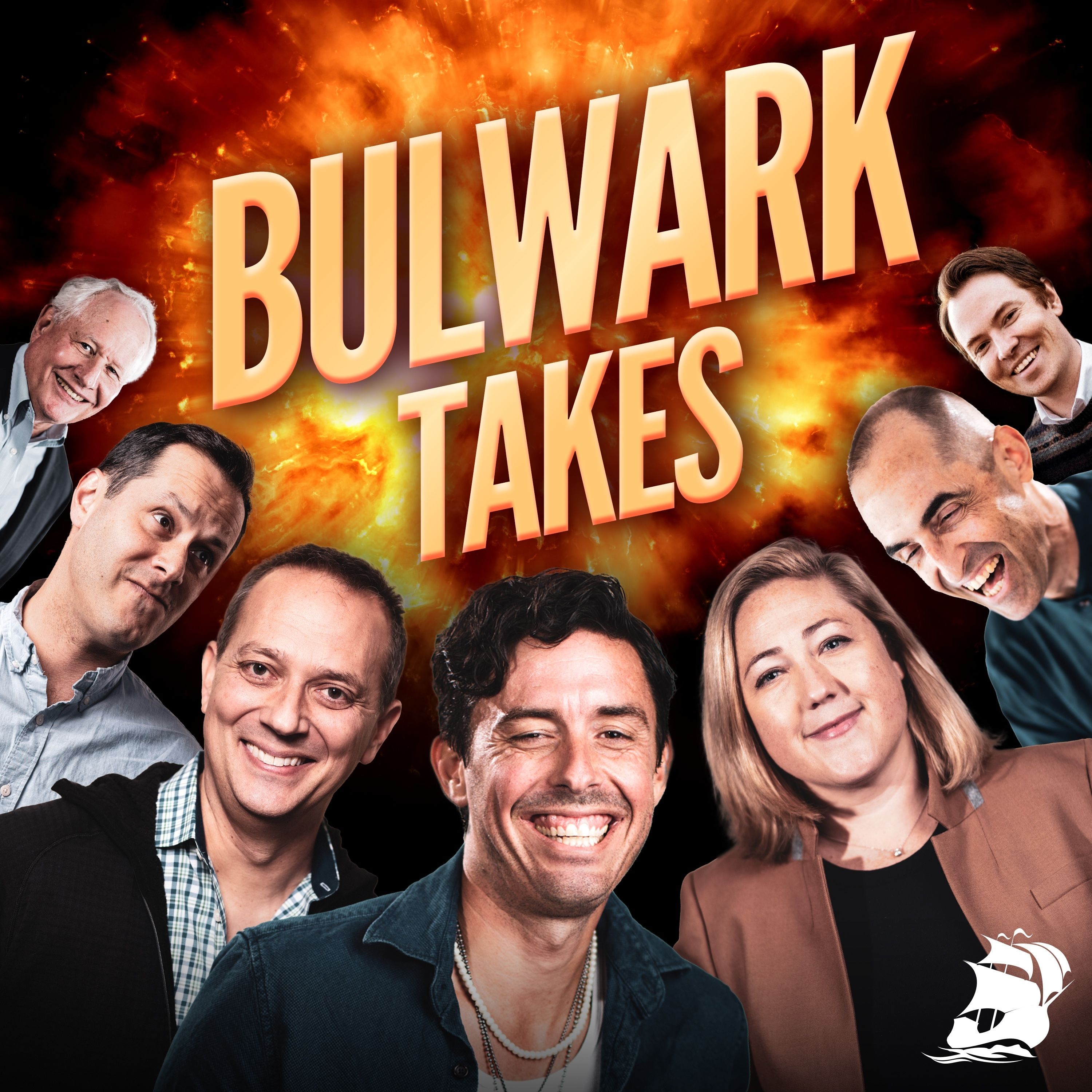
Loading summary
Transcript28 lines
- [00:01]
A
Time is precious and so are our pets. So time with our pets is extra precious. That's why we started Dutch. Dutch provides 24,7 access to licensed vets with unlimited virtual visits and follow ups for up to five pets. You can message a vet at any time and schedule a video visit the same day. Our vets can even prescribe medication for many ailments and shipping is always free. With Dutch, you'll get more time with your pets and year round peace of mind when it comes to their vet care.
- [00:30]
B
Hey guys, it's Lauren Egan here at the Bulwark. I want to do something a little bit different today. I want to talk about the government shutdown, but instead of talking about what's going on in Capitol Hill and in Washington, D.C. i want to take the conversation outside of the Beltway and chat about what this means for people who live hundreds of miles away from D.C. and to do that, I have Kansas City Mayor Quentin Lucas here with me today. Mayor, thank you. Thanks for joining.
- [00:57]
C
It is great to be with you and good to talk to you about this.
- [01:00]
B
Yeah, I really appreciate it. So talk to me a little bit about Kansas City and what, if any, significant federal employee base Kansas City has and sort of how this is impacting your city and like a big picture level.
- [01:13]
C
Well, as a threshold matter, I think what we can tell you out of Kansas City is it does matter to everyday working people in the Midwest who live a thousand miles away. First of all, we have 30,000 federal employees in the Kansas City area. Employees who care about their paychecks, employees who care about access to their healthcare, and certainly a lot of constituents who are more impacted as well. So just as a sheer like thing where people who are going to work want to make sure not only that they are getting paid, but that they will get some pay that fills in what they have lost. In the meantime, this is something that's really vital and important for them. And I think we all have shared frustration and the fact that the has not yet been figured out.
- [01:55]
B
Do you guys have a lot of federal workers or what does that kind of look like? And like who are those folks and what kind of jobs do they tend to do in Kansas City?
- [02:03]
C
Yeah. So in cities like mine, cities like Dallas, Denver, Minneapolis, Chicago, so many others, you actually have tens of thousands of federal employees. Kansas City's number is actually more than 30,000. And so those employees are working in areas like the Internal Revenue Service because we all do still pay taxes. And, and so we're doing important processing work with all of that we have a lot of employees, places even like the National Weather Service, helping to predict storm activity in our region and responses to those issues as well. Epa, irs. I already mentioned. I mean, there are a good number of folks that are doing core delivery of services that the federal government needs in an entire region of our country, including Iowa, Nebraska, Oklahoma, Kansas, Missouri. So these are the types of folks that are doing it. They're experts in their field, and they're the types of folks who are saying, you know what? There aren't huge numbers of us here doing nothing. All of us need to be at work. And this shutdown has a real negative impact, not just on them, but on the delivery of their services in this region.
- [03:04]
B
Yeah. So are most of these folks being asked to still show up to work? It sounds like that's what you're saying. They're still showing up to work, not getting a paycheck. That's kind of generally what's happening.
- [03:14]
C
Yeah, the sort of thing that we really don't allow to happen lawfully in our country anymore. And so, yeah, it's people that are still going to work. A lot of them are working on different shutdown protocols, not getting paid, and wondering what this is all about. I include that, of course, a lot of people who work with the Department of Defense. So you have folks that are in key, important areas, safety, national security, and beyond. Where we are actually just saying, you know, you're not actually either important enough for us to get it figured out. And frankly, the services you provide and the constituents were supported by them aren't important enough either. It is something that is a total disrespect to the federal employee and to the American worker.
- [03:54]
B
What's sort of your biggest challenge as mayor in moments like this and trying to make sure that important services are still delivered? I mean, you mentioned folks that work on weather issues. And I just think about, like, if you're in a tornado area, that's kind of terrifying to think that, like, maybe you wouldn't get notified about. I mean, I know we're not in tornado season right now, but that's, like, really scary to think about. You know, I know shutdowns can feel abstract for some folks, but, like, it really does have serious consequences for people that aren't federal employees.
- [04:25]
C
Right. I'll think of just, like, a few examples. So last week I was with homeless veterans. There are 40,000 US military veterans who experience homelessness on average every night in America. And even with agencies that are still operating and existing, I was talking to folks who Work for the Veterans Administration. They say each of those folks has health care needs, which right now are frustrated in the current moment. They have housing needs, which are frustrating in the current moment. They may have families. So there are SNAP and other benefits needs and issues. And these are people who have served our country. So you take the thousands of them who are impacted, the thousands more who are in their families, and you have in places like Kansas City and places, frankly, much smaller that are saying, no, this is a real issue for us. That's just one branch of our world. If you look at some of the other areas, health care more broadly for Americans, where a lot of folks are saying, you know what? I can't play with Medicaid benefits or Medicare. I actually need to make sure that I'm getting necessary services delivered right now. I can't afford an increase in healthcare premiums at this time to try to address these issues. These are real challenges that impact people in our community. And so for some of us, right, we have the luxury of life going on, but for many others, it doesn't just mean that life doesn't go off, but it means that there are very serious challenges. And by the way, for your health care needs, you can't just wait, you know, two months for it all to be figured out for someone who is dealing with a natural disaster. And I mind you, they happen almost every day in this country now. You can't wait two weeks for everything to get figured out. There are huge health care challenges now. There are service delivery challenges now. And as a mayor, we try to stand in the gap and say, we have resources for you, but we ain't got the money that the federal government has. And frankly, we have all of the need in our communities and sometimes more from people from surrounding areas.
- [06:18]
B
Does it put a lot more strain on the city's resources? I mean, I remember, like, the last shutdown, big shutdown during the first Trump administration, talked a lot about how, like, local food pantries, for example, were just completely overwhelmed the longer the shutdown drug on. What does that look like for you right now?
- [06:37]
C
So I was visiting with some of the folks from our regional food pantry the other day. So it's, it's just been a frustrating year. I know we're talking about the shutdown now, but imagine if you ran a food pantry agency. So you saw funding cuts which lead to service cuts and the work that you're trying to do. Let me tell you actually what our food pantry does. Let's get past the whole, like, Charles Dickens era view. Of what these things are every day in Kansas City, with public school districts, in great areas, public school districts and more challenging ones, they are actually the ones that are packaging food for children. We are sending kids home with backpacks of food because they don't have food at home for their families. This is dinner for these children. Those are the sorts of things that get cut in moments like this one. And so it's not being dramatic. It's not trying to kind of exaggerate. This is actually what gets lost. And so what I encourage people to think about in the shutdown itself is, frankly, cut your own salary, right? And just see how long you can survive. For a few days, you'd be like, all right, yeah, all good, whatever. Nobody's coming after me for my mortgage or my rent. Then eventually it comes due. And, yeah, maybe I have food for a little while, but eventually that goes bad. That's the sort of thing that is happening for American families right now relating to food, their health care, housing. Right. Veterans benefits and more. That is the challenge, I think, that we're seeing right now and why it matters to us on the ground in middle America.
- [08:10]
B
You know, a big part of this conversation about the shutdown has been about rescissions, which is basically a fancy word for, you know, when Congress has appropriated money, but the president and his administration cancels it, essentially. And I imagine that a big wild card for you because you need federal funding and this kind of money to be predictable. I imagine this has been a big challenge for you. Is it hard to govern if you can't depend on the money? If you can't rely on it, the money that's already been appropriated to actually be there? What is that like in terms of governing challenges?
- [08:47]
C
I mean, it's a tremendous challenge. First of all, look, we start doing things. If you think the money is coming in, then you start construction on the bridge project through the middle of your city. And if, for whatever reason, they're saying, oh, no, the money is not there now, either you stop or you build the bridge, and you have no other source to pay for it, so you cut from something else. I mean, it is completely backwards the way things are working. Think about the country that we're in right now. You have a bill collector go after someone who owes a hundred bucks, I don't know, on a cell phone bill, and they get wages garnished, and they have other issues. You got to pay your rent or else you get taken to court and you get kicked out of your house. You have all of these Things where we have accountability for the everyday American in a thousand different things and expenses. But the federal government is saying, yeah, not only can we not actually stay up on paying our bills and pass a regular budget, but instead saying, yeah, and we're actually going to dishonor agreements that we have already passed. It is actually antithetical, frankly, just to basic morals. Right. And certainly antithetical to the capitalist system that we purportedly all live under. And in a world where, you know, sometimes the president and others are knocking folks for, I don't know, being socialist woke everything under the sun. I can't think of anything that's actually more like anti capitalist than this. Not fulfilling your obligations under contract, under everything that you've pledged seems to be something that undermines kind of what America is all about.
- [10:22]
B
Totally, yeah. Do you view the end of the month as kind of this sort of deadline like the Congress needs to figure this out? I mean, we're talking about, you know, you can stretch a paycheck for a little bit, but when mortgage payments come due, things like that? I mean, how are you kind of thinking about this timeline and, and how Democrats on Capitol Hill should navigate that as well?
- [10:46]
C
Yeah, you know, like, it's a good question. Is it a bright line or is it something different? And I think that for me, it's just a scale of how much, like, bad do you want to deal with? Right. And so I'll use an example of smoking in life. Right. If your doctor tells you you shouldn't smoke because it may end up killing you someday, will the next cigarette do it? Maybe not. But if you do it every day for the rest of your life, it might. And I think what we're seeing here is every day conditions get worse and worse. And so if it ends today, I think there has been real pain for people. I think there are real challenges, but frankly, I think we're able to move on. If it extends through the end of the month, then the wreckage that will ensue in the American economy and you will have an impact on mortgages not paid, which will then have an impact on other financial instruments and investments, on credit scores, on lending ability, on everything in our economy, the macroeconomic impact of what is happening will be tremendous. And it gets worse by the day, certainly by the week. And so I know that there are some who are trying to play politics with it now, but again, I raise the examples of food and health care for a reason, because those aren't the sorts of things that you can just pause. People got to eat People have to receive care. Now, it may be through the health care side, unfunded care, or people continue to go undiagnosed in certain things that will be incredibly problematic for those who are in real need. So it has a deleterious impact on the American people, certainly on the American city. But I'm probably most worried about the negative impact it will have on individual Americans. And I'm sitting here, maybe healthy, probably not as much as you, but nonetheless doing fine. But the people I worry about are my mom's age, are kids who are much younger. And I think that's the sort of thing that we have to think about with this going on further.
- [12:38]
B
Yeah. You know, in the backdrop of all of this is what's going on at the National Guard right now.
- [12:44]
C
Yeah.
- [12:45]
B
As, as you and I are talking, Trump has just sent the National Guard into Chicago. That situation is kind of escalating. Maybe he's going to send it to Memphis later this week. How do you, as a Democratic mayor in a blue city, in a red state, think about the deployment of National Guard? Is this something that you've talked about with other mayors? Like, are you kind of gaming out whether, like, how to handle it? If it were to come to you at some point, what's your reaction to what's going on with that?
- [13:14]
C
I go with it in a few steps. Step one, this is just totally, totally idiotic. So I was in Washington recently and I was. I forget which circle I was by. You guys have lots of them. Right. And I saw the National Guard walking in threes, kind of just looked like they were hanging out. And I said, I feel no safer. This doesn't really seem like a good use of their time and isn't really changing anything, at least in the area. I was in Washington, indeed, there was a homeless guy actually sleeping on the church step, like, you know, just a few feet away, kind of like, hey, everybody. Right. So you didn't even change on the ground conduct. Maybe this would all just be a laughable vignette into America in 2025 if it didn't have a cost, which is a substantial multimillion dollar cost to the American people. And second, if it didn't have a negative impact on local community law enforcement relations. So step one, this should not be happening. It should be something that is collaborative and at the request of communities. And so that's where I go from there on the how do we prepare? Absolutely. Mayors have had conversations about it. I think what we have tried to say is this to the federal government, which is that we want to collaborate on safer communities. I want safer communities. I understand that every car theft, every burglary, every nuisance offense is a problem. And so what can we do to address it? I don't think National Guardsmen and women from hours away or maybe even thousands of miles away is the solution. But can we collaborate with the federal government to get DEA agents who get fentanyl off of our streets, to have ATF agents who can get illegal firearms out of the hands of teenagers in our country, which is awash with them? And if National Guard is available, can you help us? For example, my brothers and sisters in St. Louis are still recovering from a summertime tornado that took lives and has destroyed businesses and blocks of traditionally black North St. Louis. There is a lot more work that they can do if they want to be collaborative. So what we're trying to say is let's turn it to that, rather than this just pure political stunt that anyone can see through as soon as they walk the streets with the National Guard.
- [15:17]
B
Somewhere related to the crime issue, Trump has kind of floated this idea, which, you know, who knows if he can actually do it? Maybe you can explain it to us, of moving World cup games in 2020 from cities that he deem deems are not safe. However he defines that. What do you think of that? You guys are going to get a World cup game.
- [15:37]
C
Let me be as nice and I guess feel about it as possible.
- [15:41]
B
Don't hold back. You don't have to hold back here.
- [15:44]
C
Exactly. Let me make not good media for you. And it's not going to happen. I mean, look, that. I don't, I don't find that to be something that's real. Again, we're happy to talk to the administration about how we can be safer, how their resources and investment can help make our communities safer. We have requests to the federal government for more funding for security for public transportation, which, if anything, is actually going to be the real problem in a lot of these cities, because getting hundreds of thousands of people around on systems which even in crowded places like New York and always working that great is going to be a bit of an issue. And so, I mean, look, again, collaboration is our solution, the threat. And it was interesting because when the president mentioned the threat, he then mentioned non World cup cities, too. It was like, yeah, Chicago's real bad, real bad. And all of, I'm going to take the gains from people. I mean, that's the sort of thing that I think is more talk. We're going to do all we can to be safe, we're going to work with the administration in connection with how we can be safe and everyone responsible in it. And here's the thing that's odd about this moment. When the president talks about and does these things, it doesn't undermine me, the mayor. It undermines our local law enforcement, most of whom are actually Trump fans. Our police chiefs, our police captains, the others who have spent what feels like a lifetime preparing for these games and these challenges, who do the real work every day to investigate unsolved homicides, who are getting guns off the streets of our city, trying to get illegal drugs from passing through them. So I don't take personal offense to this. I'm in politics. I get it. But who I'm thinking about is my rank and file police officer who's working their tail off each day to make our city safer. And let me tell you something. Bringing a National Guardsman or woman in for two weeks, you know, all right, interesting stunt. Maybe works, maybe chills activity, maybe doesn't. Well, that murder is still here. That crime still needs to be solved. That fentanyl is still getting into the hands of way too many people in our communities and taking too many lives. That's where the focus needs to be. Not on the temporary flashpoints, just because that's the moment we're in.
- [17:46]
B
Yeah. All right. Mayor Lucas, really appreciate you being here and good luck with everything and hope to have you back soon.
- [17:52]
C
All right, Appreciate you. Stay well, everybody.
- [17:55]
A
Time is precious and so are our pets. So time with our pets is extra precious. That's why we started Dutch. Dutch provides 24. 7 access to licensed vets with unlimited virtual visits and follow ups for up to five pets. You can message a vet at any time and schedule a video visit the same day. Our vets can even prescribe medication for many ailments. And shipping is always free with Dutch. You'll get more time with your pets and year round peace of mind when it comes to their vet care.