Loading summary
Transcript9 lines
- [00:00]
Melissa Murray
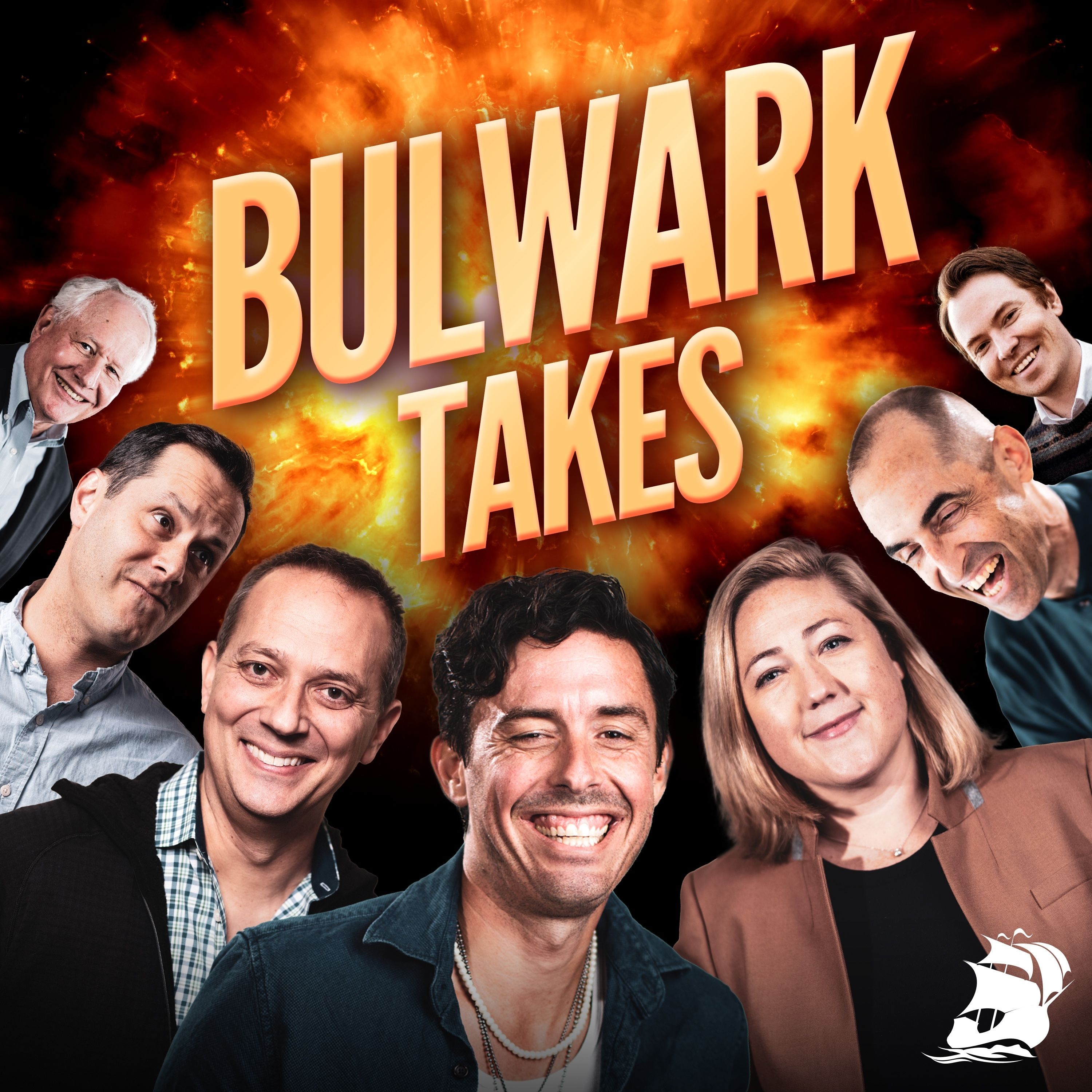
Hey, y' all. I just got off the 11th hour with Melissa Murray, who I love, but in for Stephanie Rule. I miss Steph. She used to, she usually comments my outfits. And we were talking about what is, what are the intentions behind this spate of attacks from the Trump DOJ on Democratic political foes. We've seen the arrest of a congresswoman who's at the ICE protest in New Jersey. The investigation into Andrew Cuomo, now running for mayor of New York City. He's back. Can't get rid of the Cuomos. A letter sent about a potential investigation into the mayor of Chicago, which I discussed with David French today about, you know, his, about how he bragged about all the black folks he had hired, the administration, I guess saying that this shows that he did race based hiring in a way that's illegal. And the conversation kind of centered on what's the motive for this. I think there's one motive that gets thrown around there a lot, which is there's these distractions from trying to distract. And that one never really lands. For me, his universal strategy is to flood the zone. And so at some level, like there's, you're constantly living in a state of distraction. But I don't think that any of these cases are like fodder for cable. I think that, and as I lay out, you know, in the, in the panel here, which you're about to watch, I think it's about intimidation. And I also think that the DOJ is just filled with people who have lost their goddamn mind. I mean, like the Harmony Dillons and the Pambandi and the people all the way down the line. Obviously, Ed Martin, there are a lot of people there that are not using strategic judgment. Alina Haba, I mean, they are just, this is a ready, aim, fire effort. Okay, over there. And so that's how I lay it out. You can kind of see the back and forth here next. But it also bears mentioning, I didn't get a chance to mention on the show that this is just a straight politicization of the government. And I think it's important to point and laugh at the Republicans who tried to sell us on the fact that, oh, it was Biden, doj, Merritt, that Merrick Garland politicized justice so much, they're targeting Trump. And I was just like, you know what, guys? These guys, the Bidens went after Democrats, they went after people who committed crimes. Donald Trump committed a lot of crimes, so he got targeted. That is very different from what's happening here, which is a straight attack on Democratic politicians from a Republican administration on very flimsy pretenses. It's like comically flimsy pre toxic, at least in the case of the Chicago mayor and some of these others. So anyway, stick around, watch that. Much more on that to come over the course of the rest of the week. We got some great guests on the Borg podcast. Hope you stick around for all of that and stick around for me. Melissa Murray and Joel Payne talking about the Andrew Cuomo being the latest political investigation coming from the Trump White House.
- [03:39]
Joel Payne
It was a very tense situation. We were trying to ask questions, trying to get explanation from the officials that were there, and it was just so chaotic and ice and Homeland Security definitely escalated the situation, caused the chaos and the confrontation and it just was so unnecessary. So it was really hard to play the videos back. It's very hard to watch, especially when we're just showing up to do our jobs. You know, an oversight visit that should have been simple.
- [04:06]
Tim Miller
As we mentioned earlier, many on the Hill are raising questions about that incident and the political motivations that May underlie the DOJ's charges against Democratic Congresswoman LaMonica McIver. Trump's former lawyer, Alina Habba is now New Jersey's interim U.S. attorney, the chief federal law enforcement officer in the state. Politica points out that from the moment that Habba was sworn in, she made it clear that she would use her office as a political weapon. And now it seems she is following through. Here to discuss all of this is Democratic strategist Joel Payne. He was also a senior aide for Hillary for America and press secretary for former Senator Harry Reid. Also with us is Tim Miller, host of the Bulwark Podcast and the former communications director for Republican Jeb Bush. So, Tim, I want to push on this distraction theory because there are a lot of things that could distract the public. The DOJ recently said that they are opening an investigation into the city of Chicago after its mayor highlighted diversity in the city's administration. Here's how Mayor Johnson of Chicago responded to that investigation today.
- [05:15]
Joel Payne
The city of Chicago has suffered from a great deal of pain because of the political and the racial dividing lines that have existed in this city for a long time. I'm going to break those lines. Any group that has been marginalized and have suffered under tyranny and oppression, we're going to show up for them. We're not going to be intimidated by the tyranny that's coming from the federal government. The diversity of our city is our strength.
- [05:41]
Tim Miller
Tim. Chicago is not the only city that is defiant. And it's also not the only big city that is being targeted. We found out tonight that New York City mayoral candidate and former New York state governor Andrew Cuomo is also under DOJ investigation. What do you think about that? Why is the DOJ focusing so much on local politics?
- [06:01]
Melissa Murray
Yeah, I diagnose this a little differently. I think there are two things happening here. One is that there are people in the DOJ that have gone around the bend and they're so deep into the fever swamps that they want to bring the conspiracy theories that they've been marinating in online to life, whether that be about COVID whether that be about dei, you know, or. Or whether it be when Ed Martin was, you know, sending letters to Georgetown and sending letters to Robert Garcia, tell him to silence them. I think that there are a lot of mid to high mid level DOJ staffers who are pretty deep in the sauce and are trying to follow up on their conspiracy theories. I think that the intimidation side of it, though, I agree on that with Joel. Look, they want people to be afraid to do diversity hiring. They want that. That's why they're going after Chicago. I don't think it's a great political strategy. I don't think it's 3D chess or anything. I think it's actually probably a net negative for this administration politically. I think they're giving and doing a huge favor to Mayor Johnson, who's not particularly popular in Chicago and now has a foe that he can rally against that the people of Chicago don't like, which is Donald Trump in this administration. And so, yeah, I mean, I think that their main goal here is not political. Well, it's political in the sense, but not like campaign politics. I think it's intimidation, as Joel said. And I think they don't want people to be bragging about the diversity hires. They want to make dei, you know, a scarlet letter. And so they're going to use the power of the government to go after people that are trying to implement it.
- [07:45]
Tim Miller
Tim, let's pivot to Trump's big, beautiful spending bill. The House is meeting at 1am tonight on it, and the Washington Post writes to that, quote, the fate of Trump's agenda rests with the House GOP's five families. And this is not a Sopranos reference that you'll know perhaps. These are five groups that range from moderate to ultra conservative, and they each send a representative to meet with Speaker Johnson regularly. Can you tell us more about these five families and whether or not they're likely to come to a resolution on the bill and the various points of disagreement?
- [08:21]
Melissa Murray
Yeah, well, it's been a lot of food fighting within the five families for quite some time now and they've struggled to do anything. Look, we're at May 20th and they've basically passed one bill like the Riley act at the beginning of the year and there's not any other bills besides this one that are in the hopper at this point. And so to me that the pressure that they will face from Donald Trump to pass something, anything I think will probably allow them, will probably force their hand rather to actually push this through. But there are just massive disagreements on this bill and there are a handful of folks, I think fewer than there used to be, who care about fiscal discipline within the Republican Party. This thing balloons the debt. There are a handful of populous Republicans that don't actually want cuts to services for working class people. This has cuts to services working class people. They're the so called moderates that want tax breaks for upper middle class and upper class workers in blue states. This is probably not going to give them what they want. So I just think that there are a lot of disagreements and eventually the only thing that's going to bring them all to the table is the fact that they don't want to torpedo the really only thing on their agenda for most of the year.
- [09:34]
Tim Miller
All right, Joel, Tim, thanks so much for joining us.