Loading summary
Transcript44 lines
- [00:00]
Sam Stein
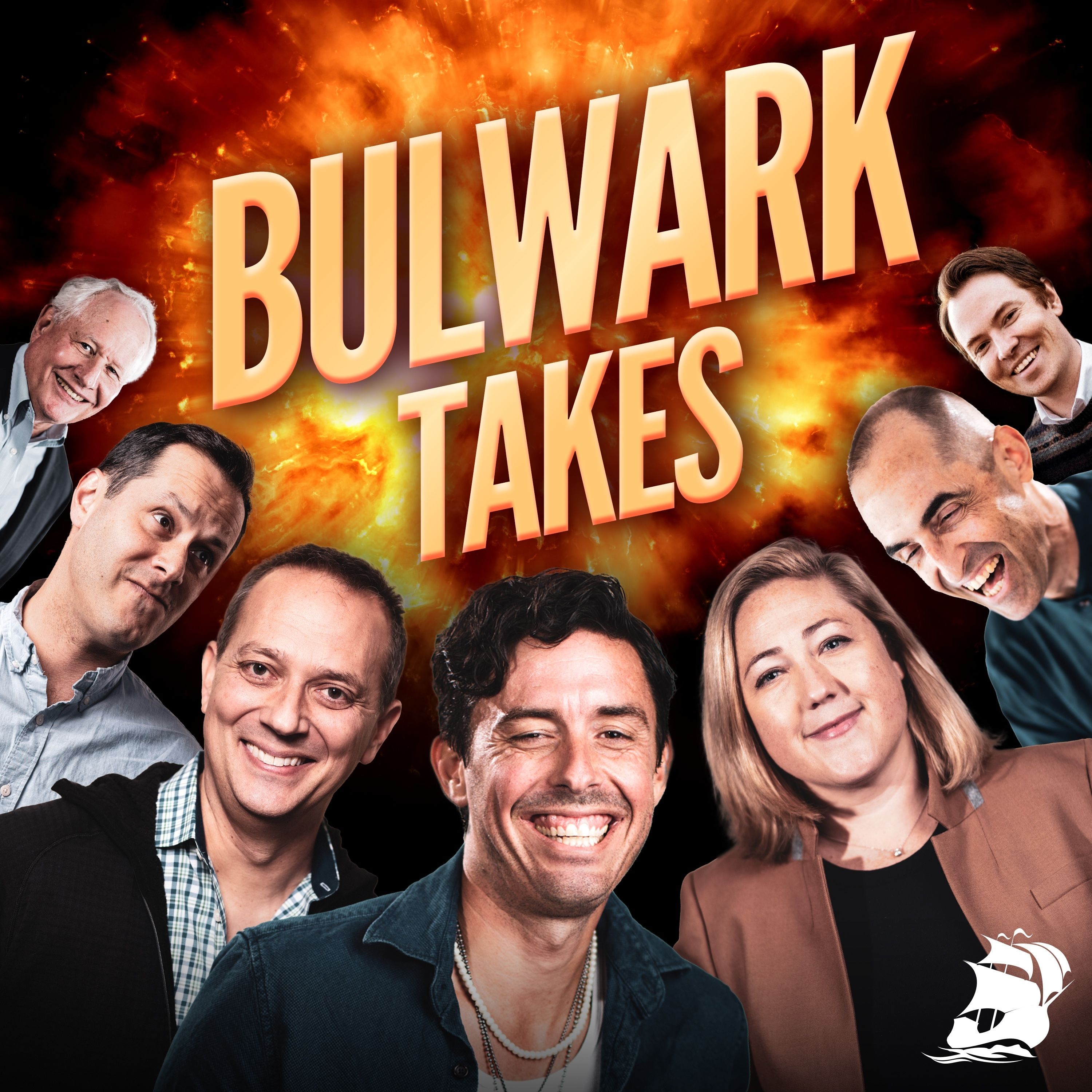
Hey, guys, it's me, Sam Stein, managing editor for the Bullock. I'm joined by Jonathan Cohn, Tim Miller. We're going to be talking about Trump's rally in Macomb county, home of the ancestral Reagan Democrats. Just want to make sure. You have to. You're contractually obligated to say that before we get to that. Subscribe to the feed. We appreciate it. All right, so Trump did his 100 day rally tonight. It was preceded by an event with Michigan's governor, Gretchen Whitmer. We can talk about that in a little bit because there's some interesting observations I have from that one. But look, it was kind of a standard rally, honestly. It was like the greatest hits. Talked about water pressure and how he's fixed that and, you know, trade and how he's got that under control. He went off on Jerome Powell, you know, stuff that would normally be crazy, but it's pretty standard for Trump. The thing that stood out for me was he played a film about the mass deportations. It was like this classic porn that he plays for his audience about, you know, immigrants that he's sent to foreign countries. And then a big USA chant broke out among the audience. You can watch it here. All right, so, Tim, I know you have thoughts on it. I have thoughts on it. You go first.
- [01:25]
Tim Miller
You. Yeah, and look at one level, there's a reason why COPS was on the air for a couple decades. Like, this is popular.
- [01:31]
Sam Stein
That was my thought.
- [01:33]
Tim Miller
That was, you know, we're a certain age, you know, we're of a certain cultural milieu. So, you know, look, I get it. I don't like, whatever bad things happen to criminals who are rapists. I'm not. I don't exactly have a ton of sympathy for rapists. But, you know, the context of this is pretty tough and pretty ugly. And, and this is where I get my. My ancestral Reaganism comes out about, like, what, you know, what merits a USA chant? What is the USA actually about? And like, sending people out of the country to a foreign gulag because the President says they're bad.
- [02:09]
Jonathan Cohn
Right.
- [02:09]
Tim Miller
Is actually about as opposite of a USA thing as you can get. I mean, like, the whole actual point of the USA is that people were able to come here who are fleeing other countries. And so, you know, and that is a real change. I know that, you know, sometimes there are. Who knows? Well, Cones of Prague. Com might be like, it was always like this, but I was just gonna.
- [02:27]
Sam Stein
Say it was always like there was a moment at Bob, the Irish, the Italians, they all got you know, there.
- [02:32]
Tim Miller
Was a moment at Bob Dole rallies, at George H. You know, at George W. Bush rallies, where people cheered for things like, you know, this is a land of milk and honey, and people can come here to achieve their dreams, and anything is possible in America. Like, those were applause lines then. And so the fact that the inverse is the applause line now is. Is notable and sad. And that's my. That's my.
- [02:53]
Sam Stein
This was this. So. So my thought on this was, again, it went back to Cops, but also sort of that late 80s, early 90s genre of TV. And relatedly, how Trump really is a product of New York City, Right? Like, this is. You know, he grew late 80s, early 90s crime in New York City and the rise of Giuliani. And I think Trump was kind of baked in that a little bit, and. And sort of recognizing that you can be as tough as you want on Haitians, on immigrants, in this, under the guise of reducing crime. Yeah, exactly. Just get crime done, and they'll let you get away with, like, pretty much everything. And that's what that was. Giuliani. And I think Trump has kind of adopted that mindset, and it's really like. It's a classic late 80s, early 90s mindset. Um, I don't know if Cohen has any additional thoughts on that, but that's. That's what stood out to me, is this guy is just like, you know, playing that hit.
- [03:47]
Jonathan Cohn
Yeah, yeah. Well, you know, so. So when Tim said Reagan, I don't know, but my mind immediately went back to this sort of iconic picture. I think it's from his first campaign when he's in front of the Statue of Liberty giving that speech. And, you know, look, so I am. You know, I do come from the progressive side here. And, you know, whatever my mixed feelings, I've always thought one of the things about Reagan was there was always that idealism. And Reagan. Right. I mean, even, you know, I didn't agree with the program at all. But, I mean, there was that idealism, that calling to America to be a greater place. And. And that's just so absent in. In. In. In. In Magaland. It's just not a part. It's all vengeance. It's all punishment. It's all putting other people down. And it's just.
- [04:30]
Gretchen Whitmer
It's.
- [04:30]
Jonathan Cohn
It's a dramatic difference, you know, and, you know, you see that straight up through, like, George W. Bush, there was an idealism through. Through there also. And again, I just. It is something. I do think that's a really important difference. That's worth, you know, worth comment, you know, you know, marking as a big shift in the party's.
- [04:47]
Sam Stein
Well, the other thing, though, is that, I mean, he. It's the promise of some dynamism down the road.
- [04:51]
Tim Miller
Right.
- [04:51]
Sam Stein
He's like, well, I'm going to fix all your problems. I think, obviously, one of the big issues he's confronting now is that he's not. And he made, like, these wild claims about fixing everything within, like, a week, and it's not coming to fruition. And so that is. There was an optimism. Like, it's not optimism in Trump. It's the promise of more optimism, optimistic times, and it's that. I think that's what's the problem right now for him.
- [05:12]
Tim Miller
Yeah. To. To Cone's point about how it's just all negative. It's all vengeance. To our friend Scott Jennings, who gets called up on great. CNN's got to be proud of the way that they've molded this. So he gets called up on the stage. Come here, Scott. They have an awkward kind of. To call it a bro hug would be not right because neither seem very comfortable doing the bro hug, but a half hug. And then Jennings only has one line, which is Michigan.
- [05:42]
Scott Jennings
We were flying in here today, and I said, look at these farms. I got to get a farm in Michigan. Because when you own as many libs as I do, you got to put a place to put them all. Thank you all very much.
- [05:52]
Tim Miller
So there's the joke. He's owning the libs. It's a dad joke. So it's a bad dad joke. A bad dad.
- [05:59]
Sam Stein
Yeah, but that's. That's the constant through line of all this.
- [06:02]
Tim Miller
I know, but that's my point about Conan. It's like you have a chance, like, whatever, you know, whatever you say. I don't know. I do not aspire to or want to be called to a stage by a future president because of my punditry or my podcasting. But I do hope that if that ever were to come to pass and I were to have one come on.
- [06:21]
Sam Stein
If Mayor Pete was up there, yeah.
- [06:23]
Tim Miller
It would not be like, how about that time I owned my cousin Vinnie? How about that time I owned Vinnie on the Piers Morgan show? Cheer for me. Like, I would hope that I'd have some ennobling comment alongside a joke at least. But anyway, it's just noteworthy. Just again, about, like, the absence of any. Anything but the vengeance.
- [06:41]
Sam Stein
He chose Michigan. He chose. He chose this place specifically because it's supposed to be the, you know, his ability to get these immigrants fully cross over to Republicans. And then he chose an air base in the state and he chose to be there with Governor Whitmer. Governor Whitmer there, a meeting, President Trump at the tarmac. This is the second time that the governor, Democratic governor of the state, has ended up at a Trump event. The first one was at, in the Oval Office, where she was advocating for suffrage, airbase in Michigan. And he's there, he's saying, you know, we're going to keep it open, we're going to do all these projects in there, investments in there. I know you're writing about this, Jonathan, so don't give away too much of the game, but what are your thoughts on how she's handled this so far?
- [07:30]
Jonathan Cohn
Yeah, so, I mean, the backdrop to the issue here is this, is this air base. It's a significant economic impact in that part of Michigan. You know, we talk about the thumb of Michigan, I guess, for my camera here, this is like this part here, north of Detroit, and the air base is. It's a big driver of economic activity there. They were retiring the squadron of planes. And for years, this has been like a bipartisan. Republicans, Democrats in Michigan been trying to lobby to get a new mission there. When she went to Washington in that infamous. The infamous Oval Office meeting where she went like that, that was what she was there for. She was with the head of the Republican, the senior Republican in the state legislature to try to get that. And she got it. I mean, she didn't get it on herself, by herself, but they were able. That was the big announcement. It was a big announcement that they were, you know, bringing this new squadron. It is a, like, significant economic benefit. It's the kind of thing that, like, as a governor, you do. I personally, like, I get that part. I mean, you know, it's like when your president visits to announce something that's, you know, it's a bipartisan thing, you show up. She only spoke for a minute at the thing at the Air Force Base. She didn't go to the Valley.
- [08:42]
Sam Stein
She said she had not been expecting to speak, which. Come on.
- [08:48]
Gretchen Whitmer
Well, I hadn't planned to speak, but I'm.
- [08:50]
Tim Miller
Yeah, I mean, there was an awkward moment where she's like, I'd like to thank. Or like, like she, like she caught herself. She was about like, I'm not going to actually thank the President.
- [09:00]
Gretchen Whitmer
It's crucial for the Michigan economy. It's crucial for the men and women here, for our homeland security and our future. So thank you. I am so, so grateful. That this announcement was made today and I appreciate all the work. Thank you.
- [09:16]
Tim Miller
Nice that this happened.
- [09:17]
Sam Stein
What do you think was going through her head? Like, oh, Charlie Crist hugging Barack Obama. Chris Christie hugging Barack Obama.
- [09:25]
Tim Miller
For me.
- [09:25]
Sam Stein
Yeah, of course.
- [09:26]
Tim Miller
So here's my question to you though. Okay, whatever. We don't need the happy talk. It should presidents, they should all meet, whatever. Like, is this, was this really, like, was this thing in threat? And like these things are in, in like take a long time. Like I could not this have happened without Gretchen Whitmer doing anything. Like, did she have to show up to the Oval Office? Did you have to show up today? Couldn't she have just done nothing? Like, I'm not saying she had to do be Tim Miller and like throw spitballs at him and like around and call him fucking the small fingered mango Mussolini. But like you just said nothing and still had these jobs come.
- [10:03]
Jonathan Cohn
So, okay, so two things. I mean, I wasn't in the room. I don't know all the machinations behind the, I mean people who know this stuff do say she actually did lobby hard and there was a lobbying effort. She did play a role, you know, significant role as did, you know, had, you know, McClain, you know, various Democrat Republican officials. So yeah, she probably did play a role and it is kind of, it was under threat. I mean they've been trying to get this and there was a threat that this thing, that this squadron would go away and they'd lose the economic benefit personally. And again, I don't want to give away too much of what I'm going to say later. I think the bigger problem for her was less about this and that Oval Office thing, you know, but there was, you know, that day, the reason she, you know, when she was in Washington, she gave this big speech, his economic speech, which was surprisingly kind and it was, it had some punches for Trump, but it was very much couched as a kind of I'm going to cooperate. Just felt very much not of the moment. And you could put it side by side with, I don't know, Pritzker's speech the other day, if you saw it, or any number of Democrats who have been stronger and you know, if she was in a position where she felt like she couldn't trash Trump without costing that squadron, which, you know, let's face it, Trump, that would be a Trump thing, right? You know, well, I was going to put this squadron in Michigan, but now the governor trashed me, so I'm not going to, I mean, fine, but then maybe don't give the speech. Right. I mean, just don't, you know, keep low, do the lobbying and, you know.
- [11:29]
Sam Stein
Speech for those who. The speech. Who does miss it. She was there and she praised partially the terrorists. Tariffs are good.
- [11:36]
Gretchen Whitmer
So as I've said before, I'm not against tariffs outright, but it is a.
- [11:41]
Sam Stein
Blunt tool when targeted. Her issue with Trump was not the tariffs, it was the fact that he was just kind of absent minded in how he was calculating what to do with them. So I find it very fascinating that she's doing it. I can see why. I could also see how it really screws her. And that's your piece, hopefully.
- [12:01]
Tim Miller
Yeah, I don't see why, actually. I just, I, like, I honestly, I just don't get it at all.
- [12:08]
Sam Stein
You don't get the case at all?
- [12:09]
Tim Miller
I really don't. I don't. And I've been wrong before, so who the hell knows? Maybe, maybe it will emerge. But like, there's a lot of bad things happening. There's going to be a lot of economic damage to her state as regard as, with regards to these tariffs. She could have events with just union people and talk about how she wants to do targeted things to protect them. I wouldn't be for that policy wise. But like, she doesn't have to do it in the context of Trump. She doesn't. She could have gone to this, you know, you know, to have a thing with the squadron next week and the local news would have come like, she's the governor of the state. She's not p booted. Like, she does not. She has no job. Right. Like the local news would cover her. Like, does she have to stand next to Trump and do it? Did she have to be there today? I just, I don't, I don't think so. I don't get it. I really, I truly don't understand. I think it's politically quite dumb. And I just look at what J.B. pritzker was saying. Like, J.B. pritzker is out there being like, people should be in the fucking streets right now.
- [13:07]
Sam Stein
Never before in my life have I called for mass protests, for mobilization, for disruption. But I am now, right?
- [13:16]
Tim Miller
And the next day, Gretchen, or two days later, whatever, Gretchen Whitmer. It's like in a hat, like, shaking his hand, being like, great, glad we could work together on this. I just, I think I, you know, I think one of those is a clearly more politically savvy position, you know? No, no. You know, maybe again, I'm open to the fact that from a policy perspective, the, the having the squadron is so important that she just shouldn't have been in JB Pitzker mode. But she could have just waited and, and done the economic speech in the fall. You know, like, there's no rush. We got a long time. We got three and, three and three quarters years with this guy. No, no rush to do a.
- [13:56]
Sam Stein
Well, there's, I think there's a high speech there. There is a high probability that this does end up coming back to bite her. But in the short know, she's where she is today. All right, well, we can leave it there. I appreciate you guys doing this. I'm sure I was wrong about cap. I couldn't find it. In the meantime, cone, can't wait for your peace Sunday. Tim, thanks for doing this. Thank you, guys for watching. We'll talk to you later.
- [14:16]
Tim Miller
Peace.