Loading summary
Transcript39 lines
- [00:00]
A
Hey, everybody, it's me, Sam Stein, managing Enter at the Book. I'm joined by John Avlon, my man. What's going on, John? How are you doing?
- [00:07]
B
All right. All things considered, as the Republic continues to be chipped away at pretty freak, literally and figuratively.
- [00:15]
A
Yeah, I was going to say, I know you're a big fan of what they're doing with the East Wing and that you're a huge ballroom guy. So these are good times for you, John.
- [00:23]
B
Honest to God. I think the corruption and just the, you know, literally a wrecking ball to the White House, I think that's going to resonate in ways, maybe others.
- [00:30]
A
Which one resonates more that one Or. Or the. The decision to reward himself $230 million in Justice Department settlement cash because they investigated him.
- [00:40]
B
Feel like that I'm always going to go with the picture.
- [00:43]
A
The picture. You're. You're, you're a visual guy.
- [00:46]
B
You know, it's. Sex scandals resonate more than financial scandals. You know, the visuals of a wrecking ball during a government shutdown. But look, I mean, it's on there. Again, what's the mechanism for that? Like, who approves that? Does the Justice Department approve it because he's the president? Like, what the actual.
- [01:01]
A
He didn't get approval for the construction of a ballroom. He just went with it. This is what he.
- [01:05]
B
Correct. And it's. It's dangerous and it's. It is. But we're going to talk a different flavor of.
- [01:10]
A
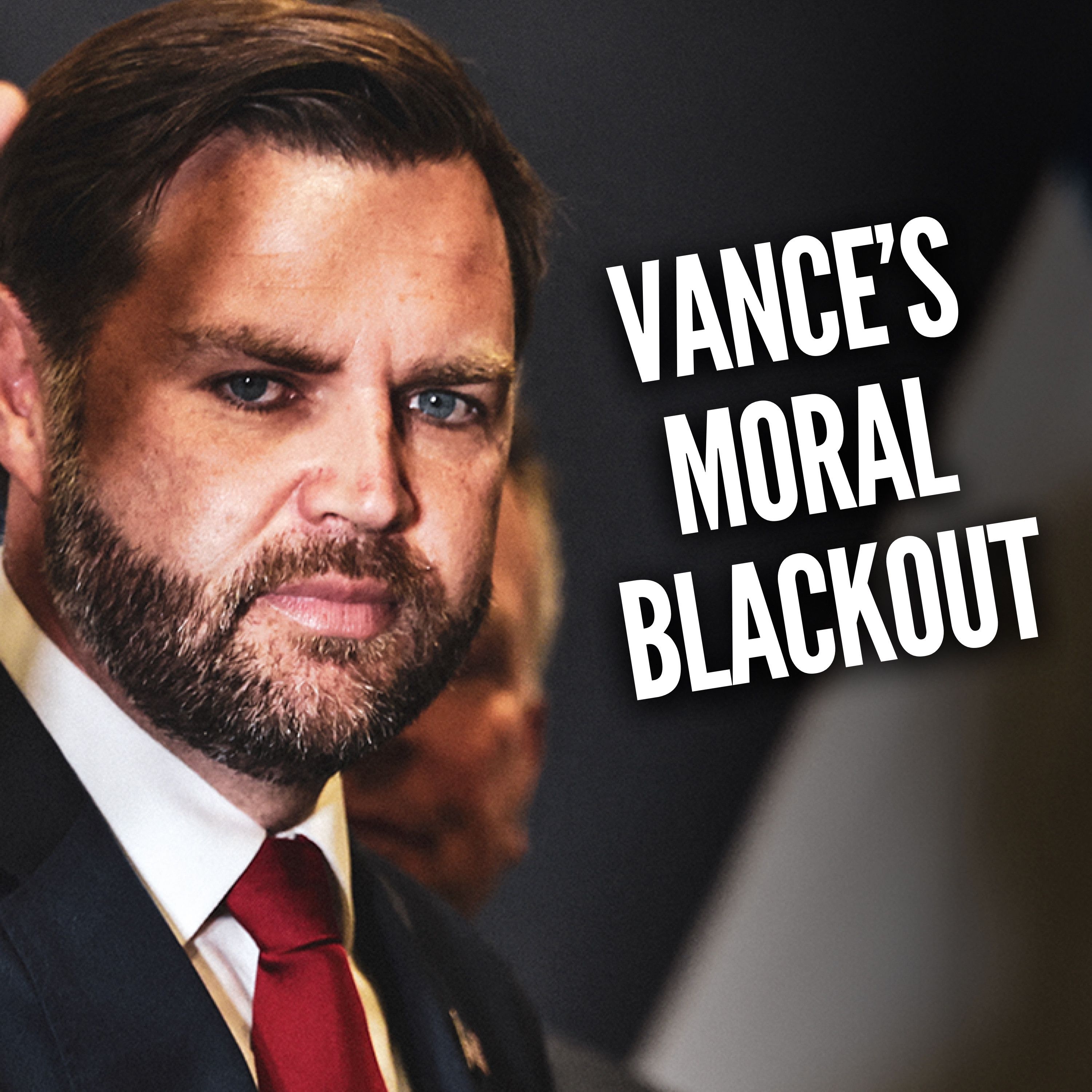
I was going to say we're actually. So I. Kind of. As a segue from this, we've been talking a lot about the East Wing and the ballroom. All stuff in the office slack here. And one of the things that's kind of always popped into my head is like, why do we care so much about this story when there's so much other hitting the fan? And one of the things that's really been very pronounced this, these past two weeks, which you've covered in various incarnations of your career, is just this sort of strand of neo Nazism that we have seen in Republican circles. Specifically, two things, or I guess three. One is this release of Young Republican text messages where some of the participants are basically saying, this is a direct quote, I love Hitler. Two is the Paul and Gracia saying that he has a quote, unquote, Nazi streak. This is also in text messages. He withdrew his nomination. Third is not specifically about the Nazism itself, but what I want to get your take on, which is what Republicans should do about this in the divide that's emerged on the right over whether to condemn it or in to do the J.D. vance thing, which is there are no enemies to my right.
- [02:17]
B
By focusing on what kids are saying in a group chat. Grow up. I'm sorry, focus on the real issues. Don't focus what on what kids say in group chats.
- [02:25]
A
First of all, give us the sort of historical elements of this because I want to be clear, I'm not like a both sides guy, but I do think it's worth noting like there's plenty of bad agitators and people and malicious actors in lefty politics. That is absolutely true. Can be unequivocally stated. But there is something to this strand of neo Nazism that we've seen that has become more pronounced and even people on the right are like yeah, this is a problematic threat in our movement.
- [02:49]
B
Well even the fact we've got to kind of parse this is a problem. Right. I mean this is about people expressing love for admiration with or association with self association with Hitler. It should be the, the third rail of, of common sense in American politics and has historically been in fact much of the time. I think you can't say enough that when opponents accused other their, their political opponents of being Nazis or being like Hitler that that means you lost the argument. Right? That's God.
- [03:19]
A
Exactly. It's like a desperation move.
- [03:20]
B
But yeah, but what happens when your opponents compare themselves to Hitler? This is not a tough call. This is not within the universe of what should be a tough call. And that's why I think JD Vance when the first of this shoe drop with the young Republican chats and we should say these are people who are sort of Republican apparatchiks in their 30s. These are not children.
- [03:42]
A
Young is probably the wrong way to think about it. They're young professional Republicans. They're not like kids.
- [03:47]
B
That's right. And, and again I think you know, politics gets graved on a curve. You know, I mean if you're not 70s in the Senate, you're, you're a spring chicken. So, but, but so these are people who are old enough to know better and the fact that this is, is percolating a lot that Paul and Gracia is himself 30 years old, was nominated to oversee sort of the, the White House watchdog for cover whistleblowers. His, his, his confirmation was, was pulled in effect because senators said this ain't going forward. But the fact that J.D. vance, yell law graduate, smart guy, embraced that no enemies to the right attitude with regard to the Hitler loving group Chat sure is the problem. We are only good if we are able to police our own sides in politics. And I, I've written a lot about the feedback loop between the extremes and perceptions of extremes. I wrote a book, Wing Nuts, 15 years ago. But even in the context of that, right, the initial outburst of sort of Christian nationalism and militia adjacent belief systems into the Republican Party in reaction to the election of Barack Obama, a large contingent of people openly admiring Hitler would have been unthinkable. There's a history in the conservative movement that people like to look towards, I think rightfully where William F. Buckley denounced the John Birch Society.
- [05:01]
A
Right.
- [05:02]
B
The Birchers weren't Nazis. And the fact you've got this, this percolating beneath the surface revealed in, in group chats or texts that are released shows that there is a dangerous rot inside the modern Republican Party under Donald Trump. It does not mean that all Trump supporters are Nazi adjacent at all. Right. Want to triple underline that. But one is too much this number of stories, it should be alarming and should cause people to question deeply what animal spirits we've been tapping into. And it's part of a larger trend.
- [05:36]
A
What do you make of why this is clearly on the rise, why those animal spirits have become more acceptable? Is it just like we're literally further away from the Holocaust, people don't know their history? Or is it, you know, the online culture rewards kind of that edgy, provocative, angry, malicious behavior? Or is it as you say, you know, because it's not getting forcefully condemned from a top? Or is it all of the above? I'm just sort of curious what you think the main factors are.
- [06:05]
B
Look, it's probably a little bit all the above but, but you know, when you're dealing with Hitler, ignorance of history is no excuse. This is something that anyone with a, with a high school education should know about. I do think the disinformation culture that has infected our politics, the elevation of some sort of revisionist histories around, around the Second World War, which, which we've seen Nick Fuentes getting a, a powerful position inside the Republican blogosphere. It all the gravity starts moving to the extremes. But, but this is a five alarm fire for any party that calls itself conservative right. And, and, and I reached out to you because a couple Years ago, 2021, I looked back, I did a, a reality check on CNN about sort of an under reported aspect of January 6th.
- [06:57]
A
Yeah, I was going to say a lot of the J6ers happen to be, you know, Nazi curious. I mean there's the Guy who wore the Camp Auschwitz shirt.
- [07:05]
B
There were at least four. Right. That I covered. There was a guy from New Jersey who had a Hitler mustache, which I, you know, should have been a tell. There's the Camp Auschwitz T shirt guy. There's a young woman who did an online video of herself giving a Nazi salute. This is all aspects of this sort of subculture that's been, been bleeding out there, of course, neo Nazis at Charlottesville as well. And, and, and we're not even talking about white nationalists or neo confederates, but this is what happens when you start appealing to this kind of crowd, when you start embracing the idea that there's no enemies on the right.
- [07:38]
A
Right.
- [07:38]
B
And if this isn't the ultimate reality check for, for Republicans who have found ways to rationalize going along with the Trumpist movement, you gotta, if you find Nazis finding common cause with you, it's time for a long look in the mirror and to call it out unequivocally.
- [07:55]
A
Yeah. Let me just press you on this though, because I think I can, I can already anticipate the kind of pushback an argument like this would get, which is, yeah, yeah, of course these are bad people, we should condemn them. But you know, think about the Democrats, right. Like Graham Platner. This week, the Seneca May, it is reported he confirms he's got this tattoo, appears to be a Nazi cross, skull and crossbone tattoo on his chest. Had it for 10 years. There's reports that he, you know, understood that it was a Nazi symbol, but kind of just thought it was funny. And it was also something that his unit did. He's now covered it up, but they say. So why are you telling us to police our side while Democrats can, you know, rally behind Graham Platner?
- [08:33]
B
I really think it's important to not do the, the, the false moral equivalence here. First of all, Platner has been called out plenty of for that by folks on the left, I absolutely believe, and my work is focused a lot on the interplay, the feedback loop between the far left and the far right and the way that the far left doesn't always understand how it feeds reactionary forces that are the ultimate opponent of progress. That's why I'm a strong believer in the radical center, in the vital center. Not a popular place to be, but someplace I am and believe deeply. But, but you know, there are no high level or low level elected or appointed Democrats I know who frequently, you know, wax rhapsodic about Stalin and Mao and those are even sort of distant echoes. It bothers the hell out of me that Mao is some sort of cultural figure we put on restaurants and posters. The guy was a mass murderer. I get very pissed off when I talk about mass murderers like Pol Pot, Mao, Stalin, because they. They. They deserve to be in the same category. But culturally, if you can't condemn Hitler, if you find a way to sort of justify, rationalize, associate yourself with Hitler, what kind of evil is being unleashed? And if you can't clearly condemn it, then you're complicit.
- [09:45]
A
Well, this is the other thing. It's like Paul Ingratia. And this. It's just confounding me, like, yeah, he's withdrawn his nomination for this office of.
- [09:57]
B
Does he still work in the administration, by the way?
- [09:58]
A
He still works for the administration. He still works for the administration. There has not been an actual condemnation from the White House of this. He obviously hasn't been fired. He just withdrew his nomination. J.D. vance, who is so quick to condemn people who are not appropriately mourning Charlie Kirk's assassination, has no problem apologizing for or over. Over, you know, just dispatching with any condemnation for these Young Republican texts. So there is, frankly, a difference in how these two things are handled, and I just think people need to understand that. All right, man. Anything else you want to add before we let you cut you loose here?
- [10:32]
B
Look, brother, we can talk about this all day long and all the corruption and the insanity that gets normalized every day, but I, honest to God, think this is worth just pulling out, because the fact it's not dominating every conversation. And we did see, you know, the CEO of the Babylon Be wrote a piece condemning the idea of.
- [10:51]
A
No, I saw that. I was heartened to see that. I saw people like Eric Erickson say, no, we have to police our own. Like, we cannot let these people take root. But honestly, it feels like they're in the minority, because if you go. Maybe I'm in a bubble. But if you go online, if you look at the comments, threads to some of these things on Twitter, like, it is mostly people being like, shut up, Eric. Or when Paul put up his statement saying he was not gonna continue his nomination, is mostly people saying, like, you got to keep fighting, buddy. Like, don't let them get you. And so I. I worry that we're. We're heading in the wrong direction.
- [11:24]
B
We are. But good for those folks who are standing up and speaking out, sometimes it's a little too late because you've been paying footsie, and maybe Hitler was enough to get your attention. Good. But we all need to police our own extremes. But let's not pretend there's moral equivalence, especially when you see a bait of Hitler loving coming out and texts from people being advanced. And remember, in every organization, Tone comes.
- [11:44]
A
From the top right.
- [11:46]
B
And and J.D. vance has been most explicit about no enemies on the right. And the fact that a guy who says I've got a strong Hitler strain in me is still working for this White House is itself a huge problem that should preoccupy everyone who claims to give a damn combating Hitlerism and anti Semitism as we all should not good man.
- [12:06]
A
It's where we're all right. All right. John Avalon thank you, buddy.
- [12:08]
B
Appreciate it. Take care, brother.
- [12:09]
A
Talk to you later.