← But Why: A Podcast for Curious Kids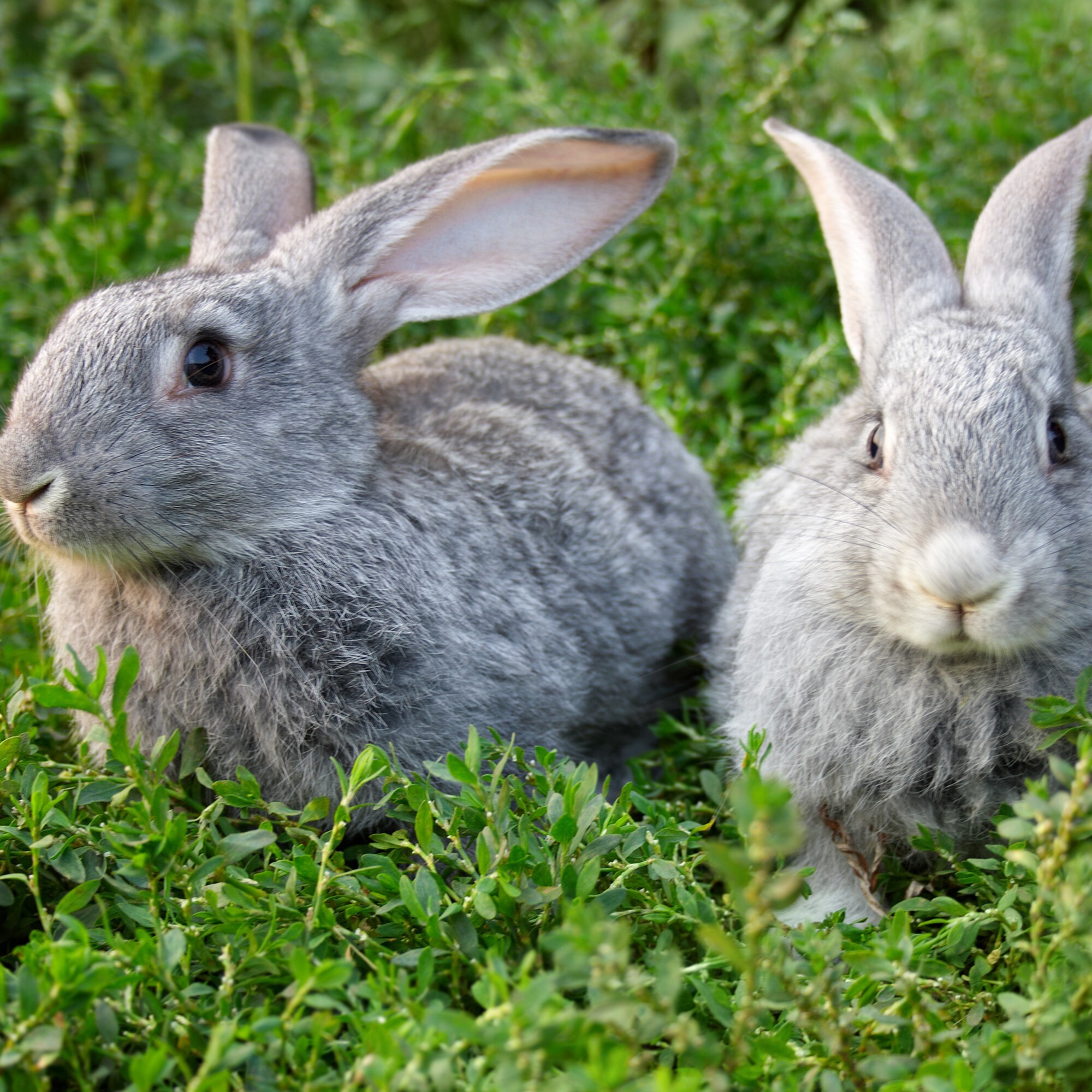
But Why: A Podcast for Curious Kids
Do bunnies come out at night?
00:25:25
Why are rabbits called bunnies? Why do they have fur? Why do bunnies have puffball tails? Why do rabbits have eyes on the sides of their heads? Why do rabbits hop? Our guest is Margo DeMello,…
Loading summary
Transcript58 lines
- [00:01]
Margo DeMello
I'm Kathryn Nicolai and I help millions of people around the world sleep better, rest their nervous systems and shut their brains off when they won't stop spinning. On my podcast, Nothing Much Happens. I tell cozy, calming stories where nothing dramatic ever happens. Just soft narration, sensory detail, and gentle repetition designed to lull you to sleep. There's no plot to follow, nothing to figure out, just peace. Listen to Nothing Much Happens wherever you get your podcasts.
- [00:39]
Jane Lindholm
Before we get started, here's a message for the adults who are listening. Support for but why Comes from Progressive Insurance Fiscally responsible Financial geniuses, Monetary magicians these are things people say about drivers who switch their car insurance to Progressive and save Hundreds of Visit progressive.com to see if you could save Progressive Casualty Insurance Company and affiliates. Potential savings will vary. Not available in all states or situations.
- [01:06]
Sponsor Announcer
This show is supported by Odoo. When you buy business software from lots of vendors, the costs add up and it gets complicated and confusing. Odoo solves this. It's a single company that sells a suite of enterprise apps that handles everything from accounting to inventory to sales. Odoo is all connected on a single platform in a simple and affordable way. You can save money without missing out on the features you need. Check out odoo-o o.com that's o d o o.com.
- [01:56]
Jane Lindholm
This is but why? A Podcast for Curious Kids From Vermont Public, I'm Jane Lindholm. On this show, we take questions from curious kids all over the world and we find answers. Today, we're going to talk about an animal. I know, I know, we talk about animals a lot, but that's because you send us a lot of questions about animals. Today's animal focus is of the small, fluffy kind. Let's see if you can guess what we're going to talk about. Some of these animals live in our homes as pets, but you'll also see them out in the wild. Even if you live in a city, these critters are pretty well adapted to living in city parks or suburbs. These animals are mammals, and they're often mistaken for rodents. But they're actually a very specific kind of mammal called a lagomorph. One last hint. These animals are famous for their long ears and poofy little white tails. Okay, you've probably guessed it. Now we're talking about rabbits today, and our guest is someone who not only studies and loves rabbits, but has also spent a lot of time living with them in her home. Her name is Margo DeMello.
- [03:06]
Margo DeMello
I study human animal interactions and I have specialized in rabbits for my whole adult life, and I've resc forever. But then in an academic sense, I study all of the sort of facets of the human animal relationship.
- [03:25]
Jane Lindholm
Professor DeMello teaches at Carroll College in Montana, and her field is anthrozoology. Anthro means human. And zoology is the study of animals. So anthrozoology is the study of how humans and other animals coexist and interact. She also rescues rabbits and rehabilitates them in her own home.
- [03:47]
Margo DeMello
I have 12 right now, which for me is a pretty low number.
- [03:52]
Jane Lindholm
12 sounds like a pretty high number to me. Professor DeMello says it can be pretty cool to live with rabbits.
- [03:59]
Margo DeMello
I mean, I live in a multi species household. I always have. Rabbits are much more recently domesticated than cats. And certainly the dogs. Dogs have been with us for, you know, tens of thousands of years. And so they still retain so much of their wildness. And so to have an animal in has a wild spirit. Like, there's something about that that. I don't know. It's, it's, there's something about that.
- [04:27]
Jane Lindholm
But there are also annoying things about living with lots of rabbits.
- [04:32]
Margo DeMello
The gates, the baby gates, the bunny gates, whatever you want to call them, the ex pens. Because I have right now two groups and then a single and a single. I'm trying to integrate to one of my groups. That means I have to have two gates in between them. Rabbits are super territorial, and so introducing a rabbit to another rabbit is not necessarily an easy job. And if you just left them to their own devices, there'd be a lot of fighting. And at my age, climbing over those gates every day, that's not as fun as it was maybe when I was younger.
- [05:08]
Jane Lindholm
Do you want to tell us how old you are or. No, I'm 60, so 60 is not as fun. Climbing over gates. No. Margot DeMello has been working as an animal rescuer for many, many years now. So we want to make sure we're not confusing you into thinking you should just pluck a wild rabbit from your local park or field and try to make it live in your house. And even domesticated rabbits are not always the easiest pets to have. So you should think very carefully before badgering your adults into getting you one. But in the meantime, let's learn more about rabbits and get to your questions before we dive in. Do you remember a big vocabulary word I threw out at the beginning of this episode? I said rabbits are sometimes confused with rodents. In fact, they used to be classified as rodents, but now they're known to be in their own category of animal, called a lagomorph. L A G O M O R.
- [06:01]
Margo DeMello
P H and then within the lagomorph order are rabbits, hares and pikas. So it's a fairly small order with only three different types of animals in it.
- [06:14]
Jane Lindholm
Hares look a lot like rabbits, but they have even longer ears and they're generally larger and taller than rabbits. Pikas have sort of a more rounded look, kind of like groundhogs or prairie dogs with smaller rounded ears. And they live in cold, usually mountainous regions of North America and Asia. One thing rabbits, hares and pikas have in common is that they have two front teeth called incisors that grow constantly throughout their lives. Lagomorphs also have something really distinctive, a second set of front incisors that grow directly behind the first pair. Imagine your two front teeth and if instead of just the two there you had two more behind and you had four front teeth instead of two. Want to know something else that you might find kind of gross about lagomorphs? They eat their own poop. Lagomorphs actually have two kinds of poop, and one of the kinds is a little bit softer and greasier and it's really high in vitamins, so they eat it. Maybe the less said about that the better. So let's get back on track.
- [07:23]
Margo DeMello
And then the rabbit itself, there's not just one rabbit, there are hundreds of rabbits. So different genera, that is the plural for genus, and different species. So many, many, many different rabbits around the world.
- [07:38]
Jane Lindholm
How come some rabbits are wild rabbits and other rabbits are pets.
- [07:44]
Margo DeMello
So there's. Of all of the hundreds of rabbits that exist on the planet, a single species has ever been domesticated, and that is our rabbit. And so the single rabbit that was domesticated is Colo, colloquially known as the European rabbit. The genus and species is Oroctilagus caniculus, and that is the one that was domesticated.
- [08:09]
Jane Lindholm
So sometimes when I go to my county fair in the summertime, there are rabbits there and there are long haired rabbits and short haired rabbits and rabbits that are white and rabbits that are brown and rabbits that are black and rabbits that have long shaggy ears. Those are all one species of rabbit, even though they look so different.
- [08:28]
Margo DeMello
Y a rabbit. Every single domesticated rabbit on the planet is a European rabbit, is Rectalagus caniculus. And all of those variations, the color, the hair length, the ears are only a few hundred years old.
- [08:47]
Jane Lindholm
Wow, that's fascinating. All right, so Penny is seven and.
- [08:50]
Child Questioners
Wonders, why are bunnies called bunnies?
- [08:53]
Margo DeMello
I see bunny as just a familiar kind of an affectionate term. Some people use it to refer to the babies, but technically that's not correct. They're kits. And so usually we use bunny because it's just a cute kind of. It sounds softer, I think, in the mouth to say than rabbit. And so, you know, when you talk about something that is cute or that you have some affection towards, bunny is just sort of a cuter word.
- [09:23]
Jane Lindholm
So baby bunnies or baby rabbits, if you're using the proper name, are called kits, same as fox babies. A few more interesting facts about rabbits. They live in burrows, so underground, and they prefer to live together in groups.
- [09:38]
Margo DeMello
They are a social species. They are gregarious. Most rabbit species are the domesticated rabbities. Absolutely. Just like humans, just like most primates, gregarious, which just means social. So they thrive in social groups. And that is one of the reasons why, if you're going to have a pet rabbit, it's nice to have pet rabbits with a companion.
- [10:04]
Jane Lindholm
I love that vocabulary word that you used, gregarious. When we think of humans who are gregarious, we think of them as being very outgoing. They like to talk, they like to be in social situations. So that's sort of what you mean about rabbits, too? They like to be together?
- [10:19]
Margo DeMello
Yes, yes. They're happier touching someone else. I get the sense that part of what they're doing is sort of catching up on their lives together by having this sort of period where they're just kind of grooming each other's fur and checking in with each other.
- [10:39]
Child Questioners
Hi, my name is Milo. I'm three years old and I want to know why bunnies have fur.
- [10:47]
Margo DeMello
Because they would look terrible naked. That's the basic. No. Well, all mammals have fur. Mammals, that's one of the kind of characteristics of a mammal. And so they wouldn't be mammals if they didn't have fur. Now, rabbits are born. Here's another vocabulary term for you. Rabbits are born altricial. And what that means is they are born without fur and their eyes are closed. They're essentially very undeveloped. As opposed to hares, another lagomorph. They are bo. Born precocial. And that means they do have their fur and their eyes are open and they're kind of ready to go. So rabbits are more immature when they're born. But to be a mammal, to get entry into the mammal class, I think you have to have fur.
- [11:34]
Child Questioners
Hi, my name is Yishai and I'm nine and I live in Israel. Why do bunnies have tails? My name is Azan. I'm six years old. I live in Evergreen, Colorado. Why do bunnies have puffball tails?
- [11:48]
Margo DeMello
So their tails are useful as a form of communication. Humans show their emotions through their facial expressions. That's what our facial musculature has sort of evolved to do, is to communicate our emotional feelings to outsiders. And that's why we spend so much time looking at each other's faces. A lot of animals don't have the same facial muscle structure as humans, and so they don't have the possibilities of moving their face. But they still need to communicate to others, and in particular for rabbits, because rabbits don't use their voices, they really have to use their bodies. And so you're going to have way more muscles around things like their ears, their tail. And so the tail, as cute and small as it is, signals really important stuff to other rabbits.
- [12:45]
Jane Lindholm
Hang on a sec. Did you catch that? Rabbits don't usually use their voices to communicate with each other. Margot Demello says they do sometimes make noises if they're really scared or hurt. And they can also make nonverbal sounds by thumping their feet when they're alarmed or annoyed, or making a sort of purring sound when they're happy, by clicking their teeth together really fast. But teeth grinding often suggests they're in distress. So if you have a rabbit as a pet, it's important to learn their signals so you know what your rabbit might be communicating to you. Okay, back to bunnies. Cute little tails. How come they're so small if the tail is important for communication?
- [13:27]
Margo DeMello
If we think about animals with longer tails, they are animals that often use them for balance. Rabbits are ground dwellers, and in fact, they're underground dwellers. When we're talking about the European rabbit, they live in burrows underground, and so they don't need any of that. Also, prey animals. Think about other types of prey animals. Think about deer and those kinds of animals. They have shorter tails because if you are being chased by something, the last thing you want is to have a big tail behind you that somebody can grab.
- [13:58]
Jane Lindholm
Are you able to look at a rabbit's tail and you can tell anything about what it's feeling or its behavior?
- [14:09]
Margo DeMello
Yeah, there's definitely. It's. Again, it's subtle. If you live with a rabbit, you have to learn subtle. More subtle kind of in their body. But one of the things that people who live with rabbits always note, and especially if they have a rabbit who's got a particularly sassy personality, that when they're doing something naughty or you scold them because you don't want them chewing on their wall or whatever it is that they're doing, they will flick their tail at you. And again, it's very quick and it's kind of subtle, but it's pretty easy to once you have that relationship with that rabbit to understand that they saying, well, I'm gonna do what you're asking, I'm not gonna like it. And the second you turn around, I'm gonna do it again.
- [14:57]
Jane Lindholm
Sassy Bunnies after the break, more questions about rabbits with anthrozoologist Margo DeMello. Like, why do bunnies hop? And can bunnies see behind themselves without turning their heads?
- [15:12]
Sponsor Announcer
This show is supported by Blueland. Each year Americans throw away 25% more trash from Thanksgiving to New Year's. This year let's turn our New Year's resolutions into actions that make a difference by reducing single use plastics. Blueland makes that easy. Blueland believes that hard working clean products can be the norm, not the exception. From cleaning sprays and toilet bowl cleaner to dishwasher and laundry detergent tablets, Blueland's 100% microplastic free EPA safe for choice certified formulas are safe to use around family pets and plants. You'll love not having to choose between the safe option and what actually gets your house clean. Blueland products are independently tested to perform alongside major brands and the formulas are free from dyes, parabens and harsh chemicals. Plus, Blueland is a certified B corp and certified cruelty free by Leaping Bunny. Their formulas are EPA Safer Choice certified and many have received the Gold Material health certificate from Cradle to Cradle. And right now Blueland has a special offer for listeners. Get 15% off your first order by going to blueland.com prx. You don't want to miss this. Blueland.com prx for 15% off that's blueland.com prx to get 15% off.
- [16:33]
Jane Lindholm
This is but why? I'm Jane Lindholm and today we're learning about rabbits with Margo DeMello, a friend of rabbits and a scholar of human animal interactions.
- [16:43]
Child Questioners
Hi, my name is Mariah and I'm four years old. I live in Toronto, Canada where I do bunnies hop. I live in McDonough, Georgia where I do bunnies hop. My name is Eilish and I am six years old. I live in Dublin, Scotland and my question is why do Bunny's heart Hi, my name is Nicolina and I'm seven years old. I live in Philadelphia and I want to Know why bunnies hop instead of walk like a regular animal?
- [17:19]
Margo DeMello
Right. Rabbits actually can walk. A lot of people don't realize that they can walk. When a rabbit is in a new environment and are very kind of curious or nervous, they will walk. The difference between walking and hopping is pretty subtle. Walking involves four different legs moving in four different sort of times. When you hop, what happens is your two front legs move independently, but the back move is a group. And for this particular type of prey animal, they need to have speed. And so they've got fairly muscular back legs. Those back legs are also really useful for digging. The front legs do a lot of the work of the digging, but the back legs also do it. They push the dirt behind them. And given that they are diggers, it serves them in those ways. It also makes their running away a little bit more erratic for a predator. They do this thing that we call binking in the rabbit world. That is not a scientific term, but we all use it and what that means. And other animals do this as well. Other prey animals, it is a form of play where they hop and, and twist and, and sort of dance. And you see that with the young, young deer, lambs, you know, those kinds of animals will do that as babies, and they typically don't tend to do it as adults anymore. And for a rabbit, it's super critical because if you're being chased by a coyote or a fox or something, and you don't run in just a str, but you twist and you turn, it's a good way to evade those predators. So I don't think I'm directly answering why they hop, but their hopping is beneficial to them, and it is in part a result of their back legs and the need to have these back legs the way that they are.
- [19:24]
Jane Lindholm
Do hares and rabbits have different legs and different ways of moving?
- [19:29]
Margo DeMello
Yes. So when you look at a jackrabbit, which is another confusing term because jackrabbits are hares, not rabbits. So they're, again, they're born precocial, so they're already kind of getting started as soon as they come out. And they are much faster and much stronger than a rabbit, for sure. And one of the reasons for that is, if we think about where a lot of hairs live, we're talking open spaces. We're talking about not a lot of COVID We're also talking about animals that do not burrow. And so for evasive tactics for predators, those legs are critical. So, yeah, they're fast, they're strong. To be kicked by a Jackrabbit is not a, as far as I understand, I've never been kicked by a jackrabbit, but I've seen it and it's pretty significant. Those legs, they also their ears, which are another important defense mechanism for both rabbits and hares. And they can control their ears. They can move independently of each other. That's another super good way of deterring while detecting predators so that you can then take some evasive action.
- [20:44]
Jane Lindholm
What do rabbits eat?
- [20:46]
Margo DeMello
They can eat a lot of things. Their bodies are evolved for them to eat a very high fiber diet. And so that means typically consistent with kind, low nutrient, low calorie diet. So they have to eat all day. They pretty much are kind of foraging and munching all day long because they need to get, if they're in the wild, a variety of food from all kinds of places to bring in a mix of the right nutrients that they need. Within our homes, of course, you can just buy commercial pellets, which is what most people do. But even with the commercial pellets, which have all the nutrients, they still need the fiber from the hay and they still need the variety because they're an animal that is prime to be eating all the time. If you only fed them, let's say two times a day, their guts can't handle that. Their digestive systems need to be moving all of the time. And so that's why they need to have other kinds of food that they can get access to all day long. And it's also just part of what they do. They're like, I need to have, I need to have a bite to e right now. I just need to have a little bit of munchy right now. So they eat high fiber foods. They are vegetarians, they do not eat any animal products. But they're also like us in that they have a sweet tooth. And so that means that fruit they adore candy, which is as good for them as it is for us, probably worse. But they will steal, they'll steal chocolate, they'll steal anything that looks like it could be good. And they can really, really develop a problematic sweet tooth if you help, if you indulge that.
- [22:31]
Jane Lindholm
We have several questions from kids who have heard stories that have rabbits eating carrots or lettuce and strawberries or carrots and radishes. And Karen, who wrote to us says.
- [22:47]
Child Questioners
Why does most stories have rabbits eating carrots if that's not good for rabbits in real life?
- [22:55]
Margo DeMello
In small quantities, they're absolutely fine of vegetables, they are a fairly high sugar vegetable and that is another reason why they're gonna like them.
- [23:04]
Jane Lindholm
So for domesticated rabbits in small doses, those kinds of foods are not bad. But normally rabbits need to eat a lot of grasses, a lot of things that are just not as full of that sugar as some of those vegetables and fruits might be.
- [23:20]
Child Questioners
My name's Pippa. I am six years old. I live in Burlington, Vermont. Why do bunnies have long ears? My name is Elle. I am five years old. I live in California. Campbell, why do bunnies have long ears?
- [23:37]
Margo DeMello
So the ears do a few things I mentioned before that they're incredible for detecting predators because they. So the longer that the ear is, the longer that canal is, and it could funnel down sounds that other ears like ours would never be able to detect. They pull them down in the other is temperature regulation. Rabbits don't sweat, they don't pant. And every mammal has to have some sort of a way to regulate their temperature. And that's what those ears do. In particular, they will help in hot weather to kind of keep that animal a little bit cooler.
- [24:22]
Child Questioners
Hi, my name is Bella. I spell Erie, Pennsylvania. I'm five years old. And why do rabbits have eyeballs at the side of their heads? My name is Hannah. I'm five years old. I live in Roswell, Georgia. How can bunnies see behind themselves without moving their head? My name is Nikhil. I am six years old. I live in Norwood, Massachusetts. Hackin rabbit look behind themselves without even turning their heads.
- [24:57]
Margo DeMello
Sure. What they need again as prey animals, is to be able to see around them. And so when those eyes are on the side of your head instead of the front, you don't have depth perception, but what you gain is almost 360 degree peripheral vision. So, yeah, they can see on the sides. They can see not fully fully. There's going to be two blind spots in a rabbit's vision. One is directly in front of their nose, which is one reason why when you meet a new rabbit, you don't put your hand out the way that you might for a dog, because they basically can't see it. And then it's going to be a threat to them. So right in front of their nose and immediately in the back of their head. Right in the back. Everything else they can see.
- [25:45]
Jane Lindholm
A lot of prey animals have eyes that are spaced out toward the sides of their heads because they want to be able to see if something is coming.
- [25:53]
Margo DeMello
Right.
- [25:54]
Child Questioners
My name is Gwen. I am six years old. I live in Cambridge, Massachusetts. Why do bunnies come out at night?
- [26:09]
Margo DeMello
So technically, they're not nocturnal. They're crepuscular.
- [26:13]
Jane Lindholm
Crepuscular is one of my favorite words. It refers to twilight, that time right around dawn or dusk when the light is low. So crepuscular animals are most active in the hours around sunrise and sunset.
- [26:28]
Margo DeMello
And I am assuming that evolutionarily that has to do with, again, predators. There's going to be predators at any time, but depending on the environment in which you kind of emerged. And for our domestic rabbits, that would be the Iberian Peninsula. So in other words, Spain and Portugal, you know, millions of years ago, whatever predators were in that environment at that time is how those rabbits would have developed that type of a system of being most active morning and night. And then remember they have those burrows that then they could retreat to.
- [27:03]
Jane Lindholm
So if you want to look for rabbits in your neck of the woods, try going for a walk or sitting quietly at the edge of a hedge or field early in the morning or right around sunset. Okay, let's leave it there. Thanks to Margo DeMello for sharing her knowledge and love of rabbits with us. She's an assistant professor of anthrozoology at Carroll College in Montana. As always, if you have a question about anything, have an adult record you asking it on a smartphone using an app like Voice Memos, and then have your adult email the file to to questionsutwhykids.org but why is produced by Sarah Bake, Melody Beaudet and me, Jane Lindholm at Vermont Public and distributed by prx. Our video producer is Joey Palumbo and our theme music is by Luke Reynolds. If you like our show, please have your adults help you give us a thumbs up or a comment on whatever podcast platform you use to listen to us. It helps other kids and families find us too, too. We'll be back in two weeks with an all new episode. Until then, stay curious. From prx.