← But Why: A Podcast for Curious Kids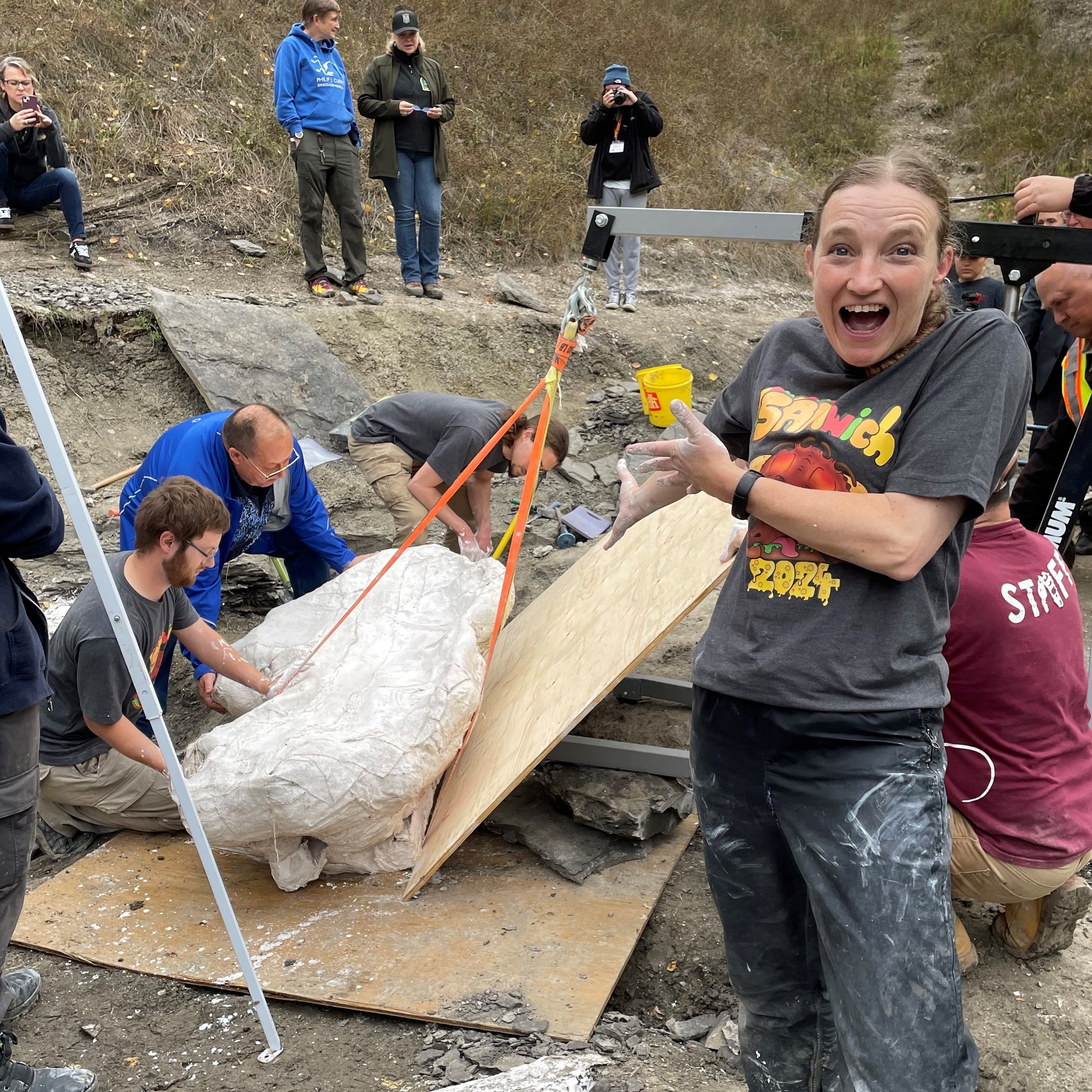
But Why: A Podcast for Curious Kids
How did bird dinosaurs survive the meteor?
00:29:36
Why did the dinosaurs go extinct? Many of you have learned about the meteorite that scientists say hit the earth 66 million years ago and killed off many dinosaur species. But some dinosaurs…
Loading summary
Transcript68 lines
- [00:01]
Dr. Emily Bamforth
In a world where some baby teeth are considered powerfully magical, tooth related crimes are especially gummy. The heroes who investigate these cases are members of an elite squad known as the Tooth Fairy Detectives. This is the story of how one of those winged legends saved the world. Ruby Tooth Fairy Detective on Apple Podcasts or go to gcmshows.com for more information.
- [00:29]
Jane Lindholm
If your eyes are the windows to
- [00:31]
Dr. Emily Bamforth
your soul and your glasses are the
- [00:33]
Jane Lindholm
windows to your eyes, then it's pretty important to find your perfect frames. That's why at Warby Parker, we've made shopping for eyewear as easy and fun as can be.
- [00:42]
Dr. Emily Bamforth
Peruse endless styles in our stores or
- [00:45]
Jane Lindholm
use our app to virtually try on frames and get personalized recommendations. To find your next favorite pair of glasses, sunglasses or contact lenses or or
- [00:53]
Dr. Emily Bamforth
to locate your nearest Warby Parker store,
- [00:55]
Jane Lindholm
head over to warbyparker.com that's warbyparker.com museums are more than places we visit on a field trip across the country. Museums protect our shared history, care for wildlife and collections, strengthen local economies, support job training, and spark curiosity in people of all ages. Right now, you can help make sure museums stay strong for future generations. Museum Advocacy Day is a national moment when people contact Congress to ask for continued support from museums and the federal agencies that fund them. Learn how to take action@aam-us.org and tell your representatives that museums matter to education, to communities, to the economy, and to our democracy. This is but why? A podcast for curious kids from Vermont Public. I'm Jane Lindholm. On this show, we take questions from curious kids just like you, and we find answers. We've gotten thousands of questions, and hundreds of them are about dinosaurs. We took a really cool field trip to Texas a few years ago to look at some newly uncovered dinosaur footprints in a dry riverbed and to make an episode all about these prehistoric beasts. But that only scratched the surface of all the questions we've gotten about dinosaurs. So today we're going to tackle a chunk more of them, and we're going to be doing it with a paleontologist.
- [02:44]
Dr. Emily Bamforth
My name is Dr. Emily Bamforth. I am a paleontologist and the curator of the Philip J. Curry Dinosaur Museum. So paleontology is actually it's a pretty broad field. There are paleontologists that just study dinosaurs, but paleontology is actually the study of fossils. So anything that fossilizes gets studied by paleontologists. So whether that's bugs or plants or fish or even bacteria, anything that was alive and is now dead and fossilized, that's what paleontologists study.
- [03:13]
Jane Lindholm
Emily Bamforth does study dinosaurs and all the things that lived with them from her home base in Alberta, Canada.
- [03:20]
Dr. Emily Bamforth
That includes going out and finding them, digging them up, bringing them back to the museum, preparing them, and taking care of those collections once they're in the museum, and then telling the world about all the stuff we found.
- [03:30]
Jane Lindholm
Emily fell in love with dinosaurs when she was just four years old and saw her first dinosaur exhibit. So if you're a dino loving kid, you should know there's a field of study for you as you grow older. Dinosaurs first appeared on Earth about 245 million years ago, give or take a few million years. Then they lived for a long, long time. But not all dinosaurs lived at the same time as each other. Just as there are animals that have gone extinct more recently, there were dinosaurs that went extinct or evolved over time. And it's also important to remember that not all of the animals living back then were dinosaurs.
- [04:12]
Dr. Emily Bamforth
Yeah, that's right. And there are some animals that are actually called dinosaurs that are not. So the, the plesiosaurs that lived in the ocean and the big mosas, kind of other marine reptiles, they sometimes get called dinosaurs, but they weren't, they belonged to a different group of reptiles, but because they lived at the same time as dinosaurs, they sometimes are accidentally called dinosaurs. It's the same with things like the pterosaurs, things like Pterodactyls and Pterodon. Those things are actually not dinosaurs either. They, they belong to a different group of reptiles, but again, they lived at the same time as dinosaurs, so they sometimes get lumped in there. But dinosaurs are actually a very specific group of reptiles. But of course, they weren't the only ones living at the time. There's a whole bunch of other things that were around as well.
- [04:53]
Jane Lindholm
There were crocodiles, horseshoe crabs, mammals, plants and insects living in the time of the dinosaurs. But let's back up a second and consider this question from Willow.
- [05:05]
Curious Kids
I'm five years old. I live in New York City. Why dinosaurs? Ancestors. And what are dinosaurs? Ancestors.
- [05:14]
Dr. Emily Bamforth
Ancestors. Based on what we know from the fossil record, we think that dinosaurs and crocodiles had the same ancestor. So the ancestor of dinosaurs probably looked like a crocodile, maybe like a little bit of a skinny crocodile that maybe could have gotten up and walked on two legs. So some of our very early, early dinosaurs, back when dinosaurs first appear, they look a little like crocodiles, but crocodiles that walked on two legs. And so before that, we know that dinosaurs are reptiles. So they came from the basically the same group of animals that are lizards and snakes and crocodiles and turtles came from today. So basically from, from a reptilian ancestor we got like a crocodilian like ancestor. And from those, those crocodile like things we got the dinosaurs and then the birds.
- [06:04]
Jane Lindholm
So that kind of answers Amos question.
- [06:07]
Curious Kids
I live in Massachusetts, I'm six years old. Are there any dinosaurs that are ma.
- [06:15]
Dr. Emily Bamforth
Dinosaurs are reptiles and mammals are mammals. They're actually different types of animals. There were mammals around at the same time as dinosaurs and so sometimes it's, it's easy to forget, but there's actually a lot of mammals that lived at the same time of dinosaurs. Mammals just didn't really kind of get big until after the dinosaurs went extinct. But, but they were certainly there. Mammals actually predate dinosaurs.
- [06:37]
Curious Kids
Hi, my name's Olive. I live in Melbourne, Australia. I'm seven years old. If crocodiles are dinosaurs, why are they not extinct?
- [06:50]
Dr. Emily Bamforth
The, the closest ancestor or the closest relative of a modern bird is actually a crocodile. And so dinosaurs and crocodiles were reasonably closely related. But crocodiles today, just as the dinosaurs and the birds kind of went off on their own branch, modern crocodiles went off on their own branch too. And so even though crocodiles, really ancient animals, they've also been around for a long time. They've also kind of evolved on their own branch. And so crocodiles, again, they've been around for a long time, but it's not the same crocodiles that live today as the ones that lived in the fossil record. They, they have changed and evolved the same way that dinosaurs have.
- [07:28]
Jane Lindholm
So crocodiles and birds are actually more closely related to each other than crocodiles and lizards, right?
- [07:36]
Dr. Emily Bamforth
That's right, yeah. So they, crocodiles and dinosaurs and birds belong to a group called the archosaurs. They basically have their, their own group all to. And then our lizards and our turtles and our snakes are on another branch of the reptile tree.
- [07:50]
Jane Lindholm
When you think about evolution, remember we're talking millions of years. So animals can share ancestors and not look anything alike. Now you might have been surprised to hear that dinosaurs and birds and crocodiles are all related. More on that in just a minute. But if you know anything about dinosaurs, you've probably heard that they went extinct about 66 million years ago.
- [08:15]
Curious Kids
Hi, my name is Maya from Monterey, California. Why are dinosaurs extinct? My name's Jaga. Why did dinosaurs live 60 million years ago and not now? My name is Kinley, I am seven years old and I live in Clive, Iowa. Why were dinosaurs extinct? My name is Beatrix I'm five years old, I live in Ohio. Why are dinosaurs extinct? Including my favorite won the Brachiosaurus. I'm Sebastian and I'm 4 years old. Why did the dinosaurs go at me? Hello, I'm Evie, I'm five years old, I live in Kansas, and my question is, why did the dinosaurs and other reptiles that didn't survive the meteor when alligators, cockroaches did? My name's Noah and I'm five years old and I'm from Mobile, Kentucky. When were the dinosaurs extinct? Hello, my name is amelia, I am six years old and I am from Washington D.C. and I want to know, how did the asteroid make the dinosaurs go? It's. My name is Lucas, I live in Germany and I am 7 years old. My question is, how do trees come back after dinosaurs were extinct? Hi, my nickname is Ava, I'm eight years old and I live in Florida. And my question is, why did the asteroid make the dinosaurs extinct but it didn't cover the whole Earth? My name is Hannah, I live in San Diego, California, and I am four years old. And my question is, why do dinosaurs don't live so much?
- [10:26]
Dr. Emily Bamforth
So the dinosaur mass extinction has been a huge debate for a really long time. And I remember when I was a kid, it was still very much a question about what killed the dinosaurs. And there's been a lot of work that's been done pretty much since the 1980s that now we've, we've pretty well established that the big thing that caused that extinction was a meteorite impact, or what, what geologists would call a bolide impact. Basically a giant piece of space rock came and hit the Earth probably around the Yucatan Peninsula in Mexico, and basically caused a whole bunch of bad things to happen all at once. So like forest fires and acid rain and earthquakes and volcanic eruptions, and it would have been a very bad day on planet Earth. So we think that that event probably almost instantly wiped out the big dinosaurs, at least in North America. And after that happened, their ecosystems, so kind of all of the things that were happening around them also collapsed. And so we know from the mass extinction that nothing big survived. So nothing bigger than basically like a golden retriever dog survived. So all the big things went extinct. They just didn't have the. They didn't have the resources, they didn't have the habitats they needed anymore. And then there probably would have been what we call a nuclear winter. So all of that ash and the ejecta from that big meteorite impact would have blocked out the sun. So that would have affected the plant communities. And so the animals that relied on those plants would have died as well.
- [11:55]
Jane Lindholm
That certainly sounds terrible. When we think about this time period, it's often called a mass extinction event, when lots and lots of animals and plants died. But it's important to remember that a lot of plants, animals and insects also survived.
- [12:10]
Dr. Emily Bamforth
So we think the things that survived the mass extinction were small. They were able to eat a whole bunch of different things. So they were what we call generalists. So they could eat seeds and they could eat plants, and they could maybe eat detritus and they could eat insects. So they were able, they didn't, didn't starve because they could eat a bunch of different things. And then animals that had some kind of way to escape the after effects. So if they lived in water or if they lived underground, they tended to do pretty well. So, for example, turtles did really well out of the mass extinction. Most turtles survived the mass extinction because most turtles live in water. So they were able to go into the water and hide the early birds. So there were birds around at the time of the extinction. And we think the ones that survived were the ones who were able to eat seeds. So seeds are something that doesn't necessarily rely on the sun. So they can, they can. Seeds can hang out on the surface for a long time. So birds that were able to eat seeds did pretty well. And then there were some animals that were just lucky. So I think in terms of what survives a mass extinction, whether it's the dinosaur mass extinction or one of the four mass extinctions before that, it just seems that there were some animals that just got lucky and they managed to survive, and they became really diverse afterwards.
- [13:26]
Jane Lindholm
And what else survived the mass extinction that killed off so many of the dinosaurs that we can point to as ancestors of modern animals today?
- [13:34]
Dr. Emily Bamforth
Yeah, so the crocodiles survived the mass extinction. So crocodiles actually were around even, even in places like Canada for a long time after, after the dinosaur mass extinction. And of course, the mammals. So the mammals at the time, there were some slightly bigger ones, but most mammals were really small, so they were able to go underground or live in trees. They could survive the effects of that meteorite impact. And they obviously become really, really abundant and fill all kinds of niches. Mammals get really, really big after the extinction. So mammals are basically one of the great survivors. Birds, of course, and of course, our, you know, these living. We call them living fossils. So things like sharks. Sharks are still with us today. Sharks have been around pretty much forever. Some of the groups of fish that live in the oceans. Some of the amphibians, the salamanders, the frogs survived the mass extinction as well. So basically everything we see today in our world survived the mass extinction.
- [14:35]
Jane Lindholm
You mentioned that some of the animals that could survive that mass extinction and the effects of the meteorite were animals that could hide or get away or had specific foods that they ate that they could still eat. And Grayson would love a little more explanation.
- [14:52]
Curious Kids
I am seven and, and I live in Flagstaff, Arizona. How did some bird dinosaurs survive the meteor?
- [15:03]
Dr. Emily Bamforth
Yeah. So at the time of the dinosaurs, there were what we would consider true birds. They looked a little different than birds today. They had teeth, for example, and they had bony tails like dinosaurs did. But otherwise they probably would have looked a lot like birds. So of course, they were small, the ones that survived. So the small bodied ones, the smaller you are, the better your chances of surviving a mass extinction. So most of those, those birds were small, and they could also, we think, eat a whole bunch of different things. So birds can eat seeds, they can eat insects. There's some, not many, but there's some herbivorous birds as well. They could eat fish. Some birds today, like, like vultures, eat carrion, eat dead things that are already dead. So those birds that survived probably had a range of diets that they could eat. And birds can also fly, so they could actually get out of those areas if it was really bad where they were living, they could fly away and find a better place. And that was definitely something that, you know, something like a Triceratops would not be able to do. So we think those are probably the reasons why the bird survived. Birds, of course, were also warm blooded. So even though it got really, really cold, they could probably find a way to warm up. So lots of adaptations that meant that a lot of those groups of birds survived.
- [16:24]
Jane Lindholm
So there were already birds living in the time of the dinosaurs. But if you've been following dinosaur news over the course of your lifetime, you already know that birds are dinosaurs. Stay tuned, we'll explain. This is but why a podcast for curious kids. I'm Jane Lindholm, and today we're talking dinos with Canadian paleontologist Dr. Emily Bamforth. We were just talking about a mass extinction event about 66 million years ago that wiped out tons of animals, including most of the dinosaurs. But there are animals walking, well, flying among us today that are essentially living dinosaurs. Let's get into it.
- [17:09]
Curious Kids
Hi, my name is Alice. I live in Columbia, maryland, and I'm 8. How are birds and dinosaurs related?
- [17:18]
Dr. Emily Bamforth
Yeah, so really Good question. And this is something that paleontologists have really only just figured out in the last kind of 20 or 30 years. And now if you look at a bird, it's sort of easy to see a dinosaur. Like if you look at a bird's foot, birds have got scaly feet like dinosaurs, like other reptiles. And they have claws like, like dinosaurs would have as well. So we now know that a lot of dinosaurs also had feathers. And so we actually know that now not only we know that they're related, birds are actually dinosaurs. Birds are the dinosaurs that didn't go extinct in that mass extinction. And there's a whole lot of different lines of evidence ways that we can tell that by looking at the fossil record. But dinosaurs are actually still among us in the form of birds. And that is kind of mind blowing. And that totally changed how paleontologists looked at dinosaurs.
- [18:08]
Jane Lindholm
Birds are dinosaurs.
- [18:10]
Dr. Emily Bamforth
Yeah. So that's kind of the way that not only paleontologists, but biologists kind of think about life. And so, for example, humans are mammals. And we're not the only mammals. There's a whole lot of mammals out there. And the thing that makes us mammals is we have a series of, of shared characteristics, basically. Like, we have hair and we give birth to live young, and we like, feed the young with milk. That's what kind of thing that makes mammals mammals. But we all have the same ancestor. Like, we all have the same, like great, great, great, great, great, great mammal grandparent. And because we all came from that grandparent, that makes us all mammals. And that was the same with dinosaurs. So like, dinosaurs are kind of the great, great, great, great great grandparents of birds. And so because they're related, they have kind of that connection through their, their ancestry. That's what makes them into, into dinosaurs, is that they're related through all of the, you know, all of that geologic time, and they also have all of those same characteristics. So birds and dinosaurs that share a lot of things that are the same.
- [19:09]
Jane Lindholm
Remember, most of the dinosaurs that ever existed went extinct. So not all dinosaurs evolved into birds. You could kind of say it like this. All birds are dinosaurs, but not all dinosaurs became birds.
- [19:24]
Dr. Emily Bamforth
The dinosaurs that are closely related to birds most closely related are what we call theropods. And those are basically bipedal, carnivorous dinosaurs.
- [19:32]
Jane Lindholm
Dinosaurs, bipedal meaning walks on two feet and carnivorous eats meat.
- [19:36]
Dr. Emily Bamforth
That's right. So walked on two legs and ate meat. So those dinosaurs, like Velociraptor or Dromaeosaurus, even things like T. Rex, Albertosaurus, basically That group of dinosaurs are closely related to birds and things like Triceratops and the duck billed dinosaurs and the Stegosaurs and the Ankylosaurs. Even though they're dinosaurs, they're less closely related to birds.
- [19:58]
Jane Lindholm
Okay, so if some dinosaurs evolved into birds, did dinosaurs have feathers?
- [20:05]
Curious Kids
My name is Charlie, I live in Worcester, Massachusetts. I am 8 years old. My question is, how do we know some dinosaurs had feathers? Hello, my name is Hannah luis. I am 10 years old and I am from South Korea in Daegu. How do people know dinosaurs had feathers?
- [20:28]
Dr. Emily Bamforth
The reason that we know that dinosaurs had feathers is because we have found dinosaur skeletons with the feathers still attached. So the most famous or the very first one that was found was the Archaeopteryx. So that was found in, in Germany. And when they found it, this is kind of a great story, when they originally found it, they could see it was a dinosaur skeleton and that it had all these weird kind of features in the rock around it. And they actually started to erase them because they didn't know what they were. They thought it was just maybe like a weird thing that was happening in the rock. And it wasn't until they looked more closely that they realized that these were feathers and that this, at the time they called it an ancient bird. We now know that it's basically a feathered dinosaur. And so that that happened like early in the 19th century. And then it really wasn't until they found feathered birds in China. China's really well known for its feathered dinosaurs. And that's when they first really started to make the link between birds and dinosaurs because they're actually finding dinosaurs with feathers.
- [21:28]
Jane Lindholm
And when was that? I mean, you were saying this is only in the last couple of decades, because when I was a kid, which was a long time ago, but not as long as the dinosaurs were alive ago, we didn't talk about it that same way.
- [21:40]
Dr. Emily Bamforth
Right. And it's actually something that's happened in my lifetime as well. So there was this like dinosaur crazy kid and I remember I was maybe around 10 years old when the first the story of the feathered dinosaurs from China really started to kind of hit the press and you started to see it in books and magazines and it was really, really exciting. So that was actually in the 1990s. So it's. Well, I mean for me fairly recent, but again, it's something we've really started to figure out in the last 20 or 30 years or so.
- [22:09]
Jane Lindholm
Scientists had had theories for a while that dinosaurs and birds were Related. But in the 1990s and thousands of feathered dinosaur fossils were found. These bird like dinosaurs lived alongside those other dinosaurs for a million years. When the asteroid hit Earth, these avian dinosaurs survived. And that might explain a lot about dinosaurs and eggs.
- [22:33]
Curious Kids
Hi, my name's Dais. I'm eight and a half years old. And this is Bells feel washy. Then why do baby dinosaurs come from eggs?
- [22:48]
Dr. Emily Bamforth
All dinosaurs, as far as we know, laid eggs. Dinosaurs laid eggs basically because their ancestors laid eggs. So dinosaurs, that whole group of animals is kind of related to. They had kind of a crocodilian, so an ancestor looked a little bit like a crocodile, and that ancestor laid eggs as well. And so dinosaurs laid eggs because their ancestors laid eggs, and they really had no reason to change from laying eggs. Of course, birds today do because dinosaurs did, because the dinosaur ancestors did.
- [23:17]
Curious Kids
My name is Audrey and I live in Arlington, Virginia, and I'm five years old. What are dinosaur eggs made out of?
- [23:27]
Dr. Emily Bamforth
Dinosaur eggs are probably made of the same thing that bird eggs are. So basically just made out of calcium or kind of a calcium sort of complex. And so dinosaur eggs, from what we know in the fossil record, probably eggs, except they were probably a little bit thicker because dinosaur eggs, a lot of them, were a lot bigger than bird eggs today.
- [23:46]
Jane Lindholm
Some bird eggs, like an ostrich egg, are pretty thick. Right. You wouldn't necessarily break them by just squeezing it in your hand. So maybe kind of like that.
- [23:55]
Dr. Emily Bamforth
Yeah. So we're pretty sure that we know that dinosaur eggs were hard. So there are some reptiles that actually have soft eggs, like turtle eggs are soft. But dinosaur eggs were probably hard like a bird egg, and the bigger they were, probably the thicker that eggshell was.
- [24:09]
Jane Lindholm
Did you hear Emily Bamforth say, we're pretty sure we know that dinosaur eggs were hard. They don't know for certain because eggs aren't preserved very easily. But they're learning things all the time about dinosaurs and what they looked like and how they moved and behaved. There are a lot of things still to learn.
- [24:28]
Dr. Emily Bamforth
We have lots and lots of questions about dinosaurs, and this is why it's great to be a paleontologist. There's no shortage of questions. So one of the big ones that I'm dealing with in my research right now is trying to tell the difference between a male and a female dinosaur. It's really, really hard to do because unlike mammals, where if you look at a mammal skeleton, it's kind of easy to tell a male from a female because the hips are different, but dinosaurs laid eggs there's actually very little difference between the hips of male and female dinosaurs. And we just don't have enough skulls, enough skeletons to really know which, which skull is a male skull and which skull is a female skull. So where, where I work here, we have a big bone bed of an animal called a Pachyrhinosaurus. And we have a bunch of skulls. And even though we've got a bunch of skulls, we still can't tell the males from the females. And that's something we'd really like to do because that would tell us about how these, if we have a herd of dinosaurs, like, is it males and females and equal, are they like elephants, where it's like mostly females in the group and, you know, they just have one big male with them. So these things we don't know. So a lot of that behavioral aspect of dinosaurs we would like to know more about. It's really hard to study it in the fossil record. And of course we're looking for new dinosaurs. There's between kind of seven hundred and one thousand species of dinosaurs known today. But if you think of how many animals, species are on the planet today, we know that there's tens of thousands of more dinosaur species that we know nothing about. So we would love to find those as well. So there's still lots and lots of questions. Dinosaur skin is another one, like the color of dinosaurs we, we know a little bit about, like the feathered dinosaurs, what color they were, but things like Triceratops, T. Rex, we still don't know very much about colors there either. So there's still lots and lots of questions out there.
- [26:23]
Jane Lindholm
You're in Alberta, Canada. Is that a hot spot for dinosaurs?
- [26:26]
Dr. Emily Bamforth
Yeah. So Alberta is known for its, its dinosaur fossils, and it actually has the same kind of the same sor rocks that are in places like Montana and Wyoming and the Dakotas. And the reason that there are fossils there is basically because of an ancient seaway. They used to cut through the middle of North America. And dinosaurs used to live on the coast of that seaway. And because that was a good place to live if you were a dinosaur, but it was also a good place to die if you wanted to get fossilized. That's why those areas actually have a lot of dinosaur bones. But there are fossils everywhere. Certainly everywhere in North America. You may not find dinosaurs, but you might find things like Ice age mammals. You might find fossil fish, fossil shells, fossil leaves. So pretty much every area of North America has got fossils of some kind. So you just really kind of have to know what you're looking for.
- [27:18]
Jane Lindholm
You mentioned the Pachyrhinosaurus. Can you tell us about Big Sam, who is one Pachyrhinosaurus that you have helped dig out?
- [27:26]
Dr. Emily Bamforth
Big Sam is the. The first skull that has been collected from our bone bed here. It's called the Pipestone Creek Bone Bed. It was the first skull collected in almost 20 years. And it was really cool to find because it was. It was. It's huge. It's a huge skull for a Pachyrhinosaurus, and it's relatively complete. So pretty much the whole head is
- [27:46]
Jane Lindholm
there if you were holding it. How big is it?
- [27:49]
Dr. Emily Bamforth
It's about a meter and a half long. And Pachyranosaurus have this big, huge bony bump over their nose called a boss. So the boss is almost a meter wide as well. So this thing is absolutely enormous.
- [28:03]
Jane Lindholm
So you couldn't pick it up by yourself without worrying about dropping it.
- [28:07]
Dr. Emily Bamforth
Oh, no. It weighs almost 500 pounds. So it was a big job to get it out of the ground. We had to use, like, a shop crane, and then we needed, like, a hydraulic lift to get it off the ground. And it took us probably the better part of two years to actually get to get out of the bone bed. And now it's currently in our preparation lab, and it'll be probably another 12 months or so before it's ready to be displayed and to be studied. But, yeah, certainly one of the coolest things I think I've ever found in the bone bed was this big, giant skull.
- [28:41]
Jane Lindholm
What does it feel like when you start to think, oh, I think that's. Yes, it is. Oh, my gosh. It is something like, what does it feel like in your body?
- [28:50]
Dr. Emily Bamforth
So it. It is actually like. Like an adrenaline rush. Like, you know, your heart is pounding and you get so, so excited. And I remember when we found Big Sam because the skull was actually flipped upside down, so the roof of the mouth was pointing up. And that's not a way you expect to find a skull. And we. We found a few little bits and pieces, and we thought it was. It was just isolated bits of skull that were kind of scattered around. And then I remember towards the end of the season, we found the palate, like the roof of the mouth, and it was connected to all of these things. And we're like, this is actually a real skull. Like a skull that is put together. And again, it is an adrenaline rush. Like, heart is pounding, and it's so, so exciting. And then you step back and you're like, oh, well, now we actually have to get this thing out of the ground without breaking it, which is the next step.
- [29:42]
Jane Lindholm
Can you imagine being the person like Emily who finds a dinosaur skull and then gets to work on it? And once it's out of the ground, there's still so much studying to be done and research to connect that one animal skull to what's known about this type of dinosaur or to learn something new that's never been realized before. No wonder so many of us are fascinated by dinosaurs and want to be paleontologists when we grow up. There is still so much to discover about the world that existed millions and millions of years before we did. That's it for this episode. Thanks to Dr. Emily Bamforth, Museum Curator at the Philip J. Curry Dinosaur Museum in Alberta, Canada. As always, if you have a question about anything, have an adult record you asking it on a smartphone using an app like Voice Memos. Then have them email the file to questionsoutwhykids.org but why is produced by Sarah Bake, Melody Beaudet and me, Jane Lindholm at Vermont Public and distributed by prx. Our video producer is Joey Palumbo and our theme music is by Luke Reynolds. If you like our show, please have your adults help you give us a thumbs up or a review on whatever podcast platform you use to listen to us. It helps other kids and families find us. We'll be back in two weeks with an all new episode. Until then, stay curious.
- [31:22]
Curious Kids
From prx.