← But Why: A Podcast for Curious Kids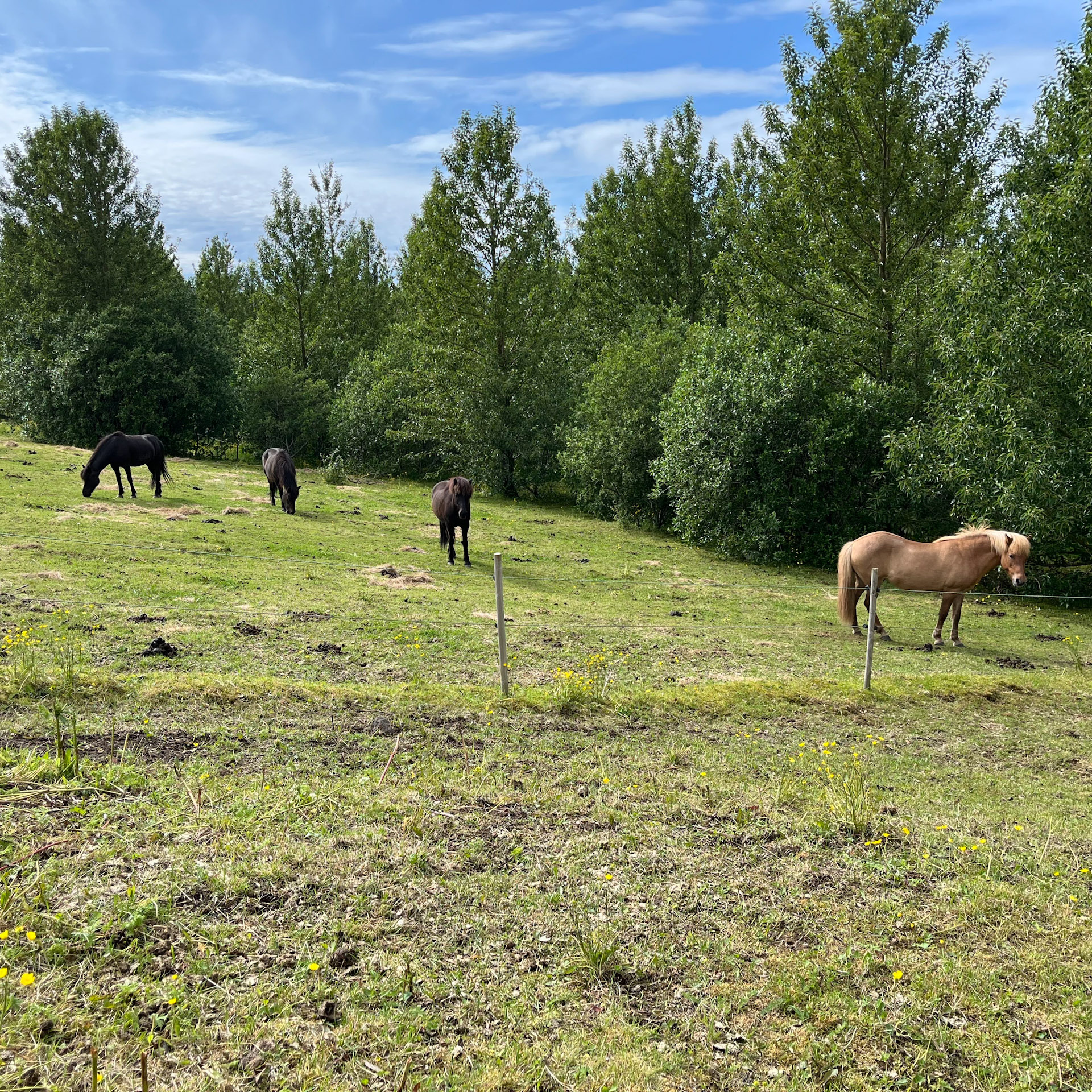
But Why: A Podcast for Curious Kids
Why do horses sleep standing up?
00:30:55
Why are horses so big? Why do horses have tails and manes? How do their legs move? Are their bones in their hooves? What do they eat and how do they run and jump? We tackle those questions and more…
Loading summary
Transcript127 lines
- [00:00]
A
Parenting doesn't come with a script, but it does come with lots of questions. I'm Elise Hu, journalist, mom, and your host for Raising Us, a podcast from a kids company. Every week we'll break down big, timely topics with help from expert guests and people from pop culture who really get it. These conversations, they matter. And every time we show up for them. We're not just raising thoughtful kids, we're raising us. Follow Raising Us on Apple Podcasts, YouTube, or wherever else you listen. New episodes every Tuesday starting July 15th.
- [00:32]
B
But first, here's a message for the adults who are listening. Support for but why Comes from Progressive Insurance. You chose to hit play on this podcast today. Smart Choice make another smart choice with Auto Quote Explorer to compare rates from multiple car insurance companies all at once. Try it@progressive.com Progressive Casualty Insurance Company and affiliates not available in all states or situations. Prices vary based on how you buy. This show is supported by Odoo. When you buy business software from lots of vendors, the costs add up and.
- [01:04]
A
It gets complicated and confusing.
- [01:06]
B
Odoo solves this. It's a single company that sells a suite of enterprise apps that handles everything.
- [01:12]
A
From accounting to inventory to sales.
- [01:15]
B
Odoo is all connected on a single platform in a simple and affordable way.
- [01:19]
A
You can save money without missing out on the features you need.
- [01:22]
B
Check out Odoo at o d o o.com that's o d o o.com this is but why? A podcast for curious kids from Vermont Public hi, I'm Jane Lindholm. On this show we take questions from kids all over who are curious about the world around them like you are, and it's our job to find interesting people who can offer answers. You've been sending us questions about horses for years, so we thought it was high time to do an episode all about them. When we were in Iceland a few months ago, we visited a school for kids and sometimes adults who want to learn how to care for and ride horses. Sometimes they even do horseback riding competitions. The woman who owns the school and cares for all of the horses there is named Sonja Nowak. She invited us to meet a few of her horses and learn more. And I love the name of her school, Histasnild. It's a combination of two Icelandic Hesta, Horse and Nild Genius. So her school's name, Hestasnild is basically Horse Genius.
- [02:51]
C
We have here Twister, My horse, my pace horse. He is looking at us and Skidi and Kullur, three of my horses.
- [03:02]
D
So Kullur is a beautiful Gray horse. Describe that beautiful color.
- [03:08]
C
He's blue Dun, actually. And he has a little star. The Dun horses, they have this. The black.
- [03:18]
D
Like a black line almost on his spine.
- [03:21]
C
Down the spine. Exactly.
- [03:23]
D
And his mane is two different colors, too. It's kind of almost a dark brown or black and then an almost white color.
- [03:30]
C
Yeah. It said under it's dark and upper is light. And they are actually just like. It's not from the sun. It's just happened to be like this in that kind of color. When they are bludan, he seems kind.
- [03:44]
D
Of quiet and shy, but your white horse over here seems to want some attention. And he's got a beautiful set of bangs that he keeps throwing his head back to show us. Do they have different personalities?
- [03:55]
C
Oh, yes, they are very different. And also, like, Koeller has been working this morning, and he's chilling a little bit. We have been riding two hours this morning with the kids and Skeevy. He hasn't been working today, and he's just waiting for his time today to do something fun.
- [04:12]
D
And what's Twister thinking?
- [04:14]
C
Twister probably just wants to say hello and get some cuddle from you. He loves attention.
- [04:19]
D
Twister, do you want to say hello to the microphone? It's not food. Twister would like to eat my sweater and the microphone.
- [04:28]
C
He loves food.
- [04:31]
D
We have a lot of horse questions, and since we're here in Iceland, let's a take start with Poppy's question.
- [04:37]
E
My name is Poppy and I'm from Mongden, Vermont, and I'm 11 years old. I would like to know more about the history of the Icelandic horses.
- [04:44]
B
Are Icelandic horses special?
- [04:46]
C
Oh, yes, they are. They're very special. They are actually very, very, very long time ago, they came here with boats with the Vikings, mostly from Norway. But not only. But mostly. And what makes it very special now, it's that the Icelandic horse has been bred pure over a thousand years. And that means too, which is sometimes a little bit sad, but all Icelandic horses that leave Iceland, they may never come back. So it's a very pure breed and probably the purest breed in the world.
- [05:23]
D
Because it hasn't been crossbred with other horse breeds because other horses aren't allowed in Iceland. And so these horses are all descended from those horses that came across with the Vikings.
- [05:36]
C
Exactly. Exactly.
- [05:37]
B
Since it's an island in the middle of the Atlantic Ocean, Iceland can keep some pretty strict controls about what comes in and what goes out of its country. And Iceland has decided that the Icelandic horse is a breed they want to protect. And control the country allows horses to leave Iceland. So you can find them in lots of other countries. But you won't find any other kinds of horses in Iceland, which means these horses are pretty similar to the ones brought to Iceland by Viking explorers and settlers over a thousand years ago. Icelandic horses are known for being on the small side. But most Icelandic people would be annoyed if you called them ponies.
- [06:16]
C
They are having a lot of fur and a long mane and most of them thick mane and tail, which makes them extremely beautiful, of course. And they have so many different colors, which is also special for the Icelandic horse.
- [06:33]
D
So horses in Iceland need to be able to withstand some pretty harsh weather. How do these horses make it through really cold winters and oftentimes a lot of wind and snow and rain.
- [06:45]
C
They have very, very good and long fur. And they are built like. They are not like very long legged most of them. They are like a little bit, you know, strongly built. And they just eat a lot, Especially the ones that are just outside. They have to eat a lot special in the fall to get fat and everything, which helps the skin to take care when rain is coming and snow and wind, because then it will peel away the cold and the wind and the snow. And then we of course give them, we are feeding them outside. They are maybe in very, very big fields, but we are giving them hay as soon as the snow is there and they can't get the grass anymore.
- [07:29]
B
You'd probably want a long mane and thick fur if you were going to spend the winter outside in the wind and snow of Iceland too. Icelandic horses are also known for having a special way of running. You may have heard of a walk, a trot, a canter and a gallop. But Icelandic horses can do two other styles. We'll have Sonja saddle up and ride one of her horses a little later on so you can hear what we mean. But first, let's get to some of your other questions.
- [07:54]
E
I'm Barker, I'm seven years old. I live in Pennsylvania. Why are horses so big?
- [07:59]
D
Why are horses so big?
- [08:02]
C
Yeah, they were not so big 4 million years ago or something. They were like small as a dog. And then they have been getting bigger because it's easier to run away from the predators. And it's also about, you know, then they are a little bit higher up so they see better when there's coming something, something dangerous. But of course it's very different. We have like really, really small ponies, falabella pony in the world. They are like so small as a dog still so it's very different. They can be from dog size up to very big.
- [08:34]
B
As Sonja said, when the ancestors of horses first started appearing, actually more like 56 million years ago, they were quite small. But over time they've gotten much bigger and taller. Modern horses have so much variety because humans got involved in breeding them and selecting horses for different characteristics, like being really fast or being able to pull a heavy load or being tall. So that's why there are so many different types and sizes of horse bodies today.
- [09:04]
E
My name is Henry, I'm five years old. I live in Kokomo, Indiana. Why do horses have a tail? My name's Riggs, I'm five years old and I live in Lincoln, California. Why do horses have tails?
- [09:21]
D
Henry wants to know why do horses have tails? And so does Riggs.
- [09:24]
C
Yeah, the tail is actually, it's very important for the horse to push away the flies mostly. And also of course, it's a protective for their butt and the mane. It's also for the rain. And also when horses bite each other, it is giving kind of protection with the neck.
- [09:44]
E
My name is Omer and I live in Princeton, New Jersey and I'm six years old. Why do horses have hairs on their back?
- [09:52]
D
Why do they have hairs on their back? What's the deal with the mane?
- [09:55]
C
Yeah, the mane is like protective. And also on the back, the hair, the hair everywhere. Of course, they are mammals and they have the hair to protect their skin. And especially the Icelandic horse, which is a lot outside and when it's cold, it's just protective against the weather. It's very, very long in the winter and thick. And then when they change their fur, you know, then it's a lot of hair everywhere.
- [10:24]
D
They shed like a dog.
- [10:25]
C
Yes, more. You could probably do a pillow out of it.
- [10:30]
D
That would be quite a pillow.
- [10:32]
C
Yeah, it would be quite a pillow.
- [10:34]
E
My name's June, I'm three years old. How does horses legs move?
- [10:41]
B
Horses have really interesting legs. The part you might think looks like their knee bends in different directions depending on whether you're looking at the front legs or the back legs. The front legs bend out towards the front and the back legs bend back behind the horse. But here's something you might not know. Those aren't their knees.
- [11:03]
E
They.
- [11:03]
B
Their knees are actually much higher up in their body, so you can't really see them unless you have X ray vision and can look at the horse's skeleton. The part you see bending when they run is more like an ankle joint. And horses actually walk on their toes.
- [11:17]
E
My name is OLIVIA and I'm 4 years old. I'm from Clayton, Indiana. Why does horses have hooves? My name is Bonnie. I am six years old. I live in Eugene, Oregon. And why do horses have hooves? My name is Chloe. I live in Thailand. I am six and a half years old. I do horses have hooves and we don't. Name is Sasha. I live in Tahoma, California. I'm four years old. Wild horse hooves, flat, not round. My name is Audrey. I'm five years old. Are horses hooves bones or not? My name is Jojo. I live in Webster, New York. Why do horses wear shoes?
- [12:11]
B
Let's talk about hooves. That very bottom part of a horse's leg, the hoof, has several parts, including some internal bones, tendons and ligaments, some cushiony bits that act like a shock absorber, and a hard part around the outside made of keratin. That's the same stu fingernails and toenails are made out of. Keratin is also what horns are. When it's thick, like a horse's hoof, keratin is very tough stuff. That outer wall, that part that's kind of like a big thick toenail on the horse, is constantly growing. If a horse is running around on rough ground, all that rubbing and scuffing can keep the hoof filed down. But a lot of horses need to have their hooves filed down by people. And many horses wear horseshoes. They look pretty different than our sneakers, though. Their shoes are metal and just go right around that hard outer wall of the hoof. They help protect the horse's foot, especially on pavement or other surfaces. That would wear those hooves down pretty quickly.
- [13:11]
E
Hi, my name is Audrey. I live in California. What do horses eat?
- [13:17]
D
Audrey wants to know. Just generally, what do horses eat other than my microphone?
- [13:22]
C
They eat mostly grass and hay, which is, of course, dried grass. That's what they eat mostly. And we always try to. At least. I give my horses always also vitamins. And some of them get, like, also kind of extra food out of corn or something. Depends a lot on the horse, what they need, if they need extra food. But what they eat mostly is grass.
- [13:50]
E
I'm Emily and I live in Alberta, Canada. I'm six years old. Why can horses eat grass? And it can hurt our stomachs.
- [13:57]
D
Why can horses eat grass and hay when that would hurt our stomachs?
- [14:03]
C
They have just a totally different digestive system than us. And also they get a lot of energy, for example, out of the grass, as we wouldn't. Not at all. And yeah, we can't Digest the grass with our stomach.
- [14:19]
E
My name's Alina. I'm nine years old. I live in Barry in Wales. Can horses taste sweet and sour?
- [14:27]
C
Yes, they can. And they love sweet, actually. And they also can taste like bitter and salt. And bitter, for example, is very interesting. It can be, you know, they will feel it when there is something poisoned, like poisoned plants, they are bitter, so they won't eat it, but they laugh sweet.
- [14:48]
E
Hi, I'm Ronan. I live in Charleston, South Carolina. I'm nine years old. Why do horses sleep standing up?
- [14:54]
B
Horses can sleep standing up because their bodies are designed to allow them to do it. Unlike ours, we'd most likely collapse if we fell asleep standing. But horses can lock their legs to help keep their body in place. And have you ever seen a horse standing tall on three legs while its fourth leg is bent and not taking any weight? As a horse naps, it rotates which leg is getting a break. So by the time it wakes up, all of its legs have gotten some time off. But there's another reason horses sleep standing up.
- [15:25]
C
It's also very important for them that they could run away very fast when some predator would come. And so it's just about their nature that they could run away. But when they really want to sleep and get REM sleep, they need to lay down for that, and that's mostly for a short time. And when they are in a herd outside, normally you see always one or two standing at least, which are taking care if everything is fine for the others to sleep.
- [15:54]
D
And I think if anybody's seen a horse lying down and watched it try to get up, you can see how that would take a long time. If something that really wanted to eat.
- [16:04]
B
You was chasing you, it might put you in a very vulnerable position.
- [16:08]
C
Yes, 100%.
- [16:09]
E
Mine is UC. I live in Canada. Why do horses breathe through their mouth?
- [16:15]
D
Why do horses breathe through their mouths?
- [16:18]
C
They don't actually. They can't. They breathe through their nose. They have very strong nostrils and they can open it quite much up. They maybe would open the mouth, but it's not really the way for the air through the mouth. It's just for the food.
- [16:36]
B
Phew. That was a lot of questions about horses and we haven't even talked much about how they move. So get a drink of water, let those wiggles out, and get ready for even more horse stuff. This is. But why? Today we're learning all about horses from Sonja Nowak, a riding instructor and all around lover of horses. Sonja runs a riding school in Mosfelsbayr just outside of Reykjavik in Iceland. We talked with her in one of her barns where three of her Icelandic horses calmly watched as she answered all of your horsey questions.
- [17:12]
E
My name is Felix, I'm five years old. I am in Emmitsburg, Ontario. Why do horses gallop? My name is Parker and my age is three and I live in Wisconsin. Madison. How do horses gallop?
- [17:29]
D
How and why do horses gallop?
- [17:32]
C
It's just their way of running and it's the way of they gallop that they can run away and run away fast. Mostly out. Also to run away from the predators, but also because they sometimes like to play and run around and have fun. Like we sometimes like to run around and have fun.
- [17:51]
E
My name is Margot, but they call me Goldie. I'm four years old. I live in Oakland, California. I would like to know how horses jump so high.
- [18:04]
C
They have very strong muscles and very powerful hind leg which will help them and then they will just give in and jump high.
- [18:15]
D
Do horses jump naturally or is it something they need to be taught? When you're working with a horse that's going to be a jumping horse, like.
- [18:23]
C
With the Icelandic horse, we don't jump much. We sometimes do it for fun a little bit. But it's very different between different horses. You know, if they are outside in the field and there is something they have to go over, they would also jump over it. But they would probably often choose the way beside. But it depends so much about different characters. Some of them just love it. They really like to go over. I have some horses too. They. When it is somewhere something to jump over, they like to go there.
- [18:53]
D
What about this guy, does he like to jump?
- [18:55]
C
No, he is not so much of a jumper. He's more of a. He likes pace and going fast in pace. He's not so much of a jumper.
- [19:03]
E
I'm Sage, I live in Colorado Springs. I'm 10 years old. Can horses swim?
- [19:09]
C
Yes, they can. And also there it's very different. Some of them really love the weather and others not. It's like with us, but when it's summer and nice weather, we often go without saddle and swim with them. That's so fun. It's very. We were just like last weekend we were swimming with them and the horses. Most of them really love it too. And it's actually very good for the joints and some people even send horses to swim training.
- [19:38]
B
Wow, swim training.
- [19:39]
C
Yes, because it's also, you know, it's so light for the joints and lignaments.
- [19:44]
D
Yeah. So it's like they get swimming lessons, but it's also kind of like physical therapy or like almost like a massage that can help the horses feel good.
- [19:53]
C
Yeah, yeah, 100%. And horses that have been insured, it can help them to get good again.
- [19:58]
E
My name is lucy and I'm 9 years old and I live in Madison, Wisconsin. Why do horse trainers whip their horses and does it hurt them?
- [20:08]
C
You know, if you whip the horse, like hardly, it would probably hurt them. But normally when, for example, we use the whip, when I have a whip, it's more thought about being a longer hand. For me, it's a little bit getting me a longer hand that I can help the horse to understand what I want. And then I will just put it very slightly at the horse to help him to move and understand what I want. Because maybe my foot isn't reaching here, his hindquarters. And when I want to help the horse with that, I can use the whip a little bit. So we are not using it for slamming the horse or something. It's more like a longer hand.
- [20:51]
B
And also with your feet, are you.
- [20:53]
D
Kicking them hard and does it hurt when you kick?
- [20:56]
C
No. We are trying to get the horse, having the horse as sensitive as they can be with using a little, you know, pressure with the, with the feet. I want my horse to answer when I put my feet at the belly slightly, they should answer to go forward. And the same when I take the rein to stop. I'm trying to have it very lightly that they answer when they, you know, when we are fast to answer them and let them be. Let them be. When they answered, then they are also light. So it's, it's so much more fun to do it this way and be nice together.
- [21:34]
D
So you think of it as communication, non verbal communication with the horse where you're trying to tell the horse, here's what I'd like you to do. And then the horse is responding.
- [21:43]
C
Yes, exactly. It is just helping us to communicate. Exactly. And that of course, always it's the goal for us to have and do as little as possible. And that if you look at the rider and you don't see what the rider does and the horse do, does a lot of stuff, it is very nice and that's always the goal.
- [22:03]
E
My name is emma. I am 7 and 11 months. I live in Madrid, Spain. Why are horses afraid of snakes?
- [22:14]
B
Are horses afraid of snakes?
- [22:15]
C
Yes, I would say they are. Because of course they could be dangerous, they could bite them and they actually don't like anything because of that. Around their feet. Like when you walk with a horse with a. With a reins. Yeah. And it's a leash or something and hanging down with the feet. Most of them don't like it and could get scared. So also when you ride and you ride over something, they can get a little bit afraid because their feet are so important to them. Because of course when the feet are hurt they can't run. And if there would be a predator that want to eat them, which is of course not so much of a problem anymore. But it's so deep in them that they are just trying to take care of their feet.
- [22:59]
D
And the way horses eyes work too, they can't necessarily see their feet if they're looking up. Right. So they want to make sure there's nothing down by their feet that they can't see that could trip them up. Especially if they're looking straight up or far ahead.
- [23:12]
C
Yeah, exactly. We have like blind points, blind spots right in front of the horse, under the head and right in front of them and also all in the back. They don't see at all when you are behind the horse. That's why you always should take care when you walk behind the horse, take a big circle and not walk too near. Because when they get afraid, they could of course kick just because they get scared and think something happens and they don't see you there. And it's the same with like when something is on the ground like a snake, for example.
- [23:46]
E
I'm Scarlet and I'm from Ottawa, Ontario, Canada. Why are there so many types of horses?
- [23:54]
D
We've talked about the Icelandic horse, which is special and different from some other horse breeds.
- [23:59]
B
Why are there so many?
- [24:00]
C
I would say it's because we have of course very different landscapes and very different, you know, like when you go to the Sahara, it's of course very, very hot. And then the horses are just totally different breadth, especially for that. And like here in Iceland we have the Icelandic horse which is really good in the cold. So it's a lot about the breeding and also what you are going to do. Are you going to do dressage or gated riding or jumping or leisure riding or distance. So it's very, very much difference between that and. Yeah, out of. It's of course very. Every horse has. Or horse breed has all. Long story or most of them.
- [24:43]
E
My name is Aurora.
- [24:44]
B
I'm 10 years old.
- [24:45]
E
No, not 10, 11. I live in Holland, Vermont.
- [24:48]
B
What's the most popular horse breed?
- [24:51]
C
I heard it's the American quarter horse actually. But yeah, I, I think Icelandic horses are actually very popular because of their gates. And I think it's getting more and more also in America, in the United States, but all over the world. I heard it's the American quarter horse.
- [25:13]
B
Sonja has about 30 or 35 horses at her riding school. And they're all Icelandic horses, of course, because other types aren't allowed in Iceland. I asked her if she had a favorite one.
- [25:24]
C
Oh, that's a tough one. I really love Twister, the one we have here.
- [25:30]
D
Yeah, but that's because we're standing in Twister's stall. You can't say you like somebody else better when we're standing right next to him.
- [25:35]
C
Yes, I love him, but I also love Skeezy. And of course, I love all of them. I think it's very important. Also with the riding school horses, I really like them all. They are very, very different characters. And I want them to be. And it's okay to be different characters. That makes it so fun. And everyone has its qualities, like people.
- [26:00]
D
Everybody has a different personality, 100%.
- [26:02]
C
And that's just perfect.
- [26:04]
B
Before we let Sonja get back to her chores, we asked her to show us one more the special ways Icelandic horses can move. When you think of how horses walk or run, you might think of a walk, a trot, a canter and a gallop. But Icelandic horses can do two more types, or gaits.
- [26:21]
C
Yes, we have to tilt. And tilt is the same. They are moving their legs, same as in walk. So there's always at least one feet on the ground which make it very smooth. They are not like jumping up in the air like in Trot and gallop, where sometimes the feet are all like up in the air, so it's getting very smooth. And it can be from very slow to very fast. And it's very fun to ride it. It's like sitting on a slightly moving sofa when you have a good tilt horse. And the pace, it's really fast, has to be really fast to be really good. And it's mostly ridden out of the gallop. Then they. You are going lay the horse down to pace, as we call it, and put it to base. And then that goes very fast. And it's a little bit like the camels when they move the feet on both. On the. Just both left feet and then they're flying and then both right feet and then they're flying and then both left and so on. So. And they are like stretching their head and run really fast like this. It's very fun to see what's the.
- [27:37]
D
Difference in the way it feels from a gallop to pace.
- [27:41]
C
Gallop is more. You know, it's three beats, so it's like, do, do, do, do, do, do, do, do, do. So, and it. You always like having this circle moving and in pace. It's a little bit. It's just. It's. It's going so fast. So don't you. You don't have so much time to think. It's just. It's a little bit.
- [28:03]
D
You're making a hand expression.
- [28:05]
B
Like vibration.
- [28:06]
C
Yeah, yeah, vibration and going really fast.
- [28:10]
D
So what do you.
- [28:11]
C
Adrenaline you need to get, you know, when you write really good flying pace, you will get sometimes, like, a little bit, like, feeling in the knees, and so you get some adrenaline with it, and you don't ride it for a long time. It's mostly written like, you know, between 100 and 250 meters or 300 or something, but only short at once because it takes a lot of energy off the horse because they put everything in it.
- [28:37]
D
Why would you use pace instead of gallop when. What would the situation be where you would choose one over the other?
- [28:44]
C
When I ride up a hill, for example, I would always choose the gallop. And when I ride straight, I would take the pace, if it's a straight line and enough space, you know, and a clear way, and then I would choose pace. And it's just different because it's something you write not as often as the gallop and gallop. You, of course, can also write very slow, but not flying pace.
- [29:13]
B
Seeing how these horses move in their different strides or gaits would be great, right? But we're a podcast, so you can't see anything. But hearing can also be helpful. We asked Sonja if she and one of her horses would help demonstrate these different ways of moving that she was talking about. So she saddled up Krumi, a dark brown horse with an even darker mane, and we went to the riding ring. We attached a microphone to Sonja so you can hear Krumi's hooves and Sonja's description as she rides around the ring. So close your eyes and just listen for the next minute or two and see if you can hear the difference in each type of stride.
- [29:54]
C
So I'm gonna go to trot now. I'm gonna write third, then gallop and then pace.
- [30:54]
B
That was Krumi the horse and Sonja Nowak the rider. Thanks to Sonja for answering all of our many questions about horses. She's the owner of Hestasnild, a riding school in Mosfelsbajr, Iceland we have pictures and videos of Sonja and her horses on our Instagram and YouTube pages. If you'd like to see what an Icelandic horse looks like and what those different gaits look like. As always, if you have a question about anything, send it to us. We get a lot of questions and we really wish we could answer them all. But even if we can't answer your question, we love hearing it. We want to know what's on your mind, what you're feeling curious about, and what you think we could help you learn about. You can have an adult help you record your question using one of the free apps on a smartphone or tablet and then you can send the file to questionsutwhykids.org if you like our show, please leave a review or some stars on whatever platform you use to listen. It helps other kids discover us. Our show is produced by Sarah Bake, Melody Beaudet and me, Jane Lindholm at Vermont Public and distributed by prx. Our video producer is Joey Palumbo. Our theme music is by Luke Reynolds. We'll be back in two weeks with an all new episode. Until then, stay curious.
- [32:25]
E
From PRX.