
Podcast
Buyers and Builders
Hosted by PrivateEquityGuy · EN
The Buyers and Builders podcast with PrivateEquityGuy is a place where you can find meaningful conversations about holding companies, buying and building businesses, entrepreneurship, investing, and more. Be sure to follow the podcast, so you never miss an episode!
31episodes
Episodes
Newest firstAll episodes

Buy-and-Build with Ambitious Entrepreneurs = Attractive Returns | Frederik Brandis Interview
5d ago00:49:40Tap to summarizeFrederik Brandis was one of the key minds behind Arsipa, a buy-and-build platform focused on acquiring occupational medicine and workplace safety consultancies. As one of the earliest investors and strategic partners, he helped scale the business through dozens of acquisitions before it achieved an exit to Warburg Pincus just three years after its founding.Today, he is the Founder & General Partner of Aven Capital Partners, where he backs exceptional entrepreneurs before they even own a business—helping them acquire, integrate, and scale small companies into market-leading platforms.In this conversation, we discuss what separates AAA entrepreneurs from everyone else, why emotional intelligence matters more than pedigree, how Frederik evaluates founders before they've built anything, why buy-and-build remains one of the most attractive opportunities in investing, and the biggest lessons from building one of Europe's most successful acquisition platforms.We also explore:• What makes an exceptional buy-and-build entrepreneur• How to evaluate people before they've built a track record• Why relationships outperform spreadsheets in acquisitions• The biggest misconceptions about roll-ups and ETA• When to sell—and why leaving value for the next owner matters• The future of buy-and-build investingWhether you're interested in private equity, entrepreneurship through acquisition (ETA), search funds, capital allocation, or building businesses through acquisitions, I believe this episode is packed with practical insights.TIMESTAMPS00:00 The gap in private equity that led to Aven Capital Partners06:04 What makes a true "AAA Entrepreneur"09:00 How Frederik evaluates founders before they've built anything13:34 Is now still the best time for buy-and-build?16:43 The Arsipa story: from first investment to major exit20:20 Why Frederik chose investing over becoming a searcher27:00 Holding periods, exits & leaving upside for the next owner32:50 Designing businesses that private equity actually wants to buy37:16 How young entrepreneurs earn credibility without pedigree43:25 Why many searchers and roll-up founders fail46:06 Frederik vision for building Europe's operating system for buy-and-buildThis podcast is for informational purposes only and should not be relied upon as a basis for investment decisions.
Transcribe →
Traditional Search Is a Win-Win: $67M Exit in Four Years | Greg Geronemus Interview
2w ago00:55:09Tap to summarizeGreg Geronemus is the Co-Founder and Managing Partner of Footbridge Partners, one of the leading investors in Entrepreneurship Through Acquisition (ETA). Before launching Footbridge, Greg and his partner David acquired a business generating approximately $5 million of EBITDA, paid down most of its $20 million debt load, grew EBITDA by roughly 50%, and ultimately exited at around 9x EBITDA—roughly four turns higher than their entry multiple.Today, through Footbridge, Greg backs the next generation of search fund entrepreneurs and acquisition leaders across North America.We discuss the rise of self-funded search, committed capital vehicles, why buying businesses has become more competitive, the real economics behind different search models, and the mindset required to survive a process that often takes years.Timestamps:0:00 Greg's acquisition story and introduction to ETA1:03 How search funds have changed since 20106:40 Raising equity and debt when almost nobody understood search10:40 Is buying businesses actually harder today?17:30 The Harvard ETA course that changed the industry24:42 The mindset required to survive a two-year search27:16 Traditional search vs. self-funded search explained35:33 The biggest misconception about ownership and wealth40:22 Why committed capital vehicles are exploding48:38 What Greg looks for when backing acquisition entrepreneurs50:24 If you had $500k today—which path would you choose?53:08 Greg's advice for future searchersThis podcast is for informational purposes only and should not be relied upon as a basis for investment decisions.
Transcribe →
How to Build a Roll-Up to 8-Figure Revenue | Nathan Lindley Interview
3w ago00:49:35Tap to summarizeNathan Lindley is the CEO of Lindley Home Services, an HVAC platform that has completed 11 acquisitions across Texas.But this story almost ended before it began...After acquiring his first two companies with an SBA loan, Nathan watched revenue collapse, burned through his cash, nearly lost his father's retirement savings and came dangerously close to bankruptcy. The turning point was a complete rethink of incentives, compensation, and how to build an acquisition platform that actually compounds.In this conversation, Nathan shares the brutal reality behind his first acquisitions, the lessons that reshaped his operating philosophy, and why he now believes buying a business is really about buying opportunities—not revenue.Timestamps:00:00 Introduction: Nathan's 11 acquisitions and $16M run-rate HVAC platform00:25 The acquisition timeline: from the first deal in 2020 to acquisition #1101:24 From Christian book publishing to buying HVAC businesses03:55 Selling real estate to fund the first acquisition04:33 Buying a one-technician HVAC company—and the costly assumptions that followed07:58 Losing 40% of revenue almost immediately after closing10:26 Acquisition #2 makes every problem much bigger11:20 Running out of cash—twice14:18 The decision to put everyone on commission15:15 Every employee quits on the same day16:21 The Indeed hire who changed the entire business18:59 The emotional toll: fear, alcohol, and nearly going bankrupt23:13 One technician outperforms the rest of the company25:52 Why Nathan waited a full year before doing acquisition #327:00 Acquisitions #3 and #4—and buying businesses the second time around28:46 How his M&A due diligence completely changed29:30 The "buying at-bats" framework for acquisitions33:08 Why Lindley spends almost nothing on marketing34:15 Turning acquired customer databases into new revenue36:27 Hiring exceptional technicians and building repeatable systems37:35 The company today: 50 employees across three markets39:13 How Lindley integrates acquired businesses42:38 Teaching acquired technicians to double their income43:17 The acquisitions that didn't work—and why46:47 Planning an exit and doing it all over again49:04 Where to connect with NathanThis podcast is for informational purposes only and should not be relied upon as a basis for investment decisions.
Transcribe →
13 Acquisitions and Why Permanent Capital Beats Private Equity | Chris Rolls of PieLab Capital
Jun 2400:48:38Tap to summarizeChris Rolls is the founder of PieLAB Capital, a holding company with nine portfolio companies built through 13 acquisitions.After building and selling multiple businesses, Chris entered private equity to learn the investing side of the game. But he eventually became convinced that the traditional PE model forces investors to sell their best businesses too early. That realization led him to build a permanent capital holding company inspired by Berkshire Hathaway, Constellation Software, TransDigm and the Swedish serial acquirers.In this conversation, Chris explains how PieLAB sources deals, why private markets offer advantages over public markets, how he evaluates recurring revenue businesses, lessons from growing Detector Inspector, and the three primary levers he uses to create value after an acquisition.Timestamps:0:00 From Entrepreneur to Investor3:03 Trading Operational Help for Private Equity Experience5:01 Why Chris Abandoned the Traditional PE Model5:25 Discovering Constellation Software & Serial Acquirers8:43 Why Private Markets Beat Public Markets13:05 Building Australia's First Serial Acquirer14:59 The Challenge of Permanent Capital & Investor Liquidity16:24 How Detector Inspector Grew Into an Industry Leader17:08 Why Chris Loves Compliance Businesses20:41 The Three Levers of Value Creation23:00 The Pricing Power Playbook25:27 Using AI to Reduce Costs & Improve Operations33:03 Why Every HoldCo Needs an AI Champion41:07 Bolt-On Acquisitions vs Platform Acquisitions43:38 Building a HoldCo for the Next 30 Years46:06 Work-Life Balance, Curiosity & Long-Term SuccessThis podcast is for informational purposes only and should not be relied upon as a basis for investment decisions.
Transcribe →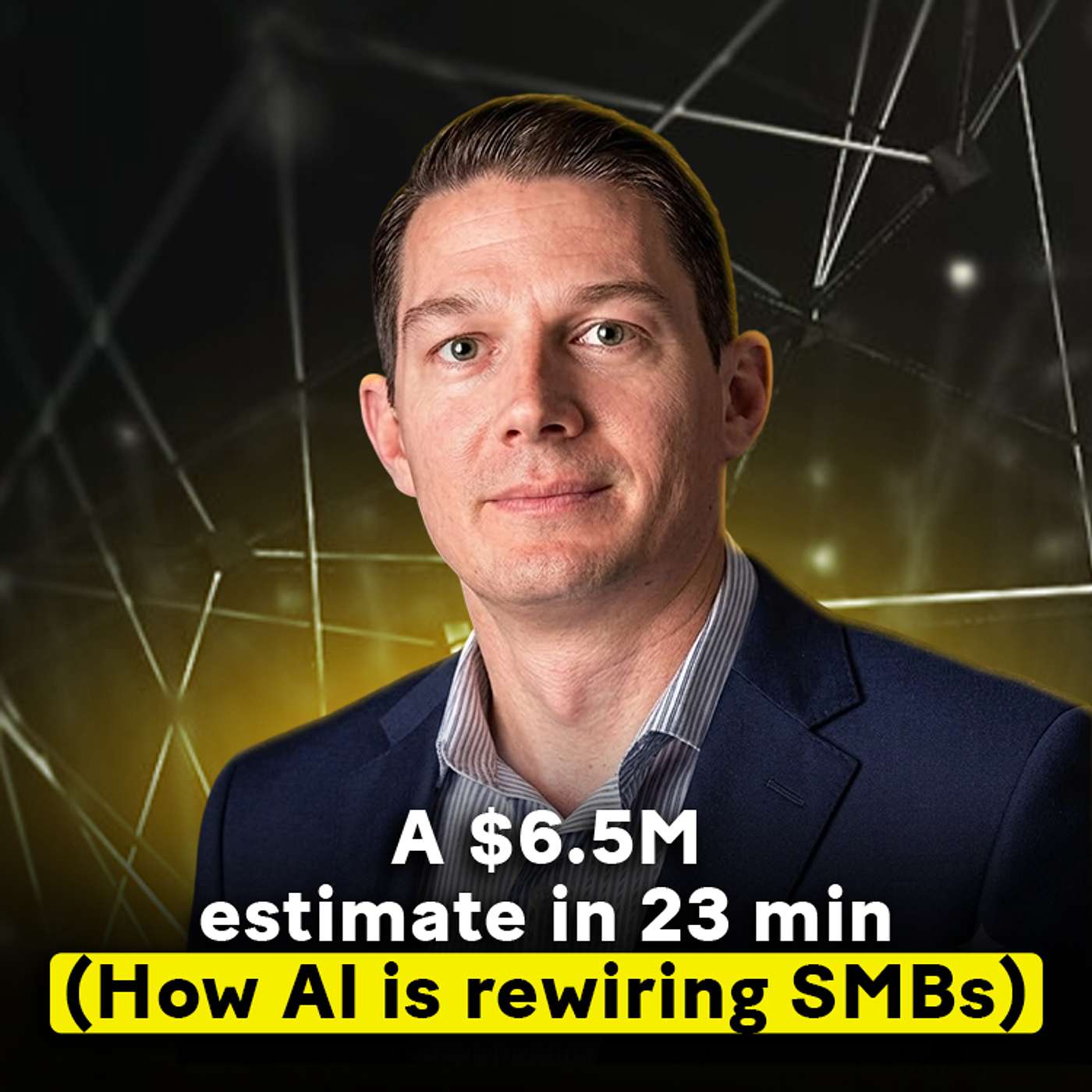
A $6.5M Estimate in 23 Minutes: How AI Is Rewiring SMBs | David Flickinger Interview
Jun 1500:50:38Tap to summarizeIn this episode, David Flickinger, founder of Vellm.ai, joins Mikk Markus to explain how his journey from Marine Corps officer to AI implementation shaped his perspective on technology, and how business owners, private equity professionals, search fund operators, and CEOs can move beyond using Claude and ChatGPT as a simple productivity tool and begin building AI infrastructure that creates real enterprise value.Drawing on years of experience deploying AI solutions inside operating companies, David shares how AI agents can be connected directly into CRMs, ERPs, financial systems, proposal databases, and operating workflows to capture institutional knowledge, reduce key-man risk, improve decision-making, and dramatically increase productivity.One of the most fascinating examples comes from a commercial roofing company where an AI system analyzed 47 building plans and produced a $6.5 million estimate in 23 minutes—nearly identical to the estimate produced by a senior estimator after two weeks of work.We discuss:0:00 Introduction: Why Most Business Owners Use AI Wrong1:20 David Flickinger's Journey from Marine Officer to AI Operator6:48 ChatGPT vs Real AI Infrastructure0:24 The Roofing Company AI Case Study6:17 How AI Learns Decades of Business Experience20:39 Human Oversight, Trust & AI Decision-Making25:30 What Happens to Junior Employees in an AI World?28:07 How AI Doubled Revenue Without Hiring More Staff32:17 AI, Key-Man Risk & Higher Business Valuations39:02 The Biggest Risks of Implementing AI45:05 The First AI Project Every Business Owner Should StartDavid on X: https://x.com/DWFlickingerDavid's firm - AI agents for the workflows that run your business: https://vellm.ai/
Transcribe →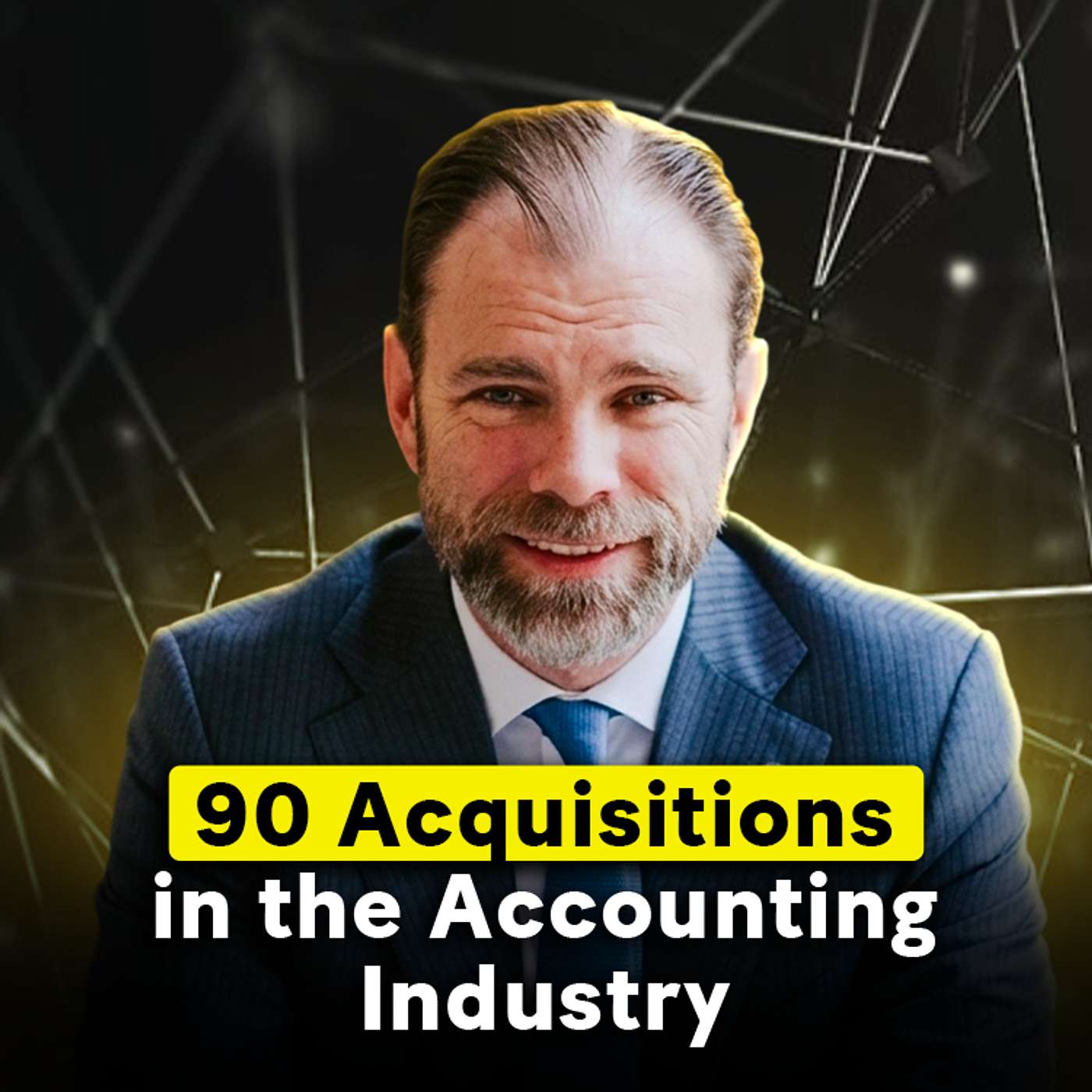
90+ Acquisitions, 30% Revenue CAGR, 35% Book Value Growth | Brett Kelly Interview
Jun 700:46:56Tap to summarizeBrett Kelly is the founder and CEO of Kelly Partners Group. Since founding the firm in 2006, Brett has completed more than 90 acquisitions, compounded revenue at over 30% annually and built a business expected to generate roughly $50 million in EBITA in 2026.Timestamps:0:00 Brett Kelly's early years and losing his job at 223:57 Writing to 80 successful Australians while unemployed9:13 The moment Brett decided to start his own firm12:24 Launching Kelly Partners with a clear long-term vision13:22 Inspired by Disney, McDonald's, Ritz-Carlton & Berkshire Hathaway17:10 Choosing the right clients and creating a business system18:36 The 204-step operating system behind Kelly Partners19:01 The acquisition strategy: becoming #1 or #2 in local markets24:05 Winning clients through a differentiated value proposition28:27 Lessons learned from 95 acquisitions29:06 Why the 51/49 ownership model works31:39 What types of firms Kelly Partners acquires32:59 Capital allocation and building a capital-efficient roll-up34:30 Doubling profits after acquisitions: the biggest lever35:18 AI, accounting, and the future of professional services36:28 Permanent capital vs. traditional private equity37:20 Brett's biggest challenge today: financing growth37:53 Kelly Partners' 17-step hiring process38:28 The future: building a global accounting platform39:45 Focus, systems, and operating at world-class standards41:17 Why passion and meaning matter in business43:05 How accountants can genuinely improve people's lives44:24 Final thoughts on leadership, culture, and making a difference45:32 30% revenue CAGR, 35% book value growth & 90+ acquisitionsThis podcast is for informational purposes only and should not be relied upon as a basis for investment decisions.
Transcribe →
How We Bought 14 Businesses and Built a $120M HoldCo | Andrea Allegrini of Lindbergh
May 2200:50:44Tap to summarizeAndrea Allegrini is one of the key operators behind one of Europe’s most fascinating small-cap acquisition stories.Lindbergh is building what could become the country’s first national HVAC maintenance platform through a disciplined roll-up strategy focused on fragmented, family-owned businesses.In this conversation, Andrea explains how Lindbergh evolved from a logistics operator into a serial acquirer, why Italy’s HVAC market is such an attractive hunting ground, how the company structures acquisitions, and why technician retention matters more than financial engineering.Timestamps:0:00 Lindbergh’s evolution from logistics to HVAC roll-up2:51 Building a pan-European logistics platform6:03 Why Lindbergh exited France and pivoted to HVAC11:47 The massive opportunity in Italy’s fragmented HVAC market13:17 Inside Lindbergh’s acquisition strategy and deal structures18:29 Cross-selling, technician sharing, and operational synergies20:05 How word-of-mouth became Lindbergh’s sourcing engine23:22 Acquisition multiples, seller financing, and capital allocation30:23 “More plumbers, less managers”31:40 Retaining technicians and building an internal academy35:24 How Lindbergh attracted long-term U.S. investorsThis podcast is for informational purposes only and should not be relied upon as a basis for investment decisions.
Transcribe →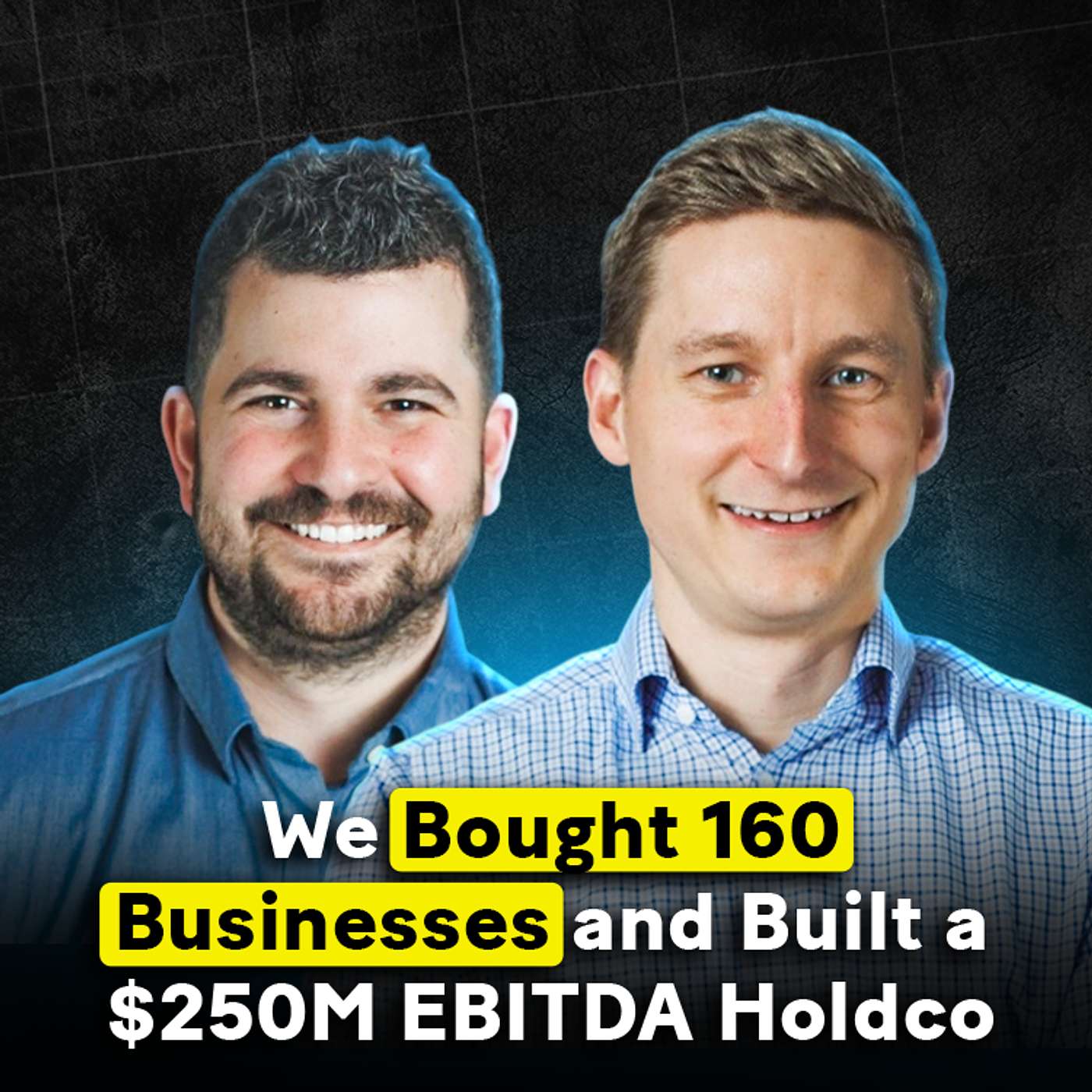
How We Bought 160 Businesses and Built a $1.5B HoldCo at 33 and 35 | Ramsey Sahyoun of Evergreen
May 1300:58:11Tap to summarizeRamsey Sahyoun shares how Evergreen grew from a Berkshire-inspired idea into a $1.5B revenue, $250M EBITDA HoldCo with 160 acquisitions.We discuss proprietary sourcing, decentralization, talent, value creation, MSPs, and the lessons behind building one of America’s most interesting acquisition machines.Timestamps:0:00 Evergreen’s scale and long-term hold model2:06 Discovering private equity and buying private companies4:14 Meeting Jeff Totten at Alpine Investors5:53 Evergreen’s first acquisition and current portfolio8:14 How Berkshire Hathaway inspired Evergreen10:23 Leaving Alpine and starting young12:18 The first 6-18 months after closing13:15 What went wrong with an early MSP roll-up15:25 Why centralization hurt customer intimacy18:44 Building Evergreen’s sourcing engine22:27 Why Ramsey still talks to business owners himself23:07 The value of having a large acquisition database26:09 How to build trust with business owners29:18 Why finding great deals is still the most important part of M&A32:09 Higher valuations, higher rates, and value creation34:02 Evergreen’s M&A, talent, and playbook flywheel37:43 Why talent drives investing outcomes39:17 Motivating founders vs. hired CEOs41:54 Lessons from 160 acquisition post-mortems44:22 Setting big goals and planning backward47:16 Evergreen’s one-page plan and quarterly renewals48:53 What Evergreen learned from Alpine and Graham Weaver51:27 How Ramsey and Jeff’s roles changed as Evergreen scaled54:21 What people misunderstand about Evergreen55:07 How Ramsey’s view on managing people changed56:48 Closing thoughts from RamseyThis podcast is for informational purposes only and should not be relied upon as a basis for investment decisions.
Transcribe →
35+ Acquisitions, $1.3B Exit and Backing 80+ Searchers | Mark Sinatra of ETA Equity
May 701:06:03Tap to summarizeMark Sinatra has lived the full search fund journey: discovering ETA at Wharton, acquiring Staff One HR, surviving the 2008 crisis, scaling the business, selling to Oasis Outsourcing, and later helping build ETA Equity.In this episode, Mark shares what he learned from nearly a decade as a search CEO, why talent unlocked the business, how he survived the hardest years, and what he now looks for after backing 80+ searchers and 35+ acquisitions.Timestamps:0:00 Mark Sinatra’s journey from searcher to ETA investor1:21 Discovering search funds at Wharton7:53 Raising a search fund and finding Staff One HR13:17 How underwriting search deals has changed18:34 Buying a business right before the financial crisis21:14 When Mark finally felt like a real CEO24:19 Hiring the right people and upgrading the team31:38 Surviving the emotionally hardest years as CEO37:30 Rebuilding Staff One and selling to Oasis42:14 Starting ETA Equity45:20 What Mark looks for in searchers today51:20 Lessons from deals that did not go well58:30 Jockey, horse, and barn: what really matters in ETA1:01:50 How the search fund market has changedThis podcast is for informational purposes only and should not be relied upon as a basis for investment decisions.
Transcribe →
What 137 Acquisitions Taught Me About Operational Excellence | Robert Irving Interview
Apr 2700:51:11Tap to summarizeIn this episode, Robert Irving of Buffalo Growth Partners shares what he learned from building a fire protection business from zero to $20M in revenue, selling it to private equity, rolling equity, and then helping execute a 137-company rollup.Timestamps:0:00 Why PE value creation is harder than it sounds1:52 From fire protection operator to $20M in revenue4:09 The three sales roles that drive B2B growth6:25 Building hospitals, data centers, and complex fire systems8:07 Selling the company and rolling equity into the platform9:33 Going from one business to 12 offices and 800 people11:21 The hidden pattern behind great acquisitions13:53 Why integrations usually fail because of people15:49 What 100+ acquisitions teach you that one or two never could18:13 How to diligence small businesses without overcomplicating it19:30 The danger of fast rollups and pure multiple arbitrage23:39 Retaining owners and creating alignment after the deal25:15 The real craft of off-market sourcing31:00 Buffalo Growth Partners and the “guys in trucks” thesis37:39 Reimagining private equity through operations40:12 Small consistent improvements that compound into big results42:06 Constraint-based growth and finding the real bottleneck45:05 Meeting operators where they are with technology48:51 Where to find Robert Irving and Buffalo Growth PartnersThis podcast is for informational purposes only and should not be relied upon as a basis for investment decisions.
Transcribe →