
Podcast
California Sun Podcast
Hosted by Jeff Schechtman · EN
The California Sun presents conversations with the people that are shaping and observing the Golden State
31episodes
Episodes
Newest firstAll episodes

Joe Flint: It's Oscar weekend, but Hollywood's future is unscripted
Mar 1200:37:18Tap to summarizeJoe Flint, a media reporter for the Wall Street Journal, joins us as Hollywood heads into Oscar weekend — a moment when the world celebrates the glamour of the movies even as the business faces deep uncertainty. Flint looks at the industry's economic upheaval: mergers, mounting debt, streaming disruption, and the growing question of whether the Hollywood model that built California's cultural and economic identity can survive the digital age.
Transcribe →
Geoff Davis on soul food, fair pay, and the service fee that sparked a firestorm
Mar 500:19:59Tap to summarizeChef Geoff Davis opened Burdell in Oakland to cook the soul food his grandmothers made — a distinct American cuisine rooted in migration and adaptation rather than Southern tradition. In 2024, Food & Wine named it the "Restaurant of the Year." But it was a 20% service fee at the bottom of Burdell's receipts that recently started a national conversation about labor, class, and whether we've ever really reckoned with the history of tipping.
Transcribe →
Valerie Ziegler and Joel Breakstone on teaching students to navigate algorithms and deepfakes
Feb 1900:38:49Tap to summarizeValerie Ziegler, a high school teacher in San Francisco, and Joel Breakstone, executive director of Stanford's Digital Inquiry Group, talk about digital literacy in the classroom. Many self-described "screenagers," they say, can no longer tell real from fake. Together, Ziegler and Breakstone are at the forefront of a movement to prepare young people for a world of influencers, algorithmic manipulation, and artificial intelligence, an effort recently profiled in the New York Times.
Transcribe →
Scott Eden discusses a tech bro's fatal gamble on black-market cannabis
Feb 1200:25:04Tap to summarizeWhen California legalized recreational cannabis, Silicon Valley envisioned a new Gold Rush. Tushar Atre — a tech entrepreneur, surfer, and disruptor — thought he could bridge two worlds: venture capital and the black market. On Oct. 1, 2019, he was shot execution-style on his own property, hands bound. Investigative journalist Scott Eden, author of the new book "A Killing in Cannabis," spent four years unraveling what happens when ambition meets an industry that never forgot its outlaw roots.
Transcribe →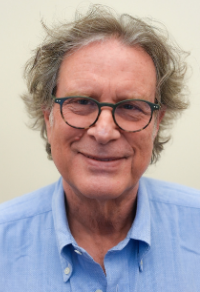
Danny Goldberg on how L.A. fought back after Rodney King — and what it means for Minneapolis
Feb 500:39:03Tap to summarizeDanny Goldberg, author of the new book "Liberals with Attitude: The Rodney King Beating and the Fight for the Soul of Los Angeles," was there in 1991 when an unlikely Los Angeles coalition fought to hold the city's police department accountable for the beating of Rodney King. Thirty-four years later, after George Floyd and the recent events in Minneapolis, Goldberg wonders whether the sort of cross-ideological cooperation that happened in the 1990s is still possible today.
Transcribe →
David McCuan on how California's county fairs became corruption hotbeds
Jan 2900:33:23Tap to summarizeDavid McCuan, a professor of political science at Sonoma State University, discusses the findings of a recent Los Angeles Times exposé that showed how California's beloved county fairs, which generate $400 million annually, have become hotbeds of corruption where bookkeepers steal, officials rig bids, and governor-appointed boards feast on lobster and cabernet. With governance structures frozen since the 1880s and no state audits for years, one-third of these fairs are now plagued by fraud — even as they've become critical staging grounds for disaster response worth tens of millions in real estate.
Transcribe →
Laurie Lipton: An artist's insane technique for disturbing times
Jan 2100:38:29Tap to summarizeThe Los Angeles-based artist Laurie Lipton shares why she's drawn obsessively since age four, how she invented her "insane" cross-hatching technique studying Dutch Masters in Europe, and how waitressing paid the rent so she could draw. After 36 years abroad, she says she returned to Los Angeles to find America rolled back to 1955. She discusses why drawing is her drug, how stepping aside lets the work flow, and why political art struggles to find gallery walls.
Transcribe →
Esther Mobley on California's wine crisis
Jan 1500:35:45Tap to summarizeEsther Mobley, a wine critic for the San Francisco Chronicle, talks about California's wine industry crisis — nearly 5,000 wineries competing for declining demand, 38,000 vineyard acres removed in 2025, mounting closures. She discusses why younger generations aren't drinking wine, what happens to tourism-dependent communities when vineyards close, and whether California wine's romance can survive its greatest challenge yet.
Transcribe →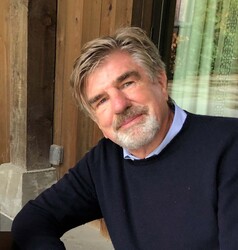
Tom Freston on how MTV changed our music, our culture, and even California
Jan 800:42:21Tap to summarizeLast week, MTV officially shut down, ending an era that revolutionized music, video, and shaped California's youth culture. Tom Freston co-founded the television channel 44 years ago, building a creative empire on principles that seem impossible today: hiring people with no experience, protecting creatives from corporate pressure, valuing disorientation over data, and treating loyalty as strategy. His memoir "Unplugged" chronicles how adventure became business, and what we lost when Silicon Valley replaced joy with efficiency.
Transcribe →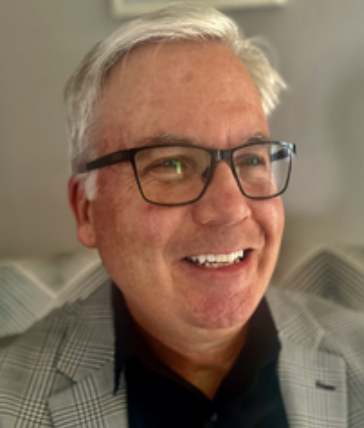
Scot Danforth on the fight for disability rights in California
Dec 1100:28:07Tap to summarizeScot Danforth, author of the new biography "An Independent Man," talks about the life of Ed Roberts, who founded the Independent Living Movement. In the revolutionary 1960s, Roberts and his fellow Berkeley activists pioneered the disability rights fight. He later led change in Sacramento as California's Director of Rehabilitation, advocating for state legislation years before the federal Americans with Disabilities Act. But, as current threats show, hard-won gains like these can be taken away.
Transcribe →