Podcast
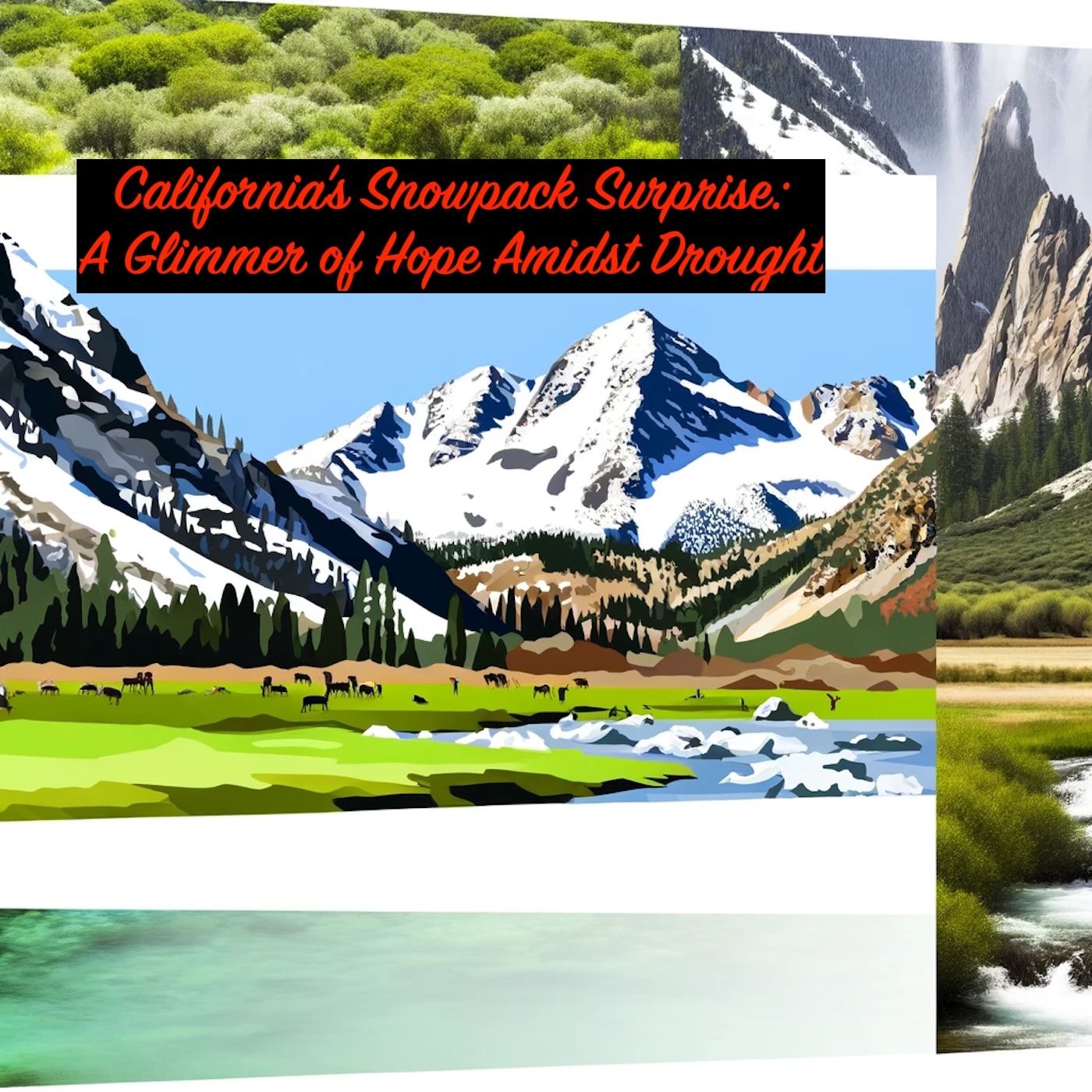
California's Snowpack Surprise: A Glimmer of Hope Amidst Drought
Hosted by Quiet.Please · EN
California's Snowpack Surprise: A Glimmer of Hope Amidst Drought Concerns
In a surprising turn of events, California's snowpack defied early predictions and surpassed historical averages by the end of the 2024 winter season. This unexpected development brought a sigh of relief to a state grappling with the long-term effects of climate change and persistent drought conditions. The journey from a dismal 25% of average snowpack in January to a triumphant 110% by April 1 is a testament to the unpredictable nature of weather patterns and the resilience of California's natural ecosystems.
The Importance of Snowpack To understand the significance of this news, it is essential to recognize the crucial role that snowpack plays in California's water supply. The Sierra Nevada mountain range, spanning over 400 miles along the eastern edge of the state, acts as a natural water tower. During the winter months, snow accumulates in the high elevations, creating a vast frozen reservoir. As temperatures rise in the spring and summer, this snow gradually melts, releasing water into streams, rivers, and reservoirs downstream.
This process provides a steady supply of water for California's cities, farms, and ecosystems throughout the dry summer months. In fact, snowmelt accounts for approximately 30% of the state's water supply, making it a critical component of water management strategies. The snowpack also serves as a vital indicator of the state's water resources, with the April 1 measurement serving as a benchmark for water managers to plan for the upcoming year.
Historical Lows: A Backdrop of Drought To fully appreciate the significance of the 2024 snowpack surprise, it is important to understand the historical context of California's water struggles. The state has been grappling with drought conditions for much of the past decade, with some of the driest years on record occurring in the 2010s.
The 2012-2016 drought, in particular, was one of the most severe in California's history. During this period, the state experienced record-low precipitation, with some areas receiving less than 50% of their average rainfall. The Sierra Nevada snowpack, which typically provides a third of the state's water supply, was at its lowest level in over 500 years, with the April 1, 2015 measurement coming in at a shocking 5% of the historical average.
The impacts of this drought were far-reaching and devastating. Agricultural communities in the Central Valley, which relies heavily on snowmelt for irrigation, were hit particularly hard. Farmers were forced to fallow fields, drill deeper wells, and rely on dwindling groundwater reserves to keep their crops alive. In some areas, the lack of water led to the collapse of entire ecosystems, with fish populations crashing and wetlands drying up.
The 2012-2016 drought also had significant impacts on urban communities, with many cities implementing mandatory water restrictions and conservation ...
In a surprising turn of events, California's snowpack defied early predictions and surpassed historical averages by the end of the 2024 winter season. This unexpected development brought a sigh of relief to a state grappling with the long-term effects of climate change and persistent drought conditions. The journey from a dismal 25% of average snowpack in January to a triumphant 110% by April 1 is a testament to the unpredictable nature of weather patterns and the resilience of California's natural ecosystems.
The Importance of Snowpack To understand the significance of this news, it is essential to recognize the crucial role that snowpack plays in California's water supply. The Sierra Nevada mountain range, spanning over 400 miles along the eastern edge of the state, acts as a natural water tower. During the winter months, snow accumulates in the high elevations, creating a vast frozen reservoir. As temperatures rise in the spring and summer, this snow gradually melts, releasing water into streams, rivers, and reservoirs downstream.
This process provides a steady supply of water for California's cities, farms, and ecosystems throughout the dry summer months. In fact, snowmelt accounts for approximately 30% of the state's water supply, making it a critical component of water management strategies. The snowpack also serves as a vital indicator of the state's water resources, with the April 1 measurement serving as a benchmark for water managers to plan for the upcoming year.
Historical Lows: A Backdrop of Drought To fully appreciate the significance of the 2024 snowpack surprise, it is important to understand the historical context of California's water struggles. The state has been grappling with drought conditions for much of the past decade, with some of the driest years on record occurring in the 2010s.
The 2012-2016 drought, in particular, was one of the most severe in California's history. During this period, the state experienced record-low precipitation, with some areas receiving less than 50% of their average rainfall. The Sierra Nevada snowpack, which typically provides a third of the state's water supply, was at its lowest level in over 500 years, with the April 1, 2015 measurement coming in at a shocking 5% of the historical average.
The impacts of this drought were far-reaching and devastating. Agricultural communities in the Central Valley, which relies heavily on snowmelt for irrigation, were hit particularly hard. Farmers were forced to fallow fields, drill deeper wells, and rely on dwindling groundwater reserves to keep their crops alive. In some areas, the lack of water led to the collapse of entire ecosystems, with fish populations crashing and wetlands drying up.
The 2012-2016 drought also had significant impacts on urban communities, with many cities implementing mandatory water restrictions and conservation ...
1episodes
Episodes
Newest first