← Call Me Back - with Dan Senor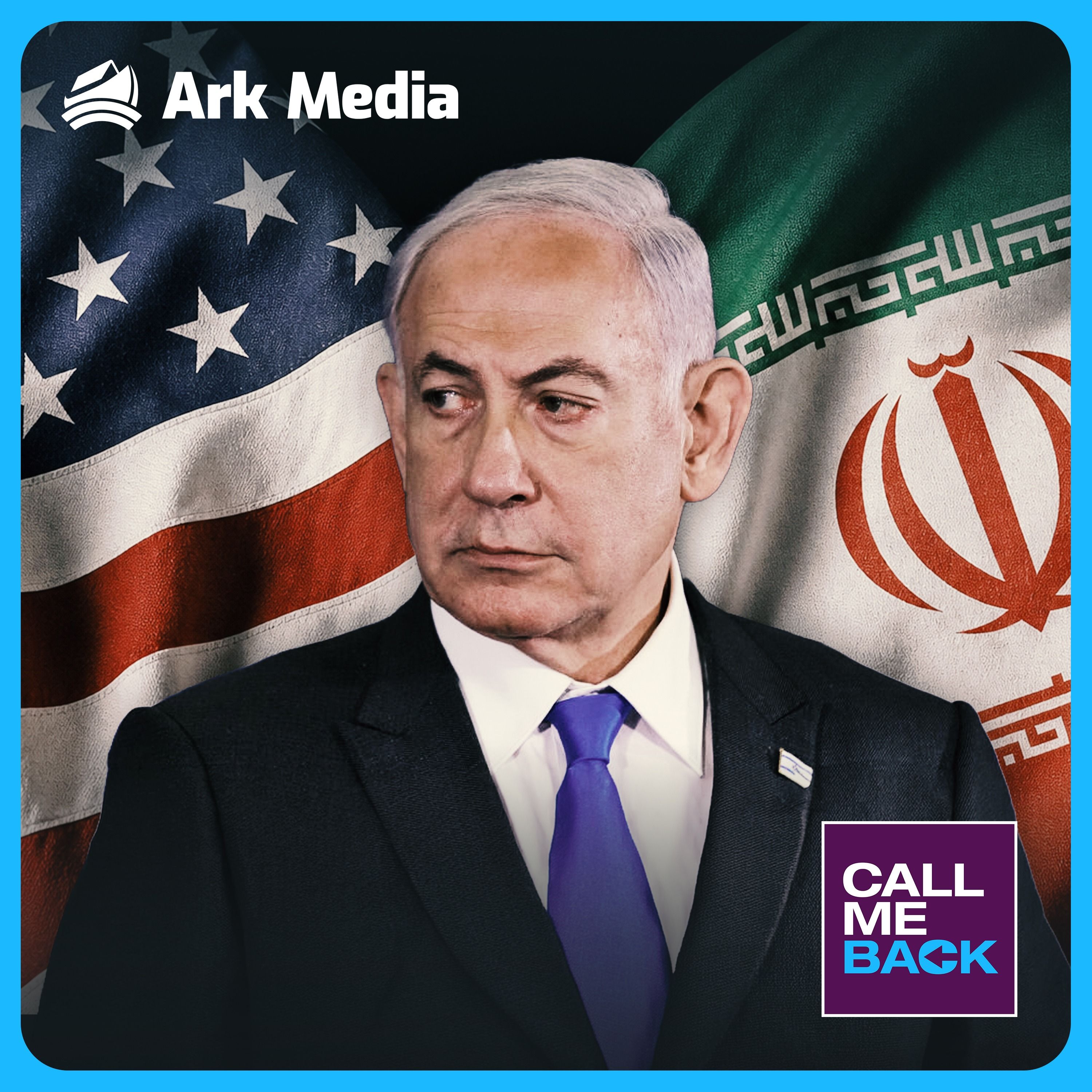
Loading summary
Transcript89 lines
- [00:00]
A
As events accelerate in the Middle east, the team here at ARC Media is increasing our coverage. More conversations, more context, more time spent trying to help make sense of what's happening. And all with an expanding cast of podcast hosts, analysts and journalists. Our Inside CallMeBack subscribers help make this expanded coverage possible. It helps us be here when it matters most. If you're not yet an inside Call Me Back subscriber, this is an important time to join us. To subscribe, you can follow the link in our show Notes or visit ark media.org and to our insiders. Thank you. You are listening to an Ark Media podcast.
- [00:47]
B
What Netanyahu has been trying to say to President Trump was, look, do whatever you think. In Iran, we have different opinions, but if you believe you can bring a deal, bring it. As for Lebanon, we cannot connect those fronts because once we create the linkage, Iran won. Iran won even without firing another single shot. Because if you stop the war in Lebanon, it necessarily means that they can actually rearm again. And we are back on October 6th when we see them getting more weapons, more training, and we can do nothing because we're subject to an agreement approved by the Security Council and the White House.
- [01:40]
A
It's 2:30pm on Wednesday, June 17th here in New York City. It's 9:30pm On Wednesday, June 17th, in Israel as Israelis wind down their day. Yesterday, Tuesday, President Trump and Vice President Vance virtually signed a 14 point memorandum of understanding brokered in Islamabad, of all places, to end a war that began when American and Israeli jets struck Iranian targets on February 28th of this year. We're going to dive into some of the details of this understanding, but I'll just tick off the key points here. One, an immediate permanent end to the war on all fronts, including Lebanon. No hostile action between the parties or their allies. Two, no interference in each other's internal affairs. Three, 60 days to negotiate a final agreement extendable by mutual consent beyond the 60 days. But that is the key point, that this is not a final agreement. It's an interim agreement that allows for 60 days to negotiate a comprehensive agreement for Iran opens the Strait of Hormuz within 30 days, including clearing mines and other technical obstacles. 5. U.S. forces withdraw from the area within 30 days of the final agreement. 6. U.S. and regional partners commit to a $300 billion rehabilitation and economic development plan for Iran, although that sounds like it would not be implemented until there's a final agreement. 7. US commits to lifting all sanctions on a schedule to be agreed in the final deal. 8. Iran reiterates it will never produce nuclear weapons. The fate of enriched material and other nuclear issues to be resolved in the final agreement. 9. Iran freezes its nuclear program until a final deal and the US Adds no new sanctions and no new forces in the region. 10. Immediate U.S. treasury waivers for Iranian oil, petrochemicals and banking 11. Frozen Iranian assets will be released and made fully available to Iran's central bank. 12. A compliance mechanism will be established in the final agreement 13. Detailed negotiations on remaining articles begin only after economic pressures are lifted and 14 the final agreement would be ratified by a binding UN Security Council resolution. With Israeli elections coming in just a few months, the question that is hanging over all of Israeli politics right now is a simple and brutal one. What exactly did this war accomplish and who gets the credit or the blame? After more than two and a half years, Israelis are moving from survival to rebuilding here in the U.S. jewish college students have been carrying their own weight for years now. They have faced peer pressure and a constant stream of anti Israel misinformation on campus, online and everywhere they turn. They can keep arguing about Israel from thousands of miles away or they can do the one thing that actually works, go on a Birthright trip and experience Israel for themselves. They will come back more grounded, more confident and more connected to who they are. So if you've been waiting for the right moment to donate, this is it. Because Israel needs them and they need Israel. Go to onetripchangeseverything.com and make a gift today. Birthright One trip changes everything. With me to unpack all of this at this historic moment is Arc Media contributor and Channel 12 political analyst and Israel Hayom columnist Amit Segal.
- [05:14]
B
Amit hi Don.
- [05:16]
A
I cannot begin to describe the pressure campaign we have been subjected to to release an emergency episode. We didn't want to find ourselves spending the whole episode speculating what's in this memorandum of understanding. But I think now we know what's in this memorandum of understanding. So you're here to help me create a pressure valve for the call me back community.
- [05:38]
B
Okay, I'll just describe to you. I visited the Book Week in Israel. It's a celebration of, you know, every publishing house brings out to the city, square the old books and sell it for reduction and thousands of Israelis. So this evening I visited with my family the Book Week in Jerusalem and out of 200 people who approached me, 180, give or take, said okay, but it's Trump and Netanyahu mocking everyone, right? In a few days we'll figure out that it was just a manipulation and they'll join forces and attack Iran. And unfortunately, the answer is negative.
- [06:16]
A
Wait, can I side for a moment with your unsuspecting, totally sincere fellow book buyers who were accosting you at Book Week? So I don't believe that this is some deception campaign.
- [06:27]
B
Right.
- [06:28]
A
I do think, though, and I maybe I should preface this, one of the many lessons I've learned by following American politics and American policymaking and American governance during this past decade, which has been largely dominated by Trump, is it's dangerous to make categorical judgments about something Trump is doing in the moment when things are so fluid. So I think we have a tendency to say Trump has made the categorical decision to do this, and as though this is like a new world or a new era we're in. As though he just can't switch on a dime. He can't completely pivot or change if something's not working a week later, two weeks later. I'm not suggesting there's any kind of deception campaign. This is all kind of a show coordinated between Trump and Netanyahu on the one hand. On the other hand, I also think the conversation we're having today and the certainty with which many others we won't, but many others will speak about what exactly is happening, just buckle up. Because Trump can, like, pivot based on need at any moment. And so I think he has needs now that this memorandum of understanding may reflect. I'm not sure those will be his needs down the road.
- [07:36]
B
I'll add to this that I learned from Trump's decade in American politics not to take too seriously the optics and the tweets and the post on Truth Social. However, the combination of those two, which means the MoU, which is going to be approved, signed and sealed by the Security Council of the un, a body that the old President Trump didn't like that much and didn't want to give it too much authority. Plus, the I would like to say daily, but it's almost hourly. Defamations of Netanyahu, Israel, the idf, the IDF operation in Lebanon, marginalizing Israel as a very small ally, as is just some three hours ago altogether, it's quite troubling. And more than this, I fully agree that things can change. But if you ask me what is the most troubling thing within this very short interim agreement, I would say that it's the money. Because even if tomorrow morning President Trump decides to walk away from the deal, yet what happened here is to actually cut the linkage that Trump himself has created three months ago between the nuclear program and the money, the Iranian economy. Because money starts flooding the Iranian shores immediately, that is the main problem, thus reducing the chances for a revolution there.
- [09:06]
A
You may be right. My counter though, as one Israeli official explained this to me, was that the reality is how much money's actually gonna flow during the interim deal. And this official argued, not much. Okay. Now if they get to a final deal, there is potential capacity for or pathways for a lot of money to flood into Iran. But during the interim phase, there are a number of reasons why you could get a few billion dollars here, a few billion dollars there. But relative to the damage absorbed by Iran, its government and its economy, it was a scale. I mean, as this official put it to me, I've heard numbers as low as a quarter of a trillion dollars. This official said they're seeing estimates, both US and Israeli estimates. The damage to Iran is in the neighborhood of 6 to 700 billion dollars. So the idea that with a few billion dollars here and there, that that's going to actually compensate for the scale of the setback and the damage to Iran during the interim period. Again, I think there's a conflating here between the interim period and the comprehensive deal. If we get to a comprehensive deal, we're in a whole new world.
- [10:08]
B
Exactly. I'm interested only in the interim deal. What we see there that is going to happen immediately is lifting the sanctions on oil exports, hence lifting the sanctions on insurance and banking. Because you cannot export oil without this. This is one thing. The second, of course, is what will never be even in the final agreement if achieved. And I'm quite suspicious about this. If it's a big if, that the ballistic missile industry and the funding of the proxies stays there, plus the linkage between Iran and Lebanon that we probably are going to get to in a few minutes. The entire thing signals something very disturbing, that when push comes to shove, the US under President Trump has less oxygen than the Iranian regime even after being hit by a trillion dollar damage war. And this is quite troubling. Why? What President Trump said today, that we would lead the world to a years long depression, economic depression, because the Strait of Hormuz would still be shot. Those arguments are still valid and Iran hears those arguments. So they know what President Trump cannot do. This is what troubles me the most, that they are under the impression that the West, Israel and the US had one shot and they had already filed it. This is the main problem.
- [11:32]
A
So I have very specific angles on this I want to get into. But I want to ask you a question. If the interim agreement. If this whole stage we're in right now begins and ends with an interim agreement, and it never gets to a comprehensive agreement, which then basically means, as we've talked about on this podcast, it's Hormuz for Hormuz. The Iranian ports open up and Iran is able to export properly and the Strait of Hormuz opens up. And both sides, in terms of Hormuz in the Iranian ports, their immediate economic problems, at least those narrow economic problems are solved for now. And there's no more war, but there's no comprehensive deal. So there's no comprehensive nuclear deal, which means the nuclear program as is, is effectively frozen. There's no more war, so the US and Israel are not fighting, but there's no comprehensive deal. So we're just in this new status quo, do you still have the same concern, in other words? Let's just say at the end of the 60 day period, we re extend and this is the new normal.
- [12:27]
B
What I read into this very short document is that the process of easing the sanctions must begin before the negotiations about the final nuclear deal begin to. Which means that it's not only Hormuz versus Hormuz as it was perceived before, there is an element of fueling the Iranian economy with billions of dollars. Now, I fully agree with you. If it's $5 billion, it's nothing. If it's $20 billion, it's bad. But we can live with this. If, however, it means consistent flow of cash and this should be eased before the negotiations start. That's why I'm quite pessimistic about it.
- [13:09]
A
Ease before the final. The negotiations on the comprehensive deal.
- [13:12]
B
Exactly. Before the negotiations even begin. Now, two very important things. Let's get back to square one. We talked about whether this deal presses the pause button or the rewind button. Okay? Now Hormuz vs Hormuz is pressing the pause button. We freeze the situation. Iran is still in a very difficult situation. Yes, I fully agree. We didn't have a total victory and the US suffered heavy economic damage or the energy market suffered severe economic damage. But it's the pause, the ultimate deal, the final deal, sorry, is going to be fast rewind. It's going to take Iran to a much stronger position than it was prior to February 28th. Why? No protester will go to the streets when they know that the United States is not allowed to intervene in Iran. This is in the agreement. Second, it eases the tension in the markets, unemployment, et cetera, in Iran, thus reducing the chances for a revolution. And third, because it signals to the entire Middle east and the entire world that Iran defeated Israel and Iran and it survived, it got away with it, and then Hezbollah is way stronger, and then the proxies are way stronger. And I put aside the Hamas question. That's why, if you ask me, we are somewhere between a slow rewind and a fast rewind. But I'll be happy to be positively disappointed.
- [14:39]
A
Well, let me ask you one other question. I've been thinking about the comparison to how the war in Gaza ended and this war is ending. Do you believe the perception in the Middle east is that Hamas was confronted by Israel and basically was left intact and is still standing?
- [14:54]
B
No. By the way, I think that the place in which the highest level of support for this argument is Israel. Hamas was defeated militarily. Israel got back all the hostages. None of us thought it was possible. And Israel envelops Hamas in Gaza, thus preventing it from getting stronger again and rearm and attack Israeli soldiers.
- [15:16]
A
Let me give you the counter to that. I'm not saying I disagree with you, but I just want to present the counter. The counter to that is that President Trump, with real skill and instinct, got that deal done in late 2025 and fall of 2025 to end the war, to get all the remaining host living hostages, deceased hostages. And there was a lot to them that was supposed to come after that. The Hamas was supposed to be disarmed. We were never going to see Hamas in control of Gaza again. It was supposed to be the end of Hamas. So that was October of 2025. Here we are, whatever it is, six, seven, eight months later, and we're still negotiating with Hamas about disarmament. Are they going to disarm? Are they not going to disarm? What does disarmament look like? They control important parts of Gaza. So I do think there's a tendency in U.S. policy to create a flurry of activity to get the immediate objective solved. What was the immediate objective in October of 2025? The immediate objective was bringing the hostages. Bring the hostages home, full stop, all the hostages back, and the war is over. And so that was the primary objective. And then there are details. Disarmament of Hamas. Will Hamas be in control of some part of Gaza or not? We'll deal with all that later. I know it's an imperfect analogy, but this feels to me there are some parallels, which is immediate objective, get the Strait of Hormuz open. So President Trump is getting the Strait of Hormuz open, which for a variety of reasons is important to him. And these other details about a final agreement, a permanent agreement. What are the incentives towards a permanent agreement? Is there going to be a nuclear deal? Those could become the equivalent of whether or not there's going to be disarmament of Hamas.
- [16:50]
B
Okay, so I think it's a bit different. I think the main achievement when it comes to the deal in Gaza wasn't only the hostages, But Israel holding 60% of the Gaza Strip. By the way, Israel could have get the hostages way before, but it refused to have a full or almost full withdrawal to the international border. So I do think there is more to it than meets the eye. And I know how invested the team of President Trump in the talks with Hamas. And I think they can achieve more than both of us think at the moment. Having all that said, the Iranian thing, the Iranian deal is different. Why? Because it involves the US Directly through the energy prices and the activity of the US Air Force, and it involves the niuk. While I agree with your perception that basically Sormuz versus Hormuz, I do think that the outcome will be way more significant. It's only the tip of the iceberg. And I give you the example of Lebanon. Hezbollah was a defeated terrorist organization now under the umbrella of Iran. They actually feel more and more emboldened. They have the chutzpah, as we say in Arabic, in Lebanese Arabic, to try and attack the IDF inside southern Lebanon days into the ceasefire. Why? Because their mission is not to kill as many Israeli soldiers and citizens as possible. Not only this, they know now that every attack on Israel creates more daylight between Israel and the United States, which was their first and foremost target. That was the number one consideration. And unfortunately, President Trump's public statements just strengthened the impression that this is exactly the case.
- [18:40]
A
Okay, so you've mentioned Lebanon, which I want to get to in a moment, but just a question for you. Does anyone in Israel's leadership expect a deal in 60 days? Or if there is a deal, a reasonable deal, meaning a, that's actually acceptable to Israel, by the way, let me say I'm hard pressed that there could be a deal done that will be acceptable to the US of course, because if you listen to the criteria, President Trump is. I mean, it really is an end to the Iranian nuclear program. And I just don't see a world in which Iran agrees to that. But does anyone in leadership that you're speaking to think that there could be a real deal within 60 days?
- [19:11]
B
Israelis are quite pessimistic about it. They don't see any chances that it's going to happen. And since President Trump made many concessions, while Iranians haven't made a single public concession in terms of the main issues of the war. So the belief in Israel is that if a deal is achieved, it necessarily means a bad deal for the west and Israel. So the situation Israel sees it now is of an ongoing limbo. You know, it's more about sentiment than about real world events. Iran will try to actually be perceived as victorious. Israel will try to depict itself as the strongest regional power. President Trump will act like Trump. And the main sin, the only place in which they're really going to meet those expectations and to the forces is Lebanon, because this is the last open front.
- [20:08]
A
Okay, I want to get to Lebanon in a moment. Is anyone in Israel talking about a resumption of war, or do they think that's just impossible to imagine of the
- [20:16]
B
war in Iran or in Lebanon?
- [20:17]
A
Iran. I'll get to Lebanon in a minute.
- [20:19]
B
As you have just said at the beginning, it's up to Trump.
- [20:21]
A
Yeah. I mean, this is important to keep in mind. In June of 2025, he was the middle of negotiations with Iran, and everyone just assumed those negotiations had a momentum and there was no way there would be war until there was war in the most recent military operation on February 28th. So Midnight Hammer and Epic Fury, both US military operations were preceded by negotiations. And the whole narrative was doom and gloom that Trump has decided and his team has decided to bet on diplomacy with Iran, and they are betting on the, you know, the good faith intentions and behavior of Iran in the context of these negotiations. And then there was war. So.
- [20:55]
B
Absolutely. But here's the thing. Since give or take April 1st, it's quite clear for everyone on earth that President Trump doesn't want this war to continue. On the other hand, it was quite clear for everyone on earth that President Trump doesn't want to have a second Obama agreement, a second JCPOA signed on his name, because he believes and his marketing of this agreement was the worst deal ever. Now, between those two polls, President Trump tried to navigate. Here is the amazing fact. President Trump and Prime Minister Netanyahu, 80% of their what we once called airtime together was devoted to Lebanon, not to Iran. Because the understanding in Israel was this is first and foremost an American campaign. Thus the decision to halt it or to fully stop it is an American decision, too. When it comes to Lebanon. Lebanon is an Israeli war. There are two developments that President Trump didn't predict or hadn't predicted prior to the beginning of the Epic Fury operation. One, was the blockade, the Iranian blockade on the Strait of Horuz. This is under his authority. And the other development was the beginning of Lebanon as a second front to Iran. And this is an Israeli responsibility. So, basically, what Netanyahu has been trying to say to President Trump was, look, do whatever you think in Iran. We have different opinions, but if you believe you can bring a deal, bring it. As for Lebanon, we cannot connect those fronts, because once we create the linkage, Iran won. Iran won. Even without firing another single shot. Because if you stop the war in Lebanon, it necessarily means that they can actually rearm again. And we are back on October 6th when we see them getting more weapons, more training, and we can do nothing because we're subject to an agreement approved by the Security Council and the White House.
- [23:00]
A
Okay, so on Lebanon, the deal requires Israel to leave Lebanon. Israel says it won't. Talk to me about that standoff.
- [23:07]
B
Well, it's ambiguous. If you take a look at all the insults that President Trump shed on Netanyahu's head, 99% of them have to do with Lebanon, not with Iran. He never blamed Netanyahu for a single failure in Iran. And, you know, this is not the most popular war in American history or even in the history of the Republican Party. So if he wanted to distance himself from a failure, Iran is a way better scene of crime. But he attacks Netanyahu on the Lebanese base. And in my opinion, the reason is because he's frustrated. He's frustrated because he believes that Iranians came to terms with his demands. And all it takes to sign a beautiful historical peace deal in the Middle east is just this marginal question of Lebanon. Now, it's quite clear that Trump himself, I'm not talking about the entire administration, but Trump himself is not fully aware of the small details in Lebanon. For instance, two weeks ago, he tweeted that he stopped Israeli troops on the way to Beirut. Now, I can assure you Israeli troops
- [24:17]
A
are not on their way to Beirut. I know.
- [24:18]
B
Yeah. Okay. Or he has problems with Israel destroying buildings in order to kill Hezbollah terrorists.
- [24:26]
A
Right.
- [24:26]
B
So what Trump's solution is, he said we should send President Giuliani, the Syrian president, there. Why? Because he can pinpointly and effectively take care of the Hezbollah terrorists. Now, in a precise way, as he said. Now, the precise way, I must remind the audience that the Syrian president is a former ISIS commander. So their precise way of taking care of threats is usually beheading, rape, murdering, et cetera. So if President Trump prefers this over the Israeli targeting of Lebanon, here's the difference, Samit, If.
- [25:04]
A
If the Syrian government is dealing with Hezbollah, no one in the world will care. There will be no press coverage of it.
- [25:10]
B
Absolutely.
- [25:11]
A
So honest, I don't know if this is what the president meant, but I do think that is a big difference. If Syria and Giuliani is dealing with it, it doesn't matter how they deal with it, because no one's going to care.
- [25:20]
B
I'm not sure President Giuliani's way of handling Hezbollah is to invite them to proximity talks in Switzerland, right? That's my guess. But this is his record, at least. So the entire thing is Prime Minister Netanyahu fights for his political life and for Israel's security when it comes to Lebanon. And for Trump, it's a marginal thing,
- [25:39]
A
but I mean, what really seemed to have caused a lot of the tension in recent days is that Israel conducted this operation in Lebanon on the same day that Trump was about to sign or planning to sign the mou. And, you know, I've heard from some Israeli officials that there was no reason why Israel had to conduct the operation that it did when it did. And it could have waited a week, it could have waited two weeks. It really was left hand not talking to the right hand, and it could have been easily managed to allow Israel to do what it needed to do on that particular operation. I don't know exactly how important the timing was, but let's assume from what I understand that the timing was not as critical and let Israel do it in a way that doesn't leave Trump with the impression that Israel is creating all sorts of distractions from Trump getting to his interim deal.
- [26:25]
B
The situation from Israeli eyes is the Prime Minister Netanyahu is attacked not on the basis of being too hawkish on Hezbollah, but being soft on terror, being obedient to President Trump, being the 51st state of the United States of America. So he took a lot of hits from his very political base because, you know, who are the northern citizens of Israel? Mostly the Qud voters in leaving Kiriatchmona and Metula in area, et cetera, because he understood how important it was for President Trump to have the negotiations. Netanyahu doesn't want to go down in Trump's mind as the one who destroyed the party with Iran. Netanyahu believes that these negotiations are to actually collapse anyway. So why giving the excuse to Iran? He had to operate after Hezbollah understood exactly this daylight between Israel and the United States and fired more and more on Israeli cities and villages. That was the case. So when they attacked with drones near Two yellow school buses in Israel. They are not yellow, but you know, you got an idea. Almost killing dozens of pupils. Netanyahu had no other choice but to retaliate.
- [27:38]
A
So if there are disagreements between the President and the Prime Minister have been always about Lebanon, not really about Iran. And what you're saying is Netanyahu, both for security reasons and for political reasons, heading into an election season, cannot be seen be dealing with Hezbollah with one arm or two arms tied behind his back. Because of his relationship with Washington. That seems like an impossible situation. So what then does Netanyahu do?
- [28:02]
B
Netanyahu's political raison d' etre took a hit on October 7. He was missile security. And then he took the deadliest day in the country's history as a result of a terrorist attack. He somehow recovered from it. Partially or fully. Depends which pollster you follow. Following massive successes in Gaza, Syria, Lebanon and of course Iran. Now this agreement, and especially the Lebanese part, threatened to be his from a political perspective, of course, his second October 7th. Having all that said, there is one major difference, and I know it sounds crazy, but please bear with me. I want to walk you through the crazy thinking that I've had over the last 48 hours.
- [28:49]
A
I love the Amit like hallucination trip. So let's take me through it.
- [28:53]
B
Exactly. Okay, so till three weeks ago, according to Israel Ayom's poll, President Trump was the most popular politician in Israel. He had 58 to 35 in his favorable ratings, plus 23 points. Netanyahu is minus 15. Okay. Bennett is a, I think plus one. Three weeks later, President Trump is minus 19. Why? For two reasons. In each and every sector in Israel, people believe that he surrendered to Iran. Arabs, jews, hared, secular, etc. But he suffered the most damage among right wing voters. There he was 74 to 20. And now he is minus 2. He was plus 54. Now he's minus 2Y. Surrendering to Iran and insulting Netanyahu, which means adding insult to injury to the Israeli society. Now those exactly are the median voters of Israel. So if Netanyahu becomes from the one who talks to Trump to the only one who can actually somehow stand to his yells and demands, he might, might not lose from the situation. Why? Because, for instance, Tonight on Channel 13's poll, when asked those undecided voters, which coalition will take care better of the Iranian threat, Netanyahu scored 43% to Bennett and Eisenkot, 17 and 15, respectively. Yeah, you follow me? I mean, Netanyahu won the 2015 election campaign based solely on standing to the challenge posed by President Obama. Okay. Nowadays I know it's not the same. We don't have the Democratic Party to be on our side. I suspect Hakeem Jeffers is not going to invite Netanyahu to give a speech in Congress. Maybe much will be invited, but I mean, there are more chances Khamenei would be invited to speak in front of Congress than Netanyahu by the Democratic Party. However, for the first time, I see an explanation he here.
- [30:50]
A
Stay with us. We'll be right back.
- [30:54]
C
Hi, it's Gabe Silverstein from the ARC Media team. You may know me from research by Gabe Silberstein. Last summer I participated in a Birthright trip. So I can tell you exactly what they mean when they say one trip changes everything. Birthright didn't just connect me with my Israeli brothers and sisters in a spiritual and lasting way. Birthright gave me a deeper understanding of what it means to be a Jew and where I fit into the Jewish story. It's incredible to me that this organization exists and I know that behind every one of these trips are generous people who made it happen. People like you. Birthright Israel's goal is to inspire and empower a new generation of Jewish young adults to help make that happen and to create more life changing experiences like mine. Please visit onetripchangesverything.com Bertram Right. One trip changes everything.
- [31:48]
A
And we're back with Amit Sega. Okay, no one has their finger on the pulse of the Israeli right, the Israeli political right, more than you do, Amit. So I want to talk more. You talked a little bit about with regard to this polling, what the response, the political response has been inside Israel on the right. So can you talk a little bit more about that?
- [32:06]
B
The Israeli right is confused, is angry. It was angry at Netanyahu, now it's angry at Trump. People were angry at Netanyahu when he thought that he chose not to respond to Lebanon. Then they were furious because they thought that Netanyahu is just the governor of the great state of Israel, the 51st state of the United States. Now it's too early to say whether Netanyahu is going to stand firm against President Trump and they'll actually channel all their fury, their epic fury at President Trump rather than Prime Minister Netanyahu. You know, there is a huge sign, according to a legend, at the entrance to Kaysaria wing in the Mossad, you know, the unit of the assassins, etc. Remember when you are back here after the mission, you have two options to succeed or to Explain. Now, it's quite clear the situation now is more about explanations, right? When you kill Nasrallah or when you kill Khamenei, when you attack Fordeau, you don't have to explain, you just show the footage. So Netanyahu is in a very problematic point of the need to explain to his voters. However, he's the best explainer on earth.
- [33:15]
A
But if his voters, Amit, find his explanation unsatisfactory, where do they go? In other words, like, who's the beneficiary of whatever wound Netanyahu is now, political wound he's now absorbing because of all
- [33:28]
B
this, here is the mystery. For the last two years, or from October 7th onward, according to the polls, most of the polls, there are half a million Israelis, 12 seats, 10% of the popular vote that left Likud and allegedly went to vote. Consider voting for either Gantz or Bennett or Eisenkot. However, there isn't a single producer in a single Israeli television that found a single Likud voter. Till today. There were some ridiculous incidents in which people were invited on the basis of former Likud voters who decided to switch to Eisencot only to find out that they left Likud in 2012. Okay, so there was a mystery. And my solution to this riddle is that those voters who are disillusioned by Likud and Netanyahu specifically 90% of them, will not vote for the center left. They'll just stay at home.
- [34:21]
A
Right? That's a disaster for Netanyahu.
- [34:22]
B
Absolutely. Because in Israel, the center left votes in a skyrocketing percentage, something like 85%. The right wing voters, especially the quote, voters, usually lag some 10, 15% behind. So if the situation continues or even worsens in Netanyahu's eyes, if people say, look, we are not going to vote for the left because we know that they cannot actually talk Trump into toppling the Iran regime, but we don't find enough reasons to vote for Netanyahu, then the outcome would be a defeat for Netanyahu.
- [34:58]
A
Okay. I mean, it's amazing to think that Bennett may look back at creating this alliance with Lapid as a huge strategic mistake, because if he stayed as a standalone party, he could have repositioned himself as an alternative choice on the right and gotten back to his hawkish roots, which I think are really who he is, at least as it relates to security matters. But this coalition with Lapid means that those voters, I mean, you would know better than me, are unlikely to gravitate to him. To your point, their only option is staying home.
- [35:27]
B
Usually when we take a look at instances in which Netanyahu lost the election in 1999, in 2006 and even 2021, that was the scenario. The vast majority went to vote without any passion. One third or 1/5 stayed at home, and 2, 3, 4, 5% crossed the lines and voted for the opposition leader. That's how political upsets happen in Israel.
- [35:53]
A
You talked about the decisions Netanyahu has now about whether to confront President Trump in some way in the context of these next few months. Leaving aside the optics and the political decisions, what do you think the actual state of their relationship is?
- [36:07]
B
The relationship between Netanyahu and Trump wasn't as good as described before May 2026, and it's not as bad as perceived now. First rule is that people or leaders at this scale, at this level, do not have friendships with their counterparts. It's only about interests, be it a diplomatic interest or a political one. I'll give you an example. Okay. President Clinton shed tears on rabin's grave in 1995 after he was assassinated. But if you take a look at the diaries of the Lewinsky Gate, he recovered the grief quite rapidly. So this is one thing. And Trump was quite furious at Netanyahu for congratulating Biden on his victory in 2020. If you read Barack Ravid's fascinating book about the Abraham Accords, you know that there were many tensions between Trump and Netanyahu, and the same applied for the last few months. However, now it's all about, you know, it's businesslike. Trump needs to deliver the deal and Netanyahu hinders the efforts to reach a deal, in his opinion. So he attacks. I'm not sure if things will recover, but things absolutely can recover. Yeah.
- [37:17]
A
You know, there's this terrific book recently came out called Allies at War. How the Struggles between the Allied Powers Shaped the War and the World. And it's all about the Churchill Roosevelt relationship. Fascinating.
- [37:29]
B
Which was a terrible relationship.
- [37:30]
A
Terrible relationship.
- [37:31]
B
Roosevelt thought that Churchill was an arrogant, old fashioned, outdated leader. And Churchill took Roosevelt for not understanding the world and the threat posed by.
- [37:41]
A
And Churchill was constantly trying to goad Roosevelt into the war, and Roosevelt was resisting that. And it ultimately took, took Pearl harbor before Roosevelt committed the US and there was tension about. I mean, it was endless tension. And yet we look back at that period as these two leaders that were totally locked arms and won the war
- [37:57]
B
together because they won it.
- [37:59]
A
Right, right. Okay, fair point. How is the opposition in Israel responded and what impact could that have?
- [38:06]
B
So it's interesting. None of them attacked Trump for obvious reasons. So they attacked Netanyahu from the right for not responding dramatically enough to Hezbollah's attacks. They demanded a stronger retaliation. And once Netanyahu retaliated, and then President Trump was furious, so they attacked Netanyahu for destroying the relationship. But I have to say, on their defense, that was exactly what Netanyahu would have done had he been the opposition leader. I, as an Israeli, I think it's quite sobering to see it because I think that, you know, when Vice President Vance tells Megyn Kelly that he heard better descriptions of the agreement and the situation in Lebanon from inside Israel, I guess he refers to the fact that the opposition stayed silent about it. Now, I think that an Israeli consensus is crucial in these instances, but it's natural for politicians four months prior to historical election not to give presents to the prime minister.
- [39:11]
A
Okay. I mean, you've covered Israeli politics and security for decades. When the history of this period is written, how do you think this period will be judged?
- [39:20]
B
So it depends when the book is to be written. If in 10 years from now the Iran regime collapses, I'm quite sure that history will determine that. It was the first and last Israel Iran war. It began on October 7 from a well funded, well trained Iranian commando division in Gaza and it ended up in Tehran. Exactly like World War II from an American perspective, began in Pearl harbor and ended up in Tokyo and Berlin. If, however, the Iranian regime survives and getting stronger and God forbid, achieves nuclear immunity even, it would be described as the worst case of missing an opportunity to score in Israel's history.
- [40:07]
A
I want to give you a different take, which is, I think there's a tendency for many of us that we want there to be the decisive blow, the decisive end that changes everything. Like the equivalent of the end of World War II or the fall of the Soviet Union and the end of the Cold War. And it's like it ushers in this new era. And I can give you other historical examples. We keep falling in love with the possibility of that happening in the Middle east in some way. Then the reality is it doesn't happen. You know, after the Six Day War. We look back at the Six Day War as this incredible transformational period for Israel, this triumphant comeback from the ultimate underdog story, as though this was like a new day, a new, not just a new day, a new era for Israel. Now it was to some degree, but people focus less, historians focus less on. And then there was the war of attrition that began basically, I think in July of 1967. So just like a month after the Six Day War.
- [41:03]
B
A week after.
- [41:04]
A
A week after, fine, even. Okay, so shorter. A week after the Six Day. The war of attrition, where Israel was back at it in these skirmishes with Egypt and other Arab countries, the same countries that were fighting during the Six Day War and that continued. I mean, the period of intensity was kind of 67 to 69, but that whole war of attrition went all the way to 1970. This idea that one set of events is determinative, for better or for worse, of the long term is hard to argue.
- [41:28]
B
And I agree. Just let's admit one thing, that had the Kurdish plan succeeded, all the protesters would have stormed the streets of Tehran without getting shot. Then when the Iranian terror empire would collapse, we would have definitely defined it as an end of an era. It's like a crescendo. I know, okay. Like an end of a season.
- [41:50]
A
I wanted it.
- [41:51]
C
I was.
- [41:51]
A
For the end of the era, I'm a crescendo. I'm just saying. But it's completely inconsistent with the history
- [41:56]
B
of the Middle East. What I'm trying to say is that I can understand. I was quite bitter towards the bitterness in the Israeli public because I said exactly what you say. I mean, look, a year and a week ago, no one would have believed that Israel and the US would attack twice Iran, damaging each and every nuclear facility, killing Khamenei, killing the entire leadership, creating a huge damage of almost a trillion dollar to the Iranian economy. However, the expectations, we are always measured against expectation. And now we could see at sight the beautiful view of a new Iran emerging.
- [42:35]
A
You're making the point, Amit, that it's like how we analyze this moment we're in is all dependent on what you compare it to right now. To be clear, these expectations were often being set by the Israeli security establishment, by the Prime Minister himself. The whole. Whole notion of total victory was something Israelis were constantly hearing. So it's not like those expectations came from nowhere. And I've been thinking about that point, because when I talk to people, both Americans, American officials, Israelis, there's generally a sense of despair about the muddle that we seem to be entering now. And my response when they say, this is the muddle we're in compared to what? So if you say to me, take a snapshot of what the US And Israel has today versus Iran, are you comparing it to what could have been? Like, that's what you were just doing. You were like, what could have been? We could have been the fall of the regime. It could have been a new era. So what could have been? So if that's your comparison, fair, we're disappointed. If your comparison is where we were on February 27, you have to ask the question. Yes, it feels like a muddle, but let's think about where we were on February 27th. The Iranian Navy, Air force, military industrial base were all intact.
- [43:42]
B
Where we were on October 7, 2023. Where we were on October 6, 2023, with Hamas and Hezbollah and Iran threatening Israel, thus preventing it from acting. Now we are after two and a half years, almost three years, Iran is heavily damaged. And yes, they probably have survived. And yet we took their nuclear program five years back. So I definitely think that. And I know it came at a cost, 2000 dead Israelis and international standing at its lowest point since 1975. And yet, in my opinion, it was a success. But we always want a knockout.
- [44:20]
A
But if we're always saying back to my compared to what? Then my question is, are you taking a snapshot of today compared to what could be in six months? And I guess my question for you is I won't hold you to this, but I do think it's just interesting to get a sense of where your head is at. Where do you think we'll be in six months?
- [44:35]
B
I really think we're still up in the air with this. But history, in my opinion, will see the last months in a more favorable way because history is not interested in the upcoming election. And elections are always a it's like a fog on our ability to analyze things from a cold, remote perspective. That's why I believe that when this war will belong to history and Israel and not to the politician Netanyahu and his cabinet, which consists of four or five parties and against the opposition, I think things will look better. That's only my assessment.
- [45:16]
A
Okay, my last question for you and then we'll wrap. I think Prime Minister Netanyahu has you said that it's probably in his interest to in some way convey that he's willing to stand up to the US during this next period in a way that other candidates for prime minister would not be able to. I could argue that both ways. On the one hand, I think Prime Minister Netanyahu and other officials in the government have an interest in projecting that this deal is a bad deal, that it's a bad deal for the US It's a bad deal for the west, it's a bad deal for Israel, it's a bad deal for the Gulf states and The Israeli leadership is the only leadership in the world that is willing to stand and scream from the hilltops. Okay, that is one case. And oh, by the way, by doing so, they probably keep or at least increase pressure on the Trump administration, as the Trump administration decides whether or not it wants to go from an interim deal to a final deal, what the final deal looks like. So it does create pressure on the administration. However, is there a risk that it makes him look weak inside Israel because there is a world in which there's nothing. He can scream from the hilltops all he wants, but there may not be anybody listening at the White House. Maybe. And that he's conceding that his big plan didn't work.
- [46:26]
B
Yes.
- [46:27]
A
His life's work of confronting Iran by screaming from the hilltops. There's also a concession implicit in that, that this work that Netanyahu has spent years and years and years working on.
- [46:37]
B
Absolutely.
- [46:37]
A
Is in real jeopardy.
- [46:38]
B
Absolutely.
- [46:39]
A
And then it has political implications form domestically.
- [46:41]
B
I don't want to be misunderstood. The lion's share of prospects is for Netanyahu to lose politically from the latest developments, not the other way around. They just offered an opportunity how to minimize the damage. Yeah, yes, of course, you're right. But I think in Israel, you do not pay a price, to say the least, for fighting for your country. No matter how you do it, trying to defend your country is always a good tactic, both for leaders and politicians.
- [47:08]
A
All right, Amit, we will leave it there. That's a window into which Netanyahu will go in these next months. And sure we'll be talking soon.
- [47:16]
B
Thank you so much, Dan.
- [47:25]
A
Call Me Back is produced and edited by Lon Benatar. Our production manager is Brittany Cohn. Our community manager is Ava Weiner. Our music was composed by Yuval Semo. Sound and video editing by Liquid Audio. Until next time, I'm your host, Dan Senor. This is the moment to send young Jewish adults on a Birthright trip to Israel. Not next year, now. Because after two and a half years of misinformation, reality needs to speak for itself. Over the past 25 years, Birthright has sent more than 900,000 young Jews to Israel. They come back more confident, more connected to each other and to Israel. They go on to build Jewish families, lead our communities, and feel part of a 4,000 year Jewish history that belongs to them. Birthright's new goal is to send another 200,000 young adults to Israel by 2029. But it takes people like you to make that happen, to help shape that Future. Go to onetripchangeseverything.com.