← Call Me Back - with Dan Senor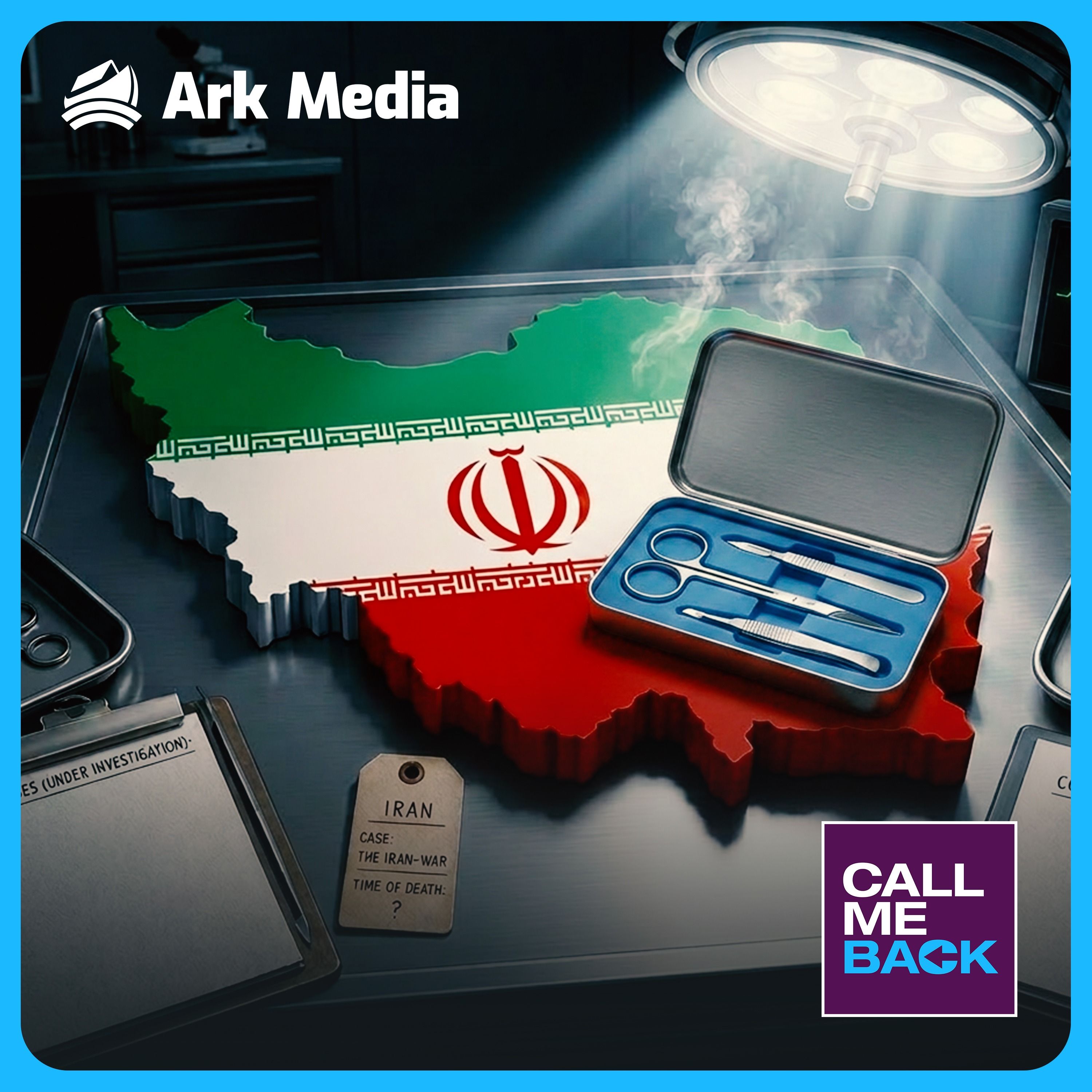
Call Me Back - with Dan Senor
The Iran-War: An Autopsy - with Jonah Goldberg and John Podhoretz
01:01:56
Loading summary
Transcript114 lines
- [00:02]
Dan
Over the past couple of years, CallMeBack has grown into something much bigger than we ever expected. A place for clarity, context, and honest conversations at a time when those things can seem hard to find. That's what ARC Media is all about, building a truly independent voice, which means no one shaping what we say or how we say it. To help support our rapidly expanding operations, we created Inside Call Me Back our members Only feed. If Call Me Back has been meaningful to you and you want to be part of what we're building, I hope you'll join us. You can subscribe@arcmedia.org or through the link in the show Notes and to our insiders. Thank you. You are listening to an art media podcast.
- [00:55]
John Podhoretz
When Trump said, I am going to destroy your civilization Tuesday evening, he said, I am now declaring a ceasefire. I think it was at that moment that it was clear that the heart had gone out of whatever the hell was going on, that he had decided that he was no longer having fun and that he wanted to get himself out of it.
- [01:18]
Jonah Goldberg
When you take out the Supreme Leader and 40 odd members of the leadership of the country, they're going to interpret that as an attempt at regime change. That completely blew up the escalatory ladder thesis on all this. Like if they had gone in and said to the regime quietly, look, you guys are safe, but we're gonna take out your Navy, we're gonna take out your Air Force. Don't do anything with the Strait of Hormuz or we're gonna take out your regime. That would have been the right sequencing of threats, but instead to start at 11 and then try to go backwards creates this problem where the Iranians were like, we're a Persian Gulf Alamo now we got nothing to lose. Let's start attacking our neighbors. Let's start mining and droning the Strait of Hormuz because it's this or death. And so I personally think it's possible that the United States could have won this whole thing in real terms, gotten regime change and all that. But it would have required a level of stick to itiveness that it would be folly to expect from this administration.
- [02:25]
Dan
It's 8:00am on Sunday, June 28, here in New York City. It's 3:00pm On Sunday, June 28, in Israel. As many of our listeners know, I have not been hysterical about where the US And Israel are positioned today vis a vis Iran. Do I have concerns? Of course. But I'm not hysterical. Some of you have been reaching out to me and the ARC Media team to express your alarm at my analysis thus far. So today I invited on the podcast two thinkers who have been following every twist and turn on the Iran war and have actually landed in a pretty dispirited place. They are among the most independent and thoughtful writers and analysts on the right. They always have been, but as it relates to today's conversation, especially so during the Trump years, we wanted to conduct an autopsy of the Iran war, at least as it stands right now. Jonah Goldberg is editor in chief of the Dispatch and the host of the Remnant podcast and a syndicated columnist for the LA Times. He's also a senior fellow at the American Enterprise Institute and an author of a number of books, including Suicide of the West. John Pot Horse is editor in chief of Commentary magazine and one of the hosts of the Commentary Podcast and author of the book Hell of a Ride. Just one programming note this conversation will be released in two parts. Part one, the Autopsy of the Iran War, will be released on Monday and Part 2, which will be focused on U.S. politics and trends in U.S. politics given especially given events of the past week and in the lead up to the 250th anniversary of the founding of the United States, which is something we will focus on. Part two will be released on Thursday as folks are heading into the July 4th weekend. We'll be back with the conversation after this quick break. This episode is sponsored by the Israel on Campus Coalition. Picture a Jewish sophomore walking into a lecture hall. There's a banner on the wall calling Israel an apartheid state. Her classmates look away. She has about 10 seconds to stay quiet or speak up. On campuses across the country, students are making that choice every single day. According to some studies, more than half of college students now say antisemitism on their campus is getting worse and the students standing up to it are often outnumbered and alone. That's where the Israel on Campus Coalition steps in. ICC is a nerve center of the pro Israel movement on campus. It unites more than 40 organizations, trains student leaders on over 150 campuses, and helps develop the strategy, the backup and the funding to win Jewish and non Jewish, left and right, stand up for Israel together. This is where the next generation can be won or lost and your gift goes straight to the students in the fight. Make a tax deductible donation at IsraelCC. That's I S R A E L C C.org. And I'm pleased to welcome back to this podcast Jonah Goldberg and John Pod Horowitz, each of whom have been on this podcast separately. Now they are here together. It will be a miracle If I get a word in to this conversation. So let me just start with that. Embracing our listeners for like, I will fight to jump in, but this may be difficult because John hosts a podcast which usually has on it, but it is a miracle if any of them are able to get.
- [05:57]
Jonah Goldberg
Not that you know.
- [05:58]
Dan
Not that you know that there are others there. They're in the credits that you don't know. And Jonah, one of the podcasts that he records each week is. He does. He gets rid of all the pretense of even having other people on. It's just him for like an hour. And it. It hits every weekend. And I actually say. I will say this. I listen to that podcast religiously. I don't know how you do it, Jonah. It's very impressive that he just talks ruminate for over an hour. And I will just a plug here. I hope our listeners subscribe to both Commentary and the Dispatch. But if you want to listen to this weekly solo, as Jonah calls it, you do need to be a subscriber to get behind the paywall. So don't just cheat and do the eight or ten minutes of paywall. Get into the whole episode now.
- [06:38]
Jonah Goldberg
Thank you, Dan.
- [06:39]
Dan
And I'll have links to both. And the show says, no, no, no, Jonah. I really, it's. I'm not that religious about political or policy or newsy podcasts. I actually wind up in podcast world. I listen to like kind of a lot of sports stuff and then a lot of history podcasts. Your both commentary and ruminant are ones or remnant are ones I list religiously. So I mean that.
- [06:59]
Jonah Goldberg
Thank you.
- [06:59]
John Podhoretz
I just want to point out thing.
- [07:01]
Dan
Oh, here we go.
- [07:02]
John Podhoretz
Do you remember the very fine film Major League? The best baseball movie ever made? Not one of them. Anyway, Bob Uecker plays the announcer and he's got this color commentator who sits next to him. And every now and then he goes, what do you think, Phil? And Phil goes. And then he goes, oh, just a bit outside. The color guy never says the entire movie does not get a sentence out.
- [07:26]
Dan
And I'm sure Christine, Abe and Seth really appreciate that.
- [07:29]
Jonah Goldberg
I was going to say, I didn't think you get all three under the bus in one sentence. That's fantastic.
- [07:34]
Dan
Exactly. All right, I want to start, as I mentioned, the introduction. We're going to do one conversation on Iran and an autopsy of the Iran war. If we do believe the Iran war is actually over, I'm not convinced. But we'll get into that and then we'll have a second part of the Conversation more focused on US Politics, where things are going, focus on domestic affairs. So I want to start with you, John. You sit said that you believed, you said in your commentary, you've written extensively about this on your own podcast, you assumed Trump would quote, unquote, finish the war simply out of self preservation. You can explain what that means. And Jonah, you were skeptical from the start. I remember listening to you at the very beginning. You were, you were supportive, you were sympathetic, you were defending the US confronting Iran, but you were skeptical that the way at least the administration was going about it was going to work. So I want to just start with the baseline. What did each of you actually expect when the bomb started falling on February 28th? And I guess at what specific moment did you know the original script had changed or was dead? I'll start with you, John.
- [08:35]
John Podhoretz
I thought that either the regime would collapse or that a new figure would be pulled out of a hat to be the new version of a supreme leader in a country that was no longer called the Islamic Republic of Iran, or that the war would be prosecuted in a relatively conventional way, by which I mean that it would be fought with like that, but that we would continue to escalate and push our advantage from the air and continue to punish the regime and make it so that it had no choice but to say uncle. And the two moments at which I thought that things were going wrong were started to become clear that there were targets that they were refusing to hit that were obvious targets, dual use, military and civilian targets that in a war are no longer, should no longer be considered dual use.
- [09:35]
Dan
So give an example.
- [09:36]
John Podhoretz
Like electricity infrastructure, transport infrastructure, some of the internal pipelines. We heard people from the administration saying that they did not want to leave Iran in a crippled position for its
- [09:53]
Dan
future, assuming there was a new regime, a new government.
- [09:56]
John Podhoretz
Right. But since they had never established regime chain all of the war, they didn't seem to be building to anything. I think implicitly, and I said this from like day two, this war can't be won if the regime is standing at the end of it because it's a millenarian irredentist regime that has a religious basis for its. And like it's not oh well, oh well, this is the way it works. Like all of Shia Islam is somehow discredited. If they walk away, they're not gonna walk away. So you have to remove them or extirpate them in some fashion. And they didn't wanna say that. And so when it became that Trump that they were withholding their military strat. They were withholding their big punches that they'd gone in big, but then they were kind of calibrating their punches. Then I'm like, this is a little bit of a problem. And then when Trump said, I am going to destroy your civilization day morning and Tuesday evening, he said, I am now declaring a ceasefire. I think it was at that moment that it was clear that the heart had gone out of whatever the hell was going on, that he had decided that he was no longer having fun and that he wanted to get himself out of it.
- [11:19]
Dan
Okay, I'm going to come back to you on some of your points, John, but before I do, Jonah, what were your, I guess, expectations when the war started and when did you realize from your perspective that it was going in a different direction or maybe never really got off the ground?
- [11:32]
Jonah Goldberg
It's a good question, because I hadn't been thinking about it in terms of the chronology from my own points of view on this. And if we're going to start the chronology for how I think about most things with the Trump administration, you got to go back to, like, 2015, because my argument from the beginning has been this sort of character's destiny kind of thing, and that I don't have a lot of faith in Trump as a competent, serious, long range, strategic thinker. He lives in the moment, he goes with his gut sometimes. It really works for him. I would argue more often than not, at least when it comes to big things about America, it doesn't. So to use a line that we hear at the beginning of pretty much every episode of commentary, hope for the best, but expect the worst. That's sort of how I went into this. And I think the more astounding thing wasn't that this went poorly. It's that how well the Venezuela thing went. And I think that is the problem. Trump saw the Venezuela thing, was really impressed with how it went, saw that this Delsey Rodriguez was a pliant, serviceable, corrupt hack that he could work with. It wasn't regime change, but he got to fulfill this long, simmering desire to, quote, unquote, get the oil. And he was like, let's do this again with Iran. And the problem was Iran is a different place. So I still hoped for the best in the beginning, in part because I had a higher degree of confidence than I should have that the Israelis were, in fact, the kind of partners that the administration was saying they were, and that the Israelis, given their actual competence in a whole bunch of military operations over the last five or 50 years, depending on how you want to look at it, that they had a plan for regime change. And this is a point that my friend Ken Pollack made very early in the Iran war that has always stuck with me, is, I think, the original error of this, other than not building an argument for it with the American people and not going to Congress, which would have vetted a lot of the weaknesses in their plan. Even if Trump didn't think the Strait of Hormuz was going to be a problem, if Congress was like, you can't go in there unless you can assure us that you have a plan for the Strait of Hormuz, they would have had a better plan for the Strait of Hormuz than the wish casting that they had. But Ken made the point that, look, whatever we say, whatever signaling we have, however the negotiations go, in the future, when you take out the Supreme Leader and 40 odd members of the leadership of the country, they're going to interpret that as an attempt at regime change. The watch what we do, not what we say rule really applied to that. That was a regime change move in their eyes. And that completely, no pun intended, blew up the escalatory ladder thesis. And all this. Like, if they had gone in and said to the regime quietly, look, you guys are safe, but we're gonna take out your Navy, we're gonna take out your Air Force. Don't do anything with the Strait of Hormuz or we're gonna take out your regime. That would have been the right sequencing of threats, but instead to start in spinal tap turns, to start at 11 and then try to go backwards creates this problem where the Iranians were like, we're a Persian Gulf Alamo. Now we got nothing to lose. Let's start attacking our neighbors. Let's start mining and droning the Strait of Hormuz because it's this or death. And they believe that Trump wanted the people to rise up against them. And so I personally think it's possible that the United States could have won this whole thing in real terms, gotten regime change and all that, but it would have required a level of stick to itiveness that it would be folly to expect from this administration.
- [14:58]
John Podhoretz
Can I make two points in response?
- [15:00]
Dan
Sure.
- [15:01]
John Podhoretz
One is that from what we understand, the Israelis did have a plan for regime change, and the administration put the kibosh on it.
- [15:09]
Dan
That's what I was going to say.
- [15:10]
Jonah Goldberg
Yeah, that's what I was going to say. That's my moment of realizing, oh, crap, this isn't going to work, is when it started to come out that the administration rejected the Israeli plan.
- [15:19]
John Podhoretz
Right.
- [15:20]
Dan
My understanding is not that the administration rejected the goal of regime change. It was just that the Israelis had put forward a series of steps that would need to be taken. And the administration was selective as to which ones they adopted. So there were certain things the Israelis were pushing that, as they say it, they kind of sent them into the Pentagon and then the Pentagon came out with plans that were a version of what they had sent. But not everything. And the Israelis argue, or some Israelis in the system over there argue that this was not everything. And regime changes can get a lot harder if we don't do everything.
- [15:53]
Jonah Goldberg
Yeah, so that reminds me of. It's like when you get instructions over the radio to defuse a bomb or a landmine. And then the guy says, okay, first you have to cut the blue wire. And the guy says, ah, we're not going to do that.
- [16:06]
John Podhoretz
Yeah, right.
- [16:08]
Jonah Goldberg
Yeah, we'll do the other stuff that you want, but we're not going to do this blue wire thing.
- [16:11]
Dan
Right.
- [16:12]
Jonah Goldberg
That's how I feel about it.
- [16:13]
Dan
Right.
- [16:13]
John Podhoretz
But see, I think. And the other point I was going to make, which I didn't summarize properly, is there's no question, if you decapitate the regime, you are seeking regime change. So when you say this is not a war for regime change, you're playing semantics. And we were playing semantics and have been, as we have been going through this war, playing semantics because we are negotiating with ourselves, all these negotiations states and Trump negotiating with the United States. And Trump, what does the ceasefire mean? When is it breached? If they do X, does that breach the ceasefire? Yes. We don't know what the Iranians are saying. The Iranians weren't necessarily saying anything. Trump didn't want to say regime change, because Trump regime change, then he inaugurates a war, the only logical conclusion of which is regime change. And then he spends six weeks before the ceasefire trying to figure out what to do that isn't regime change, but that will bring the regime to its knees. Instituted, as far as I can tell, getting the dust for regime change, that the end of the war, there would be an end, and the end would be that there would be this urn, and in this urn there would be nuclear material and he would hold aloft the urn standing in the middle of Tehran. Oh, the Iranians, who was boss. Because he needed to have a goal. So the goal was getting the dust. But you're not getting the dust without regime change either, because that would mean the Regime agrees to have the United States go into some mountain place and start machines and tunneling machines that can survive an accidental triggering of 60% enriched plutonium or whatever. And so that's only gonna happen if the regime is fundamentally altered. And it was weird. It was a. We were in a very weird situation. Cuz his rhetoric more and more purple and we were kind of doing less and less and less.
- [18:25]
Dan
Okay, I wanna come back to something Jonah said, though. He said that we took it to 11 too quickly, too soon. So what Jonah's arguing is, what on earth did you expect the Iranian leadership to think was going on? What's interesting is that the decapitation was not always part of the plan, at least in the way it was carried out. It was also an opportunity was presented that suddenly they got this intelligence, the Israelis got this intelligence that 40 of the top leaders of the regime and the Supreme. You know, I don't have to rehash the whole thing. We did a whole episode on this with Ronan Bergman where he walked through like detail by detail, all this intelligence that Israel had. So they went to the U.S. and said, look, we have this opportunity. One could argue, absent that moment, they may not have gone to 11 on February 28th. I hadn't thought about it in this way, but, you know, I guess Jonah, there is a world in which the Ken Pollock scenario, as he laid out in your podcast, could have actually worked. But for this gift, if you will, that the. The US and the Israelis received, which was, you know, in the days leading up to February 28th, they got wind of this meeting that was happening in person. Hey, guys, have you heard about Zoom? Nope, still no Zoom, where you're going to meet in person. They're all gonna meet in person and the Supreme Leader is gonna be nearby. That actually may. Had that not happened, let me put it that way. I hate to do this kind of. If what would have happened, but had that not happened, you may have gotten a sequencing that you would have preferred. Jonah.
- [19:45]
Jonah Goldberg
Yeah, I think that's entirely possible. It's not just that the enemy gets a vote, you know, this cliche, which happens to be true, but so does the law of unintended consequences, right? I mean, there's so much contingency in the fog of a war and like, oh my gosh, we have this opportunity. And because this thing has not actually been planned out well by the. They're like, oh my gosh, we can't miss this opportunity. But again, if you think about it from the perspective of the Iranians, I have no problem dropping bombs on the Iranian regime.
- [20:12]
John Podhoretz
Right.
- [20:12]
Jonah Goldberg
Not the Iranian people, but the Iranian regime. I got no problem with it. But, like, twice they launched attacks during negotiations.
- [20:20]
Dan
You mean in June of 25, when Witkoff and Jared were negotiating? Then also in the lead up to this war, Jared and Kushner and Woodkoff were negotiating. And then.
- [20:27]
Jonah Goldberg
Right again, you try to see things a little bit through the enemy's perspective, not as an act of sympathy, but as an act of strategy. So you combine those two things with taking out the Supreme Leader, and you say, okay, they were never interested in any kind of peace. They murdered our guy and his family and all these other people. They clearly want us all dead, and our people want us dead. So when they're saying, you know, to the Iranian people, get ready to rise up, you know, the members of the Basij know that whatever Trump's plan is, that there are an enormous number of people who have a righteous desire to tear those people limb from limb. And when Trump says, all you have to do is lay down your arms and you'll be fine, guarantees from Washington mean nothing to these people. They're terror. You know, they're terrified of their own people because their own people deservedly hate them. And so it seemed like obvious to me at a very early point that Trump just simply thought this was going to be a replay of a Venezuela kind of thing, and it wasn't going to be. Now, how. How it was going to end, I still don't know. There is this weird argument. Let's just call them the MAGA isolationists, for want of a better label, Right? When Trump did this, they all got very ma. Megyn Kelly and Tucker, and all these people got very, very angry. This was a betrayal. Chris Caldwell, who I have respect for, wrote a very unpersuasive piece by my light saying this was a betrayal of the core of Trumpism. I thought it was all bs. I said so at the time. The core of Trumpism is Trump. It's a psychological phenomenon. It's not an ideological or political phenomenon. And Trump, as Joe Pesci would say about the drive through and Lethal Weapon 2, always screws you at the end. Anyone who puts all of their faith and expectations that he is going to be a consistent and reliable partner gets screwed. Just ask Bibi Netanyahu. So now all the MAGA isolationists love Trump again, or at least they're heartened. And they love Vance because he's regressed back to, you know, listening to Sourabhamari and Teacher Parsi. However you pronounce his name and all those kinds of people, there's nothing in the rulebook anywhere that says those people can't get screwed again. Right? That the hawks, that he won't pivot back to the hawks if Iran humiliates Trump, which is sort of what the news environment is suggesting as we're recording this, that, you know, the Iranians tried to close the Strait of Hormuzgan, they attack some ships and blah, blah, blah, is fighting back. It's entirely possible in two weeks time, Lindsey Graham is going on Fox saying, I knew it, he was with us all along and he's back on their side, right? This is the thing. People watch the bull smash stuff in the china shop and then every now and then they're like, oh, but not that vase.
- [22:55]
Dan
Right?
- [22:55]
Jonah Goldberg
And it's like, no, that's what the bull does. And sometimes he smashes stuff that you want smashed and sometimes he smashes stuff that you think he would never smash. That's just Trump. So like just making a long term bet on a straight line projection of what he is going in terms of ever shifting political and military environment, I just think is poor advice.
- [23:14]
John Podhoretz
So.
- [23:15]
Dan
Okay, all right, go ahead, John. See, this is what I mean. I'm not going to get a word in.
- [23:18]
Jonah Goldberg
So you just go, yeah, go get some coffee, Dan.
- [23:22]
Dan
John, go ahead. Okay.
- [23:24]
John Podhoretz
All I was going to say is that when you start a conflict like this and it will move into phases, unless it's an operation like Venezuela or Panama in 1989, right, where we staged military action to arrest Noriega, that was a five day Venezuela was a one night operation, both of which had very
- [23:45]
Dan
specific goals, very achievable goals, and it really fit like the Colin Powell doctrine of how you do these things, right?
- [23:53]
John Podhoretz
So let's say you have a strategy and it has phases and the strategy is shock and awe at the beginning, the version of shock and awe is meeting and then you're going after their missiles and you're trying to get rid of the Air Force, the Navy and whatever defensive weaponry they may have, if you hadn't gotten rid of all of it in 2025 and you do that, then you can settle in. If you have a strategy for the long run, which is economically you've done all this damage, you may want to keep going in and using their use of ballistic missiles to locate where the ballistic missiles that we haven't gotten yet are to take them out. But basically you settle in for six months and they'll collapse of their own weight oil, you Close their pathway off. Maybe you blow up a couple of refineries, you do this, but you have to be willing to stay there and do it and not have a piece of news every three hours, which would be let them choke on their oil until they literally choke, if we can just hold fast. And that's where character matters, because that is what we can't expect of Trump. Instead, the Iranians kind of understood that if they just made it at a point at which Trump had lost his patience and wanted to get out, they could declare victory, though they have won. They actually haven't won anything. They haven't gained any territory. I mean, I guess if they take control of the Strait of Hormuz and nobody stops them from having that control, they will have won the right to toll the Strait of Hormuz. But victory is then defined simply as preventing America from winning. And that's why, I mean, that Trump was negotiating with himself, understood that he had to win, and that there was no alternative but victory once he started. It's a matter of will and, like, seriousness of purpose. And I guess Jonah's point is you can't expect Trump to have seriousness of purpose.
- [25:55]
Dan
Right. So the question is, then, if you say that Jonah has low expectations for Trump for the reasons he laid out, then what you're effectively doing is grading. I think then we're grading this on what would be Jonah's Trump curve. Now, if you take a step back and you say, where are we today? Right? So if the focus of the war as we understand it, absent regime change, let's table regime change. But if you could accomplish serious degradation and setback, or on the more extreme end, obliteration of Iran's nuclear program, if you could achieve all, but wiping out or seriously degrading its air force and its navy and its other conventional capabilities and its ballistic missile capabilities and the industrial base to continue the ballistic missile production and then the proxies in the region. So if you talk about those four goals, the nuclear program is not obliterated. But it seems like in a frozen, maybe too strong word, but it does seem like it's not. It does not seem to be immediately operational. So it's not like Iran can just, like, flip a switch and get back to work on its nuclear program. And that's because of what happened in June and what happened now. The Navy and the Air Force, as we've discussed, seriously weakened. Not the threat that it could have been or would have been the ballistic missile program. Sure, they still have ballistic missile capabilities, but again, I Cannot believe it was not seriously damaged and set back. And Hezbollah, which has shown more resilience than I would have imagined. I think that would have been the case whether or not the US and Israel launched this war against Iran and we can get into what's happening with Hezbollah now. Cuz there are some developments, but I'm just saying, as far as I'm concerned, those are pretty good facts. Meaning it may not have been what many had hoped for and expected when they went into it, but relative to where the US and Israel were on February 27, Iran, the regime has had to absorb somewhere between half a trillion and $750 billion of economic damage. Now, can the regime still be a threat in the region? Absolutely. Do we have to figure out how to deal with what they can do, Their kind of choke point strategy in the strait? Absolutely. But on balance, Iran is like objectively weaker today than it was on February 27th. Is that not a net positive? And if you believe it is, then I still think it was worth the trade, so to speak.
- [28:08]
John Podhoretz
My only answer to that is that then it's an opportunity cost question. Was the juice worth the squeeze that I have? No, I don't think we have any way to answer. They're not telling us oh no until we know that it was good. Like it looks good in the way you characterize it. But. But if you haven't lost, but you haven't won either, you're freezing the conflict in place at a moment when Iran can start rebuilding, working its will on things. And then that's a question of like, does it look like the US can't finish what it started? And if this is like the fifth time that we haven't won a war that we started or that we were involved in since 1953, this since 1950 or something like that, that what is a determined adversary like China? And are there lessons in that psychologically about us that we're teaching them Inadvertently,
- [29:07]
Jonah Goldberg
I have a very similar answer. But I would broaden out a little bit, Dan, when I hear you list, okay, we did this in the Navy, did this the Air Force. You know, these are points I've made. I agree. We do hear reports about them reconstituting their ballistic missile stuff to a degree that that's one of the reasons why we had to strike them again in the last few days. Be that as it may, my problem with this is there's a certain amount of sort of McNamara ism to all of this, of keeping score in terms of, you know, with McNamara, it was like casualties, but it's also like we destroyed more of their stuff than we used up of our stuff. And you know, all that. And it's looking within the four corners of a purely military question. This is a point that Walter Russell Mead touched on when he was talking to you recently. There are externalities in the political and cultural and strategic and geopolitical realm that are really difficult to quantify. And this is where I agree with John to a certain extent is that they're also unknowable. I think if you're, and I don't want to like just hand you a segue to the other half of this podcast, but if you look at what is happening in American domestic politics in terms of Israel's political reputation, in terms of its political salience in Democratic primaries and the sort of right wing influencer sphere, if you look at what Vance's theory, and I'm not sure it's right, but what Vance's theory about the future of American politics is, all of these things need to be put into the calculation about whether this war was worth it. I keep hearing you. You're the one that has the polls talk about how the vast majority of Israelis think that Israel lost this war. Right? Look, I tried to figure this out like a month ago, when was the last war America actually lost militarily? And sort of The War of 1812 was at least a draw, right? I mean, but like we don't lose wars militarily. But ask Americans what wars have we lost or what wars weren't worth it because we didn't win, they can name a bunch, right? And that's because political will matters. Does Operation Epic Fury make it easier or harder for an American politician when Israel is up against the wall to intervene on her behalf? And I think it makes it a little harder for a Republican, a lot harder for a Democrat. And I don't think for right now, if you do a big picture thing, this wasn't worth it. It is something that has done more damage to America's reputation around the world. If you talk to people in Europe, I've talked to a few in the last month, they think we look like clowns on all of this. That's not good. The transatlantic alliance has been weakened by all of this, although I think that started with Greenland and now even Israel and our putative Gulf allies. They are having a lot of second thoughts about us. I don't know how we put any of that in the pro column.
- [31:56]
Dan
Okay, so John, let's. Because against the backdrop of What Jonah just said then how do you think Israel's position so that Jonah just laid out how he believes America's position is perceived around the world. How do you think Israel's doing right now versus February 27th?
- [32:11]
John Podhoretz
I think Israel is the country that punches the furthest above its weight of any country not only in our lifetimes
- [32:22]
Jonah Goldberg
in history since Sparta or something. Yeah, yeah.
- [32:26]
John Podhoretz
I mean the capabilities not just over the last three months, but I mean the capabilities that Israel has displayed since October 7th are so dazzling that if what you want to do is project yourself of the future, Israel has done more for itself in that regard than any other country I can think of. Even if you hate them, you're like, man, they are formidable. And this is a country of 9 million people on this tiny plot of land that have no business, world's best small military.
- [33:03]
Dan
There's no country in the world that has the combination of Israel's military capabilities, its intelligence capabilities and its cyber and tech capabilities.
- [33:13]
John Podhoretz
Right.
- [33:13]
Dan
So we have no ally like this. Right. I mean the Pentagon said as much when in the national security strategy document and the number of press conferences that Hagseth and Cain were. They kept talking about how the U. S. Israel is the model ally. I mean, again, I'm not, I'm not here. This is not boosterism. I just objectively, there's no other country that does all of these things. It doesn't mean there are other. There aren't other countries that do provide a lot of value. I think, you know, India provides a lot of value to the. I think Korea, I think even country like Poland. I just think if you just went down the list that you can't find another country that has all of what we just laid out.
- [33:44]
John Podhoretz
But Israel for itself and in itself has a geopolitical problem of its reputation and this sort of global assault on it, which is also about Jewry. And it's a very. That's a very interwoven issue and we're
- [33:58]
Dan
going to get to that.
- [33:59]
John Podhoretz
But if you tree whose message is don't f with us, Israel's behavior in the last three years is the ultimate don't f with us statement of our lifetime times. And therefore even this war, which Israelis are clearly very disappointed by, though that also has to be considered. How many people in Israel are disaffected with the government? And just like here, we'll never will not want to say that they're happy about something.
- [34:30]
Dan
Yeah, but I don't buy that, John, because. Okay, no, because the polling showed when the war started the public was overwhelmingly supportive of it, even though Netanyahu was, Would be the beneficiary of it. So.
- [34:39]
John Podhoretz
And they're still in Lebanon, so that's true. But I'm just saying they may be disappointed by it and they have every reason in some ways to be disappointed by it, particularly if we find out that they had this seven stage interlocking plan that envisioned itself as following progressively these, that step five preceded step three, and step three helped to get to step four. And as you say, the Pentagon picked one, three and five and did them in reverse order and therefore no gains could be achieved. That's not going to be Israel's fault. And there's not much that Israel could have done either to the Pentagon or to say, no, you know what, let's call it off.
- [35:24]
Dan
Right. If you're not going to do everything we're prescribing, then we're pulling the plug.
- [35:28]
John Podhoretz
Yeah, we're not going to do that.
- [35:29]
Dan
Right.
- [35:30]
John Podhoretz
Anytime America asks us to do something, Israel does it. Right? I mean, anytime. That's really not a question.
- [35:36]
Jonah Goldberg
Yeah, but I just, look, I don't want to beat up on Israel here or Bibi, but my understanding from the reporting is Bibi went to America and asked America to join them. And here's where I would say, if somebody had called me, I would say, this is one giant meatball you're picking up here. You really want to put all of your chips on trusting that Donald Trump is going to see this through if it gets hard. And that, I think, was a strategic mistake, at least in hindsight.
- [36:03]
John Podhoretz
Fair enough.
- [36:04]
Dan
We'll be right back after this break. This episode is sponsored by the Israel on Campus Coalition. Here's something a lot of people miss about what's happening on campus. The effort to turn a generation of Americans against Israel is not random and it isn't amateur. It's professional. The groups behind it are well funded and well coordinated, with paid organizers, communication staff and lawyers working the same campuses year after year. For a long time, the pro Israel students answering them were on their own. The Israel on Campus Coalition changes that. ICC helps level the playing field. It gives Jewish and pro Israel students On more than 150 campuses the strategy, training and professional support. So the students standing up for Israel aren't outmatched. They have a real team in their corner. That's what your gift pays for. Help level the playing field@israelcc.org that's I S R A E L C C.org it's tax deductible and it Goes straight to the students. And I'm back with John Pod Horz and Jonah Goldberg. Jonah, I have a slightly different take on one point Jon made. Look, if you look at what is different about what happened from February 28th to now, again, and I take your point, Jonah, that a lot has not. Not gone as expected or some of the assumptions were wrong. But if you ask the question from Israel's perspective, is Israel in a stronger position or not? And you come back to John's, you know, the. Send a message that, you know, don't F with us, don't F with Israel. The depth of cooperation and the capabilities that flow from the cooperation between the US and Israel. I knew a lot of this existed before February 28th. I actually knew nothing in retrospect of the extent of this cooperation, of the integration. Because even In June of 25, the operation against Fordeau, it was not like a joint command. It was Israel conducted its operation and then they kind of cleared the space for the US to come in with the beautiful B2s at the end, which was extremely important. But this was a war that was planned. Whereas, though these two militaries, I mean, the Israelis call it. I mean, not officially, but unofficially, the Israeli, you know, you've talked to IDF Air Force personnel or army personnel, they call this the war in English. That's what they call it. They called the war in English because they have to conduct the whole war in English. I was speaking to a friend of mine at an Air Force base in Israel who said all she hears on the base now is English in Southern accents. That's like the whole base at this base, she says, so disorienting. You're walking around, you know, and Ben Gurion Airport, by the way, it's a big complaint now of Israelis because it's screwed up commercial aviation. But if you go to Ben Gurion Airport on the tarmac, all you see are U.S. aircraft everywhere. And a friend of mine who is in Air Force Intelligence was called up. Israeli Air Force Intelligence, who lives now in the US he gets called up for miluim, for reserve duty. He gets the plane ticket. The way this works is you get called up no matter where you are. They say, we need you back. He says, no problem, I'll come back. He gets the plane ticket. We'll need you tomorrow. He assumes he's flying to Israel. Okay, he gets the plane ticket. The plane ticket is not to Israel. The plane ticket is to South Carolina. He's perplexed. He goes, why on earth am I flying to South Carolina, okay. He calls his commander, he says, oh, we need you to go to the Shah Air Force Base. Now, I'm not giving away state secrets here. Any of our listeners can Google the Shah Air Force Base. The Shah Air Force Base is one of the most important, important air force bases in the U.S. air Force. And it was where a lot of this war was commanded from. He's in the command room. It's Israelis, and I mean fully integrated, running this war together. No, hey, you go into that room and we go into this room. They were all in one room. Admiral Cooper was like on the screen there constantly, as though the Israelis and the Americans were on the same team, were all doing this together. So even if this didn't go according to plan, or even if you believe that, you know, Netanyahu miscalculated and should have have paused, I do think if you're the region, no matter who you are in the region, whether you're the Gulf states, whether you're Erdogan, whether you're whomever, you look at this and say, sure, they got some things wrong, but the US and Israel are attached at the hip in a way that gives both countries extraordinary strategic reach in the region. And we don't want to be on the wrong side of that.
- [40:19]
John Podhoretz
For now, of course, the issue.
- [40:23]
Dan
You see that, Jonah.
- [40:24]
Jonah Goldberg
Sorry.
- [40:24]
Dan
Okay, go ahead, Jonah, and then we'll come back.
- [40:27]
Jonah Goldberg
Yeah, look, I think that's all that all sounds to the good to me, right? I mean, like that level of cooperation sounds great to me. I completely buy that. It's an order of magnitude more involved than what we've had in the past with nevermind Israel, but with even maybe the Brits. Right. In part because the last time we were that much enmeshed with the Brits, the Brits actually had a military that mattered. But I personally think if they hadn't done the decapitation thing and they did it as a mow the law thing the first three weeks, and then just said, you guys better stay down, stay on the mat. Right. Don't touch more moves. Leave it alone. Right. Basically, Midnight Hammer Part 2 kind of thing, it would have sent an amazing. Exactly the kind of message that you're talking about to regional allies, to China, to Russia. I think the lesson that a lot of those countries have taken, maybe not about our military or maybe not about our ability to work with Israel, but about our stick to itiveness, our reliability, it went from being a positive message to a net negative message in terms of the seeming we have a political glass jaw in this country. Also, whatever you think about the mou, which, let's just be honest, doesn't mean a hell of a lot, but the way it was written, the way it was structured, the Iranians were very smart to do it in that way to insisted on putting Lebanon first because their strategic goal isn't to beat us militarily, it's to get both American political parties to turn on Israel. And they've had remarkable. I mean, I don't want to put it all on Iran. There are lots of reasons for it. But that project amongst the multiplicity of authors has had a remarkable success with the Democrats already and they're making good progress with Republicans. And the way that thing was structured was to say that it was basically to set it up, that if Israel did anything to defend itself in Lebanon, Israel could be accused of destroying the breaking the peace and kind of played out that way for the first week or so. And I think that those kinds of political problems, right, the asymmetry here is always going to be for enemies of the United States and enemies of Israel and enemies of an alliance between Israel and the United States is always going to be asymmetrical. Like Russia and China are never going to go to war to separate us from Israel. But what they are going to do is they're going to pour millions of dollars into bot accounts and to buy certain influencers and whatnot, to sow the idea that Israel is manipulating us, that this all goes back to the USS Liberty and all that kind of nonsense to undermine American support for Israel. And I think that this war, even if it did great work in terms of solidifying an institutional relationship between our militaries, it also did dismaying work in undermining the political case, the affinity for Israel in the national conversation. And all I'm saying is that has to be put into the overall assessment. It can't just simply be strictly a military thing. It has to be the whole picture. Because we kicked Vietnam, the North Vietnamese's ass in Vietnam, didn't work out well for us on the global stage.
- [43:36]
John Podhoretz
Can I jump in on this point? Because I want to ask you a question, Dan. So we not war, but we have the negotiations going on during the war. What do you think people think of that? Because I'm worried that people are going to take away from this. I mean, to be blunt, you got to get the bribe money ready. You got to be ready at any moment to give Trump, have some crypto funds ready for somebody out of the sovereign fund or something like that. That soft power that you can get from hard power is evaporating before our eyes.
- [44:14]
Dan
It depends what your time horizon is. I think it's difficult to apply what the US has done with Israel against Iran and apply it to other theaters and other, you know, how other countries outside of the region at least, are reacting to it. Because weirdly, the issue of Israel is something that Trump has been surprisingly consistent on for the 10 years that he has dominated US politics. I mean, we don't have to go through the whole list, but everything he did in the first administration, the Abraham Accords, the moving embassy to Jerusalem, the recognizing Israeli sovereignty on the Golan Heights, the getting out of, the pulling the US out of the jcpoa, taking out Soleimani, like there was a consistency to what he was doing through his first term. And then he comes back and he does something that no US President was willing to do, which was to confront Iran militarily. Even if it didn't go exactly according to plan, no US President was willing to do that. The hostage deal in 2025, what Trump did there, and you can say it was like an idiosyncratic part of Trump or not, there was a certain way these hostage deals occurred, which was, you know, Israel would agree to phase this, and then the Hamas would release a few hostages here and a few hostages there over a long period of time. And then there'd be confidence building and. And then Trump was like, no, I want all of them out now. There's no phases, there's no nothing, and all the hostages are coming out at once. And because Trump had let Israel, leading up to that, moved so aggressively deep into Gaza, and there was this sense that, like, wait, he's not gonna hold them back, right? And Israel's sitting in like something like 60% of Gaza with this buffer that nobody's complaining about. The Gulf states aren't complaining about it. I don't hear Europe fetching about it. So my only point is, on this issue, there's been this consistency that even there's all this noise. And some weeks we say, what the hell's he doing? And one day he says he's gonna obliterate Iranian civilization, and the next day, say it feels to you like he's using some of the arguments that the, like, anti neocon war critics always make against us. And your head is spinning, right? And I agree, and I get it, and I do worry about the message that sends and the chaos and this one's negotiating here, but if you just take a step back and you look at that arc. I actually, I think it's impressive and I'm not worried about the message it sends because it all directionally, so far at least, has been basically pointing in one direction.
- [46:29]
John Podhoretz
I think you're absolutely right. I'm thinking more in terms of China. I mean, I'm thinking more in terms of if we had maintained cordial, friendly relationships with our NATO allies, you know, push them to contribute 5% of their GDP to defense and whatever, did all that. But we're like, you're just a great guy. Love, you know, you're fantastic. And this is great. And let's all. We'll all eat together. And Giorgio Maloney, you're wonderful. And all of that. Instead, three months before Ron, he gets into this lunatic fight over Greenland, which Jonah himself is a supporter of. The idea of figuring out a way for the United States to take control of Greenland peacefully. Right, okay. So it's not like you're against that. I'm not against that. I don't think anybody should be against that. It's not imperial, like 40 there. And we would probably give them a lot of. They would be very rich if we did it.
- [47:25]
Jonah Goldberg
But.
- [47:26]
John Podhoretz
But imagine that we haven't done it
- [47:27]
Jonah Goldberg
and we would have all. You can eat shrimp again at Red Lobster.
- [47:30]
Dan
Yes, we have a largely Jewish audience here, please.
- [47:33]
John Podhoretz
And here we are. The Strait of Hormuz is closed. Trump's like, you know what? We don't even need the oil out of the Strait of Hormuz. Everybody else has got a problem. Why don't you come down and show them who's boss here? And Europe's like, no, no, you started this. F you. You just gave us all this crap about Greenland. You insult us. It's not fun. Don't now come crawling to us when you need our help. Now, I think actually Europe would actually have benefited from coming in and making a show of force against the Iranians and opening the strait and being a presence in making sure that the international waterways obey the international order. But it does seem to be a consequence of what Trump. Trump did that also has longer lasting consequences. Not about Israel. It's not about where. Where Israel stands. This is really about America's alliances elsewhere and the totally unnecessary bollocksing of things that didn't need to be bollocksed.
- [48:38]
Jonah Goldberg
So I just, I have to do it. It's worse than that.
- [48:42]
Dan
For our listeners who don't listen to Commentary magazine, this is the line. And it's usually Abe who says it, but not always Abe. Yes, everything is worse. Than that, but go ahead, Jonah.
- [48:52]
Jonah Goldberg
Yeah, so I know it's implied in what you're saying, John, but I've been banging my spoon on my highchair about this for a while now. We should make it explicit because the way you talk about it, I know it's not necessarily what you mean, but we kind of anthropomorphize Europe or our European allies as if it's just the leaders who are pissed off. What Trump did with Greenland was make Trump so unbelievably unpopular, and America by extension, to a certain, you know, much less extent, because a lot of it's on Trump. But it also brought down opinions about America, made Trump so unbelievably unpopular that even if. Cause I think you're right, it would have been in their interest to help us out with the Strait of Hormuz and to send minesweepers and all that. It made it politically impossible.
- [49:32]
John Podhoretz
Right.
- [49:33]
Jonah Goldberg
The Greenland thing in particular caused Trump to become wildly unpopular, popular with the new nationalist right in Europe. And so asking. There are democracies too. And so when you ask democratically elected parties and leaders, go side with this guy who's just insulted you and made you look like clowns and didn't consult you on a war to begin with to come bail him out, oh, and by the way, your government will topple if you do it.
- [50:01]
Dan
Who's gonna freaking do that?
- [50:03]
Jonah Goldberg
Last time I looked, Trump's approval rating in Denmark, which is kind of of even in this context, an outlier, it was like 4%. What democratically elected politician is gonna say, hey, let's go do that? He's underwater everywhere.
- [50:15]
Dan
In Europe.
- [50:16]
Jonah Goldberg
I mean, somewhere it's a little better, like Poland or for some obvious reasons. But for the most part, Trump has made himself radioactive. But he thinks that European allies are sort of are his button men and underbosses and they should just do what the capo says, regardless of the politics of. Of it.
- [50:33]
John Podhoretz
Well, I mean, it's like Canada. I mean, it's like the story of the Canadian election, right? Where effectively, in nine weeks, victory by the Conservatives was made impossible by Trump and Carney became the prime minister. Polyvra was leading in the polls and was supposed to win. And then Trump started talking about annexing Canada. Canadian public opinion went bonkers, as you can imagine, and he interferes with to his. What utility did that have? Wouldn't he be better off to have polievor there as a friend across the border than Carney?
- [51:08]
Dan
But let me ask you guys just to wrapping up this part of the conversation. And each of you can take whichever part of this you want. I guess my two questions are, one, what would have been a better strategy in dealing with Iran's nuclear program if we didn't do what we just did? And then my other question is, where do you. Either of you can tell me where you think things go, and good luck predicting this. In the relationship between Netanyahu and Trump, which one of you wants to take which.
- [51:35]
Jonah Goldberg
I'll go with the first question. I think it would have been better to either build a public case for it. Right. Because things can pop out, you can get wins by sending the signal that we're really going to do this. Right. I mean, the reason why Trump did it the way he did it is he wanted sole credit for what he thought was going to be a huge success. And going to Congress, he thinks makes him look small. So he didn't go to Congress. He didn't build the argument there. He didn't build the argument with the American people.
- [52:03]
Dan
But just on that, Jonah. But also, they argue, the administration argues going to Congress would have gotten rid of the element of surprise. And that was a big part of the strategy.
- [52:12]
Jonah Goldberg
Okay. But the element of surprise, as far as I can tell, really only mattered in terms of taking out the leadership.
- [52:17]
Dan
Right.
- [52:17]
Jonah Goldberg
Which I think is a questionable tactic. I mean, you can't have it both ways and say we can take out their air defenses, we can do all these things militarily, but if we give them a heads up, we can't do any of it. So maybe it would have made the war a little harder, but we might have had more allies and you would have had more public support, and maybe people would have been able to wait out a straight A Hormuz strategy. But moreover, that process of actually making those arguments sends a signal, too. And it would have been a pretty powerful signal in the wake of the Venezuela thing. And maybe that would have gotten, I mean, like, I'm kind of a inspector's Schminspectors guy when it comes to, like this, you know, like Vance saying, this is so amazing that we got IAEA inspectors in. Well, we've had that before. It really, there's a lot of devil in the details and all that, but we could have certainly gotten more of that if we had threatened it. I don't actually mind the idea of starting. I think the smartest thing they did militarily was the embargo. And it drove me crazy that everyone was talking about how the war is over while we have an embargo because embargoes are acts of war. But I think you could have, especially if you got the allies involved, had a really tight embargo and said the noose is going to get tighter and tighter if you start attacking your Gulf Arab allies or the Gulf states or Israel and all that kind of stuff and see what shakes out from that. A serious intensive pressure campaign, I think, would have kept the threat of major force theoretical, but also much scarier. Now they're just not as scared of our use of force as they would have been beforehand. Something along those lines. Guns.
- [53:53]
Dan
John.
- [53:53]
John Podhoretz
Okay, Trump and Bibi. So Bibi's facing the electorate in three months and it's the most devilishly complicated political situation that you can imagine, right? There is no way to gain this out. You would think if the Israeli public is disappointed in Iran, and that's the thing that he is going to them with as the last thing before they vote, vote, that's not good. It will then also start raising questions anew about his strategic thinking because of the matter that he has not had to deal with electorally, which is what responsibility he holds for the intelligence failures that led to October 7th. And on the other hand, if you look at the Israeli political situation and you like nine dimensional chess trying to figure out who allies with whom and with all these small parties, it's kind of almost impossible to see how he isn't prime minister after October because either he'll form a government or there won't be a government formed and he will be the caretaker for another election, at which point so he'll be weakened. But despite all of this talk about how he says Bibi's crazy, yells at Bibi and Van says, we get leaks from the Maggie Haberman Jonathan Swan book about how Jared said that Bibi's crazy and Bibi's crazy. The one, one thing that Bibi is not crazy. He is not crazy. He is the opposite of crazy. And like Trump and why they have he is transactional, he is unsentimental, he's a game player. But I think Trump knows exactly where he stands with Bibi at every second of that's how Bibi does what he does to Trump. I'm sure he flatters. I mean, he says publicly all these flattering things and renames towns after him and does all that stuff. But it's very clear that when they're in private or when these two nations talk to each other, they are talking very frankly and straightforward. That's really annoying to America, which wants them to Just say, no, no, no, you know what, we need you to stand down on this one. And Bibi can say, I can't do that. Like, I can't stand down on Lebanon. I can't. Like they're firing drones at school buses. But I think, as we say together, and Trump seems to respond extraordinarily well to that. He never has a day. If he says something negative, the next day he says something positive. He likes this guy. And of course, if Trump becomes really unpopular in Israel because they think that he's chickened out or something like that, maybe. But of course, he is also going to be president for another two years. So I don't see Trump cutting Bibi off. I think when Vance blathers about how Israel has different interests than the United States. Right. If that's supposed to be a dog
- [56:56]
Dan
whistle, it's a statement of the obvious.
- [56:58]
John Podhoretz
What we think, what those of us who think about this. The United States and Israel have deep philosophical and cultural commonalities that, that make us recognizable to each other in the way that other. And it's weird because Israel's such a small and new country and we're much older and all that, but that doesn't mean that our interests align. It really doesn't. And you know, Israel was 80s and 90s with nations that made us sick because what choice did they have?
- [57:26]
Dan
Right.
- [57:27]
John Podhoretz
The one thing I would add to
- [57:28]
Jonah Goldberg
this conversation where I don't disagree with you guys at all and Lord knows I'm a critic of Trump's, but I think one of the values of Trump, one of the aspects of Trump that's valuable in this specific context is we can talk about Athens and Jerusalem and America and Israel and all of these high flown philosophical affinities. The real reason why I think Trump gets along with Bibi is he's a New Yorker. And he's a New Yorker from the frigging construction industry. You know, how many Jewish guys he's yelled at and then gone and had lunch with. Right. You know, like that whole milieu of yelling at each other, oh, you're screwing me out of my commission, all that kind of stuff like that is the world he grew up in. That is his way of communicating with people. And Bibi can read that in a certain way that I think I don't want to traffic in. Gross. But like, Jews understand, like you argue and you argue and then you go to lunch. Right. You know, and there is that aspect. That's the world that Trump grew up in.
- [58:21]
Dan
Right. Well, I'll just add One other point and then we'll wrap this part of the conversation. But I will say that on the issues that become sources of tension between the Israeli government And the, the U.S. government, I don't think they necessarily get much better with the alternatives to Bibi. This is not a case for Bibi, it's just reality. Like, do we think that Eisenhower, a Prime Minister Eisenhot, is not going to be under the same domestic pressures within Israel to kind of fold on dealing with Hezbollah and Lebanon? I mean, there's no way Eisenhat's just as worried about those communities in northern Israel as Netanyahu is. Do we think Eisenhot is going to like, quickly race to some kind of two state solution? Not in a million years. The Israeli public is overwhelmingly against from right to left. So I'm, I go issue by issue. Of course, there are obviously big differences between Netanyahu and Eisenhower on some domestic issues. Domestic Israeli issues, the Haredi draft, you know, dealing with some of the craziness in the west bank, the settler violence issue, like those issues, again, I'm just in terms of where the US Government's at, where the Trump is at, where he gets frustrated with Netanyahu. I don't think you get a big shift from a policy standpoint with a new government.
- [59:28]
John Podhoretz
No, I mean, quite the only way that there would be a big policy shift is if Trump perceives the new government as being weak and then he'll lose respect for Israel.
- [59:41]
Dan
Right.
- [59:41]
John Podhoretz
And that is not an impossibility. One of the weird things about Israeli prime ministers and Amera is that there are always these moments at which no matter who the. If Robin hadn't been assassinated, Clinton would have decided that he hated him at some point. That's just the dynamic because Americans get frustrated and they want Israel to do something. Prime minister says, I can't. And then they're like, what do you mean you can't? Yes, you can. They're like, no, you don't understand. It's always like that. It's been like that since the beginning of time. And that'll happen with Eisencot or Bennett or Lieberman or whoever might be the next prime minister. And this key thing with Trump follows Trump, which is a whole other world, but will be. Are you a will imp?
- [60:26]
Dan
Yeah. Okay, we're going to leave it there. We're going to wrap this part one of our conversation. We're going to be shifting the conversation to part two where I'm going to be asking John and Jonah about the last week's elections in the US Part two will be released on Thursday. As folks are heading into the July 4th weekend, I want to tell you about one of the more hopeful things going on. Every summer. The Israel on Campus Coalition brings more than 800 pro Israel students to Washington D.C. from over 150 campuses, Jewish and non Jewish students from the Ivies to the big state schools. It's one of the largest gatherings of pro Israel student leaders in the country. For a few days, students who often feel alone on their own campus realize they are part of something much bigger. They get trained, they build a network and they go home and lead. They run for student government, they organize, they set the record straight and they look out for the next student coming up behind them. That room is the future of the pro Israel movement. You can help fill it with a tax deductible gift@israel israelcc.org that's I S R A E L C C dot org.