Loading summary
Transcript86 lines
- [00:00]
Dan Senor
Over the past couple of years, Call Me Back has grown into something much bigger than we ever expected. A place for clarity, context, and honest conversations at a time when those things can seem hard to find. That's what ARC Media is all about, building a truly independent voice, which means no one shaping what we say or how we say it. To help support our rapidly expanding operations, we created Inside Call Me Back our members only feed. If Call Me Back has been meaningful to you and you want to be part of what we're building, I hope you'll join us. You can subscribe@arkmedia.org or through the link in the show Notes and to our insiders. Thank you. You are listening to an art media podcast.
- [00:52]
Walter Russell Mead
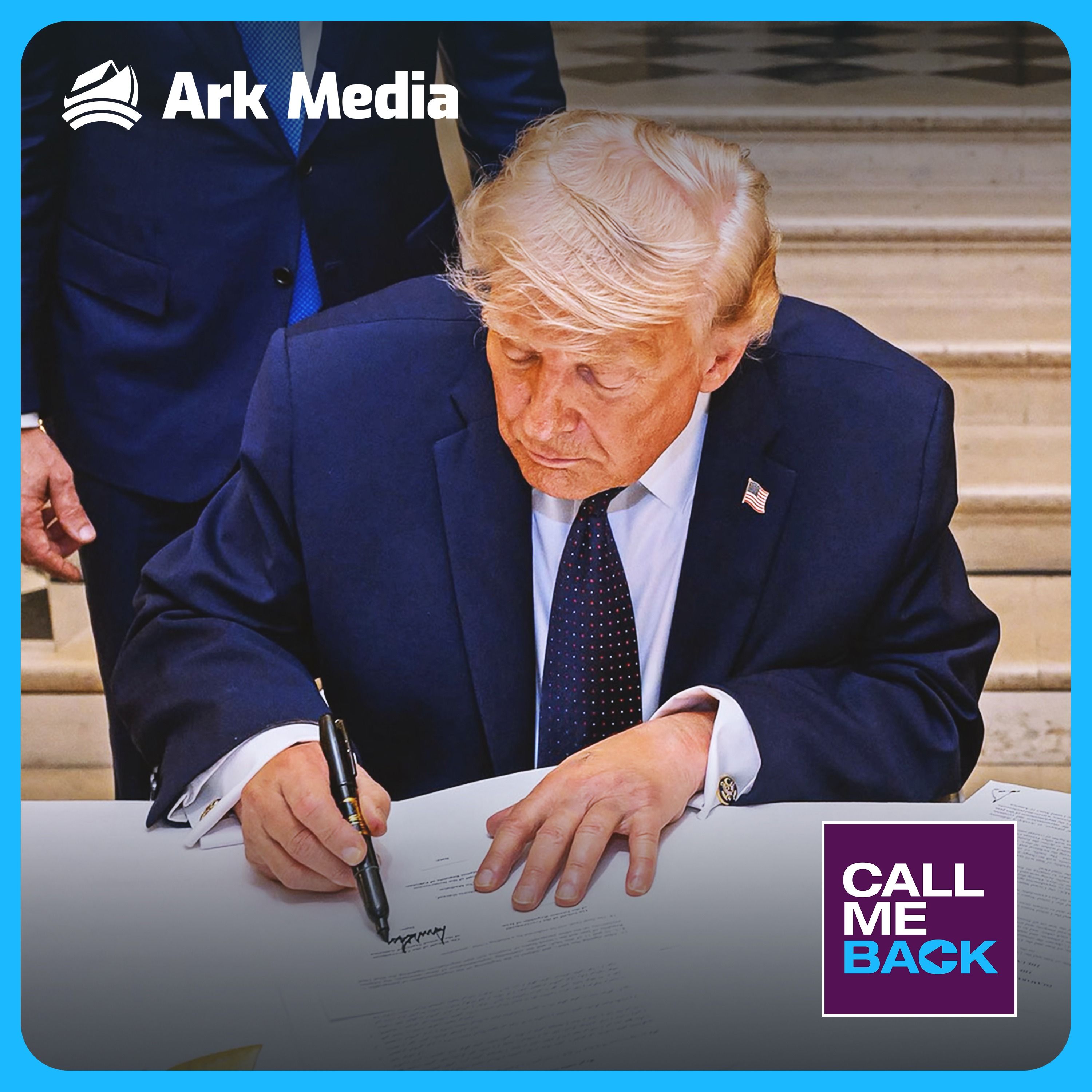
Look for the Iranians. They don't believe one single word of the Memorandum of Understanding. For them, it's an element in the struggle. Sometimes you struggle by shooting things. Sometimes you struggle by signing things. But no piece of paper ever written can bind the Islamic Republic of Iran. That is Trump, too. He also thinks that way. So we have two people who fundamentally don't believe in the written word or their own given word, and they have signed a memorandum of understanding.
- [01:33]
Dan Senor
Foreign. On Sunday, June 21, here in New York City. Happy Father's Day to all the dads listening. It's 8pm on Sunday, June 21, in Israel, as Israelis reckon with the outcome of the Iran war chronicled in the Memorandum of Understanding, which was signed late last week. It seems like a paradox. Israel and the United States just led one of the most militarily successful campaigns in the modern history of the Middle East. They degraded Iran's air defenses. They set back Iran's nuclear program. They destroyed Iran's navy, a lot of its conventional military capabilities. They left Hezbollah battered and leaderless. I can go on. By every military measure, this was an outstanding performance. And then President Trump flew to a G7 summit and signed a piece of paper that, according to the agreement, lifted the naval blockade of Iran, unfroze billions in frozen assets, reopened the Strait of Hormuz, and gave Iran 60 days to negotiate its way back to respectability, international respectability and acceptance. Hezbollah called it a victory. Tehran is projecting confidence in Israel. Well, Israel woke up to the realization that it may have just fought the first war in its history where it won every battle but might be losing the overall war. So what just happened and what does it mean not just for Israel, not just for Iran, but for every country in the region, in the Middle east and beyond? Obviously, what does it mean for the United States? That is now quietly drawing its own conclusions about American power. To help me think through this, I called Walter Russell Mead from the Wall Street Journal. Back to the podcast. He's a columnist there, a senior fellow at the Hudson Institute, and one of the most serious teachers of American foreign policies and interpreters of Trump foreign policy. There's no one better to talk to when there are a lot of questions in the world of geopolitics. Walter, welcome back to Call me back.
- [03:28]
Walter Russell Mead
It's great to be here again, Dan.
- [03:30]
Dan Senor
We always call you when we are perplexed by some of the thorniest questions. So you're gonna, like, tie them all up in a bow for us and make it all easy so we will jump into it. I want to start, Walter, with the basic paradox. Israel and the US As I said in the introduction, just degraded Iran's air defenses, set back its nuclear program, and as I said, it left Hezbollah pretty battered again. These are all, by most military measures, it was an outstanding campaign. But then we have this MOU that looks nothing like those results. It looks like Iran, the regime, came out with the advantage in this war. How do you square that?
- [04:06]
Walter Russell Mead
Actually, Dan, I think I'd start with the ways in which this isn't really that exceptional. I mean, since 1948, Israel has been winning wars and then been unable to shape the resulting Middle east situation in the way that it would like to. So it wins the war of independence, no peace. It wins in 56. It takes Suez no benefit. 67, six day war, no peace, and
- [04:34]
Dan Senor
the war of attrition that follows immediately after the Six Day War for something like three years. Exactly.
- [04:39]
Walter Russell Mead
That is kind of the Israeli condition. Without military strength, without even military superiority over its enemies, it can't survive. But military superiority doesn't give it peace in the region. That's been a fact from the beginning. So we shouldn't be overwhelmed with surprise that something like this is happening again.
- [05:02]
Dan Senor
Okay, so a recent poll came out inside Israel saying that 84% of Israelis believe Israel did not win this war again despite this outstanding military success. So I just want to drill down on what you're saying. Are they wrong? In other words, can they win the war? And that should be its own exclamation mark, exclamation point after that fact. And then, of course, the real question is what they can do with that, or did they really not win the war?
- [05:28]
Walter Russell Mead
Well, if you think you know what are your goals? That tells you whether or not you win. What were your aims, and did you achieve them? If the aim was as it has been in past military confrontations with Iran and Hezbollah to mow the. The lawn has been better mowed in this war than it's been in a very long time. The grass is low. It's not clear to me how quickly the Iranians could get back to a nuclear program even if they wanted to, which actually I kind of assume they do. So in that sense, what more could you do? But if the goal is political regime change, it would be, I think, something of a miscalculation. You can hope that as a result of a military shock, there would be some kind of internal shift in Iranian dynamics. Either a revolution against the whole Islamic Republic or a shift to a far more moderate version of the Islamic Republic. But that was a gamble, and I don't think there was ever a huge chance of that happening. So in that sense, Israel didn't win the mega Millions jackpot, but was that really a realistic expectation to go in at the beginning of the war?
- [06:41]
Dan Senor
Iran's government is projecting resilience and confidence. Are they wrong?
- [06:47]
Walter Russell Mead
They're not wrong to project it, but obviously looking strong, sounding tough, that's what you do. And in fact, the weaker you are, the tougher you sound. It's a huge mistake to assume that Iranian propaganda corresponds to Iranian reality. But they would be idiots not to project strength and confidence. Confidence. Ditto Hezbollah, for that matter. Ditto Hamas. All you ever hear is confidence, resolve, we're winning in time, yes, a temporary setback even. But it was a great victory over the evil oppressor. That's all they ever say. Why is anybody surprised that they're saying it now?
- [07:26]
Dan Senor
So when the war began, when President Trump would go back to February, he articulated what he thought was possible. And again, what he thought was possible, as he articulated, was kind of a fluid set of expectations. And go. But based on what you know and your reporting and your conversations with administration officials, what do you think President Trump was actually betting on when he entered this war? Leave the Israelis out of it. What was President Trump betting on?
- [07:51]
Walter Russell Mead
Look, I think it's a mistake in trying to analyze President Trump to think that he has some kind of long term strategic plan. He's going to do step one, step two, step three. That's not how he encounters reality. He is sort of, we could call him, if we wanted to use a fancy Greek word, niketrophic. He is turning toward, he wants to orient toward power and victory. Right. Dynamotrophic, you could also say, but he is not doing this as a reasoned strategist, necessarily. What he does is in each moment, he surveys his options, and then he kind of moves in the direction where he sees advantage or where he sees the need to shun some kind of danger. And this can make him extremely effective, far more effective than people expect, because he can be sort of ruthlessly pragmatic in the moments. And also because if you constantly seize on what looks to be the most advantageous course, while you don't always win or always get everything that you want, you often end up better than people who deeply believe in complex strategies expect you to. And that, I think, has been the trajectory of Trump's career this far. And so at the start of the war, I think Trump probably, you know, the extent one can try to reconstruct the way that he looks at things, the big prize is that glittering gold prize of the regime change. Baby Shah comes back. Or pro Western Iran miraculously emerges. Trump is world heroes. That's what he would love to have. But then what he figured is, okay, if that doesn't happen, where does it go? Then you go into a fluid situation of chaos. And Trump's core element of Trump's worldview is that chaos is his home. That's where he's comfortable. Many of us would hate to be like in litigation in 15 different court cases with bankers calling us up and real estate deals erupting all over the place. That's where Trump lives. And he actually believes that in those situations, he's better than almost anybody at dealing with it. Right? And so he moves the situation as he would see it, onto his home court of chaos. And there, if there is a rabbit to be pulled out of a hat along the way, he can do it. He's relying on his instinctive ability to avoid trouble, to seek opportunity, to reshape a reality in ways that other people don't expect. And then kind of fallback idea is that that's the middle range, top range, regime falls, I'm a hero, middle range chaos, and I'll probably manage to do pretty well in it. All right, Low range, it doesn't go that well, but I'm really good at spinning. And so I'll be able to convince enough of my core supporters that, boy, I won a great triumph, that the damage to me is not going to be too great. So that's how he does these things.
- [11:09]
Dan Senor
Matt Continetti from the American Enterprise Institute, and also your colleague at the Wall Street Journal, described it this way. He said, people tend to wonder if there's a secret skill set to what Trump does. Is he really playing three Dimensional chess. Matt's point is, no, no, no, he's not playing chess. He's juggling. That's what he's doing. He's juggling. Now, the problem is, he said he's often juggling grenades. So if one of the grenades falls, the implications could be, you know, have cascading effects, but that's what he's basically doing, is juggling. And one of the grenades, if you will, to extend Matt's metaphor that he's juggling right now is the Strait of Hormuz. And he's decided that he's got to get the straight open. That's what he's got to do. So in the midst of his juggling, he's getting the straight open, and he's singularly focused on that and what he's giving up to get that open. Many critics sit, oh, my gosh, you're making all these incredible concessions that's gonna set back so many of the gains that you've made. And thinking about the way Matt framed it, it's like, no, in Trump's mind, he's gotta get the straight open. He's not giving up any other concessions. He'll have options through the next 60 days. He can go back, he can turn up military heat if he wants to. I'm not saying he will. I'm just saying he doesn't think like he's giving anything up in the long term as he pursues the fire he needs to put out in the immediate term.
- [12:27]
Walter Russell Mead
Look for the Iranians, they don't believe one single word of the Memorandum of Understanding. They're not sincerely swearing, oh, this is what we'll do for them. It's an element in the struggle. Sometimes you struggle by shooting things, sometimes you struggle by signing things. But really, you know, it's all the same. And no piece of paper ever written can bind the Islamic Republic of Iran. That is Trump, too. He also thinks that way. So we have two people who fundamentally don't believe in the written word or their own given word, who have almost, between them, no regard for law. I mean, the Iranians say, well, we believe in the Holy Quran and the rule of the law, but then on the other hand, they have the right to interpret it through their Supreme Leader, can interpret it pretty much any way he wants. A little bit like Stalin with Marxism. Marxism is whatever Stalin wants it to be. So you have two negotiators, neither one of which believes a word that the other says or expects any rational person to believe a single word that they say, and they have signed a memorandum of understanding. So let's not kind of overdo what's happened here. In a sense, what's happened is that without paying one single dime to the Iranians, without giving up anything, Trump has made the price of oil go down something like 20% in the last few days. At the G7, he's hailed as a great peacemaker, except by Giorgia Maloney, who had other issues. Meanwhile, the wing of the Trump coalition at home that was, you know, is very restrainer, is sort of tempted by the Tucker Carlson so on has now clearly seen no, Bibi is not the master of Trump. Trump is the boss of Bibi. Whip, whip, whip, whip. All right, Dominance, display. He's achieved these things without doing anything. That's the way Trump likes to operate. What does it mean for tomorrow? We will find out tomorrow. And if we want to think about where things are likely to go, we do need to look at sort of the objective facts of the situation, because Trump's opportun calculator will be looking at, you know, each day he'll wake up and he'll look at the political situation, the economic situation, the military situation, et cetera, et cetera, et cetera, and he will make choices based on where he is. Moreover, let's also not forget that part of what he's doing is he wants to maintain the dance of the Rubio versus Vance, who will be the successor. So we, you know, we started with a kind of a default thing. It's gonna be Vance. He's the vice president. But for months now, it's like Rubio, Rubio. You know, Rubio is coming up on the outside, Vance is slowing. Right. It's, you know, the horse race, people. Rubio, Rubio, Rubio.
- [15:42]
Dan Senor
Okay?
- [15:42]
Walter Russell Mead
Trump does not want either one of them to emerge as the successor or anybody else until the absolute last possible moment. Trump wants to designate his successor pretty much the way Elizabeth I designated hers on his deathbed in a whisper. Because the moment one of those two people emerges as the successor, power starts to flow away.
- [16:09]
Dan Senor
Trump, that is the official start of his lame duckness.
- [16:13]
Walter Russell Mead
So that's gonna come as late as possible. As absolutely late. And meanwhile, he does have these two wings of the coalition, the kind of Vance wing, which is more, you know, shady toward restrainer, suspicious of Israel and many other things. And then the Rubio wing, which is more sort of closely aligned to kind of some traditional Republican thinking. And Trump needs to be throwing a little chum to the Vance side, a little chum to the Rubio. Side, that's how he does things. And Trump is, I think, less on many, many issues. He is less focused on achieving a spec policy outcome than he is on maintaining a specific power dynamic, one that keeps him elevated. So we, I think many people get confused by Trump because they think he's trying to do things that he isn't trying to do. They find it difficult to sort of say, okay, in the moment, what are the things that seem most important to Trump where he needs to do something. Now, I don't claim to read his mind, but it does seem to me that if you think in these terms, a lot of what he does is easier to explain.
- [17:23]
Dan Senor
In your recent Wall Street Journal column, Walter, you talked about these tools that Trump and almost only Trump has in diplomacy and foreign policy and kind of navigating geopolitics. And I felt like in your piece you kind of go back and forth. On the one hand, only Trump has these tools. On the other hand, those tools aren't enough.
- [17:41]
Walter Russell Mead
Well, they're not, they're not enough for everything. Trump is, as I say in the column, Trump is not really a leader. He's not someone, say, like Abraham Lincoln, who has this vision of the nation, vision of democracy, a clear sighted idea. What is the Civil War about? What is preservation of the Union about? If I can do it without freeing any slaves, I'll do it. If I have to free all the slaves, I'll do it. Whatever, right? Like Trump does not necessarily have those kinds of fixed objectives. He has some, I'm not saying he has nothing, but operationally that's how he goes. And I think he does make him underestimate and undervalue some of the resistance that he encounters. I think most people would say at this point he clearly underestimated Ukrainian powers of resistance against Russia. I would add to that that I think he also underestimated Putin's determination to defeat Ukraine at almost any cost. Trump thought it actually would be a fairly easy thing to get some kind of a deal between Zelenskyy and Putin. And he hasn't been able to, I think, because in fact that war is harder to settle than his kind of worldview led him to believe.
- [19:05]
Dan Senor
Well, as you write in the piece, that he actually doesn't understand, I mean, your words, I mean the power of, in the decision making of leaders as they're navigating geopolitics, that actually ideas like nationalism matter a lot. And if you understand that, you actually do understand the resilience or what he would argue, the stubbornness of Zelensky and Putin, respectively.
- [19:28]
Walter Russell Mead
Yeah. And again, in some ways, the leader who in many ways reminds me of Trump would be Napoleon III of France. For Napoleon, the thing that's really remarkable about him is in a country that was deeply divided between sort of Republican Bonapartist and monarchical ideas, traditional Catholic monarchists, zealous Republicans on Napoleon actually didn't really believe in any of these. And that gave him a tremendous advantage because he could sort of dispassionately and in cold blood look at the situation and realize that these different ideologies are kind of rings through people's noses and you can pull on the chain that attaches them and get them to go where you want them to go. And for the cynic, often believers are the stupidest people on earth. You just do a little puppet show of the Pope embracing you and all the loyal Catholics come trotting along, or you say something nice to Bibi about Israel. And all the pro Israel people trot merrily after you like the Pied Piper of Hamlin. And we've seen different things that Trump says about what he thinks about the military. He said some terrible things, very wounded soldiers, how terrible that is, McCain captured, so on and so forth. And yet he's still able to kind of get up there with, of all things, the Village People, and have huge patriotic uprisings around him.
- [21:02]
Dan Senor
Right.
- [21:03]
Walter Russell Mead
He knows and values the power of ideals to move masses. But I think what he misses is that when you have leaders who are driven by conviction, a de Gaulle, a Churchill, people of this kind, or for that matter, I am sorry to say, the leaders of Hamas, Hezbollah and Iran, those guys are much harder to move than you think they're going to be.
- [21:29]
Dan Senor
The MoU gives both sides 60 days to reach a permanent deal. What actually happens at the end of that window, we don't really know what happens. But what do you think happens?
- [21:40]
Walter Russell Mead
What'll happen is that Trump will look at the situation and decide what he thinks is in his interest and do that. That's what'll happen. And what will happen before that? I can see a scenario where a lot of oil gets out on world markets, everybody's stocking up. And so another long term interruption for the strait of hormones would not cause a massive economic crisis. Well, maybe we turn up the heat. On the other hand, stock markets would lose 30% of their value and the price of gas would go to $8 a gallon. I suspect we'd see a very different response. But what I can tell you is that for neither Trump nor the Iranian side, a deep, deep, sincere regard for the eternal verities and commitments encoded in the memo of understanding. That will be the last thing saying that drives them.
- [22:29]
Dan Senor
Walter, as recently as, I mean, last couple months, but also go all the way back to, say, April, US Administration officials, Secretary Bess and others were talking about how, even the President himself were talking about how the blockade was going to make Iran's oil infrastructure and oil situation generally impossible. Because if they had nowhere, if they couldn't ship, get oil out of the system, their oil infrastructure would start to crumble and kind of implode or explode, depending how you look at it from within. And that would bring the Iranian economy to its knees and the regime to its knees. Did you believe that then? Or I guess maybe put differently, what did we get wrong about that?
- [23:10]
Walter Russell Mead
One thing that Americans have gotten wrong, and for that matter, a lot of people get wrong, is we have overestimated the power of American sanctions. Since the Napoleonic wars, when Thomas Jefferson levied an embargo against Britain and France, then it produced zero in the way of concessions. The United States has thought that our economic pressure actually can achieve more than we think it can. And we do it over and over. There are a lot of reasons why we get so habituated to it. One of them is that when you don't really want to do anything serious about something, but you don't want to look like you're not doing something serious. Serious economic sanctions. Ha. You know, that shows I really care. Sanction, sanction, sanction. We do that a lot. It's also something that Congress can do. And so, Congressman, you know, there are very few things in foreign affairs that Congress can actually do. Sanctions is one of them. So we have a huge national predilection for sanction. We also, I think we may overestimate the degree to which other countries are actually responsive to economic stimuli of any kind. The classic example of this is during the pandemic, North Korea cut off all contact with the outside world, its own border with China. And actually, there was a lot of misery in North Korea as a result. This was a far greater economic impact on North Korea than all the economic sanctions anybody else could ever impose would achieve. And it was basically a way of North Korea demonstrating to the world, we simply do not care about your stupid UN Security Council sanctions. They will not change. And yes, you've been telling us we're not a nuclear power. For 30 years, we've been one, we are one, we're going to be more one. And unless you want a war with us there is nothing you can do about it. And I think Iran has noted that the Iranian government just killed, we think, 30 to 40,000 of its own people. The security forces held together during that. So a little bit more suffering for the people. Oh, dear. Well, maybe they'll come out and we'll kill a few more thousand. The idea that they are sort of like a bunch of New York real estate dealers who if you hit them in their profit, they instantly capitulate. That's not who they are.
- [25:42]
Dan Senor
We'll be right back after this short message. Hi, I'm Daniil Hartman, president of the Sholem Hartman Institute in Jerusalem.
- [25:50]
Walter Russell Mead
And I'm Yossi Klein Halevi, senior fellow at the Sholem Hartman Institute.
- [25:54]
Dan Senor
What's more important, to be feared by your enemies or morally true to yourself?
- [25:59]
Walter Russell Mead
Should Israel strive to be a nation among nations, or should it accept the fact that it is now a fortress apart?
- [26:06]
Dan Senor
What do Israelis and Diaspora Jews owe each other? If you're Jewish or a friend, an ally?
- [26:12]
Walter Russell Mead
These questions have been gnawing at you these past few years.
- [26:15]
Dan Senor
For some of you, like for us, these questions have been keeping you up at night. And for some, they've been simmering in the background, waiting for answers.
- [26:24]
Walter Russell Mead
But dilemmas don't always have clear answers. What they do deserve are honest and respectful debates.
- [26:32]
Dan Senor
And as it happens, Yossi and I love to challenge each other to get to the bottom, bottom of things.
- [26:37]
Walter Russell Mead
We look at current events through a lens that speaks to us most deeply, a Jewish lens.
- [26:43]
Dan Senor
So if today's Jewish dilemmas are on your mind, tune in to our conversation on For Heaven's Sake, a partnership between ARC Media and the Sholem Hartman Institute.
- [26:52]
Walter Russell Mead
You can find For Heaven's Sake on Apple, Spotify, YouTube or wherever you get your podcasts.
- [26:58]
Dan Senor
See you there. And we're back with Walter Russell Meadow. Walter, recently in May, you were in Ukraine and you came back and you wrote a piece that really struck me, and you and I exchanged messages about it. We actually were thinking at the time about having you come on just to talk about this piece. But then of course, events got so intense with regard to with Iran and the US that we put it off. But I do want to come back to what you wrote in that piece because I think it's relevant to this very conversation. The title of that piece in May was I'm Reading It Here. Ukraine Offers a Glimpse at the Future of War. And your subhead was the Way Armies Fight Is Changing Daily. And at the moment, that favors Kyiv at least as it relates to the Kiev, Moscow conflict. So I want you to extrapolate that out to what we're watching right now in Iran. Isn't the way this war has been fought and maybe ending, at least for now, given us a glimpse at the future of war, both the way we fight, the way Israel fights, and the way countries like Iran can fight using critical choke points in the international system as a tool in warfare. And I guess my question is, how in your mind will what we're watching in Iran and the Strait and the US and Israel change the way we fight wars?
- [28:10]
Walter Russell Mead
Well, you know, there are so many things going on that it's very hard to just sort of give some simple head. Top line, it's going to favor the offensive, it's going to favor the defensive, it's going to favor the away team, it's going to favor the home team.
- [28:24]
Dan Senor
Oh, how I wish geopolitics was like NFL Sunday. You know, life would be so much simpler. How does that team do on fourth down?
- [28:33]
Walter Russell Mead
You can bet on both of them in Polymarket. So maybe there's at least that similarity. In some ways, what the war has shown. The most frustrating thing for the Israelis and Americans is actually a very old lesson. Air power alone does not win wars. People have assumed since the 1930s that air power would be decisive in wars for various reasons, and it hasn't been and it still isn't. And we still haven't learned that. We still haven't internalized that because it looks like a wonderful easy button. You press the air war button and you have superiority. Other side surrenders, everything is fine. It just doesn't work that way. On the other hand, the fact that basically we're moving toward the automation of war, I mean, in Ukraine there are places where only a very small, small number of soldiers are holding a significant chunk of the front because of drones. Have they really thinned out the presence of people on the front that's going to go forward. And it means, for example, that the size of your economy and your technological level may be a more important factor in national strength than the number of 18 year olds that you can put a rifle in their hands. That's actually big. It means in Asia, it means that Japan has the potential to be a much, you know, something closer to a peer competitor with China as a military power, despite the gap in their population. It also obviously in terms of US Chinese balance of power is probably favorable for us in the Middle East, I think it's probably favorable for Israel, that which I'll get to, but it means that Israel, the small size of Israel's population is less of a limit on Israel's ability to generate and use military power, should that be necessary in the Middle East. That's a good. You know, if you're Israeli, that's a good thing. On the other hand, though, and this is something that is less positive from an Israeli point of view and from ours as, and maybe from everybody's, is that the information revolution is spreading a lot faster than the Industrial revolution. And so it is getting harder to create and sustain an advantage in military power based on technological superiority. So the Industrial Revolution starts in Britain, late 18th century. And basically the British are able to just sort of romp around India and pretty much wherever they want for 100 years. And it takes a very long time for people to catch up, even for Europeans to catch up. All right, that's not how this stuff works. Maybe at the very cutting edge, the US and China have advantages that it's hard for other people to get up into that league. But if you wanted to talk about the ability to make missiles, drones, and other things that are extremely problematic, say, for Israel, then it's clear that the surrounding countries are becoming more militarily formidable. And again, the Iranians. When we talked about existential Iranian threats to Israel 10 years ago, the only threat we really talked about was the nuclear program, because that was basically the only way Iran could really strike in a significant way at Israel. But one of the triggers for the current war was that Iran's ballistic. Ballistic missile production was reaching a level where Israeli air defenses really could not reliably protect the country from the kind of missile barrage that was likely to happen. And that that would, on the one hand, allow Iran to shield the development of its nuclear program behind the capability of massive destruction through ballistic missiles, but also that the ballistic missiles themselves become a threat. So we've gone from just worrying about the nuclear program, which is a huge headache and difficult to deal with, but it is much easier to build a ton of ballistic missiles at distributed sites. It is much harder to stop a ballistic missile program dead in its tracks. And even if you do it once, it's hard to keep it for them to recover. The spread of technological capabilities is making the Israeli task against Iran a more formidable one. I think Israel will be in a very, very tight situation as the sort of armaments levels of various countries in its neighborhood rapidly rises.
- [33:21]
Dan Senor
So let me ask you then just. I'll tick off quickly different leaders or governments and kind of what they take from this. So let's Start with Netanyahu, the master of statecraft, the master domestic politician. You're hard pressed to find another politician leader in any Western democracy that has dominated their own politics for as long as he has. Where is he now, less so on domestic politics, because we're doing a lot of episodes on that domestic Israeli politics. But just what is his play now vis a vis Washington?
- [33:49]
Walter Russell Mead
Well, I think he needs to draw attention to the reality that, that for example, the ceasefire in Lebanon is actually not being threatened by Israel, but by Hezbollah. And Iran would like to make this whole controversy about why can't Washington control Israel, when really it needs to be why is Iran still enabling Hezbollah aggression? That's got to be his consistent line. And he's got to constantly fight any efforts by people here or anywhere else to portray Israeli action in Lebanon as offense, you know, as Israeli initiated. And that means when he does, when there is an attack from Hezbollah and he does respond, he needs to do that in a way that telegraphs that essential message to Trump. This sort of, you can't sort of say, okay, wow, now they've given me an opportunity and I can really knock them out because in fact you can't, or you would have a very long time ago. But so you need to kind of be in constant communication with Washington about what's going on, what you're doing, and you need to be open and responsive both to Trump's need to demonstrate in America that he's the dominant player in the relationship, which in fact he is, and also that Israel is not blocking progress on the 60 day period out of a desire to destroy it, even if in your heart of hearts you wish you could.
- [35:24]
Dan Senor
What about Mohammad Bin Salman in Riyadh?
- [35:27]
Walter Russell Mead
He has a very complex situation to think through. Most of the assumptions of Saudi foreign policy and domestic policy now need to be reexamined. I don't think we're going to see quite the massive influx of, of foreign investment and economic development into the Gulf that people were talking about a year ago. It just looks too scary. And frankly, a certain amount of Gulf capital, as well as foreign capital, is going to be looking for other places to go. Now, on the one hand, if you're him, you're going to want to try to change that by looking, groping towards some sort of long term stability. But, but that's really, really hard. The environment is not favorable, but you are going to look and you're also not going to make a lot of moves that on their own are going to risk that stability or even the appearance of stability. I think the Saudis have now concluded that Israel can't protect them from Iran and the United States won't fully protect them from Iran, that changes a lot of calculations because I think the warming toward Israel that we saw in Saudi Arabia wasn't simply Saudi dislike of Iran. It was the belief that Saudi plus Israeli lobbying in Washington and just generally economic power and so on could ensure that Washington would do any its part as they see it in the Gulf. Israel looks less useful today. If you're thinking about the impact in Washington, that's a big change and it's consequential.
- [37:17]
Dan Senor
Last one. I'll ask you about Beijing. How does Xi see this or where does he go from here?
- [37:23]
Walter Russell Mead
Look, I think he's happy to see
- [37:25]
Dan Senor
the US stymied or the perception of the US stymied.
- [37:28]
Walter Russell Mead
If the dream had come true and the Iranian regime, you know, and we'd had a Venezuelan scenario in, say in Iran, both Russia and China would really be in a difficult spot. So I think tremendous relief that that isn't happening. Probably also though, a sense of a renewed belief that they're in a zero sum competition with the United States over the long term, that what trust Trump tried in Iran with the Venezuela option, that just shows what kind of people they are. So I think that will confirm that sense. He's probably encouraged by the strong public reaction in the US against the Iran war as suggesting that that might also apply in the Taiwan case. But as I've said, these military developments in which countries without navies have made navies, we've taken away Iran's navy, but that doesn't mean the US fleet is sailing happily around in the Persian Gulf. So the task of taking Taiwan may be getting harder as time goes on, not easier. And his own military, with all these purges and so on, does not seem to be prime time for a big complex offensive movement. So she has got like everybody else he's juggling, Right?
- [38:57]
Dan Senor
All right, my last question. Walter, you teach a lot of history. You've spent your career reading how these moments get remembered. How does this one go down? What's the lesson that actually sticks? Assuming, and here's my assumption in asking the question, my assumption is at the end of the next 60 days, we're not anywhere closer to some kind of comprehensive deal, some kind of JCPOA Part 2. There's no. I mean, it's just that what we're in right now is like the new status quo for the near future. And so maybe the 60 days we just language into an additional 60 days, another 60 days, and we just. That this period we're in right now is kind of the new normal. That's my assumption. I could be totally wrong and things could heat back up again or they could reach some sort of comprehensive deal, final deal. I don't buy it because I just think the two sides are too far apart on the nuclear question. So by the way, if you disagree, let me know. But assuming you don't.
- [39:46]
Walter Russell Mead
Well, Dan, let me interrogate your assumption there for one second.
- [39:49]
Dan Senor
Sure.
- [39:50]
Walter Russell Mead
Is your assumption that the Iranians go back to building a bomb and this continues, or is the bomb effort paralyzed while this continues?
- [39:58]
Dan Senor
To me, the bomb effort is paralyzed, meaning that Iran can't quickly kick off resumption of its program because its program's in disarray. A lot of it's God knows, buried and not easily accessible, so that if the US and the Israelis see Iran trying to go back and building, they will take action. So I'm assuming, assuming the nuclear program is kind of stuck, not indefinitely, but for a while. Right.
- [40:20]
Walter Russell Mead
There's no inspections, there's no nothing.
- [40:22]
Dan Senor
And the US And Israel can kind of have eyes like they can see what's going on.
- [40:26]
Walter Russell Mead
And what about ballistic missiles? Does Iran immediately start rebuilding those and is that becoming a strategic threat or are they kind of lying flat?
- [40:36]
Dan Senor
I assume they try to rebuild, but again, I don't think they can resume that overnight. And even if they can, I don't think they can make the kind of progress overnight that would pose an immediate massive threat. Over time they could.
- [40:49]
Walter Russell Mead
Well, you're actually making an argument for the MOU in a way.
- [40:52]
Dan Senor
All right, say more.
- [40:54]
Walter Russell Mead
Well, that if what we have is a situation where the Iranian nuclear program, whatever they want, is by and large frozen for the foreseeable future, though not forever. And the ballistic missile program, the ballistic missile capability is not really a threat, then a huge blow has been dealt to Iran and there's no need to create a global energy crisis, an economic crisis, by interrupting trade through the strait. I mean, that's a defeat, right?
- [41:24]
Dan Senor
No, I would say, I would take it a step farther and say that Iran's most immediate need is getting money into their system so they can pay people, pay Iranians, pay government employees, pay security officials. The big risk to Iran, to the regime is some kind of version of January of this year, resuming that as the war is quote, unquote over and Iranians are kind of, of resuming their lives and going back to work and there's no money in the system to pay anybody. They need to get money in the system just to keep the street calm. And that is the more immediate priority. I think this is based on experts I've talked to in Washington and Jerusalem, that the sense, including intelligence types, that the biggest risk to the regime, according to the regime, is now a resumption of protests because the economy is so battered and that's where the energy will go rather than the nuclear program, the ballistic missile program program.
- [42:12]
Walter Russell Mead
I'm sure that's true, but I'm not sure if that's an existential concern. Like, they're desperately afraid that if the protests start, the regime will fall or if they're actually like, yeah, that would be ugly, would be messy, would make everything else harder, but we'll survive like we have the 10 other popular uprisings in the 21st century. So if your objective is economic pressure leading to regime change, then you hate the mo. But if you think that maybe that's not possible, leaving Iran with, for now, no nuclear program and no capability for a strategic ballistic missile program is hardly the worst thing anybody that has ever happened.
- [42:58]
Dan Senor
One administration official put it to me this way, that some economic relief for Iran in the next 60 days during the period of the MoU. By the way, I'm not saying I agree with this. I'm just presenting this argument. Okay, okay. Some economic relief for Iran is still small in the scheme of things. In other words, that given the scale of the economic damage done to Iran since the beginning of this war and even going back to June, actually given the scale of the economic damage, what we're actually talking about giving them in terms of some economic relief in the next couple of months is a small fraction of the overall damage. And that is a small price to pay. So the administration will argue, relative to the considerable economic relief we are receiving by opening the strait, that meaning, according to them, we're avoiding some kind of economic or market crisis by reopening the strait. So the trade off is worth it. But they will say, but come on, give me a break. Even if you believe we're gonna provide some economic relief to Iran, Iran is so in the hole, hundreds of billions of dollars in the hole because of this war, and they're not gonna dig themselves out of it immediately even with this relief in the MoU. Do you agree with that? What's your reaction to that?
- [44:08]
Walter Russell Mead
I would have to read a lot more Secret Squirrel documents than you've read so far. Yeah. And my sense is that the Iranians, I think, feel reasonably confident that they can maintain control. Because let's not forget that revolutions more often come from rising exports expectations than from in periods where Everybody is spending 18 hours a day just trying to get some rice on the table. Who has time to, like, be, you know, putting out pamphlets and organizing? You're trying to feed your kids. And so that's not when revolutions normally come. And it seems to me that also, as the general poverty level rises, the Iranian government can't give its loyal thugs 100% of their normal benefit. But even if they're giving them 40% of their normal benefit, they're so much better off than everybody who isn't part of the political machine that in a way, just as sanctions magnify have magnified in the past the power of dictatorial regimes, look at Iraq, look at Iran, look at North Korea. Right. That their power may not weaken as a result of economic suffering.
- [45:31]
Dan Senor
Well, what worries me, again, for the reasons I just said, if my assumptions are right, I'm not that alarmed so far about this period we're entering into. What I am alarmed by is something different, which is the perception now of real daylight between Jerusalem and Washington. That's what worries me. It's actually not the details of how much economic relief does Iran. Again, in the scheme of things, I think there's a case to be made that it won't have that much of an impact and that the US And Israel still have an edge. What I am concerned is how the region reads tensions now between the US And Israel, because when there is daylight projected publicly, as we've seen in other presidencies, bad actors in the region who are hostile to the US and hostile to Israel can try to drive a freight train through that wedge and through that opening and that actually, it's a more of a qualitative thing. It's more of a feel, or as my kids would say, it's more of the vibe. The vibe is that you had the commander in chief of the United States and the prime minister of Israel locked arms, were fully connected, fully integrated. We're fighting on the same side. And suddenly now these tensions, as you know, certainly in the Trump era, you can have the president can be hot one week or cold one week, and then things turn around another week. And, you know, so I don't want to overread these. But that said, as you and I were talking about offline before we started this conversation this past week, the rhetoric got pretty hot. And what bad actors in the region read into that, that's. And by the way, during the biden administration, even when the administration was working very closely with Israel and I think was, at least early on, was very supportive of Israel. The moments I got most concerned about was when they were excoriating Israel publicly, not because behind the scenes, maybe they should have been critical of Israel or should or shouldn't have. That's a separate issue. Of course, leaders can disagree, but when these things blow out into the open, it has implications in the region.
- [47:22]
Walter Russell Mead
Well, I think what you have to look at there is the cost of the whole war, not just the Iran thing, but the Gaza, Lebanon war to Israel, the political cost. And it's not unusual. If you go Back to the 1980s, the Israeli War in Lebanon really shook poll support for Israel in the United States. I mean, you see a huge change. And there was a lot of speculation back then that Israel was going to never again regain the kind of favorability that it had previously had. And there were personal ramifications. Reagan apparently never forgave Sharon for his vision of what happened, accurate or not. It was, you know, the perception was there. And this war has been much longer. The casualties have been much greater. And for most of the time, it's basically a story of Israelis bombing Palestinians and Hezbollah activists, not terrorists from Palestinians. Right on Israel. So you've had three years almost of sort of nonstop bombs coming, and they're Israeli bombs, and the houses that they're falling on are Arab houses. And that with a public that does not have necessarily a deep knowledge of Middle Eastern history or much time to spend thinking about things as learning about things on social media and extremely sophisticated propaganda campaigns from a number of different sources pushing various lines here. The cost has been enormous. And what we're seeing now is part of the price, the fact that the Democratic Party, for now, it will be very hard for a Democratic president to be as supportive as Biden was. That would be quite difficult for any Democrat, which means that the Israelis are in the position in some ways of pinning all their hopes of on Donald Trump. There is nothing in this universe more dangerous than to be absolutely dependent on Donald Trump. So, you know, he senses power like that. He wants to use it.
- [49:43]
Dan Senor
Right.
- [49:44]
Walter Russell Mead
He wouldn't beat Trump if he didn't. So here you are. I wouldn't be surprised if Trump would not think that Bibi losing the next election would be a good thing. After all, BB Call was the first foreign leader, as Trump believes, to call Biden, congratulate him on the election. Trump is ready to make a phone call.
- [50:06]
Dan Senor
Right.
- [50:07]
Walter Russell Mead
So again, how this is all playing out in Trump's mind is hard to say. But Israel is, in terms of public opinion, or let's say, in terms of the west in general, Israel is even more isolated than it was in October of 2023, therefore more dependent on American support, with less coming from Europe and more intense opposition. And then in America, it's dependent more on the Republican Party than it was. And it's now that the Republican Party is splitting with a pro Israel and an anti Israel when it's more. More dependent on Trump as the one figure who can rally the keep the anti Israel forces in the Republican Party connected.
- [51:01]
Dan Senor
Right.
- [51:02]
Walter Russell Mead
I cannot believe that Trump doesn't see this and feel it. Right. And so I think from an Israeli point of view, there's a need to think about, okay, what do we do now?
- [51:14]
Dan Senor
Yeah. And I would just say the point you made at the beginning of this conversation, which is I've been thinking about since we've been talking, which is one other lesson that actually sticks is in a sense, this Middle east war, if it's ending, is ending like many Middle east wars, which is they don't really end.
- [51:31]
Walter Russell Mead
That is correct. And again, the idea that the Middle east is a problem to solve rather than a condition to live in, that is not fundamentally an Israeli idea.
- [51:44]
Dan Senor
Right.
- [51:44]
Walter Russell Mead
And especially I could say the Israeli right. That's not realistic thinking. And Israel is a country that cannot survive if it does not think realistically about its situation.
- [51:59]
Dan Senor
All right, Walter, thank you for this. Not real closure, but definitely a new frame for us to think about it. To think about this period, which in a sense is your laying out, is may have been entirely predictable. But be that as it may, thanks for doing this and I'll be talking to you soon.
- [52:16]
Walter Russell Mead
Great, Dan. Take care.
- [52:27]
Dan Senor
Call Me Back is produced and edited by Lon Benatar. Our production manager is Brittany Cone. Our community manager is Ava Wiener. Our music. Music was composed by Yuval Semo. Sound and video editing by Liquid Audio. Until next time, I'm your host, Dan Senor.
- [53:00]
Walter Russell Mead
I'm Deborah Pardes, the host of ARC News Daily. What's happening in Israel and the Jewish world right now matters. But it can be hard to keep up, let alone make sense of it all. That's why we started Arknews Daily. Every weekday morning, I walk you through the most important news, give you the context you need and let you know what to look out for next. I don't try to convince you of anything and I don't waste your time on most days. I'll be in your ears for about 10 minutes or less. Then you can move on with your day, hopefully a little bit smarter than before. Subscribe wherever you get your podcasts or follow the link in the show notes. I hope to see you tomorrow.