← Called (with Fr. Mike Schmitz)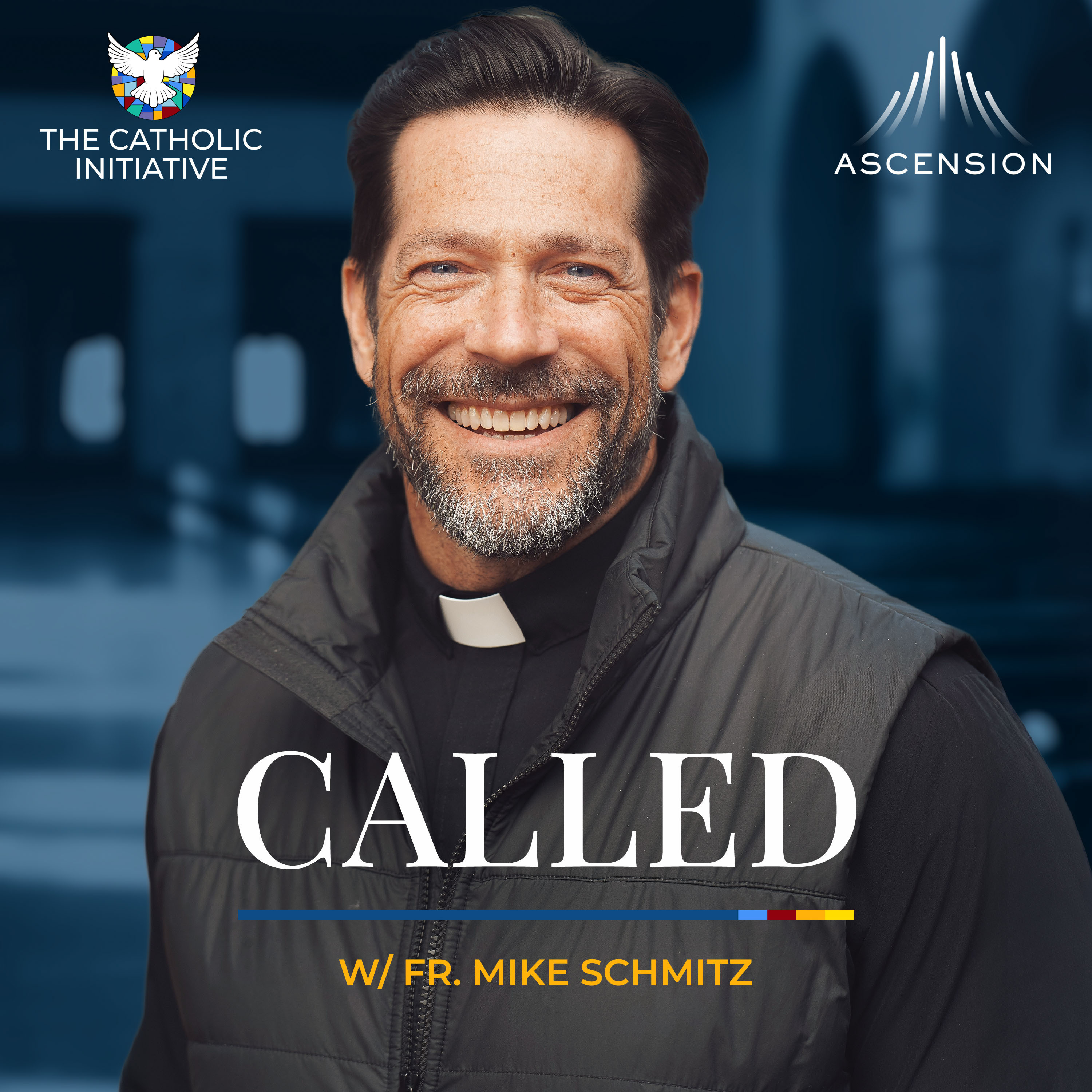
Called (with Fr. Mike Schmitz)
Called to Love Through Action w/ Fr. Mike Schmitz and Magnus MacFarlane-Barrow
00:58:01
In this episode of Called, Fr. Mike Schmitz sits down with Magnus MacFarlane-Barrow, founder of Mary’s Meals, to talk about what it really looks like to live out the Gospel. From a small village in Scotland to feeding over 3 million children every school day, Magnus shares the unlikely, grace-filled story of how a simple “yes” to God became a global mission of love. Together, Fr. Mike and Magnus reflect on Scripture, especially “faith without works is dead” (James 2:17), and explore what it means to take small, faithful steps—even when you feel unqualified, afraid, or unsure of the outcome. This conversation is a powerful reminder that God doesn’t ask us to do everything—He asks us to be faithful with what’s right in front of us. If you’ve ever wondered whether your small acts of love really matter, this episode will challenge and encourage you. To receive updates on the podcast text CALLED to 33777. If you have a question or a story of someone living out their calling to serv...
Loading summary
Transcript73 lines
- [00:00]
A
Coming up in today's episode of Called.
- [00:03]
B
I gave up my job, sold my house, and I just said to God, I'll keep doing this as long as there's a need and as long as people keep giving.
- [00:12]
A
How important is it for parishes and schools to be on the front lines of addressing hunger in their own communities?
- [00:17]
B
I think it's essential. Faith without good works is dead. Exercising that preferential option for the poor is not an option, really, is it?
- [00:26]
A
Not an option?
- [00:27]
B
We're feeding 3 million children every day now. Who would have imagined? But none within that, none of us or doing anything spectacular. I just think of it as like, lots and lots of little acts of love. We've been asked to do this one thing and to do it very well and to stay faithful to it. We're not called to do everything, any of us. He takes these little things and he does something beautiful. He transforms into something more than we ever could have dared to imagine.
- [00:54]
A
Hi, my name is Father Mike Schmitz, and welcome to Called, a podcast from the Catholic Initiative produced in partnership with Ascension and as a Catholic Initiative board member, I'm proud of what we're doing by renewing the church in serving those most in need. Just as we're taught in Matthew 25, through the restoration of parishes and schools, we're strengthening communities and we're bearing witness to a faith that is lived and not merely spoken. The letter of James 2:17 says so. Faith by itself, if it has no works, is dead. James is writing to early Christians who professed belief but were struggling to live it out, especially how they treated the poor, the vulnerable, and those on the margins. In just a few verses earlier, James gives a concrete example. He says, someone who sees a brother or sister in need and responds only with kind words, says something like, go in peace, keep warm and eat your fill, but offers no help. And James asks them bluntly, he says, what good is that? And that's what we're asking today. Actually, today we're joined by Magnus McFarlane Barrow. He's a man who honestly, truly understands this biblical message and has most definitely put his faith into action. Magnus McFarlane Barrow is the founder of Mary's Meals and is joining us all the way from Scotland. I have to say it like that. Scotland. Magnus, so good to have you on the podcast.
- [02:12]
B
It's great to be on. Thank you for asking me to join you.
- [02:15]
A
It's a joy and it's an honor. And also, I just have to say right now, if I start and I, like, say a word like Scotland. I say Scotland. It's just because I love the Scottish accent. I love.
- [02:27]
B
No, it's great. I'm impressed, Father. I think you got that spot on.
- [02:31]
A
Thanks. One word. The one word I can say.
- [02:34]
B
So.
- [02:34]
A
So I know you're. You're people just heard you're coming from Scotland. Could you tell us a little bit of. Of your background? Just, like, how. What is life for you, like, in Scotland? How did you get to where you're at right now? We're going to talk about Mary's meals, but just kind of. Can you give us a. Just here, share with us a little bit of. Even just of your. Your. How about this. How about your faith journey? Like, what is that relationship with the Lord? Have you always had faith? Or is this something that's. That's growing in the course of your life, or just. Yeah, give us a little. Give us a little taste of your life, Magnus.
- [03:02]
B
Yeah. Yeah. Well, so I grew up in this part of Scotland I'm talking to you from is a little village in the middle of nowhere, up in the mountains and the hills near the west coast. And it's a part of Scotland where there aren't too many Catholics. We're quite small in number. But I was blessed to grow up in a family with deep faith, and, you know, like everyone, I had to find my own way in that and make my own choices, and sometimes got that badly wrong, especially in my teenage years. I was a bit wild. I was very shy. I was very, very lacking in confidence. And I became a salmon farmer when I left school, really, I went to university after school, and I only lasted six months. I just couldn't make the adjustment from our little village to the city. And so I retreated, became a salmon farmer, working really in the middle of nowhere, off the coast, on the sea, and did that for six years, living very quietly and thinking I'd probably do that for my days. And certain things happened along the way that really transformed my life. But I suppose one thing I reflect on now, even though I probably wasn't kind of conscious of this as a young man, I realized more and more the example that my own parents set really probably planted things in me about trying to live our faith in the sense of serving others. So they made quite, well, in the eyes of the world, quite crazy decisions in their life. So, for example, when I was 12 years old, they decided to adopt a little abandoned boy who became my younger brother. He was called Mark, and he had a terrible skin disease, and he'd been abandoned in a hospital here. In school, and they just took him in, and he became a dear brother and son of theirs. And then later, after we'd made a family pilgrimage to Medjugorje in the early days, 1983, before it was an international place of pilgrimage, they felt that God was calling them to open our home, which had been a small hotel, and to turn it into a Catholic retreat center. So our local bishop gave us the biggest blessing of saying we could have the Blessed Sacrament in our home. And they made a little chapel in our main room, and people began to come from all over to spend time in prayer there. And a little community grew around it, and that's still here today. That's where I'm talking to you from now. So I had, I suppose, looking back at it now, quite unusual and I would say, privileged upbringing in that regard.
- [05:48]
A
That's remarkable. I mean, even that witness of your parents, first of all, and then that sense, I just. I'm going back to this place where here you are as a just again, what you've done. We're going to talk about that in a second. What you've done has impacted so many people. But as you're describing, from getting done with what we would call high school here and not going to university, but I mean, going, but coming home and being a salmon farmer for the next number of years, how do you make that transition from here you are again, just like you said, this is what I'll do for the rest of my life. Most likely from that to what you're doing now with Mary's meals, or even just say, yeah, what are the nuts and bolts of you making that transition from like, yeah, I'm a salmon farmer to what you're doing now?
- [06:35]
B
Yeah. So 1992 came, and by then I was 24 years of age. And by then the terrible war in the form of Yugoslavia had broken out, and my brother and I one night actually were literally sitting in our local pub having a pint of beer. And we'd watched the news reports and we were very moved because it was reporting on how refugees were suffering in an area close to Medjugorje, and because we'd had this experience of God's grace there many years ago and experienced huge hospitality there. I think that's why we felt so sad to see what was happening there. And we started saying to each other, wouldn't it be great if we could do something even small to help the people there? And before we really had any kind of proper plan, we'd launched this little appeal, asking people for Food and clothing. And three weeks later, we found ourselves driving this old Jeep across Europe from our village in Scotland over to Medjugorje, three or four days drive, and we delivered the things there in a refugee camp. But I only took one week's holiday from the fish farm to do that. I fully intended to return, but God had a completely different plan, because by the time I got back here, I found this mountain of donations. People just would not stop this outpouring of this giving us piles and piles of food and cloth. And so I prayed about it and I gave up my job, which, to be honest, wasn't a massive sacrifice. And I sold my house and somebody gave me a truck. And I just said to God, I'll keep doing this as long as there's a need and as long as people keep giving. And in some ways, that's the story. All this 30 years, I thought I might be doing it for a few months, and then I'd have to go back to the real world, as it were. And that's never happened because that story just has repeated and evolved in beautiful ways. I never could have imagined then.
- [08:34]
A
Well, this is even hard to take in. Well, here's one of the things. I was speaking with some people. We've done this called podcast, for a number of months now. And sometimes people's lives, people's stories seem so unattainable because it's just like, wow, these are people who, well, they went and got some advanced degree. These are people who have lived in a certain place where just like, they have a lot of resources, a lot of kind of potential in themselves. Your story is one of just here, whatever I have. It's almost like the five loaves and two fish. I mean, it seems like just you're saying, you and your brother, we see this need and just like, you know what? Let's just do something. And you started moving and then you just kept moving.
- [09:23]
B
Yes, and I think that's really important when I reflect on what God's done in this story, because I don't know, I think God's got quite a good sense of humor. He couldn't have chosen a less qualified person than me to do this. You know, not just in terms of a pretty limited education, but someone who really was chronically shy. So if somebody had said to me then, oh, you'll need to travel around the world doing public speaking and things like this, I would have laughed, or I would have just hidden. I would have run a mile, really. And, you know, I think God is a gentle God, isn't he like. He's certainly been very, very gentle with me. He asked me to do one little thing and I did it. And then he asked me to do another and another. And that's what this felt like, this whole journey and giving me what I needed along the way, you know. So some of the early experiences I had when I began driving back and forth to Bosnia in the 90s were, well, what I can only really describe as miracles that demonstrated God's providence. He did some things. I can share a story if you.
- [10:28]
A
Want about it, please.
- [10:29]
B
Well, there was this. Okay. So I began driving back and forth after people kept giving and I'd given up my job and just learning everything. I was on a very steep learning curve. I knew nothing. I wasn't even good at driving trucks, quite honestly. And I actually met my wife Julie, doing this work. She was a nurse in Scotland who gave up her job, also felt called by God to do this. And so I met her and she became my co driver. Turned out she was much better at driving trucks than I was. And so we began doing this work and. And during the course of it, too long a story to go into in detail now, but we found ourselves in this situation in Bosnia with some friends of ours who are Muslim refugees who we were helping to go home. We had to spend all the money that we had in our bank account. We'd started a charity called Scottish International Relief, and people were donating. So we had to empty our bank account to solve the situation and get those people safely home. So then I turned the truck round and I was driving home to Scotland, and it suddenly dawned on me. We've got no money. We have bills to pay, we've got donations of aid piling up and really pleading with God as I drove home, God help. What are we going to do? So I arrived home here in Scotland, and by now we were married. And Julie met me at the door and she said, magnus, I think you should look at this letter that's arrived. And my heart sank. I thought, oh, no, it's another bill. And I opened the letter and so the amount of money we'd spent was exactly £4,200. No one else knew that apart from Julie and I. So I opened this envelope and inside is a cheque for £4,200. And it's from a priest who I didn't know in Ireland. And he said, I don't want any thanks, I want to be anonymous. I just know that you need this right now. And it was the exact amount to the pound. And it was like God didn't just want. He wasn't just giving us what we needed. He wanted us to know he was giving us what we needed and that he always would. And that really, really informed our approach to this whole work, this realization that we just had to step out and fully trust in him and that he will never let us down.
- [12:43]
A
Wow. That just. That's really convicting in that sense that I know that for myself, there's that sense of, okay, I'm not gonna step out until I'm ready. I'm not going to step out until I feel ready. I'm not going to step out until there's enough buffer, all these kind of things. And yet what you're describing is, no, I'm going to step out with. I think he just said gentle. It's. It's not. Not. I think sometimes I come back to this place where sometimes we imagine that it's a leap of faith as opposed to just, no, it's just a step of faith. But the more you. You took those steps, the more God showed up, the more like there was this. I just get the sense of God saying, yeah, you can take the next step, too. Magnus.
- [13:27]
B
Yeah, I agree. Sometimes I actually worry when I'm asked to give testimony and tell the story, especially to young people, because it can be misunderstood like that we're all called to do something big, like, may these meals become this big thing. I never expected. But that's not really the point. The point is that first bit, like, just doing what we can, what happens in front of us, because all of us encounter people that need help in our parishes, in our communities, or sometimes we're called to do something different in terms of the kind of work I'm doing. But we can all do something. But I think especially, well, certainly in my case. I know when I was young, I had this overriding feeling of not being worthy. Like, this idea, I can't do anything. I might be moved by what I'm seeing in terms of suffering, or I might be have a sort of sense of righteous anger about global hunger. But who am. I think I could do anything about it. And then I think over and over again, I see that people all the time, when they get involved in this mission, talk to me about how, yes, it's helping the children we feed, but actually it's changing them that we become more fully human when we step out. Probably one of my favorite bits of scripture, I think, is Ephesians 2, where it talks about us being God's. Handiwork and how he's created us to do good works that he prepared in advance for us to do. It's this idea. It's not just that we are unique, that we're his handiwork, but he's prepared in advance works that only we as individuals can do that if we walk past him, no one else might ever do those good works. So I think you're so right, Father, about this idea about. For most of us, and certainly for me, it's about trying to do the smart, the small things with. With love.
- [15:19]
A
Yeah.
- [15:19]
B
Well.
- [15:19]
A
And even those two pieces there, the with love part, which is. Which is everything, right? That is St. Paul saying, like, I could do miracles. I could do wonders. I could. I could preach all these. I could even hand my body over to be burned. But if I don't have love, I have nothing. And so that. That. That core piece of, like, what drives the whole thing is your love for the Lord, your love for other people. And I just really. I really want to go back to this place where you. You highlighted it. You're the one who. I think sometimes we put this burden on ourselves that says, okay, sure, I'll give my five loaves and two fish. And then it's got to become huge. And then it's got to become big. Then it's got to become like you're feeding millions of people as opposed to, like. No, it might just be your five loaves, two fish, those. You're helping the person in front of you, and then the next day you're helping the person in front of you, and the next day you're helping the person in front of you. And it's just.
- [16:13]
B
Yes. Yeah, absolutely. Yeah. It's one of the things I love about Mary's meals. You know that we're feeding 3 million children every day now, who would have imagined? But within that, none of us are doing anything spectacular. I just think of it as, like, lots and lots of little acts of love, you know, lots and lots of people doing something. And then, you know, God takes that, like what you're saying about loaves and fishes. He takes these little things and he does something beautiful. He transforms into something more than we ever could have dared to imagine.
- [16:48]
A
Well, I love that lots and lots of people doing something that transforms. You had. So I just. At the same time, you did start Scottish International Relief and Mary's Meals, but there is a. Someone had shared. There was a story about a decade after you started the Scottish International Relief when you were in Malawi and you Met someone named Edward. Can you tell us a little bit about a boy? He's a young boy named Edward.
- [17:17]
B
Yes, that's right. And that was really that encounter that led to the birth of Mary's Meals, because we'd been working under the names Scottish International Relief until then. So 2002 was a year of terrible hunger in southern Africa, and in Malawi, many millions of people were facing starvation. So by now we were working in a number of countries, not just in the former. And we found ourselves in Malawi doing a very simple emergency feeding program, taking food into villages where people were literally starving. They were eating the leaves of the trees to try and survive. And I was staying with a parish priest there, and one morning he said to me, magnus, would you like to come with me when I visit the sick in my parish? And he explained outside the first home that the father of this family had died and the mother was now dying. And so we went in and Emma, the mother, was lying on the floor, and she had her six children sitting around her. And her oldest child was called Edward, and he was 14 years of age. And I began talking to him. And at one point I said to Edward, I think I was trying to find some light, find some hope in a very, very grim situation. And I said, edward, what's your. What's your hope? What's your ambition in life? And he said to me, well, I'd like to have enough food to eat, and I'd like to be able to go to school one day. And that was it. That was his entire ambition at 14 years of age. And so it started me thinking in a new way about the fact that there are millions of children in this world today who are missing school because of hunger or who are in school too hungry to learn. Probably about 140 million children in the world like that. So many of them are working, they're begging, they're doing whatever they need to do to survive. And so they're missing their opportunity of education. They're missing that one ladder out of poverty. So Mary's Meals just became a response, really, to Edward's words, this idea of. Of providing one meal every day in a place of education. And from the beginning, we wanted to do that in a particular way, using local food to help the local farmers. And we wanted it to be owned by the local community, so to invite them in and their little acts of love so that they became the volunteers cooking and serving the meals. And we felt in a very particular way with this new work, that it belonged to our blessed and we gave it to her, her name, obviously, and we asked her to show us how she would do it, how we should do it, in a way that would honor her, in a way that would point to her son, Jesus. And so we began. We began just feeding 200 kids not long after that encounter with Edward.
- [20:12]
A
Wow. And was that in Malawi where you started doing that?
- [20:15]
B
Yeah, that was in one small village in Malawi, just one school of about 200 and then the next school, because very quickly we could see it worked lot. Children who had never been to school before began coming because they could eat. And the school roll, I think, nearly doubled. And then the next school along the road came and said, can we have Mary's meals as well, please? And they said, yes. And meanwhile, this movement of support grew, and so it's gone on. So today in Malawi, we feed well over 1 million children every school day. Over 20. About 25% of the children in Malawi eat Mary's meals. But we're also in 16 other 16 countries in total around the.
- [20:57]
A
Wow. I love how you said we wanted to do this in the way that Mary would do it, or how kind of with the. How would you. What was your lens for that?
- [21:07]
B
Yeah, we just asked her to show us how to do it and in a way that would honor her and in a way that would point to her son, Jesus. Because I think at every level, our lady helps us. Like, she. Obviously, she was a mother. She was a mother who had to look after Jesus when they became refugees and fled to Egypt. They must have struggled at times. She understands what it is to be a mother in that situation. There's so many mothers around today in Malawi and many other of the poorest countries in the world. So she's a practical mother, isn't she? And also, we want this work. We want to do this work. You said it earlier, Father, so well, it has to remain a work of love. That's one of my concerns. As this work grows around the world, that we can get so caught up with numbers or targets or that it loses is the most important thing that it is a work of love. And if we. I know that if we stay rooted in that and it is a work of love by so many of us each day that it really will point people to Jesus. Because this is a work that people of all faiths and no faiths are invited into. And I see what God starts doing in so many people when they become part of this.
- [22:22]
A
Well, do you think that having that vision, that sense of, okay, Mary, how would you do this, and let us do this in a way that is guided by your inspiration and kind of from your perspective, that leads to Jesus. Do you think that that has contributed to you doing this? There's other groups that do their best to feed. There's other groups that do their best to help those who don't have. Do you think that that particular lens has shaped Mary's Meals in a way that is unique among other groups that do great get. Great work. But. But would you say that you have a different character, a different kind of charism?
- [23:02]
B
Well, I think so. There's so many good organizations and good ministries out there. So in one sense, I hesitate to say unique. In the sense of better, I don't say that, but it's certainly unique because for me, Mary's Meals is a gift given. I hope that's understood from the story I shared with you. This isn't a human plan. I never sat down with anyone and said, oh, I've got this idea to do this and to do that. It's a gift given. And my role as a leader in Mary's Meals, more than anything, I feel, is like a steward of that gift. And even 30 years later, I feel like I'm still unwrapping this gift and understanding more fully all the time, that it's even more wonderful than I first thought. It just gets more and more amazing. And I still nowhere near. We are still nowhere near the end of that journey. So we're looking after this thing. And I do. I feel like. Like, our blessed Mother is my boss. Like, that's how I would put it. I work for her. It's hers. I'm working for her. I'm doing my best, and she looks after us. And so some of that's a mystery, like why God asked me to do this or any of us to do what we do. Some of it remains a mystery. I don't claim to understand all of it, but it is, to answer your question, it is in a very, I think, profound way, something that belongs to our Blessed Mother. It's hers. Yeah.
- [24:28]
A
That's remarkable. Is that how you'd say, like, when it comes to that growth from. Let's go all the way back to saying, here in Bosnia, we want to just drive across the. Across Europe and bring food, clothes, whatever supplies they need to feeding 3 million people a day and education, how do you make sense? Do you have to make sense of it? Or do you say, lord, it's a mystery. I just entrust it to you into your hands, because here's what I think. I think sometimes a lot of us, we say, okay, I need to kind of really understand where this is coming from, what God is doing, how he's doing it. Or would you say, yeah, I have made sense of it. I know what he's doing. Or would you say, I don't know what he's doing, but I'm going to lean into it?
- [25:13]
B
Yeah. I mean, sometimes when I think back about that thing we spoke about at the beginning, that I have no qualifications to do this, Mark, and I'm not very well educated, actually, maybe makes that easier in a way, you know, and. And in some ways, I think that's a blessing because from day one, I knew that I didn't know what I was doing, really, and that a. I had to bring in other people who did. But it wasn't about me. It was about trying to encourage and invite people in who did know what they were doing. So I think that's been good and healthy in a way from the beginning. And also, I mean, I think one of the beauties of Mail's Meals is it is a work of the heart and the head. We're trying to do this in a way that does set children free from poverty. So it goes beyond the immediate act of charity, which is beautiful in itself, of feeding that hungry child. We all want to do that, but by linking it to education, we're trying to do it in a way that really does tackle the deepest underlying cause of poverty in today's world. But there's something about going back to your question, just personally, I'm quite comfortable not understanding things like, I don't understand very much. I'm actually doing your wonderful catechism in a year right now, and I'm learning so much that's awesome. Of maybe the other way around, because some of it encourages me so much because things I didn't. I see it like, oh, when I hear it and I learn those truths, I think, oh, that's my experience in life. So some of that way, other way around for me.
- [26:45]
A
That's amazing. That's so cool. I mean, and that is. That goes back to love, right? Goes back to. Or even just that, that quote from James that we started out with, that sense of faith without works is dead in that sense of, here you are living faith in action. And now as you're studying the catechism, more like, oh, this is the faith that I've been living for these years since you started responding to the Lord. How do you define success? How would you say, okay, this is how I know that, yeah, I'm being successful right now or in life. How would you define success?
- [27:21]
B
So I think that's a hard question, actually. Father. It's a source of tension probably within the Mary's Meals family around the world, because a lot of people, I notice a lot of people need targets, need number targets. And I get that, you know, you need a rallying call, you need a goal. But I'm not really wired that way, and I'm a little bit sometimes worried about that because of what we've just talked about, because I don't think ultimately we are in control of this, that, you know. So I just was talking earlier today, you know, in a team meeting in Mary's Meals, and we are setting our next goals for the next three years, you know, and it's important, but I just always caveat it with that sense of we need to leave room for the Holy Spirit to work. Nearly all the big things that have happened in Mary's Meals that have accelerated things or unlocked new growth have been things we didn't really plan. They've just happened in beautiful, unexpected ways. So there's a risk in us becoming too bound to goals that we've just set as humans. So I think your question is really important. What is success? And for me, the values, and they're about the things we've talked about, really, our values are about trying to ensure this remains a work of. Of love. It's about people. It's not about numbers. It's not about, as we fundraise, starting to treat people like ATM machines or, you know, imposing marketing techniques on them. It's about human beings and inviting them in because we love them and we respect them, whether they're the hungry child or whether they're the person that might want to share some of the. What they have. It's about what's best for them. So success for me is about us staying true to that even as we grow. And the other way around, I feel if you get that right, and if you stay true to that faithfully day after day, year after year, then growth looks after itself. Because don't get me wrong, we do want to grow. We desperately want to grow. Because there are millions of children today, right now, as we speak, who are starving, who are out of school. And that's a scandal that cries out to all of us as Christians to respond. So we want to respond, and so we want to grow. But we don't know. We don't know the future.
- [29:53]
A
Well, it's what I Hear in there is that sense of, okay, so all these things. One is the vision belongs to the Lord. Like that sense of. Like that we work, but the Lord blesses the growth. In that sense that's coming out from Scripture in that sense of. A couple things I've heard is that you have to do the nitty gritty work of planning and having vision. But the thing is, no, it all comes back to what does God want from this? What does God want from this? But then also, it sounds like you all aren't. It's the difference. It's the combination. I think it's like the paradox of you're both simultaneously surrendered to what does God want? But also aggressive in that sense of. But God wants. Wants these children. He wants people to be loved, to be fed, to be educated. And so it's. So the idea that we're going to let go and let God doesn't mean that you're passive. It means that you're being actively led. That's what it sounds like. And actively led to say, we will do all that we can, provided that the Lord reveals that to us. Is that kind of accurate? Or maybe I'm just kind of fumbling.
- [31:01]
B
No, no, I love that, Father. I'm taking notes here so I can say that better next time because I think you captured that very well. Because there is a tension within at times, isn't there? You know, about when to recognize that we can't control outcomes always, but we can to an extent, control what we decide to do every day. Just that simple. Yes. When we don't feel like getting out there and doing it again, we do anyway because we know it's the right thing to do. So I think faithfulness is a big part of this as well.
- [31:34]
A
Well, that sense of also faithfulness being. That has a number of different words we can use in English that represent faithfulness. One is steadfastness in that sense of, like, perseverance. And you're continuing to say, okay, what can we do now? How can we grow now? How can we be faithful to the Lord now? And not just in a moment, but over time as well, which is what you've done. I mean, you've seen since Mary's Mill started, 2002, that's here. We're 24 years later. Have you seen children or people who once were children, but they've received Mary's meals, they've been educated, grow into adults with families of their own? Have you seen any of those kinds of stories? Those people.
- [32:18]
B
Oh, it's so it's one of the wonderful things about getting a bit older now, Father is, you know, lots of ways. I'm recently now into the grandfather stage. Congratulations. That's right. I love that. I love my two grandchildren, but also within their. This work, it's so beautiful, the passing years to see the fruits and they're abundant. So I could give you so many stories, but I'll give you one. There's a young girl called Leti in Malawi, and many years ago, we made this beautiful documentary about our work. And it's actually quite hard to watch the opening scenes of that documentary. It's called Child 31. And it opens with us meeting this young orphaned girl. And I remember like it was yesterday. So Leti was orphaned. She had no adults helping her at all. And she had two young brothers, very young, like three, four years old. And she was just doing whatever she could to try and look after her little brothers. They were all hungry. They were all out of school. She was carrying them wherever she went. It was horrible. It was an awful, awful situation. So, anyway, anyway, we filmed it because we wanted people to know this is the reality that many children are in today. But obviously we went back the next day to see what we could do to help Letty. And we took her to a school where we were serving Mary's Meals, and she enrolled there. She was 12 years old at the time. And I remember the teachers being a little bit unkind when we took her to that school. They said, well, we'll take her in, but, you know, they're a little bit patronizing. Letty's not really gonna be able to learn very much because she was very ill. She was chronically malnourished. But anyway, turned out Letty was a very good student indeed. And she went right through school. She went on to college, and today she works for Mary's Meals. She's in our communications department, having graduated from college. And she doesn't just work in an incredible way for Mary's Meals. She volunteers as a youth. We have youth ambassadors all over the world. So in her spare time, she's out there speaking, telling people about Maimie's Meals. Last summer, there's a big youth festival in Medjugorje every year that people from all over the world, young people, come to. So she was the speaker at that festival this year. And to stand there and watch this incredibly articulate, dignified young woman talking to this crowd about her life, about what she does and her hopes for Malawi and how things can get better, there was just one of the most incredible moments of my life. Life, Father. To see that just. That's just one light. That's just one. It would have been worth it for Letty. There are millions of Letys out there now today.
- [35:08]
A
Wow. That's incredible. Thank you for sharing that, because that's so inspiring. And just that sense of. It gives me that sense of. You know, I can imagine meeting Leti and having her two brothers and, like, what in the world can we do? Like, what can we do? Being overwhelmed by the desperation that she might be in the midst of, or overwhelmed by that kind of what you're up to or what you're facing up against and what you're facing in this whole process, you know, even to go back to 1992, have you ever felt. You mentioned being unqualified. Have you ever felt overwhelmed by what you were being asked to do?
- [35:51]
B
Sometimes maybe not overwhelmed. Cause I. But certainly some days, yeah, maybe some days. Feeling very out of my depth, nervous. Especially in the early days when I had to start doing public speaking. But even today when I have to do a public talk, I still get really nervous. So maybe not overwhelmed, but certainly I feel like this. When you set off on a journey like this, you need to be prepared to step out of your comfort zone over and over again. But I think that's the wonderful thing. That's when you start getting surprises about yourself. You start learning things about yourself, you know? And that's why I used to be very embarrassed in the early days when people who would donate to Mary's meals, I would try to thank them and they would say, no, thank you, thank you. And I would be like, that's strange. Why are they thanking me? But I get it now. They're thanking because when we really do take part in the work like this, it makes our lives better. We discover more about who God made us to be and how wonderful we are, you know, And I think that surprises us. And that's why I especially love in Mary's meal. Seeing young people get involved in this work. It seems to have a particular attraction to young people around the world. They're leading a lot of this growth, and you can see them learning things about themselves that they personally can do something that God did make them for this. Yeah.
- [37:18]
A
Yeah. And that's so, so inspiring when you've experienced that fear or that feeling of inadequacy of what you're being asked to do and recognizing that others. I mean, people who are listening to this, whether they're young or old, every one of us is being asked to live out our faith. Every one of us is being asked to take a step forward, whatever that step is. And a lot of us experience the fear. The fear of whether it be inadequacy or I'm not qualified for this, or I can't. How can I do this for you? When that fear showed up or when that shows up, Even if it shows, it does happens now, how do you respond to it? Like, what do you do when you're like, okay, I'm overwhelmed or I'm unqualified or I'm afraid?
- [38:08]
B
Yeah. I mean, maybe even just before I answer that, I think. Just listen to you. I think there's something, isn't there, about. I think if we really want to carry out an authentic act of. Of charity, a work of love, I think there's always gonna be an element of risk involved. We can think of lots of different kinds of charity. If we're really stepping out there, we're taking a risk. That's kind of the point. It might not work out the way we intended, you know. So I think, therefore, going back to your question, you know, I think it's so important to root ourselves in trusting that God will look after us in this. If we are stepping out in his name to love the person who's suffering, he's not gonna abandon us. He's gonna give us what we need to do that. But, you know, I think a large part of that has to be us trying to be people of prayer. You know, I always describe Mary's meals as a fruit of prayer. You know, I shared that at the beginning of our conversation, how my mom and dad turned our home into what's called a house of prayer. It's called Craig Lodge family house of prayer. And for me, it's no coincidence. House of prayer was happening for 10 years before this work was unexpectedly born. And none of us planned it. For me, it was a fruit of prayer. And for me, it's just so much about, again, trying to stay faithful to that. And, you know, I certainly struggle in the busyness and the things that happen every day and, you know, around routine. And I'm sure we're all like that in different ways with our families and our work. But I think there's just something about just trying to stay faithful to that, stay rooted in that. Because I think this word just becomes. It just very quickly becomes a burden if we don't. Because we start wrongly thinking it's depending on us. And then it just becomes so heavy so quickly, you know, I make that mistake. And I realize this is too heavy for me, and you just have to go back and put it in the right order.
- [40:11]
A
That's really important. So what I hear is you're saying when that fear comes up, when the inadequacy comes up, it's not like, well, no, I can do it. Here I am. It's like, okay, Lord, you're letting me experience my inadequacy so that I can lean more into you as opposed to. So I can become that strong person. It's like, no, I might never become any stronger than I am right now. But, God, I have to lean on you. And I love the fact that Mary's Meals has come out of that place of prayer as opposed to, hey, I got a great idea. It's like, okay, God, what do you want us to do?
- [40:48]
B
Yes, no. And I suppose just thinking again about. You were asking me earlier about in what way this sort of belongs to Our lady or the relationship with her. And again, she's our role model in that thing, isn't she? That, you know, in terms of her fiat. Her, yes. But she actually knew so little, really, about God's plan in terms, you know, and yet she said yes. And then she said yes again and again without, I don't think, seeing the whole picture. And I think she can really help us in that, you know, that realization. We don't need to know the whole picture. We don't even need to know what's going to happen tomorrow. But we can still step out into that thing that God's put in front of us today.
- [41:31]
A
It's so good. Because I think about that all the time, about how even in Luke's Gospel where Gabriel appears to Mary and says, here's God's plan. He want the mother of his son. And she has her clarifying question, you know, how did this happen to me? I have no relations with the man. He answers. And she just says, yes. And then the angel leaves. She says, and like, what?
- [41:50]
B
There's no. No, no.
- [41:51]
A
Before you go, tell me, I think.
- [41:54]
B
Most of us would want to know more, wouldn't we?
- [41:55]
A
I want to know more. Please let me know. So going back to, like, even the kind of the nuts and bolts of Mary's Meals, how would you. How would you describe. I mean, you kind of already did already, but for someone who's never heard of Mary's Meals, how would you describe what you do in simple terms?
- [42:11]
B
Yeah. So we're all about providing one good meal every day in a place of education for the world's poorest children. And those meals are nearly always consisting of locally sourced ingredients. So we're helping the local farmer and the local economy. And those meals are always cooked and served by local volunteers. You know, nearly always people who are living in real poverty themselves, but who are choosing to make this their gift, this gift of time so that the children in their communities might eat. And I love that because, you know, when I talked earlier about this just being a whole lot of little acts of love, it's joined up. It's not about a bunch of rich people in the west giving to a bunch of poor people who are just passively waiting in the world's poorest countries. It's not that. It's all of us walking together with this simple goal that the child might eat every day. So we all bring different things to that. So it's very, very simple. And again, I think that's one of the things that just makes it so beautiful and so startling. It's startling in its simplicity. And it works. It's not just a nice idea. It works. The kids come to school and they learn, and we see it in the lives of young people, like lens, this works. This changes things.
- [43:31]
A
Well, I was thinking about that, that sense of, like, if anyone were to say, okay, I'm going to try to solve this problem, we would get really. I think a lot of our solutions would be very, very complex, very, very complicated, and they'd be just very involved. And you're saying, okay, no, we're going to offer a meal and we're going to offer education, a place of education. And even just. I think one of the. What strikes me about Mary's meals is, as you noted, this is locally sourced food. This is locally served in that sense that, like, you're right. So we do a thing up here in Minnesota, maybe it's around the States as well, where we'll go down and we'll kind of pack meals. We'll pack meals that then will be shipped off to different places. And I think that's a good thing. I think we can do good that way. But I love that you're saying we're helping the local community, even interiorly. And it's just very simple. Sorry. And when I say simple, I don't mean easy and I don't mean not complicated. But I just.
- [44:36]
B
Yes, again, I take that as a compliment, Father. I want it, but I understand you. It's not simplistic. We're not being simplistic. We're not being naive. But I think. I think, matey's, meals requires a bit of, like, stubbornness almost about, we're gonna stay simple. Because for good reasons, almost every day I get someone coming to me saying, magnus, why don't we do more in agriculture or why don't we do more in water or all these other needs? So, for good reasons. But it's no, we've been asked to do this one thing and to do it very well and to stay faithful to it. And God will call other people to do those other things that we are not called to. We're not called to do everything any of us.
- [45:15]
A
That needs to be clipped, because that is so important. Exactly. That sense of we are going to do what we are called to do and other people, because this is that notion of lots of people doing little things makes a massive impact. And you're saying we're going to stay on our mission. On our mission is this. And as opposed to branching out, like you said, into water or something else. Well, then you don't get to feed as many kids. You don't get to educate as many kids. And so if you can fix that, like, here's this flywheel we're coming back to again and again, that is so powerful. One of the things here that we care about at the Catholic Initiative is making sure that our churches and schools are places that actually, like, we're talking about a real tangible care. So that includes having, like, active food pantries or food drives. And, you know, from your perspective in maybe here, the west, because my guess is that a lot of people who will be listening to this are people in the West. From your perspective, how important is it for parishes and schools to be on the front lines of addressing hunger in their own communities?
- [46:25]
B
I think it's essential. You know, you reminded us at the start of this about what we read in James in Scripture, faith without good works is dead. I don't think I'm going too far and saying a parish that doesn't have good works, maybe that's going too far to say it's dead. But I would worry about that. I would say, you know, a faith community that isn't involved in good works is dead. Well, it's certainly not attractive, you know, if we want to invite more people in, if we want to preach the good news and we're not involved in caring for the most vulnerable in our communities, I don't know how we can do that. I think we're kidding ourselves. So, actually, quite recently, my wife and I have started a new organization here called Generation Hope. And it's really. I'm fascinated by the Catholic initiative. I'd love to learn more about what you're doing because we are seeing something similar or trying to do something similar here. But in schools primarily, where we see people, many of whom have in the UK today, in Scotland today, have very little knowledge of. Of Christianity, of the Gospel, you know, but we see them through a work like Mary's Meals. They're so engaged. That's where we can meet them. That's where we can have dialogue with them. And we're trying to create this new movement that is about young people understanding that to be Christian has to involve participation in works of mercy, in good works. So. So yeah, I don't think it's exercising that preferential option for the poor. It's not an option really, is it?
- [48:11]
A
Exactly.
- [48:12]
B
Yeah.
- [48:13]
A
No, it's necessary. I mean, it's one of the reasons why again with this called podcast we took as kind of as the springboard is Matthew 25, that I was hungry and you fed me, I was naked and you clothed me. And if you didn't I was hungry, you didn't feed me, I was naked, you didn't clothe me. There's really big consequences, not only in the afterlife, but also really big consequences in this life. Last two quick questions, if that's okay with you. I think a lot of times when we look out at the world and we look at this scale of it doesn't even have to be global hunger. It can be even in our communities. It's just one of those overwhelming. This seems like such a problem that's so big. What gives you hope that real change is possible? Or when you look out and see this again, 140 million children. That's not to mention all the adults and all the other people who are suffering. When you look out and can see this overwhelm, what gives you hope that real change is possible and what do you choose to focus on?
- [49:17]
B
Well, maybe I could answer that in two ways because sometimes I totally understand this idea that global hunger is just overwhelming. It's too much. It certainly is too much for any of us as individuals. However, I think sometimes we might need to remind ourselves and put that into context because I think there's this wrong narrative or this kind of myth that children are it's kind of inevitable that there's not enough food in the world. It's not true. We live in an abundant world. There's more than enough food for all of us to eat. Well, sometimes an even more sinister way of expressing that is, there's too many children in the world. You know, we know that. So we were doing some calculations recently, like what would it take to feed all the children who are, you know, in the world's poorest countries who are without a school meal. And we did that calculation and I compared it to the amount of money that we spend on our pet dogs just in the uk, nevermind globally. In the uk, we spend about three times as much on our pet dogs as it would take to feed all those children who are currently without a meal in school. So it's not insurmountable, collectively, it's not insurmountable, far from it. Those children are hungry and out of school, not because there's not enough food in the world, but because of our choices as a human family. So this vision of ours, the vision of Mary's Meals is that every child in this world should eat a meal every day at school. And people used to look at me like I was crazy when I would say that. It's not crazy, it's much more crazy that any child would be hungry today. So in one sense we shouldn't be overwhelmed. But of course that's not down to me or to you or any individual. And therefore it becomes important to go back to that thing we talked about. Let's do what we can do, what's in front of us today. That's all, that's all we're asked to do.
- [51:13]
A
That's incredible. And again, it's that inspiring thing. Put it in the context of this is actually very, very possible if lots and lots of people do something. So your work, this ministry that the Lord has entrusted, that our Lady's entrusted to you, has great success in that, you know, 3 million people, 3 million children every day. But the need is great. So what, what I know we talked about vision and you're meeting with your, your folks, your leadership. What's next for the organization, Mary's Meals or Generation Hope? What, what's your long term vision?
- [51:53]
B
Well, in every country in which we're working, Father, we have a waiting list of schools who are waiting for us. The children in their communities are hungry, they're out of school and they're ready to volunteer and they're waiting for us to say yes. We have the funding to go on. So we are constantly out there all over the world, volunteers, speaking and inviting people in. You know, it only costs $25 to feed a child for a whole school year. That's all. You know, and so it's just that we just Go on. So. So the first goal is to reach the next school waiting and the next child waiting and to say yes. And we've got roadmaps that would take us to 4 million children from the 3 million and beyond. You know, it's all about inviting more people in to make that possible.
- [52:37]
A
That's incredible. So for those. Anyone listening to this who's. You know, again, part of the podcast is about helping people discern their own calling, especially those whether they haven't started out yet or those who are already working in demanding professions. You're someone who's on the front lines. What spiritual advice would you offer for staying faithful in the long run?
- [53:02]
B
Prayer number one. Try to be a person of prayer, even when it's difficult, even when you get it wrong at times in terms of just losing routine. I experienced that many times. But you just can't give up. There's no point in just beating ourselves up. Just get back to it and really be disciplined in that life of prayer, because so much flows from that. It's very hard to get other things right when we don't get that right. And I think the other thing I would say is just this balance between not underestimating what God can do in us. He will surprise us when we step out, but at the same time, try not to get it wrong the other way around. Don't think we need to do something spectacular, because most of us, most of the time don't need to do anything spectacular. We just need to love and put it into action. It's not complicated.
- [53:54]
A
Yeah, that's. So what I'm hearing is a couple things. One is just start. Just put it into action. Just that, like you said from the very beginning, who's the person in front of you? What's the need in front of you? And it doesn't have to be a massive program. Get started. But also, also Mary's meals. All of the work that you have done your whole life, it started with prayer. It has been sustained by prayer, and it will only continue through prayer. And that's the life of every average Catholic or average Christian who wants to follow Jesus. Those two things, we have to just do what's in front of us and pray because it can't be us. Any last notes as we wrap this up? Any last things just burning on your heart? Something like, here's what I would love to share with folks before the end of this conversation.
- [54:48]
B
Well, just. This has to be a work of joy as well. You know, sometimes we can get this wrong idea doing these Worthy things, you know, that we need to go about with serious faces. And it's all a burden. You know, I think one of the hallmarks I see in Mary's Meals, whether it's the volunteers who get up at 4am to cook the meals in Malawi, they sing as they cook and they have, you know, and I see it the same with the kids who are fundraising in high schools in Europe or in the usa. You know, they do it with joy, you know, And I think that's what we want, isn't it, in terms of desire to introduce people to Jesus, spread the good news. We want people to look at us and say, like, see how they love one another, you know, see how they love one another. And I think that joy is such a big part of that. So let's not do this with long faith.
- [55:40]
A
Amen. Magnus, you mentioned that $25 could feed a child for the entire school year. If someone wants to get involved with Mary's Meals, if someone wants to get involved with Generation Hope, what would be a great place for them to find out more or to get involved?
- [55:57]
B
So the best thing is just to go to our website, just type in Mary's Meals. It'll take you to the relevant website in your country and there you'll find, find out lots of ways you can get involved. Volunteering, praying for this work and making donations. Allow us to buy the food if you want. It's all there. So we need you all to come in and help us reach that next child.
- [56:21]
A
That's fantastic. Thank you, Magnus. Thank you so much. I'm just honestly, truly so inspired. Inspired in both that sense of like, here's small things, small steps, small steps, but also that sense of perseverance and, and that call to just really lean into the Lord and lean into prayer and yet let Mary like Mary. How would you do this? How would you feed kids? How would you educate them? And I just, I love that as a model for leading us to Jesus and being his hands and feet in the world. And so thank you so much for joining us today.
- [56:56]
B
Thank you, Father. It's been a pleasure. I've enjoyed it so much too. Thank you.
- [57:00]
A
Thank you. And thanks to all of you for listening to called this podcast is made possible by the Catholic Initiative, which is inspiring bold faith in action by investing in vibrant but under resourced Catholic communities through the restoration of iconic parishes, restoration of schools and community institutions. If you want to learn more about their projects or if you want to discover how you can make a difference, you can visit TheCatholicInitiative.org Again, that's the or TheCatholicInitiative.org Remember, the gospel is more than words. It's a way of life. As Jesus reminds us In Matthew chapter 25, when we serve the least of these, we serve him. So until next time, let's keep listening for God's call, and let's have the courage to answer it. God bless.