
Podcast
Calvin Coolidge
Hosted by Glenn Beck · EN
Watch The Glenn Beck Radio Program, Monday through Friday, 9am - 12pm ET on BlazeTV. www.BlazeTV.com/Glenn
4episodes
Episodes
Newest firstAll episodes

Serial: Calvin Coolidge - Part 3
Jul 9, 201800:14:26Tap to summarizeCalvin Coolidge was a man of few words. In fact, his nickname back then was Silent Cal. As he boarded the train heading back D.C. after being sworn in, someone asked if he was ready to be president of the United States. His reply? I believe I can swing it. And swing it, he did. Coolidge became obsessed with shrinking the size of the federal government. After he and his predecessor had slashed the budget from 18.5 billion to 6.4 billion, Coolidge cut it in half again to 3.3 billion. The first president to address the nation using a new medium called radio, Coolidge announced his plan for “the people of America to be able to work less for the government and more for themselves.”
Transcribe →
Serial: Calvin Coolidge - Part 1
Jul 9, 201800:15:50Tap to summarizeCalvin Coolidge, 30th president of the United States, was born July 4, 1872. Not exactly what you’d call the most likely to succeed, Coolidge was taciturn and withdrawn following a sad and sickly childhood. However, beyond his silent exterior was an honest and hardworking young man who graduated cum laude from Amherst University with a law degree. When Coolidge ran for office, people began to take notice. He was a person they could trust to work for their best interests — not special interests, but for the country and the economy as a whole.
Transcribe →
Serial: Calvin Coolidge - Part 4
Jul 9, 201800:12:49Tap to summarizeAfter the Woodrow Wilson years wrongly magnified the office of the presidency to near monarch-like status, Coolidge returned to a constitutional balance of power. His hands-off or approach to government meddling while cutting federal spending and taxes led to virtually full employment and the most prosperous decade perhaps in the history of mankind: The Roaring ’20s. A fierce advocate for civil rights, Coolidge granted citizenship to Native Americans and fought for the equality of black Americans. His was a presidency of firsts in many ways. He was the first to light the national Christmas tree in 1923, give a presidential radio address and broadcast an inaugural address nationwide. As the next election neared, the Republican party was thrilled to have a wildly popular incumbent president run again. However, the wildly popular president was still despondent over the death of his beloved son. As party bosses hounded him to run for a second term, Coolidge traveled to South Dakota. It was there that the president encountered the sculpting of Mount Rushmore. Disgusted by the grandiose display, Coolidge decided then and there to walk away from another term as president. He wrote in his autobiography that, after a while, the president becomes vain, surrounded by yes-men, and begins to believe in his own grandeur. It was a great safety and comfort for the country, he wrote, to know that the president was not a great man — simply a man.
Transcribe →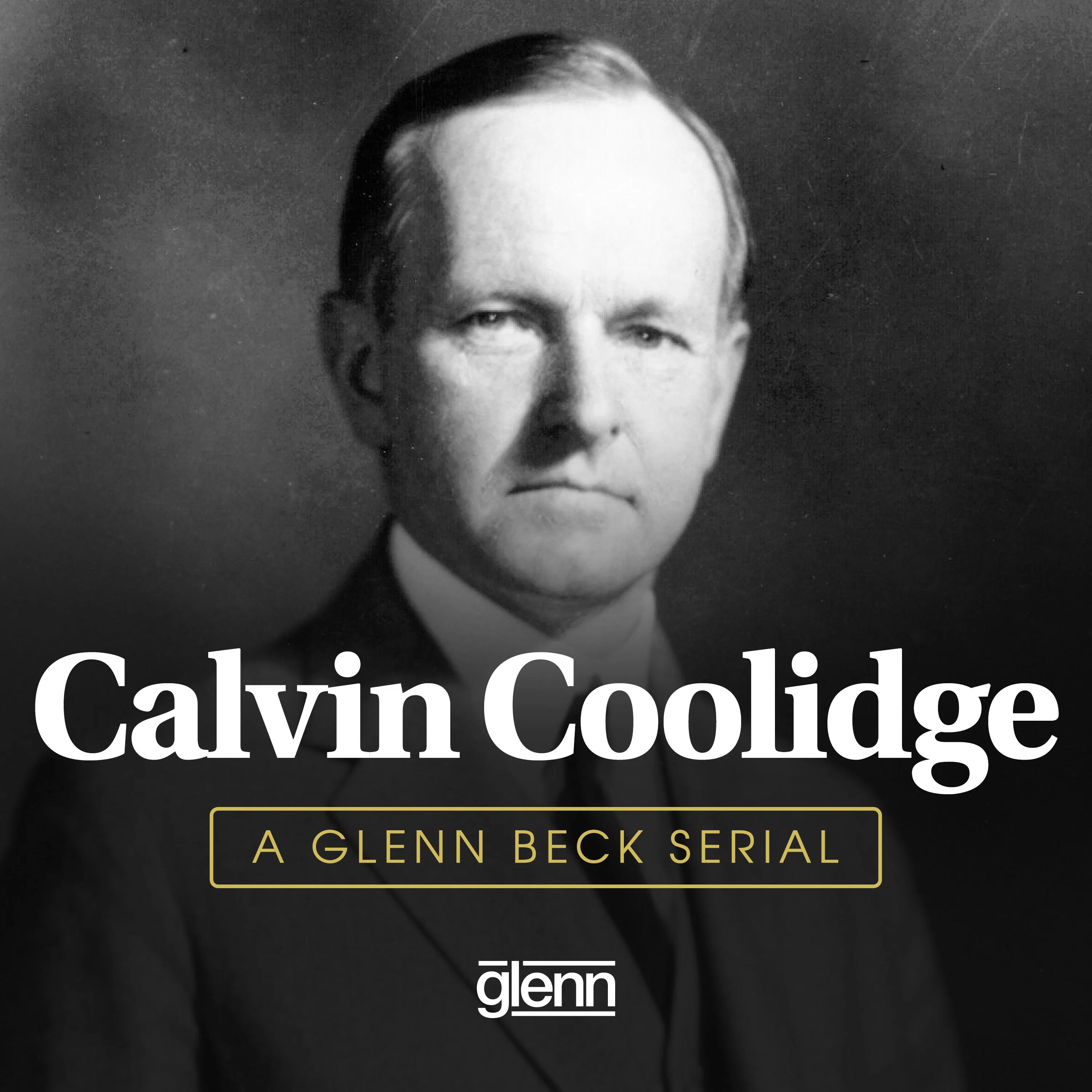
Serial: Calvin Coolidge - Part 2
Jul 9, 201800:13:13Tap to summarizeBy 1920, the United States of America was on the brink radical transformation thanks to the progressive policies of Woodrow Wilson. Too much power was now in the hands of the president and a huge, oppressive government. One US senator, Warren G. Harding, and a rising star in the party from Massachusetts, Governor Calvin Coolidge, didn’t care for the direction the country was taking. Coolidge, whose strong stance against organized labor resonated with the American public, became a favored son for the presidency. Although he didn’t receive the nomination, the delegates refused to keep him off the ticket and nominated him for the vice presidency. When Warren Harding died in August 1923, Calvin Coolidge, who had spent a life preparing for higher public office, was sworn in as the 30th president of the United States.
Transcribe →