Loading summary
Transcript487 lines
- [00:00]
Mark Gagnon
As a Catholic, I'm disgusted by this and ranking them.
- [00:04]
Michael Peppert
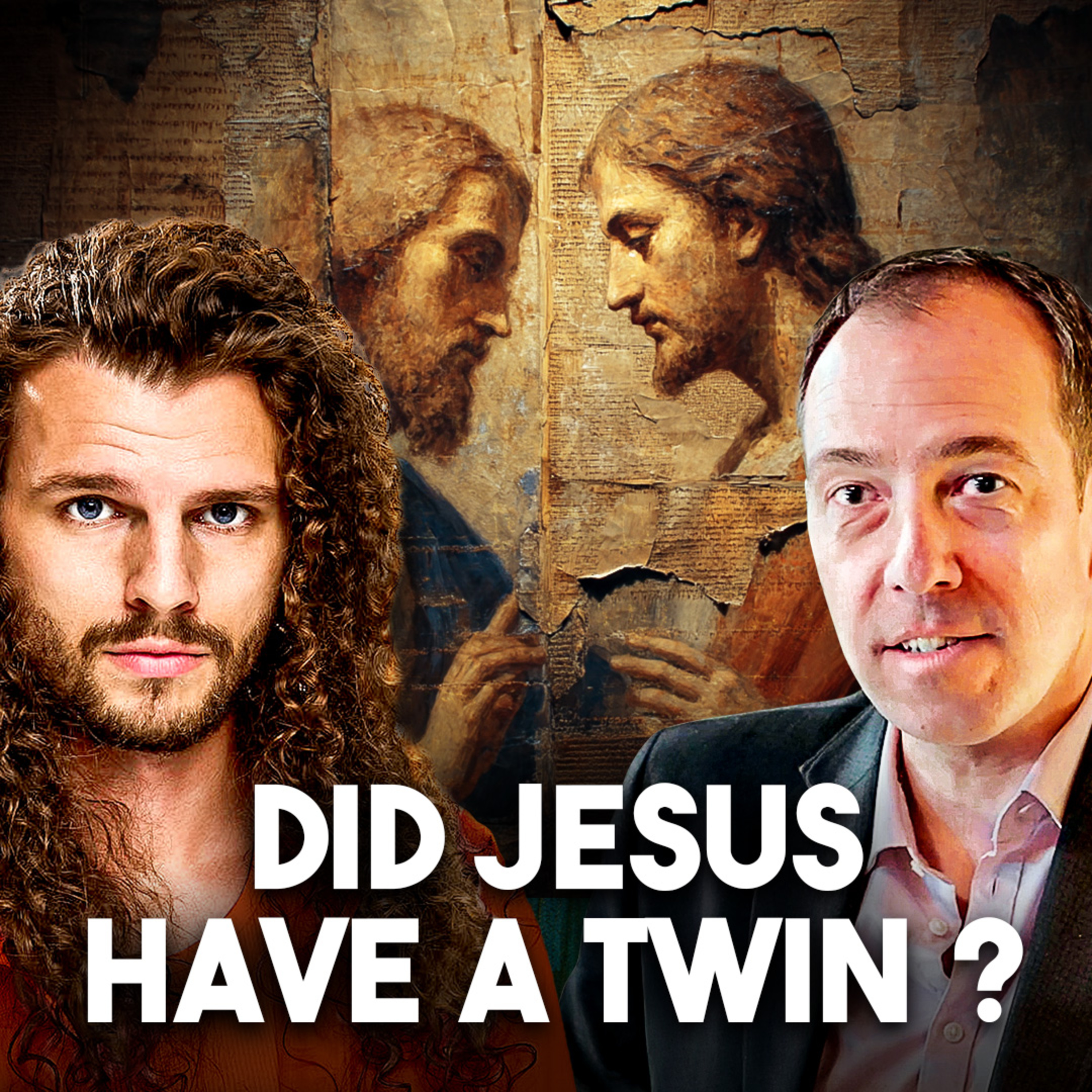
Jesus having a twin. It's medium. It's not too spicy.
- [00:07]
Mark Gagnon
Is it possible that Judas who sells Jesus out and that by betraying Jesus that he was actually carrying out the will of God? Was Jesus married to Mary Magdalene and did he have children with her? Jesus taught reincarnation. The virgin birth was a mistranslation suggesting that Jesus birth was natural, not miraculous.
- [00:27]
Michael Peppert
This is a tough one though. Let me just say not only is it possible, it's necessary. Of course there are many things that he said and did that are not included in this book. If you go to the end of Mark, you find out that there are multiple endings.
- [00:40]
Mark Gagnon
What do we know about that moment that Christ shared with his disciples? Jesus was found with a young boy, naked.
- [00:53]
Michael Peppert
Lowe's helps refresh your garden in time for Mother's Day. Right now get five bags of one and a half cubic foot Scott's Naturescapes mulch for just $10 plus select one and a half gall annuals. Hanging baskets make the perfect gift. Now two for only $15. The best garden starts with great deals. Lowe's we help you save ballot through 5 7. Selection varies by location while supplies last. Discount taken at time of purchase. This episode is brought to you by Greenlight. Get this Adults with financial literacy skills have 82% more wealth than those who don't. From swimming lessons to piano classes, us parents invest in so many things to enrich our kids lives. But are we investing in their future financial success? With Greenlight, you can teach your kids financial literacy skills like earning, saving and investing. And this investment costs less than that. After school treat start prioritizing their financial education and future today with a risk free trial@greenlight.com Spotify greenlight.com Spotify.
- [01:55]
Mark Gagnon
Michael Peppert. How are you sir?
- [01:58]
Michael Peppert
Great. Happy to be here.
- [01:59]
Mark Gagnon
Thank you so much for doing the show. I really appreciate it. Before we begin, just to contextualize the conversation, could you explain to the audience who you are, your field of study and what kind of work do you do?
- [02:10]
Michael Peppert
Sure. So I work at Fordham University here in New York on the Bronx campus and I've been a professor there in the theology department for 16 years. And my main areas are there's kind of three main areas. One would be the New Testament and in all of its forms and in its context, but kind of especially its Greco Roman context and it's the way it lives in the Roman Empire. Secondly, I have a research track and a teaching track in early Christian material culture. So early Christian art, early Christian ritual, the kind of stuff of early Christianity as it developed in that same period, the first few hundred years. And then third, I have a kind of parallel, different track about Catholicism, which developed a bit because I'm part of a center for Catholic studies at Fordham. And so I started doing some teaching in that area too and write more, less peer reviewed stuff, more like kind of magazine and op ed type pieces about Catholicism. Prior to that, I was at Yale University for my graduate work. Did a PhD there and, and, and Happy New Yorker now.
- [03:12]
Mark Gagnon
Nice. It's amazing. And I'm very grateful to have another Catholic in the tent. Okay. So often I get these academics that roll in here and they're on the secular or even worse, they're Protestant.
- [03:23]
Michael Peppert
Oh my goodness, my mom was Protestant. So I have to say, you know, I come from a mix. No, I, I'm a good American mutt.
- [03:29]
Mark Gagnon
I joke with my Protestant friends because I went to a. I went to a Protestant high school and, and a middle school. And throughout my, my tenure there, I was, I was lambasted as a, as a Mary worshiper and any other name under the sun.
- [03:45]
Michael Peppert
Well, were you. I mean, did they have any truth to that?
- [03:47]
Mark Gagnon
I was a merry reverer.
- [03:50]
Michael Peppert
Venerator.
- [03:51]
Mark Gagnon
Venerator. That's the word I was looking for. I'm a venerator of the blessed Mother. But no, I'm not gonna worship, you know, I'm not gonna worship a woman. No, I'm joking. That's. We don't need a misogyny immediately. Come on, guys.
- [04:01]
Michael Peppert
No, we're happy to see Our lady of Guadalupe here in the tents, you know, and your viewers can't maybe always see that, but you should get a shot of.
- [04:07]
Mark Gagnon
Shot of her. Yeah, we'll throw it up and throw it up in the b. RO So I wanted to speak with you today because as I mentioned before, there is a. It seems like there's a current happening within pop culture. Specifically on YouTube. I found where there is a large interest in sort of like pop Gnosticism is the way that I'll put it. I think it was kind of popularized through, I would say, I think Zeitgeist. Do you remember this documentary that came out? It was like 2002, 2003.
- [04:37]
Michael Peppert
Okay.
- [04:38]
Mark Gagnon
Nope. And throughout it, it sort of like created these parallels with like Jesus and the story of the Christ figure and paralleled it and basically said it was a rip of the Egyptian sun God. I believe I forget the exact person. And then Dan Brown's Da Vinci Code. And then, you know, since then you have folks like, like Billy Carson is a very prominent YouTuber that talks about Gnosticism. And yeah, it's just kind of like exploded. And I, you know, as a Catholic, am disgusted by this, but as an open minded, curious person that loves controversial hot takes, I find it very titillating.
- [05:16]
Michael Peppert
Okay.
- [05:16]
Mark Gagnon
And so I watch a lot of these videos kind of, you know, exploring and breaking down these controversial myths. So I think it would be fun just kind of start our conversation by going through some of the most controversial hot takes, specifically around the New Testament and our understanding of Christ.
- [05:31]
Michael Peppert
Okay.
- [05:32]
Mark Gagnon
And maybe just ranking them and a good ranking system. I've seen my friend Alex O'Connor does this. The YouTuber. He's brilliant. Spiciest to mintiest.
- [05:42]
Michael Peppert
Okay.
- [05:42]
Mark Gagnon
Spiciest being. You know, this is a wild belief. If someone believes this, this is an insane hot take.
- [05:49]
Michael Peppert
So is it a plausibility index? Is it a believability index? Or is it a. Is like a shock value? Is it all those things?
- [05:55]
Mark Gagnon
I think it's shock primarily.
- [05:56]
Michael Peppert
Okay.
- [05:57]
Mark Gagnon
But then we can kind of go down the list and I think maybe the more veracity it has, it might actually be almost less spicy. But we'll see. I guess we can kind of discover that as we go. The, the first thing that I wanted to ask you. I've heard the claim that Jesus Christ had a twin brother. Have you heard this before? And where does this come from?
- [06:17]
Michael Peppert
Sure, I've heard this before because Thomas means twin. So you know, Didymus, Thomas, two different names, one Aramaic based and one Greek based does mean twin. And so the fact that this is one of Jesus disciples who is named and who is very prominent in the New Testament. Well, maybe not prominent is too strong of a word, but appears in some key moments. Right. Most famously in the doubting Thomas scene in the Gospel of John, where he doesn't believe. He's not there at the first resurrection appearance, and so he doesn't believe his fellow disciples and wants to see for himself. But really that's not where the kind of the theories develop. The theories really develop outside of what comes to be the canon of the New Testament. So there are two primary sources known about since antiquity called the Acts of Thomas, which I think you've had someone on your show to talk about. Yes, talking about. You know, these are the so called apocryphal acts, kind of the stories of what happened to the disciples after they all scattered and evangelized. So the Acts of Thomas has a, you know, has a focus on that character. The themes and the acts of Thomas in that travel are mostly ascetic kind of self denial. Thomas trying to get people to break up their marriages or not get married in the first place. But there's also a lot of amazing scenes of Christian initiation and what kinds of baptismal prayers they had and what kinds of meals they had, mostly in early Christian Syria and to the east of that. But then there's another main text called the Gospel of Thomas, which was known in antiquity but was not. It was known that it existed in antiquity, but the text of it was not discovered until the mid-1900s at a place called Nag Hammadi in Egypt. Is that something you're familiar with? This discovery of the Coptic texts, Nagamati, yes.
- [08:11]
Mark Gagnon
The Nagamati library I find fascinating. But I've also heard the Gospel of Thomas is like a second or third century hoax or maybe a fraudulent script. Is this, is this fair to say? Alrighty, don't skip forward guys, because I am on the road. World's fastest ad read coming at you. I'm going to be at Stroudsburg, Hoboken, Indianapolis, Buffalo, Raleigh, Poughkeepsie, Portland, Oregon, Fort Worth, Texas, Austin, Texas, Stanford, Philly, Levittown, Chandler, Arizona, San Diego. I'm also going to be adding Toronto, Montreal, as well as Washington D.C. and a bunch of other dates. You can get all that@themarkagnon.com dates are in the description. Also in probably the comments of this episode. Go see me on the road. Come hang out. I'll be hanging out with everyone after the show. Come shake my hand, call me an idiot, whatever you want to do, I will be there. Additionally, I will be doing my one hour of stand up comedy. I'm very proud of this hour. I'm really excited to share with you guys and it would mean the world if everyone could come on out. And what do you wear to a show on the road? That's a great question. You can go to campgoods co. That's right. We got merch, we got Camp merch. We got hats, hoodies, T shirts. A lot of stuff is out of stock. Things have been selling like hotcakes. But we're going to be restocking everything in all the sizes so you can go there right now, get all the merch, get all the coolest clothing in the podcast game. We're going to be updating that site regularly. And if you come out to a show, I'd love to see you sporting some of the threads that we got up online. I'll see you guys there. Let's get back to the show.
- [09:33]
Michael Peppert
I personally wouldn't use the word hoax myself or fraud. I tend to think more about variant traditions. Variant traditions because I wasn't there. I wasn't there in the first century following Jesus around to transcribe what he said. Nor was I there in the second century or the third century to think about the process of canon formation. So as eternally an outsider to the world that I study, I try to, to be open to the possibilities of what was happening. Now, the Gospel of Thomas is. We only have this one. Well, mainly one version of it which is in Coptic, which is the language of early Christian Egypt. For your listeners who don't know what Coptic is, it's a hybrid language. It's the kind of the final form of Egyptian before the Arab Muslim conquest of Egypt. And at that point it had blended native Egyptian grammar and some characters with also some Greek characters and some Greek vocabulary. I did that, learned study that, learned it for a few years when I was a graduate student and I can read those texts. So when you read the Gospel of Thomas in Coptic, there are times where it seems like you're getting, for example, a parable of Jesus that feels like it might actually be more archaic than what we have in Matthew or Luke, for example. But then there are other times in Thomas where it feels like this is definitely derivative and this must have come later and is an attempt to kind of manipulate the message of the parables. So for me, I take a case by case approach to these texts because it's a collection of sayings really, and any collection of sayings, I kind of look at it and I think, well, this version of the parable maybe Thomas did preserve, maybe an older version than we have because we have different versions in Matthew and Luke anyway of certain parables right there within the canon. I'm still not getting to your question though about the twinning or the twin ideas.
- [11:29]
Mark Gagnon
I wanted to ask actually about the Gospel of Thomas. When you say that some sayings actually seem to be more archaic. When you say more archaic, that's in relativity to the Gospels as we know them, maybe perhaps closer to the time that Christ actually lived.
- [11:43]
Michael Peppert
Well, so yeah, so that's what I meant. Again, it's very difficult to prove and it's not original to me, these ideas. But if you, if you imagine how oral tradition works in a pre print culture. Right. The print culture is not coming for 1500 years after this. So all of Jesus teachings are circulating primarily orally and we even see this in. In the canonical New Testament, when you take something like the parable of the lost sheep. Now, in your mind, I know you went to some church growing up, and so you. You've heard this parable, and you think you kind of know what it is. But when you put Matthew's version and Luke's version actually right next to each other, and you look at the Greek versions, Matthew and Luke don't necessarily think the parable means the same thing. They have slight differences in how they think this parable was meant, and they have different audiences in which they said it. So in. In one Gospel and Gospel of Luke, that parable is taught to a group of outsiders, a group of says, quote, tax collectors and sinners. And it seems like a parable that's trying to bring people in who are not a part of the movement, who are lost, and then they get brought in. In Matthews, it's situated as a teaching to the disciples about seemingly. About not letting people go astray in the first place. It's a really. It's teaching about leadership. That's why it's being a good shepherd.
- [13:00]
Mark Gagnon
Yeah.
- [13:01]
Michael Peppert
Okay. So that's more the Matthew emphasis. It's very subtle. But my point is, I guess my point I try to make is that already within the canonical written tradition, we have evidence of slight differences in transmission at the oral level before these things get written down.
- [13:18]
Mark Gagnon
I see.
- [13:18]
Michael Peppert
And so the fact that. Or the notion that there might be also one of those in the Gospel of Thomas that was transmitted orally in Egypt and that, or in Syria and then eventually written down, I am totally open to that. So, like, there's a parable called the Parable of the Tenants, which is in the Gospel of Thomas and is in Mark and is in Matthew and three different. Three different versions. And there are some scholars who feel like the Thomas version might represent an older version of that oral tradition.
- [13:52]
Mark Gagnon
Wow. Because Mark was written, what, 70 A.D. roughly.
- [13:55]
Michael Peppert
Yeah. Usually we dated around there somewhere. Somewhere around the fall of the temple, around the destruction of the temple.
- [14:01]
Mark Gagnon
Second Temple.
- [14:02]
Michael Peppert
The second Temple, Exactly. In Jerusalem now.
- [14:04]
Mark Gagnon
So to suggest that it is more archaic would suggest that is more, like, closely around the time of Christ. And what would indicate that it is older?
- [14:13]
Michael Peppert
So. So what I'm arguing, though, is not that the written form of God, not that the written form of the Gospel of Thomas as it was discovered in Nag Hammadi. I'm not saying that that is older. I'm saying that it might preserve oral traditions.
- [14:25]
Mark Gagnon
And how can we indicate that is, that based off of the syntax of the sentences, like the actual words that are used.
- [14:31]
Michael Peppert
So there are actually. Well, it's difficult. And you might imagine not everyone agrees in scholarship about this. There are some basic principle ideas. Some people have an intuition that shorter stories are older and then they get embellished over time. There are some people who have an instinct that specific stories are older and then they get universalized over time. There are. Some people have an instinct that Jesus didn't tell allegories and that Jesus told parables that were more curt, quick, to the point, and that were not allegorized into a whole world of doctrine. And so maybe the parables that look like shorter, snappier, have more of an air of, like, authenticity of what a wandering, itinerant wisdom teacher might have talked like.
- [15:22]
Mark Gagnon
And the Gospel of Thomas is very short and snappy.
- [15:25]
Michael Peppert
It doesn't allegorize. Yeah, exactly. It says a lot. It has a lot of phrases that, that we truly don't know for sure what they mean, honestly. And so if you, if you have a category or a, if you have a framing in your mind of like, that's the kind of person I imagine Jesus to be, that he's telling riddles, telling almost like Zen koan type, and he's leaving it up to let the one who has ears to hear here. Right. If you have the ears to hear my message and you'll understand it. I'm not going to explain it all to you. If you have that image of Jesus in your mind, then some of these Thomas versions might look more authentic to you.
- [16:06]
Mark Gagnon
But some of them are just wild. I mean, this is one I remember. Every woman who makes herself male will enter the kingdom of heaven.
- [16:12]
Michael Peppert
Right, right, right. So it sounds wild, right? It sounds wild. Yeah. So I, we can get into this a little bit. So one of the ideas here that help maybe helps understand what's going on. This is a tough one, though. Let me just say. I, I don't. Yeah, I don't come in here with like, definitive interpretations of all, you know, 100, 140 of these sayings. But there is a sense in Greco Roman, Greco Roman understanding of gender. Let's say that the proper, the full form of a human person is a male form. So it's. That's obviously misogynistic. But that is a idea that's, that's going around in the air. You can, you can read it. It has to do with, it has to do with. You can read it in, you know, Greek and Roman medical treatises. And things like this, the woman is.
- [17:11]
Mark Gagnon
Derivative from the man as it's told in the Genesis story.
- [17:13]
Michael Peppert
And it's like Genesis story, quite fully developed, but even biologically not like not quite fully developed. So there, there is a way to interpret this that's saying Jesus, female disciples, they are going to become fully developed. They're going to become fully, to be fully his disciple. They need to act more or less act like male disciples. We also see this later. It doesn't have to be quite so misogynistic in its sound. When we look later at, at like early Christian martyr stories, many of which are women, right, who are women who are going to the death for their faith, such as Perpetua and Felicity in North Africa. And when we read these, these martyr stories of early Christian women, a lot of them are presented as male. Like they're not men biologically, but their virtues, their characteristics are presented as male in the, in the course of telling their story as a way of showing that they are fully, fully embodying Christ. They are fully taking hit, taking on his form. So hypothetically, it's almost a criticism of men who aren't doing that.
- [18:19]
Mark Gagnon
Oh right. Because if a woman is doing it, why, what excuse do you have?
- [18:22]
Michael Peppert
And the word, the ancient Greek word for courage is manliness. The actual word, Andrea, is like, like Andrew. So to, to. To say like Perpetua is. Shows courage before her captor. It actually says she's shows her manhood like she's manly.
- [18:40]
Mark Gagnon
Interesting. And to the people in that time, obviously contextually they would understand that this compliment that nowadays we see as sort of being gender neutral. Something like courage can go, you know, human to non human to anything. And the time they would have understood to say like, oh, they're putting masculine traits on these women. And that is an honorable thing to do because, you know, perhaps it is the, it is God's will. Maybe God is a man himself. So therefore that is like the divine essence of, you know, creation.
- [19:10]
Michael Peppert
And they have a lot of kind of militaristic imagery too in these martyr stories where, you know, just to take Perpetua for the example, I mean at the end she, she guides, she guides the, the execute the executor's knife to her own throat. He's. He's afraid to do it. And she's like, she brings. I mean this is. Whoa, I've never heard of pretty goth. She also has a whole bunch of dreams before and when she's awaiting her martyrdom, that, that may, may potentially be first person accounts of her like and visions before she goes. But this is, this is taking us far afield from your question. But, but, but I mean that's fine. We're, we're here at camp and late now when you're late night around a campfire, sometimes it's four in the morning.
- [19:53]
Mark Gagnon
You know, we're sitting out in the woods in upstate New York. This is what happens.
- [19:56]
Michael Peppert
That's right.
- [19:57]
Mark Gagnon
So I guess to circle back.
- [19:59]
Michael Peppert
Yeah.
- [20:00]
Mark Gagnon
Did you have a twin and was Thomas's twin?
- [20:02]
Michael Peppert
So the, so circle, circle all the way back. So there are conflicting accounts about Jesus siblings in the canonical New Testament. Right. So in the Gospel of Mark we have a list that, that potentially includes if, if this person's name was Judas Didymus Thomas, it could include, you know, a sibling who goes by the name of Thomas later, which could make sense. Now the Protestant tradition has no problem with Jesus having a bunch of siblings because they don't have a virgin birth or perpetual vir doctrine, whereas the Catholic tradition has a perpetual virginity doctrine. And so they argue that these others are like cousins or family, other kinds of family members, which is also defense linguistically defensible. I don't think we're ever going to resolve that one. But if Jesus had a twin and twins are especially close, then the argument would go that this twin would have special knowledge. Just like biological twins in our lifetime often have special knowledge of one another. They feel very, very, very bonded. I mean I can't imagine it what it would feel like to have an identical twin like that. Right. And so that then does kind of close the loop of this little conversation where you think if these texts, these mostly second third century texts that you're talking about, which come to be called apocrypha, if they, if the genre is mostly like special revelations that particular disciples had. Right. That these are the Gospel of Mary, the Gospel of Thomas, these are things that Jesus said to me that he didn't say to the rest of you then that could connect well with the twin idea that like the way that twins have special secret knowledge of one another. And you know, he told, you know, he told you all those teachings about mustard seeds and whatever, but he told me these special teachings. You know, you, maybe you weren't ready for them, but now I'm going to pass them on.
- [22:03]
Mark Gagnon
Oh, that's interesting. Now, in thinking about the Acts of Thomas or the Gospel of Thomas, do you think that there's any truth to the idea that Thomas wrote the Gospel of Thomas, Thomas as we understand him in the Bible, is there Any conclusion on that idea, even if it was written later or, you know, not being included in the actual canon?
- [22:24]
Michael Peppert
Right. I, I don't, I don't mean, I don't have an opinion on that because it's a series, it's a collection of sayings, it's not a narrative. You know, it's not something that even calling it a gospel is kind of unusual because it's, it does all the other gospels have narrative, right? They have the passion narrative. They have, they have miracle stories. When I teach the Gospel of Thomas, I, I call it Thomas the sayings source.
- [22:51]
Mark Gagnon
Right. It's almost like hadith.
- [22:53]
Michael Peppert
That's what it is. Yeah, exactly. And we know we have these from the ancient world. I mean, even in the canon, the book of Proverbs is a saying source. Right. The sorts of wise things that Solomon said. And so I don't, I guess, I mean, unsatisfying to you. I don't think it so much matters who wrote it because it's a compiled set of sayings. So who the compiler is doesn't really put as much of a stamp on it as, as it might be the case if it were a kind of long running narrative with, you know, that were based on the person's life. I have no problem thinking that every one of the disciples of Jesus compiled things that he said and wrote them down eventually. I mean, I don't think there's anything implausible about that at all.
- [23:42]
Mark Gagnon
Yeah, it's interesting to think that, you know, as if you believe in a Christian tradition, you believe that the Bible is wholly true, that it is, you know, perhaps there's contradictions which we can discuss later, but that the texts of the actual canon are sort of, I guess, divinely inspired. But it doesn't necessarily mean that all the things that Christ said are included in the book, of course. And is it possible that there are sayings of Christ that were recorded that were not included in the canon? And does that create some type of dogmatic issue for believers?
- [24:19]
Michael Peppert
I mean, not only is it possible, it's necessary. I mean, of course there are things that he, that he said that are not included. And the Gospel of John ends that way. The last line of the Gospel of John is like, of course there are many things that he said and did that are not included in this book. And if it would take the world's books to include everything. Right. And so I think like one of the, look, one of the things that I love to do when I'm teaching a basic kind of intro Intro, New Testament or Intro to the Bible class is to get people to think about a funeral of a beloved family member, an elderly beloved family member that they've been to. Because everyone in the class, they're 20 years old. Everyone's done this at least once. And I just try to get them to think about the experience of that and the stories they hear and the stories that are told over and over and over again about this person and the kind of thematic characteristics of that person's life that they learn. And then I'll get them to think about, well, what happens when you hear a different two conflicting stories about your grandma and you know, one of your uncles. Like, well, you didn't hear about once you went to Latin America and what happened then? And then someone else is like, what happened then? Some people find out at funerals that they have sibling they didn't know about.
- [25:32]
Mark Gagnon
Yeah.
- [25:32]
Michael Peppert
From, you know, from an illicit affair. I mean, all kinds of things happen in addition to kind of the repeated stories that come up over and over and over again. But no one ever at that experience thinks, now we have full access to this life. Now we know everything they did. Now we know everything they thought. You know, we're very comfortable with that, with kind of getting a basic thematic picture of a human life. But then when we get to Jesus, we get crazy. Like we get haywire and we think, you know, we line up. We line up. Well, it says here he did this on this day. But it says here he did this on this day. And now I don't believe any of it. It.
- [26:11]
Mark Gagnon
Right.
- [26:11]
Michael Peppert
None of it's true. So, you know, we have, we have a. Not, not all of us. But some believers have a dogmatism and a rigidity about these stories that doesn't, it just doesn't bear out in real life in any way. I mean, look at, look at what's happening now. People still talking about jfk. Yeah. We have video.
- [26:35]
Mark Gagnon
Right, Right.
- [26:35]
Michael Peppert
Think about, think about how. Why are we still adjudicating the JFK files? Why do we still write new biographies of Abraham L. Lincoln? Why do we. These are all modern, you know, modern people. And we're still kind of crafting narratives that emphasize some features of their lives and de. Emphasize other features of their lives. So we're going all the way back to a pre print culture with no video, with no audio, with no. Yeah, when really I know comm. No organ, no early organized community either. If I, if I may just say another like pet peeve I have or a frustration I have as A scholar of this period about kind of people coming, coming into it for the first time, most people presume a much higher degree of organization than, than would have existed. Right. So when, when people ask me, how did this book get in the canon and this book didn't get in the canon, I think they have in their mind that there's a meeting, right? That there was. All the leaders get together and they, they have a, a spreadsheet and they're talking about, you know, well, the Gospel of Thomas doesn't have a passion narrative. It doesn't talk about the crucifixion, so that one's out. But the Acts of Thomas is pretty good. Why can't, why don't we put that in? Well, it's a little bit different here, and they only use it in Syria and those in Italy have never heard of it. Okay, we'll put it out for these meetings never happen. They never happen. They're. We want to believe they happened. Sometimes we fabricate them that they happened. Right. Sometimes you say, well, at the Council of Nicaea, they must have done this. I don't think that was their main concern. They had concerns at the Council of Nicaea about church unity and concerns about doctrine and concerns about organizational structure in the 4th century. But when we look at our 4th century codices, meaning books, kind of the great codices of the 4th and 5th century, which are our earliest collected, what comes to be, comes to eventually be the Bible. What you see very clearly is that there is a core which is strong. Your core of four gospels, Paul's letters, First Peter, sometimes Second Peter, you know, Acts and Hebrews. Get in there, you have your card of core. But then you have a lot of fuzziness on the edges. And you look at, you know, codex in the Vatican, Vaticanus or Codex Sinaiticus in the British Library, 4th century cod. And at the end they have some other texts, right, that are not ultimately in the modern post reformation, post printing press canon. So what do we do with that? Do we think that they thought that those were of the same weight as the ones that came before? I'm more likely just to say that they had different questions than we have. Right. Their questions were primarily about is this useful? Is this text good for teaching, Is it good for learning? No.
- [29:39]
Mark Gagnon
I feel like this poses an issue for believers because they say, you know, these books were assembled through the divinity of God. Like they, like God himself was guiding these early church leaders to putting these books together. So if there is, you know, there can be no error. There can be no human fray that actually affects the text of the book.
- [30:04]
Michael Peppert
Yeah. I mean, my historian's perspective on that would be to say that inerrancy is a modern concept. We don't see much concern about inerrancy in medieval Christianity or in early Christianity in the way that we see it in modern post printing press, post enlightenment, post Reformation Christianity. The vast majority of Christian Christians in Christian history did not think that way. And. And we have evidence, you know, we have evidence of that. They knew there were discrepancies. Third and fourth century Christians, they're not dumb if they have the stories they can see. Well, in this one, it looks like Jesus is crucified on Passover. And this one, it looks like it's not on a different day, you know, or in the Gospel of John, Jesus causes the disturbance of the temple at the beginning of the story, and in Matthew, Mark and Luke, it's at the end of the story. There's some pretty big discrepancies there that they were well aware of, but it was not a barrier to their faith in the way it has been for some, some versions of modern Christianity. So maybe you're one. Maybe is a barrier for you. And maybe I'm talking about you. I don't know.
- [31:23]
Mark Gagnon
But no, it's not particularly a barrier, to be honest. Yeah. But I, I was sort of like quasi, you know, raised partially Catholic, but then in a Protestant setting. And it seems like because of this idea of sola scriptura, that the Scripture is for sure sole arbiter of what our faith is and means.
- [31:39]
Michael Peppert
Yeah.
- [31:40]
Mark Gagnon
That it has to be perfect and that any discrepancy is a violation to our faith.
- [31:46]
Michael Peppert
Correct.
- [31:46]
Mark Gagnon
So as for Catholics, not exactly as, you know, maybe it's rigid because there's sort of a papal tradition that can guide us as well.
- [31:53]
Michael Peppert
Yes. Yeah. So you've done, You've done your homework. You're. You're. I mean, I would say you're exactly right on that. That the textual, textual fundamentalism is associated with not even all of Protestant Christianity, but certain versions of Protestant Christianity. The Catholic tradition definitely has fundamentalists, but they're usually not biblical fundamentalists. They're usually fundamentalists about ethics or liturgy. Right. About something different or church hierarchy. You know, in fact, on the Catholic side, there is something called. You ready for this? The Pontifical Biblical Commission.
- [32:29]
Mark Gagnon
Hell, yeah.
- [32:30]
Michael Peppert
Okay. I have not yet been invited to be on it. Maybe after your show. I will. You know, it's going to go viral, but.
- [32:37]
Mark Gagnon
Francisco, let's go.
- [32:39]
Michael Peppert
I have, I have been a. An officially Vetted Bible Translator for the U.S. catholic bishops in the New Testament. But, but that's different. That's, that's just here in the States. So the Pontifical Biblical Commission is a Vatican appointed committee of Bible nerds, basically, who are vetted faithful Catholics. And they produce documents. Nobody reads them except for people like me, but they exist. And they put out a document in 1993 called the Interpretation of the Bible in the Church. And it's a programmatic document saying, here's how we think Catholics should interpret the Bible. And guess what, Mark? They reserve their harshest words for fundamentalism. And they talk about other isms, right? They talk about Marxism and they talk about feminism, and they talk about liberation theology and they talk about other things that they kind of say their position is like, there's pros and cons to these pros and cons to these approaches. But fundamentalism gets just lambasted and in really harsh terminology. They call it at one point intellectual suicide.
- [33:52]
Mark Gagnon
Wow.
- [33:53]
Michael Peppert
To presume that there are no errors anywhere in the Bible and that everything has to be completely, that there can be no contradictions in any single way. Now these scholars, they also understand the diversity of biblical manuscripts very well. And so most textual fundamentalists, if they go and get a PhD or they go and pursue further study, they often then are exposed to just the vast diversity of biblical manuscripts. And for most people, that kind of undoes that fundamentalist view. Right, because. Which one. Yeah, which version are you doing? Which Greek? Which Hebrew? Which. How many chapters of Esther? How many chapters of Daniel? Like there.
- [34:46]
Mark Gagnon
Yeah, that was, that was always, that was always the issue for me where I would say, like, okay, we're looking at this, you know, the, the Gospel of, of Mark, but it's not written in English, obviously. So we're now looking at translation, but we're looking at translations of translations of translations of, you know, semi pieced together remnants of what the earliest translations were, which may not even be the earliest translations that ex. That ever existed.
- [35:10]
Michael Peppert
Right.
- [35:11]
Mark Gagnon
And so now we're just playing this massive game and then for people that say, well, it is all completely true and God has, you know, masterfully kind of crafted this thread for the truth to persist through without error.
- [35:25]
Michael Peppert
Yeah.
- [35:25]
Mark Gagnon
It just seems like a massive undertaking. What's up, guys? We're going to take a break really quick because I got to tell you about a dirty little secret. Okay. The insurance industry doesn't want you to know this. Well, basically what the insurance companies do is that they profit by holding onto your money as long as possible. You pay them every month and then eventually when an accident happens, they try to deny or delay your claim so that they can keep their profits going. I mean it goes even worse when in court. The insurance companies want jurors to think that the at fault driver, you know, a mom that rear ends someone, you know, she's a single mom and they think that she is going to be paying the verdict amount. Meanwhile, it's really the insurance companies who are going to be covering the cost. And that's why I want to tell you about the good folks over at Morgan and Morgan because they will take on the case and they are almost always going after the big insurance companies and not the individuals at fault. Morgan and Morgan fights hard for their clients and these corporations know that and it pisses them off. A recent client in Pennsylvania just received $29 million. The insurer's best offer, 500,000. Yeah. There's another client in Florida that received $20 million and the last offer from the insurance company was $0. There's a reason why Morgan and Morgan is America's largest injury law firm. So if you are ever injured or dealing with an insurance company want to pay up their fair share, you could go check out Morgan and Morgan. That's right. Hiring the wrong law firm can be disastrous. And hiring the right law firm could, you know, be a big substantial increase to your settlement. And Morgan and Morgan makes it so easy to get started. Their fee is free. Unless they win, there's literally no risk. Unless they win your case, you're not paying a dime. With Morgan and Morgan it's never been easier. I'm telling you. You just go to for the people. That's right. F o r the people.com and use the code Gagnon G a G N O N or dial pound law. That's pound529. That's for the people.comgagnon or dial pound law. That's £529. And this is a paid advertisement. Now ladies and gentlemen, let's get back to the show. Ryan Reynolds here from Mint Mobile. I don't know if you knew this.
- [37:36]
Michael Peppert
But anyone can get the same premium.
- [37:38]
Mark Gagnon
Wireless for 15amonth plan that I've been enjoying.
- [37:41]
Michael Peppert
Join. It's not just for celebrities.
- [37:43]
Mark Gagnon
So do like I did and have one of your assistant's assistants switch you to Mint Mobile today.
- [37:48]
Michael Peppert
I'm told it's super easy to do@mintmobile.com Switch upfront payment of $45 for three month plan equivalent to $15 per month required intro rate first three months only. Then full price plan options available, taxes and fees extra. See full terms@mintmobile.com does it ever feel like you're a marketing professional just speaking into the boy? Well, with LinkedIn ads, you can know you're reaching the right decision make. You can even target buyers by job title, industry, company seniority, skills. Wait, did I say job title yet? Get started today and see how you can avoid the void and reach the right buyers with LinkedIn ads. We'll even give you a $100 credit on your next campaign. Get started at LinkedIn.com results. Terms and conditions apply. Well, and Mark is a great example. I don't know if you chose it just because it's your namesake or because it's your favorite gospel or whatever, but.
- [38:41]
Mark Gagnon
But Mark earliest, that's why.
- [38:42]
Michael Peppert
There you go. Earliest Mark is a perfect example. I'm just pulling out my Greek New Testament here to show you. Perfect example of this issue. Because if you go to the end of Mark, you find out that there are multiple endings.
- [39:00]
Mark Gagnon
Okay.
- [39:01]
Michael Peppert
So there are different manuscripts preserved. How's your ancient Greek Mark?
- [39:06]
Mark Gagnon
Very terrible.
- [39:06]
Michael Peppert
Well, you're going to learn this year.
- [39:07]
Mark Gagnon
I know, Calimeda, you're going to learn this here. I know. A fati stole a fati Stowe. That's a good one.
- [39:12]
Michael Peppert
Very nice, very nice. Christos on Easter. You know, these things. Crisis. So our 4th century manuscripts, which are our oldest manuscripts of the Gospel of Mark, have different endings. And what do you do with that as a textual fundamentalist? You say that none of them are right. One of them is right and the other is wrong. They're both extremely ancient. Yeah, I mean, you know, some people look at say, some people look at it and say, oh, we only have 4th century manuscripts of 1st century stories. But any historian who knows what we're talking about is like, this is amazing that we actually have 4th century manuscripts of 1st century stories. We read Tacitus, Roman historian, we read Cicero, we read all these sorts of texts. We're reading Renaissance era manuscripts for most of the. That.
- [40:05]
Mark Gagnon
Oh, really?
- [40:06]
Michael Peppert
Yeah. No, no one thinks about it.
- [40:10]
Mark Gagnon
I've never thought, Yeah, I always thought like, yeah, the gospel's oral tradition written later, but you know, Tacitus or, you know, Flavian or all these are copied.
- [40:18]
Michael Peppert
Over and over and over. But we don't have ancient manuscripts of these things.
- [40:23]
Mark Gagnon
We also don't dispute this, really. The record at the same rate.
- [40:27]
Michael Peppert
Exactly. That's, that's, that's where I'm going with that.
- [40:29]
Mark Gagnon
That's a great point.
- [40:30]
Michael Peppert
So, so it's really our mindset about what you're coming in, what kind of mindset you're coming into this with. When I look at the New Testament as a historian, I think we have an amazing amount of evidence relative to other things from the ancient world, especially relative to other non elite cultural products from the ancient world.
- [40:53]
Mark Gagnon
Right. Yeah. This is a small little subdivision of the Roman Empire.
- [40:57]
Michael Peppert
Right.
- [40:58]
Mark Gagnon
That had this little moment that changed the entire world. And there's so much of it that's preserved compared to other. I mean, I was even talking to, I think it was Dr. Andrade, that there's very little known about Pontius Pilate, which I find very funny. Like in the time Pontius Pilate holds this fairly high ranking position within the Roman Senate, I guess, and Jesus Christ is sort of this lowly Jewish, maybe revolutionary, but yet there's almost no record of Pontius Pilate, which I just find sort of ironic.
- [41:32]
Michael Peppert
Well, yeah, I mean, if he had not presided at that one trial, we wouldn't know much about him at all. Yeah, yeah. But he makes it in the Creed. He makes it in the Creed, which is unbelievable.
- [41:42]
Mark Gagnon
Yeah, it's like a diss track. It is.
- [41:46]
Michael Peppert
It is a diss track. Yeah, yeah.
- [41:48]
Mark Gagnon
The worst is to get mentioned in a diss track because now, now people are going to sing it forever and they're going to always mention your name.
- [41:53]
Michael Peppert
Yeah.
- [41:54]
Mark Gagnon
So Pontius Pilot was just, I don't know, part of me is kind of like, man, wrong place, wrong time. You just.
- [42:00]
Michael Peppert
Well, yeah, I mean, Pilot, I don't know, I don't have a whole lot of sympathy for the guy. I mean, because the other, the other evidence we do have about him that he was a pretty ruthless. Pretty ruthless manager of. Of a province. Of a province does not want to be occupied.
- [42:15]
Mark Gagnon
Yeah.
- [42:15]
Michael Peppert
By Rome. I mean, the only reason he's, you know, the sometimes, sometimes people assume that Pontius Pilate's like living in Jerusalem. He's not, he doesn't even want to be in Jerusalem. He lives on the. By the coast, man. He's like, I live in Caesarea. It's nice. Live in a nice place and not. Not deal with Jerusalem. The only reason he's in Jerusalem is that it's a past. It's a pilgrimage festival. Right, right. So it's like he's got. It goes because, you know, the previous Roman prefects of Judea struggled to govern a people that didn't want to be occupied and that didn't want to, you know, be forced. Be forced to pay tribute To a foreign government. It's not surprising. You know your history. You know, this happens all over the world for all history. And so what do they do every spring festival that we call Passover? What do they do at every Pesach? They gather and they celebrate freedom from a tyrant. All right, that's what the Exodus is, right? It's a celebration of freedom from a tyrant.
- [43:22]
Mark Gagnon
Yeah.
- [43:23]
Michael Peppert
And so you can imagine from the Roman perspective, they're trying to. They're trying to subdue what they perceive to be an unruly province. The province is trying to gain self governance and respect for itself and the population of the city, who knows? Triples, quadruples, I don't know for sure. But it's pilgrimage. Everyone's coming and they're celebrating back in our glorious past when we. When God freed us from tyranny and from slavery. The Romans are freaking out, which is why he. Which is why he's there, which is why he's not sitting on the coast in Caesarea sipping a Negroni. It's why he's like, yeah, going there. And so then you hear someone talking about the kingdom of God, you hear someone talking about. I mean, I always like to say to students, what gets Jesus on the radar? I make them find it, you know, like, you read the gospel. Tell me, what gets Jesus on Pilate's radar? Because he dies on a Roman cross. So Pilate's got to be involved. How are we going to reconstruct this? And even if Pilate's ruthless, he is not crucifying a wandering healer who talks about seeds, who tells parables about seeds. There's no way that person's not on his radar. Right. And after a while, a student will get there and they notice the temple disturbance flipping the tables. Yeah. During a pilgrimage festival is key. Like when there's so many people, you think about New Year's Eve in Times Square, how heightened security is, or a stadium, Any little disturbance gets you noticed. Right. But secondly, it's. And this is the more subtle and the smarter students get. This is his entrance to Jerusalem, if there's any truth to that story. Because if you remember what happens when.
- [45:14]
Mark Gagnon
He enters, parading in people, laying down.
- [45:17]
Michael Peppert
Palms, and they're saying hosanna to the son of David, son of. And that, you know, the coming one, the coming son of David.
- [45:26]
Mark Gagnon
That's a coup. You're saying there's a lineage.
- [45:29]
Michael Peppert
He's the king. I mean, this. He's like an archetype, really, because it's so long ago at this Point David's more of an idea. Right. Than like a real thing in people's mind. But, yeah, this is an archetype of back when we ruled ourselves, back when we were in charge, back when we were glorious. And it's. So you can inter. You can imagine how it looks like a coup.
- [45:53]
Mark Gagnon
Yeah.
- [45:54]
Michael Peppert
Even if Jesus didn't want it for himself, you know, you can only do so much control of what people say about you.
- [46:00]
Mark Gagnon
This guy has a, you know, a monarchical lineage. He's talking about, you know, he's causing disruptions in the. In the temple during feast days. Yeah. This is going to be. This is going to get you on a radar and then put you kind of as a political revolutionary. And then in addition to that, you start creating disturbances with, you know, the religious leadership.
- [46:19]
Michael Peppert
Exactly.
- [46:19]
Mark Gagnon
At the time, now you have multiple factions of people, powerful factions that want you dead.
- [46:25]
Michael Peppert
Right. And he's walking around, or at least want you out, at least want you banished, at least want you out of there, you know, and then he's walking around, at least according to our gospel passion narratives, kind of going up to various status groups and arguing with them on exactly their turf.
- [46:43]
Mark Gagnon
Right, right.
- [46:44]
Michael Peppert
Like, oh, the scribes, masters of the written Torah. Let's debate the written Torah. Oh, Pharisees. You have questions about, like, the oral Torah, should we pay taxes to the Romans or not? You know, we'll argue with you about that. So he's definitely a controversial figure. Sure. And, you know, he's not avoiding any of that.
- [47:03]
Mark Gagnon
Interesting. Can I ask you another hot take?
- [47:05]
Michael Peppert
Oh, my gosh. I know. Yeah. We started with Thomas and we ended with Pilot.
- [47:08]
Mark Gagnon
And so this is perfect. This is what the point of this is.
- [47:10]
Michael Peppert
This is what campus we're at camp.
- [47:13]
Mark Gagnon
Okay, this is an interesting one. I want to actually make sure I get the verbiage correct here. So let me actually pull this up directly. It's something that I had thought for a bit, or at least kind of like kicked around, and I never would say it out loud, but is it possible that Judas, who sells Jesus out, gives him the kiss of death, was actually working in a proper way? This is another hot take that I've seen, that he was trying to carry out the will of this destiny, that he was giving up this. This sacrificial lamb, and that by betraying Jesus, that he was actually carrying out the will of God and that Jesus himself even tells Judas you were going to exceed all the other disciples. Have you heard this theory before? What do you make of this?
- [48:02]
Michael Peppert
So I thought I Knew we were going until the very end of what you said. So first part, I thought you meant that Judas is a. Judas's betrayal is a necessary piece of God's will.
- [48:15]
Mark Gagnon
Right?
- [48:15]
Michael Peppert
Is that what you meant? Yes.
- [48:17]
Mark Gagnon
And then there's a second part that I guess I didn't know this. This is just something that I've like pulled together from research that Jesus says, you will exceed all of them, for you will sacrifice the man that clothes me.
- [48:29]
Michael Peppert
That's not a New Testament quote though. Yeah, yeah. Dang it. That's okay. So there is a second century text called the Gospel of Judas which is written. Was written and then rediscovered in the modern era, which would. A pretty fascinating story actually, if you want to hear that at some point, the Gospel of Judas story. So here's what I would say to the first part. I would say that the. The role of Judas's betrayal in the divine plan of Jesus, death and resurrection is to me a total mystery. Here's why, you know, there are so many. The Gospels narrate if you ask the question, why does Jesus die according to the Gospels? Like what, what's the, the, what's the chain of causation that leads to this? There's so many different things that happen, right. The Pharisees are out to get him for. For these various reasons. He may have some guilt by association with John the Baptist, who was already beheaded, you know, earlier in the story. He disrupts the temple. He. People think, some people think he's the next King David. There's all these reasons why it might. He's, you know, if he blasphemes before the Sanhedrin. But where do we fit Judas into that chain, that chain of causation? Like, how does it, how do we fit that into either the historical chain or especially how do we fit that into the divine or the kind of purpose of the death, Right? Because then you have all these heavenly why questions of like, well, this is because God wills it. It's because the Messiah is supposed to suffer. It's because Isaiah prophesied that it would go this way, right? But the Judas part just, it just mystifies not only me, but a lot of theologians throughout history. Because it doesn't feel like something that God should do, right? It just does. It feels like, why would God plant this particular mode, right?
- [50:43]
Mark Gagnon
Well, why would God historical chain harden Pharaoh's heart? Or why would.
- [50:47]
Michael Peppert
Very good.
- [50:48]
Mark Gagnon
Why would, you know, the angel of destruction that comes and kills the firstborn, that doesn't have the blood of the Lamb on The doorpost, it's like, wait, so God's sending hitmen?
- [50:58]
Michael Peppert
Right.
- [50:58]
Mark Gagnon
It just fits outside of, I think, of our modern context of what the biblical, specifically New Testament God is.
- [51:04]
Michael Peppert
Yeah, yeah, good. No, you're right. The hardening of Pharaoh's heart is a great example. Like, why does the divine will act in these ways on earth and through human causation? But I feel more comforted when I'm confused by that mystery because it's been confusing all the way back. Right. So the very existence of this Gospel of Judas narrative is an attempt theologically to reckon with the role of Judas. Maybe Judas is an insider. Maybe Judas has access to the divine will. Maybe Judas is a key player in a secret way that the other disciples don't get. And so the Gospel of Judas in part is, is a narrative and a reflection on that. But, but, but as to the, as to resolving it, Mark, I'm afraid I don't have, I don't have a resolution for it.
- [51:59]
Mark Gagnon
If someone believed that Judas was the, was an agent of God, would you say that's spicy?
- [52:05]
Michael Peppert
Spicy?
- [52:06]
Mark Gagnon
Yeah, that'd be spicy.
- [52:08]
Michael Peppert
Okay, Definitely spicy. Yeah. We forgot about our rankings. Yeah, yeah. I'll go back to the first one. Jesus having a twin. It's, it's, it's medium. It's not that. It's not too spicy.
- [52:18]
Mark Gagnon
Yeah, that's fair. That's fair. Okay. Another one.
- [52:20]
Michael Peppert
For a Catholic, it's spicier because of the perpetual virginity part.
- [52:23]
Mark Gagnon
Well, well, we're about to dive deeply into that right now. Was Jesus married to Mary Magdalene and did he have children with her? That's a two parter.
- [52:33]
Michael Peppert
So spice, spice meter. 10 out of 10 off the chart. I mean, it's, it's, it's. I'd say it's the top Indian hobby, Ghost pepper or whatever. It's spicy. Spicy. So what's amazing about this question is that like many of the spicy takes, there's a little bit of evidence that make you wonder what's going on. So here's what I would say as a historian. I would say I personally do not think that Jesus was married. I don't think that Jesus had. Had a wife, had a woman and had children. But I don't think that's a very radical thing to say. I also don't think John the Baptist did. I don't think getting married and having children is the sort of thing an apocalyptic itinerant wisdom healer does. Right. I mean, there are people today who live radical lives, either radical lives of service or radical Lives of travel or radical lives of passion for a project who also choose not to settle down, so to speak. Right. And if anything, I would say I'm sure Jesus was a pretty radical and unusual figure. Right. Like John the Baptist. So I, I, I don't think so. So, so how does this come in? How does the Mary Magdalene idea come in? Well, for sure she's the most important female disciple. I just don't see how that's debatable at all.
- [54:06]
Mark Gagnon
No, you're saying disciple, which is interesting.
- [54:09]
Michael Peppert
Disciple. So discipleship I don't think is in question. Apostleship has been in question. Meaning apostleship, meaning did Jesus specifically commission her and like call her to be in the inner circle? But I think the list of female disciples, especially in the Gospel of Luke, Chapter 8, but other places as well, I have no problem, not only, no problem thinking that I think it's, I'm sure, I'm certain I haven't heard the.
- [54:36]
Mark Gagnon
Term disciple before, I guess in, in reference to any of the, the women in the Bible. Okay, but that's, that's interesting. I guess it wouldn't be any type of violation. It's just a category for, you know, an acolyte or so.
- [54:47]
Michael Peppert
Yeah, so traditionally disciple, it's from Latin for a student. So someone who follows Jesus and listens to his teachings and observes him. I would call all of those disciples, all the followers. The term apostle in Greek means like commissioned or sent, like I send you out to do something. And so that's the term that gets more, is more debated, but not just for women. I mean, the apostle Paul, because Paul didn't know Jesus in the flesh, he has to defend his title of apostle for his whole life because he didn't, didn't know him. And he says he had a mystical experience where he was sent, commissioned by Jesus. And you know, Peter and James are like, are you sure? I don't know. So that's what I mean by disciples. So there's no doubt in my mind that Peter's the closest male disciple and Mary Magdalene is the closest female disciple. The existence of Mary, she's the only person named in all four gospels at the cross and at the tomb. I mean, that's the evidence we have, right? That's very, very strong evidence. In the Gospel of John, she has the individual resurrection appearance which is only in John, but is very powerful and clearly very meaningful to the author of the Gospel of John. But none of that really implies romance or erosion. That implication does come from non canonical texts and non canonical traditions. So you know, the Gospel of Philip, which is a text discovered also at Nag Hammadi, would be one of the main ones here. But then you have other legends that, you know, develop later. So I don't know how much more we want to go with that. I'm probably not. I think it's a very, very spicy take, but I think Dan Brown and the Da Vinci Code took it as far as it could go.
- [56:48]
Mark Gagnon
That's fair.
- [56:48]
Michael Peppert
And even the Da Vinci Code, it only cites, like, two early Christian texts in one paragraph. I mean, it's very, very minimal. There's not a ton to go on there.
- [56:59]
Mark Gagnon
Right. I think actually even the Mary Magdalene component, I was taught as a Catholic, was another indication why we believe in Mary's perpetual virginity and that she didn't have other children because she was, I believe, given, like, specific consideration when dealing with the body of Christ, that I guess she was so close to the crucifixion that Mary had kind of said, like, hey, you can, like, move him to the tomb or something to that effect and that. Oh, no, no, no, no, I'm mistaken. Jesus had said to Peter perhaps to take care of his mother.
- [57:35]
Michael Peppert
Yeah. Well, to an unnamed disciple in the Gospel of John.
- [57:40]
Mark Gagnon
Okay, so.
- [57:41]
Michael Peppert
So, yeah, we're blending stories here, but in Matthew, Mark, and Luke, Right. Mary Magdalene is at the tomb. Or I mean, at the cross. Excuse me, at the cross. And in the Gospel of John, in addition, Jesus, mother and his beloved disciple, or the disciple Jesus loved, is also at the cross. Traditionally is thought to be John, the author. So that's the woman. Behold your son. Son, behold your mother. Scene of. Of entrusting his mother to the care of this.
- [58:13]
Mark Gagnon
That's right.
- [58:14]
Michael Peppert
Younger male disciple.
- [58:15]
Mark Gagnon
But people say, if Jesus had brothers, why wouldn't he give the. The care of his mother to his brothers?
- [58:21]
Michael Peppert
Yeah, that would.
- [58:22]
Mark Gagnon
A good question.
- [58:23]
Michael Peppert
That would make sense, I think.
- [58:24]
Mark Gagnon
A great question. Okay.
- [58:25]
Michael Peppert
Unless they were just dead beats, you know?
- [58:27]
Mark Gagnon
Yeah, maybe. Yeah, they were going on. They were busy. They'd go to India or something. Okay. This one is very. Is very controversial. Maybe the most controversial on the list. But. But I have seen it percolating on YouTube the most, so maybe it would be good to dispel it if we can. It has been popularized through some sources that will remain unnamed, that Jesus was found with a young boy, naked. I've never really heard this before, but there was a gentleman named Ammon Hillman, who's a theologian, I guess, is at a university, I'm not sure which. And he was kind of Discussing this idea and kind of popularizing this idea I never heard about before. I'm curious, what is your understanding of this story? How can people. Where does this come from and how do we rationalize it?
- [59:16]
Michael Peppert
Yes, this is a very complex tale. And so I'm just going to give a short version because I also would have to reread some things to get the full version, because there's a lot. It's a modern story. There's a lot going on here. But first, let me give you the canonical. The New Testament canonical source text or the moment in the Gospel of Mark. There is a very unusual scene. You know, one or two verses in which there's a young man who's in. Who's there when Jesus gets arrested. And the young man is described as running off naked. Like, they think he loses garments and he runs away.
- [60:00]
Mark Gagnon
Right.
- [60:02]
Michael Peppert
Totally unexplained, like in. In the text. You know, it's led to all kinds of theories about what. What's going on. Yeah.
- [60:12]
Mark Gagnon
So we can see here one of those following Jesus was a young man wearing only a linen cloth. When the people tried to grab him, he left the cloth in their hands and ran away naked. Those who arrested Jesus led him to the house of the high priest. There you go.
- [60:23]
Michael Peppert
That's it. That's the canonical source. So what. What can you learn from that, Mark? What can I learn from that? Like, very little. Almost nothing. It feels to me, as a scholar of the Gospel of Mark, like Mark expects the audience to know something about this story or know a little bit that they're filling in, or maybe they knew who the person was, or maybe it's just a detail that is included to show the kind of chaos of the scene. Right. The chaos of the arrest scene.
- [60:52]
Mark Gagnon
I'll also say, just in the canonical text, it doesn't indicate that he was naked with a child or a boy, which is the claim that people have thrown around.
- [61:02]
Michael Peppert
The word is young man. That's where it comes.
- [61:04]
Mark Gagnon
Right.
- [61:04]
Michael Peppert
That's the guy who runs off naked. Yeah.
- [61:06]
Mark Gagnon
He runs off naked because he's being arrested. Like he's being, you know, restrained in some capacity.
- [61:11]
Michael Peppert
Totally.
- [61:11]
Mark Gagnon
And leaves. It's not that he was with him naked, which the. The original claim is much more salacious.
- [61:18]
Michael Peppert
Right. So. So. So you've just seen. That's it. That's all we have to go on in. In the New Testament. But it was always a. A curiosity for New Testament scholars and New Testament readers, like, what's going on in this story? Because only narrated, he's Only characterized as a follower, someone who's following Jesus. Okay, so now you fast forward to the 20th century scholar named Morton Smith, who got famous for a book called Jesus the Magician, where he talks about Jesus in the context of ancient magic and ancient healing practices. Morton Smith, Smith publishes a bombshell revelation that he had discovered an early Christian text that was inserted into a different text. An expansion on this scene, an expansion that he publishes as the Secret Gospel of Mark, where there is an expanded story about Jesus and this young man that Morton Smith then argues has been cut out of canonical Mark because it was too salacious or too scandalous.
- [62:24]
Mark Gagnon
Does he explain how he got his hands on this secret gospel?
- [62:29]
Michael Peppert
So he. I have to go back and remember all this. And there have been books published about this whole thing, of course. So, okay, as I remember it, he, you know, he copies it down, but then when he goes later, when he doesn't take it out of the library because he doesn't have authorization to do that, he copies it down and then when he goes back later, it's gone. So if you think it's a conspiracy, then it's a very convenient story, right? So people who think. There are people who think then, okay, Morton Smith made this story up because he's the sort of guy who likes the idea of Jesus having a young gay lover, right? But then there are other scholars at the time who are like, Morton Smith would never do that. Morton Smith is like, we know him and why we don't think he would do that. So then, I mean, I wasn't live. This is in like the 70s, so I wasn't alive at the time to know. But scholars were very in a lot of conflict about whether he was the sort of person who would just make this up. So that's where the Secret Gospel of Mark comes from.
- [63:36]
Mark Gagnon
Now, in this letter that Morton finds is the account that is allegedly cut out. Is it far more salacious? Does it go on to say that there is, you know, a very clear, clear, you know, indiscriminate relationship?
- [63:49]
Michael Peppert
Don't think it gets beyond kissing and lying down. I can't remember for sure, but I.
- [63:53]
Mark Gagnon
See, Yeah, I mean, I heavily implied sexual relationship.
- [63:57]
Michael Peppert
I feel like. I mean, I haven't thought about this in years because I feel like it was pretty definitively shut down, as, you know, sadly for his legacy, something that Morton Smith made up and, you know, it was, it was disproven.
- [64:11]
Mark Gagnon
Did he have a motive? Was there ever any type of. Did he ever have some type of confession at any point in his life. That.
- [64:17]
Michael Peppert
I don't. I don't think so. I don't think so.
- [64:20]
Mark Gagnon
Interesting. Okay. I mean. Yeah. That's all I needed to hear. I like this. So, I mean, that's unfortunately going to be maybe the spiciest take of all. But. But.
- [64:31]
Michael Peppert
Well, but sp. Spiciest with plausibility, though, is the more the Jesus, Mary Magdalene, like, what's going on?
- [64:36]
Mark Gagnon
Yeah, you. You need something like there's just this kind of, like, you know, canonically. There's just this one line. I mean, to. To reference, though, to say that he was only in a linen cloth. I. I guess. Does that try to indicate poverty? Is that what Mark is doing in the gospel?
- [64:49]
Michael Peppert
Most people don't have more than a couple garments.
- [64:52]
Mark Gagnon
Right. But say only a linen cloth would indicate that he was, you know, had even less than the average person. I guess. At least that's what I would infer from that.
- [65:02]
Michael Peppert
I mean, did not. It would not surprise me at all if someone only had one garment in the ancient world. Wouldn't surprise me at all. Yeah, I mean, garments are. We live in the era of fast fashion, unfortunately, and throwaway culture. But, you know, even not very long ago, it's not uncommon in our country for someone to just have a few articles of clothing.
- [65:22]
Mark Gagnon
Yeah, that's.
- [65:22]
Michael Peppert
You know, and especially if you're in a hot. If you're in a hot climate, just having one linen shirt, that could be what you got. And now the cops are trying to grab you, and you wriggle out of it and run away.
- [65:35]
Mark Gagnon
Yeah. And then you got to go buy a new outfit and you're naked. It's so awkward.
- [65:39]
Michael Peppert
So awkward.
- [65:40]
Mark Gagnon
Yeah. I mean, difficult. You got to go to the store.
- [65:41]
Michael Peppert
I mean, imagine if you're walking out, you take a shower, you're wearing your robe, and you come out on the street in Brooklyn, you know, to pick up your mail, and then a cop tries to grab you for some reason or like some. Anybody tries to grab you.
- [65:53]
Mark Gagnon
Yeah.
- [65:53]
Michael Peppert
You know, you get a. Caught. Not a cop. You get accosted by someone trying to mug you, and you slip out of your robe and just run down drinks.
- [66:01]
Mark Gagnon
Get on the L train. Yeah, that would be. That would be difficult. What's up, guys? We're gonna take a break really quick because I'm sitting here in my beautiful tent, as you can see, every week, day in, day out. And people always ask, they say, mark, how do I have a tent like that? I want to sit in a beautiful tent and invite a lover, a friend, you know, someone that I appreciate and adore. I want to give them a good time inside my tent. Well, it's easy. Thanks to the good folks over@bluechew.com. that's right. Bluechew is the original OG brand offering chewable tablets. And what do these tablets do? Oh, oh, I'm glad you asked. They are gonna give you the just in a stronger, harder and longer lasting sexual performance. That's right. They're gonna help you pitch a tent, any place, anywhere. And the best part, it's all done online. That means you don't have to go to a doctor's office and, you know, talk to them, be like, oh, you know, I'm feeling some type of way. Look, this is not for people that are, you know, lacking necessarily. This is for people that wanna have the best experience of their life, whether it's Valentine's Day, birthday, a funeral, who knows, whenever you need it. You never know when you could use bluechew. And we have a special deal for the listeners of this program. That's right. Try your first month of Bluechew for free. That's right. Completely free. Mark, is it gonna work for me? Is this, hey, it's free. Why not just try it? Visit bluechew.com for more details and important safety information. And we thank Bluechew for sponsoring this podcast. All right, now let's get after it and let's get back to the show. Okay, I have another hot take this one, I don't even think is that hot, but I'm curious what you think Jesus was a political revolutionary.
- [67:40]
Michael Peppert
That one is. Where am I going to put that one? I'm going to what's, what's in between spicy and minty? Is there a middle?
- [67:49]
Mark Gagnon
You say mild, it's mild, yeah. I mean, even closer to minty, you think?
- [67:56]
Michael Peppert
I think, I think, yeah. I'm closer to minty because there's such mixed evidence within the gospels. Also by political rev, we got to define our terms here. We got to be a good students and professors here. By revolutionary, does one mean take up arms in violence? If by that, that I would say no, I don't think we have evidence that Jesus was designing a kind of insurgency against Roman occupation in Jerusalem. A Roman occupation of the region. If we mean by revolutionary something more like Gandhi, then I would say yes. Right. It's kind of, you know what I mean? Like, how do we use the term.
- [68:50]
Mark Gagnon
Yeah, just going on a horror strike.
- [68:52]
Michael Peppert
Or if we mean something like Oscar Romero in El Salvador, the bishop of El Salvador who is, you know, Martyred by, By the state. You know, if we mean. I think he was a revolutionary in a sense. A political revolutionary in a sense. Right. But not, not, not with a gun on his shoulder or not with a weapon in his hand, I guess, furthermore.
- [69:13]
Mark Gagnon
Was that his primary goal? This is, I guess, the. Why the claim is controversial that his, his primary agenda was to overthrow Roman rule. School and the religious, you know, elements were secondary.
- [69:26]
Michael Peppert
I do not think it was his primary role. But I, I am. I mean, I am open. I, I want to believe that great figures in history are capable of multiplicity of things. Right? We, we. We know this in our own era, we have, we have very impressive figures in history who, Whatever, whatever it is. Like, you can. Beyonce can win a country Grammy. You got people that Dr. Dre can sell sodas. The Beatles go from I want to hold your hand to Sgt. Pepper's in 10 years. People do all kinds of diverse things in their lifetimes. And so I think that my view of a person, of Jesus is that he is all these things. So he's a healer first. Right. That's something people miss when they read the New Testament for some reason, because it's so clear, people are seeking him out as a healer, and no one's questioning that he can do it. This is amazing, right? His opponents don't even question it. They question why he can do it. Where do you get the power from? But no one's saying, like, you're faking.
- [70:35]
Mark Gagnon
That's a great point.
- [70:36]
Michael Peppert
You know, he's. He's a healer, and I don't know how to explain that as a modern person. I can't understand. I have a modern, scientific specific mindset. That's that I was just the air I breathe. So I think in that way. But I'm very open to mystical power. I'm open to reiki, I'm open to acupuncture. I'm open to the kinds of ways that even meditation and mindset can have physical effects in the biochemical world. So who knows what he's doing, but people seem to believe that it's working. So he's a healer first. He's a wisdom teacher, I would say. Second. So he is crafting stories that are of kind of narrative theology that he's delivering to people as an itinerant, you know, quasi homeless person, by his own account. Homeless. As an itinerant person, delivering stories that confront them, to reflect on their life, to reflect on their ethics, to reflect on how they treat the poor, to reflect on nature, to reflect on What God asks of them. Those are the top two things that Jesus is doing. He's healing and his teaching. Now, how does this transition into politics? Well, he's a highly ethical person, and he believes in God's sovereignty, that God is in charge. Right. He is absolutely positive of divine sovereignty. So that is going to have a clash with political rulers of the day, who in his mind are. And most people's minds were not ethical, were highly exploitative. Highly exploitative of the poor, expropriating people's land, having all kinds of oppressive taxation regimes. Tax isn't even the right word because it's so exploitative. It's not like tax. It's systematic.
- [72:29]
Mark Gagnon
So you have feudalism, oppression of resources.
- [72:32]
Michael Peppert
Yeah. Rome is an extractive empire. It's, it's, it's not. It's. It's an empire that. There's different kinds of empires in world history. Rome really wants to extract resources from the periphery and bring them to the center. And they don't so much care whether you speak Latin or, you know, read Virgil. Like, that's not. They don't care about that. Right. Whereas, like, Alexander the Great did want you to read Homer and build Greek architecture. Right. He was a cultural imperialist. He was a different kind of person, which is why they're even speaking Greek in the New Testament, of course. So when he's teaching, then about when he's teaching the. In parables, and he starts talking about the kingdom of God all the time. And then that kingdom of God is giving visions of human life that are in conflict with the ethics and the power structures of the world that's on earth. And then he brings that to cities. Inevitably, you're going to have some conflict because he's using his primary metaphor is political. Right. So this is what someone like Pilate hears. He's walking around. Someone's walking around talking about the new, the coming kingdom of God. Well, there's only one king. There's only one monarch in Pilate's mind, and that's the emperor. Right. That's in his day, Tiberius. And so now someone's coming, talking about a new king. They also had a client, what we call a client king in Herod, meaning an appointed kind of local king who's going to collaborate and kind of do what Rome wants and sometimes push back, but mostly do what Rome wants. So there's like, from the Roman perspective, they're like, we've already got this kind of client king who's helping us out in Judea, and we already have our Real monarch. Our emperor back in Rome. We don't call him a king, though, because Rome doesn't like that emperor. It was like military term. But now we've got these other figures from kind of the countryside who are talking about God's rule and God's kingdom. And then when that gets associated with David especially, then that closes the loop for them. Like, okay, this guy thinks the God of Israel, their God, is going to bring back sovereignty to their land. They're going to get their land back, and someone is going to claim the mantle of their archetypal King David and then rule their land again. That's why I say it's a yes and a no for the political revolutionary part. Like he's healer first, teacher second. But some of the ways that he's teaching veer. Veer towards political language and the interpretation by others. For sure, that looks political, I would say.
- [75:24]
Mark Gagnon
I like that answer. So, yes, kind of a political revolutionary, but not as a priority.
- [75:29]
Michael Peppert
That's. That's my, my view. Yeah.
- [75:32]
Mark Gagnon
Mild, medium.
- [75:36]
Michael Peppert
Oh, good. Yeah, I think it's. Mine is mild. I think it's mild, actually.
- [75:39]
Mark Gagnon
Okay.
- [75:40]
Michael Peppert
Yeah.
- [75:40]
Mark Gagnon
Okay. I have another one. The virgin birth was a mistranslation, and that the Hebrew word alma in Isaiah means a young woman, not necessarily a virgin, suggesting that Jesus birth was natural, not miraculous. I know this might be, you know, Old Testament.
- [75:58]
Michael Peppert
No, no, it's fine.
- [75:59]
Mark Gagnon
But I'm curious if you've heard this claim before.
- [76:01]
Michael Peppert
I'm going to say it's definitely. You definitely heard the claim? I'm going to say it's mint. Minty. I'm going to say it's minty. And here's why I, I think there's no way to distinguish. So what is, what is the difference between a young woman and a virgin in the, in the Mediterranean world? Not very much. Most like, I think it's our modern mindset that makes this more confusing than it needs to be. Okay. So our bodies give us indicators of when we're adults. Our culture has decided to ignore them. Our culture has decided that you can be 30 and still not know how to do your laundry or still not have a job or whatever. That is a completely unusual world, historic abomination like that that we would just ignore. Puberty, adolescence, coming of age. Right. Many, many cultures, traditional cultures throughout history, you have a coming of age right around puberty, like a bar mitzvah or, you know, or like a hunt. And you, you take a few days, maybe a month, and then you start to phase into adulthood. Right. For Young women, mostly for. Mostly for. I was gonna say for better or worse, but it's mostly bad for them in terms of their agency. Women go through puberty a little bit earlier, and some of them are betrothed as early as like 10 years old. Betrothed. Then when they hit puberty, then they are marriageable at 12 or something like that. I see St. Augustine even talks about. I mean, we think of St. Augustine, or at least I do, as like St. Augustine. He's one of the greatest theologians and philosophers in all of history. But you also have to reckon with the fact that he was betrothed to a pre. Pubescent person. Oh, but that's not. That's not our. It's not our place to, I guess, judge morally, but that's the culture of the time. Pretty weird though, right? Yeah, when you think about it that way.
- [78:08]
Mark Gagnon
Yeah, yeah, it is, it is. It's one of those things where you're like, okay, there's like a technical justification. That's why I like comedy, because you can kind of make the. Make the jokes. But then as I sit here today in 2025.
- [78:20]
Michael Peppert
Yeah.
- [78:20]
Mark Gagnon
I'm not about to make some type of judgment call that our current ages of adulthood shouldn't be such. But I can also recognize that historically, it was not always that way. I've also heard the claim that children, I should say, or maybe like prepubescent teenagers, whatever that time frame is, were going to puberty later and that boys and girls were having puberty around 16, 17, sometimes even 18.
- [78:48]
Michael Peppert
Right.
- [78:50]
Mark Gagnon
Due to, I guess, like the, you know, food and things like that.
- [78:54]
Michael Peppert
Yeah. And probably other fact. The chemical factors too, I would say.
- [78:58]
Mark Gagnon
I mean, endocrine disruption.
- [79:00]
Michael Peppert
Yeah. We're learning a lot more about what's in our eating.
- [79:02]
Mark Gagnon
Chicken that's been, you know, 90% fed.
- [79:04]
Michael Peppert
Soy, microplastics and other things in our water supply and our SO soil.
- [79:09]
Mark Gagnon
So regardless, it's an interesting challenge that we can look at someone like St. Augustine and be like, oof, Right. Do you know, do we. Do we know how old his betrothed wife was? Is it explicitly said or do they.
- [79:24]
Michael Peppert
Just say, yeah, it is. I mean, it's been a long time since I. I don't. I could not tell you. ChatGPT would be able to tell you faster, probably.
- [79:32]
Mark Gagnon
Okay.
- [79:33]
Michael Peppert
But I want to say it was like 10 to 12.
- [79:35]
Mark Gagnon
She was 10 when the arrangement was made.
- [79:37]
Michael Peppert
Yeah, there you go.
- [79:38]
Mark Gagnon
But she was two years below the legal age of marriage. And so I'm assuming once she actually reaches 12. Then she's able to be married. But you kind of put it on. You get. You get dibs.
- [79:46]
Michael Peppert
I should have been confident because I thought it was 10.
- [79:48]
Mark Gagnon
Yeah, you gotta trust.
- [79:49]
Michael Peppert
But I got thrown off with the puberty thing.
- [79:51]
Mark Gagnon
Yeah, it happens. Yeah, yeah. No, it's in there. You gotta believe. That's. That's interesting. So, yeah, we kind of gotta grapple with that.
- [79:57]
Michael Peppert
So that. That's my way of thinking about, like, I think the is this a virgin or a young woman question in the text. I'm like, I don't think there's a difference. I mean, the term. Like, in Greek, the term parthenos means virgin. It also means young woman. Like, it's a woman who's not marriageable yet.
- [80:15]
Mark Gagnon
And those things were one of the same. The idea of, like, out of marriage fornication would be pretty strange, I guess.
- [80:22]
Michael Peppert
Yeah. You know, you don't. Yeah.
- [80:24]
Mark Gagnon
So.
- [80:24]
Michael Peppert
Yeah, I guess that's what homosexuality is for.
- [80:27]
Mark Gagnon
Hell, yeah. I was in a frat. I get it. You know what I mean? You get the boys together, it gets wild.
- [80:35]
Michael Peppert
Yeah.
- [80:36]
Mark Gagnon
Yeah. Oh, that's interesting. So, yeah, if you can't.
- [80:40]
Michael Peppert
Yeah.
- [80:40]
Mark Gagnon
If you're not going to have sex outside of marriage, but literally you have a guy that you. That you're. That, you know, maybe you're on a military campaign with or.
- [80:51]
Michael Peppert
I'm trying to keep my job, Mark.
- [80:52]
Mark Gagnon
That's fair. That's fair. You don't have to say anything. Okay, we'll cut to me.
- [80:55]
Michael Peppert
But what I would say. What I would say, though, about the other piece is that as people as you and I live post 1968, that is post the pill, we struggle in our culture. Culture to really understand what. What the bifurcation of sex and procreation has done to the mind and has done to our sense of everything.
- [81:20]
Mark Gagnon
Yeah. Pre sexual revolution, those were the same thing.
- [81:24]
Michael Peppert
Yeah. I mean, every. Every sexual act is a potential procreation and then there's consequences. Right. There's not. This is not easy to deal with that. Right. It was still not easy to deal with that, but it's not. It's very difficult to deal with that in. In an ancient culture you don't have. And it disrupts many, many things about one's extended family life, about their economic life, about their social status in their village or town. It's quite risky.
- [81:55]
Mark Gagnon
Yeah, that makes a lot of sense. So in the text, technically, young woman and virgin mean the same thing, but that's more of a. I guess an antiquated binding of words. Because they didn't need to create two words for the same, same thing.
- [82:10]
Michael Peppert
Right, that makes sense. Later when you do get. Anyway, in, in, in the Roman world, you get some consecrated virgins and then in early Christianity you get consecrated kind of voluntary ascetic virgins. So you, the word does expand more in meaning people who are entering into that voluntarily, which is also interesting because it's, it's really a form of sexual revolution, but it's, it's by not having sex.
- [82:38]
Mark Gagnon
Oh, right.
- [82:39]
Michael Peppert
It's, it's the primary way for women in the Roman Empire, in the Mediterranean world to have agency over their own lives is to say, I'm not going to be controlled by the cycle of, of, of birth, of sex and birth, which also carries the threat of mortality every single time. Right. So the only way to gain an education is to opt out, out of that cycle because you have, you're, you have to be, you have to be. Well, for the Roman Empire to have replacement rate just to replace its people, every woman of childbearing age has to be pregnant like, I don't know, five times maybe just to get two births to adulthood. That's just a rough estimate.
- [83:25]
Mark Gagnon
Right.
- [83:25]
Michael Peppert
But if you think about every single person living like, and you figure some of them are not, not able to conceive. So. And that's just the average that you're trying to get to. Yeah, this is, this is what leads to, you know, women opting out and trying to opt out and seeing a, a spiritual path to voluntary celibacy where they can then have freedom over their own lives a little bit freedom over their own, their own minds even.
- [83:51]
Mark Gagnon
And as the Gospel of Thomas says, be more like a man.
- [83:55]
Michael Peppert
So for, for women, we haven't talked women much besides Mary Magdalene, but one of the best things to be, be in the room in this period and especially in the Roman Empire with its laws, inheritance laws, is to marry a wealthy man and then have him die pretty quickly.
- [84:12]
Mark Gagnon
Yeah, sounds awesome.
- [84:13]
Michael Peppert
Because you don't have to get remarried.
- [84:15]
Mark Gagnon
Yeah.
- [84:15]
Michael Peppert
And what's the one we read about widows? Like in the New Testament, a widow can be 18.
- [84:20]
Mark Gagnon
Oh, right.
- [84:21]
Michael Peppert
A widow can be 20. We always have in our mind that a widow. 70. 70 years old.
- [84:26]
Mark Gagnon
Yeah.
- [84:27]
Michael Peppert
But no, not at all. So you look, look at when you see, like in the New Testament when you see women who are, who are named but unattached to a man, like in the Book of Acts, there's a woman named Lydia, for example, Lydia's in Philippi and it says that they are meeting at her house and that she's a dealer in purple cloth. And she seems to be running. Basically running a successful business and has a big enough place to host people. Like host an early church. Right. Almost certainly we can't prove it, but almost certainly she's a wealthy widow who inherited a inherited business and is like, sweet.
- [85:05]
Mark Gagnon
Yeah.
- [85:05]
Michael Peppert
I'm going to study some languages. I'm going to run my business. I'm going to listen to these philosophers. You know, I'm going to.
- [85:12]
Mark Gagnon
It's like my dream life, to be honest with you. Yeah. That's kind of what I would want to happen. Marry some dude, have him die, and then just get to ride off in the sunset. I mean, it's like kind of ideal. Yeah. Okay, that's interesting. So, yeah, I guess this. Yeah. It's hard for us to understand that those words have different meaning, but I guess when people point this out, you could say, look, the Greek is the same way. You know, this word means the same thing.
- [85:35]
Michael Peppert
Yeah.
- [85:35]
Mark Gagnon
In antiquity, those things were synonymous. Seems minty to me.
- [85:39]
Michael Peppert
I think. I think it's minty.
- [85:41]
Mark Gagnon
How about this idea? Jesus taught reincarnation. Have you ever heard this? Can you Google that, Gabe?
- [85:47]
Michael Peppert
I mean, I would. I would say it's a. That's an eight out of ten. Spicy.
- [85:52]
Mark Gagnon
Okay, that's up there.
- [85:55]
Michael Peppert
Yeah. Again, I mean, similar to the political revolutionary concept, I would want to define. Define what you mean by that. I mean, there's. There's no doubt that there's belief in an afterlife. And so what do we mean by afterlife? There's. There's a several. There's a number of options for belief in the afterlife in the Mediterranean world. Right. You. You could, you could be a nihilist. You can believe, basically, there's nothing. Right. And. And we have a lot of evidence that people had that belief. You can study this through epitaphs. For example, there. There's a. There's a famous epitaph that was repeated a lot, mostly in Latin. That is, it's repeated often enough that it gets abbreviated in Latin like rip right for us. And. But spelled out, out it's, I was not. I was. I am not. I care not. Like, I didn't used to exist then I existed. Now I don't exist. I don't care.
- [86:54]
Mark Gagnon
Wow, they had that even back then. Yeah, it was like this kind of.
- [86:58]
Michael Peppert
Nihilism about after death, about life after death. Right. So that's very common. You have, you have epitaphs that say things like, take heart, no one is immortal. That's Like a stock epitaph you can get on your tombstone. You can. You can hire the guy to carve that. He's carved it a million times.
- [87:20]
Mark Gagnon
20 this week.
- [87:20]
Michael Peppert
Take heart. No one is immortal. It's just a. It's a reminder to the grieving that, like, no one lives forever.
- [87:26]
Mark Gagnon
Momentum. Keep it moving.
- [87:28]
Michael Peppert
Exactly. It'll. Or. Or one of them will be like, melu pace udesathanatos, which is in Greek. Don't, don't grieve. Literally, don't grieve. No one is immortal. So these are the common. Some of the common beliefs going around now. You also have the belief in Hades or Sheol or a kind of shadowy underworld where people are like, I don't really know what happens there. I think there's some postmortal existence, but I don't really have dogma about it or doctrine about it. Then you have the kind of Greek mythology world of crossing the River Styx and the Elysian Fields and these kind of things. Then you have a little bit of evidence for astral immortality. People who believe that all these things up in the sky, these are souls and these are stars. And, you know, holy souls or righteous souls get to become like the stars. And so you'll sometimes see stars on epitaphs or on commemorative items or stories of comets at people's funeral. And, like, this is their soul. Right. Going up. Julius Caesar, example of that. So this is kind of your set of like, what are the available beliefs now? The Jewish people had a different one, which is the resurrection of the body. Resurrection of the body in the Jewish expectation as a communal event at the end of time. Okay, so that's the world into which Jesus is born and Paul is born and Mary Magdalene is born and others. But what happens in early Christianity is that they come to the faith that this has happened. It only happened to one person so far, but it happened. And so that's where you start. That's where then you get some of the split from, you know, from Jewish theology, where some people are like, well, no, we don't think that did happen. If that did happen, why isn't everyone else rising from the dead? Like, what's the next piece? These are the questions asked in first Thessalonians of Paul in the New Testament. They're like, some people have died in our community. What's next? Where are they? Where do they go? Very valid question if you're coming from a traditional Greco Roman belief system about immortality or about mortality. And then it comes to this. So amid all of that. Do we have ideas of reincarnation? Yeah.
- [89:46]
Mark Gagnon
I wonder if there's any specific verses where maybe I just see that he talks to maybe Elijah or John the Baptist about this idea perhaps of reincarnation. But I don't have specific verses.
- [89:56]
Michael Peppert
Well. Oh, yeah. I mean, the idea would be like, if people say that Jesus is Elijah come back from the dead or like, I mean, that John the Baptist is Elijah has come back from the dead. Is that kind of what you mean?
- [90:07]
Mark Gagnon
Perhaps? Yeah.
- [90:08]
Michael Peppert
Yeah. So, I mean, I, I suppose, I mean, I, Yeah, I never thought of that as reincarnation. I guess I just thought of it as like a. You are the second version of this prior person.
- [90:26]
Mark Gagnon
You know, you're like, right, you carry on his legacy.
- [90:29]
Michael Peppert
You carry on this legacy. But, but there's no doubt that Elijah is, you know, is the most prominent northern Israelite prophet in the tradition. And so, you know, they're, they're calling upon that legacy quite frequently. And I think Jesus himself, you know, is characterized in some ways that, that resemble Elijah.
- [90:51]
Mark Gagnon
Interesting.
- [90:53]
Michael Peppert
And in Jesus own synagogue sermon in Luke chapter four, when he's talking about. Yeah. Talking about his own mission to his own mission, his own ministry and kind of laying out a charting for his ministry, he refers to Elijah and says that, you know, in, in the days, in the days of a famine, Elijah went to, you know, went out to, you know, preach the way that I'm going to preach and to heal the way that I'm going to heal and to provide these blessings that I'm going to provide. But I never really thought of that as incarnation, reincarnation. I thought of it as a. Because I think when I think of reincarnation, I think of it on the traditional South Asian model of a chain of being.
- [91:36]
Mark Gagnon
Right. That you do different, become a new being, forget your past memories.
- [91:40]
Michael Peppert
Right. And that you move among species too.
- [91:43]
Mark Gagnon
Right.
- [91:44]
Michael Peppert
That you're not just. It's not like human, just human to.
- [91:47]
Mark Gagnon
Human, not only move along species, move along timelines perhaps, and then move along multiverses according to some Hindu tradition, I find I never considered this, like, when thinking about reincarnations, like, I always assumed it was a forward trajectory, but it's like you could die today and then reincarnate as, you know, King Henry viii faith.
- [92:07]
Michael Peppert
Wow.
- [92:08]
Mark Gagnon
Or you could reincarnate in a different timeline outside of this present timeline, because the Brahma, you know, this divine being, if you're a monotheistic Hindu that, you know, there's all powerful, all omnipotent, outside of time, just a Diversion. But I never considered that when thinking about a new reincarnation, I was like, whoa, that was wild.
- [92:28]
Michael Peppert
Yeah. I mean, I think the close, I don't know, the closest we would get to that in early Christianity is the idea of, of pre existing souls. I would say, where is that talked about a lot of places. I mean it's, it's a big question of like, besides postmortal existence, you know, premortal existence, like, do. Do souls exist before they're embodied? And if so, where are they? And do they have individuated identities? You know, like the, actually that the animated movie Soul kind of plays on this too, if you ever saw it. But yeah, but the, you know, in the Gospel of John we have this, this opening prologue kind of overture. The Gospel of John in the beginning was the Word, and the Word was with God, and the Word was God. We have this, what's called Logos. Theology of a Logos is the Greek word for, for word, where you have seemingly a pre existent, some kind of intermediary being that then takes flesh and incarnates and the Word became flesh and dwelt among us in John 1:14. So for that to be legible to anyone, the listener, the first century listener, first century reader, must have to have some sense of. They've thought about these kind of things before. Right. And you can imagine you're sitting around a campfire in the first century in a desert in Egypt and you're looking at the stars and it's only natural to think about, oh, my mom just gave birth to my sister. And like, where was she before that? You know, was she in a star above and like came down into Earth or what? And so there's, there's all kinds of reflection in, in Platonic philosophy and cosmology about these kind of things.
- [94:11]
Mark Gagnon
That's so much more poetic than the truth. Right. Like, what was that quote? Like, oh, how I wish I never knew astronomy when I looked upon the stars.
- [94:19]
Michael Peppert
Yeah.
- [94:19]
Mark Gagnon
Like this idea that, that you could look and see the souls of your ancestors or maybe your sister that's not.
- [94:24]
Michael Peppert
Born, or that in some, some parts of the world they come out of the ocean, not the stars. Right. If you live near the water and you're bathing all the time and you know, these souls enter your body. That's never heard that. Yeah, I mean it's, there are anthropologists who studied various, various groups that that was their cosmology, that was their belief, which.
- [94:44]
Mark Gagnon
Interesting.
- [94:45]
Michael Peppert
And why not? Why, why doesn't that make sense, you know?
- [94:48]
Mark Gagnon
Yeah. Okay, Gabe, Were there any other verses about Jesus talking about reincarnation? That seems like a stretch to me. But always an interesting, an interesting idea.
- [94:57]
Michael Peppert
Yeah.
- [94:57]
Mark Gagnon
Let's see, what is it? Okay, let me see. No, I mean, I guess he talks about sort of his reincarnation, but it's not really a reincarnation incarnation.
- [95:13]
Michael Peppert
That's not the same concept. Really. No.
- [95:16]
Mark Gagnon
Interesting. Okay. And then I guess being born again in John 3, more of a spiritual rebirth.
- [95:24]
Michael Peppert
Yeah, born again is, well, it's a double meaning in the story there with, in John 3. Familiar with the Greek there. It's highly relevant. The story actually doesn't make sense unless you know the Greek. It's what. It's one of the.
- [95:37]
Mark Gagnon
Finally, I'm going to make it make sense.
- [95:39]
Michael Peppert
There's very few, I mean, there's very few times where I would say that, where, where I would say, truly you can't understand what's going on without it. But I think this is one. So John loves wordplay. The Gospel of John, there's a number of double entendres in John. There's a dramatic irony. There's a lot of good stuff going on in terms of the literature. And so this is in John 3. Famous, famous section. Jesus meets with a man named Nicodemus who's introduced at the time as a Pharisee, but clearly someone who's open minded, like yourself. He's bringing Jesus into a tent like this and they meet under the COVID of night because he wants to learn about what this new rabbi is up to. And in the process of the conversation they talk about that someone needs to be born. The Greek word is anothen. They need to be born anothen. And Nicodemus is confused and says, how can someone like be born when they're old? Can they enter their mother's womb again? That's because the word, the verb anothen can mean again, like one more time. Right. Another time. But the verb or the, the, the word anothen can also mean from above. And Jesus says, no, no, no, they're born anothen. This other way, like the, the vertical way. So not, not the horizontal temporal way, but the vertical way. They're born from above. And then he goes into the, you know, they're born of water and spirit and kind of leads into the baptismal idea of, of rebirth.
- [97:12]
Mark Gagnon
That's really clever.
- [97:13]
Michael Peppert
And the, the anoth, I mean, and we do this in English too. But if you're a native speaker, you don't think about that. Our prepositions, like, often have multiple meanings. You know, so, for example, before is 1. Before has a temporal and a spatial meaning. So, you know, I had lunch before I came to camp.
- [97:38]
Mark Gagnon
Right.
- [97:39]
Michael Peppert
But I kneel before the king. And we just. We're native speakers, so we don't think about that. It's that kind of idea.
- [97:46]
Mark Gagnon
Interesting.
- [97:46]
Michael Peppert
Right? Where that's. Yeah. So anothen, the Greek word is doing, has both of those meanings. And the way Jesus teaches in John, he does this a number of times where he, like, presents an idea that kind of trips up the listener and that it allows Jesus to expand further and, like, work with their misunderstanding and. And then give a longer explanation. It's just a style in John in. Or the way Jesus is narrated in John.
- [98:15]
Mark Gagnon
It's very clever that he's able to phrase things, create confusion. Yeah. And then break the confusion. Almost like a joke in a way like. Or almost like. Like, I don't know, like a magic trick sort of like you're, like, saying something, leading them astray kind of intentionally and then revealing what you actually meant. But it's really a clever double entendre that ties it all together.
- [98:35]
Michael Peppert
Yeah. Yeah. Well, I mean. And he does this in. Outside of John, too, in. In the parables. But not. Not quite as often. But one of the best ones, I think one of the most clever teachings he has is a parable called. Usually called the Pharisee and the tax collector, which only happens once in the Gospel of Luke. And I'll just tell it real quick. Quick. And then tell you why. I think it's a very clever teaching move. So it's a teaching about, like, what. What true righteousness is. What does it mean to be holy? And this Pharisee who thinks of himself as very holy is at the temple praying. And there's also a tax collector there. Praying. And tax collector is a very negative term because. Not because like the IRS today or like we're democratically electing and our congress, people who declare taxes. So we've only ourselves to blame in a. In a sense. But they are being imposed from a foreign occupying government. So the person collecting taxes is really like collecting tribute to a military occupation. Right. And there the Romans are hiring, in many cases hiring locals to do the collection. So just like one of your own townspeople who's taking your grain and your coinage and delivering it to a foreign, distant government.
- [99:54]
Mark Gagnon
Capo. Yeah.
- [99:55]
Michael Peppert
And then they're probably skimming off the top a percentage for themselves because they're putting themselves in a. So that's the. It's a Very, very negative.
- [100:04]
Mark Gagnon
Yeah.
- [100:04]
Michael Peppert
Person. Right? And so you've got.
- [100:06]
Mark Gagnon
You're a fed. You're like an informant. Like, yeah. You flipped on your own people to sell them out and then take extra for yourself. It's like the most despicable thing you could do. Do.
- [100:14]
Michael Peppert
So that's, that's. So that's why the story is placed this way. Right? You've got, like, this person who thinks I was very holy and this other person who they think of as very, very negative morally and, and so low social status. So they're, they're both there. And the, the tax collector is, is humble. The tax collector, like, knows that they're a sinner and they're, they're, they're down. Down on themselves. And, you know, I'm so, I'm so terrible and I need mercy. And the Pharisees looking over and it's like, I'm so glad I'm not like this tax collector. Like, I'm so glad, basically, like, you made me how I am, you know, that I'm. I'm so righteous, and I'm just going to continue to be that way. Okay. Why do I think this is a brilliant story? Because when you're listening to it, when you're reading it, what happens to you is that you start thinking to yourself, I'm so glad I'm not like that Pharisee.
- [101:07]
Mark Gagnon
Right?
- [101:08]
Michael Peppert
Like, oh, I'm not like, I'm not like that guy.
- [101:11]
Mark Gagnon
So arrogant.
- [101:11]
Michael Peppert
Yeah, it would never be so arrogant. It's like, so the story actually becomes a mirror and, like, draws you in where you become the negative figure in the story.
- [101:21]
Mark Gagnon
Oh, wow.
- [101:22]
Michael Peppert
And then you have to catch yourself and be like, wait, wait a minute. I'm actually sitting here in prayer with this story thinking about how I'm so glad I'm not like the story's character.
- [101:34]
Mark Gagnon
Who'S so glad to say.
- [101:35]
Michael Peppert
He's so glad he's not like the story's character.
- [101:36]
Mark Gagnon
Oh, that's very clever.
- [101:37]
Michael Peppert
You know, so. So, you know, this is why these stories are told and retold forever, is that, you know, they have a. They have this longevity because they put each individual into. Into, like, little moments of crisis and revelation about themselves. They're existentialist in a lot of. I would say, in a lot of ways.
- [102:02]
Mark Gagnon
I have another one. What's up, people? Quick announcement. If you are a fan of Camp Gagnon or Religion Camp, I have great news because we are dropping History Camp. That's right. This is the channel. We're going to be exploring the Most interesting, fascinating, controversial topics from all time throughout all history. Right. You probably know about Benjamin Franklin, I don't know, Thomas Jefferson, Nikola Tesla, interesting figures from history and you probably learned about in school and they were pretty boring, but not here. Now, as you know, I was raised by a conspiracy theorist. So I'm going to be diving deep into all of the interesting strange occult and secretive societal relationships that all of these famous, influential men from our shared past have. So if you're interested, please go ahead and subscribe to the YouTube channel. It will be pinned in the description as well as the comments. And if you're on Spotify, this doesn't really apply to you, but these episodes will be dropping as well. Just go ahead and give us a high rating because it really helps the show. Now let's get back to it. I, I appreciate you, you humoring many of my, my bizarre hot takes. I feel like we've gotten to the bottom of many of the them. Now to get a little bit more deep cut. There is a profound delineation between a Catholic Mass and a Protestant church service. And I would say the most significant is an idea that is transubstantiation, the Eucharist. And it is probably the most important Catholic ritual, maybe the most frequent. It is of the most sacred sacraments. And it is this idea that Christ exists in a spiritual nature inside of this edible piece of bread that Catholics consume as well as wine every Sunday at Mass, and that the spirit of Christ actually exists within these things, that it's transubstantiated. And this is done just as Christ did it at his Last Supper prior to being crucified. So I'm curious, based on the biblical text of the Last Supper, what do we know about that moment that Christ shared with his disciples? And why does that sort of parlay to how Catholics practice today?
- [104:07]
Michael Peppert
Sure. So the, I want to get into this by thinking about how ancient people dealt with meals more generally and how they dealt with meals related to gods more generally. Because I think this is important to kind of unfurling the mystery at the heart of the Catholic Eucharist. And also the Greek Orthodox. Eastern Orthodox Eucharist is very holy in this way too. So let's move outside of Judaism and Christianity for a sec and just let's go to like a Greek temple in the ancient world. Okay, so let's say that, let's say that you, you have a brother who got sick and then you, you, you, you're. You pulled some money together and you sent your brother to go, to go Live at the temple of Asclepius for a month, which is a Greek God of healing. And your brother's going to live there and be with their priests and have some dream interpretation and eat their food and pray their prayers. And then a month later your brother gets better. It's amazing, Mark. And your family's like, we're going to go rent out a dining room at the temple of Asclepius and we're going to sacrifice a lamb, have some beautiful baby lamb chops, lemon, rosemary, you know, and everyone's going to be there and we're going to give thanks to Asclepius, the God, that your brother has been healed. Okay? Now when you go there, that animal is partially sacrificed to the God on an altar, and then the rest of it is cooked and distributed and you eat it. So what are you doing in this event? This is totally normal, right? This is a normal part of culture. Culture. Animal, bloody animal sacrifice and grain offerings are happening every village, everywhere, every day, all over the entirety of the Mediterranean region. It is completely normal. And it is the primary way in which gods and humans meet each other. This is the, the mediation method, right, is through this logic and ritual of sacrifice. So when you, you say the prayer of thanks to Asclepius for your brother's healing and you take a bite of these beautiful baby lamb chops, part of which was sacrificed on the altar, you are in a way communing with the God. Right? This is the cultural surroundings in which I would say, in which we should think about these stories and meal cultures. So, so for now, there's a big leap though, because Jesus is a human, right? Right. So there's a big leap there to say that when Jesus says in the New Testament, take, eat, this is my body, drink this, this is my blood of the new covenant. Right? It's a big leap then to say for the rest of time when Christians are eating this bread and drinking this wine, that they are communing with Jesus as a God or Jesus body in the way that they might have been communing with pre Christian or other Greco Roman gods. But I wanted to establish that because the, like, the logic of sacrifice and the experience of communion was not invented by Christians, right? They're participating in a very important mode of divine, human, human relationship at the time. So if you go, if you go ask a second century, third century, fourth century Christian, you just take a poll, you go to Syria, you go to. You, you go to Jerusalem, you go to Rome, you go to North Africa and you ask Them. What do you think you're doing at this time when you do this ritual? I mark, I think you're going to get a lot of different answers. Answers from. From Christians. So I'm not going to be satisfying to you by saying there's going to be one answer. I think some of them would say we are commemorating Jesus death. This is a funerary meal. It's like a meal that we eat at a graveside for our grandfather and it's to commemorate him or like the death of a martyr. I think some of them would say we are, we are drinking. We are drinking blood. Blood of sacrifice. That signifies that we have a new covenant with God. It's a covenant meal. It's a covenant kind of renewal meal that we have to remind ourselves of our covenant with God and to recommit ourselves to our covenant with God. I think some of them would say The Didache, a 1st century text that's not in the New Testament, a very ancient text. Didache seems to imply that it's a grain sacrifice, not a blood sacrifice. That the experience is more like the gathering of a harvest from the field and sacrificing part of the grain and thanksgiving to God, the bread part of it. And so then that's a different image. This is more of an eschatological harvest image. This is like the harvest at the end of time that we are celebrating a bit in advance and trying to participate in our. Our hope that we will be raised at the end from this harvest.
- [109:21]
Mark Gagnon
But what text is that?
- [109:22]
Michael Peppert
It's called the Didache in Greek. D, I, D, A, C, H, E.
- [109:28]
Mark Gagnon
And it has a Last Supper.
- [109:30]
Michael Peppert
No, even. Even better, it has a Eucharistic prayer. It's our. It's our oldest eucharistic version of eucharistic prayer, meaning the prayer over the bread and wine.
- [109:40]
Mark Gagnon
And is it utilized you in.
- [109:43]
Michael Peppert
What do you mean?
- [109:44]
Mark Gagnon
Like, is it used in the present?
- [109:48]
Michael Peppert
It was a modern discovery. It's an ancient text that was discovered in the late 1800s. And it's considered to be our oldest version of a liturgical prayer in Christianity. And it has some very archaic language. It talks about the vine of David and it has this kind of. Like I said, it seems to have a kind of a grain sacrifice idea focusing on the bread and the harvest. Harvest and seeds that are, you know, like, like, like things have been gathered from the mountainside into one.
- [110:16]
Mark Gagnon
That's fascinating.
- [110:16]
Michael Peppert
And then you have other. So I'm giving you a diversity approach, which is my mode. You're now learning but then we have other evidence from 2nd and 3rd century Christianity where especially in the east where some of their eucharistic meals don't have wine, they just have the bread or bread and water. And so then you're like, well could they have been thinking of it as a bloody sacrificial meal or like that kind of communion if they weren't even using the wine because they thought that they weren't using the wine because they wanted to be more ascetic and more self denying. But what was in their mind when they were having this meal? You know, so when we really, here's what I would say though. When we really start to get to a strongly sacrificial kind of transubstantiation belief system. I would, I would say I'm confident around 250. I would say I'm confident that in Western Christianity, North Africa, when I say North Africa, I mean like modern day Tunisia, Algeria, that region. Okay. Like so there. Can I tell you just a story here because well, I think a lot of things come together here. So there is. Christianity is growing throughout the second century, early third century to a point where a Roman emperor named Decius in around the year 250 has the first, what's considered the first empire wide persecution of Christians. Okay. The first big one. Now was he intending only to target Christians? Probably not. He's intending to shore up, I guess you could say patriotism, shore up Roman, the Roman ethos. Right. He feels like things are fraying a bit and so he wants everyone in the whole boundaries of the Roman Empire to make a sacrifice to Rome and its gods and you have to prove it. So you have to get a receipt in Latin, a labellus a receipt.
- [112:21]
Mark Gagnon
I see how this is the problem.
- [112:22]
Michael Peppert
Yeah. So now the are, the vast majority are still polytheist and so they have no problem doing this. It's like no big deal. I'll go to my village, sacrifice. I will, you know, participate in it. I'll get my labellis, my receipt, move on with my day.
- [112:42]
Mark Gagnon
Like the early Christians.
- [112:43]
Michael Peppert
Sorry, sorry, no, I'm non, non Christian and non Jews. The, the non. Most, most people are polytheists. So they're fine.
- [112:50]
Mark Gagnon
Pantheon of Roman gods, what we would.
- [112:52]
Michael Peppert
Call an open pantheon. Right. Like there's more gods than we even know of and more can come in. It's, it's. I'm ha. You know, I'm happy to participate in a sacrifice to the Roman Emperor and the gods of Rome. It's fine. But you know, quite famously Jews and Christians are not into that. They're, they're monotheist and they're non idolatrous and they don't want to participate because they believe it's real. They believe, they believe that if they do this, they're actually communing with the gospel God that they are sacrificing to. Right. It's not just like, cross my fingers behind my back and you know, eat some meat from this altar. It's like, no, this is actually coming into my body and affecting my soul. My soul. And it is also telling the God that I think the God's real. Like it's, it's.
- [113:44]
Mark Gagnon
Or that there's a reverence or a.
- [113:46]
Michael Peppert
You have respect, an honor. And so, so this is a huge moment because Christianity had now, now gotten big enough where there's a lot of people have to figure out what to do. So there's a, there's a number of options in this scenario. One is if you're a Christian, let's say one is you just go do it anyway. So you just go. Maybe you cross your fingers behind your back and say, I hope God you don't judge me for this, but I have a wife and kids and a job and a farm and I don't want to get in trouble and I don't want to get. Who knows what they're going to do to me. Another option is you can bribe someone either to do it for you and get your receipt with your name on it. Like having someone take the SAT for you in the old days or whatever. Or write my paper for me. Yeah. Or like bribing a officer. Or you could try to bribe an official just to get the. How much is this going to cost me? Right. I'm not going to eat the meat. But, but probably it's very risky because they're likely going to be very, very patriotic to Rome and they're not going to like that. You could flee. Like, you could go live with your uncle in the wilderness for a little while and it passes through and maybe then you get out of it. Or you could stand up to them. You could stand up to the Roman official in your village, in your town and say, I believe in the living God, the Lord of heaven and earth, who cannot be frozen in this statue. Your gods aren't real. I'm not doing it. And see what happens.
- [115:17]
Mark Gagnon
Yeah.
- [115:18]
Michael Peppert
And guess what, Mark? Some of them become martyrs, but some of them don't. Some of them are allowed to live. I'm gonna blow your mind. You ready? So they had confessed Their faith, right. So they come to be called confessors. Okay, here's where it's gonna blow your mind, because you know your Catholic terminology. When you go to confession, the person who hears your confession is called a confessor. This is why. Goes all the way back to this. Oh, wow. You ready? So a confessor in 250 is someone who stood up and said, I'm not eating meat and drinking wine from this sacrifice to the God of Rome and the Emperor of Rome. I'm a Christian. I don't do that. Now, let's say you're someone who paid a bribe. You're a Christian who paid a bribe. Now you want to go back to church a month later, Are they going to let you in? Maybe, maybe not. They'll be like, no, man. You paid a bribe and you communed with.
- [116:24]
Mark Gagnon
Right. Either you communed with the realm of God. No, I just lied. Oh, well, then you lied and you weren't actually about it.
- [116:30]
Michael Peppert
Yeah. Or you fled, you ran, ran, and now you come back. Now let's make this even. Let's make this even bigger. Let's say you were like the priest or the bishop and you fled, but now you come back, you can't come back, and some regular person stood up and confessed. Now they have more authority in the church than you, in your local church than you do, and they can forgive you. So they're your confessor.
- [117:01]
Mark Gagnon
Interesting.
- [117:02]
Michael Peppert
They can absolve you of your. Of your sin, that you participated in idolatry and communed with the wrong God and let you back. Let you back into the church. So hold on, it gets even better.
- [117:14]
Mark Gagnon
So there's a communal element to this. That is why we set it up.
- [117:18]
Michael Peppert
With meals generally, is because we have. We meaning post enlightenment, rationalistic Protestant culture, folks, we don't think this stuff is real. Often, like. Or we. We have this notional idea that, like, our mind and soul are separated from what our body's doing, you know, and like, oh, I can just not believe that that's a God and I'll just eat it anyway.
- [117:45]
Mark Gagnon
Right.
- [117:45]
Michael Peppert
But so many people didn't. Did not have that mindset. Right. It was a. It was a real communion and had to be. You had to kind of confess and be absolved for this. So here's another thing that happens at this time is we start to get the leaders of Christian communities called priests at a much higher rate. Because a priest in the ancient Mediterranean world, in all the languages, really, Hebrew, Greek, Latin, it primarily meant a presider at a sacrifice. It didn't mean you're a good person. It didn't mean you're give good advice. It didn't mean any of these things. Mostly hereditary, associated with temples or shrines. You know, you're presiding in a sacrifice. So Christians until 250 didn't really call people priests. They called them elders, deacons, bishop were for overseer or the, you know, disciple, shepherd, There's a lot of terms. But not priests, because they weren't doing actual sacrifice. Actual sacrifice, you know, which has a meaning that's very specific. On an altar, on a shrine, at a temple, whatever. But now when they have this conflict that was started by the Roman emperor, now they have this conflict and they start to say, wait a minute. No, we do. We do have a. We have a different sacrifice and we have our different priests, and it's not the one that you have. And now we've shown it. But enough of us kind of stood up to you, and you actually get a blossoming of what comes to be the sacramental worldview and the sacramental system where you get ideas of. I don't know. I wouldn't use the word transubstantiation for that period, but you get these ideas of like. Like the deep reality of the ritual that this is not a notional, Just a notional idea. It is not just symbolic. It's like lives are on the line for this ritual. You also get the idea of confession and absolution in a community that comes in more strongly. And then eventually through all of this, you get questions about baptism and rebaptism. It's like, what if someone was. What if someone who baptized you, Mark, is someone who capitulated in this moment? Then people are like, well, is your baptism valid?
- [120:12]
Mark Gagnon
Yeah.
- [120:12]
Michael Peppert
And they have to ask that question. And they ultimately decide it is. But it's a real live question, right. That they're. They're arguing about. And so then they decide that baptism is not dependent on the holiness of the baptizer.
- [120:27]
Mark Gagnon
So anyone can baptize.
- [120:28]
Michael Peppert
So anyone can baptize water and form, baby. That's it.
- [120:31]
Mark Gagnon
Right?
- [120:32]
Michael Peppert
The Trinity and water is what in the Catholic tradition is what it is. But the reason I wanted to talk about 250 is that so many of what comes to be like the Catholic sacramental worldview comes out of this period of conflict.
- [120:45]
Mark Gagnon
And they're all sort of connected.
- [120:47]
Michael Peppert
They're all. They all end up being kind of connected, right?
- [120:49]
Mark Gagnon
Oh, that's interesting because. Yeah, in order to have this time of persecution, you have to have. Have one monotheism. You have to reject this whole pantheon of gods and then you have to have some type of understanding of sacrifice and your own sacrifice that is exclusive to your God, you know, Jesus Christ. And then the willingness to reject that. So then you have martyrdom. That is obviously a very important theme throughout Christian or Catholic theology. And then confession being tied to the rejection of the, know, wrongful sacrifice.
- [121:25]
Michael Peppert
Yes, yeah.
- [121:26]
Mark Gagnon
And then, I mean, I'm trying to think of other sacraments. Marriage.
- [121:30]
Michael Peppert
Is it really sacrament that. They, they certainly didn't think so. Yeah, they didn't think so. That was just a civil, civil transaction, you know.
- [121:39]
Mark Gagnon
Right. Even in that time. Yeah, it was uniting, you know, fdoms or whatever, trying to keep our goats together. What are the other sacraments, the other Catholic sacraments? Could you pull this up?
- [121:50]
Michael Peppert
Well, holy orders, ordination, anointing of the sick or last rites.
- [121:54]
Mark Gagnon
So holy orders would come and then.
- [121:56]
Michael Peppert
Confirmation kind of comes, comes later as well.
- [121:58]
Mark Gagnon
Yeah, yeah, I'm curious about confirmation, but before that one, I can imagine that, you know, holy orders and priesthood is obviously going to be also connected to the sacrifice.
- [122:08]
Michael Peppert
Yeah. So there's different traditions that emerge kind of regionally. So I, I, I always try to take a regional, a regional approach to early Christianity because, because what's happening on the Euphrates river in Syria is different than what's happening in, you know, Rome. They're not communicating all that much at this time period about this kind of stuff. But it certainly was more democratic than the Catholic Church is now for these kind of things. Like, even in, you know, even in, into the third and fourth century, you know, people are kind of raised up from within the community. You know, we lay our hands on the person that we think is the best leader. We lay our hands on the person that we think is the best orator or interpreter of scripture or can kind of keep the community together. And then there are, there are rights that emerge. We have some evidence from the late three hundreds is probably where we get our first textual evidence. Well, late 200s. Sorry, late 200s, you know, our first textual evidence of the sorts of things that might be said when someone is laid hands or ordaining really just at first means like someone's hands are laid on someone else and they're prayed over and they're, they're acknowledged as a leader. But, but, you know, we, it does, it does build, build a bit from there. The term at the beginning, the terms are, you know, deacons, elders and bishop or overseer, episcopals. And then, like I said, the priest term doesn't really come in until the third century, until this moment of crisis and mean confirmation. So confirmation is, is a relatively late, late emerger. But it, it really becomes necessary when infant baptism becomes the norm. So if you think it's really, that's the problem it's solving. So if you think about the first 300 years of Christianity, it's still primarily a conversion religion. It's, it's growing through adult converts. And so you have adult converts who, who are learning and then eventually being baptized and being initiated through rites of initiation, which include more than baptism, by the way. My second book, I talk a lot about that, the other, the other rites that are involved. But we do have some evidence of infant baptism from very early on. But you can imagine as Christianity then becomes the, even if it's not the majority, a very, very large presence, then you start having large families that have children and infant baptism becomes more of the norm. So when you have that, then what do you do with the kind of coming of age into adulthood when someone grows up and they're like, well, I didn't really choose this and I don't know what I think about it all. How do I learn it? Because I didn't learn it as an adult. And so confirmation is just a word that means strengthening, you know, to strengthen one's commitment, strengthen one's faith. And so it's primarily relating to infant baptism.
- [125:08]
Mark Gagnon
I see. Yeah. So if you are even today a late convert, you get baptized. Yeah, you also get confirmed.
- [125:17]
Michael Peppert
So typically you get baptized and confirmed in the same. Either in the same. Right. Like at the same day or within a very short period of time.
- [125:27]
Mark Gagnon
Because they're functionally doing the same thing.
- [125:29]
Michael Peppert
Yeah, I mean they're traditionally the, yeah, the, the rite of confirmation is an anointing with oil and the rite of baptism is primarily water. And so there's a different matter that's used. And traditionally the, the confirmation is kind of descent of the Holy Spirit is a theological idea. But, but yeah, for an adult, the experience is quite similar.
- [125:53]
Mark Gagnon
Interesting.
- [125:54]
Michael Peppert
Yeah, yeah.
- [125:54]
Mark Gagnon
These sacraments are so interesting and I think specifically communion and something you had mentioned in relation to that, this idea of the grain sacrifice, I'm curious, was the idea of Christ holding bread and wine and saying, this is my body that has been given up for you? Would that have been strange in comparison to some of the Roman or other non Christian sacrifices that would typically involve like an actual animal dying or like meat? Like, is the nature of what's being sacrificed change the, you know, validity or the, the Severity of the sacrifice.
- [126:36]
Michael Peppert
Yes. So for sure, the. There are degrees of sacrifice in the ancient Mediterranean mindset. You know, to sacrifice a bull or even a, Or a cow is a major, major event. Yeah, right. No one would take that lightly. It's a, It's a major economic event. It's, you know, the emperor had a, the emperor had a son kind of event. Right. Or a sacrifice a cow or a bull. I mean, there. And there are some annual rights where in. In Greco Roman religion where you have certain animals that are for specific rights. But the vast majority of sacrifices is much more small than that. You know, grain and birds and smaller animals and things like. Like that. But I would say you would not have much access to meat that wasn't sacrificed to some God or other. There's no, you know, shoprite or supermarket where you get, where you get meat. So fish is kind of an unusual category then. So this is why Jews in the Diaspora, like Jews in Rome are eating fish because they don't have to then participate. They don't have to worry that they're eating meat sacrificed to Athena.
- [127:53]
Mark Gagnon
Oh, fish are inherently.
- [127:54]
Michael Peppert
Because they're like, they're not. Fish are not sacrificial foods for whatever reason. They're just in a different cultural category where you can.
- [128:03]
Mark Gagnon
That is so fun.
- [128:04]
Michael Peppert
But like, if you're a Jew living in Rome in the first century, any meat that comes, that comes across your table, like, potentially is idolatry.
- [128:16]
Mark Gagnon
And this is where kosher laws come in.
- [128:18]
Michael Peppert
Well, kosher laws already existed before that. But this is more like when Jews are living outside of their homeland.
- [128:23]
Mark Gagnon
I see.
- [128:24]
Michael Peppert
And they're not the majority, Right. They're not interacting with other, with these other. Other peoples. I mean, so in the New Testament. In the New Testament. Just like, to continue with this, because this is also gets back to your Eucharist question. Outside of the Last Supper narrative, the, in the, in the Gospels, the main place we learn about this is in First Corinthians. So Paul writes a long letter to a church in Corinth, which is in Greece. And it's a church full of questions and full of problems. It's an amazing document. I highly recommend everyone to read First Corinthians with a study Bible with notes, because it's confusing, but they have, I don't know, eight or nine or ten, like, major questions. They're asking Paul, these new converts, right? Like, what do we do about sex? Should we free our slaves? Can we, you know, can we marry non believers? They have lots of questions about the resurrection of the dead. Can we take each other to court? Because now we're supposed to be like, in the same quote, unquote, family, like. But this guy's bothering me and we have a civil dispute. Can I take my neighbor to court? You get the idea. But one of the questions they have that Paul answers in three chapters, the longest argument in all his letters is about eating meat. And we, like, hardly ever read this because we don't think of this as a big deal. Like, we go buy burgers at the store, cook them up, whatever for them. This is an enormous question because eating meat in a Greek city in the first century functionally means communing with a Greek God, right?
- [130:03]
Mark Gagnon
Because everything that's sacrificed is going to Apollo, Athena, something.
- [130:07]
Michael Peppert
Well, so the animal was like, partially sacrificed to the God, and the rest is distributed but for sale.
- [130:14]
Mark Gagnon
Very few animals would be sacrificed just for food. Like, they would throw in a little.
- [130:18]
Michael Peppert
As far as I know, none really. Well, it is sacrifice for foods. Like, part of the animal is burned on the altar because we don't eat the whole animal either, typically. Right. So, like, the animal was. And this is. This is normal. I mean, Native American cultures, also blessed, gave thanks for. They didn't just like slaughter. We didn't have slaughterhouses just like slaughter animals for food.
- [130:39]
Mark Gagnon
And what is that? Is that, oh, we don't want to just throw away the refuse. We might as well offer it up, get some goodwill with our God.
- [130:48]
Michael Peppert
I mean, I'm not. So I'm not quite cynical of that. I, I think. I think there's a. There's a mysticism to it as well. There's an appreciation of. Of. Of life. Like, I mean, I've never slaughtered an animal. I don't know if you have. We're here in the camp.
- [131:02]
Mark Gagnon
We could, but no, I strangled a duck.
- [131:05]
Michael Peppert
I would be. But people. I know people who have.
- [131:08]
Mark Gagnon
And I was hunting, by the way.
- [131:10]
Michael Peppert
I just want to put that.
- [131:11]
Mark Gagnon
I feel like you can't just passively be like, yeah, I strangled a duck and just keep moving.
- [131:15]
Michael Peppert
That's what I mean.
- [131:15]
Mark Gagnon
But we were hunting. We had to. We didn't.
- [131:17]
Michael Peppert
I don't know if it changed you, but I. I've known people who felt different after they had actually taken life feel a little weird about it, even though they eat meat all the time, that they. They just don't think about its source. So. So I do think there is a mysticism and a. An. An interactivity or relationality with nature and more of an ecological sense of humanity as one. Yes, the Most dominant species, but one among many species here. And gratitude to this lifeblood, blood, like literally lifeblood that. That keeps. Is keeping us alive. So part of it is offered and then part of it is distributed. A full offering, like a whole offering of the animal would be a dramatic act of gratitude to a God or a dramatic act of. Of penance for something. Right? Because then you're just giving it all, burning the whole thing up. That's what the word holocaust or the word holocaust comes from.
- [132:16]
Mark Gagnon
Oh, really?
- [132:16]
Michael Peppert
It's like a whole. A whole offering, which is obviously a terrible use of the term.
- [132:21]
Mark Gagnon
It's a misnomer. But that's interesting. That's where it comes from.
- [132:24]
Michael Peppert
So. So getting back to First Corinthians, I don't know. And just to kind of close the loop on this. So their real question, and it gets back to a communion question, you know, because their real question is, we Christians in Corinth, we're new Christians. We believe you, Paul. We believe there's only one God. We believe that these. All this world full of gods in our town, these are not real. There's just statues. Athena's not real, etc. Let's say we've come to believe this, but also we get invited to dinner down the street. Also we have the brother who's sick. And sometimes we've gone to the temple of Asclepius. We're sorry. But sometimes we've gone, you know, give him. Maybe we gave thanks there. They're like, what do we do? And they seem to give some arguments to Paul that we. We don't have their letter. But he seems to like, quote parts of their letter and his response kind of saying, because. And they seem to be saying, there's no God but one there. These idols don't really exist. So kind of like we can eat the lamb chops.
- [133:28]
Mark Gagnon
That's good, right?
- [133:30]
Michael Peppert
And Paul's aggressive. Well, Paul. But Paul's then saying, well, okay, let's say I even agree with you on that. But kind of like, who's watching you do it? And what are they thinking about why you're doing what you're doing? So if you're, you know, if you, Mark, are a new Christian in Corinth and you said you only believe in one God now, and you're being kind of zealous about it. But then you go to your friend's house for dinner and they're. They give thanks to Athena for this beautiful lamb chop, and then you're like digging in. Then it looks to them like well, Christians aren't that different. They're basically just. Just polytheists too.
- [134:07]
Mark Gagnon
Right.
- [134:08]
Michael Peppert
So you have a question of what demarcation lines are you drawing for your new community theologically? And those demarcation lines happen through the meal for a lot of them because they believe that these are real communion meals with some God or other.
- [134:23]
Mark Gagnon
It's also happening every day. Yeah, you're confronted with this frequently.
- [134:27]
Michael Peppert
So Paul ends up making a pretty radical and I think beautiful argument. Argument, which is a community based ethic about whether you can eat meat that has been sacrificed to what he would call an idol or another God, which is basically, if someone presents to you meat and doesn't say anything about where it's from, go ahead. And he's. He quotes like the earth is the Lord in all its fullness. You know, quotes a psalm also, the same psalm that Rastafarians quote about smoking weed. By the way, a little sidebar there.
- [135:01]
Mark Gagnon
But what is the earth is the.
- [135:02]
Michael Peppert
Lord and all all or the earth is the Lord's and all its fullness.
- [135:06]
Mark Gagnon
I see. Anyway, it's like, oh, that's it.
- [135:08]
Michael Peppert
Everything on earth is the Lord's and so we can use it all.
- [135:11]
Mark Gagnon
Mushroom. Yeah, whatever.
- [135:13]
Michael Peppert
Anyway, so they. So Paul uses this, says, yes, this is true. But then if they kind of. If someone presents this meat to you and says, like, this was offered in sacrifice, then you shouldn't.
- [135:25]
Mark Gagnon
No, thanks.
- [135:26]
Michael Peppert
Because. Not because of your conscience, not because it actually harms you, but because of how the optics. Yep, the optics of how. Of the conscience of everyone else who's there.
- [135:37]
Mark Gagnon
Interesting.
- [135:38]
Michael Peppert
And so it's. It's a community based ethic and I think about it a lot. We never, it's three chapters long. We never really read it much. It's. It's very difficult to understand it without kind of a classroom setting, I think. But. But I think about it a lot as a modern example in terms of like, like drinking. Like, is drinking alcohol all, you know, morally right or wrong? And some people like, yeah, it is, or no, it is. But for me, I'm like, it just depends on the context because, like, I don't think it's morally wrong if I'm having a beer with you right now, or if it were later, we'd have a bourbon or whatever. But if I'm go. If I. I'm at work and it's happy hour time on a Friday and we go out after work and I know that one of my colleagues is a recovering and struggling alcoholic, we're going to dinner.
- [136:23]
Mark Gagnon
Mm.
- [136:24]
Michael Peppert
I'm like, I'm not gonna. No, I can have a beer in front of that person. That's right. That's. That's. That's. I think it's immoral even. Obviously that's immoral. So it's a community based, a communal ethic.
- [136:35]
Mark Gagnon
It's the nature of contextual consumption. Like, are you drinking from this giant vat of every type of alcohol mixed together at some giant party where everyone's blacking out? You know what I mean? Like, yo, you're consuming alcohol both places. But it's the nature of the consumption and sort of the. I don't know, there's almost like some type of degeneration that happens once it's outside of its proper social context.
- [136:56]
Michael Peppert
So it's a. Yeah. He articulates his contextual ethic and then he pivots right from that to narrating the story of the Last Supper and seems to be saying, we have our. We have our own communion sacrifice. We have our own. We don't need to participate in these others that. That you have in. In Corinth. And then he retells the story of the Last Supper in that same spot.
- [137:21]
Mark Gagnon
Interesting.
- [137:22]
Michael Peppert
And he says that if you're not discerning the body properly, you're eating and drinking judgment on yourself. So it's pretty intense.
- [137:30]
Mark Gagnon
Not discerning the body properly.
- [137:32]
Michael Peppert
Right. And it's a nice ambiguous phrase like discerning what the body is. And also I think it means discerning the body of Christ as in the community.
- [137:39]
Mark Gagnon
Right. The people you're around.
- [137:40]
Michael Peppert
Exactly. Because he uses the body of Christ in both ways in that letter. To mean. To mean this, the Eucharist, and to demean the community.
- [137:47]
Mark Gagnon
Oh, that's very interesting. Well, Dr. Peppered, thank you so much.
- [137:52]
Michael Peppert
Thank you for having me. We covered it all well.
- [137:55]
Mark Gagnon
I really appreciate it. I would love to have you back on and we can discuss more. More about your books. I'm definitely going to read how Catholics interact or encounter with the Bible.
- [138:02]
Michael Peppert
How Catholics encounter the Bible is the new one right there.
- [138:05]
Mark Gagnon
Yeah. I'm definitely going to check this out.
- [138:07]
Michael Peppert
Reasonably priced.
- [138:08]
Mark Gagnon
Yeah. I mean, free for me. That's pretty good.
- [138:13]
Michael Peppert
But I mean, I gotta sign it for you.
- [138:14]
Mark Gagnon
I would love that. I would love that. Yeah. I mean, this is awesome. This is exactly what I needed at this moment. From stained glass to Passion plays.
- [138:23]
Michael Peppert
All right.
- [138:24]
Mark Gagnon
This is awesome. Thank you so much.
- [138:25]
Michael Peppert
Thank you.
- [138:26]
Mark Gagnon
You gotta go to a baseball game.
- [138:27]
Michael Peppert
I do. I do. Opening day for high school. Awesome.
- [138:31]
Mark Gagnon
Awesome. Well, thank you so much. Let's do this again. If you've made it to the end of this episode, you are clearly some someone who understands that beneath every historical event lies a deeper truth waiting to be uncovered. You're the type of person who knows that real history is more fascinating than any fiction, and we deeply appreciate that about you. I'll be honest, that's exactly why I personally invite you to sign up for Today in History, our free newsletter that goes beyond the surface of historical events. We dive into the stories that textbooks never told you, the secrets that change, challenge the course of nations, and the forgotten tales that deserve to be remembered. Let's continue this journey of discovery together. Take the conversation from your headphones into your inbox. Sign up now through the QR code or link in the description Today in History because every day holds a secret waiting to be revealed. Thank you for being part of our historical journey. We'll see you next time.