Loading summary
Transcript291 lines
- [00:00]
A
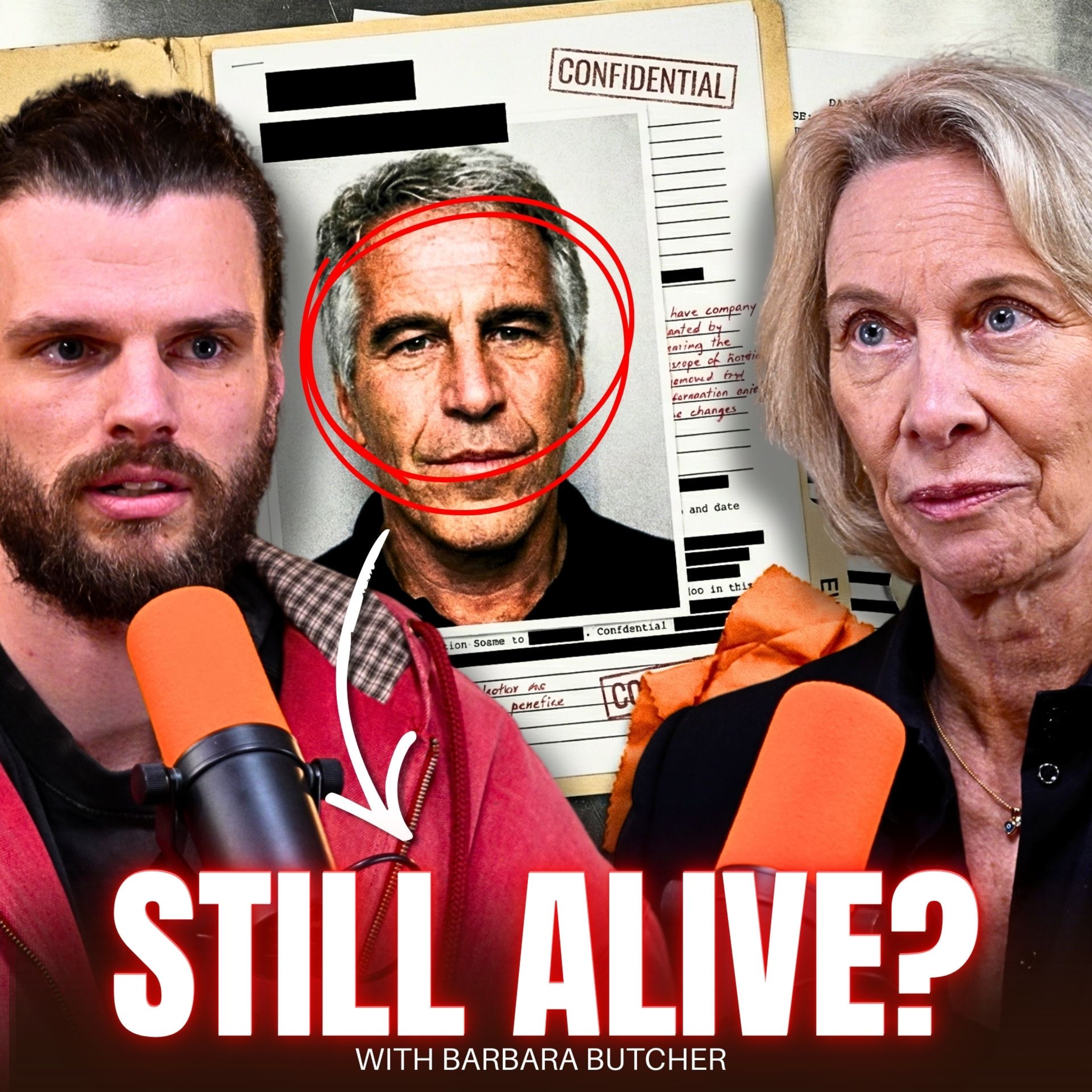
I need to ask you about one of the most infamous crime scenes that people are discussing right now, Jeffrey Epstein. Now, many people, as you can imagine, have disputed this finding. They said that he did not actually that in fact someone actually killed him. What would be your opinion about that specific death?
- [00:17]
B
There's a lot of ways to kill people and one of the ways is
- [00:20]
A
to Did Jeffrey Epstein take his own life? And how did he manage to do it alone in that jail cell in New York City? Also, what happens in the minds of psychopaths and serial killers that make different from the average person? And how can you tell if your neighbor or your co worker is one of these disturbing killers? Well, meet Barbara Butcher. She's the woman who has spent over two decades staring straight into this void. She's investigated more than 5,500 death scenes, hundreds of homicides, and some of the most haunting tragedies in American history. From the rubble of 911 to the quiet corners of Unsolved Mysteries, she listens to what the dead can tell us. But today we're going further, much further. What drives criminals to the edge of humanity? And what can the minds behind these monstrous acts actually teach us about the world that we live in? Some of the content that we discussed today is graphic, so just brace yourself. And we have also censored some of the words in order to comply with monetization policy. But anyway, this is a conversation with one of the most fearless voices in forensic science. So sit back, relax, and welcome to camp. Barbara Butcher. Thank you so much for joining me.
- [01:39]
B
My pleasure.
- [01:40]
A
I am very excited to speak with you. You have written many books, you are the star of multiple TV shows, another TV show coming out relatively soon, and your role is that you are a death investigator.
- [01:52]
B
Yep.
- [01:52]
A
So in brief, could you explain to me what a death investigator is and how that's different from say, a coroner or someone that conducts autopsies or a crime scene investigator? What exactly is your role?
- [02:04]
B
I get sort of a mixed role when you think about the investigation of a death. Let's say a gunshot wound, there's a person who is an MD called a forensic pathologist or medical examiner who will autopsy that body and give you the cause of death. So let's say a gunshot wound to the head. But is it a homicide or an accident? That's my job. I go to the scene of the death and working alongside the police independently, but yet cooperatively, I examine the body in its scene and it gives it the context. If there's a gun laying next to him, and I See, gunshot residue on his hand, and he's been despondent. Okay, I'm going to lean towards. It's not proven, but I'm gonna lean that way until we get all the evidence in. And, you know, if there's no gun there, obviously some kind of homicide. Right. It could be even an accident. You know, I had this kid out on Houston Street, East Houston, and he had just bought his very first gun Saturday night special, flimsy little thing, but he was out there in the morning with his friends, and he was showing them his little Roy Rogers tricks like a cowboy. So he's spinning the revolver on his hand, it FL out of his hand, and the. The hammer hits the pavement and shoots him straight between the eyes. So his first shot was his best shot, was his last shot.
- [03:32]
A
Wow.
- [03:33]
B
Isn't that something?
- [03:34]
A
Wow.
- [03:35]
B
So, you know, playing around with guns is not a great idea, but it's
- [03:38]
A
your role to go in there and figure out what has happened here.
- [03:42]
B
Right? Because he's his friends, although they were trembling in the corner, they could just as easily have shot him or, you know, plenty of people do this. They'll get a gun, they'll go out in front of people and shoot themselves in the head. That's an angry. They want to make a big splash going out. And so it could have been anything. But in looking at the dirt with a gun hit, in questioning his friends who were terrified, they were freaked out. You know, we came to the fact that, yeah, this is an accident. And later on, we got a motorist passing by at east house, and he called the police when he got home, said, you know, I saw this kid out there flipping a gun around. I think he might have shot himself. Thanks for waiting, by the way, till three hours till you get home before telling us. But wow. So my job is to get the context of the death. I examine the body, examine the scene, question witnesses, and then I work with the crime scene unit. Like, hey, guys, look at the angle on this entry wound here. Obviously it ricocheted from someplace high. Let's look for a bullet impact mark, and then we can figure it out. We can see what position the shooter and the shootee were in when it happened. So that's my job. I write a report and have my photographs and my sketches, and we take that to the medical examiner, the forensic pathologist. So when they do their autopsy the next morning, they have that context. It's an informed autopsy. Now, a lot of people think that forensic pathologists, like on tv, they run out to the scene of A death. And they look around and, you know, they haven't. Haven't got any protective clothing, but maybe a little glove. And they'll look around and say, yeah, that looks like a bad one. Probably a shot came from up there. Hold on now. And then they'll touch the entrance wound and say, you know what? That's a.45 caliber. Really? You sure it's not a nine millimeter? Oh, your finger measured exactly. I mean, first of all, how could they go out to the scene? Because they're doing an autopsy. Are you going to leave the body on the table and run out to a homicide?
- [05:57]
A
Good point.
- [05:58]
B
You have investigators like me. Many of us, like in New York, we're medically trained, or they have. You have to have a master's or a doctorate in forensic anthropology. I had a medical background, and it was the most interesting, fascinating. It was the best career I could ever have imagined.
- [06:22]
A
And how many years did you do this?
- [06:24]
B
Let's see. I did 23 years with the medical examiner's office in New York, and then I went private for a while after I retired.
- [06:32]
A
Wow.
- [06:33]
B
I did cases for attorneys and families who were questioning the findings. So I did that for a long time. And then I said, ah, the hell with it. It's too heartbreaking. You know, let me go do something nice. And Covid hit and I had plenty of time to write a book.
- [06:49]
A
Wow. I'm so curious. You are an expert in crime scenes, and we're here in New York City.
- [06:56]
B
Yeah.
- [06:56]
A
So I need to ask you about one of the most infamous crime scenes that people are discussing right now, and that is the. Of Jeffrey Epstein. Now, Jeffrey Epstein, as we know, the disgraced financier who, ostensibly based off of the reporting, is a sex trafficker that in his cell here in New York City. Now, many people, as you can imagine, have disputed this finding. They said that he did not actually. That in fact someone actually killed him or someone gave him the means to. Based off of what you know about New York City, the New York City penitentiary and sort of jail system, that specific unit that he was in, and the nature of that crime scene, what would be your opinion about that specific death?
- [07:44]
B
Well, you know, there's something. There's something in the middle. There's a lot of ways to kill people, and one of the ways is to encourage them and provide the means for them to kill themselves. So let's say you're facing life in prison, and they tell you things like, you know, Jeffrey, there's a couple of thousand people out in the World terrified that you'll ever speak again. You know that, right? So I want to tell you that, you know, if you do time, it's going to be in the psycho ward. You're going to be with the worst of the worst. You're going to have maybe daily, daily beatings. I don't know. It could be anything. So you get him in that horrible mood. He's already freaked out, right? He's already kind of depressed because he knows this is it. And so you talk to him about it and then. And it's a threat, of course. Now, I'm not saying who did this in particular, but let's just say that's my opinion. Now, how does he commit when he was on watch? Well, they took them off the watch. He's okay now. It's only been, what, two, three days? He looks pretty good to me. And, oh, you know his roommate. Nah, his roommate is not pleased with the accommodations. Let's take his roommate out. Okay. What else can we do? What else can we do? Now we're supposed to check his cell through the window every 20 minutes. Yeah, yeah, but you know what? These poor guys, these correction officers, they're exhausted. They're doing a double. They're on overtime. Hey, guys, you know what? Don't worry. Just relax tonight. What else do we do? Didn't really have to do much about the sheets. Even paper sheets. If you twist them the right way, you can with them, it's easy. And there's plenty of places from, you know, the end of the bed, the cot, sometimes the grid, like the heat and air conditioning grid. Well, it's rarely air conditioning, but the heat grid, and I've seen a couple of those. So let's just suppose that we people talk to him and they tell him it's in his best interest to go now and then. Just make it opportune. Just make it so that nobody's watching. Nobody's here to save you. Just. He has the means now. So when you think of the huge number of people who are in his files and you think about the power he wielded in the world, he knew all the secrets. I mean, it's a bunch of guys who were having a great time. Oh, they live in public life. They always have to be perfect. They have to be in government and all these things. But, you know, there's this one little place with our best buddy, Jeffrey. He's got lots of entertainment. We go down to his island, we have fun among ourselves, and no one ever talks. Well, for Christ's Sake. You had to know that Jeffrey was gonna say something or have some kind of records. He had enormous power. Enormous. So no one was gonna let him live to testify, Right? So did anybody murder him, per se? No. I feel like he was encouraged.
- [11:11]
A
This episode is brought to you by White Claw Surge. Great podcast pick, friend. No surprises there. After all, you're all about finding the tastiest flavors out there, just like White Claw Surge. And with big, bold flavors to enjoy, like blood orange, BlackBerry, cranberry, and more.
- [11:25]
B
It's time to go all in on taste.
- [11:28]
A
Unleash the flavor.
- [11:29]
B
Unleash White Claw Surge.
- [11:31]
A
Please drink responsibly. Hard seltzer with flavors.
- [11:33]
B
8% alcohol by volume.
- [11:34]
A
White Claw Seltzer Works, Chicago, Illinois. Hmm. I guess that specific jail that he was in would have been difficult for someone to get in there undetected.
- [11:44]
B
Oh, gosh.
- [11:45]
A
Or the amount of people that would be required to cover up, you know, a unit going in there to murder him. It would have been much easier just to give him the means to then take himself out.
- [11:55]
B
Sure. Like, the camera outside his cell was broken. Oh, my. How'd that happen? Oh, I think somebody threw something and it hit it, but I don't know. But if you wanted to sneak someone in to take him out, it would require that you'd have to have all personnel, like, locked away in a room or something.
- [12:16]
A
The janitor? Yeah, like, anyone that's the chef, the
- [12:21]
B
cook, the corrections officer, other inmates. All would have to be sequestered somewhere. And then on top of that, you'd have to turn out the entire video system. It would have to fail throughout the prison comp.
- [12:35]
A
Not just in front of the cell, but in front of the front door, in front of the next door, in front of the hallway.
- [12:39]
B
And when you turn those off, there's a record of that. They were turned off. So you can't bust the whole system.
- [12:44]
A
Right.
- [12:46]
B
So I just feel like he was encouraged to murder himself.
- [12:50]
A
Now, do you think that based off of, you know, the records that we have, in your opinion, do you think that he was given anything in order to do that, or do you think just the opportunity and the motive was enough?
- [13:01]
B
Just the opportunity and the motive and knowing that no one was gonna stop him. He certainly. His toxicology was clean, to my knowledge. Yeah, it was. And so no one gave him tranquilizers and said, here, eat these until you die. Right. So, yeah, he was strongly encouraged.
- [13:21]
A
Have you ever responded to or investigated a bedsheet hanging similar to this one?
- [13:27]
B
Oh, yeah, sure.
- [13:28]
A
So with the Bed sheets that he was given. It is possible to with those types of bed sheets, given, you know, enough time and opportunity.
- [13:38]
B
Yeah. Even with paper bed sheets, you. If you twist it right, you can do it. Yeah. So there was plenty of opportunity. I mean, the last. Oh, I had one in a cell who took off the bed sheets, twisted them just right and tied them into the grate, the air, you know, air duct grate. And one really interesting one I had was a. He was a prisoner only because he was a very important witness in an organized crime case. Now, he was arrested for doing crimes, but they had him like locked away a guard right outside. A correction officer right outside his room. Now it's the big metal door with the Lucite window. Right. So they called me up, they called and said, you know, this prisoner, he's dead. He's laying on his bunk and somebody strangled him. Oh, wow. How'd that be? All right, I show up and I tell. I look at the guy just for a minute, and I say, just get the out of here. How can it be? He's been under 24 hour watch and he's strangled with this sock. How could he do it? He would be screaming for air. I said, all right, let me explain to you how it works. This guy did not want to testify because if he did, his family would be killed. He knew it, right? So he decides and all he has to do is. His cot is here, you know, opposite the window. But there's his cabinet for his possessions. So he opens the door, blocking his head. So the guard outside, the corrections officer, all he can see is the body looks fine, laying there sleeping. But he takes off his stretchy sock, wraps it around his fingers, wraps it around his and just pulls. Now, is it painful? No, if you do it the right way, it's actually pleasurable. And we know this because of autoerotic asphyxiation. People will suspend themselves from a ligature and use a pad so that they don't mark up their necks too much. Can you imagine showing up to the marketing meeting tomorrow and you've got these, you know, big stripes across your neck.
- [15:59]
A
Yeah. You gotta wear the turtleneck then.
- [16:00]
B
Yeah. Yeah, that's the turtleneck day. So we know what it feels like. Here's the thing, the physiology of it. If you cut off the air supply by strangling someone, crushing their larynx, it's horrible. Your brain is screaming for air and that takes considerable force. Now, if you take, let's say a belt, a really strong one, and you pull it so that the carotid arteries or are obstructed. The blood can't go into the head, so they have a form of asphyxiation. Suffocation. Again, painful. Here's the fun way. The veins in the neck, the jugular veins, are soft. It takes less than 4 pounds of pressure to occlude them. So you wrap a little something around your neck, and the air still goes in. You can breathe, and the carotid arteries can still pump the blood to your head, but the blood can't get out because the veins are blocked. Right. And it builds up and up, and soon there's this surge of, like, endorphins that come out, and it's like a wild feeling. It's actually good. And so there you are, and you die. Now, what happens with autoerotic asphyxiation? They usually use a release, so they'll have, like, a knot and something they hold in their hand here. Now, to pull, so that when they pass out, when they go unconscious, their arm will fall and pull the ligature loose. Doesn't always work. And sometimes they just stay unconscious and the ligature is still closed and they die.
- [17:48]
A
Oh, wow.
- [17:49]
B
Now, I've got a bunch of these cases.
- [17:52]
A
You've responded to many of these. Yeah. Now, this specific person in prison that was on watch, that was.
- [17:58]
B
It was not autoerotic. It was intentional. He wanted to die. He had no release mechanisms.
- [18:03]
A
But on a watch, he was being surveilled and was still able to do this successfully.
- [18:08]
B
Right. Cause the guy could. The Corrections officer could look right through the window, see his body laying there, perfectly sleeping and nice pajamas on, but he couldn't quite see all of his head because that cabinet door was open.
- [18:21]
A
But it's just an interesting detail because so many people refer to, you know, the Epstein case and say, how could someone take their own life when they're on watch? And you're saying, well, it's happened before. It's not unheard of. It's possible.
- [18:32]
B
Oh, it's not what happens all the time. I mean, watch. They're supposed to check them, what, every 20 minutes?
- [18:38]
A
Right.
- [18:38]
B
So you have a lot of good time, 20 minutes to hang yourself.
- [18:42]
A
Which, granted, in his case, I think that they didn't check on him.
- [18:45]
B
Right. I think they fell asleep, the two officers at their computer terminals, you know, they were tired, come.
- [18:53]
A
Yeah, it's a hard job. It's a hard job. I get it.
- [18:56]
B
So the only reason that this guy could get away with it is, you know, because he blocked him, his head, and even Though there was a 24 hour watch outside, they just couldn't see it. Now why did he get a 24 hour watch? Because he was incredibly valuable as a witness in this major organized crime case.
- [19:16]
A
They needed him alive.
- [19:17]
B
They needed him alive and he's like, no, my whole family will be slaughtered. So he took the gentleman's way out, as they sometimes say.
- [19:27]
A
Now I'm curious, there's a detail that came out in the recent file release and this specifically pertains to how they transport bodies, specifically in this hospital. And according to one of the file releases, because there was so much press and media outside, they put like boxes and towels under a cover and then put that into one of the transport vans outside the prison and then moved his actual body out a different door into a different car. I'm curious if you've heard of this before.
- [19:57]
B
That sounds about right.
- [19:59]
A
It seems particular to me that they would like, you know, pull this like bait and switch, which on the one hand I get. If there's media everywhere, it's like, okay, we don't want to create such a big profile because it also looks bad on the prison. Let's just kind of keep things out of the public eye. I'm curious if you've ever heard of something like that before.
- [20:14]
B
Of course, of course we've done it.
- [20:16]
A
Really?
- [20:16]
B
Sure. You know, like Heath Ledger, he dies, famous actor and it was drug overdose, accidental. Media was all over that front of that building. They couldn't wait to see, you know, is he coming out? Is he coming out? Then somebody says, oh well, the, the funeral director's coming to get him. So we'll go back to the back bay on the side street here, watch the, bring the body out. Yeah, that would be so cool. So everybody's like, got the hint. Oh, let's go over that way. Yeah guys, that's where he's going to be. I don't know who told them that. Hmm, let me think now. Oh yeah, nevermind. So they all go over there and then we quick get them out the front.
- [20:57]
A
Oh wow.
- [20:58]
B
And all those kind of things happen all the time because for me it's the dignity of the deceased is important. Now I had a case in downtown Wall street, right across from Trinity Church. This poor young guy jumps out a 25 story building, lands in the, in the cemetery at Trinity Church. These ancient, I mean 300 year old gravestones, we're not ancient in America, are we? We don't have any good old stuff by American standards. Sure, by American standards. This is not France Or London. Okay, so, you know, he, he, he. His head, his body, they were smashed. I mean, it knocked his head off. It was awful. And all right, I respond, and I see that around the fence are probably 60, 70, 80 people at the fence waiting to see him. Because right now his parts are covered with sheets, and they're waiting to see him. And this is way back around 94 maybe, where they didn't have, you know, camera phones. So these couple of guys go into the drugstore and buy those throwaway cameras, and they come out there and they're waiting to take pictures of this poor guy. There's secretaries there, you know, taxicab people, regular folks. And I'll be damned if they didn't come and stand and wait and wait. Wait for me to lift up the sheets. And I'm looking at him. I'm so angry. So I said to the police officers, look, guys, do me a favor. Pull the sheets upwards to form a tent all around him. We're going to encircle them. Okay, sure. Yeah. They do it. You know what happened? Those people booed me. They actually booed. Boo. Boo. What are you hiding? Let us see him. What are you hiding? I'm not kidding. And I was like, wow, this is amazing.
- [22:59]
A
Wow. I can't believe it was a mob. Like, they just wanted to see.
- [23:03]
B
It was a carnage. They wanted to see it. Yeah. Look, I don't blame them, you know, in a way, this is like something you'll never see again. This is fascinating.
- [23:11]
A
You should be a little ashamed about it.
- [23:13]
B
Yeah. But you should at least have quiet dignity. Like, don't let this. Don't make fun of the guy. Don't stare at him like that.
- [23:20]
A
He was troubled, right?
- [23:23]
B
So they booed. And I just, you know, I went into the tent and did my work and did the best I could to pull together his body parts. And we had pulled in a stretcher, and I covered him really well, tucked him in, and we walked out with the stretcher, and they were still booing.
- [23:41]
A
Wow.
- [23:41]
B
And I. I felt, you know, I get it. On one level, it's human curiosity, but any other, I just felt so sad for this guy. I don't like my least favorite case to do. You know, it's. It's awful. It's really awful. It's hopeless. It's so sad. Especially the people who could get help but didn't. And they're like, nah, he'll be okay. He'll be all right. His wife died. You know, he'll get over it in time. No he won't. For God's sake. He can't leave the chair.
- [24:09]
A
Yeah. So, you know, I want to discuss a few different cases that you've dealt with over your career. But before we talk about them, I would love for you just to contextualize how you deal with this. Because I imagine as we talk about the cases, there's going to be a sense of, you know, there's going to be a sense of distance, perhaps in the way that you talk about your work and when we're talking about real people. But at the same time, you see this every day, multiple times a day. This is what you do day in, day out. So for the average person listening at home, it might feel calloused.
- [24:37]
B
Oh, sure.
- [24:38]
A
So I'm curious. How do you compartmentalize, on the one hand, you know, dealing with the loss of human life and the tragedy that every life lost is, but at the same time, going to work, coming home, watching a movie with your husband, your kid, and moving on. So how do you deal with that kind of. That separation?
- [24:59]
B
Well, you know, you forgot to mention the worst part of it. Evil. I saw true evil, pure evil in so many situations that it's hard to believe that that's how the world really is.
- [25:12]
A
Yeah, that's right.
- [25:12]
B
So the only way you can do this job is with detachment. So, you know, I'm going about my day eating candy bars and whatever I can do to relieve stress, going from case to case. And then I come upon a case where it's a home of invasion and children have been killed. Now I see the little boy, the mother and the father all face down next to each other, all shot. And I'm freaking out. I walk in and I'm like. Because I know how this happened. I can see what happened. And immediately I have to drop a curtain in front of my emotions. I have to go cold. I have to go snap into my forensic, inquisitive, investigative, radically scientific head, because I'm no good to those victims if I'm all emotional, if I'm thinking, if I'm crying over the kid, how can I point out that the direction of the bullet means that he was shot from the front or anything like that. I have to be able to do my job because that's my service to the family and the victims. And so I shut down hard. Here's the problem. When you go home, you don't just lift that up. You can't lift that shield off. It's really, really difficult. There were times where I saw things so awful, so Evil that I didn't want to be in my own body anymore. I wanted to escape. Now I don't drink or do drugs anymore. I mean, I don't drink or do drugs.
- [26:50]
A
Hold on a second, hold on Anymore.
- [26:54]
B
So there was no relief. I'd go home and I'd just strip down, pull the sheets over my head and just shiver in there. I didn't want to be in this brain that saw those things.
- [27:05]
A
Right.
- [27:06]
B
So hard to escape. Now, when I first started out, I was in training. I'm watching the autopsy of an eight year old girl. She's been smothered with garbage. And why? Well, her mother was out at a club and this guy came over to her and said, hey, you want a party? She said, yeah, sure. And he says, you know, here, get us some. Gives her $50. So she leaves with the $50 back in 92. That's a nice little piece of money, right? And so he, he knows where she lives. He goes over to her house and she's not there, but the eight year old daughter is. He says, okay, well I'll take the eight year old. And he does and he her and he strangles her and he throws garbage on her in a garbage heap in a dump. Now I'm seeing this on the table and pathologist Jackie Lee and I said, Jackie, how do you stand this day after day? How can you see this and still survive? And she said, barbara, the most important thing you can do when you leave each day is to surround yourself with things of beauty, art, food, music, nature, anything creative and beautiful. Because that's the antithesis of the death, despair and destruction that you're gonna see here every day. So you need to be in beauty. And I'm like, yeah, sure, some old hippie trippy bullshit. I didn't pay attention. And then after a couple of years, I said, oh my God, she's right. I am so locked into the world of evil and danger and death and I need to get out. So I got myself a little house in the country, a fixer upper. It had a stream and some nice trees that I hugged and I got a dog, a couple of cats, and it relieved so much of it.
- [28:57]
A
Wow.
- [28:58]
B
But then, you know, years go on, 9, 11 happens, all these things happen. And now I've got the best therapy in the world for ptsd.
- [29:08]
A
Wow. Do you think you have PTSD at this point? Oh gosh, yeah, no question.
- [29:12]
B
Oh, no question. Especially after 9 11, I couldn't walk the street if there was a tall building next to me. Everything was on. On its way to falling. As far as I was concerned. I couldn't cross the street without looking. Three times on each side. Three times. Three times. Three times.
- [29:30]
A
Wow. It was like a compulsive change.
- [29:31]
B
It was up until three years ago.
- [29:33]
A
Wow.
- [29:33]
B
I'm not kidding. I could not go downtown because I could not see the World Trade center site. I spent too much time there picking up remains, body parts. It was too awful. I hadn't been there in 20 years. I couldn't stand it. I couldn't even see that stupid tower, the new one. And my therapist, who's a genius, said, no, we're going. You're going in there. You're going into the museum, into the memorial. And she went with me. She stood behind me. She didn't stop me. And I'm in there crying, carrying on, tourists looking at me, and I'm thinking, you sons of bitches. You don't understand. But you know what? I got through it. Now I can go downtown. I don't want to go back in that museum, but I can go downtown now and see the building and not get upset, not freak out.
- [30:24]
A
Wow.
- [30:25]
B
Yeah. So, yeah, I had major ptsd.
- [30:28]
A
What's up, people? We're gonna take a break really quick because I want to tell you about a sponsor we have that I'm so stoked about. Yes, it's Chubby's. If you never heard of Chubby's, I've been wearing these since legit, like late high school. Yeah, I'm so stoked. I started this podcast because I wanted to deep dive on crazy stuff in history and just, you know, random wormholes that I got into on the Internet. And now I'm working with a brand that I've literally worn for 10 years because Chubby's one of those brands that you put on and you go, oh, this is comfortable. They're like the OG Like, I'm going to the beach, I'm chilling on the boat. I'm walking through soho in the summertime shorts. I mean, they are the best stuff, is super breathable. I mean, the stretch is like OG they're like one of the first ones to start that. I mean, you can actually move, you can sit. Like, you can exist without just being absolutely swamped. And they don't just do shorts. They got everything. I mean, they got polos, they got sweaters, they got anything you can imagine. And it's all that, that wrinkle resistant, quick drying, antimo microbial greatness that basically makes all their stuff, you know, the Most basically the mix between, like, I'm the most comfortable I've ever been. I could go to sleep right now. But also I'm a functioning adult. That looks amazing while I'm at. And great news, this is the 15 year anniversary and they're bringing back the originals. These are literally the shorts that started the entire thing. Same iconic fit, the same inseam options and that same energy, like, yo, I'm just gonna pull up and you know, crack a brew on a Friday. That type of vibe. So whether you are weekending, weekday ing, going to the beach, barbecue or just living your life, Chubby's has you covered. So for a limited time, Chubby's is giving the listeners of this program 20% off with the code camp. If you go to Chubbyshorts.com that is 20% off your order with the code camp. C A m p@chubbyshorts.com I mean, if you guys trust anything I ever say, Chubby's is fantastic. The shorts are truly amazing. And you're getting 20% off. What are you waiting for? Go check them out now. Let's get back to the show.
- [32:26]
B
Now the thing about the evil, what? The reason I highlight that so much is there's this thing called first responder syndrome. Cops, firemen, er personnel, death investigators. You get there to the scene and you see things that no one else will ever see. Or even maybe they won't believe it. They won't believe that people can torture others and kill them and torment them. But it happens. So I'm seeing evil now. Let's go back to 92 for a minute. When I started, we're getting 2,400 homicides a year. 2,400 homicides in New York City. Now you're lucky if you get 300, 350, right? So this was like big time when I started. So every single day I'm seeing a homicide. Either it's my case or it's coming in or I'm helping somebody out or it's up for autopsy. So as far as I'm concerned, the world is very dangerous. I know because I see every day that you have a very high chance of being murdered. You're going to be hit by trucks, you're going to be run over by trains. I know because it's my experience, of course. So of course the world is evil. It's full of evil. And a lot of cops feel that way. A lot of firemen, you know, it's just bad, bad out there. That's not true. It's the statistical bias that makes us feel that if you see it every day, then that is so.
- [33:52]
A
Absolutely.
- [33:53]
B
But for the average person walking down the street, their chance of being murdered is very, very, very low. Very low. Especially since a lot of these were either drug killings or personal husband and wives. You know, just walking down the street, you're not going to get killed. Buildings are not falling on you. You're not going to get hit by a car if you look both ways.
- [34:15]
A
Right.
- [34:15]
B
But to me, oh, yeah. Every second. Minute, every minute, every second is filled with evil.
- [34:20]
A
Wow.
- [34:21]
B
So I had to learn to get over that by seeing the good in the world. And now I do a statistical analysis. I tell my therapist, you know, I just. I don't want to ride in cars anymore. It's just too freaky. I could get smashed up, crippled, paralyzed. She said, all right, let's look at the numbers. How many motor vehicle accidents, deadly ones, happen in New York City every year? All right, let's get the statistics on that. And we do, and we analyze it and we see that the chances are really, really, really low. So now I use my intellect and, you know, and calm my emotions by saying, wow, Barbara, it's true. You're not gonna get killed by a falling building. You can walk down the street now.
- [35:08]
A
Wow.
- [35:08]
B
Now, I didn't walk under scaffolds until a year ago, and my building was surrounded by scaffolds, so that's really hard. But I was sure they were gonna fall on me. Wow.
- [35:20]
A
So a mixture of surrounding yourself in beauty, recognizing and letting your logic kind of override the emotional trauma.
- [35:27]
B
Yeah.
- [35:28]
A
And, yeah, I guess an immersion.
- [35:31]
B
Immersion. You have to have the prolonged exposure of the trauma until it loses the sting and the hold it has. Yeah.
- [35:39]
A
I just think it's important to highlight that as we talk about some of these cases to I guess just recognize up front that you are a human being and that you have been affected by these cases and that these are real people that you dealt with. And I think that'll help perhaps later on, as we're discussing these cases with a little bit more acerbic, kind of detail oriented, professional mind. So can you tell me some of the cases that you dealt with that left an imprint on you? And the ones that I'm most specifically curious about. Are there any cases that you walked into that were particularly confusing? Any that you walked into that everyone else that saw it said, we don't know what happened here. This whole situation is a debacle. We don't understand how this person Died. We don't really get all the details that went on. And for weeks or maybe even months, there was complete befuddlement about what actually happened, what comes to mind.
- [36:30]
B
You know, I'm thinking of a case out in Las Vegas that I just did on my TV show where, you know, just couldn't figure it was just too much. You know, the case that makes that sticks in my mind and I've worked on this in therapy is, you know, these home invasions where families are killed. You know, I got a one in Queens, five family members killed. The grandmother, the two uncles, the wife. I mean, everybody's just killed. Why? Well, fortunately we found out pretty quickly that the boyfriend was pissed off at his girlfriend. So he's not just gonna kill her, he's gonna kill her whole family.
- [37:08]
A
Wow.
- [37:08]
B
And he's gonna try to set them on fire too, because he's that angry, he's in a rage and he's slaughtering these people. So, all right, I see that and I get through it. And then I get one that I mentioned earlier where the, you know, I come in and I see bloody footprints from a toddler's feet. Like two and three year old little bloody footprints walking through the house. This little boy was walking through his parents blood because in the TV room, this is uptown, there is the father on the left, the 13 year old boy in the middle and his mother on the right. And the mother has her arm around her son. And you know, we see this and I'm like, I'm in shock, I'm shutting down. And I said to the cop, is there another kid here? He says, well, actually they were the two toddlers sat on the sofa here in this room and saw it like what? He said, yeah, you know, and then they walked through the blood and went out into the other room. That's how that happened, those footprints. And there's another son, he's 17 years old. I said, he's working for drug dealers, isn't he? They go, I don't know, we're going to find out. So here's what happened. This kid, he stole $5,000 from the big dealers. Now what the hell kind of idiot thinks you can steal $5,000 from a drug dealer? Do you think you'd be forgiven? Oh, I'm gonna give you a second chance, Billy. You're a good boy. You just need a little support now. Come on, come on. It's like, yeah. So he gets a call from another guy who says, hey, they're coming for you. And he runs, he leaves the $5,000, minus a few that he spent on the way home on sneakers and in a coat pocket hanging on a hook, and he runs. Does he say anything to his parents and the other kids? No. No. He's going to save his own skin. He runs. And then two guys come over. And how we can reconstruct it is. You know, they say something to the father like, where's the money? He doesn't know what they're talking about. These are nice people. This is a nice family. Working parents, you know, good kids. They go to school. Where's the money? I don't know. I don't know. All right, shoot the father. Now. You got a hysterical mother who knows she's going to die, too, if she doesn't speak. And she just saw her husband die, and she's carrying on, and they shoot her, too. And now there's a little boy in the middle who knows he's next. And they shot him. They killed him. And I still see his. He was Dominican. He had this sweet little hair, like, curly mahogany brown. And his little soft cheek, you know, it was like a downy little cheek. And he had beautiful golden skin. And I still see the side of his face. I can't get rid of it. Now, all of this for a lousy $5,000. And you know what? They never even found the money. They killed the family. They told the two little toddlers, if you tell what we look like or who we are, we're going to come back and shoot you, too. You don't move from this couch. So these little toddlers sat there on the couch before they got hungry or thirsty or had to pee and walked out and left the blood tracks. A lot of this was reconstructed from things that eventually these two guys were caught. And they tell it like, you know. Yeah, yeah, here's how it happened. I just. I don't get it. And I think about that little boy. I think about the mother and the father and the terror they were in and the confusion and the pain. And I. It's a bad one.
- [41:15]
A
The men involved with this were convicted.
- [41:17]
B
Yeah.
- [41:18]
A
Do you know how long in prison they got?
- [41:19]
B
I think forever. Just under forever. Forever, minus a day, Something like that.
- [41:25]
A
Now, I'm curious. A case like this, it's not, I guess, unheard of, right? This is something that you can wrap your head around, like, yeah, I get why this happened. It's so depraved and tragic, but it tracks. I'm curious, the men that did this, do you think that there's something in Them? That's pathological.
- [41:43]
B
Oh, yeah.
- [41:44]
A
Major psychopaths like this is a specific breed of psycho. This is not like your average person that gets taken advantage of for $5,000. Probably wouldn't do this, Right.
- [41:55]
B
Probably had the guy beaten up, had the kid beaten up for stealing the money.
- [41:59]
A
Right.
- [41:59]
B
That would make sense. Right.
- [42:01]
A
But in this case, he specifically stole from a proper psychopath.
- [42:05]
B
Yeah. So when the people who come over and do the beatings or the killings, as you know, as they need to, they usually have had no hope in life. They've grown up poor, grown up without a parent, single mother or single father. They didn't get any decent education because they had adhd or they just couldn't sit still. They were not bright and they just fell between the cracks. No one helped them out. Just another kid. Another poor kid. Now, along comes the drug dealer from the neighborhood. He's got a car. Wow. He's got jewelry, gold jewelry. And he says, hey, kid, you want to make a few bucks? Hell, yeah. Of course they're going to. So they are the runners. They hire kids to be runners. So deal is made. Kids going to run the money over to the apartment or run the drugs over, whichever. And these kids get a nice salary. And then they learn that the more work they do and the less empathy that they have for other people, the better they'll do. So if they can maybe shoot that rival gang dealer, because, you know, the boss just told me, get rid of that guy. He's in our territory. You go and do that, they get all the praise in the world. It's like a father figure. You're a good guy. You are. I'm going to bring you up with me. You're a man now. You killed people.
- [43:36]
A
Not to mention, there's probably some money involved, too.
- [43:38]
B
Lots of money.
- [43:38]
A
More money you've ever seen in your whole life, right? A few thousand dollars.
- [43:41]
B
I mean, it's beautiful. Yeah. Now, the funny thing is, I've seen a lot of these gang killings. Two girls call a ride service, a lift service, and they get in the car and they shoot the taxi driver. They just shoot him. Are they robbing them? No, it's because they. In order to join, I think it was the Bloods or the. It was one of the big gangs. In order to join the gang, they had to kill somebody. Oh, let's see. Who should we kill? Let's just call the cab driver who's got five kids and a wife. All right? There is no. There's no empathy there. There's no Sense that you're a human and I'm a human and we have things in common. No, you're a target. You're something. In my way. And, you know, I've seen this in serial killers. I've met four. No, wait, five. One, two, three, four, five serial killers. And this one, Tony Lee Simpson, he's in jail now out in Nevada. He sat in front of me. He was brought in in shackles. And I had to take blood for DNA and follicles of hair from his head and had to pluck a whole bunch of them. And pubic hair? No, he didn't do pubic hair. That was just head hair and blood.
- [45:00]
A
And his name was Tony Lee Simpson?
- [45:02]
B
Yeah.
- [45:03]
A
Would you mind Googling that Croesus?
- [45:04]
B
Sure. And he worked with George Cobo, was his partner in killing the two little serial killers. They killed a prince and princess of India. Can't remember their names.
- [45:16]
A
What?
- [45:17]
B
And they killed a Broadway director, Milton Seltzer. Setzer. Milton Setzer and an actor, young guy.
- [45:29]
A
I mean, these are fairly high profile killings. These are.
- [45:32]
B
Yeah.
- [45:33]
A
Your traditional serial killer is gonna go after, you know, the lower classes of society. These are people that are street drifters, things like that.
- [45:41]
B
Yeah, but I think these were like thrill killings. How they got in is, you know, this Broadway conductor, he had a piano for sale. And they said, oh, I'm, you know, George Cobo was an antiques dealer. He said, I'd like to come over and look at your piano. And here I'm bringing my young associate, Tony Lee. He's learning the business. And then they just turn around and kill them, you know, slash their throats.
- [46:09]
A
Oh, wow.
- [46:10]
B
Yeah. And why? Because it was interesting. It was interesting, it was thrilling, it was kicks. I don't know. But I'm standing there with Tony Lee and I'm about to draw his blood. And I look at his eyes, and they're as dead as a wolf's eyes. They don't see a person. They see an opportunity. They see an object they can use. And I feel him assessing me for how can that thing be useful to me?
- [46:42]
A
Wow.
- [46:42]
B
Yeah. It's the strangest things I've ever seen. Their eyes are like an animal's eyes, assessing prey. And this ran this cold chill through me. I got that metallic taste in my mouth, like when, you know, like danger, danger, danger. And he sat perfectly still while I took his blood. He just kept looking at me. And I'd plucked out his hair. It hurt. And he just kept looking at me. And then he just nodded. They let him out now, his partner, George Cobo, he's an older guy. Now, Tony Lee is young and handsome. Got this, you know, wolfish look about him. A bad boy. George Cobo, his partner is an older guy, middle aged, chubby, balding. And I said, Mr. Cobo, please sit down. I'm going to have to take your blood and hair. I needed to take 30 hairs by the roots from your head. And he said, oh, no, my, my dear. I've lost so much already. And he's like. He said, what are you going to do to me? He was like this funny little guy. And I'm thinking, wow, he's funny. He's trying to be charming. And I said, all right, Mr. Kobo, how about if I'll pull the hairs evenly from around your head so there are no patches? Would you do that for me? Oh, bless you. You.
- [48:06]
A
Thank.
- [48:06]
B
Thank you so much. And I did. And I don't need him screaming in pain. I need to do his. Get his cooperation.
- [48:13]
A
But you felt like this little performance was intentional?
- [48:17]
B
Oh, yeah. This guy was charming. If I had met him at a cocktail party under different circumstances, I would think, oh, what a funny little guy.
- [48:24]
A
Wow.
- [48:25]
B
And so he's a serial killer. He's killed people. And then Aaron Key, my biggest serial killer case. What did he kill? I don't know. And killed so many young girls. Adolescents, 12, 13, 14 year olds. One of my cases, that one of his victims, a young girl, she was 19, lovely girl. She was a college student. She wanted to be something. And he smothered her, strangled her, set her on fire. Yeah. Now, here's what pisses me off. Eventually he was caught after 10 years of doing this. Okay. And 10 years later, he gets convicted, I think, on four murders. Three. Three homicides.
- [49:17]
A
Four.
- [49:18]
B
And, you know, there's others, but they're just going to prosecute him. And, you know, I'm testifying against him, seeing him in court. But when they brought him to me to. Yeah, there's Aaron Key. Yeah. When they brought him to me and said, could you take his blood and pubic hair and head hair? I said, yeah, go in there. And I said, Mr. Key, I'm gonna have to pluck hair from your head and pubic hair and take your blood. And he said, yes, ma'. Am. Do what you have to do. And he looked up at me with Princess Diana eyes. You know how she always turned her head down and looked upward, so innocent, so open. He looked at me like that. And I thought, Jesus, this guy is. He's handsome. I could see why the girls liked him. These young girls were falling for him, not knowing he was going to take him up on a rooftop and set him on fire or leave them on the promenade of the East River. You know, I mean, and so here's the part that pisses me off. He was evil, pure evil. He. You never heard about these deaths, did you? You never heard about 13, 14 year old girls in East Harlem, Spanish Harlem, being and slaughtered. You never heard about the 13 year old girl who he sodomized and you know, said, you're lucky, you should be grateful you're with such a handsome fellow as he's sodomizing her. And you never heard a word about it. Now a white woman on Park Avenue gets murdered and it's nationwide news. It's the Times, the Daily News, the Post, it's the Newsweek magazine. It's all over the country. Successful young woman struck down in her 30s by Monster Killer. Okay. But you never heard about the little girls in Spanish Harlem. So this is one of my big.
- [51:12]
A
Yeah, it's a completions here. It's a complete double standard.
- [51:14]
B
I don't know.
- [51:15]
A
Are you familiar with the comedian Patrice o'? Neill? He's a very funny comedian. He has a joke, this is back in the 2000s and obviously I interface with the world much through comedy because I'm a comedian. But he has the joke that I think highlights his exact point with the disappearance of Natalee Holloway. And he says when Natalee Holloway's gone, this beautiful white girl, she dies. Everyone is heartbroken. He, and he's a black guy, he says, if it was a black girl that died, they would have sent the, you know, the investigators to the side of the beach and they would have gone, we don't see her.
- [51:49]
B
Yeah.
- [51:50]
A
And they would have moved on. And he uses this as a funny joke to highlight this disparity with. Yeah, you know, when women of color, people of color, but really women of color in particular, when they go missing or when there's crimes done to them, it's oftentimes, oh, it was an over exaggeration or it's just swept under the
- [52:05]
B
rug or she was a junkie. She was.
- [52:07]
A
That's life in the hood. And they just kind of moved on.
- [52:09]
B
Sure, sure.
- [52:09]
A
Yeah. It's a shame, isn't it?
- [52:11]
B
And I mean, the best example of that is the Gilgo beach killers slain. What do they got? 11 girls now, they never investigated any of these disappearances because they were sex workers. They were, you know, an on call service. And they'd be driven out to the beach there in Long island, and it work. And then they disappear. That was that. And, you know, it took I don't know how many years. Probably 24 years ago it started, maybe even longer. There were all these skeletonized bodies out there. And even then. Even then when it was all revealed accidentally because a cop was in there training his German shepherd as a, you know, as a patrol dog, and they come upon some bones, and then they're like, oh, wow, look at that skeleton. And then they started looking around, and there's more of them.
- [53:04]
A
Wow.
- [53:05]
B
They never would have been discovered if he hadn't been in there. Because nobody was looking for them. They were teenagers.
- [53:11]
A
Such a shame, isn't it? And not to say that we shouldn't care when white people get killed.
- [53:16]
B
Of course we do.
- [53:17]
A
I think sometimes people will misinterpret this and say, like, oh, you don't want people to look for white people when they're murdered, and you only want them to look for black. That's not what we're saying. At least that's not what I'm saying. I don't think that the, like, when people, I think, discuss privilege and stuff like that, to me it's never, oh, we need to take away white people's privilege. We need to lift up all people so that all people can experience the same privileges of living in America.
- [53:37]
B
That's right.
- [53:38]
A
And that means when people of color are the victims of these brutal crimes, they're equally investigated with the same level of intensity and discernment and conviction to find the people responsible.
- [53:49]
B
That's right. We all deserve justice. It's in the Constitution. I mean, we're not really using the Constitution right now.
- [53:56]
A
Still talking about the Constitution.
- [53:57]
B
It's in there.
- [53:58]
A
Get rid of that.
- [53:58]
B
Come on. Used a lot.
- [54:00]
A
Yeah. All you people, the Constitution.
- [54:02]
B
Action is what counts. You don't sit there and discuss and judge and legislate. Come on, just kill the suckers.
- [54:10]
A
What's up, people? We're going to take a break really quick because I got to tell you a little story. All right? This is a story about a man who turned 29 years old, and slowly everything started to fall apart. Not in, like, a dramatic way. Life just got more difficult. All right? You know, the same workouts all of a sudden, not getting the same gains, you know, in the musculature area, same diet all of a sudden, just, you know, still being a little bit soft around the middle. And around 2pm every day, just feeling terrible brain fog, you know, and not to mention, you know, hair Falling out, thinning. And that man is my friend David Sanchez. And so naturally, what did he do? He started to panic. Google, okay? He was like, low testosterone. What do I do? What do I do? And it was terrifying because doctors act like, oh, the solution's casual, like, yeah, just inject yourself with testosterone forever. Use needles, dirty old needles from the streets of Kensington, Pennsylv, Penia, Philadelphia, whatever. All right. But then you actually look at like trt, you know, it's thousands of dollars a year, could have fertility issues. It could shut down your body's natural production. I mean, yeah, you look better, but it might actually leave you worse in the long run. And that's why there's something natural, something I found called Mars Men. Yes. And I've been taking it consistently. And some men have actually reported, I mean, better energy all day, better focus, stronger lifts, not just a spike, but a steady, consistent drive. And yeah, it's not trt. There's no needles, no synthetics, no dependency. It's designed to support healthy testosterone using real ingredients like zinc, boron, you know, Tonga Ali. Things your body actually recognizes and needs to fuel testosterone use. Yeah, I genuinely like it. I just wake up in the morning, toss a couple pills back, and I start feeling better. And so can you. With Mars Men, I feel great. And you should start feeling great, too. And the way you do that is you go to mengotomars.com and for a limited time, the listeners of this program are going to get 50% off for life, plus free shipping and three free gifts@ Mengotomars.com that's right, use the promo code CAMP. And you're going to be getting all that and more. And better yet, 90 day money back guarantee. If you don't like it, just be like, hey, this isn't for me. Send it back if you feel no difference, which odds are you won't because 91% of men say that they feel more energetic when they're taking it, but maybe you're in the 9%, you send it back, money back. I'm telling you, there's no reason not to try it. And after you purchase, they will ask you how you heard about them, please. So you heard about it from the good old folks here at camp. It really helps the show and it keeps the fire burning. Let's get back to it. I'm curious. You've met serial killers? This is an interesting ripple because I went to a prison once where I spoke with lifers and I was struck by a few things during this interaction. I Was speaking with a few different people, just kind of in a casual basis. I was there visiting, and a few things struck me. One, when they told me what they were in for, it was a very specific story. And then they also brought up to me the circumstances that led them there. So they would say, like, oh, I'm here because a drug deal went bad and I killed a guy. I go, oh, that's terrible. That's a terrible thing to happen. And then they also tell me that they were abused throughout their whole childhood. And then I leave, and I walk away with this feeling of, like, this is a tragedy. On all accounts, what this guy did is awful. He shouldn't have killed anyone. But also what happened to him was also terrible. And no child should be in a situation where they're having cigarettes put out on them when they're four years old. Like, what a horrendous thing for this person to endure. No wonder that he's so broken. And then I googled their names when I left, and what they told me was not true.
- [57:49]
B
That's right.
- [57:50]
A
What they told me was not the whole truth. That the first time he went to prison, it was for this drug deal gone wrong. But the reason he's in there right now is because he murdered three women and then buried them in his backyard. And this happened, I think, four or five times that day. And I walked away, kind of spun around. Cause I was like. I felt this overwhelming emotion where I felt. Felt almost bad for them in one way and then also bad for their victims in another way. And then I got completely lied to and almost felt bad for myself. Like, how did I get duped by these guys?
- [58:23]
B
There goes your innocence.
- [58:24]
A
Exactly. It's bizarre that I was played so many times by so many people in such a short window. So I'm curious, in your experience, talking with these serial killers that stereotypically are very charming or cunning or savvy, what do you find to be, I guess, interesting about their disposition, their personality, their characteristics? And what threads can you draw through all of them that you've spoken to?
- [58:47]
B
So good, so good. So good. New spring arrivals are at Nordstrom Rack stores now.
- [58:53]
A
Get ready to save big with up to 60% off rag and bone. Marc Jacobs, free people and more. How did I not know rack has Adidas? Cause there's always something new. Join the Nordy Club to unlock exclusive discounts. Shop new arrivals first and more. Plus, buy online and pick up at your favorite rack store for free. Great brands, great prices.
- [59:13]
B
That's why you rack the absolute Refusal to take responsibility in any way, shape or form. It is invariably. Well, I was beaten in my childhood, and I never knew anything but pain. And it just. I learned it. Yeah. Or my parents used drugs and I had nothing. I had no love. No love. And so I never learned how to love other people or care for them or Tony. Aaron, Key. His thing was that the medical examiner's office was framing him by a special collection of bones. I mean, he would try to represent himself. You know, he's up on the stand talking, and he's like, screaming that there's a conspiracy at the medical examiner's office, probably involving me. I was like, shit. I'm sitting there. And that, you know, it was inevitable that everything wrong in his life was just pushed to the maximum. And then they're trying to frame him for something now, never mind that he did something, but it was not fair. They were framing him for something.
- [60:30]
A
He's the victim here.
- [60:31]
B
Yeah, he's a victim.
- [60:32]
A
Wow.
- [60:34]
B
Now, I don't know.
- [60:36]
A
In any of these cases where they are telling you the story about their childhood, which invariably is sad, what happened to them, assuming it's true is tragic in these cases. How many of them were lying about what happened to them or perhaps embellishing what happened to them? Were you able to deduce that?
- [60:51]
B
No, I'm sure. Plenty. Look, I've got excuses to kill. I didn't have a happy childhood. But there's a funny thing.
- [61:03]
A
You're a Catholic from Long Island. I know you were sad the whole time. Of course.
- [61:07]
B
Of course I was guilty and sad and depressed all the time. I have excuses to kill. But I stand on the correct side of the line. And that, I think, is an inborn personality trait. I asked a famous forensic psychiatrist, I said, what is it? What is it that makes serial killers? And he said, bad brain. Just a bad brain. There's nothing that can be fixed, nothing that can be therapized out of them. There's no cure. It's just the brain is defective in some way. Perhaps the animal part of the brain, the brain stem, has a particular animalistic need to hunt and kill. I don't know. But it's. The brain is broken. Now, pedophiles in particular, you know, they've done everything. Castrated them chemically, even, you know, surgically in some cases. And there's been people who work with them for years and years and years to get them to avoid attacking. If you let them out, what happens? They go back. They can't. They literally cannot help it.
- [62:15]
A
It.
- [62:16]
B
There's something in their brain that drives them to sexually assault young children. How do you figure this?
- [62:26]
A
Yeah, I mean, it truly is. I mean, just even watching like To Catch a Predator with Chris Hansen, it seems like one of these proclivities that I don't know what the cure is. I don't know if there's such a thing as something like that because I see these people and they're on the show and they're being humiliated on TV for trying to meet up with a 13 year old girl.
- [62:47]
B
Oh yeah. Yeah.
- [62:47]
A
And then they say if I walk away, I'll never do this again. And part of me is like trying to understand the psychology here where I'm like, maybe this is a guy that is just a. He's an incel. And, and he hasn't had experience with women. And, and he's saw this as an opportunity and, and truly made a mistake. I'm like trying to find some thread to like make me not just revolt with like how disgusting this is.
- [63:09]
B
No, that's not it.
- [63:10]
A
And then Chris Hansen will say, and then two months later we caught the same guy.
- [63:14]
B
Yeah.
- [63:15]
A
I go, how is that possible that you went through this whole experience? And then within two months, that means he was caught within two months. That means he was probably doing the same behavior online within a couple days.
- [63:25]
B
Yeah.
- [63:26]
A
That this happens and he's back and it's, it's. And I guess you see this with serial killers, right? You have a serial killer that almost gets caught. He gets questioned by police, gets released.
- [63:35]
B
Like Aaron Key, you know, they had him in the very first one. They brought him in, but he used a different name and they let him go. That happens. Look, I've seen pedophilia that I couldn't imagine that this really exists. But I did a case where I, you know, looked like a natural death. A guy was sitting at his computer. Neighbor checked on him and, you know, found him dead. And he was just slumped over. And we're looking around and on his computer there's some. What the hell is that? That looked like a kid. Then we look and there's files and files and files of DVDs. Not CDs, they weren't invented then. No. Was it DVDs? Whatever it was. Oh, floppy disks and discs.
- [64:21]
A
Wow.
- [64:21]
B
And then there's big boxes all through the place. File cabinets. I open up one of the boxes, it's photographs. And I pull out a black and white picture of. And a man doing things, sexual things. Now I always thought that, no, this was this was like dwarves or little people that they used to look like children for these photographs or, you know, they were doctored in some way. No, these were actual little children. Like five, six, eight year old kids engaged in. Was a grown man. And I was like, what? Whoa, whoa, whoa, whoa, whoa. What the hell is this? This guy was a seller, a dealer of child. And he had thousands of photos in there of kids doing things with adults, sexual things. He had videotapes. He had everything on his computer. He was doing business. He was, you know, selling and shipping now. I couldn't believe it. I was like, no, no, no, this can't be real. And that's the first time I realized pedophilia is real. It's little children. I never believed that before. This was like a major blow to my worldview, you know.
- [65:45]
A
What happened to him? He just died.
- [65:46]
B
Oh, he just died of a heart attack.
- [65:49]
A
Well.
- [65:49]
B
And, you know, and I thought maybe
- [65:50]
A
it was God looking out or something.
- [65:51]
B
Yeah, good. All right, he's dead. But you know what's funny? Not funny. It's weird. I asked the woman next door to do the identification, you know, can you tell me his name? Look at him. She looked and she said, yeah, that's so. And so I said, do you know him? She said, yeah, the kids used to come by, give him lollipops and stuff. A really nice guy. Kids all liked him. I thought, oh, shit, did he ever invite those kids in for photos, like. And I was like, thank God he's dead. I can't imagine. So of course, we called Special Victims and they came over and took away all the porn and everything else. And I'm sure they investigated that for years. Wow. But it still happens to this day. Trafficking. Wow. You know, and I can't let myself think about that because then I'll go back into that feeling that the world is essentially evil. And then I won't be able to enjoy my life, which is so good.
- [66:50]
A
Yeah. You know, I think people mistake New York City sometimes because they see, you know, the televised version, or perhaps they are aware of, you know, the cost of living. And they think, like, everyone that lives here is rich and, you know, they're not drawn to these, you know, disgusting types of depraved crime. This is not the case.
- [67:09]
B
No, it's not. No. There's lots of depraved crime.
- [67:12]
A
Are there specific scenes that you've come across that are particularly New York, that these are crimes that would occur in a city like this that wouldn't occur in other places in the country?
- [67:22]
B
Mm, that's a good question. Well, you know, there is one thing, and that is homophobia. I've seen a number of cases where, you know, they come upon a man in a well decorated, nice apartment. He's dead, his face is bashed. Yet invariably his face is bashed in. And then they interview neighbors and, you know, call his doctor friends, whatever, and they find out, yeah, he's homosexual. And he goes to Uncle Charlie's bar over on Greenwich, and, you know, he comes home with hustlers, pays them. So the hustlers come back with them, they do a sex act, they get their money, but then they look in the eyes of the guy that just hired him and they see something. They see homosexuality. They see, oh, I just did that. And their internalized homophobia puts them into a rage, and so they beat the guy's face in, obscure the eyes. I don't want him looking at me, you know, and it's so easy to catch them because, you know, you go into the bar and say, hey, so? And so he's a regular. Did you see who he left with? Oh, yeah, yeah, he's a regular.
- [68:34]
A
You know, wow.
- [68:35]
B
I've seen this a lot. And I think because New York is a good place to be gay and to feel free to live your life, that, you know, it happens. And I know it happens in la too. Now, big cities, of course, but New York is a particularly forgiving, tolerant, and liberal town, you know, so it's rare for me people would be beat up just for being gay. It happens. Right? But rednecks come in from New Jersey and they beat them up in New York.
- [69:08]
A
Sure, yeah.
- [69:09]
B
That used to happen a lot.
- [69:11]
A
But that case is really interesting. I mean, it's tragic, but it does share something about the psychology of people.
- [69:18]
B
Right?
- [69:18]
A
Like, even when you're talking about the serial killers, they never take responsibility. That, to me, feels like a protection of the ego, that they have to believe that they themselves don't make mistakes. So they have to rationalize mistakes that they do make as other people's mistakes and not actually their mistakes.
- [69:33]
B
That's right.
- [69:33]
A
And the same case here, it's. This is a person who's engaged in a sex act that is disgusted by it for some reason, whether it's some type of personal bias or a conditioning of his, you know, culture or something like that. And then it has to find a way to get rid of it and sees himself in this person that he just, you know, had this act with and then has to destroy them in order to Protect himself.
- [69:54]
B
Yeah, yeah.
- [69:55]
A
A bizarre feature of the human ego, that by destroying someone else I can preserve myself. When the reality is that no one had to be destroyed in the first place.
- [70:03]
B
Yeah, I wasn't with him. Yeah, it's just, you know, the guy was trying to touch me. Instead there's.
- [70:12]
A
And the fact that it's the face. I mean, it's just such an interesting.
- [70:15]
B
Yeah. You know, and I saw a case where a woman was beaten. Her face was all obliterated with a. A leg of a chair, a heavy oak leg beater face. And there was a pillow covering her face. I said to the detective, she got a son? He said, yeah, she's got a son. He's about 20. And you know, he finds out from the neighbors he lives here. I said, he's a junkie, right? Drug addict. He said, that's what they say. So I know automatically what happened. How he came and asked his mother for money again and again and again. And she gave it to him because that's her baby boy and she understands his addiction. But this one time she said no. And the rage in him. He beat her face in. Why did he cover her with a pillow? Because her eyes were looking at him. I've seen that in a couple of cases. They cover the eyes with a pillow or sheet or something because they saw themselves in the eyes of their wife, husband or mother. They saw themselves as a killer. So quick, quick, cover those eyes. So whenever I see a pillow over somebody's face and they're beaten, I know it's relative, interesting. It's personal. It's rageful. And we have this thing called overkill. When you stab someone over and over and over and then you slit the throat and then you shoot them. That's another case I did on the TV show the. The Death Investigator on Peacock. And she. It's just this. It's just this feeling that. I don't know, I even forget what I'm going to say. But.
- [72:01]
A
Well, this overkill that you're talking about,
- [72:02]
B
Overkill, the rage killing. I know it's a family member or a friend or an ex lover or a current lover. One of the shows we did on the. Was a case in the Bronx where whole family was slaughtered. The sisters, the father, the son in law and the little boy. Five people killed in different apartments in the Bronx because one of them was asked to pay back a debt. One of these killers, this nice man, he had $50,000 because he had been in an accident. He was a good Samaritan. He saw A man beating a woman in a park. He ran up, tried to stop him, and the guy hit him with a bat. And he was brain damaged. He was crippled. All these terrible things happened. Eventually, you know, he gets out of the hospital. He's in a wheelchair, and he gets an award for, you know, not an award, but a. A settlement because the hospital treated him the wrong way, wound up in his paralysis. So he lent people in the neighborhood money to build businesses. One of his friends, he lends him 50,000 bucks. And the guy decides. And then after a year, he asks him, are you going to pay me back? He says, yeah, yeah, I'm getting to it. And then the guy decided, I don't want to pay him back. I'm going to kill him. You know what? The rest of the family knows about it, too. So I'm going to kill all of them. And they overkill them because they're so pissed off about the loan. They stab him and stab him and stab him and shoot him. And cut. In an elevator. They cut the woman's throat. Then they shoot her. Then they stab her. Two guys.
- [73:39]
A
But the guys they killed were the ones that received the loan.
- [73:42]
B
That's right. They received his generosity.
- [73:44]
A
And they were angry that he would consider trying to take it back.
- [73:48]
B
Yeah. That he would ask for repayment. They knew it was a loan. But how dare you ask me for repayment. Don't you see what I. How hard I have to work?
- [73:56]
A
Wow.
- [73:57]
B
See, this is a weird thing. Yeah, Right.
- [73:59]
A
I'm the victim. You are putting me in an uncomfortable situation, asking me for money. Yeah. Wow. I mean, yeah, it's challenging to even sit with that, because I guess you're trying to. At least for me, I'm trying to apply my perspective and sense of reality onto them.
- [74:15]
B
You can't.
- [74:16]
A
But they fundamentally are existing in a different reality.
- [74:18]
B
That's right.
- [74:19]
A
I'll watch sometimes, like body cam footage on YouTube. I find it morbid and fascinating. But I think the thing that draws me in is that there's a fundamental sense of humanity that you discover that we live in a culture with rules and laws and sort of customs and things that you and I both kind of do, because that's what. Things. That's how people have always done things. And then you see sort of the depravity of these crimes and the way people are behaving, the way they act. And it kind of cuts to the core of what humans really kind of are, and you sort of understand what we really value, how important self preservation is. The internal Codes that we kind of make up for ourselves that really kind of underpin everything.
- [74:57]
B
Yeah.
- [74:57]
A
And I find them fascinating for that reason, but a few of them stick out to me. And you've touched on them a little bit, but these sort of random thrill killings just to see what it's like. I find these to be maybe the most disturbing because there's been a few where the officers discover a dead body and then they reach out to someone that saw it and they go, oh, yeah, last time he was seen, he was with this guy. Then they show up at the house and they interview the guy. And the guy's a 19 year old, basically a kid. He's 19 years old. And they say, so have you seen this guy you're with? He goes, yeah, I killed him. And they go, why? And they go, I just wanted to see what it was like and here's what I did. And they almost take glee and sort of explain it to the officers. And these are kids from what seem like good families. They have a two parent household. They have siblings that are well adjusted. And for some reason, this kid just wanted to know what it was like. And the fact that they retell it with such a excitement.
- [75:54]
B
Look what I did, I killed.
- [75:56]
A
And it's interesting because the officers in that moment are kind of forced to encourage them in order to get more information. So the officers go, oh, wow, you're pretty strong.
- [76:06]
B
Yeah.
- [76:07]
A
And they kind of coax them into it. It's a very strange little theater.
- [76:10]
B
Oh, yes.
- [76:11]
A
Seeing these two people go back and forth, I'm curious, have you experienced or seen that within your career?
- [76:16]
B
Well, I've seen police interrogations or questionings where they say, wow, that was really smart of you talking about killing somebody. How did you think to, you know, hide the weapon in the dumpster? I mean, that was smart. So that the guy gets to brag. Oh, yeah, sure, I saw that on tv. But I knew you shouldn't just leave it on top of the dumpster. I buried it deep. Oh, that was smart. Funny, huh?
- [76:41]
A
Clever.
- [76:41]
B
I have three little boys who were bored. One night they were going around in Morningside park looking for something to do. There's a man sitting on a bench, park bench, and they squirt lighter fluid on him and set him on fire. Now I go to court, grand jury, the three little boys are there. I think they're like 12, 14, maybe 115. And they're asked by, you know. Yeah, this was after grand jury. I went to the trial and testified as to what I had seen. How it, you know, how it happened and what the man suffered. And the prosecutor asked them, why did you do that? They said, we had nothing to do. Nothing to do. I'm bored. And just. He was sitting there. Oh, my God. I'm looking at these kids. My God. Is this real? Is this real?
- [77:42]
A
What do you make of that? What do you think? Is it a psychopathy? Are they imitating something that they saw? Are they growing up in an environment where this is somehow rewarded in some,
- [77:54]
B
during some ages of a child? I think there are moments when they don't fully have a moral sense that you and I are the same kind of beings. If I am hurt and crying, you also hurt and cry. When I love somebody like my mom, you also love your mom. So we have an identification that keeps us civilized. I don't want you to suffer the pains I've suffered. And you don't want it on me either, right? But these kids, they don't see there's some moral failing in there where they just don't see that that's a regular guy who's just sitting there, you know, smoking a cigarette.
- [78:36]
A
Monster Energy. Everybody knows White Monster, Zero Ultra, that's the og it kicked off this whole zero sugar energy drink thing. But Ultra is a whole lineup now. You've got Strawberry Dreams, Blue Hawaiian Sunrise and Vice Guava. And they all bring the Monster Energy punch. So if you've been living in the White can branch out. Ultra's got a flavor for every vibe, and every single one is Zero Sugar. Tap the banner to learn more.
- [79:05]
B
Eczema as unpredictable, but you can flare less with ebglis, a once monthly treatment for moderate to severe eczema. After an initial four month or longer dosing phase. About 4 in 10 people taking EBGLIS achieved itch relief and clear or almost clear skin at 16 weeks.
- [79:20]
A
And most of those people maintain skin that's still more clear at one year with monthly dosing. Hempclus Lebricizumab LBKZ, a 250mg 2ml injection, is a prescription medicine used to treat adults and children 12 years of age and older who weigh at least 88 pounds or 40 kilograms with moderate to severe eczema, also called atopic dermatitis, that is not well controlled with prescription therapies used on the skin or topicals or who cannot use topical therapies. EBGLIS can be used with or without topical corticosteroids. Don't use if you're allergic to ebglis Allergic reactions can occur that can be severe. Eye problems can occur. Tell your doctor if you have new or worsening eye problems. You should not receive a live vaccine when treated with Ebglis. Before starting Ebglis, tell your doctor if you have a parasitic infection.
- [79:58]
B
Ask your doctor about ebglis and visit epglis.lily.com or call 1-800-lilyrx or 1-800-545-5979.
- [80:06]
A
And it's perhaps a developmental window. Yeah, there's something that happens kind of in this brackish period between child and adult where their hormones kind of change or perhaps the way they see the world.
- [80:17]
B
It's said that kids don't really develop a well thinking brain, a well functioning brain until they're 22. Now that explains something about drafting. They draft 18 and 19 year olds. Why? Because they don't have any reasoning in their heads yet. And they make it like, we're gonna have some fun. We're gonna fight. Yay. Get that testosterone revved up. We're gonna kill people. We're gonna shoot them. Woo hoo. And then they tell him, you're doing great service for your country. You are protecting your country. Now look, there are many professional soldiers, good people, smart people. They're not out to kill, they're out to protect. Of course, you know, and I have all the respect in the world for the military, but when you start drafting kids to go to, let's say Vietnam to stop communism, hey, 18 year old, you're gonna stop communism? How's that make any sense?
- [81:15]
A
Of course, I mean, as soldiers, I mean, they'll tell you, yeah, there's a few guys in my battalion that are, they enjoy killing. Little crazy. I mean, there's even a documentary that I saw, I took a class in college, I that specifically analyzed the psychology of serial killers and murderers. And as a part of the class, we watched a documentary. I wish I could find it. I gotta reach out to this professor to find it. But it's specifically a Soviet soldier talking about his time during World War II. And the reason that he was so excited to be involved in the war effort is because he enjoyed killing people. And they just have him in the interview just saying like, yeah, they were like, did you want to fight against Nazism? And he was like, like, nah. I mean, sure. Like I don't. Yeah, whatever, whatever. Like I'll kind of fight whoever. Like I just enjoyed. And he pointed out the professor astutely that there are some people that are involved in conflicts that just Enjoy killing. And that in any other circumstance, they might be a serial killer, but they were born in a time where conveniently or inconveniently, they were given a job and were valuable to their country.
- [82:14]
B
And praised for it.
- [82:15]
A
And praised for it. Yeah.
- [82:17]
B
How many kills today? I got sick.
- [82:19]
A
Yeah. And it's. And it's encouraged. It's so strange.
- [82:22]
B
Isn't that something? Yeah. What a strange bunch we are. I hope somebody comes to save us soon. Yeah, I hope. God. God, are we done yet?
- [82:30]
A
I'm banking on Jesus, but I'll take anyone at this point. Give me Vishnu. Give me.
- [82:35]
B
Give me. Give me. Buddha again, I don't. Muhammad again.
- [82:37]
A
I don't care.
- [82:38]
B
Guys, please come and tell us what we're doing. Make us stop. I don't know what to do.
- [82:44]
A
Okay, before we leave, we can't end on too sad of a note. So I'm curious. In all this death and destruction and carnage, you've seen what is beautiful about life? And what have you learned about life that perhaps you can leave the audience with? I know you've shared that going to a home where you're connecting with nature and being around people you love is obviously something that's very valuable and really lifts your spirits. But in all of the sad things, does death still scare you? Does it make life more colorful? What can you tell us?
- [83:13]
B
The name of my book is what the Dead Know. Because I learn things from the dead. And one of those things, for instance, is that life is an enormous gift. It's the only big, big gift, the biggest gift of all that we can be given. And it's short, and it can go away like that. So people talk about living in the moment, live in the second. Excuse me. I try every day to look at the sky. I do my gratitude, prayers. Hey, God, thank you that I can walk today and see this sky. This is beautiful. I can drink cold water. I can eat good food. Every single minute counts. And now that I'm so much older, I see it even more. You know, every moment is a gift. This is a big gift here. Talking to somebody who, you know, gets it. So that's what the dead taught me. Savor every moment of it, even the bad parts. Because, you know, inevitably, if you stick by it, if you keep working, they're gonna pass. And I learned that. And I also learned something. The moment of infinite regret. I've talked to many very elderly people who, when I used to work in surgery, who were, you know, in hospice, dying, cancer. And I say, what's the one thing you'd change about your life. And they said I wouldn't worry so much. I just regret so much that I worried that I made my kids straighten up their bedrooms. What was the difference? Why did I yell at them? What was the difference if their pajamas were on the floor? They were having fun. I regret, I regret, I regret. And so that death is that moment of infinite regret when you just as you're dying and you think, why didn't I have more fun? Out you go. Yeah. So I love more. I love harder. I play harder. I enjoy everything I see. Art, music, people. I gotta get every last bit of life out that I can.
- [85:33]
A
So that's beautiful.
- [85:34]
B
That's what they taught me.
- [85:35]
A
Barbara, thank you so much.
- [85:37]
B
Thank you. You're the best. It's been a pleasure, truly.
- [85:39]
A
If people want to see your book or if they want to read your
- [85:40]
B
book, it's available everywhere, Amazon and bookstores. It's called what the Dead Learning About Life is the Death Investigator in New York City by Barbara Butcher. And yes, Butcher is my real name, by the way.
- [85:53]
A
Yeah. Which we glanced over, but it is kind of on the nose.
- [85:55]
B
It is on the nose, isn't it?
- [85:58]
A
It's a pseudonym. It's a nom de plume.
- [86:00]
B
Especially when I worked in surgery. The name of my TV show on Peacock is the Death Investigator with Barbara Butcher. And the new show, Dick Wolf is filming the pilot for NBC based of the show, based on my book.
- [86:17]
A
We will link all that in the description, in the comments. That way people can find you. Thank you so much. I know that there's some people in some neighborhoods that might see you as a grim reaper, but I see you as an angel. So thank you so much.
- [86:27]
B
Why, thank you. I appreciate that. You're the best used to life.
- [86:30]
A
Let's do this again soon.