Loading summary
Transcript12 lines
- [00:01]
A
I'm Scott Hanson, host of NFL Red Zone. Lowe's Nose Sundays are for football. That's why we're here to help you get your next DIY project done. Even when the clock isn't on your side. Whether that's a new Filtreat filter or Bosch and Cobalt power tools, Lowe's has everything you need to feel like the MVP of diy. So get it done and earn your Sunday Shop now in store and online. Lowe's official partner of the NFL.
- [00:30]
B
Mint is still $15 a month for premium wireless. And if you haven't made the switch yet, here are 15 reasons why you should. One, it's $15 a month. Two, seriously, it's $15 a month. Three, no big contracts. Four, I use it. Five, my mom uses it.
- [00:46]
C
Are you.
- [00:47]
B
Are you playing me off? That's what's happening, right? Okay, give it a try.
- [00:50]
C
@Mintmobile.Com Switch upfront payment of $45 for three month plan.
- [00:54]
D
$15 per month equivalent required. New customer offer first three months only, then full price plan options available. Taxes and fees extra.
- [00:59]
C
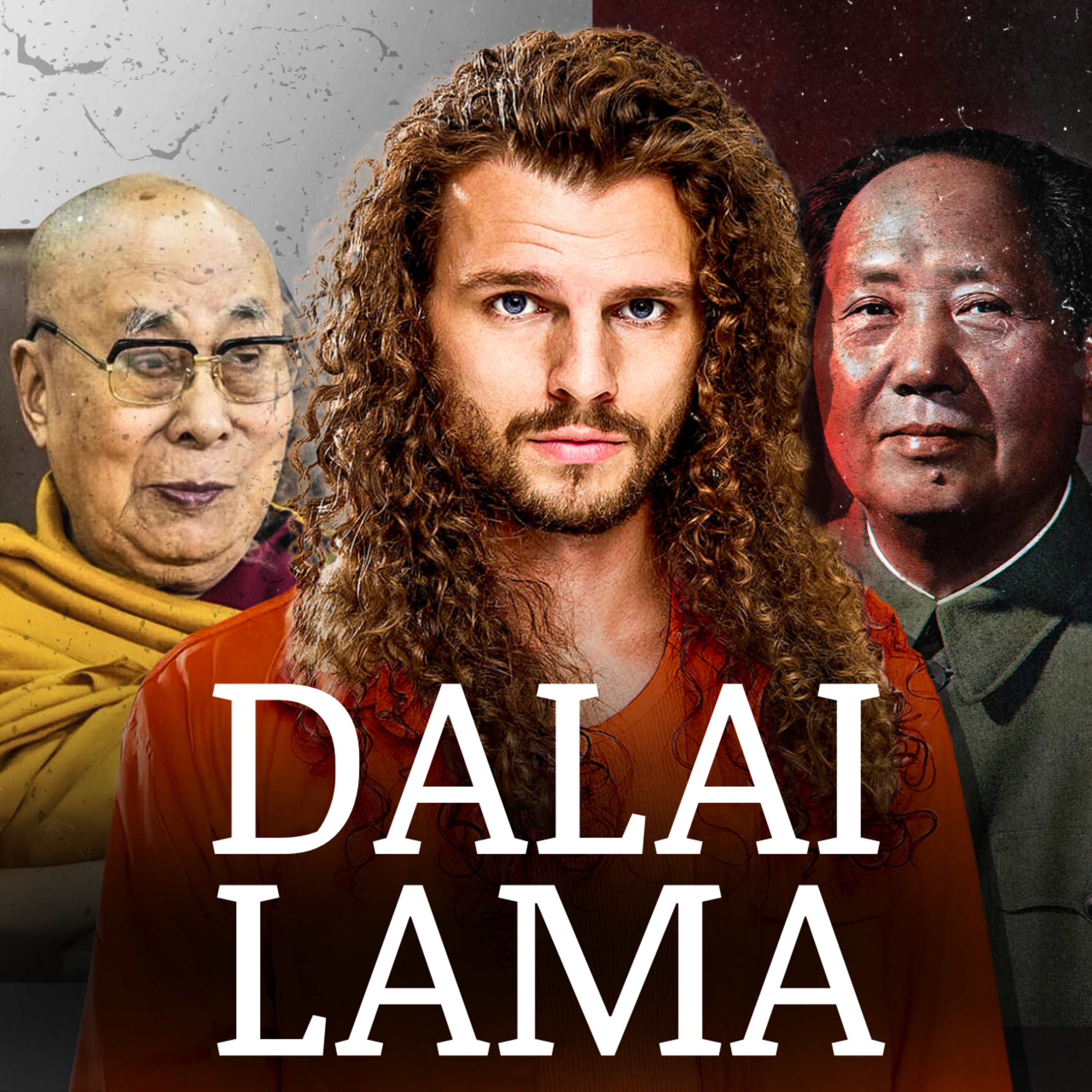
See mintmobile.com Today we're Explor remarkable transformations in modern history. How a two year old farm boy from a remote village in Tibet became one of the most influential spiritual leaders in the world. This is the story of the 14th Dalai Lama. And it's not a simple tale of a little peaceful monk that most people might think. We will uncover how the Dalai Lama was actually born from political necessity, not some spiritual tradition. And we will examine the mysterious process of reincarnation and the recognition of the new Dalai Lama. We'll even go into the CIA's secret in Tibet's resistance and how a teenage leader lost his homeland but gained global influence. We'll also dive into the modern looming secession crisis that threatens to split the Tibetan Buddhists forever. And explore how ancient wisdom became a blueprint for modern leadership. By the end of this video, you will understand how the Dalai Lama reinvented spiritual authority for the modern age and why his story reveals the complex intersection between religion, politics and power. So without further ado, sit back, relax, and welcome to Relig. What's up people? And welcome back to camp. I crushed that one today. My name is Mark Yagnon. Thanks for joining me in my tent where every single week, specifically on Sundays, we gather in this beautiful little tent and we explore the most interesting, fascinating, controversial stories from every religion from around the world. Yeah, all of them. And this is my personal journey to understand all the secret teachings from all time to reach nirvana or go to heaven, whatever is actually out there. And truly, I don't believe it's possible to understand a people without understanding the God that they worship. So every single week, I dive into a topic from some religion from around the world. Sometimes it's mine, sometimes it's others. And I try to figure out what it all really means. As always, I'm joined by my dear friend Christos Dos. How are you? What's up, religion campers? Thanks for your contribution. You thought I was going to cut you off. I did. Nope. No, no, no, no, no. Today I wanted to hear what you had to say, and I blew it. I blew it. Anyway, we're also here with David. How are you? I'm good. All right, all right. Come on, guys. We don't have time to be yip yapping all day because we're talking about the Dalai Lama, which I think some people pronounce it the Dalai Lama. I think that's like, technically the correct pronunciation, but I speak American. So we're going with Dalai Lama, all right? I mean, you've probably seen this guy. You've probably seen him wearing a sick outfit, walking around, meeting people, shaking babies, kissing hands. What is it? Anyway? The Dalai Lama is the man. He's the man, right? I saw him stick his tongue out and tell a little boy to touch it one time. That was crazy. But today, we're not talking about all the things that you don't know or. No, we're not talking about all the things you know. We're talking about all the things you don't know. All right? Who was this guy? How does Dalai Lama get chosen? Who will the next Dalai Lama be? All that and more is about to be figured out. But before we get into that, we got to go all the way to the beginning, when there was just a two year old boy playing around his family's farmhouse in 1937 in a little country known as Tibet. And then suddenly, a bunch of strangers show up, monks on a sacred mission. And this little kid is about to be identified as the reincarnation of Tibet's supreme spiritual and political leader. The boy's name is Lamo Dandup, a farmer's son. And within months, this family's youngest son would be recognized as the 14th Dalai Lama. Inheriting a role that had shaped Tibetan civilization for literal centuries. The boy came from remarkably humble origins in the Amdo region, where his father, Chukyong Sehring, sort of, you know, lived a pretty small scale farm and, you know, horse trading life with his mother. Dickie Sering. And they never imagined that their son would become Tibet's most revered figure ever. And so when the search party arrived, they were guided by traditional signs and prophecies and visions in a sacred lake, you know, things like that. And then after passing a series of traditional recognition tests, the child was gradually introduced to the cloistered world of monastic education. This is literally in, you know, a monastery, a place where, like, monks are gathering and they're trying to prepare him for leadership of, you know, obviously the religious, you know, side of things, but also the political weight that goes along with being the Dalai Lama. And today, nearly nine decades later, that little boy has become one of the world's most recognizable figures. But his journey from this monastery to the global stage is way more complex and, you know, way more interesting than most people, specifically myself, would ever really know. I mean, we got ancient traditions, modern politics, spiritual authority, like, you know, the. The new age of technology all being intersected with, you know, a Tibetan Boy from 1937. So this title of Dalai Lama itself emerged from political necessity disguised kind of as, you know, spiritual recognition. So, you see, in 1578, a Mongol leader named Altan Khan bestowed the title on Tibetan monk, and that basically created an alliance that would reshape Central Asian politics. So Dalai, or Dali, literally means ocean in Mongolian, and it symbolizes sort of, like the vastness of the wisdom of this person. And llama means a spiritual teacher in Tibetan. So together it is the literal ocean of wisdom. And this is a title that carried both obviously religious authority but political authority as well. So this arrangement provided the Mongols with spiritual legitimacy and gave the Galug school of Tibetan Buddhism, founded by, you know, the reformer Songkhapa in the late 14th and early 15th centuries, this military support against rival Buddhist factions and other, you know, wealthy aristocratic families of the time. So it wasn't merely religious, but it was a sophisticated sort of, you know, statecraft, basically saying, like, hey, this actual monk is the supreme ocean of wisdom amongst all the other Buddhist factions. So by the 17th century, the 5th Dalai Lama used this Mongol alliance to unify Tibet under a new form of government, which blended, again, this religious and secular power. So the Potala palace in Lhasa, traditionally described as having 13 stories and reportedly over a thousand rooms, became the center of this new order. Part monastery, part fortress, part governmental operations center. And this unique system would endure for more than three centuries and basically continue to adapt to new challenges while also still being this, you know, the. The core, like, the essential character of this, you know, actual institution. So at the core of the Dalai Lama's authority is one of Tibetan Buddhism and one of the most unique traditions therein. This is the recognition of reincarnated spiritual leaders. So this might sound a little superstitious at first if you're not raised in the Buddhist tradition, but in practice, there is a structured way to keep this spiritual leadership consistent across all the gener. So the central idea here is based on Buddhist beliefs about death and consciousness. So according to Tibetan teachings, highly enlightened beings can choose where and when they will be reborn so that they can continue helping others. So unlike ordinary people whose rebirths are shaped by their karma, these advanced teachers are believed to have conscious control over the process. So when a high Lama dies, the search for the next incarnation begins. And it's not random or, you know, purely mystical. There's a ritual and signs and investigation. And there might be dreams or events in nature or visions in sacred places, but the real work involves tests, specific ways to confirm whether a child is truly the same spirit being reborn. So that's exactly how they found the current Dalai lama. When the 13th Dalai Lama died in 1933, search parties followed various signs pointing northeast from Lhasa. They eventually reached the village of Taxer in the Amda region. And this is where they found Lamo Dandup. And the test administered became legendary. The child correctly identified possessions of the previous Dalai Lama from among other similar objects and recognized members of the search party despite their disguises, and also displayed uncanny familiarity with monastery protocols. But there's more to it than just this. You know, the magical part. So the child's background was carefully checked, his birth date matched with the astrological chart. His physical features were compared with traditional clues passed down over generations. And again, you have this mix of spiritual beliefs, but also rational kind of checks designed to find someone truly extraordinary. What's up, people? Let's take a break really quick because I want to talk to the fellas. Let me ask you something. Are you stuck? Do you feel like you're struggling with work or relationships or maybe your marriage or just feeling like you're not, like, the dude you want to be? You ever just, you know, thinking to yourself, like, man, I should be farther along right now? I just get caught in these cycles where I just kind of lose self control? Well, here's the thing that nobody likes to admit. It is possible that porn might be part of the problem. Yes, I know I said the P word. Now, look, I don't want to be overly moralistic here, okay? But if you're someone that struggles with pornography. And you know, research has shown that regular porn users actually leaves men feeling more anxious and less connected and ironically less satisfied. And then it creates a cycle that then you gotta be a little secretive about and you tell yourself like, I'll quit. And then you come back to the same cycle and now you're in a trap. Well, that's where Relay comes in. Relay is a therapist backed app with actual clinicians designed to help men quit pornography and actually feel better and get control of their lives. And the difference with Relay is that you're not doing it alone. With Relay, you basically join a small group of guys that are kind of on the same road. They're sharing accountability and encouragement and actual tools. Tools to help when triggers hit and you're feeling, you know, anxious or alone. Relay helps you feel a little more connected and you can stay totally anonymous. But for the first time, you're not going to be in this battle alone. I mean, think of it like a gym membership, but with your brain and for your habits and for the future of your relationship maybe. Right. Thousands of men and their families are already seeing some change because the men, their lives are a little bit less stuck. So if you're feeling stuck, check out Relay. Don't wait another month to be the man that you want to be today. And you can break the cycle with Relay. So go ahead and use the code Gagnon. Gagnon for a seven day free trial. If you feel like this thing has just got a grip on you that you're not able to let go, that is, join Relay J O I N Relay R E L A Y App camp and use the code Gagnon for a seven day free trial. Don't put it off. Be the man you're supposed to be today. Today. Now let's get back to the show. The boy who became Tenzin Gyatso received one of the most intense educations possible. He studied under Tibetan top scholars and learned everything from Buddhist philosophy to medicine. But while he was being trained in these sort of, you know, ancient schools of wisdom, the world around him was changing insanely fast. I mean, so you have China's communist forces at the time that are advancing. Tibet had a long held isolation that was coming to an end. And this young Dalai Lama was about to face challenges that like no school would ever prepare you for. And the turning point really was in 1950. So after World War II, Chinese troops invaded eastern Tibet and at just 15 years old, the Dalai Lama had to take full political control two years earlier than anyone had really planned. So hoping to protect Tibetan autonomy, he tried to work with China rather than fight it. And in 1951, Tibet was forced to sign the 17 point agreement. And it promised that Tibet's political system and religious freedom would be respected and that the Dalai. Dalai Lama would keep his position, though Tibet would now officially be a part of the People's Republic of China. And many Tibetan leaders were really suspicious about this deal. But the Dalai Lama held on to cautious hope that diplomacy might actually lead to, you know, still a real Autonomy. And in 1954 and 55, he traveled to Beijing and attended China's first National People's Congress and even met Mao Zedong himself. And these meetings were, I mean, pretty crazy, right? You have a teenage monk speaking with the revolutionary leader who would soon destroy the very system that he came to represent. And publicly, the Dalai Lama recognized Chinese rule. Privately, he pleaded for protection of Tibetan culture. And he returned to Tibet still hoping that peaceful coexistence might be possible. But as we know, the situation worsened. Chinese policies began dismantling Tibetan traditional institutions and restricted religious practice and forced rapid social change. And by the late 1950s, resistance was spreading across Tibet and tensions were really reaching a breaking point. Until 1959, a full scale uprising breaks out. And it began with fears that the Chinese military planned to arrest the Dalai Lama. Of course, people were pissed. So protests erupt in Lhasa and then turn into a straight up armed rebellion. And Tibetans with swords and rifles fought Chinese troops armed with, you know, similarly heavy weapons and even more high powered artillery. What most Tibetans didn't know was that their struggle had already become part of a much bigger game, because as we know, after World War II, we enter into the Cold War. So since the mid-1950s, the CIA had been secretly supporting the Tibetan resistance, hoping to kind of weaken China without some type of direct conflict. So American agents trained Tibetan fighters in the US Smuggled weapons into Tibet, and ran covert operations from Nepal and India. So for Washington, Tibet was a useful battlefield. It's difficult to really say that they cared that much about Tibetan autonomy, but this was an ideal place to hurt China by backing a noble cause, kind of a two for one. So the image of peaceful monks resisting communism made a lot of powerful propaganda and really motivated people, even though the US officials knew that the Tibetans couldn't win militarily on their own. So as Chinese artillery pounded Lhasa and thousands were killed, the Dalai Lama faced an unbearable choice. Does he get captured or does he flee? And his escape would become legendary. And it was only possible because the CIA helped. American intelligence agents had secretly set up communication lines across Tibet, and they helped plan the route and provided key support. So disguised as a Tibetan soldier and traveling only at night to avoid patrols, the Dalai Lama crossed this dangerous mountainous terrain. And American agents monitored Chinese troops movements and helped ensure that he made it safely to India. And this escaped mark not just the end of Tibet's political independence, but the transformation of a regional conflict into this kind of cold war, global sort of proxy battle. And so for the next decade, CIA continued to fund this Tibetan guerrilla operation from bases in Nepal, while the Dalai Lama himself focused on building a kind of government in exile and advocated peacefully for his people, only gradually coming to see how Tibet's cause and become entangled into the superpower, superpower rivalry of this time. So after losing this ability to lead Tibet as the leader, politically at least, the Dalai Lama began one of the craziest transformations of this modern era. So within two decades of going into exile, he kind of reinvents himself not as, like, this defeated exiled leader, but as a global moral voice, almost like the Pope, and has now become followed by millions around the world. And the change wasn't just luck. It required thoughtful adaptation to both, you know, the reality of this exile and then also the cultural shifts that are happening on a global scale. So instead of focusing only on Tibet's political struggle, the Dalai Lama began speaking out about universal human concerns. So, like, you know, world peace and environmental issues and compassion with your neighbor and dealing with conflict. And his teaching sort of combined, you know, the deep philosophical insights that he learned while he was, you know, doing his monastic education, but also combined with just, like, simple practical advice, you know, that he could kind of bring to people. And so he kind of brought, like, this ancient Tibetan wisdom to modern issues, like, you know, materialism and spiritual emptiness. And the timing was sort of perfect. You see, in the 1960s, Western societies were going through a massive cultural upheaval, right? I mean, I'm sure you're familiar with the, you know, countercultural movements that rejected consumerism and started to explore a lot of Eastern spirituality. And, you know, many artists, you know, intellectuals, you know, the Beatles, for example, they started to find something really powerful in what the Dalai Lama was doing. And they see this as an alternative to both, you know, organized religion, but also, like, capitalist materialism. And his approach and his style and his focus on inner peace really strikes a chord for people that are looking for this meaning. And the cultural opening allowed him to create a new kind of Spiritual authority, one that had never been seen before in all of the other previous Dalai Lamas. And this was one that reached across religion and culture. I mean, the reason we're talking about the Dalai Lama today is because of this specific Dalai Lama, the most recent one, the current one, that kind of put his, you know, spiritual and, like, moral authority on a global stage. So rather than, you know, opposing science, he would welcome it. And he believed that, you know, science and meditation could work together. And rather than, you know, opposing, you know, political issues globally, he would embrace them. And so for just like, an example, he would start working with, like, neuroscientists and physicists and psychologists to explore meditation and brain function. And actually, in 1987, this dialogue became formalized with the creation of the Mind and Life Institute. And this is basically just like a space where, like, scientists and, like, spiritual practitioners could explore consciousness together. And this showed that the ancient Buddhist practices could be applied in secular ways, which obviously would bring a lot of secular people over to understanding, you know, meditation and Buddhism and Eastern philosophy more broadly. At the same time, the Dalai Lama would become a leader of, like, interfaith, you know, dialogue with other religious leaders. So infamously, he meets with Pope John Paul ii, and that actually creates sort of a bridge between Buddhism and Christianity that had never really been seen before. He also reaches out to Jewish, Muslim and Hindu leaders and shows how faith could come together and shared values rather than being in some sort of rivalry. And these efforts really made him a symbol of, like, religious cooperation and peace building and forward thinking. And as a matter of fact, in 1989, he gets the Nobel Peace Prize, which is, you know, obviously this powerful moment that solidified his role on the global stage. And the prize gives him a platform to speak about, you know, justice and human rights and non violence and, you know, not just for Tibet, but for people all over the world. And this message of peace and compassion really comes at a time when the Cold War is ending and the world is opening up to the new possibilities for global cooperation. And now what sets this Dalai Lama apart from most religious leaders is how he connects ancient wisdom to modern life. So at the heart of his thinking is this deep Buddhist insight that everything is interconnected. Nothing exists in isolation. Every action, thought, system arises from countless causes and conditions. And this idea of, you know, interdependence, it's not just spiritual. It offers a lens for understanding global issues, whether it's like, war or inequality or anything like that. The Dalai Lama insists that real change has to begin with the mind and it's not enough to treat just symptoms because they'll just keep on happening. We have to transform the mental habits and, you know, the way that we actually operate psychologically in order to stop generating that kind of suffering. So one of his most lasting contributions may be how he bridged the gap between science and spirituality, kind of how we mentioned before. Instead of seeing them as opposites again, he sees this dialogue and cooperation. And this now gives rise to a new field of contemplative science, which, again, studies how meditation affects the brain. There's actually a great book on this called the Science or the Neuroscience of Meditation. It's awesome, but literally, it goes through the actual physiological and scientific benefits. Benefits of meditating and how even if you're not religious, just the practice of, you know, mindfulness can help lower anxiety, make you feel better, make better decisions, have, you know, a better attitude at work. And from that, you know, a ton of great benefits will happen. Yet even as the Dalai Lama spiritual teachings reach across, you know, borders and belief systems, the reality of Tibet's political situation is kind of getting worse. So his philosophy of compassion, interdependence was forged in, you know, this moment of historical trauma, one that is rooted in, you know, the geopolitical conflict of this Tibet, China, sort of impasse. Now, this conflict between Tibet and China, it's not just one of, like, invasion and resistance. It's a long, tangled history of centuries of power dynamics and ideas about sovereignty. So for much of its past that, you know, Tibet's relationship with China was sort of ambiguous. During periods of Chinese strength, Tibet acknowledged Chinese, you know, sort of power and sort of, you know, they. They would be much more respectful to the Chinese, you know, historically, going back centuries. But when that power waned, Tibet kind of operated as, you know, basically independent. And this delicate balance shattered with the rise of the Chinese Communist Party. So, you know, the CCP is different from earlier dynasties that were kind of content with symbolic recognition. And this new regime wanted total control over every territory that it claimed. If they had a flag there, they wanted to control who was doing what, who was producing what, and how it was all getting done. And again, this is guided by the sort of Marxist, kind of Leninist ideology that the Communists viewed traditional Tibetan society as a bit backward. And so this was something that needed to be dismantled and reshaped through this kind of revolutionary force. So, of course, in the 50s, the Chinese army invades, and this poor army, less than 8,000 soldiers, basically stands no chance. And this is a swift military defeat that's basically just the beginning. And over the next decade, the Chinese government systematically dismantles Tibet political institutions. And there's again, this failed uprising in 1959 that we spoke about. And in the aftermath is what Tibetans called the Dark Period. And for nearly 20 years of brutal repression, they are kind of, you know, controlled by the Chinese. And this Cultural Revolution intensified the destruction. And again, it targeted Tibetan Buddhism as one of the old ideas that Mao's revolution aimed to wipe out. Again, any type of authority that goes away from the central leader of, you know, the CCP is something that needs to be removed. And, you know, the Dalai Lama in Tibetan Buddhism is no exception. So since the 1980s, Chinese Chinese policy in Tibet has kind of shifted from outright suppression to a blend of economic development and continued control. So on the surface, you have huge infrastructure projects and investments that kind of bring up the standard of living. But then that progress, there's also a troubling trend which is, you know, a massive influx of, you know, Han Chinese settlers. This is more, you know, like the traditional sort of ethnic Chinese people that are coming into the country because it's their country, according to the Chinese. And this then creates increasing marginalization of, you know, the Tibetan language and cultural identity. And that is then diluting what it actually means to be Tibetan. Because is there such thing as a Tibetan culture or is it just a greater Chinese culture? And then after enough time, maybe there's no more Tibetan people. You can see the issue. So as the 14th Dalai Lama enters into his final years, we have a new crisis. And this is one that blurs the line between theology and politics. It's, you know, what was once a matter of quiet spiritual tradition, you know, now is a massive, high stakes geopolitical standoff. And this is ultimately the question of who will succeed the Dalai Lama when he passes away. So at nearly 90 years old, the Dalai Lama has publicly acknowledged that he's not going to be here for much longer. And his age has forced a conversation about Tibetan communities and one that they've avoided for a long time. What happens when the man who embodied both their spiritual compass and as well as their political power is gone? And traditionally, the next Dalai Lama would be identified through these same ancient rituals and these visions, guided by these kind of senior monks searching for this reincarnation like we talked about before. But that process is now potentially interfered with. You see, the Dalai Lama himself was, you know, he introduced a series of bold possibilities. Perhaps he will name his successor before his death, or perhaps the reincarnation will take place outside of Chinese ruled Tibet. He has even suggested that the next Dalai Lama might be a woman, or that the lineage might end entirely if it no longer serves the Tibetan people. I mean, each of these suggestions is fundamental and transformative and is technically doctrinally valid within Buddhist philosophy, right? It could be a woman, it could also just end. But politically, it's a big deal. Beijing has no intention of relinquishing control over such a potent, potent symbol. And in 2007, China formalized its grip with regulations that, that actually required state approval for all reincarnations. Which is, I mean, hilarious, right? This is like the government literally coming in being like, if you're going to reincarnate, you got to tell us, okay? And this is a move that basically is like the government claiming veto power over the mystical or I guess, like, I don't even know how you can. Regardless, it's crazy. So this precedent is chilling, right? Like in 1995, when the Dalai Lama recognized a six year old boy as the 11th Panchen Lama. Now, the Panchen Lama is similar to the Dalai Lama. It's just like basically a lower tier, but still very high in Tibetan Buddhism as, you know, an important figure. Chinese authorities came in and abducted that child and installed their own candidate. And the real Penchen Lama that was identified by the Dalai Lama was never seen again. Now, the fear is that the same fate could await the Dalai Lama succession. But unlike the Panchen Lama back in the 90s, the Dalai Lama holds global recognition as well as spiritual authority. So if two rival Dalai Lamas emerge, one chosen by Tibet's Buddhists in exile and another appointed by Beijing, it could trigger a schism in Tibetan Buddhism and basically force followers to pick one. Or if you're in China, you might be forced to follow one, you know, kind of against your will. And this fracture again threatens not only like the religious tradition, but also the unity of the Tibetan people itself. Like, I mean, if you fracture, you know, what is left of, you know, the, you know, Tibetan Buddhists, potentially the entire culture just gets completely eviscerated, right? If it's completely broken in two, and this raises this question, can an institution so ancient survive in the, you know, force or in the face rather of this modern geopolitical superpower? So while the Dalai Lama enjoys, you know, global admiration for his messages, there are cracks within Tibetan society that are now more visible than ever before. I mean, maintaining unity for a lot of Tibetan Buddhists is difficult in general, right? Like, being in exile, you know, creates a lot of issues. So, for example, you know, there's, you know, Tibetans from eastern regions that often feel marginalized by the leadership centered around, you know, central Tibet and Lhasa. Meanwhile, younger Tibetans are educated abroad increasingly, and that creates challenges of, you know, traditional authority and, you know, democratic reforms and inclusion and all sorts of different issues that every religion faces. And this one is no different. Perhaps the most divisive issue remains on the controversy of Dorje Shungden and basically the worship of this deity. So Dorje Shungden was once revered as a protector, and Shungden practice was banned by the dalai Lama in 1996 due to concerns about sectarianism and potential manipulation by Chinese agents. So devotees have denounced this as religious persecution, while the Dalai Lama frames it as a necessary step to safeguard Tibetan unity. You see, if people are now fractured within their practice, is it possible that the Chinese could then influence the whole group and basically create an entire, you know, separate sect that then is at odds with the main sect? And again, that contributes to, you know, a reduced or a diluted sense of, you know, identity amongst the population. So these tensions between the past and the present and religious reform and, you know, diaspora and tradition reveal a society in the midst of, you know, figuring itself out. Now, the Dalai Lama's political legacy is, you know, powerful, but also has some paradoxes. So he has this sort of non violent middle way approach, like many Buddhists, and he tries to seek genuine autonomy under Chinese sovereignty rather than full independence. And sure, this earned him a lot of global moral authority, but also failed to move Beijing, as you can imagine. And decades of diplomacy brought a lot of sympathy, but not any real solutions. But still, his approach has echoed far beyond Tibet. I mean, activists from Eastern Europe to Latin America have cited his blend of leadership with democratic ideas as a blueprint for what peaceful resistance really looks like. And he became a symbol proof that moral power can stand up to these regimes without actually having anyone get killed. But yet critics argue that this patience has just allowed China to tighten its grip. And while it's projecting this illusion of dialogue and diplomacy, but you have accelerated assimilation and a lot of these talks have stalled out. There's a lot of questions as to whether peaceful Tibetan resistance can realistically preserve what it means to have a sovereign Tibet. However, alternative strategies also carry insane risk. Right, there's violent resistance which would likely result in massive Tibetan casualties, while justifying increased Chinese repression and complete accommodation would preserve individual welfare, but it would also basically cost you cultural extinction. Additionally, international intervention from potentially the United States or NATO remains unlikely because of China's growing global influence. So perhaps the true legacy for the Dalai Lama is not in political gains, but in his model of leadership itself. Ethical, democratic and human at its core. And in a time of a lot of rising global strongmen, his lifelong insistence on compassion over conquest, I think offers a rare kind of counterpoint to that idea. So again, the future of Tibetan Buddhism is uncertain. You have new generations of Tibetans raised in exile, fluent in both Buddhist logic but also Western thought. And they are now stepping into leadership roles. And with them, they're taking the potential to renew Tibet's core values and, you know, do things that the Dalai Lama himself couldn't have imagined. So the wisdom of Tibet now no longer is only reserved for the Tibetans. It could belong to anyone who sees the value in this type of leadership style. So who will the next Dalai Lama be? It's difficult to say. It was possible that there might not be one. But as for this Dalai Lama, I mean, he showed that one can embrace modernity without abandoning the tradition and the depth of your culture. And I think his true legacy isn't going to just be title or institution. It's kind of in his leadership style. Can compassion survive power? Can ancient wisdom speak to modern suffering? And can exile lead to global awakening? And I think the answer is yes to all of these. So the 14th Dalai Lama may one day be followed by the 15th or not. But again, what he represents is sort of this fierce, quiet, unwavering belief in potential goodness. And in the current day, with the way a lot of, you know, global politics is going, I think is refreshing and will one day be very much missed. But that, ladies and gentlemen, is the life of the 14th Dalai Lama. I mean, fascinating, truly a fascinating guy. I mean, Christos, what do you think of, of this Dalai Lama? I'm sure you've seen a couple things here and there, but I mean, what was your takeaway?
- [34:10]
D
This message is sponsored by Greenlight. With school out, summer is the perfect time to teach our kids real world money skills they'll use forever. Greenlight is a debit card in the number one family finance and safety app used by millions of families, helping kids learn how to save, invest and spend wisely. Parents can send their kids money and track their spending and saving, while kids build money, confidence and skills in fun ways. Start your risk free Greenlight trial today@greenlight.com Spotify. That's greenlight.com Spotify.
- [34:39]
C
If you thought golden breaded McDonald's chicken couldn't get more golden think Golder. Because new sweet and smoky special edition gold sauce is here made for your. Your chicken favorites at participate at McDonald's for a limited time. Am I gonna get roasted for thinking that Dalai Lama and Gandhi were the same guy? You're not going to get roasted for that. I mean, I could see the confusion, you know what I mean? I feel like they were similar outfits, right? That beautiful orange. But yeah, no, I think, you know, different guys. But they serve similar, similar kind of roles, right? Like they were both global more leaders that showed the path to non violence. I mean, you know, the Dalai Lama inspiring a bunch of people specifically in like, you know, geopolitical resistance, whereas Gandhi inspiring a lot of, you know, individualized leaders like Nelson Mandela, you know, mlk on you know, more specific sort of domestic kind of activism roles. But yeah, I think they kind of serve similar purposes in, in a lot of ways. And I would love to know more about Tibetan Buddhism. Like how does that sort of deviate from. From other types of Buddhism? Yeah, you got to remember monks and being in a monastery and extreme quiet all the time. Kind of my dream job, to be honest with you. I mean, I would love that. Have you ever seen the story of the guy that never saw a woman? Yep. He was like in a monastery his whole life. Sounds like the story of my life. But yeah, yeah, his name was Christos. But yeah, dude, he was just like posted up with the boys all day. Sort of a sick life. Life. Like I would take that up, right? She would be sick as hell. Anyway, ladies and gentlemen, that has been another episode of Religion Camp. Another episode of Religion Camp. Sorry, David, I didn't pronounce it the right way. But you guys can check out more episodes every single week if you hit that subscribe button. If you like this video and if there's anything that I missed, please drop a comment. If you are a Tibetan Buddhist or just a follower of the Dalai Lama, let me know. Well, was there anything I missed? Anything that I got wrong? Anything that I should correct? Please drop a comment. I read every single one of them on YouTube as well as Spotify. In addition to that, I'm going on the road. You can see me, Mark Yagnon live. I'm doing one singular hour stand up comedy. I'm bringing my buddies with me. We're playing music, we're telling jokes. It's going to be a great time. So come see me. You got the link in the description. We also got merch. I would love to see when people. I love when people pull up to the shows wearing the drip that is fire. So grab one of those before you come out to the show and I will see you guys there. And as always, I will see you next Sunday for another episode of Religion Camp. Thank you so much and peace be with you. What's up, people? Quick announcement. If you are a fan of Camp Gagnon or Religion Camp, I have great news because we are dropping History Camp. That's right. This is the channel. We're going to be exploring the most interesting, fascinating, controversial topics from all time throughout all history. Right? You probably know about Benjamin Franklin, I don't know, Thomas Jefferson, Nikola Tesla, interesting figures from history. And you probably learned about them in school and they were pretty boring, but not here. Now, as you know, I was raised by a conspiracy theorist. So I'm going to be diving deep into all of the interesting, strange, occult and secretive societal relationships that all of these famous, influential men from our shared past have. So if you're interested, please go ahead and subscribe to the YouTube channel. It will be pinned in the description as well as the comments. And if you're on Spotify, this doesn't really apply to you, but these episodes will be dropping as well. Just go ahead and give us a high rating because it really helps the.
- [38:04]
E
Yo, this is important, man. My favorite Lululemon shorts, the ones you got me back in the day. I think they're called Pace breakers. The ones with all the pockets. I just got back from vacation and I left them in my hotel room. And dude, I need to replace these shorts. I wear them like three times a week. Could you send me the link to where you got them? Oh, also, my birthday is coming up soon, so anyways, thanks, bro.
- [38:24]
C
Talk soon.
- [38:25]
D
Looking for your newest? Go to's Lululemon what's New Gear drops on Tuesdays. Every Tuesday, head to lululemon.com to shop what's New Gear show.