Loading summary
Transcript510 lines
- [00:00]
Andrew Bustamante
When it comes to Epstein, that gets messy. It's quite the opposite of what people would expect. Nobody wants to touch that. There's only one group in the United States that's actually incentivized to touch something that's engaging with politicians, and that's the.
- [00:12]
Mark Gagnon
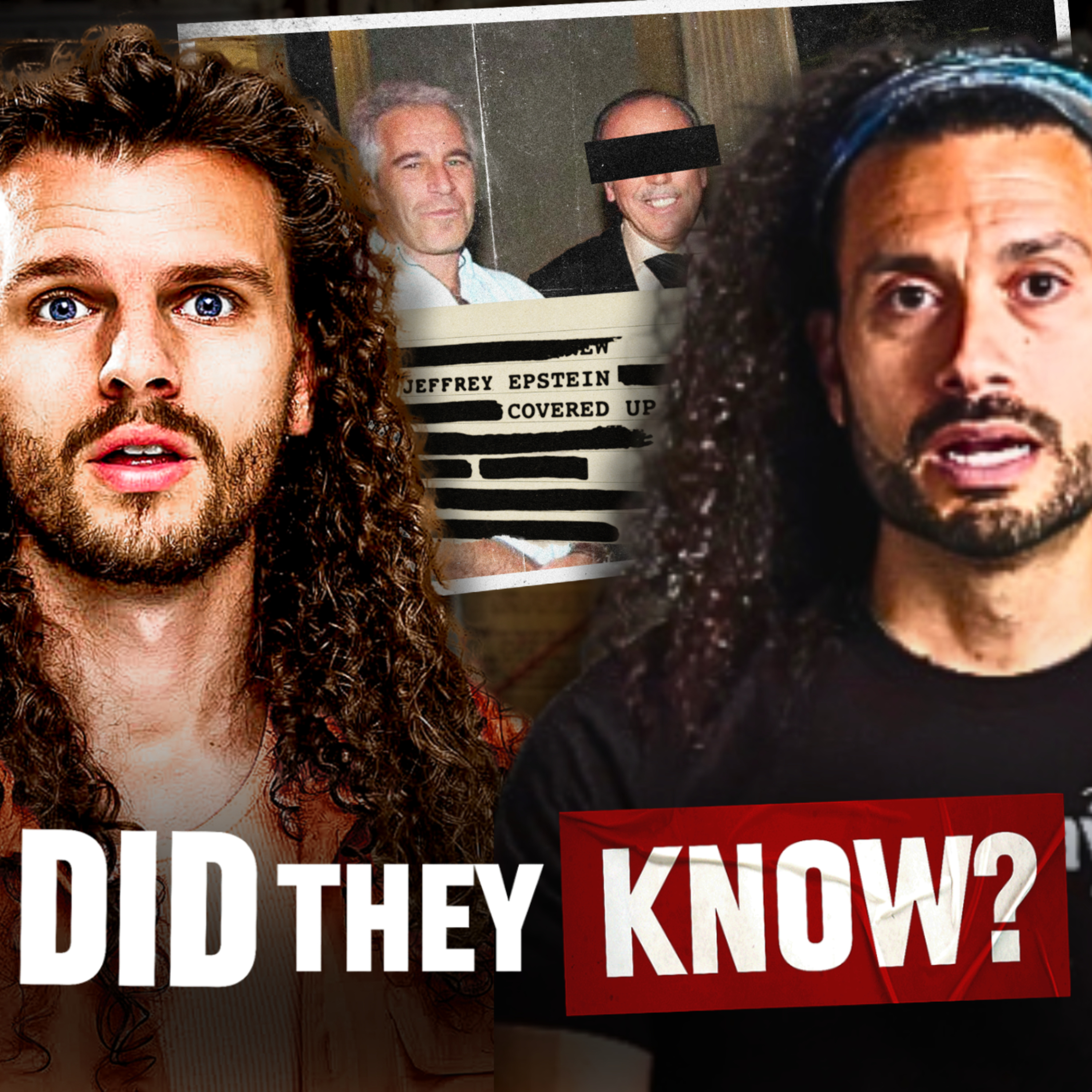
FBI, because this is Andrew Bustamante. He is a former CIA operative, and today he's taking us deep inside the Epstein files, who Jeffrey Epstein really was and whether he may have been working as an FBI informant. We also dive into his own book, the one that put him in direct danger with the CIA, where he had to fight tooth and nail, even threatening to sue, just to get historia we're going to shift gears into the psychology of power, how to spot sociopaths, whether you yourself or the people around you are truly psychopaths, and why the CIA actually uses them as their most useful assets. This episode is fascinating, and Bustamante is not only extremely intelligent, but an amazing storyteller and paints the pictures of geopolitics in our world today in an amazing way. So without further ado, sit back, relax, and welcome to camp Andrew Bustamante. How are you, sir?
- [01:08]
Andrew Bustamante
I'm good, man. It's good to be back.
- [01:09]
Mark Gagnon
Oh, it's great to have you back. And this time, no construction.
- [01:13]
Andrew Bustamante
Yeah, that's right.
- [01:13]
Mark Gagnon
It's very nice in here.
- [01:15]
Andrew Bustamante
Well, it's always very nice in here. It's what's happening in the rest of New York that's a problem.
- [01:19]
Mark Gagnon
Yes, and the rest of the world, as a matter of fact. I want to ask you about some current event stuff.
- [01:22]
Andrew Bustamante
Let's do it.
- [01:23]
Mark Gagnon
I know you've talked about Epstein ad nauseam. The financier you spoke with, Patrick bet David recently about it. I have some questions specifically about Epstein and the Epstein files, as they're sort of being called and being withheld by Trump and the administration. I'm curious from your analysis and the way you're seeing things, Trump is running for reelection a year at least, where he's saying, release these files. We need to Release them. Don Jr saying, Release these files immediately. Everyone within the administration. I mean, to him, Bongino's like, I will not stop until these files are released. Cash Patel saying, let's release the files. And then he gets elected, everyone gets put in place, and then they say, the files aren't getting released. There are no files. This whole thing's a hoax drummed up by the Democrats. This is all fake. How do you see this?
- [02:10]
Andrew Bustamante
So I recently came across. So, first of all, I don't really care. I just want to make sure that everybody understands that. And you know that, too. Like, I don't really care. So I don't follow it closely because to me, the whole thing, anytime any administration falls back on this is just something drummed up by the. Whatever. That's a. That's a very clear indicator to me that they're trying to feed a story to make sure that it takes attention away from something else. So Epstein is just an effort to take attention away from something else. I get it that there's people who are very passionate and very, you know, interested and feel an injustice. And if that's. If this is the thing that makes you realize that your government lies to you, then, then I'm glad something got you to realize that. But the most. The rest of us realize that this is just one of many government lies that we're not going to get to the bottom of. So there's. There's no reason to keep looking into it. But I did have a conversation recently with somebody who is more informed on the legal side of things than I am, and when I. It doesn't make sense to me that the. That if there were files that did not contain national security information, they would be public outside of whatever privilege exists to legal files. Right? So then the fact that they're not being released suggests to me that there is some sort of national security implication. So that binary calculation is solid. If there was nothing national security related, they would be released. With the exception of a few that fall under client attorney privilege, if they, because they are not being released, they definitely contain something related to national security. Where it starts to break down is when people start coming up with conspiracies about what the national security secrets are. Oh, it's Israel. That's my favorite Internet viral. Everything is. It's Israel. Israel's controlling Donald Trump through the Epstein files. Maybe there's a probability that that's true, Right? Or there's a possibility there's a possibility that that's true with a very low probability that that's true. What. What was presented to me that I think is most likely is that when you look at Epstein's entire story, he made money quickly. People don't really know how he made money. And one of the key areas where he was useful that helped build the network of wealth that he was around is that he helped wealthy people build offshore bank accounts. If he was the one helping other people build offshore bank accounts, that would explain why he made his money so quickly. Because when you're that kind of person, you get paid very quickly because you take a, a, you know, a pirate's ransom to help them make and, and manage those offshore accounts. Well, now the people, that activity would fall under federal radar, it would fall under FBI's radar, and FBI would look at that situation and say, Jeffrey Epstein is breaking the law by helping these people move their money offshore and evade taxes and everything else. And who knows what the, they're spending their money on, what illegal activities they're spending their money on. So the FBI would say, Jeffrey Epstein is breaking the law. But a case against Jeffrey Epstein wouldn't be nearly as valuable as a case against the wealthy people who are moving their money offshore. So Jeffrey Epstein becomes a target for an intelligence operation by FBI to collect information on the people who are offshore. The only way that that would really work is if the FBI went to Jeffrey Epstein and said, hey, we've got you on these three charges, but we're going to give you amnesty on those charges and we're going to make it so you can't be prosecuted as long as you inform on the other people who are moving their money offshore. So now everybody's focused on CIA and Mossad and Jeffrey Epstein being some sort of foreign intelligence source. What's far more probable is that he was an FBI source granted immunity in exchange for collecting intelligence about criminal intelligence about the people who were offshore. We would make him what's known as a CI, right, A, a confidential informant to the FBI with amnesty. They have to honor that amnesty no matter what happens to him. And all the cameras and all the audio and all the recording devices that he had in place would have all been at the behest or in, in support of part of what FBI was trying to collect in terms of criminal charges on the people that he was targeting. So when you look at it through that lens, it makes complete sense why he, the files can't be released because he was a confidential informant for FBI. There are thousands of confidential informants for FBI. So if you expose one of them, you're going to make, you're going to send the message to all the rest that they can't trust the FBI to keep their secrets. And they already have whatever case material they need for any cases they want to pursue. So whether or not the current president or senators or, you know, multi billionaires or whatever, even if they're on that list that came from Jeffrey Epstein. Right now, the person who controls the Department of Justice is the President. So he's, or he doesn't control it. He shouldn't control it, but for all intents and purposes, he does. So that's a big part. That's, for me, the most explainable reason that we're not seeing the files. We're not going to see the files. And it's a big conspiracy that the Dems put together because Epstein's a confidential informant. He can't be. No one's ever going to expose what he exposed information about, because if he was reporting for FBI, it was all against American lawbreakers anyways. And if those American lawbreakers are significant enough, it could trash the economy, it could trash our trust in public government. It could do all sorts of negative things. So it's way easier to just not release them and make a few people angry at the injustice rather than make everybody recognize how fucked up our government is.
- [07:43]
Mark Gagnon
Interesting. Now, very many questions on this. I think this actually tracks. Makes a lot of sense. We spoke with Sagar and Jetty, who kind of broke down a lot of Epstein's backdoor sort of financial dealings and kind of like the follow the money sort of motive when it comes to understanding his whole scheme. He, in addition to all of these things, was also a prolific and rancid pedophile. And I wonder if because of that, he was actually easier to control and that because he had this severely grotesque proclivity, that the government was able to control him under that because they had basically kompromat, they said, hey, you have this vile disorder, but you also have a ton of information that we need. And so I wonder if, similarly, I believe, with Whitey Bulger, if I'm not mistaken, and he became an informant and the government, maybe the FBI condoned the violent crime that he was doing. Condone is. Maybe it was kind of condoning, but they allowed it. And because they thought that the information they were getting was greater than the harm that they were causing.
- [08:47]
Andrew Bustamante
Correct.
- [08:48]
Mark Gagnon
And so I think both things are happening simultaneously. I think in addition to the blackmail thing, I do think that he was likely blackmailing people or at least collecting intel on people through these security devices. I don't know how much if. Yeah, I don't know how much was sexual blackmail. It's very possible that there's recording devices in his house and he's a pedophile. So of course, people go, oh, he's recording people doing debaucherous sexual activities with minors. That's what it is. It could also be the case that he's meeting with people, having dinner, recording the entire thing, getting information just through a conversation. And it's you know, far less scandalous but super important to the intelligence services, FBI, et cetera, that are gathering the information. So to me, I'm like, that is, I feel like an interesting analog, like the idea of whitey bulge. Are you familiar with his case?
- [09:37]
Andrew Bustamante
Only. Only slightly. So what I will say though, is that blackmail is something that Hollywood has really twisted our ideas about. So there's a couple important things to understand about how professionals see blackmail. Professional intelligence officers, but also professional criminals, do not underestimate the professionalism and the discipline and the rigor of a very good criminal. They don't stay criminal for so long because they're winging it all the time, right? They are. They are a very focused crew. Movies make you think that blackmail is the thing that you use to get what you want first. It's like, oh, I've got pictures of you having an affair with your wife. So now give me 10 of that, you know, $10,000. Blackmail is not a first action. Blackmail is an insurance policy. Blackmail is there so that when somebody else moves first, you can respond in a way that devalues whatever their first move was. So now somebody comes after you and they're like, oh, I'm gonna sue you. And then you're like, oh, are you? It's not the other way around. It's not like we're like, oh, I'm gonna use this to get what I want. And they're like, oh, no, you're not. So blackmail is an option of last resort, not an option of first resort. And then second, professionals also know that you using blackmail absolutely destroys your ability to control a person, because it's like putting a gun to someone's head when you threaten them with some kind of coercive action. You might get their cooperation in the near term, in the short term, but you're going to lose their cooperation in the long term because you've violated any, any element of doubt in their head that you're trustworthy. If anybody's ever, like, stayed in a relationship, they shouldn't have stayed in, been with a girlfriend or a boyfriend who cheated on them. If you've ever. Whatever, right? If you've ever been in a situation where you know, that person was an asshole, I was stupid for sticking with that person. We all know what it's like to operate on the shadow of doubt. The shadow of doubt. Well, maybe they only cheated once. The shadow of doubt. Like, maybe they really did change. The shadow of doubt where maybe they mean it when they say they're sorry. That shadow of doubt is incredibly powerful to somebody who's actively trying to manipulate you. Once you put someone in a coercive action, once you try to blackmail them or put a gun to their head, you erase the shadow of doubt. So there's no way they ever think maybe it's going to change. They're like, I can never trust that person again. So that's the second reason why professionals, criminals and professional intelligence officers don't use blackmail, because it makes everything so unpredictable. Unless it is your last resort. It's basically just there to buy you a few hours or a few days to gtfo, Right?
- [12:20]
Mark Gagnon
Yes. The carrot is likely better than the stick.
- [12:22]
Andrew Bustamante
Yes.
- [12:22]
Mark Gagnon
But when the carrot doesn't work, you need to have a stick.
- [12:24]
Andrew Bustamante
Correct.
- [12:25]
Mark Gagnon
That makes sense. So in this case, you have Alexandra Acosta in South Florida. Jeffrey Epstein is arrested in 2006, I believe. I think he's sentenced as an 8. My timeline might be a little off here, but regardless, in the tens, he's sentenced, given like a sweetheart deal. Alexander da Costa is allegedly says in a private skiff, I guess, or like a debrief with the Trump administration. He basically says, I was told to stand down because he belonged to intelligence, something to that effect. Now, that's alleged, that was reported. But most people kind of accept that to be the case. Now, who's able to tell him to stand down?
- [13:05]
Andrew Bustamante
So lots of people can actually tell you to stand down. And it all depends on jurisdiction and it all depends on, on authorities. CIA has authorities against foreign intelligence. We have no authorities against US Citizens. FBI has authorities against US Citizens and against criminal foreign elements who are acting in the United States. But then you also have immigration that has authorities, you have Homeland Security that has authorities, and you have many, many, many authorities beyond that. And if it's military in any way, then you've got military authorities that start to start to swoop in. Right. So when you hear it's an intelligence operation, it's easy for most people to be like, oh, it's fucking CIA, Central Intelligence. Of course it's CIA. What they don't realize is that central intelligence only has to do with the analytical element of CIA. Meaning CIA produces the President's daily brief. So when it comes to analysis, we take all source analysis and turn it into a nice folder that we give the President every day. It doesn't mean we collect everything. It means that other agencies, according to their authorities and according to their classification levels, will feed it to our analytical group and then we will print it into a nice document that's all the central means In Central Intelligence, CIA's actual primary job is foreign intelligence. That has no criminal ramifications in the United States. As soon as it's criminal, it falls to FBI. So the intelligence operation, you can't touch him because he's intelligence or back off because he's intelligence. That could have been FBI, that could have been Homeland Security, that could have been dea, that could have been military, if what the intelligence. The active intelligence operation was, was militarily inclined. Right. But who could have told him to wave off any of those agencies? All they'd have to do is say he's. He's one of ours, or we have an active intelligence interest in him. Now you have to stand down. And the only way that you pool jurisdiction, you take control of that operation, is essentially, you have to escalate the case up to the executive branch, the executive being the President of the United States. So maybe they escalated to the dni, maybe they didn't. Maybe, like. And when it comes to Epstein, and when it comes to a lot of stuff that. That gets messy. When you've got pedophilia, you've got money, you've got politicians, it's quite the opposite of what people would expect. Nobody wants to touch that. There's only one group in the United States that's actually incentivized to touch something that's engaging with politicians, and that's the FBI. Because when you're an FBI officer and you get a really sweet case that has politicians involved, it's like a career maker. You can, like, seal the deal for the rest of your career if you successfully prosecute that case for fucking everybody else. They're like, I don't want to touch.
- [15:48]
Mark Gagnon
That because it's a career ender.
- [15:49]
Andrew Bustamante
It's a career ender because now if I'm involved, that person may vote on my funding bill. I don't want to touch that. I don't want to have anything to do with that because it gets way too messy. I don't. I don't want to know what's at the end of that stick.
- [16:00]
Mark Gagnon
Interesting. Yes. So now when it comes to the intelligence side, you know, obviously people will point to Epstein's association, at least tacitly, to foreign governments, namely, you know, the Israeli government. They'll say, like, oh, he was close with Ghislaine Maxwell, whose father had some connection to, you know, Mossad as well as Israel. You know, he has connections to Ehud Barak, the foreign prime minister. He's in Israel. Like, as these sort of prosecutions are kind of going on. He returns home. So people point to that and be like, oh, he's obviously Mossad. Is it possible he's a double agent?
- [16:32]
Andrew Bustamante
Oh, for sure. It's, it's possible that he's all sorts of things, right? But don't mess, don't mistake possibility with probability. Possibilities are endless. Probabilities are much more limited. And you want to, you want to follow Occam's razor when you think about what is the probability that most likely applies to the situation. And Occam's razor is that the most simple solution is very likely the correct one. So what is the most likely solution? What is the simplest solution? And the simplest solution is definitely not that he was a Mossad agent, whatever, showboating as an American citizen collecting secrets for Mossad on, against American politicians. That's not a simple solution, right? The simplest solution is that he's a, he's a criminal that FBI got onto. And in his criminal endeavors, there was a sweeter fish to catch than him. And that's what FBI was focused on.
- [17:31]
Mark Gagnon
Interesting. And that sweeter fish might be, you know, US politicians, US business people, and then also foreign business people as well.
- [17:38]
Andrew Bustamante
Correct. That's a, that's a, that's an awesome treasure trove of intelligence, right? Criminal intelligence. Because now you're talking about insider trading, you're talking about political corruption, you're talking about the misuse of taxpayer dollars, you're talking about endless, potentially the funding of terrorism, potentially foreign intelligence, counterintelligence inside the United States, like, all of that. To let one guy continue to, like, diddle little kids. I know that's up from most people's point of view, right? But not from the national security apparatus. Especially if that pedophile wasn't targeting American citizens as the children that he was messing with, right? If they were dual docked, if the majority of them were foreign, like the list goes on and on about the exceptions to the rules. That would make it more palatable, right? Even though to all of us, we're like, kids are kids, right? That's just not how the government thinks about it.
- [18:29]
Mark Gagnon
Interesting.
- [18:30]
Andrew Bustamante
People are not just people, of course.
- [18:31]
Mark Gagnon
You know, there's people listening. Like many of the, you know, public victims were Americans, right? They were like, you know, young girls from, you know, destitute situations in South Florida that got wrapped up into this whole thing. They never really got justice. And people look at this and they're like, this is insane. You know what I mean? I look at, I'm like, personally, I'm like, What the hell, like there are pedophiles that are like high ranking, working with the government and the government is turning a blind eye and letting this happen. As a US citizen, a taxpayer, that bothers me. And I wonder if this is the first time for a lot of people where they realize that the US government, FBI by proxy, does things that are vile for, you know, their own personal interest as well as the interest of the country as they see it.
- [19:18]
Andrew Bustamante
So I mean the. If it's the first time, then I'm glad that you're waking up to the reality. If it's not the first time and maybe you just disagree with it, that's fine too. But here's a very simple, like example to help you land on whatever you want to land on. If a local police force, let's just say Atlanta pd, identifies a molester in Atlanta, well then they open an investigation. They investigate, they find out, they build a case that proves they can arrest that molester. Well, in that investigation, what they identify is that that molester is part of a ring of people nationwide who not only molest children, but identify sex trafficking targets to move them across state borders. What would you prefer? Would you prefer that the Atlanta PD arrests the guy in Atlanta or would you prefer that the Atlanta PD lets that guy continue to do what he does so that they can pass information to FBI to take down the entire ring nationwide? Because you, I would hope that you would know if they arrest just the guy in Atlanta, they no longer have access to the rest of the ring because he was their access point to the rest of the ring. And if you run a coordinated thing where Boston and Philadelphia and Atlanta and Austin, Texas, if they all take down their primary node, that doesn't kill the ring because the ring is going to replace all of those people with somebody else.
- [20:48]
Mark Gagnon
Right.
- [20:49]
Andrew Bustamante
So the time, because we live in a democracy where you have the right to a fair trial where you're innocent until proven guilty, if you want all of those rights, you have to understand that the criminals get all of those rights too. Which means the months and years it takes to build a case, they have to keep breaking the law, they have to keep doing the thing that they're doing because that's what builds the case for them to go to jail.
- [21:15]
Mark Gagnon
Right?
- [21:16]
Andrew Bustamante
Yeah, it's a weird double edged sword.
- [21:17]
Mark Gagnon
It's a massive ethical trolley problem that with this case specifically contains the worst possible violation of humanity you could imagine. Like I, I think when people hear about like FBI cases and deep undercover guys that are doing this with Drug dealers, there's a. I think more people would be on board, you know what I mean? It's like, hey, you caught like a high ranking drug dealer and if you go undercover and you ingratiate yourself to him and you flip him to be an informant and you slowly build a case over a year where then you're able to get the kingpin, like this big cartel guy that's funneling in like, you know, thousands and thousands of pounds of fentanyl into the United States that are killing people. Would you be okay with one drug dealer potentially distributing, you know, thousands of dollars of fentanyl killing, let's say 10 people over the course of a year in order to get a kingpin that's going to stop, you know, 20,000 people from dying in the next two years? I think a lot of people would be like, yeah, I'm okay losing 10 to save 20,000. But when it comes to the idea of like traumatizing and victimizing, exploit, exploiting children, I think people draw very different lines and they hear like, oh, a child was abused, we need to kill the guy immediately. And so as a result, like, I imagine that the Federal Bureau is looking at this in the same way. They're like, crime is crime and we're building a case against a guy, we're getting information, whatever. And they're being like, yeah, we're going to let 5, 10, 20 more kids get victimized, but we're going to be able to figure out an arms deal that's happening from illegal money that's getting offshore, that's going to start a coup in Guatemala that's then going to affect the entire geopolitical stability, which is what is better.
- [22:54]
Andrew Bustamante
Yeah.
- [22:55]
Mark Gagnon
And for the average American, I imagine that they're like, fuck that dude. Like, save the kids.
- [22:59]
Andrew Bustamante
Yeah.
- [23:00]
Mark Gagnon
But again, these are the calculations that governments make that don't see people as people. They see statistics and they evaluate this sort of, you know, utilitarian good.
- [23:10]
Andrew Bustamante
And don't make, don't make. I don't want anyone to feel like it's uniform across government. I promise you that the FBI handling agent or the CIA handling agent, or the DEA handling agent or whoever it is who's handling the case is disgusted by what they have to do. But they've been recruited, they've been trained and they've been tasked for a reason. And they sleep just fine at night. Most likely what ends. This is why there's a hierarchy in government. Because it's not the field agent who makes the call, it's not their field supervisor who makes the call. The call is made like four steps up, but off camera. You and I were talking about the difference between a field officer who's been in the CIA for seven years versus a field officer who's been in the CIA for 20 years. This is that difference. The seven year officer, the five year officer, the first tour officer might see a case like this and be like, fuck that, man. Let's just take him down now. Let's just, you know, use a poison pill. Let's do whatever. Let's just leak his name to a local organized criminal syndicate and let them do the dirty work. Right? Like a low level officer might be like, this is truly up. But somebody who's dedicated their career to climbing the ladder at FBI or CIA, somebody who's potentially sitting in the seat of one day being the director, the person who's sitting potentially in the seat of being the head of operations for the entire organization, that's the person who's like, oh no, this is too valuable. This is too valuable because if I take down one senator, I'm director of FBI. If I take down one intelligence service, like if I can penetrate Mossad, I'm head of operations for CIA. Like that's a, that's, that's the real reason. That's the real differentiator between somebody who stays less than 10 years in a federal job and somebody who gets the fuck out in less than 10 years at a federal job. They, they can still hopefully save their own moral compass.
- [25:14]
Mark Gagnon
Yeah, it's a very, I think it's an uncomfortable reality for a lot of people. And I wonder as far as like the, you know, the dual intelligence thing, you know, he's obviously going to Israel with some frequency. I don't know exactly how much, but at least in the case of the D links, to my understanding, as Sagar and Jetty pointed out, while he was getting Prosecuted in like 2006 ish, 7 ish, he was in Israel and then flew back and then got sentenced and then served the sweetheart deal. I wonder, is it possible for a guy, let's say this case, this is, you know, how we're describing it, he's a FBI informant giving information on all these people, yada yada. He's in Israel and he's having dinners with people and telling them information as well. Now that's a massive security leak for the United States. How would they remediate something like that?
- [26:02]
Andrew Bustamante
Israel's a funny exception to a lot of rules, if you haven't already realized that. If the listener listening to our conversation right now hasn't already realized Israel is a funny exception to a lot of rules for the United States. First of all, if you have somebody who you have any kind of active criminal prosecution on, you don't let them leave the country.
- [26:25]
Mark Gagnon
Right.
- [26:26]
Andrew Bustamante
Because they don't. They may not come back. And if you do let them leave the country, you're only going to let them go to a country where you have a rock solid guarantee that they will extradite anybody who's criminal to them. We actually just saw this happen recently in the news with another pedophile, a child abuser who was Israeli. Right. An actual Israeli citizen who was arrested in Nevada for planning like a. A multi adult on multi minor sex party of some sort. Right. And. And when he was arrested, he was immediately extradited to Israel. And, and of course, the news is all up in arms about that because they're like, ah, he was going to molest American children, He was going to abuse American children. He was a pedophile, he should be kept here. But instead he was sent to Israel immediately and Israel let him out right away. And they're like, oh, he's been punished. He's not in his job anymore. We're done.
- [27:22]
Mark Gagnon
This feels like a miscarriage of justice.
- [27:23]
Andrew Bustamante
Feels like a miscarriage of justice. Or this is exactly the kind of rock solid extradition agreement that makes it so that an informant source like Epstein can go to Israel. And we know with perfect confidence they're going to send him right back to us. So we're not going to lose the case right now, what he's doing when he's over there, arguably it should be closely controlled. Arguably, Israel and the United States have an agreement where, hey, anything he says, we're going to tell you anyways. Those agreements never hold up. But that's also what allows Netanyahu to have the safety of coming to the United States even though there's an international warrant on his head. Right. There's an international warrant on Putin who just left Alaska.
- [28:00]
Mark Gagnon
Right.
- [28:00]
Andrew Bustamante
Like there's these agreements that supersede international law.
- [28:04]
Mark Gagnon
Right. Whether you like it or not, this is interesting.
- [28:08]
Andrew Bustamante
Yeah, it's just, it's just reality that that same survival instinct that we were talking about, that happened to each individual. Whenever you have a collection of people under a civilization, under a society, under a national flag, the mass. The group takes on the identity of an individual. That's why in the United States, a business is basically treated in the eyes of the law the same way as an individual. So that sort of behavior is condoned and accepted. So you understand that as a, as a country, we see our survival as primary over everything else, every agreement, every contract, every friendship, everything. So if it benefits us, we'll break every other rule in the book.
- [28:53]
Mark Gagnon
Now, there is a narrative, and you touched on it a little bit before that. This idea that Trump is blackmailed by Epstein and that Mossad and Netanyahu have the files. This is a thing that I think a lot of people sort of tacitly just agree with. Specifically on the left, you know, our president's a pedophile. Da, da, da. They got the files on him. That's why they're letting Israel do whatever they want. They're giving them funding. This is the case. Do you think that is possible and do you think it is likely?
- [29:24]
Andrew Bustamante
I don't. I don't know the answer, actually. I don't. Like I said, I don't really think about it too heavily. The reason I don't think about it too heavily is because at the end of the day, it doesn't matter. It doesn't matter. It doesn't matter if our president was a pedophile, because he's the president now. It's not like he's going to stop being the president tomorrow if some Epstein file says that he was a pedophile. Right. There's going to be jurors, there's going to be a legal debate, there's going to be an impeachment trial. There's going to be, who knows what's going to happen, but it's not going to change things tomorrow. And let's not forget that our president has already been convicted in a court in New York. So if he was a criminal, then he probably has other criminal activity, too. What does it actually matter to the country? If it matters to your principles, that's fine. Your principles matter to you. Your principles don't really matter to me. At the end of the day, I want to know what's best for the country moving forward. Whether or not you think Trump was the best thing for the country. He's there now, and the question now becomes, if he's taken out of that position, is that best for the country still? Is it better for us to have a successful impeachment of Trump, or is it better for us to just let three more years go by and he's fleshed out and the next person who's voted in? We don't know the answer, but that is how the government is thinking about it. The government is thinking, what's better for the next election? What's better for the midterms, what's better for stability, what's better for predictability, what's better for global superiority? Geopolitically, that's how the government is thinking. And if there's something in there about Trump, it's not impossible for the government to go through, cleanse everything about Trump, put it all under presidential protection, and then move on. President Clinton is largely seen as a hero in modern times, but let's not forget that that was a president who lied on a federal stand, saying he would tell the truth when he didn't. Right? But time has a funny way of forgiving us, you know what I mean? President Clinton was also the one who stood by and let a genocide happen in Africa, right? With the Hutus and the Tutsis. That's. That kind of precedent makes it easy for a president to look at what's happening in Gaza right now and be like, it'll pass. It may sound unbelievable, but it's very fucking believable. It'll pass. America will forget. We'll move on. There's going to be some viral TikTok video. There's going to be some celebrity who dies because of an od. There's going to be somebody who has sex with somebody that they shouldn't be. We just forget. And. And if anybody knows how short our attention span is, it's the people who lead us.
- [32:02]
Mark Gagnon
What's up, guys? We're going to take a break really quick because you need better sleep. I mean, if you're like me, you'll probably wake up feeling exhausted, you miss your workout, you're drinking too much coffee, you feel wired the whole day because you're just shocking your nervous system. And the problem is that sometimes you don't sleep great. And the sleep supplements that you do take are probably packed with melatonin, oftentimes 10 times the melatonin that your body actually produces. So as a result, you end up feeling more groggy and worse than you did before because this melatonin is knocking you out and you're not able to wake up easily. It's a big problem. And that's why Sleep Dust came into the market, because they saw this issue. And instead of knocking you out with massive doses of melatonin, it works with your body using five clinically backed, all natural ingredients. That includes magnesium glycinate, which is. Is amazing for sleep. I take it every single night. L, theanine, glycine, and a micro dose of melatonin that actually matches what your body makes. So as a result you fall asleep faster, you sleep deeper and you wake up refreshed and ready to crush your day. Sleep dust is third party tested, contains no sugar, artificial ingredients and it's made right here in the US of A. They are so confident that it will work for you and it'll help you sleep that they offer free shipping and they back with a 60 day money back guarantee. Now I love this because all these things are amazing. I'm already taking magnesium glycinate, I'm already taking L theanine and I mean sure, you could buy all of these supplements independently or you could save money and time just by getting sleep dust. So if you are curious, you can go to ww.sleep-dust.com that is S L E E P-D U S T.com and you can use the code sleep for 20% off. That is sleep-dust.com use the code sleep for 20% OFF. And look, if you don't like it, you got a 60 day money back guarantee. That is how confident they are. So go check them out. And thank you so much for supporting the show. We got the link in the description, now let's get back to it. Now as far as people around Trump, you know, the Bonginos, the Patels, other people of that ilk that were super, you know, hardline about releasing these files and exposing the pedophiles and standing up for justice as they saw it now, kind of backpedaling, reversing course, sort of staying quiet. What do you think happens in their case? Do you think they get read in on a brief and then they go, oh, that's what this is. Never mind.
- [34:25]
Andrew Bustamante
It's two things that happen on their side. So first of all, understand that any politician and what the politician says before they're elected is all bullshit. That's not a Donald Trump thing. That is a Barack Obama thing. That's a Kamala Harris thing. That's a Joe Biden thing. Whatever they have to say to get elected is what they will say once they're elected. Now it's about maintaining their control, maintaining their agenda, maintaining their, their dominance. And we live in a country where we only have two parties, only two recognized parties. So the party also has a role to play when it comes to people like Patel and, and Gabbard and all the people in the hegsess of the world, all these people who are nominated by the president. Historically, it's, it's been the same way that Donald Trump did it? Historically, presidents nominate people they believe will be faithful and loyal to the president's agenda. The only difference is when it was Joe Biden and Barack Obama, they selected loyalists who were also clearly qualified for the role. Donald Trump selected loyalists who were questionably or completely not qualified for the role. So it's only. It's really only a small difference between how this was handled in the past and how it's being currently handled. No matter what the media says, it was always loyalists who are put into those positions, because that's what gets your agenda accomplished. In the shortest period of time, when a nominee is advocating their nomination, they're basically saying whatever they need to say to get the American people to support the senators who actually get to decide whether or not they make it through the. The review. Once they're in, they get a detailed classified briefing and they get specific direction from the person they're loyal to. So if President Trump says, hey, you're in. Here's the classified briefing, here's what we're going to say. And it may not even be President Trump who makes that call. It might be his chief of staff, it might be his head of PR who says, here's how we're going to handle this. We need everybody to have a unified statement because they understand mass psychosis. We all believe what we hear the most. So if they can just repeat the same line across four different, you know, secretaries in the Cabinet, they can all say the same thing the same way, and they say it the same way for two weeks. That's what we believe, or at least it. If we don't believe it, we know in the back of our head that's what they're saying. So then we have an. An alternate explanation to what we suspect. And there's a lot of value. There's.
- [36:59]
Mark Gagnon
That makes sense, unfortunately. But it also tracks with, I think, how they behaved early on in the administration that, you know, Trump is president in, you know, 2016, 2015. He knows the deal with Epstein like he's the president when he gets arrested, he's the president when he dies. Somehow in prison.
- [37:18]
Andrew Bustamante
Likely, we think, yeah.
- [37:19]
Mark Gagnon
Yes. Something happens to him in prison. All under Trump. I think he's acutely aware of the situation. He was friends with him for a period of time. It's not unsure exactly how long, but, you know, certainly at least like a decade that he was familiar with this guy. And then he runs on this thing of, we're going to release all these files. I guess he knows full well these files will never get Released in totality.
- [37:40]
Andrew Bustamante
Or we'll release what files I say will be released.
- [37:43]
Mark Gagnon
Exactly. Which is kind of the pony show that he's pulling, where he's like, hey, we're going to release the files knowing full well we're going to release some of the files to feed the base. They're going to get on board, and we'll keep it moving. And then he does this whole thing with these influencers. He brings them in, he gives out a bunch of information that is largely inconsequential. Much of it is redacted. It is actually less inclusive of information than things that were already publicly available through leaks prior to. And it doesn't really work. And now they're kind of trying to figure out a new game plan, it seems like. And the last defense for them, it seems, is just full shutdown. This is all hoax. None of it is real. And we're just gonna weather the storm and hopefully some new stuff will come up and people will forget. I guess the question is, will people forget? You seem to be confident that they will.
- [38:28]
Andrew Bustamante
People will forget.
- [38:30]
Mark Gagnon
I wonder if it could be like a Watergate moment where people don't forget.
- [38:34]
Andrew Bustamante
Well, I mean, it depends on what we're talking about. Are we talking about that people will not forget Jeffrey Epstein? That people will not forget that there was never resolution? Like, yeah, people might not forget that, but they'll forget how it feels. They'll forget the outrage. They'll forget the injustice. Just like we forgot the injustice of no new taxes, just like we forgot the injustice of Watergate, Just like we forgot the injustice of Hillary Clinton's campaign and the Democratic Party slighting Bernie Sanders on purpose. We all forget how those things feel. We remember. Oh, yeah, I remember when that happened. I remember when that happened. But we forget how it feels. And the feeling is the part that you have to be worried about. One day we'll forget what it feels like to have a bunch of Palestinians killed. I would argue most of us have already forgotten what it felt like on October 7th when, what was it, 2000?
- [39:28]
Mark Gagnon
Yeah, 2000 Israelis were killed.
- [39:31]
Andrew Bustamante
Most of us have already forgotten how that feels. There's people out there who still remember acutely, but the reason you see the headlines going the way they're going is because for the most part, we have forgotten.
- [39:41]
Mark Gagnon
Right now. I see your point with all this, and there's a very, shall I say, like, calloused, real politic approach, which is, I think, refreshing for many people. But then other people might be listening to this and they're like, this guy is so obviously a Fed. He's so obviously saying what the CIA wants us to know. He's still working with them. And we've talked about this a little bit before on our first conversation here just about like, rollback and like, you know, you're still current involvement with the CIA, etc. But I'm curious in light of this conversation and just how, you know, I guess rational, hyper rational, you're approaching this issue. If there's people that are like, oh, this guy's a Fed. Obviously he's going to say this. He's defending the institution of like, you know, government sanctioned pedophilia. Da, da, da, da. Would you have any response to them?
- [40:28]
Andrew Bustamante
Frankly, those people are just stupid. Like, they're, they're, you're, you're so off the deep end if that's you. You're so irrational that you can't see the plain rational truth in front of your face. You're so emotionally triggered that it shows me that you are not a very intellectual thinker. You're so, you're so lost in your suspicious, your suspicions and your skepticism. There's nothing I can do to convince you. And I'm not going to try to convince you like, you're an asshole. You're part of the reason the system works. Because all it takes is a little bit of like, side boob and a little bit of, you know, the promise of some reward and you're gonna move. You're probably the kind of asshole that signs up for the free, the free presentation to get three nights at a condo. You're probably the asshole who puts her email address in and that you might win the free Ford. Like, that's the kind of asshole you probably are. I'm not gonna save you. We need you. Because you are what drives the American economy forward. When everything around you doesn't make any sense.
- [41:27]
Mark Gagnon
There's the anger play, the Reagan, come on, bring it in. Bring in the Bob Marley. That is, I mean, again, I think it is a very logical approach. And like, in a way, you know, I broadly agree that people, I think the Epstein thing, I don't know exactly how it'll play out. My hope is that people don't forget and that people, you know, will demand justice in some broader level and that the victims will get justice. But I also recognize that there have been massive injustices throughout American history, not only abroad, but in America. And I wonder if the Epstein files will exist in American consciousness. Like jfk, right? Or like, you know, you know, rfk or, you know, like mlk, you know, I mean, any of the Ks, really. And I wonder if people will look at it and be like, oh, that was weird. And JFK's assassination was. There were some strange things. And, you know, the, the Warren Report and the Commission that came out of that was a little fraudulent. But again, I wonder if it just goes on and people are always like, oh, yeah, there is something about that. But then nothing ever really happens.
- [42:30]
Andrew Bustamante
And it's funny because people always think there's going to be some smoking gun in the classified documents. Like, I've seen enough classified documents to understand that first, really damning classified documents can easily be destroyed. Easily. Right. Sue Helms, who was the acting director at CIA during the Obama. I think it was Obama's years. I'm pretty sure it was Obama's years when he was digging into Guantanamo Bay. She received an order to destroy classified documents pertaining to CIA torture in Guantanamo Bay. And there's a document documenting the order that she got. And there's a separate document documenting her confirmation that she has destroyed the documents she was ordered to destroy. So we already know, even in the modern day, classified documents are not safe. They can easily be destroyed. When they're destroyed, fun fact. They're destroyed in something called a burn bag, which is funny because a burn bag isn't actually burned. Burned bags are actually bags of printed documents, of original documents that are dropped down a chute into a termination chamber. And in that termination chamber, they're moved into a vat of liquid that dissolves paper so they can never be reconstructed. They're not shred, they're not burned. It's much better for the environment. They're dropped into like a vat of liquid that dissolves them and they're gone forever. So if there were damning documents, they would have received an order to be liquidated, to be totally destroyed, so that even when that president leaves office, no future president can come in and find anything. That's just the way the world works. The people who get to make the rules make the rules.
- [44:09]
Mark Gagnon
Yes, I am uncomfortable with your analysis, but I do respect your perspective. And I think that there's a lot of rational truth that exists within it.
- [44:18]
Andrew Bustamante
And I will also tell you, dead honest, and I say this all the time, I am happy to be wrong. I would love it if I'm wrong. I would love it if justice came. I would love it if somebody showed the files and we had them and nobody destroyed them. And presidents get kicked out of office and senators go to jail and Our whole fucking government gets turned upside down and. And we actually stand for what we say we believe in, in the America. I would love to be wrong, but the chances are I'm not right.
- [44:44]
Mark Gagnon
And you're not saying it's right. What?
- [44:45]
Andrew Bustamante
Oh, for sure it's not. Oh, yeah.
- [44:47]
Mark Gagnon
You're saying this is just what I think will happen.
- [44:49]
Andrew Bustamante
Correct.
- [44:50]
Mark Gagnon
Do you think Ghislaine gets pardoned?
- [44:54]
Andrew Bustamante
Who?
- [44:54]
Mark Gagnon
Ghislaine Maxwell.
- [44:55]
Andrew Bustamante
Oh, I don't know.
- [44:57]
Mark Gagnon
I'm curious. Like, obviously people are seeing now that, you know, she's meeting with, you know, high up Trump officials and she's giving information and the general consensus is like, oh, there's going to be info passed over that's going to basically vindicate Trump. He had no involvement. And she's gonna name some other names just to give some more meat to the base. And then random people get caught up in it. And then Trump at the very end will pardon her and she'll get out and everything will be gravy.
- [45:25]
Andrew Bustamante
I don't know. I don't. Like I said, I don't follow it enough because I really don't care that much. Whatever's going to happen is going to happen, and I promise you that whatever you hear about what happened is not all of it.
- [45:37]
Mark Gagnon
That's fair.
- [45:37]
Andrew Bustamante
So there's one more thing that I want to make sure I communicate because we talk about the emotional distance that comes from people who have antisocial personality disorder and the borderline sociopathy at CIA. So the logical question here is, would I feel the same way about the Epstein case if it was my daughter? Right.
- [45:57]
Mark Gagnon
That is a great question.
- [45:59]
Andrew Bustamante
I would feel the same way about how I expect the government to respond. That wouldn't change my conclusions, my logical conclusions. If it was my own daughter who was part of what happened there, what would change is my personal actions. Because if my child is molested, if my child becomes the victim of some sort of abuse, it becomes very personal. And I'm an angry person. And I already feel like I don't have to follow social media norms or social rules. I am almost certain I would go on the hunt and I would kill every person or harm every person or be vengeful about every person in the process thereof. Breaking laws, you know, violating ethics, doing all sorts of horrible things.
- [46:47]
Mark Gagnon
Full taken mode.
- [46:48]
Andrew Bustamante
Yeah, well, except they wouldn't be nearly as good as Liam Neeson is. But I would. That that's most likely. I've. I have reflected on this and I have thought about it. That is the direction I would go. And then if and when I was arrested, if and when I was brought to trial, if and when, whatever else, I would most likely try to kill myself after I was taken. Because the person I love so much, who has been hurt is already dead. That person is not. My daughter's gone. The person that, that I've raised. The moment that happens, that person can't be brought back. I've seen it too many times. And the last thing I'm going to do is hurt her more by being the dad who's in jail rotting somewhere. Right. It'd be better off to be the dad who tried to take vengeance and then killed himself in prison. That sounds up to most people, probably pretty radical. But I mean, you. If you haven't asked yourself the question, what would you do if. What you would do is hire an attorney and take it to court, Good luck, buddy. Good luck. You would probably better off taking it into your own hands and just being one of the people who went crazy and everybody laughed at and whatever else.
- [47:55]
Mark Gagnon
Now, for the sake of my legal standing, we're not condoning this. Okay? There are many victims out there with fathers, so don't do that. But with that said, it is.
- [48:02]
Andrew Bustamante
And don't take this video down YouTube. Let me translate what you just said.
- [48:08]
Mark Gagnon
I mean, it is a. A helpful thought exercise.
- [48:11]
Andrew Bustamante
So, I mean, maybe, maybe it's sick, maybe it's not. I often think about what I would do if my children were hurt, like, especially while they're under my care and protection, if there's a car accident on the way to school, if. If they get kidnapped, if they're whatever. Sometimes if they're playing on a playground and they break an arm and I'm sitting there on the bench versus if I'm at work. Like, I have these thoughts and I wonder, what would I do? How would I feel about it, et cetera, et cetera. And by and large, just because of my experience in government, where, where it boils down for me is if somebody takes criminal action against my kids, I will try, depending on the situation, to follow the court of law first. But I don't have a lot of faith in our courts, and I definitely don't have a lot of faith in the speed of our judicial process. And I thirdly, have almost no faith once larger elements start to get involved. Right. So if you've seen any of the massive cases lately, I would hope that you'd kind of realize that there's. There's a kink in the armor, maybe a few kinks. In the armor, right? Diddy walked away largely unscathed. There's a reason for that, right? Clinton is a hero. Largely unscathed. There's a reason for that. Donald Trump is a convicted felon, President of the United States. There's a few kinks in the armor here, folks. And if you want to continue to move forward hoping that those kinks don't affect you, the best way to do it is to just keep everybody safe, protect everybody, and don't let the government have to step in to protect you or your kids or your family. Because if they do, those armor kinks might affect you.
- [49:45]
Mark Gagnon
Right? Do you think it's possible that Diddy was an informant in some capacity?
- [49:50]
Andrew Bustamante
I mean, the thing is, once you start reaching a certain level of wealth and celebrity, there's only a few people who have that kind of reach. And they're all going to be targets of some sort of government effort one way or the other. If not for foreign intelligence and for internal, Internal intelligence behavior or domestic intelligence, like, you can't really avoid it once you get to be. I promise you all the. If you can think of a celebrity name, they have been approached by somebody to offer intelligence. Zuckerberg, Almost guaranteed. Peter Thiel, Almost guaranteed. Pete Diddy. Almost guaranteed. Like, you just name it, right? I wouldn't be surprised if Tom Hanks was fucking approached and was like, hey, do you think you'd support the United States in some intelligence effort? Because there's such a small pool of those people and they can literally go anywhere in the world and be welcomed. They're getting phone calls from all sorts of people. I mean, I'm not even a celebrity and I get phone calls from people who just want to talk to me, just to like, just to say, hey, I saw you on that podcast and it was so interesting and I just wanted to ask you a couple of questions. Like, holy shit. And that's. That is an intelligence dream to have somebody call you, Somebody from Russia, somebody from Belarus, somebody from Italy, somebody from whatever, somebody from a criminal family, some millionaire, some billionaire who's just like, hey, can I have 15 minutes of your time? I'll pay you. And you're like, well, yeah, because usually it would take years to try to bump into you in, in public.
- [51:23]
Mark Gagnon
So what is the intelligence that can be gathered from, you know, like a high power pop star? You know, I mean, obviously there's some obvious things with Diddy doing these parties and, you know, he's connecting with very wealthy, successful people that want to be cool and so they're coming to his, you know, functions and he's having private dinners and he's meeting all sorts of people traveling the world. There's going to be some intelligent stuff there.
- [51:43]
Andrew Bustamante
So you don't. This is great because the movies will make you think that the intelligence comes from what they say, right? Like Diddy is somehow going to sit down with like an oligarch in Russia and they're going to have a conversation about a drug deal or a weapons shipment. That's not the value. The value is when Diddy's private plane lands in Belarus. On the back tail fin of that plane is a little piece of technology that's been installed by NSA that sucks up all the cellular signals in a five square mile radius. And now that little piece of technology sucks up all of the cell phone data for the private cell phones of the oligarchs that otherwise couldn't be reached. And now when that private plane flies back to la, NSA comes and pulls that little device off the back tail wing of the airplane, downloads all the data, and now we have protected information, correlations, connections, maybe even text messages, transmission signals that we otherwise didn't have. That's why that stuff is so valuable.
- [52:37]
Mark Gagnon
Hypothetically, Dennis Rodman is going to go.
- [52:40]
Andrew Bustamante
Meet with North Korean leaders.
- [52:41]
Mark Gagnon
North Korean leader, that seems like a pretty helpful.
- [52:45]
Andrew Bustamante
Hey, Dennis, can I see your laptop? And then let's upgrade your laptop. Even better. Dennis, I said that you're using a five year old Windows laptop. Can we give you a current one, a new one? And it's going to carry a little something on it that helps us.
- [52:58]
Mark Gagnon
Does he know? Oh, yeah.
- [53:00]
Andrew Bustamante
As an American citizen, as an American citizen, they have to be briefed on what they're doing because they're putting themselves in harm's way. Interestingly enough, when the book that I have coming out, Shadow Cell, the reason that book is being published is because CIA put my wife and I in harm's way without fully disclosing that that's what they were doing to us. And as a result of that, there's a First Amendment lawsuit, there's a first Amendment right to tell the story. So if they didn't tell Dennis Rodman, if they didn't tell P. Diddy that they were being used in intelligence operation, if they were to ever find out that they were being used, they would have a First Amendment right to disclose everything about the scenario.
- [53:36]
Mark Gagnon
Classified or not, you violated my right. So now, whatever, I have the right.
- [53:41]
Andrew Bustamante
To say what happened.
- [53:42]
Mark Gagnon
Ah. And that's effectively what the book is.
- [53:45]
Andrew Bustamante
For us Right, for. I mean, for our book. That was the reason it got published. The content that's therein is content that we believe still preserves the operation, the operational security of active operations. Because Shadow Cell, the book that my wife and I wrote together that's. That's currently being published, is the most contemporary, most modern, most detailed CIA memoir to have ever been written. There has never been something that was written this close to when the operations occurred. There's never been something written where the operations are still active. And that is a very sensitive thing. And that's why CIA tried to block the publication because we went to. To bat. Threatening a First Amendment lawsuit. A First Amendment lawsuit would have meant the book was getting published, period. And all the press attention that would have come from a First Amendment lawsuit. CIA didn't want that. So as a result, they released the book knowing that we had still done everything responsible and prudent to protect sources and methods.
- [54:46]
Mark Gagnon
So you can basically go to them and say, hey, my rights were violated. We're doing this book. We can either do it with you or without you.
- [54:51]
Andrew Bustamante
Correct.
- [54:52]
Mark Gagnon
With you would be much more beneficial. Without you, this whole thing's gonna blow up. It's gonna be massive news, and the book's gonna do way better. Like, you almost have a personal interest in being like, I hope you do it without us.
- [55:01]
Andrew Bustamante
That's exactly. I mean, that's exactly what it was. And you're. You've got the argument down to a. Down to a t. The, the only reason that we didn't pursue the lawsuit was because at our core, my wife and I both very much still believe CIA has an important mission, and they're doing their very best that they can do. But there's a certain level of incompetence. There's a certain level of bureaucratic wrangling, there's a certain level of ridiculousness. But for us, it's not worth making CIA look bad. We don't think CIA should look bad. They look bad enough because they have to keep so many secrets. We're trying to show people that CIA has a logic behind what they do, that they serve the American people in the way that they serve the American people. And you don't have to like the way that they serve you, but you have to understand that they serve you.
- [55:49]
Mark Gagnon
Now, we spoke about Legacy of Ashes before, a Pulitzer Prize winning book that basically is like an anthology of all the CIA's ineptitude for the past 70 years or something like that. And there's certainly truth to it. I don't Think there's anything in there that is outright lie. It is painting a very negative picture about how these operations are done and highlights corruption and ethical problems as well as just ineptitude, which is the case with every bureaucratic system. There's going to be all of these problems. I mean, as you know firsthand, right, you were the victim of perhaps malice or ineptitude in your case specifically. Do you detail in the book the danger that you were in and was it intentional?
- [56:30]
Andrew Bustamante
Yes. So we do detail the danger that we were in to the actual, almost step by step process where when I was discovered in a hostile country by a hostile surveillance team, how I went about evading and identifying that surveillance team, which. This is one of the most sensitive parts of the book, particularly in CIA's point of view, because they do. They didn't want anyone to know how a trained field officer counters a trained surveillance team. And it makes sense. I understand why they don't want people to know that, but at the same time, people know that like hostile surveillance already knows how CIA counters them. So why not let the American people know how CIA counters a hostile surveillance team? Because it's not like you see in the movies. So there's all these elements of the book that describe modern day tradecraft that the American public could know if they were able to understand what they were reading, but that they don't get to know because it's just, it's buried on the fifth page of the newspaper, not the front page of the newspaper. Right.
- [57:31]
Mark Gagnon
Were there any major moments in the story that you really wanted to include that got a ton of pushback, like this specific case? Were there other things in that vein where, you know, the main organizational board or whoever approves these things out of Langley was like, this cannot be in it.
- [57:47]
Andrew Bustamante
Yeah. So there's several, actually. So the, the longest, the long story short, is that we wrote the book in 2021. Fully written manuscript in 2021. At the end of 2021, we submitted the CIA for review. That's part of our mandate, our requirement as former CIA officers. They're supposed to take 30 days to review it, but we always know they're going to take closer to 90 days to review it. Well, by March of 2022, the whole fucking world had changed. And if you just think about what happened in the first few months of 2022, you'll put it together for yourself. The whole geopolitical landscape had changed. So because of the context of our story, by the time that CIA had reviewed it, they came back and they told us the entire, the entire book, the manuscript from beginning to end was considered a classified document. This is considered classified. It will never see the light of day. It cannot be published. You must respond to this email and confirm your that what you have written is classified and should be immediately destroyed. Wow. We didn't. We knew what we had written. We knew the geopolitical landscape. So when we responded, we said, we do not agree. We plan to. There's another important word here, fancy legal term that I'm not thinking of. But whenever you, whenever you push back or you escalate, whatever, we were like, we're going to push back on this and we're going to find a way to do it that fits within the legal confines of our rights. Right? So then CIA is like, you have 30 days to decide how you're going to do this and the end. A lot of what CIA does to its former officers is bullying because we sign two contracts. People don't talk about that. But we signed two contracts when we joined CIA. We sign a civil contract which basically says that we will not disclose anything without CIA's permission. And then we sign a legislative or policy contract that says that we are sworn intelligence officers and we will not violate classification. Two contracts. So that means if we're trying to tell classified information, it falls under the first contact. That's criminally liable. If I try to tell you something that's classified, I can go to jail. But if I try to tell you something that they simply said, you're not allowed to say, that's civil court. So in civil court they can take all your money. In criminal court, they can take your job. Right? So that's why they have assigned two different agreements which kind of covers everything. Correct. It's super shitty. The only kind of loophole is if they give you permission now you can publish. If you kind of dance to whatever they want you to dance to, they give you permission. Or, or if you have a legal right that supersedes either one of the contracts, then you also have the ability to move forward. So for my wife and I, at first we went in trying to just not piss them off and trying to create something that, that they would acknowledge is not a violation of either contract. But when they came back and said, fully classified from end to end, this will never see the light of day. Now all of a sudden that was them overreaching. So that started a three year process where we went back and forth. We engaged them professionally, we engaged them personally. We must have gone back and forth to Langley, Virginia, three times to meet with them in person to try to walk through what they were thinking, what was classified, what wasn't classified. Is there a path to publish this book that still takes out the stuff that you care about? And there were three primary things that made it into the final book that they did not want disclosed. The first is that the book is a story about a mole at CIA that has never publicly been acknowledged. CIA has never acknowledged the existence of this mole at CIA. It has been acknowledged in Department of Justice records because the mole was ultimately captured, prosecuted, and all those criminal. Just like we saw with Epstein. All those documents are public record. Even though they're public record, CIA has never gone out to the public and said this happened to us. It's just what's in the court records. So our book is the first time that CIA is ever publicly acknowledging that. Second, there's the detailed operation where I was identified by a hostile country in that hostile country and then I was surveilled. They really didn't want that to leak. They didn't want to know. They didn't want people to know how surveillance happens. They didn't want people to know how we react. They didn't want to know the operational flow or tempo. So those two things they didn't want to have exposed. And then the third thing that they didn't want released was that at the, at the onset of our operation, we were given instruction that we couldn't use traditional CIA methodology. We couldn't collect intelligence the way that's always been collected. They wanted us to invent a new way to collect intelligence. So what my wife and I did is that we borrowed tactics from terrorists and we started using those tactics to collect intelligence. And CIA really didn't want the American people knowing that they approved and funded terrorist style tactics in pursuit of foreign intelligence collection. Even though it was against our biggest adversaries in the world, they didn't want that to be acknowledged. So those were three major areas where CIA was pushing back. And they were like, this is why you can never tell the story, because the whole story is about you guys creating terrorist style operations that flushed out a mole in a super hostile geopolitical.
- [63:04]
Mark Gagnon
Rival that then led to you being surveilled and then how you fought back.
- [63:09]
Andrew Bustamante
Right.
- [63:10]
Mark Gagnon
So the entire thing, they were like.
- [63:11]
Andrew Bustamante
Yeah, there's no way, no way. And we, not only did we get that officially, but we got that message unofficially too from. Because CIA always have kind of. We call them ambassadors. They're people who are not affiliated directly with CIA anymore, but they still have a foot in the building. So they have different roles in companies or corporations or advisory ships or whatever else. And they can come to you and literally tap you on the shoulder and be like, hey, you know that book's never going to get published, right? Wow. So I had two ambassadors come up to me, be like, just give this up. That book's never going to get published.
- [63:42]
Mark Gagnon
I mean, that is a wild battle.
- [63:44]
Andrew Bustamante
It's a crazy battle. And the only reason I won it isn't because I'm smart, right? So for everybody who's listening, who's like, this guy's full of. This guy's an. I completely agree with you. It's because my wife is really smart. And when CIA came in, in 2022 and they were like, this book is classified. My wife was like, our hands are tied. There's nothing we can do. She's a. She's a rule follower. She's a sad. She's a sad person. She's like, well, we tried our best, and we're just going to have to accept their decision. And of course I was angry, and I was like, fuck that. We're going to fight back. So for two and a half years, I fought like a dumbass, banging my head against a wall, trying to talk it out. And then after. After two and a half years, they came back and they were like, if you don't. If you don't abandon this or if you don't let this thing go or whatever, we're coming after your business. And then my wife was like, we have a First Amendment right. I know exactly what we're going to do. And then boom, boom, boom. Wow. We threatened with a First Amendment lawsuit with one of the best attorneys that is in Washington, D.C. a guy named Mark Zaid, who is like, he is the name for anybody who's trying to get a classified memoir published. And I have no problem supporting and promoting Mark because he is so good at what he does. But my wife and Mark had a conversation. He went on our behalf to CIA, and he was like, these two are going to pursue a First Amendment lawsuit, and here are the five reasons why they're going to win.
- [65:00]
Mark Gagnon
Hmm.
- [65:01]
Andrew Bustamante
And then all of a sudden, the next email we got was like, your manuscript is approved for publication.
- [65:05]
Mark Gagnon
Let's work it out.
- [65:06]
Andrew Bustamante
Right.
- [65:06]
Mark Gagnon
That is really interesting. Now, I think this is a. When does the book come out?
- [65:11]
Andrew Bustamante
September 9th.
- [65:12]
Mark Gagnon
Basically. This is three years ago. A classified document that is now available for anyone to read.
- [65:19]
Andrew Bustamante
Absolutely.
- [65:20]
Mark Gagnon
That is really, really interesting.
- [65:21]
Andrew Bustamante
According to the rules of, like, the, the formal, like, documentation, this, what, what you can read on September 9th was classified by CIA as unpublishable three years ago.
- [65:34]
Mark Gagnon
This must make you unpopular among CIA.
- [65:37]
Andrew Bustamante
I am not a popular person, which is why I also laugh at all the people who think I'm some kind of closet fed.
- [65:42]
Mark Gagnon
Right.
- [65:42]
Andrew Bustamante
I was like, I've. I have completely destroyed my reputation at CIA in pursuit of trying to explain why CIA is not as bad as people think it is. Right. It sucks, but it's what I believe. And I also believe most people at CIA are fucking sellouts who are going to spend the next 20 years getting their asses handed to them by a government bureaucracy that doesn't care. But there are some people who recognize that is true and they do support me. So I do have a mixed bag of support there.
- [66:09]
Mark Gagnon
Yeah. I mean, that would be how based off just like our interaction, my read on you, where it's like you value the CIA's work in certain capacities. They do some things excellently and they need to exist. There's also a ton of bureaucracy and a ton of people in there that are corrupt and doing bad things. And for you, on a personal level, I would say you probably value your freedom above all. And for whatever reason, based off your personality, life experience, skill set, your role there, you know, you like some of the work, you also hated some of it. But above all, you liked freedom.
- [66:41]
Andrew Bustamante
Yeah, I like freedom. And there are. I think we all understand what this feels like. You've met a few people in your life that you would move heaven and earth for, and maybe you can explain why, or maybe you can't. Maybe you just love that person. Like, that person, just such a good heart, such a good soul. I met people at CIA that were unlike anybody I've ever met before or after. And I would move heaven and earth for them. But I already know that if I don't try to share their existence, nobody will ever know they exist. There are people who are there who have sacrificed everything, People who sacrificed marriages, people who are, who are separated from their kids, people who have lost their health, all in pursuit of national security, all in pursuit of serving the American people, serving a dream that they swore to on their first day of agency employment that they know now still is corrupted and bureaucratized and broken. But they have the opportunity to serve, and they're going to keep serving. And for those one or two or five or 50 people, I have to, I have to tell their story because they can't defend themselves.
- [67:52]
Mark Gagnon
Well, I'm excited. For the record, I appreciate the advanced copy of the book which I will be reading prior to September 9th. You know, just that way I can be ahead of everyone else. And I mean, even just this idea of like, oh, this is, you know, genuine classified documents that sure were maybe, you know, changed in a way in order to preserve all the operations, which you didn't need to do necessarily. But because of the way things went and there was a little bit of communication, that is how it went. But even getting access to this kind of information is very enticing to me. And I'm really excited to jump into the book to go through everything and then, I mean, even in addition to that, just like your perspective on Epstein and everything else and how that case in the current day is affecting American politics and then even just the beginning of our combo, just how you see the world, I have greater appreciation for your perspective. I think for a lot of people there's a knee jerk feeling to be like, this guy's a fed. He's going to do all the stuff we were talking about. And I think this conversation contextualizes a lot where it's like, this is the way you are, how you see things. Here's a case study with the Epstein issue. Whether you like it or not. This is just my critical, calloused take of how I think things will go. And I think the book will kind of give the lived experience probably that leads you to, you know, a real life example working within the, you know, the Agency, probably that informed your opinion of how things go, but also, you know, your skill set to achieve, you know, survival in those situations.
- [69:19]
Andrew Bustamante
Yeah. And it's. It's important because my wife and I wrote the book together. And I say that because one of the things I've always hated about CIA memoirs specifically is that most CIA memoirs are about some officer and how awesome he was.
- [69:32]
Mark Gagnon
Right.
- [69:32]
Andrew Bustamante
And I say he because I don't know of many female memoirs. I know there are a few, but I don't know, I haven't read them to know whether or not they do the same thing the men do. I'm so awesome. I'm so smart. I was the top of my class. I was a fuck up at CIA. Right? I was. There's a. I'm not popular and there's a reason I wasn't super successful there. The book is not about just how awesome my wife and I are. The book is actually about how. How ridiculous my career was and how my wife is just fundamentally flawed as a person. With anxiety and how the two of us together would have not done dick all had it just been us. It's about the incredible people who came to support us through this operation, who did amazing things, who are still fucking there for all we know, still doing amazing things, still serving American people every day while my wife and I had the opportunity to leave. And we, we reflect every day that we left CIA, we built a multimillion dollar business, we have a beautiful family that we homeschool. We get to live anywhere in the world that we choose to live. And we're viral on the Internet. And we got all of that because we stopped serving the American people. And all the men and women in that book who still serve the American people, they're not making millions of dollars a year. They're not going viral on the Internet. They have most likely sacrificed a lot of late nights, a lot of loved family members, a lot of hugs, a lot of anniversaries, a lot of birthday kisses just to keep us safe in a world where we predominantly do not feel very safe.
- [71:01]
Mark Gagnon
What's up, guys? We're gonna take a break really quick. Cause I gotta tell you a story. Imagine you're sitting in your house, it's cold outside, it's a little snowy. And you're like, man, I just want a panini. So you go and you order it, you know, from doordash or something like that. And it never gets to you. You're looking at the app, you're like, dude, it's been four hours. Where's my panini? You're calling. No one answers. Well, this is a true story that happened. There was a woman, a client that was working as a doordash driver, and she slipped and fell on an icy walkway outside of a Panera Bread in Fort Wayne, Indiana. She breaks her elbow, which leads to surgery and hardware having to get inserted into her arm. She can't work. And originally, you know, she sues Panera. And Panera's like, okay, we'll give you like 125,000. But then the good people over at Morgan and Morgan fought for her and got her the million dollar verdict that she. She deserved. Yes. If you never heard of them, Morgan. Morgan is America's largest injury law firm. Yes. And they are that way for a reason. They've been fighting for the people for over 35 years. Now, I'll be honest. If I ordered, you know, a panini and the woman gets paid a million bucks because she slipped. I mean, it's a tragic thing to happen, of course, but I deserve a little bit of that. I. I should get a cut at least, right? I'm the one to order the panini. If I never ordered that panini, she never would have slipped, never got a million bucks, which obviously she deserved. You know what I mean? But maybe next time she gets a million and million point one, I can get a cool 100,000 out of that. Regardless. All I'm saying is if you're ever injured and you are looking to get the money that you deserved, the compensation that is entitled to from your injuries, Morgan and Morgan could be the way to go. Hiring the wrong law firm can be disastrous. I mean, you can be locked up in litigate. It's a nightmare. But hiring the right law firm could substantially increase your settlement. And with Morgan and Morgan, it's easy to get started. Their fee is $0 unless they win. That's right. Their fee is free. Unless they win your case, you don't pay zero. You pay zero cents. Unless they win your case. You can visit forthepeople.com gagnon g a g n o n that is f o r the people.com gagnon or dial pound law. That's pound 529 from your cell phone. That's for the people.com gagnon Or. Or click the link in the description below. And thank you so much to the good folks over at Morgan and Morgan for sponsoring this program and making this show possible with this paid advertisement. Let's get back to the show.
- [73:23]
Andrew Bustamante
I'm totally about to derail you, but I was thinking about you on the plane yesterday and how did you become a comedian? Because you're young still. How old are you?
- [73:34]
Mark Gagnon
28.
- [73:35]
Andrew Bustamante
How do you become a fucking, like, big stage comedian by 28? When did you decide to make that, like, commitment?
- [73:42]
Mark Gagnon
I will slightly correct you because big stage, I think is. I think maybe that's. That's generous.
- [73:47]
Andrew Bustamante
I've seen you on big fucking stages.
- [73:49]
Mark Gagnon
That's fair. But that is. Those are my buddy Andrew Schultz's stages that he's kind enough to let me grace, which is awesome. But I'm still working my way up, you know, as far as the comedy game goes, which. I'm on the road. Check out the tickets. But as far as, like, actually starting, I was just. I was always obsessed. My parents, my dad specifically. It was always his dream to be a comedian, I think, which I didn't know until much later, until after I started. But he was always, like, obsessed with comedy and was just, like, listening to comedy all the time. And he would just have it on in the house. So I got an ipod, and my dad just uploaded a bunch of stuff onto it, and it was just, like, music he liked. So it was like the Beatles all the way to, like, cascade. Like edm, like trance edm. Like, he just has the most insane music taste ever. It was like Chente Fernandez. It was like mariachi stuff. It was, like, awesome. So it was like all of his eclectic music taste, as well as Jim Gaffigan, Jerry Seinfeld, and a few other comedy albums.
- [74:39]
Andrew Bustamante
So we're talking ipods. So here's a quick lesson in elicitation. Oh, right, a quick lesson. Elicitation. Elicitation is a spy skill that you use to identify details that are being shared with you that the person speaking doesn't realize they're sharing with you. So you're talking about ipods. You're saying that the people, the comedians who were on your ipod were Seinfeld and Jim Gaffigan. And then you're also talking about your dad being the one that gifted it to you. So, I mean, ipod, early Jim Gaffigan, peak, Jerry Seinfeld is this, like, late 90s, early 2000s. What's the. What's the window of time when you got that?
- [75:23]
Mark Gagnon
Early 21st century.
- [75:25]
Andrew Bustamante
So, like, 2002, 2003.
- [75:27]
Mark Gagnon
That's probably, like, 2007. Okay, 8. Because you gotta also understand, I was, like, probably 10, 11 at the time. And my dad wanted to put clean comedy, so he had many more comedy albums that he loved, but he was like, well, I can't let my kid listen to Louis or Chris Rock or something, somebody. I was like, I'll give him Gaffigan and Seinfeld because they're clean. And so he puts those down. So, yeah, that was, like, roughly the time period.
- [75:49]
Andrew Bustamante
So 10 years old.
- [75:50]
Mark Gagnon
Yeah, something like that.
- [75:51]
Andrew Bustamante
And you're listening to comedians, but that doesn't mean you want to be a comedian yet.
- [75:54]
Mark Gagnon
But I'm on an airplane. No wifi. There's, you know, of course, the ipods are not connected to the Internet. Remember, early 21st century.
- [76:01]
Andrew Bustamante
I don't think there was WI fi on planes.
- [76:02]
Mark Gagnon
Probably not. People are just up there raw dogging, you know what I mean? Just thinking about shit. Which is just insane to me.
- [76:07]
Andrew Bustamante
Reading.
- [76:08]
Mark Gagnon
What is that? Right. Which, by the way, you have a new book out. Read that.
- [76:12]
Andrew Bustamante
Buy tickets first.
- [76:13]
Mark Gagnon
Yeah, tickets.
- [76:14]
Andrew Bustamante
And then.
- [76:15]
Mark Gagnon
Yes, Shadow Cell. Read that. You got a lot of homework. Sorry, but I'm on the airplane and I'm listening to the music, and then you listen to songs over and over. You're like, what else is on here? You know what I mean? And then I see these, like, musicians I've never heard of Seinfeld and Gaffigan. I'm like, what kind of music is this? I click it, and then it's just a guy talking. And I was like, oh, this is awesome. And then I would just listen to it. I was like, oh, this is the funniest thing in the world. And then I started telling the jokes to my family as, like, a kid, and then they would laugh, and I was like, oh, this is awesome. Right? I can make my family laugh.
- [76:42]
Andrew Bustamante
Why was that awesome? Because that's interesting to me.
- [76:44]
Mark Gagnon
Because I'm the youngest. I'm not the youngest. I'm six of seven. So my parents had seven kids.
- [76:48]
Andrew Bustamante
You're six of seven kids?
- [76:49]
Mark Gagnon
Yeah, my parents are Catholic, dude. Catholicism? You got a raw dog.
- [76:53]
Andrew Bustamante
Wow.
- [76:53]
Mark Gagnon
Yeah. Not the plane. Like actual.
- [76:55]
Andrew Bustamante
Actual. Yeah, the og you know, the procreation type.
- [76:58]
Mark Gagnon
Exactly. That's. That's Catholic God's rule. You know what I mean? Catholic God is pretty chill. I don't know if you know that Catholic God is Mexican. He's just like, dude, just leave it in. Have some kids, you know? So, yeah, they had a bunch.
- [77:09]
Andrew Bustamante
Pay the penalty later.
- [77:10]
Mark Gagnon
Yeah, exactly. So I'm six of seven. The worst thing you can be when you're almost the youngest is to be a kid. You know what I mean? Because all your siblings are older. They're always doing stuff, and they go, you can't. You can't be a part of this because you're a kid. I'm like, what do you mean? I'm not a kid. I'm 8 years old. I'm 9 years old. I'm not. I'm grown up.
- [77:25]
Andrew Bustamante
Yeah.
- [77:26]
Mark Gagnon
And so then I always think, like, youngest children, or, like, borderline youngest children find ways to ingratiate themselves into the older cohort of kids. And so for me, it was like, jokes. If you could be funny and, like, acerbic and kind of witty. Then all of a sudden, my older brothers that are 16, 17, 18, they're like, oh, this is kind of fun. And then when they're all hanging out, they're like, hey, Mark, what was that thing you were telling us? And then I go in. I just do a bit that I heard on my ipod, and then they're all like, how do you know this? And so that is, like, the earliest, I think, validation of, like, oh, if I'm funny, then I can be assimilated into the greater Group of people.
- [78:00]
Andrew Bustamante
Was it easy for you to remember the bits?
- [78:03]
Mark Gagnon
Yeah, word for word.
- [78:04]
Andrew Bustamante
Wow.
- [78:05]
Mark Gagnon
Yeah.
- [78:05]
Andrew Bustamante
Do you remember other things word for word also passages from books, poetry, famous lines from movies?
- [78:11]
Mark Gagnon
In a way, yeah, I think so.
- [78:12]
Andrew Bustamante
So there's an element of like natural talent there maybe.
- [78:16]
Mark Gagnon
Yeah. I have a pornographic or a photographic. What is it? What is this photographic memory?
- [78:21]
Andrew Bustamante
We all, many of us have pornographic minds.
- [78:23]
Mark Gagnon
That's not what it meant.
- [78:24]
Andrew Bustamante
Especially when we're Catholic.
- [78:25]
Mark Gagnon
I might be sexually repressed. I'm sorry, but I think I have like decent recall. I mean I feel like that'd probably be an important skill for you, right? Like someone shows you a document one time and they're like, yes, this is the phone number. Call this guy. Gotta go. So you gotta remember it, you know, all the letters.
- [78:40]
Andrew Bustamante
It's funny because there's, there's two types of memory. Most people know there's two types of memory.
- [78:44]
Mark Gagnon
Photographic and, ah, pornographic and photographic.
- [78:47]
Andrew Bustamante
There you go. Short term and long term memory. And CIA teaches us that not everybody has. Well, nobody has both. Everybody's mind is cognitively wired for one or the other, short term or long term. Which means we all have a memory deficiency. It's just. What is the memory deficiency? You have some people who can remember things for years. My grandmother was one of the people who could just have detailed memories that she held onto for decades. She passed that to my sister, right, and her eldest daughter. So in my family line, grandma was a fucking encyclopedia. She had four kids. Three of those kids can't remember dick longer than like two days. But one is an encyclopedia like her. My mom had three kids, of which only one has that incredible long term memory. My middle sister. Just incredible. Like I don't even know how to describe it. Incredible. I have a short term memory, so I have a strong short term memory. But it's really, really hard. Before CIA, it was very, very hard for me to be able to retain things I wanted to retain. Even the things I knew I wanted to retain, I didn't know how to retain them.
- [80:00]
Mark Gagnon
What constitutes a short term and long term?
- [80:02]
Andrew Bustamante
So when you have an experience, when you get new information, your brain will basically buffer every seven seconds. So you have seven seconds to determine whether or not what just happened gets retained or not. Now here's a, here's kind of a fun exercise for you and for all the listeners who aren't already raw dogging. So if you just take, just sit where you are and consider the fact that you have how many senses? Five senses. Now I'm talking to you. So you're using your auditory. We're sitting in this space, and you have perfectly fine visual cortex. So you're using your sight. You're also using your sense of touch. You're also using your sense of smell. You're also using your sense of taste. Whatever you're holding in your hand is very likely what you're tasting right now.
- [80:50]
Mark Gagnon
That's true.
- [80:51]
Andrew Bustamante
Right. What are you feeling physically? Right now?
- [80:54]
Mark Gagnon
I have my feet on the ground. I'm sitting in a chair, resting on a table, right?
- [80:58]
Andrew Bustamante
So you've got the weight of your sweatshirt, you've got the squeeze of your hat around your head, whether or not you have any itch in your beard, right? And then you're probably smelling nothing. But if you actually focus on what you're smelling, it might be air conditioning.
- [81:11]
Mark Gagnon
Acqua di Giovanni. Is that what you are? I don't know. This is what I'm assuming. It's just a wonderful cologne.
- [81:16]
Andrew Bustamante
Oh, I don't have. I should start wearing a cologne because it's probably better than what I actually smell like.
- [81:20]
Mark Gagnon
I'm trying to fake it for the people at home. You know what I mean? Wow, it smells beautiful.
- [81:24]
Andrew Bustamante
Especially for all the beautiful women watching. I smell wonderful.
- [81:29]
Mark Gagnon
That's true.
- [81:30]
Andrew Bustamante
So you're actually using all five senses. So let's just focus on just one sense. Focus on just your eyes. You've got what you're looking at, which is me. I can tell from the center of your eyes. But then you've also got everything in your periphery. So all five of your senses are just like what's happening with your eyes, what you're focused on, plus all the periphery. So just think about how many bits of information your brain is receiving in any given nanosecond, because it's getting everything you're seeing, everything you're smelling, everything you're feeling, everything you're tasting, and it's getting it all at once, all the time. Your brain doesn't choose not to absorb information. It chooses to buffer it out if it's not important. So you're just like you. You could stand up right now if you needed to, and you'd be in balance, right? You could call out someone's name right now, no problem. You could hear your name if it came from four rooms away and it was really faint. Like, you have the ability to connect any information that comes up. So your brain is always taking that information in, but every second, seconds, it buffers it out. So when it comes to making a memory, what's happening is as your brain is constantly going through the seven second cycle, it's dumping 98% of what it gets and it's only retaining the 2% that's interesting in the current moment. And then it makes that determination, cleans out the old to make space for the new, carrying over only the 2% that's relevant in the moment. And then seven seconds later it does it again. Seven seconds later, it does it again. So what's happening there in your short term memory is you're able to carry what's relevant and important to you for the first 15 to 21 seconds, which is three cycles of seven seconds. And then your brain has to decide whether or not to move that from this buffering short term memory into a more permanent long term, short term memory, which basically lasts seven minutes. So you've got this window of time. So now if we were to stop talking right now and completely change the subject for the next seven minutes, you would most likely be able to come back to this topic and still remember most of what I said. But in 45 minutes you struggle to remember what I said.
- [83:38]
Mark Gagnon
Right.
- [83:38]
Andrew Bustamante
Unless this stays relevant throughout the conversation. So that's how short term memory works. And short term memory is what most of us are gifted with.
- [83:46]
Mark Gagnon
I think I actually lean probably more towards short term, but like in like the seven days kind of window, like I can remember like the pods that I did seven days ago. But then you start going deeper and I'm like, oh, I think that was this, I think that was that. And I think I exist more in like the short term phase.
- [83:59]
Andrew Bustamante
And that's what most of us do.
- [84:00]
Mark Gagnon
So then how do you improve your.
- [84:01]
Andrew Bustamante
Long term memory so you actually start to focus on now that you understand how short term memory works. Let me ask you a question. If you want to remember something, how do you move it from short term to long term?
- [84:12]
Mark Gagnon
I, if I had a guess, I would say probably like acute awareness in the moment and then trying to create mnemonics either through one of the five senses to recall it later. Am I crazy?
- [84:22]
Andrew Bustamante
You're not crazy. You're actually not too far off. You don't have to create the mnemonics because what allows your brain to carry something into long term memory is relevance. Remember, your brain is wired for survival. That means it wants to remember the things that are the most important to its long term survival. You're a dad. I'm a dad. I love being a dad. I hate losing memories about being a dad. I hate it. I see a cute smile. I know at Some point there was a cute smile, but I can't quite remember the smile, right? Like, I can't quite remember what my wife looked like the day she gave birth. I can't quite remember the first time I held my kid. I can't quite remember every time that I soothed him to sleep or I soothed my daughter to sleep. I'm guessing that you can kind of relate to this, but when you think about it, you're like, I wish I could remember all those things. They weren't important to your survival. There were a few moments along the way that your body, your brain was like, I have to remember this forever. How you made that baby burp. So now it's really easy to make the baby burp because you move that into long term memory. Now that my kids are 12 and 8, I don't remember how I burped them. I kind of have a rough idea, but I can't remember it in detail. So your brain is always prioritizing the things that matter to its survival. So if you want to intentionally move something from short term to long term memory, you essentially have to shortcut your brain by forcing yourself to recall the thing that you're trying to remember so that your brain recognizes, oh, this is important, and this may be important to my survival. So I will go ahead and prioritize this as part of the 2% that I keep and not part of the 98% that I buffer out.
- [86:00]
Mark Gagnon
So now tell me how that actually applies, because this makes sense, right? On like a philosophical level, but let's say concrete example. You're meeting a guy, he is, you know, an executive at a company. You're trying to work at the company. Company. You're meeting at like a networking thing, a friend's party, and he tells you a detail, like about his wife or something like that, or like something about his kid. And you're like, it would be good to remember that. That way the next time I see him, I can recall it. And it would also, you know, it would be a good, you know, conversation starter. I'd have something to talk about. And it would also illustrate a certain level of, you know, awareness, care, empathy, et cetera. He tells you this detail. How do you go? Like, this guy's wife's name is essential to my survival. Like how, like, if you just tell yourself that, like, does it, is that enough?
- [86:38]
Andrew Bustamante
Right? So it's funny because what happens is your brain not only prioritizes information that you recall, it also prioritizes how many different senses you use. To communicate what you're trying to remember. So when you say something to yourself in your own head, technically, you're using your auditory muscles because you're hearing it, but you're hearing it inside your head. It's kind of like hearing it outside, but not the same. Well, more similar than to any other sense. So when you remind yourself and you say, I want to remember that what you're actually telling yourself, what are you actually hearing in your head when you say that you're hearing. I want to remember that you're not actually hearing the thing that you were supposed to remember.
- [87:21]
Mark Gagnon
Right.
- [87:22]
Andrew Bustamante
Right. So you meet a guy at a networking event, and the guy says something like, yeah, quarter, quarterly, earnings were down. And, you know, fuck the business example. Let's just talk about the. The early part of our conversation when you were talking about the ipod. Right. When I was listening to you talk, I heard the names of the comedians. Jerry Seinfeld, Jim Gaffkin. I heard the word ipod, and I heard that your dad gave it to you. Right. These were things that I wanted to remember because they were. They were building a story about how old you were when you started learning about comedy. So I. I forced myself to recall in my own head, ipod, Jim Gaffigan, Jerry Seinfeld, dad. That's where we started. Because I wanted to remember those things longer than seven seconds. There was a lot of other stuff you said that I don't remember.
- [88:07]
Mark Gagnon
Right.
- [88:08]
Andrew Bustamante
But those things I wanted to hold on to. So I. So in my head, I didn't say, I want to remember that. I said, ipod, Jim Gaffigan, Jerry Seinfeld.
- [88:15]
Mark Gagnon
Just reiterating to yourself, to myself.
- [88:17]
Andrew Bustamante
But that's only one sense. That's only your auditory sense. Right. You also have to build a mind, mouth muscle connection. So that's why I said them back to you, and that's why I keep repeating them here out loud for you and for everybody else to hear, because every time I say it, my brain is understanding that these things are important and worth keeping long term. Right. Now, why would I want to remember these things long term? I don't know, but these are the foundation. When I asked you what made you a comedian, and you're a good fucking comedian.
- [88:45]
Mark Gagnon
I appreciate that. Thank you.
- [88:46]
Andrew Bustamante
When. When I asked you that question, these were some of the first words you said, like, these are some foundational words to you in some way, shape, or form. Maybe I'm wrong, but they're worth holding onto for a little bit longer.
- [88:58]
Mark Gagnon
Odds are, if I'm bringing them up there's probably some value to me.
- [89:01]
Andrew Bustamante
Correct to you, which makes it valuable to me. Because if I want to be your friend, if I want to be your peer, if I want to genuinely care about you, or if I want to manipulate you and steal your secrets, I want to at least be able to connect on your own terms.
- [89:11]
Mark Gagnon
Oh, that's really interesting.
- [89:13]
Andrew Bustamante
So you say it out loud. There is a higher value in your brain for the words that you say out loud than for the words that you say inside. Right. As a sad kind of self help example, all the people out there who say I'm ugly, I'm fat, I'm stupid, I'm slow, nobody likes me. All the people who physically say those words are actually amplifying the stress and the negative self image of themselves more so than if they have the thought in their own head. Right? Right. And they can think that 5, 10, 15 times and not have the negative damage that comes from saying it out loud. Because when you say it out loud, your, your ears hear it, your mouth literally makes the movement. Now you're talking about bringing in your auditory and your sensory, your, your physical tangible sense. Touch whenever you make that movement.
- [90:03]
Mark Gagnon
I've heard of these like kind of kitschy self help things where people be like, oh, look into a mirror and say like I am not a procrastinator, like I do things quickly, I am effective at my job, I'm likable. And they're like say these things 10 times in the mirror. And you're like all right, there's no way this actually does anything, but there might be something to it. It actually does things in the sense that you're reinforcing those neural pathways from your mind to what you're actually saying, which then creates a cycle.
- [90:27]
Andrew Bustamante
It's, I mean that's one way of thinking about it. The what I would argue is that whether or not you believe in the self help, woohoo. Part of it, what it's doing is it's putting, it's putting into your long term memory people like me. Because your brain is prioritizing as you say it out loud, people like me. And your brain is deprioritizing all the negative thoughts that you had silently in your head that said people don't like me. So now your short term memory is saying dump that shit, but keep on, hold on to this thing that says people like me.
- [90:55]
Mark Gagnon
Interesting.
- [90:56]
Andrew Bustamante
And then if you think about a lot of the instructions that those things give you, it's like a minute that you're in front of Your mirror saying it. Well, a minute broken into seven second, seven second rotations. Now you can see how you're kind of shortcutting your own brain to that long term memory.
- [91:10]
Mark Gagnon
Interesting.
- [91:10]
Andrew Bustamante
So then when you get in the car and you drive to work, what are you actually remembering? You're remembering standing in front of your mirror saying, people like me and gosh darn I'm enough. You're not remembering all the negative thoughts that you thought silently where you were like, oh, I've got a beer belly and oh, I'm looking old and oh, I wonder if people see my gray hair and oh, I should have brushed my teeth. And all the things that you tell yourself in your head.
- [91:30]
Mark Gagnon
You read my YouTube comments? Yes, I can see. I can see. That's interesting. But those are only two of the senses.
- [91:36]
Andrew Bustamante
I mean, those are only two of the senses.
- [91:37]
Mark Gagnon
You try to incorporate all of them in some capacity.
- [91:39]
Andrew Bustamante
So then you end up. Eventually you'll end up writing things down. So if you really want to keep things long term, the, the kind of 1, 2, 3 sequence that CIA teaches us. One. You hear it. So somebody says something that's interesting to you about their kids, about themselves, about their business, whatever they say it to you, you want to find a reason to repeat it back. And it's really easy to repeat stuff back without sounding like a Looney Tune. Right. Somebody's like, oh, yeah, my daughter Jane just got accepted to ucla. You can repeat that back and be like, oh, I love ucla. I watch their games all the time. I actually had a friend in college who went there. What's Jane studying now? You've already just cemented those for at least the next seven seconds. Most likely the next two rounds of seven seconds. Seconds.
- [92:23]
Mark Gagnon
Have you read any of Chris Voss's work? Never split the difference.
- [92:26]
Andrew Bustamante
Yes.
- [92:26]
Mark Gagnon
So he talks about this in his book where he talks about vocal mirroring as a way to basically create, you could say, social cohesion with another person. Specifically, social capital is the word we use. Right. If he's doing interrogation or not interrogation, a negotiation with someone that's holding someone hostage. And then he says you can literally say the exact last sentence, word for word, over and over, and it doesn't feel weird at all.
- [92:53]
Andrew Bustamante
Yeah.
- [92:53]
Mark Gagnon
So if you're like, oh, yeah, my daughter's going to ucla, you just literally be like, oh, your daughter's going to ucla. Or did you say lsu? You can say that and it doesn't feel weird at all. So like almost quite literally, you can say the exact thing and they're Just like, oh, yeah, that's. He's listening, he's actively listening. And they don't catch the idea that you're just repeating what they're saying.
- [93:14]
Andrew Bustamante
Correct.
- [93:14]
Mark Gagnon
Which is an interesting little detail that most people are like, oh, it's going to sound so weird if I'm da, da, da, da. It doesn't.
- [93:20]
Andrew Bustamante
So if you want to say the exact same thing, feel free. The, the benefit of exercising how you say it back is that it's forcing you to critically use it into a sentence. Right. You have to actually think about what.
- [93:30]
Mark Gagnon
You'Re saying, process regardless of it in a different way.
- [93:33]
Andrew Bustamante
So now we've said it. So we've said it. That's going to get us through seven seconds. So guess what we have to do within the next seven seconds. Think it again, say it again, or write it down. Well, you're probably not going to write it down because you're in the middle of a conversation, right? Maybe it won't be appropriate to say it again in the next seven seconds. But guess what? If you're still talking about Jane and UCLA and you just asked, or you just made a statement, guess what the person you're talking to is most likely going to say in the next seven seconds?
- [93:57]
Mark Gagnon
Probably talk about the same thing.
- [93:57]
Andrew Bustamante
Exactly. And now you can expand on that. Oh, what she's studying. Jane's going to study accounting like her mom. Oh, her mom studied accounting. What does she do with that? Is it business accounting? Is it personal accounting? Is it? And then all of a sudden you've got your next little chunk of information and that moves on and moves on until you get to a place where maybe you've had a five minute conversation, a three minute conversation, and you've learned five or ten things you want to remember. Now's a perfect time to step away from that conversation. Maybe you go to the restroom, maybe you go listen in on somebody else's conversation, but you pull out your phone, you open your tablet or your little notebook and you make a few notes. JANE Musele ACCOUNTING MOM, was an accountant. And now you've got these things there and you've written them down, right? Which uses your visual sense, it uses your, your physical touch. Whether you write it down on paper, whether you write down your phone, if you want to, you can go back to the bathroom, you can say it to yourself, you can go out to the phone, you can go out to the car, you can actually pull out a voice memo, say it to a voice memo. And now you've got that kind of locked in and it's there. It's been. We are focused for about three or five minutes, which means it's. It's almost guaranteed to stick with you for the next three cycles. Fifteen minutes. And then you go onto your next target and you have a conversation with your next target, and you do the same thing after that target, and then you go back outside again five or seven minutes later, and you write down your notes for the last target and you review your notes from the first target, and all of a sudden, interesting. It just starts building up.
- [95:18]
Mark Gagnon
Is there anything to be said for novelty when it comes to sort of locking in information? Because this is a thing that I'll try to do or anytime I meet someone, just for me again, I think remembering people's names is just an important skill outside of any type of. Of, you know, I'm not CIA yet, but, like, as far as, like, targeting and like, trying to, like, get information from a specific target in, you know, your line of work, previously it was very important, whereas just for the average person, like, it's somewhat important, but I think it's just a good ethic to remember people and details and just be like a normal human being that's not so concerned with everything that is happening inside my own head. And so what I'll do is I'll ask someone their name, and then I'll often ask their last name because I've met very many. Andrews, no disrespect, but I don't know as many. Andrew Bustamantes, almost zero. And so I'll ask, and then when they say their last name, it'll trigger a novelty in my mind where I'm like, okay, these pairings of these two names, this is the only one I know, and it's a lot easier for me to remember. I'm curious. In any type of, like, you know, memory formation, as far as, like, CIA teaches is novelty. Anything that is, you know, you're trying to seek after.
- [96:21]
Andrew Bustamante
So. So what you're really getting at there is, I would argue that it's more mnemonic than novelty because you're creating like a hook. And for you, the hook is the uniqueness of the name. We don't rely on mnemonics because, one, mnemonics aren't searchable. You have to remember the mnemonic if you want to remember the thing behind the mnemonic. And that can be tricky. So what is it? There's a. There's a mnemonic that we all learned in grade school to remember the days of how many Days are in a month. Do you remember that? There was like 30 days has September, April, June and November, something like that. I don't remember the fucking mnemonic. Right, but we all learned the mnemonic then. So now I don't remember the mnemonic and I don't remember what are the days of the month like. I think there was also one where you learned it on your knuckles.
- [97:15]
Mark Gagnon
Yeah, I remember the knuckles.
- [97:16]
Andrew Bustamante
I think it starts on January and then it like repeats itself on something.
- [97:19]
Mark Gagnon
Same with planets. Like there's a planet one I don't remember the plan 1. I remember learning it. I remember knowing it when I took the test, but I don't remember.
- [97:26]
Andrew Bustamante
And now you know the problem with mnemonics. Right, right. So you don't want to rely on mnemonics. What you want to rely on is a systematic way of prioritizing memories to get to the place where you can write them down. Because once something's written down and you know how to reference it, then you're good to go. So that's, that's generally how we think of it. There is a connection between personal interests and long term recall because we're just. That's a personal interest.
- [97:51]
Mark Gagnon
So survival thing.
- [97:52]
Andrew Bustamante
So when it becomes like a novelty. Yeah, it's a survival thing when it becomes a novelty. That's what really comes to my mind when you say, is there a connection between novelty and memory? So now if you, if you see a skit with a, with a comedian you never heard of and the skit really strikes you, you're probably gonna remember that comedian. You might remember that club. You'll definitely remember that skit.
- [98:11]
Mark Gagnon
Yeah, yeah.
- [98:11]
Andrew Bustamante
For me. Fucking. I don't remember. My wife loves watching stand up comedy.
- [98:16]
Mark Gagnon
Oh, really?
- [98:16]
Andrew Bustamante
Yeah, she loves watching stand up comedy and she has this comedian that she watches on Netflix who's got a beer belly and he's always without a shirt on. That's all I remember. But she remembers his name, she remembers his jokes. My son repeats his jokes like they love.
- [98:31]
Mark Gagnon
About the machine.
- [98:32]
Andrew Bustamante
Is that his name?
- [98:32]
Mark Gagnon
Oh, yeah. Bert Kreischer.
- [98:33]
Andrew Bustamante
Yeah.
- [98:34]
Mark Gagnon
Yeah. So I don't know, I mean, infamous Russian asset. No, he just has his legendary story of going to Russia and like getting involved with the mob. It's like an all time great bit.
- [98:42]
Andrew Bustamante
That's awesome.
- [98:42]
Mark Gagnon
But your wife, for all you know, she probably would.
- [98:45]
Andrew Bustamante
Exactly. All I know is it's the fat guy with the shirt off, which is brilliant for him because he can get people to pay attention even when they don't remember. Anything else? Think about all the comedians out there that I can't describe. There's lots of people she watches on comedy on. On Netflix that are hilarious. There's like, a Asian lady.
- [99:02]
Mark Gagnon
Ali Wong, perhaps.
- [99:04]
Andrew Bustamante
Perhaps because there's others. There's an Asian dude too, but he's a different type of Asian than Wong, I think. But either way, the machine.
- [99:12]
Mark Gagnon
Yes.
- [99:13]
Andrew Bustamante
And now I can recall the machine because I'm connecting it to you, right?
- [99:16]
Mark Gagnon
And then there's a visual trigger of seeing him. And I learned all of this from an ambiguous guy with beautiful hair. You know what I mean, Right? Almost as if you planned this to be a mnemonic in my mind or a survival tactic in my mind.
- [99:27]
Andrew Bustamante
A novelty.
- [99:28]
Mark Gagnon
Yes, exactly. That is so interesting. I actually have heard that the olfactory, the smelling sense is one of the strongest when it comes to triggering memory. And this is true for me. Like, I will. I've done this accidentally where, like, different phases of my life, like, I'll use, like, different colognes or deodorants, and every time I smell them, I am so immediately brought back to that exact place that I feel like there should be a business where someone sells like a pack of 10 clones and they're like, use this when you get married, use this one. When you propose, use this one. When your child is born, use this one. Use this one. And it's all your life events. And then you use them for the months around that experience, and then you have them as a keepsake that you can buy forever into perpetuity on the website. So anytime you want to go back to that moment, Even when you're 80 years old, you go, smells like my wedding.
- [100:12]
Andrew Bustamante
Oh, that's interesting.
- [100:13]
Mark Gagnon
Kind of brilliant, right? Write that down. Crisos. But the olfactory, I think, is. Is a big one. But I don't know if you can actually, like. I don't know how much you can manipulate that one.
- [100:21]
Andrew Bustamante
Well, there's a connection between your olfactory and the emotional centers of your brain, which is why that happens where the emotional centers of your brain don't really. They also connect to your visual cortex, but, like, they don't. They don't quite connect as strongly to your mouth. So you don't. When you say my wedding day, it doesn't really transport you back to your wedding day, but when you see a picture of your wedding day, it does. And of course, if you smell some strong smell that you remember from your wedding day, for me, it's the ocean, because we got married on the ocean. So whenever I Get a, whenever I get a strong salt smell. Not a fish smell, strong salt smell. I'm taking right back to North Captiva island in Florida.
- [100:57]
Mark Gagnon
Right.
- [100:58]
Andrew Bustamante
And I remember getting married there.
- [101:00]
Mark Gagnon
Interesting.
- [101:01]
Andrew Bustamante
Right? And that's for the people who have, whether it's chocolate cookies or whether it's orange peels or whether it's corn in, you know, fresh corn growing, not corn cooking or, or whatever it might be manure or sawdust. Like these things take us back because it's got a really strong connection back to your, your emotional centers of the brain.
- [101:20]
Mark Gagnon
But is that unreliable when it comes to remembering things?
- [101:22]
Andrew Bustamante
I mean, you can't, you can't manipulate it as easily for yourself, right. Because it's, it's emotionally tied. So here's the what. When you meet a guy in a networking event, chances are you are living in your logical brain, your left brain. You are not living in your emotional brain, which is your right brain, but when you're sitting on grandpa's lap learning how to whittle in his wood shop, you're in your creative right brain. So now the smell of sawdust in his wood shop.
- [101:53]
Mark Gagnon
Interesting.
- [101:53]
Andrew Bustamante
Connects with you emotionally.
- [101:54]
Mark Gagnon
That's a great point. Yeah. And it's much harder, I guess, to create some type of apparatus for actually remembering things.
- [101:59]
Andrew Bustamante
Right. Especially when you want to try to remember something.
- [102:01]
Mark Gagnon
Right.
- [102:01]
Andrew Bustamante
I guess there's. This could be another business, right, where you just have like, you have 50, 50 different scents. Kind of like you, you know the click pen where you could have a red pen. It's almost like click. I really want to remember this. Oh, this is going to be my.
- [102:16]
Mark Gagnon
I don't know if it would work.
- [102:16]
Andrew Bustamante
As well, number 18.
- [102:17]
Mark Gagnon
I don't know if it would work well for the operative folks, you know what I mean? You're trying to get intel from a guy, you're in a bazaar somewhere and you're like, hang on one second, just do a key bump. You're like, no, no, no, I'm trying to remember.
- [102:27]
Andrew Bustamante
Don't worry, all I smell is bizarre.
- [102:29]
Mark Gagnon
Exactly. That is fascinating. I'm going to use this for, for my long term recall because I need that nice. Need that badly. I'm going to remember this forever.
- [102:38]
Andrew Bustamante
So, I mean, we make jokes, but in all honesty, where it comes in the most handy with me is, is with my kids.
- [102:43]
Mark Gagnon
Mm.
- [102:44]
Andrew Bustamante
It's. It's with my kids, it's with my dog. We just bought, we bought our first family pet a year ago. Literally, our dog just turned one year old on the 14th of August. So, like everything I can do to try to remember, remember my young daughter with a puppy because she grows up and the puppy grows up and now all of a sudden I don't have a puppy or a six year old girl anymore. Now I have an eight year old brand new eight year old girl and a one year old dog. And it's kind of hard to remember both of them when they were younger, so.
- [103:12]
Mark Gagnon
Right.
- [103:13]
Andrew Bustamante
So I try to repeat things, I try to review pictures, I try to talk about stories, I try to smell. I have spent so much time sniffing my dog's head, it's kind of embarrassing.
- [103:24]
Mark Gagnon
But I think that's actually a good contextualizer because I'm sure some people are listening to this being like this is some weirdo networking shit where it's like you can't just meet a guy and enjoy the convo. Everything has to be hyper analyzed and it's try to see how you can get da da, da da. And I actually think that is a much better use case where it's like, yeah, you can. You just want to remember the things like the times with your parents while they're still here, the time with your kids while you're still here. You know what I mean? Like those beautiful little moments and actually being aware of the things that are happening.
- [103:52]
Andrew Bustamante
Yeah. My grandmother died this past year and she was the matriarch of the family. She was the second adult who raised me. I didn't have a dad growing up. I had a stepdad after I turned five. But my grandma and my mom were the ones that raised me up until I was five. So a lot of formative years with that woman. And I was fortunate to be one of the cousins that was able to fly in before she passed. Not all of the cousins were able to do it. So in the last two or three days before she died, I got to her place in Arizona. I sat down with her on the couch. She could barely move. She spent most of her day sleeping. Anybody who's seen a loved one at the end knows what I'm talking about. And I just remember like holding her hand, sitting as close to her as I could sit, smelling her hair, which was the same like hair product that she had been using since she was in her 60s. And now she was, you know, passing in her late 80s and just feeling her weight on my shoulder and feeling her frail hand in my hand and smelling the hair product in her hair, listening to her voice. She was only speaking in Spanish at the time because she had basically forgotten how to speak English. And it was just everything I could do to just saturate myself in senses to remember her at the end, which I didn't do for the 85, 88 years beforehand. So I couldn't. I can land on memories, but I didn't build them. I was building them at the end. And that's just something that we have to understand. We can control. You can build whatever memory you want to build. It's. It's incredibly useful whether you want to network, use it to build wealth, or whether you want to remember a loved one.
- [105:26]
Mark Gagnon
Yeah. I mean, it's kind of the skill or the talent of like a poet or an artist. Right. Like the great artists of our time. Whether it's, you know, music or poetry or comedy, it is finding and sort of locking into very specific little nuance like moments and highlighting the beauty in them. And I think artists have a natural aptitude for this. And I actually like this approach because it's sort of lending itself to the artistic mind. Right. You're like, you're using your logical brain to try to cement memories. But it is, in this case, I mean, it is like a beautiful poetic experience that you had with your late grandmother. Right. And because of your logical reasoning and the intentionality of that moment, you now have this emotional moment that persists, you know, forever.
- [106:12]
Andrew Bustamante
Yeah. I was, I feel blessed to have learned how to shortcut the memory building process because pre CIA, Andy, or my life without CI in it, I wouldn't have known what to do. I would have sat there in a chair across from my grandma, sad, and I would have just been like, I hope I remember this, I hope I remember this. I hope I remember this. But instead I was, I got there and I already knew if I don't saturate myself in senses, I'm not going to remember this. So then I had to get like, I had to get into it.
- [106:40]
Mark Gagnon
That's interesting.
- [106:41]
Andrew Bustamante
Yeah.
- [106:41]
Mark Gagnon
How are these kinds of experiences for you? Like, generally speaking, like these sort of like, sort of like integral life moments. Right. Like the birth of a child, the loss of a loved one. As someone in CIA who, typically speaking, CIA folks have a specific profile that, you know, maybe not a specific profile, but there's a general assumption, for sure assumption. Right. That there's like a logical side, there's an ability to like compartmentalize emotions. When these sort of raw emotional experiences hit you, do you process them the same way you think the average person does?
- [107:14]
Andrew Bustamante
It's a really good question. So the, so many of the stereotypes about CIA are fairly accurate. Right. We are rational creatures. We do live in our logical brain. We are largely emotionally numb. We are traumatized in some way that kind of distances us from community. We would rather be alone than with groups. So those stereotypes are accurate. And the, the negative side of those stereotypes is also largely accurate. CIA did some fucked up stuff. We, and we go to bed at night just fine. Like, we have no problem, you know, changing world leaders and, you know, lying to our loved ones and doing all sorts of that. Other people are like, that's really fucked up. And we're like, yeah, but it's just in the name of Americans, national security. And that's how I go to sleep at night. And there's other agencies that go through similar stuff. Dia, FBI, you know, nsa. Yeah, you name it.
- [108:08]
Mark Gagnon
You're an undercover agent. You build a relationship with a guy for 10 years. And this is like your brother. You guys are in a gang together. He thinks your name is Chris.
- [108:15]
Andrew Bustamante
Yep.
- [108:15]
Mark Gagnon
And then you sell him out, reporting to the police. He gets arrested, he's a criminal, he should go to jail.
- [108:20]
Andrew Bustamante
Yep.
- [108:20]
Mark Gagnon
But you were able to split and bifurcate this emotional and sort of logical, just brain.
- [108:26]
Andrew Bustamante
Correct.
- [108:26]
Mark Gagnon
It's a specific skill.
- [108:27]
Andrew Bustamante
Absolutely. So, so we are that way. It's because we are that way that we are trained how to not be, I guess, victims to our own natural order. Because there are moments where we need to remember more. There are moments where we are. And here's what's funny.
- [108:47]
Mark Gagnon
We're.
- [108:48]
Andrew Bustamante
We live in our left brain. Most of the people we target are in their right brain. So you're targeting the opposite kind of person than you. Because if you were to target someone like you and try to sell them on espionage, they're gonna be like, fuck that. Like, that doesn't make any sense. But when you target someone who's right brain oriented, who's emotionally oriented, and you're like, you know what would really, you know what you need right now? A little bit of treason. They're like, fuck, yeah, I do need some treason.
- [109:10]
Mark Gagnon
Yeah.
- [109:10]
Andrew Bustamante
So we target people opposite from us. Well, if we, if we're so ingrained in our own natural order, we can't connect with that person, so we have to learn how to connect with that person. And that's why they teach us this process so that we can essentially understand more of what the other person's natural skill sets are. You're a comedian. You naturally care about shit that you see. You can see the, like, I'm putting words in your mouth. You correct me where I'm wrong. You can somehow see the duality of how something might be sad, but also how something might be funny. And you see it because you can see where the things don't make sense. Yeah.
- [109:49]
Mark Gagnon
As a coping mechanism.
- [109:50]
Andrew Bustamante
I don't have that. Literally, I don't have that. Like, when I see something happen, I just see what happened. Whether it's a dog that got hit by a car, whether it's a tree that fell on a fountain, whether it's whatever. Right. Like a kid that usually gets straight A's, that comes home with a B plus and cries himself to sleep. I just see what happens. I can't naturally see the contradiction.
- [110:14]
Mark Gagnon
Interesting.
- [110:15]
Andrew Bustamante
The gap. I can't see how it's funny because.
- [110:17]
Mark Gagnon
I might see a dog that get hits by a car and be like, oh, that's so sad. If it's not my dog, I'll be a little less sad. But I'm still like, oh, this is horrendous. But then I also see that the car that hit it was a Dodge. And I'm like, well, that's ironic. You know what I mean? Like, there's a part of me that's like, well, that's a little funny, but I'm not gonna say anything. Yeah, but in my mind, I'm like, that's sort of funny. And then if I have a comedy friend, I'll be like, got hit by a Dodge. I mean, that's. If only he could read, you know what I mean? He would have gotten out of the way. You know what I mean?
- [110:40]
Andrew Bustamante
So that's like, that's. That's something so natural to you. How am I ever going to connect to you if I can't see the world the way you see it? So CIA teaches me a little bit so that I can at least see that there's something I don't see. Right. So now I can at least tell you I know what it is that you see that I don't see, but that doesn't help me see it any better. I know you see something here. I don't know what it is, but can you tell me?
- [111:04]
Mark Gagnon
Interesting.
- [111:05]
Andrew Bustamante
So now we feel a little bit more connected, whereas there's just like you said, you would see that the dog got hit by a Dodge and you wouldn't say anything. I want to be the one that you trust to say something to, even though I'm not a comedy friend. So I'm the one that's going to go to you and be like, dude, do you see that dog that got hit by A car?
- [111:21]
Mark Gagnon
Yeah.
- [111:21]
Andrew Bustamante
What did you. How did that make you feel? Did you see anything funny there? Because I was trying. And at least you could be like, yeah, he got hit by a Dodge. And I was like, oh, that is funny. But if otherwise, I would just be the one that's like, it's so sad. It's so unfair. The world's not just. And you would feel like you can't say what you're thinking. So if I want to make you trust me, I have to make it so that you feel like you can tell me what you're actually thinking.
- [111:42]
Mark Gagnon
Interesting. So, in a way, your CIA training, you know, because you already were this way prior to CIA. It's not like CIA made you into someone that was able to see things as they are. Right, True. And again, I don't want to label you or all CIA people, but, like, there's maybe, like, a borderline, like, sociopathy in a way where you're able to kind of separate emotion and events and be like, okay, this is an event that happened, and I'm seeing it almost purely rationally, and my emotional side is compartmentalized for whatever reason, and it's still there in some capacity, but I would have to access it intentionally if I wanted to feel, which I could do. And it's interesting that in that case, if this is. If this is you, you were already that way before, and then CIA gave you the tools to be able to kind of do both.
- [112:28]
Andrew Bustamante
Yeah.
- [112:28]
Mark Gagnon
And so in a, you know, a horrific sort of poetic moment, your grandmother passed away. Non CIA. Andy is like, you kind of were saying is just sort of like, there she goes, enraptured by the pre version of you. That's like, okay, she's passing away, and she has this much time, and my cousin's not gonna make it, and that's sad for him, but I'm here, and, you know, what can I do to actually help or whatever? Like, you're not thinking, like, oh, my goodness, I'm overwhelmed with emotion. I'm so sad that this person's gone. I'll never see them again. Yeah, but because you have the skills, you're able to be like, oh, this is actually an important moment, and you're making the rational decision to be emotionally in touch. Is that a fair assessment?
- [113:08]
Andrew Bustamante
That's a very fair assessment. I would say that's, like, 98% accurate. Interesting. I know enough to understand that there's things I need to be doing right now to remember this, because this is something that I will rationally need to Remember and want to remember. But if I don't do the things, I'm not going to remember because all I'm naturally thinking about is essentially, how do I help? How do I help my mom? How do I help my aunt? How do I, you know, what do I need to pick up? How can I take out the trash? Like, what. What can I do to help in this moment when what I need to be thinking about, like what a normal, non sociopic. Non socio. Yeah, Sociopic person would think about is how do I connect with this person emotionally?
- [113:47]
Mark Gagnon
Mm.
- [113:48]
Andrew Bustamante
My mom is a. Is a phenomenal example of what I was like pre CIA, because my mom and I are wired almost the same way. So she, like, she can't show love easily. And I think that's fair. Even if she's listening, she's not gonna, you know, turn off the podcast for hearing that. I think she knows that she doesn't show love easily. And because she doesn't show love easily, for sure none of us feel her love easily. So we've all had to learn how to see mom's love.
- [114:17]
Mark Gagnon
Right?
- [114:17]
Andrew Bustamante
So mom shows love by asking you if you want something for lunch and then making you a sandwich, and then she gives you the sandwich, and then she's like, what do I do next?
- [114:27]
Mark Gagnon
Right?
- [114:27]
Andrew Bustamante
Like, that's her way of showing love. She doesn't give hugs. She doesn't say she's proud of you. She doesn't cry, she doesn't give kisses. Like, she doesn't tell you she's loved you. She doesn't tell you she's, you know, she doesn't say that. That's not how she shows love.
- [114:38]
Mark Gagnon
Right?
- [114:38]
Andrew Bustamante
She shows love by, you know, mopping the floor three times, cleaning the countertops, and making sure that you walk into a kitchen that's in perfect order.
- [114:44]
Mark Gagnon
Right.
- [114:44]
Andrew Bustamante
So that she can make you a sandwich.
- [114:46]
Mark Gagnon
Yes.
- [114:46]
Andrew Bustamante
And then what's the next thing? What's the next thing? What's the next thing? Like, that's the way she lives. And that's exactly how I am wired, too. So when I first met my wife and we started dating, it was always just like, what can I do next? What can I do next? What can I do next? You want me to open the door, Want me to drive, want me to pay, Want me to do the research to find the best restaurant? Like, what can I do? What can I do? What can I do? And. And my wife and I met at CIA, so she actually watched me transform over the period of dating from, like, this sequential order of kind of serving her or entertaining her or doing actions to show love to being more like, oh, we're only going to be 28 once, so I need to kind of like embrace being 28. And then especially after I started getting involved in like kinetic operations where we're killing people overseas, like killing terrorists and killing terrorist cells and that kind of shit, I was like, this could happen to us, like at any given time, maybe from a bad guy or maybe just from a car accident or, you know, you're doing other. When you're a CIA officer. Like, you're, you're running surveillance, you're actually spending more time looking behind you than in front of you. Really easy to imagine walking into, you know, a crowded intersection, having somebody like run you over because they're breaking the law. And you're not paying attention because your situational awareness gets focused behind you instead of equally in all directions.
- [116:07]
Mark Gagnon
Interesting.
- [116:08]
Andrew Bustamante
So all of a sudden I was like, I want to find a way to make sure we appreciate every moment that we're together. My wife, meanwhile, without the field experience, was like, why? Why? We're going to be here. It's going to be fine. We're going to be old together. I'm thinking about like, my wife would be like, I can't wait till we're sitting on rocking chairs in the log cabin someday. And I'm like, I don't think we're going to make it to a log cabin someday.
- [116:29]
Mark Gagnon
Right. Or the confidence or the assurity. You're like, this is on borderline delusional.
- [116:34]
Andrew Bustamante
Right.
- [116:34]
Mark Gagnon
Like, you not recognize that, like, anything could happen at any moment. But you again, people are kind of wired in different ways. So I'm curious, like this borderline sociopathic tendency, which again, I don't want to label you, Is that like a fair assessment?
- [116:47]
Andrew Bustamante
Yeah. So I would say when you're talking about a CIA field officer, you're. The official psychological term is. We have anti personality, anti. What is it? Anti social personality, Antisocial personality disorder. Aspd. Right. But we're on a spectrum. Like all people are on a spectrum. So we have high functioning aspd, so we are antisocial, which really just means we don't believe we fit into social norms. A lot more people than we would anticipate are actually antisocial, but they're just not clinically, measurably antisocial.
- [117:22]
Mark Gagnon
I mean, I feel like comedians, broadly speaking, kind of fit this in some capacity. Like you feel like you're on the periphery of society a little bit. You're like, I'm in it. I like being in it. But I'm noticing things or finding humor in things that most people don't, and they're sort of shocked or kind of disgusted by the acknowledgement, you know? And so I think comedians do that, broadly speaking.
- [117:46]
Andrew Bustamante
So I would say in that. In that, that's a very fair way of highlighting our antisocial behavior and our sociopathy. We are not part of society. We're on the outs. We see ourselves on the outside. All CIA does is it teaches us how to accept we're on the outside and then operate in those margins in a way that benefits us.
- [118:06]
Mark Gagnon
How much of that? Because again, I'm drawing parallels again, of course, like, as a comedian, I'm always finding things that connect to my line of work and the people I fraternize with. But how much of that do you think is socially instilled through trauma? You know, the dynamic you grew up, the place that you grew up, versus just a natural order, genetic. You got it from your mom. Or how much is in the middle where it's both.
- [118:30]
Andrew Bustamante
It's a fair question. So in my experience, I would say it's probably like 70, 30, 80, 20. Majoratively learned. Majoratively learned.
- [118:39]
Mark Gagnon
That would be my. My personal experience as well, with a lot of comments.
- [118:42]
Andrew Bustamante
Yeah, I think there's an element of it that you're born with. But just like anything, like, if you're a born runner and nobody ever teaches you how to run, you'll be fine. You'll be fine.
- [118:52]
Mark Gagnon
Elite.
- [118:53]
Andrew Bustamante
Correct. But when you find a born runner and you teach them how to run, now all of a sudden you've got an elite athlete.
- [118:59]
Mark Gagnon
Interesting.
- [119:00]
Andrew Bustamante
So there's a lot of people out there who are on that 70, 20, 70, 30, 80, 20 spectrum. But they're born to a loving household where people show affection and where, you know, it's a highly religious household. So then they learn that order is important.
- [119:14]
Mark Gagnon
Right.
- [119:14]
Andrew Bustamante
And now, even though they have a kernel in their mind that's like, maybe I don't fit in. They're like, no, no, no. I have to fit in.
- [119:18]
Mark Gagnon
Right.
- [119:19]
Andrew Bustamante
Whereas for me, I grew up in a household where, like, only the strong survive. And I was kind of like, I'm not. I'm not as strong as some of these people, so I don't fit in.
- [119:28]
Mark Gagnon
What's up, guys? We're gonna take a break really quick because you need to rebrand your crotch. That's right. You need a full rebrand on your dong. And you're going to do it with BlueChew. Because BlueChew, their tablets aren't just for better sex. No, they are. Like if Tony Robbins give a motivational speech rate to your race, your wiener, you know, I mean, you're going to feel amazing. Look, I just took one of bluechew's tablets today, and suddenly, I mean, look at me, I'm glowing this table, absolutely getting crushed underneath it, right? My penis is given a press conference. Okay, Feeling great. Never been better. So whether you're trying to make, you know, a memorable moment with your, your sweet love, or you're just trying to give, you know, a friend of yours or a girl, you know, like a, you know, some crazy group chat fodder, something for the girls to gossip about. Bluechew is absolutely the chewable tablet delivery service that you need to bring the thunder. And the best part is that we got a special deal for the listeners of this lovely program. Get your first month for free@bluechew.com. just use the promo code Gagnon at checkout. All you gotta do is pay five bucks for shipping. That's like a cup of coffee. All right, five bucks for shipping. You're gonna get free bluechew straight to your door. So upgrade your legacy. Let your name ring out for eons, and let's get back to the show.
- [120:42]
Andrew Bustamante
Olivia loves a challenge. It's why she lifts heavy weights and likes complicated recipes. But for booking her trip to Paris.
- [120:51]
Mark Gagnon
Olivia chose the easy way. With Expedia, she bundled her flight with.
- [120:55]
Andrew Bustamante
A hotel to save more.
- [120:57]
Mark Gagnon
Of course, she still climbed all 674.
- [120:59]
Andrew Bustamante
Steps to the top of the Eiffel Tower.
- [121:02]
Mark Gagnon
You were made to take the easy route. We were made to easily package your trip.
- [121:07]
Andrew Bustamante
Expedia made to travel flight inclusive packages are atoll protected.
- [121:12]
Mark Gagnon
Did you know this as a kid? Like, when do you think that came online for you, that like, you know, some traumatic thing would happen and people would be like, are you okay? And you'd be like, what do you mean? And they'd be like, do you need emotional support? You're like, why?
- [121:25]
Andrew Bustamante
So I think I started realizing that I wasn't, I wasn't like, emotional when I was, I wasn't correctly tuned for emotion. I should say that I was an emotional kid. But when I was like 8 or 9, I think my parents put me into some kind of therapy. And this is like 88 years. Like 80, 1988, 1989. Before therapy was a thing.
- [121:51]
Mark Gagnon
When you say you think they did.
- [121:53]
Andrew Bustamante
Oh, no, I know they put me into therapy when I was less than 10. Years old, I think I was 8 or 9 years old. And that's when I think I realized there's something wrong with me. Because in my mind, my logical mind, I was like, there must be something wrong with me.
- [122:07]
Mark Gagnon
I'm talking to a professional doctor.
- [122:09]
Andrew Bustamante
My parents are putting me in a therapy session and the doctor is asking me, how do you feel about this and how do you feel about that? And I'm telling them how I feel about this and how I feel about that.
- [122:16]
Mark Gagnon
And they're writing a lot, they're like, go on.
- [122:22]
Andrew Bustamante
Yeah, yeah. So. So even as a little kid, right. As a 10 year old, I'm like, I guess these things matter. I guess these things aren't normal. And the, the equation in my head became how do I need to act to not get sent back to that guy again, right? And I would do well for a couple of years and then I would break, I would do something wrong again. Then my parents would put me in something else. So 8 or like 8 or 9 years old, they put me in for the first time, I think 12 or 13. I went back in for a second time to a different, a different therapist, a different psychologist, right. And it was a different time in my life. So When I was 8 or 9, it was because of the way that I was treating my sisters because I had two younger sisters and I was always emotionally distant and I never, according to my parents, like I didn't act towards them like they expected me to. They, my sisters would show me affection and I was cold. My sisters would, you know, offer me help or favors or whatever else. And I never showed any reciprocity. And my parents were like, thought there were something wrong with me. They're like, is this the kind of kid that's going to like molest his sisters or something? Is this the kind of kid that's going to hit his sisters when we're not around? Can we trust him? And of course, a lot of this was my stepdad, because my stepdad, my sisters were his full daughters and he was my stepdad. So he was kind of like, what's this broken toy that came along with my wife for our marriage and is he going to spoil my daughters affecting.
- [123:43]
Mark Gagnon
My kids and other kids around me that then I'd have to deal with because.
- [123:45]
Andrew Bustamante
Correct, correct. So you know, I would, I was very manipulative. I would lie with a straight face. I would defend my lies tooth and nails to like even when I evidence was sitting in front of me, like little nine year old stuff. Well, to me, nine Year old stuff. But I'm sure you know plenty of nine year olds who are not like that.
- [124:00]
Mark Gagnon
Sure.
- [124:00]
Andrew Bustamante
So then when I was 12 or 13, it became an anger management thing and my parents were like, he's explosive and he's vengeful and you know, whatever else. Like I think I kicked the dog or something. When I was 13 years old, there was a dog that was barking. I didn't like that it was barking so I kicked it. That sounds up to a lot of people, but to my 12 or 13 year old self I was like, how do I shut this thing up? Oh, I know how to shut it up. Right. And then it just goes and runs away. And once it worked, once there was a side, there was absolutely a side of my brain, I was like, oh, this must be how you stop a dog from barking.
- [124:28]
Mark Gagnon
Interesting.
- [124:29]
Andrew Bustamante
Doesn't work for all dogs because I would never kick a dog that was big enough to eat me. But like a little bitchy dog for sure.
- [124:34]
Mark Gagnon
Interesting.
- [124:35]
Andrew Bustamante
So there's these things that are just anti social. So they kept putting me in therapy and my calculation every time I went to therapy was how do I not go back? But the, the, the moment when it really clicked was when I was in the military. I was at the Air Force Academy and my freshman fucking year at the Air Force Academy, the commander of my squadron puts me into anger management counseling with an Air Force therapist who then makes me keep a journal for like the next six months, journaling my emotions about being in the military. And that was, that was when it really, really clicked. I think before that I was always like, how do I not end up here again? How do I not end up here again? And then when I'm like an adult living on my own in college and I end up there again, that's when I was like, well, interesting. This is just the way I am. And I'm like, I'm flawed, I'm broken. There's something wrong with me. Once CIA was like, everybody in the room. You've probably had these experiences and you probably thought you were flawed or broken. Well, now we're going to teach you how to use it to your advantage and how to act like you don't have it.
- [125:40]
Mark Gagnon
Interesting. And now I'm sure the training was probably therapeutic in some ways as well.
- [125:43]
Andrew Bustamante
Yeah, the. There's a word and I forget what. It's a beautiful word and it's a cool scientific word and I don't remember what it is, but it's almost like relieving, right? It is therapeutic. But it's almost like. Yeah, it's. It. It's a relief because now you're like.
- [125:58]
Mark Gagnon
Oh, it's like catharsis.
- [125:59]
Andrew Bustamante
That's it. Cathartic. That's the word. It's a cathartic experience because you're like, no one's ever gonna know again.
- [126:06]
Mark Gagnon
Right.
- [126:06]
Andrew Bustamante
I'm never going to have to deal with it again. I'm never going to be sent to talk to some fucking shrink again. I'm never going to have to pretend like I care again. Like, now I can actually just be myself.
- [126:16]
Mark Gagnon
Interesting. Now, even the way you're describing it now I find fascinating, right, because you.
- [126:22]
Andrew Bustamante
Can see something funny about it. Because you see something that I don't see. But I wish I could see.
- [126:26]
Mark Gagnon
Right, because you're describing, like, this. This anger, this, like, internal fire, which, for the record, I mean, all the years I've known you, I would not have pegged. You know what I mean? But, like, obviously, like, having a CIA background, I'm like, okay, there's definitely a sense of, like, analysis and, you know, like, emotional disconnect that probably goes along with it. I think this probably extends to a lot of military folks, but, like, CIA, I think, probably, namely. And then like, even your connection with, like, reggae music, I find to be a really interesting, like, emotional conduit. Because I feel the same way in a lot of ways where, like, I'm, like, deeply emotional, deeply empathetic, but then also simultaneously sort of analytical in a way to create jokes as a coping mechanism for the discomfort that I feel emotionally. So, like, two things will happen where, like, an event happens, I feel sad, but then my logical brain goes, oh, but this is funny. So it's actually not sad. And so I'm feeling both.
- [127:20]
Andrew Bustamante
Yeah.
- [127:20]
Mark Gagnon
Where it seems like for you, it's not necessarily both.
- [127:22]
Andrew Bustamante
Yeah. Or. And my feelings are muted.
- [127:25]
Mark Gagnon
Right.
- [127:25]
Andrew Bustamante
Because I'm. And that's. That's the part that I'm sad about, is I recognize and my wife recognizes that we don't really feel the big spikes of emotion. So. So maybe some people think that it's good not to feel super sad, but that also means you never feel super happy, Right?
- [127:41]
Mark Gagnon
You get this little state of, like, ahedonia, as they call it. Like, this is like. I think it's like a Greek word or something. But, like, sometimes it'll be, like, drug induced, where sometimes people will do, like, too much MDMA and they'll get, like, this emotional disconnect where they just. Nothing feels like anything.
- [127:56]
Andrew Bustamante
So I wish that I could feel Stronger emotions, good or bad, but to your exact point. Oh, yeah, there it is.
- [128:03]
Mark Gagnon
Yeah. And, like, the plus side of this is, like, the lows aren't as low, but the highs are. You're sort of in, like, this uniform little sausage of bleh.
- [128:10]
Andrew Bustamante
Which is super useful in the world of intelligence collection.
- [128:14]
Mark Gagnon
Sure.
- [128:14]
Andrew Bustamante
And it's not so useful in everyday life, because everyday life's supposed to be experienced. But in the intelligence collection world, what's nice is you're tying all of your success to something measurable. Right, Right. Intelligence reports, policy changes. There's always a scoreboard. It's always a horse race.
- [128:28]
Mark Gagnon
So but even in describing, like, the anger that you would feel now, you have ways to cope and deal with them probably in healthy ways.
- [128:36]
Andrew Bustamante
Right.
- [128:36]
Mark Gagnon
Where they, you know, again, you can't really control your emotions. Like, you'll still probably feel intense rage from time to time.
- [128:42]
Andrew Bustamante
Yeah.
- [128:42]
Mark Gagnon
But you're able to control it. And, like, I don't think you can fault anyone for the emotions that they feel.
- [128:46]
Andrew Bustamante
So. And stop me if you've. If you've probably seen this before, but what was really interesting to me is one of the things that they taught us at CIA training was that that there's this thing called the emotional wheel. It's a great thing to pull up if you guys. If you want to pull it up. Christos. So the emotion wheel, or the wheel of emotions, There it is. If you can click on a graphic and pull it up real quick. So what CIA taught us is that every person has a core emotion. All of us, we're all wired with something at our core. And on this emotion wheel, the core emotions are the ones that happen in the center of the wheel. Right. So a really good one to use. Scroll your mouse to the left and right click on down. Go down to the next row right there. That one's an excellent one. There's only like five or six core emotions, depending on which version of the wheel you look at. Right. There's sadness, there's anger, there's joy, there's surprise. Like, there's a handful of these emotions that make up everyone's core emotion. So the first thing you want to do when you identify a person is identify what their core emotion is. Mine is anger. So you identified my core emotion. Once you identify someone's core emotion, you know what all other emotions filter through first. Right. So if you take a look at this.
- [130:00]
Mark Gagnon
Okay, So I see anger here.
- [130:02]
Andrew Bustamante
So there's anger. Right. So now if you look at the center, it tells you the core Emotion. And then if you look at the next ring out, what you start to get into is what are some of the words they use to describe their core emotion? Because most people are actually ignorant of their core emotion. Instead, they're sensitive to the things that are on the second ring. I feel mad. I feel hurt. I feel threatened.
- [130:23]
Mark Gagnon
I feel distant.
- [130:25]
Andrew Bustamante
Distant. Normally, you would never think that someone who's emotionally distant is angry.
- [130:32]
Mark Gagnon
Interesting.
- [130:33]
Andrew Bustamante
But this wheel helps you understand what they're actually feeling. You would never necessarily think that someone who feels hurt feels angry. You might think, oh, I hurt them. They must feel sad. Oh, they're distant. They must feel sad. Right. So you get these different. So now happy people. Right. A proud person, somebody who feels pride often at their core, is a happy person. Which is why people can accomplish a shit ton and never feel proud of themselves. Because if they're not happy at their core, they're never going to feel proud of themselves.
- [131:10]
Mark Gagnon
Right?
- [131:10]
Andrew Bustamante
Right. So you and I, I don't know what you are, but for me, I am angry. Doesn't matter how much I accomplish, no matter how much pride other people have in me, or no matter how much, you know, people might be like, wow, that guy must feel super proud to be doing, publishing a book or viral on the Internet or whatever else. I don't ever feel proud. I just feel angry. I feel angry because I'm like, why the fuck did it take so long to publish a book? Or I feel angry that I'm like, you know, I'm talking about something that makes me angry and then it goes viral in the air. I'm like, why the fuck would people like that?
- [131:40]
Mark Gagnon
That's so funny.
- [131:41]
Andrew Bustamante
And just, it's just, why are people so stupid? This is the kind of stuff that goes through my head all the time. It's always like, anger first, something else second.
- [131:50]
Mark Gagnon
Now, is it possible to change that core state?
- [131:53]
Andrew Bustamante
No. You can't change the way you're wired. You can't. So this is also something that, that I find fascinating, that CIA gave me, that I teach every client I have. Right? You cannot change your core personality. You cannot change your core emotion. Can't change them. We all, most, most educated people, and for sure, dumbasses argue and they're like, oh, no, that's not true. I, I changed myself. I used to be this when I was a kid, and I'm not that way anymore. You. Yes, you are. You are the same way. What's happened is you've trained yourself in coping mechanisms and you have more resources now than you did when you were 12. Because now you have money, you control your own schedule, you have your own time. When you were 12, you were a slave to somebody else's schedule.
- [132:35]
Mark Gagnon
You didn't have.
- [132:36]
Andrew Bustamante
So you have more resources now than you ever had before. What's important about the core emotion and the core personality is that when all of your resources are stripped away, this is how you are. So at 11 o' clock in the morning, after a solid eight hours of sleep, you can pretend to be whoever the you want to be. But we both know that at 2 o' clock in the morning, when your kids woken you up three times because one of them's throwing up, this is.
- [133:00]
Mark Gagnon
The way you are now. Correct me though, because it seems like even in that case, most people would not be a happy core.
- [133:07]
Andrew Bustamante
Right?
- [133:08]
Mark Gagnon
I would, I would guess most people, some exist somewhere between like anger, fear, sad.
- [133:12]
Andrew Bustamante
Yes.
- [133:13]
Mark Gagnon
Where. Because again, I think as human beings, as Homo sapiens, like we have like risk aversion and we want to survive. And survival, I think, is largely predicated by, you know, like, fear, like being anxious, being paranoid. Typically those people in broad sample sets will probably survive more than people that are peaceful.
- [133:33]
Andrew Bustamante
Yeah. So you've got a bell curve, right? There's a bell curve for all things. Mathematics is something that can't be avoided. So inside that bell curve, you're exactly right. Angry people, fearful people, sad people, dominate, disgusted people, dominate the curve. But on the outsides, on the outsides of the curve, that's where you have like your, your weirdly happy people and then you have your, your weirdly sad, weirdly scared, weirdly paranoid people. Right? The guy who never leaves the house and the guy who never locks his door right on the outskirts. Usually as you go from the bell curve to the outsides, what you're having, what's happening is you're getting into people who have mental health issues, right? There are some people who are just completely oblivious to what's obvious. And then you've got other people who are so chemically flawed in their brain that they don't, they can't measure risk appropriately. But in the bell curve of what we call a neurotypical person, a neurotypical person by and large is going to be either sad, fearful or angry.
- [134:35]
Mark Gagnon
Right.
- [134:35]
Andrew Bustamante
In their, in their motivation. Because all of those things tie back to survival instinct. Just like you said, happiness does not tie back to survival instinct. You know, the person who died was a person who went outside and was like, I'm so happy to be alive. Bear. Right, right. Where the Person who lived was a person who peeked out the front door and was like, there's a bear out there. I already know it, right? It's pretty too, but there's a bear out there.
- [134:56]
Mark Gagnon
There's something to be said though for someone that is happy and then the group sees like, oh, this person is so great that, you know, even in our darkest moment, they just make everyone feel good. So we're going to keep them in and we're going to have them well fed and we're going to make sure we take care of this person because they're good for like the sustenance of the tribe.
- [135:11]
Andrew Bustamante
So I did a TV show with, with A and E Networks called Beyond Skinwalker Ranch. And it's a reality TV show about, you know, aliens and government cover ups and whatever else. So if you're into that, by all means, check out Beyond Skinwalker Ranch. But there's a crew of people that go into making a TV show. For our crew. It was about 13 people. Of those 13 people, there were two of us that were talent and the other 11 were producers, camera operators, audio people, you know, whatever. One person on that crew of 13 was what we called a sunflower. Right, A sunflower. Great, great guy. Exactly what you're saying. Always happy, Always lifted us up. Didn't matter if we were shooting until 2 o' clock in the morning on a day that was negative 20 degrees. Didn't matter if we were getting up at 5 o' clock the next morning. Didn't matter if breakfast was shitty or if lunch was cold or if we got the cars stuck in a sand ditch in like New Mexico. He was always happy. That was a huge part of why he was hired, right? He was the sunflower. He was also the least successful, lowest paid, most personally sad story of anybody else on the crew. Divorced, multiple kids, never got to see them. Former alcoholic, you know, never successful enough to make it to like the higher echelons of what it takes to be in a TV production, but always perpetually happy. When I met him and I saw him on the crew, I had two simultaneous thoughts. I was like, this guy's important because without him, all the rest of us are gonna do is just bitch and bitch and bitch and this TV show's never gonna get made. Cause TV shows are shitty to make. They're hard to make, right? It's like without him, this whole thing falls apart. But then at the same time I was like, that poor fucking guy doesn't even know how bad his life is or if he does Know it. It's so deep in him that he denies it because he's always finding something to be happy about. Am I jealous of that guy? A little bit of me is jealous of him, but a bigger part of me is like, I'm really fucking glad I'm not that guy.
- [137:13]
Mark Gagnon
Yeah, it's interesting.
- [137:14]
Andrew Bustamante
And that's your outlier.
- [137:15]
Mark Gagnon
Yeah, that's really interesting. But again, I'm even thinking about the layers. I'm like, just for me personally, where I'm like, okay, if I'm feeling good, I'm well rested, life is going good, then obviously I'm happy. Right. What is there to be sad about? I'm so grateful. What an amazing life. And then, you know, you get some rejection and things aren't going exactly how you want. You have a bad set, your flight gets delayed. For me, I start to get, like, a little, like, anxious, borderline, just, like, internally sad. I never am angry at someone else. It's always just like, ah, I should have known to change my flight. I should have left earlier. I should have done this joke like, I'm an idiot, da, da, da. But then if that goes on too long and I'm continuing to be sleep deprived, I'm losing energy, then I think I'll probably get angry in some way.
- [137:52]
Andrew Bustamante
Well, it's interesting because you. You've definitely been sleep deprived, rejected, you've been at your lowest of lows.
- [137:59]
Mark Gagnon
Sure.
- [138:00]
Andrew Bustamante
When you were there, were you angry or were you sad?
- [138:03]
Mark Gagnon
More sad.
- [138:03]
Andrew Bustamante
That then just. Anger is probably not your core.
- [138:05]
Mark Gagnon
Yeah. But if you're, like, pushing me and you're like, you know, I'm getting pissed and I will get angry.
- [138:09]
Andrew Bustamante
Yeah, everybody gets all of those emotions. Right.
- [138:12]
Mark Gagnon
But, yeah, that's probably not the core. Yeah, that's interesting.
- [138:15]
Andrew Bustamante
Which is funny because every time I tell a sad person that their core emotion is sadness, they usually feel pretty sad, and they wish they could be angry about it, but they really actually feel sad about it. Is that happening to you too? Do you wish you could be angry but you actually feel sad, or do you actually feel angry comedically?
- [138:32]
Mark Gagnon
I wish that I had, like, I think anger is funnier. You know what I mean? So part of me is like, I wish that when things happened, I could get angry about them, because that is a funnier thing to do. Like, I've told this story on a different podcast, but, like, I was walking one time and a lady was walking past me on the sidewalk, and I'm just kind of like, on my phone, I'm looking up, like, I'M not fully distracted, but I'm not fully there. And she puts her arms out like this, and then, like, shoulder checks me hard. And it was so interesting because I was, like, analyzing my own emotions where, like, my first emotion was like, oh, sorry, I bumped into this lady. And then I turned around and I see her arms are like this. And then my second thought is like, oh, that's like, so funny. Like, she would do this. And then, like, I got, like, a little angry that I was like, why would she bump into me? Like, she intentionally bumped me. But then my final thought was like, oh, well, she's probably been, like, pushed around by guys on the street, and she feels personally insecure, and so she's just lashing out at me. But it's not really about me at all. It's really about her. And so then I was just kind of like, oh, I should have paid more attention. And I also kind of feel bad for her. But, like, that was, like, the general thing. But, like, I went through all these different phases where I was like, I should go talk to her. But then I was like, for what? Like, this is not gonna go anywhere. She's pissed off. She's going through her own thing. Like, almost like David Foster Wallacey. Like, this is water. Like, everything that's happening to you is just like, someone else's own shit. So I don't. I never really internalize it, but, like, it kind of came down to, like, sort of sadness, I think, at the end of the day. So that's just like, one specific example of, like, it's never anger.
- [139:59]
Andrew Bustamante
So there's just a. I mean, this is the example that probably breaks the camel's back, but either way, it's still fun for me. So. I hate Southwest Airlines. I hate Southwest. I hope you're listening. I hate your airline, but there's really no convenient flight from Denver to Jersey to. To Newark non stop, except on Southwest. So my assistant books me on Southwest. Every time she books me on Southwest, she's always like, andy, I'm gonna book you on Southwest, but I promise it's because it's convenient. So, like, whatever. So I get on the flight yesterday in Denver, and I'm. I. I always spring the extra $35 to be in the first place boarding group. Right? Whatever else.
- [140:37]
Mark Gagnon
Because you don't get a seat.
- [140:38]
Andrew Bustamante
Because you don't get a seat. Yeah, because that makes sense. Southwest. So I get on and I try to go. I always try to find a window seat. I always try to find it in the first 10 rows, blah, blah, blah. That's. That's my, like, that's my thing. That's, that's my go to. For lots of different stupid, angry reasons. But as I'm getting on, there's this dude sitting in an aisle seat with his overly large backpack, sitting in the seat by the window. And in. He's in the first ten rows. And it's. I. I clearly know what he's doing. He's trying to save the seat for somebody. He's this like big middle aged guy. He's got his back turned to the aisle. He's hunched over his phone, like, oh, I'm so busy.
- [141:15]
Mark Gagnon
I'm. I'm.
- [141:15]
Andrew Bustamante
I can't be bothered, right? I can. I. I know this whole southwest shtick. I get it. So there's a spot for my bag above his head. So I put my bag in his head and I tap him on the shoulder. I'm like, I'm. Take that window seat. And he ignores me at first.
- [141:29]
Mark Gagnon
Oh, and what does that do exactly?
- [141:32]
Andrew Bustamante
So I'm already. As soon as I see the guy trying to pretend, when I know he's saving a seat, I was like, this is some. So I'm already angry. So I tap him on the shoulder again and I'm like, excuse me, sir, I'm gonna take that window seat. And he's like, oh, I'm saving it for my daughter. And I. And I take like a deep breath because I know how angry I am. The row behind him, there's a lady and another lady who are sitting, one at the window, one at the aisle with a space in the middle. The lady that's sitting at the window is watching me get angry at this guy, right? And she sees me get angry at this guy. I take a deep breath, I look up, she makes eye contact with me and she's just like, here, just take my seat. Like you can see her, just. That's what she's saying with her body movements. She moves over to the aisle seat. I go take her window seat, which is one row back. And at first I'm like, she must be the wife of this asshole who's saving the seat for his daughter. I can totally understand why you would want to save a seat for your daughter. For all I know, his daughter's 12 years old and whatever else, why he didn't spend 35 on getting her first row seating, I don't know, because it's southwest, but whatever.
- [142:36]
Mark Gagnon
See, the anger is so funny. It's like the funniest emotion to me. I Find it hilarious.
- [142:40]
Andrew Bustamante
So then I sit down in the window seat and in my. And I say thank you to the lady. And I'm just assuming that they're all part of the same family. And she knows her husband's an and that's why she married him. Because she's the kind of lady that's gonna just give me her window seat because she wants to avoid the conflict. But then as the flight goes on, I'm like, these two don't know each other at all. They don't know each other at all. She was so uncomfortable by his behavior towards me and seeing my response to him that she just donated her window seat to the cause for, like, global peace. Which just made me angrier because I was like, this now not only affected my day, but he affected her day. And I'm like, and now, like, there's. There's two people who are unhappy here because dickwad didn't want to spend $35 to sit with his daughter to get on in the same boarding sequence as his daughter. Right? And then after the whole thing kind of unfolded because his daughter was apparently like in D99 or whatever the fuck. By the time his daughter actually got on the plane, there was no place for her to put her bag. So then she ended up having to sit in the back of the plane anyways. And he was criticizing his daughter. He's like, what do you mean? You should have checked your bag at the gate. Now you got to sit in the back and blah, blah, blah. And then to a fucking Indian guy and some old lady ended up sitting between in the seats that I wanted to use. And so this guy ruined, like, not ruined. This is my over angry. Right?
- [144:03]
Mark Gagnon
Right.
- [144:03]
Andrew Bustamante
He affected my sequence of events. He affected the poor fucking lady sitting next to me sequence of events. And then he made his daughter feel public shame as he's like, yelling at her on the plane at the end of the boarding sequence.
- [144:17]
Mark Gagnon
This is fascinating.
- [144:18]
Andrew Bustamante
United would have never let that happen.
- [144:21]
Mark Gagnon
But even this is a case study for the way you see the world is that there's injustice. And this is the benefit of anger. Which is why this is something that, like, I've almost worked on. I've actually had this as a conscious thought where I'm like, I need to feel more anger because it is the only emotion that rectifies injustice effectively. Right? Like, this guy is creating an injustice. He's doing something wrong. And you need angry people to stop that. And I don't necessarily access that emotion immediately. Like the way I would have Dealt with this. I would have walked up, I would have seen the bag, and I probably would have been like, this fucking guy. All right, let me take another seat. Whatever.
- [144:54]
Andrew Bustamante
Let me take another seat.
- [144:55]
Mark Gagnon
Maybe only one. Only one more window, and I really want that window. So I'm like, hey, man, do you mind if I sit here? And he's going to go, oh, it's for my daughter. I go, all right, dude, is there. All right. And then I would have sat somewhere else. And then, because in my mind, I'm like, who am I to create a problem for everyone else to now witness this whole fiasco potentially, this guy tries to, like, cause a problem. I'm throwing off the flight because my own ego got in the way of me just taking a middle seat somewhere, whatever. And I just kind of am like, let me just keep the peace internally. Because I'm like, who am I? Because again, all of the emotions go internal. Or. It's never about this guy. It's always about, how am I reacting to this guy. Probably as a coping mechanism. Like, almost like a borderline stoicism. Kind of like, you know, life is what happens, but more how you react to it.
- [145:37]
Andrew Bustamante
That going back to that 70, 30, 80, 20 thing. Right. You may also be wired. You may also be wired to internalize the responsibility, because that's really what you're doing is internalizing the responsibility, making things your responsibility that aren't your responsibility.
- [145:51]
Mark Gagnon
Oh, of course.
- [145:52]
Andrew Bustamante
But then layered all the time. But layered on top of that is some. Could be what you learned, right?
- [145:58]
Mark Gagnon
Yes. Yeah. Again, like, I feel responsible for people's emotions. You know what I mean? Like, I make a comment like, I might be like, oh, like, you know, how's your grandma? And then you'd be like, oh, she passed away. And then I would feel like, guilty.
- [146:09]
Andrew Bustamante
Yeah.
- [146:10]
Mark Gagnon
Because I, for some reason, think I'm responsible for your emotions, whereas what I did wasn't malicious in any way.
- [146:15]
Andrew Bustamante
Right, right, right. And what's really interesting is, you know, when people ask me about my grandmother's passing, I never feel sad or angry that they asked because it takes me back to the memory that I built.
- [146:28]
Mark Gagnon
Right.
- [146:28]
Andrew Bustamante
And then I'm like, oh, I'm so glad I built that memory. And I smell her hair and I feel her little frail hand.
- [146:32]
Mark Gagnon
And you're glad that I asked.
- [146:33]
Andrew Bustamante
And I'm glad that you asked. I'm over here being like, isn't that insane?
- [146:36]
Mark Gagnon
Oh, I feel so terrible. I'm so guilty. Da, da, da.
- [146:38]
Andrew Bustamante
Yeah.
- [146:39]
Mark Gagnon
But it is an interesting way to cope. So okay, so I guess to button this topic, is there any advice you have for people that deal with these kinds of, like, emotional triggers or, like, maybe they, you know, might not feel the full scope of human emotion? Maybe they're even, you know, on the spectrum. You know what I mean? Like, maybe they have a I'm autism spectrum specifically. I know there's this CIA spectrum you talked about, which might be the same spectrum, but do you have advice for them as far as, like, accessing emotions, dealing with sort of inappropriate emotional outbursts, whether it's, you know, like massive depress, depressive episodes or anger or anything like that?
- [147:13]
Andrew Bustamante
So the emotion wheel that we pulled up is a fantastic place for everyone to start. So whether you feel high highs and low lows, or whether you recognize that you're one of those people who doesn't really ever spike, you feel different emotions, but you're kind of neutral overall. You're always in second gear. You're never in overdrive. So whichever one sounds correct to you. Excuse me. Whichever one of those sounds accurate to you, the emotional wheel is a great place to start to give words to what you're feeling. And you have to be able to name your feelings before you can actually work on your feelings. It's a phrase called name entertainment. If you can name what you're feeling now, you can start to make it work for you. So if you know that you're sad, you can make that work for you. If you know that you're angry, you can make that work for you. You can use that second ring of words to identify the things that make you that trigger you. Right. I would argue that the people who have strong emotions, high highs and low lows, those are the people who have the best chance of really being able to flip their core emotion into something successful. Because if you can identify what situations get you into the high highs, you can just set yourself up for those situations. Right? Like for you, you have strong emotions. Sadness is your core emotion. But you have high highs and low lows. So it's led you to a career in comedy, which most people would quit on that journey a long time ago because they can't handle the low lows. Clearly, for you, the high highs outrank the low lows by enough that you're willing to get up and try it again. Get up and try it again. You're not always using winning jokes. Sometimes you're experimenting with new material. I guarantee, sometimes your new material doesn't land. But you can weather that storm because of those high highs and low. Lows where somebody who's emotionally kind of in second gear all the time, it's not worth it. The highs aren't high enough, the lows aren't low enough. There's got to be some more efficient way to use my time.
- [149:08]
Mark Gagnon
Right.
- [149:08]
Andrew Bustamante
So if you are one of those people that's in that kind of drivetrain, really what you need to do is visit my website.
- [149:14]
Mark Gagnon
Yeah.
- [149:14]
Andrew Bustamante
Because we'll teach you how to live outside of society in the highest quality way. Right. Everyday spy.com.
- [149:20]
Mark Gagnon
Right.
- [149:21]
Andrew Bustamante
But those people already know that they are not normal. Right. The person who is normal is a person who has big emotional spikes because that's a neuro, healthy, neurotypical brain. If you're on the antisocial, anti social personality disorder spectrum, if you're a psychopath, if you're a sociopath, if you're, you know, if you have less or high functioning autism, then you, you want to find a way to make the most out of it because it's not so natural to us, right.
- [149:50]
Mark Gagnon
It's better for you. It's also better for society. Right.
- [149:52]
Andrew Bustamante
Like if you're not going to fit in anyways, so we might as well pretend that we fit in and let society keep rolling.
- [149:57]
Mark Gagnon
Right. There's no, there's no need for like someone's anger to, you know, ruin someone's day because they got cut off in traffic. You know what I mean? Like, and you're fucking holding the gun out the window. So.
- [150:06]
Andrew Bustamante
So in our society, this is, this is one of the things again that makes me angry, but it's the truth. If I would have thrown a fucking fit on that Southwest flight, I would have been wrong. Even though I would have been following Southwest's policy, even though the stewardess would know what the guy's doing is wrong. Nobody would have come to my aid if I would have shown my anger in that moment. I would have gotten less help than when I was like trying to control my anger and had the poor passive, sad lady in the second row who was like, please take my window seat because I don't want to see war break out.
- [150:38]
Mark Gagnon
That's so funny.
- [150:39]
Andrew Bustamante
And just like that is the world that we live in. The reason that strong men, authorities are taking over governments. The reason that we see a strong man in Israel, a strong man in North Korea, a strong man in, in Russia, a strong man in the United States. The reason we keep seeing strong men, strong men, strong men leadership instead of democracy is because of all the other countries who are like, take my window seat.
- [151:00]
Mark Gagnon
Interesting that is such a fascinating way to apply that. Were you plotting vengeance? Be honest. Like, was there a little part of you in the back of your mind that was like, oh, man, I just, I hope it's like he like spills his water, water on his lap.
- [151:11]
Andrew Bustamante
Oh, no, there's not anything like that. I didn't even think of that. I wish I would have thought of that because then I probably could have like banged a seat at a time. No, instead I was. I kept biting my tongue against saying something snarky, right? Like when the old lady sat next to him, I wanted to be like, looks like your, your daughter's a little bit older than you.
- [151:26]
Mark Gagnon
Yeah, but that's.
- [151:28]
Andrew Bustamante
That wouldn't have gotten me anywhere.
- [151:29]
Mark Gagnon
Oh. Because in short, I've told the story before, but this is just too, too keen of an opportunity. Me and my buddy were flying delta, assigned seats. He's in the window. I'm in the aisle. I love the aisle. I like to get up and go pee. Guy, older guy, sits down in the middle. He goes, hey, buddy, is there any way I can sit in the aisle? I just got back surgery. I'm so, I'm. It would really help me. I gotta get up and pee, my prostate's messed up. I said, you know what? Sure. I'm a young dude, I can sit in the middle. It's like a two hour flight. It's not a big deal. I switch with him as the flight goes on. He gets younger and younger. He started off as a 90,000 year old man and by the time we landed, he was like 55 and he was like, spry. He's talking to the guy next to him. I'm realizing he's with a group of like six guys. I'm asking what he does for work and he's like, oh, I'm like a contractor. And I was like, hang on a second. And he's like, just getting younger. He's like, like when he first came on the plane, he had like fucking white on his teeth, on his mouth, like. And then he lands. He's like, handsome and young. I was like, what is happening? And then at the very end, as we're landing, he goes, hey, buddy, by the way, good luck with your shows. You know, you're a comedian, you're going here for some shows. You're going to do great. I just need to tell you my back's fine. I just want. I didn't want the middle seat. And I was like, yeah, I had a feeling. And he goes, but hey, this will Be good for one of your skins.
- [152:38]
Andrew Bustamante
Oh, my gosh.
- [152:39]
Mark Gagnon
And then all, all of his buddies turn around, they start laughing. He's high fiving them. They got off the plane and in the back of my mind, I'm just like, God damn it. I'm like so pissed. And I thought of vengeance. And my vengeance was this. He had the audacity to give me his number. He goes, I would love to come to your show. Let me know where I can get tickets. And I go, dude, don't even worry. I'll get you some tickets.
- [152:59]
Andrew Bustamante
Oh, my gosh, man, you and I are so different.
- [153:01]
Mark Gagnon
But wait, my thought was this. I was going to text him and say, hey, I got you tickets. Just come to will call. Here's the venue. He was going to show up, no tickets. And I would have just texted him and he would be like, dude, where are the tickets? I'm here. I'm with three people. I can't get in. I go, sorry, bro, only middle seats available. That was going to be my ultimate vengeance. But I did, and I just dapped him up and said, yeah, man, whatever. See you later. Never, never texted him, though. I got my get back. Don't worry.
- [153:27]
Andrew Bustamante
So I feel like there's. There's good vengeance because right now there's like 60, 000 people listening to this story, the second or third time that you've told it, and they're all hating that one guy.
- [153:35]
Mark Gagnon
Oh, my gosh. Yeah, I know.
- [153:37]
Andrew Bustamante
And if he's a contractor, he will eventually have back problems. So.
- [153:39]
Mark Gagnon
Yes, that is true. But at the same time, I'm like, do people even have free will? He didn't know what he was doing. He's an old guy. You know, whatever. Like, you know, life is life. What am I gonna. Anger is a coal. You know, the longer you hold on to it, it only burns you.
- [153:52]
Andrew Bustamante
Okay. This Buddhist philosophy, I like the Buddha.
- [153:56]
Mark Gagnon
Well boost, I really appreciate this. Thank you so much, brother.
- [153:58]
Andrew Bustamante
My pleasure.
- [153:59]
Mark Gagnon
I think everyone should go check out the book. We're have the description, links to the book as well as your channels and everything like that. And like, as always, I'm very grateful for the perspective and, and for the information. Thank you so much. And whenever you're back in New York, let's do it again. What's up, people? Quick announcement. If you are a fan of Camp Gagnon or Religion Camp, I have great news, because we are dropping History Camp. That's right. This is the channel. We're going to be exploring the most interesting, fascinating, controversial topics from all time throughout all history. Right. You probably know about Benjamin Franklin, I don't know, Thomas Jefferson, Nikola Tesla, interesting figures from history and you probably learned about in school and they were pretty boring. But not here. No. As you know, I was raised by a conspiracy theorist. So I'm going to be diving deep into all of the interesting, strange, occult and secretive societal relationships that all of these famous, influential men from our shared past have. So if you're interested, please go ahead and subscribe to the YouTube channel. It will be pinned in the description as well as the comments. And if you're on Spotify, this doesn't really apply to you, but these episodes will be dropping as well. Just go ahead and give us a high rating because it really helps the show.