Loading summary
Transcript157 lines
- [00:00]
Mark Agnon
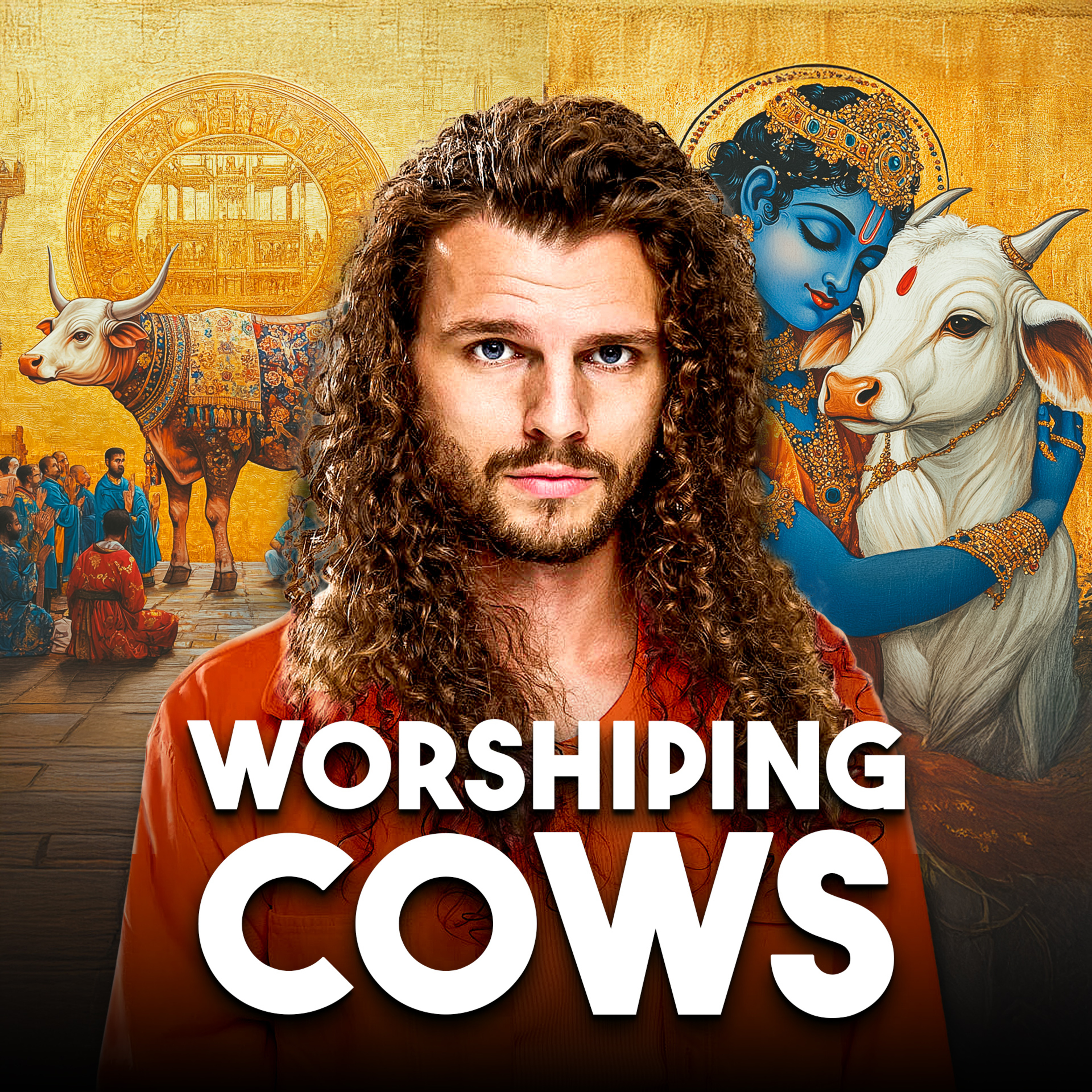
Do Hindus worship cows? Gopashtami. Where devotees go all out celebrating Krishna's coronation as the king of the cows, commemorating when Krishna lifted a whole mountain to protect cows and cow herders from indras. Go further with the American Express Business Gold Card. Earn 3 times Membership Rewards points on flights and prepaid hotels when you book through amextravel.com whether your destination is a business conference or a client meeting, your purchases will help you earn more points for future trips. Experience more on your travels with Amex Business Gold terms apply. Learn more@americanexpress.com Business Gold AmEx Business Gold Card built for business by American Express. Hi, this is Jevon, your blinds.com design consultant. Oh, wow, a real person. Yep. I'm here to help with everything from selecting the perfect window treatments to. Wow. I've got a complicated project. No problem. I can even help schedule a professional measuring install. We can also send you samples fast and free. Might have to do more. Whatever you need. So the first room we're looking at is for shopblinds.com now. And get up to 40% off with minimum purchase. Blinds.com rules and restrictions may apply. Fury the Nandi. This is the bowl vehicle. You could say the vessel of Shiva himself. During the famous Durga Puja festivals, you'll see cows being worshipped alongside the goddess. Decked out in red saris and golden ornaments, the five products of the cow milk herd. Ghee, urine, and dung, represent the five faces of Shiva himself, the Arya Samaj. They argue that treating cows as deities actually diminishes their practical importance. So we are going to dive into this idea. Probably one of the biggest religious misconceptions of all time that Hindus worship cows. What's up, people? And welcome back to Religion Camp. Yes, this is a show where I sit here in my wonderful little tent and I explore the most interesting, fascinating, and controversial stories from all religions from around the world, from all ages. That's right. And today we're going to the South Asian subcontinent to a tiny little country of a billion people called India. Because we are going to dive into the question of do Hindus worship cows? My name is Mark Agnon. Today I'm joined by my friend Christos and also my friend Gabe in the back. What's up, Gabe? Christos, how are you?
- [02:32]
Christos
What's going on, everybody?
- [02:34]
Mark Agnon
I just want to make a shout out to the Hindus. Thank you guys so much for tuning in to the last episode. We've gotten some great feedback. I actually got a piece of feedback that I thought was quite funny when we Were discussing all the different subdivisions and denominations of Hinduism. Apparently some Hindus don't even like the term Hinduism. You ever heard this? This came From a comment rc779.56 seconds ago. So I have no idea if it's true. Never fact checked it. He basically said Hinduism is a name given by European slash Persians. I'm going to blame the Persians for this one. As someone of European descent, the Persians are taking the blame. Hindu is a name after the Sindhu river. Persians couldn't pronounce the s, which is kind of funny. Like, they were having trouble with the pronunciation. Even though they have an S in their name, they couldn't pronounce the s, so they called it the Indus river. So it had nothing to do with religion necessarily. And so the Indus river is what they changed the Sindhus to and eventually decided to call the religion followed by Hindus, AKA Sindhus, as Hinduism. Hindus were just the name of the inhabitants of the area given by Persians. The actual name of the religion is Sanatan Dharm. As we talked about last week, it's also said to be brought to the Indian subcontinent by Indo Aryans who came from Central Asia. The ancient polytheistic religions of the Slavs and Russians are also similar to Senator Sanatan Darm because of Sanitandarm is derived from them. So there you go. Apparently you shouldn't even say Hindu. Supposed to say Sanatan Dharma.
- [04:09]
Christos
What I got from that is he should be sitting where I'm sitting.
- [04:12]
Mark Agnon
Yes. Oh, for sure. I mean, there are about a billion other Hindus that should be sitting where you're sitting. But instead we got this just this Greek. I don't even know. Are you in religious? This guy doesn't even believe in a God or anything.
- [04:23]
Christos
I believe in many gods.
- [04:25]
Mark Agnon
I'm surrounded by just heathens. Okay, but have you heard the stereotype that Hindus worship cows? Have you heard this before? Yes, I've heard a couple different explanations. I don't know where this even started. Probably from the Simpsons or something. But I've heard that it's because, like, oh, if you believe in reincarnation, your grandma could be a cow. So you don't kill cows, and that's why they don't eat beef.
- [04:48]
Christos
But can't your grandma be a cockroach?
- [04:51]
Mark Agnon
Precisely. Whoa. What the hell, dude? Why do you think someone's grandma's gonna be a cockroach? Think she's just been. Nope, don't bleep it. Believe that loud and proud that you think all Indian grandmothers are gonna be Cockroaches. I mean, that's disgusting and despicable. I don't think that. But they could be chickens or they could be bald eagles. I don't even know if they have those over in India.
- [05:09]
Christos
What else?
- [05:10]
Mark Agnon
There could be many other things, many other beautiful animals. Maybe like a wild lion, but yet Hindus probably eat a lion.
- [05:17]
Christos
Possibly.
- [05:17]
Mark Agnon
We gotta look into that, actually. I don't know. Do Hindus. Do Hindus eat lions? Can you Google that, Gibb? Just find out for me. So we are going to dive into this idea. Probably one of the biggest religious misconceptions of all time that Hindus worship cows. This is like saying, like, Christians worship like. Like a wooden cross. You see crosses everywhere. You see Christians wearing cross on their neck. Oh, they must worship a cross. Or like Muslims worship a black cube. Duh. They're doing. They're spinning around that thing all the time. They must worship it. Not the case. What is that bad to say?
- [05:47]
Christos
I don't. I don't know the context.
- [05:49]
Mark Agnon
So. Yeah, of the. Of the cob.
- [05:52]
Christos
Black cube.
- [05:53]
Mark Agnon
Yeah. I mean, you see a video, they're walking around that thing. All right, let's see. From chat GBT No, Hindus generally do not eat lions. In Hindu culture, many animals, especially large carn. Carnivores, like lions, are often associated with deities that have symbolic, religious significance. The lion, for example, is the Vahana of the Goddess Durga and is revered in Hinduism. So, yeah, I guess they don't eat lions either. So there's many things they don't eat, but they definitely don't eat beef. If you ever meet a Hindu, they're definitely going to be off beef. So here's the question. Why is that the case? And if you listened to last week's episode where we discussed all the different subcategories and different sects of Hinduism, you'll know that Hinduism is not a monolithic faith. It's not even really religion to begin with. It is a life philosophy. Right. With many different ways to understand the universe. So the different Hindu sects view cows through different philosophical lenses. And while some traditions see them as symbols of divine motherhood, others focus on their connection to specific deities. And still others approach the topic from a more reformed or perhaps modern perspective. Right, so we're going to go through a journey through the six major Hindu traditions, kind of like we did last week, and we're going to. To examine their relationship with the beloved bovine. Let's jump in. Vaiavism. Remember this one? What do you know about Vaishnavism? We studied this I'm cheating, but dang it, Christos, I feel like you're not even listening when we're trying to learn about all the religions of all time. In Vishnuism, basically, Krishna isn't just some, you know, divine cow loving deity or something, right? He's the supreme Lord who chose to manifest as a butter stealing, cow herding teenager in Rindavan, as the Bhagavan Purana tells us, quote. In the company of Balarama and the cowherd boys, Krishna plays his flute loudly as he herds all the animals of Raja. But here's the kicker. Vishnuites believe Krishna's role as a cow herd wasn't just some random career choice. It was divine demonstration of how to live in perfect harmony with nature. That's right. Where even the supposed lowly task of herding cows becomes an act of transcendental love. It's kind of like, I don't know, Jesus being a shepherd, right? Like he wasn't literally a shepherd, but he is the shepherd of mankind. He's tends to his flock. So I guess we see other similarities and other similarities in Christianity also. Let me just say this really quick. I've wondered this question for a long time about, about Hindus and cow worship. If someone asked me, I would be like, I don't know. Which is why I was curious to figure this out. But I didn't do the research for this episode. The research for this episode was done by a wonderful Hindu friend of mine whose name is Jesus. And he's actually Mexican. He does not Hindu at all. I mean, he might get confused on an airplane, maybe, I don't even know. But he's just purely a Mexican kid. So if any of this is wrong, I implore you to write a comment and let me know where I'm off base and maybe I will do an update and correct some of my research as we go. But I'm learning along with y'all. All right, so Vaishnavite temples, they don't mess around. Walk into any major, you know, temple and you might see cows being ritually decorated with turmeric or kum or flower garlands during festivals. Can we pull a picture of this? This would be fun to see. Some temples, like the famous Guru Vayer temple in Kerala, maintain massive gaushalas, basically cow shelters. Wow. I mean, yeah, click on one of these maybe in the temple. Okay. Oh yeah, click on that one right there. Look at this. Wow. It's kind of nice. This a cow chilling with the squads. Looks like a Chick fil a commercial. It's sick as hell. And basically, in these gauchalas, there are hundreds of cows that are cared for as living representations of Krishna's internal, you know, cow herding realm. The morning ritual often includes offering the first fresh grass to the temple cows before even the deity receives their morning offering. And that is basically chick fil a. That's pretty fire. So last. Maybe. I don't even know when this is going to come out. Two weeks ago, we talked about iskcon. This is the International society for Krishna consciousness. And they take this ancient cow, you know, reverence into the 21st century with a modern twist. Their Care for cows initiative. They're not just running, you know, traditional goshalas, they're running full fledged farm communities where cows live out their natural lives while providing milk for temple deities. That's awesome. The ISKCON founder, Srila Papa, famously declared, cow protection is the most important business of human society, human civilization. All right, I don't know if it's the most important business of human society. I guess if you're a religious person, you see cows as divine. But even then I'm like, it's gotta be something else.
- [10:55]
Christos
World peace.
- [10:56]
Mark Agnon
But maybe this is how you get to world peace. I don't know. Human civilization will advance only on the basis of brahminical culture and cow protection. The cow is your mother, the bull is your father. And the protection of the lives of both the human beings and the animals is the first, foremost duty of a government. Well, we're up then. Maybe that's why America's in bad situations right now. What's up, camp family? What's up, campers? Two big announcements. Don't skip this. Two massive announcements. The merch store is back open. That's right. Camp goods is back in stock. We got these hats that I'm wearing right now. I've been rocking them both on here, on. On flagrant. I've been wearing them on stage. We got a bunch more hats like the ones behind me. You can see them all here on the website. We also got some shirts. Oh, man. What is this one right here? Come on now. Come on now. Camp gear for all terrain. We got some other ones. What is this one right here? Oh, this one's beautiful. This one might be one of my favorites. The colors. The colors are absolutely crazy. This is Camp Gagnon vintage wisdom across the globe. Come on now. We got all that and more on the store. We also got these sick mugs right here. You might have seen me maybe sipping from one of these in some of the recent episodes. These are sick. They are all available on the website Camp Goods Co. Check it out. Link is in the description. And by supporting the merchandise, you are obviously supporting the show. You're supporting me, and you're obviously, you know, supporting all the amazing people that make the show happen, like Christos, who is currently throwing me T shirts from underneath this desk here. So please check that out. Additionally, I'm on the road. That's right. I'm doing my one hour of standup comedy. Some of some of the greatest jokes ever written. Okay, that's not true, but they are my jokes and I wrote them. I'll be in Portland, Maine on April 27, and that one I'm doing with Joey Avery. You know Joey Avery, a friend of the show. He sat across from me many times and I'm explaining some things to him. And he might be my dumb friend, but he is a brilliant standup comedian. And we will be there in Portland, Maine. If you are in these areas, please come out. And we're adding a ton of dates all through the summer. So check out my website, themarkgagnon.com for all tour dates and updated info. Come hang out with me. I talk to every single person after the show. If you want to kick it with me, maybe have a drink, I'll be there. And I will see you guys on the road. Let's get back to the show. Here is a bullet. Imagine this. You're 30ft underground, digging through frozen earth with spoons and mess hall plates. Nazi guards patrol overhead. One wrong move, one loose pebble, and it's over. But on this night in 1944, 76 Allied prisoners would attempt the impossible, tunneling their way to freedom in the largest prisoner of war escape of World War II and centuries earlier. In a cold stone chamber, a teenage girl in armor stood before her accusers. Her crime? Leading armies, speaking to angels, and daring to challenge the most powerful men in Europe. Joan of Arc's trial would become one of history's most infamous moments. These are just two stories from Today in History, the newsletter that brings you the most fascinating events from the past, delivered fresh to your inbox. From epic wars to religious rebellions, ancient mysteries to modern marvels. Don't miss another piece of history. Scan the QR code now or click the link in the description to sign up for Today in History.
- [14:07]
Christos
I know this isn't right, but is it sexist that the cow is your mother and the bull is your father?
- [14:12]
Mark Agnon
How's that sexist? That just seems anatomically correct. What's sexist about that.
- [14:17]
Christos
Oh, because the cow has nipples and bull has horns.
- [14:23]
Mark Agnon
You know, those are different. They're different genders. Yeah, sure, if we believe in that. But they are. Ostensibly you have the bull with the horns and a penis. Right.
- [14:32]
Christos
Then you have the heifer phallic symbol.
- [14:34]
Mark Agnon
Which one? The horn. The penis. The penis is almost certainly a phallic symbol. I mean, like, I don't want to get too anatomical, but it is like the OG phallic symbol. Yeah, I mean, let's just pull up a cow penis while we're doing this.
- [14:44]
Christos
No, don't.
- [14:45]
Mark Agnon
Let's just look. Okay.
- [14:46]
Christos
We can just see and we're demonetized.
- [14:48]
Mark Agnon
No, just don't show it. I mean, unless you can. Whoa. I mean that thing is.
- [14:54]
Christos
Yeah, let's go.
- [14:55]
Mark Agnon
Whoa.
- [14:56]
Christos
Why are so many animal penises red and curly?
- [14:59]
Mark Agnon
That is a. I mean, human penises also. Right, right. Anyway, let's just move on. Okay. They've essentially turned cow protection into a global movement trying to basically, you know, protect cows across the world. I mean, it's a valiant effort. I'm all for protecting animals. I'll be honest. Even sometimes I'm eating meat, I just like, I think about the animal I meet and I just get, I get weird about it. Like I'm definitely a meat eater but like, I don't know. I do, I'm. I understand the, the, the vegan or the vegetarian position quite well. But when you look like me, you can't be vegetarian because it's just too stereotypical, you know? The festival calendar in the Vaishnavite religion reads basically like this year long celebration of Krishna's bovine buddies. Take the Gopashtami where devotees go all out celebrating Krishna's coronation as the king of the cows. Or the Govardhan Puha commemorating when Krishna lifted a whole mountain to protect cows and cow herders from. This episode is brought to you by Progressive Insurance. Do you ever find yourself playing the budgeting game? Well, with the name your price tool from Progressive, you can find options that fit your budget and potentially lower your bills. Try it@progressive.com progressive casualty insurance company and affiliates price and coverage match limited by state law. Not available in all states. Indra's fury. I mean, that's wild. In places like the Vrindavan and Mathura, these festivals transform entire cities into vibrant celebrations where cows are adorned with ornaments worth more than some people's cars. So that's the Vaishnavites. That's what they do in their sacred temples in regards to the Reverence for the cow. Obviously, you know, they're going to see Krishna as, you know, embodying the spirit of the animal. And so you can see how the theology and the practice of sort of, you know, seeing the cow as some type of divine symbol, you know, would definitely connect right there. And we're going to get into more details about why and how, and then even my own personal thoughts about how this comes up so predominantly in Hindu culture. But let's move on to shivism. We remember shivism, right? The reverence for Shiva. And the Shivites have something a bit more metal. The Nandi. This is the bull vehicle. You could say the vessel of Shiva himself. But here's the crazy part. Nandi isn't just some, you know, like a. Like an Uber for the God of destruction. You know, like the God of destruction, Shiva is gonna go into this bull. Okay? It's more than that. All right? Imagine this. Before you even see Shiva in any temple, you have to pay your respects to this magnificent bull. This is basically. Essentially the world's most powerful bouncer you can imagine, right? This is the bull you got to get through to get to Shiva himself. Basically filtering out all the spiritual riff raff, you could say, all right, the relationship between Shiva and the divine bovine goes deeper than just, you know, having, like, a sick, you know, a cool whip. Right. According to the Shivite texts, like the Linga Purana, Shiva wears a necklace of twisted cow hair, smears himself with holy ash from cow dung, fires, and occasionally rocks a bull hide as his signature outfit. I mean, that's awesome. Can you get a picture of Shiva wearing the necklace and the bullhide? I mean, that sounds sick as hell. It sounds like John Wayne. It's basically this partnership which where the raw, untamed energy of the bull compliments Shiva's transcendent nature. Think of it as, like, you know, almost like a. Like a buddy cop. This is basically like rush hour sort of vibes. So when it comes to worshiping, the Shivites go hard in the dairy. All right? There's this thing known as abhishekam. This is a ritual bathing of the Shiva lingam involving a precise sequence of offerings where milk plays the starring role as the agamas prescribe panchamritam, a divine cocktail of milk curd, ghee. Honey and sugar is used to bathe the lingam. The Kashmiri Shiva text, the Tenre Loka, even suggests that the five products of the cow. The, you know, things we just said, milk, curd, ghee urine and dung represent the five faces of Shiva himself. That's taking a very serious devotion. I mean, that's, that's. That's wild. I wonder, I mean, sometimes, have you seen the videos of the dudes that, like, bathe in the urine?
- [19:22]
Christos
Oh, yeah.
- [19:23]
Mark Agnon
Can we, can we pull one of those videos up? I guess that makes sense. If you see the urine as the. As the actual face of Shiva himself, then all of a sudden it's not something that you'd be grossed out by. You'd actually have reverence for it. I've always seen those videos, and I was like, what is going on? But that. That kind of makes sense, actually. Maybe that's not what's happening at all. Someone correct me if I'm completely off base here. The regional variations in the Shivite cow veneration are where things get interesting. And Tamil Nadu, the festival of Matu Pangal turns into a full blown, like, cow beauty pageant type thing where the bulls get decked out in these sick, colorful outfits and they paint their horns. And then up in Varanasi, Shiva city, certain Shivite sects maintain that feeding a black bull is the equivalent to feeding Shiva himself. Meanwhile, in Nepal, in the Pashupatanath tradition, they believe that a special breed of black cow are the direct descendants of Kamad Henu Nandi's cosmic cow counterpart. Contemporary Shivite ashrams have taken this ancient bull reverence and turbocharged it for the modern day. The Isha foundation, led by Sadhguru, maintains extensive cow shelters while promoting indigenous cattle breeds. I mean, that's pretty wild. At Karnataka's Siraganga Mut, they've combined traditional cow protection with modern dairy science, creating what they call spiritual sustainability. These ashrams aren't just preserving traditions. They're proving that ancient cow reverence can coexist with modern environmental consciousness. I mean, that's pretty wild. I mean, what does this festival look like where they paint all the horns and stuff? Oh, what is this?
- [21:06]
Christos
There's the urine drinking and a guy drinking urine. I don't think he's the right sect.
- [21:12]
Mark Agnon
Yeah, yeah.
- [21:13]
Christos
East Asian.
- [21:14]
Mark Agnon
Yeah. I think that guy's Taiwanese. You know they're different, right? I said South Asian. I don't.
- [21:21]
Christos
Well, that's the least racist thing you.
- [21:22]
Mark Agnon
Could do, I guess. Yeah. Pulling up a random other Asian. I mean, that's wild. You ever seen that? That you ever watched Nathan for you. Yeah, there's. There's a great scene in Nathan for your, where he's talking to this guy. I don't Even know where the guy's from. But he's talking to the guy and he's like, you know, what do you do if you're feeling sick or scared? He's like, oh, you drink the urine of. Of like, your nephew. And he was like, what? He's like, yeah, you drink like a. Like a young kid's urine. And like, apparently, like, it cleanses your spirit, and it's the only time in the whole show that Nathan Fielder ever breaks. It's like the funniest thing in the entire world. So apparently there's a tradition where people will sometimes do that. Hindu activists in India drink cow urine to protect themselves from coronavirus. Whoa.
- [22:00]
Christos
It's also kind of crazy how they're drinking it this pour over method.
- [22:04]
Mark Agnon
It's funny because he doesn't want to put his lips on the cup. Because he's like, if I put my lips on the cup, that'll be. That'll make me.
- [22:10]
Christos
But the urine is no problem.
- [22:11]
Mark Agnon
Yeah. I mean, but it makes sense, though, right? Like, again, this. This show is all about celebrating religious tradition. And if you believe that Shiva is represented in. In the urine of the cow, then that's your prerogative. I'm not gonna. I'm not gonna knock you for that. I go to church every week, and I drink wine that's supposed to be the blood of Christ.
- [22:29]
Christos
Do you actually go to church every week?
- [22:31]
Mark Agnon
The weeks that I go to church.
- [22:32]
Christos
Okay.
- [22:33]
Mark Agnon
All right. Sometimes I'm busy. I'm on the road. You know what I mean? Or sometimes I sleep in. I'm playing FIFA. I'm saying there's a gray area. Okay. But if I go, I'm gonna go drink some wine. That's the body and blood of Christ.
- [22:43]
Christos
Yeah.
- [22:44]
Mark Agnon
And I feel like to Hindus, they'd probably be like, that's crazy. I'm gonna stick with my cow urine. But what you guys are drinking blood of a human. That's crazy. So, look, it's easy to sit on the outside and be like, oh, this religion's insane. But also, every religion does some stuff that you're like, it's pretty crazy. Yeah, our thing is a little crazy. I mean, I'm not gonna drink bull urine. Like, that's just.
- [23:04]
Christos
That's gay.
- [23:05]
Mark Agnon
It is. On the spectrum of gay eating, the body of someone is also a little suspect. All religion is sort of gay.
- [23:17]
Christos
Okay.
- [23:17]
Mark Agnon
To an extent. You know what I mean? Like, there. Like, there's a pageantry to it. Like, there's a gayness. Like, I don't know, maybe Maybe that's why they got the gays out of there. In a lot of religions. Maybe that's why.
- [23:28]
Christos
Well, you know, the priests aren't helping things.
- [23:31]
Mark Agnon
Look, the whole priest thing is overblown. We're going to do an episode on that, all right? We're going to vindicate the priests. All right? As a devout Catholic, this is not about Catholicism. All right, let's get back to the Hindus. All right, Remember Shaktism? We talked about that. So just to recap, Vishnavites see cows as Krishna's bestie. The Shivites see, you know, the Shiva living within the bull themselves. And then the shaktas take it to a whole new level. They see every cow as a walking, mooing manifestation of the divine mother. Remember the shakti. They appreciate the mother goddess, the spiritual feminine force.
- [24:05]
Christos
Right. These were my favorite last time, probably.
- [24:08]
Mark Agnon
Little cuck, think about it this way. In a tradition where divine feminine power is everything, what is the ultimate symbol of nurturing cosmic energy? The female cow. This is where we're going to talk about Kamad Henu. This is the, the wish fulfilling cow. Basically, like, I don't know, Aladdin's genie or something. Is that maybe that's disrespectful to say. I'm sorry, Hindus, I'm not trying to be disrespectful. I'm just trying to put in a way that dumb white people can understand this. This celestial mother is not just some, you know, cosmic, you know, dairy farm. According to Shakta texts, the Kamadhenu emerged from cosmic ocean during the churning of the milk sea, basically making her the universe's OG mommy milker. In a way. She is the first one she's depicted with a woman's face showing that divine motherhood transcends species. Right. Because if you're, if you're the goddess herself, why would you be limited to just human form? We should pull up a picture of Kamad Henu. Can we, can we pull that up? Yeah, See, look at this.
- [25:13]
Christos
Damn game's on it.
- [25:14]
Mark Agnon
Wow. So this is a, this is a slightly different version. This is basically. Actually. Go back to that because that's helpful to point out that this idea is basically that all deities are living within the cow herself.
- [25:30]
Christos
So what's a deity for our listeners who don't know and me, I mean.
- [25:35]
Mark Agnon
This idea that, I mean, a deity in general. Yeah, just like a God or like, you know, the pantheon of gods or just the single God that you might worship. Like, I guess it's not really used in Christian lore as much. But like, in a way, I think you could probably classify God as a deity. I mean, I'm also talking about my ass. I don't even know the definition of a deity. I think it's just some type of like supernatural, I think probably a supernatural cosmic force. But let's get into, let's get an exact definition, shall we? A God or a goddess in a polytheistic religion. Divine status, quality or nature, the creator and supreme being in monotheistic religion. So yeah, there you go. It's just a God or a goddess, I guess. But I feel like you could even say that like a demon is a deity or something, or like a jinn is a deity. Regardless, it's supernatural. And this idea, I'm pretty sure is tying into the idea that, that all gods are believed to reside in the body of Kamad Henu, the generic cow. Her four legs are the scriptural Vedas, her horns are the triune Brahma, you know, being Brahma at the tip, Vishnu in the middle and Shiva at the base. The eyes are the sun and the moon, and the shoulders are the fire God Agni and the wind God Vayu. And her legs are the Himalayas. So that's what that image kind of represents right there. So you can see that, you know, there's, there's an all encompassing nature to it. But the one that we're speaking about specifically is the depiction of this, this mother goddess with the face of a human. There you go. Shout out to the shaktis.
- [27:04]
Christos
Is it wrong to say that looks like Pocahontas?
- [27:07]
Mark Agnon
I wouldn't say it's wrong, but you can see why Christopher Columbus called him Indians.
- [27:12]
Christos
Right?
- [27:12]
Mark Agnon
That's my point. Yeah. So you can see he comes over, he's like, I'm looking for India. And he's like, close enough. I guess if you're like me, you probably read a news story and you're like, this is crazy. What is the truth about this? Is this a partisan spin? Is this funded by some media company or some country, by their state sponsored media to try to warp my brain? I genuinely read news articles now with so much skepticism because I have no idea if this is from the right or the left and what the agenda is and why it's being presented in front of me. And that is why I follow and support ground news. That's right. So even before I started working with this company on the podcast, I've been following them on Instagram because I just thought they gave a very, very great unbiased nonpartisan approach to media. It's awesome. Basically, you're going to get a headline and they will show you sort of the different media splits as it comes to understanding the story. They will compare the reporting from different outlets across the political spectrum in one place to show you how the framing and word choice can affect our understanding of a story. I mean, here's a story that my mom sent me from a couple months ago. Robberies, assaults, surge in Central park, leaving New Yorkers and NYC tourists terrified. What is the purpose of this story? Who is writing it? Where is it coming from? Now I can go to Ground News, read this headline, and be able to make an assessment as to whether or not this is predominantly being reported by the right wing or by the left wing and make some type of deduction like, oh, this is actually being used, you know, as some sort of political apparatus. So if you're like me, if you're a truth seeker, if you're trying to find unbiased news, I would absolutely recommend Ground News. It is completely independent, nonpartisan, subscriber funded. It allows readers to think critically about the world around them. And it doesn't tell them what to think, but instead lets them think for themselves. And ultimately it avoids misinformation and tries to heal polarization within our country, which I think is absolutely amazing. So don't let misinformation and sensationalism influence how you think. Save a massive 40% on Ground News's top tier vantage plan with my link. Ground News Gagnon G A G N O N Or scan my QR code right here or go to the description and click on the link. This unlocks access to all of their news analysis features. Something that I think is, I don't know, super important to have. Yeah, make decisions based on facts, not spin. This November. Check them out. Here is a bullet. Imagine this. You're 30ft underground, digging through frozen earth with spoons and mess hall plates. Nazi guards patrol overhead. One wrong move, one loose pebble and it's over. But on this night in 1944, 76 six Allied prisoners would attempt the impossible, tunneling their way to freedom in the largest prisoner of war escape of World War II. And centuries earlier. In a cold stone chamber, a teenage girl in armor stood before her accusers. Her crime. Leading armies, speaking to angels and daring to challenge the most powerful men in Europe. Joan of Arc's trial would become one of history's most infamous moments. These are just two stories from today in history, the newsletter that brings you the most fascinating events from the past delivered fresh to your inbox. From epic wars to religious rebellions, ancient mysteries to modern marvels, don't miss another piece of history. Scan the QR code now or click the link in the description to sign up for today in history. In shakta temples, cows aren't just sacred, they are. They are the VIPs you could say, in the divine drama of worship. Right. During the famous Durga Puja festivals, you'll see cows being worshipped alongside the goddess, decked out in red saris and golden ornaments. Some shakta temples in Bengal and Assam even maintain the tradition of having a designated gua mata, which literally translates to mother cow who gets the first offering of every puja. Because even the mother Goddess knows to respect her fellow divine moms. The connection between the goddess in cattle protection and shaktiism goes beyond mere symbolism. Right? Shakta traditions view cow protection as a direct form of Goddess worship. And some texts claim that caring for cows generates a more spiritual merit than, you know, elaborate temple rituals. Modern shakta practitioners haven't just preserved these traditions, they've revolutionized them for contemporary times. The organization, like the Kamakya Temple Trust, run a high tech goshala. Can we get a picture of a goshala? G O S H A L A S. And they combine ancient reverence with modern veterinary science. The Bharat Mata Gausala network, inspired by shakta principles, has created a model where cow protection meets women's empowerment. Right. No jokes there.
- [31:49]
Christos
Nope.
- [31:50]
Mark Agnon
They've even got programs where urban devotees can adopt a cow, virtually getting regular updates about their four legged manifestation of shakti. I mean, that's awesome. You can do a virtual adoption of a cow. So. Yeah, look at this. This is a goshala. We're literally like, they just have cows living their best lives. It's kind of nice. Like, if you're gonna reincarnate, being a cow wouldn't be a bad option because you get to just post up in India. In India. Yeah, that's a good. Yeah, in. In India. Yes. That is a good one. Can we look at this, how to. How to adopt a cow? Maybe we throw some beans at that.
- [32:25]
Christos
It's not adopting.
- [32:26]
Mark Agnon
You're just paying, you're supporting, you're supporting.
- [32:30]
Christos
It's kind of like buying a star.
- [32:33]
Mark Agnon
Yeah. Oh, look at this. I mean, this is an American version. That's kind of sick.
- [32:39]
Christos
We know a good idea when we see one.
- [32:41]
Mark Agnon
Yeah, this is awesome. Oh, the Shanti cow. Look at this. Oh, you. I mean, this is nice. Like, it is A nice thing. So.
- [32:49]
Christos
Oh well, the grass area there is so nice.
- [32:52]
Mark Agnon
But no, look, I mean compared to getting a nail in your head, I mean this, okay. Cows are allowed to live out their full span of life. They're nurtured, respected, treated with kindness. Calves are allowed to stay with their mothers and nurse from them for four to six months. Cows enjoy feed as well as grazing freely on pasture. I mean that's just beautiful. I love that. That's very, very sweet. And now we're moving on to the smartas. Remember the smartas, right?
- [33:13]
Christos
Oh yeah.
- [33:14]
Mark Agnon
These are kind of like the more open minded. They believe in many of the gods, they're much more polytheistic, they kind of appreciate all the traditions. So the smartest are, they've taken a more cerebral approach as you can imagine. So while other traditions are, you know, focusing specifically on the cosmic bulls or the, you know, Krishna's, you know, cosmic cow herding tradition, the smartest take a more cerebral approach. Right? So for them it's not about worshiping the cow as a deity but understanding it as a living symbol of universal consciousness. They basically say, hey, before you dig into all the spiritual stuff, let's just look at what the cow really represents from a philosophical lens. So the smartest genius lies in how it integrates cow symbolism into the worship of multiple deities. This idea of shanmata, according to Smarted text, cow embodies the aspects of all major deities. The nurturing Devi, the Dharmic stability of Shiva, the sustenance of Vishnu, the wisdom of Ganesh, etc. When it comes to vedantic interpretation, smarters go full on metaphysical. They interpret the cow's calm demeanor and natural giving nature as practical demonstrations of vedantic principles. So this is what we were just talking about before. Remember that image we pulled up of basically all the entities living within the cow? Specifically, so this is the smartest are the ones that are all about that. So the four legs of the cow are said to represent the Vedas. The milk is the flow of knowledge. The peaceful nature is the state of consciousness. I mean, pretty nice. Adi Shankara, his influence on the smarts attitude towards cow protections. Where philosophy meets practicality. In his various works, Shankara emphasized that protecting cows is not just an act of dharma but means of purifying the intellect. He taught also I was told that it might be pronounced Dharm. I think the A might be, might be silent. So if that's the case, I'm going to continue that way. He taught that the act of serving cows helps dissolve the Ego, because, you know, you're basically cleaning a gashala all day. It's going to humble you. And contemporary smarts and practices have evolved this philosophical foundation into modern action. Major smarter institutions like the Sringeri Sharada Pitam maintain extensive goshalas where traditional reverence meets this, you know, modern conservation. They're not just protecting indigenous cow breeds. They're preserving what they see as living symbols of pedantic truth. Oh, I mean, that's. I'm. I'd see. The smartas are my favorite. I like all of them. I like all the denominations. But the smarts, I just think they just speak to me in a nice way. I really like that.
- [35:44]
Christos
And they're also the most all encompassing.
- [35:47]
Mark Agnon
Yeah, yeah, exactly.
- [35:48]
Christos
It's the best of all worlds, right?
- [35:50]
Mark Agnon
You kind of. You kind of get it all. It's kind of nice with the smarts.
- [35:53]
Christos
And you're supporting the ladies, right?
- [35:55]
Mark Agnon
Exactly. You get to help out the cows. It's. It's sick as hell. All right, now there's one that I don't know about as as much. The Arya Samaj. The Arya Samaz enters our narrative about cow protection with a shift in perspective. Okay, so there's this person, the movement's founder, Dayananda Saraswati, and they emphasize the practical benefits of cow protection. In his work, rather than focusing solely on divine or mystical reasons, the Saraswati argued that cows are valuable for their contributions to agriculture and dairy production. This rational approach marked a departure from the traditional spiritual narratives and rather emphasized the utility of. Now, here's where the Arya Samaj gets a little interesting. Okay. They draw this sharp line between reverence and worship. They argue that treating cows as deities actually diminishes their practical importance. For them, true reverence means recognizing the cow's vital role in sustainable agriculture, stability economically, and then societal well being. The Arya Samaj's scientific and ethical arguments for cow protection would make, you know, basically modern liberal Bushwick environmentalists very proud. Their text meticulously document the cow's contributions from fertilizer to fuel to soil conservation to biodiversity. And the arguments just aren't about saying that cows, you know, are, you know, are great, we need to save the cows. They're like, cows are important for the entire agricultural ecosystem. When it comes to social reform, the Arya Samaj turned cow protection into a movement. They established some of India's first organized cattle welfare programs, but with a twist, they integrated these with women's education, agricultural reform, and anti untouchability campaigns. I'm assuming the untouchability campaigns is like the Dalits, like the, the low caste in India, I'm assuming they essentially turned geshalas into centers for social change and basically like social justice. The modern Arya Samaj initiatives have evolved this rational approach into sophisticated cow protection programs. Wow. I mean, that's, that's kind of awesome. So they've taken like a social justice and more of like a rational approach. It seems like they're kind of like, hey, look, cows are, are good for the economy, they're good for the environment, but if you treat them as too reverent, if you believe that the deities are, are in there and that you can't do anything with them, then, like, you know, you might not be able to get their milk, you might not have them. You know, you might not be able to like, get their fertilizer and sell it, stuff like that. Right. If the dung, for example, is like the face of, of Shiva, then you can't, you know, use it. I'm assuming in the same practical way.
- [38:22]
Christos
Sounds like a little bit of a cop out because you still want to exploit the cow. You don't want to put the cow on a pedestal.
- [38:28]
Mark Agnon
Or are you trying to exploit it? Or are you trying to just like.
- [38:31]
Christos
You know, humanize it, animalize it?
- [38:35]
Mark Agnon
You're trying to put it. You're trying to recognize that there is a lot of utility. Right. You know what I mean?
- [38:40]
Christos
And their importance is tied to their utility.
- [38:42]
Mark Agnon
Exactly. Like, I've even read some people believe that in like, you know, unrecorded, like, Indian history that the subcontinent was saved by famine, by their accessibility to cows. And different animals in different regions almost possess this deification. In Mongolia, Tajikistan, with horses. Horses. And horse meat was the only thing they had access to. The ground is very arid. So as a result, it sustained the people for a long time. And the gratitude and reverence for cows in society at that time, that saved them from famine. And some people have even speculated that's why Baphomet, the pagan symbol for, like, Satan, was just at one point worshiped as like, a deity that has the head of a goat. Because perhaps goats and like, goat meat and goat milk saved them from some type of famine. People have also pointed out that, you know, cows give, give us, you know, butter, cheese, you know, milk, all that stuff, which, like, is great. Cows are also extremely docile and like, like, really possess, like, no harm to humans in any way. Like, unless, like, you're getting freaky with.
- [39:53]
Christos
Them or something, trying to tip them.
- [39:55]
Mark Agnon
Yeah, exactly. Like they can give birth to more Cows which you can use for milk later. So, like, there's like an actual, like, appreciating stock.
- [40:02]
Christos
Do you know cow tipping isn't a real thing?
- [40:04]
Mark Agnon
What does that mean?
- [40:05]
Christos
So in cow tipping, and this is probably not.
- [40:09]
Mark Agnon
No, no, no, you got me here.
- [40:10]
Christos
So in cow tipping, you wait until the cow falls asleep, which everyone has told you they do standing, and then you tip them over. Cows don't sleep standing.
- [40:20]
Mark Agnon
I mean, maybe they, they kind of like get.
- [40:22]
Christos
They kneel down when they sleep.
- [40:25]
Mark Agnon
Okay, can we get a video of cow tipping? There's no way. I thought that they kind of like would half sleep standing up maybe. Like you've never dozed off behind the.
- [40:34]
Christos
Wheel a million times and you don't.
- [40:36]
Mark Agnon
Think someone could have tipped you over in my car? Yeah, right. Or like drove you off the road or something.
- [40:43]
Christos
For sure.
- [40:43]
Mark Agnon
All right, let's see. I mean, this is going to be extremely sacrilegious if there's any Hindus watching. So this is going to be very, very, very rude.
- [40:49]
Christos
Also, this just looks like a guy moving hay around.
- [40:53]
Mark Agnon
So there's not a video of cow tipping. I mean, can you search? Is cow tipping real? Because now this is blowing my mind.
- [40:58]
Christos
I have it on good authority that cows sleep kneeling down. Real activity is an urgent urban legend.
- [41:05]
Mark Agnon
Wow.
- [41:06]
Christos
Not a factual practice.
- [41:08]
Mark Agnon
This is blowing my mind. Someone even said that the activity is real, but the results are not. Cows don't tip over sleeping or not. But plenty of people still go out trying to cow tip because they think it's funny. But, like, you'll just push a cow and they'll just like move.
- [41:20]
Christos
Well, from what I understand, or at least what I've seen in movies is you don't tip it over. You tie their hooves together and then push it.
- [41:31]
Mark Agnon
That's just cow tripping or.
- [41:32]
Christos
Yes. Or pulling the, the tied together legs.
- [41:36]
Mark Agnon
Yeah, I mean, that's. I mean, that's crazy to me. First off, that, yeah, cow tipping is not a real thing.
- [41:41]
Christos
It's not a real thing.
- [41:41]
Mark Agnon
I mean, that's wild.
- [41:43]
Christos
I asked to do this the first time. This is going to make me sound bad, but I asked to do this the first time I visited a farm with some guys that had cows or to other farmers that had cows. And they go.
- [41:55]
Mark Agnon
They don't.
- [41:55]
Christos
They sleep sitting down. You're never going to be able to do that.
- [41:58]
Mark Agnon
I mean. Yeah. They're also £800.
- [42:00]
Christos
That's true.
- [42:01]
Mark Agnon
I wonder where it came from. I wonder if it like. I wonder if it came from, like parents basically, like sending Their kid on, like, a fool's errand.
- [42:08]
Christos
It sounds like some hillbilly collar shit. Yeah.
- [42:13]
Mark Agnon
I think it's parents being like, oh, you want to do something fun? Go do cow tipping. Like, you ever seen where parents, like, a kid will fall asleep and they're like, fake sleeping, and then parents will be like, oh, yeah. If they're really asleep and you raise their hand, then they'll stay asleep and they lift their hand and their hand stays up. Yeah, I bet you it's that. Where some parents were like, oh, you want to do something fun tonight? You're bored. Go do cow tipping. When they fall asleep, they're standing up, you push them over.
- [42:32]
Christos
Or like, when they catch you smoking a cigarette, they make you smoke the whole carton.
- [42:36]
Mark Agnon
Yeah, I mean, that sounds more like just a punishment, right?
- [42:39]
Christos
But it's a punishment if you try to tip a cow and the cow comes after you. Even though we know they're docile.
- [42:44]
Mark Agnon
They're docile. Bro, are you not reading Hinduism?
- [42:47]
Christos
You're telling me if you don't go try to tip over a cow, it's not going to come at you?
- [42:50]
Mark Agnon
No, it'll probably be like, yo, what the. What's going on? Or maybe they'll like the rub. Maybe they'll like the back rub. Who knows? The other thing that people point out with cows is that their dung can be used as fuel when they die. Their skin can be used as leather. Obviously, some people would object to this.
- [43:06]
Christos
Pig skin is what a football used to be made out of.
- [43:09]
Mark Agnon
Can we actually look up, what do Hindus do with cows when they die? Yeah, that's an interesting question. What. What do they do? If you have to. The karis is typically left for scavengers or buried. It obviously depends on the region and the subsect of, you know, religiosity. What about, like, can you search? Like, what do, like, shaktis do? What do shaktis do when cows die? Because they seem pretty hardcore about it. I wonder if they do, like, a whole burial. Maybe they cremate them. Because that's what many Hindus do when they die. They're treated with respect and buried sometimes with rituals. Wow.
- [43:43]
Christos
You would think that if they cremate them, that's kind of protein powder.
- [43:49]
Mark Agnon
Oh, yeah. That's where whey comes from. Yeah, yeah, that's basically whey. And then they might bathe themselves with the ashes. Oh, that's so interesting. A trench is dug for the carcass and then covered with dirt. I mean, shout out to them, dude, like, you can't fault any religion for being pacifists, you know, towards animals. Yeah, like, it's just a likable quality in a religion. Yep. All right, let's talk about one more. The guys, I'm so sorry for my pronunciation. This one is a tough one. Swaminarian Sampradaya. Swaminarian Sampradaya. If you think modern Hinduism can't compete with the ancient traditions, well, the Swaminarians would like to speak with you. They have these massive temples, especially during the Akshardam complexes. And they've created what could be called the four seasons of cow care. Okay. They're temple goshalas, which we said before. The Goshalas, where they, you know, take care of the olive cows. They feature climate controlled environments, automated feeding systems, and cow health monitoring technology. Lord Swaminarian didn't just preach about cow protection. He made it a cornerstone of his spiritual revolution. He basically says, my disciples shall not intentionally kill any living being, including insects. They shall never kill goats or any other being in sacrifices performed for the appropriation of deities or ancestors. For nonviolence is declared by all scriptures as the highest dharm of all dharms. But here's the kicker. He especially emphasized cow protection as a practical application of nonviolence. Wow. I mean, that's awesome. The baps, which is just the longest name I've ever heard in my life. Maybe we could put this up. This takes the traditional mandate and turbocharges it for the 21st century. Their goshalas are now spas. Can we search this? We need to get what this looks like. They search the baps, Goshala, and they basically are a cow spa where they have these facilities with automated grooming stations, veterinary checkups, and scientific research to study the indigenous cow breeds. The integrations of traditional values with contemporary practices in baps is where things get really interesting. They've developed what they call Gua seva, a comprehensive system that combines ancient cow care principles with modern animal husbandry. I mean, they play music, devotional music, to cows and feed them blessed food. What kind of music does a cow listen to? I don't know. I mean. Yeah, these. I mean, these look pretty sweet. I mean, yeah, this rules shout out to them.
- [46:12]
Christos
They're better than the other things. But they're not spas. Exactly.
- [46:16]
Mark Agnon
Yeah, I think. Well, I don't know what the.
- [46:19]
Christos
None of these have robes on or anything.
- [46:21]
Mark Agnon
Oh, those guys do. Right? I mean, that's definitionally a robe.
- [46:26]
Christos
Those guys are the employees. They're not the.
- [46:28]
Mark Agnon
Yeah, that's true. I mean, these cows. I'll be honest, a cow, even in its best condition, doesn't look great.
- [46:34]
Christos
Yes.
- [46:34]
Mark Agnon
Like a cow that's been. This cow's been taken care of for the last hundred thousand years and just looks like, oh, God, kill him.
- [46:41]
Christos
Are cute.
- [46:41]
Mark Agnon
Baby cows are very cute. That's why I don't. I don't eat veal.
- [46:44]
Christos
Because they're baby cows.
- [46:45]
Mark Agnon
It feels wrong to me. It feels, like, unethical.
- [46:47]
Christos
I agree.
- [46:48]
Mark Agnon
Like, it's a weird line to draw that I'm like, oh, I'll eat a burger, but I'm not gonna eat veal. But just on a personal basis, like.
- [46:53]
Christos
That'S like a serial killer saying, I'll only hurt adults and not kids.
- [46:58]
Mark Agnon
Which seems like there is some moral principle to it. You know what I mean? BAPS also pioneers educational initiatives around cow protection. They organize tours for children workshops and sustainable dairy farming, and have interactive exhibits explaining the scientific benefits of indigenous cow breeds. Wow. Well, there you have it. That's the. The cultural practice of many Hindu subsects around the practice of, you know, taking care of cows. So I guess that's. That's what I've learned today. They don't worship the cow necessarily. Depending on your subsect, you see that the cow embodies the spiritual fruits of whatever, you know, specific deity you have aligned yourself with. And so as a result, you have reverence for it specifically. Obviously, if you are a Shivite and you, you know, revere Krishna, you see the cow herding as very, you know, symbolic. You know, if you see this, like, mother. This, like, feminine quality, the, you know, the Shaktis obviously have, you know, a real devotional line to that. So that makes a lot of sense. And yeah, the Shivites, right, you have this cosmic bull in. In Shivism. I mean, this makes a lot of sense to me. I'll be honest. Which one do you like the most of all these Christos?
- [48:08]
Christos
I'm staying with the smartest. Shout out to the smarties over here.
- [48:11]
Mark Agnon
Yeah, the smarties are awesome, dude. Well, Adi Shankar, we got to look him up. Can you look up Adi Shankar? I would love to see who this guy is. This guy nailed a lot of stuff. Shout out to him. Adi Shankara. Oh, this is guys from back in the day. Doesn't have a photo. I figured there'd be, like, a picture of this guy.
- [48:26]
Christos
There's a rendering of him only sponsored by Adidas.
- [48:29]
Mark Agnon
I mean, that's fire, bro. Stripes over checks. That's, you know, what time it is. I mean that's awesome. That's awesome. Shout out to all the Hindus. And yeah, if you are gonna. I don't know, it just seems weird to knock a religion for having reverence for, you know, other animal life on earth. Bathing in. In urine is, you know, that's teach their own, I guess we could say, right? It's weird to me but I'm a dumb westerner and I do weird stuff also. But that has been another episode of Religion Camp. As always, we have Camp Merch at campgoods Co. You can check it out there. I'm also on the road. I'm on tour. If that was not already insert into the episode. You can see me on tour themarkyagna.com I got tour dates all over. I would love to see some Hindus come out. Maybe I'll do some Hindu jokes. Maybe I'll do. They're going to be deep cuts though. I'm going to be talking mostly about smartas and Shaktis. But regardless, whatever faith tradition you belong to, we just talk about all of them on this show. And I do appreciate everyone's support in making this channel happen. Gabe, anything you'd like to add? No, sir. Christos.
- [49:36]
Christos
Love you guys.
- [49:37]
Mark Agnon
My name is Mark Agdon. Thank you guys so much for tuning in and peace be with you if you've made it to the end of this episode. You are clearly someone who understands that beneath every historical event lies a deeper truth waiting to be uncovered. You're the type of person who knows that real history is more fascinating than any fiction. And we deeply appreciate that about you. I'll be honest, that's exactly why I personally invite you to sign up for Today in History, our free newsletter that goes beyond the surface of historical events. We dive into the stories that textbooks never told you, the secrets that challenge the course of nations, and the forgotten tales that deserve to be remembered. Let's continue this journey of discovery together. Take the conversation from your headphones into your inbox. Sign up now through the QR code or link in the description Today in History. Because every day holds a secret waiting to be revealed. Thank you for being part of our historical journey. We'll see you next time.