Loading summary
Transcript9 lines
- [00:00]
A
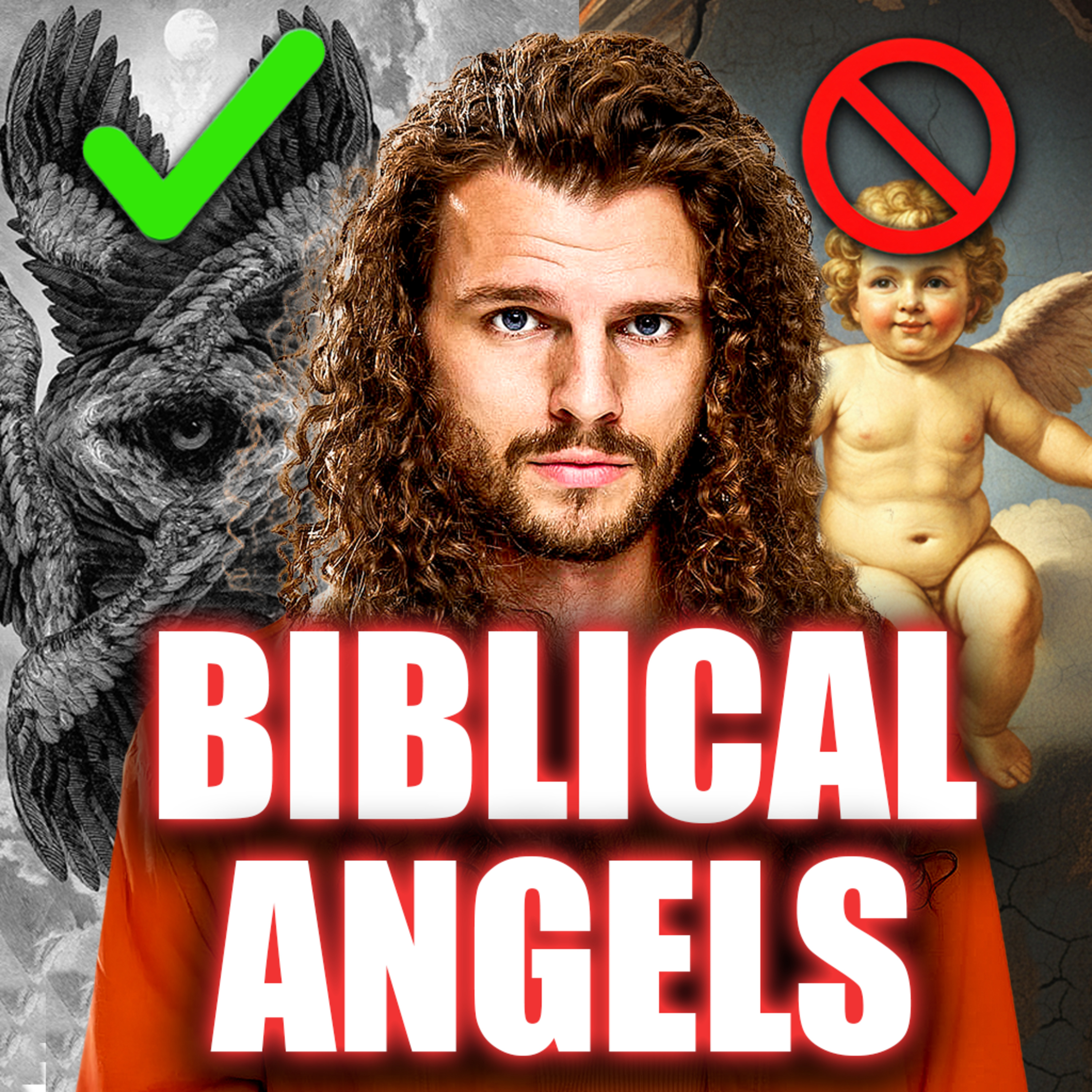
If you think angels are simply human beings with wings, you're about to have your entire worldview shattered. The Bible describes being so terrifying that they must say, do not be afraid. Wheels made of living fire. Six winged creatures that burn with divine energy. And invisible armies that appear and disappear without a single sound. These aren't the angels that you grew up with. They're not the ones you're taught in Sunday school. These are the beings that guard God's throne, wage cosmic war, move nations and and walk the earth disguised as ordinary humans. And for thousands of years, theologians have tried to make sense of them. At the top are creatures so holy, they've been burning in God's presence since creation. In the middle are the angels that govern creation itself. They oversee the storms in the kingdoms and the rise and fall of civilization. And at the bottom are the ones closest to us, the angels who stand beside you. They watch you and protect you and sometimes intervene without us ever realizing it. And today, we're breaking down all nine. Yes, nine of them. What they look like, what they do, and the moments when humans actually saw them. So sit back, relax, and welcome to Religion Camp.
- [01:17]
B
Toast the holidays in a new way and raise a glass of Rumchata, a delicious, creamy blend of horchata with rum. Enjoy it over ice or in your coffee. Rumchata. Your holiday. Holiday cocktails just got sweeter. Tap or click the banner for more Drink responsibly. Caribbean rum with real dairy cream. Natural and artificial flavors. Alcohol 13.75% by volume 27.5 proof. Copyright 2025 Agave Loco Brands, Pojoaquee, Wisconsin. All rights reserved. This episode is brought to you by indeed. Stop waiting around for the perfect candidate. Instead, use INDEED sponsored jobs to find the right people with the right skills fast. It's a simple way to make sure your listing is the first candidate C. According to INDEED data, sponsored jobs have four times more applicants than non sponsored jobs. So go build your dream team today with Indeed. Get a $75 sponsored job credit at Indeed.com podcast. Terms and conditions apply.
- [02:14]
A
What's up, people? And welcome back to Religion Camp. My name is Mark Agnon, and thank you for joining me in my tent, where every single week, we explore the most interesting, fascinating, controversial stories from every religion from around the world, from all time. That's right. This is my attempt to understand people and the God that they worship. I don't think you can understand humanity without knowing where people point their prayers. That is true. I. I truly believe that. So in order to be a more Empathetic, well rounded human. I want to know what everyone's been up to all this time. Yes. And today we're diving in to the Christian slash Judeo Christian understanding of what an angel really is. Maybe there's some crossover in, in Islam, maybe with like jinns and stuff like that, but we'll get into all that kind of stuff. This specifically comes from the Abrahamic tradition. Now, of course, this show is not possible without you and viewers like you. I always like when PBS said that, but it's true. It's true for me as well, and also my pal Christos. How are you, buddy? Doing great. All right. All right. So, Christos, have you ever seen an angel? A couple times. Really? Yeah. When? Every day I walk down the street and I see New York City women and they're all angels to me. You dog, Christos. You dirty dog. Now, we don't have time for that kind of talk here at religion camp, all right? We are pious men who have committed to celibacy. Right? Absolutely. Thank you. So we're going to be talking about all these different types of angels, what they're doing, where these stories come from, and just how real it may actually be. I mean, our friend Christos has seen one in real life. So this is, I guess, the best place to start is just the understanding of what they call angelology. You maybe heard of demonology. This is the opposite. Right. This is for the angels. Now, it might be one of the most misunderstood things in the Abrahamic religions. Most people think of an angel, they just think of like, you know, their grandpa with wings on, like a card that they give out at a funeral or something. But I promise you it is much more than that and far different and for, you know, some scary but good reasons. So just to give a quick explanation, we're going through the nine types of angels and the three realms in which they reside. But before we dive into like the six winged beings and the spinning wheels with eyes, you need to understand where this ranking system comes. Comes from. To understand where this starts, we need to meet Pseudo Dionysus, the Aeropagite. Now that name is a mouthful. The pseudo part tells you right away that there is something mysterious happening here. Originally, people thought that he was Dionysus, the arapagite mentioned in Acts 17:34. This is one of the guys who converted to Christianity after hearing Paul preach while in Athens. But scholars figured that this was actually maybe a different person writing around five to 600 adults, potentially a Syrian monk. And since we don't know his real name, he's just called Pseudo Dionysus. But here's why this matters. He wrote a work called the Celestial Hierarchy that looks at all of these scattered biblical references to different types of angels and tries to organize them into some type of, you know, detailed hierarchy. Right. And he didn't just like make this up. He went through every mention of every type of angel ever in scripture and created what is basically heaven's, you know, corporate organizational chart. Okay. His work combined Christian theology with Greek philosophy, particularly the ideas that, you know, reality exists in hierarchical levels flowing down from God. Think of like a divine pyramid. You have God at the top and then you have different levels of, you know, angels, humans and all other beings and all other things that exist in creation. Each level receives divine light and then passes it down to the level below trickle down divine anomics. Right. So what makes Pseudo D is brilliant is that he organized the nine types of angels into three groups of three, what he called choirs or spheres. So the first choir, these are the angels that stay closest to God. Here we have the seraphim, the cherubim and thrones. All right, the second choir are angels who oversee the universe and carry out large scale missions. So this is where you see dominions, virtues and powers. And then the third choir, these are the angels who operate directly in the human world. Here we have the principalities, the archangels and the regular angels. Now this wasn't just academic theory. Sure, this might may have started as just like a fringe monk sort of musing on what he understood to be this sort of angelic hierarchy. But this structure became the standard understanding of angels for both Eastern Orthodox and Roman Catholic Christians. So when medieval theologians like Thomas Aquinas wrote about angels, they used Pseudo Dionysus as their foundation. Even when Renaissance artists were painting angels or, you know, painting the pantheon of heaven, they referenced his descriptions. Even when Dante wrote about paradise in the Divine Comedy, you know, Dante's Inferno, all that stuff, that same book he writes about heaven, he structures it around the exact nine rank system. Now the reason that the system stuck around for, you know, 1500 years is because it makes sense. Like it just kind of organizes all the different biblical descriptions. And instead of having these random scattered references to different angels, and, you know, there's this one over here, then there's this one, and these are two different ones, but maybe they're the same one, yada yada, suddenly you have a complete picture of how heaven operates from the cosmic level all the way down to your guardian angel. So when we talk about the seraphim being higher than the cherubim or the powers fighting demons. While principalities are governing nations, we're looking at the world through Pseudo Dionysus. This is not purely biblical. This is what you could call extra biblical. So with that foundation, let's dive into what he has written. So when we start at the top tier, the seraphim, these are literally beings that never leave God's side. Their name, the. You know, seraphim, comes from the Hebrew word seraph, which literally means to burn. So we're talking about angels that are constantly in this divine fire of love. They are in direct communion with God himself or itself, as some might say. Our main source comes From Isaiah, chapter 6, where the prophet has a vision of God's throne room. The specific verse says, quote above it were seraphim, each with six wings. With two wings, they covered their faces. With two, they covered their feet. And with two, they were flying. Notice it mentions two wings covering their faces. This is thought to be because even the highest angels cannot look directly at God. In this story, Isaiah tells God that he is not worthy to be in his presence because of what he calls unclean lips. But upon hearing this, one of these seraphim grabs a burning coal from God's altar using tongs, flies over to Isaiah and presses it to his mouth, saying, see, this has touched your lips. Your guilt is taken away and your sin atoned for. This burning coal literally took away Isaiah's sins instantly. What's up, guys? We're gonna take a break really quick because you might need a little bit of help. All right? As we know, our society is very sexual, right? It is in everything. We are constantly being marinated in sexual garbage. Memes, music videos, Instagram. You're just scrolling, and bang, there it is. And then that leads you down a little rabbit hole. You pop into the hub. Yeah, yeah, you pop into the hub, and it might be sucking the life out of you. And dudes everywhere. Yes. Killing your motivation, your relationships, your happiness from just, you know, gooning all the time. And that's why I want to tell you about something really important called Relay. Relay is the first app that actually helps you quit porn for good. It doesn't just tell you, like, oh, you know, do better. It give you, like, little affirmations every day. It actually gives you tools that work, real accountability and actual encouragement and support to help you succeed. It's not about guilt or moralizing or telling you you're a bad person. It's about helping you grow to be the best person you can be. So if you're tired of feeling stuck, this is your sign to do something about it. So download relay, start your 7 day free trial with the code Gagnon, and start building some real freedom. There are thousands of guys that are already doing this and getting their lives back through relay and you can too. So seriously, stop gooning. Stop being a gooner. All right? At least for like a couple, a couple of weeks, right? Maybe a month, right? To do your best, okay? We're all in this journey together trying to be better men. So if you're interested, go to joinrelay App camp and become the person that you know you can be. Now let's get back to the show. Extra value meals are back. That means 10 tender juicy McNuggets and medium fries and a drink are just $8 only at McDonald's for a limited time only. Prices and participation may vary. Prices may be higher in Hawaii, Alaska and California. And for delivery at New Balance, we believe if you run, you're a runner, however you choose to do it. Because when you're not worried about doing.
- [11:00]
B
Things the right way.
- [11:03]
A
You'Re free to discover your way.
- [11:07]
B
And that's what running is all about. Run your way@newbalance.com Running Some theologians believe.
- [11:15]
A
This is how all Christian salvation works, that these seraphim are physically removing our sins with divine fire. But the book of Revelation adds another crazy detail. John describes their wings as being full of eyes. This is where we get the infamous depiction of, you know, biblical angels that many of us have probably seen at this point. You know, today the seraphim are also said to always be singing the words holy, holy, holy is the Lord God Almighty who was and is and is to come. Now, I've heard that in church my entire life. And it is said that this is what they are chanting while in communion with God. The Hebrew text suggests this praise is continuous, it is eternal. And they claim that these beings have been singing the same song since the creation of time, and they will never stop. But of course, every group needs a leader. And in some Catholic and Eastern Orthodox traditions, and a being known as Seraphil is the leader of the seraphim, literally the prince of the seraphim. If you'll notice that basically all the archangels that we know about in the Bible, which we'll talk about later, they all their names end in, you know, el. And this is literally like this sort of like divine suffix that is added to these, these beings, you know, Gabriel, Uriel, Raphael, and Michael, like, literally Michael, Michael Is is sort of derivative of this. Now some sources describe him as so massive that it would take 500 years just to walk across one of his wings. And then there is Metatron, which, you know, is a fascinating story. His job was essentially to be the record keeper. He was in charge of everything that happens in creation. Some traditions say he was originally the human Enoch who walked with God and then was transformed into an angel. He, in Enoch 3, he's described as having 36 wings and 365,000 eyes with a body quote, like the body of the whole world. And in some interpretations, he's depicted as having an eye and tongue for every person in the world. Now here's where it gets really interesting. The Book of Enoch, again, this is sort of extra biblical, but is still pertinent to, you know, early church history. The Book of Enoch claims that Michael the Archangel is actually a seraphim. And if that's true, it means that these high ranking angels can transform their appearance for different missions to actually help us on earth. Michael appeared to humans in sort of normal angel form, but his true nature might be as one of these six wings, six winged fire covered beings around God's throne. But we'll talk more about Michael later. Now for probably the most commonly depicted angel, the cherubim, or the cherubim as some will call them. And sorry in advance because this is going to ruin kind of what your idea of what a cherub is. Okay. When most people hear that term, they picture like a chubby little baby angel from like the Renaissance pictures and stuff. But that's not really biblical at all. Early Christian artists had no idea what these actual cherubim looked like, so they borrowed what they did know, and that came from the Greek God Cupid. However, Ezekiel chapter one gives us a full description of what they actually looked like. And it's wild. He describes them as having four faces, A human, an ox, a lion and an eagle. They've got hands under their wings, feet like calves, and wings that are full of eyes. Once again, this exact text says their wings sparkled with burnished bronze. Now it also says that the cherubs are surrounded by stones of fire, which we'll come back later. I'll explain. Now, when they move, Ezekiel describes them fire moving back and forth among the creatures. It was bright and lightning flashed out of it. The book of Revelation describes a cherubim being placed directly under God's throne, always following wherever the throne goes. In Ezekiel 1, verse 12, it says each one went straight ahead wherever the spirit would go. They would go without turning as they went. So the cherubim are always next to God technically, like almost like a security force in a way. They exist in this communion with the divine. After Adam and Eve get sort of expelled from the Garden of eden. Genesis chapter 3, verse 24 says God placed on the east side of the Garden of Eden cherubim and flaming sword flashing back and forth to guard the way to the tree of Life. These beings also appear in the Exodus story. When Moses is tasked with building the Ark of the Covenant, God tells him to place two golden cherubim on the top of the Ark's lid. And the space between those cherubim is called the mercy seat, literally where God would sit when he came to Earth. Now notice the connection. God's earthly throne, this mercy seat, is literally guarded by these golden cherubim. Now his heavily throne is also guarded by the real cherubs. Now King Solomon's temple also had these massive statues depicting these cherubs. So first kings 6:27 gives us the exact measurement. Each cherub was 10 cubits high with the wingspan of the cherubim 20 cubits. That's 15ft tall with 30 foot wingspans. Now remember when I said cherubs are surrounded by stones of fire? Well, now is the perfect time to bring up Satan himself. In Ezekiel 28, God sent the prophet to address the King of tyranny. But his wording was too specific, and it almost sounds as if Ezekiel is speaking to Satan, not the king. Ezekiel tells the king, you were the seal of perfection, full of wisdom and perfect in beauty. You were in Eden, the Garden of God. Your settings and mountings were made of gold. On the day you were created, they were prepared. You were anointed as a guardian cherub, for so I ordained you. You were the holy Mount of God. You walked among the fiery stones. Now remember, Ezekiel is speaking to a king, not some divine being. So why is he saying that the king was anointed as this angelic being and was in the Garden of Eden? And why did he say that he walked among these fiery stones? So he goes on to say, you were blameless in your ways from the day you were created, till wickedness was found in you. Through your widespread trade. You were filled with violence and you sinned. So I drove you in disgrace from the Mount of God. I expelled you, guardian cherub, from among the fiery stones. Your heart became proud on account of your beauty and corrupted your wisdom because of your splendor. So I threw you to the earth. I made a spectacle of you before kings. Now, theologians make the assumption that the king in the story potentially had been taken over by Satan himself. And God sent Ezekiel as a divine messenger to speak to Satan. But the scripture suggests that Lucifer wasn't just any angel, but that Lucifer was actually a cherub, one of the closest companions of God. And if you know anything about Christianity, you know that Lucifer is one of God's most beloved angels, making this story of rebellion and the eventual fall of Lucifer even more tragic. Now, if you thought the cherubim was strange, wait until you hear about the thrones, also known as wheels, also known as the Ophanim. These are some of the most alien type beings described in any scripture. Now, in Ezekiel, chapter one, cherubs aren't the only thing that Ezekiel witnesses. He claims that there are other angels, another angel, specifically next to the cherub, and described as seeing wheels within wheels that are constantly spinning, but not mechanical wheels. He says that their rims were high and awesome. All four rims were full of eyes all around it. Some scholars believe that the thrones were, you know, potentially literally God's chariot. And that this entire vision in Ezekiel is sometimes described as the chariot vision because it describes how God actually moves through this sort of existential realm of the cosmos, of heaven. Right? These wheeled beings are literally the divine transportation system. Now, Ezekiel says that the wheels move in perfect coordination with the cherubim. Ezekiel 1:19 says, when the living creatures moved, the wheels beside them moved. And when the living creatures rose from the ground, the wheels also rose. So these aren't separate beings. They are literally connected to God. He also describes them as being the color of terrible crystal, which is interesting, right? This Hebrew word, terrible here likely translates to awesome or sort of like fear inspiring. But in some translations, it's meant to say that the crystals were so bright and so magnificent that they were actually terrifying to look at it. They would strike fear because of how sort of awe inspiring they were. And even the sound of it just makes it sound incredible, right? Ezekiel describes it as like the roar of rushing waters, like the voice of the Almighty, like the tumult of an army. It's like Niagara Falls combined with thunder and an army. And that's what these beings sound like when they move. But Ezekiel isn't the only one to witness these thrones. In Revelation, when John sees God's throne, he mentions 24 elders around it instead of describing literal wheels. And this has led some theologians to believe that thrones can change their appearance, appearing as wheels in their true form, but then taking the form of elders. When humans need to comprehend what they're seeing. This kind of points back to the theory of Archangel Michael being a seraphim and the sort of idea that, you know, maybe these beings can change their appearance based on the situation. Now moving to the second tier, we have the dominions, also called the dominations. Similar to Christos's favorite word, dominatrix, these angels are literally heaven's administrative branch. They just regulate lower angels and carry out God's justice. So in traditional depictions, dominions carry a golden staff in their right hand and the seal of God in their left. And they represent this divine authority to judge and command the other angels. Dominions are also supposed to see natural law and cosmic order. So technically, they're kind of in charge of making sure that, you know, the planets stay in orbit, that gravity works. They're not brought up a lot in scripture, but they do appear when Paul is speaking to the ephesians in chapter one, verse 21. And it talks about Christ being far above all rule and authority, power and dominion. And Colossians 1:16 lists them among the spiritual powers, saying, for in him, all things were created. Things in heaven and on earth, visible and invisible. Whether thrones or dominions or rulers or authorities, all things have been created through him and for him. Now, here's maybe the most interesting part about dominions. Many people believe their existence proves angels once had free will. If angels just always obeyed and stuck to task and never asked any question, why would they need someone to watch over them? The fact that these beings whose job is regulating these other angels means that these angels possibly can make choices and they can potentially do evil. I mean, just look at Satan. He's the perfect example of the possibility of these angels having free will. Fun fact. Thomas Aquinas taught that angels were given one chance to choose their loyalty. The ones who chose God became permanently good, and the ones who rebelled, like Satan, became permanently evil. In some traditions, the leader of the dominions is Zadkael. His name literally means the righteousness of God, and he's said to have been the angel who stopped Abraham from sacrificing his son Isaac in Genesis 22, although it is not explicitly named in the Bible. Now, moving on to the next set of angels, we have the virtues who in the Book of Enoch are referred to as the shining ones. In artistic depictions, they usually hold white lilies, which represents God's purity. And they also represent. They also hold red roses, which represents the sacrifice of Christ. And their name comes literally from the Latin word virtus. Meaning strength or power. Now, these aren't angels who just inspire good behavior. They're beings who channel raw divine energy into the physical reality. Virtues supposedly strengthen people's faith during hard times. When someone finds random courage or suddenly has faith in something that they didn't before, that's direct intervention from the virtues. They don't just perform miracles. They give humans the spiritual strength to endure impossible circumstances. They're also sometimes called the angels of miracles because it's said that they're responsible for the miracles that humans can experience. For instance, if someone prays to become closer to God, it is possibly the virtues who are the ones who are tasked to carry this out. Some traditions even claim that Raphael the archangel is the leader of virtues, given his role as a healer in, you know, Christian tradition. In medieval Christian tradition, the virtues were believed to control natural forces, everything from storms to earthquakes. So when Jesus calmed the storm in Mark 4:39 by shouting, Quiet, be still, some theologians taught that he wasn't just speaking to the wind, he was literally commanding the virtues themselves. But this isn't biblical teaching, and most Christians today believe Jesus simply just exercised divine authority over creation directly. Now, let's look. Look at the next angel in the tier. This is the powers. Now, powers are heaven's special forces, if you will, designed specifically for spiritual warfare. They're always depicted in full combat armor with weapons, swords, bows, sometimes even, like, flaming weapons. So, like, if heaven has a military, the powers are the elite units. Their primary mission is to fight demons and fallen angels and effectively counteract evil. But here's what makes them unique. They guard the border between heaven and earth. And due to this, some people believe that when a human dies and goes to heaven, the powers are the ones who escort the soul. And when demons try to infiltrate our world, the powers are the first line of defense. Think about it this way. If the cherubs, like, guard the throne, the powers guard heaven itself. Now, here is one of the challenging parts about the powers that we'll see in the next group of angels. It's believed that some of them fell with Lucifer and actually became fallen angels. So when Paul says in Ephesians 6:12, for our struggle is not against flesh and blood, but against the principalities, against the rulers, against the powers of this dark world. The powers of this dark world is potentially talking about these fallen warrior angels. Powers also give strength to humans and help people resist demonic temptation. When someone is under some type of spiritual attack, powers are the angels who show up to fight it off. So if you've ever had bad thoughts or temptations to do something you knew was wrong, but you talked yourself out of it. It is taught by some theologians that perhaps this is the powers. So just to recap, so far we have the seraphim. These are the holy ones. They're in direct, you know, burning sort of contact with God. The cherubs, these are the guardians of the throne of God itself. You have the thrones, these are the wheels of fire. Then you have the dominions, these are the divine judges. You have the virtues, they are the miracle workers. And then you have the powers. These are the warriors of heaven. And now we move on to what is called the principal. These are essentially earthly angels. Now, a principality was believed to have divine rule over a specific region, nation, or just a group of people. They're usually depicted with crowns and scepters representing their rulership over the earthly territories. Now, this is where angelology collides with geopolitics in a really fascinating way. Daniel, chapter 10, verse 13 gives us a really interesting example. An angel tells Daniel, but the prince of the Persian Kingdom resisted me 21 days. Then Michael, one of the chief princes, came to help me. Now, this just lends itself to the idea that the prince of Persia, perhaps in this case, wasn't human. It was a principality with spiritual authority over the Persian empire. Now, here is just another crazy detail. Some principalities fell with Satan and now work to corrupt nations towards evil. So if we go back to Paul's letters in Ephesians 6:12, he mentions against the principalities, against the rulers, against the powers of the dark world. This suggests every major political decision, every war, every international crisis has a spiritual aspect that we cannot see. There are good principalities trying to guide nations towards righteousness and fallen principalities trying to corrupt them. Later, Jewish mystical texts will teach that each nation has a principality, including Israel. Now, these sources also say that Israel's principal, sometimes identified as Michael and sometimes as just an unnamed principality, empowered David in his battle with Goliath, not by physically fighting, but by guiding the stone, strengthening David's courage and ensuring victory reflected God's protection over his people. Now, it's not biblical text, right? So I'm not saying this is in the Bible, but it is a real ancient tradition that does kind of fit with the worldview of Daniel, chapter 10. Some later writers associate the leader of the principalities as Aniel, who is linked to Venus and seen as a guiding influence over human relationships and harmony on earth. Now, others mention Nisroch, though this is more controversial. And many traditions actually list him as a fallen angel, making him one of the corrupted spiritual rulers that Paul warns about in Ephesians. Some mystical traditions go even farther, and they say that principalities will plant ideas inside the human mind. So to give you an idea, the virtues we mentioned earlier might nudge an artist or a scientist forward, but principalities might actually drop more than just that. They might actually put the invention, the melody, the breakthrough. It's basically the difference between motivation and literally revelation. But again, that comes from later angelology, not literally. The Bible. Bible. Now here is where things get a little complicated. Okay? Archangels. Only one angel is specifically called an archangel in scripture, and that is our boy Michael. Jude, chapter one, verse nine says, but even the archangel Michael, when he was disputing with the devil about the body of Moses, did not dare to condemn him for slander, but said, the Lord rebuke you. This moment is crazy. Okay? According to ancient Jewish tradition, when Moses died, God himself buried him in a secret location so Israel wouldn't turn his grave into, into some type of shrine. But Satan tried to literally claim Moses's body, arguing that because Moses had killed an Egyptian back in Exodus, he wasn't worthy of burial by God. Then the archangel Michael steps in. Michael and Satan are having a literal face to face confrontation over the body of Moses. And Michael basically says, look, dude, this isn't your call. You're not the ruler of the universe. God decides. It's one of, like the craziest, like clearest pictures in the Bible of heavenly beings locked in a dispute. And the only time that we actually see Michael and the Devil face to face over a human being's fate. I mean, it's pretty crazy. If you're someone that, you know, just fully believes and reads the Bible, you have to kind of grapple this and be like, well, this is wild. So Michael is the ultimate warrior. Daniel, chapter 10, verse 21 calls him your prince. In Revelation 12, verse 7, we see Michael in the final battle. It says. Then war broke out in heaven. Michael and his angels fought against the dragon, and the dragon and his angels fought back. It goes on to say, and the great dragon was cast out, the old serpent called the devil. And Satan, who deceived the world was cast out into the earth and his angels were cast out with him. Now you can see that Michael doesn't just fight the devil, that he defeats him. Now, Gabriel is another figure who appears constantly in the Bible. He shows up as God's primary messenger. He announces Jesus's birth to Mary. He Explains Daniel's apocalyptic visions and appears to Zachariah among the announcing the birth of John the Baptist. But he is never really specifically called an archangel in canon scripture. However, there is a scene in Revelation where seven angels stand before God during the final judgment. Michael is clearly one of them. So naturally the question is, who are the other six? This is where the Book of Enoch comes into play. Enoch names seven archangels, and in that book, Raphael, the angel that we mentioned earlier as a healer, who also shows up in the Book of Tobit in the Catholic Bible, fights a demon and specifically identifies himself as one of the seven who stand before God. That's what made people later connect Revelation 7 angels with Enoch's 7 archangels. So now the 7 archangels mentioned in Enoch are, okay, the ones we've already mentioned. Michael, Gabriel, Raphael. But then there are the others that we haven't mentioned, like Uriel. This is God's light. Raguel, this is God's justice. Remiel, this is God's mercy. And Sariel, God's command. These last few guys don't really show up in the Bible, which is why we're not really deep diving into them. For the most part, the archangels are. I've heard them described as just any angel specifically mentioned by name in the Bible. So that would include Raphael, Gabriel, Michael. Now the others that would be in different translations or versions of the Bible would be Uriel, which is typically in Catholic tradition, known as the fourth. The other ones are seen in the Book of Enoch and are not directly associated with sort of mainstream Christianity in the same way. Now, these other archangels are actually recognized in other religions. So, for example, Islam recognizes Michael and Gabriel. They also recognize another figure, Azrael. This is the angel of death in Islamic culture, but he's never explicitly named in the Christian Bible. However, if you know the story of the 10 plagues in the Bible, you will remember that people were told to place the blood of a lamb over their doors to prevent what from coming inside the angel of death. This causes a lot of people to think that the death angel in the Bible may actually be Azrael that we know in the Quran in Islam. Now, finally, we get to regular angels, the ones that most people have in mind when they think about heavenly beings. Okay, The Hebrew word used throughout the Old Testament for these beings is malak, which literally means messenger. And that's exactly what these guys sort of do. They are divine agents sent on an assignment. These are essentially the guardian angels that people talk about. So Psalm 91, verse 11 will say, for he will command his angels concerning you, to guard you in all your ways. So basically saying, yes, there are angels that are assigned to people, and their job is protection. For he God will command his angels concerning you to guard you in all your ways. You can also see this play out in Acts chapter 12. Peter is locked in a prison, chained between soldiers. And an angel just appears out of nowhere, wakes him up, breaks his chains, leads him past the guards, and even makes an iron gate open by itself. And as soon as the job is done, bang, the angel's gone. They don't stick around and talk or explain things. They complete the mission and return to the unseen realm. Now, the shepherds in Luke 2 also meet an angel of the Lord who announces Jesus's birth. But the text then says, a great company of the heavenly host appears. Now what does that mean? A great company of the heavenly host. So the word host in the sense is used in military slang. So the original word is tassava, and this literally means army. So they aren't seeing a choir, they were seeing a battalion of angels praising God. But In Hebrews chapter 13, verse 2, there is a real crazy line. It says, some people have shown hospitality to angels without knowing it. Wait, what? Some people have shown hospitality to angels without knowing it. Meaning that angels can look exactly like humans and walk among us on earth. Earth without us ever realizing they step into our world. They handle missions, they carry out the will of God, and then they leave. But how do they get here? What exactly is happening? Well, in Genesis 28, it shows exactly how this can happen. And this is where we get the story of Jacob's ladder. Jacob sees angels ascending and descending between heaven and earth. But sometimes he notices that they are going up the ladder, then coming down, not coming down, and then going back up up, meaning that angels are already on earth before climbing the ladder. That's the Bible's way of saying that angels are constantly moving between realms, reporting in, getting new assignments, carrying them out on earth. Now, despite being considered like the lowest rank in the heavenly hierarchy, these angels are anything but weak. Right, so Second Kings, there's a scene in which Elisha and his servants are surrounded by soldiers with nowhere to go. Elisha's servant starts freaking out and he gets really scared. But suddenly God opens his eyes, and the servant then sees the hills and the sky are filled with horses and chariots of fire already in position, waiting on God's command. Another story in Second Kings, this time during King Hezekiah's reign, the angel of the Lord appears again, but now he's acting alone. And in a single night, that one angel wipes out 185,000 Assyrian soldiers. So put all this together and you get a real picture, right? You have regular angels that sort of work as God's frontline workers. They are angels who operate in our world, in this actual reality. They can change form, they protect people, they carry messages, they are enforce judgment, really. And they even appear as humans when they need to. So why does all of this connect? Like, what is actually the thread that ties it all together? Well, for starters, every time an angel appears to a human, the first thing they say is, do not be afraid. Or some version of that. Have no fear. There are even people who teach that. The Bible contains explicitly365 fear not verses one for every day of the year. Coincidentally, the reason this is said so many times in the scriptures is because encountering angels is terrifying. I mean, these divine beings will strike fear into even the bravest men in the Bible. I mean, look at these images. These are terrifying, right? But something very interesting that happens is that the angels are here on earth don't look like these. These angels just simply blend in, right? Or maybe we look like them. It's difficult to really say we're made in the image of God. Maybe the angels are as well. According To Genesis chapter one, verse 27, this idea of humans being made in the image of God is potentially why angels often appear human. Like, not because they're looking like us, but because they also look like God. They reflect that divine image. Another thing that makes humans unique is that we have souls that can choose. We have this free will. Angels were created for these specific purposes. Whether it's the cherubim guarding the throne or the powers guarding heaven, each one has a role. And it's disputed whether or not they really have free will. Humans, however, start neutral, right? I mean, in some ways, we're start. We start with this original sin, and then we have to pave a path to heaven through the salvation of Christ. Yeah, we have guardian angels assigned to protect us, but they're not allowed to interfere with our free will. So when a demon might be tempting a human being, it's ultimately up to that person's soul to determine what it will do. And it's kind of a big moment, right, because it's believed that we're the only beings that can move up spiritually through our choices. You know, like, you know, you have angels in heaven that are going down. They're sort of moving into evilness. But they're starting at the point of communion with God into this evil point. Whereas human beings are kind of starting somewhat neutral through original sin. Maybe we're starting at a more evil and then we're able to move up. And that's why there is this entire celestial infrastructure focused on humanity. Guardian angels, warrior angels, fighting demons, miracle workers, messengers. It's all because human souls are so unique and so valuable. So just to wrap all of this up, you have the seraphim. These are the ones that are singing holy, holy, holy. They are directly burning with God. Then you have the cherubim. They are. These are the guardians of God's space. They are literally under the throne. And then you have the thrones. These work as God's chariot, the wheels within wheels. Then you have the dominions. These are the supervisors. Then you have the virtues. These are the miracle workers. You have the powers. These are the special forces. These are the warrior angels, the principalities. These are the rulers, rulers of nations. You have the archangels, these are the lead messengers. And then you have the angels, maybe your guardian angels you could describe. And these are the helper helpers and the literal guardians that are assigned to each human being that has ever existed. And whether you believe any of this or you just think it's an interesting sort of, you know, early church understanding of angelic hierarchy, the whole structure is kind of beautiful in a way, right? You have these six winged beings covered in eyes that are singing eternally all the way down to angels that are maybe literally human looking or God looking. So much so that you would interact with them or like invite them to dinner with you, or quite literally not know that you were interacting with an angel. And that, my friends, is every single type of angel talked about in the Bible explained. Wow. I mean, it's pretty wild to me. I mean, I'll be honest, even before really doing this episode, I didn't know a ton about every different type of angel. I didn't know how they interacted. I didn't know what like the intersections between them were. And it's also really interesting to me to see, like, how different Abrahamic religions kind of have similar traditions, right? So, like this idea of like Azazel or ael, I think in Islam that might be the angel of death in Christianity, but they just have a different name. It's just all very interesting to me. And yeah, it's also interesting to see like, how the angels have different tasks, right? Like even in the Bible, like, again, even if you dispute, like, okay, this one you Know, Pseudo Dionysus's idea of what this angelic hierarchy is. If you are a practicing Christian or, you know, even, you know, Muslim or Jewish, then you recognize that you believe that there's some type of, like, cosmic order and that angels have different tasks and that they sort of operate quasi autonomously under the will of God to fulfill some sort of specific mission. And that alone is just fascinating. It's not something I think people ever really think about when it comes to Christianity. I feel like so much of the focus for Christianity is, like, just have a relationship with Christ, believe in Jesus, go to church, yada, yada. And very rarely are they like, hey, you have a guardian angel that is looking out for you. There's a. A legion of angels, an entire sort of, you know, military structure that is there to fight evil. It's just interesting. It's just very, very interesting. I want to know more about this guy, Pseudo Dionysus. I mean, where did this whole structure come from? And, yeah, I don't know. I'm curious to see if this, like, plays a bigger role in, like, early Christianity. It's something that seems so fascinating to me that I feel like I've never learned it was ever discussed. And, yeah, I mean, I just. I. If I'm visited by an angel, let God's will be done. I don't really want it, though. That would scare me. It would freak me out. I don't. I'm. I'm good with my relationship with God. I'm like, hey, God, I always want to be closer. I want to know you. But at the same time, I don't need an angel show up in my room and be like, hey, what's up, dude? Don't forget, Hebrews 13:2 says that you may have already shown hospitality to angels without knowing it. That's a good point. I'm fully aware of the angels that I hospitalize. And, like, angels, they always disappear. That you hospitalize. Hospitalize. What angel are you hospitalizing, bro? What the heck? I mean, that's as in hospitality, not injure. I don't know about that. And I'm gonna check your criminal record to see if you're even able to be in the studio anymore. All right, Christos. Maybe all the people in the comments were right anyway, y', all. What do you think? Have you ever come in contact with an angel? Maybe you didn't know. Maybe you did know and you just kind of kept it to yourself. What do you think about this hierarchy? I mean, if you are, you know, maybe, like, non Denominational or, like, don't exist to, like, a more structured version of Christianity. I'm curious if you feel like this resonates with you. Is this something that you ever think about? How do you make sense of all the different types of angels, angelic beings that are talked about in, you know, the Bible? And if you're not Christian, if you were raised maybe Muslim, Hindu, Jewish, whatever. I would love to know what are the relationships or overlaps you see with this and, you know, sort of the, the context that we described that's more biblical. I would love to know if there's overlap or other things that I missed. I would just. Please drop a comment. I read all of them. Drop some links. I love to read this stuff late at night when I'm scrolling. So please let me know. I love this little community that we're building here at Religion Camp. This truly warms my heart. And I just love getting closer to people and connected with other human beings on this beautiful planet by understanding the God that they worship. I truly think it is one of the only ways I think, like, food, music, God, maybe those are like the three things to really understand. And this is my, my attempt to, you know, do the God part. So let me know. Please drop a comment. Also, you can check out Camp Gagnon up on, up on YouTube. You can also check out History Camp. And yeah, if you have any other potential episodes, please drop a comment, let me know. Top comment of this video will be getting free merch. I'm going to send one of our messenger angels to get that. You. Don't you even worry about it. And as always, this has been another episode of Religion Camp. May God walk with you and I'll see you in the future. Peace be with you. What's up, people? Quick announcement. If you are a fan of Camp Gagnon or Religion Camp, I have great news because we are dropping History Camp. That's right. This is the channel. We're going to be exploring the most interesting, fascinating, controversial topics from all time throughout all history. Right? You probably know about Benjamin Franklin, I don't know, Thomas Jefferson, Nikola Tesla, interesting figures from history and you probably learned about in school. And they were pretty boring, but not here. Now, as you know, I was raised by a conspiracy theorist. So I'm going to be diving deep into all of the interesting, strange, occult and secretive societal relationships that all of these famous, influential men from our shared past have. So if you're interested, please go ahead and subscribe to the YouTube channel. It will be pinned in the description as well. As the comments and if you're on Spotify, this doesn't really apply to you, but these episodes will be dropping as well. Just go ahead and give us a a high rating because it really helps.
- [45:51]
B
The show experience the sequel everyone's been waiting for with Sideline 2 intercepted. Join Drayton and Dallas as they navigate the challenges of college life while trying to stay true to themselves and each other. Catch all the drama and watch Sideline 2 Intercepted starring Noah Beck and Sienna Agudong for free on tubi this Thanksgiving.
- [46:14]
A
Monster Energy Everybody knows White Monster Zero Ultra, that's the og. It kicked off this whole zero Sugar energy drink thing but Ultra is a whole lineup now. You've got Strawberry Dreams, Blue Hawaiian Sunrise and Vice Guava and they all bring the Monster Energy punch. So if you've been living in the White can branch out. Ultra's got a flavor for every vibe and every single one is Zero Sugar. Tap the banner to learn more.