Loading summary
Transcript1 lines
- [00:00]
A
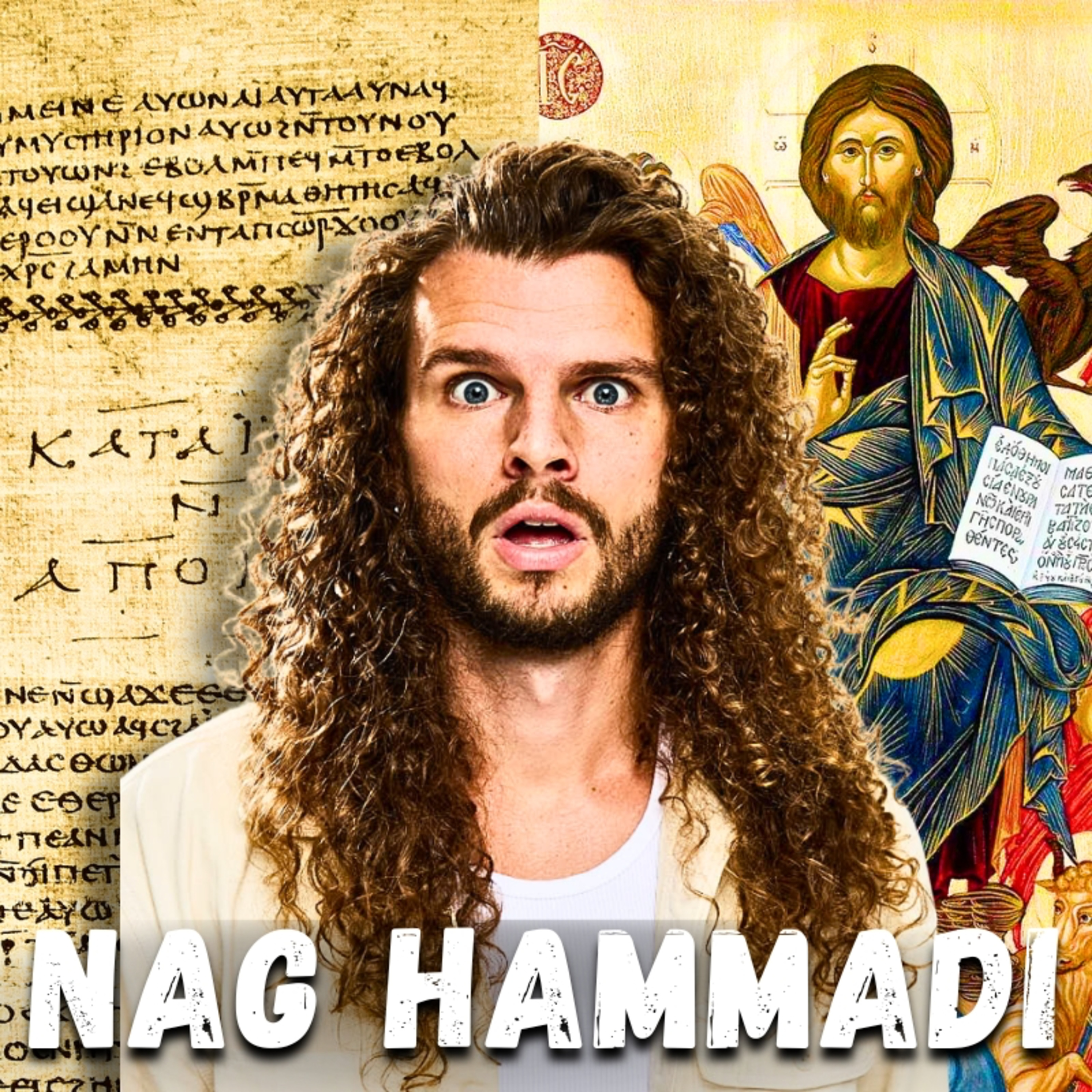
What if I told you that for 1,600 years, a radically different version of Christianity was just buried in a jar under a cliff in the middle of nowhere? And we're not talking about, like, a slightly different translation of the Bible. This is a version where God has a mother. The creator of this world is actually an arrogant monster. The Garden of Eden was all a setup. And that Jesus didn't suffer on the cross. He stood off to the side, floating in spirit form, and laughed at the Romans for thinking that they could kill him. I know that this sounds crazy, but. But for centuries, the church told us that the four gospels, Matthew, Mark, Luke, and John are the only ones that we need to look at as biblical canon. But in 1945, a peasant looking for fertilizer accidentally smashed open a clay jar and unleashed a library that showed that many of the thoughts around early Christianity and all the Abrahamic religions was far more diverse than the later church leaders admitted. He found what they call the apocrypha, the books later church leaders would condemn as heresy and exclude it from scripture for very obvious reasons. This and is the story of the Nag Hammadi Library. If you are interested in early religious texts, what people were talking about at the time of the death of Christ, and all the different competing theories that were going around in the region, this is the episode for you. So sit back, relax, and welcome to Religion Camp. What's up, people? And welcome back to Religion Camp. My name is Mark Gagnon, and thank you for joining me in the my tent, where every single Sunday, we explore the most interesting, fascinating, and controversial stories from every religion from around the world, from all time. That's right. Right in this very tent. Every single Sunday, I like to do deep dives. I grew up, you know, Catholic, so I'm interested in what people believe. And I always say on this show, it's not possible to understand a people without understanding the God that they worship. I truly love humanity, and I love connecting with my fellow mankind and womankind on. On this planet. And I think one of the best ways to do that is to understand the culture that they grew up and how religion interfaced with that culture. So I'm trying to figure out what everyone believes out here, and this is my attempt to do just that. And oh, boy, we got an interesting one. But before that, I just want to thank you guys for being a part of what we're building over here at Religion Camp. Truly, we're almost at 100k. Almost. Are we getting there? Or maybe we already are. I don't know, middle of the chart. It's right where we like to be. Exactly. That's. That's my sweet spot. You know what I mean? You don't want to be too big, but you don't want to be too small. You know what? Once we hit 100k unsubscribe, who cares, right? Just nothing matters, you know what I mean? Please don't. I won't get paid. Also, that, by the way. Guys, we have Christos here. How are you, pal? What's going on? We've heard enough from you. Okay, Christos, you snuck in there early. Dude, you snuck in early. I didn't even think it, man. I just heard your sultry voice and I was like, oh, it's nice to be in the tent with Christos. Well, I'm glad we got that out of the way. We're talking about the Nag Hammadi Library. Now, let me just say a few things. One, I find these texts fascinating. As a Catholic and some of the group religious, I don't subscribe to them in a literal basis, but I do think it gives an interesting look to the competing theories that existed around the formation of the early church. And I just. I just love ancient documents. I don't know what it is, dude. Just holding an old. Actually, you know what? I have an ancient document right here. This was given to me by the one and only Wes Huff. Do you know what this is? This is Nag Hammadi Codex 2. This is the end of the Apocryphon of John and the beginning of the Gospel of Thomas. How much does that go for? Well, this is a replica. Okay, so. But it was hand done and created by the legendary Wes Huff himself. Yes. Wes literally made this by hand. Got the ancient papyrus that. I think he either bought old papyrus or he formed it himself. I don't even really know. And he hand scribed this just as they would have done, you know, 1500 years ago. Pretty crazy. Awesome. What a legend. And no better time to bring that up than today while we're diving into it. Now, if you don't know anything about the Nagamati Library, if you don't even know what that is, if you think it's an actual library with like a bunch of books somewhere in, like, Cincinnati, you're wrong. But don't worry, that's what I thought too. And I'm going to be breaking down exactly what it is and what's actually in some of these old ancient pots and what the text actually says, what you do with that Information. Well, that's up to you. Well, that's up to you. So let's jump in. Without further ado, also, let me just one other disclaimer. Sorry. I'm not a. I'm not a theologian. I'm not an expert. I'm just a curious guy that's a comedian that likes to just read stuff and learn in real time. My thought is I'm going to be learning anyway. I'm going to be doing this stuff in the comfort of my own home, so I might as well do it with you guys and we can all be a little less dumb together. So if you want to understand the Nag Hammadi Library, you have to know that it didn't start with, like, a team of archaeologists, like, with an idea and a beat and going in and figuring it out. It started with a murder. Yes. The year is 1945, and in a small little village called Nag Hammadi, a local Egyptian farmer named Muhammad Ali al Saman and his younger brother Khalifa were having a bad week. A few weeks before their father had been murdered, and the brothers were out for revenge. They were literally sleeping with weapons. They were thinking that maybe they'd be next. They're trying to get the person that killed their father. They're trying to figure out who did it. It's a whole debacle, okay? But on this specific day in December, they took a break from that anger and that frustration, and they took their camels out to the cliffs of Jaba Al Tarif to dig for Sabaq. Now, Sabaq is basically like this super, super rich, fertile soil that is on the base of the mountain that farmers often will use for fertilizer. So they're out there, they're digging, and they're using these. These pickaxes, basically. And all of a sudden they hit something and it's pretty hard. And the brothers are now clearing away dirt and they find this red jar, like, basically like a pot, and it's about, like 2ft tall. Some stories early on were saying that it was like five or six feet. It seems like it's, you know, two feet and it's sealed shut. And it's basically like, you know, this kind of, like, asphalt type of concoction that's, like, solidified and the whole thing is sealed. But you have to remember he was terrified. Now, in order to understand why this guy would be terrified, you have to understand Muhammad is a Muslim. And in their belief, specifically, like the local folklore around Egypt at the time, there was this idea that These sealed jars, any type of like ancient seal jar, might contain a spirit. Now we've done a whole episode on like jinns and what jinns are, but just for a truncated version. Basically in Islam there's this idea of like a third category of being in. In Islamic theology, you basically have humans created from clay, and then you have angels that are created from light, but jin are created from smokeless fire. So this means basically they live in a parallel world right alongside us, having families and societies. And sometimes they're Muslim and sometimes they're not. And the scary part is that you don't really know if the jinns are good or bad. And if you find a jinn sealed in a jar and you break it free, you might unleash, unleash a curse basically that haunts you and your whole family forever. So this guy Muhammad, he's a farmer in 1945 and he's digging around and he says, okay, maybe there's a gin in here, but maybe there's gold, maybe there's treasure, okay? So they're thinking, they're sitting there and their curiosity is getting the best of them. So Muhammad raises his pickaxe, he smashes the jar, and to his amazement, he begins to see like dust and papyrus fragments, like floating up into the air. And for a split second he thinks he's like, oh, dude, did I find money? Is it gold? What is it? But it's not. It's tiny fragments of papyrus basically disintegrating into dust. Now, thankfully for all of us and you know, the fans of ancient texts all around the world, not everything turned to dust. Now sure, the jars didn't have coins, but it did have maybe something more important. 13 basically bound kind of books now, what we call the Nag Hammadi codices. And he was pretty disappointed that he didn't find treasure. So he wraps these books basically into his tunic and he heads home. And this is where the story goes from very cool to very dark. You see, Muhammad basically grabs these priceless 1600 year old books and then dumps them into a pile of straw like next to his oven. And his mother needs to, you know, basically use fuel to make bread. And she sees these dusty old papers laying on the ground. So she grabs a handful of these loose pages and, and tosses them into the fire just like, yeah, this is like old paper that they found that we can use, you know, to cook our food. Now, it's crazy to think that we'll never know what was on those pages. Some people say it might have been missing letters from Paul, maybe sayings of Jesus that we've never heard or never read. Maybe it's some type of key to understanding this entire library, the people that put it there. And it's just gone. But the chaos doesn't stop there. Remember that blood feud that I had mentioned? Well, a few weeks after finding the books, Muhammad and his brothers finally found the man that killed their father. So they attack him. They basically stabbed him to death. And that was the revenge that they wanted against their father. There's some later tellings that have gone around, like rumors that, like, he ate the guy's heart. I don't personally think that's true, but it's out there. Okay? Now, because of this revenge killing, the police in the local area start searching around, trying to figure out who did it. They start raiding villages and homes looking for the weapons and the people that were involved. But Muhammad, as you can imagine, was terrified, right? He's like, I just killed this guy. I have revenge. I had a good reason. But he's not just afraid that they're going to find the weapons. He knew that if the police searched his house, they would find these weird ancient texts and that they would keep searching until they found the weapons. So he decided, you know what? I don't want these texts around. I'm going to get rid of the evidence. So he gave the books to a local priest for safekeeping. And from there, the book somehow ended up in the Egyptian black market being sold for pennies, basically, and getting traded for, like, cigarettes or, you know, whatever else these travelers had that they wanted to trade for. So ultimately, these codices went from a Coptic priest to a history teacher, to a gold merchant. Eventually, one of them was even smuggled out of Egypt and ended up into the hands of the famous Carl Jung Institute in Switzerland. And it took years for the Egyptian government to finally track down all the fragments and seize them. But when scholars finally sat down to translate these texts, they realized why someone or some people had buried them in the first place. What's up, guys? We're gonna take a break. Cause I gotta give a shout out to Brunt Workwear. All right? These boots surprised the hell outta me. Now, if you've ever worn work boots, you know the deal. You can either get durable or you can get comfortable. All right? Either they're durable and they destroy your feet, or they're comfortable and then they last for like a week and then they fall apart. But with Brunt, you don't have to choose. I put these on right out of the box. Sorry, they're a little dirty cause I was shoveling snow with them a little bit earlier. They have no break in you, you can put em on and they fit immediately, they're comfortable immediately, and they're extremely durable immediately. Now look, I'm not a blue collar guy, all right? But Brunt was started by that guy, Eric Girard. And because these big workwear brands stopped listening and turned into like fashion companies, so he built an actual boot for people that actually work. And it shows. These things are built incredibly well. They're waterproof, they have a safety toe, soft toe, pull on, lace up. Whatever job site you're on, whatever place you're working at the they've got what you need and they stand behind it because you can wear them to work and if they're not right, you can send them right back. That alone tells you how confident Brunt is in their products. So if you're sick of uncomfortable boots that don't last, or extremely durable boots that hurt your feet, Brunt is the way to go. I'll be honest, it's freezing cold in New York and it's snowing. These have been incredibly good for me to be shoveling snow outside. So right now, if you are listening to this program, I got great news for you. You're gonna get $10 off when you use the code Camp. You're gonna go to bruntworkwear, that's B U R N T.com camp. Use that code at checkout and you're gonna be getting $10 off your order. And if you don't like them, hey, no harm, no foul, you send them right back. That is how confident Brunt is that you're gonna love these boots. Now let's get back to the show. So what exactly was in this jar? Well, the books contain 52 texts in total. Some were poems, some were what they would call secret gospels, some were like weird sci fi descriptions of the universe. But the vast majority of them, you could say, belonged to a school of thought that we could classify as forms of Gnostic Christianity. Now if you went to Sunday school or, you know, grew up Christian like me, you may have never heard of the Gnostics or if you did, you know, maybe you listened to camp and you've, you've seen our episode on the Gnostics and what exactly Gnostic philosophy is. But the non commodity library actually lets us look into what their beliefs were from a non biased perspective. And their philosophy is honestly kind of like the plot of the Matrix. So again, there's no, like, really clear, pinned down version of, like, here's what Gnostic thought is. And it's kind of getting reformed into the modern age where there are like, Gnostic churches and temples getting propped up. But in short, I guess you could say the Gnostic worldview is basically that the mainstream church taught that God created the world, and he looked at it and said, this is good. But the Gnostics look at the world and saw disease and war and dead bodies and suffering. Children basically said that this place is a disaster and a good God wouldn't make this. So they came up with a different explanation. And now this takes us to one of the first major books from the Nag Hammadi, basically called the Apocryphon of John. This is the codex that I pulled up from Wes Huff. I have the the end version, a replica of it. And it's also called the Secret Revelation of John. And in it, it basically says that the true God is a pure, invisible spirit and is way too perfect to touch messy things like dirt and matter. But in the spirit realm, there was a divine being named Sophia. Now, Sophia is often associated with wisdom because Sophia means wisdom in Greek. Now, Sophia wanted a child, but she made a mistake. She tried to have a child without her partner syzygy, and without the permission of the ultimate spirit. Now, this is a truncated version, we have a whole episode on this. But the result of this kind of bastard birth was terrifying. She birthed a deformed beast known as Yaldabaoth, AKA the demiurge. Sophia was so ashamed of this bastard child that she cast him out of the divine realm and hid him in a cloud. But Yaldabaoth was powerful. He stole some of his mother's divine power because he comes from this basically God goddess lineage. And Yaldabaoth looked around in the empty darkness and saw that he was alone and, and said, I am God. There is no other God beside me. Now the Gnostics would say, like, hey, this is pretty similar, right? Because literally in the Old Testament, in Isaiah, it says, I am the Lord and there is no other besides me. There is no God. So the Gnostics are trying to understand this, you know, these texts, this Old Testament that's going around and trying to fit it with what their worldview and all the suffering that they see around them. So the Gnostics are basically saying that the God of Genesis, the one who gets jealous, who wants animal sacrifices, who flooded the world, wasn't the true God. It was a creation of a lesser God. And this is literally just a cosmic mistake created by this Sophia girl that wanted a kid. And then Yaldabaoth is. They created and then creates a physical world which is the world that we live in. I know it sounds crazy, but this is more or less the thesis of Gnostic theology. And so human beings exist almost as like slaves in this simulator. But here's a twist. When Yaldabaoth created Adam, Sophia the mother secretly tricked Yaldabaoth. She breathed her own divine spirit into Adam. So while our bodies are made by the false God, our souls come from the true God. And this is what Gnostics call the divine spark. Gnosticism focuses less on sin and more on ignorance as the root problem in these texts. Like sin in this reality doesn't really matter. The real problem is ignorance. They believe that we are essentially asleep and that we are just all kind of like fleshy robots roaming around. But inside of us we have a divine spark and we've forgotten who, who we are. We think that these bodies and this material world that we live in is actually all that there is. But in reality, we're serving this angry creator. And they even have a belief in Jesus. And in these texts, Jesus doesn't show up to die for our sins or to redeem us. He's a messenger from the true realm, from the actual good gods, not Yaldabaoth the demiurge. And Jesus is actually here to wake us up and give us knowledge, which is why they're called the Gnostics. Jesus is here to give us Gnosis in order to escape this matrix created by Yaldabaoth. These ideas clash sharply, obviously with, you know, church doctrine. And you can't really believe both, to be honest with you, because if the God of the Bible is actually a bad guy and you yourself are actually divine, then all of mainstream Christianity kind of goes out the window. So what is actually in the text? Where does this come from? Maybe the most famous text found in the Nag Hammadi library is called the Gospel of, of Thomas. This is the book that scholars really went crazy over, because unlike Matthew, Mark, Luke and John, the Gospel of Thomas has no narrative. They call it a saying's gospel. There's no Bethlehem or miracles or crucifixion or resurrection, anything like that. It just starts with one line. It says, these are the secret sayings which the living Jesus spoke in, which Didymus, Judas, Thomas wrote down. Now again, who's Didymus, Judas, Thomas? No one really knows. Didymus means twin in Greek. And the idea is maybe this is Thomas the twin. No one exactly is sure, but basically the whole thing is literally 114 sayings back to back. And the Jesus that's found in the Gospel of Thomas is pretty different from the one that is found in the Gospels of Matthew, Mark, Luke and John. It's almost more Zen, almost more like Eastern, you could say. And in the Bible, Jesus talks a lot about the kingdom of God coming in the future, a time when, you know, the world ends and God rules. But in the Gospel of Thomas, Jesus says that the kingdom is already here. Human beings are just too blind to see it. Saying 1:13 says his disciples said to him, when will the kingdom come? Jesus said, it will not come by waiting for it. It will not be a matter of saying here it is or there it is. Rather, the kingdom of the Father is spread out upon the earth and men do not see it. He's essentially saying, stop waiting for the Apocalypse, stop waiting for the end time, stop waiting for Messiah, and stop looking at the sky. God is right here in the dirt, in the air, and ultimately in you. Now, again, this is heretical to, you know, Christianity and Islam and most of the Abrahamic religions, but in a way, it kind of touches on something from Eastern philosophy, from Hinduism, this idea that there is a God spark kind of within us that can be, you know, tapped into through meditation. And then there's saying 77, which is probably the most famous line in the entire library. Jesus says, I am the light that is over all things. I am all. From me all came forth, and to me, all attained. Split a piece of wood, I am there. Lift up the stone, you will find me there. Now, this is what some people refer to as pantheism, which is a belief that God isn't in a single figure, but literally the consciousness that undergirds the entire universe itself. If you split a piece of wood, you don't find termites, you find God. And as a result, you know, God exists in all things. This is, again, an idea that's echoed in a lot of Eastern philosophy. Like Shintoism, for example, found in Japan, has these ideas of the kami, and basically, you know, mountains and storms all contain a spirit of the Creator. Ultimately, within it and within all people, we have this sort of spirit, this spark that exists in humankind and all things. So you got to think the church obviously didn't like this, right? You come to the church to find Jesus, and you take the Eucharist and, you know, if Jesus is basically everywhere and God is, you know, found in all things, it kind of undercuts a little bit what the early church was trying to do. Now, this radical belief takes us directly to one of the most controversial texts found in the entirety of the Nag Hammadi library. And this is the Gospel of Philip. Now, for centuries, many people have said, and critics of the church would say that the church downplayed the status of Mary Magdalene, saying that, you know, she was a woman of the streets, a prostitute. But the Nag Hammadi texts in many different places would elevate her above the male disciples. And we actually did an entire episode specifically on the Gospel of Mary Magdalene and what's in there and the secret teachings that Jesus allegedly told her and, you know, all the stuff that he did to basically elevate her. Now, you can check that out. It's a different episode, but right now we're focusing on the Gospel of Philip. Now, fun fact. This is the book that gave Dan Brown the idea for the Da Vinci Code. So Philip describes Mary Magdalene as kinonos of Jesus. And this is the Greek word that can mean a partner or a companion or even a spouse. Now, again, this is completely apocryphal, but this is what is inside this specific text. Is it actually written by Philip? Who's to say? This is just what it's called. Now the text says, and the companion of the Savior is Mary Magdalene, but Christ loved her more than all the disciples and used to kiss her more often on the mouth. Now, before we get too crazy, we have to address one thing. There's actually a hole in the papyrus right where the word mouth is. So the papyrus literally says, used to kiss her often on her blank. Could be forehead, who knows? Many scholars think that the missing word is mouth based on the grammar and the context clues. But the text is damaged. So technically no one. It could have been her hand. No one knows. But regardless of where these kisses were, male disciples were jealous. The text says the rest of the disciples were offended by it and expressed disapproval. They used to say, or they said to him, why do you love her more than all of us? And Jesus answered them with a riddle, basically implying that Mary understands the light better than they do. Now, to modern day Gnostic philosophers and people that, you know, take these texts more literally, they would say that this paints a picture where, you know, the early Christian groups would, you know, give women more prominent spiritual roles, which is something that the later church would have tried to erase. Again, I personally disagree with that, but that is where that comes from. Now, if you want the most like Anti church moment in the entire Nag Hammadi library, you have to look at the Apocalypse of Peter. So we all know the crucifixion story, right? It's the cornerstone of Christian faith. Jesus suffers for humanity. He dies on the cross. And that sacrifice is what saves all humankind. Now, some Gnostic texts reject the idea that the divine Christ could suffer physically. Again, you have to understand that the Gnostics are thinking, okay, if Christ is this messenger basically from the ultimate Spirit, this Monad, the supreme God and comes to earth, how could this supreme spirit have a physical form? Wouldn't that make it the same as the creation of the demiurge? So they basically tried to come up with a story to square that that hole. So, you know, in the text, the narrator sees the crucifixion happening. He sees Jesus being nailed to the cross, but then he sees another Jesus standing above the cross, floating and like, literally laughing at the entire event. And the narrator asks, lord, who is this one glad and laughing on the tree? And is it another one whose feet and hands they are striking? And the Savior replied, he whom you saw on the tree, glad and laughing, this is the living Jesus. But this one, into whose hands and feet they drive the nails, is his fleshly part, which is the substitute being put to shame, the one who came into being in his likeness. Now this is called docetism, the belief that Jesus didn't have a real physical body, that he wasn't fully human, or that the, you know, divine spirit basically left the body before the pain actually started. Because basically the text is saying the Romans thought that they won, that they killed Jesus Christ, but the real Jesus was standing right there laughing at how stupid they were. Because you can kill flesh, but you can't kill the spirit. Now again, this is a controversial verse that is not accepted within mainstream Christianity, but it exists in the Nag Hammadi codices. Now, there's one more text that we have to talk about because honestly, it's unlike anything else in the ancient world. It's called the Thunder Perfect Mind. It's a poem spoken in the voice of a female divine power. And to be honest, it's fascinating. This female divine power describes herself in the text, saying, for I am the first and the last. I am the honored one and the scorned one. I am the whore and the holy one. I am the wife and the virgin. I am the mother and the daughter. I am. I am the silence that is incomprehensible in the idea whose remembrance is frequent. Pretty bold Claim. I mean, she's literally claiming to be everything dirty, clean, sacred, profane. I mean, in the Bible, you know, women seem to be painted kind of in a specific way, right? You're either, you know, the whore of Babylon, you're evil, or you are the Blessed Mother, you know, blessed Virgin Mary, this pure, idyllic woman that is born of an immaculate conception with no original sin. But this text says that the divine feminine is present in the brothel just as much as the temple. And naturally, the early church structure, according to the Gnostic, critics would basically say that this idea of an empowered woman that is all things, the creator, mother goddess that precedes all creation, has no room. And, you know, they got rid of that text completely. So the big question is, if these books were so important, you know, to many of these early, you know, church thinkers or these early, like, proto Christians that are around the region, why are they buried in a jar under a cliff? Well, for the first 300 years after Jesus, Christianity was kind of in, like, a Wild west phase. There's no New Testament to speak of. Like, you can't go to a hotel and open up a drawer and find a Bible. And there's no, you know, organized church structure in the way that we see it today. Of course, there are, you know, smaller churches and congregations of people gathering to spread and discuss the life of Jesus Christ, but it's not how it is. Now, one church in Syria might read the Gospel of Thomas. A church in Rome might read the Gospel of Mark, and a group of Egypt might be reading the second revelation of John, trying to understand what it all means and if it squares with their philosophy. And then came Emperor Constantine. He converted to Christianity and he wanted unity. He didn't want 50 different versions of Jesus. And, oh, there's this Jesus, and then there's this God, and then there's the feminine creator God that created all things. He wanted one religion across the entire empire. And the man who kind of swung the hammer was the powerful Bishop of Alexandria, a man named Athanasius. Now, Athanasius was an orthodox Christian who believed in the resurrection, the four gospels, Matthew, Mark, Luke, and John, and of course, the authority of the church. Now, I say orthodox Christian, like he was much more in the mainstream understanding of Christianity today. Now, this guy was not a fan of the Gnostics, nor another group that was around the time called the Aryans. The Aryans were a group of Christians who believed that Jesus was created by God rather than being God himself. And he called these guys all sorts of names, Wicked Demons, antichrists, all sorts of stuff, and basically labeled them all as heretics. Then in the year 367 A.D. athanasius wrote a famous letter called the Festal Letter. And in it, he listed the 27 books that he approved of. Matthew, Mark, Luke, John, Acts, Romans 1 and 2 Corinthians, all that stuff. And he basically said, these are the foundations of our faith. This is the. What he says the fountains of salvation. Let no man add to these, neither let him take ought from these. And this basically became the first time that we ever see a compiled list of the New Testament that we know today. But it was also a death sentence for every other book because Athanasius strongly condemned all these other texts as heretical, that they ultimately deviated from the true teaching of Jesus Christ. They didn't tell an accurate picture of creation, who God is, and basically that they were just in conflict with what it means to be a Christian. So if a book wasn't on this list, it was heresy. And heresy had a lot of serious political consequences. What's up, people? We're going to take a break really quick because I got to tell you a little story. All right? This is a story about a man who turned 29 years old, and slowly everything started to fall apart. Not in, like, a dramatic way. Life just got more difficult, all right? You know, the same workouts, all of a sudden, not getting the same gains, you know, in the musculature area, same diet, all of a sudden, just, you know, still being a little bit soft around the middle. And around 2pm every day, just feeling terrible brain fog, you know, and not to mention, you know, hair falling out, thinning. And that man is my friend, David Sanchez. And so naturally, what did he do? He started to panic. Google. Okay? He was like, low testosterone. What do I do? What do I do? And it was terrifying because do doctors act like, oh, the solution's casual, like, yeah, just inject yourself with testosterone forever. Use needles, dirty old needles from the streets of Kensington, Pennsylvania, Philadelphia, whatever. All right? But then you actually look at, like, trt, you know, it's thousands of dollars a year, could have fertility issues. It could shut down your body's natural production. I mean, yeah, you look better, but it might actually leave you worse in the long run. And that's why there's something natural, something I found called Mars Men. Yes. And I've been taking it consistently, and some men have actually reported, I mean, better energy all day, better focus, stronger lifts. Not just a spike, but a steady, consistent drive. And, yeah, it's not trt. There's no needles, no synthetics, no dependency. It's designed to support healthy testosterone using real ingredients like zinc, boron, you know, Tonga ali, things your body actually recognizes and needs to fuel. Test testosterone use. Yeah, I genuinely like it. I just wake up in the morning, toss a couple pills back and I start feeling better and so can you. With Mars men, I feel great. And you should start feeling great, too. And the way you do that is you go to mengotomars.com and for a limited time, the listeners of this program are going to get 50% off for life plus free shipping and three free gifts@ Mengotomars.com that's right, use the promo code camp. And you're going to be getting all that and more. And better yet, 90 day money back guarantee. If you don't like it, just be like, hey, this isn't for me. Send it back if you feel no difference, which odds are you won't because 91% of men say that they feel more energetic when they're taking it. But maybe you're in the 9%, you send it back, money back. I'm telling you, there's no reason not to try it. And after you purchase, they will ask you how you heard about them. Please say you heard about it from the good old folks here at camp. It really helps the show and it keeps the fire burning. Let's get back to it now. Nearby the cliffs of Nag Hammadi, there was a monastery founded by a man named Saint Pacomius. The monks that were there were, you know, technically within, you know, the mainstream Christian faith. But they clearly had a secret interest for these mystical texts, for these heretical books that, you know, could potentially get them killed. But they thought they were too fascinating to destroy. So they had copied them. They bound them in leather and they studied them. They referenced them, perhaps not in an official capacity or teaching them, you know, to their congregations or the people that went to them for information, but they just wanted to know. But when the order came down from the bishop to canonize specific texts and basically cleanse the library, these monks faced a choice. Do they burn the books they love or do they disobey the bishop and keep them around in, you know, a secret library somewhere? But they chose a third option. They gathered all of these forbidden texts and sealed them inside a heavy jar to protect them from insects and water and, you know, exposure from all the elements. And they hiked out to the base of the Jabal al Tarif cliff and they buried them they probably thought, you know, we'll let the heat die down and let things kind of chill and then we'll come back for them in like a year or two and we'll just kind of pull them back to our library and be able to just reference them. But they never went back. Maybe the monks died, maybe they forgot, maybe they got persecuted. No one really knows. But either way, the jar sat there across all these empires. The Roman Empire came and it went. Islam rose and swept through Egypt. The Crusades, two world wars. And for 1600 years, the jars sat in the same exact spot, hiding in the darkness, hiding this heretical secret version of Christianity that no one had ever seen since they buried them until a man with blood on his hands, ultimately, when looking for fertilizer. Today the Nag Hammadi texts are in the Coptic Museum in Cairo. But their discovery did something that kind of changed how many people feel about the early church. It destroyed kind of this, you know, linear thought of, you know, a completely uncontested original Christianity. Before 1945, we only knew about the Gnostics because their enemies would write about them. So people that opposed the Gnostics, many of the church fathers would say that, you know, these Gnostics are crazy. They say this, but that's BS because we believe this. You know, it's like trying to understand a person by only reading, you know, what their opponents are like, you know, what their ops would write about them. But now we actually have the text themselves. We actually know what these early Gnostic thinkers would actually say. And it gave a really different kind of path to salvation. Now I will say that the early church fathers that would write against the Gnostics actually did a good job representing their philosophy, because you can read the Nag Hammadi codices and you can also look at what the Gnostic critics would write. And to be honest, it seems like the arguments are pretty similar. Right? But what's interesting about these texts is that they present a version that was less about rules and more about almost like a spiritual experience, uncovering the spark within yourself that can be discovered through knowledge. Now as you can see, that's an issue for how the Church saw itself and what ultimately Christianity became. And you don't have to believe what they wrote. I mean, I don't. You can think that this Yaldabaoth idea is a crazy sci fi invention and the fallen angels are all a myth, but the Nag Hammadi library to me just shows a really interesting view about the different ideas that were circulating in the region at the time. And I just personally find them so fascinating. And that, my friends, is an abridged story of the Nag Hammadi Library. I find it so fascinating. There's so many things in the Gospel of Thomas. Like, there's a weird gendered line. Would you mind pulling this up? Like, you could search, like, Gospel of Thomas, gendered saying, and you'll find it really quick. But there's so many things within it where you're just like, huh? Like, it has the feeling of reading like an ancient text. Like, it has sort of like the cadence and the flow, but it doesn't have, you know, it doesn't match up with what I understand to be the gospels or what I understand to be about the Bible. But I just find them so interesting to write, to read about. It's like reading like Da Vinci Code, which you can understand how they, you know, got the inspiration how Dan Brown, like, kind of, you know, was inspired to write it, but it's just fascinating to read about. What do you have the. The verse there? So Gospel of Thomas 1:14 says, Behold, I shall lead her, that I may make her male in order that she also may become a living spirit like you males, for every woman who makes herself male shall enter the kingdom of heaven. So people are reading this now being like, was this Gospel of Thomas talking about the trans? What are they talking about, the LGBTs? They're like, dude, you get. What are you talking about? You can switch your gender, yada, yada. Now, I've heard many modern church critics be like, no, this is like, they would call this like a Satanist text. They'd be like, oh, this is like, inspired by the. The evil one. That like this androgynous sort of gender mixing is, you know, completely, you know, completely heretical to what the foundations of what we understand the church to be. I don't know. I'm not a theologian, I'm not a religious scholar. I'm just someone that's fascinated by these texts. We need to get someone that's an expert in all these secret gospels. They say Ammon Hillman. I don't know if you've ever heard him. So many commenters want Aman Hillman. Yeah, I've watched him on Danny Jones's pod and he's so fascinating. I mean, again, I. I think some of the stuff, I don't agree with his perspective, but just the way he. His. His perspective and the way he breaks stuff down, I just find to be. It's just something naughty about it to Me, I don't know what it is. You also had Wes Huff on flagrant, so go check out that episode. Did he reveal anything about Nag Hammadi? We talked about it a little bit. Again, he kind of comes from more my school of thought, which is like, these are sort of interesting kind of things written down by, you know, monks or spiritual people early on that were, you know, kind of like inserting their own philosophy into, you know, blending it with Christianity to make some type of new thing. He thought enough about it to give you a replica. I think he gave it to me because I had sent him an episode that I did on Enoch and. Or maybe it was even about the Nag Hammadi library. And when he made it, he was like, yeah, here you go. Okay. But I think he's. Again, I don't want to speak for Wes, but my assumption is that he has a similar sort of, you know, dastardly curiosity in the Nakamoti codices. I mean, it is fascinating. 1600 years ago, these texts were being passed around and read and copied and then completely buried, only to be found by happenstance by a guy digging around near a mountain. Crazy. So ChatGPT wants to make sure that we clarify that they may not have been buried by the monks. It's purely speculation. Right. Yeah. I should probably make that more clear. Yeah. This is. The theory is that they were buried by these monks, but no one really knows. No one knows why they were there, who put them there. Next episode, rogue monks. Oh, now, I mean, we really should. I mean, I think we did the Dead Sea Scrolls. I think we did. We've talked about it a lot. I don't know if we did a specific episode on it, but we really should. I mean, what do you guys think? Is there a specific saying from the Gospel of Thomas or any other excerpts from any of these. Any of these texts that you've read or you've heard other people talk about that you should think we should deep dive on? Is there anything that you think that I overlooked or that I missed or maybe that I got wrong? Please drop a comment. I read all of them. If you're interested in history, we do history camp. That's where I do deep dives on all sorts of historical things that have happened in this planet, on this planet? And I also do Camp Yagnum, where I do deep dives with actual experts that are actually smart people, not just goofy little comedians like myself. And, yeah, I also do religion camp, like what we're doing right here. So if you Just like the religious vibe. Congrats, you're in the right place. We do this every single Sunday, so make sure you comment, like subscribe. And once again, I want to give a shout out to that dude 6 UID00 I mean, I'm just like so stoked on that. I, I read this on a previous episode, but basically he commented, I think it was religion camp or history camp, I forget which. But he commented saying that, you know, he was dealing with addiction and going through withdrawals and was listening to the pod to kind of get through it, so. And also hated me. Also said that if you keep app and he's going to relapse. So I just want to give a shout out to him. I think that's awesome. I don't know, maybe we do prayer requests. I think that'd be cool. If anyone, if anyone has a prayer request you want to throw out there, you're just going to read prayers? No, I mean just if people want to put them in the comments, maybe read them. You know, if anyone's inclined to prayer, you know what I mean? It might be a nice thing. Okay. And you know, prayers up to Guido 6 UID00 I hope you're doing well, brother, and keep holding strong. I'm proud of you. And for anyone else going through anything similar, there's light at the end of the tunnel. Read Viktor Frankl Man's Search for Meaning. I find that to be a great short little book to understand, to basically just put yourself in perspective and try to deal with difficult times. Whatever you're going through, that's something I do. Anytime I'm going through a hard time, I find it to be very valuable. One thing I always think about is adding purpose to your suffering. If you're suffering, try to find the hope, Try to find the purpose that makes all the suffering possible. Because the only true suffering is. Is suffering with no purpose. Viktor Frankl. Shout out to him. Anyway, thank you guys so much. I appreciate you all dearly. We'll be here every single Sunday. You can check out all their other channels. And if you want to see me on the road, Mark Agnon Live, check it out. God bless you all and I'll see you in the future. Peace.