Loading summary
Transcript11 lines
- [00:01]
A
So good, so good, so good.
- [00:03]
B
New Year New gear. Thousands of fresh active styles are at Nordstrom Rack stores now. Save on top brands like Nike, Puma and free people starting at just $35.
- [00:14]
A
How did I not know Rack has Adidas? There's always something new.
- [00:17]
B
Plus, join the Nordy Club to shop new arrivals first. Unlock exclusive discounts and more. Great brands, great prices. That's why you Rack.
- [00:29]
C
This episode is brought to you by Jack Daniels. Jack Daniels and music are made for each other. They share a rhythm in the craft of making something timeless while being a part of legendary nights. From backyard jams to sold out arenas, there's a song in every toast. Please drink responsibly. Responsibility.org, jack Daniels and old number seven are registered trademarks. Tennessee whiskey, 40% alcohol by volume. Jack Daniel Distillery, Lynchburg, Tennessee.
- [00:54]
A
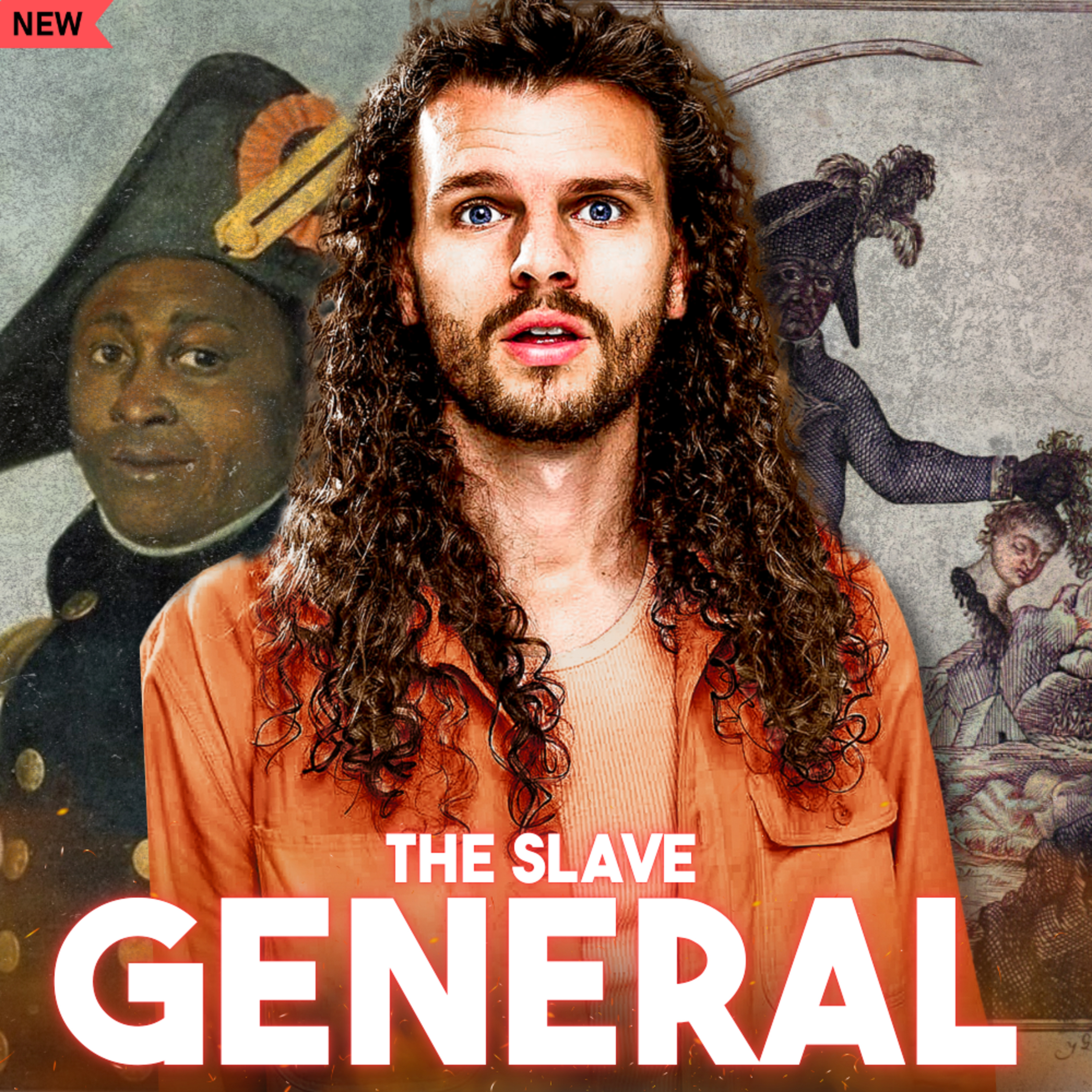
Imagine you're a slave. You spent your entire life working someone else's land under someone else's control for someone else's profit. You own nothing, you control nothing. And the law technically says that you're not a person, you're property. Now imagine you're not only able to break free, but you lead an army. You defeat the soldiers of Spain, you drive out the British, and you take control of the entire colony. And then the most powerful man In Europe sends 40,000 troops to destroy you. This isn't a made up story. This is the actual life of a man named Toussaint Louverture. Story is one of the most remarkable in human history and somehow most people have never heard it. But by the time we are done with today's episode, you will understand why you should have. So sit back, relax, and welcome to History Camp. What's up, people? And welcome back to History Camp. My name is Mark Gagnon and thank you for joining me in my tent where every single week we explore the most interesting, fascinating, controversial stories from around the world. From all history, from all time, forever. Yes, this is my attempt to understand everything that's ever happened on this planet. And there's been a lot of stuff that's been going on. I only got here in the 90s, and yeah, there's thousands of years of conflicts and great leaders and bad people and wars and all sorts of things that I'm trying to get to the bottom of. All right? And you know, we do this every single week. And if you enjoy history, make sure you subscribe. Now, I'm not here in my tent alone. I'm obviously joined by the one and only, the Greek freak chilling up in the treehouse. How Are you, Christos? Doing great. All right, Christos, we don't have time because we have a really important topic to get into. We've had a lot of requests. A lot of people have commented, and they say, I want you to talk about the Haitian revolution. Talk about the man Toussaint l'. Ouverture. So here I am. I've done my deep dive, and I've tried to figure out everything that there is to know about this guy and why he is significant. Now, let me just say my pronunciation is not perfect, all right? We got all sorts of different colonial forces. You got, you know, traditional Haitian patois. You got French, you got Spanish. English I'm barely good at. So there's going to be some words I mess up, but I'm going to try my best. Now, Toussaint Luiture is a fascinating guy, all right, but where do we start? Let me take you to the Caribbean in the 1700s, okay? There is a little island called San Domingue. Now, it is, at this time, the most valuable colony on Earth. It produced more sugar and coffee and cotton than anywhere else in in the Americas. And the French plantation owners that were there lived like kings. Now, underneath all that wealth was literally a nightmare, right? Nearly half a million enslaved Africans were working on the fields. And this is something that I don't even know if Americans really know. So much of the African slave trade went to the Caribbean, and it seems obvious. You're like, now if you look at the Caribbean, you're like, oh, yeah, it's a lot of African diaspora. But as Americans, we think that it all came here. The vast majority was going to the know, South America, to Brazil, going to the Caribbean. And I mean, at this time, nearly half a million enslaved Africans are working these fields, and they are going through the brutality of Caribbean chattel slavery. I mean, they're beaten and branded and worked to death. I mean, it is like, the worst conditions you can imagine, right? The average enslaved person in Sang lived only 21 years. It was one of the cruelest slave systems ever created. And, I mean, we did a video on King Leopold and the whole rubber trade of the Congo Free State in Central Africa under the Belgian king, which. That was brutal. And this is coming close, to be honest. Then, in 1791, something happened that no one thought was possible. The enslaved population rebelled. They rose up, they burned the plantations, they killed their captors. They started a revolution that would last 13 years and reshape the entire Western hemisphere. Now, at the center of this revolution is a man named toussaint Louverture, a man born into chains, born as a slave who would become one of the greatest military and political leaders of his age. The French called him Black Napoleon, which is a fire movie if they haven't made that. His enemies even called him a genius. His people called him a liberator. But here is the crazy part. When the revolution began, Toussaint was 50 years old. He had been free for 15 years and he owned a small farm and he even owned a slave himself. All right, not gonna hold that against him. Not a great thing to do, but, you know, he liberated a lot of people. So I'll give a pass, okay? He had no military training, no political experience, and no real reason to risk everything he had built, right? He had. He had beat the game. He had escaped. So why did he do it? And how did this aging former slave actually defeat three European empires? Well, to understand that story, you first need to understand this place known as Saint Domingue. This colony occupied the western third of an island that the Spanish called Hispaniola. Today that same territory is the nation of Haiti. Yes, Iet. But in the 1700s, it belonged to the French. Okay, I'm sorry, I was born in France. My bad. And France had turned it into this money printer, basically built on human suffering. Now, Saint Domingue society was organized like a pyramid. Right at the very top were like 40,000 white French, you know, colonial dudes, okay? They owned the land and the government and had all the power. Now below them were the free people of color, right? Around 30,000 people, typically mixed race individuals who had gained their freedom but faced constant discrimination. Okay, they could own property and they could even own slaves, but they can't vote. They can't hold office. They, you know, can't sit in the same section as white people in churches and theaters and stuff like that. And then at the bottom, holding up the entire system, was roughly 500,000 enslaved Africans. They had no rights. They were just property, right? They were bought, sold, and just killed at their owners discretion. They were functionally not human beings. Now, this arrangement was brutal, but it was stable, more or less, right? As long as France kept a firm, brutal, you know, grasp from across the Ocean. Then in 1789, everything changes, okay? Revolution erupts in Paris. The French people overthrow their king and declare that all men are born equal and free. Da da da da. French Revolution, look it up. They publish the Declaration of the Rights of Man, one of the most important legal documents maybe ever. And news traveled slowly in those days. But by 1790, 1, everyone in Saint Domingue had heard what had happened in France, and everyone understood the problem. Back in the mother country in France, everyone was talking about how all men are equal and equality and da, da, da, da. So if all men were truly equal, then slavery shouldn't exist. And if that declaration meant what it said, then this entire French colony is built on a lie. So. So white colonialists saw an opportunity, right? Maybe they could break away from France and then just run things by themselves without any of this equality talk, right? They're not going to let some type of French philosopher's idea of equality get in the way of, you know, a good old fashioned brutal slavery scheme. So the people of color saw their chance, too. Maybe they could finally win the same rights as white people. But neither group actually paid attention to the largest population of all, right? Out in the fields actually doing the work. In the slave quarters in the forest where the runaways were hiding, the enslaved people of Saint Domingue were making their own plans. Now, Toussaint was born in 1743 on a sugar plantation known as Breda, just outside the colonial capital of Le Cap. His parents were enslaved Africans, which meant that he was born into slavery. And his name was Toussaint Breda, after the plantation that he was born on. Now, we know almost nothing about his early life. I mean, historical records in general from this period are pretty scarce, and enslaved people rarely appeared in official documents except as a tally mark for a property. But what we do know comes from later accounts, many written after Toussaint became famous. By most accounts, Toussaint was weirdly lucky. His owner, the Comte de Breda plantation owned by the Breda family estate, was, for whatever reason, less cruel than most other plantations. Toussaint was actually allowed to learn how to read and learned how to write. And these were skills that were forbidden to almost every other enslaved person. Toussaint also gained knowledge of medicine and herbs, possibly from some African traditions that were passed down through the enslaved community. So instead of cutting sugarcane, Toussaint worked as a coachman and then as a horse trainer. These were skilled positions that kept him out of the fields, where most of the enslaved people were actually suffering on a daily basis and dying all the time. Then, in 1776, when Toussaint was in his early 30s, his plantation granted him freedom. Now, this is pretty rare, but it's not unheard of. Some of the plantation owners would free loyal slaves as a reward or because they were the plantation owner's own children or something like this. So as a free man Toussaint settled into a quiet life. He married a woman named Suzanne Simone Baptiste l', Ouverture, and they had two sons. He had a small coffee plantation and even purchased an enslaved person to work on his land, which is a strange, uncomfortable fact, like I said before, but it is a documented one. So for 15 years, Toussaint lived this sort of in between life, right? He's no longer a slave, but he's also not truly free, right? He exists in the society that's built entirely on slavery, surrounded by hundreds of thousands of people still in chains. And he understands their suffering better than most people on the island. And on top of that, he also doesn't have the full rights of the colonial class. So when the revolution came to Saint Domingue, Toussaint was 50 years old. He was past the age of, you know, when most people are going to change their life or do something crazy, right? He's approaching like retirement age. He had property and a family and his. He. He was good, right? He was chilling. But yet when the fire started burning and unrest started to actually bubble, Toussaint made a choice that would change the history of this island. On the night of August 14, 1791, enslaved people from plantations across the northern plain gathered in a forest called Buah Khaman, where they performed a voodoo ceremony and they actually swore a blood oath. And the oath was basically that they would rise up together, that they would fight for freedom or die trying. And one week later, on August 21st, the revolution begins. Thousands of enslaved people attacked plantations across the North. They killed their former owners, they burned the fields and the buildings. They freed everyone that they found in chains. And within days, the Northern plain, literally the richest agricultural region in the entirety of the Caribbean, is engulfed in flames. I mean, you can imagine the cost, right? Just the whole thing. They just said, you know what? We out now. The violence is extreme on all sides. Like, of course, the atrocity of this brutal slave regime is terrible, but violence is violence. And the rebels were committing, you know, violent acts against these white families. And when the, you know, white people and the freed people of color would organize a counterattack, they massacred thousands of enslaved people. And by the end of 1791, at least 4,000 white people and 15,000 black people had died. Toussaint did not immediately join the uprising. He moved carefully and protected his family. First, he sent his wife and his sons to safety in Spanish controlled Santo Domingo on the eastern side of the island. He actually helped his former plantation owner escape to the United States. Only then did he free his own slave abandon his farm and slip into the rebel controlled territory. Now, at first, Toussaint served as a doctor and he was treating wounded fighters. His medical knowledge made him really valuable within the resistance. But within months, he had proven himself capable of much more. By 1791, he commanded his own force of 600 men. His skills at training soldiers and winning battles attracted even more recruits. Soon he had 4,000. What set Toussaint apart in his mind was while other rebel leaders relied on fury and numbers, Toussaint was really strategic and really, really smart when it came to war strategy. He had studied European military tactics and he enforced a strict discipline. Unlike many commanders, he showed mercy to his captured enemies. And it was during this period that Toussaint took a new surname. Louverture. And it literally means the opening. Likely a reference to his ability to find gaps in, you know, enemy defenses. And so there he was, Toussaint l', Ouverture, the former slave that was transitioning himself into a general. He also formed a partnership with Jean Jacques de Salinas, a former enslaved man whose hatred of white people, you know, was built on a history of trauma and suffering. De Salinas was brutal and in many ways ruthless. He terrified his enemies. But combined with Toussaint's discipline and political skill, he was very, very effective. And together they controlled most of the colony's northern region. The question now was, what do they do? What's up, people? We're going to take a break real quick because this episode is sponsored by me. Yes. Camp R and D. That is the merch, that is the threads that we'd be wearing around here at the campsite. And we got all sorts of cool stuff. My buddy Zach just cooked up a sick UFO collection. You can go check it out there at Camp R and D. I really appreciate you guys. We had so many people that came through for the holidays and picked up their threads. It's awesome. We got hats, hoodies, T shirts, all that. And if you're still listening to this and you didn't skip through, congrats. You got a promo code? All right, what do we do? Christos? 5% more. How much? 5 more? 10%. 10%. Final offer. You won't go higher? You tell me. What, what do we give them? 12%. All right, we're doing 12% off. Should we go more? Hey, it's your world I'm just living in. Let's round up. 10%. No, 15%. If you use the promo code, Camp 15, you're gonna be getting 15% off. Yes, I think we should also do Camp 10. Just if someone doesn't want to take too much. Camp 10 or Camp 15, those are the only two that are available. And then maybe we send a little something extra to the ones that do 10. If you do Camp 10, maybe there's something extra. No promises, but it's an interesting experience experiment. I just am curious to see what you guys do. Camp 10 or Camp 15 at Camp R D. When you check out, you're gonna be getting those discounts. Thank you so much for rocking with us and wearing the threads. It keeps the lights on. It keeps the fire burning. What's up, people? We're gonna take a break really quick because I have amazing news. I'm coming on the road. That's right. My very first headlining tour. Where I'm going to every city that will possibly allow me to go there. I'm going to Salt Lake City. I'm going to Washington, D.C. and Charlotte, North Carolina in February. Those tickets will be announced soon. You can get all the tickets at Mark Yagnon Live and I'll see you guys there. Let's get back to the show. By 1793, Saint Domingue had become a battleground for three European empires. Right. France was consumed by, you know, their own revolution going on in Paris. The radical government in Paris had executed the king and launched this reign of terror against its enemies. No one had time to worry about a distant Caribbean colony. Spain, which controlled Santo Domingo on the eastern half of the island, saw this as an opportunity. Spanish officials contacted the rebel leaders and offered them a deal. They said, the fight for Spain and we will respect your freedom. Most rebel commanders accepted this, including Toussaint. He became an officer in the Spanish army, leading his troops against the remaining French forces. Now, around this time, the British also invaded, seeing this chaos as an opportunity. And so they seized port cities along the coast. The British wanted Saint Domingue's wealth for themselves. So now the colony was being torn apart by these three different empires and multiple rebel armies. An ongoing conflict between whites and free people of color. It was just chaos. Then something unexpected happened. A French official named Leger Felicite Saintenax arrived with orders to save the colony. Somehow, on August 29, 1793, Saintenax made a radical decision. He declared all enslaved people in French controlled territory free. At first, Toussaint didn't believe him. The French had broken many, many promises and treaties before. But over the following months, the government in Paris confirmed this decree. And in February 1794, the National Convention officially abolished slavery in all French colonies. I mean, this is massive. It changes everything, right? But Spain still practiced slavery, and Britain still practiced slavery. But France, at least for now, didn't. So Toussaint made his move. In May 1794, he announced that he was switching sides, that he was officially fighting for France. This decision was masterclass. I mean, Toussaint's army swept down from the mountains and crushed the Spanish forces. Generals who had commanded him just weeks earlier are now fleeing before his advance. And by 1795, Spain had surrendered its claim to the entire island. Toussaint then turned his full attention to the British. For three years, he wore them down with constant attacks while yellow fever devastated their ranks. And by 1798, Britain was ready to leave. The deal Toussaint negotiated revealed his growing political sophistication. Right. Britain agreed to withdraw and resume trade with Saint Domingue. In exchange, Toussaint promised not to spread rebellion to Jamaica, Britain's slave colony that was nearby. Now, in just four years, Toussaint had defeated two European empires and now controlled the most valuable colony in the Caribbean. With foreign enemies gone, Toussaint faced his greatest challenge. Right. All right. We got rid of the oppressors. How do we build a new society? He could have taken revenge, right? The white plantation owners that had whipped and tortured and killed his own people for generations. Many rebel leaders wanted every white person dead. But Toussaint chose a different path. He invited plantation owners to return and reclaim their land. And he promised that no one would be punished for past crimes. He declared that whites and free people of color and formerly enslaved people would live together, all as equal, for the free population. Toussaint created a compromise. They were legally free. No one could own them. But they had to return to the plantation and work for wages. They would have to be paid. And the beatings were obviously forbidden. And after a period of labor, the they could go wherever it was that they wished. Now, it wasn't perfect, okay? Many free people felt that they had simply traded one form of bondage for another. But Toussaint believed that the colony needed to produce sugar again, or else everyone would starve. If they didn't have any type of export or any type of economy, what would they do? By 1801, Toussaint controlled all of Hispaniola. He even invaded Spanish Santo Domingo and freed all the enslaved people there too. He was rebuilding roads and reopening schools and really trying to restore the economy as best he could in everything but name. He was the ruler of an independent nation, right? It was completely under his control. But remember the French still technically control the colony on paper. And across the ocean, a new, different threat is rising. You see, Napoleon Bonaparte seized power in France, okay, And he dreamed of a vast empire, like a vast something bigger than he could ever imagine, into the Americas, controlling the whole world. And Saint Domingue was central to this plan. And he could not tolerate a former slave controlling one of the crown jewels of the French colonial project. So in late 1801, Napoleon sent his brother in law, General Charles Leclerc, with approximately 20,000 soldiers to retake Saint Domingue. Shortly after Napoleon restored slavery in French colonies, Toussaint's coalition started to crumble. The white colonialists welcomed the French, and the free colored people, still angry over past conflicts, actually joined them in many cases. And even many freed people, frustrated by Toussaint's labor policies, didn't really rally to his defense. And maybe most devastating of all, De Salonest, one of Toussaint's most feared generals, his right hand man, switched sides and joined the French. And after months of fighting, Toussaint negotiated a surrender. Leclerc promised that slavery would not return. And Toussaint laid down his arms and retired to his plantation. But the problem with doing a deal with Napoleon and the French at this time is that it was a trap. In June 1802, French soldiers arrested Toussaint. They shipped him to France, and Napoleon imprisoned him in a freezing fortress high in the Jura mountains. Guards denied him adequate food or heat or any type of medical care. And on April 7, 1803, Toussaint L' Ouverture died alone in his cell. He was approximately 60 years old. Now, before he died, Toussaint reportedly said, in overthrowing me, you have done no more than cut down the trunk of the tree of black liberty in Saint Domingue. It will spring back from the roots, for they are numerous and deep. And he was right. Back in Saint Domingue, this General Leclerc launched a campaign of terror against the black population. But his brutality backfired catastrophically. Desalines switched sides again, and this time there was no mercy. In 1803, his forces systematically killed nearly all remaining white people and in the colony. And the violence was horrific. But so was what the French and their violence had been to the people that were living there. Leclerc himself never saw the end. Yellow fever actually killed him in November 1802. Now, on January 1, 1804, de Salanes declared independence. He renamed the nation Haiti, or Iet, reclaiming the indigenous name that the Taino people had used before Columbus arrived. The enslaved people of Saint Domingue had done what everyone said was impossible. They had defeated a European superpower and won their freedom back. Haiti had become the first free black republic in history and only the second independent nation in the Western Hemisphere after the United States. The country's history since then has been in many ways difficult, marked by crushing debt and political instability and foreign interference and natural disasters. But Haiti never belonged to the French again, and its people ultimately remained free. And none of this would have happened without Toussaint l'. Ouverture. He transformed scattered rebel groups into disciplined armies and outmaneuvered Spain and Britain and France. He tried to build a society where former slaves and former slave owners could live as equals. And that dream failed in his lifetime. But in a lot of ways, the dream matters, right? Toussaint was a brilliant general who defeated European empires and a skilled politician who was able to broker deals and balance impossible forces. And in a world that had shown him nothing but cruelty, he chose forgiveness over vengeance. This was the slave who became a general, the general who became a ruler, and the ruler who died in chains so that his people could. Could be freed. And this is the story of Toussaint L'. Ouverture. I mean, that is a fascinating life. Toussaint L'. OuVERTURE. I mean, first off, sick name, right? I think we can just get that out in the open. Be like, yeah, I'm gonna forget my plantation name. I'm. I'm the opening. I'm the gap finder. You know what I mean? I'm gonna crack heads anywhere I can. Don't even give me an opening because I'm gonna be cutting up in the paint. I mean, that's just awesome. Secondly, he's like a. Like a ride or die kind of dude, right? Like, even when the whole revolution breaks out. First off, he's what, 50? He does not need to be doing this. Like, he has children. He has a wife. He's got, like, a good life brewing. Like, he could just kind of flee. Like, he got his former owner out. Like, his former plantation owner, he got him out. He got his kid and his. Or his sons and his wife. He got them free. Like, he did as much as he could to take care of the people around him. And then he was like, all right, I'm choosing up. I'm going to bang for my people. That's awesome. It's almost. It's interesting, the relationship between l' Ouverture and Desalinas. It's an interesting paradigm because one dude is, like, diplomatic and Peacekeeping and strategic and really smart and sort of, you know, calculated. The other guy is, like, brutal and fierce and sort of, you know, final. Like, he exists. It's. You know what it is? It's very similar. I wonder if people talk about this. I'm sure they do, but, like, MLK and Malcolm X. Because MLK is like, look, we can have peace and we can have unity amongst all of our people, and da, da. And we can all live as one. And it's like a very, like, impactful, empowering message. And the Malcolm X energy is just like, nah, bro. Like, we got to run our own. Like, we got to reclaim, like, our vibe. Like, we can't be fraternizing. Da, da, da. I mean, I'm probably bastardizing MLK or Malcolm X's platform, but, like, the energy feels different, you know what I mean? And while, you know, it's an really. That's actually a really interesting way to look at it. I wonder if that maps. I mean, if there's someone that knows more about this, please feel free to comment. But, like, you have MLK that's like, you know, like, Luvature is in there being like, yeah, let's just be diplomatic. Like, let's all live in peace. But then when the French come back, who welcomes them in the white, you know, colonialists. And they're like, hey, let's have the French back. Yeah, the French are good. Yeah. And so immediately they're like, man, you. You guys were never bad at. You guys were just cool because we let you live. And then when Desalines comes into power, after they take Luvature out, he's like, now we're getting rid of all y', all, because you guys cannot be trusted. Because if the French come back, you guys are going to choose up with them and start another rebellion, and we're never going to get rid of this. So he chooses finality to create a country for his people. Because it's interesting, right? Like, L' Ouverture was diplomatic and ultimately kind of got him in prison because he trusted the French. And then what did they do? They. They snaked them. And then Desalines, he was way more brutal and way more violent and way more, like, focused. And it worked. It's just a really interesting, you know, one is admired and one is feared. And it seems like for this resistance to actually work, you needed both. You can't just have one. You needed both of them. You needed, like, the crazy guy that's gonna get done, that's effective, and then you need like, the peacekeeper guy that's able to, like, have a good message and try to keep everything calm and make everyone happy. And. Yeah, it's like, a really interesting proxy because, you know, MLK and Malcolm X like, didn't rule a state, but these guys literally did. Like, the only other one in the Western hemisphere after America. Like, that's fire. So I don't know. It's a really, really interesting piece of history. And that Napoleon was, like, so focused on, like, getting it back is. Is so interesting. Then they fought them off and then eventually just created, like, a deal, like, nah, give us our own spot. That's awesome. Is there anything you took away from this Christos? Just the sick hat that he's wearing on the screen right now. Yeah, that shit is swag as hell. Yeah, you got that shit on. That's fire. Hey, with the earrings, with the. I didn't even see the earring. He's got the. He's got the Michael Jordan earring, the one hoop. That's sick, dude. Swag. That's swag as hell. That's fire. I really like that. But, yeah, it's just interesting, right? It's interesting how these things play out because, like, even look at mlk, right? Like, his message of peace, like, is really admirable, but ultimately, like, he dies. Gandhi has a message of peace, he gets killed. Jesus. The people that are like, let's just all love each other and be. Be nice, they just get murked. Nice guys finish last. Yeah. And Desalines, by all accounts, I don't know if he was a nice guy, but he got it done. So what's good? You know what I mean? Like, who's the good guy? It's like, a really interesting paradigm. And the fact that D Selling us, like, shows up with the French, like, I'm curious how that story is told amongst Haitians. I gotta ask my Haitian friends. Like, growing up in Florida, like, is so many. At a certain point when I was doing stand up in Florida, all the comedians I was doing stand up with were Haitian. All of them. And so I'm like, I gotta ask him, like, yo, what do y' all know about this? But it's just such a. It's such an interesting. Yeah, it's just interesting to any Haitians watching. I love y'. All Sapa say and thank you guys for tuning in. I hope I did this justice. If there's anything I missed, please drop a comment. YouTube, Spotify, I read all of them. I am not a scholar. I'm just a dude with a wi fi connection. So there's inevitably some things I'm gonna miss. So please drop a comment and I would love to check those out. If there's if you didn't know anything about this, if you didn't understand or know about arguably the only successful slave rebellion in history. Fascinating, right? I mean, what a cool story. Let me know what you thought. Drop a comment. If you enjoyed this episode, please subscribe to History Camp. It really means a lot. If you like religious deep dives, we have Religion Camp. And if just like other long form miscellaneous deep dives on conspiracy to military to anything you can imagine, check out Camp Gagnon. We also have long form interviews with people way smarter than me, actual experts in the field that break stuff down for my dumb brain to actually understand. You can also see him on the road. Mark Gagnon live. I'm coming to a bunch of cities in the new year and I would love to say what's up? Shake your hand after a show, take a pick. And of course you can also check out the merch at Camp R and D. You can check it out in the description. Thank you guys so much. This has been another episode of History Camp and I will see you in the future to talk about the past. And Doug, here we have the Limu.
- [31:04]
C
Emu in its natural habitat, helping people.
- [31:07]
A
Customize their car insurance and save hundreds with Liberty Mutual. Fascinating. It's accompanied by his natural ally, Doug. Limu. Is that guy with the binoculars watching you? Us?
- [31:20]
C
Cut the camera.
- [31:21]
A
They see us. Only pay for what you need@liberty mutual.com Liberty Liberty Liberty Liberty Savings Very unwritten by Liberty Mutual Insurance Company affiliates. Excludes Massachusetts.
- [31:30]
D
VRBO's last minute deals make chasing fresh mountain powder incredibly easy. With thousands of homes close to the slopes, you can get epic pow Freshies first tracks and more. Find last minute deals with the last minute filter on the app. Book a private vacation rental now@verbo.com peace.