Loading summary
Transcript7 lines
- [00:00]
Mark Yagnar
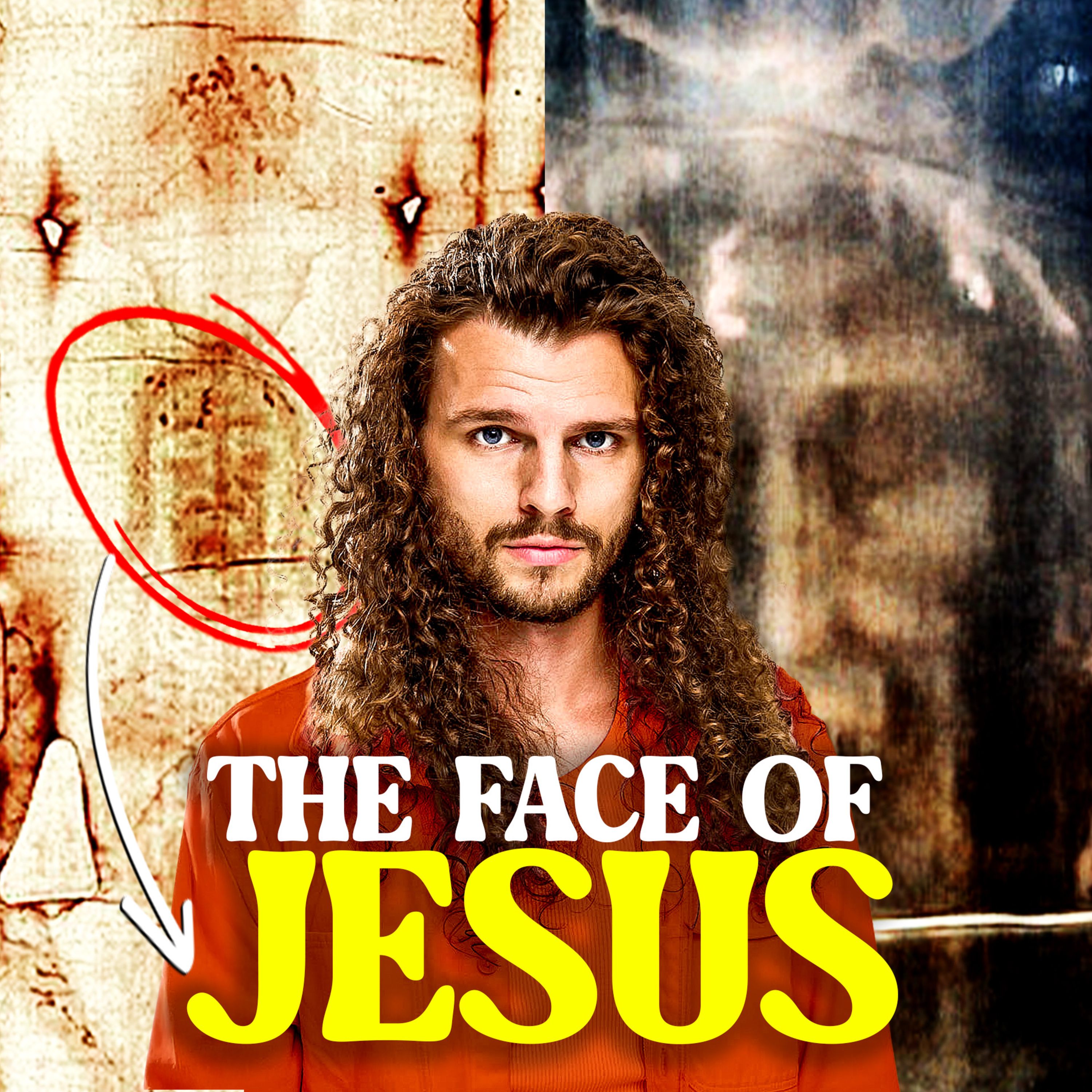
The Shroud of Turin. This might be the most mysterious, interesting, and debated religious artifacts, not only Catholicism, but ever. This is an ancient linen cloth that bears the image of a man who appears to have suffered the wounds consistent with crucifixion. The image of Christ. If you had an image of God himself that was actually created by God at the time of his death, many Christians interpret this as evidence of the Resurrection. The image of Edessa. This is a cloth that was revered in antiquity as bearing Jesus's facial imprint. And today, we're going through the fantastic and fascinating journey of the Shroud of Turin. Why Christians and Catholics are so fascinated by this controversies, the debates that have surrounded it since its very first appearance. And we also will go through some other relics that share a similar mystique. So join us as we dive in. What's up, people? And welcome back to Religion Camp. My name is Mark Yagnar. Welcome to my tent, where every single week, we explore the most interesting, fascinating, controversial stories from every religion from around the world, from all times, from every universe ever. I'm joined by my friend Christos, who's operating the beautiful camera and light setting. So if there's any issues with how the video looks, you. You can go to him with your concerns. How are you doing? Great, Mark. How are you? I'm great. Okay. You took you a little long to answer that. Even though I always ask how you are at the beginning of every episode, you still don't have the microphone in your face, but I'm not going to hold that against you. Anyway, we are talking about one of my most favorite topics in the entire world. The Shroud of Turin. Yep. If you've never heard of it, strap in. This is a fascinating one. I grew up very Catholic, and so this was something that my mom and I would discuss all the time. The different sort of relics that exist within the Catholic faith. This might be the most mysterious, interesting, and debated religious artifacts not only in Catholicism, but ever. This is up there with, like, you know, Juan Diego's Tilma, the apparition of Guadalupe, or, you know, maybe the apparition of Fatima. But the Shroud of Turin reserves a special place in the hearts of believers and skeptics alike. Revered by millions, scrutinized by, you know, hundreds of thousands of scientists. This is an ancient linen cloth that bears the image of a man who appears to have suffered the wounds consistent with crucifixion. Over the centuries, it has inspired, you know, devotion and investigation and arguments, leaving us today with more questions than answers. And Today, we're going to be going through the fantastic and fascinating journey of the Shroud of Turin, where the name comes from, the enigmatic origins, the circumstances of its discovery, and why so many Christians and Catholics are so fascinated by this. And we're going to look at how other religions view the Shroud, the controversies, the debates that have surrounded it since its very first appearance. And we also will go through some other relics that share a similar mystique. So join us as we dive in. So, just to make this very clear, the Shroud of Turin. To most people, it is the Shroud, the actual burial cloth, according to Catholics, that was placed on Jesus Christ after his crucifixion. And there's very many interesting details that sort of co. Align that I'm sure we're going to get to. But things like, you know, them not believing or understanding how the image was created. You know, some people believe that the image was actually cast on the Shroud as a blast of light. An examination of the blood type, that it's been consistent with many other miraculous events around the blood of Christ and many other things that people point to to say this is a legitimate relic. But we'll get to all that. So first, let's just go back to the very first time that the Shroud was documented to have appeared, and that time is around the 1353-1357. Most sources are citing 1354 as the year it was first displayed when French knight Geoffrey de Chaunay exhibited it at Lire, France. The cloth was presented as a sacred relic, drawing pilgrims and immediately sparking debate again. I think it's easy to look in the old times and be like, yeah, these people were dumb. They just believed everything. No, they were just as skeptical as you and I. You show someone a Shroud of Jesus Christ and people are going to be like, wait, what? Again, no surviving documents explain how de Charn acquired the Shroud, leaving its, you know, probably provenance before the mid 14th century. A mystery. But by 1389, Bishop Pierre d'Arcis of Troyes denounced the Shroud as a forgery in a letter to Pope Clement vii, claiming it was cunningly painted cloth created to deceive the faithful. Despite this, Clement VII permitted it to be displayed as a devotional image or representation rather than authentic relic. A compromise that allowed, you know, pilgrims to go, still see and kind of venerate this, you know, ancient relic to say, oh, yeah, this is what it would have looked like. Then you have something very, very interesting happen in 1453. Marguerite de Chaunay Geoffrey, this famous knight, his granddaughter transferred ownership of the Shroud to the House of Savoy, a powerful European dynasty. The the cloth was housed in Chambery, France, where it suffered significant fire damage in 1532. The flames left symmetrical burn marks and water stains from efforts to extinguish the blaze, visible still today as a part of the Shroud's distinctive appearance. And by 1578, Duke Emmanuel Philibert of Savoy moved the relic to a place in Italy called Trouble Turin, to shorten the pilgrimage route for Cardinal Charles Borromeo of Milan, who had vowed to venerate it. So Turin became the permanent home and the Shroud's association with the city solidified over centuries, even as the Savoy family retained legal ownership until 1983, when then it was bequeathed to the Vatican. Scholars have long debated whether the Shroud has earlier historical ties to a different relic known as the image of Edessa, also known as the Mandelion. This is a cloth that was revered in antiquity as bearing Jesus's facial imprint. It was known as a relic or an icon that wasn't made by human beings, that it actually, you know, possessed the image of Christ itself through his holiness or divine nature. According to the tradition, the Odessa cloth was hidden in modern day Turkey before being transferred to Constantinople in 944. It vanished after the city was attacked by Crusaders in 1204. Some researchers, like historian Ian Wilson, proposed that the Shroud and the Mandelion are the same artifact, folded to display only the face in earlier centuries. However, no definitive evidence links the two, and the Shroud's absence from historical records between 1204 and 1355 still remains unresolved. So the physical characteristics of the Shroud are fascinating. So here's just basically what it is. It's a linen cloth that measures about 14ft by 3ft. So, 14ft by 3ft, you can imagine it's a long, long, sort of rectangular cloth and it features a herringbone weave. So the actual way that the cloth itself was, you know, made by, you know, fabricators. And this is a technique that was consistent with textiles from the ancient Near East. It bears a faint front and back image of a crucified man, with wounds matching the Gospel accounts, everything from, you know, scourge marks to nail punctures at the wrists and feet and a lance that wounded the chest. Again, all things that are shown and talked about in the Gospels about the crucifixion of Christ. Blood stains confirmed by forensic analysts. They say that the blood itself contains hemoglobin and serum, and they appear anatomically accurate with flows consistent with crucifixion and postmortem injury. The image itself lacks pigment or brushstrokes, and its formation mechanism remains unexplained to this day, still fueling debates about what it is or where it comes from. Again, a lot of people believe that it was painted like this, you know, Pope even back in the day. Or, you know, it's just. They were like, yeah, this is just a painting. But again, by scientific analysis, no one knows how exactly it was painted. What's up, camp family? What's up, campers? Two big announcements. Don't skip this. Two massive announcements. The merch store is back open. That's right. Camp goods is back in stock. We got these hats that I'm wearing right now. I've been rocking them both on here on flagrant. I've been wearing them on stage. We got a bunch more hats like the ones behind me. You can see them all here on the website. We also got some shirts. Oh, man. What is this one right here? Come on now. Come on now. Camp gear for all terrain. We got some other ones. What is this one right here? Oh, this one's beautiful. This one might be one of my favorites. The colors. The colors are absolutely crazy. This is Camp Gagnon vintage wisdom across the globe. Come on now. We got all that and more on the store. We also got these sick mugs right here. You might have seen me maybe sipping from one of these in some of the recent episodes. These are sick. They are all available on the website campgoods Co. Check it out. Link is in the description. And by supporting the merchandise, you are obviously supporting the show. You're supporting me, and you're obviously, you know, supporting all the amazing people that make the show happen, like Christos, who is currently throwing me T shirts from underneath this desk here. So please check that out. Additionally, I'm on the road. That's right. I'm doing my one hour of standup comedy, some of some of the greatest jokes ever written. Okay, that's not true, but they are my jokes, and I wrote them. I'll be in Portland, Maine on April 27th. And that one I'm doing with Joey Avery. You know Joey Avery, a friend of the show.
- [10:02]
Kaley Cuoco
Hey there, travelers. Kaley Cuoco here. Sorry to interrupt your music. Great artist, BT Dubs, but wouldn't you rather be there to hear it live with Priceline, you can get out of your dreams and into your dream concert. They've got millions of travel deals to get you to that festival, gig, rave, sound bath or sonic experience you've been dreaming of. Download the Priceline app today and you can save up to 60% off hotels and up to 50% off flights. So don't just dream about that trip. Book it with Priceline.
- [10:27]
Mark Yagnar
Go to your happy price Priceline.
- [10:31]
Kaley Cuoco
Did you know that parents rank financial literacy as the number one most difficult life skill to teach? Meet Greenlight, the debit card and money app for families. With Greenlight, you can send money to kids quickly, set up chores, automate allowance, and keep an eye on your kids spending with real time notifications. Kids learn to earn, save and spend wisely and parents can rest easy knowing their kids are learning about money with guardrails in place. Try Greenlight Risk free today@greenlight.com Spotify he.
- [11:00]
Mark Yagnar
Sat across from me many times and I'm explaining some things to him and he might be my dumb friend but he is a brilliant stand up comedian and we will be there in Portland, Maine. If you are in these areas please come out. And we're adding a ton of dates all through the summer so check out my website themarkgagnon.com for all tour dates and updated info. Come hang out with me. I talk to every single person after the show. If you want to kick it with me, maybe have a drink, I'll be there and I will see you guys on the road. Let's get back to the show. Here is a bullet. Imagine this. You're 30ft underground, digging through frozen earth with spoons and mess hall plates. Nazi guards patrol overhead. One wrong move, one loose pebble and it's over. But on this night in 1944, 76 Allied prisoners would attempt the impossible, tunneling their way to freedom in the largest prisoner of war escape of World War II and centuries earlier. In a cold stone chamber, a teenage girl in armor stood before her accusers. Her crime leading armies, speaking to angels, and daring to challenge the most powerful men in Europe. Joan of Arc's trial would become one of history's most infamous moments. These are just two stories from Today in History, the newsletter that brings you the most fascinating events from the past delivered fresh to your inbox. From epic wars to religious rebellions, ancient mysteries to modern marvels, don't miss another piece of history. Scan the QR code now or click the link in the description to sign up for Today in history. So after 1578, the shroud became central to this house of Savoy and the the identity of the people. And it was displayed very sparingly to sort of maintain its mystique and also protect it from damage. And public exhibitions in the 19th and 20th century eventually made it a national global phenomenon. There's one specific instance, that photograph that was taken in 1898. And again, photograph technology at the time oftentimes would show the negative or the reverse of the image, and that is what transformed it into this global phenomenon. There's been radiocarbon dating that was done on it in 1988, and that radiocarbon dating suggested that it was from a medieval origin. But there are disputes over the sample that was taken. Some people believe that it was actually repaired on the edges after the fire around that time period. And as a result, that fabric itself was from the medieval times, but the fabric at the center, where the actual image is actually on the linen, was from obviously the time of Christ. So, of course, this debate, this debate still remains to this day. But there's many other things about the Shroud that make it very, very unique. The most striking feature is again, this image of Christ that appears on it, the sepia toned image of a crucified man, which functions as a photographic negative when photographed in 1898. Like I had mentioned by Secundo Pia, the negative plate revealed a highly detailed positive image, sparking modern scientific interest. The image lacks brushstrokes. Through scientific examination, they can't find any pigments or scorch marks, and its formation remains completely unexplained. Despite decades of of study. There's actually an entire research team that is dedicated to studying the Shroud. It is the Shroud of Turin Research project, also known as STIRP, and it concluded in 1978 that the image was not created by any known artistic methods, including painting, dyeing, chemical treatments, et cetera. Its three dimensional properties, detectable through advanced imaging software, further distinguish it from any medieval artwork. So the man depicted on the shroud exhibits over 100 whip marks. Again, all these marks are consistent with the Roman whips that would be used, you know, nail wounds on the wrist, not the palms, and a spear wound to the right thoracic cavity, kind of this right side of the, of the rib cage. And blood flows matching crucifixion physiology. Again, if you're crucified, the way that the blood would actually come out of your body would be different than if, you know you were just laying down, you got stabbed. Forensic analysis confirms the presence of human blood with serum separating from clotted blood in patterns which indicate that the body was wrapped and removed within hours of death. Aligning again with Jewish burial customs of the first century, the bloodstains biochemical composition included hemoglobin and bilirubin, which again, supports the authenticity or the idea of a traumatic injury occurring. Another interesting detail here is that there's actually testing that was done on the blood type and it was found to be AB positive. This was a study that was done in 1980 by Dr. Baima Balon and Dr. Fonti, and they concluded that it was AB positive. Now, the AB blood type is fascinating because it is super rare. I think it is the rarest or of the rarest blood types. Less than 5% of the population has AB blood. And additionally it is known as the universal recipient. Now, people, you know, like my mother will point this out and say this is an indicator that God and Christ himself can receive all people, that he is the universal recipient and that his blood type is ab. Now, through other sort of eucharistic miracles, where again, the Eucharist and like Catholic Church actually becomes blood. This has happened a few times according to Catholic tradition. And again, the blood type from many of these other instances is said to be blood ab. Just another interesting detail about the shrouded term. So there's actually a radiocarbon dating controversy. I touched on this a little bit earlier, but this will go into a little bit more detail. So in 1988, three independent laboratories, the University of Oxford, University of Arizona, and the Swiss Federal Institute of Technology in Zurich, dated a corner sample of the shroud to about 1200-1300 AD, again suggesting this medieval origin. Now, the critics argue that the tested sample may have been contaminated by fire, damaged microbial growth or medieval repairs. A 2022 study used a wide angle X ray scattering, and they compared the Shroud's linen degradation to a 1st century sample from Masada, concluding that the cloth's ages matched the earlier period. This finding reignited debates about the Shroud's age, though the Vatican remains sort of in a neutral position, urging further study. Now, another interesting detail about the Shroud, like I mentioned earlier, is this herringbone twill weave. This is a three to one pattern, and it's rare for medieval Europe, but consistent with the ancient near east textiles and the way that they actually developed the, you know, the cloth that they used. The linen threads show no traces of synthetic dyes. And the fabric, the fabric's purity aligns with Jewish ritual requirements for burial cloths. The absence of vertical seams and the cloth dimensions correspond to Roman era burial practices, again further distinguishing it from later medieval relics. So if this is some type of, you know, medieval Fabrication, they would have had to have very deep knowledge about not only Jewish burial customs, but also Roman burial customs. So no hypothesis fully explains this image's, you know, superficial non directional imprint. John Jackson's 2008 proposal suggested a vacuum ultraviolet radiation could replicate the Shroud's characteristics. What does that mean, an ultraviolet radiation? The image that's actually given off by some type of burst of light. That type of radiation then perhaps could imprint the image. But no known natural process produces such precise body length radiation bursts. And then Paolo de la Razzo did a 2010 experiment that demonstrated that excimer lasers could create similar superficial discoloration. Though this technology obviously did not exist, you know, back in the day, these studies underscore the image's uniqueness, but also leaves the origin kind of unresolved. Again, if you ask my mom, she'd probably be like, yeah, it was at the time of, you know, Christ's death. He actually emitted a light that, you know, there was a, you know, some type of, like, divine, you know, like, moment that happened where it was actually the, you know, the purity of Christ himself that caused this image to now appear on the Shroud. Again, the, as I mentioned before, the Shroud has, you know, these very precise anatomical connections to, you know, the story of the death of Christ. So what does the Catholic Church make of the Shroud? Today, the Church has cautiously embraced the Shroud as an icon of Christ's passion, rather than definitively authenticating the relic as the actual Shroud that buried Christ. Now, again, the Catholic Church is actually pretty cautious when it comes to relics and things of, you know, like a supernatural nature, things that might be, you know, used in veneration. To be honest, like, I think a lot of people look at the Catholic Church and like, oh, yeah, they just, you know, say anything, da, da, da, da. But all this kind of stuff, like, in order to become a saint, you have to experience miracles. And there's all sorts of stuff with the Church where they, you know, they, they discount miracles. They say, oh, we have to go check this through a scientific source. And they do a decent job of, you know, actually validating things through like, a skeptical lens before just assuming that it's divine. Off rip. So popes from, you know, Pius XI to Francis have endorsed its spiritual significance with Pope Paul VI saying, this Pope, perhaps only the image from the Holy Shroud reveals to us something of the human and divine personality of Christ. And Pope Pius IX says, this salutary reparation to the holy face of Jesus is a divine work destined to save modern society. Public exhibitions such this episode is brought.
- [21:01]
Kaley Cuoco
To you by Meundies Underwear Drawers are like the Wild West. You never know what you're going to pull out or what shape it's in. So upgrade your collection with the buttery soft comfort of Me Undies. Me Undies Signature fabric is as soft as a warm hug from your favorite sweater. Plus it's breathable and oh so comfy, making it ideal for all day wear. Get 20% off your first order plus free shipping on orders of $75 or more at MeUndies.com Spotify Enter promo code Spotify Ryan Reynolds here from Mint Mobile. I don't know if you knew this, but anyone can get the same Premium Wireless for $15 a month plan that I've been enjoying. It's not just for celebrities. So do like I did and have one of your assistant's assistants switch you to Mint Mobile today. I'm told it's super easy to do@mintmobile.com Switch upfront payment of $45 for 3 month plan equivalent to $15 per month required intro rate first 3 months only then full price plan options available, taxes and fees, extra fee, full terms@mintmobile.com does.
- [22:00]
Mark Yagnar
The 2015 and 2020 viewings in Turin drew millions of pilgrims reflecting its role in, you know, modern Catholic devotion? Right. The the Vatican's official stance is that they permit veneration while remaining neutral on the authenticity, which again, balances, you know, the reverence with, you know, a little bit of spiritual, you know, skepticism. So while the Shroud's image depicts a corpse, many Christians interpret this as evidence of the resurrection, the absence of decompositional stains and the body's apparent lack of displacement. You know, there's no type of degradation of the body and you don't see other types of, you know, stains on there that would indicate that the body had actually, you know, started decompose. And this is kind of evidence of the resurrection. For a lot of, you know, Christians, that this, that the shroud was never unwrapped, that the body within it just vanished or perhaps resurrected. And mystics like the Jesuit scholar Roberto Busa argued that the image's superficial, non pigmented nature could symbolize the transformative moment of resurrection, though this remains a matter of faith and is rather difficult to prove empirically. If you're like me, you probably read a news story and you're like, this is crazy. What is the truth about this? Is this a partisan spin? Is this funded by some media company or some country by their state Sponsored media to try to warp my brain. I genuinely read news articles now with so much skepticism because I have no idea if this is from the right or the left and what the agenda is and why it's being presented in front of me. And that is why I follow and support Ground News. That's right. So even before I started working with this company on the podcast, I've been following them on Instagram because I just thought they gave a very, very great unbiased, nonpartisan approach to media. It's awesome. Basically, you're going to get a headline and they will show you sort of the different media splits as it comes to understanding the story. They will compare the reporting from different outlets across the political spectrum in one place to show you how the framing in word choice can affect our understanding of a story. I mean, here's a story that my mom sent me from a couple months ago. Robberies, assaults, surge in Central park, leaving New Yorkers and NYC tourists terrified. What is the purpose of this story? Who is writing it? Where is it coming from? Now I can go to Ground News, read this headline, and be able to make an assessment as to whether or not this is predominantly being reported by the right wing or by the left wing and make some type of deduction like, oh, this is actually being used, you know, as some sort of political apparatus. So if you're like me, if you're a truth seeker, if you're trying to find unbiased news, I would absolutely recommend Ground News. It is completely independent, nonpartisan, subscriber funded. It allows readers to think critically about the world around them. And it doesn't tell them what to think, but instead lets them think for themselves. And ultimately, it avoids misinformation and tries to heal polarization within our country, which I think is absolutely amazing. So don't let misinformation and sensationalism influence how you think. Save a massive 40% on Ground News's top tier vantage plan with my link. Ground News. Gagnon G A G N O N. Or scan my QR code right here or go to the description and click on the link. This unlocks access to all of their news analysis features. Something that I think is, I don't know, super important to have. Yeah. Make decisions based on facts, not spin. This November. Check them out. Here is a bullet. Imagine this. You're 30ft underground, digging through frozen earth with spoons and mess hall plates. Nazi guards patrol overhead. One wrong move, one loose pebble, and it's over. But on this night in 1944, 76 Allied prisoners would attempt the impossible, tunneling their way to freedom in the largest prisoner of war escape of World War II and centuries earlier. In a cold stone chamber, a teenage girl in armor stood before her accusers. Her crime leading armies, speaking to angels, and daring to challenge the most powerful men in Europe. Joan of Arc's trial would become one of history's most infamous moments. These are just two stories from Today in History, the newsletter that brings you the most fascinating events from the past, delivered fresh to your inbox. From epic wars to religious rebellions, ancient mysteries to modern marvels, don't miss another piece of history. Scan the QR code now or click the link in the description to sign up for Today in History. The Shroud's blood stains, particularly those interpreted from the, you know, the Eucharistic side wound, reinforced the Catholic teaching on the real presence of Christ and the sacrificial love of Jesus. So the 1978 Stirp this is again the Strat of Turin research project. They analyzed and confirmed the blood components, specifically the hemoglobin. And this is the oxygen carrying molecule in red blood cells as well as serum albumin. And this is the major blood protein had been incorporated into meditations on the Eucharist as a bleeding host linked to the Last Supper known in the Bible. This connection is emphasized in papal writings such as John Paul II's writing in 1998 addressing the shroud to the mystery of Holy Thursday and Good Friday. So while the Shroud is primarily a Catholic devotional object, it has spurred a lot of, you know, ecumenical cross faith dialogue. So you have Anglican scholars like Ian Wilson who explore the historical roots, while you have Jewish researchers such as Barry Schwartz, who was the actual documenting photographer on the research project of the Shroud, emphasized the value in understanding, you know, 1st century Judeo Roman burial practices. However, its significance remains largely confined to Christian context with minimal, you know, theological weight in Judaism or Islam. Obviously Jews would not see the resurrection of Christ as legitimate. So, you know, this would not be something that they would particularly see as interesting. They'd probably call it a forgery perhaps. And obviously in Islam they don't see Christ as, you know, a divine being, but rather a great prophet of Allah. And I don't believe Muslims believe in the resurrection, obviously the divinity of Christ. So there's still a lot of debate over this specific Shroud. There's a lot of different people on different sides. You have traditionalists like the gentleman David Rolf, who argues it validates biblical inerrancy, while critics, including theologian Hans Kung says we should proceed with caution against conflating material objects and spiritual truth. The Vatican's 1988 acceptance of radiocarbon results while maintaining devotional status exemplifies this, you know, ongoing tension between, you know, the empirical scientific inquiry, but also the mystical belief that exists within, you know, contemporary Catholicism. Again, the most interesting element to the Shroud for me is that in the most, you know, more recent times, there have been more scientific, you know, examination of the. The cloth itself and what they found is interesting. So again, you have that original examination done by independent universities that show that, oh, it's a medieval relic. But then by using, and I mentioned this a little bit earlier, but just to go in more detail, the study that was done in 2022 that then was published fairly recently, used this method, known as the wide angle X ray scattering, also known as wax wide angle X ray, to inspect the Shroud's structural degradation. Working with a thread taken from the same spot as the 1988 study, it was placed beside a sample of linen that is known to come from 55 AD. The sample from the Shroud was found to be fully compatible with analogous measurement of the sample from 55 AD. The team leader, Liberato di Caro of Italy's Institute of Crystallography, argued that the 1988 study was flawed, suggesting that the sample was not properly cleaned before it was tested. The X ray analysis shows that the Shroud is much older than the 1988 study proposed. Furthermore, they suggest that the 1988 study disqualifies itself as a Shroud bears too much degradation to have only been around for a few hundred years. If the 1988 study, which placed the Shroud at around the 14th century, was correct, then the deterioration of the Shroud would suggest it was stored in a room for more than six centuries with temperatures very close to the maximum values registered on Earth. The Heritage study, however, determined that the cloth was stored at a more temperate atmosphere with an average temperature of 20 to 22 degrees Celsius and humidity at around 75 to 55 for more than 1300 years. That's interesting. So they're saying that the Shroud has deteriorated about 1300 years of time, but if it was from the medieval time, then it obviously could not have deteriorated that much. That's interesting. So they say that if it was from the 14th century, it would have been stored in a room for more than six centuries, very close to the maximum values registered at Earth. So basically saying, okay, sure, if this is from the medieval times, then it would have to have been in a room that was extremely hot to erode it and deteriorate it to this rate and at this degree. That's interesting. So again, there's this original study that says, hey, this is, you know, medieval times. And there's new research that comes out showing. No, no, no. It's possible that they, they examined either, you know, reconstruction or maybe they got, you know, some type of, some of their data wrong because of, you know, the damage that was done to it through the fires and you know, the. This episode is brought to you by State Farm. You might say all kinds of stuff when things go wrong, but these are the words you really need to remember. Like a good neighbor, State Farm is there. They've got options to fit your unique insurance needs, meaning you can talk to your agent to choose the coverage you need, have coverage options to protect the things you value most, file a claim right on the State Farm mobile app and even reach a real person when you need to talk to someone. Like a good neighbor, State Farm is there. Don't miss your chance to spring into deals at Lowe's right now. Get a free 60 volt Toro battery when you purchase a select 6060 volt Toro electric mower. Plus buy three 19.3 ounce vegetable and herb Bonnie plants for just $10. It's time to give your yard a grow up Lowe's. We help you Save. Valid to 423. Selection varies by location while supplies last. Discount taken at time of purchase. Actual plant size and selection varies by location. Excludes Alaska and Hawaii various years. Again, more recent studies including the 2024 isotope analysis of the Shroud identified its origins to the ancient, you know, Levant period. And then other theories that say it's, you know, around first century Judean province. Researchers like Bari Schwartz and Julio Fonte have used spectroscopy and mechanical testing to argue for an ancient origin. Though these findings have been contested, there's also been some fringe theories, you know, such as, you know, Leonardo da Vinci and his alleged involvement and forging the Shroud, or even the Knights Templar and Templar ownership. But they don't really have a ton of evidence despite existing in pop culture. And a lot of mainstream scholars just kind of dismiss these claims outright. And what's interesting is that there are other relics that are around a similar type of spiritual status or of a similar story to the Shroud of Turin that have a ton of similarities. And this is interesting. So there's the Sudarium of Oviedo. This is a blood stained linen cloth kept in Spain's Cathedral of San Salvador and is traditionally believed to have covered Jesus's face at around the time that he had died. Either used to wipe his face or is actually covering his face at his death. And unlike the Shroud, it bears no image, but contains blood stains matching the Shrouds AB blood type. Again, the universal receiver. Forensic analysis suggests that the two cloths could have been used on the same individual with blood patterns aligning anatomically. However, radiocarbon dating of the sodarium remains inconclusive due to contamination concerns. Mirroring, you know, a lot of debates over the Shroud's age. And then you also have the Veil of Veronica. This was revered in Rome since the Middle Ages and purportedly bears the imprint of Jesus face during his Passion. Unlike the Shroud's full body image, the veil focuses on facial features with artistic depictions emphasizing its role in medieval piety. The original veil disappeared after the 1527 sack of Rome, leaving only copies until the 17th century where it was discovered concealed within the new St Peter's Basilica. And then of course, another Catholic relic that I find very interesting. Maybe we need to do a whole episode on. This is Our lady of Guadalupe. This is the Tilma of Guadalupe, which I have hanging here in the studio. The 16th century cloak bears an image of the Virgin Mary. Again, this shares the Shroud status as this unexplained image. No one knows how it was done. There's no painting or pigmentation. And unlike the Shroud, the tilma's fibers from the agave plant should have deteriorated within decades. But yet it remains perfectly intact, still can be seen at the church in Guadalupe, Mexico. While the Shroud's image is monochromatic, the tilma has vibrant colors and symbolic motifs and that, you know, a lot of Catholics use today as a, you know, a pilgrimage site. So there you go. That is the story of the Shroud of Turin and why millions of Catholics will flock to Italy whenever it is on display in order to, you know, venerate this, this thing that, you know, they believe was, you know, the image of Christ. If you had an image of God himself that was actually created by God at the time of his death, it'd be pretty interesting to you. So that's what they believe. That goes all the way back from, you know, when it first appeared, you know, why people, you know, talked about it. Is it possible that the early records were lost? Maybe it's a forgery from medieval times, you know, the original carbon dating that then proved it was from the medieval times, that then was then re examined and reanalyzed it then prove it was actually potentially from the first century. The blood type, the anatomical correctness, the, you know, the understanding of Jewish and Roman burial techniques, all of that stuff all combine into one Catholic relic that has captivated millions of people from around the world and from all time. I find it very interesting, these Catholic relics. I find, you know, so, so curious. Again, this is not a worship of the relic. You don't go there to worship a cloth. You just go to, you know, to venerate, to show respect that this thing potentially contains the blood of Christ, you know, in its actuality, the actual blood of, of God. And if you're a Catholic or a Christian, you know, obviously Jesus is a, you know, very important figure. God himself become man to die for our sins. It's a pretty compelling story. So you go there to see it, you pray in front of it, and you just kind of, you know, you know, pray to God. But still, looking at this thing, it's, again, a lot of Catholics, they, they find these things very, very powerful. So that's what the Shroud is. That is everything that you need to know. That's where it came from. And is it real? I don't know. I'm. I'm tempted. I'm. I like the, I would like to say, yes, I would like to say this is the, the true, the true Shroud of the resurrected Christ. But again, I have an aversion to certainty. It's hard for me to be like, oh, things are 100% one way or the other. But I, I'd like to think, yes, and I, I would like to think that some of the, the. You would think they would know how they painted it. You would think they would be like, oh, yeah, this is obviously painted by a guy. You can see the brush strokes. Da, Da. Like, I don't know how they haven't ruled that out. Like, if it's, if it was obviously. If it's a forgery, it was obviously painted, and if it was painted, they should obviously know how they painted it. I don't get how you can have a, you know, 1300s painting and not know how it was painted. But I digress. I don't have all the answers. What do you think? Comment below. I'll read all the comments. I read every single one, even the mean ones. So be nice to me and, yeah, let me know what you think. Do you think it's a legitimate Shroud that, you know, depicts the image of Christ at his passion? Or did someone make it up in the 1300s? I don't know. Croesus? What do you think? Are you convinced? Is this the. Is this the face of Jesus Christ himself? For my sake, I'm just gonna say, yes, I believe it. Let's go. We got one, ladies and gentlemen. We got one. Anyway, thank you all so much for tuning in to another episode of Camp. We'll see you next time. Peace with you. If you've made it to the end of this episode, you are clearly someone who understands that beneath every historical event lies a deeper truth waiting to be uncovered. You're the type of person who knows that real history is more fascinating than any fiction. And we deeply appreciate that about you. I'll be honest, that's exactly why I personally invite you to sign up for Today in History, our free newsletter that goes beyond the surface of historical events. We dive into the stories that textbooks never told you, the secrets that challenge the course of nations, and the forgotten tales that deserve to be remembered. Let's continue this journey of discovery together. Take the conversation from your headphones into your inbox. Sign up now through the QR code or link in the description Today in History. Because every day holds a secret waiting to be revealed. Thank you for being part of our historical journey. We'll see you next time.