Loading summary
Transcript5 lines
- [00:00]
A
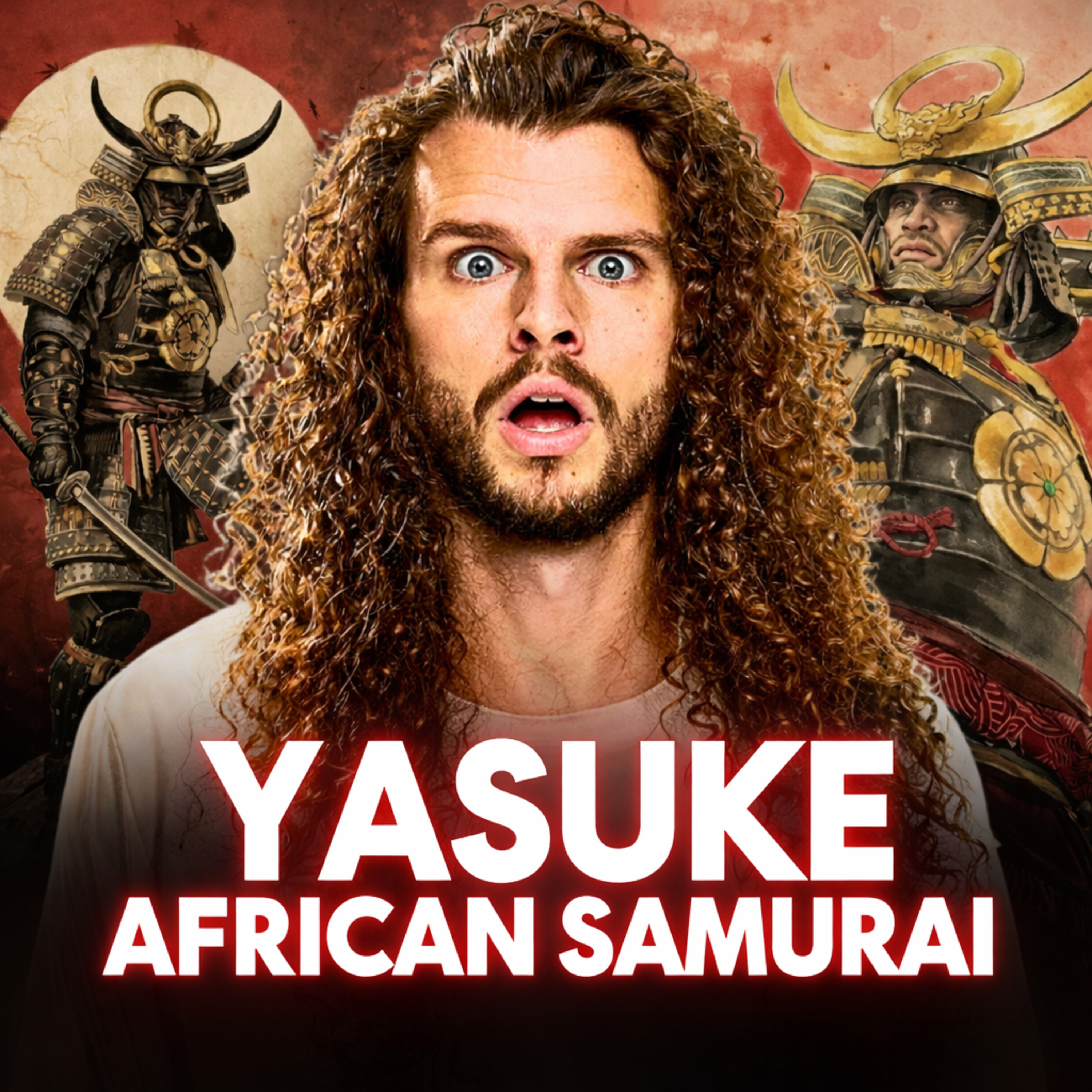
The same man who was dragged across oceans as a servant eventually became a warrior in one of the most elite military cultures in human history. The same man who couldn't speak the language was dining privately with the most powerful warlord in Japan. The same outsider who was stripped and scrubbed in front of a court because they didn't believe that his skin color was real, was given a sword, a house, a stipend, and ultimately the title of the samurai. And his name was Yasuke. And in 1581, he became the first known African samurai in the history of Japan. Now, we don't know his birth name, we don't know exactly where he came from, and we definitely don't know how his story ends, because after one of the most dramatic betrayals in Japanese history, Yasuke vanishes from the historical record entirely. Just gone. No death date, no burial site, no final chapter. What we do know is that for roughly 15 months, a black man from East Africa stood at the side of Oda Nabunaga, the demon king, the great unifier of Japan, and fought as his warrior, not. Not as a curiosity, but as a samurai. And the story of how he got there and what happened when it all fell apart is one of the most interesting, most wild stories in all of world history. So sit back, relax, and welcome to History Camp. What's up, people? And welcome back to History Camp. My name is Mark Agnon, and thank you for joining me in my tent, where every single week, we explore the most interesting, fascinating, controversial stories from around the world, from all time, forever. Yes. That is what we do here, all right? We try to figure out everything that's ever happened, and, oh, boy, there's been a lot of stuff. So we have a lot of catching up to do. But first, I want to say thank you to you for watching this channel, clicking this video, making my dreams come true. Because every time you click, you comment, you subscribe, you do any type of interaction with any of these channels, you. You keep the lights on, you keep the fire burning here at the campsite, and ultimately, you turn Christos into an even richer billionaire. Isn't that right, Christos? Thank you, Campos. All right, Christos, look, we don't have time, okay? We don't want to hear from the 1% right now, all right? We want to get on with it. It's Black History Month, and we're talking about the African samurai, the first foreigner, the first outsider to truly become a samurai in Japan. Now, let me just say up top, whether or not he was formally inducted into the full samurai honors, we can't say for certain, but I can you that he was given the stipend and treated as a samurai. Functionally, he was a samurai. And you know what? In the hearts of me and the people that believe he was a samurai. Damn it. All right, so we're going to go through all the details, and we'll explain where he came from, how he got there, and why he just kind of wiped away from the history at the very end, and ultimately why this distinction exists between samurai and samurai class and why historians debate it. All right, so let's just begin. In order to understand Yasuke and his story, you first have to understand the world that he existed in, and ultimately the world that he left. So the year is roughly 1555, and somewhere in East Africa, most likely in Mozambique, which at the time was under colonization by the Portuguese, though some historians have proposed Ethiopia or even South Sudan, A boy is born, and we don't know his name, and we don't know his parents, and we don't know his tribe or really anything about him. And a 1627 account by the French Jesuit Francois Solier describes him as a khafre, basically a term that the Portuguese used for people of southeastern African descent, and specifically identifies him as a servant from Mozambique. Some historians have noted that Solier called him a Moor khafre, which could be interpreted as like a Moorish infidel, leading to some speculation by historians that Yasuke may have actually been Muslim. Obviously, this is what people would mean by Moorish or the Moors. This is a, you know, Muslim influence into Europe, and so calling him a Moorish, A Moorish kafre. That's just another point for the Muslims, dude. Especially during Ramadan and Black History Month. Oh, Muslims are eating this one up, dude. Two birds, one stone, right now. Again, the research is uncertain. We can't say for sure. Now, researcher Thomas Lockley, he wrote the first full length book on Yasuke in 2019, has proposed that he may have originated from the Dinka people, which is now South Sudan, based on descriptions of, you know, how he looked and ultimately his exceptional height. Now, what we do know is that at some point in his youth, this man entered the service of the Jesuits, a Catholic missionary order that was aggressively expanding across Africa and India all the way into east asia during the 16th century. Now, whether he was purchased as some type of indentured servant or a slave or captured or came voluntarily is sort of lost to the historical record. But by the late 1570s, he was serving as an attendant to Alessandro Valignano, the Italian Jesuit priest who had been appointed visitor of all Jesuit missions in the Indies. Now, Valignano was no minor figure. He was essentially like the CEO of the Jesuits and their operations across, like, half the world, and basically was overseeing missions from Mozambique to Goa in India to Macau to Japan. He was all over, okay? So when Valignano set up for Japan in 1579, this African man came with him as his servant. They spent the first two years in Japan, mostly in Kyushu. This is the southernmost of Japan's main islands, where the Jesuits had established their strongest missionary presence. But in early 1581, Valignano decided he needed to visit the capital. He needed to meet the most powerful men in Japan. He needed an audience with none other than. Than Oda Nobunaga. Now, to understand what is about to happen, you need to understand who Nobunaga was. So Japan in the 1500s was chaos. Basically, the country had been locked in this period called the Sengoku, which was literally like the warring states. That's what it translates to. And basically, for over a century, dozens of, like, regional warlords and like, smaller kind of clans were basically battling. These warlords, called the daimyo, were constantly fighting each other for territory, and the central government had basically collapsed, and the emperor was just kind of like a figurehead, and the shogun was powerless. Japan was just a bunch of different rival kingdoms all kind of jockeying for position, sort of constantly in warfare. And into this chaos stepped this man, Oda Nobunaga. And he was unlike anything Japan had ever seen up until that point. Born in 1534 in the Owari Province, Nobunaga was the kind of leader who basically made people really uncomfortable. So as a young man, his behavior was kind of erratic, so much so that his own people called him the fool of Owari. He reportedly showed up to his father's funeral, throwing ceremonial incense at the altar. And his own retainers, like, the people around him, thought that he was crazy. But here's the thing. Nobunaga wasn't crazy, or at least not totally crazy. He was just operating on a different level than anyone else around him. So while all the other daimyo kind of held on to this tradition and sort of the way things had always been, Nobunaga was innovating relentlessly. He was one of the first Japanese commanders to effectively use firearms, like, actually, like using guns, Portuguese Matchlock rifles. And he didn't just use them. He revolutionized how they were used. So at the Battle of Nagashino, in 1575, he arranged his gunners in these basically like rotating positions that allowed continuous fire. And the result shattered the legendary cavalry of the Takeo clan and basically anyone else they went up against. It was just a massacre. And it really changed Japanese warfare forever. So by 1581, Nobunaga controlled most of central Japan. He had dissolved the old ashikaga shogunate in 1573, and he had crushed the militant Buddhist monks of the Iko Iki after a decade long war. So you can imagine this guy's coming through in a very traditional culture and everything is done one specific way and he completely just flips it all on its head and just changes the entire order of warfare in command and politics. He had built the Azuchi Castle, a seven story fortress in basically like on the shores of Lake Biwa that was basically the most magnificent structure Japan had ever seen. His enemies called him the Demon King of the Sixth Heaven. An all time name. I mean, that's like a gorgeous name. A title borrowed from Buddhist mythology, basically referring to the supernatural being who delights in the suffering of other people. And Nobunaga didn't reject the nickname. He was like, that sounds pretty good. Now here's what made Nobunaga truly different from every other warlord or commander in Japan. He was obsessively curious with the outside world. This is very strange for many Japanese commanders up until this point. As a culture is extremely insular. People are constantly sort of looking at each other. And Nobunaga specifically at this time is looking outside. He loved foreign things. European weapons, Western technology, exotic exotic goods and food and anything he could get his hands on. And while most Japanese leaders viewed foreigners with suspicion, Nobunaga actively courted the Jesuits. Not because he cared about Christianity, but because they brought him things that no one else could. And on March 27, 1581, the Jesuits brought him something or someone that he had never seen before. What's up, people? We're going to take a break really quick because I want to tell you about a sponsor we have that I'm so stoked about. Yes, it's Chubby's. If you never heard of Chubby's, I've been wearing these since legit, like late high school. Yeah, I'm so stoked. I started this podcast because I wanted a deep dive on crazy stuff in history and just, you know, random wormholes that I got into on the Internet. And now I'm working with a brand that I've literally worn for 10 years because Chubby's one of those brands that you put on and you go, oh, this is comfortable. They're like the OG Like I'm going to the beach, I'm chilling on the boat, I'm walking through soho in the summertime shorts. I mean they are the best. Their stuff is super breathable. I mean the stretch is like OG they're like one of the first ones to start that. I mean you can actually move, you can sit like you can exist without just being absolutely swamped. And they don't just do shorts. They got everything. I mean they got polos, they got sweaters, they got anything you can imagine. And it's all that, that wrinkle resistant, quick drying, anti microbial greatness that basically makes all their stuff, you know, the most, basically the mix between like I'm the most comfortable I've ever been. I could go to sleep right now. But also I'm a functioning adult. That looks amazing while I'm at work. And news. This is the 15 year anniversary and they're bringing back the originals. These are literally the shorts that started the entire thing. Same iconic fit, the same inseam options and that same energy. Like yo, I'm just going to pull up and you know, crack a brew on a Friday. That type of vibe. So whether you are weekending, weekday in, going to the beach, barbecue or just living your life, Chubby's has you covered. So for a limited time, Chubby's is giving the listeners of this program 20 off with the code camp. If you go to chubby shorts.com that is 20 off your order with the code camp. C a m p@chubby shorts.com. i mean if you guys trust anything I ever say, Chubby's is fantastic. The shorts are truly amazing. And you're getting 20% off. What are you waiting for? Go check them out. Now let's get back to the Monster Energy.
- [11:42]
B
Everybody knows White Monster Zero Ultra, that's the OG it kicked off this whole Zero sugar energy drink thing. But Ultra is a whole lineup now. You've got Strawberry Dreams, Blue Hawaiian Sunrise and Vice Guava. And they all bring the Monster Energy punch. So if you've been living in the white can branch out. Ultra's got a flavor for every vibe and every single one is Zero Sugar Tap the banner to learn more.
- [12:10]
A
Now when Valignano arrived at Nobunaga's court, he brought Yusuke and his entire entourage. And the reaction from the moment that Yusuke set foot in Kyoto, it was kind of like pandemonium. Like he sort of shut it down because you got to understand the Japanese had never seen a black person before. I mean, like, today I've seen some videos on Twitter. Like, I think they've seen a couple. But specifically then, they hadn't seen anyone. Now, according to the Jesuit missionary Luis Froisch, who documented the entire visit, a melee broke out amongst the townspeople, who were fighting to just catch a glimpse of Yasuke. Now, remember, Yasuke is not like a samurai or like an amazing warrior. He's just a servant of this Jesuit guy. And the crowd was so violent that it broke down the door of the Jesuit residence, and several people were injured in the chaos. I mean, think about that. People are literally getting hurt trying to just look at this dude. And, of course, Nobunaga was fascinated. And the Shinsho koki, this is the official chronicle of Nobunaga's life, written by someone very close to him, describes Yusuke in very vivid terms. It says this. A blackamoor came from the Christian country. He appeared to be 26 or 27 years old, black over his whole body, just like an ox. This man looked robust and had a good demeanor. What is more, his formidable strength surpassed that of 10 men. But Nobunaga didn't just want to look at Yusuke. He. He didn't believe that his skin color was actually real. He thought that maybe it was like. Like a prank or like. Maybe like a dye or like an ink or some type of paint was being used. So he ordered Yasuke to strip from the waist up, right in front of the entire court. And he had servants literally scrub his skin. But the more they scrubbed, nothing happened. Like, in a way, the blacker he became. They just showed how pure his skin was. And then something shifted in Nobunaga. What started as this curiosity turned into, like, a true fascination. And it was not in the way that you would be fascinated by, like, an exotic animal. The way that a man who spent his entire life surrounded by one specific type of person and how they looked and how they thought everything was the exact same, all of a sudden was being confronted with proof that the world is bigger and stranger and more interesting than he could have ever imagined. And then Nobunaga basically asked this Jesuit priest to let Yasuke stay. And Valignano agreed. Now, what happened next is where Yasuke's story goes from interesting to crazy. Nobunaga didn't just keep Yasuke around as, like, a novelty or as a servant. He gave him a proper Japanese name. And that name, Yasuke, which Nobunaga chose Personally, and he gave him a house and gave him a stipend, and he gave him servants. And most importantly, he gave him a sword. And this is a katana with a decorative scabbard called a sayamaki. Now, according to historians, this combination, the name, the stipend, the sword, the residence, was the equivalent of being granted the rank of samurai. Yasuke became the first recorded foreigner to receive that honor in Japanese history. Now, whether Yasuke was formally inducted as a hereditary samurai is debated, but by the standards of Nobunaga's court, he functioned as one. Now, this wasn't just ceremonial. Father Loreko Mexia wrote in a letter dated on October 8, 1581. The black man understood a little Japanese, and Nobunaga never tired of talking with him. And because he was strong and had a few skills, Nobunaga took great pleasure in protecting him and had him roam around the city of Kyoto with an attendant. Some people in the town said that Nobunaga might make him a tono, basically a lord. I mean, let that sink in, right? People in Kyoto were speculating that this African man might actually become like high royalty within this Japanese court. He might truly become a Japanese lord. Now, Yasuke served as Nobunaga's weapon bearer and his personal bodyguard. He was occasionally allowed to share meals with the warlord. This was a privilege extended to basically no one ever. Now, according to the Matsudaira Litada diary, he accompanied Nobunaga on military inspection tours and was described as standing about 6 shaku and 2 bu tall. Now, this roughly trans. This is an old measure of height, but this roughly translates to about 6 or maybe even, you know, like 6ft 2 inches. This is a big guy. I mean, he's big for even modern standards, but specifically in Japan in the 1500s, this guy was towering over everyone else who was probably, like, around, like, 5, 2, 5, 3. Now, it's important to be honest about what we don't know, because a lot of the historical references and the sources on Yasuke are fragmentary. It's letters from Jesuits and obviously, you know, Japanese chronicles that mention him briefly and a few diary entries. We don't have detailed accounts of his daily life or his inner thoughts or, you know, what he was doing every single day for years. But what we do know from multiple independent sources is that Yasuke wasn't just a decoration. He carried weapons. He accompanied Nobunaga into military situations, and he was trusted enough to stand at the most powerful men in Japan's side. I mean, if you're going to bring someone around just to have them around. You're not going to bring them into the most dire and intense and high stakes situations imaginable. If you're going into war, you're going in with the people you trust the most. And the Japanese are no exception to this. They of all people, are probably going to go in with the most competent, skilled people that they can. Now, in the spring of 1582, Nobunaga was on the verge of completing what no one in over a century had been able to do. And that is unify Japan. He had crushed the Takata clan earlier that year. The Mori clan in the west was starting to fall. The Yasugi clan in the north was weakened by internal fighting, and the victory was so close. Now Nobunaga dispersed his generals across Japan. To finish this job, Toyotomi Hideyushi was sent west to fight the Mori. Shibata Katsui was sent north. Akechi Mitsuhide, one of Nobunaga's most trusted generals, was ordered to reinforce Hideyoshi's campaign. Now, on the night of June 20, 1582, Nobunaga was stating at Honno Ji, this is a Buddhist temple in Kyoto that he frequently used as a resting place in the capital. He only had a small group of people with him, about 30 of his closest followers, including Yasuke. Most of his army was deployed elsewhere around Japan, basically trying to unify the country. There was no reason to expect any type of trouble, right? He's deep within his own territory with his people surrounding him, and he's chilling out. But he was wrong. Akechi Mitsuhide didn't march west as he was ordered. He turned his army of 13,000 soldiers towards Kyoto instead. Now, the reason for this betrayal has been debated by historians for literally ever since it happened. For four centuries, people have been trying to figure this out. Some point to a personal grudge. Accounts suggest that Nobunaga publicly humiliated Mitsuhide on multiple occasions. Others cite political ambition. Mitsuhide may have believed that he could seize control in this moment of chaos. Some modern historians suggest that he was simply just following the brutal logic of the Sengoku period, where betrayals were not aberrations, but just kind of what you were supposed to do in this specific political landscape. The truth is, we don't definitively know why Mitsuhide did it. But in the Predawn Hours On June 21, 1582, Mitsuhide's forces surrounded Honno Ji and he attacked. And Nobunaga was trapped. Outnumbered roughly 430 men to one. The Demon King who had conquered most of Japan, literally, he was called the Demon King of the Sixth Heaven. Like, truly one of the most badass dudes in all of Japan, was caught with his guard down inside a small wooden temple. And all the men that were around him, roughly, you know, maybe a couple hundred, were able to come join. They had to fight, and Nobunaga was one of them. According to accounts, he initially used a bow until the strength snapped, and then he switched to a spear until he was wounded. But there was no escape. Rather than be captured and humiliated, Nobunaga retreated into the inner chambers of the temple. And as the building burned around him, he committed seppuku, a ritual suicide by disembowelment. The man who had nearly unified Japan so closely was dead. He was 47 years old at the time. The Honno Ji accent became one of the most pivotal moments in Japanese history. And Yasuke was right in the middle of all of it. And this is where things are interesting, because this is where Yasuke's story really reaches its climax. And it's fully a mystery. When Honnoji was attacked, Yasuke fought. And the sources confirmed this. He was among the roughly 30 defenders who tried to hold off Mitsuhide's 13,000 man army. But when Nobunaga died, Yasuke didn't stay to die with his lord, as some interpretations of samurai tradition would have demanded. Instead, he did something that suggests that he was a practical warrior, not one tied down by tradition. He escaped the burning temple and made his way to the nearby Nijo palace, where Nobunaga's eldest son and the heir, Oda Nabutada, was garrisoned by a small force. Now, Yasuke joined Nabutada's defense, and he fought alongside the heir against Matsuhide's overwhelming forces. But in the end, it was hopeless. Nobutada, like his father, was trapped, and he was outnumbered, and he, too, committed seppuko. Yasuke was captured by Mutsuhide's soldiers. And this is where things get fascinating. What's up, people? We're gonna take a break really quick because I gotta tell you a little story, all right? This is a story about a man who turned 29 years old. And slowly everything started to fall apart. Not in, like, a dramatic way. Life just got more difficult, all right? You know, the same workouts, all of a sudden, not getting the same gains, you know, in the musculature area, same diet all of a sudden, just, you know, still Being a little bit soft around the middle. And around 2pm every day, just feeling terrible brain fog, you know, and not to mention, you know, hair falling out, thinning. And that man is my friend David Sanchez. And so naturally, what did he do? He started to panic. Google, okay? He was like, low testosterone. What do I do? What do I do? And it was terrifying because doctors act like, oh, the solution's casual. Like, yeah, just inject yourself with testosterone forever. Use needles, dirty old needles from the streets of Kensington, Pennsylv, Penia, Philadelphia, whatever. All right. But then you actually look at, like, trt, you know, it's thousands of dollars a year. Could have fertility issues. It could shut down your body's natural production. I mean, yeah, you look better, but it might actually leave you worse in the long run. And that's why there's something natural, something I found called Mars Men. Yes. And I've been taking it consistently. And some men have actually reported, I mean, better energy all day, better focus, stronger lifts, not just a spike, but a steady, consistent drive. And yeah, it's not trt. There's no needles, no synthetics, no dependency. It's designed to support healthy testosterone using real ingredients like zinc, boron, you know, Tonga Ali. Things your body actually recognizes and needs to fuel testosterone use. Yeah, I genuinely like it. I just wake up in the morning, toss a couple of pills back, and I start feeling better, and so can you. With Mars Men, I feel great. And you should start feeling great too. And the way you do that is you go to mengotomars.com and for a limited time, the listeners of this program are going to get 50% off for life plus free shipping and three free gifts@ Mengotomars.com that's right, use the promo code camp, and you're going to be getting all that and more. And better yet, 90 day money back guarantee. If you don't like it, just be like, hey, this isn't for me. Send it back if you feel no difference, which odds are you won't because 91% of men say that they feel more energetic when they're taking it, but maybe you're in the 9%, you send it back money back. I'm telling you, there's no reason not to try it. And after you purchase, they will ask you how you heard about them. Please say heard about it from the good old folks here at camp. It really helps the show and it keeps the fire burning. Let's get back to it. Matsuhide was presented with Yasuke, the African samurai, who served his enemy, and he had to decide what to do with him. And according to the Jesuit accounts, Matsuhide declared that because Yasuke was not Japanese, that he shouldn't be killed. Now, historians have just debated this point in history because Matsuhide did this, and no one really knows why. Some read it as mercy, this recognition that Yasuke was caught up in someone else's war, that this wasn't really his kind of dynastic grudge. He was a foreigner who didn't fully understand the feudal obligations at play. Others see it as contempt, this dismissal of Yasuke as someone that you don't even have to worry about. He's someone that's below the Japanese. He's a foreigner, someone that didn't even warrant a warrior's death because he's not a real samurai. Now, Thomas Lockley and others suggest that it may have been a political calculation, Matsuhide trying to curry favor with the Jesuits and the growing Christian community in Japan by basically sparing their associate. The honest answer is, we don't know. There's no historical documents that definitively explain Matsuhide's reasoning. Whatever the motive, the result was the same. Matsuhide's soldiers escorted Yasuke to a Jesuit church in Kyoto. Luis Froisch wrote five months later, basically thanking God that Yasuke's life had been spared. And then, nothing. Matsuhide's own reign didn't last that long. Just 13 days after killing Nobunaga, Matsuhide was defeated at the Battle of Yamazaki by Toyotomi Hideyoshi, who had rushed back from the Western Front. And Matsuhide was killed fleeing the battlefield, either by bandits or by his own hand. The man who betrayed the demon king ruled Japan for less than two weeks. And that just goes to show how much infighting and clan warfare was happening within this period between these different daimo, these different warlords going at each other. Now, after the Honnoji incident, Yasuke disappears completely from the historical record. It's bizarre and unlike really anything that I've kind of seen in history like this. There's no letters, no diary entries, no chronicles, just nothing. We don't know if he stayed with the Jesuits in Japan for a while. We don't know if he was sent back to India or to Mozambique or to Portugal. We don't know if he was serving under another lord in Japan. Maybe he died suddenly. Maybe he died in a battle. Maybe he died of old age. We just don't know. For a man whose arrival in Japan was so dramatic that people Literally were fighting each other, just trying to see his face. His exit from history is just pure silence. And that silence has haunted historians for centuries. There are theories, of course. Some suggest that Yasuke returned to Jesuit service and left Japan before the increasing crackdowns on Christianity that Hideyoshi and later the Tokugawa shoguns eventually imposed. Others speculate that he might have settled in a nearby port city, living quietly amongst the small community of foreigners who basically lived and traded in Japan. But the honest answer is just we don't know and we probably never will. What we're left with is roughly 15 months of documented history from March 1581 to June 1582, during which a black man from East Africa showed up to Japan as a servant and eventually became a samurai and served the most powerful warlord in his era and fought in one of the most famous military engagements in Japanese history. And then nothing. Yasuke's story might have faded into complete obscurity, and we maybe would have never heard of him, except for the remarkable fact that the sources that mention him survived. The Jesuit letters were preserved in European archives. The Shinsh koki remained a key document in Japanese history. And for centuries, Yasuke was kind of a footnote, this sort of interesting little ripple that's mentioned in passing by historians of the Sengoku period. But in recent decades, Yasuke has become something a lot bigger than that footnote. Thomas Lockley published the African Samurai in 2019, the first full length English language book devoted to his story. And then Netflix produced a Yasuke anime series in 2021. The video game Assassin's Creed Shadows, announced in 2024, featured Yasuke as one of the playable protagonists, sparking international debate about historical representation. And who gets to claim ownership of of this past. A man who left almost no trace in the historical record has become one of the most famous figures in the global conversation about race and culture and belonging and identity. Not because we know a lot about him, but kind of because we just don't know that much. I mean, the gaps in his story have become kind of a canvas and everyone is kind of painting something different onto it. We live in a world that loves to draw lines and categories and compartmentalize people. I mean, we have lines between nations and between races and who belongs and who doesn't, and in group and out group. And that's just how humans are. We're very tribal, right? We build entire systems around the assumption that identity is this fixed thing that you know you are who you are based off where you're born and what you look like and who your parents are. And you have to stay in that lane that you know is assigned to you basically through history. And that's why I think the story of Yasuke is so interesting, because it really breaks a lot of these lines that we draw, right? I mean, based off what we know, a black guy from Mozambique becomes a samurai in Japan back in the 1500s. Not some distant, you know, mythological past, but in a documented, historically verifiable period. The same century that Shakespeare and Michelangelo were making art. This guy Yasuke changed what the Japanese samurai was. He didn't sneak in, he was invited. He was elevated. He was trusted with weapons and meals and the proximity to power that most Japanese born warriors were never going to get. Yasuke didn't just survive in this world. That should have been extremely difficult for him. He fought and even served and battled. He earned a title that Japanese warriors spend their entire lives trying to get. And he did all of this in a language that wasn't even his own. He was literally learning Japanese while he's doing all this stuff in this culture that he was unfamiliar with, that he was learning in real time, surrounded by people who had never even seen anyone that looked like him ever before. I mean, the mystery of what happened after is so frustrating because it's probably so interesting. But also, in a way, it's kind of fitting because Yasuke's story was never really his to tell. It was written by these Jesuits and Japanese chroniclers that saw him through their own lenses, with their own biases. And what he thought, what he felt, what he truly wanted in life never really survived. But what survived was the fact that he existed and that he fought. And that for 15 months in one of the most brutal, most violent periods in feudal Japan, the lines didn't hold up. And to me, I don't know, that's pretty interesting. And that, ladies and gentlemen, is the story of the Black Samurai, Yasuke. Oh, what an interesting story. I need to watch this anime. I can't believe I haven't seen it. I've always heard like the ripples of like, oh yeah, there's this, this black samurai. He's interesting guy, but I didn't know that he came as a servant through the Jesuits and then was brought in by this like, sort of eccentric, kind of crazy emperor that was like, yeah, I'll pull you in. Or a warlord rather. And it was basically like, no, you're in. And then the fact that he got kind of caught up in this betrayal and tried to go defend the sun. I Mean, the whole thing is crazy. And that's just what we know. What we don't know is probably even more interesting. The subtleties and like, the little nuances. I mean, what a fascinating story. I mean, I. I can think of a lot of my black friends that love anime. This is probably their dream. I have a lot of weeaboo black dudes that I know that are like, I'm supposed to be a samurai.
- [31:58]
C
Jackson Hewitt handles your taxes and your stress. Inhale. Our no surprise price of 1.49 or less. Exhale. Paying more for complicated taxes. You won't. Inhale new tax law knowledge. Exhale. Missing out on your biggest refund. Certainly. Certainly not. Don't miss paying 149 or less. Rest easy. Jackson Hewitt's got your taxes. Guaranteed limited time offer for new clients on the draw turns. Participating locations only turns@jacksonhew.com 149.
- [32:30]
A
Yeah, it's their hero. I mean, that's just awesome, dude. Especially from Mozambique. I bet you everyone from East Africa is trying to claim him. All the Ethiopians, like, no, I think he was. I think it was ours. Dude, look at the pictures. He's Ethiopia. Ethiopian. I don't know. I. I mean, the fact that everyone said he was from Mozambique and the fact that he's kind of Muslim is sort of sick. It's also objectively hilarious that like, this might have been the first black guy all these Asian people ever saw. Ever. Yeah. Crazy, right? Yeah. I mean, yeah. I remember I went to trying to think. I went to Russia with Alex media, and people were going up to him going, barack Obama. Like, dude, it's like, it's kind of racist, but like, it's almost like not because, like, they're so naive. It's like, kind of cute. Like, they just. There's not that many black people. So like Barak Obama. But yeah, dude, what an interesting history. It's like, it really kind of changes. Like, I wonder if they even had the same concept of race as we do now. Like, I wonder if they just saw them. They're like, you're a foreigner. But it seems like they weren't as crazy about like, the Jesuits showing up. Being like, we gotta scrub their skin. I guess their skin's more similar to other people's skin. Like, Japanese people and Italians have more similar skin than Japanese people. On a black guy. Yeah. It's just so interesting. I would have loved to have just been a fly on the wall. I wonder how he did his hair. Because Japanese samurais, they have like one ponytail Right? You think it was a braid? Am I gonna get canceled if I say afro? Is that crazy? I don't think you're gonna get canceled. And if you do get canceled, we will just say we fired you and then we changed your name, we hired your brother Panos, and you just happen to sound very similar. That's what. That's what's beautiful about not having your face here. You know what I mean? You can just be anyone, you know. Oh, we do have a camera right here. Nope, nope. It's actually broken. Okay, I'm so sorry. I forgot to tell you that. And see, you're getting me off track here. Okay, we're going back to Yasuke's sick ass dreadlock. The one dread that was hanging down. What a sick guy. This guy got me fired up right now. Anything's possible, guys. Anything is possible. Oh, you got dropped in a situation where you're the only one. You're an outsider. You're a servant. You're low on the. On the totem pole. Well, hey, guess what? With enough hard work, dedication and focus, and a little bit of luck, you too can become a Samurai in 1500s Japan. How awesome is that? I want to see a full length movie. Give me full length. Maybe give me Michael B. Jordan. Give me. I want the whole thing. I don't want the anime. With all due respect to my weebs. I want an actual. I want an actual live action. And don't even give me romance. All these movies always try to put in this love scene. Yasuke wasn't about that love, dude. He was trying to just fight guys and eat fish. Like actual sushi fish. Like, he was not. He wasn't about that kind of. That love. That whack love stuff. I mean, maybe he was though. You think he was laying down. There is a live action movie called Black Samurai based on Yasuke's life, acquired by Warner Bros. Recently. So maybe we'll see it. Really? Yeah. I'm an oracle. Anyway, what do you guys think? Please. I would love to know what your thoughts are about Yasuke. The Black Samurai. One of the OGs. Also happy by History Month. This is going to come out in by History Month, right? Right? Yeah, sure. It needs to. This one. This one. We need to. Come on, bro. I won't sleep. And during Ramadan. Black and Ramadan. I mean, come on, bro. This is. Let's fire. Let me know what you think. Like a new Chinese New Year or something too. So what? We're kind of getting all the. We're getting everything yeah. Oh, let's go. Dude. What an exciting time. Let me know what you think. Please drop a comment. I read all of them. YouTube, Spotify. I would love to know your thoughts. Additionally, if you want to see me on the road, Mark Gagnon Live, come check out a show, hang out, shake my hand, say what's up. One hour stand, a comedy. You're gonna love it. Also, if you want the threads, if you want the clothes, great news, Camp R D. You can buy everything right there. And if you like, you know, religious content, religious deep dives, Islam, Christianity, Mormonism, Hinduism, Judaism, all the isms except racism. You can check that out at religion camp. If you like crazy deep dives on, like, some conspiracy vibes, some occult stuff, some mystical, you know, I just go crazy over there. That's over at Camp Guys Dagnan. I also do a lot of interviews with way smarter people than me that can actually break stuff down in a coherent way. But if you just rock with the history vibe, you're welcome here anytime. All right. You're always welcome in my tent. Thank you guys so much for being a part of it. I appreciate it deeply, and I'll see you in the future to talk about the past. Peace.